








































































Article Contents:
- Wooden baluster: not just for stairs
- Where balusters are used in furniture and interiors
- Dining table
- Coffee and side table
- Console table
- Cabinet, chest of drawers, cabinet on legs
- Decorative partition
- Shelves and étagère stands
- Decorative columns and pilasters
- How to choose a baluster for a table: technical parameters
- Baluster height
- Diameter and load-bearing capacity
- Mounting platform for fastening
- Batch identity
- Wood for furniture balusters: from pine to oak
- Oak: status classic
- Beech: impeccably turned
- Pine: for light furniture and decor
- Ash: freshness and texture
- Practical wood selection table
- Carved, turned, or square: which shape does your furniture need
- Turned balusters: versatile classic
- Carved balusters: decorative peak
- Square balusters: minimalist support
- Flat balusters: for partitions and decor
- How to calculate the number of balusters for a furniture project
- Table: four supports
- Console: two or four supports
- Decorative partition
- Shelves and etageres
- What to check before buying a baluster for furniture
- Price of wooden balusters for furniture and decor
- Price benchmarks
- What affects the price: breakdown by factors
- Mistakes when buying balusters for a table and furniture
- Chose too thin element
- Did not account for load when choosing the wood species
- Bought from different batches
- Did not check the height for your countertop
- Mixed different styles
- Forgot about the landing pad
- Balusters and decorative columns: when scale is needed
- How to work with the catalog when choosing balusters for furniture
- Where to buy balusters for tables and furniture from the manufacturer
- About the Company STAVROS
- FAQ: Answers to Popular Questions
- Can wooden balusters be used as table legs?
- Which balusters are best for furniture?
- How many balusters are needed for a table?
- Where to buy wooden balusters for a table?
- How do balusters for furniture differ from stair balusters?
- How much do wooden balusters for a table cost?
- Can I order balusters of non-standard height for furniture?
- How to attach balusters to the tabletop from below?
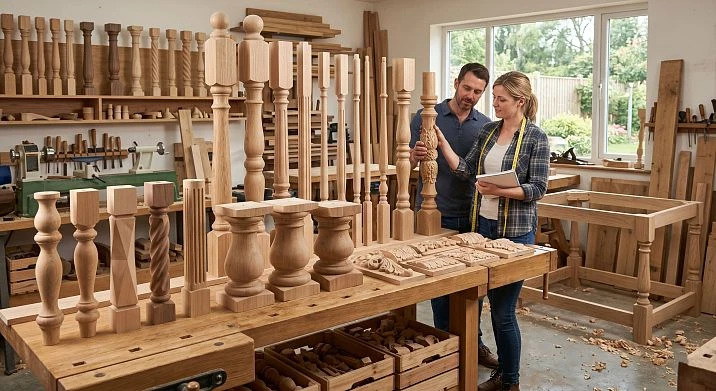
When people say "baluster," most imagine a staircase: a row of turned posts, a handrail, support columns. But a wooden baluster is not just a stair element. It is a universal shape that furniture makers, interior designers, and attentive homeowners have long used where a turned wooden support with a characteristic form is needed.
A dining table with four turned oak legs. A console table in the hallway resting on two carved columns. A coffee table in the living room where classic balusters with a vase profile serve as supports. A decorative partition with a frequent row of turned posts instead of a solid wall. A TV stand on low square supports. In all these scenarios buy baluster for table — this is a direct path to the result: a ready-made wooden element with the desired profile, from the desired species, of the desired size.
In this article, we will break down everything — from the logic of choosing a furniture baluster to specific shapes, species, sizes, and typical mistakes. There is not a single random phrase here: only practice, only real scenarios, only useful knowledge.
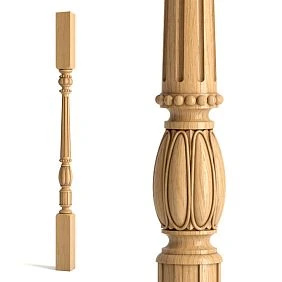
Wooden baluster — not only for stairs
This fact surprises many who first encounter the task of making furniture or decorative structures from wood. Why specifically a baluster? Because it is a ready-made turned element with a symmetrical profile, which costs significantly less than ordering an individual furniture leg and looks just as good.
Professional furniture makers know this well: Buy wooden balusters from the manufacturer's catalog — it's fast, predictable, and reliable. You don't need to design the profile, order a single part on a lathe, or wait for custom production. You choose a suitable model from the catalog, specify the size, indicate the species — and you receive a set of identical elements, ready for installation.
The only thing to understand: the furniture scenario is slightly different from the staircase one. The requirements for load-bearing capacity, height, proportions, and method of attachment to the tabletop are unique. We will break them down in detail.




Where balusters are used in furniture and interior design
Before choosing — you need to clearly understand for which specific structure the baluster is needed. The scenarios can be very different.
Our factory also produces:
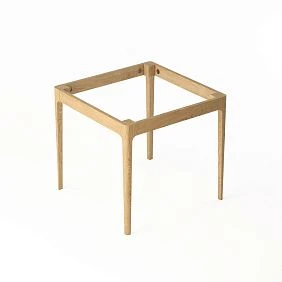
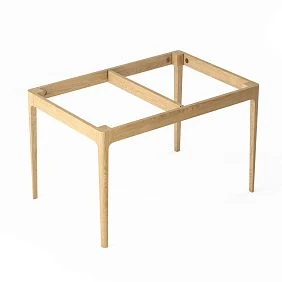
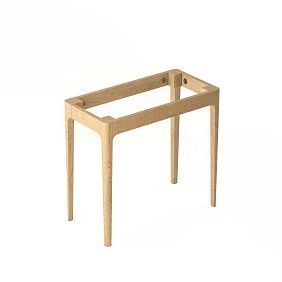
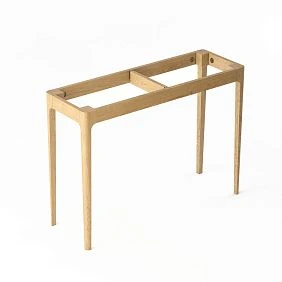
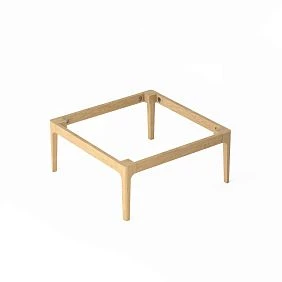

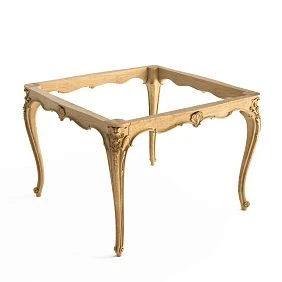
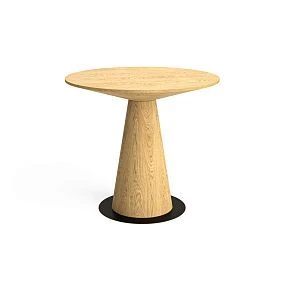
Dining table
The most common furniture application. Four turned or carved supports connected by a tabletop. The standard height of a dining table is 740–760 mm. For a classic-style wooden table, a baluster with a vase-shaped profile made of oak or beech is an ideal support.
An important point: for a dining table, the baluster bears a real vertical load — the weight of the tabletop, dishes, and people leaning on the table. Therefore, balusters for wooden tables they must have a sufficient diameter (at least 60–70 mm in the minimum cross-section) and be made of hardwood.
Get Consultation
Coffee and side table
Here the load is less, but the decorative value is greater. A turned baluster with an elegant profile made of beech or oak under clear varnish creates the image of a classic coffee table in English or French style. Height — 400–500 mm, diameter from 40 mm.
Console table
A console in the hallway, bedroom, or living room — often rests on two or four balusters. This is one of the most popular interior scenarios for furniture balusters: a lightweight construction with a decorative function, load — moderate. Buy wooden balusters for a table for a console project can be with a smaller diameter — here proportion is more important than load-bearing capacity.
Cabinet, chest of drawers, wardrobe on legs
Low supports 80–150 mm for cabinet furniture — square or small turned balusters. This is almost a "classic" furniture leg, but from a serial catalog, not handmade. Buy wooden balusters in a short format (200–300 mm) — means getting ready-made legs for a cabinet or chest of drawers.
Decorative partition
A row of balusters fixed between horizontal bars is a decorative partition or balcony railing, a zoning element in the interior. Here the baluster works purely as decor: no serious load, only visual rhythm and profile plasticity.
Posts for shelves and étagères
In an open-type étagère in a classic style, the vertical posts between shelves are balusters. They add airiness and decorativeness to the structure, which without them would look like an ordinary cabinet.
Decorative columns and pilasters
For large-scale interior projects — large turned or carved elements as freestanding supports, portals, door frames. Here the focus shifts to wooden columns and pilasters, which are produced by the same manufacturers as balusters and organically complement the ensemble of wooden decor.
How to choose a baluster for a table: technical parameters
A furniture baluster is not just a beautiful volume. It is a structural element that must bear load, maintain geometry, and withstand years of use. Here's what to check before purchasing.
Baluster height
Height depends on the type of furniture:
-
Dining table: table height 740–760 mm → support height = table height minus tabletop thickness (usually 30–40 mm) = 700–730 mm
-
Coffee table: height 400–500 mm → support 360–460 mm
-
Console table: height 850–900 mm → support 810–860 mm
-
Cabinet: height 400–500 mm → support 80–150 mm (if simply on legs)
-
Decorative partition: as per design
Standard stair balusters have a length of 900–1000 mm. For a table, they are too tall — they need to be cut down. This is a perfectly feasible operation: the straight end of the baluster can be easily cut along the line using a miter saw. Check with the manufacturer: whether there are shorter ready-made formats in the catalog — or if cutting is needed.
Diameter and load-bearing capacity
For a dining table, the minimum diameter at the narrowest point (neck) is 50–60 mm. This ensures sufficient rigidity under a vertical load of up to 80–100 kg per support.
For a coffee table and console — from 40 mm: the load is smaller, decorativeness is more important.
For a decorative partition — from 35 mm: there is practically no load-bearing requirement.
Square balusters with a cross-section of 50×50 mm bear load better than turned ones of the same nominal diameter: square ones have no thinning in the necks. For a table with a large tabletop (and corresponding weight) — square supports are more reliable.
Mounting platform for fastening
This is a technical detail that most buyers do not consider in advance. How is the baluster attached to the tabletop from below?
Options:
-
End face + screw through the tabletop — the simplest method. Requires a flat end face without a tenon.
-
Tenon into groove — the baluster is inserted with a tenon into a hole in the underframe. Turned balusters with a tenon on the end face are ideal.
-
Metal foot plate — a special bracket or crosspiece is attached to the end face of the baluster and to the tabletop. A universal method.
When ordering, clarify: whether the baluster has a standard tenon on the end face — or the end face is flat. This affects the choice of attachment method.
Batch identity
The four table legs must be absolutely identical. Not 'approximately identical' — but exactly matching in height, profile, and diameter. CNC turning production ensures this automatically when ordering from the same batch. When purchasing additional elements later — minor differences are possible.
Rule: order all items for one project at once, from the same batch.
Wood for furniture balusters: from pine to oak
Choosing the wood species for a furniture baluster is simultaneously a matter of appearance, durability, and budget.
Oak: prestigious classic
Buy oak balusters for a table means creating furniture that is passed down through generations. This is no exaggeration: oak, with proper treatment, lasts for decades without deformation. Hardness — 3.7–3.9 units on the Brinell scale. Texture — expressive, with a characteristic moire pattern, especially noticeable when applying clear oil or varnish.
Under dark stain, oak looks monumental and rich. Under light oil-wax, it looks warm and natural. Under white paint, it looks neutral but noble.
It is oak that is the first choice for a dining table in a classic interior, for a representative console, for furniture that is meant to be the central accent of the room.
Beech: turned flawlessly
Buy beech balusters is a reasonable choice for furniture that is planned to be painted or tinted. Beech is uniform, without pronounced texture, and takes color evenly and predictably. It is a "quiet" species: it gives all attention to form, not pattern.
Beech hardness — 3.5 units on the Brinell scale. Sufficient for load-bearing furniture supports. Price is 20–30% lower than oak.
Limitation: beech is more sensitive to humidity than oak. For a kitchen table or furniture on the veranda — a risk. For a closed heated room — excellent.
Pine: for light furniture and decor
Pine is an affordable softwood. For a decorative partition, a coffee table with minimal load, decorative racks — it is quite suitable. For a dining table with active load — risky: the soft surface scratches and deforms faster.
The natural pattern of pine with amber pockets looks warm under a transparent coating. This is a "cottage aesthetic" — organic and sincere.
Ash: freshness and texture
Ash is a hardwood with pronounced fibers and a light tone. Popular in Scandinavian, Japanese, and modern minimalist interiors. Under transparent oil, it looks fresh and elegant.
Practical wood species selection table
| Scenario | Recommended Wood Species | Why |
|---|---|---|
| Dining table, classic | Oak | Load-bearing capacity + texture |
| Dining table for painting | Beech | Smooth surface, sufficient hardness |
| Console, decorative support | Oak or beech | Decorative + durable |
| Coffee table, decor | Pine, beech | Accessibility, lightness |
| Partition, posts | Spruce | Economical, decorative function |
| Scandinavian style | Ash | Texture, light tone |
Carved, turned or square: which shape does your furniture need
The shape of the baluster determines the style of the furniture and interior. The choice here is the choice of the 'language' your interior speaks.
Turned balusters: timeless classic
A turned baluster with a vase profile is a style that never ages. Provence, classic, neoclassical, English style, French country — in all these directions, a turned support feels organic and appropriate.
Key selection parameter: profile complexity. For strict classic — 4–6 elements (necks, vases, conical transitions). For French style — a complex profile with curves and tapers. For a more neutral solution — 2–3 elements, a simple silhouette.
Buy wooden balusters for furniture in turned execution — the widest assortment. Choice of shapes, wood species, sizes.
Carved balusters: decorative peak
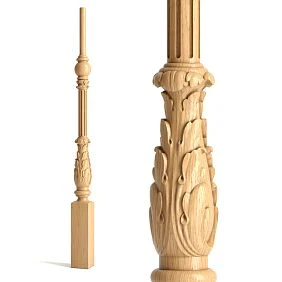
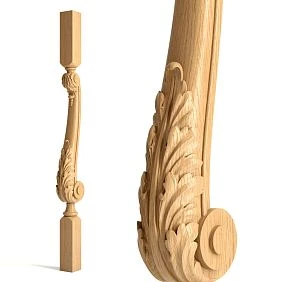
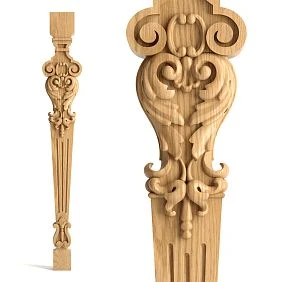
Buy carved wooden balusters for furniture — means turning a table or console into a decorative element. A turned-carved baluster combines the volume of a turned shape and relief ornament: flutes, diamonds, floral motifs, acanthus leaves.
Such a support is appropriate in Baroque, Empire, Renaissance furniture. It fits in a living room with stucco, in a study with library shelves, in a hallway with a mirror in a carved frame. In short — where the interior speaks seriously and decoratively richly.
carved wooden balusters of larger cross-section are appropriate for creating a portal, arch, or column — when scale and monumentality are needed, not just a table leg.
Square balusters: minimalist support
A modern home, open plan, concrete and wood, loft or eco-style — the territory of square supports. Section 40×40 or 50×50 mm, no decoration, only geometry. Under dark tint or natural oil — looks precise and restrained.
Square balusters bear load better than turned ones: no thinning, uniform cross-section along the entire height. For a table with a massive tabletop — a practical choice.
Flat balusters: for partitions and decor
A flat baluster with a figured silhouette is an ideal element for a decorative partition, zoning structure, or shelving unit with open posts. It does not bear the vertical load of the table but creates rhythm and decorativeness in the plane of the railing.
How to calculate the number of balusters for a furniture project
Each type of structure has its own calculation logic.
Table: four supports
A standard dining table — 4 balusters. This is a basic rule. A round tabletop can rest on three — if the cross-section and attachment area allow it. But for the stability of a rectangular table — only four.
Additional elements: if the legs are connected by crossbars (stretchers) — this strengthens the structure and adds decorativeness. Then, to the four main balusters, small decorative post-bridges may be added.
Console: two or four supports
A narrow console tabletop can rest on two front legs if the back side is attached to the wall. If the console is freestanding — four supports, like a regular table. For a long console tabletop (from 1,500 mm), an intermediate fifth support is sometimes added in the center.
Decorative partition
Calculation as for stair railing: structure length ÷ installation step. Step 100–150 mm — for a dense, almost solid look. Step 200–250 mm — for an airy, open rhythm.
Shelves and racks
Based on the number of posts provided by the design. Typically: 2–4 posts per section. For shelf heights of 300 mm or more — intermediate posts for rigidity.
Important rule: allow 1–2 extra pieces in any calculation. Wood is a living material; during on-site fitting, one element may be damaged. The spare prevents delays.
What to check before buying a baluster for furniture
The list is short, but each item is significant.
Size. Exact height considering the thickness of the tabletop and the gap for the adjustable foot (if used). Diameter — considering the load.
Geometry. Straightness of the axis: the baluster must stand strictly vertical without tilt. Checked by placing on a flat surface: the product should not wobble.
Batch identity. All four legs from the same batch. Profile, diameter, height — must match to within 1 mm.
Sanding. Is the surface ready for coating without additional hand sanding? Or is finishing needed? This affects labor costs in furniture manufacturing.
Wood species and moisture content. Kiln drying to 8–10% is the standard for furniture-grade wood. A wet baluster can warp as it dries, causing the table to "twist."
End shape. Flat end for screw mounting — or tenon end for groove fitting? Specify before ordering.
Finish compatibility. If painting is planned — beech. If lacquering to preserve grain — oak or ash. If natural-toned oil-wax — oak or pine.
Price of wooden balusters for furniture and decor
Balusters price for furniture scenarios — the same as for staircases: it is determined by wood species, size, shape complexity, and processing grade.
Price Benchmarks
| Baluster type | Species | Approximate price per piece |
|---|---|---|
| Turned, simple profile | Spruce | from 1,990 RUB |
| Turned, standard | Beech | from 2,800–3,500 RUB |
| Square | Beech/oak | from 2,500–3,500 rub. |
| Turned | Oak | from 3,500–4,500 rub. |
| Carved/turned-carved | Oak/beech | from 5,000–8,000 rub. |
For a table with four legs, the budget for beech balusters: 11,200–14,000 rubles. For oak: 14,000–18,000 rubles. This does not include the tabletop, crossbars, or fasteners.
Current Balusters buy price — in the STAVROS catalog, on each product card.
What affects the price: breakdown by factors
Wood species is the main variable. Pine is 2–2.5 times cheaper than oak for the same shape. This is a legitimate saving for decorative structures with minimal load.
Height directly affects wood consumption. The longer the baluster, the higher the price. When cutting a standard stair baluster to the desired table height, you are essentially paying for a full-length element while using only 70–80% of its length. If the manufacturer offers shortened formats, it is more cost-effective.
Carving is the most expensive operation. A turned and carved baluster costs 1.5–2 times more than a simple turned one made from the same wood species. For a decorative project where visual richness is key, this is justified.
Finishing class — final sanding in 2–3 passes adds 15–25% to the price but saves time on finishing work.
Order volume — for large orders (multiple sets for furniture production or design projects), conditions close to wholesale may be available. Clarify at the first contact.
Mistakes when buying balusters for tables and furniture
Let's list real mistakes — each of them happens regularly.
Chose too thin an element
A baluster with a neck of 30 mm and an overall diameter of 45 mm is a beautiful, elegant element. But for a dining table that is leaned on daily, has heavy dishes placed on it, and where children sit — this is insufficient. The minimum cross-section diameter should be 50–55 mm, preferably 60 mm. Elegance should come from the profile shape, not by reducing the load-bearing cross-section.
Did not account for load when choosing the wood species
Chose a beautiful pine baluster — soft, affordable, nice. Installed the table. After a year — dents on the necks where legs touched the supports, slight loosening. For a load-bearing table support in a residential space — at least beech, preferably oak. Pine is for decorative structures and lightweight furniture.
Bought from different batches
The first two legs were ordered in February, two more in April. Formally, one model, one article number. But the shade is slightly different — wooden products from different batches of blanks almost always differ. On the finished table, this is visible to the naked eye.
Did not check the height for your tabletop
Ordered standard stair balusters 1000 mm, without calculating the final table height. Tabletop 40 mm + baluster 1000 mm + glides 10 mm = table height 1050 mm. This is too high for a dining table. Should have taken shorter balusters or cut them.
Mixed different styles
Bought carved balusters with floral baroque ornament and placed them in a table with a minimalist concrete tabletop. Conflict of images. Or: took square balusters in a geometric style and placed them in a console with a carved mirror above it. The style of the leg and the style of the frame did not match.
Rule: first determine the style of the entire project, then choose the baluster shape. Not the other way around.
Forgot about the mounting platform
Ordered balusters with a sharp top tenon — but the tabletop requires mounting on a flat end. Had to cut off the tenon. Not a disaster, but an extra operation. Clarify when ordering: whether a tenon end, flat end, or standard execution is needed.
Balusters and decorative columns: when scale is needed
A separate scenario is when you need not furniture supports, but decorative architectural elements: portal posts, door frame surrounds, fireplace columns, pilasters around the room perimeter.
Here, the baluster ceases to be a furniture element and becomes part of an architectural ensemble. For such tasks, manufacturers offer larger turned products — wooden columns and pilasterswhich are created on the same equipment as balusters, but on a different scale.
The diameter of a decorative column is from 100 to 300 mm. Height is from 1,500 mm to 3,000 mm. The wood species is oak, beech, or pine depending on the purpose.
If your project involves this scale, consider the column catalog, not the baluster catalog. These are different products with different dimensional characteristics, although produced using similar technology.
How to work with the catalog when selecting balusters for furniture
The manufacturer's online catalog is a convenient tool if you know how to use it in a furniture context.
Step 1: product type. Turned, carved, flat, square. For most furniture projects — turned or carved. For a modern style — square.
Step 2: wood species. Oak → beech → pine — this is a scale from maximum reliability to maximum affordability. Choose depending on load and budget.
Step 3: height. Filter or ask the manager for formats close to the required height. Remember: the standard is 900–1000 mm, for a table it is more often 700–730 mm. Trimming is possible.
Step 4: neck diameter. For load-bearing supports — at least 50 mm. Check in the product card specifications.
Step 5: photo and profile. Evaluate the shape: how well does the profile match your project's style? Look at proportions, the ratio of vases to necks, and symmetry of elements.
Step 6: clarify the ends. How are the bottom and top ends finished? Is there a tenon? Is a flat end needed?
Step 7: order a consultation. Describe your project, specify the load, height, and style — and get a specific recommendation from the manufacturer.
Buy furniture balusters — a task that can be solved in one conversation with a manager, provided you come with ready parameters.
Where to buy balusters for tables and furniture from the manufacturer
A direct manufacturer is the only channel that provides:
-
Full assortment without restrictions of "what is in stock at the store"
-
Identical products from the same batch
-
Free calculation and consultation on parameters
-
Price without intermediary markup
-
Systematic approach: if you need not only balusters but also other wooden elements — everything from one source
For a furniture project, batch uniformity is especially important. Four table legs from one production run with the same machine settings are identical. Four legs bought on a marketplace from different sellers with "similar photos" are almost certainly different.
Buy wooden balusters with Contact us to confirm shipping to your destination. — a standard option for manufacturers with proper logistics. Packaging for long-length products: stretch wrap + corrugated box or crate. The risk of damage with proper packaging is minimal.
If the project is large — several tables, a furniture set for a hotel or restaurant — request wholesale terms. For runs of 40–50 pieces, manufacturers typically offer improved pricing and lead times.
About the company STAVROS
STAVROS is a Russian manufacturer of solid wood products since 2002. Production covers the full cycle: sourcing, kiln drying (8–10% moisture), CNC turning and milling, manual final sanding, geometry and batch control.
The STAVROS catalog features over 50 baluster models (turned, carved, square, flat), support Posts for staircase, handrails, decorative wooden columns and pilasters, as well as a complete set staircase componentsAvailable species: oak, beech, pine, ash. Each order is from one batch, with a guarantee of product identity.
Wooden balusters from the manufacturer — for stairs, furniture, consoles, decorative supports, and interior structures. Pickup from Moscow and St. Petersburg, Contact us to confirm shipping to your destination. Consultation on parameters and kit calculation — free of charge.
FAQ: Answers to popular questions
Can wooden balusters be used as table legs?
Yes. Turned and square balusters made of solid wood are functional furniture supports with proper selection of height, diameter, and species. For a dining table — neck diameter from 50 mm, oak or beech.
Which balusters are best for furniture?
For classic furniture — turned or carved from oak or beech. For a modern minimalist table — square beech balusters with dark tinting. For a decorative partition or coffee table — lighter turned shapes from pine or beech.
How many balusters are needed for a table?
For a standard rectangular dining table — 4 balusters. For a wall console — 2 front supports. For a decorative partition — calculated as length ÷ step.
Where to buy wooden balusters for a table?
In the STAVROS catalog. Filter by shape, material, height, and style. Free consultation on selection for a specific furniture project.
How do furniture balusters differ from stair balusters?
There are no fundamental structural differences: these are the same turned wooden elements. The difference lies in the application scenario: for furniture, the height under the tabletop, a flat or tenoned end for fastening, and sufficient diameter for load are important.
How much do wooden table balusters cost?
From 1,990 rubles per piece (pine, simple profile) to 7,000–8,000 rubles (oak, carved). A set of 4 beech legs is approximately 11,000–14,000 rubles. Current Balusters price — in the STAVROS catalog.
Can I order balusters of non-standard height for furniture?
Yes, for a batch of 10–15 pieces. Trimming a standard baluster to the required height is also possible — check with the manager.
How to attach balusters to the tabletop from below?
Three methods: via a tenon into the under-table groove, with a screw through the flat end, or through a metal foot. The choice depends on the table design and the type of baluster end.