


























Article Contents:
- Author furniture starts with an idea, not a ready-made item
- Why ready-made parts don't kill individuality
- How an author's table differs from a standard model
- Coffee table
- Coffee table
- Side table
- Small dining table
- Accent table for a salon, showroom, or office
- Turned legs for classic and neoclassical styles
- Carved legs for an expressive piece
- Simple legs for a modern interior
- Uncoated legs for custom finishing
- Table base as a ready-made table architecture
- Individual legs as freedom for form
- Underframe for round tabletop
- Underframe for rectangular tabletop
- What to check regarding height, load, and fastening
- Carved overlays for the apron or decorative panel
- Wooden rosettes as an accent
- Decorative set C-030 for a cohesive composition
- Rosette R-032 as a small accent
- How not to overload the table with decor
- Classic
- Neoclassicism
- Modern style
- Art Deco
- Vintage and Restoration Project
- Minimum Set: Legs and Mounting
- Designer Set: Legs and Underframe
- Decorative Set: Legs and Overlays
- Author's Set: Legs, Underframe, Overlays, and Rosettes
- Set for Designer
- Want to Make a Coffee Table, But Not from Scratch
- There is a wooden tabletop
- Need to make a round coffee table
- Need a table for the kitchen
- Need a table for a salon, cafe, or showroom
- Need to make a table for painting
- Start with decorations
- Buy legs only by photo
- Not thinking through the tabletop
- Overloading the table with decor
- Confuse decorative and load-bearing
- Not checking the fastening
- Expecting a fully finished table
- Can you make a custom table from STAVROS components?
- What is better to choose: legs or underframe?
- Can carved overlays be used on the table?
- Which legs are suitable for a custom table?
- How to make a table unique without overloading the decor?
- Can you make a coffee table yourself without crafting parts from scratch?
- How to make a wooden tabletop and choose a base for it?
- Which legs to choose for a kitchen table?
- Can you use wooden rosettes on a table?
- How does an underframe differ from a furniture frame?
- What to buy along with table legs?
- Is this approach suitable for a salon or showroom?
- Can you paint all parts in one color?
- What should I check before ordering?
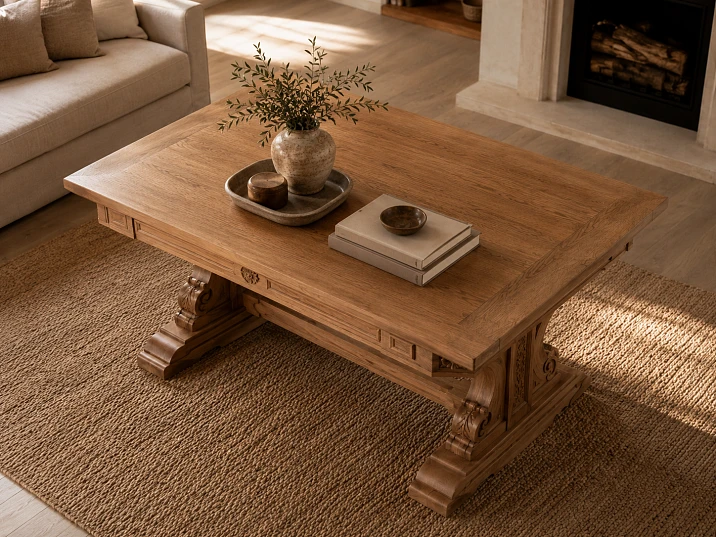
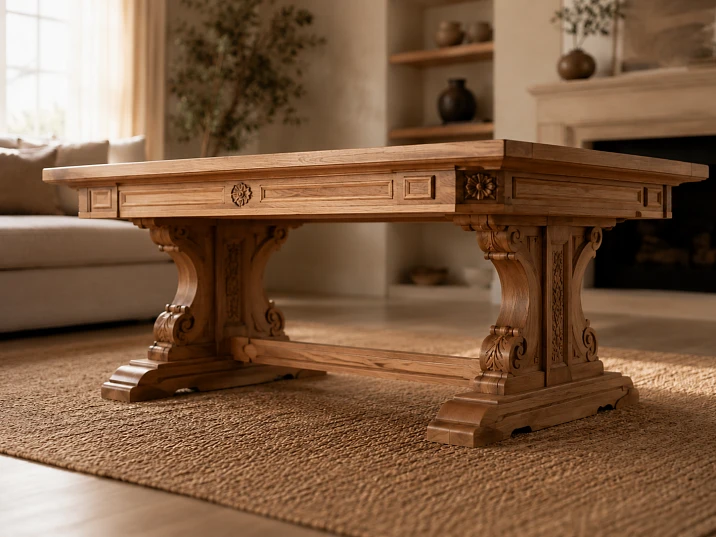
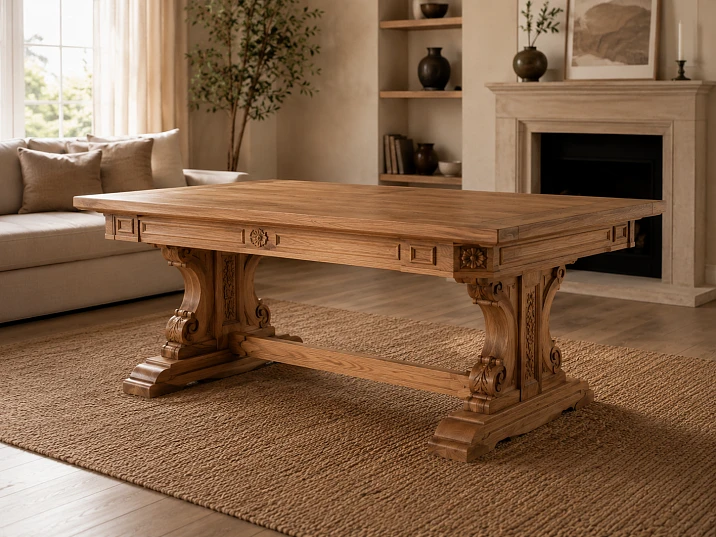
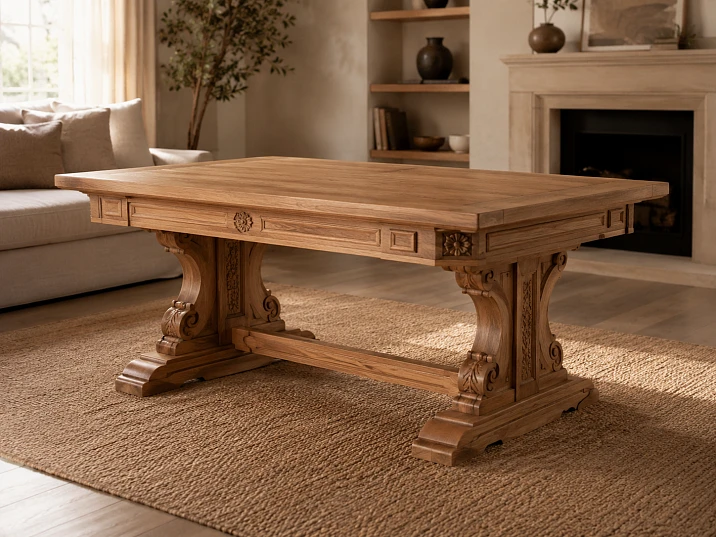
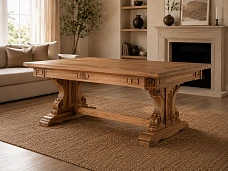
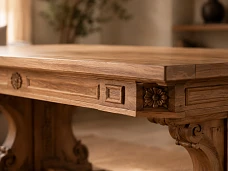
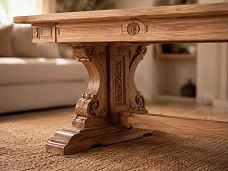
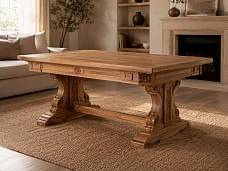
An author's table doesn't start with a saw, a blueprint, and an attempt to carve every detail yourself. More often, it starts with an image: you want not standard furniture, but an item that looks as if it was designed specifically for that living room, kitchen, study, salon, or showroom. So when someone decides to buy table legs, they are often looking not just for four supports, but for the foundation of a future piece—that very detail around which the entire character of the table can be built.
This is the strength of STAVROS components: you don't have to start from scratch if complex wooden elements can already be selected ready-made. You can choose legs, underframe, carved overlays, rosettes, think through the tabletop, finish, and assemble a piece for a specific interior. This approach is equally interesting to a designer, craftsman, decorator, and private buyer who wants a table with character, not another model from a mass catalog.
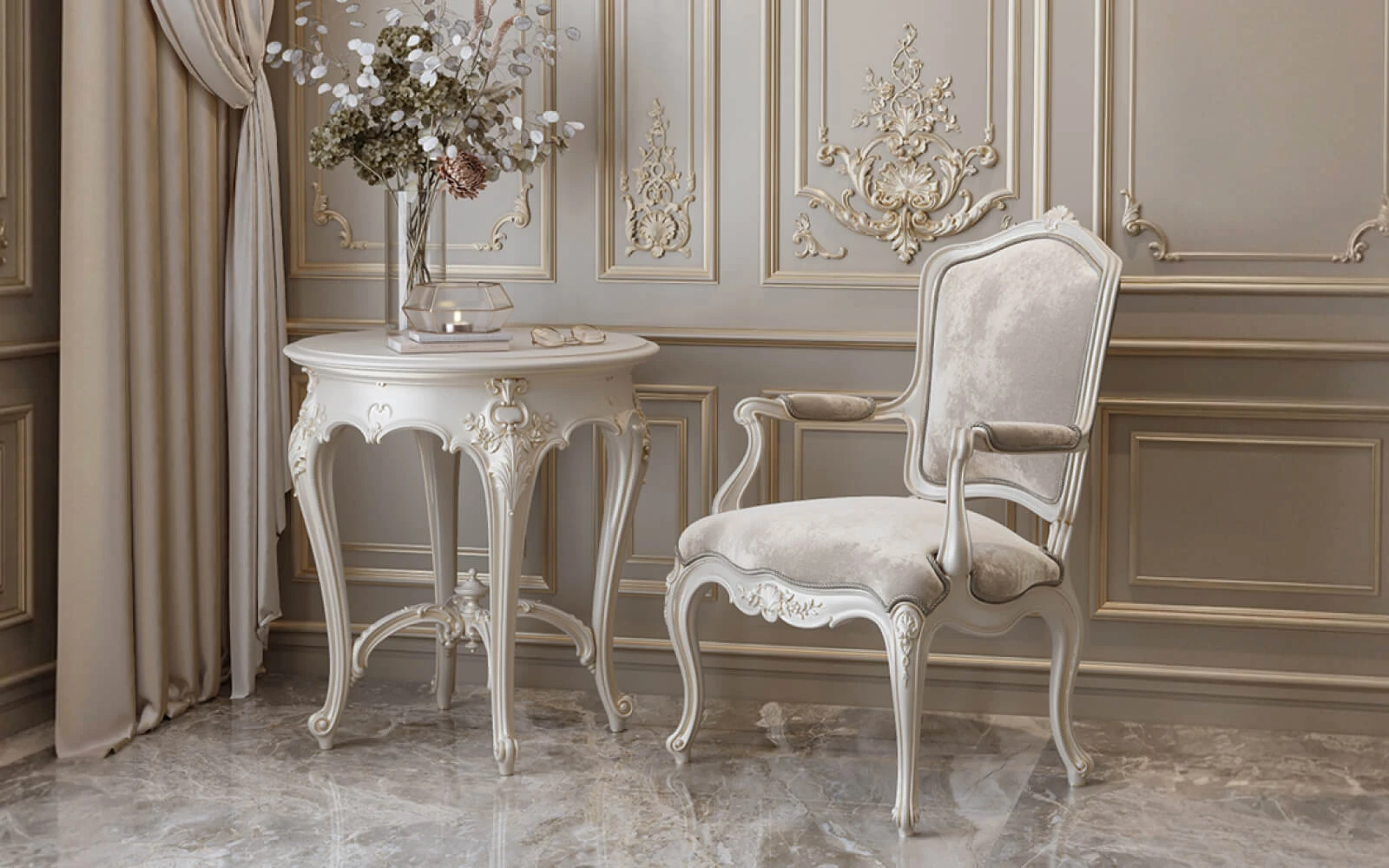
An author's table can be a coffee table, side table, small dining table, decorative table, salon table, or display table. It can be calm and almost architectural, or it can become the main accent of the room. In one project, clean geometry and wooden legs are enough. In another, a more substantial base—an underframe—is needed. In a third, the table comes alive through carved decor, rosettes, expressive finishing, or a contrast of wood with the tabletop.
The main thing is not to treat components as random details. Legs, underframe, and decor must work together. Then the table looks not like a homemade attempt, but a well-thought-out piece of furniture: with a clear form, correct height, stable construction, and a style that supports the interior.

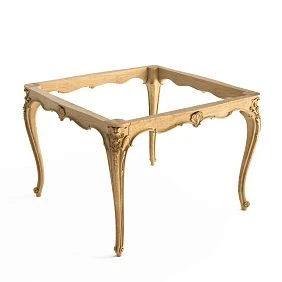
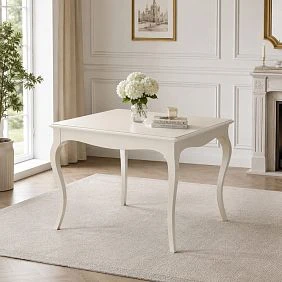
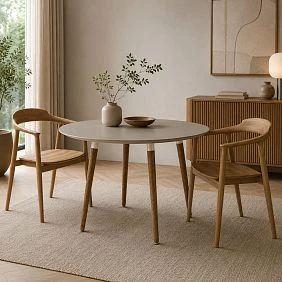
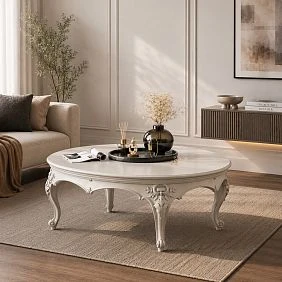
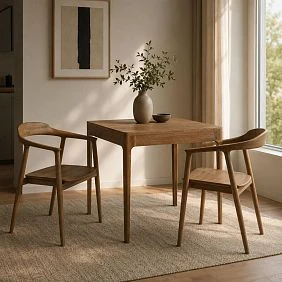
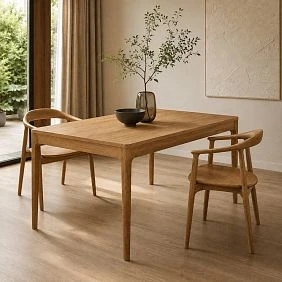
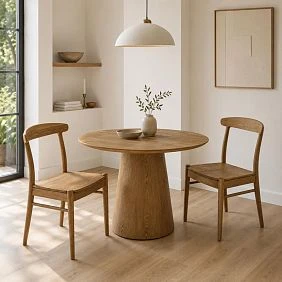
Author furniture starts with an idea, not a ready-made piece
A ready-made table from a store is often chosen based on three criteria: the size fits, the color roughly matches, and the price is acceptable. But in such a choice, there is almost no freedom. The buyer takes an already designed form, an already specified finish, an already set height, and tries to fit it into the interior. Sometimes it works out well. But often the table just 'ends up somewhere next to' the rest of the furniture, without connecting the space.
The author's approach works the opposite way. First, a task appears. For example, you need a coffee table for a living room with a soft sofa and carpet. Or a small table for a seating area. Or an expressive piece for a beauty salon, boutique, hotel, showroom. Or a compact table for a kitchen where you want a wooden base, not a cold metal one. After that, elements are selected: legs, underframe, tabletop, decorative details, and finish.
Components give the designer and craftsman freedom. You don't have to limit yourself to a ready-made factory model. You can choose the desired shape of legs, select the base, add carving only where it is really needed, choose the finish for the project. This is how not a 'homemade' item is born, but a furniture piece assembled from meaningful details.
This approach is especially valuable when the interior already has character. For example, the room has wooden panels, moldings, carved elements, classic doors, decorative frames, vintage furniture, or natural materials. A standard table may look out of place. But a table assembled from wooden components is easier to connect with the existing setting.
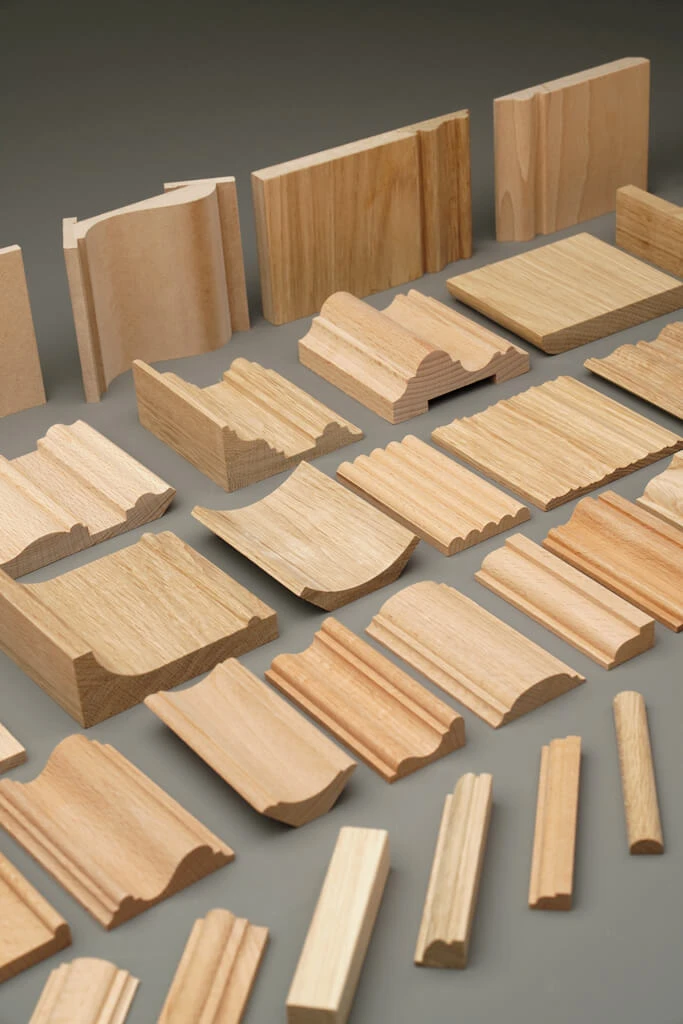
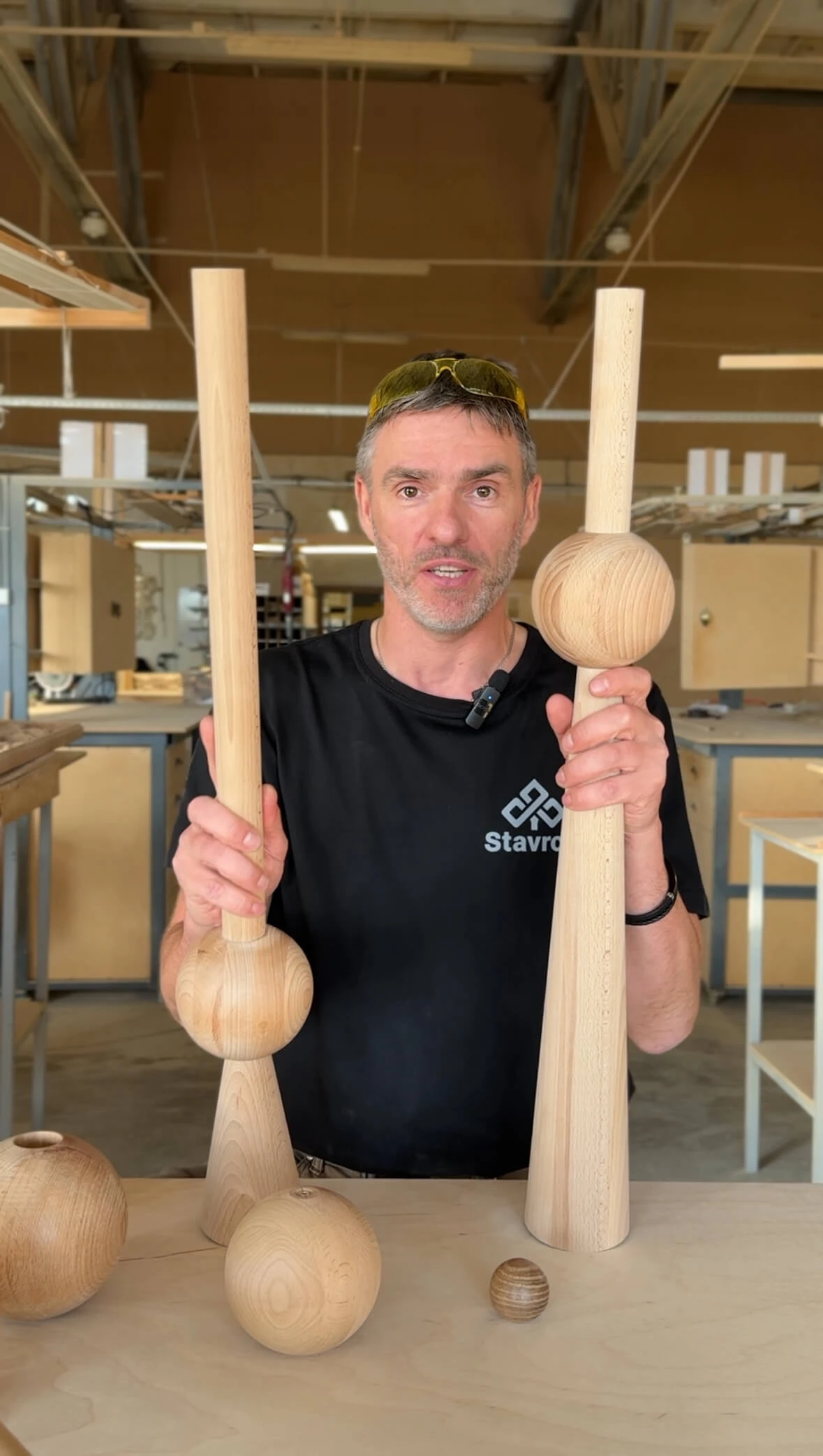
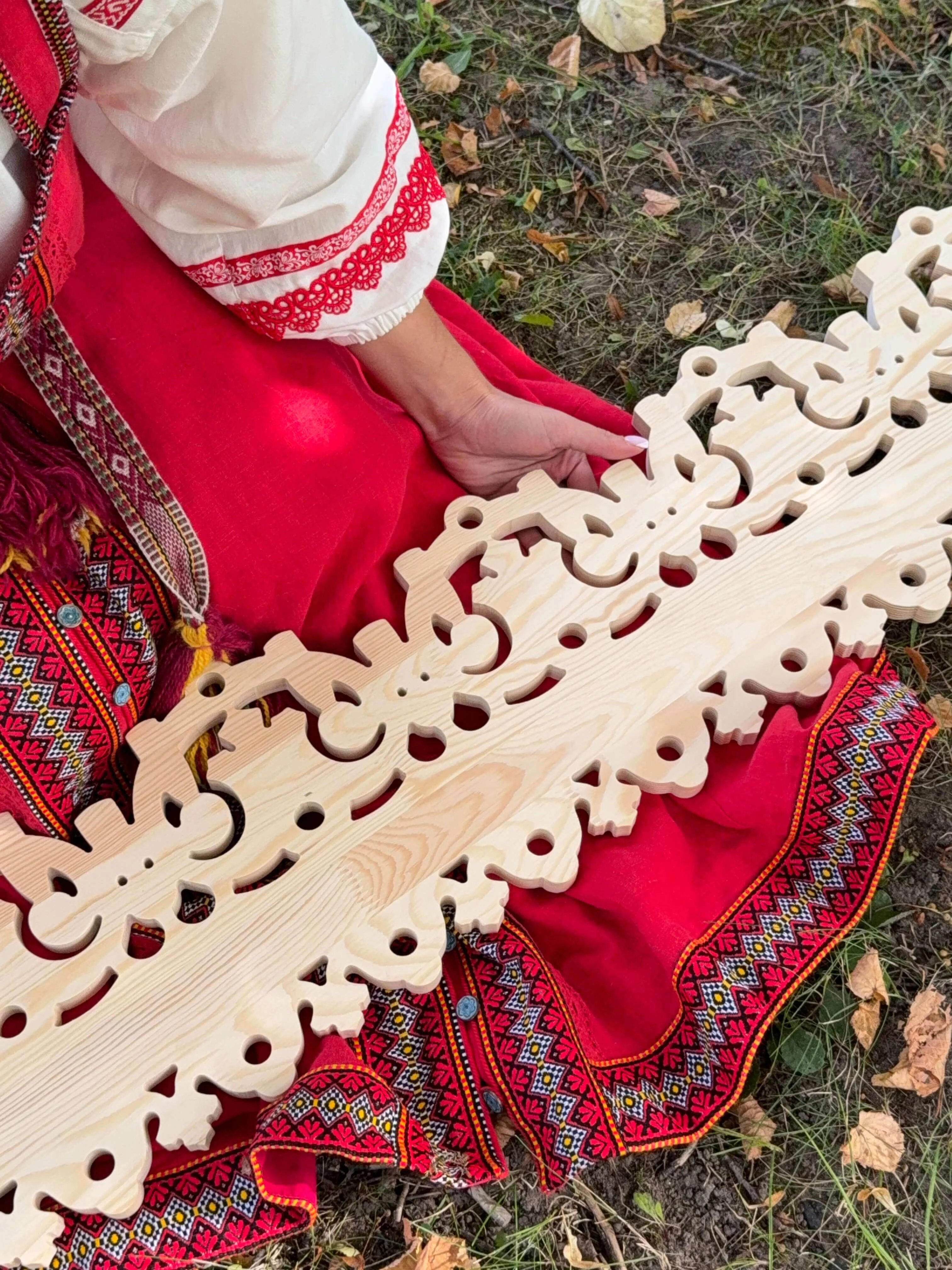
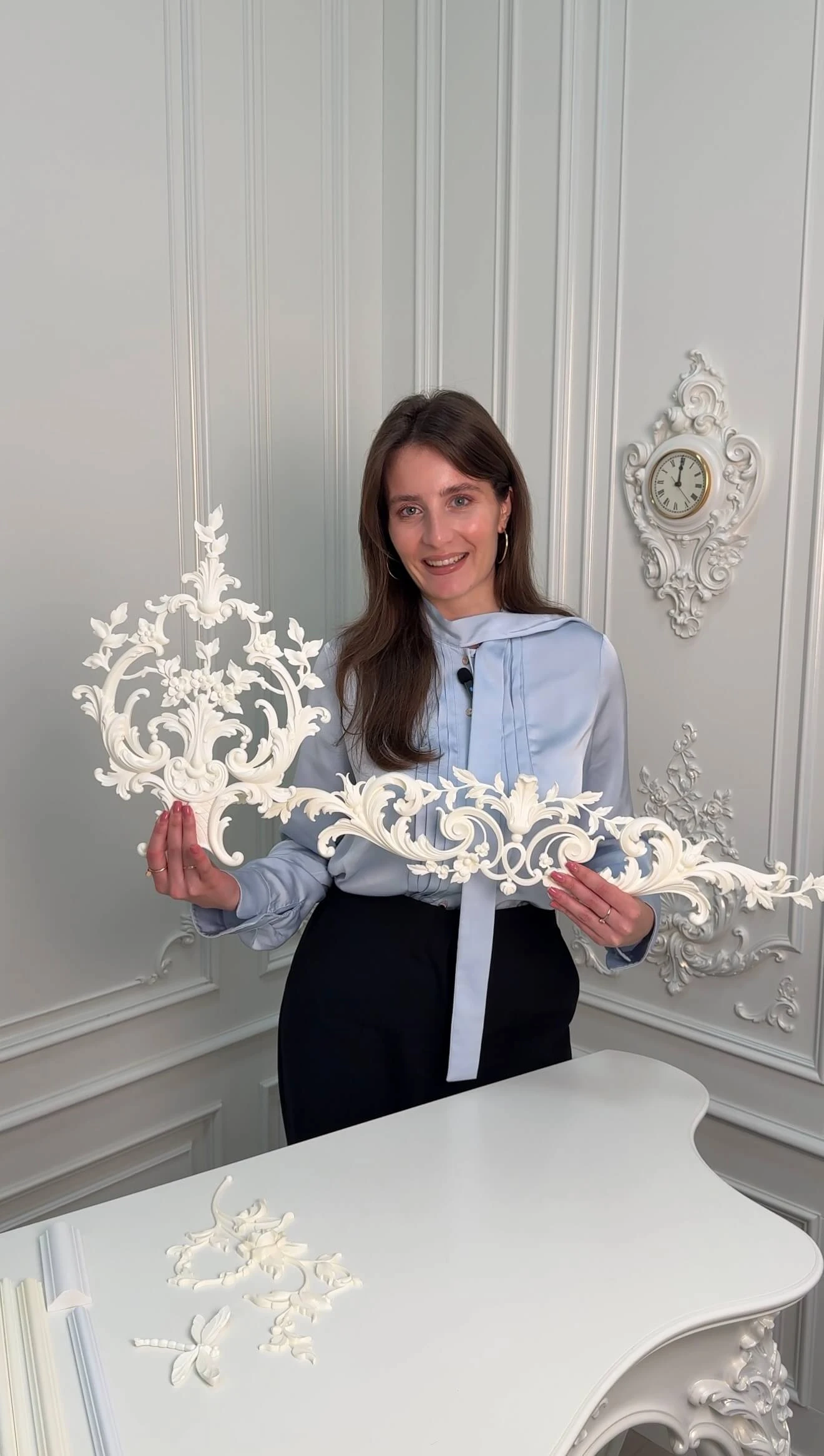
Why ready-made details don't kill individuality
Sometimes it seems: if the legs or decor are bought ready-made, the piece is no longer authorial. In fact, it's the opposite. Authorship does not necessarily mean that every line must be carved by hand. Authorship is manifested in the choice, combination, proportion, finish, tabletop seating, and precision of composition.
A finished leg can become a starting point. The tabletop, color, height, and adjacent elements are chosen to match it. The underframe can set the table's architecture. A rosette or overlay can add an accent, but only where it is needed. As a result, the same element in different hands yields different pieces.
For a craftsman, ready-made components save time on complex processing. For a designer, they provide a predictable form. For a private buyer, they offer the opportunity to assemble a beautiful idea without attempting to carve or create a complex base themselves.
Our factory also produces:
How a custom table differs from a standard model
A standard table is usually designed for a broad taste. It is neutral, understandable, and safe in form. A custom table solves a more specific problem. It can be lower, higher, more expressive, lighter, more decorative, calmer, more classic, more modern — whatever the specific space requires.
The difference is visible in the details. In a standard table, the legs often simply support the tabletop. In a custom one, they shape the image. The underframe can not only support the top but also create an architectural foundation. Carved overlays can not just decorate but connect the table with the rest of the room's decor. Rosettes can become a small but precise accent.
The main thing is not to confuse expressiveness with overload. A custom piece does not have to be complex. Sometimes it looks stronger precisely because it is assembled from two or three precise details: good wooden legs, the right tabletop, and a calm finish.
Get Consultation
What can be created from STAVROS components
From STAVROS components, you can assemble various tables — from a light coffee table to a more substantial small dining table. The difference is not only in size. Each option has its own role, its own height, its own character, and its own set of parts.
Coffee table
The coffee table stands in the center of the lounge area. It is seen next to the sofa, armchairs, rug, lighting, and decorative items. Therefore, it should be not only functional but also expressive. This is where wooden legs are especially noticeable: a seated person sees the base almost at eye level.
For a coffee table, you can buy wooden table legs and choose a tabletop of the desired shape. If you need a more assembled and stable option, consider a table base. If the interior is classic or neoclassical, you can add carved elements, but don't turn a small table into an overloaded object.
A coffee table well reveals the idea of custom furniture: it is not as large as a dining table, but noticeable enough to show style.
Coffee table
A coffee table can be lower, lighter, and more compact. It is placed next to an armchair, sofa, in a waiting area, near a display case, in an office, salon, or hotel room. Here, not only the shape is important, but also convenience: the table should not obstruct movement, look too heavy, or clash with the surrounding furniture.
For a coffee table, calmer legs are often suitable. If you want an accent, it's better to choose one expressive detail: the shape of the supports, the finish color, an interesting tabletop, or a small rosette. Too much decor on a small table quickly looks excessive.
Side table
A side table usually lives next to an armchair, sofa, bed, or in a corner of the room. It can be an almost invisible helper, or it can become a small decorative object. In this format, lightness is especially important.
Individual legs provide more air than a massive base. But if the tabletop is heavy or the table must stand in a walk-through area, you need to think about stability. Even a small table should not wobble or look unsteady.
Small dining table
A small dining table is a more serious task. It can be placed in a kitchen, a small dining room, an apartment, a cafe, or a meeting area. The load here is higher than that of a coffee table. People sit at it, lean on it, and place dishes on it.
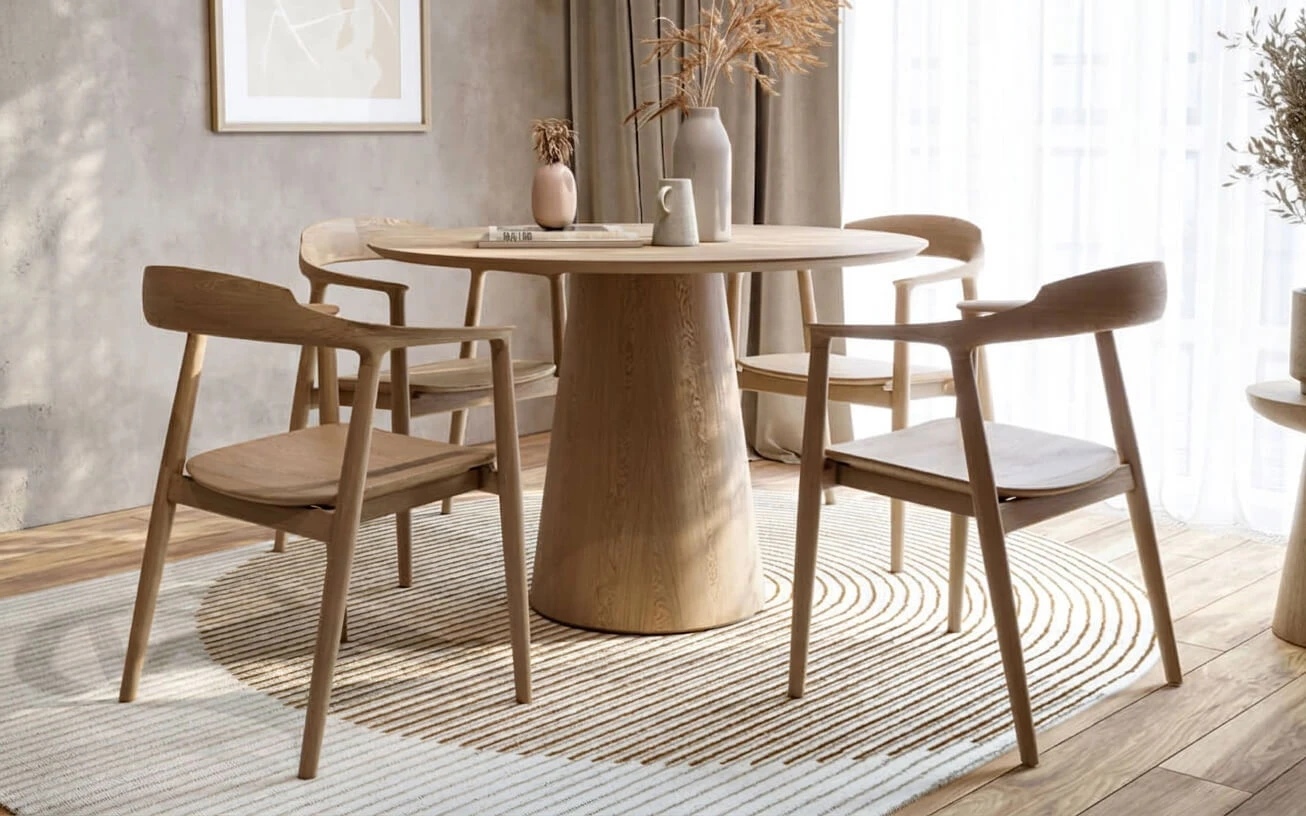
In such a project, the base is especially important. Sometimes individual legs work well, especially if the tabletop is not too heavy and the structure is properly designed. But in many cases, it is better to look towards a pedestal base, as it provides a more cohesive and stable foundation.
Accent table for a salon, showroom, or office
In a commercial interior, the table works not only as furniture. It participates in the image of the place. In a beauty salon, boutique, showroom, hotel, office, or meeting area, it can showcase the brand's style, the owner's taste, and the level of the space.
Here you can be bolder in using expressive legs, pedestals, carved overlays, wooden rosettes, and decorative sets. But there is an important condition: the item must be not only beautiful but also practical. In a commercial space, furniture is often used by different people, so stability, finish, and maintenance are very important.
What details are needed for a designer table
It is convenient to view a designer table as a combination of several roles. There is a load-bearing part, a shape, decorative elements, and a finish. When these roles are not mixed, the project becomes clearer.
| Detail | What it is for | Where it is especially appropriate | What to check before ordering |
|---|---|---|---|
| Wooden legs | Support the tabletop, set the height and silhouette | Coffee table, side table, small dining table | Height, shape, material, attachment, compatibility with the tabletop |
| Underframe | Creates a ready-made base and a more assembled structure | Round, rectangular, heavy or more substantial table | Size, purpose, stability, tabletop seating |
| Unpainted legs | Provide freedom of finishing | Table for painting, tinting, custom finishing | Surface preparation and future finish |
| Carved overlays | Adorn the apron, side panel, base | Classic, neoclassic, vintage, decorative projects | Size, relief, placement |
| Wooden rosettes | Add a focal accent | Small decorative areas, aprons, side panels | Size, shape, compatibility with decor |
| Decorative set | Helps create a more cohesive composition | A table with a pronounced classic or designer character | Scale of elements and installation location |
| Materials for fastening and finishing | Help prepare assembly and finish | Any project where wood needs to be installed and processed | Compatibility with material and task |
A table has elements that support and elements that decorate. Legs and underframe provide the foundation. Overlays and rosettes define the external character. If a decorative part is used as a load-bearing one, the project becomes risky. If load-bearing elements are chosen only for aesthetics, stability may be compromised.
Project foundation: wooden table legs
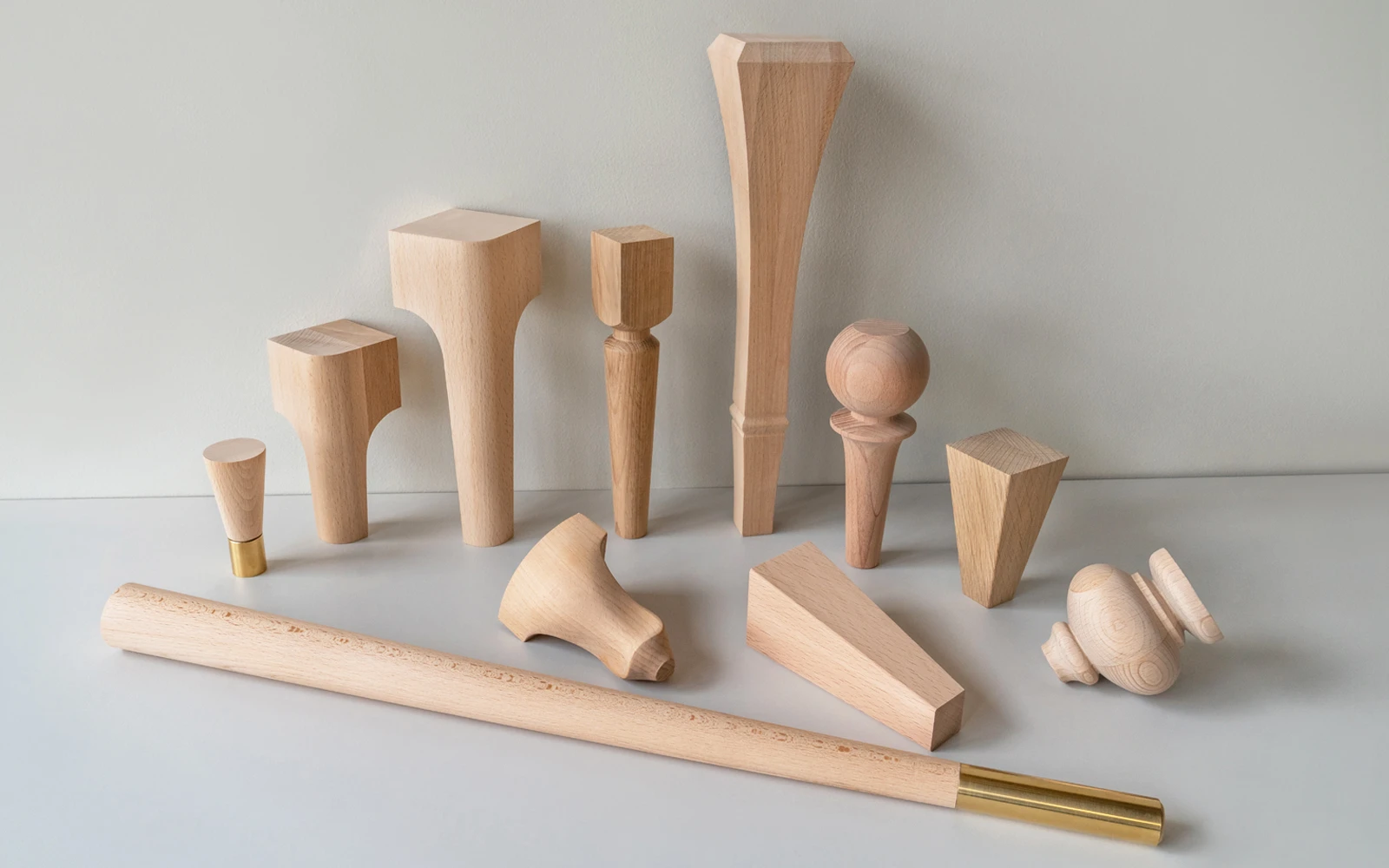
Legs shape the first impression of a table more than it seems. The tabletop often occupies a horizontal plane, while the legs give the piece character. They can make a table light, strict, classic, decorative, vintage, modern, massive, or almost sculptural.
When the goal is to create a designer piece, it is reasonable to start with the base. You can buy wooden table legs and then select a tabletop, finish, and decorative elements to match them. This approach is especially convenient when you need to move away from a standard look.
If the project is not yet limited to just one table, you can look furniture legs and supports STAVROS. This is useful for designers and workshops that are assembling not just one piece, but a series: a table, a cabinet, a console, a bench, decorative furniture for a single interior.
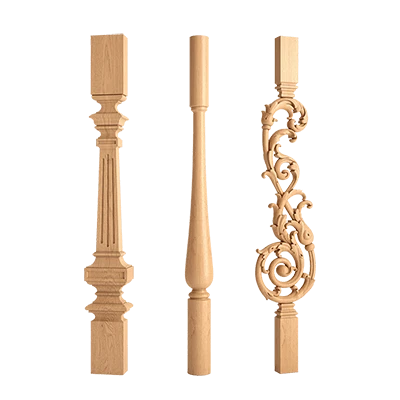
Turned legs for classic and neoclassical styles
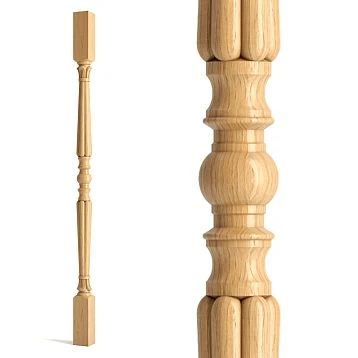
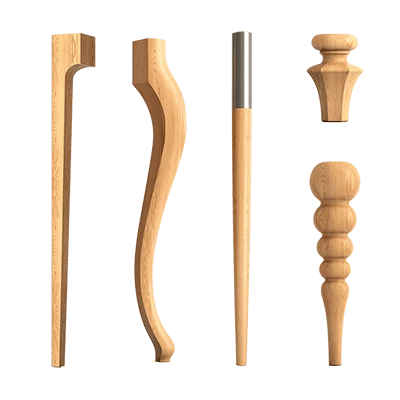
Turned legs create a soft, furniture-like, traditional look. They are well-suited for classic, neoclassical, calm vintage, a cozy living room, study, bedroom, or relaxation area. This shape does not necessarily make the table old-fashioned. With the right finish, a turned leg can look very contemporary.
For example, turned furniture leg MN-124 can serve as the basis for a table in a classic or neoclassical style. Before ordering, you need to check its dimensions, material, purpose, and features in the product card, and then determine if it suits the future tabletop.
Turned legs are especially good when the table should not be too heavy in decoration but should have character. They provide shape without requiring a lot of additional embellishments.
Carved legs for an expressive piece
A carved leg is a more active element. It is suitable for a table that needs to attract attention. This could be a coffee table in a living room, an accent table in a salon, a decorative piece for a showroom, a console table in a hallway, or furniture for an interior with a pronounced classic line.
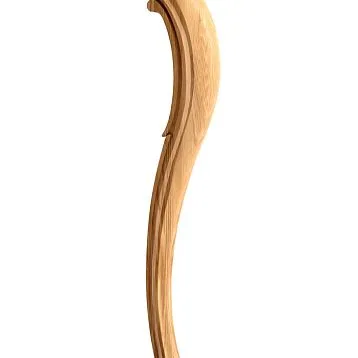
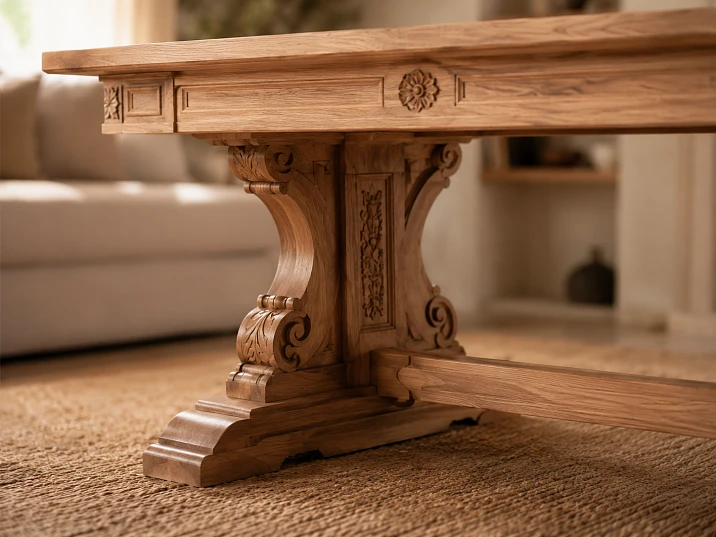
If you want to make the base the main accent, you can consider the carved furniture leg MN-035. But a carved leg requires restraint in other details. If the legs are already complex, the tabletop and decor should support them, not compete.
Carving works especially well where there are other wooden or decorative elements nearby: moldings, carved frames, classic facades, trim, portals, panels, vintage furniture. In too strict minimalism, such a detail can look out of place.
Simple legs for a modern interior
Simple wooden legs are no less needed than carved ones. They suit modern interiors where clean lines, natural materials, and a calm silhouette are valued. Such a table will not shout about itself, but will become warmer and more interesting than furniture on a cold metal base.
Simple legs are good for coffee, side, and small dining tables. They easily combine with wood, glass, stone, painted tabletops, veneer, matte facades, and natural shades.
If the interior is modern, it is better not to overload the table with rosettes and overlays. An author's character can be created through proportions, finish, and precise shape selection.
Legs without coating for custom finishing
The buyer does not always need a ready-made color. For a design project, it is often more important to be able to finish the parts to match the interior: paint, tint, match the shade to the tabletop, floor, facades, doors, or other wooden elements.
In that case, it's worth choose unfinished solid wood furniture legs. This gives more freedom. A craftsman or designer can bring legs, overlays, and other elements to a single finish so the table looks cohesive.
But the absence of coating is not just 'you can paint it however you want.' You need to understand who will perform the finishing, what finish is chosen, how the surface will be prepared, and how the part will behave in specific conditions. Before ordering, it's worth checking the product card and clarifying important parameters.
When to choose an underframe, and when to choose separate legs
Separate legs give freedom. An underframe gives cohesion. These options are neither better nor worse than each other — they solve different tasks.
If the table should be light, airy, and unique in silhouette, separate legs are often more convenient. They can be arranged to match the shape of the tabletop, choose the desired height, match the style, and leave more space under the table.
If a more confident base is needed, it's worth considering an underframe. Especially when the tabletop is round, heavy, large, or the project requires a ready-made base architecture. In such a situation, you can Buy wooden table base for table and build the external appearance around it.
For a broader selection of the base, it's useful to look at furniture frames and solid wood underframesThis is especially convenient when the table is part of a furniture series or when you need to compare several design options.
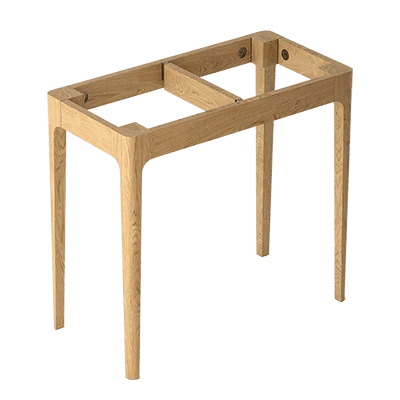
Underframe as a finished table architecture
The underframe is perceived not as a set of supports, but as a foundation. It gives the table a more unified lower part. In an interior, this can look more solid, especially if the tabletop is large or the project requires stability.
For round tables, the underframe often looks particularly organic. It gathers the center, supports the shape of the tabletop, and helps avoid the feeling of randomly placed legs. For rectangular tables, the underframe can give a more architectural look, especially if the table is used not only as a coffee table but also as a small dining, work, or display table.
Before purchasing an underframe, it is important to check the dimensions, purpose, height, compatibility with the tabletop, and mounting features. You cannot choose based solely on appearance. The base must work with the actual tabletop and usage scenario.
Individual legs as freedom for form
Individual legs are good when you want to create a special silhouette. You can make a light coffee table, a compact side table, a small occasional table, a pair of small tables of different heights, or a table with a visually thin tabletop.
Freedom requires calculation. You need to understand how the legs will be positioned, whether the table will wobble, whether the tabletop can withstand the mounting, and how comfortable it will be to sit or walk nearby. This is especially important for round and oval tabletops, where the position of the supports affects the entire look.
Underframe for a round tabletop
A round table is often chosen for soft seating areas: near a sofa, armchairs, in a waiting area, in a salon, or in a hotel room. It has no corners, making it easier to fit into the room's flow. But a round tabletop requires a good center.
The underframe helps assemble this center. The table looks more stable and calm. If too many individual decorative details are added, the round shape may lose its purity. Therefore, for a round table, it is often better to choose one strong base and very neat decor.
Underframe for a rectangular tabletop
A rectangular tabletop provides more length and usable surface. Such a table can stand in front of a sofa, in an office, in a meeting area, or in a showroom. The underframe helps support the horizontal line and makes the base more confident.
If the table is long, special attention must be paid to load distribution. Beautiful legs at the corners may be insufficient if the tabletop is heavy or has a large span. The underframe or frame base helps make the structure more reliable.
What to check regarding height, load, and fastening
Height determines convenience. A coffee table should be proportionate to the sofa. A side table should be convenient for a cup, book, or decor. A small dining table should be suitable for seating. A console table should match the chair or bed.
Load depends on the tabletop and usage. A stone, thick wooden, or massive tabletop requires a different base than a lightweight decorative one. If the table will be in a cafe, salon, or showroom, the load may be higher than at home.
Fastening should be thought out in advance. The legs, underframe, and tabletop must be compatible. If in doubt, it is better to clarify the parameters with the master or STAVROS manager before purchasing.
How to add an author's character
An author's character does not mean that the table should have many decorations. More often, it comes from precise choices: unusual legs, expressive underframe, one carved detail, neat rosette, interesting finish.
Carved overlays for the apron or decorative panel
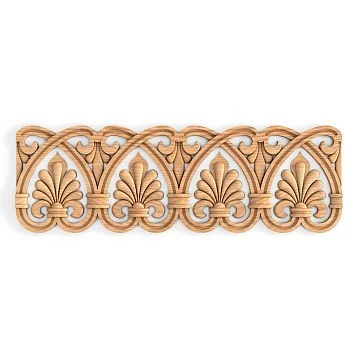
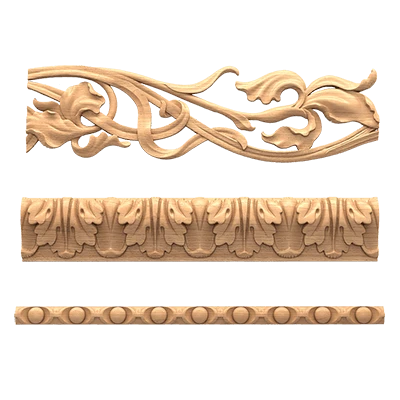
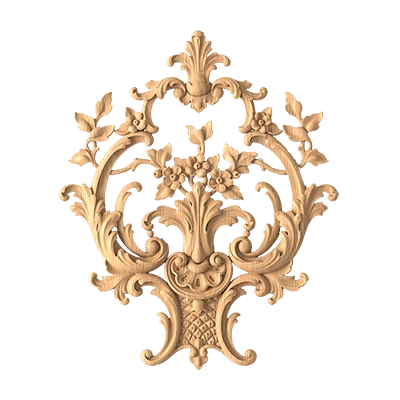
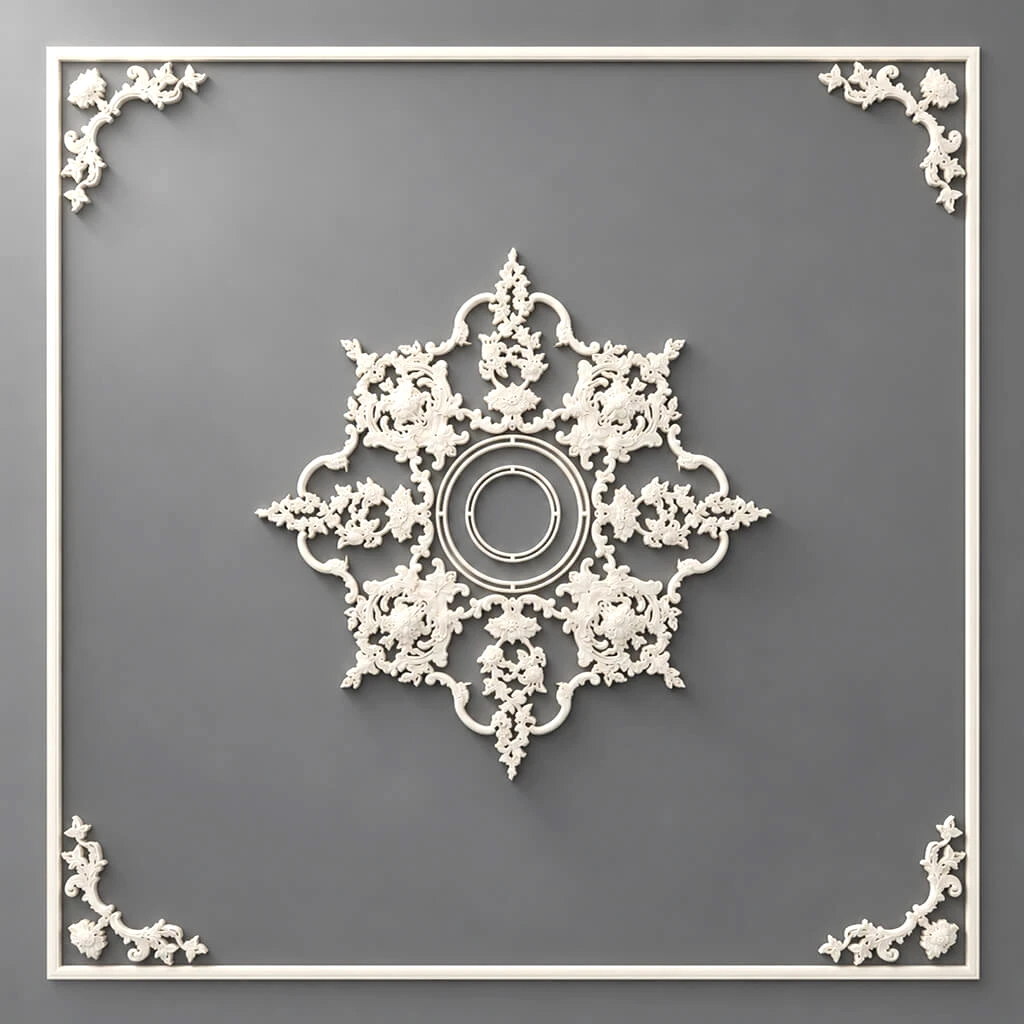
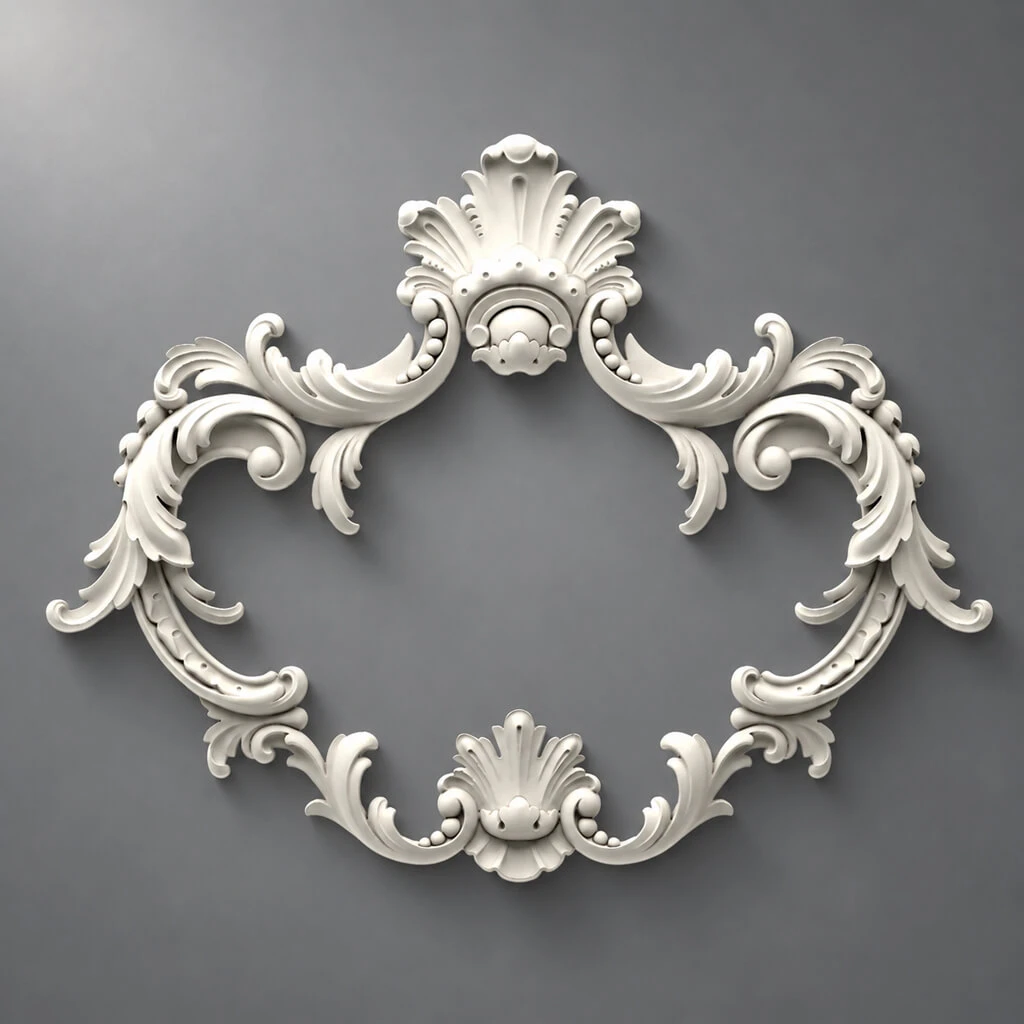
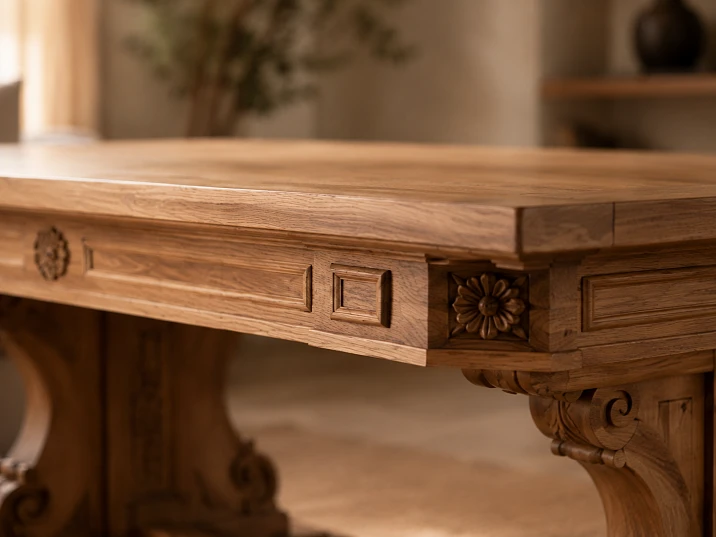
Carved overlays can be used on the apron, side panel, or decorative base insert. They add relief but should not function as load-bearing parts. Their purpose is to decorate, connect the table with the interior, and support a classic or neoclassical style.
If the base seems too simple, you can choose carved overlays for furniture and plan in advance where they will be placed. The overlay must have a place, size, and purpose. If placed randomly, it will look superfluous.
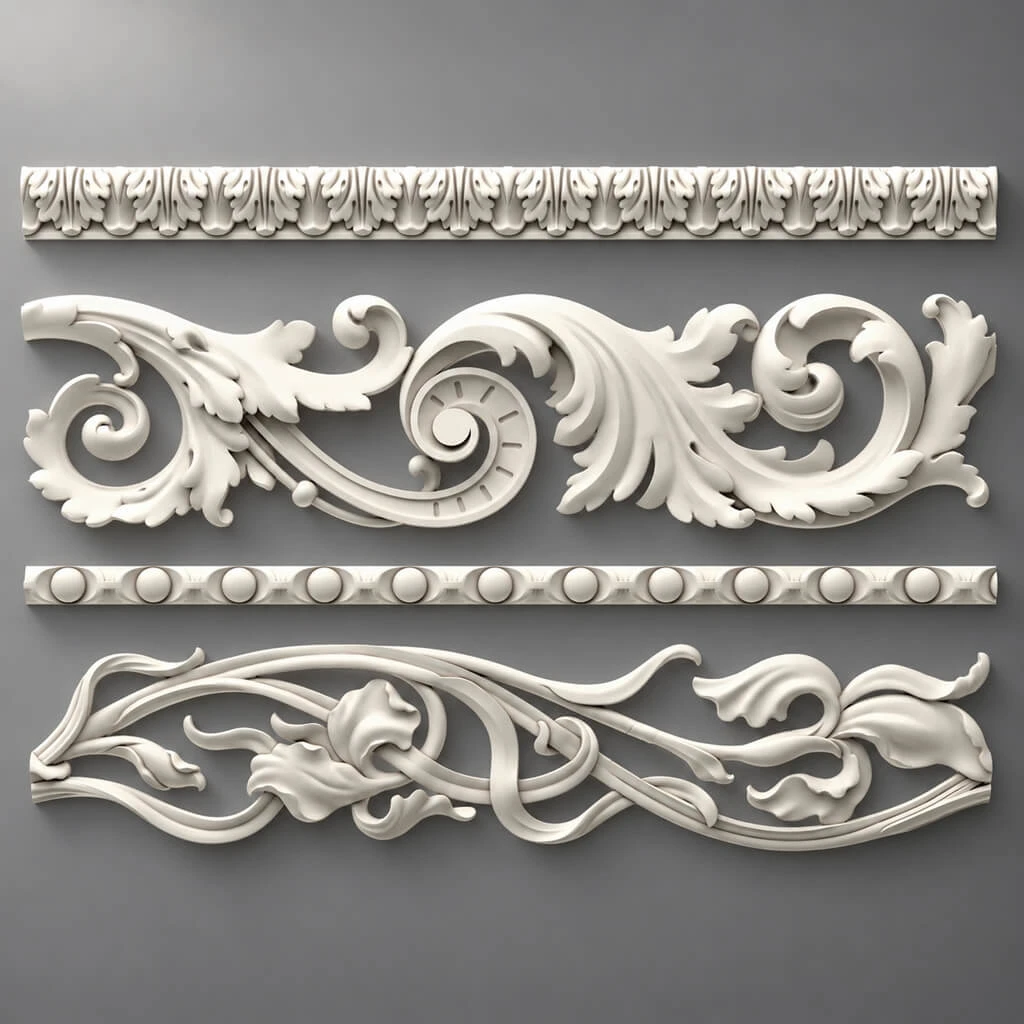
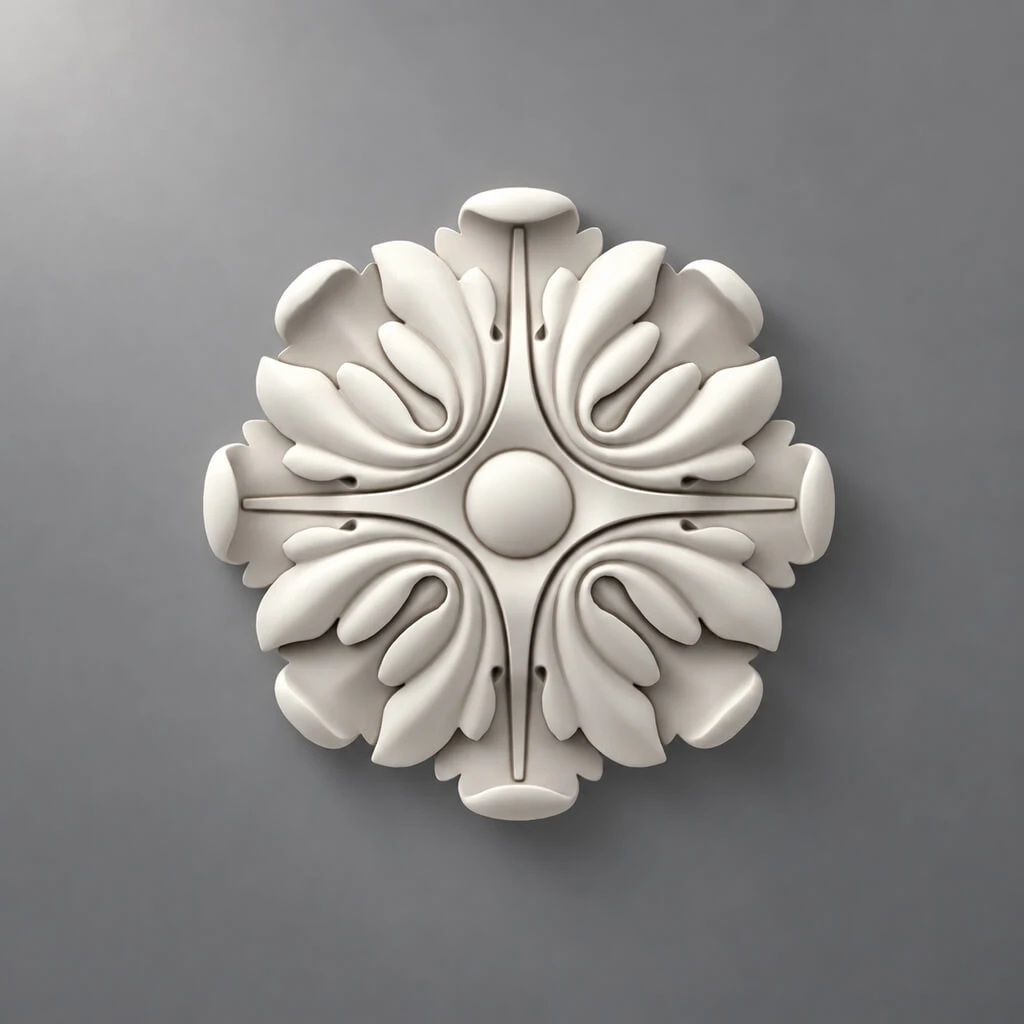
Wooden rosettes as an accent
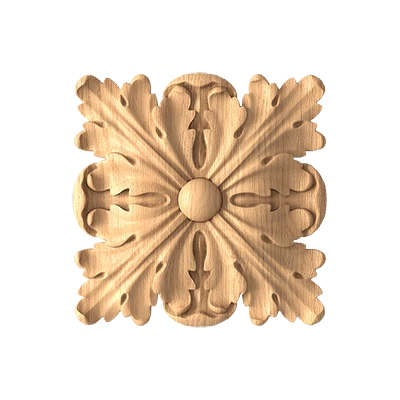
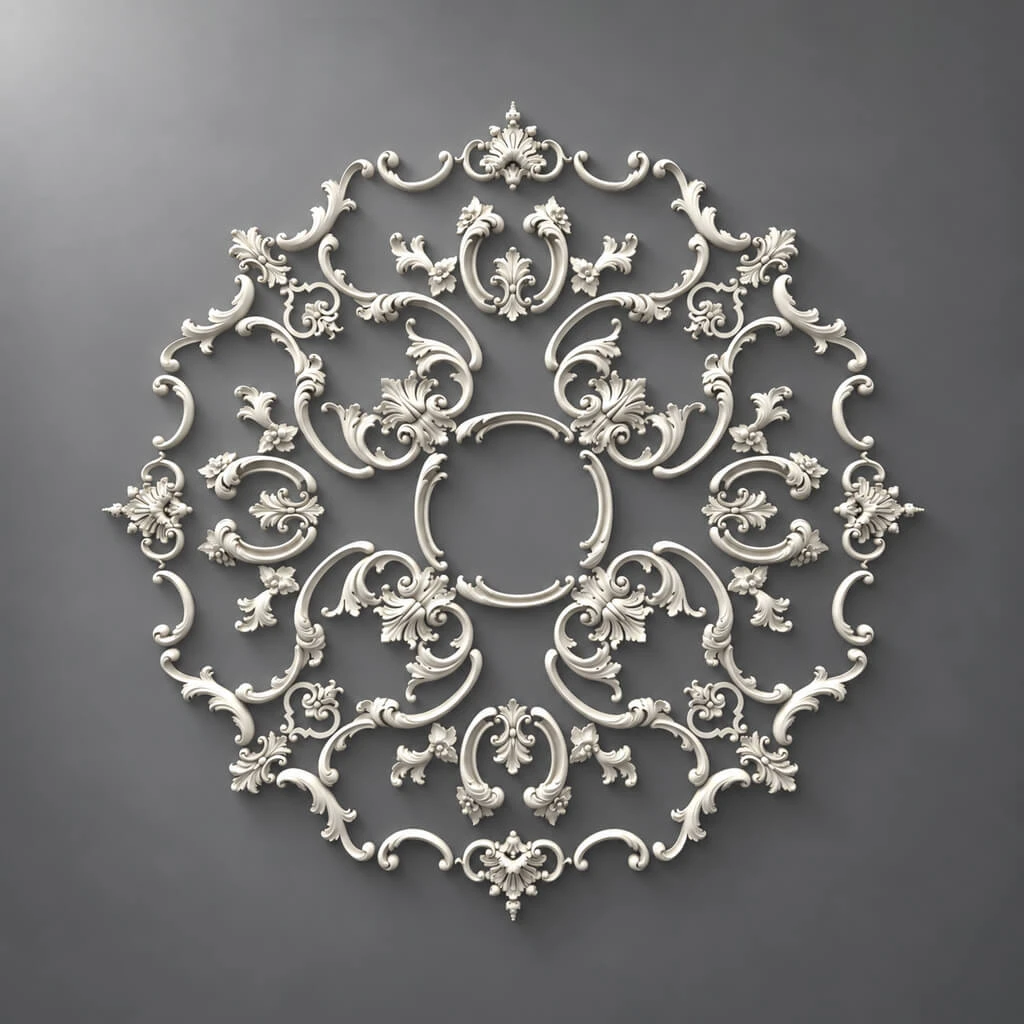
A rosette is a small but noticeable detail. It can decorate the apron, side panel, center of a decorative insert, or a small section of the base. If a large overlay overloads the table, a rosette can be a more delicate option.
For such tasks, you can buy wooden rosettes for furniture decoration. Rosettes are especially useful when you need to add a single accent while maintaining clean lines.
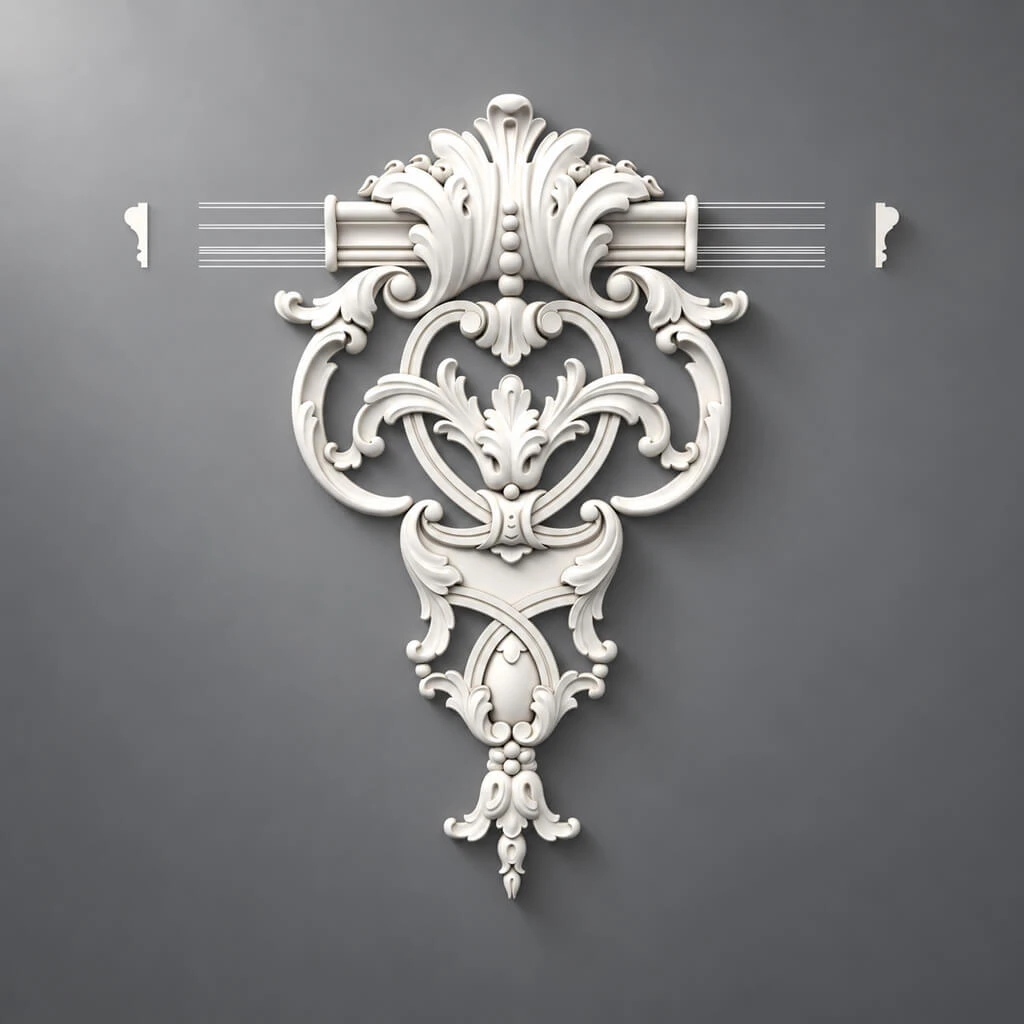
Decorative set C-030 for a cohesive composition
Sometimes it's more convenient to choose not a single overlay, but a ready-made set of decorative elements. For example, if the table is designed in a classic or neoclassical style, and the base should look more cohesive. In such a situation, you can look at C-030 Decorative Set for Furniture.
It's better to use such a set not mechanically, but with an understanding of the placement: where the apron will be, where the side part is, where the open field is, which elements are visible from the main side. The decor should support the structure, not cover it.
Rosette R-032 as a small accent
If you need a small, precise decorative touch, you can consider the wooden rosette R-032. Such an element may be suitable for small surfaces, decorative inserts, side parts, or a central accent on the base.
Before ordering, you need to check the dimensions in the product card and understand whether the rosette will be too small or too large for the chosen area. In table decor, scale is especially important: a small detail can get lost, a large one can overload the piece.
How not to overload a table with decor
There is a simple rule: a table should have one main accent. If the main legs are prominent, the decor should be calmer. If the underframe is strong, the tabletop should be cleaner. If the tabletop is expressive, the base should not compete. If a rosette is added, a large overlay is not always needed.
Overload is especially dangerous for coffee and side tables. They are small, located in the center of the living area, with many objects around them. A too complex base quickly starts to interfere with the perception of the room. Better fewer details, but more precise.
How to choose the style of your future table
Style is born not from a name, but from a combination of form, material, finish, and details. The same wooden element can look different in different projects.
Classic
A classic table loves clear symmetry, warm finishes, turned or carved forms, and neat decorative elements. Expressive legs, a carved apron, and a rosette as an accent are appropriate here.
But classic should not be heavy. If the table is small, it is better not to use too much carving. It is enough to choose precise legs and one decorative element.
Neoclassicism
Neoclassicism is more subtle. Turned legs, moderate decor, and calm proportions suit it. Here it is important not to show everything at once, but to create the feeling of neat, expensive furniture.
A good option is legs with a soft shape, a tabletop without unnecessary complexity, and a small decorative detail. The finish can be light, neutral, woody, or painted to match the interior.
Modern Style
Modern style loves clean form. In such a project, simple legs, clear geometry, natural wood texture, and a calm tabletop work better. Carved details can be used very sparingly or omitted entirely.
Here, the author's character is created not by relief, but by proportion, material, and finish. For example, wooden legs in the right shape can make the table warmer without disrupting the modern look.
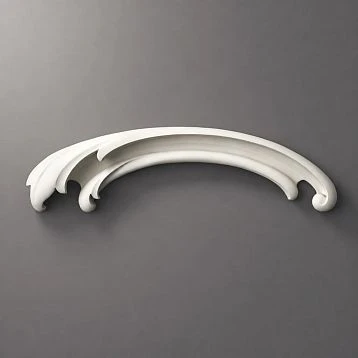
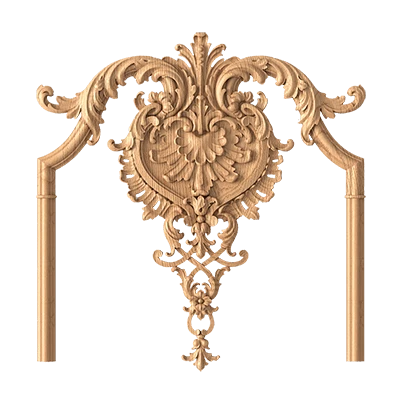
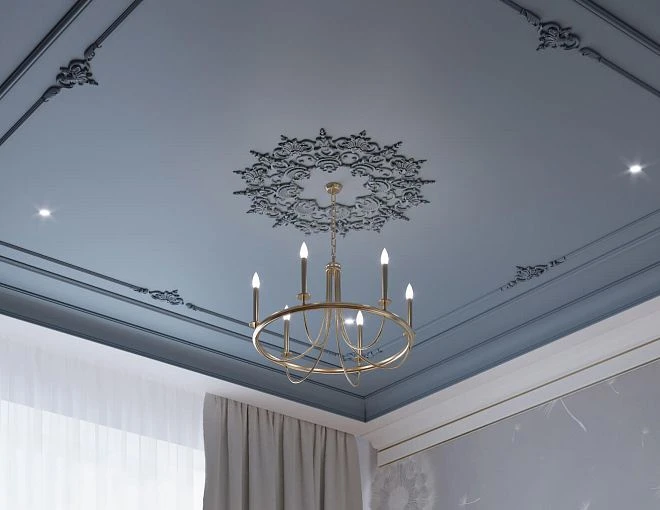
Art Deco style is renowned for its love of ornamentation, symmetry, and refined details. The molded decoration NPU-422 can become an excellent complement to geometric motifs and contrasting color combinations characteristic of this style. Try highlighting it with metallic paint or patina — and you’ll get an eye-catching detail that’s hard to look away from.
Art Deco allows boldness: contrasting materials, expressive form, graphics, shine, deep shades. In such a table, a more active base can be used, but it is important not to mix too many decorative languages.
If the legs are carved, the tabletop should be calmer. If the tabletop is contrasting and bright, the base should be more restrained. Art Deco values effect, not chaos.
Vintage and restoration project
In a vintage project, components help restore character to furniture or create an item with a sense of history. Turned and carved legs, wooden rosettes, neat overlays can be very appropriate.
But vintage can easily turn into theatricality. If all details are too active, the table will look overloaded rather than noble. It's better to choose one line: the shape of the legs, the finish, or a small decorative accent.
Which components to buy for different tasks
The buyer doesn't always know where to start. So it's easier to go from the task.
Minimum set: legs and fastening
If the tabletop already exists and the task is to place it on a beautiful base, you can start with the legs. You need to choose the shape, height, number of supports, fastening method, and check compatibility. This option is suitable for a simple coffee, side, or occasional table.
The fastening needs to be selected for the tabletop and structure. Don't assume that any leg will fit any surface. Before ordering, it's better to clarify which parameters are important for installation.
Designer set: legs and underframe
If a more robust structure is needed, you can combine legs with an underframe or choose a ready-made base. This option is especially useful for round, heavy, or larger tabletops.
The underframe helps assemble the table not only beautifully, but also more constructively clear. This is especially important for craftsmen and designers who are responsible for the result to the client.
Decorative set: legs and overlays
If the table should have a classic or custom character, carved overlays can be added to the legs. But they need to be placed on suitable surfaces: the apron, side panel, decorative insert.
Overlays should not interfere with the tabletop seating, fastening, or maintenance. The decor should be visible, but not random.
Custom set: legs, underframe, overlays, and rosettes
This set is suitable for a more thought-out project: a salon, showroom, hotel, classic living room, designer apartment. Here all elements are assembled under one idea.
But the more details, the more important the sketch. You need to understand where each detail will be placed, what its size is, how it combines with other elements, and what the finish will be.
Set for a designer
A designer often needs to show the client several options: more subdued, more decorative, more modern. For this, you can select 2–3 leg options, one or two underframes, several decorative elements, and compare them in a sketch.
This way, the client sees not just products, but a future item. This helps make a decision faster and avoid random purchases.
What to buy together
| Main purchase | What to add | Why |
|---|---|---|
| Table legs | Hardware or fasteners for a specific structure | To plan the base assembly right away |
| Table legs | Underframe | To increase stability and create a more solid structure |
| Underframe | Carved overlays | To make the base more expressive |
| Carved legs | Wooden rosettes | To add a small personal touch |
| Unpainted legs | Unpainted decorative elements | To paint or stain everything in one color |
| Turned legs | Decor set C-030 | For a classic or neoclassical project |
| Simple legs | Rosette R-032 | To add one neat accent without overloading |
| Underframe | A tabletop of the appropriate shape | To make the structure not only beautiful but also comfortable |
Buying as a set does not mean you have to take the maximum number of parts. It means that all elements are thought out together in advance. Sometimes the best set is legs and a tabletop. Sometimes decor is also needed. Sometimes the underframe is more important than the decorations.
How not to confuse similar products
In wooden components, there are many similar names, but the parts have different tasks.
Table legs are load-bearing elements. They support the tabletop, set the height and silhouette. They are chosen by shape, size, purpose, attachment, and load.
Underframe — a ready or nearly ready table base. It is more architectural and assembled. An underframe is especially useful when stability and a clear structure are needed.
Furniture legs — a broader concept. They can be used not only for a table but also for a cabinet, chest of drawers, armchair, sofa, or other furniture. Therefore, when choosing, you need to look at the purpose of the specific model.
Carved overlays — decorative details. They do not hold the tabletop and do not replace support. They are used on the apron, side panel, decorative insert, or base.
Wooden rosettes — point accents. They decorate a small area but do not replace an overlay where a long decorative line is needed.
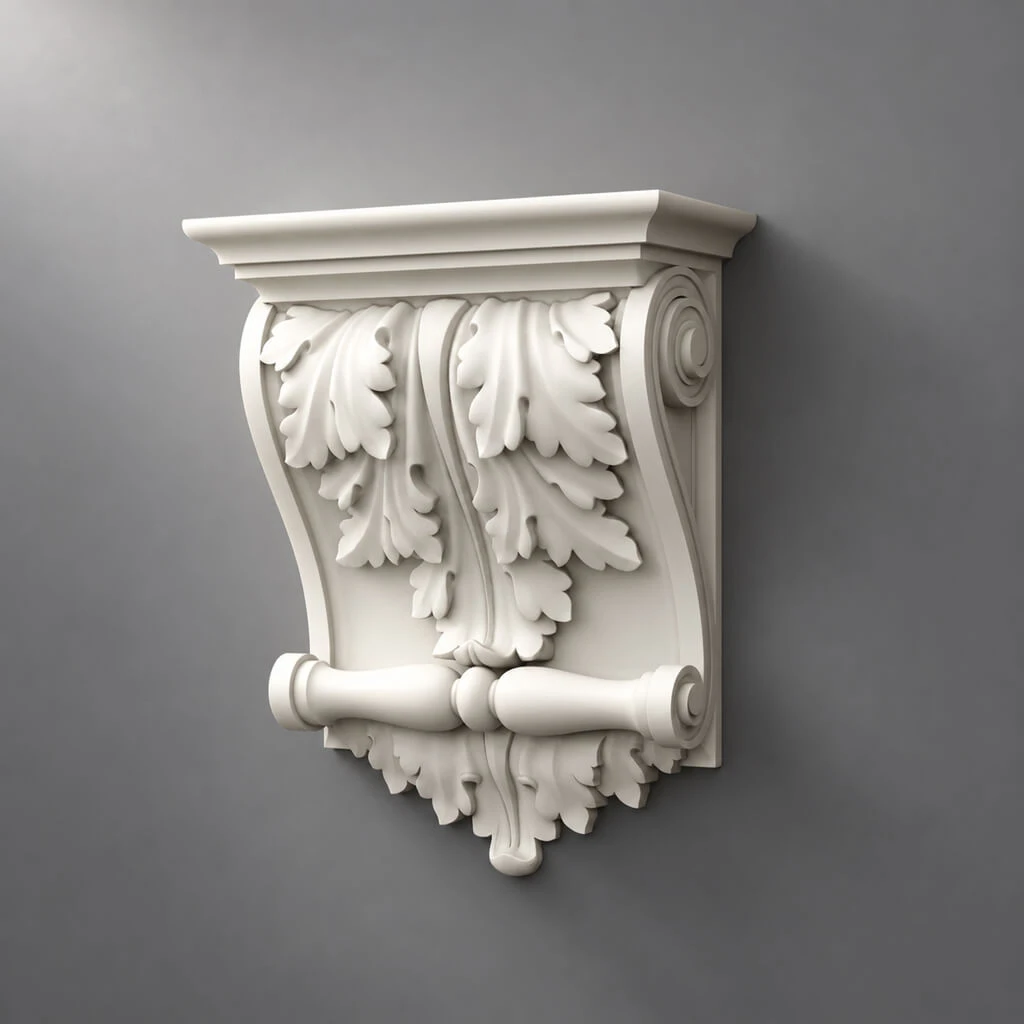
Brackets — elements for shelves, bar areas, consoles, and wall-mounted solutions. They should not be perceived as standard table legs.
Practical selection for different situations
I want to make a coffee table, but not from scratch
Start with the shape of the tabletop. Round, square, rectangular, oval — each requires its own base. Then choose legs or an underframe. If the table should be light, individual legs will work. If more stable, an underframe.
Add decor after the structure is clear. Not the other way around. Otherwise, you might buy a beautiful overlay that later has no place.
There is a wooden tabletop
If the tabletop already exists, it dictates a lot: size, weight, thickness, style. You need to choose legs or an underframe for it. If the tabletop is expressive in texture, it's better to make the base calmer. If the tabletop is simple, the base can be more active.
Before ordering, be sure to check how the selected legs will be attached to the specific tabletop.
Need to make a round coffee table
A round table looks good in a living room, lounge area, salon, or hotel room. The center is especially important for it. The underframe often helps make the base assembled and stable.
If you want separate legs, you need to carefully consider their placement. An error in arrangement can ruin both stability and appearance.
Need a table for the kitchen
For a kitchen table, not only beauty is important, but also daily load. People sit at the table, move it, and place dishes on it. Therefore, you need to be especially careful when choosing the height, base, fastening, and finish.
If you want to buy wooden legs for a kitchen table, you need to understand in advance the size of the tabletop and the number of seats. For the kitchen, overloaded decor is often unnecessary. It is better to focus on a sturdy shape and neat finish.
Need a table for a salon, cafe, or showroom
In a commercial space, the table should contribute to the atmosphere and withstand frequent use. Here you can choose more expressive legs or an underframe, add carved decor, and finish it to match the overall style.
But practicality is more important than a pretty picture. The table should not obstruct passage, wobble, snag clothing, or require complex maintenance in high-traffic areas.
The table needs to be made for painting.
For painting, it's better to choose parts that match the finish. Unpainted legs and decorative elements can be brought to a single color. This way, the table looks cohesive even if assembled from several different parts.
Before starting work, you need to clarify surface preparation and compatibility with the chosen finish. A good finish makes an item look more expensive, while a bad one can ruin even a beautiful shape.
Size, load, and finish: what to check in advance
The table size should match the space. A coffee table should not obstruct the passage between the sofa and armchair. A side table should not be uncomfortably high or low. A small dining table should fit the seating.
The height of the legs and underframe affects everything. If the table is too low, it's uncomfortable to use. If too high, it disrupts the proportions of the lounge area. It's better to compare the future table with the sofa, armchairs, bed, or chairs in advance.
The load depends on the tabletop. Wooden, stone, glass, MDF, painted—each has its own weight and attachment method. The heavier the tabletop, the more carefully you need to choose the base.
The finish should tie the parts together. If the legs, underframe, overlays, and rosettes are to be painted, it's worth planning a single finish in advance. If some elements already have a coating, you need to check that the shades don't clash.
Mistakes that ruin a designer table
Start with the base
Rosettes and overlays attract attention, but the table starts with the base. If the structure is weak or the proportions are wrong, decoration won't save the piece. First the legs or underframe, then the tabletop, then decorative details.
Buy legs only by photo
Photos don't show scale. A leg may look elegant but be too large for a small table. Or appear sturdy but visually get lost under a massive tabletop. You need to check dimensions and relate them to the project.
Not planning the tabletop
Without a tabletop, you can't accurately choose the base. Even an approximate shape and size help. A round tabletop requires one logic, a rectangular one another, a heavy one a third.
Overloading the table with decoration
Carved legs, overlays, rosettes, a complex tabletop, and contrasting finish all at once can make the table too heavy. Designer furniture doesn't have to be complex. It has to be precise.
Confusing decorative and structural elements
An overlay decorates but doesn't support. A rosette accents but doesn't strengthen the structure. Legs and underframe are responsible for the foundation. These roles cannot be mixed.
Not checking the fastening
Even a beautiful part must be installed correctly. You need to understand how the legs or underframe will connect to the tabletop, what hardware is needed, and who will perform the assembly.
Expecting a fully finished table
Components are a path to a custom piece, but not a ready-made table in a box. A tabletop, fastening, finishing, assembly, and proportion check are needed. This is where individuality emerges.
Who this project is suitable for
For interior designers, this approach provides freedom. You don't have to search for a ready-made table that 'almost fits'; instead, you can assemble a piece for a specific room: the desired shape, height, color, decor, and mood.
For furniture makers and carpentry workshops, components help create expressive items faster. There's no need to spend time crafting every complex part from scratch. You can focus on assembly, finishing, and precision of fit.
For decorators and restorers, ready-made wooden elements help maintain a style: classic, vintage, neoclassical, salon, interior. Especially when you need to add relief or restore the feel of a furniture detail.
For owners of cafes, boutiques, salons, and showrooms, a custom table helps make the space memorable. Such a piece can become part of the atmosphere, not just furniture for use.
For private buyers, the project is suitable if they want a unique item. You don't necessarily need to know how to carve or turn legs. You can choose ready-made elements, plan the tabletop, and assemble the piece with a craftsman.
It's better for someone to choose a different path
If you need a fully finished table without selecting parts, assembly, and finishing, the components may not fit. Here you'll have to think, measure, choose, connect elements, and check the result.
If you don't have a clear idea about the tabletop, it's better not to rush into buying the base. The legs or underframe must match the shape, size, and weight of the top part.
If the project only requires the simplest utilitarian item without a decorative purpose, an artisanal approach may be excessive. In that case, it's better to choose the most neutral base.
If only the minimum price matters, not individuality, such a project may also seem unnecessary. Its purpose is to create an item with character, not just to fulfill a basic need.
How to choose components for STAVROS
Start with the idea and size. Determine what kind of table you need: coffee, side, small dining, decorative. Then decide on the tabletop: round, rectangular, square, wooden, glass, stone, painted.
After that, move on to the base. For a light silhouette, you can buy wooden table legs. For a wider selection, it's worth looking at furniture legs and supports STAVROS. For a project requiring finishing — choose unfinished solid wood furniture legs.
If a more compact design is needed, you can Buy wooden table base for table or look at furniture frames and solid wood underframes.
For a specific type of base, you can proceed to models: turned furniture leg MN-124 or Carved Furniture Leg MN-035.
Once the base is selected, decide on the decor. For relief, you can choose carved overlays for furniture. For a more cohesive decorative idea — look at C-030 Decorative Set for Furniture. For a small accent — buy wooden rosettes for furniture decoration or the wooden rosette R-032.
Before ordering, check the dimensions, material, purpose, finish, and compatibility with the future tabletop. If the project is complex, it's better to clarify details in advance with a STAVROS manager or the craftsman who will assemble the table.
FAQ
Can I make a custom table from STAVROS components?
Yes. The base can be assembled from wooden legs or an underframe, and individuality can be added through carved overlays, rosettes, decorative kits, and finish. The tabletop needs to be selected separately according to size and purpose.
What is better to choose: legs or an underframe?
Legs give more freedom in silhouette. A base is more convenient if you need a stable and more assembled foundation. For a light coffee table, legs are often suitable; for a large or heavy tabletop, it's better to consider a base.
Can carved overlays be used on the table?
Yes, but only as decoration. They can be placed on the apron, side panel, decorative insert, or base. Overlays should not perform a load-bearing function.
Which legs are suitable for a designer table?
For classic style, carved and turned legs are suitable. For neoclassical, calm turned shapes. For a modern interior, simpler wooden legs with clean geometry.
How to make a table unique without overloading it with decor?
Choose one main accent: unusual legs, expressive base, carved overlay, or rosette. You shouldn't use all decorative elements at once if they don't have a common idea.
Can I make a coffee table myself without making parts from scratch?
Yes. You can take ready-made legs, base, and decorative elements, choose a tabletop, and focus on assembly, finishing, and proportions. This is easier and neater than trying to manually make complex carvings.
How to make a wooden tabletop and choose a base for it?
First, determine the shape, size, thickness, and weight of the tabletop. Then select the legs or underframe. The heavier the tabletop, the more attention you need to pay to the base and fastening.
Which legs to choose for a kitchen table?
For the kitchen, stability, height, seating comfort, and durability are important. Decoration should be used moderately. If the table will be used actively every day, the base should be not only beautiful but also practical.
Can wooden rosettes be used on a table?
Yes, if they work as a point accent. They can be placed on the apron, side panel, or decorative insert. The main thing is not to put a rosette where it interferes with fastening or maintenance.
How does an underframe differ from a furniture frame?
An underframe is specifically the base for a table that supports the tabletop. Furniture frames have a broader purpose and can be used in different items. When choosing, you need to look at the specific task.
What to buy together with table legs?
Most often, you need fasteners for the specific design, an underframe or frame part if stability is required, as well as decorative elements — overlays or rosettes, if the table should be expressive.
Is this approach suitable for a salon or showroom?
Yes. In a commercial interior, a designer table can become part of the atmosphere. But you need to consider stability, wear, finish, and ease of maintenance.
Can all parts be painted the same color?
Yes, if the selected elements are suitable for the finish. Unpainted legs and wooden decor can be easily brought to a single color, but preparation and finishing must be thought out in advance.
What should be checked before ordering?
Check the dimensions, purpose, material, finish, height, compatibility with the tabletop, attachment method, and future load. If the project is complex, it is better to clarify the parameters before purchasing.
Conclusion
A designer table from STAVROS components is not about making everything from scratch. It is a more reasonable path: take ready-made wooden elements, choose a suitable base, think through the tabletop, add decor only where needed, and assemble the piece for a specific interior.
The legs define the silhouette. The underframe provides stability and architecture. Overlays add relief. Rosettes create a point accent. The finish ties everything into a single piece. If every detail is chosen deliberately, the table looks not like a random assembly, but like designer furniture.
For a designer, this is a way to offer the client an individual solution. For a craftsman, it is an opportunity to assemble an expressive piece faster. For a private buyer, it is a chance to get a table that is not in the standard furniture range. The main thing is to start with an idea, check the dimensions and compatibility, and then select STAVROS components for your project.