Article Contents:
- Wooden skirting board PLT-001-1 120 mm: what exactly needs to be reserved
- PLT-001-1 made of MDF 120×16×2600 mm
- Moisture-resistant MDF 120×16×2600 mm
- Beech PLT-001-1 120×15×2400 mm
- Oak PLT-001-1 120×15×2400 mm
- Installation reserve
- Operational reserve
- Why installation remnants cannot be considered a reserve before inventory
- Suitcase impact
- Cleaning cart
- Furniture rearrangement
- Local leak
- Doorway repair
- Floor covering replacement in one room
- Damage to an external corner
- When two planks look rational
- When four planks provide the best balance
- When six planks are justified
- Natural texture
- Toning
- Finish
- Why the original batch is more useful than a later purchase
- Under covering enamel
- Preserving the color formula
- Store unfinished or finished
- Regular MDF — 2,290 ₽
- Moisture-resistant MDF — 2,790 ₽
- Beech — 5,140 ₽
- Oak — 7,730 ₽
- How to account for 2200 mm for oak and beech
- How to account for 2200 mm for MDF
- Separate dry zone
- Even support
- Impact protection
- Separate labeling
- Do not mix with construction debris
- One central warehouse
- One bar per floor or building
- For 32 rooms
- 0–2 factors
- 3–5 factors
- 6–7 factors
- Installation
- Repair fund
- What size does PLT-001-1 have?
- What materials are available for PLT-001-1?
- What is the length of PLT-001-1 made of MDF?
- What is the length of the oak PLT-001-1?
- How does regular MDF differ from moisture-resistant MDF in inventory accounting?
- Do I need to buy baseboard for repair stock?
- How does installation stock differ from repair reserve?
- Do I always need to buy +10%?
- How many whole planks should I keep for 32 numbers?
- Is it better to store two or four planks?
- When do six planks make sense?
- Do I need a separate spare oak plank?
- Can I store only offcuts?
- What is R-FULL?
- How to label reserve PLT-001-1?
- How to store wooden baseboard?
- Do I need to keep the paint sample?
- Do I need to store the reserve already painted?
- Where to buy wooden baseboard?
- Where can I buy PLT-001-1?
- Can I use the old category URL /vid_izdeliya_plintus/?
- How to order PLT-001-1 with operational reserve?
- How to check the current price?
- How much do two oak reserve planks cost?
- How much do four oak planks cost?
- How much do six oak planks cost?
- Do I need to distribute the reserve across floors?
- What to do with the reserve after five years?
- When should you not buy additional strips at all?
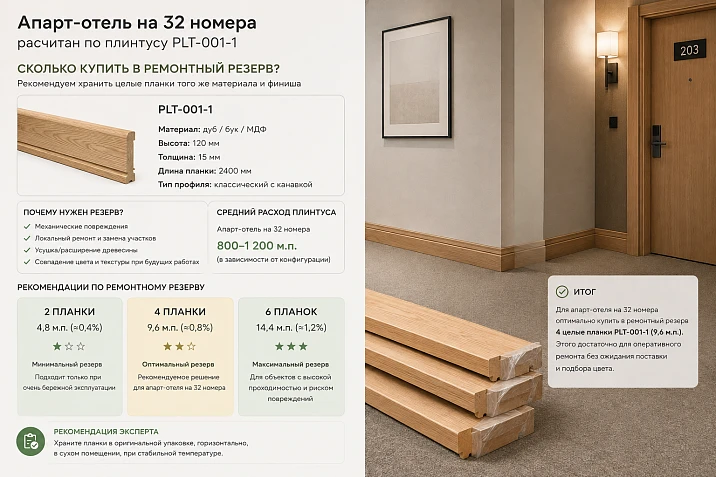
The main installation order for the baseboard has already been calculated. The contractor knows the quantity of PLT-001-1 for 32 standard rooms, corridors, and other areas specified in the project. The cutting plan is closed, the allowance for installation errors is accounted for, and the purchase is almost ready to ship. And it is at this moment that another question arises, which cannot be solved by the usual formula of "add another 10%": what to leave after handing over the facility for future repairs.
For an apartment hotel, the operational reserve is a separate purchasing task. Six months after opening, a cleaning cart may damage a long section of the wall. Two years later, the flooring in one room is replaced. After a local leak, part of the baseboard is dismantled. When rearranging furniture, a deep chip appears. In such cases, short offcuts from the construction site may be useless: a damaged section 2100 mm long cannot be neatly replaced with a set of pieces 300–700 mm each without additional visible joints.
Therefore, in this article, we distinguish between two concepts:
installation allowance ≠ operational repair fund.
The installation allowance is needed to finish the construction: to compensate for cutting errors, complex corners, or damage during installation.
The repair fund remains on the site after handover. Its purpose is to preserve the ability to replace an individual part months or years later with the same profile, from the same material, and, if possible, with the same finish.
For PLT-001-1, this question is particularly interesting because the product card confirms four versions:
-
standard MDF 120×16×2600 mm;
-
moisture-resistant MDF 120×16×2600 mm;
-
beech 120×15×2400 mm;
-
oak 120×15×2400 mm.
That is, you cannot store "any white skirting board 120 mm" in the warehouse and consider it a guaranteed replacement. Even within the same article number, the material, thickness, and length differ.
A direct answer to the question "2, 4, or 6?" is this: there is no universal number. For a facility with a normal warehouse and recurring numbers, 2–4 whole strips often seem more logical than an abstract percentage, but six strips may be justified for expensive custom finishing, high operational load, or complex future reordering. The decision is made based on renovation scenarios, not on the size of the initial order.
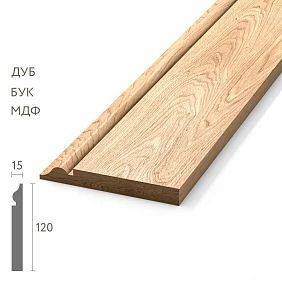
Wooden skirting board PLT-001-1 120 mm: what exactly needs to be reserved
At the time of verification, the PLT-001-1 card confirms the following options:
| Execution | Size | Length | Price at the time of check |
|---|---|---|---|
| MDF | 120×16 mm | 2600 мм | 2 290 ₽ |
| Moisture-resistant MDF | 120×16 mm | 2600 мм | 2 790 ₽ |
| Beech | 120×15 mm | 2400 мм | 5 140 ₽ |
| Oak | 120×15 mm | 2400 мм | 7 730 ₽ |
Prices may change, so they need to be rechecked immediately before ordering. For the article, something else is more important: the repair stock must match the specific installation specification.
If an oak PLT-001-1 120×15×2400 mm with a specific tint is installed at the facility, a reserve of regular MDF 120×16×2600 mm is not an equivalent replacement just because the article name matches.
If the specific configuration is approved, you can buy wooden skirting board PLT-001-1 120 mm together with the main order and as a separate line of the repair fund.




PLT-001-1 made of MDF 120×16×2600 mm
The MDF version is 200 mm longer than the solid wood one and cheaper than the oak one. For the repair reserve, this means a lower storage cost for a whole length and a larger maximum size for a single one-piece replacement.
But even with MDF, there is a reason to keep the original batch: after a few years, the profile may remain the same, but the coating may already differ in color and gloss from a new painted product.
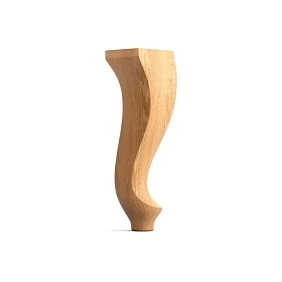
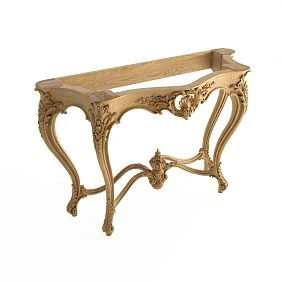
Our factory also produces:






Moisture-resistant MDF 120×16×2600 mm
Moisture-resistant MDF has the same nominal cross-section and length as regular MDF, but the material is different.
The warehouse list should include:
PLT-001-1 / moisture-resistant MDF / 120×16×2600 / ...
And not:
white skirting board 120 mm.
Otherwise, after a few years, the maintenance service may take a visually similar strip that does not match the original specification.
Get Consultation
Beech PLT-001-1 120×15×2400 mm
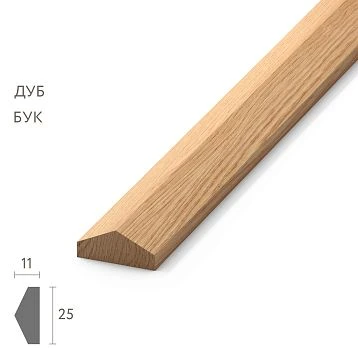
Beech is more expensive than MDF and has a length of 2400 mm. If it is painted with an opaque enamel, the reserve can be stored either with a finished finish or as an original part with a preserved painting process card. Which option is better depends on the operation and storage conditions.
Oak PLT-001-1 120×15×2400 mm
For oak, the reserve is especially valuable if the wood remains visible under a tint or transparent coating. A new batch years later may differ in grain, shade, and how it accepts the finish.
You cannot promise an absolute match even within a single purchase, but the original batch gives more control than trying to later recreate the same visual result from scratch.
Buy wooden baseboard with a margin: installation reserve and repair fund are two different budget line items.
One of the common mistakes is to leave after installation everything that was not accidentally used up and call it a repair fund.
This only works if the leftovers:
-
are known by length;
-
marked;
-
match the material and finish;
-
suitable for real future replacements;
-
will not be accidentally used by the contractor before project handover.
Installation reserve
It is needed during construction. Typical reasons for consumption: cutting error, unsuccessful angle cut, surface damage, change in actual wall size, part replacement after installation.
Operational reserve
It is planned in advance and transferred to operations after acceptance.
It is better to have separate items in the estimate:
Installation — PLT-001-1 / ___ pcs.
Repair fund — PLT-001-1 / ___ whole planks / do not use during installation without approval.
Thus, the two tasks stop competing for the same material.
Why installation leftovers cannot be considered a reserve before inventory
Let's imagine that after completion, six pieces remain: 320, 480, 690, 900, 1150, and 1380 mm. In total, this is almost 5 meters. On paper, the reserve seems large. But if a visible wall 2100 mm long is damaged, no single piece allows a seamless replacement.
Therefore, leftover meters and repair capability are not the same thing.
Why the 'buy +10%' rule works poorly for operational reserve
Let the installation project conditionally require 160 whole planks.
10% is:
160 × 0.10 = 16 additional planks.
For regular MDF at a price of 2,290 ₽, this is 36,640 ₽.
For oak at 7,730 ₽ — 123,680 ₽.
And that's without finishing, packaging, and storage.
But the operational scenario may require only two or four whole pieces.
The percentage makes sense where risk is proportional to the volume of installation. Future repairs work differently: in a year, one long wall may be damaged regardless of whether 50 or 500 planks were installed.
Therefore, the repair fund should be calculated based on the following questions:
-
What typical damages are likely?
-
What is the maximum solid section that will need to be replaced?
-
How many independent repairs should be possible before the next purchase?
-
How easy is it to buy the same profile again in 2–5 years?
-
How difficult is it to replicate the finish?
-
Is there a place for proper storage of a long-length item?
What damages to PLT-001-1 are realistically likely in an apart-hotel
Suitcase impact
In rooms and corridors, a suitcase can leave a deep chip on a visible surface. A minor defect is sometimes repaired locally, but severe damage may require replacing the entire section.
Cleaning cart
Repeated impacts at the same level can damage the profile in high-traffic service areas.
Furniture rearrangement
A bed, nightstand, armchair, or console can hit the baseboard during disassembly.
Local leak
For MDF and wooden trim, the consequences depend on the material and the extent of wetting. After eliminating the cause, the damaged area may require replacement.
Doorway repair
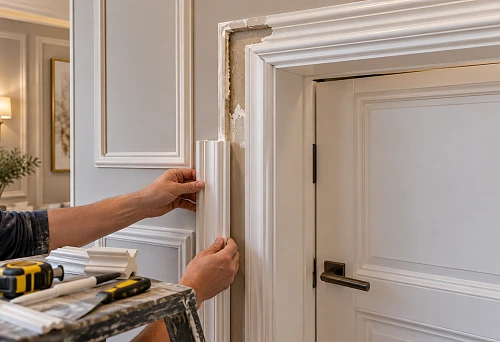
When replacing a door or restoring a slope, part of the adjacent baseboard sometimes has to be removed.
Replacing flooring in one room
If only a local section of the floor is being replaced, the new installation may affect the baseboard.
Damage to an external corner
External corners are especially vulnerable to impacts. With a complex miter cut, it is sometimes easier to replace a sufficiently long piece than to try to restore the end.
Two, four, or six whole PLT-001-1 planks: how to choose a scenario
| Reserve | What it's suitable for | Advantage | Limitation |
|---|---|---|---|
| 2 planks | Single local repair | Minimum money and storage | small insurance fund |
| 4 strips | several independent repairs | more versatile stock | more frozen material |
| 6 slats | high load, complex finishing, remote procurement | strong repair fund | requires explicit economic justification |
When two planks look rational
If repeat procurement is relatively simple, finishing is standard, and long useful offcuts remain after installation, two whole planks can serve as a "long-part insurance."
When four planks provide a better balance
For 32 repeating numbers, four whole strips can be justified as follows: one is a long wall replacement, the second is a door or corner unit, the third is an independent second repair, the fourth is an insurance strip. This is an example of logic, not a mandatory norm.
When six strips are justified
Six should be considered if the object operates intensively, the profile runs through a large number of rooms, the finish is complex, a new batch may differ significantly visually after years, the object is far from the supplier, or there is a risk of losing several long sections at once.
Why it is better to store the repair stock as whole strips
A whole strip retains maximum flexibility.
For MDF — 2600 mm.
For beech and oak — 2400 mm.
Imagine a section 2050 mm long is damaged. Remnants of 300, 700, and 1400 mm do not provide one solid piece. You can assemble the section from joints, but on an open wall this changes the appearance.
When large remnants can replace one reserve strip
Not all offcuts are useless. They need to be classified.
You can use the internal system:
-
R-S — short;
-
R-M — medium;
-
R-L — long;
-
R-FULL — full whip.
These are not manufacturer designations, but an internal warehouse classification of the item.
If after installation there are already two whole R-FULL and several R-L left, ordering four more whips separately may be excessive.
First inventory, then purchase.
Buy oak wooden baseboard as a reserve: why it's especially important to keep material from the original batch
If the project uses oak, you can to buy wooden baseboard through the current working directory, but it is better to plan the reserve simultaneously with the main batch.
Natural texture
Oak wood has natural variability. Over the years, a new profile may be the same article number but visually differ from the original batch.
Staining
The same composition on new wood does not guarantee an absolutely identical color perception.
Finish
The degree of gloss, varnish, oil, or another finishing system ages over time.
Why the original batch is more useful than a later purchase
It does not guarantee a perfect match, but it reduces the number of unknowns: the profile, material, thickness, and original batch are already known.
Beech PLT-001-1 for repair stock
For beech, the task depends on the finish.
Under an opaque enamel
If the wood is fully painted, it is more important to replicate the coating technology.
Preserving the color formula
In the operational documentation, it is useful to record the color code, manufacturer, and layer scheme.
Store unfinished or finished
Both options have advantages.
An unfinished plank does not visually age with the coating, but requires repainting.
A finished plank allows for faster repairs, but its finish may also change during long-term storage and differ from the wall after several years of use.
Therefore, the decision is recorded in the project.
PLT-001-1 made of MDF: reserve a whole profile or simply buy it later
For regular MDF, the price is lower than oak, so two to four whole planks freeze less money.
Advantages of having your own reserve:
-
profile is already in stock at the facility;
-
length is known to be 2600 mm;
-
no waiting for new delivery;
-
finish can be saved in advance.
Arguments for buying later:
-
standard covering finish;
-
available profile;
-
limited stock;
-
low risk of long damage.
The right choice depends on the cost of not only the plank, but also the downtime of the room. If the absence of one part delays the return of the space to operation, a small stock reserve may be justified even for inexpensive MDF.
Moisture-resistant PLT-001-1 cannot be replaced with regular MDF based on size alone.
Both options in the card have dimensions of 120×16×2600 mm.
But identical geometry does not make the materials identical.
In the marking:
PLT-001-1 / moisture-resistant MDF / 120×16×2600
And not:
PLT-001-1 / 120 mm.
This is especially important if different zones of the facility use different versions.
Cost of repair reserve: how much money is frozen by 2, 4, and 6 planks
Based on the card price at the time of check:
Regular MDF — 2,290 ₽
-
2 slats = 4,580 ₽;
-
4 slats = 9,160 ₽;
-
6 slats = 13,740 ₽.
Moisture-resistant MDF — 2,790 ₽
-
2 slats = 5,580 ₽;
-
4 slats = 11,160 ₽;
-
6 slats = 16,740 ₽.
Beech — 5,140 ₽
-
2 slats = 10,280 ₽;
-
4 slats = 20,560 ₽;
-
6 slats = 30,840 ₽.
Oak — 7,730 ₽
-
2 slats = 15,460 ₽;
-
4 slats = 30,920 ₽;
-
6 slats = 46,380 ₽.
These amounts do not include finishing, packaging, and storage costs.
The table shows why the formula “let’s take six just in case” works especially poorly for oak. Six slats are already 46,380 ₽ in product value alone as of the check date.
Why an expensive oak PLT-001-1 reserve should have a specific purpose
For expensive material, it is useful to create a scenario list.
For example:
-
R1 — one long solid wall replacement;
-
R2 — door unit;
-
R3 — two external corners;
-
R4 — insurance whole plank.
If it is impossible to explain which risk the fifth or sixth plank covers, such a reserve volume may be excessive.
Buy wooden floor plinth: first inventory installation leftovers
Before additional purchase, it is worth understanding what already remains after the main cutting.
If you need buy a wooden floor plinth, this order is made after inventory.
Suppose after installation there are already:
-
2 leftovers of 2200 mm;
-
1 leftover of 1700 mm;
-
3 remnants of 800–1100 mm;
-
a few short ones.
In such a situation, buying four additional whole strips without analysis may be unnecessary.
How to account for 2200 mm for oak and beech
With an initial length of 2400 mm, a 2200 mm remnant is almost equivalent to a whole piece for many repair scenarios.
How to account for 2200 mm for MDF
With an initial 2600 mm, this is no longer a full strip, but still a very useful piece.
Where and how to store the whole PLT-001-1 after project completion
Having a reserve only makes sense with proper storage.
Separate dry area
The long-length material should not be stored where it regularly comes into contact with water, construction debris, or household chemicals.
Even support
The planks should not be turned into a "stick leaning against the wall." The long profile should be stored in a way that reduces the risk of bending and mechanical damage.
Impact protection
A reserve that is itself damaged by a cart in the warehouse ceases to be a reserve.
Separate labeling
The packaging or tag indicates:
-
article number;
-
material;
-
size;
-
object;
-
batch date;
-
finishing;
-
reserve unit number.
Do not mix with construction leftovers
R-FULL should be stored separately from the offcuts that installers may use for current work.
What to write on each spare plank
Practical labeling:
PLT-001-1
oak
120×15×2400
Apartment hotel ______
batch / date ______
finish ______
R-FULL №1
If the site has a digital operations system, you can add a QR code or an internal link to the specification.
The main thing is that in five years a new employee won't have to guess where the long oak plank in the warehouse came from.
Do you need to store a painted sample separately
Even if whole spare strips are stored without final coating, it is useful to keep a separate finish reference:
-
physical paint sample;
-
RAL/NCS code, if used;
-
coating manufacturer;
-
primer;
-
finish layer;
-
gloss level;
-
date;
-
photo of the finished assembly.
This does not guarantee identity over years, but significantly improves repair reproducibility.
Reserve PLT-001-1 for 32 numbers: one warehouse or distribution across floors
There is no single answer.
One central warehouse
Pros: easier inventory, easier to control conditions, lower risk of accidental consumption.
The downside is that the part needs to be delivered to the repair site.
One bar per floor or building
It only makes sense if the facility is large, logistics between buildings are complex, and there are proper storage conditions at each location.
Otherwise, a distributed fund increases the risk of losing material or forgetting about it.
For 32 rooms
If the facility is compact, a central warehouse is usually organizationally simpler. But the final decision depends on the layout of the apart-hotel.
What to do with the repair fund after five years
The reserve cannot simply be set aside and forgotten.
Periodic inventory is useful.
Check:
-
does the material physically exist;
-
is the profile damaged;
-
is the marking unchanged;
-
is the finish reference preserved;
-
were any planks used in the repair;
-
how much R-FULL and R-L is left;
-
does it make sense to buy more material during planned repair.
If the object undergoes a major renovation and the entire baseboard is replaced, the old reserve can be included in current works or written off according to internal rules.
When additional PLT-001-1 is not needed at all
A separate repair fund may be redundant if:
-
after the main cutting, several whole or almost whole planks already remain;
-
the object is small;
-
repeat purchase is available;
-
the finish is standard and easily reproducible;
-
the repair strategy allows replacing a large section or the entire unit;
-
there is no space on the object for proper storage;
-
the long-length item will be damaged in the warehouse sooner than it is needed;
-
the material is cheap, and delivery is fast and stable.
The anti-selling conclusion is important here: a reserve does not have to exist just because the object is commercial.
When a repair reserve is rational
It is especially justified if:
-
numbers repeat;
-
one profile is used in many rooms;
-
finishing is individual;
-
need a long seamless repair without extra joints;
-
material — oak or beech with visible wood;
-
the facility operates intensively;
-
the cost of a room is higher than the cost of one spare plank;
-
there is a proper warehouse;
-
the reserve is included in the operational documentation.
How to choose between 2, 4, and 6 planks using a simple risk matrix
You can assign one point to each factor:
-
complex finishing;
-
oak or beech with visible texture;
-
high load;
-
remote procurement;
-
expensive simple room;
-
few long leftovers after installation;
-
there is a good warehouse.
0–2 factors
Often it is enough to inventory the leftovers and consider 2 whole planks.
3–5 factors
4 whole planks can provide a reasonable balance.
6–7 factors
6 planks already have a more understandable justification.
This is not an industry standard or a STAVROS rule. This is a management model for decision-making within a specific facility.
How to order PLT-001-1 together with the repair fund
The specification should separate installation and operation.
Installation
PLT-001-1 / material ___ / size ___ / finish ___ / ___ pcs. / installation reserve accounted for in cutting.
Repair fund
PLT-001-1 / same material / same size / same finish or technological card / ___ whole planks / R-FULL / do not use during installation without approval.
If the order is formed, you can order PLT-001-1 for a commercial facility in one delivery with the main installation volume.
Where to buy wooden baseboard after calculating the reserve
For a specific article, a card is used buy wooden skirting board PLT-001-1 120 mm.
For comparing other profiles — current category to buy wooden baseboard.
For a wider selection — Trim products made of oak, beech, and MDF.
Before approving the material, it is useful to open materials and quality of wooden baseboard.
Before delivery of the long-length item — delivery conditions for long-length baseboard.
Result: repair stock PLT-001-1 is calculated based on future replacements, not as a percentage of installation
If the installation quantity for 32 items is already calculated, there is no need to recalculate the entire baseboard and simply add 10%.
Correct sequence:
-
complete the main cutting map;
-
inventory actual full and long remnants;
-
define typical repair scenarios;
-
understand the maximum length of a future full replacement;
-
assess the complexity of reproducing the material and finish;
-
check the warehouse;
-
compare the cost of 2, 4, and 6 full planks;
-
allocate the repair fund as a separate line item;
-
hand it over to operations with labeling.
For oak PLT-001-1:
-
2 planks — 15,460 ₽;
-
4 — 30 920 ₽;
-
6 — 46 380 ₽.
For regular MDF:
-
2 — 4 580 ₽;
-
4 — 9 160 ₽;
-
6 — 13 740 ₽.
With such differences, it is impossible to give one answer for all materials.
Two planks — the minimum insurance stock.
Four — a more versatile option for a recurring commercial project.
Six — a solution that should already have a specific justification based on high load, complex finishing, logistics, or downtime costs.
The most useful thought is simple: the repair reserve is needed not so that there is "a bit more baseboard" in the warehouse, but so that in a few years a specific repair can be carried out without random joints and an urgent search for a matching batch.
FAQ
What size is PLT-001-1?
MDF and moisture-resistant MDF — 120×16×2600 mm. Beech and oak — 120×15×2400 mm.
What materials are available for PLT-001-1?
Regular MDF, moisture-resistant MDF, beech, and oak.
What is the length of PLT-001-1 made of MDF?
2600 mm.
What is the length of the oak PLT-001-1?
2400 mm.
How does regular MDF differ from moisture-resistant MDF in warehouse accounting?
These are different materials, even if both have dimensions of 120×16×2600 mm. They need to be labeled separately.
Do I need to buy skirting boards for the repair reserve?
Not always. First, you need to check what intact and long remnants will remain after installation.
How does the installation reserve differ from the repair fund?
The installation reserve is used up during construction. The repair fund is handed over to operations after completion.
Do you always need to buy +10%?
No. For an operational reserve, a percentage of the total volume can provide too large and economically unjustified a margin.
How many whole planks should be left for 32 numbers?
There is no universal number. The article discusses scenarios of 2, 4, and 6 planks depending on risk, material, finish, leftovers, and storage.
Is it better to store two or four planks?
Four provide more independent repair scenarios but cost more and take up more space. If long pieces already remain after installation, two may be sufficient.
When do six planks make sense?
Under high load, expensive downtime, complex finishing, remote repurchase, and with proper storage available.
Is a separate spare oak plank needed?
If oak is used with visible texture and individual finishing, a whole plank from the original batch can be especially useful.
Can you store only offcuts?
Yes, if they actually cover typical repair lengths. For a long wall, short offcuts do not replace a full whip.
What is R-FULL?
This is an internal marking for a whole reserve whip. It is not a manufacturer designation.
How to mark the reserve PLT-001-1?
Article number, material, size, object, batch date, finish, and reserve unit number.
How to store wooden baseboard?
In a dry, protected place, with proper support for long lengths and protection from mechanical impacts. Specific conditions should be coordinated with material requirements and internal site rules.
Do I need to keep the paint sample?
Yes, it is useful for color reproducibility and the finishing system.
Do I need to store the reserve already painted?
Not necessarily. You can store it without finish if the painting technology is preserved. The decision depends on the object and warehouse conditions.
Where to buy a wooden skirting board?
In the current STAVROS skirting boards category via the working link from the article.
Where can I buy PLT-001-1?
In the specific product card.
Can I use the old category URL? /vid_izdeliya_plintus/?
No. In the original plan, it is marked as non-working. The article uses the current filtered category URL.
How to order PLT-001-1 with an operational reserve?
Split the order into two lines: the installation volume and a separate repair fund R-FULL.
How to check the current price?
Open the product card before payment. Prices in the article refer to the time of preparation and may change.
How much do two oak reserve planks cost?
15,460 RUB at the card price at the time of check.
How much do four oak planks cost?
30 920 ₽.
How much do six oak planks cost?
46 380 ₽.
Do I need to distribute the reserve across floors?
Not necessarily. This only makes sense if the facility's logistics and storage conditions benefit from a distributed fund.
What to do with the reserve after five years?
Conduct an inventory, check the condition of the planks and finishing documentation, account for completed repairs, and decide whether the fund is still needed.
When should you not buy additional planks at all?
When enough long intact pieces remain after installation, repurchasing is simple, storage is poor, or the economic rationale for a reserve is absent.