Article Contents:
- Short answer: what types of stucco are there
- What is polyurethane stucco
- Polyurethane moldings
- Where moldings are used
- Polyurethane cornices
- What a cornice adds to an interior
- How to choose the size of a cornice
- Ceiling Rosettes
- Types of rosettes
- How to choose the size of a rosette
- Decorative polyurethane overlays
- Where overlays are used
- Decor for moldings
- What is included in this category
- Molding for Walls
- Practical Scenarios
- Ceiling molding
- Cornice as the beginning of everything
- Socket: a point of attraction
- Ceiling frames
- Facade Molding
- How to choose the type of molding based on the task
- How to choose molding according to interior style
- Classic
- Neoclassicism
- Modern classicism
- Art Deco
- Minimalism
- Country house
- How not to overload the interior with molding
- Molding for painting: what's important
- Mistakes when choosing types of molding
- What to buy for a comprehensive molding design
- FAQ: answers to important questions
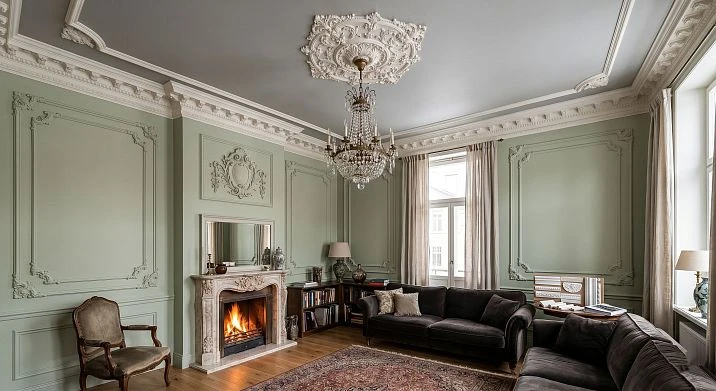
Here's an honest answer: Types of moldings Polyurethane moldings are divided by purpose — and once you understand where and what is used, the choice becomes logical and quick. This article is exactly such a navigator: by types, by tasks, by styles, and by practical application.
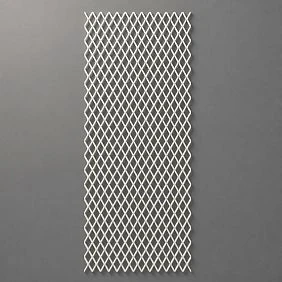
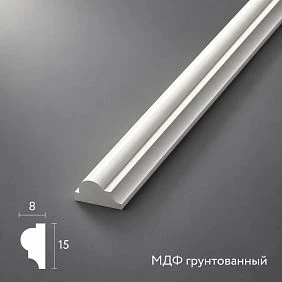
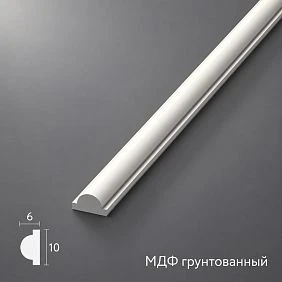
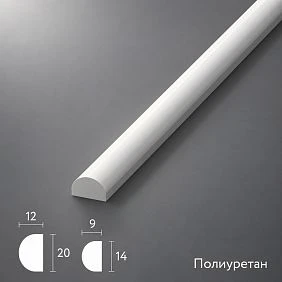
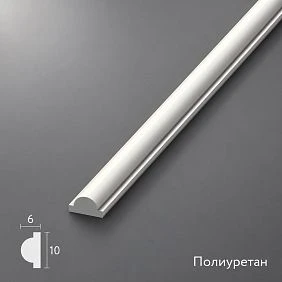
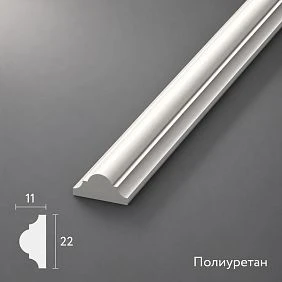
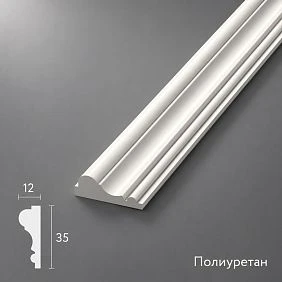
Short answer: what types of moldings exist
If you need a quick reference, here is a map of types moldings from polyurethane by tasks:
Moldings — linear profile for wall frames, panels, door and window trims, horizontal bands. The most versatile type: works on walls, ceilings, and in systems with other elements.
Cornices — large profile for the transition between wall and ceiling. Covers the joint, creates a horizontal architectural line, and sets the scale of the room. Indispensable for classic and neoclassical styles.
Rosettes — round or ornamental decorative medallions for the ceiling center, chandelier area, corner accents. They are the 'face' of the ceiling in a classic interior.
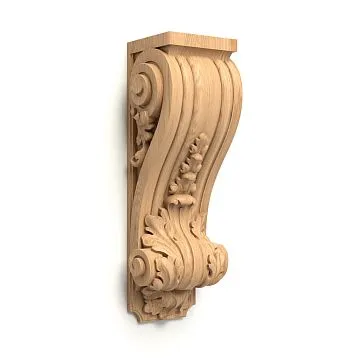
Appliques — point decorative elements for walls, piers, accent zones. Ornamental decorations: leaves, rosettes, medallions, architectural reliefs.
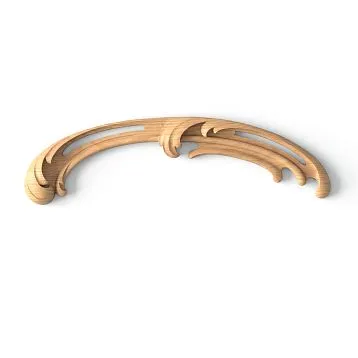
Decor for moldings — corner inserts, central elements, decorative joints. They turn a simple frame of moldings into a full architectural composition.
Baseboards — the lower finish of the wall. In a system with a cornice, they create a unified vertical rhythm of the room.
Facade stucco molding is a separate type for exterior design: cornices, moldings, window frames, entrance group decor. Designed for outdoor conditions.




What is polyurethane stucco molding
Before breaking down the types, it's important to understand what unites them all. polyurethane moldings is an architectural decor made of rigid foamed polyurethane, used for decorating walls, ceilings, openings, facades, and transition zones in interiors.
Why has polyurethane replaced gypsum and foam? Because it combines what no traditional material has in its entirety: lightness, rigidity, profile precision, moisture resistance, and compatibility with any finish paint.
Gypsum stucco molding is heavy, brittle upon impact, and difficult to install. Foam profiles are soft, get damaged on contact, and are limited in detail. polyurethane decor does not rot, does not absorb water, withstands temperature fluctuations, is mounted with glue without complex surface preparation, and accepts acrylic paint without primer in most cases.
This is not just 'decoration.' Polyurethane stucco decor is a tool used to create interior architecture. With it, an empty room box becomes a space with character: with a top line, bottom line, wall frame system, and accent points on the ceiling. That is why Plaster ornament for walls and ceilings it remains relevant in any era—from historical restoration to modern neoclassicism.
Our factory also produces:
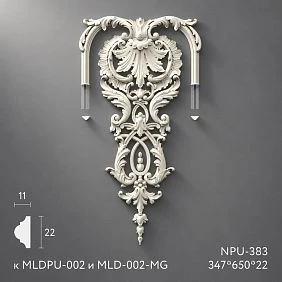
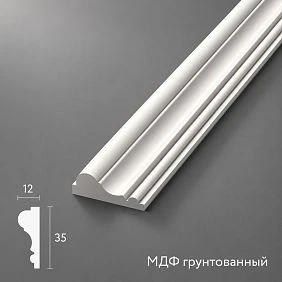
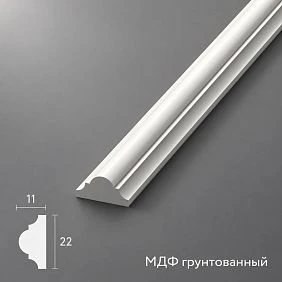
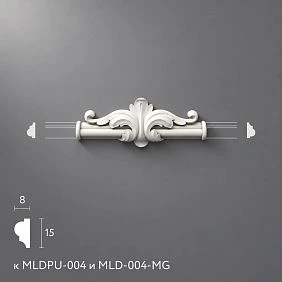
Polyurethane moldings
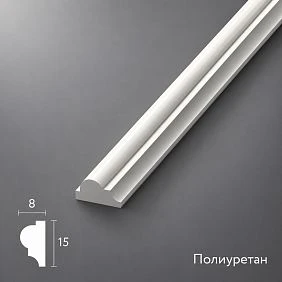
Molding is a profile. A linear element with a specific cross-section that is mounted on a wall or ceiling and creates an architectural line or frame.
Moldings made of polyurethane — the most popular and widely used group in stucco decoration. Why? Because molding solves one of the main tasks of any interior: it structures the space.
Get Consultation
Where moldings are used
Wall frames. The most classic technique — moldings are laid along the perimeter of a rectangular wall section, creating a "field" inside and a "frame" outside. This imitates the architectural principle where the wall was divided into panels — lower, middle, upper. In modern execution, these are clean rectangles that add depth and rhythm to a flat wall.
Frame size: bottom row — 600–900 mm from the floor, top row — from the horizontal belt to the cornice. Molding width for a frame width of 600–800 mm — 20–30 mm. For a frame width of 1,200–1,500 mm — 30–50 mm.
TV zone. Moldings around the TV or its niche create a "screen" — an architectural accent that integrates the appliance into the interior composition. A TV on a wall without decor is a gadget. The same TV in a molding frame is part of an architectural concept.
Hallway. In a narrow hallway, molding frames on the walls are an optimal way to add decor without losing space. Thin molding 15–20 mm, simple profile, painted to match the walls. This works even with a hallway width of 120–150 cm.
Living room. The wall behind the sofa, the wall opposite the entrance, the area above the fireplace — three points where moldings work especially expressively. For the accent wall behind the sofa — frames in two rows: bottom (600–900 mm) and top (up to the cornice).
Bedroom. The headboard of the bed is an ideal area for a molding frame. It creates an architectural "framing" of the bed, which reads as an independent decorative accent.
Combination with other elements. Moldings work well in a system: molding frame + corner decorative details from decoration for moldings = a full-fledged architectural panel. Add Decorative Inserts at the corners of the frame — and you get a classic wall composition.
For painting. Polyurethane moldings are painted to match the walls — then they create relief without visual 'noise'. Or in a contrasting color — then the frames become an expressive accent.
Polyurethane cornices
Ask yourself: where does the wall end and the ceiling begin? In most apartments — nowhere. A blunt right angle, a sharp transition. A cornice turns this transition into an architectural statement.
Polyurethane moldings in the cornice category — these are the largest linear profiles in the interior decor system. They are mounted in the corner of the wall and ceiling, creating a soft or expressive transition depending on the chosen profile.
What a cornice gives to an interior
First, the cornice 'closes' the top line of the room. Without it, the ceiling is cut off by the wall — the boundary between them reads as a structural joint, not an architectural detail. The cornice turns this joint into a horizontal line that unites all the walls of the room into a single architectural system.
Second, the cornice regulates the perception of height. A large profile on a high ceiling — emphasizes the height. A thin profile in the color of the ceiling — visually raises the ceiling in a low room.
Third, the cornice sets the style. A simple rectangular profile — modern classic. A multi-tiered cornice with an ornamental band — historical classic. Stepped without ornament — neoclassical or art deco.
How to choose the size of a cornice
The ratio of profile height to ceiling height is a key parameter:
-
Ceiling 2.4–2.6 m — cornice 40–60 mm in height
-
Ceiling 2.7–3.0 m — cornice 70–100 mm
-
Ceiling 3.0–3.5 m — cornice 100–140 mm
-
Ceiling above 3.5 m — cornice 150–200 mm or more
For ceilings below 2.5 m: cornice in ceiling color — then it blends with the upper surface and does not 'press down'. A contrasting cornice on a low ceiling creates the feeling that the ceiling is even lower.
Cornice projection. Projection is how far the cornice extends beyond the wall. For classic rooms: projection approximately equals profile height. Cornice 80 mm → projection 70–90 mm. A large projection creates a more expressive shadow and depth of the profile.
Ceiling Rosettes
A ceiling without a rosette is just a flat surface. Even a beautiful chandelier hanging in the void of a white ceiling looks random: wire, socket, lampshade — and no architectural foundation.
cornice under the chandelier — this is a ceiling rosette: a decorative medallion that is mounted in the center of the ceiling around the chandelier attachment point. It creates an architectural 'throne' for the light fixture and turns the ceiling center into an independent decorative zone.
Types of rosettes
Classic ornamental. Leaf decor, rocaille scrolls, radial petals — rich ornament for classic interiors. Diameter: from 40 to 120 cm or more. For a large hall — a large rosette with expressive relief, clearly readable from a distance of 3–4 m.
Laconic geometric. Simple radial lines, concentric circles, stepped rings. For neoclassicism, modern classic, art deco. Diameter: 30–60 cm. Clean form without ornamental 'noise'.
Medallions. Large rosettes with multi-level relief are true ceiling "paintings". For formal halls, living rooms with ceiling heights from 3.5 m, and classic-style dining rooms.
How to choose the size of a rosette
Rule of three proportions:
-
The diameter of the rosette should not be smaller than the diameter of the chandelier's lampshade — otherwise, the rosette hides behind the light fixture.
-
For a room of 15–20 m² — a rosette of 40–60 cm
-
For a hall of 30–50 m² — a rosette of 70–100 cm
ceiling molding — rosettes, among other things — should match the cornice in style. A classic ornamental rosette with a simple stepped cornice is a mismatch. The ornament of the cornice and rosette should be from the same "family".
Decorative ceiling frames. This is another type of stucco decor for the ceiling: moldings laid along the perimeter of the ceiling with an indent from the cornice, or a coffered grid on the ceiling plane. Coffers are an imitation of a historical coffered ceiling with square or rectangular cells. For high ceilings (from 3.2 m) — a powerful decorative technique.
Polyurethane decorative overlays
If a molding is a line, then an appliqué is a point. A point decorative accent that is installed on a wall, ceiling, furniture, door panel — wherever a volumetric ornamental element is needed.
Decorative stucco the category of overlays includes the widest range: sheet ornaments, rocaille decorative cartouches, rosettes, volutes, masks, corner corner details, ornamental shields. This is the living language of classical architecture, translated into an accessible format.
Where are overlays used
Piers. The narrow vertical surface between windows or doors is a place where large molding decor does not work: there is not enough width. One vertical overlay — an ornamental strip or medallion — fills the pier without overloading.
Areas above furniture. Above the sofa, above the bed, above the console — overlays create a decorative accent that connects the furniture and the wall into a single composition.
Addition to frames. — everything must correspond to the chosen era. in the form of corner overlays are installed in the corners of molding frames, replacing the corner joint. This is not just a decorative solution — it is practical: the corner overlay hides the profile cut and creates a beautiful finish to the corner.
Doors. Overlays on door panels are a technique where a simple smooth door turns into a classic paneled door. Rectangular or arched frames made of moldings, corner elements, central overlays — and the door from a "factory sheet" turns into an architectural element.
Independent accents. On a large flat wall without furniture — one large decorative overlay or medallion as an independent visual center. Not frames, not lines — just one expressive ornamental object.
Decor for moldings
This is a special category — and it is rarely discussed separately. Meanwhile Decor for Molding is one of the most intellectual tools in the stucco arsenal.
Essence: a smooth molding itself creates a line. A molding with decorative elements on it creates an ornament. These are fundamentally different visual results.
What is included in this category
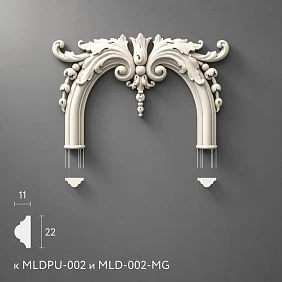
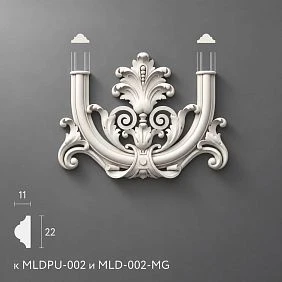
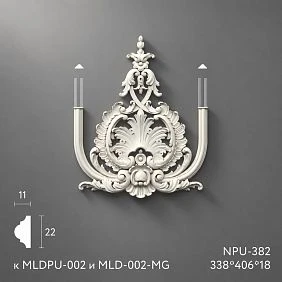
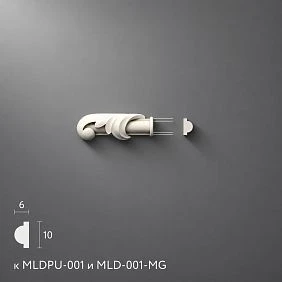
Corner inserts. Decorative elements installed in the corners of molding frames. Instead of a mitered joint at 45 degrees — an ornamental block, rosette, or architectural element. This solves the technical issue (how to properly make a corner) and the decorative one (how to make the corner beautiful).
Central accents. Elements installed in the center of a horizontal or vertical molding — at the middle of the top rail of a frame, in the center of a horizontal band. This is a rhythmic accent: one element in the middle, two at the edges.
Decorative connections. Where two moldings meet not at a corner, but at a T-shaped intersection or at an arbitrary point — the decorative connection covers this joint and turns it into an ornamental detail.
Ornamental inserts. Leaf garlands, dot rosettes, 'bead and reel' and 'egg and dart' motifs — classic architectural ornaments that are inserted into a groove or glued onto the surface of a molding profile. A simple molding with such inserts acquires the character of a historical profile.
Practical example: a living room with molding frames. Molding — 30 mm, simple 'quarter round' profile. Without decor — good, but simple. With decorative corner inserts in the corners of the frames — it already reads as classic decor. With dot ornamental accents in the center of the vertical moldings — this is a full-fledged classic interior.
Wall molding
The wall is the largest surface in the room. And it is often left for 'later' during renovation. We'll paint it, put up wallpaper — and that's it. But 'that's it' is a flat, monotonous surface that is silent.
Wall molding answers the question: what to do with the wall if you want more? Not expensive cladding, not complex texture — but architectural order.
Practical scenarios
Living room, wall behind the sofa. Molding frames in two horizontal rows — the lower one from the floor to about 900 mm, the upper one from 900 mm to the cornice. A dividing horizontal molding at the 900 mm level creates a 'belt'. The lower frames and upper frames are identical in proportions. Decorative Inserts classic result at the corners of the top frames.
Bedroom, headboard. One large frame made of of polyurethane moldings width of the bed + height from headboard to cornice. Inside the frame — contrasting paint or wallpaper. Outside the frame — main wall color. This is a "framing" of the bed without a single piece of furniture.
Hallway. Narrow space, standard ceiling height. Lower molding belt at a height of 800–900 mm (border of "panel" and "field"). Several vertical frames according to the number of piers. Thin profile 15–20 mm matching the walls. This creates structure without a feeling of "stuck-on decor."
Dining area. Wall behind the dining table or opposite — a place for richer decor. Large frame or several frames with ornamental overlays at the corners. Horizontal molding belt at table level visually "connects" the table with the wall.
Combination with decorative plaster. Polyurethane wall decor works well over any textured finish. Moldings on Venetian plaster create a sense of luxury — contrast of relief ornament and fine background texture.
Combination with wallpaper. Wallpaper inside molding frames and paint outside — or vice versa. This is one of the design techniques where one finishing material turns into two due to architectural demarcation.
Ceiling molding
Ceiling — the horizontal we notice last. But once it's decorated, the whole room changes. A ceiling with decor transforms the space from an "apartment" into an "interior."
ceiling molding operates on three levels: cornice (perimeter), rosette (center), decorative frames (ceiling plane).
The cornice as the beginning of everything
A ceiling cornice is the first thing to choose when working with a ceiling. It sets the scale, style, and "top line" of the entire room. Without a cornice, the decor of the rosette and ceiling frames looks unfinished.
For low ceilings (2.4–2.5 m): a cornice in the color of the ceiling, profile 40–50 mm, no ornamentation — only a clean form. The ceiling visually "rises."
For high ceilings (from 3.0 m): a cornice with an expressive profile of 100–160 mm, ornamental or multi-tiered. It "fills" the space near the ceiling and prevents the height from feeling lifeless.
Rosette: point of attraction
Plaster ornament for walls and ceilings — in particular, ceiling rosettes — create a center in the ceiling plane. Without a center, the ceiling is perceived as a structureless plane, even if it is beautifully painted.
More details on how to choose and install a rosette for a chandelier — in the article cornice under the chandelier. Here we note the main thing: the rosette is always chosen in pair with the chandelier. Not after hanging the chandelier — but before.
Ceiling frames
From thin moldings (15–20 mm), you can create rectangular or square frames on the ceiling — ceiling coffers. This does not require complex structures: only a clear division of the ceiling plane into a grid and even installation of moldings along the marked layout.
Important: ceiling coffers require a ceiling height of at least 2.8–3.0 m. On a low ceiling, they create a "pressing" effect — the ceiling visually lowers.
Facade moldings
The facade is another type of task for stucco decoration. But here the rules are fundamentally different, and it is important to follow them.
relief on the facade — this is exterior decor designed for outdoor conditions: frost, sun, moisture, temperature changes. Not every polyurethane element is suitable for the facade — special items with increased density and protective coating are needed.
Types of facade stucco molding:
-
Facade cornices — under the roof, create a horizontal line completing the wall
-
Moldings and rods — horizontal lines for zoning the facade by floors
-
Window frames — architraves, sandriks, keystones
-
Entrance group decor — portals, brackets, pilasters
-
Corner elements — rustication, corner pilasters
A detailed breakdown of all types of facade stucco molding and selection principles — in a special article relief on the facade. Here it's important to remember one thing: do not use interior decor outside. An element designed for a dry room will be destroyed after the first winter cycle.
How to choose the type of stucco molding based on the task
| Task | What to choose |
|---|---|
| Decorate an empty wall | Moldings + applique |
| Create frames on the wall | Moldings + Decor for Molding |
| Cover the transition between wall and ceiling | Cornice made of PU molding |
| Highlight the chandelier | Ceiling rosette |
| Decorate a wall without furniture | Decorative Inserts |
| Finish the bottom of the wall | Baseboard |
| Design a facade | Facade molding |
| Classic interior | Cornice + moldings + rosette + overlays |
| Neoclassical | Thin moldings + subtle cornice |
| TV zone | Molding frame + Wall Decor |
| Door framing | Moldings + corner overlays |
How to choose molding according to interior style
Style is not just aesthetics. It is a system of rules that governs everything: the shape of profiles, the scale of elements, the level of ornament detail.
Classic
The most ornate stucco style. For a classic interior you need: an expressive multi-tiered cornice with an ornamental band (100–180 mm), moldings with leaf or rocaille profile, a large ornamental rosette, applied accents on walls and corners of frames.
Types of moldings in classic style, it is all categories simultaneously: cornice, molding, rosette, overlays, decor for moldings. Classic is a system, not individual elements.
Color: white molding on colored walls — a classic contrast. Or warm cream on beige walls. Or gold on cornice details with a white base tone.
Neoclassicism
Principles of classicism — symmetry, system, hierarchy — with simplified profiles. For neoclassicism: cornice 80–100 mm without ornamental band, moldings with semicircular or stepped profile, rosette with geometric radial pattern, no rocaille curls.
polyurethane moldings for neoclassicism it is often painted in monochrome — matching the walls or ceiling. Decoration creates structure but does not draw attention to itself.
Modern classic
Laconicism is the key word. Thin moldings 15–25 mm with a simple rectangular profile. Cornice 50–70 mm. Without a rosette — or with a minimal geometric one. All Moldings for interior in the same color as the walls. Effect: architectural order without historical references.
Art Deco
Geometry, rhythm, luxury without ornamental curls. For art deco: stepped cornices with straight edges, moldings with a clear rectangular profile, geometric rosettes with concentric rings.
Color in art deco — contrasts: white and black, gold and black, beige and brass. Polyurethane architectural decoration in art deco it works through form, not ornament.
Minimalism
Here the molding is almost invisible — and that is precisely the goal. Thin cornice 30–40 mm, painted in the ceiling color — a transition without emphasis. Sometimes — thin moldings matching the walls to create a barely noticeable structure. No overlays, no rosettes.
Country house
Country interior combines elements of classicism with natural materials. Cornices, ceiling frames, wall moldings — for the interior. Facade molding — for exterior decoration of windows, entrance, and roof cornice. Country style is a place where the interior and facade must be decoratively coordinated.
How not to overload the interior with stucco molding
This is a matter of professional intuition — and it is precisely what is most often lacking when choosing decor independently.
Do not use all types of stucco molding at once. Cornice + moldings + rosette + overlays + decor for moldings — this is a complete classical system for a large room. In a room of 12 m², all this together will create a museum feel rather than a living space.
Start with one task. If you need to decorate a wall — start with moldings. If the ceiling — with a cornice. See how it works. You can always add another layer of decor. Removing it is harder.
Consider the ceiling height. For ceilings below 2.7 m: cornice — minimal. Rosette — small or skip. Moldings — thin. Everything — in the tone of the surfaces they are mounted on.
Maintain symmetry. Classical decor lives in symmetry. Breaking symmetry is a deliberate architectural decision. Accidental breaking is a mistake that catches the eye.
Do not mix ornaments. An 18th-century rocaille cornice with a geometric Art Deco rosette is not eclecticism, it is a contradiction. The ornament style must be uniform throughout the entire decor system.
Plan the painting in advance. polyurethane decor requires painting. Color is half the solution. Think it through before installation, not after.
Stucco molding for painting: what matters
Painting is not the completion of installation. It is part of the design solution that must be thought out in advance.
Decorative stucco molding in most modern interiors, it is painted in one tone with the walls or ceiling. This creates a relief effect: the surface is not monochrome, but not variegated either. The form is read through chiaroscuro, not through color contrast.
Contrast painting — white stucco on a colored wall — is a classic technique that requires precise color matching. White + saturated wall color works. White + pale wall — gets lost. Gold on a dark background — expressive. Gold on a light background — loses its power.
Surface preparation. Before painting: fill joints between elements and between stucco and wall with acrylic putty, sand with fine sandpaper, prime if necessary. Only after that — paint. Two finish coats with intermediate drying.
Consistency with the interior. Color stucco decoration must be coordinated with the color of doors, baseboards, window frames. White stucco with white doors and white frames — a unified white system that is perceived as architectural integrity. White stucco with gray doors — a mix that requires design justification.
Mistakes when choosing types of stucco
Even experienced finishers make them — because stucco seems like a simple material. But it has its own system, violation of which is immediately noticeable.
Buying moldings without a wall plan. Three linear meters of molding without understanding where and how they will be placed is almost a guaranteed overspend and shortage in the right places. First, break down the wall into frames on paper, then calculate the linear footage.
Choosing a cornice without considering ceiling height. This is the most costly mistake: the cornice is installed, painted — and it feels oppressive. You have to remove and replace it. Always start by measuring the room height.
Placing a large rosette under a small chandelier. An 80 cm diameter rosette under a chandelier with a 30 cm lampshade — it "swallows" the light fixture and looks like an architectural detail without purpose. The rosette should be slightly larger than the lampshade or proportionate to it.
Mixing classic decor with minimalist profiles. An ornamental cornice with a leaf frieze + a 10 mm rectangular profile molding is a stylistic contradiction. The decor style should be unified.
Not considering the room size. Moldings shop offers elements from 10 mm to 200+ mm. For a 10 m² room and a 60 m² hall, the right solutions are fundamentally different.
Forgetting about the baseboard. A "cornice + moldings" system without a coordinated baseboard is incomplete. The baseboard completes the vertical rhythm of the room. Its profile should echo the cornice: if the cornice has a cove, the baseboard should have a similar element in the opposite direction.
Buying without calculating the quantity. Linear footage is calculated by perimeter with a 10–15% allowance for cutting. Overlays — by the number of application points. Corner pieces — by the number of corners. Without calculation, something will always be missing or left over.
Not planning the installation. Polyurethane is glued with special adhesive (liquid nails or polyurethane mounting glue) with additional fixation using dowels on the ceiling. On drywall — only at the frame rail locations. On plaster — along the entire length.
What to buy for comprehensive stucco decoration
Complete list for a systematic approach to decor:
Moldings made of polyurethane — for wall frames, ceiling lines, door and window trims, and horizontal bands.
PU overlays — ornamental decorative elements for walls, frame corners, and accent areas.
Decor for Molding — corner inserts, central accents, ornamental connections.
Wall Decor — wall panels, frame systems, architectural reliefs.
Polyurethane molding — cornices, baseboards, rods, linear profiles for the entire system.
cornice under the chandelier — ceiling rosettes and medallions for the lighting area.
Catalog of stucco molding — full range — all types of decor in one place: interior and exterior, for walls and ceilings.
Moldings shop — convenient selection with breakdown by categories, with consultation on sizes and compatibility of elements.
FAQ: answers to important questions
What types of stucco molding are there?
Main types Types of moldings from polyurethane: moldings, cornices, rosettes, overlays, baseboards, decor for moldings, wall decor, and facade stucco. Each group solves its own task and is used in specific areas.
What to choose for walls: moldings or overlays?
If the task is to create frames and structure the wall, choose Moldings. If a point decorative accent is needed, Polyurethane appliqués. They work well together: frames from moldings + ornamental corners from overlays.
What to choose for the ceiling?
For the ceiling, first of all — a cornice (transition between wall and ceiling) and a rosette (center of the ceiling, chandelier area). Additionally — ceiling frames from thin moldings. Sizes depend on the ceiling height and room area. More details in the article cornice under the chandelier.
Can different types of stucco molding be combined?
Yes, and that's the right approach — a complete system yields the best result. But it's important to maintain a unified style: the profiles of the cornice, moldings, and overlays must belong to the same stylistic direction. Classic ornamental cornices and minimalist moldings are a contradiction, not eclecticism.
Which stucco molding to choose for neoclassicism?
For neoclassicism — calm moldings with a semicircular or stepped profile (15–30 mm), a cornice 70–100 mm without an ornamental band, a geometric rosette with a radial pattern. All polyurethane moldings in monochrome — matching the wall or ceiling color. Symmetry, order, no decorative excess.