Article Contents:
- Diagnosis: what is a 'flat interior' and why it is so common
- Five signs of a 'flat interior'
- Polyurethane moldings: tool #1 for working with a flat wall
- What moldings can do: specific architectural tasks
- How to choose a wall molding profile
- Decor for moldings: corner element that completes the system
- Decorative stucco: when the wall needs not only rhythm but also a voice
- Why stucco decor works right now
- Where to use decorative overlays: seven working zones
- Ceiling molding: a flat ceiling is an unfinished interior
- Three elements that organize the ceiling
- Why polyurethane is the right material for ceiling decor
- Stucco decor as an architectural layer: the philosophy of a deep interior
- The principle of minimal intervention with maximum effect
- Three working formulas: from flat to expensive
- Formula one: "Empty wall → architectural surface"
- Formula two: "Empty ceiling → assembled room"
- Formula three: "Ordinary zone → interior accent"
- Where to use molding in an apartment: a map of applications
- Mistakes when choosing moldings for interior "depth"
- Mistake one: buying one overlay and expecting an effect
- Mistake two: ignoring light
- Mistake three: making everything contrasting
- Mistake four: decorating walls and forgetting the ceiling
- Mistake five: mixing different stylistic languages
- Additional application areas: beyond the living room and bedroom
- Bathroom: the most unexpected and most expressive place
- Kitchen: area above the work surface or dining table area
- Children's room: thematic decor with an educational dimension
- Country house: scale allows more
- FAQ: answers to common questions
- About the company
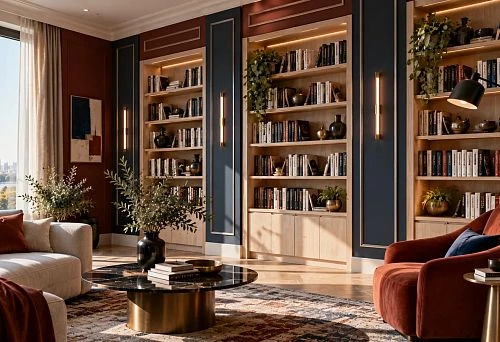
There is a special type of disappointment that almost everyone who has done a good renovation faces. Money is spent, materials are high-quality, contractors tried their best — walls are smooth as a mirror, ceiling is perfect, seams are neat, paint lays evenly. Everything is beautiful. Everything is correct. But when you look at the result, a feeling persists: something is missing.
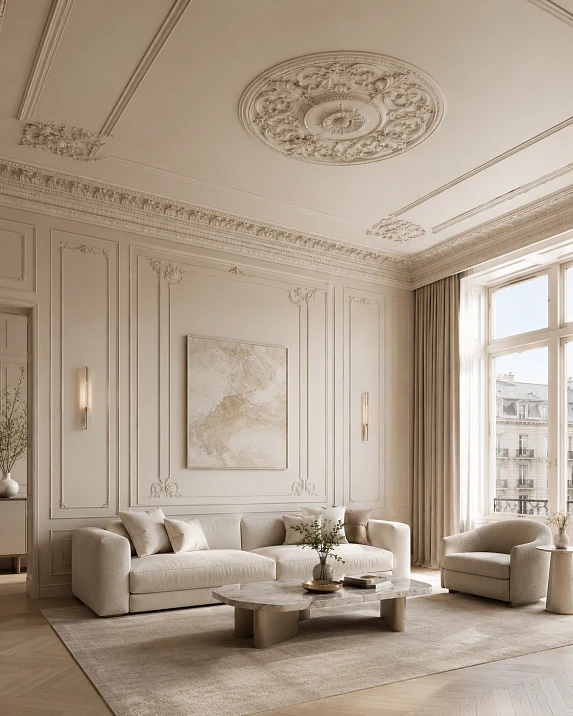
This "something" is not furniture, not lighting, and not color. It is depth. Relief. Architectural logic that turns a set of flat surfaces into an interior with character. And this is exactly what adds Moldings — not as a palace decoration, not as a greeting from the past century, but as a modern tool for working with plane, light, and space.
Polyurethane moldings, Decorative stucco, ceiling rosettes, wall panels — all this is not "decor for decor's sake." It is an architectural layer, without which a modern interior remains just a neat emptiness.
Diagnosis: what is a "flat interior" and why it occurs so often
Before talking about solutions, it is worth making an accurate diagnosis. Because a "flat interior" is not about poverty or bad taste. It is about the absence of one specific quality: architectural detailing.
Look at any photo of an interior that seems expensive — even if there is no gold, marble, or a million-dollar chandelier. What is in it? Lines that organize the space. Shadows that create depth. Relief that makes light interesting. A molding on the wall, a ceiling cornice, a rosette under the chandelier, a frame above the fireplace — this is the "skeleton" of an expensive interior, which is not always consciously noticed but is always felt.
And now — a "flat interior." Four smooth walls. A smooth ceiling. Smooth door trims without profile. Furniture with flat facades. Light is uniform, without shadows. Decor — paintings or posters attached to the walls separately, without connection to the architecture. Everything is smooth, everything is neat — and everything is flat. Eyes glide over surfaces, finding nothing to catch onto.
This is the root of the problem. Buy molding — this is not a whim or following a trend. It is an architectural solution that gives the interior what it lacks: depth, rhythm, shadow, and character.




Five signs of a "flat interior"
Walls without verticals. A smooth, monochrome wall without moldings, without frames, without architectural division is a blank sheet. The eye doesn't know where to go. There is no rhythm, no hierarchy, no focal point.
Ceiling without a center. If the ceiling is just "another flat surface," the interior loses vertical organization. There is no central axis, no perimeter, no connection between the chandelier and the ceiling. The light fixture "hangs" in emptiness.
Lack of shadows. Shadow is not a lack of lighting. It is a sign of relief. A molding casts a soft shadow. A ceiling rosette creates concentric penumbras. A decorative overlay is "readable" precisely because it has volume and interacts with the light source. Without relief, there are no shadows. Without shadows, there is no depth.
Decor without connection to architecture. A painting attached to an empty wall without framing is an "object on the wall," not a "part of the interior." The same object inside a molding frame creates a completely different perception. The frame integrates it into the architecture, creating a sense of thoughtfulness.
All surfaces are equally "important." In an expensive interior, there is hierarchy: a main wall, an accent zone, background surfaces. In a flat interior, everything is equally neutral. Relief Decoration creates this hierarchy: highlights the main zones and gives background surfaces their role.
Our factory also produces:
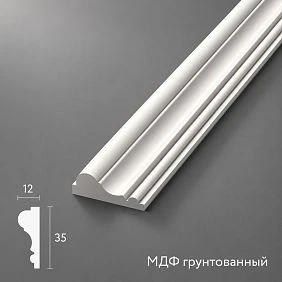
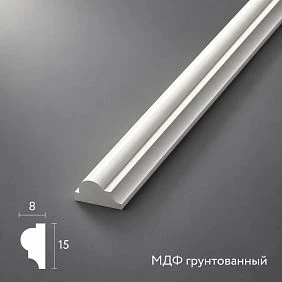
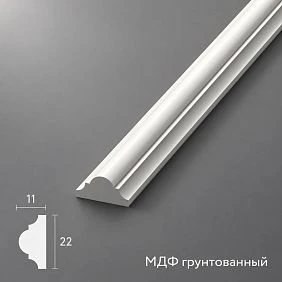


Polyurethane moldings: tool #1 for working with a flat wall
If you had to choose one tool to transform a "flat" interior into a "luxurious" one, it would be Moldings made of polyurethanemoldings. Not because they are beautiful in themselves, but because they work systematically: they do with a flat wall what an architect does with a building facade — they structure, set a rhythm, create hierarchy, and give scale to the surface.
A molding is a line. But a line that has volume. It casts a shadow. It divides the surface into parts. It says: "here one zone begins, here another." And it is this organizing principle that turns an empty wall plane into an architecturally meaningful surface.
Get Consultation
What moldings can do: specific architectural tasks
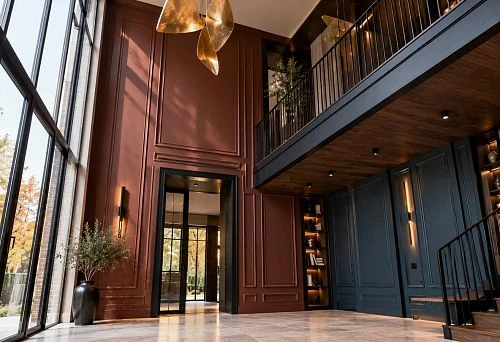
They stretch the ceiling. Vertical moldings on the wall — from floor to ceiling or from frieze to baseboard — visually increase the height of the room. This is one of the classic architectural techniques: the vertical "pulls" the gaze upward. In apartments with ceilings of 2.5–2.7 m, this is especially valuable.
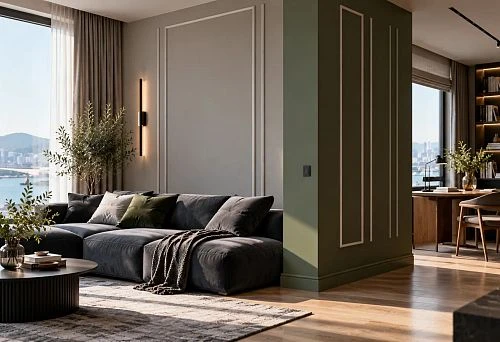
They make the wall behind the sofa the main one. A molding frame on the wall behind the sofa, with a width corresponding to the width of the furniture group, is a "frame" for the living room. The same wall without a frame is just a background. With a frame, it becomes the central architectural element of the room. One operation, and the perception changes dramatically.
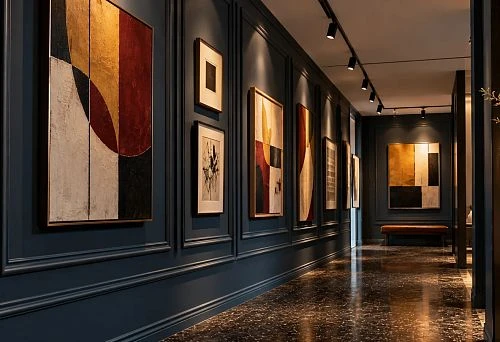
They create a belt on the wall. A horizontal molding at a height of 1.0–1.2 m is a "breakdown" of the wall into a base and upper part. A classic technique that gives the wall scale and "weight." Below the belt, the wall can be painted in a richer tone, above — in a lighter one. Or leave a single color: the molding will create visual rhythm anyway.
They organize door and window openings. A molding trim around a door or a molding "supraporta" above a door opening turns a functional element into an architectural one. It's not complicated — but the difference in perception is significant.
They set a rhythm in a long corridor. Vertical frames made of moldings on the side walls of the corridor break up the long, monotonous space into visual "compartments." The corridor ceases to be a "pipe" and acquires an architectural character.
How to choose a molding profile for a wall
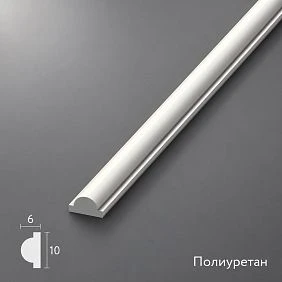
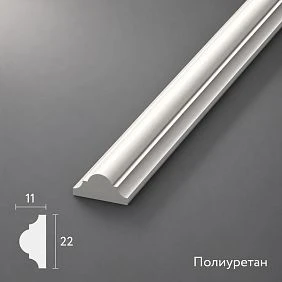
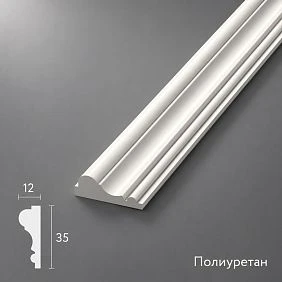
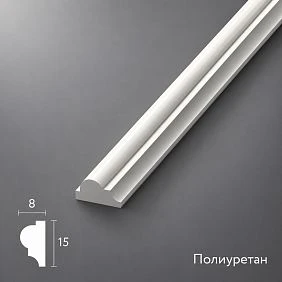
The profile of a molding is its cross-section, which determines the shape of the shadow. It is the profile that determines how noticeable the molding is in side light, how "readable" it is in the frame, and how it fits into the overall interior style.
Thin molding (20–35 mm). For a calm, neutral solution. Works in modern interiors — Scandinavian, minimalist, neoclassical with light detailing. Creates a thin shadow line that does not overload the wall but organizes it.
Medium molding (40–65 mm). A universal choice. Works in most interiors, reads well both in artificial and daylight, creates an expressive shadow without excess.
Wide molding (70–100 mm and more). For classical and neoclassical interiors, for tall spaces, for formal areas. The wide profile carries monumentality — it is "weighty" and requires a corresponding room scale.
buy polyurethane moldings in the STAVROS catalog — this is a choice from a wide range of profiles with different geometric characteristics, from laconic straight lines to classic ones with multi-step relief. Polyurethane reproduces any profile with precision that was previously only available in plaster.
Decor for moldings: a corner element that completes the system
Professional work with a molding frame involves one mandatory step — closing corner joints. A 45° joint looks good when done neatly. But a decorative corner element — a small rosette or ornamental overlay — turns the joint into an architectural accent. This is a "punctuation mark" that says: the frame is complete, the system is built, the details are thought out.
Decor for Molding — a separate category in the STAVROS catalog: corner overlays, corner rosettes, decorative corner elements for horizontal and vertical frames. A small detail, but it is what distinguishes "done" from "done right".
Decorative stucco: when the wall needs not only rhythm but also a voice
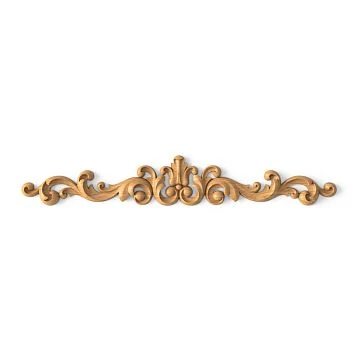
Moldings create architecture. But architecture without content is a drawing without life. Decorative stucco — this is what gives the interior content: image, character, a hint of history.
It's not about covering the walls with decorations. It's about a pinpoint accent — one, two, at most three elements in carefully chosen places that elevate a space from "neat" to "memorable."
A small appliqué in the center of a molding frame. A pair of symmetrical birds by the mirror. A mascaron above the front door. An ornamental element at the head of the bed. Each of these details is the "voice" of the interior, its ability to speak to those within it.
Why stucco decoration works right now
Interior trends for 2025–2026 mark a fundamental shift: from sterile minimalism to warm spaces with depth, artisanal detailing, and individuality. The concept of "elevated craftsmanship" — meticulous handiwork elevated to a design principle — has become key in the professional design community.
What does this mean for an average interior? That a single relief element, placed precisely and meaningfully, is now perceived not as a "palatial relic" but as a sign of design maturity. Decorative polyurethane stucco, painted in the wall color, is a soft, quiet, yet highly expressive detail.
Buy Molded Decoration choosing polyurethane from the STAVROS catalog means getting products with precise relief, ready for immediate installation and painting. The polyurethane surface is non-porous: paint applies evenly, and the appliqué looks built-in, not "attached."
Where to use decorative appliqués: seven effective zones
Center of a molding frame on the main wall. Frame + central element = a complete architectural composition. This works above a sofa, above a bed, in a console area, above a fireplace.
On the sides of a mirror. Paired L/R appliqués by a mirror create a "frame without a frame." Symmetry instantly reads as intentional design. Works in hallways, bedrooms, bathrooms with decorative finishes.
Above a door frame. A decorative element above the door — a "supraporta" in the broad sense. Not necessarily a classic stucco cartouche: even a minimalist symmetrical appliqué above the opening gives the door architectural status.
At the head of the bed. A small central element above the headboard — or a symmetrical pair on the sides — creates a "ceiling canopy" without a canopy. The bedroom gains a sense of a finished space.
On a furniture facade or panel. Decorative overlays on the fronts of a built-in wardrobe or on wall paneling. This is architectural detailing that makes built-in furniture "part of the wall" rather than "a cabinet against the wall."
In the fireplace or portal area. A fireplace without decor is just a "hole in the wall." Portal elements, ornamental overlays, a cornice shelf with detailing — that's what makes a fireplace the architectural center of the room.
In the study above the work surface. A large decorative overlay or a pair of symmetrical elements in the desk area is a "frame for a thinking person." A small detail that gives the study status.
Ceiling stucco molding: a flat ceiling is an unfinished interior
There is one principle that every experienced designer knows: an interior is assembled from all six planes. The floor, four walls, and the ceiling. If one of the planes "falls out" of the architectural system, the interior remains unfinished, no matter how well the other five are developed.
The ceiling is the most vulnerable of the six. It is the hardest to change after renovation, and therefore the hardest to fix. And that is why most apartments with good walls and good furniture still don't look as expensive as they could: the ceiling is empty, and that "emptiness" pulls everything else down.
Ceiling molding made of polyurethane — it's a way to add architectural content to the ceiling without major intervention. The rosette is glued with adhesive without drilling. The molding cornice around the perimeter is installed in one day. The molding contour around the chandelier — in a few hours. This is affordable architecture with a professional result.
Three elements that organize the ceiling
Ceiling rosette. The rosette under the chandelier is the "anchor" of the ceiling. It fixes the central axis, hides the mounting area, and integrates the light fixture into the architectural context. ceiling rosettes Polyurethane products in the STAVROS catalog are available in a wide range of diameters: from delicate small forms to monumental classic ornaments for high rooms.
Cornice around the perimeter. A ceiling cornice is the "frame" of the entire ceiling. It completes the wall and begins the ceiling, creating a smooth transition between the two planes. Without a cornice, the wall and ceiling meet harshly, angularly. With a cornice, the interior gains completeness and a "classic" feel of an expensive space.
Molding contour around the chandelier. A rectangular or square frame of moldings on the ceiling around the central lighting area is a way to "designate" the functional zone from above. In an open-plan living room, this is zoning without walls: the ceiling contour says "here is the sofa group." In the dining room, "here is the dining table."
Purchase Buy ceiling molding The full range is available in the corresponding category of the catalog. Here are collected cornices, rosettes, ceiling moldings, and ready-made CPU-P ceiling systems — designed as unified architectural solutions for zones of different scales.
Why polyurethane is the right material for ceiling decor
Ceiling decor made of plaster has one fundamental drawback for modern apartments: weight. A large plaster cornice can weigh 8–12 kg per linear meter — this is a serious load on a plasterboard ceiling. A polyurethane cornice of a similar profile weighs 6–8 times less: the adhesive holds reliably, no anchor fastening into the slab is required.
The second argument is moisture resistance. Polyurethane does not absorb water, does not swell with humidity changes, and does not crack with temperature changes. For kitchens, bathrooms with decorative finishes, and rooms without constant heating (country houses, dachas), this is a significant practical advantage.
The third is precision of relief. Modern polyurethane allows reproducing the most complex profiles with detailing that was previously only possible in professional plaster molding. The ornament on a polyurethane cornice or rosette is indistinguishable from a plaster original after painting — this has been verified in hundreds of completed projects.
Stucco decor as an architectural layer: the philosophy of a deep interior
There is a concept that can be conditionally called "layering of the interior." This is when space is perceived not as a set of objects in a box, but as something where each element exists in a system: furniture — in the context of architecture, architecture — in the context of color, color — in the context of light, light — in the context of relief.
It is the relief — the last, final layer that completes this system. And it is precisely this that is most often missing in modern apartments. There is furniture, there is color, there is lighting — but there is no architectural layer. There is nothing that lives on the surface of walls and ceilings, interacts with light, and creates depth.
Buy decorative molding "It's not about 'adding decoration.' It's about completing the missing final layer. And when that layer appears, the interior comes together as a whole. It becomes readable. It becomes memorable. It becomes 'expensive' — not because it costs a lot, but because it looks thoughtful and finished."
"The principle of minimal intervention with maximum effect"
"This is an important principle for those who fear 'overdoing it.' Molding shouldn't be 'everywhere.' Molding decor works better the more precisely its application spot is chosen. One well-placed overlay or one correctly chosen frame of moldings is stronger than ten overlays scattered across walls without a system."
"The principle works like this: choose one or two 'strong zones' — those that first catch the eye when entering the room or when looking from the main living area (sofa, bed, desk). In these zones, create a full architectural system: moldings + decorative accent + neat painting. Everything else can remain neutral."
"Result: the interior appears fully developed — because the strong zones set the tone, and the neutral background supports them without competing."
"Three working formulas: from flat to expensive"
"Formula one: 'Empty wall → architectural surface'"
"This is the basic, most accessible, and fastest technique. One molding frame on the main wall — behind the sofa, behind the bed, in the hallway — plus a decorative accent inside."
What to buy:
-
Moldings made of polyurethane "of the desired profile — 4 pieces cut at 45°"
-
Corner decorative elements — Decor for Molding
-
"Central overlay inside the frame —" Buy Moldings
-
Mounting adhesive + matte paint in wall color
Installation time:
1 day including drying. Visual result: the wall acquires an architectural character, the room gains an organizing axis
Formula two: "Empty ceiling → assembled room"
For those whose walls are already good, but the ceiling remains empty.
What to buy:
-
Ceiling rosette — diameter proportional to the chandelier size
-
Molding cornice around the perimeter — Buy ceiling molding
-
If necessary — a molding contour around the central zone
-
Paint in ceiling color + mounting adhesive
Installation time:
1–2 days (cornice + rosette + drying). Visual result: the ceiling becomes a "fifth wall" with architectural content
Formula three: "Regular zone → interior accent"
For those who want to create one bright spot — a mirror area, fireplace, console, workspace.
What to buy:
-
Decorative stucco — paired elements or a central accent
-
Moldings for the framing border — buy polyurethane moldings
-
Assembly adhesive + paint in wall color
Installation time:
2–4 hoursVisual result: the area acquires the status of an "architectural center", the interior gets a focal point
Where to use stucco in an apartment: application map
| Zone | What to add | Category |
|---|---|---|
| Wall behind the sofa | Molding frame + decorative overlay | Wall Decor |
| Bed headboard | Frame of moldings + stucco accent | PU overlays |
| Ceiling under the chandelier | Rosette + molding contour | ceiling decor |
| Hallway | Vertical frames + decor near the mirror | Moldings and cornices |
| Mirror area | Paired overlays L/R | PU overlays |
| Office | Large overlay + molding frame | PU overlays |
| Room perimeter | Ceiling cornice | ceiling decor |
| Doorway | Casing + supraportas | Moldings and cornices |
Mistakes when choosing stucco for interior "depth"
Mistake one: buying one overlay and expecting an effect
A lonely overlay on an empty wall is a question without an answer. It exists but leads nowhere, is not connected to anything. A system works: overlay + frame, or a pair L/R, or overlay + molding context. It is the set that turns a detail into an architectural statement. buy decorative moldings correctly means buying it in combination with moldings.
Mistake two: ignoring light
Relief works with side lighting. With uniform diffused lighting, even a deep ornament can be almost invisible. If the room has only one ceiling light source directly in the center, the effect of the stucco will be significantly weaker. Additional side lighting — sconces, floor lamps, spotlights at different heights — is what "reveals" the decor. Without this layer of lighting, the stucco exists but does not "speak."
Mistake three: making everything contrasting
Contrasting coloring of stucco — white decor on a colored wall or vice versa — is a strong statement. It can work with a precise design intent. But without that intent, it turns into visual noise. For "depth" without risk — monochrome coloring: decorative molding paint it the color of the wall, ceiling stucco the color of the ceiling. The relief is read by light, not by color contrast. This is subtle and professional.
Mistake four: decorating the walls and forgetting about the ceiling
Well-decorated walls with an empty ceiling — an unfinished interior. A ceiling cornice around the perimeter is the minimum that "closes" the transition between the wall and ceiling. It is inexpensive, quick to install, but produces a significant effect. Ceiling Molding Purchase — this is a step that logically completes any wall decor system.
Mistake five: mixing different stylistic languages
In one space, only one decorative language exists organically: either strict geometry, or classical ornament, or a natural motif (leaves, birds, branches), or architectural stucco. When geometric moldings, classical rosettes, natural overlays, and some other ornament appear in one room — the interior becomes not "rich" but "cluttered." Choose one language and develop it consistently.
Additional areas of application: beyond the living room and bedroom
Bathroom: the most unexpected and most expressive place
Stucco is rarely used in bathrooms — and that's exactly why it works twice as effectively. Polyurethane is moisture-resistant, making it suitable for high-humidity rooms. A small decorative overlay near the mirror, a molding frame around the mirror, or a molding band on the walls — and the bathroom transforms from a "utility room" into a "nice hotel room."
For bathrooms, choose minimalist motifs: geometry, marine themes (shells, water patterns, fish), classic console elements. Coloring — strictly in the wall color or white. Maximum delicacy.
Kitchen: area above the work surface or dining table area
In the kitchen, stucco is used selectively: a molding contour on the ceiling above the dining area (zoning in open-plan), a decorative element above an arch or in a niche, a ceiling rosette for a light fixture above the table. This is not "kitchen decoration" — it's an architectural highlighting of a functional zone.
Children's room: thematic decor with an educational dimension
For a children's room — overlays with natural motifs: butterflies, birds, leaves. They work in neutral tones or pastel colors, creating a "world" for the room without colorful wallpaper. Molding frames on the wall can be used as "frames" for children's drawings or maps — an architectural element with a function.
Country house: scale allows for more
In a country house with high ceilings and large rooms, stucco truly comes into its own. Here, wide cornice moldings, deep ornamental profiles, and large ceiling rosettes are appropriate. You can buy ready-made stucco matching the Baroque style. Calculate the quantity: linear meters of cornices and moldings, number of rosettes, pilasters, consoles, corner elements. Add a ten to fifteen percent allowance for trimming. for a country project means getting decor that can withstand temperature changes, requires no special maintenance, and will last for decades.
FAQ: answers to frequently asked questions
Which molding to buy if the interior looks flat?
Start with of polyurethane moldings for the main wall — the wall behind the sofa or bed. This gives maximum effect for minimal investment. Then, a decorative overlay as an accent inside the frame and a ceiling rosette under the chandelier.
What is better to buy first: moldings or decorative stucco?
Moldings are the first step. They create architecture: divide the wall, set the rhythm, form frames. Decorative stucco is added as an accent within an already created system. An overlay without a molding context is a detail without a system. Moldings without an accent are architecture without character. Together they work.
Is ceiling stucco needed in a modern interior?
Yes — if the ceiling looks empty next to decorated walls. Minimum — a ceiling cornice around the perimeter. Optimum — cornice + rosette + molding contour. Buy ceiling molding and can be installed in one day — this is the fastest way to finish the interior "from above."
How to make stucco decor modern, not palatial?
Three rules: a laconic profile without overloaded ornament, monochrome painting in the tone of the wall or ceiling, spot application in 1–2 zones. Then the decor works as an architectural detail — smart and restrained, not as a "palatial interior."
Where to buy polyurethane stucco, moldings, and decorative stucco elements?
The STAVROS catalog features a full range of polyurethane products: Moldings and cornices, Decorative Inserts, Ceiling decoration, ceiling rosettes и Wall Decor.
How difficult is it to install polyurethane stucco?
It's not difficult. Polyurethane products can be cut with a knife or hacksaw, glued with acrylic mounting adhesive, and joints filled with finishing putty. No special tools or construction skills are required. Basic care and instructions are enough.
How long does polyurethane molding last?
With proper installation, it lasts for many years without signs of degradation. Polyurethane does not absorb moisture, crack, or crumble. Paint can be refreshed without removing the decor. The product can be reglued or removed if necessary without damaging the surface.
About the Company
The full range of moldings, decorative overlays, ceiling cornices, rosettes, and polyurethane stucco decor systems for creating a deep, expressive interior is presented in the STAVROS catalog. STAVROS specializes in producing extruded polyurethane products—a material that combines the precision of classic stucco with the lightness of modern technology.
STAVROS is the choice of designers and apartment owners who need results, not process. Moldings, cornices, overlays, ceiling systems—everything is designed as a single collection where elements are coordinated in profile, scale, and style. You can start with one frame, add a rosette, then a decorative accent: each step is a finished result, each next step is deeper and more expressive.
Smooth walls alone don't make an expensive interior. What makes it expensive is depth: the line of a molding, the shadow of stucco, the ceiling center, and the decorative relief that gathers the room into an architectural space. This is what STAVROS does.