Article Contents:
- What is a hidden and shadow MDF baseboard
- Hidden baseboard: logic and design
- Shadow baseboard: visible but neat
- MDF insert in baseboard: what it is
- How a hidden baseboard differs from an overlay MDF baseboard
- When to buy a hidden MDF baseboard
- Interior design from scratch
- Minimalist interior with clean lines
- Concealed mounting doors and hidden openings
- Smooth walls as a mandatory condition
- When is it better to buy an overlay MDF baseboard: the main commercial argument
- How to choose a profile: flat, straight, wide, or for painting
- Flat MDF baseboard
- Straight MDF baseboard
- Wide MDF skirting board
- Baseboard for painting: freedom of color
- How to choose the color of an MDF baseboard: the logic of choice
- To match the wall color: calmness and depth
- White: timeless classic
- Wood and oak: warmth and naturalness
- Gray and graphite: modernity and strictness
- Price of MDF baseboard: why the hidden option may cost more
- Mistakes when choosing and buying: speaking directly
- What to buy with MDF baseboard: finishing system as a whole
- Wooden slats for walls
- Moldings: decorative geometry of the wall
- Cornices: upper contour
- Solid wood baseboard: an alternative to MDF
- Molding as a system
- Which rooms each solution is suitable for
- Living Room
- Bedroom
- Kitchen-living room
- Hallway
- Commercial spaces
- Final choice: hidden or surface-mounted MDF baseboard
- About the company
- FAQ: Answers to Popular Questions
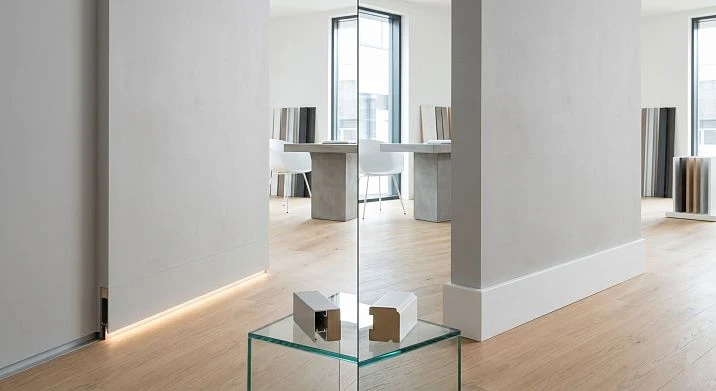
The choice between hidden and surface-mounted baseboard is one of those where a mistake costs nerves, time, and money. If the renovation is designed from scratch, the walls are prepared in advance, and the interior is in strict minimalism — hidden or shadow MDF baseboard will give that very effect of "the wall going into the floor". But if the finish is already done, the walls are puttied, the floor is laid, and the baseboard is needed here and now — it's more practical, faster, and more reliable buy MDF skirting board overlay type: straight, flat, white or paintable. It will solve the task in most real situations.
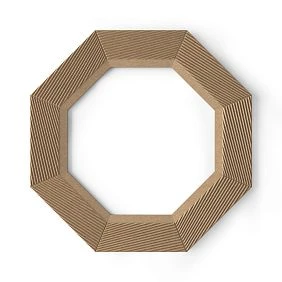
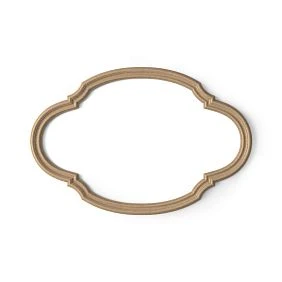
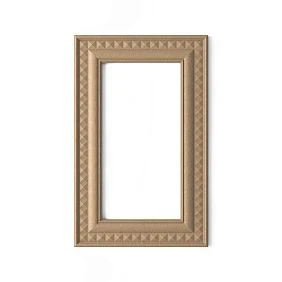
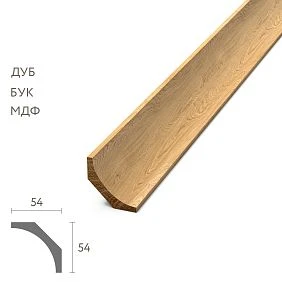
What is a hidden and shadow MDF baseboard
Before making a decision, you need to understand the concepts. In the market, they are often mixed up; sellers call any profile with a recess "shadow", and "hidden" — anything that doesn't protrude from the wall in an obvious way. Let's set things straight.




Hidden baseboard: logic and design
A hidden baseboard is a system where the baseboard itself visually disappears. The lower part of the wall is prepared in a special way: a groove or niche is formed in it, into which a metal profile is inserted. An MDF insert or a plasterboard strip flush with the wall covers this groove, and the boundary between the wall and the floor practically disappears. Or a thin horizontal gap remains — a shadow line, which gives the feeling of a "floating" wall.
Hidden MDF skirting board in this context — it is an MDF insert or an overlay decorative strip installed as part of a hidden system. It can be white, paintable, or matching the wall color — it all depends on the task.
Why is this method so popular in design projects? Because it removes an extra element from the visual field. No baseboard — no "line" that divides the wall into "lower" and "the rest". The space is perceived as unified, clean, uncluttered.
Our factory also produces:
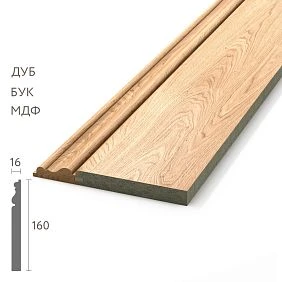
Shadow baseboard: visible but neat
A shadow baseboard is a softer compromise. Here, the baseboard is present, but visually it almost dissolves into the shadow cast near the floor. The effect is achieved because the profile has a slight recess or angular cutout, creating a horizontal dark line.
shadow MDF baseboard chosen by those who want a modern, restrained look without completely abandoning the usual installation solution. This is an option for apartments where renovations are still in progress and a small niche near the floor can be planned, but there is no desire to complicate the structure to full concealed installation.
Get Consultation
MDF insert in baseboard: what is it
An MDF insert in a baseboard is a decorative element that is inserted into the metal support profile of a concealed or shadow baseboard. This insert determines the final appearance of the bottom line of the wall: its color, texture, and finish.
MDF insert in baseboard can be white, paintable to match the wall color, wood-look, concrete-look — depending on the interior design. It is this detail that makes the concealed baseboard flexible: the metal profile remains constant, and the insert can be replaced if necessary when changing the finish.
How concealed baseboard differs from overlay MDF baseboard
Let's break down the differences systematically — this will help make an informed decision without unnecessary haste.
| Criterion | Concealed / shadow baseboard | Overlay MDF baseboard |
|---|---|---|
| Installation | Requires wall and/or floor preparation in advance | Installed on finished finish |
| Complexity | High, requires an experienced installer | Medium, suitable for DIY installation |
| Cost of work | Typically higher | Easier to calculate by linear meters |
| Replacement | Labor-intensive, affects the finish | Removes and replaces easily |
| Appearance | Maximum minimalism | Matches any style |
| Practicality | Depends on the quality of installation | Reliable, proven solution |
| Repairability | Limited | High |
The key takeaway from this table: hidden and shadow baseboards are a solution for those who manage renovations from the start and are willing to invest in details. Overlay MDF Skirting Board — is a solution for most real-life situations: renovation is underway, deadlines are tight, the budget is limited, but the result should look good. And it does look good — if you choose the right profile, color, and height.
When to buy a hidden MDF baseboard
There are situations where a hidden baseboard is fully justified. Let's list them honestly, without marketing exaggerations.
Interior design from scratch
If you are at the stage where the walls are not yet plastered, the floor is not laid, and there is a working design project — this is the ideal window for implementing a hidden system. Builders can lay a niche at the floor level during wall preparation, the metal profile is installed before the final finishing, and in the end, everything is closed neatly and without compromises.
In this scenario hidden baseboard under MDF — is a conscious design choice, not an experiment.
Minimalist interior with clean lines
Minimalism is a style where every extra detail ruins the idea. A surface-mounted baseboard in such an interior can look like a necessary but still "technical" solution. A hidden baseboard removes this feeling: the bottom line of the wall becomes as clean and seamless as the wall itself.
Especially relevant shadow MDF baseboard in combination with large-format porcelain stoneware on the floor, painting walls in a rich matte color, or with a hidden door system. In such interiors, every "extra" detail catches the eye — and a hidden baseboard removes it.
Hidden installation doors and hidden openings
If the interior uses invisible doors — without visible architraves, flush with the wall — then a hidden or shadow baseboard becomes a logical continuation of this system. Architraves disappear, the baseboard disappears — the space acquires a rare architectural expressiveness in terms of purity.
Even walls as a mandatory condition
Here is an important technical point that is often kept silent: a hidden baseboard works perfectly only on perfectly even walls. If the geometry of the room is far from straight, if there are plane differences or construction irregularities — the shadow line will be nervous, intermittent, uneven. This kills the entire effect.
Surface-mounted MDF baseboard in this sense, it is much more forgiving of irregularities: during installation, it can be pressed against the wall and hide minor deviations. That is why in real apartments, surface-mounted baseboards are incomparably more common.
When is the best time to buy an overlay MDF baseboard: the main commercial argument
Let's be honest: for most people renovating an apartment, house, or commercial space, the answer to the question 'what to buy' is MDF Skirting Board overlay type. Why? Let's list specific scenarios.
The renovation is already underway or finished. The walls are ready, the floor is laid, all that's left is to install the baseboard. Concealed installation is impossible in this situation without damaging the finish. Overlay MDF Skirting Board Buy and can be installed in one day.
You need to quickly cover the joint between the floor and the wall. Laminate is laid, parquet board is installed — the 8–10 mm technological gap needs to be covered. A flat or straight MDF baseboard handles this perfectly, looks neat, and costs a reasonable amount.
Repairability is important. Children, pets, active life — the baseboard can get scratched, chipped, or hit. An overlay baseboard can be removed, a single plank replaced, and a new one installed. With a concealed baseboard, this is not so simple.
You need to match it to doors, architraves, and furniture. — is a horizontal element that frames the room at the bottom of the walls where the wall meets the floor. Skirting boards perform several functions: they hide the technological gap between the wall and floor covering (necessary for thermal expansion), protect the lower part of the wall from mechanical damage, create visual completion, and may conceal wiring. allows you to match any color: the same shade as on doors, walls, or furniture. This is the main tool in the hands of a designer working with the finishing system.
You need a white, straight, or flat profile. These options of overlay MDF baseboard are the most popular in Russian interiors. They are simple, versatile, easy to install, and look great.
Consistency with other trim elements is required. Overlay straight MDF baseboard perfectly matches wooden architraves, wooden planks on walls, moldings, and cornices — forming a unified finishing system where each element contributes to the whole.
How to choose a profile: flat, straight, wide, or for painting
When it comes to overlay MDF baseboards, choosing a profile is choosing a stylistic accent. Each profile carries its own message.
Flat MDF skirting board
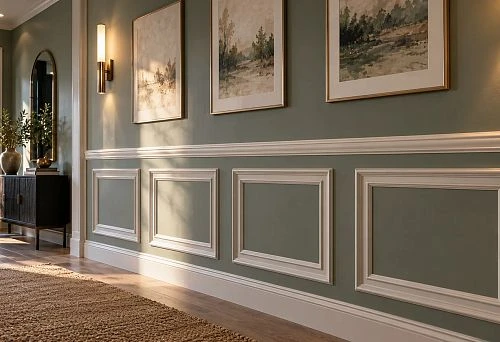
Flat MDF skirting board — is a rectangular strip with minimal thickness and no relief. Essentially, it's the closest to a hidden solution with overlay installation. The flat profile barely protrudes from the wall plane, creates a barely noticeable line near the floor, and works well in modern minimalist interiors.
It is chosen when minimalism is desired, but without the complex installation of a hidden baseboard. A white flat baseboard on a white wall — almost invisible. A flat baseboard matching the wall color — blends into the finish. It's elegant and modern.
Straight MDF skirting board
Straight MDF skirting board — is a versatile working profile with clear edges and a rectangular cross-section. It is slightly more voluminous than the flat one, creates a more pronounced horizontal line, but remains concise and does not overload the space.
The straight profile is a choice for modern classic, Scandinavian style, contemporary, art deco in its more restrained variation. It looks equally good with white doors, wood-look doors, and dark-colored doors — if you choose the corresponding color of the baseboard itself.
When people say "universal baseboard," they most often mean a straight profile. And that's fair.
Wide MDF baseboard
MDF Skirting Board from 100 mm wide — that's already a design statement. A wide baseboard makes the lower contour of the room weighty, cohesive, and expressive. It works especially well in living rooms with high ceilings, hallways, studies, and spacious bedrooms.
Interestingly, a wide baseboard, with the right profile and color choice, visually raises the ceiling: the eye focuses on the pronounced horizontal element below, and the space appears more vertically elongated. If you like this optical effect, a wide profile is your choice.
For those who want not just a wide, but a truly massive baseboard made of natural wood, there is a separate line: Wide Wooden Skirting Board made of solid wood — that's a different level of sensation and texture.
Baseboard for painting: freedom of color
This option is for those who understand that standard white is not always the right answer. — is a horizontal element that frames the room at the bottom of the walls where the wall meets the floor. Skirting boards perform several functions: they hide the technological gap between the wall and floor covering (necessary for thermal expansion), protect the lower part of the wall from mechanical damage, create visual completion, and may conceal wiring. is supplied primed or raw and is painted on site in the desired color.
Why do designers increasingly choose this option? Because the color of the baseboard is a tool. A baseboard in the color of the wall makes it visually higher. A baseboard contrasting with the wall emphasizes the lower contour. A baseboard matching the door color unifies the room's "frame system" into a single whole.
A baseboard for painting opens up these possibilities. Moreover, acrylic paint applies beautifully to MDF — with proper priming, the surface becomes smooth, matte or semi-matte, without gaps or streaks.
How to choose the color of an MDF baseboard: the logic of selection
Color is perhaps the most emotional question when choosing a baseboard. And there is no single correct answer — there is a logic that is convenient to follow.
Matching the wall color: calmness and depth
A baseboard in the color of the wall is a technique that came from Scandinavian and Japanese interiors. It makes the room visually quiet, without unnecessary eye shifts. It works especially well with rich, dark, or non-standard wall colors: anthracite, dark green, terracotta, dusty rose.
In this case — is a horizontal element that frames the room at the bottom of the walls where the wall meets the floor. Skirting boards perform several functions: they hide the technological gap between the wall and floor covering (necessary for thermal expansion), protect the lower part of the wall from mechanical damage, create visual completion, and may conceal wiring. — the only way to accurately match the desired shade.
White: a timeless classic
White MDF Skirting Board — the most popular option. It works with any light walls, with white doors and architraves, with pastel and neutral interiors. This is a proven, universal, safe solution.
A white baseboard works especially well when all the 'framing' elements — architraves, slopes, ceiling cornice — are also white. Then the room gets a clear 'white architectural frame' inside which any color you choose lives.
Matching wood and oak: warmth and naturalness
If the interior features wooden doors, parquet, engineered wood flooring, oak or ash slats, a wood-colored baseboard becomes a natural extension of that theme. an MDF skirting board with a wood finish is with a decorative finish imitating oak, walnut, or wenge creates the illusion of natural material at a significantly lower cost.
An important nuance: the baseboard shade does not have to match the floor exactly. It is enough to fall "into the same temperature": warm oak + warm laminate is already harmony. A baseboard made of real wood — with a classic profile creates a sense of solidity, reliability. from solid wood — provides a living texture that MDF only imitates. For projects emphasizing naturalness, this is fundamental.
Gray and Graphite: Modernity and Severity
A gray baseboard is for interiors with a cool, neutral, or dark palette. Porcelain stoneware "like concrete" on the floor, gray walls, graphite doors — in such a space, a white baseboard is jarring. A gray or dark gray MDF baseboard becomes part of the overall tone without standing out.
MDF Baseboard Price: Why the Hidden Option May Cost More
When discussing the price of an MDF baseboard, it is important to consider not just the cost of the strip itself. The final amount consists of several components — and the hidden baseboard often loses to the overlay one in this equation.
The metal profile for a hidden baseboard is a separate expense item. The profile is attached to the floor or wall before the final finishing. Its cost is added to the cost of the MDF insert.
Wall preparation — often requires additional leveling, puttying, and sometimes milling a niche. This means extra time and money.
Installation — a hidden baseboard requires a more skilled specialist. An installation error will only show up after the final finish — and fixing it without destroying part of the wall will be impossible.
Painting the MDF insert — if the insert is for painting, it needs to be painted separately, before or after installation. This takes time and materials.
An overlay MDF baseboard is considered simpler: price per linear meter × required number of meters + reserve + labor. No hidden costs. Significantly lower than solid wood. — this is a transparent and clear metric that is convenient to work with when planning a budget.
In summary: if the cost of hidden installation in your specific case is not justified by the design task — an overlay baseboard is not just cheaper, it is more honest. A good straight or flat one MDF baseboard profile looks decent and professional without additional conditions.
Mistakes when choosing and buying: speaking directly
Over decades of working with interior projects, the set of typical mistakes does not change. Here they are — without cuts.
They choose a hidden baseboard when the walls are already finished. This is the main and most costly mistake. Hidden installation involves working with unfinished walls. If the final finish has already been applied — a hidden baseboard is either impossible or will require partial dismantling.
They don't calculate the installation cost. They only buy the baseboard and think that's it. But the cost of installing a hidden baseboard can exceed the cost of the material itself by 2–3 times.
They confuse shadow profile and flat MDF baseboard. These are not the same thing. A shadow baseboard creates a dark line due to structural recess. A flat overlay baseboard is just a thin strip pressed against the wall. The effect is different, the installation is different, and the application conditions are also different.
They don't account for doors and architraves. They choose a hidden baseboard without considering that the door architraves remain overlay — and a style conflict arises: seamless at the bottom, but visible elements vertically.
They buy a profile that is too low for high ceilings. A flat baseboard 50 mm high in a room with a 3.2 m ceiling looks ridiculous. For high spaces, a proportionate height is needed — 80, 100, or even 120 mm.
They don't leave a margin for trimming. Classic scenario: bought exactly the perimeter, but during installation one joint didn't work out, and there isn't enough material. Always add 10%, and better 15% if there are complex corners.
They don't coordinate the MDF baseboard with the rest of the finishing system. They choose the baseboard separately from the architraves, separately from the cornice, separately from the slats. The result is a set of random elements instead of a cohesive interior.
What to buy together with MDF baseboard: the finishing system as a single whole
This is the most important section for those who want not just to "cover the joint" but to get an interior that looks designed. Because the baseboard is only the beginning of the system.
Wooden slats for walls
Decorative wooden slat — one of the most popular techniques in modern interiors. A vertical slatted rhythm on part of the wall or around the entire perimeter creates depth, texture, and a sense of warmth. Combined with a straight or flat baseboard, this is a modern, restrained, lively finish.
Wooden planks are mounted vertically or horizontally, can cover the entire wall or its lower third — like a slatted panel. The baseboard in this case completes the lower end of the panel.
Moldings: decorative wall geometry
Wooden moldings — these are horizontal or rectangular overlay elements that divide the wall into zones, create decorative panels, and imitate classic stucco molding. Combined with a straight baseboard and cornice, they form a three-level system: baseboard at the bottom, moldings on the wall, cornice under the ceiling.
This system has been known since the era of classicism — and to this day it works flawlessly at any scale: from a small apartment to a spacious country house.
Cornices: the upper contour
MDF Crown under the ceiling mirrors the baseboard at the floor. When both elements are made in the same profile and color, the room acquires completeness — its space is "enclosed" in an architectural frame.
wooden cornice made of solid wood adds naturalness and solidity. It is often chosen for studies, libraries, living rooms with high ceilings — where the texture and weight of the material matter.
Solid wood baseboard: an alternative to MDF
If you are considering not only MDF but also natural wood — Skirting made of solid wood opens up a completely different level of sensations. Living texture, the possibility of repeated sanding and repainting, durability, and the real warmth of wood — these are arguments that matter in projects with high quality requirements.
Wooden ceiling skirting board paired with a floor baseboard made of solid wood or MDF creates a system in which the upper and lower contours of the room are coordinated in material and style.
Molding as a system
Look at all this more broadly: baseboard, cornice, architraves, moldings, slats — these are Pogonazh iz massivaA unified product line designed as a system. Choosing them within a single catalog ensures consistency of profiles, colors, and proportions. This is what distinguishes a professional interior from a random set of solutions.
Which rooms each solution is suitable for
Let's break it down by specific spaces, because "for an apartment" is too general.
Living Room
In the living room, scale and expressiveness are important. For a modern minimalist interior, a straight or flat straight MDF baseboard height of 80–100 mm. For a living room with high ceilings and a classic solution, a wide baseboard with moldings and a cornice. A hidden baseboard in the living room is justified only with a pre-planned project and perfectly smooth walls.
Bedroom
In the bedroom, the priority is tranquility. A flat white or "wall-colored" baseboard of small height (60–80 mm) creates a neutral lower contour that does not draw attention. — is a horizontal element that frames the room at the bottom of the walls where the wall meets the floor. Skirting boards perform several functions: they hide the technological gap between the wall and floor covering (necessary for thermal expansion), protect the lower part of the wall from mechanical damage, create visual completion, and may conceal wiring. matching the wall color is the ideal option for the bedroom.
Kitchen-living room
An open space requires a unified solution around the entire perimeter. The baseboard must be resistant to moisture and mechanical stress. A flat or straight MDF baseboard with a high-quality coating handles this well. Important: the color of the baseboard in the kitchen and living room is the same, without boundaries.
Corridor
A high-traffic area. An overlay baseboard is definitely preferable here: it is repairable, quick to install, and can be replaced without issues if damaged. A good choice is a straight 80 mm profile with a wear-resistant coating or one for painting with wear-resistant enamel.
Commercial Spaces
In offices, showrooms, and stores, the choice of baseboard is dictated by the space's design code. For minimalist offices, a flat or hidden one. For classic representative spaces, a wide straight one with moldings. Hidden baseboards are increasingly common in commercial interiors, provided there is competent design.
Final choice: hidden or surface-mounted MDF baseboard
You've read this far — which means you take baseboard selection seriously. And you're right to do so. Here's the final logic you can apply to any situation.
Choose a hidden or shadow baseboard if:
-
you are at the renovation stage 'from scratch'
-
there is a design project and a clear technical specification
-
the walls will be perfectly level
-
the interior is strict minimalism or modern architecture
-
there is a budget for more complex installation
Choose a surface-mounted MDF Skirting Board, if:
-
the finish is already complete or near completion
-
need a practical, quick-to-install option
-
consistency with doors, architraves, and slats is important
-
need a white, straight, flat or paintable profile
-
priority is maintainability and budget predictability
An overlay MDF skirting board is not a compromise. It is a mature, professional solution that, with the right choice of profile, color, and height, looks as dignified as any hidden solution. And in some cases, even more expressive because it allows you to work with form and color consciously.
Check out the current catalog and choose a suitable profile: Buy MDF baseboard in Moscow with Contact us to confirm shipping to your destination. — convenient, fast, with the ability to compare all options in the catalog.
About the Company
STAVROS is a Russian manufacturer of decorative moldings and finishing products from MDF and solid wood: oak, beech, ash. The company's range includes floor and ceiling skirting boards, cornices, moldings, architraves, decorative slats, and the full range wood trim for residential and commercial interiors.
STAVROS manufactures products on modern equipment with control of geometry and coating quality. High-density MDF of emission class E1 and selected natural raw materials are used. The company offers both standard catalog items and custom sizes and profiles. Delivery is across all of Russia. Online consultations will help you choose a skirting board for a specific interior, taking into account doors, architraves, flooring, and decoration style.
FAQ: Answers to popular questions
Which is better: hidden MDF skirting board or overlay?
If the renovation is just starting and there is a clear design project, you can consider a hidden or shadow baseboard. If the walls are already finished and you need a practical and quick installation, an overlay baseboard is definitely the choice. MDF Skirting Board.
Can you install a hidden baseboard after renovation?
Technically, this is very difficult and in most cases impractical. Hidden installation requires wall preparation before applying the final finish. If the walls are already finished, choose a flat overlay profile; it provides a similar effect without damaging the finish.
What is an MDF insert in a baseboard?
This is a decorative overlay strip made of MDF that is inserted into the metal supporting profile of a hidden or shadow baseboard. It determines the color and texture of the bottom line of the wall. The MDF insert in the baseboard can be selected in any color — white, wood-like, matching the wall color, or paintable.
Which MDF baseboard to choose for minimalism?
For a minimalist interior, straight and flat profiles are optimal — without relief, with clear edges. A white option or — is a horizontal element that frames the room at the bottom of the walls where the wall meets the floor. Skirting boards perform several functions: they hide the technological gap between the wall and floor covering (necessary for thermal expansion), protect the lower part of the wall from mechanical damage, create visual completion, and may conceal wiring. matching the wall color is what creates the desired feeling of cleanliness and unclutteredness.
Which is cheaper: hidden or overlay MDF baseboard?
In the vast majority of cases, an overlay baseboard is cheaper — if you count the full cost: material + installation + preparation. A hidden baseboard requires additional expenses for the profile, wall preparation, and skilled installation.
Can you paint an MDF baseboard yourself?
Yes, that's exactly what it's made for — is a horizontal element that frames the room at the bottom of the walls where the wall meets the floor. Skirting boards perform several functions: they hide the technological gap between the wall and floor covering (necessary for thermal expansion), protect the lower part of the wall from mechanical damage, create visual completion, and may conceal wiring.. Apply primer, let it dry, then 2–3 coats of acrylic paint. The MDF surface takes paint perfectly — the result, with careful application, will be smooth and durable.
How to combine MDF baseboard with wooden slats and moldings?
This is one of the most effective techniques: Decorative wooden slat forms a vertical rhythm on the wall, Wooden moldings create horizontal accents, and the baseboard at the floor completes the entire system from below. The main thing is consistency in color and style.
MDF baseboard with a wood finish or real wooden one: which to choose?
MDF wood-look is more affordable, more stable in geometry, and easier to install. Real Skirting made of solid wood — is a living texture, the possibility of restoration, durability, and the feel of natural material. For projects with high quality requirements, solid wood is preferable.