Article Contents:
- What is meant by gray MDF baseboard
- Key features to check before purchasing
- Why gray color requires more precise selection than white
- Ready painted baseboard or profile for painting
- Light gray, graphite, or gray-beige
- Light gray
- Medium neutral gray
- Graphite and dark gray
- Gray-beige
- Matching the wall color
- Matching door and trim color
- Matching the floor color
- Flat profile
- Stepped profile
- Profiled top edge
- Pronounced relief
- In the living room
- In the bedroom
- In the hallway and corridor
- In the kitchen
- In an office and commercial space
- Determine the color reference
- Measure adjacent elements
- Choose the scale and shape
- Make test paintouts
- Check the finishing system and calculate the quantity
- Baseboard and door casing
- Skirting board and molding
- Skirting board and furniture plinth
- Paintable profile and ready-made colored product
- Need to make the skirting board almost invisible
- Need to match the gray doors
- Need to connect gray laminate and white walls
- Need to design an interior with a wooden floor
- Need a tall gray baseboard
- Need a graphite contour
- Choosing a shade by screen
- Trying to find a universal gray
- Ignoring the floor undertone
- Selecting only by height
- Lack of measuring door trims
- Too dark color for a small room
- Lack of test paint
- Buying without reserve
- Expecting a ready-made gray coating
- Can you paint an MDF skirting board gray?
- Which gray skirting board to choose for white walls?
- Should the skirting board match the floor?
- How to choose a skirting board for gray laminate?
- Does a gray baseboard suit a wooden floor?
- Should I choose light gray or graphite baseboard?
- What height should a gray baseboard be?
- Can the baseboard be painted with the same paint as the walls?
- Do I need to paint the baseboard before installation?
- How to calculate the amount of baseboard?
- How to connect a gray baseboard with architraves?
- Can I match the baseboard exactly to the color of gray doors?
- What is more practical: a ready-made gray baseboard or a profile for painting?
- What to check in the product card before ordering?

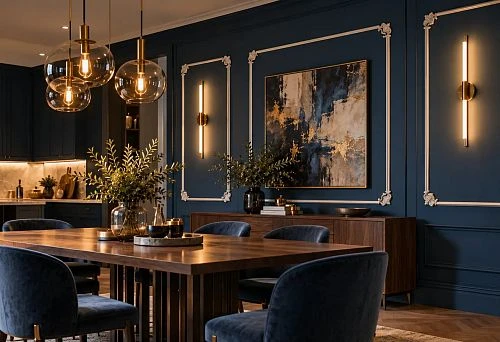
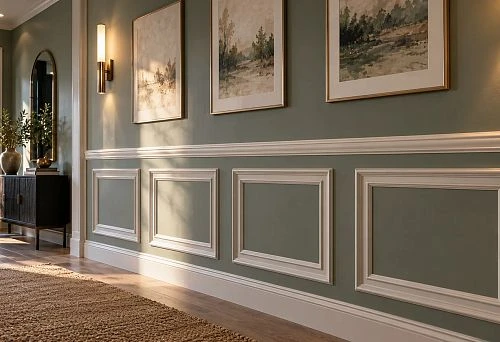
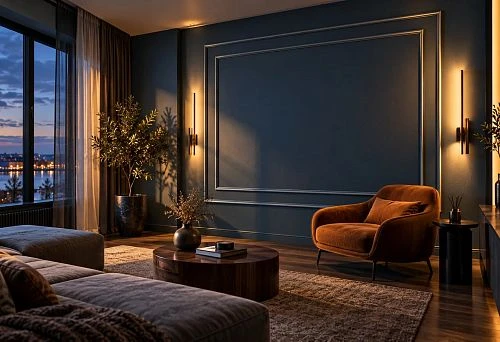
Desire buy gray MDF skirting board it usually appears not at the beginning of a renovation, but when the main surfaces have already been chosen and it becomes clear: the familiar white strip along the floor will disrupt the intended color composition. A gray skirting board can seamlessly continue the wall shade, complement the door color, match the laminate, or conversely, create a graphic outline around the room's perimeter. However, a successful result depends not only on the chosen paint. Equally important are the product's height, profile shape, its projection relative to the wall, surface preparation, and positioning relative to the architraves.
A ready-made gray color is not always necessary to find among stock items. A more flexible scenario is to select an MDF skirting board of the appropriate shape and size, and then paint it in the chosen light gray, gray-beige, smoky, stone, or graphite shade. This approach allows you not to adapt the entire interior to the limited palette of ready-made coatings, but to get a color linked to a specific wall paint, door enamel, furniture fronts, or flooring.
Particular attention should be paid to the choice when the skirting board is meant to be part of a unified architectural line. Even a difference of a few millimeters between the thickness of the skirting board and the architrave can be noticeable. An overly complex profile may clash with minimalist doors, and an excessively dark gray color can visually shrink a small room. Errors become apparent after installation and painting, when replacing the product is significantly more difficult than checking dimensions in advance and making a test paintout.
In the STAVROS category, you can select and buy an MDF skirting board for gray painting, comparing available profiles and their current parameters. The buyer's task is not just to choose a preferred strip, but to link four characteristics in one solution: shade, height, relief, and finishing method.
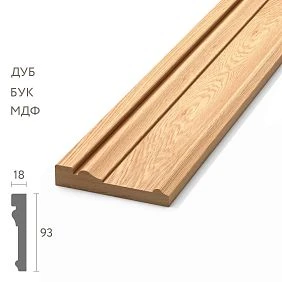
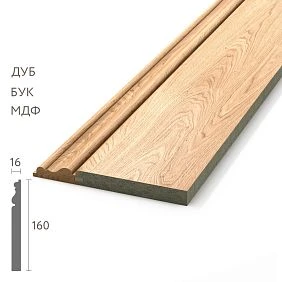
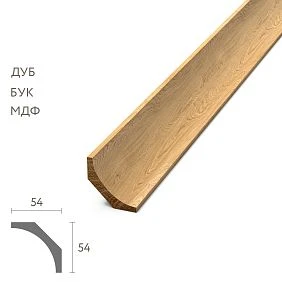
What is meant by gray MDF skirting board
A gray MDF skirting board is not necessarily a product that is already sold with a ready-made gray coating. In a practical interior design project, this name can imply two different solutions.
The first is a ready-made painted skirting board of a specific shade. The buyer sees the final color and can evaluate it before installation. The advantage of this option lies in the predictability of the coating. The limitation is that the shade has to be chosen from the offered palette, and its match with the wall or door may not always be precise.
The second solution is an MDF profile purchased for subsequent painting. This scenario offers more freedom. The color can be matched to an interior paint sample, a wall swatch, door enamel, or a code approved by the designer. The baseboard becomes not a separate purchase but part of the overall finishing system.
At the same time, the gray color of the product is not only due to paint. Color perception is influenced by the depth and shape of the relief, matte or smoother surface, natural and artificial lighting, proximity to warm or cold flooring, the color of vertical surfaces, the height of the strip, and the width of the room.
On a flat, laconic profile, the gray shade looks more even and calm. On a product with pronounced ledges, grooves, or a shaped top edge, the same color is perceived as more complex: illuminated parts appear lighter, and recesses appear darker. Therefore, choosing a shape based only on a photo is insufficient. It is necessary to imagine it already painted and installed in a specific room.




Key features to check before purchasing
In this scenario, a specific item is not selected, but a suitable profile from the MDF baseboard category is chosen. Therefore, the exact dimensions, shape, cost, surface condition, and availability of a specific product must be checked directly before ordering.
| Parameter | What is known | What to Check |
|---|---|---|
| Product type | Floor baseboard or compatible MDF trim profile | Purpose of the specific item |
| Main material | MDF | Material description in the card |
| Color scenario | Subsequent painting in the selected gray shade | Surface readiness for the selected finishing system |
| Height | Depends on the selected profile | Exact value in the card |
| Thickness and protrusion | Depends on the model | Combination with casing and wall elements |
| Length | Specified for a specific item | Length of one plank and calculation rules |
| Shape | Laconic or more embossed | Drawing, cross-section, and photo of the profile |
| Finish | Ready gray coating cannot be considered mandatory | Presence of primer, finish, or other preparation |
| Price and availability | Depends on the selected position | Current data in the card before ordering |
| Main category | MDF baseboards | View MDF baseboard profiles |
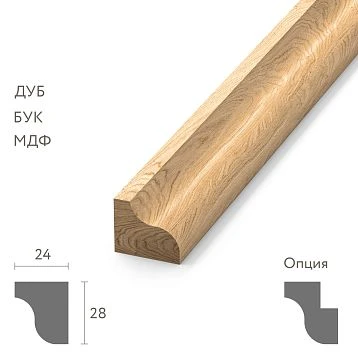
You cannot order a baseboard only by the color name. The buyer must simultaneously check the product geometry and the possibility of achieving the desired result after finishing. Two gray baseboards of the same height can look completely different. A flat profile will support a modern door without decorative milling. A profile with a stepped top will add a more architectural character to the interior.
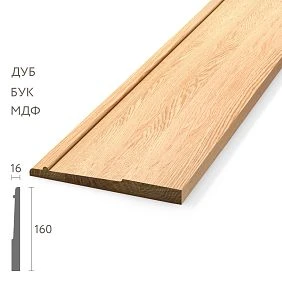
Our factory also produces:

Why gray color requires a more precise choice than white
White baseboard is often perceived as a neutral finishing touch. With gray color, the situation is more complicated. Gray shades contain different impurities and can noticeably change character next to other materials.
One gray can be cool, with a bluish or steel undertone. Another can be warm, with a beige, brownish, or olive base. On a separate sample, both colors look neutral. But next to a warm oak floor, cool gray sometimes appears bluish, and next to a white wall, warm gray-beige can shift towards wet sand color.
The conditional name 'light gray' is not enough. Before painting, it is advisable to evaluate the actual color in the room. It should be exposed to daylight, evening artificial lighting, and shadows from furniture. The same color may seem cool in the morning and warmer and denser in the evening.
It is also necessary to decide whether the baseboard should blend into the wall background, continue the color of the doors and architraves, match the floor shade, become a separate contrasting line, or tie together several gray interior details.
Get Consultation
Ready painted baseboard or profile for painting
Both options can be appropriate, but they solve different tasks. A ready-made coating is convenient when the proposed shade already matches the project and does not require an exact match with other elements. A profile for painting is preferable when the color must be part of an individual palette.
| Option | Main advantage | When to choose |
|---|---|---|
| Ready painted baseboard | The final color is visible in advance | The existing shade fits and no exact match is required |
| Profile for painting | You can choose an individual gray color | The baseboard must match the wall, doors, or furniture |
| Painting after fitting | Joints are designed as a single line | A maximally cohesive perimeter perception is needed |
| Pre-painting | It's more convenient to treat the surface before installation | The installation diagram won't damage the finished coating |
| Combined approach | Base layers are applied in advance, the finish is adjusted after installation | A balance between work convenience and joint neatness is needed |
Buying a profile for painting does not mean that any baseboard can be immediately coated with any interior paint. It is necessary to find out the condition of the supplied surface and what preparation it requires. It is better to check the compatibility of primer, paint, and base before finishing the entire batch.
Light gray, graphite, or gray-beige
Light gray
A light gray baseboard suits interiors where a soft boundary between wall and floor is needed. It is more noticeable than white on a light wall but does not create a hard outline. This shade can complement gray stone, concrete texture, light laminate, painted doors, or furniture facades.
Medium neutral gray
This is the most independent option. It is already well readable but does not create as sharp a contrast as graphite. Medium gray can be used to connect doors, window slopes, shelving, kitchen facades, or metal details.
Graphite and dark gray
A graphite baseboard emphasizes the geometry of the room. It is suitable for projects where a dark line is repeated in doors, window frames, lighting fixtures, furniture hardware, or other details. Without such support, a dark baseboard may look random.
Gray-beige
Gray-beige and warm stone shades are convenient next to natural wood colors. They soften the transition from a wooden floor to a light wall and do not create the feeling of a cold metal strip.
Baseboard matching wall, floor, or door color
| Color matching | Visual effect | What to Check |
|---|---|---|
| Wall color | Solid vertical surface | Profile relief and cutout match |
| In the color of the doors | Unified trim and baseboard contour | Thickness, style, and gloss level |
| In floor color | Continuation of floor plane | Undertone and coating unevenness |
| Separate gray accent | Expressive line around perimeter | Color repetition in other details |
In the color of the wall
A baseboard painted in the color of the wall makes the vertical surface more cohesive. The border at the floor is preserved due to relief and shadow, but the separate colored strip disappears. This is especially useful when the room already has many doors, niches, furniture, and decorative details.
In the color of doors and trim
This scenario creates a continuous finishing line. The trim descends to the floor, connects with the baseboard, and then the color continues around the perimeter. Before ordering, you need to compare the thickness of the trim and the baseboard. Color matching won't save the connection if one part noticeably protrudes relative to the other.
In the color of the floor
Matching a gray baseboard to gray laminate, tile, or stone creates a visual extension of the floor surface. However, trying to find an absolutely exact match is not always necessary. The floor has a pattern, tonal variations, seams, and its own texture, while the baseboard is painted uniformly.
How to choose a gray baseboard for a wooden floor
The combination of a gray baseboard and a wood-toned floor looks modern but requires careful selection of color temperature. Wood surfaces are rarely just brown. They contain golden, honey, reddish, smoky, gray, or almost olive undertones.
For light warm floors, soft gray-beige shades, warm light gray, and stone color with a slight beige admixture are usually suitable. Cold bluish-gray next to a golden floor creates a noticeable temperature contrast. It can be intentional if there are other cold elements in the room.
With dark wooden floors, two approaches are possible. A light gray baseboard lightens the lower part of the room and separates the floor from the walls. Graphite creates a dense outline and supports the depth of the covering. The second option requires sufficient lighting and repetition of the dark color in doors, furniture, or metal details.
How to combine gray baseboard with gray laminate or tile
At first glance, this is a simple task: just match gray to gray. In practice, it is monochrome combinations that most often reveal differences in shades.
You don't have to aim for an exact match. If the shades are almost identical but differ slightly in temperature, the combination can sometimes look worse than a deliberately lighter or darker border. A half-tone difference may be perceived by the viewer as a mistake, while a clear contrast can look like a design choice.
For gray tiles, it's important to consider the color of the grout. The baseboard can be matched not to the tile itself, but to the grout, especially if it forms a noticeable grid.
How to choose a baseboard for white and colored walls
A white wall is not a neutral background in the literal sense. Warm milky white and cool white with a bluish base interact differently with gray.
Next to warm white, soft gray and gray-beige shades work well. Cool steel color enhances the temperature contrast and can make the white wall look visually yellower. With a cool white wall, neutral or cool gray looks cleaner.
On a colored wall, the baseboard can be chosen tone-on-tone, in a related shade, or as a contrast. The more active the wall color, the calmer the profile shape can be.
How to coordinate baseboard with gray doors and architraves
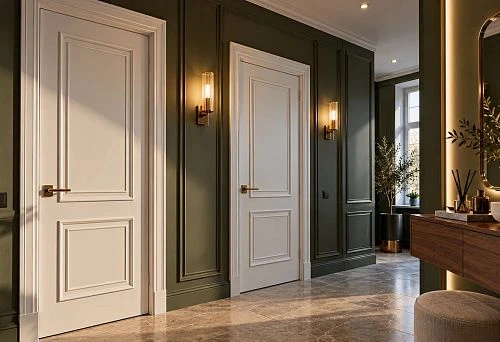
Gray doors have become one of the main reasons for the growing interest in colored baseboards. A white strip next to a gray architrave often breaks the vertical line and creates a separate color fragment near the floor. A gray baseboard allows the trim to continue around the perimeter.
For a seamless connection, it is necessary to check the shade, gloss level, thickness of parts, profile shape, and the level of the top edge of the baseboard relative to the door decorative elements.
Even an exact color match will not yield a neat result if the trim is thin and flat, while the baseboard is massive and protruding. A heavy step will appear at the junction.
How to choose the height of a gray baseboard
Height affects not only the ability to cover the gap near the floor. It determines the scale of the lower part of the wall and the area of gray color.
A low baseboard is perceived as a functional line. It suits minimalist interiors, small spaces, and situations where attention should remain on the floor or furniture.
A medium-height baseboard is easier to fit into different scenarios. It is noticeable enough to support door trims, yet does not turn into a wide colored stripe.
A tall gray baseboard becomes an architectural element. In the color of the wall, it adds relief without fragmenting the surface. In the color of the doors, it forms an expressive room frame. In a graphite shade, it creates a very noticeable boundary.
Before ordering, it is convenient to cut strips of the intended height from cardboard, attach them to the wall, and paint them in an approximate gray color. Such a mockup will not convey the relief but will help understand the scale.
How the profile shape changes the gray color
Flat profile
A flat or nearly flat surface suits modern interiors, smooth doors, and minimalist furniture. It collects fewer visual shadows and allows a more accurate perception of the chosen color.
Stepped profile
Small ledges add architectural character without turning the baseboard into a complex decorative element. The gray color emphasizes the steps through natural shadow.
Profiled top edge
A shaped top works well next to paneled doors, wall frames, and traditional furniture. When painted the color of the wall, it looks calmer than a white contrasting profile.
Pronounced relief
The deeper the grooves and protrusions, the darker the shadow areas will be. On a graphite coating, part of the pattern may visually blend, especially in insufficient lighting.
How to choose the thickness and projection of the baseboard
Thickness often goes unnoticed because the buyer focuses on height and color. Yet it is the projection from the wall that determines the quality of the connection with trims, furniture sides, and wall panels.
A baseboard that is too thin may not cover the required joint or floor covering step. One that is too thick may protrude too far forward relative to the door frame. This results in complex ends, noticeable differences, and areas that require additional finishing.
Before choosing, you should measure the thickness of the trim, the protrusion of the wall panel, the position of built-in furniture, the depth of the technological gap near the floor, and the distance to door frames.
Gray baseboard in different rooms
In the living room
In the living room, the baseboard is visible on large open sections of walls, so its color and shape noticeably affect the overall perception. Here it is especially important to decide whether it should be a background or part of a decorative system.
If the walls are painted in a light neutral color, a gray baseboard can complement the sofa, armchairs, curtains, furniture fronts, or door panels. But matching the textiles should not be the sole basis for the choice.
In the bedroom
In the bedroom, a calm color environment is usually valued. Therefore, the baseboard is more often associated with walls, doors, or soft gray-beige shades, rather than used as a sharp contrast.
In the hallway and corridor
In the hallway, the baseboard more often comes into contact with shoes, bags, cleaning equipment, and street dust. Therefore, the choice cannot be reduced to color. You need to consider the shape, protrusion, quality of the base preparation, and properties of the finish coating.
On the kitchen
In the kitchen, the floor baseboard interacts not only with walls and doors but also with the cabinet base, cabinet sides, the island, and the backsplash material.
In the office and commercial space
In the office, a gray baseboard often supports a businesslike and calm palette. In a commercial space, the choice additionally depends on the scale and intensity of use. Long walls make any deviations in height, joints, and shade more noticeable.
How to choose a profile for gray painting
A buyer planning to paint should evaluate not only the final appearance but also the condition of the workpiece before finishing. One should not assume that any MDF surface is already fully prepared for the chosen paint.
Before ordering, it is necessary to clarify whether the profile has a ready coating, whether additional preparation is required, whether the selected primer and paint system can be used, how the ends are finished, what method is recommended for trimming, and when it is better to paint — before or after installation.
For gray color, surface uniformity is especially important. Light shades reveal unevenness under side lighting, while dark shades can emphasize dust, scratches, and sanding marks.
Practical selection route: from idea to order
Determine the color reference
It is necessary to decide what the baseboard should be linked to: the wall, doors, floor, or individual details. Choosing a shade before this decision is premature.
Measure adjacent elements
It is necessary to record the height and thickness of the architraves, the position of wall panels, the size of the gap near the floor, and the distance to built-in furniture.
Choose scale and shape
Low, medium or high profile is evaluated in a real room. A cardboard mockup or a paper strip on the wall is useful. A modern minimalist interior usually requires a calm profile, while a classic space allows a more complex silhouette.
Make test swatches
You should not immediately order the entire volume of paint based on a single screen image. It is better to prepare several close swatches and evaluate them in the morning, afternoon and evening.
Check the finishing system and calculate the quantity
Before purchasing the entire batch, it is necessary to understand how the surface is prepared, what primer will be required, and how the finish will be applied. After that, the perimeter, length of planks, number of corners, trimming, and reserve are calculated.
After such preparation, you can choose a gray MDF baseboard for subsequent painting not based on a random photo, but on specific project parameters.
How to calculate the quantity of baseboard
The calculation starts with the perimeter of the room, but the final figure is almost never equal to the simple sum of the wall lengths. First, each wall is measured separately. Then, openings and areas where the baseboard will definitely not be installed are subtracted from the total length.
After obtaining the net length, the format of specific planks is taken into account. The exact length of the product must be checked in the card of the selected profile. The number of joints and the possibility of using leftovers depend on it.
A reserve is required for trimming internal and external corners, connecting with platbands, correcting cutting errors, and future local repairs. The more complex the room, the greater the role of the reserve.
What to prepare together with the baseboard
The main profile is only one part of the finished result. Additional materials may be required for installation and painting, but their specific set depends on the wall surface, the selected product, the fastening technology, and the finishing system.
| What to prepare | Why this is needed | What to Check |
|---|---|---|
| Samples of gray shades | Compare color under different lighting | Undertone next to the wall, floor, and door |
| Materials for preparation | Get a smooth base for the finish | Compatibility with a specific profile |
| Finish coating | Create the selected color and texture | Purpose and conditions of use |
| Installation materials | Secure the strip to the base | Match the wall and installation method |
| Cutting tool | Finish corners and junctions | Ability to get a clean edge |
| Protective materials | Do not stain the floor and walls | Installation and painting sequence |
| Profile stock | Compensate for trimming and future repairs | Model and batch match |
| Color code card | Repeat coating during repairs | Manufacturer, base, and tinting data |
How not to confuse MDF baseboard with similar solutions
Baseboard and casing
Casing frames the doorway, while floor baseboard covers the joint between wall and floor. External similarity does not imply full interchangeability.
Baseboard and molding
Molding is typically used for decorative wall division or framing. Its cross-section, thickness, and installation requirements may vary.
Baseboard and furniture plinth
The furniture plinth is part of the set or cabinet structure. It can be installed at a different distance from the floor, have a different depth, and experience different loads.
Paintable profile and finished colored product
If the project requires a precise gray shade, you need to find out whether the selected item is sold with a finished coating or is intended for further finishing.
Practical selection for different situations
Need to make the baseboard almost invisible
Choose a simple profile and paint it in the wall color. The less relief and contrast, the more cohesive the vertical surface will look.
Need to match the gray doors
First, compare the thickness of the trim and the future baseboard. Then coordinate the shade and gloss level.
You need to tie together the gray laminate and white walls
Don't try to exactly replicate the entire floor pattern. Choose one calm shade from its palette and make a test swatch next to the installed flooring.
You need to design an interior with a wooden floor
Consider warm gray and gray-beige shades. Use cool graphite only when it is repeated in doors, furniture, windows, or light fixtures.
You need a tall gray baseboard
First, make a mockup at actual height. Decide whether the color should match the wall or form a wide contrasting strip.
You need a graphite outline
Prepare the base especially carefully. Light gaps, uneven joints, and damaged corners are more noticeable on a dark background.
Preparation for gray painting
The final color will look convincing only on a well-prepared surface. However, the specific order of work depends on the condition of the chosen profile and the materials used.
It is necessary to obtain a uniform base, check the adhesion of materials, select the texture and ensure color repeatability. A test piece allows you to see how the primer and paint behave on the surface.
It is advisable to tint all materials from the same batch consistently. If painting is carried out in several stages, the exact composition data must be preserved. Even the same shade name does not guarantee a complete match between different systems.
Paint before or after installation
Painting before installation is convenient because the profile can be processed in a comfortable position without protecting the entire wall and floor. However, after cutting, ends appear, and connection points require correction.
Painting after installation helps to unify the baseboard, joints, and abutments into one line. However, working near the floor requires careful protection of adjacent surfaces.
The combined method is often structured as follows: the main preparation and part of the coating are done in advance, then the profile is installed, joints are corrected, and a coordinated finish is applied.
Mistakes when choosing a gray MDF baseboard
Choosing a shade by screen
The color on the monitor depends on the device settings and the photo. For an accurate decision, a physical sample or a test patch in the room is needed.
Attempt to find a universal gray
A neutral shade always interacts with white, wood, stone, and lighting. A color that works well in one interior may appear blue, beige, or dirty in another.
Ignoring the undertone of the floor
The buyer sees the general word 'gray' but does not notice brown or bluish impurities. As a result, the baseboard and floor look almost the same but conflict.
Selection only by height
Two profiles of the same height differ in thickness and shape. Without checking the cross-section, it is impossible to understand how the product will connect with the trim.
Lack of measurement of trims
The baseboard protrudes beyond the door or, conversely, turns out to be too thin. The connection has to be redone on site.
Too dark a color for a small room
A graphite outline emphasizes the perimeter and number of doors. In a narrow hallway, this can enhance the feeling of crampedness.
Lack of a test paint sample
A small sample from the catalog does not show how the color will look across the entire wall length under evening lighting.
Purchase without reserve
After a cutting error or damage, there is not enough material. A repeat order may differ in availability.
Waiting for ready gray coating
The topic name does not mean that every item in the category is already painted gray. The surface condition and finish option are checked for the specific product.
Who is the gray paintable baseboard suitable for
This solution is especially useful for buyers who need a custom color, rather than one from a limited set of ready-made finishes.
The profile for gray painting is suitable when the baseboard must match the wall, continue the color of doors and trims, connect a gray floor with other surfaces, the project includes a non-standard shade, or it is important to independently choose the gloss level.
Such a solution may not be suitable if the fastest possible installation without finishing work is required. The paintable profile should also not be chosen without understanding the technology and the ability to perform a test paint.
How to buy MDF baseboard for gray painting on STAVROS
First, you need to open the MDF baseboard category and compare available items by purpose, shape, and current sizes.
Before ordering, it's helpful to prepare a list of parameters: required height, acceptable thickness, length of open walls, number of corners, thickness of architraves, intended gray shade, color reference to walls, doors, or floor, desired shape, and the need for subsequent painting.
In the product card of the selected item, you need to check the exact dimensions, material, purpose, surface condition, current price, and availability. If any characteristic is unclear, it's better to clarify it before placing the order.
Frequently Asked Questions
Can an MDF baseboard be painted gray?
The possibility and procedure for painting depend on the specific profile and its surface condition. Before working, you need to check the item description, clarify the necessary preparation, and the compatibility of the selected materials.
Which gray baseboard should I choose for white walls?
For warm white, soft gray and gray-beige shades are often suitable. Neutral or cool grays pair better with cool white. The final decision is made based on a sample in the room.
Should the baseboard match the floor?
No. It can match the wall, doors, or be an independent contour line. Matching the floor is just one of the possible scenarios.
How to choose a baseboard for gray laminate?
Determine the main undertone of the laminate and choose one of the calm shades of the pattern. It is not necessary to achieve an exact match.
Is a gray baseboard suitable for a wooden floor?
Yes. For warm wood, it is usually easier to choose a warm gray or gray-beige shade. Cold graphite is better supported by other details.
Should I choose a light gray or graphite baseboard?
Light gray creates a soft border. Graphite emphasizes the perimeter and requires neat joints, even walls, and repetition of the dark color in the interior.
What height should a gray baseboard be?
The height is selected based on the scale of the room, doors, architraves, and style. Before ordering, it is useful to make a cardboard mockup of the actual height.
Can the baseboard be painted with the same paint as the walls?
The color can be coordinated with the walls, but the suitability of a specific paint for the lower zone and the selected surface must be checked.
Do I need to paint the baseboard before installation?
Painting before installation, after installation, or a combined scheme is possible. The choice depends on the fastening method and joint requirements.
How to calculate the amount of baseboard?
Measure each wall, account for niches and protrusions, subtract openings and areas of furniture to the floor. Then check the length of one plank and add a margin.
How to connect a gray baseboard to architraves?
It is necessary to compare the thickness, shape, and color of the parts. If the baseboard is significantly thicker or thinner than the architrave, the transition must be considered before purchase.
Can I choose a baseboard exactly matching the color of gray doors?
Yes, if a sample or accurate coating data is available and appropriate tinting can be done. The gloss level and texture should also be coordinated.
What is more practical: a ready-made gray baseboard or a profile for painting?
A ready-made coating is more convenient when its color is a perfect match. A profile for painting offers more freedom but requires preparation and a test coat.
What to check in the product card before ordering?
Check the product's purpose, exact dimensions, material, cross-section shape, surface condition, length, current price, and availability.
Result: gray baseboard as part of the overall finish
A gray MDF baseboard can solve several tasks at once: cover the floor joint, match the door color, extend the wall, tie together the floor covering shades, and form a neat room outline. But this result only appears when the shade, height, thickness, and profile are chosen together.
For a calm interior, you can paint the baseboard the color of the walls. For a unified door system, repeat the gray color of the architraves, having first checked the thickness of the parts. For a graphic space, use a darker line supported by other elements.
Before purchasing, you need to take measurements, prepare test swatches, calculate the number of planks, and check the features of the selected profile. You should not assume that a ready-made gray coating is mandatory: a more precise path is to buy a suitable MDF baseboard and paint it in the agreed shade.
In the STAVROS category, you can view and buy MDF baseboard for painting in gray. Before ordering, you should check the exact dimensions, purpose, surface condition, cost, and availability of the specific item in the product card.