Article Contents:
- Why window casings for painting are convenient
- What is house carving and what do window casings have to do with it
- How to choose an ornament for a window casing for painting
- Flat (2D) ornament
- Openwork and fretwork ornament
- Geometric and floral ornament
- What colors to choose for carved window casings
- White window casings: timeless classic
- Trim in the color of the facade: restrained unity
- Contrasting dark trim: boldness and accent
- Natural wood tones
- Color to match the roof, doors, or shutters
- Accent color for the main facade
- When to paint trim in the color of the facade
- When to choose contrasting trim
- How to prepare wooden trim for painting
- Check the surface
- Remove dust and degrease
- Choose a primer
- Think through the finish coating
- Paint before installation or after fitting
- Protect the ends and joints
- Wooden decor for the facade: what else is needed for the set
- Connecting elements and rosettes
- Brackets
- Decorative appliqués
- Wooden frame
- Balusters and porch railings
- What to pair painted trim with
- With brackets and rosettes
- With the front door
- With a porch
- With cornice
- With facade board and paneling
- With roof color
- Trim for bathhouse, gazebo, and porch: application nuances
- Trims for a bathhouse
- Trims for a gazebo
- Porch decor
- Mistakes when choosing and painting carved trims
- Buy trims without considering the facade color
- Paint only the front side
- Not choosing a protective coating for outdoor use
- Mixing too many colors
- Choosing too active a pattern for a small facade
- Do not think through the set
- Use of carved trims in different house styles
- Russian style
- Scandinavian Style
- Country style
- Modern country house
- Materials and product quality: what you need to know
- Ideas for using carved decor: where to find inspiration
- Additional uses for carved facade decor
- Carved facade elements for painting
- Wooden facade decor for painting
- How to order carved window frames correctly: a practical algorithm
- Where to buy carved window frames for painting
- FAQ: answers to popular questions about carved window frames for painting
- Can carved architraves be painted?
- When is it better to paint architraves — before or after installation?
- Which architraves look best in white?
- Can architraves be made to match the facade color?
- Do wooden architraves need protection after painting?
- How to choose the color of architraves to match the facade?
- Which architraves to choose for a bathhouse for painting?
- How to choose the right ornament?
- How do carved architraves differ from polyurethane ones?
- About the Company STAVROS
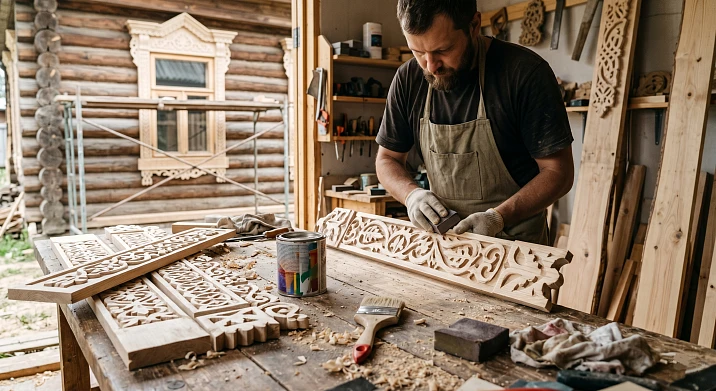
Carved architraves for painting are not just decoration. They are a meaningful architectural choice that defines the character of the entire house: its mood, style, level of detail, and how it will look in a year, five years, and twenty years. When a person looks for architraves for painting, they already know exactly what they want: decor that can be integrated into the finished facade color, aged, lightened, made accentual, or, on the contrary, almost dissolved into the overall house finish.
It is this flexibility that makes carved wooden window frames for painting one of the most sought-after solutions among owners of country houses, bathhouses, gazebos, and porches. This article covers everything you need to know before purchasing: how to choose an ornament, which color to pick, how to properly prepare the wood for finishing, what to pair painted window frames with, and what mistakes to avoid.
Why window frames for painting are convenient
Ready-made wooden decor without a final coating is a blank with wide possibilities. The manufacturer delivers the product already sanded and ready to work with, and everything else is in the hands of the buyer. It is this feature that makes carved window frames for painting a versatile material for a wide variety of projects.
Imagine a house with a dark green facade and snow-white window frames — a clear, confident, slightly Scandinavian look. Or a wooden bathhouse where the window frames are painted the same brown shade as the log house — and everything together reads as a single whole. Or a country house with blue shutters and window frames to match — a gentle, summery, almost fairy-tale appearance. None of these effects would have been achieved with ready-made painted products.
Wooden window frames for painting are good because:
-
they can be easily integrated into any project — from traditional Russian style to modern half-timbered;
-
the color can be matched exactly according to RAL or NCS to align with the facade, roof, door, or shutters;
-
when the house's finish changes, the window frames can be repainted — without replacement and without extra costs;
-
uncoated wood is easier to work with: paint lays evenly, without bubbles or peeling that occur when repainting already coated products;
-
the surface after finishing looks monolithic — as if it was intended that way.
It's important to understand: a good result depends not only on the paint you choose. It starts with the right choice of the product itself — its ornament, design, and material.




What is house carving and what do window trims have to do with it
House carving is a tradition of decorating wooden houses with carved elements, rooted in Russian folk architecture. Through-cut, applied, three-dimensional — each type of carving has its own aesthetic and area of application. buy house carving today means not searching for handmade products at the market, but choosing factory-made products with precise geometry, stable quality, and readiness for finishing.
Window trims are one of the central elements of house carving. Historically, they covered the gaps between the frame and the wall, protected the opening from drafts, and simultaneously served as the house's calling card. Today, their function has shifted towards decoration, but has not lost practical meaning: a well-installed trim protects joints from moisture, gives the window a finished look, and raises the overall level of facade finishing.
A window trim for painting is a specific format: a product without impregnation and a finish coat, sanded and ready for work. Manufacturers working at a serious level make such trims from glued furniture-grade pine boards with removed knots and resin pockets. This is fundamentally important: regular pine with knots causes problems when painted — resin seeps through the paint layer, forming stains that cannot be repainted without special treatment.
That is why, when choosing carved decor for the facade, you should pay attention not only to the ornament but also to the material and manufacturing technology.
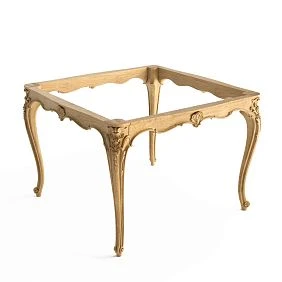
Our factory also produces:
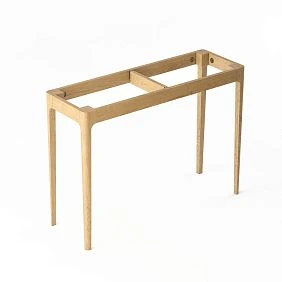
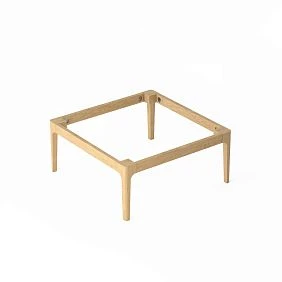
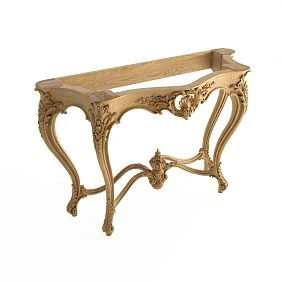
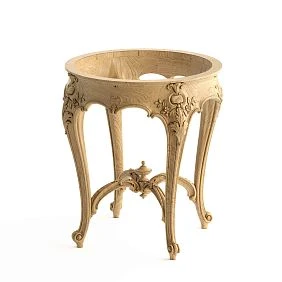

How to choose an ornament for a window trim for painting
Ornament is what makes a platband recognizable. But under paint, the ornament works differently than under varnish or stain: color evens out all details and removes the natural wood grain. The pattern becomes purely graphic — a play of lines, shadows, and volume.
Get Consultation
Flat (2D) ornament
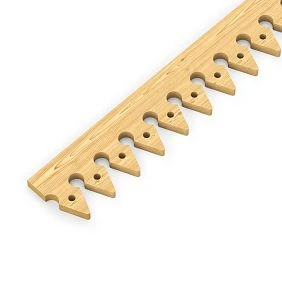
A flat ornament made with a router or laser is a universal solution. Such a pattern is well readable at any distance, does not collect dust in deep cutouts, and is easily processed with a brush or spray gun. This is the optimal option for platbands under paint, especially if white or light color is planned.
Flat platbands allow creating a layering of ornaments: a narrow platband is placed on top of a wide one, creating the illusion of a three-dimensional frame. This technique is used when decorating front windows or an entrance group, when a rich but neat effect is needed.
Openwork and cut-through ornament
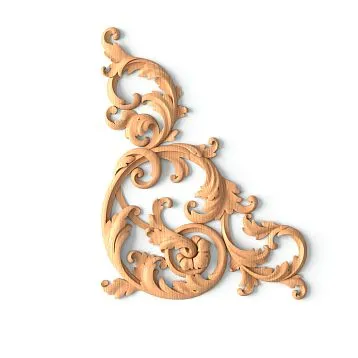
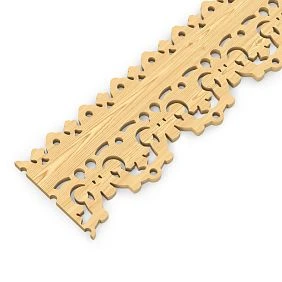
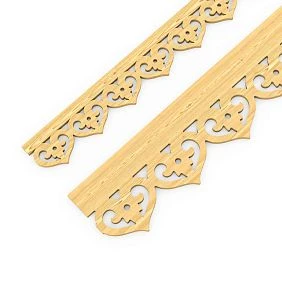
Cut-through carving — an ornament with through cuts — gives lightness and airiness. Such a platband looks good against a contrasting background: dark walls + white openwork decor is a classic and always winning combination. Under paint, an openwork ornament requires more careful processing: it is important to paint all ends and inner edges so that moisture does not penetrate into uncovered areas.
Geometric and floral ornament
Geometric patterns (rhombuses, crosses, stars, waves) work well in modern styles: Scandinavian, minimalist, ethnic. Floral ornaments (shoots, leaves, curls) are traditional for Russian style, wooden Art Nouveau, and country architecture. Both types accept paint equally well, but floral ornament requires a bit more attention during painting due to smooth shape transitions.
The choice of ornament depends not only on taste but also on the scale of the facade. An active large pattern is appropriate on the main facade of a large house or on the front gates of a bathhouse, but can overload a small country house. For small buildings, it is better to choose a medium-saturation ornament — it will add beauty without creating visual noise.
What colors to choose for carved platbands
The question of color is one of the most interesting and at the same time most critical aspects of facade design. It's easy to make a mistake here, and redoing it is costly. Therefore, we will analyze each option in detail.
White trim: timeless classic
White is the absolute leader among choices for carved window trim. The reason is simple: white simultaneously highlights the pattern (creating clear shadows), visually expands the window, and pairs well with almost any facade color.
White carved trim looks perfect on classic-style houses, on wooden buildings with dark log or timber frames, and on country houses with clapboard or block house. White also works in modern interpretations — on facades with gray plaster or cement coating, white wooden decor adds liveliness and warmth.
One nuance: for outdoor use, white requires good primer and high-quality facade enamel — otherwise, it quickly yellows under UV exposure. Alkyd enamels hold white color better, while acrylic ones are more elastic and less prone to cracking during temperature fluctuations.
Trim in facade color: restrained unity
When the facade is small or the house architecture is minimalist, decor should not overwhelm it. Trim in the same color as the wall creates a calm, neat, and modern look. The pattern does not disappear — it is read through the play of light and shadow, without catching the eye at first glance.
This technique is especially popular in Scandinavian style: facade, trim, shutters — all in a single shade of gray, blue, or dark green. Such monochrome looks modern, expensive, and very confident.
To implement this technique, it is important that the paint for the trim and the facade paint are from the same color system or at least from the same base — otherwise, under certain lighting, the shades may 'diverge' and look like a mistake rather than a design intent.
Contrasting dark trim: boldness and accent
Dark trim on a light facade is one of the most striking techniques in facade decor. Black, anthracite, dark brown, graphite carved trim literally "frames" the window, making it look like a work of art.
Contrasting carved trim works well on the main facade, at the entrance, on bathhouse windows, on gazebos, in traditional Russian style, and in the currently fashionable "cottage Gothic" style — a style combining wooden architecture with rich dark colors.
An important rule of contrast: dark trim requires precision in installation. Any gap, misalignment, or untreated end on a dark product is noticeably more visible than on a white one.
Natural wood shades
Stains and glazes that preserve the wood texture are a separate story. Technically, this is not painting in the full sense, but the result is similar: the trim gets color and protection while maintaining the natural look of the material. Honey, walnut, oak, teak, rosewood — these shades give a feeling of natural warmth.
Natural wood shades are ideal for houses made of timber or rounded logs, for bathhouses and utility buildings, for gazebos and porches. They do not compete with the facade but complement it, supporting the overall natural aesthetic.
Color to match the roof, doors, or shutters
Another professional technique is to color-coordinate the trim with other facade details: the color of the roof, front door, or shutters. This approach creates a sense of a well-thought-out, unified look for the house — when you look at the facade and understand: nothing here is accidental.
For example: dark red roof → dark red door → dark red trim. Or: green shutters → green trim → front door with an insert of the same green. Such chains work flawlessly — they create rhythm and harmony, even if the house itself is quite simple in shape.
Accent color for the main facade
Sometimes you need a "wow" effect. An accent color — yellow, terracotta, cobalt blue, ochre — on carved window frames turns the window into the central element of the facade. This technique requires courage, but with the right selection, the result is breathtaking.
Important: the accent color only works on the main facade or on one or two key windows. If you paint all the window frames of the house in a loud shade, the facade will lose its unity and turn into visual chaos.
When to paint window frames the color of the facade
There are specific situations where trim matching the wall color is the best solution:
-
the facade is small, and an additional decorative accent would overload it;
-
the architecture of the house is strict, laconic, without expressive forms, and a strong contrast would disrupt the style;
-
you want to emphasize the ornament without color conflict — only through relief;
-
the house is located in a natural setting (forest, garden), and monochrome finishing integrates it better into the landscape;
-
the windows are small, and light decor on a light background will make them appear slightly larger visually.
Window frames in the color of the facade of a wooden house is a solution that rarely goes wrong. It is not spectacular in the moment, but over time it is perceived as very precise and refined.
When to choose contrasting trim
Contrast is justified when:
-
the house is large, with expressive volume, and windows are its main feature;
-
you want to emphasize the entrance group, the front window, or the second floor;
-
the house style is traditional Russian, wooden classicism, or dacha architecture with historical references;
-
the facade is painted in a neutral color (beige, gray, white), and without contrast it looks bland;
-
the trim for a bathhouse or gazebo should visually highlight the building against the site background.
Contrasting trim also works well in modern architecture: dark gray or anthracite carved elements on a light facade look very modern due to their graphic quality — without the slightest hint of "rusticity."
How to prepare wooden trim for painting
Preparation is half the success. Many people think: take a brush, apply paint — and it's done. But it is precisely careless preparation that causes the paint to peel after a year, the ends to darken, and the entire decorative effect to be nullified.
Check the surface
Before starting work, inspect each trim piece. A well-made product is already sanded, but minor roughness, tool marks, or wood grain may remain. Go over the surface with 180–220 grit sandpaper — along the grain, without pressure. This will smooth the grain that rises after wetting, and the paint will lay more evenly.
If there are dark resin spots on the surface (which happens when using regular, non-finger-jointed pine), they need to be treated with a special alcohol-based sealer — otherwise, the resin will bleed through any coating.
Remove dust and degrease
After sanding, wipe the trim with a dry cloth or blow it off with compressed air. Grease stains are usually absent on raw wood, but if the product was stored for a long time or came into contact with chemicals, a light degreasing with white spirit won't hurt. Allow the surface to dry completely before applying primer.
Choose a primer
Priming for exterior wooden products is a mandatory step, not a recommendation. Primer performs several functions: it seals the wood pores, strengthens the surface, creates an adhesive layer for the finish paint, and protects against moisture and fungus.
For exterior use, choose antiseptic primers on an alkyd or acrylic base. Alkyd primer penetrates wood pores better and blocks resin more effectively. Acrylic dries faster and is less toxic. If white enamel is planned, use a white primer; for dark colors, you can use gray or neutral.
It's better to apply primer with a brush — this way the compound penetrates better into carved ornamental elements. A spray gun speeds up the process, but uncovered areas may remain in deep cutouts.
Plan the finish coating
For exterior wooden architraves, the following are suitable:
-
Alkyd enamels — excellent hiding power, durable gloss, good moisture protection. Downside: they take a long time to dry and require good ventilation when working.
-
Acrylic facade paints — elastic, vapor-permeable, quick-drying. An optimal choice for climate zones with sharp temperature fluctuations.
-
Oil-alkyd glazes — preserve the wood texture, penetrate deeply into the pores. Suitable if you want to maintain a natural look with a protective coating.
-
Water-based enamels — eco-friendly, quick-drying, suitable for work without professional equipment.
For carved architraves to be painted for exterior use, a finish coating of 2–3 layers with intermediate light sanding between layers is recommended. This provides a dense, even, and durable result.
Paint before installation or after fitting
Professionals often paint architraves before installation — this allows for even treatment of all sides, including the ends and back surface. The ends are especially important: it is through them that moisture penetrates the wood fastest.
Optimal scheme: prime all sides → apply the first coat of finish → do a fitting on the wall → adjust if necessary → apply the second (and third) coat on site after installation.
Installation of painted architraves also requires care — screws should be driven in so that the heads do not tear the coating, and the attachment points should be additionally treated with sealant.
Protect the ends and joints
The ends of the platbands, the joints with the frame, the lower edges — all these areas are especially vulnerable. Moisture flowing down the wall accumulates there. After installation, all joints and ends are treated with an elastic sealant (preferably acrylic — it can be painted). A final coat of paint can be applied over the dried sealant to make the joints invisible.
Do not neglect this stage: wood, even well-painted, but with open joints, will begin to rot from the ends within 1–2 seasons.
Wooden decor for the facade: what else is needed for the set
Carved platbands are the central, but not the only element of facade decor. A complete set of house carving includes several types of products, and it is better to select them in a single ornamental style.
Connecting elements and sockets
Platbands standardly have a length of 2000 mm. To properly design a corner or connect two platbands at the collection point, wooden rosettes and connecting elements are used. They not only cover the joints but also add an ornamental detail — completeness and integrity to the entire composition.
carved facade decor The STAVROS assortment includes a wide selection of connecting elements for different types of platbands. Before ordering, it is worth ensuring that the rosettes and connecting elements match the selected series of platbands — this will ensure a unified style.
Brackets
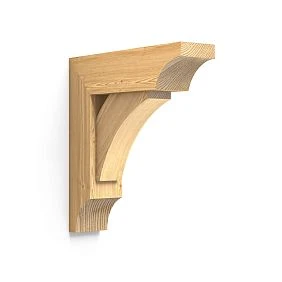
Decorative brackets are carved elements that imitate load-bearing structures under roof overhangs, balconies, or canopies. They add volume and depth to the facade without requiring any structural changes.
Brackets are especially effective when used in pairs with platbands from the same collection: the ornaments echo each other, the overall style is maintained, and the facade looks not like a set of decor, but a single architectural story.
Decorative appliqués
Wooden decorative inlays — another type of facade decor that organically complements platbands. Overlays are used to design the space between platbands and the roof, along the gable, around the perimeter of the entrance group, or on blank sections of the facade.
Overlays for painting are prepared the same way as platbands: sanding, primer, finish coat. A uniform color for the entire set — platbands, brackets, overlays — gives the feeling of a professionally executed finish.
Wooden molding
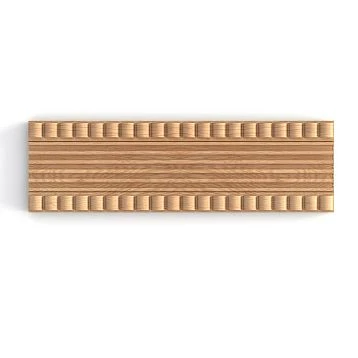
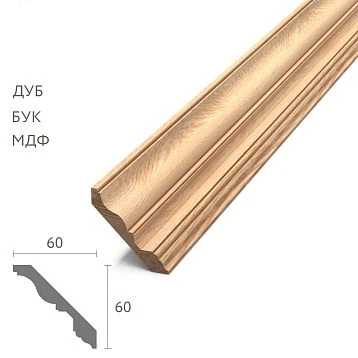
wooden baguette for facade decoration Used for framing panels, creating frames, and decorating the space around windows and doors. A thin carved baguette for painting adds graphic quality and clarity to the facade finish without excessive bulkiness.
A baguette for painting is an excellent solution for houses in classical or neoclassical style, where strictness of forms and correctness of proportions are needed.
Balusters and porch railings
If the house has a porch or open veranda, it is logical to add carved balusters for the railing to the platbands. Flat balusters with a unified ornament with the platbands create a cohesive facade image — from windows to ground level.
All these elements can be found in the catalog of carved decor for the facade и house carving STAVROS, selecting them in a unified style for a specific project.
What to combine painted platbands with
Proper combination is an art that follows a few simple rules. Knowing these rules prevents mistakes and saves time, money, and nerves.
With brackets and rosettes
Trims and brackets from the same collection are a win-win combination. The patterns echo each other, the scale of details is consistent, and a single color ties everything into a cohesive picture.
White trims with white brackets on a light facade are concise and elegant. Dark trims with dark brackets are strict and modern. A contrasting combination (dark trims, light brackets) is unconventional and expressive but requires confident color intuition.
With the entrance door
The door and trims are a pair that should "know" about each other. Matching colors is the simplest way to establish a connection. But you can play more subtly: the door in a rich dark shade, the trims slightly lighter in the same tone. Or a door in natural wood color with white trims creating a frame.
With the porch
The porch is the "face" of the entrance group. Carved trims for the facade combined with decorative porch elements (balusters, posts, decorative overlays) create a complete entrance look. A single color for the entire set is the most reliable solution; variations are possible but require caution.
With cornice
Cornice decor is traditionally created in the same pattern as the trims. If the trims are white, the cornice is white. If the trims match the facade color, the cornice does too. Breaking this rule is only possible with a deliberate artistic intent.
With facade board and clapboard
Wooden trims for painting on a house finished with clapboard or block house look organic. Especially if the board and trims are painted in the same tone: the facade is perceived as a single material object, and the trim pattern becomes its "decoration from within," without competing with the wood texture.
With roof color
The roof sets the upper color reference. A dark roof provides a basis for dark accents in the lower part of the facade. A light roof is a reason to use light or contrasting trims. A complex roof color (terracotta, green, blue) is usually better not to repeat in the trim color—it's enough to choose a close neutral tone.
Trims for a bathhouse, gazebo, and porch: application nuances
Not all carved architraves are equally suitable for different objects. There are nuances to consider before purchasing.
Architraves for a bathhouse
A bathhouse is an object with high humidity and temperature fluctuations. Two aspects are especially important for its decoration: the correct material of the product and high-quality protective treatment.
Architraves for a bathhouse for painting should be made of stabilized, well-dried wood — otherwise, they will warp and crack from the bath steam. Glued panel is more reliable in this regard than solid wood. The finish coating must be facade-grade, with high moisture resistance: alkyd enamel or a special impregnating antiseptic.
Architraves for a bathhouse are often not only window but also door and decorative ones, framing the entrance. Choosing a single ornament for the entire object creates a cohesive and memorable image.
Architraves for a gazebo
A gazebo is a more open object than a bathhouse or a residential house. The decor of the gazebo is constantly exposed to precipitation, temperature fluctuations, and direct sunlight. For a gazebo, architraves with openwork or light carved patterns are recommended: they create a visual lightness of the structure and at the same time are well-ventilated, drying faster after rain.
Architraves for a gazebo for painting are most often chosen in white or natural wood tones — they support the garden, natural aesthetics. The treatment of the ends of gazebo architraves is especially important: the open bottom edge is in constant contact with the atmosphere.
Porch decor
The porch is the calling card of the house. Wooden decor for the porch traditionally includes architraves above the canopy, brackets under the awning, and carved balusters of the railing. For painting, this entire set should be treated in a unified manner: the same primer, the same finish coating, one color.
An interesting solution for the porch is to use wooden decorative elements in a unified style with the architraves: carved columns, rail overlays, canopy decor. All this creates a rich but restrained look for the entrance group.
Mistakes when choosing and painting carved architraves
Even experienced craftsmen sometimes make miscalculations. Let's list the most common ones so you can avoid them.
Buying architraves without considering the facade color
The most common mistake: architraves are chosen based on the pattern without thinking about the color. As a result, the buyer brings home an excellent product and discovers that in combination with the specific wall color, it either gets lost or clashes. Solution: before ordering, determine the final facade color and mentally or through visualization check how the architrave will look.
Painting only the front side
A mistake that is very costly. The back side of the architrave, ends, inner edges — all these are areas of moisture penetration. Uncoated wood in outdoor use begins to darken, swell, and rot within one or two seasons. You need to paint on all sides — this is not a recommendation, it's a rule.
Not choosing a protective coating for outdoor use
Interior paints and varnishes are not suitable for facade use: they are not designed for UV radiation, frost, and constant moisture. Use only facade compounds with appropriate labeling. The price difference is insignificant; the difference in results is colossal.
Mixing too many colors
A three-color facade is already risky. If the trim is one color, the shutters another, the cornice a third, the door a fourth, and the roof a fifth, the facade turns into a motley panel that tires the eye. The optimal number of colors in a facade palette is 2–3, and they should all be linked by a common tone or saturation.
Choosing an overly active pattern for a small facade
A large, rich pattern requires scale. On a small house, it looks heavy and overloaded. For small buildings, choose a medium-saturation design — it will provide beauty without weighing down.
Not planning the complete set
Trim alone without connecting elements, rosettes, and brackets looks unfinished. Corners are covered haphazardly, joints are visible, and the overall picture is messy. Before ordering, plan a complete set: trim, connecting elements, brackets, rosettes, and if necessary, cornice and balusters.
Using carved trim in different house styles
Russian Style
Traditional Russian style involves rich floral patterns, elaborate trim with "crowns" (semicircular or triangular tops), and a clear contrast between the dark log house and white trim. buy house carving in this style means choosing products with traditional patterns and providing them with a proper white or ochre coating.
Scandinavian style
A Scandinavian wooden house is characterized by simplicity of forms, a monochrome facade, and restrained decor. Here, trim with geometric patterns or light fretwork, painted in the facade color or a slightly lighter shade, is appropriate. A unified tone is the key to Scandinavian elegance.
Country style
A dacha is a place where a certain playfulness is appropriate. Blue window frames on a white facade, yellow on green, white with colored inserts — more is permissible here than in strict urban architecture. For a country house, it is better to choose carved window frames with a moderately rich ornament that will look good both in sunny and cloudy weather.
Modern country house
For a modern country house — whether it is made of timber, frame, or glued laminated timber — carved decor serves as a way to add the warmth of natural material to often strict architecture. A geometric or openwork ornament in dark tones on a light facade is no longer "rustic," but a conscious design choice.
Materials and product quality: what is important to know
When it comes to wooden decor for painting, the material is the foundation. No paint will save a product made from unstable or poorly prepared material.
Pine is the most common material for facade window frames. It is resinous enough to be resistant to rot and soft enough to be easily milled. However, ordinary pine lumber with knots and resin pockets is unsuitable for painting: resin seeps through any layer, and knots create unstable zones.
The right solution is a glued pine panel from which all defects have been removed. Such material is stable, does not warp with humidity changes, and accepts any type of finish well.
More details about materials, manufacturing technologies, and quality requirements can be found on the page Materials and quality of STAVROS products.
Ideas for using carved decor: where to find inspiration
Before making a final decision, it is useful to see how carved window frames and facade decor have been used in real projects. This helps to grasp the scale, evaluate the ornament "in action," and avoid selection mistakes.
On the page Ideas for using carved decor real examples of designing houses, bathhouses, gazebos, and porches using platbands, brackets, overlays, and other elements of house carving. This is an excellent starting point for those who have not yet decided on the ornament, color, or set.
Additional applications of carved facade decor
In addition to platbands, the facade design of a wooden house includes a whole range of elements that are important to consider when planning a project.
Carved facade elements for painting
Frieze, pediment, wind boards, decorative inserts between floors — all these surfaces can be decorated with carved elements. carved facade decor STAVROS offers both individual elements and sets for comprehensive design.
When carved facade elements are made in a single ornament and painted in the same color, the house acquires a complete, professional look. This is exactly what owners aim for when they choose not just "beautiful platbands" but comprehensive facade decor.
Wooden facade decor for painting
Often, a homeowner starts with platbands — and gradually gets "infected" with the idea of decorating the entire facade in a single style. Wooden facade decor for painting covers not only platbands but also cornices, soffits, decorative boards, pilasters, and corner overlays. Each of these elements adds character to the facade.
It is important to remember: the more complex the set, the more carefully the painting needs to be planned. Each new element means additional time, additional material consumption, and an additional point where a problem can arise if carelessness occurs.
How to order carved architraves correctly: a practical algorithm
Many buyers, encountering facade decor for the first time, get lost in the details. We offer a simple algorithm that simplifies the process.
-
Measure the windows. Record the height and width of each window opening, the height and width of the frame.
-
Determine the type of architrave. Flat, openwork, with or without a pediment — choose the ornament based on the style of the house.
-
Calculate the quantity. One architrave is one vertical or horizontal piece of standard length 2000 mm. To frame one window, you usually need 2–3 vertical and 1 horizontal element (plus connectors).
-
Select connecting elements and rosettes. Check with the seller which connecting elements correspond to the chosen series.
-
Decide on the color. Before ordering, determine the final color of the facade — this directly affects the choice of ornament and type of coating.
-
Order with a small margin. Wooden products are cut to size, and a small margin (5–10%) protects against errors during fitting.
Where to buy carved architraves for painting
The final and most important question: where to buy high-quality carved facade decor that will last a long time and look exactly as intended?
The answer is simple: you need a manufacturer with in-house production, precise geometry, stable quality, and a real range of connecting elements — not just the trims themselves, but the entire kit for facade design.
In the house carving you can choose carved trims from several series with different patterns, carved connecting elements, brackets, and balusters. All products are made from glued pine panels with defects removed, hand-sanded, and supplied without coating — ready for any finishing.
Additionally, the catalog carved decor elements features decorative overlays, wooden baguettes, rosettes, capitals, brackets, and other elements for a unified facade design. For those who want to explore the full range wooden decorative elements — for a house, porch, bathhouse, or gazebo — the solid wood products section offers a wide selection of solutions.
FAQ: answers to popular questions about carved trims for painting
Can carved trims be painted?
Yes, wooden carved trims for painting are designed exactly for this. Products made from glued pine panels without impregnation or finishing coating accept enamel, acrylic paint, glaze, stain, or oil-based antiseptic. The main thing is to properly prepare the surface: sand, prime, treat the ends, and apply the finishing coat in 2–3 passes.
When is it better to paint trims — before or after installation?
Professionals recommend doing the main painting before installation: this makes it easier to paint the back side, ends, and complex areas of the pattern. After installation, apply the finishing coat, seal joints and fastening points with sealant, and touch up if necessary.
Which trim looks best in white?
White works well with any type of ornament, but especially expressively with openwork and saw-cut patterns. White carved trim emphasizes the design through the play of shadows and suits houses in classical, country, and Russian styles.
Can trim be made in the color of the facade?
Yes. This is a popular technique for creating a monochrome, restrained design. Trim in the same tone as the facade finish makes the decor delicate: the ornament is only readable up close, without overwhelming the facade.
Do wooden trim need protection after painting?
Absolutely. The final paint itself serves as a protective coating, provided it is a facade-grade composition, not an interior one. Additionally, joints and ends should be treated with sealant, and the top coat should be renewed every few years, especially on the south and west sides of the house where sun and precipitation exposure is greatest.
How to choose the color of trim for the facade?
The most reliable method is to use samples. Apply the chosen color to a small piece of wood, hold it against the facade under different lighting conditions (morning, noon, evening, cloudy day). Color perception varies with lighting, and what seems perfect on a sunny day may look different in shade or under evening light.
Which trim to choose for a bathhouse for painting?
For a bathhouse, choose products made from stabilized material (glued panel, not solid board with knots), the final coating should be facade alkyd enamel or moisture-resistant acrylic paint, with special attention to treating ends and joints with sealant.
How to choose the right ornament?
The rule is simple: the scale of the ornament should match the scale of the facade. A large house — a large ornament, rich carving. A small house or bathhouse — a moderate ornament that does not overload the surface. The style of the ornament should match the overall architectural style.
How do carved architraves differ from polyurethane ones?
Wooden architraves are made of natural wood — they feel warmer to the touch, accept any finish, including stain and glaze, and look lively due to the natural texture. Polyurethane architraves are lighter, not afraid of moisture, but do not provide the same texture and feel of natural material.
About the company STAVROS
When it comes to high-quality wooden decor for the facade, the name STAVROS is one of the first answers to this question. The company specializes in the production of carved wooden decor: architraves, brackets, overlays, balusters, connecting elements, and other products for decorating facades, interiors, furniture, and stairs.
All STAVROS products are manufactured on CNC machines, hand-sanded, and supplied without a final coating — in perfect readiness for any finish. The material is a glued pine panel with removed knots and resin pockets: this ensures the stability of the products and an impeccable result when painting.
The catalog includes more than 40 ornamental solutions for architraves, a wide selection of connecting elements and accessories, as well as Wooden Picture Frame, Decorative Inserts and other elements for comprehensive facade design.
STAVROS works with both private customers and professionals: designers, construction companies, restorers, and furniture manufacturers. Delivery — throughout Russia. Warranty on the finished product — 1 year, subject to operating conditions.
If you are looking for carved architraves for painting, want to decorate the facade of a wooden house, bathhouse, gazebo, or porch in a unified style — start with the catalog STAVROS house carvingHere you will find everything you need for beautiful, durable, and well-thought-out facade decor.