












































































Article Contents:
- Advantages of MDF Recessed Panels: A Scientific View of the Material of the Future
- Structural Features as the Basis of Quality
- Moisture Resistance and Dimensional Stability
- Design Possibilities: From Concept to Implementation
- Visual Effects and Spatial Geometry
- Play of Light and Shadow
- Technical Aspects of Installation: Professional Approach
- Foundation Preparation and Layout
- Mounting Systems and Their Features
- Hidden fastening systems
- Dimensional Range and Its Impact on Design
- Standard Profiles and Their Application
- Non-Standard Solutions
- Installation technologies: from preparation to perfection
- Monochromatic Palette
- Imitation of natural materials
- Modern Finishes
- Layout and zoning of space
- Functional zoning
- Accent Walls
- Acoustic Properties and Sound Regulation
- Sound Absorption Coefficients
- Resonance Systems
- Integration of Engineering Systems
- Hidden Wiring and Communications
- Integration of Lighting
- Ecological Aspects and Safety
- Emission Class and Certification
- Fire safety
- Maintenance and operation
- Regular Maintenance
- Local Repair of Damage
- Cost and economic efficiency
- Cost analysis
- Comparison with alternatives
- Conclusion
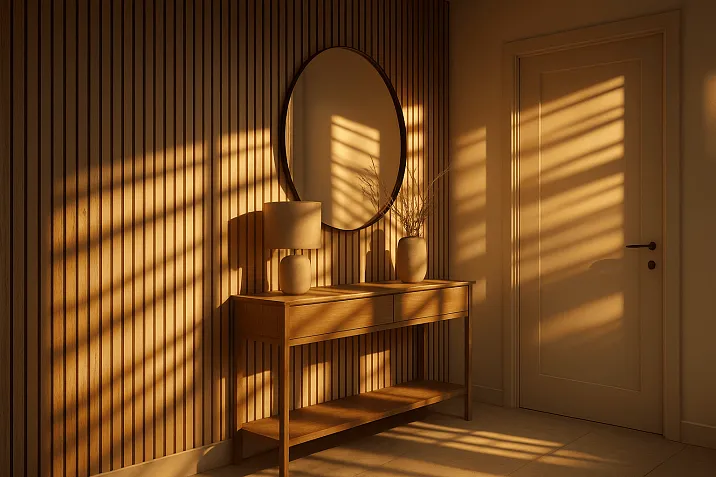
The wall ceases to be just a wall when touched by the master's hand. In modern interior design MDF planks for walls have become a true revolution, transforming ordinary vertical surfaces into works of architectural art. This material has opened up possibilities for designers and homeowners that were once only dreams.
What happens when technological achievements meet creative vision? A new spatial aesthetic is born, where every line has meaning, every shadow tells a story, and every texture evokes an emotional response. MDF recessed panel constructions allow fully realizing this philosophy.


Advantages of MDF Recessed Panels: A Scientific View of the Material of the Future




Structural Features as the Basis of Quality
MDF (Medium Density Fiberboard) material is the result of a high-tech process, in which wood fibers sized 0.05-3.0 mm are pressed at a temperature of 210-230°C under a pressure up to 40 MPa. This technology creates a unique microstructure with a density of 650-850 kg/m³.
Uniform distribution of fibers ensures isotropy of properties — equal characteristics in all directions. Unlike natural wood, where properties along and across fibers differ by 15-20 times, MDF demonstrates stable indicators regardless of load direction.
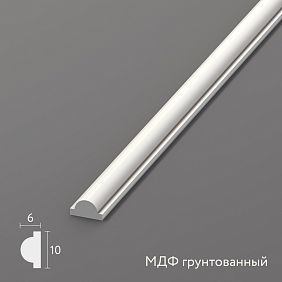
Our factory also produces:


Moisture Resistance and Dimensional Stability
The swelling coefficient of quality MDF recessed panels is 6-10% after 24-hour immersion in water, which is twice better than particleboard. This allows using Wall MDF rails even in rooms with high humidity without risk of deformation.
The linear expansion coefficient is only 8-12×10⁻⁶ 1/°C, minimizing thermal deformations. With a temperature difference of 25°C, a 3000 mm long panel will change its size by only 0.6-0.9 mm.
Get Consultation
Design Possibilities: From Concept to Implementation
Visual Effects and Spatial Geometry
Vertical placement of panels creates an optical illusion of increased room height. This effect is based on laws of visual perception — the eye follows vertical lines, creating a sense of upward movement. In rooms with low ceilings, this technique can visually add 15-20 cm to the height.
Horizontal orientation, on the contrary, expands the space. Parallel horizontal lines create a sense of movement, which is especially relevant for narrow corridors and elongated rooms. Combining different directions allows creating complex geometric compositions.
Play of Light and Shadow
Decorative MDF rails They create a unique play of light and shadow, which changes throughout the day depending on the angle of natural lighting. The distance between the slats determines the depth of shadow lines — a gap of 20-30 mm creates a soft shadow, while 50-70 mm produces a more contrasting one.
Integrating LED lighting between the slats creates a "floating" effect. Even light distribution along the entire length of the slat is achieved using aluminum profiles with polycarbonate diffusers.
Technical aspects of installation: professional approach
Preparation of base and marking
The quality of mounting MDF slats on walls begins with careful preparation of the base. Deviations from verticality must not exceed 2 mm per linear meter of height. Irregularities exceeding 3 mm require leveling with plaster or drywall.
Marking is done using a laser level and chalk line. When creating complex geometric patterns, it is recommended to make a full-scale cardboard template to verify calculations and visually assess the result.
Fastening systems and their features
The adhesive method is applied to perfectly flat surfaces. Polyurethane adhesives provide a bond strength of up to 8-12 MPa and retain elasticity, compensating for minor thermal deformations. Setting time is 15-25 minutes depending on temperature and humidity.
Mechanical fastening with screws requires pre-drilling holes with a diameter of 0.8-0.9 times the screw diameter. This prevents cracking of MDF and ensures even load distribution across the material's entire thickness.
Hidden fastening systems
Clamp systems allow creating surfaces without visible fasteners. Steel clamps with a thickness of 1.2-1.5 mm are milled into the end of the slat to a depth of 8-12 mm. The load-bearing capacity of such a connection is 120-150 N per linear meter.
Magnetic mounting systems are used for removable structures. Neodymium magnets provide an attraction force of up to 25 kg per square decimeter of contact area. This allows easily removing individual elements for access to utilities.
Size series and their influence on design
Standard profiles and their application
Thin slats with a cross-section of 10×20 mm create a delicate texture, suitable for accentuating specific areas. They practically do not alter the room’s geometry, adding only surface texture.
Medium profiles 20×40 mm represent an optimal balance between visual impact and cost-effectiveness. They create a pronounced play of light and shadow without overwhelming the interior with bulky elements.
Large slats 40×60 mm and larger are used to create dominant architectural accents. They can dramatically alter the perception of space, forming a powerful vertical or horizontal dominant element.
Non-standard solutions
Trapezoidal profiles create a "V" effect when mounted vertically. A 15-30° angle of the slat edges ensures smooth transitions between light and shadow, creating a dynamic surface.
Semi-circular slats add softness to interior geometry. A curvature radius of 5-15 mm creates smooth transitions between light and shadow, which is especially effective with side lighting.
Color solutions and decorative finishes
Monochromatic palette
White slats create a sense of cleanliness and spaciousness. They reflect the maximum amount of light, visually enlarging the room. Various shades of white — from milk to Arctic — allow creating subtle color nuances.
Gray tones from light gray to anthracite provide a neutral base for bright accents. Grays MDF panels for walls do not attract excessive attention, creating a calm, balanced background.
Imitation of natural materials
Oak texture remains a classic choice due to its distinct grain pattern. Modern printing technologies convey not only the visual but also the tactile aspect of natural wood.
Wenge and ebony create luxurious dark surfaces with deep color. The contrast between dark slats and light walls forms a dramatic interior in modern or art deco style.
Modern finishes
Metallic tones — copper, bronze, brass — give the interior an industrial character. Powder coatings with metallic pigments create a realistic imitation of patinated metal.
Fluorescent finishes accumulate light energy during the day and softly glow in the dark. This effect is especially interesting in children's rooms and hallways, creating a delicate navigational lighting.
Planning and zoning of space
Functional zoning
MDF plank wall finish allows visually dividing open spaces into functional zones without erecting partitions. Changing the direction or density of the slats creates psychological boundaries between zones.
Vertical slats behind the bed in studio apartments create a private sleeping zone, while horizontal slats in the living room form a relaxation zone. Such zoning preserves the feeling of spaciousness while providing clear functional separation.
Accent walls
An accent wall with slat cladding becomes the compositional center of the room. The "golden section" rule recommends placing the accent at a distance of 1/3 from one of the walls to create a dynamic asymmetry.
Partial wall finishing—only in the lower or upper part—creates a panel or frieze effect. A panel height of 900–1200 mm corresponds to classic proportions and visually does not overload the space.
Acoustic properties and sound regulation
Sound absorption coefficients
MDF has natural sound-absorbing properties due to its porous structure. The sound absorption coefficient in the frequency range of 250–4000 Hz is 0.15–0.25 for smooth surfaces.
Perforated strips with holes of 3–8 mm diameter significantly improve acoustic characteristics. When acoustic wool is installed behind the perforated surface, the sound absorption coefficient increases to 0.7–0.9.
Resonant systems
The "strip-air gap-base" system acts as a resonant sound absorber. The resonant frequency is calculated by the formula f = 60/√(d×t), where d is the thickness of the air gap in mm, and t is the surface density of the strip in kg/m².
Tuning the resonant frequency to the 250–500 Hz range is most effective for suppressing the speech frequency range. This is especially important in open-plan office spaces.
Integration of Engineering Systems
Hidden wiring and communications
Strip constructions are ideal for concealing engineering communications. Electrical cables are laid in the space between strips and the main wall, eliminating the need for grooving.
Removable strips provide access to communications for maintenance and repair. Magnetic fasteners or special latches allow individual elements to be removed without compromising the integrity of the entire structure.
Integration of lighting
LED strips installed between strips create even ambient lighting. Aluminum profiles with diffusers ensure uniform light distribution and protect LEDs from mechanical damage.
Built-in strip-mounted spotlights create accent lighting. A 15–30° beam angle forms directional light beams that highlight material textures and architectural details.
Ecological Aspects and Safety
Emission class and certification
Modern MDF planks Produced with formaldehyde emissions classified as E1 or E0. Class E0 limits formaldehyde emissions to less than 0.05 mg/m³ of air, matching the emission level of natural wood.
FSC and PEFC certificates confirm that the wood raw material originates from sustainably managed forests. This guarantees environmentally responsible production and compliance with "green" construction principles.
Fire safety
MDF belongs to fire hazard group G4 (highly flammable materials) according to Russian classification. However, special fire-retardant impregnations can reduce the fire hazard group to G2–G3.
Phosphorus-based antipyrene coatings form a protective layer that, upon heating, creates a foamed structure that impedes flame spread.
Maintenance and operation
Regular maintenance
Dry cleaning with a vacuum cleaner using a soft nozzle should be performed weekly to remove dust from gaps between strips. A bristle nozzle may leave scratches on painted surfaces.
Wet cleaning is performed using a slightly damp microfiber cloth without abrasive agents. Any remaining moisture must be immediately removed to prevent water from entering joints.
Local repair of damage
Minor scratches on painted surfaces are removed using matching color touch-up pencils or markers. Deep damage requires local puttying and repainting.
Replacing a damaged strip in a clip system does not require dismantling adjacent elements. The damaged element is removed from the clips and replaced with a new one without compromising the overall structure.
Cost and economic efficiency
Cost analysis
Cost MDF interior wall strips Price varies from 150 to 800 rubles per linear meter depending on profile size, finish type, and manufacturer. Installation costs account for 40–60% of material cost.
Preparation work—wall leveling, priming, and marking—adds 20–30% to the total estimate. With proper foundation preparation, the lifespan of strip finishes reaches 15–20 years.
Comparison with alternatives
Natural wooden planks cost 2–4 times more than MDF strips for comparable visual effect. Maintenance requirements are significantly higher due to susceptibility to warping and cracking.
Metal strip systems are 50–80% more expensive but offer greater durability. However, they create a "cold" atmosphere and require special anti-corrosion protection in humid areas.
Conclusion
Transforming interiors using MDF strip constructions represents not merely a fashion trend, but a conscious choice in favor of functionality, aesthetics, and longevity. MDF planks for walls The technological sophistication of modern MDF ensures the stability of its properties and predictable behavior under various operating conditions. Its ecological safety and compliance with strict international standards make it suitable for any room, including children's rooms and medical facilities.
The variety of design solutions — from delicate decorative accents to large-scale architectural installations — allows panel systems to be adapted to any stylistic concept. The ability to integrate modern lighting and engineering technologies makes such structures not merely decorative, but also functional interior elements.
Economic efficiency is evident both in the accessible cost of the material and in the long-term operational perspective. Minimal maintenance requirements and the possibility of local repairs ensure low operating costs throughout the material's lifespan.
The ease of installation and availability of quality materials make paneling accessible not only to professional designers but also to enthusiasts who wish to transform their living or working spaces independently.
Innovative development directions — integration of smart technologies, functional coatings, eco-friendly production processes — define the future of this segment of building materials. MDF panel systems continue to evolve, offering new possibilities for creating comfortable and aesthetically pleasing living environments.
The company STAVROS, combining traditional craftsmanship with innovative technologies, remains a trusted partner for all who choose quality, reliability, and beauty in interior design. Decades of experience, continuous improvement of production processes, and deep understanding of modern design needs make STAVROS not merely a material supplier, but a partner in creating spaces that inspire and delight every day.
STAVROS Company, combining the traditions of craftsmanship with innovative technologies, remains a faithful companion to all who choose quality, reliability, and beauty in decorating their interiors. Years of experience, continuous improvement of production processes, and deep understanding of modern design needs make STAVROS not just a material supplier, but a partner in creating spaces that inspire and delight every day.


