










































































Article Contents:
- Why the price of one batten does not show the project cost
- Where 20x40 batten is used: scenarios and tasks
- Accent Wall
- Decorative partition
- Furniture front
- Ceiling composition
- Niche
- Commercial interior
- What affects the price of a wooden batten 20x40
- Wood Species
- Cross-section
- Length
- Sanding quality and geometry
- Moisture and Drying
- Finishing and coating
- Packaging and Logistics
- Oak or beech: how the material changes the price and result
- Which finish to choose for
- Price per piece, per meter, and per wall: three levels of calculation
- Level 1: Price per piece
- Level 2: Price per linear meter
- Level 3: Price per project — estimate
- How to calculate the number of 20x40 slats for a wall
- Initial data for the example
- Step 1: determine the number of vertical lines
- Step 2: determine the length of each slat
- Step 3: Add allowance
- Step 4: account for wall features
- Step 5: final estimate
- Calculation for other steps
- Why a 20x40 slat may be more profitable than a ready-made slatted panel
- Step flexibility
- Custom size fitting
- Replacing one batten
- Furniture front
- When paneling is preferable
- Planed, sanded, interior: what's the difference and why it matters
- Why construction batten is not an option for a visible wall
- What is kiln drying and why it matters
- Batten 20x40: how it differs from a block, trim, and molding
- Batten or block?
- Batten or molding?
- Slat or angle?
- Installing a wooden slat 20x40: what you need to know before buying
- Mounting with adhesive
- Installation with hidden fasteners
- Installation on the base (slat panels)
- What materials are needed for installation
- How to choose a finish coating for a wooden slat
- Oil
- Varnish
- Enamel
- Toning
- Mistakes when buying a wooden slat 20x40
- Only look at the price per piece
- Not calculating the reserve
- Not considering the spacing between slats
- Buying a construction slat for a visible wall
- Do not check the geometry of the batch before installation
- Mix batches
- Do not consider the room height when choosing the slat length
- Choose oak where a smooth white enamel is needed
- Forget to include the coating in the estimate
- Do not count mounting materials
- What to buy together with the 20x40 slat
- Wooden moldings and profiles
- Ready-made panels and slat systems
- Installation and finishing
- Additional reading
- Why STAVROS
- FAQ
- How much does a 20x40 wooden batten cost?
- Why is a 20x40 oak batten more expensive than a beech one?
- How to calculate the number of battens for a wall?
- Which is better — a 20x40 batten or a ready-made slat panel?
- Can I use a construction batten instead of an interior one?
- What glue to use for wooden battens on a wall?
- What to buy together with the batten?

There is one point that confuses almost everyone who takes on a slatted wall or decorative partition for the first time. A person finds a 20x40 wooden batten, looks at the price per piece — and thinks they understand the project cost. Then they multiply by the approximate quantity, get a number, and go to the store. But in the end, the estimate turns out to be one and a half to two times higher than calculated.
Why? Because the price of one batten is only the starting point. The real budget consists of a dozen parameters: spacing between battens, length, allowance for trimming, material, treatment, coating, fasteners, and delivery. Missing even two of them means making a mistake in the calculation.
This article is not about 'beautiful walls with battens.' It is a commercial calculation guide: how to calculate a 20x40 wooden batten at a price per piece, how to convert the price into a project budget, and where exactly money is lost with incorrect calculation.


Why the price of one slat doesn't show the project cost
Ask yourself honestly: have you ever calculated an estimate using the formula 'price × quantity = total'? And got the correct result? Almost certainly not.
Wooden slat 20x40 — a product with several variables, each affecting the final amount:
Price per piece. One slat of standard length is the basic unit of calculation. But it says nothing about the final number of slats needed for a specific task.
Slat length. Slats come in different lengths: 2.0 m, 2.4 m, 2.7 m, 3.0 m, 6.0 m. With the same price per piece, a 3-meter slat and a 2-meter slat are different stories when recalculated per linear meter.
Spacing between slats. On an accent wall, slats are installed with a gap: slat + clearance. The spacing determines the rhythm density — and directly affects the number of slats needed for a wall of a given width.
Allowance for trimming. Corners, switches, sockets, doorways — all of this consumes material. Standard allowance: 10–15% of the calculated quantity.
Coating. An uncoated wooden slat is a blank. For varnish, oil, enamel, or tinting, additional materials are needed. Their cost is added to the budget separately.
Installation. Glue, fasteners, mounting tape, screws — this is not a zero-cost item. Especially if the wall is large.
Delivery. Slats are long-length goods. The cost of delivering long-length items differs significantly from delivering piece goods.
That's why a 20x40 wooden batten at a per-piece price is just the beginning of the conversation. The total amount is the sum of all items. Start calculating correctly from the very beginning, and you won't have any unpleasant surprises.
View the assortment of STAVROS wooden battens means immediately seeing specific items with parameters: wood species, cross-section, length, surface condition.




Where a 20x40 batten is used: scenarios and tasks
Before counting money, you need to understand the task the batten is for. Because the quantity, spacing, material, and geometry requirements all depend on the scenario.
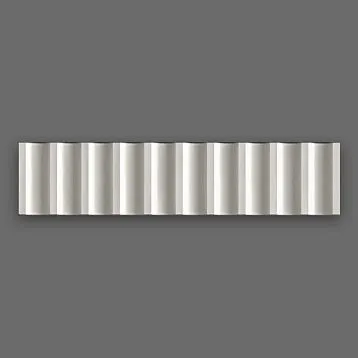
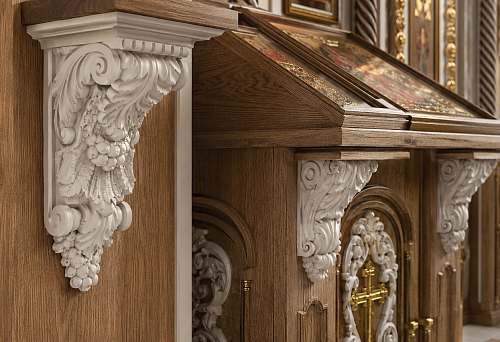
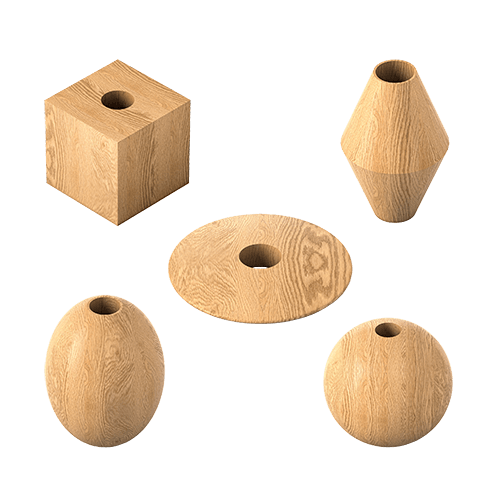
Our factory also produces:




Accent Wall
The most popular scenario in recent years. Vertical battens with uniform spacing create a rhythmic texture on one wall — typically behind a sofa, bed, or dining table. The 20×40 cross-section is optimal here: the batten is thin enough to create a light rhythm and tall enough for the relief to be noticeable.
Get Consultation
Decorative partition
Battens are mounted between two structural elements with equal spacing, creating a semi-transparent partition. Zoning without completely closing off the space — for living rooms, hallways, open spaces.
Furniture front
20×40 battens are installed on the fronts of cabinets, wardrobes, and dressers. Vertical rhythm on furniture fronts is modern classic in the literal sense. Here, geometry requirements are maximum: the batten must be perfectly straight, otherwise the front will warp.
Ceiling Composition
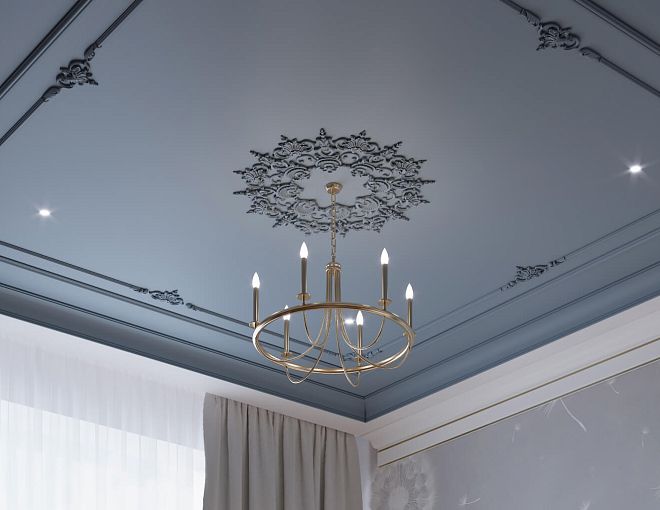
Battens are mounted on the ceiling — parallel or in a geometric pattern. The 20×40 cross-section is convenient because the batten doesn't create excessive weight or lower the ceiling. At the same time, the wood texture on the ceiling provides an unexpected and expressive effect.
Niche
Decorative framing of a niche with slats is a quick way to turn an architectural accident into a design element. The slats are laid along the back wall of the niche horizontally or vertically.
Commercial interior
Reception, showroom, office, restaurant — everywhere a "living" material with character is needed, a solid oak or beech slat works as a professional design solution.
View slatted panels as a ready-made solution in the section of slatted panels STAVROS. If the task requires a custom pitch or non-standard length, the slat is taken separately.
What affects the price of a 20x40 wooden slat
The price of a 20×40 wooden slat is not a random number. It is based on a specific set of parameters. Understanding them means being able to compare offers meaningfully, rather than by the principle "cheaper is better."
Wood Species
Beech and oak differ in price. Oak is denser, heavier, has a more pronounced texture, and a higher market value. Beech is a dense, even-grained wood with closed pores, well suited for painting. With the same cross-section, an oak slat will cost more than a beech one.
Cross-section
20×40 is a specific size. But nearby in the catalog there may be slats 10×20, 15×40, 20×20, 30×40, 40×40. Each cross-section means a different volume of wood and a different price. The 20×40 cross-section is popular precisely because the balance between visual effect and material consumption is optimal here.
Length
A 2-meter slat and a 3-meter slat have different prices per piece, but may be comparable in price per linear meter. Always recalculate per meter if the lengths differ.
Grinding quality and geometry
Construction batten and interior batten are different products. Construction batten has significantly wider geometry tolerances. Twisting, warping, uneven grinding — all of this is common for construction batten. In interior batten, it is unacceptable. That is why a planed, sanded wooden batten 20×40 with controlled geometry costs more than "something made of softwood from a building hypermarket."
Moisture and Drying
Kiln-dried wooden batten is stable: it will not "warp" after installation. Raw or poorly dried batten means deformation within a few weeks. For visible areas, this is a disaster.
Treatment and coating
Uncoated batten is a ready-made blank for your finishing. Batten with primer or base coating is ready for final painting faster. Each processing stage adds to the price.
Packaging and logistics
Battens are long-length materials. Special packaging, special delivery. This is also part of the cost.
Oak or beech: how the material changes price and result
The question "oak or beech" in the context of a wooden batten 20×40 is not a matter of taste. It is an engineering and aesthetic decision with direct financial consequences.
| Material | When to choose | How it affects price and result |
|---|---|---|
| Beech | For enamel, in neutral interiors, where even coloring is important | Closed pore, smooth grinding, paint lays without craters. Often more cost-effective than oak when painting |
| Oak | Visible texture, natural oil or varnish, premium interiors | Expressive large texture, warm color. More expensive than beech, but visually richer under a transparent coating |
| Softwood construction | Rough tasks, hidden frame | Much cheaper, but unstable geometry, resin pockets, poor sanding. Not for visible surfaces |
Which finish to choose
Beech slat for enamel. This is a classic for furniture and interior use. Beech has a dense, even structure with closed pores — paint applies perfectly. If the task is to create an accent wall in white, gray, or any RAL color — beech is optimal.
Oak slat for oil or varnish. Oak 'lives' only when its texture is visible. Clear oil, tinting, varnish — it is in these coatings that oak slat reveals its full potential. On an accent wall in natural oak — this is a level that is immediately perceived as premium.
Slat for tinting in a dark tone. Any option works. But oak under dark tinting is more expressive: the wood texture 'shines through' the tinting and creates depth.
View slat models in the catalog — in the section slats RK-001 STAVROS. It lists available breeds and parameters.
Price per piece, per meter, and per wall: three levels of calculation
Let's break down how to think correctly about the price of a wooden slat depending on the task.
Level 1: Price per piece
This is the fastest way to compare two items in a catalog. Convenient for a preliminary estimate.
Limitation: does not account for length. A slat for 200 rubles that is 2 meters long and a slat for 280 rubles that is 3 meters long — which is more profitable? By price per piece, it's not clear. By price per linear meter, the first is more expensive.
Level 2: Price per linear meter
Price_m = Price_piece / Length_slatThis indicator is needed when you are comparing slats of different lengths or calculating consumption based on the length of the room. It is a fair universal indicator.
Level 3: Price per project — estimate
This is the only indicator that makes sense for making a purchase decision.
Calculation formula:
Purchase_volume = (Estimated_quantity + Reserve_10-15%) × Price_per_pieceThe full estimate includes:
-
cost of the batten (estimated quantity + reserve);
-
glue and fasteners;
-
primer and finish coating;
-
tool for trimming;
-
delivery.
Buying a wooden batten 20x40 at the right price means not just clicking "add to cart," but first calculating the full estimate and only then placing the order.
How to calculate the number of battens 20x40 for a wall
Here is the most practical block of the article. Let's break down the calculation step by step — with a real example.
Initial data for the example
-
Wall width: 3.0 m
-
Wall height: 2.7 m
-
Slat direction: vertical
-
Slat cross-section: 20×40 (width in the wall plane — 40 mm)
-
Gap between slats: 40 mm
-
"Step" (slat + gap): 80 mm
Step 1: determine the number of vertical lines
N = Wall_width / Step = 3000 mm / 80 mm = 37.5 ≈ 38 slatsStep 2: determine the length of each slat
The slat runs from floor to ceiling: 2.7 meters. If the standard slat length is 3 meters, then each slat yields one vertical "strip" without a joint. If the slat is 2 meters, joining is required, which adds complexity and waste.
Conclusion: for rooms with a height of 2.4–2.7 meters, a 3-meter slat is the optimal choice.
Step 3: Add margin
38 slats × 1.12 (12% reserve) ≈ 43 slats
The reserve accounts for trimming, defects, installation errors, and possible future replacements.
Step 4: account for wall features
-
Doorway: subtract the slats that would fall within its width, but add 1 slat for framing on each side.
-
Switches and outlets: slats are trimmed — this is additional consumption from the reserve.
-
Corner: if the wall "goes" into a corner, special 45° cuts are needed.
Step 5: final estimate
| Article | Example |
|---|---|
| Calculated number of slats | 38 pcs. |
| 12% reserve | 5 pcs. |
| Total to order | 43 pcs. |
| Price per piece | from STAVROS catalog |
| Glue and fasteners | as a separate line |
| Finish | oil, varnish or enamel |
See the availability and parameters of slats for calculation in the section wooden strips STAVROS.
Calculation for other steps
| Step (slat + gap) | Number of slats for a 3 m wall |
|---|---|
| 60 mm (slat 20 + gap 40) | ~50 pcs. |
| 80 mm (slat 40 + gap 40) | ~37–38 pcs. |
| 100 mm (slat 40 + gap 60) | ~30 pcs. |
| 120 mm (rail 40 + gap 80) | ~25 pcs. |
The smaller the step, the denser the rhythm and the more rails are needed. Accordingly, the budget increases.
Why a 20x40 rail can be more profitable than a ready-made slatted panel
Ready Rafter panels — a convenient and quick option. But in a number of scenarios, a separate 20×40 rail is preferable.
Step flexibility
A ready-made panel has a fixed step between rails. If it does not match the desired rhythm, you will have to either agree or look for another panel. The 20×40 rail allows you to choose any step: 30, 40, 50, 60, 80 mm.
Adjustment to non-standard sizes
A wall with doors, niches, ledges is not a rectangle. It is more difficult to fit a ready-made panel here. Individual rails are much easier: each one is cut to its own length independently.
Replacing one rail
If after a few years one slat gets damaged, it can be replaced individually without dismantling the entire wall. In a panel system, this is much more difficult to do.
Furniture front
On furniture facades, slats are mounted exactly to the size of a specific module. A standard panel here will almost always require modification. An individual slat is cut to the required size without waste.
When a panel is preferable
If you need quick installation over a large area with a consistent pitch, a ready-made slat panel wins in speed. It is already prepared as a system with a base.
Both options are presented in the STAVROS catalog: Wooden planks и Rafter panels.
Planed, sanded, interior: what's the difference and why it matters
The price of a planed wooden slat 20x40 is a query that implies a specific requirement for surface quality. Let's break it down.
| Batten Type | Where to use | Surface | Risks |
|---|---|---|---|
| Construction (unplaned) | Rough work, hidden framework | Rough, unstable | Warping, twisting, resin pockets, varying moisture |
| Planed | Simple visible finish, painting | Smooth but without sanding | Possible risks after planing: fine fuzz, unevenness |
| Sanded | Interior tasks, furniture | Smooth, even | Rarely — minor defects from poor sanding |
| Solid wood interior | Visible areas, furniture, walls, partitions | Perfect sanding, controlled geometry, kiln drying | More expensive, but stable and beautiful |
Why construction lath is not an option for a visible wall
Construction lath made of softwood is intended for rough work: sheathing, rafters, rough framing. Geometric deviations, higher than normal moisture, and resinous exudations are acceptable for it. On a visible wall, this is a potential disaster: the lath will "warp" after installation, the paint will lay unevenly, and resin pockets will show through the finish coating.
Planed wooden lath 20x40 price — this is a different story. Planed lath has a smooth surface, ready for further processing. But for interior tasks, sanded lath from kiln drying is better.
What is kiln drying and why it is important
Kiln drying is a controlled process of removing moisture from wood to a working moisture level (6–12%). Lath from kiln drying:
— does not deform after installation;
— does not crack with temperature fluctuations;
— applies the coating evenly;
— maintains geometry throughout the entire service life.
For an accent wall, furniture facade, or decorative partition — kiln-dried slats are mandatory. This is not an option — it is a condition for a quality result.
Slat 20x40: how it differs from a block, layout, and molding
This is a practical question that often arises at the moment of choice. Similar names — different functions.
| Product | Main task | When to choose |
|---|---|---|
| Slat 20×40 | Decorative rhythm, line, accent | Walls, partitions, furniture facades, ceilings |
| Block | Structural element | Frame, reinforcement, support structure |
| Wooden corner bracket | Closing joints, corner framing | Transitions between planes, corner design |
| Molding | Decorative profile | Frames, plane separation, furniture, walls |
| Layout | Joint sealing | Facades, doors, glass, mirrors |
Slat or block?
A 20×40 slat is a flat element that works in the wall plane as a decorative detail. A block is a more massive profile intended for structural tasks. Solid wood block available in the STAVROS catalog for tasks requiring structural strength.
Slat or molding?
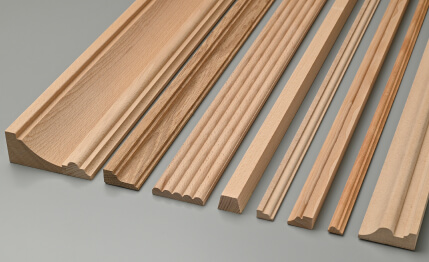
A molding is a profiled product with a shaped cross-section: roundness, groove, step. It divides the plane or creates framing. Wooden moldings STAVROS — for decorative frames and plane divisions. Batten — for a rhythmic line without complex profile.
Batten or corner?
A wooden corner covers the transition between two planes. Wooden corner pieces — for finishing external and internal corners in a slat system. Batten 20×40 is not a corner or a trim. Each element has its own role.
Installation of wooden batten 20x40: what you need to know before buying
Installation affects the calculation of quantity and material selection. Let's break down the main options.
Mounting with adhesive
Used on flat surfaces: drywall, MDF, plywood, painted walls with good adhesion. Glue is applied to the back of the batten in a snake pattern. The batten is pressed and fixed with masking tape until it sets.
Requirements: the surface must be clean, level, free of dust and grease stains.
Installation with hidden fasteners
Screws or special clamps through the back of the batten into the base. Used on wooden structures, plywood, MDF. Provides mechanical reliability.
Installation on a base (slat panels)
The slats are attached to a horizontal base — a rail or plank that is mounted on the wall first. This is convenient for non-standard heights and allows adjusting the level of each slat.
What materials are needed for installation
The full list is in the section materials for installation and finishing STAVROS:
-
mounting adhesive for wood;
-
painter's tape for fixation during curing;
-
level and marking chalk line;
-
screws and wall plugs if necessary;
-
primer and finish coating.
How to choose a finish coating for a wooden slat
The coating is the final step that determines how the slat will look in a year, three years, ten years.
Oil
Best choice for oak slats with a natural look. The oil penetrates the wood structure without creating a film. The texture and grain of the wood remain visible. The surface is matte, warm, and pleasant to the touch. Downside: requires periodic renewal every few years.
Varnish
Creates a protective film. Semi-matte or satin varnish is a good option for walls with slats that are not subject to intense mechanical stress. Preserves texture, adds durability.
Enamel
For beech slats intended for painting. Completely hides the wood texture, provides a uniform color. Water-based enamel — no odor, dries quickly. Alkyd enamel — more durable. Primer is mandatory before painting.
Toning
Changes the color while preserving the texture. Dark tinting in wenge, walnut, or mocha is a popular solution for oak slatted walls in modern interiors.
Mistakes when buying wooden slats 20x40
A list of problems that are easy to prevent — if you know in advance.
Only looking at the price per piece
We've already covered this. The price per piece is not the project budget. Calculate the full estimate.
Not calculating the reserve
"I'll take exactly what's calculated" — and then I have to buy more from a different batch with a different shade. Always +10–15%.
Do not account for the spacing between slats
Spacing determines quantity. Choose 60 mm spacing instead of 80 mm — you need 30% more slats. That's significant.
Buy construction slats for a visible wall
Geometry warps, paint lays unevenly, resin pockets show through. For visible surfaces — only interior slats made from stable kiln-dried material.
Do not check the geometry of the batch before installation
Before installation, check each slat: place it against a flat surface. A twisted slat will not lie flat on the wall.
Mix batches
Different batches of the same product may differ in shade. Especially under oil or tinting. Order the entire volume at once.
Do not account for room height when choosing slat length
For a room with a height of 2.7 meters, it's better to take a slat 3 meters long — without joints. A slat 2 meters long will require joining.
Choosing oak where a smooth white enamel is needed
Oak under white enamel is a waste of money on an expensive texture that you will paint over. For white or pastel enamel, beech is optimal.
Forgetting about the coating in the estimate
Oil, varnish, enamel, primer — these are a separate budget item. Not an option.
Not counting installation materials
Glue, tape, fasteners — these are not free. Include them in the estimate at the calculation stage.
What to buy together with the 20x40 slat
A systematic approach to procurement is time savings and a guarantee of a unified result.
Wooden linear molding and profiles
-
Wooden block — for creating a base for the slat or horizontal guides
-
Wooden corner pieces — for finishing the corners of the slat system
-
Wooden moldings and cornices — for the top and bottom framing of the slat panel
Ready-made panels and slat systems
-
Rafter panels — if you need a ready-made slat system for quick installation
Mounting and Finishing
-
Mounting and finishing materials — glue, sealant, consumables
Additional reading
-
Article “Wooden slat: price and quantity calculation” — general guide for calculation for different tasks
-
Article “Wooden slats in the interior” — visual ideas and design solutions
Why STAVROS
Buying a wooden slat 20x40 at the right price means finding a supplier who has real product with clear parameters, not construction softwood disguised as interior millwork.
STAVROS has specialized in wooden millwork and interior decor since 2002. The catalog includes — Wooden planks beech and oak kiln-dried: straight geometry, sanded surface, controlled parameters. This is not a construction material — it is interior millwork for visible surfaces.
Nearby is a full range of related products: bars, corners, moldings, cornices, slat panels, mounting materials. Everything needed for a project from calculation to installation — in one catalog.
Among STAVROS's completed projects are the Hermitage, Konstantinovsky Palace, Alexander Palace. Rating 5.0, over 260 verified reviews. Delivery across Russia — CDEK and DPD. Showrooms in Saint Petersburg and Moscow.
FAQ
How much does a wooden slat 20x40 cost?
The price depends on the wood species (oak or beech), length, processing quality, batch, and delivery. Check current prices in the section of STAVROS wooden battens.
Why is a 20x40 oak slat more expensive than beech?
Oak has a higher market cost of raw material, pronounced texture, and density. Beech is cheaper and better suited for painting.
How to calculate the number of slats for a wall?
Wall width ÷ pitch (batten + gap) = number of battens. Then multiply by the batten length and add 10–15% margin.
Which is better — 20x40 batten or a ready-made slat panel?
Batten is more flexible in pitch, more convenient for non-standard formats. Panel is faster to install over a large area. Both options are available in the STAVROS catalog.
Can I use construction batten instead of interior batten?
Only for hidden rough tasks. For visible walls, furniture, and partitions — definitely use interior batten from kiln drying with even geometry.
What glue to use for attaching wooden batten to the wall?
Use construction adhesive for wood. Correct Installation materials — in the STAVROS catalog.
What to buy together with the batten?
Corner pieces for finishing corners, bars for the base, moldings for framing, construction adhesive, and finishing coating.