





































Article Contents:
- Why ceiling photos need to be read, not just looked at
- Three questions to ask about every photo you like
- Slatted ceiling panels: what a good photo shows and how to read it
- Slat spacing and gap width: how they change the perception of space
- Installation direction: horizontal, longitudinal, diagonal
- Slat material: what texture and color reveal in photos
- Ceiling molding: how to read photos and not be deceived by scale
- Three categories of ceiling molding and how to read them in photos
- Lighting in plasterwork photos: how light creates an illusion of depth
- Polyurethane plasterwork in photos: how to distinguish it from plaster and stucco
- How to assess the height, relief, and scale of a ceiling solution from a photograph
- The 'human as scale' method
- Proportional analysis of plasterwork relief
- Test for 'working height'
- Which ceilings to take as references, and which to look at 'for inspiration'
- Reference: a photo that can be reproduced
- Inspiration: a photo that sets a direction, but not a scale
- Suspended ceiling in specific rooms: how the solution works in reality
- Slatted ceiling in the living room: the main room, the main question
- Slatted ceiling in the bedroom: silence in a wooden rhythm
- Slatted ceiling in the kitchen: practicality plus aesthetics
- Slatted ceiling in the hallway: rhythm from the first step
- Slatted ceiling and molding together: when the combination works
- How to avoid repeating a beautiful but impractical picture
- Five signs of an 'impractical' ceiling photo
- How to build a personal reference folder: system instead of chaos
- Installation: how photos help avoid mistakes when choosing a mounting system
- Modular systems and flexible solutions: new possibilities for non-standard ceilings
- STAVROS: where photos become reality
- FAQ: answers to popular questions about ceiling slat panels and molding
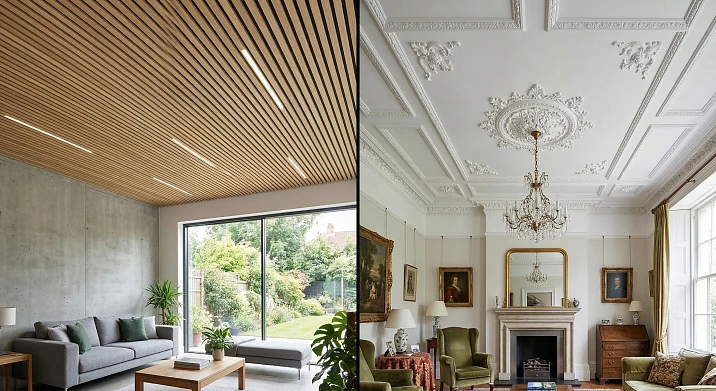
The ceiling is the fifth dimension of interior design. That's what those who understand call it: while everyone else is thinking about walls and floors, the ceiling silently shapes the mood of the room, its proportions, its character. And it's with the ceiling that the most agonizing choices during renovation begin. A person opens a search engine, types 'slat panels on ceiling photos' — and gets hundreds of images. Beautiful. Different. Unalike. And instead of clarity — paralysis.
Why does this happen? Because most people look at interior photos without knowing how to read them. They see beauty — but don't see the context. They see the result — but don't understand the conditions under which that result was achieved. And in the end, they replicate someone else's picture in their own space — and get something completely different.
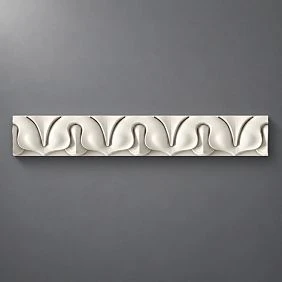
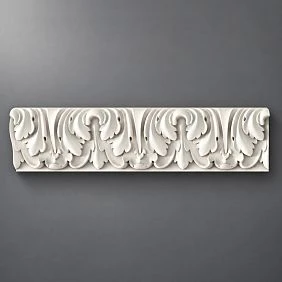
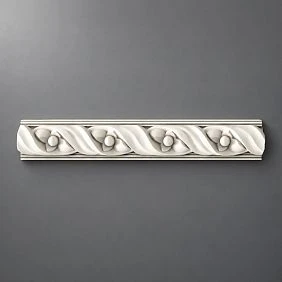
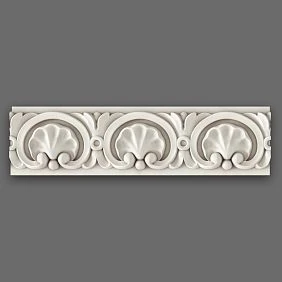
This article is about how to work with visual examples competently. How to look at a photo of a slat ceiling and see in it not just a beautiful picture, but an architectural solution with specific conditions. How to study photosmolded decoration on the ceilingand understand what lies behind it — what height, what light, what scale. And how to ultimately make it not 'like in the picture,' but better — because consciously.
Why you need to know how to read ceiling photos, not just look at them
An interior photograph is an illusion. Not in a bad sense: it's simply a two-dimensional projection of a three-dimensional space, taken at a specific moment under specific lighting with a wide-angle lens. All of this changes the perception of the real space beyond recognition.
The wide-angle lens is the main deceiver. It stretches the space horizontally, makes ceilings appear visually higher, distances longer, rooms more spacious. A photo of a ceiling made of slat panels, shot at 16–24 mm, looks grand even in a small apartment. The real space will be tighter. This isn't deception — it's optics. You just need to know it.
Light is the second factor. In professional shots, the ceiling is typically illuminated — either by natural side light from a panoramic window, or by hidden lighting in the structure itself.Slatted panels with lightingIn photos, they look different than the same panels under regular overhead lighting: the shadows from the slats create depth, the wood texture 'comes alive,' and the space seems more saturated. To look at a photo and not see the light sources means missing half of what's happening there.


Three questions to ask about every photo you like
Before saving an image to your 'references' folder or dragging it to a designer with the words 'I want it like this' — stop. Ask three questions:
What is the ceiling height in this photo? A slatted ceiling works differently at 2.5 m and at 3.2 m. A heavy wooden construction on a low ceiling feels oppressive. A light one floats. A rosette molding with an 80 cm diameter is appropriate in a hall with a 3.5 m ceiling and looks absurd at 2.4 m.
What is the room size? What looks perfect in a 45 m² living room with a 3 m ceiling will look different in a 16 m² bedroom with a standard ceiling. The scale of decor is the ratio of the element to the space, not its absolute size.
How is the lighting organized? CeilingWooden slat panelswithout thoughtful lighting lose half their expressiveness. And molding without side light that emphasizes the relief turns into a flat white strip.
Only after answering these three questions can you adequately evaluate someone else's experience and apply it to your own situation.
Our factory also produces:
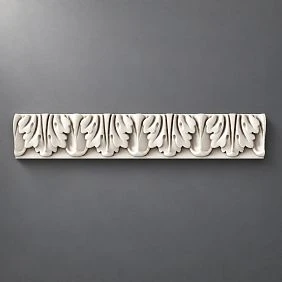
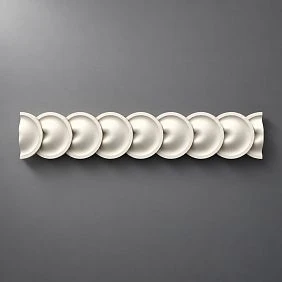
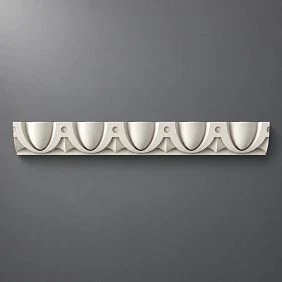
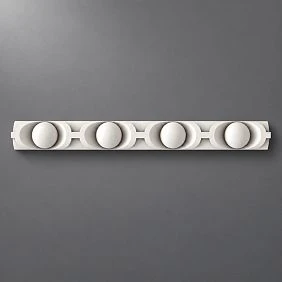
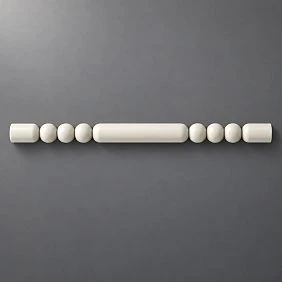
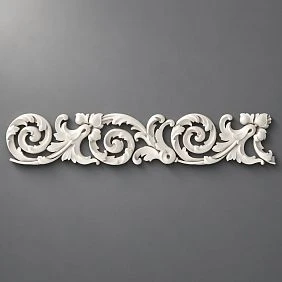
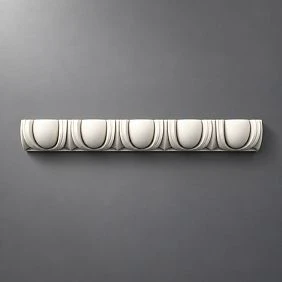
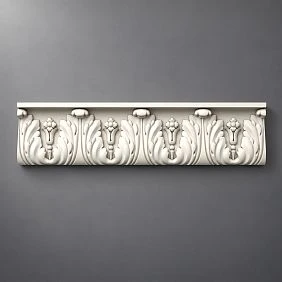
Slatted panels on the ceiling: what is visible in a good photo and how to read it
When a designer or an experienced craftsman looks at a photo of a slatted panel ceiling, they don't see 'beautiful wood.' They see a specific system: the spacing of the slats, the gap depth, the profile height, the direction of installation relative to the windows, the nature of the lighting. Each of these parameters is an independent design decision. Let's examine them in detail.
Get Consultation
Slat spacing and gap width: how they change the perception of space
The most obvious parameters are the slat width and the distance between slats. But this is where many make their first mistake: they see a beautiful sparse rhythm in a photo, want to replicate it—and fail to notice that behind the sparse slats in the shot lies a meticulously designed lighting system that 'brings' that rhythm to life.
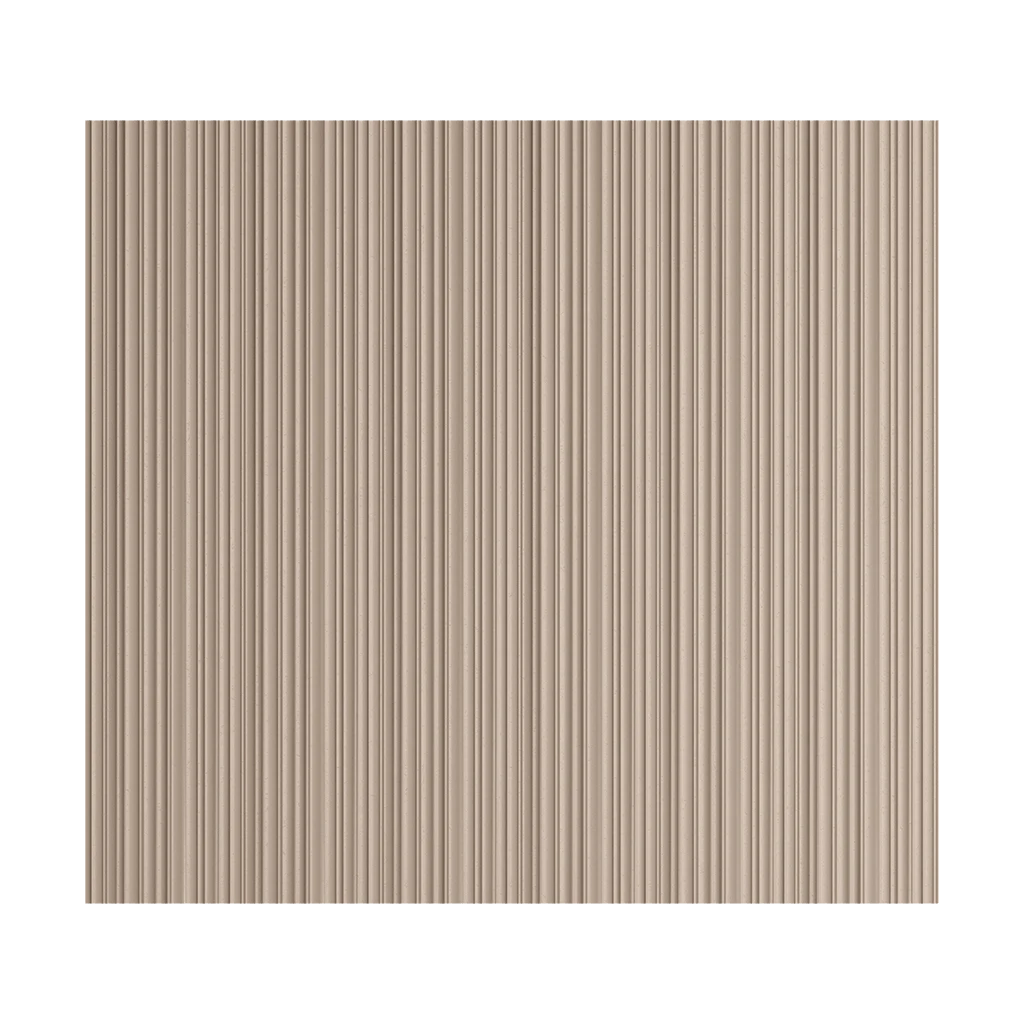
Dense rhythm (slat 60–80 mm, gap 10–15 mm): the ceiling looks like a solid wooden surface with subtle shadows. It feels warm, intimate, cozy. Works well in bedrooms, living rooms with a warm color palette. In photos, such a ceiling appears 'heavier'—and this feeling can be misleading. But in reality, warm wood on the ceiling doesn't feel oppressive; it embraces—with the right height and lighting.
Medium rhythm (slat 80–100 mm, gap 20–35 mm): the most versatile option, most commonly seen in photo collections. It reads as a rhythmic wooden structure but doesn't overwhelm the space. The gap allows for hidden lighting—and that's exactly what you see in most beautiful shots. It's not magic—it's an LED strip in the groove between the ceiling slab and the slat.
Sparse rhythm (slat 60–80 mm, gap 40–80 mm): visually light, almost 'weightless' ceiling. The slats are perceived as decorative elements, not as a solid covering. Works well in high-ceilinged spaces—and looks stunning in photos of such areas. In low rooms, it creates a sense of incompleteness: 'as if it's unfinished.'
The conclusion is simple: when looking at a photo of a slatted ceiling, first assess the gap and the slat—and ask yourself: what is your ceiling height? If the ceiling is below 2.7 m, a medium dense rhythm with slats in warm, light tones works best.
Laying direction: horizontal, longitudinal run, diagonal
Batten panels for ceilingscan be laid in different directions—and this drastically changes the spatial effect. In photos, this isn't always obvious because a wide-angle shot distorts perspective.
Along the long wall—a classic solution that visually 'extends' the room in depth. If the photo is taken from the end, the corridor effect is very pronounced—the room appears longer than it is. For rectangular living rooms and corridors, this is a plus. For square rooms—neutral.
Across the long wall—visually widens the room, makes it 'broader.' In photos taken from the entrance, such a ceiling appears more monumental, closer.
Diagonal installation — dynamic, movement, unconventional. Looks impressive in photos. In small rooms, it can create visual 'noise' — the space starts to 'spin'. Works well in large open spaces — loft, open space, spacious living rooms.
Whenever you see a beautiful photo of a slatted ceiling in a hallway or entryway — clarify the direction. Very often, it's precisely the correctly chosen direction of the slats that creates that very 'long path' effect, which is so appealing. This is covered in detail in the materials about the application ofslatted panels in hallway interiors.
Slat material: what texture and color reveal in photos
In high-resolution photos, you can determine the slat material — and this is important because the material affects not only the appearance but also the conditions of use.
Solid oak — characteristic large grain pattern, warm amber-brown tones, visual 'weightiness'.Solid oak slat panelson the ceiling — an expensive, status solution. In photos, it's unmistakably recognizable by the depth of texture and the non-repeating pattern of each slat.
MDF wood-look — even, uniform pattern, perfect geometry, identical slats. Looks 'cleaner', more industrial. In photos, it looks especially good in white or light gray — creates a sense of a modern Scandinavian ceiling.MDF slatted panelin white — the most popular ceiling option for small apartments because light colors don't 'eat up' height.
Thermowood — dark tones, uniform charred surface, characteristic matte finish. On the ceiling, it creates a 'Scandinavian cabin' effect — low, dark, shimmering in candlelight. Looks stunning in bedrooms and saunas.
DSP - uniform surface without pronounced wood grain pattern, wide color palette. In photos, often indistinguishable from high-quality MDF. Used in high-humidity areas - bathrooms, swimming pools.
Ceiling moldings: how to read photos and not be deceived by scale
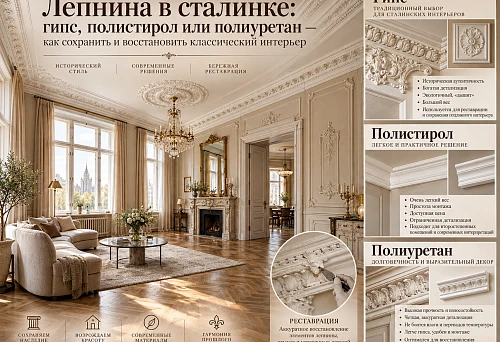
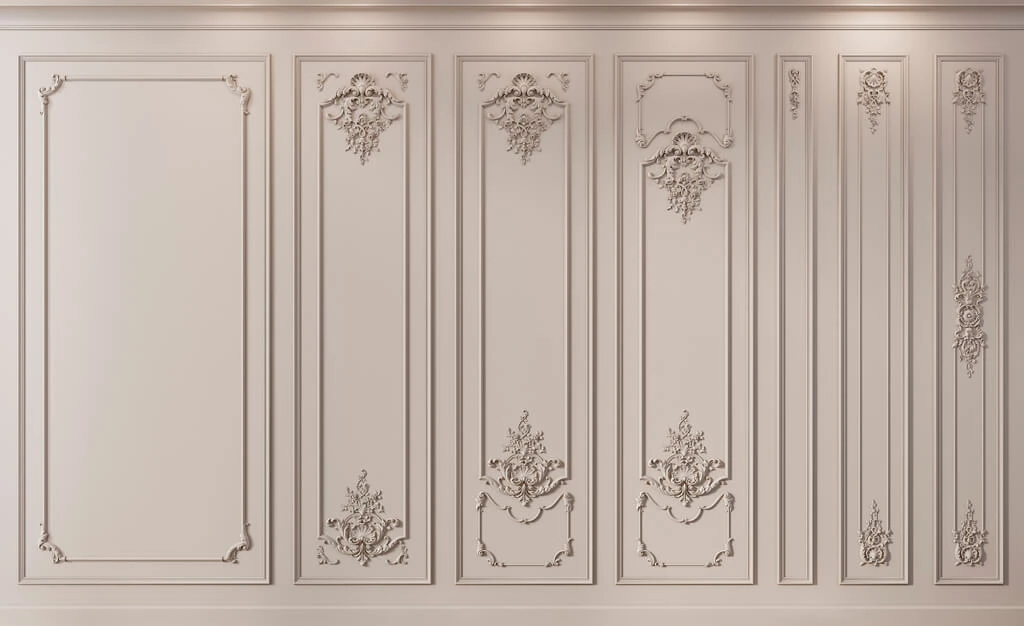
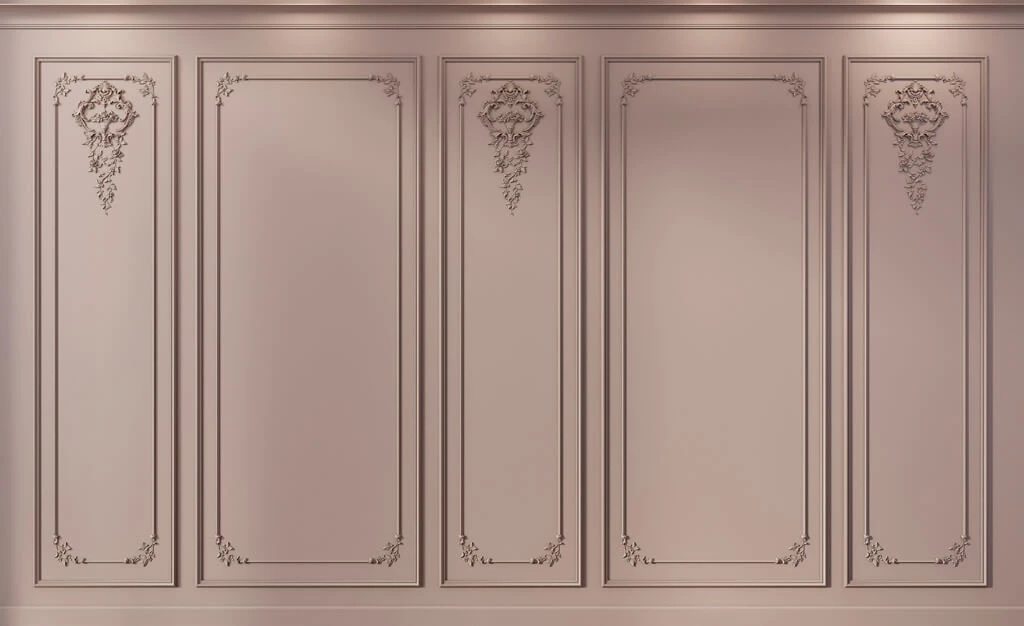
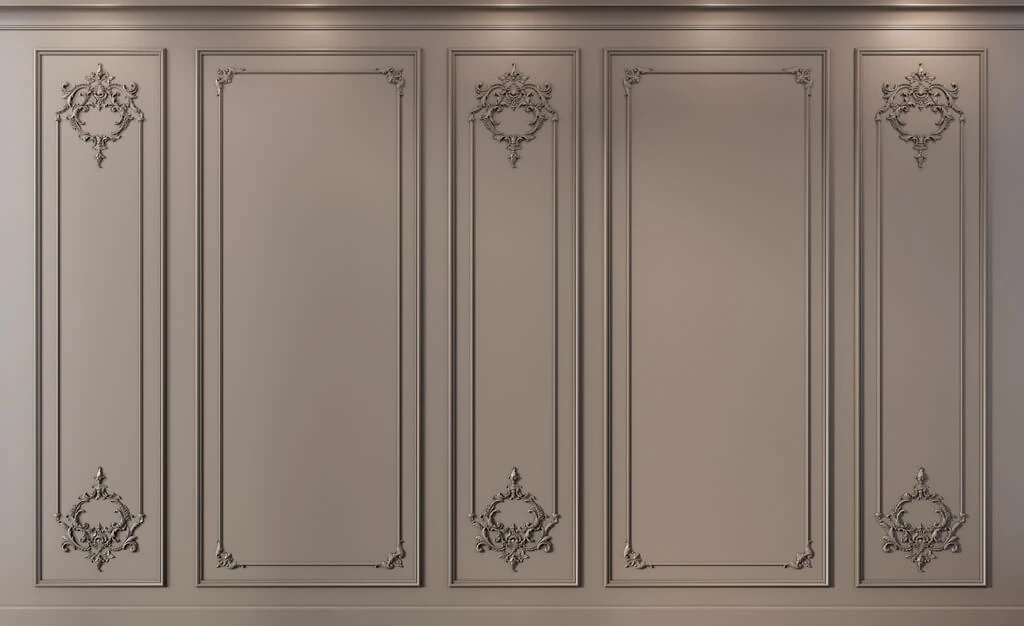
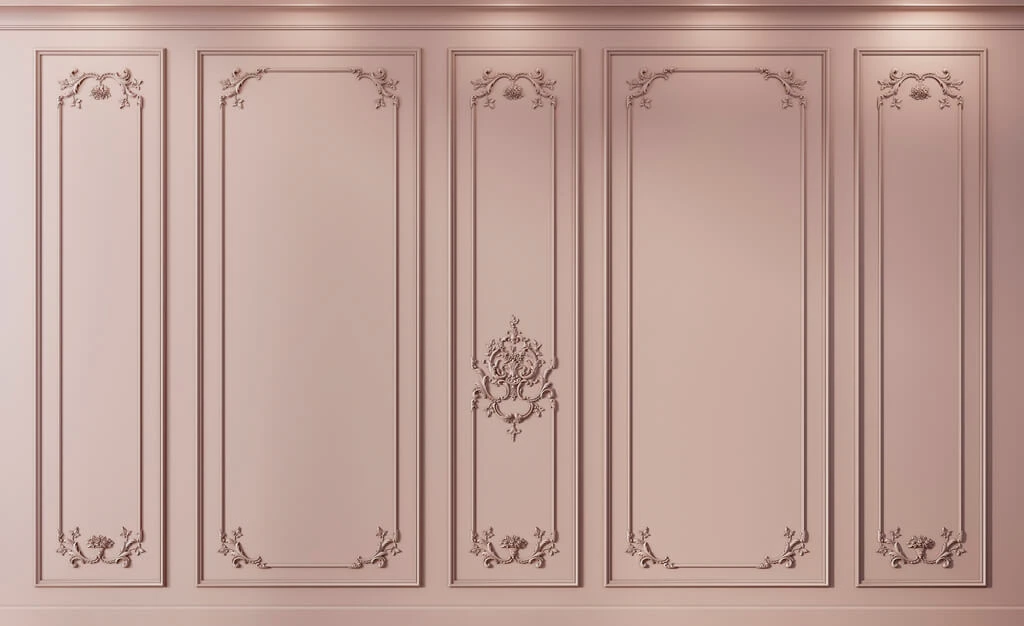
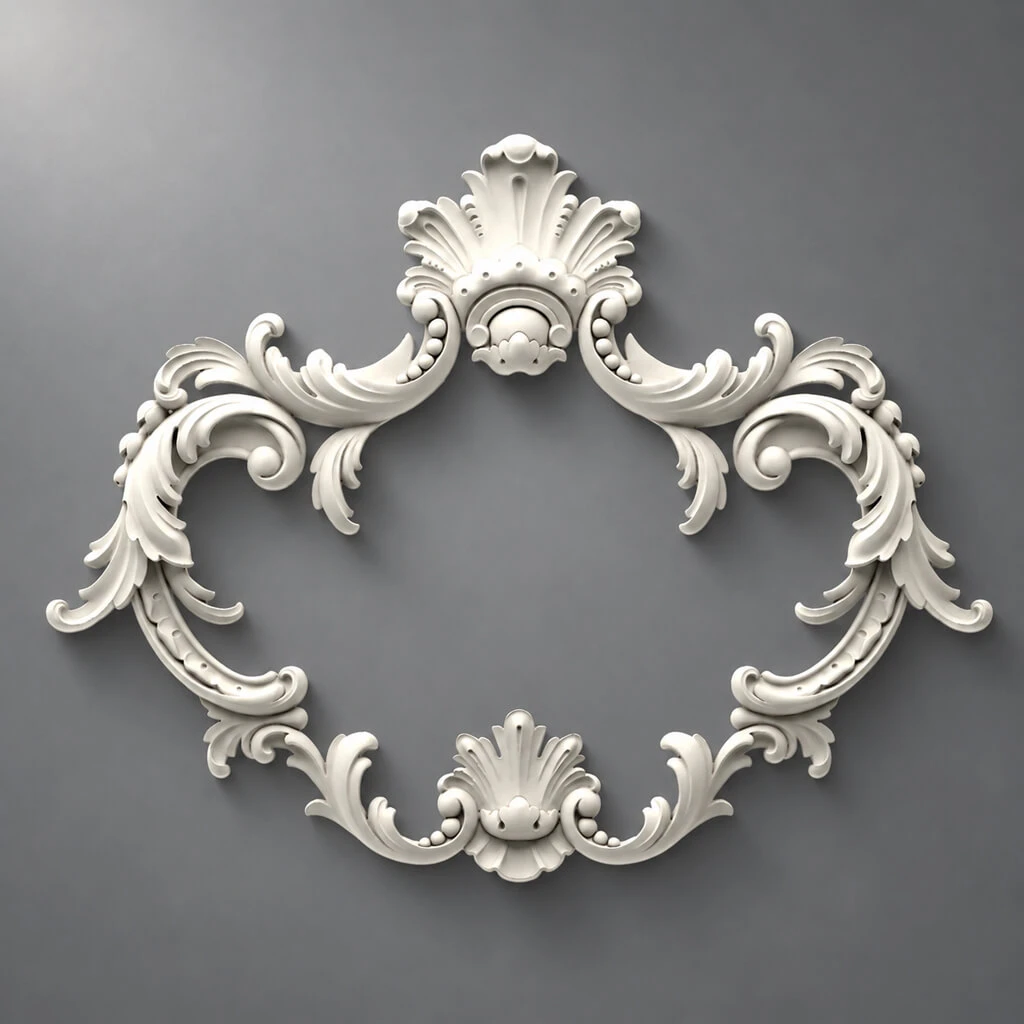
Photomolded decoration on the ceiling - a separate genre of interior photography. Here, scale deception occurs even more acutely than with slatted ceilings. A huge molded rosette with a diameter of 1.2 m in the ceiling of a mansion with glowing photo references seems 'normal' - until you realize that the height there is 4.5 m, and the hall itself has an area of 80 m². In a standard apartment, the same rosette would occupy the entire field of view and turn the ceiling into a caricature.
Three categories of ceiling moldings and how they read in photos
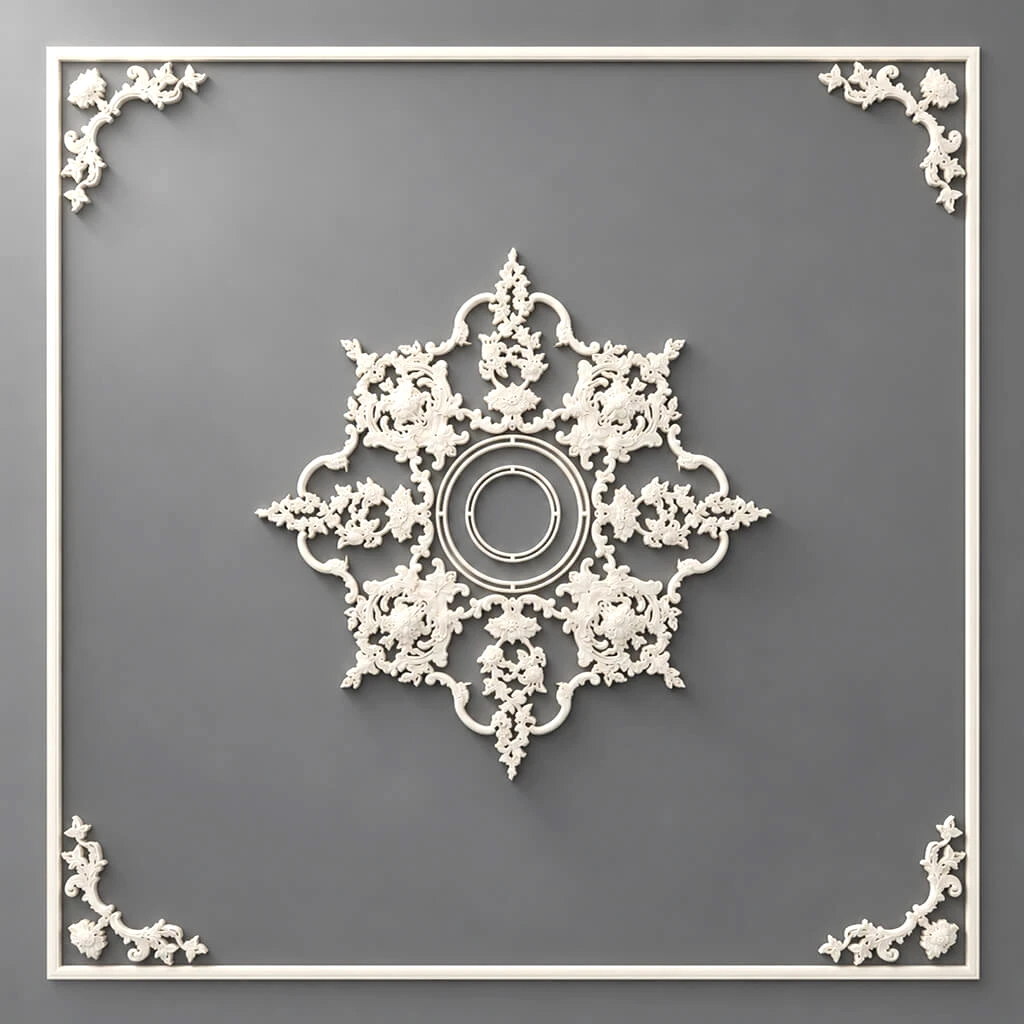
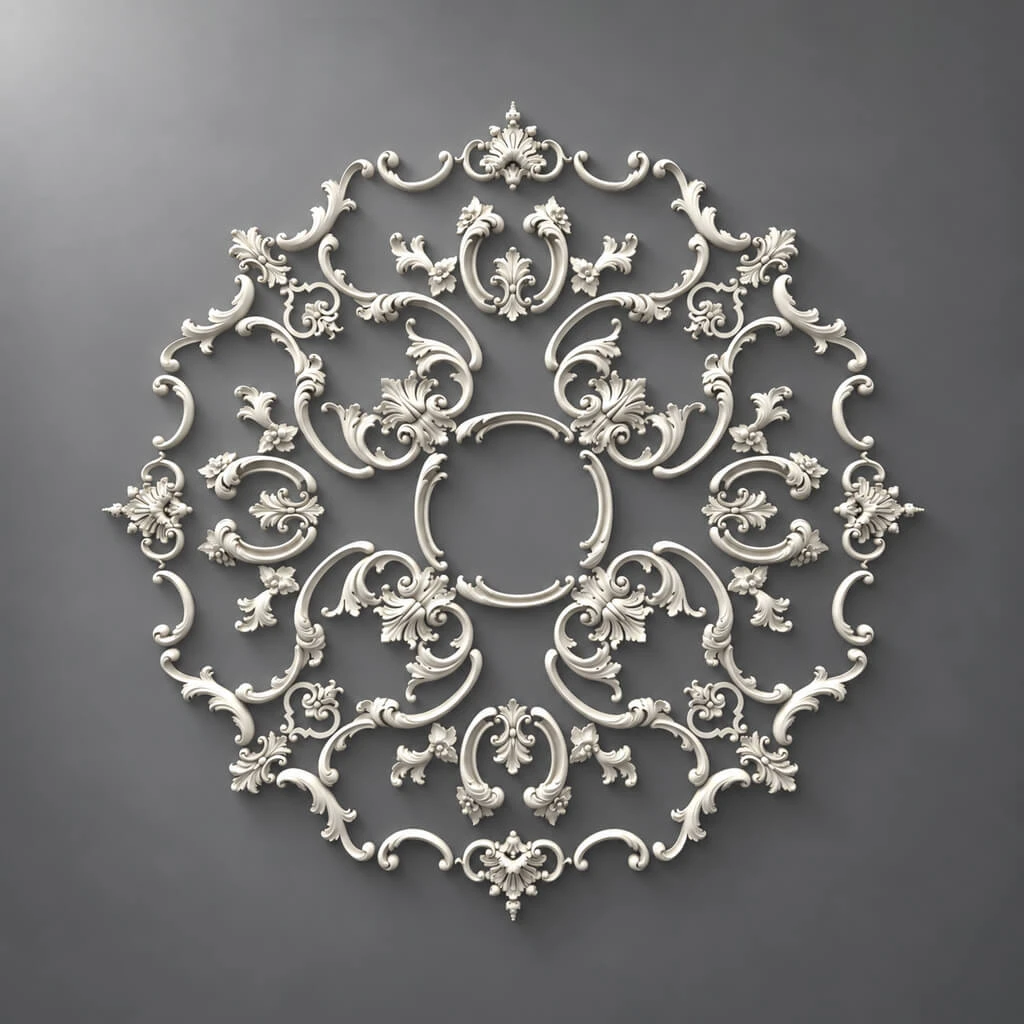
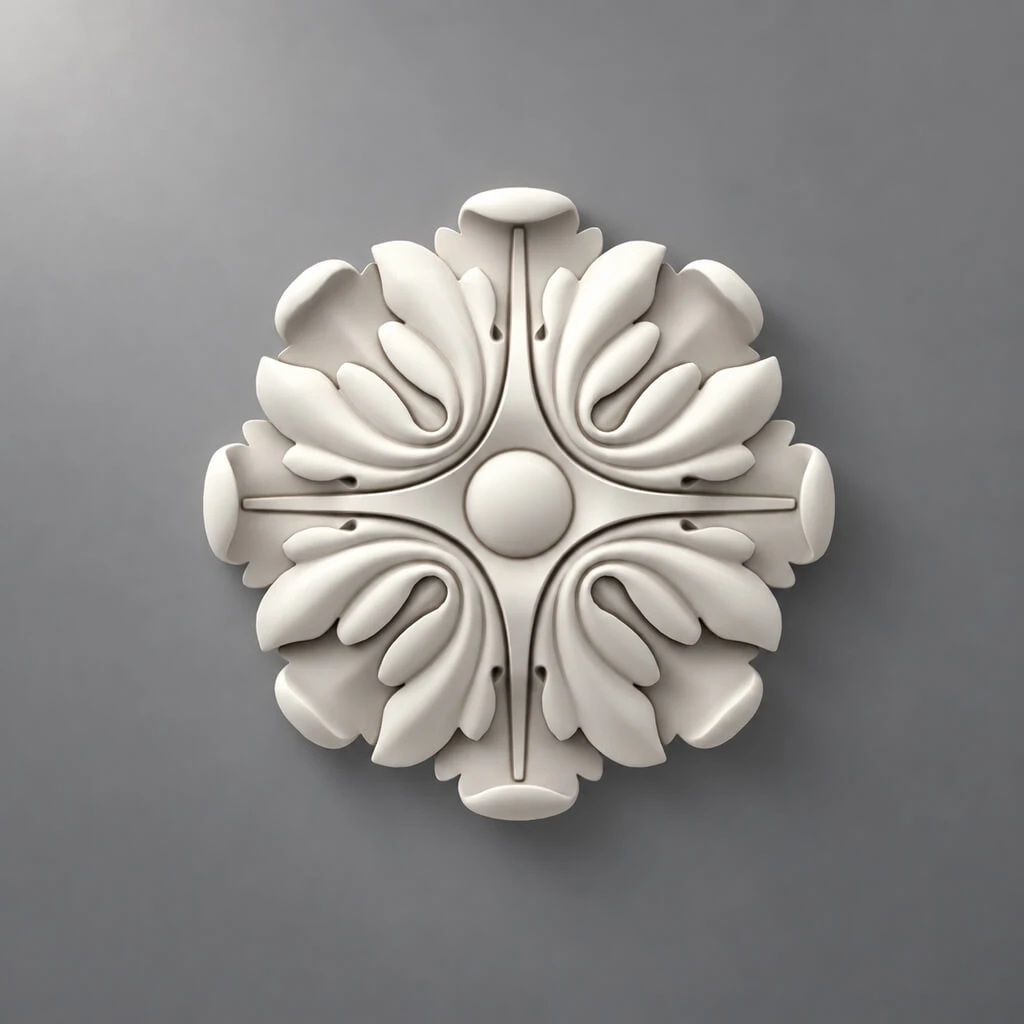
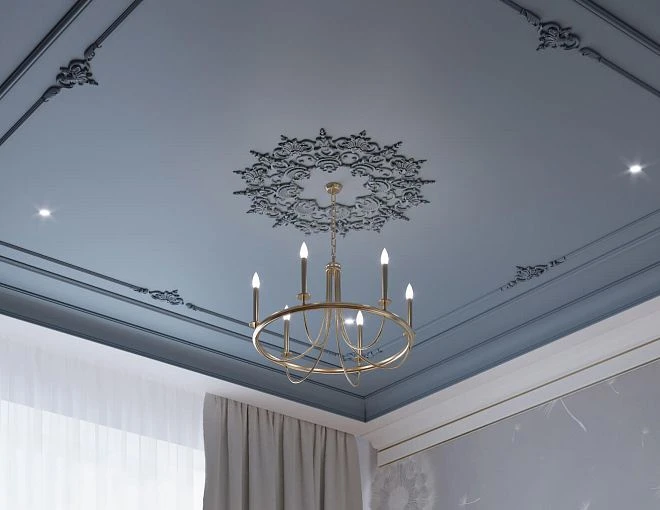
Ceiling Roses. The central element of the ceiling is a round or polygonal ornamental medallion, historically marking the spot for a chandelier. In the photo, the ceiling rose instantly draws the eye, creating a visual focal point for the space. How to read the scale: the diameter of the ceiling rose is normally 1/8–1/10 of the shortest side of the room. For a room 4×5 m, the ceiling rose should be up to 40–50 cm.
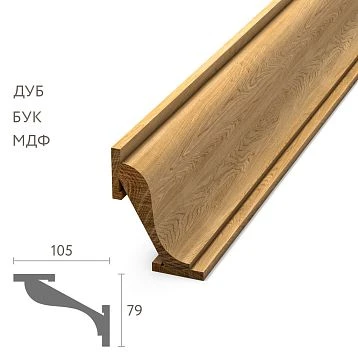
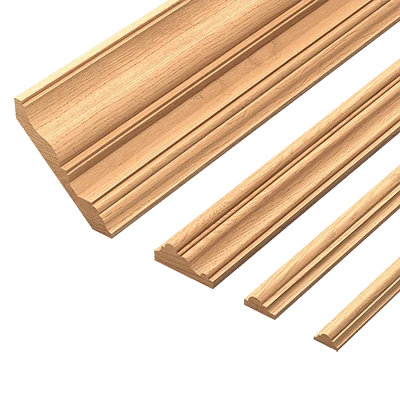
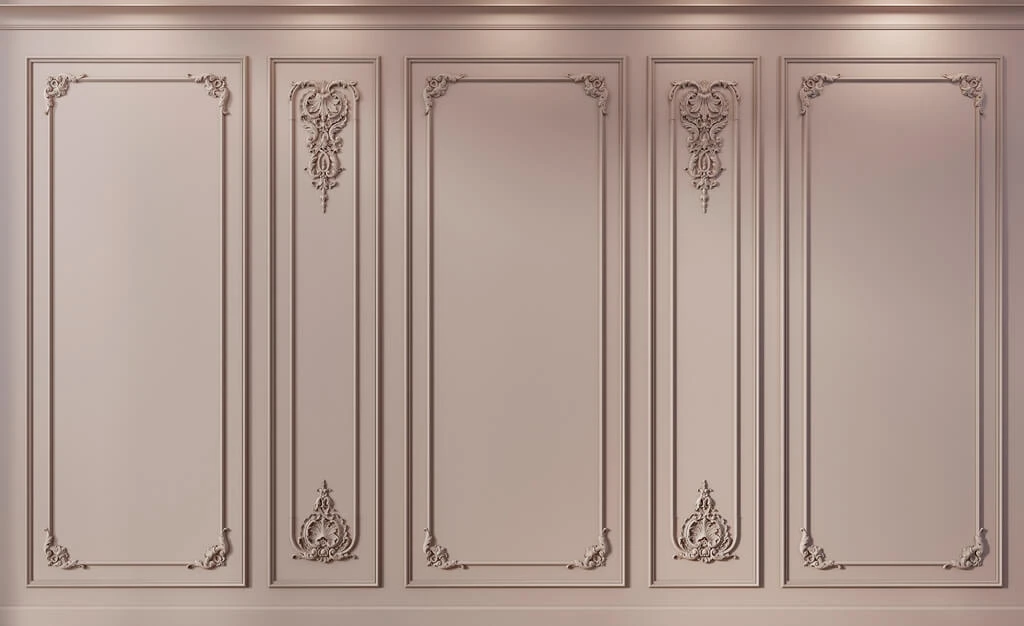
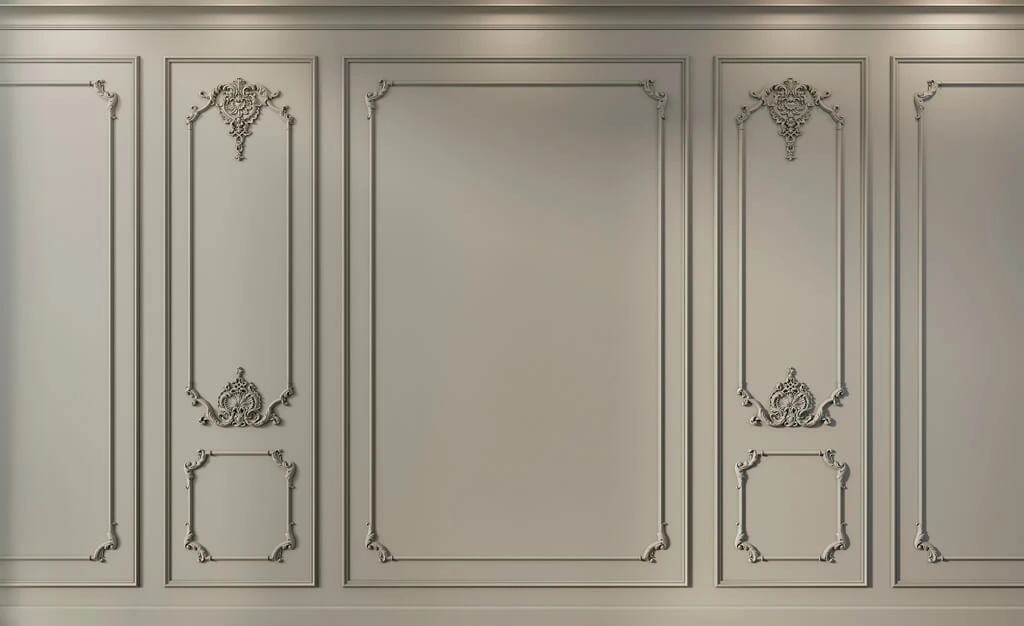
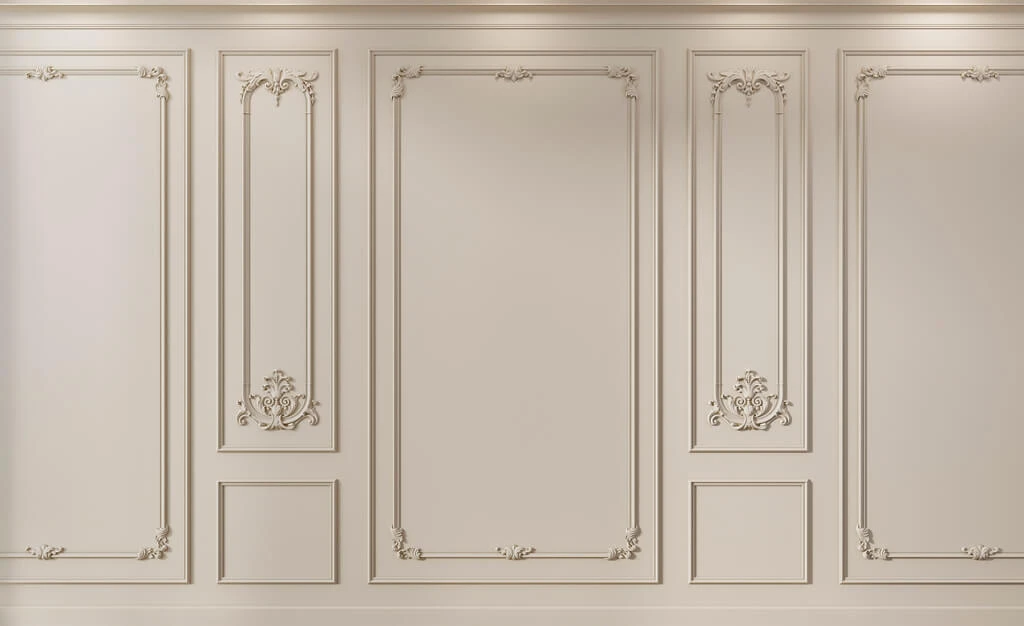
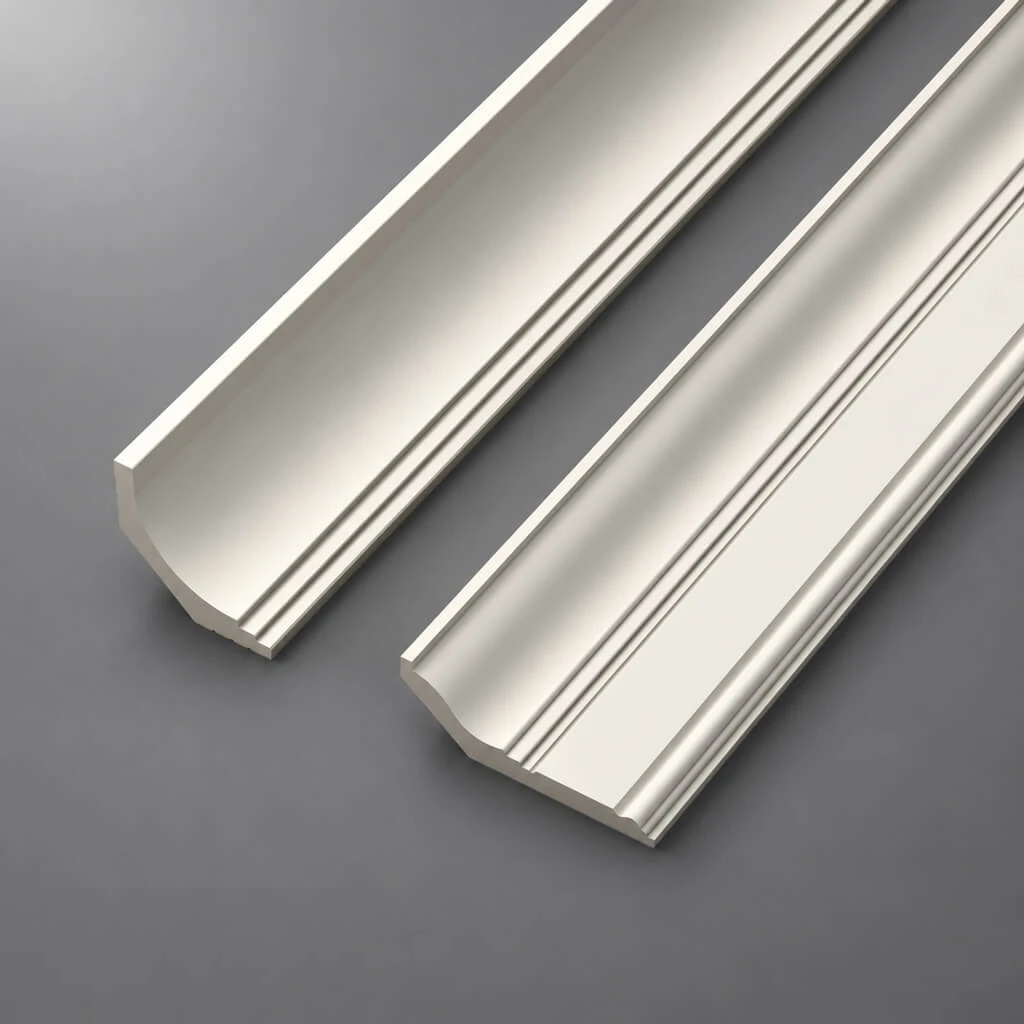
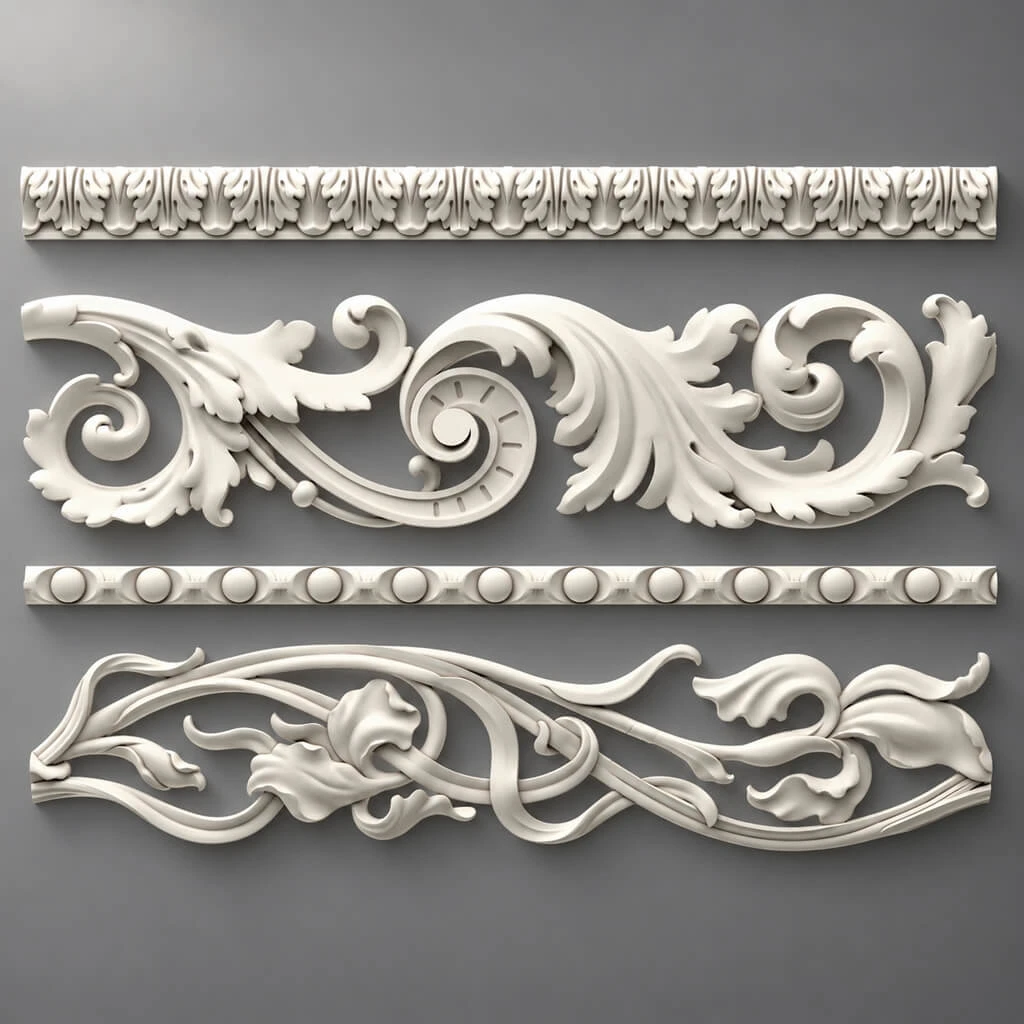
Baguettes and cornices. A horizontal element along the perimeter of the ceiling, creating a transition from the wall to the ceiling. In photos, this is what makes the ceiling 'finished' - without a cornice, the ceiling looks like a 'lid' placed directly on the walls.Polyurethane moldings in the form of ceiling cornices - the most popular and affordable way to visually 'raise' the ceiling. A properly selected cornice adds 15-20 cm of perceived height.
Coffers and cassette ceilings. A system of rectangular cells, recesses, creating a relief ceiling with a pronounced geometric structure. Looks monumental and rich in photos. In reality, requires a ceiling no lower than 3 m - otherwise coffers 'eat up' height and create a feeling of a cage.polyurethane moldings in the form of a coffered ceiling - an affordable imitation of real coffers without losing height due to the minimal thickness of the elements.
Lighting in photos of molding: how light creates an illusion of depth
Here's the secret that explains why even relatively simple molding looks luxurious in professional photos: side lighting. The photographer or designer places a directional light source that falls at an acute angle to the textured surface. The protruding element of the molding casts a shadow—and this shadow creates depth, volume, and plasticity.
Molding photographed under uniform overhead lighting loses half of its expressiveness. It becomes 'flat'—even if it physically has relief. That's why, when looking at photos with beautiful molding, always look for the side light source: a directional spotlight, a wall sconce, hidden perimeter lighting, or light from a large side window.
This doesn't mean that molding doesn't work without side lighting. It means that 40–60% of its expressiveness depends on lighting—and lighting should be planned together with the choice of molding, not after.
Polyurethane molding in photos: how to distinguish it from plaster and stucco
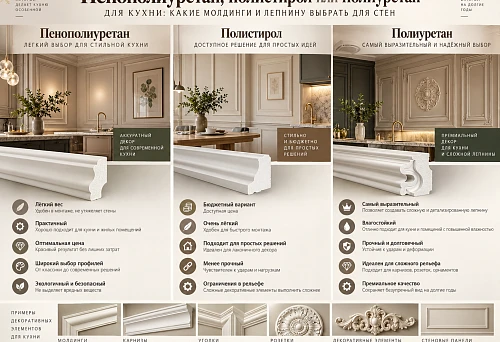
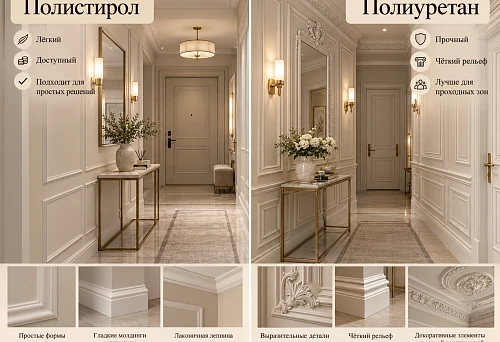
Most beautiful interior photos with molding are taken with polyurethane molding—even if it's not mentioned in the photo captions. Why? Because polyurethane today reproduces any profile and any depth of relief with photographic accuracy. It's practically impossible to distinguish a polyurethane cornice from a plaster one in a photo. And this is an advantage of the material.
How to guess anyway? Look at the joints. Plaster molding at the joints almost always has visible seams and slight pattern mismatches. Polyurethane molding is cut precisely to fit the angle with a 'zero' joint, which, with good installation, makes it indistinguishable from monolithic. If the cornice joints in the photo are completely invisible—it's most likely polyurethane with quality installation.
The second sign is color. Plaster has a characteristic cold grayish-white tone. Polyurethane is factory-painted—often in a warm milky white. With subsequent painting, the difference disappears.
How to assess the height, relief, and scale of a ceiling solution from a photograph
Practical tools—that's what most people browsing ceiling selections lack. Let's make it concrete.
The 'human as scale' method
The simplest and most reliable way to assess the real scale of a ceiling solution: look for a person, furniture, or an object of known size in the photo. A standard sofa is 85–90 cm tall. A door opening is 2–2.1 m. A dining chair seat is 45–50 cm, with a backrest 90–100 cm. Find such a reference—and the scale of the ceiling immediately becomes clear.
For example: in a photo of a slatted ceiling, a chandelier is visible, its lower edge roughly at door level. The door is 2 m. The chandelier hangs 20 cm below the top edge of the opening, which is typically 2–2.1 m from the floor. So, the ceiling is about 2.8–3 m. This is a real, practical height, feasible for most renovations.
Proportional analysis of molding relief
A cornice in a ceiling photo: how to understand its real profile height? Look at its ratio to the width of a window or door opening—you know their standard sizes. A cornice width that is 1/30 of the wall width is a modest 5–8 cm profile. 1/15 is a medium 10–15 cm. A larger ratio indicates a grand cornice of 20–30 cm, requiring a high-ceilinged room.
This isn't math for math's sake. It's a way to avoid buying a 25 cm cornice for a room with a 2.5 m ceiling—because it would take up 10% of the height at the most noticeable point.
The 'functional height' test
Any ceiling solution—slatted or molded—either reduces the perceived height of a room or, conversely, visually increases it. Remember this simple matrix:
| Solution | Effect on perceived height |
|---|---|
| Dark wooden slats | Reduces |
| Light slats matching the ceiling tone | Neutral/slight reduction |
| White slats with lighting | Increases due to depth |
| Molding cornice around the perimeter | Increases ("framing" effect) |
| Large rosette in the center | Reduces (focus on ceiling = "ceiling is noticeable") |
| Coffered ceiling | Significantly reduces |
| Smooth light-colored molding-cornice | Slightly increases |
Use this matrix every time you look at a photo. Ask yourself: what is my actual ceiling? And what do I need — coziness or a sense of height?
Which ceilings to take as references, and which to look at 'for inspiration'
Here it's important to distinguish two different types of ceiling photos — and this distinction radically simplifies the choice.
Reference: a photo that can be reproduced
A good reference is a photo taken in a space comparable to yours in characteristics: ceiling height ±20%, room area ±30%, lighting type (natural/artificial), interior style. Such a photo shows you exactly how your space will look with this solution — because the conditions are similar.
Where to find such references? In real apartment projects with specified space characteristics. In projects where the photographer shot 'as is,' not 'as beautiful' — without staged lighting, in natural light. In photos with people — they provide scale.Slatted panels in the living room interiorin real apartment projects — a much more honest benchmark than studio showrooms with 4-meter ceilings.
Inspiration: a photo that sets the direction, but not the scale
These are photos of designer showrooms, villas, residences — with 4–5 m ceilings, huge areas, professional lighting. They are beautiful. They inspire. But they cannot be reproduced in a standard apartment — not because there's no money, but because the space is different.
What to do with them? Extract the principle, not the result. Saw a beautiful slatted ceiling with rare dark slats and hidden lighting in a villa with 4-meter ceilings — extract the principle: 'dark slats + hidden light'. Adapt: a denser rhythm of slats, a light tone instead of dark (to compensate for the low ceiling), the same lighting — but on a smaller scale.
Slatted ceiling in specific rooms: how the solution works in reality
Theory is good, but specific examples are more convincing. Let's look at several typical situations with a description of what's happening in the photo and what turns out in reality.
Slatted ceiling in the living room: the main room, the main question
The living room is the most common space for a slatted ceiling solution. In beautiful photos: warm wood on the ceiling above the sofa, soft diffused light from behind the slats, a feeling of a cozy cocoon.
What you need to know when looking at these photos:
-
Almost always shot in living rooms with a ceiling of 2.8–3.2 m. A slatted ceiling lowers the structure by 8–12 cm (battens + slat). With a height of 2.5 m, 2.38–2.42 m remains — this is acceptable, but it's precisely such details that need to be calculated.
-
Hidden lighting in photos isn't a 'bonus'—it's a system element. Without it, a slatted ceiling in the living room only works halfway. Plan for it in the project from the start.
-
Warm-toned wooden slats on the ceiling visually 'lower' the space—and that's not always a bad thing. In a large, cold living room, this very sense of 'lived-in coziness' is exactly what's needed.
Slatted panels in the living room interior—is one of the most advantageous areas of application. But only with an honest analysis of your space's parameters.
Slatted ceiling in the bedroom: silence in a wooden rhythm
Photos of slatted ceilings in the bedroom always carry a certain atmosphere: muted light, dark wood, a sense of shelter. It works—if you understand exactly how.
slatted panels in the bedroomon the ceiling is appropriate primarily above the bed area—as an accent structure. Not across the entire ceiling, but as a 'canopy' of slats, limited to the bed's perimeter. This creates intimacy, highlights the rest area—and looks exactly the same in photos as in reality because it's perceived from a close distance.
A dark slatted ceiling across the entire bedroom with a 2.5 m ceiling height is a risky decision. In photos with proper lighting, it can look stunning. In reality, in the morning under natural light, it can feel oppressive. If you want dark wood, choose thermally modified wood in a warm brown, not anthracite.
Slatted ceiling in the kitchen: practicality plus aesthetics
Slatted panels in the kitchen—is a topic where photos can be especially deceptive. In the shots—a beautiful wooden ceiling above the dining area. In reality, the kitchen is a space with steam, grease, and temperature fluctuations.
What's important to read in such photos: the material of the slats. If it's a slatted ceiling above the kitchen work zone—it should be WPC, aluminum, or MDF with moisture-resistant impregnation, but not solid wood. Above the dining area, away from the stove—solid wood or thermally modified wood are acceptable. You won't see this in the photo—but in reality, it determines the lifespan.
Slatted ceiling in the hallway: rhythm from the first step
A hallway with a slatted ceiling in photos almost always impresses — long slats recede in perspective, creating a sense of depth even in a corridor 1.2 m wide. This is exactly the case where laying along the axis of movement works brilliantly.
The key thing to see in the photo: how the slatted ceiling meets the wall elements. If the slats start right at the wall without a framing profile — it's either very neat work or a mistake hidden behind the corner of the frame. The correct solution is a transition element between the wall and the ceiling. In the hallway, a combination of a slatted ceiling andslatted panels in the interioron the walls is often used — this creates a complete 'wooden space' that looks like a cinematic tunnel in photos.
Slatted ceiling and molding together: when the combination works
A non-standard question — and that's exactly why it's interesting. Can you combine slatted panels and molding on a ceiling? Photos of such solutions exist — and each time they spark debate.
Answer: yes, if two conditions are met.
First condition: clear zoning. A molding cornice around the perimeter of the ceiling + slatted panels in the central zone — this is a classic 'insert' technique. The perimeter is a classical form (molding), the center is a modern texture (slats). The boundary between them should be clear and architecturally justified, for example, through a step or a ledge.
Second condition: color unity. White molding + white or light slats — unity. White molding + dark slats — contrast, requiring skillful color work. White molding + multi-toned slats — chaos.
In photos, such combinations are often found in neoclassical interiors with high ceilings. The molding cornice creates a 'frame' for the ceiling, within which the slats work. This technique can be transferred to reality but requires a ceiling no lower than 3 m — otherwise the 'frame' will eat up the height.
How to avoid repeating a beautiful but impractical picture
This is perhaps the most important section. Because this is where inspiration ends and common sense begins.
Five signs of an 'impractical' ceiling photo
1. No visible ventilation or lighting fixtures. A beautiful monolithic slatted ceiling without a single light fixture, without ventilation grilles, without smoke detectors is either a computer visualization or a non-residential show space. In a real apartment, all of this exists. Before making a decision, find out: how will ventilation and lighting be addressed? If there is no answer — it's not worth taking on the solution.
2. The ceiling is photographed in a room without furniture. A bare space with a slatted ceiling looks spacious and expressive. The same space with a sofa, floor lamp, coffee table — is different. Furniture changes the perception of the ceiling, its apparent height, and the intensity of the texture. Look for photos with furniture — they are more honest.
3. Perfect uniform lighting without visible sources. Such lighting is only achieved with professional photography using multiple light sources. It doesn't happen like that in real life. If a ceiling solution only 'works' under studio lighting conditions — it's not for you.
4. A monochromatic room. A dark wood ceiling in a white room is a bright contrast. The same ceiling in a room with dark walls, dark floors, dark furniture — is a completely different story. Photos are always chosen to make the solution look advantageous. Your room is different — don't jump to conclusions.
5. No joints or transitions. A slatted ceiling is a structure that starts somewhere and ends somewhere. In perfect photos, these transitions are hidden off-camera or solved with money and skill. In reality — the joint of a slatted ceiling with a wall, the transition to another material — is a task that requires a solution. If it's not in the photo — it doesn't mean there's no problem. It means it wasn't shown.
How to build a personal reference folder: system instead of chaos
Before going to a craftsman or a store — create a system of visual references. Don't just save photos — classify them.
-
Folder "My Space" — only photos of rooms with similar ceiling height and area.
-
Folder "Principles" — photos from which you extracted the idea (slat spacing, lighting, combination with molding) without reference to scale.
-
Folder "Details" — close-ups of joints, ends, transitions, mounting units.
-
Folder "Anti-examples" — photos that are beautiful but clearly unrealizable in your conditions.
When it's time to make a decision, you work with the first folder. The second one helps formulate the task for the craftsman. The third clarifies details. The fourth protects against mistakes.
Installation: how photos help avoid mistakes when choosing a mounting system
Even a correctly chosen material can be ruined by improper installation. And photos are an unexpected helper in this matter too.
Look at the slatted ceiling from a structural perspective: how are the slats held? If the support system is visible — it's a suspended structure on adjustable hangers. If the slats seem to "hang" without visible support — there is a hidden batten behind them, screwed to ceiling anchors.
Properinstallation of slatted panelson the ceiling is fundamentally different from wall mounting. On the ceiling — the load is on pull-out, not on shear. This means different requirements for fasteners, for hanger spacing, for the supporting batten. In ceiling structures, the batten must have a spacing of no more than 40–50 cm for slats 15–18 mm thick.
If you see sparsely placed hangers in a photo — it's either a professional system with a reinforced profile, or a mistake that will cause sagging over time.Installation of batten panelsOn the ceiling, done by all the rules — an investment that pays back with geometry and durability.
Modular systems and flexible solutions: new possibilities for non-standard ceilings
A separate topic — slatted ceilings on curved surfaces. Vaulted ceilings, arches, sloped attic walls — how do slats work with them? Most photos show straight, flat ceilings. But reality is richer.
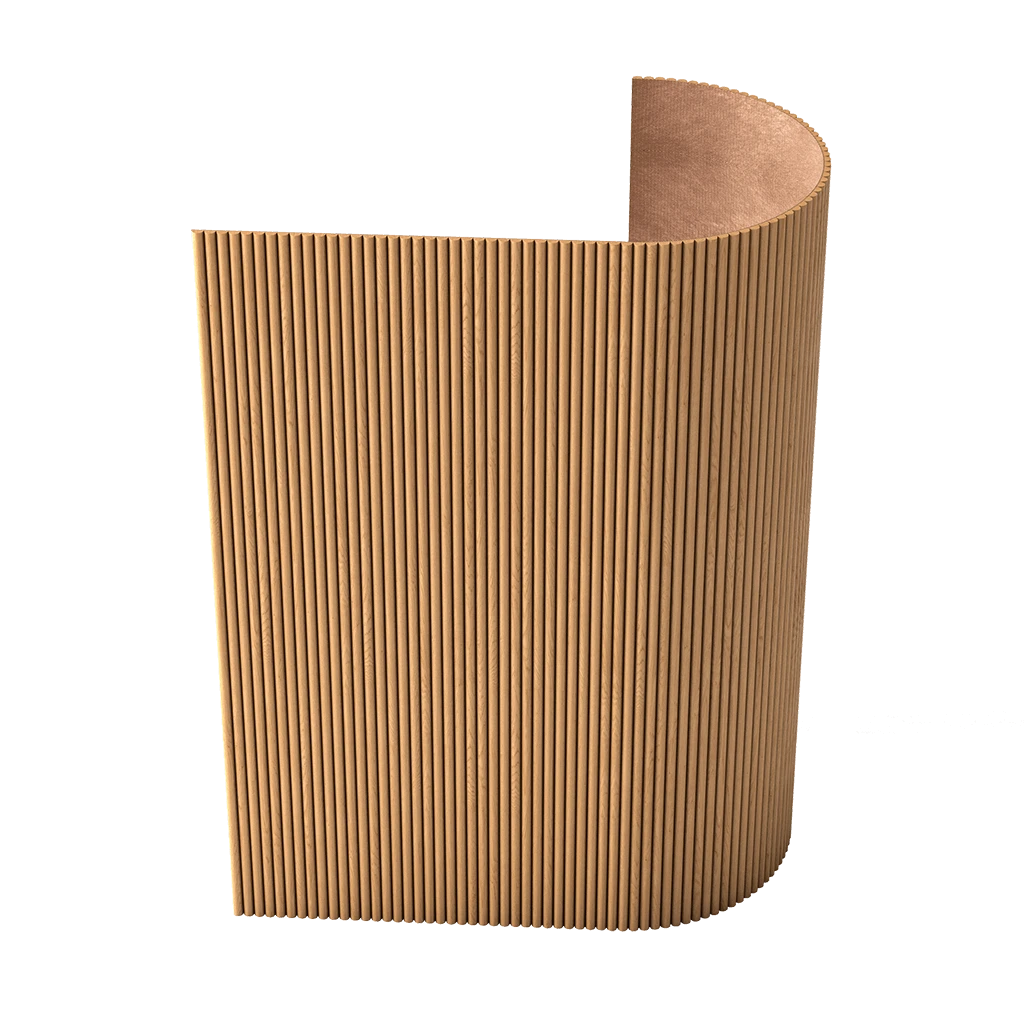
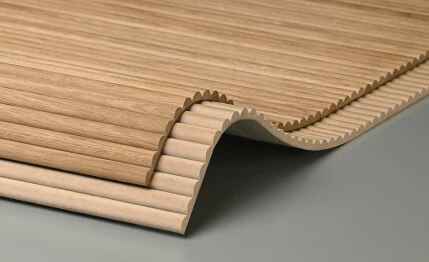
soft slat panels— flexible constructions that wrap around radial surfaces. On a ceiling with an arched vault, such a panel is laid precisely along the curve, creating a continuous wooden rhythm even where a rigid construction is impossible. Photos of such ceilings are rare in the public domain — that's precisely why they make such a strong impression: a person sees an 'impossible' wooden surface that follows the curve of the space.
slatted modular wall panelin ceiling application — another story. Modular systems allow for creating non-standard configurations: island ceiling elements, zoning constructions, 'floating' wooden planes above the dining area or work desk. In photos, it looks like an architectural object inside a room — and that's exactly what it is.
STAVROS: here photos become reality
Choosing a ceiling solution from a photo is only the beginning of the journey. The real work begins when you hold the actual material in your hands: you feel the texture of the slat, see the precision of the profile cut, understand the weight and density of the element. That's when a 'reference' turns into a project.
STAVROS is a company where every photo in the catalog honestly reflects the real product.Slatted panels for walls and ceilingSTAVROS offers a wide selection of wood species, formats, and finishes: from minimalist white MDF to rich solid oak, from thin accent slats to large modular constructions. Every item is the result of refined technology and attention to detail.
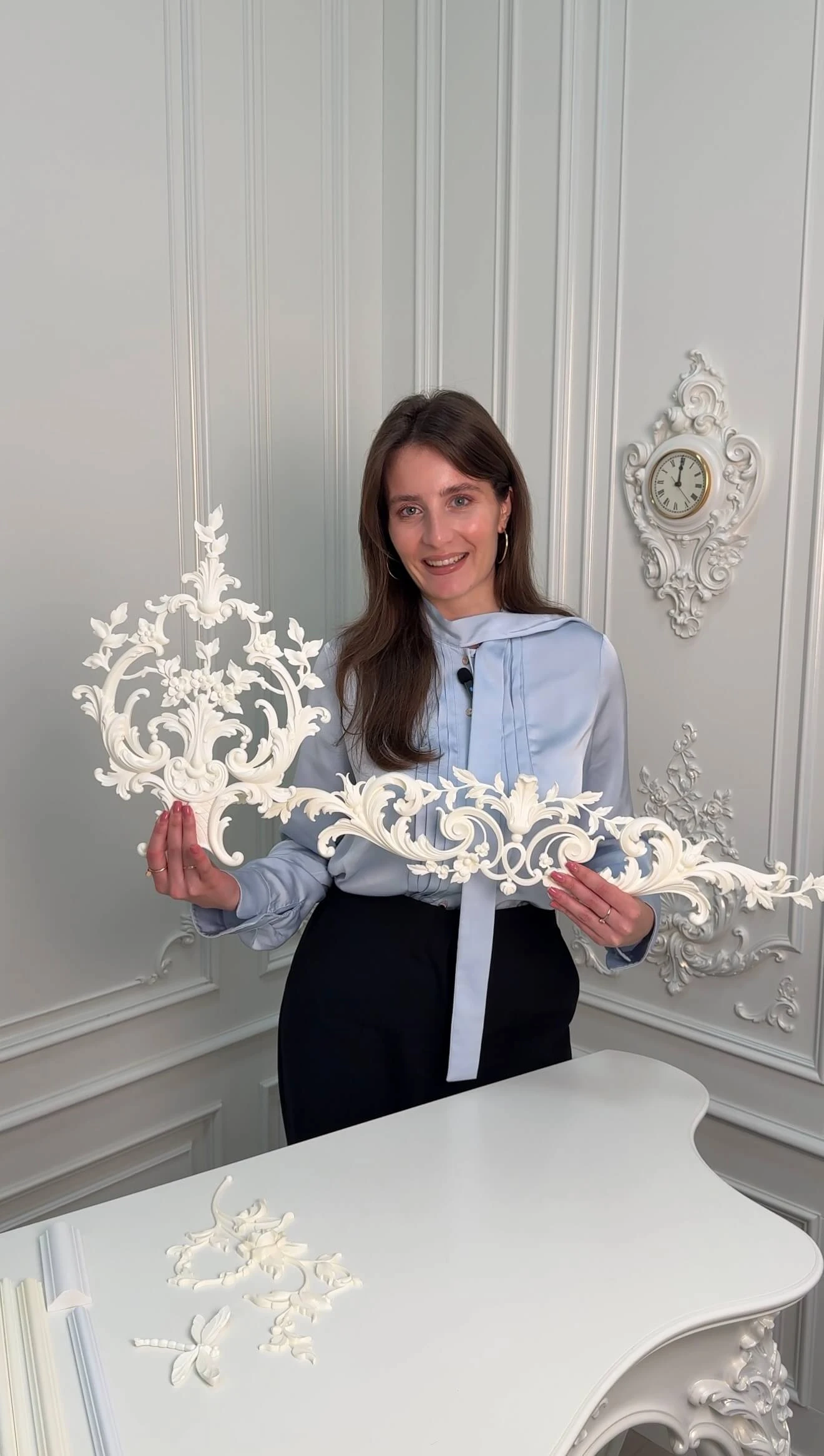
polyurethane decorSTAVROS offers cornices, rosettes, moldings, and profiles that reproduce classical forms with modern precision. Lightweight, durable, and ready to be painted any color, they create exactly the relief that transforms a modest ceiling into a complete architectural statement.
STAVROS is not just a materials supplier. It's a partner that helps you move from a 'beautiful photo' to a 'beautiful ceiling in your apartment.' Because the difference between a picture and the result is in the details. And the details are known here.
FAQ: answers to popular questions about slatted panels on the ceiling and molding
Can slatted panels be installed on the ceiling without a specialist?
Yes — with basic construction skills, the right tools, and a clear plan. A detailed step-by-step guide for DIY work is described in the article on how to makea slatted panel yourself. The ceiling is more challenging than a wall due to working 'overhead' — it is recommended to work in pairs.
How much does a slatted ceiling reduce the room height?
A standard suspended structure made of slatted panels 'consumes' 8–15 cm of height (battens 30–40 mm + slat 15–18 mm + gap for lighting if necessary). With a ceiling height of 2.5 m, 2.35–2.42 m remains — this is acceptable but requires the use of light-colored slats.
What diameter of rosette is suitable for a standard room?
For a room with an area of 15–20 m² and a ceiling height of 2.5–2.7 m, the optimal rosette diameter is 30–50 cm. For a room of 25–35 m² with a ceiling height of 2.8–3 m — 50–70 cm. A rosette larger than 80 cm is appropriate only with a ceiling height from 3.2 m.
Slatted ceiling panels: MDF or solid wood – which is better for an apartment?
For a standard apartment with central heating – both options are acceptable. MDF is more geometrically precise, more stable in humidity changes, and cheaper. Solid wood – natural texture, tactile feel, value. For kitchens and bathrooms – only MDF with moisture-resistant impregnation or WPC.
Can a slatted ceiling and stucco be combined in one room?
Yes, with clear zoning and color unity. The best scheme: stucco cornice around the perimeter, slatted panels in the central zone. Ceiling height – at least 2.8–3 m.
Where to find reliable references for slatted ceilings in small apartments?
Look for photos indicating the area and ceiling height – in real renovation reports, not in studio showrooms. Or refer to materials describing real application experience: for example, the article aboutslatted panels for ceilingscontains specific recommendations on height, slat spacing, and lighting.
Is approval needed for installing a slatted ceiling in an apartment?
No – if load-bearing structures and engineering systems are not affected. A suspended slatted ceiling is purely finishing work and does not require approval.