











































































Article Contents:
- What buyers in Moscow most often search for
- Why Moscow dictates a special selection logic
- Panels for walls, ceilings, niches and partitions
- Slat panels for walls: when a surface should work
- Slat panels for ceilings: a solution not for everyone, but for strong interiors
- Slat panels for niches: where a depth effect is needed
- Slat panels for partitions: lightweight zoning without solid heaviness
- Ceiling: where decor transforms the upper plane into architecture
- Ceiling rosettes: the center that cannot be chosen at random
- Walls: molding as a line of force
- Doorways: the forgotten zone that can make an interior stronger
- The main rule: don't turn the interior into a decorative fight
- Scenario for a modern apartment
- Scenario for neoclassicism
- Scenario for commercial space
- Slat panels: what really matters
- Polyurethane molding: how to distinguish quality from imitation
- Comparison table for selection
- Don't skimp on geometry
- Don't skimp on material if it's in the main zone
- Don't skimp on selection logic
- Don't skimp on scale
- Don't skimp on meaningfulness
- First, define the main visual gesture
- Then select supporting elements
- Limit the number of decorative zones
- Work within a single logic
- Choose not just a product, but a category of solutions
- Apartment in a new building
- Apartments for rent
- Commercial property
- Country house in the Moscow region
- Mistake 1. Buy first, think later
- Mistake 2. Pick 'the most beautiful' items individually
- Mistake 3. Ignore lighting
- Mistake 4. Choose overly complex decor for a small area
- Mistake 5. Try to save on the main zone
- Which slatted panels are most often chosen in Moscow?
- Where is polyurethane molding best used?
- Can slats and classic decor be combined in one interior?
- What is better for a modern apartment: paintable panels or oak?
- Is polyurethane decor suitable for kitchens and hallways?
- What is more important: price or profile accuracy?
- Can slatted panels be used on ceilings?
- Are polyurethane overlays needed in modern interiors?
- How to tell if an interior is not overloaded?
- How to assemble a kit without overpaying?

When a user enters a query 'slatted panels buy in Moscow' or searches for 'where to buy polyurethane molding in Moscow', they are actually solving not one, but several questions at once. They need a material that looks expensive. They need finishing that is suitable for an apartment, house, office, salon, or showroom. They need predictability in quality. They need logic in budgeting. And most importantly — they need a result where modern geometry does not clash with decor, but works for the overall style.
In the STAVROS catalog, slatted panels are presented as interior solutions made from paintable MDF and solid oak, including flexible options for curved surfaces, while polyurethane decor includes trim, overlays, and ceiling rosettes, applicable in residential and commercial interiors.
Moscow is not a market where you can afford a mistake in finishing. Here, there is high demand, tight deadlines, many comparisons, an oversupply of options, and a very demanding evaluation criterion: the material must look convincing immediately. No discounts for 'we'll get used to it later'. No allowances for 'it looked better in the photo'. No decorative amateurism that seems like savings at the moment of purchase but looks like an expensive mistake after installation.
That is precisely why the combination of slatted panels и moldings from polyurethane has become one of the strongest solutions for Moscow interiors. The slatted surface provides rhythm, depth, chiaroscuro, and architectural direction. Polyurethane decor provides contour, completeness, visual discipline, and that very 'polished look' that makes an interior read as expensive. Not necessarily luxurious. Not necessarily heavy. But definitely not random.
The goal of this article is not to rehash banalities about finishing. The goal is different: to break down what is most often sought in Moscow, which panels and which molded decor actually work, how to combine slatted geometry and classical plasticity, how to compare materials by characteristics, and what you should never skimp on under any circumstances.


What buyers most often look for in Moscow
Moscow buys quickly but chooses strictly. This is a market feature. Some are looking for a solution for an apartment in a new building and want the interior to look status-worthy already at the stage of the first showing to guests. Others are selecting finishes for rental apartments and strive to get an effect above their investment. Still others are outfitting a commercial property—a salon, office, clinic, studio, restaurant, boutique—and they need not just decor, but a visual sales tool.
Therefore, the requests here almost always revolve around several themes.
The first is aesthetics without overload. People want the interior to be textured, but not flashy. Precisely for this reason slatted panels buy Moscow are sought more often not for the sake of the slat trend itself, but for the sake of a neat architectural effect. Panels allow you to create wall structure, make an accent, hide visual emptiness, add depth without heaviness.
The second is a quick and understandable result. Moscow lives at a pace where no one wants to spend months on decorative experiments. The material must be clear in selection, logical in application, adequate in maintenance, and convincing in the finished form. That is why Buy polyurethane molding in Moscow is so in demand: it's a way to add a class of architectural decor to the interior without heavy solutions that complicate the renovation.
Third — versatility. The buyer is increasingly looking not for a single element, but for a system. Not just slats. Not just moldings. But a set that can be logically assembled: a wall, a ceiling, a niche, a doorway, a TV zone, a partition, a lighting unit. In this sense, it's not individual products that are especially important, but a catalog database where slatted panels, molded decoration Moscow and millwork operate as a unified interior library. On the STAVROS website, such categories are indeed separated into clear sections: slatted panels, polyurethane millwork, overlays, ceiling rosettes.
Fourth — quality comparison. In Moscow, the buyer more often asks the right question: 'Why are some panels and moldings noticeably cheaper, while others are more expensive?' And that's reasonable. Because the difference in such materials is not marketing fog, but very specific things: profile geometry, relief precision, base material, appearance under side lighting, product line logic, the ability to assemble a complete interior, not a set of decorative fragments.
There is another factor particularly characteristic of Moscow: people want the interior to look powerful both in a small area and in a large one. In the capital, compact apartments, spacious houses, and presentation public spaces are equally in demand. This means the material must be able to work at different scales. This is a separate selection criterion. Too coarse slat geometry will kill a small room. Too weak a molding will get lost in a large space. Too complex an overlay in a minimalist interior will look like alien theatrical props.
Hence a simple conclusion: Moscow's demand is a demand not just for finishing, but for a controlled visual result.




Why Moscow dictates a special selection logic
Moscow is a city of visual competition. Here, interiors are constantly compared. A showroom is compared to a showroom. An apartment to an apartment. A showroom to a showroom. Even a home office in an expensive residential complex is compared unconsciously: by photos, by publications, by the expected level. And this changes the very approach to materials.
If in a calmer market one can turn a blind eye to imperfect relief or slightly rough decor, in Moscow it becomes apparent instantly. The material either holds its class or reveals cost-cutting. And it does so mercilessly. Under light, in photos, up close, on a long wall, in the entrance area — everywhere.
Slatted panels are especially in demand here because they quickly create that very 'assembled interior' which looks designer even without an overload of objects. One strong plane is enough — and the space starts to sound different. Panels work as a visual axis. They guide the gaze, elongate proportions, and create depth.
Polyurethane decor, in turn, is valued for allowing an ordinary room to be transformed into an interior with architectural character without excessive complexity. Good Polyurethane molding It doesn't just decorate. It structures the space. Divides planes. Creates proper transitions. Finishes the joint between wall and ceiling. Composes the arrangement around the door, light, niche, panel, mirror.
It's especially clear in Moscow how two big ideas of modern interior work. The first is rhythm. The second is contour. Slats provide rhythm. Molding provides contour. When they are assembled correctly, the interior stops being just renovated. It becomes compositionally literate.
Our factory also produces:
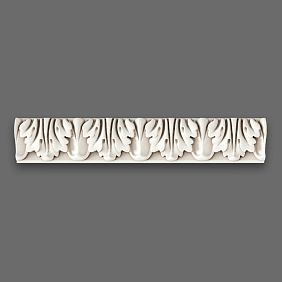


Panels for walls, ceilings, niches, and partitions
Get Consultation
Slatted wall panels: when a plane must work
The most common application of slats is the wall. But the word 'wall' here is too crude and too general. In a good interior, there is no such thing as just a wall. There is a main wall. The second most significant. A background wall. An accent wall. A wall that needs to be visually lengthened. A wall that needs to be assembled. A wall that lacks sufficient meaning, and the relief must add that meaning.
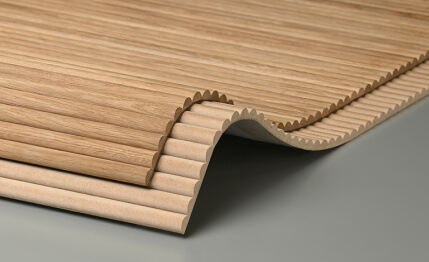
According to the STAVROS catalog, the following are suitable for such tasks buy slatted wall panels in Moscow, including solutions made of paintable MDF and solid oak, as well as flexible fabric-based panels for complex shapes.
What does this mean in practice?
If the interior is built around color purity, paintable panels often win. They provide not wood texture as the main accent, but precisely architectural rhythm. This is especially useful in minimalist apartments, modern offices, showrooms, bedrooms with a soft palette, interiors with large paintings or complex lighting. Where textures are already sufficient, the slat should work through form, not 'shout' with a wood grain pattern.
If the interior needs a warm solidity, oak panels are appropriate. They give a completely different sensation. This is no longer just wall graphics, but the living depth of the material. Oak is especially good in studies, living rooms, private areas, restaurant seating, meeting rooms, expensive waiting areas, and boutique spaces. Such a slatted plane immediately elevates the status of the environment because it reads not as a fashionable insert, but as a conscious material.
And here it is important not to fall into the trap of a crude choice. Not every wall can withstand active wood. In a small room, heavy dark slats can literally eat up the air. In a long narrow corridor, the wrong slat step will enhance the tunnel effect. In a low room, a massive vertical without the correct color and light may not elongate but press down. Therefore, the correct choice of panel is always a choice of scale, tone, profile, and perception scenario.
Slatted panels for the ceiling: a solution not for everyone, but for strong interiors
The ceiling is an area where it is very easy to make either a powerful gesture or an expensive folly. Slatted panels on the ceiling look impressive when there is logic for it. For example, when you need to emphasize the direction of space, create an effect of architectural depth, gather an elongated room, connect wall finishing with the upper plane, or design a functional zone in an open space.
Ceiling slatted solutions are especially good in the following cases:
-
in corridors and passage areas where a guiding rhythm is needed;
-
in kitchen-living rooms where the ceiling highlights the dining area or island;
-
in home offices and libraries;
-
in commercial spaces with a clear movement trajectory;
-
in meeting rooms and reception areas;
-
in interiors where the wall finish is already smooth enough and the rhythm is better raised upward.
But the ceiling requires special discipline. If a decorative error on a wall might still look tolerable, on the ceiling it starts to press down on the entire room. Therefore, for the ceiling, the purity of geometry, correct spacing, alignment with lighting, and the absence of excessive contrast are especially important.
When ceiling slats are combined with polyurethane moldings in Moscow, it is essential to clearly understand the hierarchy. If the ceiling is slatted, the molding should function as a frame or transition, not as a competing pattern. Otherwise, instead of architecture, you get a visual clash of materials.
Slatted panels for niches: where a depth effect is needed
A niche itself promises depth. But often it remains underutilized—just a recessed plane, just shelves, just lighting. A slatted panel allows the niche to become an architectural element, not a construction leftover.
Slats work especially well in niches for several reasons. First, they enhance shadow and thereby deepen the space. Second, they make the surface look finished and visually 'expensive.' Third, they help highlight an area without extra objects.
Niches with slats are particularly effective:
-
in TV zones;
-
behind a bed headboard;
-
in entryways with a console and mirror;
-
in home offices;
-
in wardrobe compositions;
-
in commercial stands and display units.
If such a niche is additionally supported with molding or trim profile, the effect becomes even cleaner. The batten provides an internal rhythm. The profile gives an architectural edge. And now the niche doesn't just exist—it forms the semantic center of the wall.
Batten panels for partitions: lightweight zoning without solid heaviness
Moscow loves open spaces but simultaneously demands zoning. This is especially noticeable in studio apartments, spacious kitchen-living rooms, commercial premises, salons, spaces with reception areas, and semi-open offices. Here, batten panels and structures based on them work as a way to divide a room without the feeling of a solid barrier.
A batten partition is not always a separate structure in the literal sense. Sometimes it's a visually designed part of a wall transitioning into a volumetric plane. Sometimes it's a screen. Sometimes—a panel module working alongside furniture. Sometimes—framing for a portal or passageway.
The strength of batten zoning is that it doesn't kill the air. The space remains connected but logically divided. And if used nearby molded decoration Moscow, transitions between zones can be made even more expressive: design a door or arched opening, enhance the upper contour, create frame architecture on adjacent planes.
Molding for ceilings, walls, and doorways
Ceiling: where decor turns the upper plane into architecture
A ceiling without logic often looks like just a white technical surface. Sometimes that's enough. But in a space that requires a higher level of expressiveness, the ceiling must work. And this is where Buy polyurethane molding in Moscow.
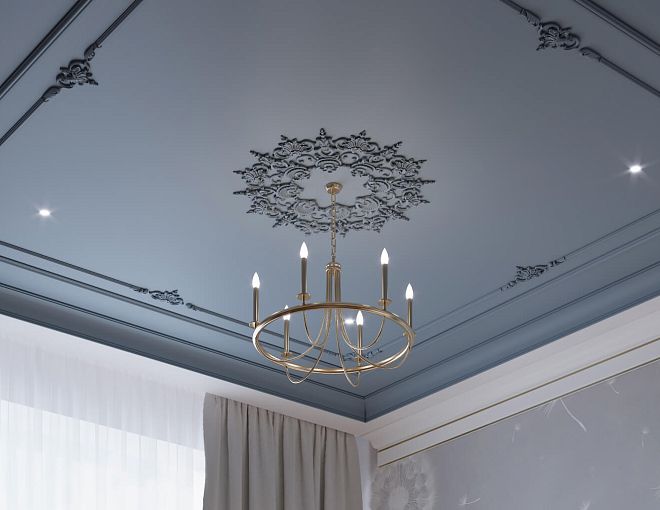
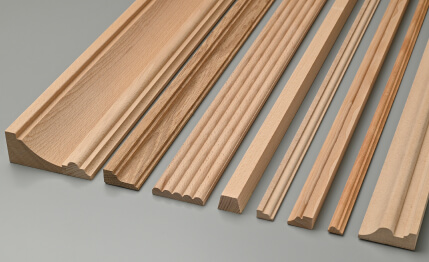
Polyurethane molding for ceilings is not just cornices in the usual sense. It's a way to form a proper wall-to-ceiling joint, set the rhythm for the room's upper contour, frame the perimeter lighting, enhance the central light fixture, and create a sense of completeness. In the STAVROS section, polyurethane molding is described as a moisture-resistant, durable, and deformation-resistant material for interiors, and ceiling rosettes are presented as a separate product category.
Why is this important for Moscow? Because here there is high demand not only for 'beautiful,' but also for 'makes an impression immediately.' The ceiling is a huge plane. If it's well thought out, the space seems more expensive, cleaner, and more architectural. If it's left unattended where attention was needed, the interior often looks unfinished.
Ceiling molding works especially powerfully in the following scenarios:
-
living rooms with a central chandelier;
-
bedrooms where a soft classical contour is needed;
-
dining areas;
-
studies;
-
halls and entryways;
-
commercial spaces where first impressions are highly important.
Ceiling rosettes: the center that cannot be chosen at random
If the room has a chandelier or a striking pendant light, the center of the ceiling demands a compositional response. This is precisely what they exist for ceiling rosettes. In the STAVROS catalog, this is a separate line of decorative elements with a wide choice of sizes and styles.
But a strict rule applies here: the rosette must be proportionate. One that is too small under a large fixture looks poor. One that is too large in a low room feels oppressive. One that is too ornate in a minimalist interior starts to live a life of its own. One that is too simple in an expressive classical space gets lost.
A rosette is not just a 'circle under the chandelier'. It is a compositional center. It can be almost smooth if the interior is contemporary. It can be more sculptural if the interior leans towards neoclassicism. It can be part of a larger ceiling scheme with molding. But it must always respond to the scale of the room and the character of the light.
Walls: molding as a line of force
On walls, polyurethane decor is particularly powerful. It is here that it transforms a plane into architecture. Molding elements can create frames, divide a wall by height, frame panels, form decorative fields, support doors, mirrors, console areas, and artistic compositions.
And this is one of the most underrated topics. Many still think that molding is a minor detail that can be neglected. In reality, molding is a line of force. It establishes discipline. It subordinates decor to composition. It turns the chaos of wall planes into a structural system.
If nearby there is a slatted panel for sale in Moscow and the trim contour gives the interior both depth and clarity. The battens create a chiaroscuro rhythm. The molding provides a frame and a sense of completion. This is especially useful where you need to assemble a modern interior without a sterile feel.
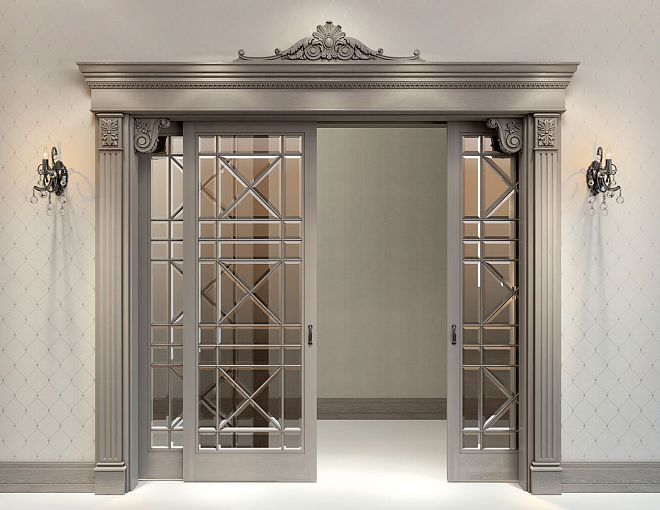
Doorways: the forgotten zone that can make an interior stronger
The doorway often remains neglected. It is perceived as a purely functional element. But it is precisely the openings, especially in an apartment with long hallways or in a house with an expressive layout, that can become an important part of the decorative system.
Trim around a doorway helps to:
-
give the opening status;
-
connect the doors with the walls;
-
make transitions between rooms more architectural;
-
support the interior style;
-
unite different zones with a common decorative logic.
If used nearby Polyurethane appliqués or a frame scheme on the walls, the doorway ceases to be just a passage. It becomes part of the overall visual scenario.
How to combine modern slat geometry and classic decor
The main rule: do not turn the interior into a decorative brawl
One of the most common mistakes is trying to 'take all the best at once' and ending up with noise. People see that slats are beautiful. They see that moldings are noble. And they start combining them without logic. They hang an active slatted wall, add ornamental moldings, a heavy rosette, decorative overlays, a large chandelier, contrasting furniture — and then wonder why the interior looks not stately, but tiring.
The secret to combining is simple: one language should be leading, the second — supporting.
If the leading theme is modern geometry, then slats become the main plastic gesture, and moldings work more quietly. They frame, discipline, emphasize, but do not argue.
If the leading theme is soft neoclassicism, then the decor can be more noticeable, and the slats — more subdued, sometimes even almost background in color.
If both elements are equally active, the space starts shouting with two voices at once. A good interior is not built that way.
Scenario for a modern apartment
In an apartment of modern styling, the following logic works best. One accent slatted surface is created — the TV zone, the wall behind the bed, a niche, a fragment of the hallway, a decorative section in the study. Strict lines are used around the space polyurethane trimwithout heavy ornamentation. If a ceiling centerpiece is needed, a minimalist rosette is added.
What does this achieve? The interior remains contemporary. Yet it ceases to be flat and characterless. It gains that very architectural layer missing from most 'trendy' renovations.
Scenario for Neoclassicism
Neoclassicism loves discipline and noble rhythm. Here, both slatted panels and moldings can be used more actively, but only with a well-considered hierarchy. For example, a slatted insert becomes the central part of a wall, framed by a composition of trim elements. Alternatively, a wall is divided by moldings, with a slatted surface appearing in one of the sections as a modern interpretation of a panel.
This approach is particularly good for living rooms, dining rooms, master bedrooms, studies, formal hallways, boutiques, beauty salons, and intimate restaurants. It looks fresh precisely because it doesn't blindly copy classicism but blends it with contemporary form.
Scenario for Commercial Space
Commercial interiors demand even greater precision. Here, any decorative mistakes are perceived as a lack of sophistication. Yet, it's precisely here that the combination of slats and moldings can deliver maximum impact.
Slats create the designer environment. Moldings provide the status-defining contour. Together, they allow for the quick creation of an interior that looks considered, expensive, and photogenic. This is especially important for spaces where people make decisions or build trust: clinics, aesthetic centers, showrooms, offices, salons, boutiques, reception areas.
If such an interior is additionally supported with stucco decor in Moscowbut without redundancy, the space gains individuality. Not fairground decorativeness, but precisely individuality.
How to compare materials by characteristics
Slatted panels: what really matters
When comparing panels, many look at the photo and price. That's too little. The following parameters are really important.
Base material. MDF for painting and solid oak are different usage scenarios. The first is good where rhythm and color are needed. The second is where natural texture and status depth are important.
Type of construction. Rigid panels and flexible panels solve different tasks. If the project has radius surfaces, a regular rigid panel may simply not handle it beautifully. According to the STAVROS description, flexible panels on a fabric base are designed specifically for columns, arches, rounded corners, and other complex shapes.
Slat profile. Semi-circular, straight, softer or more pronounced — this affects not only style but also chiaroscuro. Different profiles behave differently under daylight and artificial lighting.
Pitch and rhythm. It is the pitch that determines how the panel will work from a distance and up close. Incorrect pitch makes the surface either heavy or visually weak.
Surface quality. Especially important for panels intended for painting. If the base is uneven, a perfect result won't be achieved. If it's solid wood, it's important that the material looks noble, not like a random decorative board.
Compatibility with the interior. The panel should not just be beautiful, but appropriate. Different solutions are needed for a study and a child's room. For a boutique and a bedroom — also.
Polyurethane moldings: how to distinguish quality from imitation quality
You need to be stricter with polyurethane decor. Because cheap decor especially loves to pretend to be noble until the moment of installation.
What is important to check?
Profile clarity. Good trim has clear geometry. The line reads cleanly, without blurriness or sloppiness.
Relief. If we are talking about overlays or more complex decorative elements, the relief should be convincing. Not soapy, not rough, not resembling a plastic parody.
Edges and joining. This is where cheap products most often give themselves away. Uneven edges, weak repeatability of shape, a feeling of random casting - all this later turns into visual poverty of the interior.
Resistance to moisture and deformation. In the STAVROS section for polyurethane trim and overlays, moisture resistance, strength and resistance to temperature influences are emphasized. For interiors, this is critical, especially in kitchens, hallways, bathroom areas, commercial spaces with variable operating conditions.
Assortment logic. A strong catalog provides the opportunity to assemble a system: trim, rosettes, overlays, other elements. When the choice is fragmented, you are forced to glue the interior together from different languages.
Comparative selection table
| Parameter | Slat panels | Polyurethane moldings |
|---|---|---|
| Main function | Rhythm, depth, chiaroscuro, accent | Contour, architectural quality, transition design |
| Best application areas | Walls, niches, ceilings, partitions | Ceiling, walls, doorways, lighting nodes |
| What is especially important | Material, pitch, profile, geometry | Profile clarity, relief, joints, scale |
| Mistake of cheap choice | Rough rhythm, unconvincing surface | Plastic appearance, weak profile, soapy decor |
| Strong role in the interior | Creates volume | Completes the composition |
What you shouldn't skimp on
Don't skimp on geometry
This is the first and most important thing. Crooked geometry kills even an expensive idea. If the rail runs uncleanly, if the profile of the molding looks cheap, if the rosette is unconvincing, if the overlay resembles a plastic souvenir—the interior begins to lose class. Saving on the precision of form almost always turns into a visual loss.
Don't skimp on material if it's in the main zone
There are zones that are immediately visible. The TV wall. The wall behind the sofa. The headboard. The entrance group. The reception. The central ceiling node. If weak material is placed there, nothing else can save it. In the main zones, you need material that holds distance, light, and a close look.
Don't skimp on selection logic
Buying separate battens, separate random molding, separate something else 'for beauty' is a bad strategy. Fewer elements, but within one system, is better. Otherwise, you'll end up not with an interior set, but a decorative dump, just neatly glued to the walls.
Don't skimp on scale
Incorrect scale is the silent killer of an interior. Too small decor on a large wall looks pathetic. Too large in a small room feels oppressive. Too active a batten is tiring. Too weak a profile gets lost. Scale is not nitpicking, but the foundation of visual persuasiveness.
Don't skimp on meaningfulness
Here's the most unpleasant truth. Sometimes people save not money, but thinking. They don't ask themselves: 'Why is this element here?' And then the interior gets battens for the sake of battens, an outlet for the sake of an outlet, a cover plate for the sake of a cover plate. This is the path to a decorative swamp. Every detail must serve a purpose: enhance proportion, unify a plane, highlight a center, support the style, direct the gaze.
How to assemble an interior set without overpaying
Overpaying in finishing is not just a high price. Very often, overpaying looks different: you buy excess. Excess elements. Excess complexity. Excess decor. Excess scale. An excess level of 'dressiness' that doesn't enhance the interior but hinders it.
To assemble a set wisely, act in this sequence.
First, determine the main visual gesture
Will it be a slatted wall? A ceiling cornice? A door surround? A niche? A ceiling medallion? Without a main gesture, any purchases will be chaotic.
Then select the supporting elements
If there is a slatted surface, consider if it needs a linear cornice. If there is an expressive ceiling, consider if it needs a center in the form of a rosette. If there is a complex door opening, consider if it needs a molded accent.
Limit the number of decorative zones
One strong zone is almost always better than three competing ones. Especially in a city apartment. Especially in Moscow, where the interior should look confident, not restless.
Work within a single logic
If you choose a modern character — stick to it. If you lean towards neoclassicism — don't make sharp stylistic jumps. The system is more important than a set of separate beautiful things.
Choose not just a product, but a category of solutions
In this sense, it's more convenient to rely on the structure of the STAVROS catalog: Rafter panels, Polyurethane trim, Polyurethane appliqués, ceiling rosettesSuch a structure allows you to assemble an interior not at random, but according to clear types of tasks.
Practical scenarios for Moscow
Apartment in a new building
Here the most common combination is:
-
slatted accent wall in the living room or bedroom;
-
strict moldings on adjacent surfaces;
-
minimalist ceiling medallion if there's a chandelier;
-
minimum of complex overlays.
This allows quickly elevating the visual level of the space without a heavy classical feel.
Apartments for rent
Here you need photogenic appeal and lasting effect. What works best:
-
panels for painting or universal wood texture;
-
calm trim;
-
clean frame solutions;
-
one strong ceiling or wall accent.
The goal is for the interior to appeal to the majority and look above its price category in photos.
Commercial property
For a salon, clinic, boutique, office, or studio, the following are especially important:
-
slatted panels in the entrance, waiting, or reception area;
-
architectural trim on walls or ceilings;
-
accent overlays only where they truly enhance the brand image;
-
materials that withstand intensive use.
Country house in the Moscow region
Here you can afford more scale and depth. These work well:
-
oak panels;
-
more expressive ceiling decor;
-
framed wall molding;
-
larger scale of elements;
-
more complex lighting scenario.
But even in a house, one must not confuse strength with excess. Architectural quality and overload are not synonyms.
Common buyer mistakes
Mistake 1. Buy first, think later
This approach almost always leads to decorative conflicts. You need a plan first. Then — the product.
Mistake 2. Choosing 'the most beautiful' elements individually
The beauty of an element outside the system is a trap. An interior is perceived not by a single detail, but by the entire composition.
Mistake 3. Ignoring lighting
Battens and moldings work through shadow, relief, near and far view. Without understanding light, you don't fully understand what you're buying.
Mistake 4. Using overly complex decor for a small area
A small area requires subtlety, not decorative heroism.
Mistake 5. Trying to save on the main zone
What is seen first should be of the best quality. This is a law of perception, not a whim.
FAQ: Popular Questions and Answers
Which slatted panels are most often chosen in Moscow?
Most often, panels are sought for accent walls, TV zones, bedrooms, hallways, niches, partitions, and commercial spaces. Solutions that provide a modern rhythm without overload are especially in demand.
Where is it better to use polyurethane molding?
On ceilings, walls, around doorways, in lighting units, in frame compositions, in the design of niches and decorative fields.
Can slats and classic decor be combined in one interior?
Yes, if there is a hierarchy. One language should be leading, the other supporting.
What is better for a modern apartment: panels for painting or oak?
It depends on the task. For painting — for clean geometry and soft integration into the color concept. Oak — for a warmer, more status-oriented and material interior.
Is polyurethane decor suitable for the kitchen and hallway?
Yes, especially due to moisture resistance and resistance to deformation, as indicated in the description of STAVROS polyurethane moldings and overlays.
What's more important: price or profile accuracy?
In decorative materials, profile accuracy is more important. It determines whether the interior will look convincing.
Can slatted panels be used on the ceiling?
Yes, if there is compositional logic, suitable height, and thoughtful lighting. Otherwise, it can be too heavy a solution.
Are polyurethane overlays needed in a modern interior?
Sometimes yes, but selectively. One justified overlay is better than a scattering of meaningless decor.
How to tell if an interior is not overloaded?
If the space has one or two clear accents and everything else is subordinate to them, there is no overload. If every surface demands attention, there is already a problem.
How to assemble a set without overpaying?
Define the main gesture, limit the number of accent zones, don't buy extras, stick to one stylistic logic, and choose categories that work as a system.
Conclusion
The search for 'slatted panels buy in Moscow' has long ceased to be just about the trend for slats. And the search for 'polyurethane molding buy in Moscow' is no longer about a decorative whim. These are queries about something more serious: how to make an interior expressive, structural, modern, convincing, and at the same time avoid slipping into visual cheapness, overload, or chaos.
Moscow demands precision. Random solutions perform poorly here. The difference between genuine architectural finishing and decorative imitation is especially noticeable here. Therefore, the approach must be mature: first the task, then the system, then the material.
If you need slatted panels buy Moscow, it's important to look not only at the appearance but also at the material, profile, rhythm, and compatibility with the space. If you are choosing polyurethane molding in Moscow, evaluate not only the decor but also the clarity of form, the logic of application, the scale, the element's ability to support the interior, not argue with it. If you need molded decoration Moscow, it should enhance the architecture, not depict luxury by sheer force.
A strong interior is not assembled from random beautiful things. It is assembled from precise solutions. From materials that understand light. From profiles that hold geometry. From rhythm that guides the gaze. From decor that completes, not interferes. That is why it is logical to look at the STAVROS system of solutions: Rafter panels, Polyurethane molding, applique, ceiling rosettes. STAVROS is not about random decor. It is about interior elements from which you can assemble a space with character.