










































































Article Contents:
- What wall architecture and furniture facade decor have in common
- Architectural genealogy of the slatted motif
- Which furniture moldings work alongside slatted walls
- Rectangular glazing beads and overlay strips
- Semi-circular and oval profiles
- Frame moldings
- Fluted moldings and ribbed profiles
- Simple linear profiles for contemporary interiors
- How to connect cabinets, buffets, chests, and panels
- Sliding-door wardrobes and built-in wardrobes
- Buffets and sideboards
- Chests of drawers
- Nightstands and bedside tables
- Console tables
- When moldings enhance the interior, and when they create noise
- Situations where molding is necessary
- Situations where molding is excessive
- How to select molding thickness, profile, and spacing
- Thickness and projection
- Profile width
- Spacing arrangement
- Profile depending on style
- Stylistic conflict errors
- First error: classic molding next to modern slat panel
- Second error: horizontal molding in front of vertical slat wall
- Third error: different scales without hierarchy
- Fourth error: mixing materials without a system
- Fifth error: molding as compensation for low-quality facade
- Furniture molding application technology: from selection to fixation
- Base selection
- Marking
- Painting: before or after molding installation
- Slat panels and moldings: indoor scenarios
- Living room with TV zone
- Bedroom with headboard
- Hallway with corridor
- Kitchen with slat island or backsplash
- Material question: what furniture moldings are made of
- Solid oak
- MDF
- Veneered moldings
- Systematic view: from molding to cornice
- Practical checklist: moldings for furniture near a slat wall
- Where to find the right products: a unified system source
- Frequently Asked Questions (FAQ)

Imagine entering a room where everything is properly arranged, properly lit—and yet it makes no impression. The gaze slides over it, never lingering anywhere. The furniture stands on its own, the walls exist on their own. The ceiling does not echo the floor. Nothing speaks to anything else. This is an interior without architectural logic. And the most paradoxical thing: this can be fixed not by replacing furniture or by renovation, but simply by a system of lines. Those very lines that createRafter panelson walls andMoldings for furnitureon the facades.
This article is about how the architectural logic of a wall works, why it should continue onto the furniture, and how furniture molding becomes a bridge between the finish and the object-based filling of a space.



What do wall architecture and furniture facade decor have in common?
At first glance—nothing. A wall is architecture, furniture is an object. One is immobile and monumental, the other can be rearranged. One is created by builders, the other by furniture makers. And yet, there is a deep visual connection between them, which a professional designer never ignores, and an amateur never notices.
This connection is called architectural scale. Any surface in an interior—a wall, ceiling, floor, cabinet facade, dresser door—has a scale: the ratio of details to the whole. If a slatted wall sets a certain scale for dividing the surface, the furniture must either support this scale or consciously engage in a dialogue with it. A random mismatch is perceived as an error—perhaps unnamed, perhaps not obvious, but tangible.
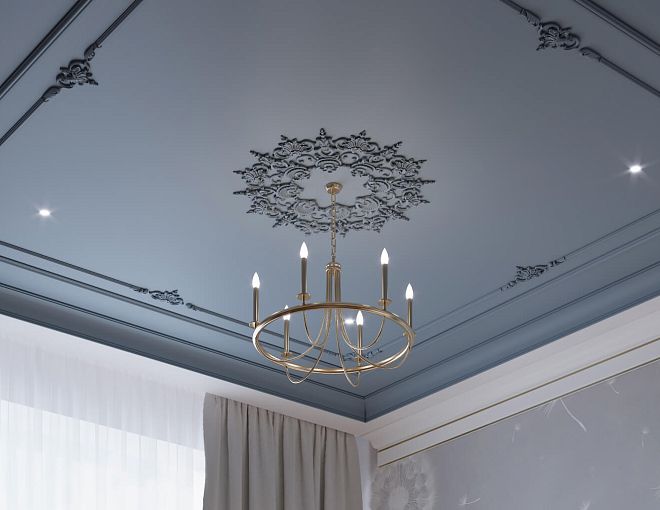
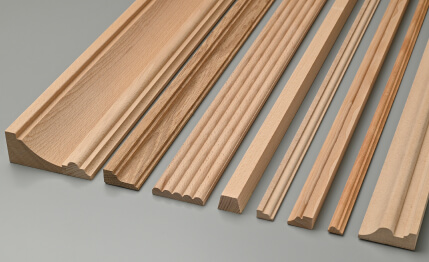
This is precisely where the role offurniture moldingscomes in. A molding is a profile strip that divides the surface of a furniture facade into visually meaningful parts. In a classic interior, the molding created the frame of a cabinet door—and the same frame was repeated on the door casing, on the ceiling cornice, on the mirror frame. A unified profile on all surfaces—that is the principle that created that unforgettable unity of classic interiors.
In a modern interior, the classic molding in its Baroque incarnation has given way to clean lines, but the principle remains unchanged. Today, the role of the unifying motif is played bySlatted wall panelswith their vertical rhythm. And the question is, what kind of furniture molding can pick up this rhythm and transfer it to the facades.




The architectural genealogy of the slat motif
A slatted surface is not an invention of modern design. Its prototypes have existed for millennia: flutes on the columns of ancient temples, rusticated facades of Renaissance palazzos, tapestry-like joinery of wooden panels in Northern Europe, lattice screens of Japanese shōji. The vertical slat as an architectural element is universal because it responds to fundamental laws of perception: the vertical is associated with ascent, growth, dignity.
When you installslatted panel on the wall, you introduce into the interior an architectural code with a thousand-year history. Furniture molding with a vertical orientation continues this code — and the space begins to speak the same language.
Our factory also produces:



What furniture moldings work alongside a slatted wall
Not every molding can serve as a connecting link between a slatted wall and furniture. Everything is determined by the geometry of the profile, its scale, and orientation.
Get Consultation
Rectangular glazing beads and applied battens
The simplest and most universal option.wooden molding of rectangular cross-section, glued vertically onto a flat furniture facade, creates a direct echo with the slats on the wall. This is not a coincidence — it is a variation on the theme.
The key parameter is the ratio of the width of the furniture bead to the width of the wall batten. If the batten is 20 mm wide, the optimal width for the furniture bead is 30–40 mm. A slight increase in scale at the object level compared to the architectural level is a rule of proportion that works flawlessly.
The depth of the bead—that is, its projection above the facade surface—should be less than the depth of the wall batten above the substrate. The wall is large-scale architecture, furniture is detailed. The relief on the furniture facade is more delicate than on the wall.
Semi-circular and oval profiles
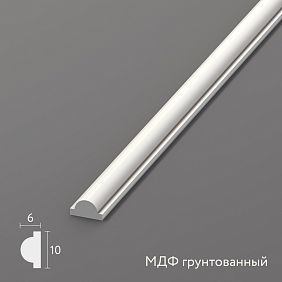
Furniture moldingwith a rounded cross-section is a classic bead that, in a horizontal or vertical orientation, creates a softer, more plastic version of the batten motif. If the wall battens have a semi-circular cross-section (as many modern panels do), furniture molding with a similar profile creates a sense of continuity of the same plasticity.
This option is especially good in interiors with warm palettes and soft forms—Scandinavian minimalism, modern classic, Japandi. The roundness of the profile removes excessive geometric rigidity and adds human warmth to the interior.
Frame moldings
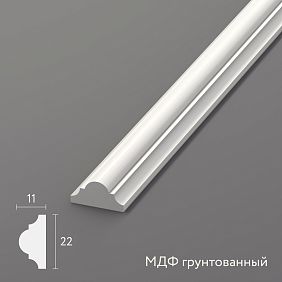
Frameapplied decoration for furniture—four slats forming a rectangle on the facade—seemingly has nothing in common with vertical batten geometry. But that's not the case. A frame on a cabinet facade segments its surface just as battens segment a wall: it creates rhythm, visually organizes the plane, and introduces a scale of division.
If the size of the frame on the facade is a multiple of the spacing of the battens on the wall, the interior acquires a hidden mathematical logic that the eye perceives as harmony without realizing its source.
Fluted moldings and ribbed profiles
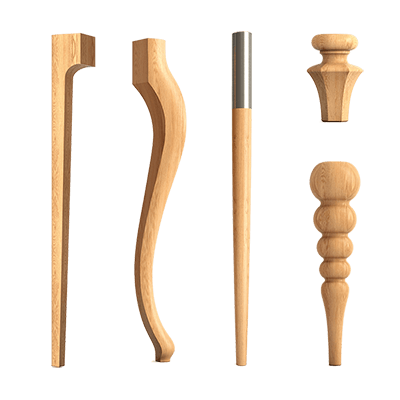
Flutes — parallel semicircular grooves along the length of the strip — are a direct quote of the slat motif in miniature scale.Carved furniture decorwith flutes on the legs, cornice, and plinth of the body — this is an architectural detail that translates the slat language of the wall into the language of object decor.
Fluted elements are especially appropriate in a neoclassical interior, where slatted panels are used in niches or as fireplace surrounds. In this context, fluted molding is not an ornament, but an architectural argument.
Simple linear profiles for a contemporary interior
In a minimalist interior, excessive decor is out of place. Here, the role of furniture molding is played by the simplest linear profiles — a thin 8×15 mm strip that creates a barely noticeable relief on the facade. This is enough: the eye catches a hint of verticality, relates it to the slatted wall — and the space forms into a system.
How to link cabinets, sideboards, chests, and panels
Each type of case furniture requires its own strategy for working with molding. There is no universal solution — there are principles that are adapted to the specific task.
Sliding wardrobes and built-in wardrobes
A built-in wardrobe should ideally disappear — become part of the architecture, not a piece of furniture. When it stands behind the back wall of a niche or next to itSlatted wall panelA cabinet with perfectly smooth fronts falls out of the architectural context. Its mass and the emptiness of its surface create dissonance with the richly detailed slatted wall.
The solution depends on the strategy. The first option is to dissolve the cabinet: paint it the same color as the slatted panel, add vertical battens with the same spacing as the slats. The cabinet becomes an extension of the wall—the object disappears, leaving only architecture. The second option is to highlight the cabinet as an independent volume but connect it to the wall through a unified material: if the slats are oak, the cabinet fronts should also be oak or have oak decorative overlays.
Sideboards and display cabinets
A sideboard is furniture of complex structure: a lower cabinet part, an upper display part, and an intermediate belt. Each of these levels has its own height and proportion.wooden moldingHere, it performs a dual task: it emphasizes the structure of the sideboard from within (separates the levels, frames the display doors)—and simultaneously echoes the structure of the slatted wall.
The intermediate cornice of the sideboard, separating the lower and upper parts, should correspond with the horizontal line of the slatted panel—if it does not reach the ceiling but ends at a certain height. The alignment of these horizontals—the cornice line of the sideboard and the top edge of the slatted panel—creates a strong architectural line in the space.
Chests of Drawers
A chest of drawers is a horizontal object by nature. Its wide, low drawers carry a horizontal rhythm, which can conflict with the vertical slatted rhythm of the wall. The task of the molding is to translate this conflict into a dialogue.
Vertical overlay strips on the drawers of the chest—Furniture moldingin the form of thin battens, placed vertically in the center of each drawer—introduce a vertical motif into the horizontal object. The chest of drawers stops conflicting with the wall: both speak of verticality, but on different scales and with different intonations.
Nightstands and bedside tables
The small scale of the bedside table allows for extremely delicate work with the detail. One vertical applied plank in the center of the door is a sufficient furniture response to the large slatted wall. No more is needed: an excess of decoration on a small object produces a caricature-like impression.
The material of the plank should be the same as that of the wall slats, or similar in tone. If the slats are oak, the plank on the bedside table should also be oak or MDF with the same tint.
Console tables
A console is a special case. It is an object that is simultaneously furniture and part of the wall composition: it adjoins the wall, visually leans on it, exists in its context.Decor for MoldingThe decor on a console should be delicate—more of a hint than a statement. A thin molding along the perimeter of the tabletop, rounded fluted legs, a simple frieze on the front—this is enough for the object to fit into the slatted architectural context.
When moldings enhance the interior, and when they create noise
Molding is a tool of order. But order taken to absurdity turns into chaos of another kind—the chaos of overload. Therefore, the question 'when to add molding' is inseparable from the question 'when not to add it'.
Situations in which molding is necessary
A large front facing a saturated slatted wall. Ifslatted panels for wallsthe slats occupy the entire height of the wall, and a large wardrobe with bare, smooth fronts stands in front of it—molding is mandatory. It creates a rhythmic structure on the surface of the wardrobe, comparable to the rhythm of the wall. Without it, the wardrobe looks unfinished.
Transition zone between the slatted and smooth sections of the wall. If the slatted panel occupies only part of the wall, and furniture is placed in the transition zone, molding helps 'translate' the slatted motif onto the furniture surface, smoothly completing the theme.
Furniture as an independent accent. A sideboard, a display cabinet, a library bookcase — items that should be not just functional, but significant.furniture moldingsgive them character and weight that cannot be achieved by any other means.
Situations where molding is excessive
A small room with rich finishes. IfSlatted wall panelshave already created sufficient visual volume, adding molding systems to the furniture overloads the space. A small room requires air — that is, surfaces that do not carry a decorative load.
Built-in furniture as an architectural background. When the task of a built-in wardrobe is to disappear, become a wall, not attract attention — any molding works against this task. It pushes the item from the background to the foreground.
Furniture in a minimalist interior. In minimalism, every detail carries the ultimate semantic load. Molding is appropriate only when it is the sole and absolutely deliberate decorative element.
How to select the thickness, profile, and spacing of molding
This is the technical side of the issue, which most guides overlook — and in vain. It is here that decisions are made that determine the result.
Thickness and projection
wooden moldingFor furniture facades, the molding should protrude 4 to 12 mm above the surface of the facade. Less than 4 mm — the detail gets lost, the relief is not visible in side lighting. More than 12 mm — the molding becomes bulky and starts to dominate the furniture piece itself.
The thickness of a wall batten is typically 15–30 mm above the substrate. This is the architectural scale. The furniture scale is 2–3 times more delicate. This is a rule of proportions that cannot be violated.
Profile width
The width of furniture molding depends on the size of the facade. For a cabinet door 700 mm high, the optimal width for a frame molding is 25–35 mm. For a door 1200 mm high — 40–55 mm. For a height of 2000 mm and above — 60–80 mm.
The width of a vertical stile on a dresser drawer is calculated differently: it should not exceed 1/6 of the drawer's width. A drawer 400 mm wide — a stile no wider than 65 mm. This proportion ensures the detail accentuates the piece, rather than overpowering it.
Spacing
If there are several vertical stiles on a furniture facade, their spacing should be a multiple of or harmoniously relate to the spacing of the battens on the wall.
Examples of harmonious ratios:
-
Wall battens with 40 mm spacing — facade stiles with 80 mm spacing (1:2 ratio)
-
Battens with 30 mm spacing — stiles with 90 mm spacing (1:3 ratio)
-
Battens with 50 mm spacing — glazing beads with 100 mm spacing (1:2 ratio)
Non-multiple ratios — for example, 40 mm battens and 65 mm glazing beads — do not create any system and are perceived as random.
Profile depending on style
| Interior style | Wall batten profile | Optimal furniture molding |
|---|---|---|
| Scandinavian minimalism | Rectangular, thin | 8×15 mm glazing bead, straight |
| Modern Classic | Semicircular, medium | Frame molding with bevel |
| Neoclassical | Large rounded | Fluted profile |
| Japandi | Thin rectangular | One glazing bead in the center |
| Loft | Coarse, wide | Corner metal profile |
| Art Deco | Geometric, clear | Frame molding with right angles |
Stylistic conflict errors
A conversation about moldings and slat panels is impossible without an honest conversation about mistakes. Most unsuccessful interiors suffer not from a lack of decor, but from its incorrect application.
First mistake: classic molding next to a modern slat panel
This is perhaps the most painful incompatibility. Imagine: a modernslatted wooden panelmade of oak with thin rectangular slats — and next to it, a cabinet with fronts adorned with baroque moldings featuring scrolls and rocailles. Both elements can be excellent on their own — side by side, they destroy each other.
The rule is strict: the molding profile must belong to the same stylistic era as the slatted panel. A modern panel — modern molding. A classic niche with a slatted insert — classic molding.
Second mistake: horizontal molding in front of a vertical slatted wall
Horizontal overlay strips on furniture fronts create a transverse rhythm, directly opposite to the vertical rhythm of slatted panels. These two rhythms do not complement — they cancel each other out. As a result, the eye doesn't know where to move: upward along the slats or sideways along the horizontal stripes.
The only exception is the intentional play of opposite directions in an interior, where horizontal furniture serves as a deliberate counterpoint to a vertical wall. But this requires a clear concept and precise execution. Random mixing of rhythms is always a mistake.
Third mistake: different scales without hierarchy
Large moldings on small furniture items, small moldings on large ones — a lack of scale hierarchy. Furnitureapplied decoration for furnituremust follow logic: the larger the item, the larger the permissible molding — but within reason. A massive cornice on a small nightstand looks absurd. The thinnest bead on a huge library cabinet gets lost and serves no function.
Mistake four: mixing materials without a system
Carved furniture decorDark walnut on a cabinet with light oak fronts — and next to it, an ash slatted panel. Three different woods, three different tones, three different textures — this is not richness, it's clutter. The material palette in an interior should be concise: no more than two types of wood, one of which is dominant, the other is accent.
Mistake five: molding as compensation for a low-quality front
Often, moldings are used not as a design solution, but as an attempt to hide the low quality of a front: surface unevenness, imperfect edging, weak material. This is flawed logic. Molding doesn't hide the problem — it draws attention to it, because it creates a frame that everyone looks at. A good surface with delicate molding is ideal. A poor surface with any molding is a mistake.
Technology for applying furniture moldings: from selection to fixing
This chapter is for those who want not just to understand the principle, but also to apply it themselves or to correctly set the task for a craftsman.
Selecting the base
Furniture molding is applied to a front made of MDF, laminated chipboard (LDB), plywood, or solid wood. The best base is MDF: its surface is perfectly even, has no textural variations, and accepts glue well. Laminated chipboard with a laminate coating requires preliminary degreasing and, if necessary, sanding of the area under the molding.
Oak moldingsare fixed to wooden bases with PVA glue or wood glue. On MDF — with PVA glue or liquid nails. Over the fixation — finishing nails 1.2×20 mm with countersunk heads, filled with wood putty.
Marking
Marking the positions of the molding is a stage that cannot be neglected. An error of even 2 mm during vertical installation of a bead is visually perceived as noticeable curvature. For marking, use a level and a ruler. The central axis of each molding is first drawn with a pencil line, then checked with a level.
If moldings are installed on multiple cabinet doors, all are marked before fixing begins — this ensures the rhythm is consistent across all doors.
Painting: before or after molding installation
Professional approach — painting the molding separately from the facade, then installing it. This achieves perfect edges without paint drips. Household approach — installing molding on a primed facade, then painting the entire assembly together. The second option is acceptable when using high-quality painter's tape and a brush for the edges.
Ifslatted panels for wallsIf wall panels are tinted to resemble wood, and the furniture is painted white or gray, the molding on the furniture can either match the facade color or be tinted to resemble wood — like the battens. The second option creates a visual bridge between the wall and furniture through the material.
Batten panels and moldings: room scenarios
Let's examine how this system works in specific rooms.
Living room with TV zone
Slatted panels in the living room interiorThis is a classic application. A TV wall with batten cladding sets the horizon of the interior. The TV console standing in front of this wall should echo it.
Solution: a console with vertical applied battens, whose spacing is twice as large as that of the wall battens.Furniture moldingA thin rectangular profile along the top edge of the console creates a horizontal boundary, visually separating the horizontal object from the vertical wall. Open shelves on the sides of the TV — without molding: they breathe and provide a pause.
Bedroom with headboard
slatted panels in the bedroomBehind the headboard of the bed is one of the most effective techniques. Bedside tables on either side of the bed should support the slatted theme.
Solution: a bedside table with one vertical bead in the center of the door—a delicate response to the slatted rhythm of the wall. The bead is made from the same wood as the slats: if the slats are oak, the bead is oak. This creates the feeling that the bedside table and the wall are made from the same material—which is the goal.
Hallway with corridor
Slatted panels in the hallway interiorare especially popular: they structure the elongated space and create an accent background. A shoe cabinet or a coat rack dresser in this area are items that should respond to the slatted rhythm of the wall.
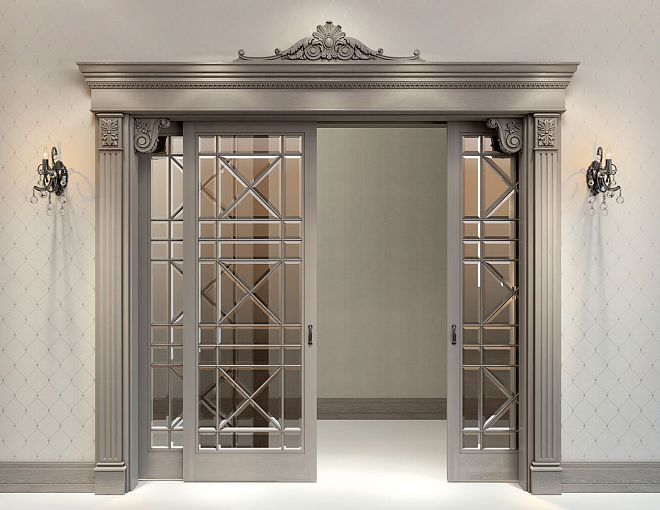
Solution: a frame molding on the cabinet doors, the size of which corresponds to the proportion of the doorway. If the opening is decorated with slattedwooden architraves, the molding on the furniture should belong to the same profile system.
Kitchen with slatted island or backsplash
Slatted panels in the kitchenis a trend that remains relevant. A slatted backsplash or panel above the work area sets a vertical rhythm that the kitchen unit fronts should respond to.
Overlay moldings on upper and lower cabinet fronts are one of the best solutions for a kitchen. They don't add cleaning complexity (if you choose the right profile without sharp edges), but create a visual system that connects the wall and the furniture.
The material question: what are furniture moldings made of
The market offers moldings made from different materials, and each has its own application.
Solid oak
Solid oak moldings areTrimming Itemstop-tier. Oak is a dense wood with a pronounced grain that takes stain and varnish well. The profile of a solid oak molding holds its shape for decades, doesn't warp with humidity fluctuations (if properly treated), and sands and repairs well.
The main advantage of solid wood molding is the possibility of combining it with slatted panels made from the same material.Solid oak slat panelsand moldings made from the same wood guarantee tonal compatibility and an identical reaction to staining.
MDF
MDF moldings are the most common option for painted fronts. MDF with a density of 750–850 kg/m³ ensures profile clarity without chipping or delamination. MDF moldings are milled with high precision and perfectly accept primer and enamel.
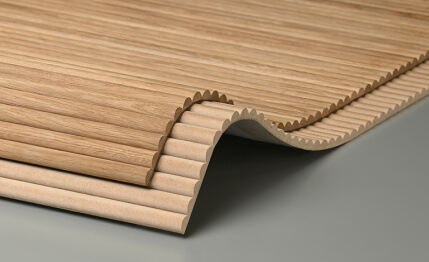
Slatted MDF wall panelspair well with MDF moldings on furniture when using a unified painting system.
Veneered moldings
Veneered molding is an MDF base faced with natural veneer. Visually identical to solid wood, significantly cheaper, and geometrically more stable. An optimal solution for facades with veneered coating: molding from the same wood species and same tint blends with the facade into a single surface, creating relief without a color seam.
A systemic view: from molding to cornice
The architectural logic of an interior does not end at furniture facades. A complete system includes:
-
baseboard — a horizontal element connecting the floor and wall;
-
ceiling cornice — a horizontal element connecting the wall and ceiling;
-
door and window casings — vertical elements framing door and window openings;
-
furniture facade moldings — elements that transfer architectural logic to the object level.
All these elements should belong to a single profile system.Oak solid wood cornices and baseboardscombined with slatted panels of the same material, they form a complete architectural shell, within which furniture exists as an organic part of the space, not as a random collection of items.
It is this systematic approach that distinguishes an interior created with an understanding of architecture, not just with taste.
Practical checklist: moldings for furniture next to a slatted wall
Before making a decision aboutmoldings for furniture, go through this checklist:
1. Determine the dominant rhythm of the wall
Note the spacing of the slats, their width and depth. This is the module from which everything else is calculated.
2. Determine the strategy for each piece of furniture
Continuation of the slatted motif or deliberate contrast? Each item must have an answer.
3. Select a molding profile
The profile must belong to the same stylistic register as the battens. Modern — modern, classic — classic.
4. Calculate the scale
The projection of the molding over the facade should not exceed 1/3 of the batten depth on the wall. The glazing bead width should be 1.5–2 times wider than the batten.
5. Check the spacing
The molding spacing on furniture must be a multiple of the batten spacing. A non-multiple ratio is a source of visual chaos.
6. Ensure material compatibility
Wood — to wood. MDF for painting — to MDF for painting. Natural veneer — to natural veneer.
7. Define void zones
Which surfaces in the final picture remain without molding? Intentional void is not an omission, but a rhythmic pause.
8. Check the entire interior as a whole
Survey the space with a glance: slatted wall — furniture moldings — cornice — baseboard. All elements should belong to the same architectural story.
Where to find the needed products: a single source for the system
Creating the described system requires access to products that are manufactured with the same precision, from compatible materials, and within a unified tonal range.buy slatted panelsmade from MDF and solid oak, as well as the full rangemolding products— moldings, cornices, baseboards, architraves, glazing beads — all of this is available in the Stavros catalog.
The advantage of a single manufacturer is not only in logistics. When a slatted panel and a furniture molding are produced from the same batch of wood with the same moisture content and undergo the same surface treatment, their tonal match during tinting is guaranteed. This is something impossible to achieve when buying products from different suppliers.
decor for furniturein the Stavros catalog covers all levels of the system: from large architectural elements to delicate furniture details. This means you can build a complete architectural shell for the interior without leaving a single product logic.
Frequently Asked Questions (FAQ)
Can furniture moldings be used on ready-made furniture purchased from a store?
Yes. Overlay moldings are fixed onto any flat surface — MDF, chipboard, plywood. The main condition is degreasing the surface and choosing the correct adhesive. Solid oak moldings are glued with wood glue with additional fixation using finish nails.
Do I need to repaint furniture after installing moldings?
If the furniture is already painted, you can install the molding and paint only it—with careful blending at the joints. For a perfect result, it's better to repaint the entire assembly: then the molding and the front will form a single surface without visible seams.
How to choosefurniture moldingfor MDF slatted panels for painting?
If the wall panel will be painted, the molding on the furniture can be made from the same MDF. Both elements are painted the same color—so tonal compatibility is achieved automatically. The main thing is matching the profile styles: a modern panel with rectangular slats—a modern rectangular molding.
How many moldings are needed for one furniture front?
For a cabinet door up to 900 mm high—from one to three vertical moldings, or one frame molding. For a door 1200–1800 mm high—one frame molding or two to three vertical strips. For fronts over 2000 mm high—a frame molding with an additional horizontal division at 1/3 of the height.
Are slatted panels and moldings suitable for the bathroom?
Slatted panels with full paint coating and moldings with the same treatment are acceptable in bathrooms with normal humidity levels and good ventilation. For areas with direct water contact (shower area, area above the bathtub), additional moisture protection coating is required.
HowCarved furniture decorcombines with slatted panels?
A carved element—a rosette, capital, or ornamental overlay—creates a point of interest within the system of repeating slat rhythm. One carved detail in the right place (the center of a buffet, the top of a mirror, an accent element on a console) is perceived as an authorial accent. Several carved details on different pieces—as excess.
Where does the combination of slat panels and moldings look best?
Most expressively—in the living room (TV wall + TV stand), in the bedroom (headboard + bedside tables), in the dining room (buffet + slat wall), in the hallway (wardrobe + slat panel behind it). In all these cases, the furniture and the wall are in direct visual contact—and it is here that the unity of language works with maximum strength.
Wall architecture is not just finishing. It's a statement about what this space should be.Rafter panelson the wall andMoldings for furnitureOn walls and on facades—these are not two different themes. It is one theme, developed in two scales. The wall sets the architectural order. The furniture picks it up. And then you enter the room—and understand: everything here is in its place. Not because it's expensive. But because it's smart.