







































Article Contents:
- What is an MDF Slatted Wall Panel and How is it Constructed
- Why MDF: Key Advantages of the Material
- Types of MDF Slatted Panels by Construction
- Rigid panels on MDF backing
- Ready-Made Modular Panels
- 3D Relief MDF Panels
- Batten Profiles: How Shape Changes the Character of a Wall
- MDF Slatted Panel for Painting: Why It's Needed
- Moisture-Resistant HMR Panels: When They Are Needed
- Where do MDF slatted wall panels look best
- What do such panels provide besides decoration
- Installation of MDF slatted wall panels
- Typical mistakes when choosing MDF panels
- How MDF slatted wall panels differ from solid wood
- Where to buy MDF slatted panels for walls
- FAQ: popular questions about MDF slatted wall panels
- About the Company STAVROS
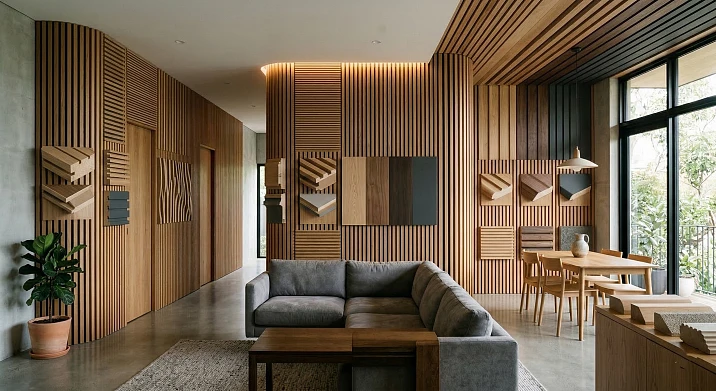
If you've ever tried installing individual slats on a wall manually—leveling each one, maintaining spacing, controlling geometry across the entire plane—you know how it ends. Three hours of work, five repositioned slats, 'almost level,' and quiet frustration when looking at the result.MDF Slatted Wall Panelsolves this problem systematically: a ready-made module with factory geometry, precise spacing, and uniform surface installs quickly, delivers predictable results, and opens up possibilities that piece-by-piece slat installation never offers.
But that's only the technical side. The real conversation about MDF panels begins where questions arise about profile, slat spacing, painting, moisture resistance, lighting, and interior context. This article is written precisely for these questions.
What is an MDF slatted wall panel and how is it constructed
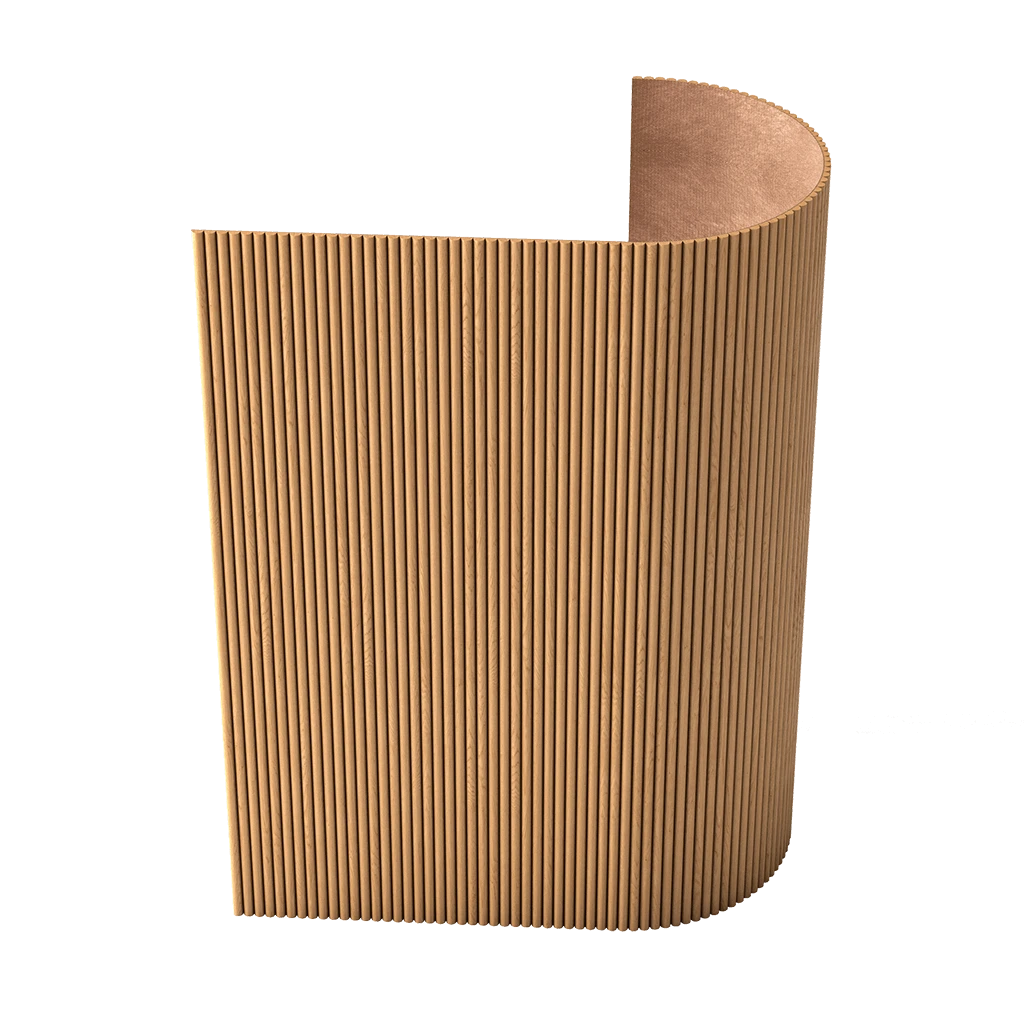
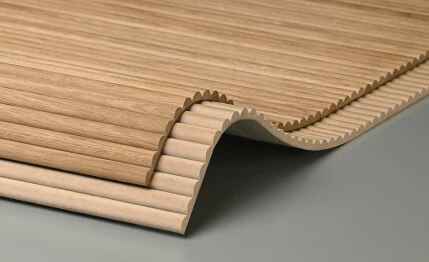
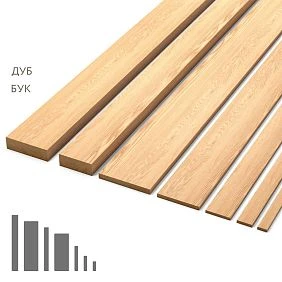
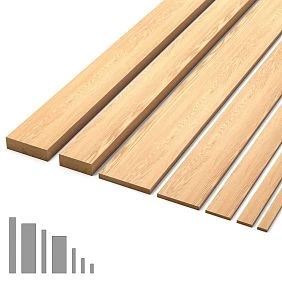
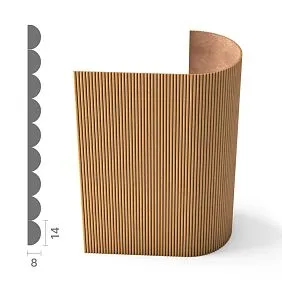
Essentially, it is a ready-made modular element of interior finishing: several parallel slats fixed to a load-bearing substrate with a uniform predetermined pitch. Each slat is a profiled flat or three-dimensional strip made of MDF. The substrate is a rigid MDF base that maintains the geometry of the entire structure, preventing the slats from shifting or deforming.
The entire structure is a monolithic module with fixed parameters: panel width, height, bead profile, and spacing between slats. It is mounted as a single unit — not slat by slat, but as a plane.
This is precisely the key difference from piece-by-piece installation. When you install a ready-made panel, you get factory geometry immediately. Not 'almost even,' but exact. The pattern of slats repeats with the same pitch across the entire wall area, joints between modules are minimal, and the overall surface rhythm is predictable.
The visual effect is the work of rhythm and chiaroscuro. Each gap between slats creates a shadow line with side lighting, each protrusion creates a line of light. The wall ceases to be a flat plane and gains relief, depth, and architectural character. And all of this comes from a factory module with precise dimensions.



Why MDF: the main advantages of the material
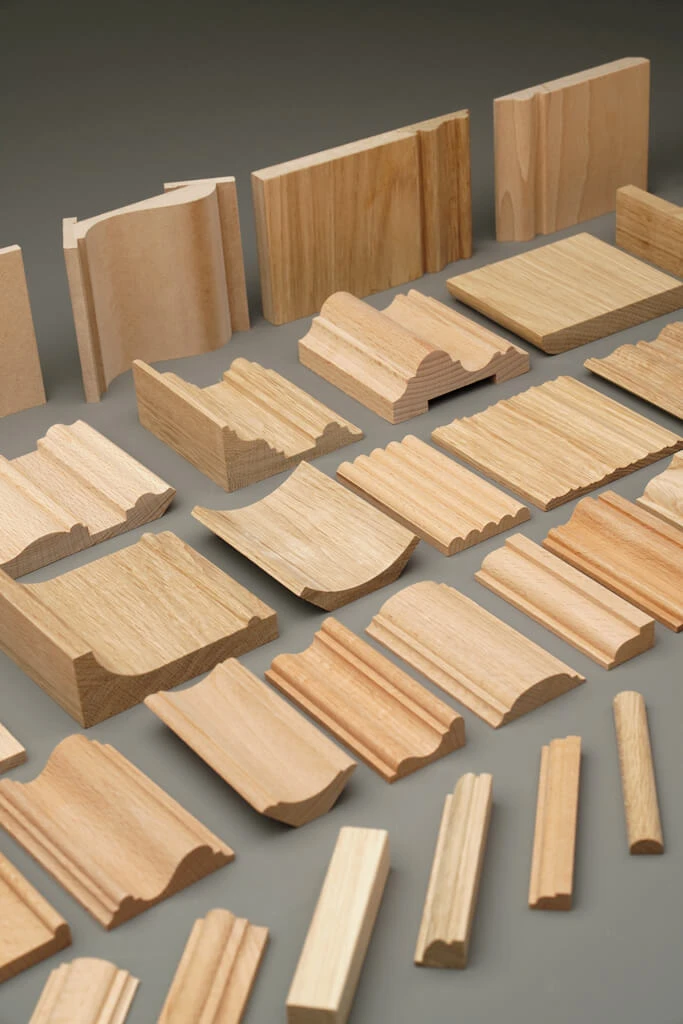
MDF (Medium Density Fiberboard) is not a cheap substitute for wood. It is an engineered material created for specific production tasks: milling precision, structural uniformity, and geometric stability. For slatted wall panels, this is exactly what is needed.
First and foremost: a homogeneous structure without natural defects. Solid wood has knots, resin pockets, density variations, grain lines — all of which create unevenness during processing. MDF lacks these characteristics: the milled profile remains consistent along its entire length, from the first to the last slat in the batch.
Second: a perfect surface for painting. The smoothness of MDF allows enamel to be applied without priming the structure: the paint lays evenly, color is reproduced accurately, without the base texture affecting the finish tone. This is precisely why MDF slatted wall panels are a fundamental solution for all interiors where matching a specific color from the RAL or NCS catalog is required.
Third: shape stability. Under normal operating conditions in an enclosed space, an MDF panel does not warp, crack, or change geometry over time. This is crucial for wall finishing: deformation of a single slat would be immediately noticeable.
Fourth: ease of processing. MDF cuts, mills, and sands with minimal effort and produces a clean edge. This is important when trimming panels on-site: precise cutting to the required size without chips or ragged ends.
Fifth: affordable cost compared to solid wood while maintaining high aesthetics. MDF wall slatted panels for painting allow creating an interior that is visually indistinguishable from expensive solid wood solutions—under different budget conditions.
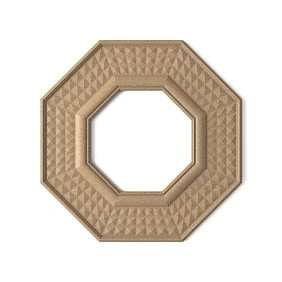
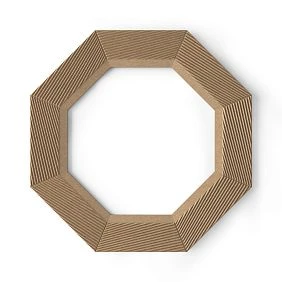
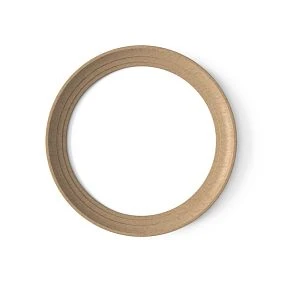
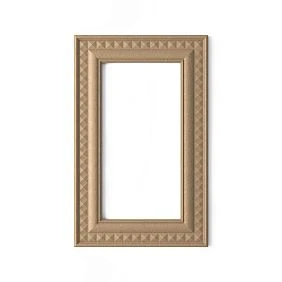
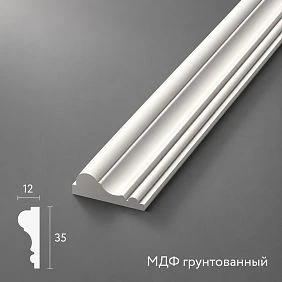
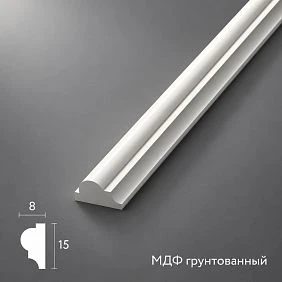
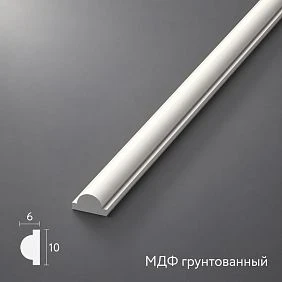
Our factory also produces:
What types of MDF slatted panels exist by construction
Choosing the construction is not a matter of price, but a matter of the task and the surface on which the panel is mounted.
Get Consultation
Rigid panels on MDF backing
This is the basic and most common type. Slats are fixed to a rigid MDF base—resulting in a monolithic module with fixed geometry. Rigid MDF slatted panels are designed for straight, even surfaces: main walls, ceilings, TV zones, niches, furniture fronts.
Advantages of rigid construction: precise geometry, quick installation, high pattern repeatability over large areas. The panel is mounted with adhesive, finishing nails, or on guides—depending on the task and base type. For ceilings—only frame mounting with load calculation.
Limitation: rigidity. The straight construction does not adapt to curved surfaces. For columns, arches, and rounded corners, rigid panels are fundamentally unsuitable—here, a flexible construction on a fabric base is needed.
Ready-made modular panels
This is an option optimized for installation speed. The modular system involves standardized panel sizes with well-designed joints that fit together without visible seams or with minimal, architecturally correct seams. Such panels are convenient for covering large areas: the pattern rhythm is maintained across the entire plane without manual alignment of each joint.
3D relief MDF panels
A more active version of slatted paneling for those who want expressive relief rather than delicate rhythm. 3D MDF slatted panels create a three-dimensional texture on the wall with deeper gaps and more pronounced shadows. This solution is for accent zones where maximum visual surface activity is needed: restaurant halls, lobbies, showrooms, executive offices.
Batten profiles: how the shape changes the character of the wall
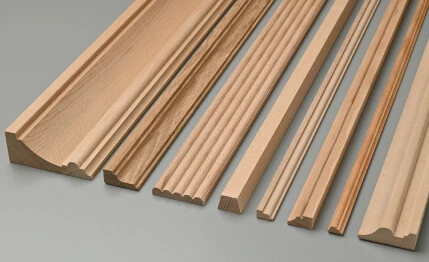
A profile is the cross-section of a batten. It determines the character of the chiaroscuro and, consequently, the 'temperature' of the interior: whether it is strict or soft, graphic or delicate.
Rectangular profile — the most common. Clear edges, sharp corners, unambiguous shadows. With side lighting, it creates a strict architectural pattern with clean lines. This is a 'mature', disciplined option: suitable for minimalism, contemporary, office interiors, meeting rooms, modern classic.
Semicircular profile — a fundamentally different character. Rounded cross-section: light flows smoothly over the convexity, shadows are soft, without sharp edges. Semicircular MDF slatted panels create a plastic, delicate relief — suitable for bedrooms, children's rooms, living areas with a warm atmosphere, Japandi.
Trapezoidal profile — an intermediate option with a pronounced character. A cross-section that widens towards the base creates moderate sharpness while avoiding the right angle of a rectangle. A more dynamic pattern than a semicircle, less rigid than a rectangle. Works well in loft, modern classic, commercial interiors of medium intensity.
The parameters of spacing and batten width work in tandem with the profile. Narrow battens with small spacing — a graphic, almost textile-like surface. Wide battens with large gaps — a calm, substantial rhythm. In small spaces, the correct spacing is a key parameter: a large pattern compresses the space, a fine one opens it up.
MDF slatted panels for painting: why it's needed
It is precisely this capability that makes MDF indispensable in interiors with a clear design objective. MDF slatted panels for painting are not just 'can be painted'. It is the systemic integration of the panel into the interior's color scheme.
When you need a slatted wall to match the tone of other surfaces — wood cannot provide this: the fiber texture will always affect the final tone. MDF allows for precise color matching using RAL and NCS systems — exactly the color catalogs designers use when developing projects. MDF slatted panels in RAL or NCS are not a marketing phrase, but a real production capability.
A monochrome solution is one of the most professional techniques in modern design. Walls, ceilings, cornices, moldings, and slatted panels in a single color create a sense of a monolithic architectural shell. Texture is present but not emphasized by color—it works solely through form and light. Achieving such a result is only possible with paintable MDF.
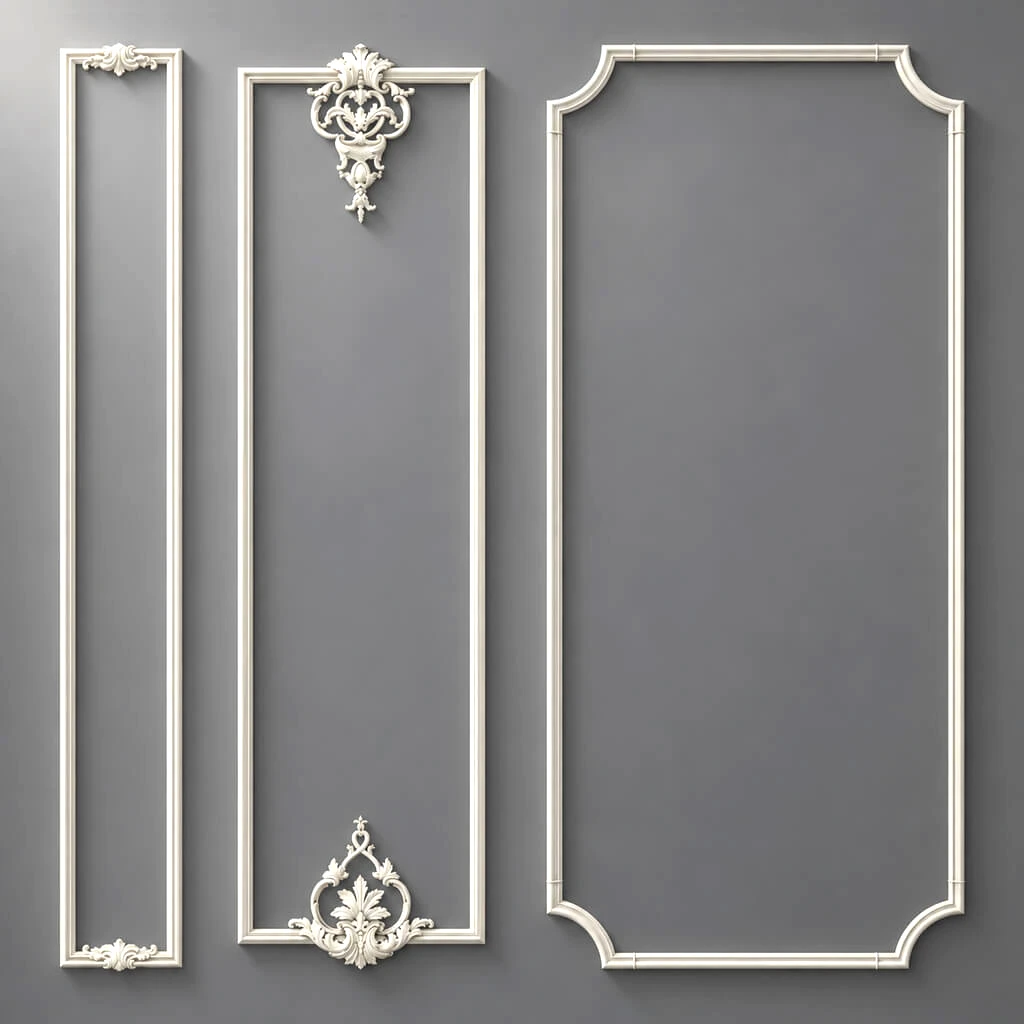
White and light gray shades are a popular base for such solutions in modern classic and neoclassical styles. Panels are painted in a single tone with cornices andMDF moldings—and the entire system functions as a unified architectural shell. This is the level of finishing that is perceived as 'expensive renovation'—though in terms of materials, it is not at all.
Dark and saturated shades are a different story. A slatted wall in anthracite, dark blue, or graphite becomes a strong architectural accent. Here, side-directed lighting is especially important: only it reveals the texture and prevents the dark surface from 'swallowing' the space.
Moisture-resistant HMR panels: when they are needed
Standard MDF works well in residential and commercial spaces with normal operating conditions. But where humidity regularly increases—kitchen, bathroom, balcony, changing room, SPA area—ordinary MDF can delaminate and deform.
HMR-MDF (High Moisture Resistance) is a special version of the material with increased resistance to moisture. It is not waterproof but is significantly more resistant to short-term humidity fluctuations. HMR slatted MDF panels are used where standard material poses risks—but slatted finishing is still desired.
Where HMR panels are specifically appropriate: kitchen in the dining table and island area (not the backsplash—only tile or special coatings there); bathroom outside the direct water splash zone; glazed balcony; corridors with fluctuating temperatures. The boundary of appropriateness is direct contact with water. Where the panel can get wet directly, HMR will not save it.
For the bathroom in areas without direct wetting, moisture-resistant slatted MDF panels are an excellent solution, allowing for a unified finishing system with painted walls. This is a professional technique that transforms a bathroom from a 'tiled room' into a well-thought-out interior.
Where do MDF slatted wall panels look best
Let's break it down by zones — not as a list, but as an explanation of the interior logic for each scenario.
Living room — the main stage for paintable MDF panels. An accent wall behind the sofa, either matching the rest of the finish or in a contrasting tone, is a classic of modern design. MDF slatted wall panels for the living room allow the slatted pattern to be integrated into a monochrome interior without a visual break: there is texture, but no color conflict.
TV zone — one of the most functional scenarios. MDF slatted panels for the TV zone solve both an aesthetic and a technical task: they create an architectural backdrop for the screen, hide cables, and form a niche for equipment. Dark shades of MDF are particularly convincing in this scenario.
Bedroom — here, a semi-circular MDF slatted panel on the wall behind the headboard creates a soft, delicate relief. Combined with hidden perimeter lighting along the top, it gives a 'hotel-like' effect. White or cream tones for a light bedroom. Warm gray-beige for Scandinavian or Japandi styles.
Children's room — with a semi-circular profile, without sharp edges. MDF slatted panels for a child's room work well in a bright, paintable interpretation: a white base plus an accent color (blue, green, warm yellow) on part of the wall creates an interesting interior without excessive complexity.
Hallway — here, paintable MDF panels work in tandem with a mirror andMDF moldings: baseboard, cornice, and moldings in the same tone as the slatted wall create a complete finishing system. Vertical slats visually raise the ceiling — critically important in typical urban corridors with heights of 2.4–2.5 meters.
Office and meeting room — MDF panels for meeting rooms in strict tones (dark gray, anthracite, deep blue) create a prestigious business interior. Simultaneously, the textured surface diffuses sound in the room, reducing reverberation during meetings and video calls.
Restaurant and bar — MDF slat panels for restaurants enhance both atmosphere and acoustics. Dark tones with hidden lighting in the gaps create a premium establishment ambiance. The textured surface manages the acoustics of the hall space.
What do such panels provide besides decoration?
The decorative function is obvious. But MDF slat panels have specific practical advantages that often become the main argument for choosing them.
MDF slat panel for concealing unevenness — one of the most in-demand practical scenarios. Installation on a frame/battens allows hiding any base defects: crooked walls, level differences, traces from the removal of old finishes. The panel is installed level, regardless of the actual condition of the surface beneath it.
Concealing utilities — another pragmatic task. A gap is created between the wall and the panel on the frame, where pipes, cables, and internet wiring are routed. This is significantly faster and cheaper than chasing (grooving), and the result looks better than any cable duct.
MDF slat panel with lighting — this is a separate scenario. An LED strip is placed in the gaps between the slats or behind the upper perimeter of the panel. The light emerges softly, without direct sources — and the wall becomes one of the most expressive lighting objects in the interior.
Acoustic function — the textured surface scatters sound waves, reducing unwanted reflections. In rooms with hard floors and high ceilings, this is a noticeable improvement in comfort. For more serious acoustic correction — mineral wool or an acoustic mat is placed behind the panel.
Installation of MDF wall slat panel
Installation of MDF panels — not an overly complex task, but one requiring precision.
Base preparation. For adhesive installation — the wall must be level (deviation no more than 3–5 mm), dry, and dust-free. For installation on a frame — the base condition does not matter: the frame is leveled independently of the wall.
Marking. The first panel or first guide is set strictly level. A laser level is a mandatory tool. The error of the first element accumulates across the entire plane.
Cutting. Panels are cut with a jigsaw or miter saw. The cut is clean, without chips. This is especially critical for MDF: the ends at the joints must be perfect.
Fastening. Three main methods: mounting adhesive (fast, suitable for flat walls); finish nails into the substrate (invisible, often in combination with adhesive); self-tapping screws into the frame guides (most reliable for large areas and ceilings). The choice of method depends on the panel weight, base type, and task.
Joining. Adjacent panels are joined butt-to-butt or with a decorative seam—depending on the design solution. The slat pattern must match in rhythm at the joint: this is critically important for the visual integrity of a large plane.
Finishing elements. The top and bottom finishing—cornice and baseboard—cover technical gaps and complete the finish. Without them, the panel looks 'thrown' on the wall.
Typical mistakes when choosing MDF panels
Knowing typical mistakes is more valuable than any advice on 'how to do it right,' because mistakes are discovered only after installation—when redoing is expensive and frustrating.
Choosing based only on photos. A photograph does not convey the actual light and shadow in your specific lighting. A profile that looks delicate in a render can create a completely different pattern in a real room with warm lighting. Request samples.
Ignoring the profile when choosing. 'I'll take any MDF slats, the main thing is the right color'—a path to disappointment. The profile determines the character of the surface. A rectangle in a children's room is architecturally aggressive. A semicircle in a executive office is too soft. Choose the profile to match the context.
Incorrect slat spacing in a small room. Large slats with wide spacing in a 10–12 sq.m. room overload the wall. For small spaces—thin profile, small gap, light tone.
Standard MDF in high-humidity environments. If it's a kitchen, balcony, or bathroom, you need moisture-resistant MDF slatted panel HMR, not standard material. Standard material will delaminate in one or two seasons under such conditions.
Lack of thoughtful lighting. An MDF panel without side or directional lighting works at half capacity. If the interior only has central overhead lighting, the relief texture won't be visible. Lighting must be planned before installation.
Attempting a premium result by skimping on paint. Using cheap water-based paint instead of quality enamel on an MDF panel leads to drips, uneven tone, and visible brush marks. MDF requires enamel with good coverage. Only then will the surface look like the render.
How MDF slatted wall panels differ from solid wood
This question is inevitable — and the answer must be given without indulgence toward either material.
| Parameter | MDF for painting | Solid oak |
|---|---|---|
| Color accuracy | Any RAL/NCS precisely | Wood tone affects the finish |
| Surface texture | Smooth, uniform | Live wood grain pattern |
| Tactile | Neutral, technological | Warm, natural |
| Stability | High under normal humidity | High with stable climate |
| Update | Repainting | Sanding + oil or varnish |
| Visual value | Color + shape + relief | Color + form + texture + pore |
| Best style | Minimalism, neoclassical, contemporary | Scandinavian, japanandi, loft, eco |
| Price level | More affordable | Higher |
Both materials are available at STAVROS. Both deliver high-quality results — but in different interior contexts. If the goal is precise color scheme matching, monochrome relief, and a modern minimalist look — MDF. If you need natural expressiveness, tactility, and the feel of a warm, natural space —solid wood slat panelswith oil or varnish coating.
Where to buy MDF slatted wall panels
Choosing the right supplier is no less important than selecting the panel itself. Geometric precision, uniformity of spacing, substrate quality, and clean milling all directly impact how the wall will look after installation. A 1–2 mm deviation in slat spacing across a batch results in an uneven, 'shimmering' pattern over a large area.
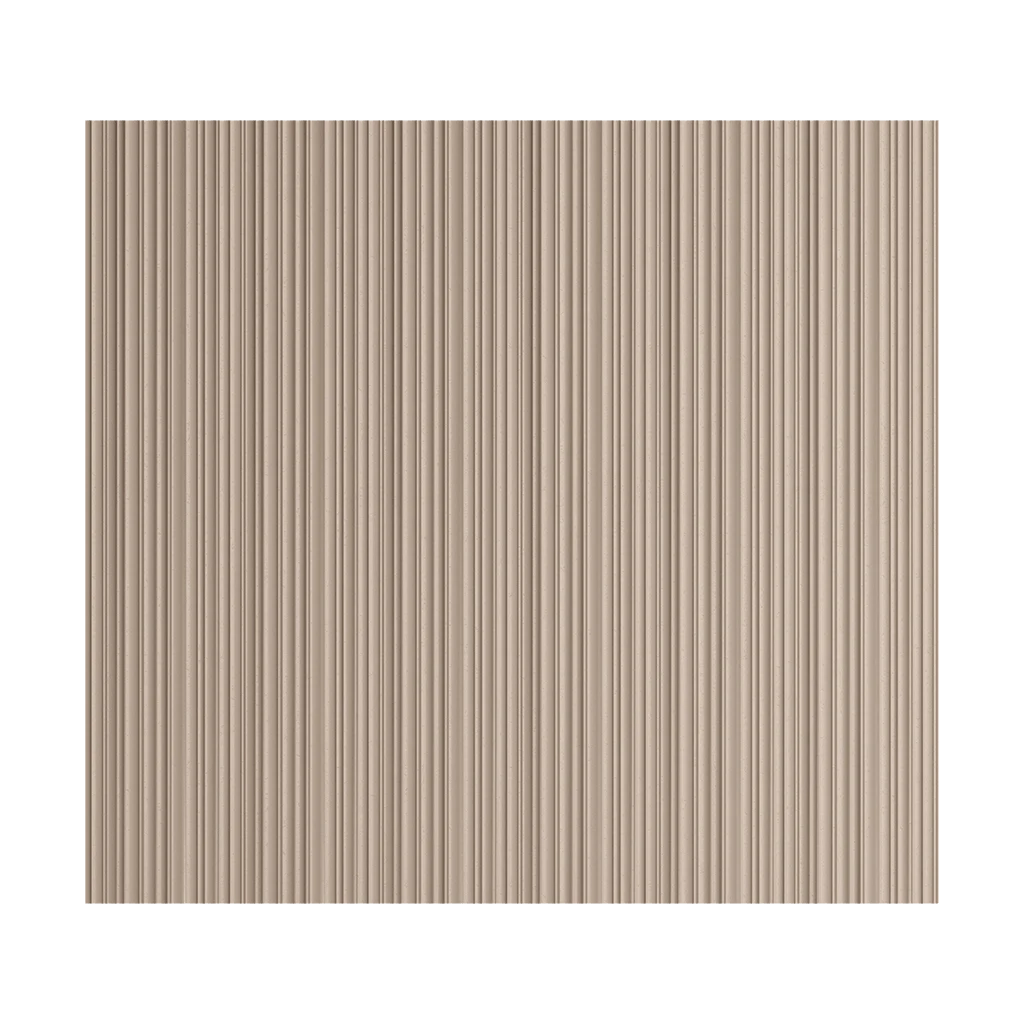
MDF slatted panels for paintingIn the STAVROS catalog — these are rigid modules on an MDF substrate with precise factory geometry, profiles include rectangular, semi-circular, and trapezoidal, available in standard and HMR variants for high-humidity environments. The ready-to-paint, uncoated surface is suitable for any enamel — including RAL and NCS. Solutions for walls, ceilings, furniture fronts, TV zones, offices, and commercial interiors.
FAQ: Popular questions about MDF slatted wall panels
What to use for painting MDF panels?
Alkyd or acrylic enamel with good coverage is the optimal choice. Water-based wall paint is not suitable: insufficient abrasion resistance and poor coverage on smooth surfaces. Before painting — light sanding with P180 sandpaper and one coat of enamel primer.
How many coats of paint should be applied to MDF?
For dark and saturated colors — at least two coats of enamel after primer. For white and light neutrals — one coat may be sufficient with good paint coverage. Each coat dries according to the paint manufacturer's instructions.
Can already installed MDF panels be repainted?
Yes. This is one of the main advantages of MDF: no need for removal. Sand the old finish with sandpaper, apply primer, and repaint in a new shade. The wall gets a refreshed look without renovation.
How long will MDF panels last on the wall?
Under normal operating conditions in an enclosed space — 15–20 years. Resistance to mechanical damage is lower than that of solid wood, but for normal use — quite sufficient.
Can MDF panels be installed in an apartment with underfloor heating?
Underfloor heating is in the floor covering, panels are on the walls. There is no conflict. When installing on a frame with a technical gap from the skirting board — no restrictions.
Is ventilation needed behind the panels?
When installing on a frame with a gap — ventilation occurs naturally. When installing with adhesive directly to the wall — there is no ventilation gap, which requires a completely dry substrate.
MDF slatted panels and allergies: are there any risks?
MDF panels after painting have a closed surface — volatile resin compounds under the paint are practically not released. For sensitive rooms (children's room, bedroom), products with a low formaldehyde content certificate (class E1 or E0) are recommended.
About the company STAVROS
When working with interior finishing at the level of serious tasks — aesthetic, technical, architectural — the supplier ceases to be just a 'panel seller'. They become part of the result.
STAVROS is a Russian manufacturer of MDF and solid wood products for residential and commercial interiors. The company's range includes MDF slatted panels for painting, HMR options for wet areas, rigid constructions on MDF backing with various bead profiles, as well as accompanying wooden and MDF moldings: moldings, cornices, skirting boards — everything for creating a unified, architecturally complete interior finish.
STAVROS works with both private clients and designers, architects, and construction companies. The company's production standard is not just a slogan, but precision in geometry, stability of slat spacing, and material quality that is visible on the finished wall. This is exactly why the brand is chosen by those who value not only a beautiful sample but also a convincing result in the actual project.