Article Contents:
- What Are Doorway Casings and Why Are They Needed
- Types of Doorway Casings
- Flat architraves
- Profiled architraves
- Decorative and shaped architraves
- Solid wood architraves
- Carved Casings for Decorative Openings
- Why Wooden Doorway Casings Are One of the Best Solutions
- How to Choose Doorway Casings
- By width and profile
- By Opening Type
- By material
- By interior style
- By Combination with Frame, Extension, and Molding
- Casings for Interior Door Openings
- Which architraves are most often chosen for interior doorways
- Doorway with and without a door
- Architraves for a doorway without a door
- Which architraves to choose by style
- For classic interiors
- For light interior
- For a dark interior
- For a decorative opening
- For an interior with moldings and trim
- How to complement architraves for doorways
- Mistakes when choosing architraves for doorways
- Where to buy architraves for doorways
- Systematic approach: why it is important
- What to look for when buying
- Price benchmarks
- Why STAVROS is suitable for door frame decoration
- Conclusion
- FAQ: frequently asked questions about door frame architraves
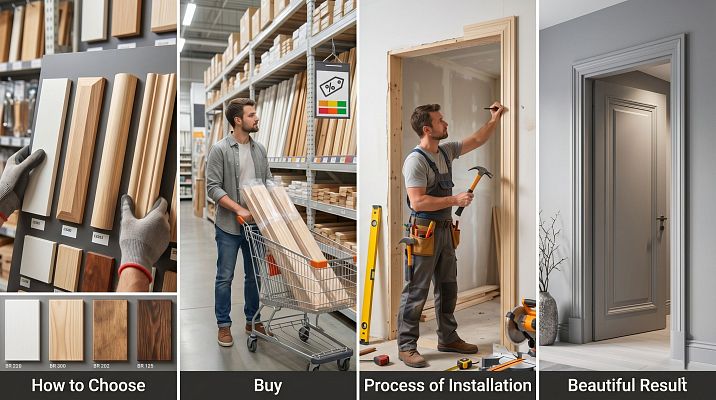
There are things you don't notice right away—but their absence is felt instantly. Door casings are exactly like that. Without them, even an expensive door looks unfinished: the joint between the wall and the frame is visible, the opening without a trim seems 'bare,' and the interior appears hastily assembled. With the right framing, everything changes. The opening gains a clear outline, the wall and door become a unified whole, and the interior feels complete.
Today, you can buy door frame architraves in a wide range: from minimalist flat strips to rich carved frames made of solid wood. But the issue isn't just availability—it's about precise selection: which profile, which width, which style, how to coordinate with other trim and the interior.
This article is written precisely for that—so you don't just buy door casings, but choose them correctly: with consideration for style, proportion, and long-term visual impact. We'll pay special attention to wooden door casings—as the most expressive and durable solution.
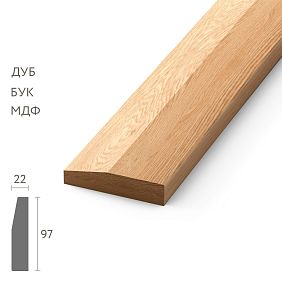


What are door frame architraves and why are they needed
A direct answer—in several dimensions simultaneously.
Functional purpose. There is always a technical gap between the door frame and the wall: it's needed for installation, compensation for shrinkage, and thermal expansion. This gap is filled with mounting foam, but the joint itself remains exposed. Door frame architraves for finishing the opening precisely cover it—neatly, with a clean edge, without visible installation marks.
Decorative purpose. A flat strip or profiled trim around the opening isn't just about 'covering a hole.' It's a frame that structures the wall, highlights the opening, defines its scale and stylistic language. Door frame architraves for decorating the opening are an interior element just like baseboards, moldings, or cornices.
Interior completeness. A door opening without framing is a point of incompleteness that draws the eye. Framing a door opening with architraves closes the line of walls and floor, making transitions between rooms clean and architecturally clear.
Thermal and sound insulation. An additional but real plus: the casing presses the gap between the frame and the wall, reducing draft and lowering sound permeability at the transition.




What types of door casings are there
Understanding the assortment means saving time and money. There are several types, each with its own logic of application.
Our factory also produces:


Flat casings
The simplest type: rectangular cross-section, minimal relief, clear geometry. Flat casings are the choice for minimalist and modern interiors. They do not distract attention from the door, do not create extra volume, are easy to install, and pair well with straightwooden moldings.
The width of flat casings is typically 40–80 mm. The optimal choice for doors in loft, Scandinavian, or Japanese minimalist styles.
Get Consultation
Profiled casings
Profiled casing is already about volume: bevel, fillet, rounded or stepped profile. It is precisely such casings that create that characteristic 'door' look familiar in classic interiors. The profile adds relief, plays with light and shadow—the door opening becomes an architectural accent, not just a transition.
Wooden trimwith a profiled cross-section is the basis of classic framing. The width of profiled casings: 50–120 mm, depending on the scale of the door and interior.
Decorative and shaped architraves
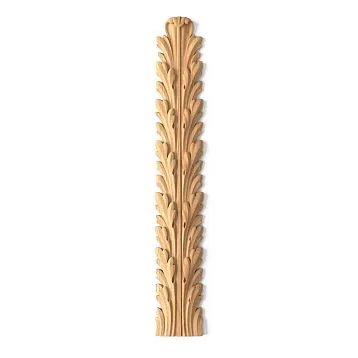
Decorative door casings are a level above. Figural profile, pilasters, arcature, elements of the classical order system. Here, the casing ceases to be just a strip and becomes an element of architectural design.
Decorative elements for doors— corner blocks (rosettes), 'ears', pilaster inserts—complement such casings, creating a full-fledged door portal.
Wooden solid wood trims
Wooden door casings are a separate category in terms of execution level. Solid wood provides real volume, living texture, a sense of 'heavy' architecture.Solid Wood Itemsaccept any finish — from transparent oil to opaque enamel — and last for decades.
For classic and neoclassical interiors, for studies and living rooms with high ceilings, for solid wood doors — wooden door casings for doorways are the only organic solution.
Carved casings for decorative openings
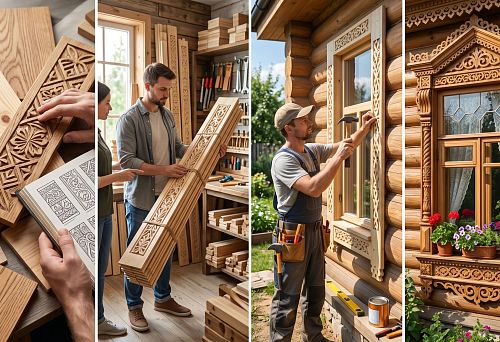
Carved casings for doorways are the highest level of decorative finishing. Floral patterns, geometric weaves, classic motifs — carving transforms a doorway into an artistic object.
wooden door decorin the form of applied carved elements allows creating a frame of any complexity — from a moderate classic profile to a rich Baroque portal.
Why wooden casings for doorways are one of the best solutions
The market offers casings made of MDF, PVC, eco-veneer, polyurethane. Why does solid wood remain unrivaled?
Natural material — natural result. Wood in the interior does not imitate texture — it creates it. Buying wooden casings for doorways made of solid wood means getting a product that behaves tactilely, visually, and acoustically like real wood, not a copy of it.
Durability without 'aging'. Properly treated solid wood does not yellow, delaminate, or warp with humidity fluctuations as laminate or PVC does.Wooden itemsare restored locally: a scratch on solid wood can be sanded and repainted without replacing the entire element.
Finishing flexibility. Wooden door architraves accept any coating: white enamel, antique patina, oak stain, fumed color, open oil — every option delivers a predictable and beautiful result. When changing interior concepts, repainting is sufficient instead of replacing the architrave.
Systematicity. Buying solid wood architraves for doorways in the same wood species as Wooden moldingon walls,Wooden baseboardandwooden cornice — means creating an interior system where every element contributes to the overall result.
Eco-friendliness. A relevant argument: in enclosed spaces, wood doesn't emit volatile compounds like some synthetic materials. wood trim itemsmade of solid pine, oak, or larch — is the choice of those who care about indoor air quality.
Visual 'weight'. A wooden architrave creates that degree of visual heaviness which makes the doorway a significant element of the space. Synthetics are typically 'light' — and this is their main aesthetic drawback in interiors aspiring for quality.
How to choose architraves for doorways
This isn't a matter of taste — it's a matter of system. Let's examine each criterion separately.
By width and profile
How to choose architraves by width — there's a clear rule: the architrave width must cover the gap between the frame and wall with a margin of at least 5–10 mm on each side.
Approximate values:
-
Standard door, ordinary wall: architrave width 50–70 mm
-
Wide opening or thick wall: 70–100 mm
-
Representative interior, classic: 90–130 mm and more
By profile:
-
Flat (rectangular cross-section): minimalism, loft, contemporary
-
With bevel: neutral option, suits most interiors
-
Semi-circular (oval) profile: soft lines, romantic or Provence styles
-
Stepped, classic profile: strict classic, neoclassical, empire
By opening type
How to choose door architraves for a doorway considering its configuration:
| Opening type | Recommendation |
|---|---|
| Standard rectangular | Any type of casing. Focus on the style |
| Archway opening | Bent or composite casing along the arch radius |
| Opening with extension | Consider extension thickness when choosing width |
| Wide opening (from 100 cm) | Wide casing (from 80 mm) or pilaster framing |
| Narrow opening (up to 60 cm) | Casing 40–60 mm, do not overload the space |
| Opening without a door | Decorative architraves with elements, rosettes on corners |
By material
Three real options for interior architraves:
-
Solid wood: the best choice for durability and aesthetics. Optimal species are pine (for painting), oak (for oil or tinting), larch (high moisture resistance). Oak architraves for a door opening are a premium option with a pronounced structure and natural hardness.
-
MDF with lamination or enamel: a more affordable option, looks good for painting. But less resistant to mechanical damage and moisture compared to solid wood.
-
PVC: moisture-resistant, cheap, for bathrooms and technical rooms. In living areas — for enthusiasts.
By interior style
How to choose architraves for door openings from a style perspective — follow the principle: the architrave should be an 'echo' of the interior, not shout about itself separately.
-
Classic, neoclassical: profiled wooden architrave with molding framing, corner rosettes
-
Provence, country: wide architrave with a soft profile, white or cream enamel
-
Loft, industrial: flat architrave without a profile, dark or metallic
-
Scandinavian style: white or light gray, narrow, minimal relief
-
Art Deco: geometry, color contrast, clear rectangular profiles
In combination with the door frame, extension jamb, and trim components
How to systematically frame a doorway with casings is the most important question. Casing does not exist separately. It is part of a system:
-
Door frame — the casing should organically continue its line. Ideally — the same wood species and the same finish.
-
Extension jamb — if the wall thickness is greater than the depth of the door frame, the extension jamb fills the gap. The casing 'sits' on top of the extension jamb. Important: width of extension jamb + width of door frame ≤ width of casing with a margin.
-
Baseboard — at the point where the casing meets the baseboard, there should be no conflict. Either the casing overlaps the baseboard, or a 'corner block' — a decorative block — is used.Wooden baseboardmade from the same wood species as the casing — is the ideal solution.
-
Wall moldings — if there are wall moldings in the interior, the casing profile should be coordinated with them. A too contrasting profile will create a stylistic break.
Casings for interior door openings
Casings for interior door openings — the most common application scenario. Every interior doorway in a house is a transition between spaces, and it is precisely here that it is important for the framing to function simultaneously as functional finishing and as an interior design element.
Which architraves are most often chosen for interior passageways
Which architraves to choose for an interior doorway — three most common scenarios:
Scenario 1. A unified style throughout the apartment. One type of architrave, one wood species, one finish — on all doors. This is the most architecturally correct approach. Unity creates a feeling of a designed, not assembled space.wood trim itemsin a unified system — architraves, skirting boards, moldings — provide exactly this effect.
Scenario 2. An accent opening. The main opening (for example, to the living room or study) is decorated with greater richness: a wide architrave, decorative corner blocks, a more complex profile. The other openings are simpler. This creates a spatial hierarchy.
Scenario 3. Mixed interior. Different rooms are decorated in different styles — then architraves for an interior door opening may differ in style, but must be coordinated in color and wood species.
Opening with a door and without a door
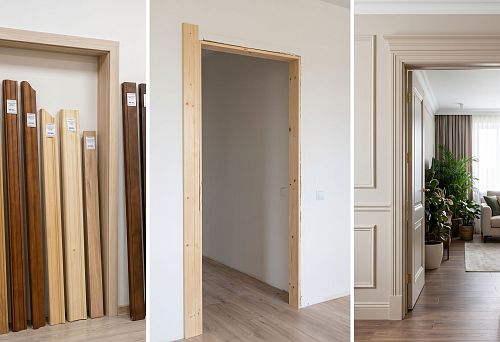
When a door is installed, the architrave is mounted on both sides of the opening — 5 strips per door (2 side strips on each side + 1 top strip on each side + 1 combined or 2 separate depending on the scheme). You need to buy architraves for an interior opening with the calculation of a full set for each door.
Architraves for a doorway without a door
One of the most popular practical questions: how to frame an opening without a door with architraves. The answer is that it is not only possible but also architecturally justified.
When is this needed?
-
Open passage between living room and dining room, kitchen and living room, corridor and hall
-
Opening where a door is planned but not yet installed
-
Decorative opening as an element of space zoning
-
Arch opening that itself serves as an architectural accent
How to properly finish an opening without a door?
Without a door frame, the casing is mounted directly on the reveal or on a thin wooden backing. The key is to finish the top corners. This is exactly whatDecorative elements for doorsare used for: corner blocks, rosettes, 'ears' — they cover the joint of the vertical and horizontal casing and make the opening visually complete.
Casings for finishing a passage between rooms without a door work in two modes:
-
Light framing (narrow casing 40–60 mm, flat profile): emphasizes the opening without weighing it down
-
Rich framing (wide casing 80–120 mm, decorative profile, corner blocks, pilasters): transforms the opening into an architectural object — a 'portal'
Buying framing for a door opening without a door means selecting casing, corner blocks, and, if necessary, a decorative crossbar.wooden door decorin the form of overlay elements will provide the necessary accents.
Which casings to choose by style
Interior style is the main coordinate in the choice. Let's break it down by key directions.
For a classic interior
Classicism is about strict proportions, symmetry, profiled elements with recognizable order logic. Classic casings for door openings made of solid oak or ash with a multi-level profile, corner blocks with rosettes — this is the 'language' of classicism.
Here, the detail is important: in a classic interiorDecorative wooden moldingson walls andwooden corniceunder the ceiling should be coordinated with the casing profile. Only then does the interior look designed.
For a light interior
Light interiors — white enamel, milky shades, cream tones.Wooden casingunder white enamel based on solid wood is not a compromise, but a deliberate choice. White wooden casings provide the necessary relief (the profile is visible by shadow) without a color accent.
Beautiful door casings for doorways in a light interior — profiled molding with a soft rounded section for white or cream enamel.MDF Skirting Boardor a wooden baseboard for the same enamel completes the system.
For a dark interior
Dark interiors — wood in wenge, stained oak, or blackened walnut tones. Decorative door casings for doorways with dark tinting — this is severity, weightiness, a 'masculine' character of the space. The profile here can be more complex: stepped, with clear edges.
Tip: in a dark interiorWall wood molding — horizontal arrangement that can run at the level of a chair back, window sill, or mid-wall. Molding divides walls into horizontal zones, creates rhythm, and structures space.in the same tint as the casing creates an enveloping dark 'cocoon' — one of the most expressive interior techniques.
For a decorative opening
Casings for an opening in a classic interior with a high ceiling — this is a place for a decorative statement. Pilasters with carved capitals, a wide profile, corner cornice blocks,Wooden furniture corniceabove the opening — all this turns the doorway into an architectural dominant.
For an interior with moldings and profiled trim
If wallWooden moldingspanels,Wooden trim— the casing should 'speak' the same language as them. The casing profile is taken from the same series as the wall moldings or coordinated in scale and pattern.
For such interiors, it is especially important to be able to choose trim for the door opening from a single catalog with casings and moldings.
What to complement door casings with
Rule of interior decor: one element works well, but a system works better. What to buy together with casings?
Molding.Wooden moldingson the walls — an extension of the casing's language throughout the room space. Profile strips create rectangular 'frames' on the walls, set the scale, and make the interior more voluminous. Buying moldings and casings for the door opening in a unified style means achieving a cohesive interior look.
Molding.Trimming Items— baseboards, glazing beads, coving, cover strips — connect the casings with other surfaces. Trim of the 'same blood' as the casing makes the interior professionally executed.
Decorative elements.wooden door decorin the form of applied rosettes, corner blocks, capitals, and medallions gives the opening decorative richness without altering the main casing. This is the most flexible tool for enriching the framing.
Cornices.wooden corniceabove the door opening — a horizontal 'frieze' that completes the framing from the top. This is a technique characteristic of tall classical interiors. A wooden cornice above the door visually raises the opening and enhances the feeling of ceiling height.
Baseboard.Wooden baseboard— the lower point of the framing system. It closes the line of the wall and casing at the floor. The coordination of the baseboard with the casing is something even people far from design notice.
Carved decor.Door Decorationin the form of applied carved elements — overlays, ornaments, rosettes — can be used both on the door leaf itself and on the framing. This is the highest level of decorative richness.
What to buy together with architraves — the system minimum:
-
Wooden molding— for walls
-
Wooden baseboard— for the floor
-
wooden cornice— above the opening
-
Decorative elements for doors— corner rosettes
-
wood trim items— for joints and transitions
Mistakes when choosing architraves for door openings
Experience shows: most mistakes are made even before purchase. Let's examine the five most common ones.
Mistake 1. Too narrow architraves. An architrave 30–40 mm wide on a standard opening with a 10–15 mm gap does not completely cover the joint. Plus — it looks visually weak. Which architraves are better for a door opening in terms of width: minimum 50 mm, optimum — 60–80 mm for standard conditions.
Mistake 2. Inappropriate profile style. A rounded 'romantic' profile in a minimalist space creates a style conflict. How to finish a door opening should be determined by the interior style, not by what was available or cheaper.
Mistake 3. Lack of connection with the baseboard. One of the most common visual mistakes: different profiles for the casing and baseboard in the same space. This is always noticeable and always spoils the impression. How to choose casings for the interior considering the baseboard: take both elements from the same catalog, the same series.
Mistake 4. Weak combination with the door frame. Dark frame + white casing is a contrast that should be done consciously, not by accident. If the goal is unity, then the frame and casing should be the same color or at least the same color temperature.
Mistake 5. Choosing based only on price. Casing is a long-term element. Replacing the casing after 2-3 years because cheap MDF delaminated or the coating peeled off will cost more than buying a quality wooden one right away. How to properly finish a door opening with casings is always an investment, not a saving.
Where to buy casings for door openings
The correct answer is from a supplier who has not only casings but everything that works with them in the system, all in one place.
System approach: why it's important
Ordering casings for door openings from a supplier with a full catalog of moldings, trims, and decorative elements is the only way to guarantee the result. When casing, baseboard, and molding are from different places, there is always a risk of mismatched profile, color, or wood species.
Casings for door openings from the manufacturer — transparency regarding material, predictable quality, possibility of custom order.
What to look for when purchasing
-
Material: solid wood vs MDF vs PVC. For living spaces — solid wood or quality paintable MDF.
-
Profile: does it match the interior style. View in context, not as a separate sample.
-
Width: at least 50 mm, optimum for the specific gap.
-
Processing quality: smooth surface, clear edges, no splintering.
-
System availability: whether the catalog includes skirting boards, moldings, cornices of the same series.
Price Benchmarks
| Product type | Material | Approximate price |
|---|---|---|
| Flat architrave (linear meter) | MDF | 150–400 rub. |
| Profiled architrave (linear meter) | Spruce | 350–800 rub. |
| Profiled architrave (linear meter) | Oak/ash | 900–2,500 rub. |
| Decorative carved architrave (linear meter) | Oak | 1,500–5,000 RUB |
| Corner block / rosette | Wood | 400–2,000 RUB |
| Set for one door (2 sides) | Spruce | 2,500–7,000 RUB |
| Set for one door (2 sides) | Oak | 6,000–25,000 RUB |
How much do architraves for doorways cost for an apartment with 5 openings: from 15,000 to 80,000+ RUB depending on material, profile, and number of decorative elements.
A catalog of architraves for doorways with prices must include exact dimensions of each profile, photos from real projects, and information on available wood species — without this, making the right choice is difficult.
Why STAVROS is suitable for decorating doorways
STAVROS is a manufacturer of wooden interior products, where door frame finishing is not a separate item, but a system.
In the catalog:Wooden casing, Wooden molding— for walls,wooden cornice for horizontal completion of the opening,Decorative elements for doorsfor corner accents,Wooden baseboard for the bottom line, andwood trim items for finish transitions — all made from solid wood, all in a unified style, all with the possibility of custom order.
This means: one catalog — a complete system for finishing a door opening. Without searching for different suppliers, without the risk of profile mismatches, without compromises on quality.
Open theCatalog of solid wood items or go to the sectionDoor Decor and select a solution for your opening — from casing to finish trim in a unified system.
Conclusion
Door casings are an element that works simultaneously for function and aesthetics. They cover the installation joint, define a clear contour for the opening, and integrate the door into the interior as an architectural object.
The best result is systematic: casings + moldings + baseboard + cornice + decorative corner elements from one catalog, one wood species, in a unified stylistic logic. That is when a door opening stops being 'just a passage' and becomes a full-fledged architectural statement within the home.
STAVROS offers exactly this approach — fromwooden moldingtowooden cornice—moldingtowooden decorative elements— all from solid natural wood, all within the system, all with the possibility of custom sizing.
FAQ: frequently asked questions about door casing
Which casing is best to choose for an interior doorway?
For interior doors, a profiled wooden casing with a width of 60–80 mm is optimal. It covers the standard installation gap, creates sufficient visual relief, and fits well with most interior styles — from classic to neoclassical.
Can casing be installed on a doorway without a door?
Yes, and it is architecturally justified. Casing for an open passage is mounted on the reveal or a thin backing. The upper corners are covered with decorative corner blocks or rosettes. The result is a neat, visually finished transition between rooms.
How to correctly choose the width of the casing?
Minimum guideline: the width of the casing should cover the gap between the frame and the wall with a margin of 5–10 mm. The standard gap width is 10–20 mm, meaning casing from 50 mm. For larger doors, extensions, or arched openings — from 70 mm and above.
Is it necessary for the wood species of the casing and the door leaf to match?
For maximum visual impact — preferably. If the door leaf is oak — an oak casing will create texture unity. But with different finishes (e.g., dark leaf + white casings), matching the wood species is not necessary.
How to join the casing with the baseboard in the lower corner?
Two solutions: a 'corner block' (an angled block installed at the intersection point, covering the joint of the casing and baseboard) or overlapping the casing behind the baseboard (the casing is installed first, the baseboard fits tightly against it). The first option is aesthetically cleaner.
How many strips are needed for one door?
For one side of the door — 3 strips: 2 vertical + 1 horizontal (top). A standard door height is 2 m: two vertical casings of 2.1–2.2 m and one horizontal casing the width of the leaf. If finishing both sides — multiply everything by two.
Can you install door casings yourself?
Yes. Installing casings is one of the most accessible types of carpentry work. You will need a miter box (for 45° angled cuts), PVA glue or liquid nails, finishing nails, and putty for filling the fastening points. The main thing is precise 45° cuts at the corners.
What are the advantages of wooden casings over MDF?
Solid wood is denser, stronger, and holds finishes better. Angled cuts on solid wood yield a cleaner cut, ends do not delaminate. If damaged, solid wood can be locally restored, MDF cannot. When wet (e.g., at an entrance door), MDF swells, wood — significantly less with proper treatment.