




































































Article Contents:
- What are wooden door architraves and why are they needed
- Constructive role
- Decorative role
- Unifying role
- Types of wooden door architraves
- Flat wooden architraves
- Profiled architraves
- Decorative and shaped architraves
- Carved wooden door architraves
- Solid Wood Casings
- Why wooden architraves are one of the best solutions for a door
- How to choose wooden architraves for doors
- By door type
- By width and profile
- By material
- By color and finish
- By interior style
- Wooden architraves for interior doors
- Wooden architraves for door frames and doorways
- Which wooden architraves to choose by style
- For classic doors
- For light doors
- For dark doors
- For decorative door framing
- For doors in interiors with moldings and trim
- How to complement wooden door architraves
- Mistakes when choosing wooden door architraves
- Where to buy wooden door architraves
- What to look for when choosing a supplier
- Ready-made or custom order
- Why STAVROS is suitable for choosing wooden door architraves
- Conclusion
- Frequently Asked Questions (FAQ)
A room door is more than just a rectangular panel in a wall. It's a transition, a frame, an architectural gesture. And it's precisely in this transition zone—between the frame and the wall—that a detail lives, which is either chosen thoughtfully or taken as 'what was available,' and later regretted. We're talking about wooden door architraves: those very planks that, when chosen correctly, transform a doorway into a complete interior element, and when chosen incorrectly—leave a feeling of something unfinished.
Buying wooden door architraves today is not difficult. What's harder is choosing correctly: by width, wood species, profile, door style, and overall interior logic. That's why this article is not just a list of facts, but a practical guide. Here is everything about what types of wooden door architraves exist, how they work, how to choose them, how much they cost, and where to get them.
If you're currently deciding on this issue—you're in the right place.



What are wooden door architraves and why are they needed
The question seems simple, but it has several layers of meaning.
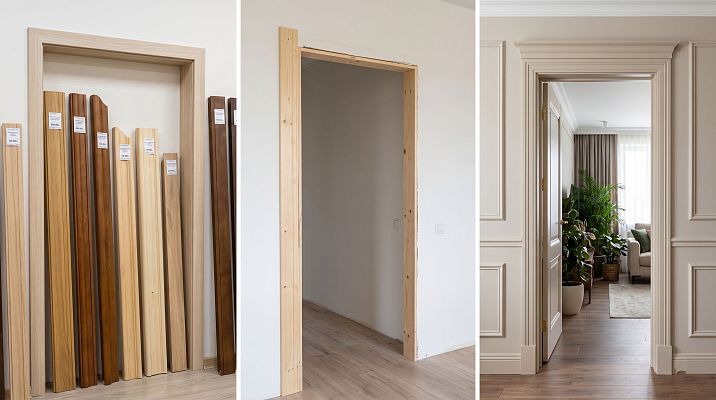
Wooden door casings are overlay profiled strips made of natural wood, mounted around the perimeter of the door opening on both sides of the wall. They cover the installation joint between the frame and the wall, hide gaps, mounting foam, uneven slopes—and simultaneously create a visual 'frame' around the door.




Constructive Role
Wooden casings for a door opening function as a finishing element of installation: without them, the door structure is technically installed but not completed. An open joint spoils the appearance, collects dust, lets air through, exposes the mounting foam, which yellows and crumbles. The casing is the purity of execution.
Our factory also produces:





Decorative role
Wooden casings for door design are a designer's tool. The profile shape, strip width, coating color, presence or absence of carving—all this influences the perception of the door and the entire space around it. A properly chosen casing makes the door look 'more expensive' visually, and in combination with moldings, cornices, and trim—creates a cohesive interior ensemble.
Get Consultation
Unifying role
A good wooden door casing connects the door leaf with the rest of the space: it can match the floor color, echo wall moldings, harmonize with the baseboard. It is the thread that sews the door into the overall fabric of the interior.
What types of wooden door casings are there
The assortment is wide. But it's not difficult to understand if you know the key differences.
Flat wooden casings
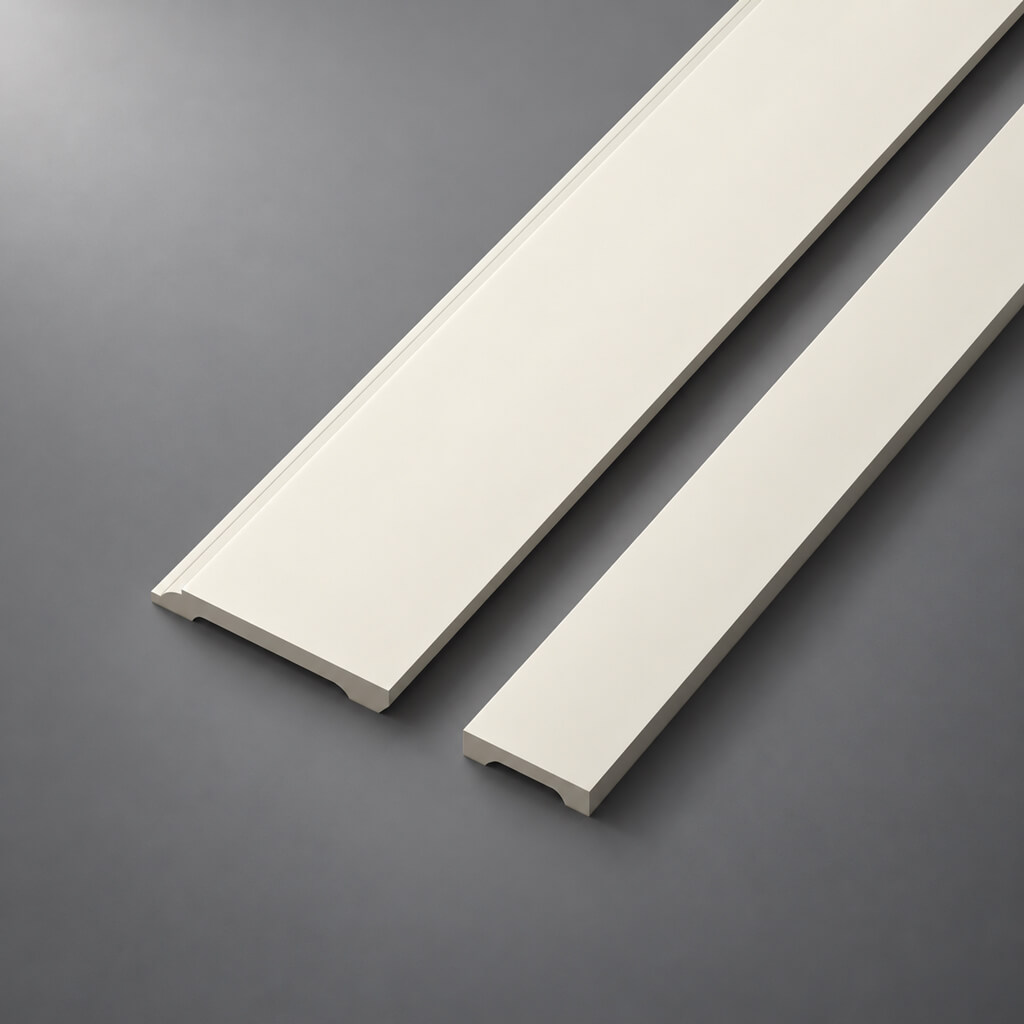
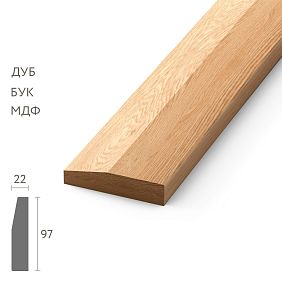
The most laconic type: a flat board of rectangular cross-section without a profile or with a minimal chamfer. Flat wooden casings are the choice of those who value pure geometry: minimalist interior, Scandinavian style, modern classic without stucco. Installation is simple, the profile is universal, painting in any color—without restrictions.
Width: from 40 to 70 mm for most doors. Made of pine for painting—the most popular budget option. Made of oak with oil-wax coating—a laconic premium.
Profiled casings
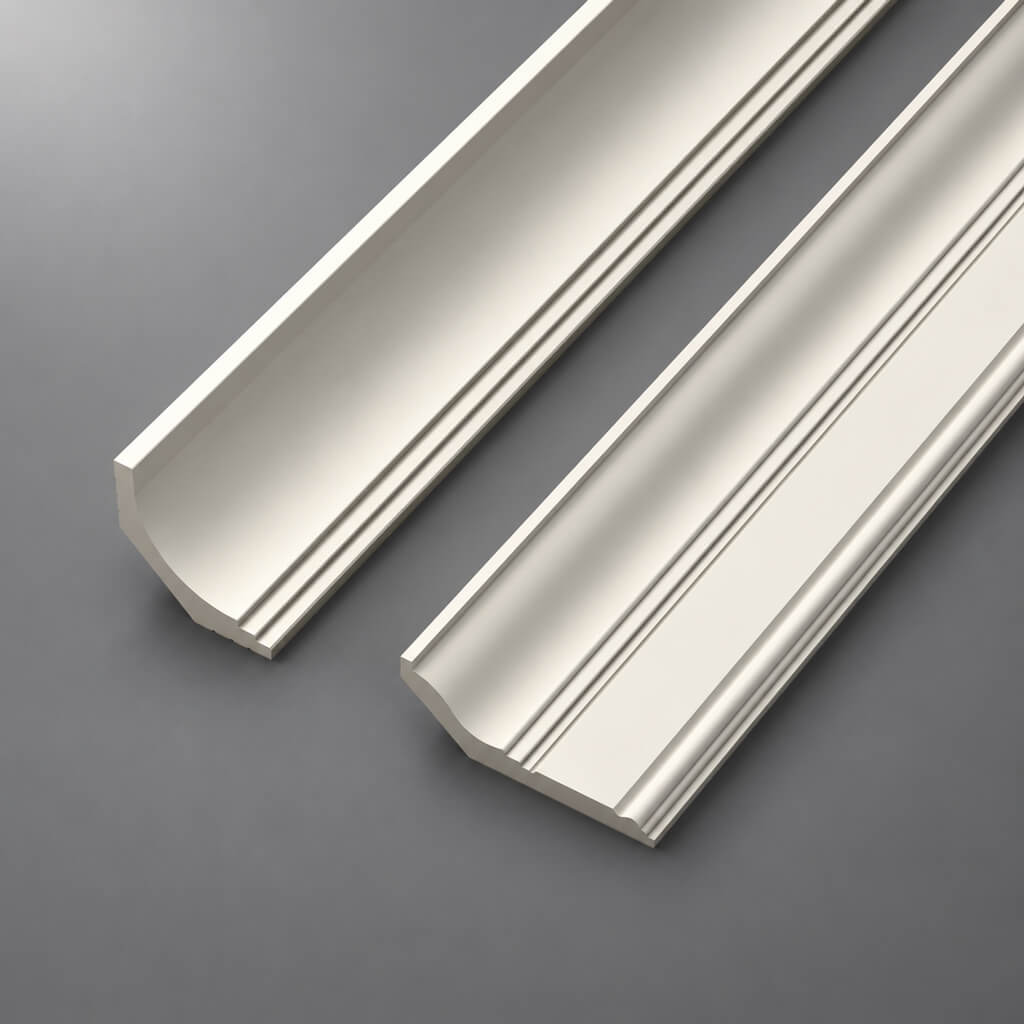
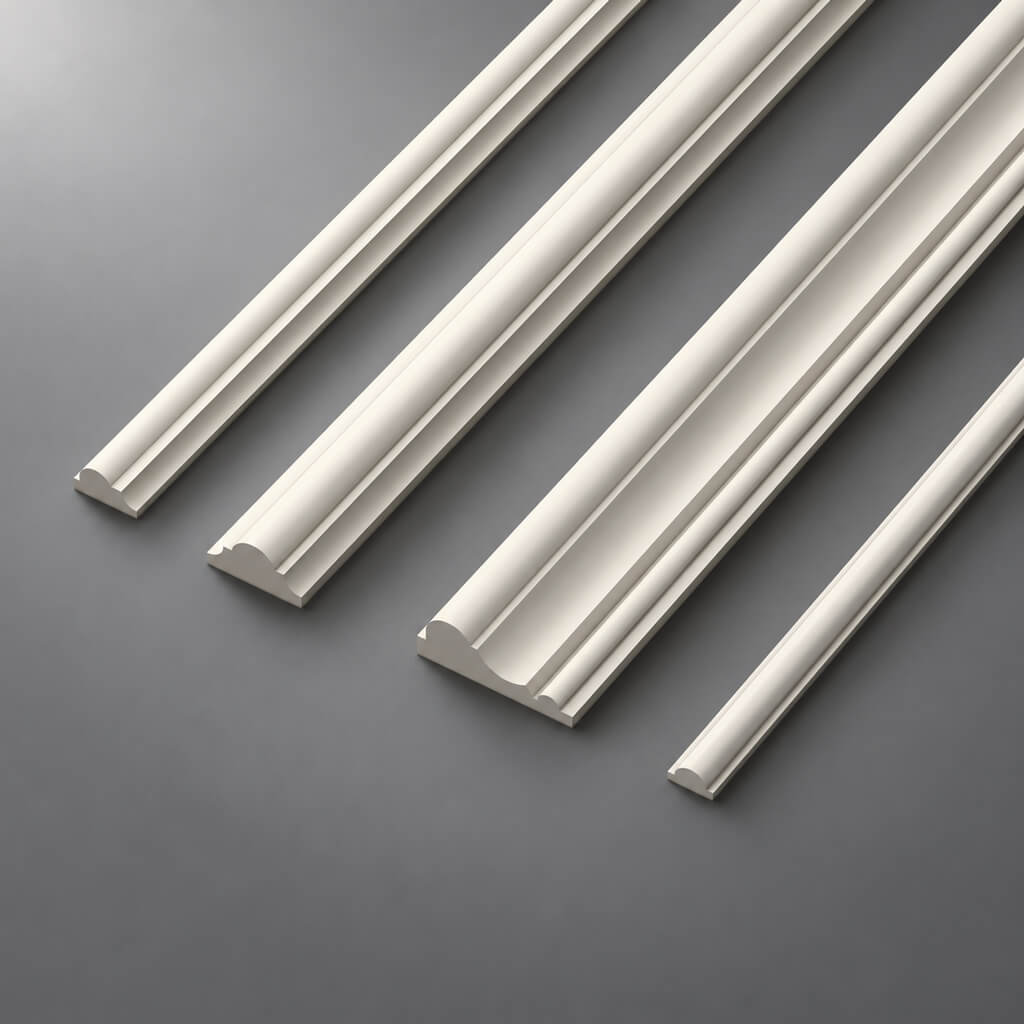
Stepped profile, beads, rolls, coves — profiled architrave creates a play of light and shadow that visually enriches the surface without a single ornament. Profiled wooden architraves for doors are the gold standard for most classic and semi-classic interiors.
The more complex the profile — the 'heavier' and richer the feel. A wide three-step oak profile under white enamel is already serious decorative weight.
Decorative and shaped architraves
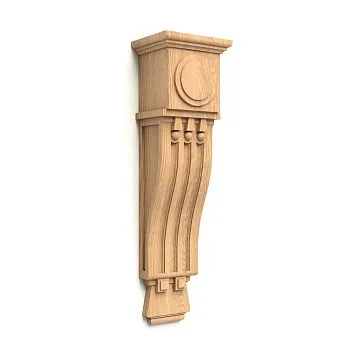
Decorative wooden architraves for doors are products with a non-standard cross-section: convex edge, curvilinear transitions, side coves, shaped finish. They work in classic, neoclassical, and Baroque interiors, where expressiveness is expected from every detail.
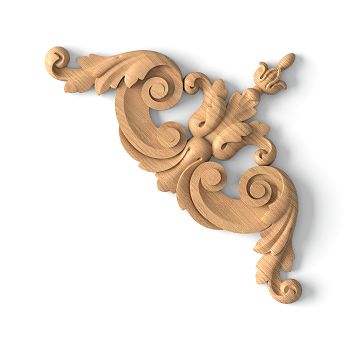
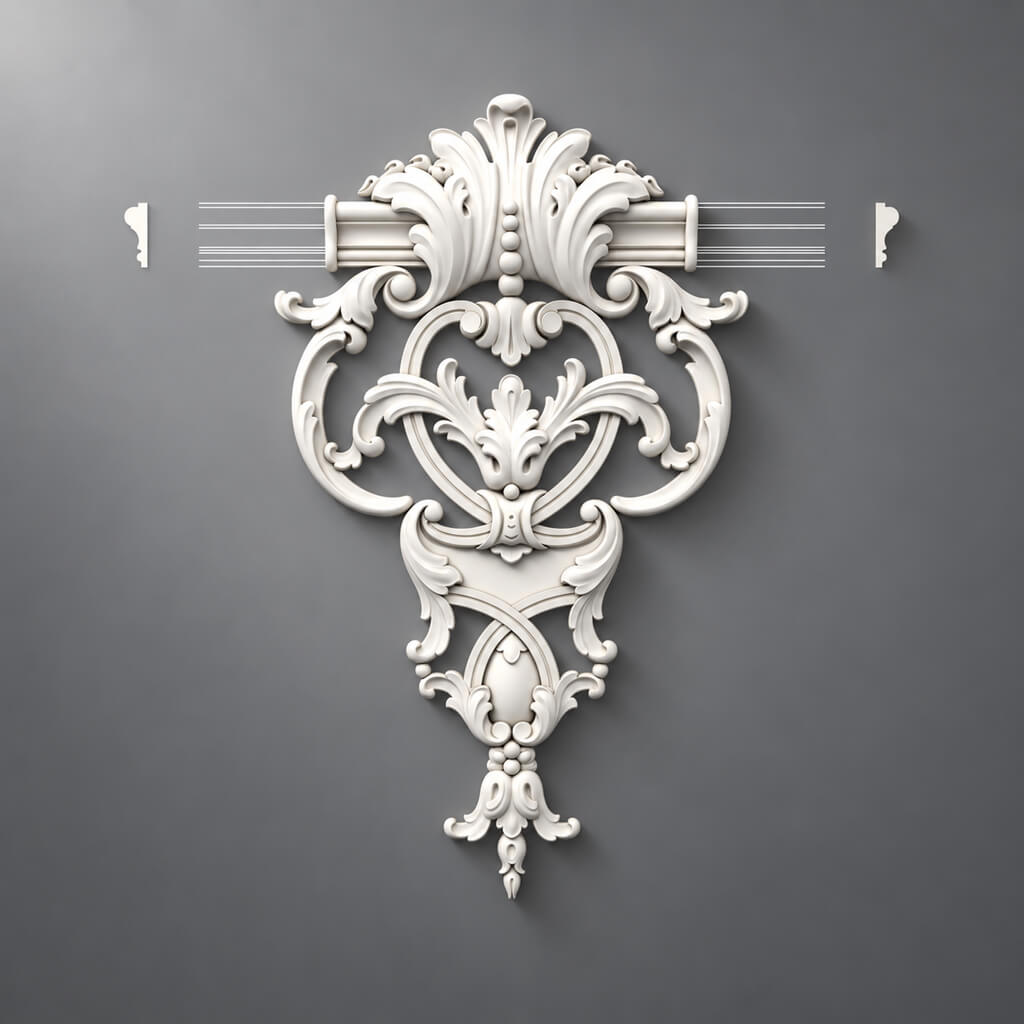
This category also includes architraves with an over-door element (pediment) or corner rosettes — when the door opening is designed as an independent architectural object.
Carved wooden architraves for doors
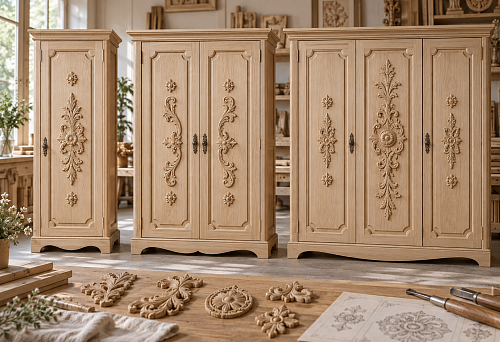
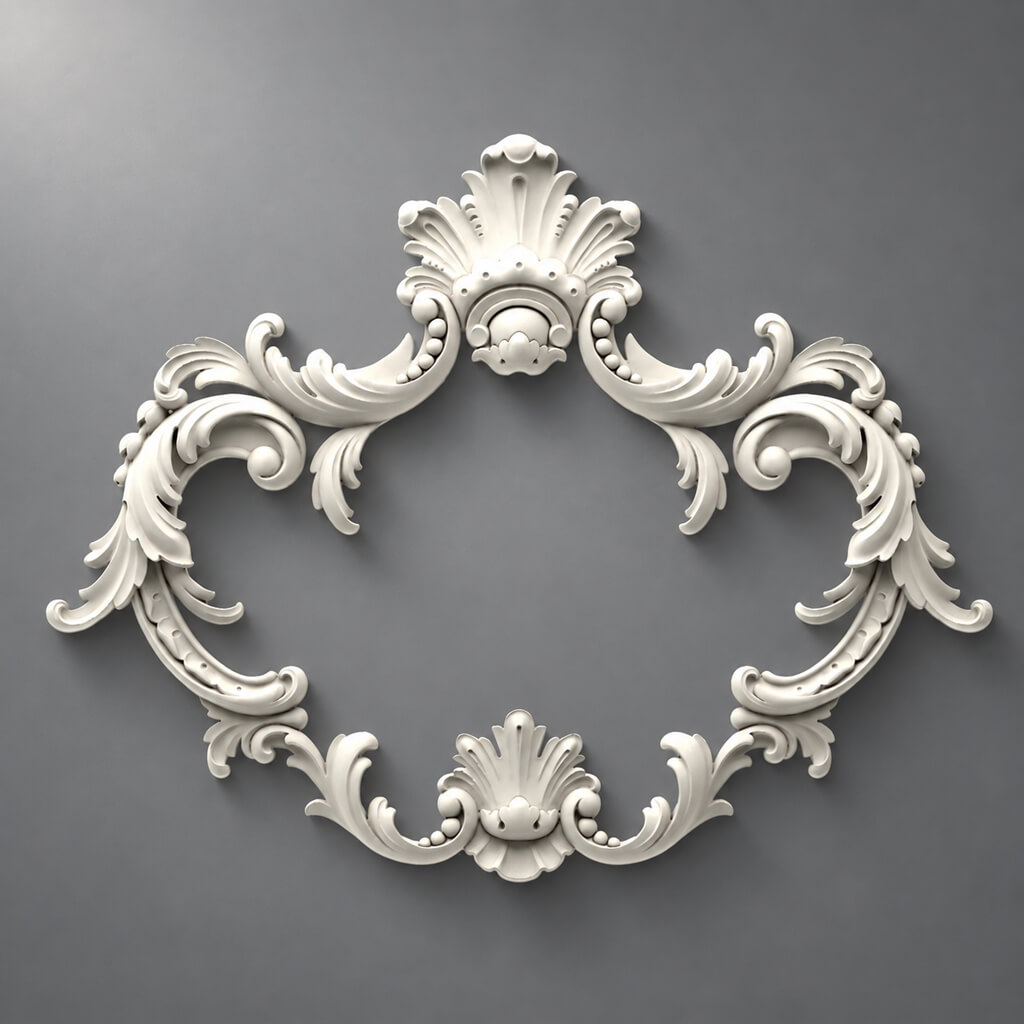
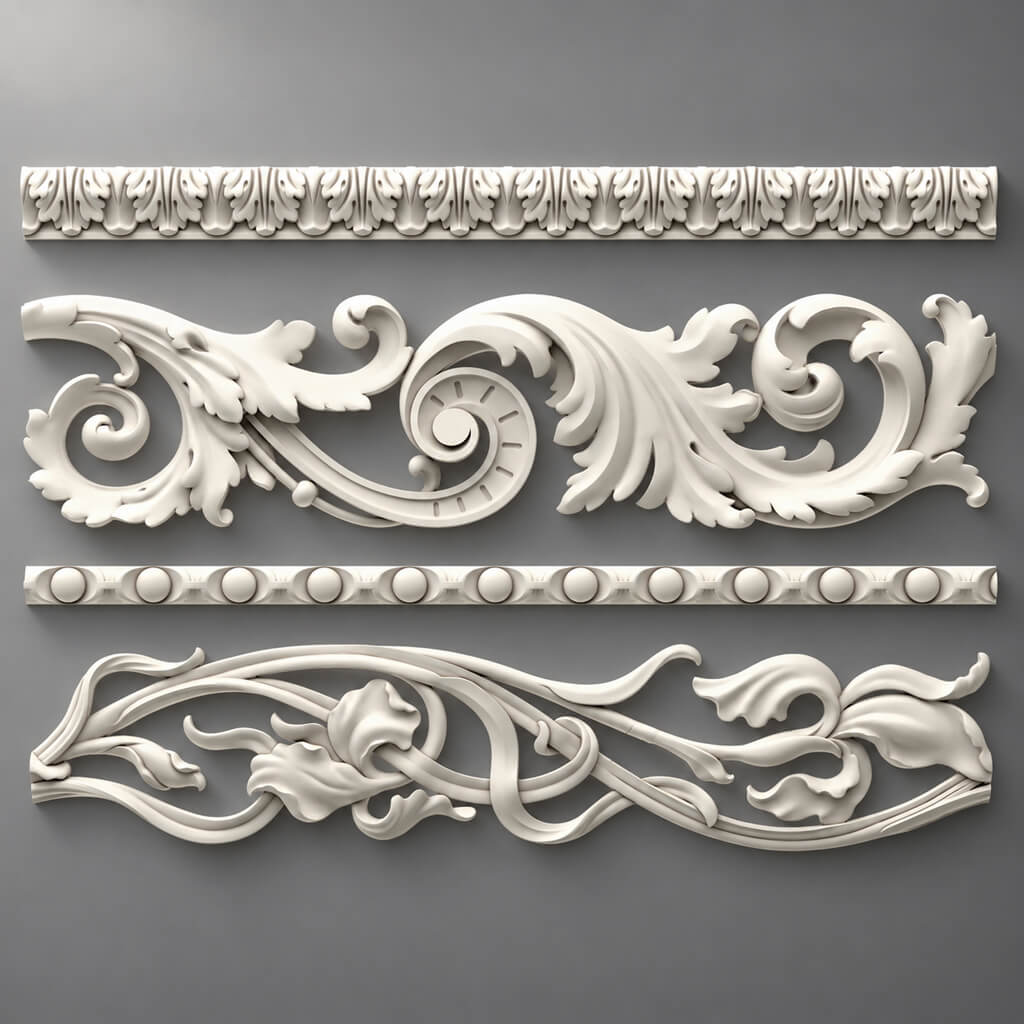
Carved wooden architraves for doors are the pinnacle of the decorative ladder. Milled or hand-carved ornament on the board surface: floral motifs, geometric patterns, classic acanthus leaves. Such an architrave is —Door Decorationin the full sense of the word: it turns the door opening into an artistic statement.
A carved architrave is appropriate in interiors with a pronounced character: classic, Empire, Russian style, rustic with an author's touch.
Solid wood architraves
Material is no less important than form. Solid wood architraves for doors are products made from solid or glued blanks without an MDF base. This is the only option that provides real tactile and visual 'density,' accepts any finish, and allows for restoration.
Wooden itemsSolid wood is a choice for years. The surface lives, breathes, and improves with age, rather than deteriorating.
Why wooden architraves are one of the best solutions for a door
The market offers MDF, PVC, aluminum, polystyrene. Why does solid wood deserve a separate discussion?
Living texture. Even a smooth oak architrave without profiling or carving looks different from any alternative. Wood fibers reflect light in their own way—depending on the angle of incidence, time of day, and air humidity. This quality cannot be replicated in synthetic materials.
Durability. Solid wood door architraves last for decades. Dense species like oak, beech, and ash hardly deform under normal indoor temperature and humidity fluctuations. MDF swells under moisture, and PVC yellows from UV exposure.
Repairability. A scratch, dent, or wear on a wooden architrave means sanding and repainting, not replacement.Solid Wood ItemsThey can be restored locally, without dismantling the entire element.
Flexibility in finishing. Wooden door architraves for painting are a universal choice: white enamel, colored enamel, tinting, stain, natural varnish with texture. Wood accepts any finish with precise, predictable results.
Compatibility with interior decor. The same solid wood is used to makeWooden moldings, wooden cornice, Wooden baseboardAn architrave made from the same wood species as all the millwork creates a unity that is instantly perceived as 'expensive'.
Naturalness and ecology. Wood is a material without toxic emissions, certified for residential spaces. In bedrooms, children's rooms, living rooms — this is not a marketing argument, but a real quality of the environment.
How to choose wooden door architraves
This is where most people make mistakes. Let's break it down by each parameter.
By door type
| Door type | Recommended casing type |
|---|---|
| Smooth panel, minimalism | Flat or with minimal profile, 50–70 mm |
| Classic door with milling | Profiled, 70–100 mm, from the same wood species |
| Solid oak door | Wide profiled or with carved decor, oak |
| Glass door | Narrow, up to 60 mm, simple profile |
| Entry door (interior part) | Wide, with pronounced profile, for a 'representative' look |
By width and profile
How to choose architraves by width: the architrave width should cover the mounting joint of the frame and extension with the wall with a margin of 8–15 mm on each side.
Practical guidelines:
-
Standard interior doors: architrave 60–80 mm;
-
Wide openings and classic doors: 80–120 mm;
-
Narrow openings in small rooms: 50–60 mm;
-
Representative doors in halls and living rooms: 100–140 mm.
The richer the profile, the narrower the bar itself can be — a complex cross-section inherently creates 'weight'.
By material
Choosing a wood species is about finding the balance between price, hardness, and decorative appeal:
-
Pine: affordable, easy to paint, lightweight for installation. Good for simple interiors and budget solutions;
-
Beech: dense, even texture, perfect geometry. Excellent under white enamel — the grain does not show through the coating;
-
Oak: maximum hardness and expressive grain. Suitable for classic interiors under natural varnish or stain;
-
Ash: aristocratic wavy grain, good density. An excellent choice for light interiors;
-
Alder: uniform texture, takes stain well. Popular in bathrooms and saunas.
Buying solid wood door architraves made of oak or beech means getting a product that won't lose its shape or appearance after several years of active use.
By color and finish
Three color solution strategies:
Tone-on-tone with the door. The architrave matches the color of the door leaf or frame — the door is perceived as a monolith. Strict, monumental, very convincing.
Contrast with the door. A white trim on a dark door or a dark trim on a light one is an author's technique. It requires confidence, but when executed well, it is very expressive.
Neutral white. White wooden trims under white enamel work in most interiors regardless of the door color. Especially good with white or light walls.
By interior style
How to choose trims according to the door style: this is the key question that determines everything else.
-
Minimalism, hi-tech, loft: smooth or with minimal bevel, dark wood with open texture;
-
Classic, neoclassical: profiled with several steps, made of oak or beech, under white enamel or natural varnish;
-
Provence, country: rounded profile, light wood, white or cream paint;
-
Empire, Baroque: wide profile with carved decor, capital above the opening, wooden cornice;
-
Scandinavian style: flat pine, white paint, no decorations.
Wooden trims for interior doors
This is the most common purchase scenario. Let's break it down separately and in detail.
Wooden architraves for interior doors are installed on both sides of each opening. The standard set consists of 5 strips: 2 side pieces + 1 top piece for each side (totaling 6 strips for a double-leaf opening).
For classic interiors. A profiled architrave 80–100 mm wide made of oak or beech, with white enamel or tinting, is a classic choice. AddDecorative wooden moldingsabove the door opening andwooden cornice—you'll get an architectural ensemble, not just a finished door.
For light doors. White or cream architraves made of pine or beech for painting are a universal solution that doesn't compete with the door leaf but creates a clean frame. This is the most popular option for wooden architraves on interior doors in apartments.
For dark doors. A dark architrave matching the door tone creates a monolithic, confident look. A slightly lighter tone offers a soft contrast with nuance. White on dark is a bold counterpoint, requiring white walls for balance.
For glass doors. A thin profile of 50–60 mm, neat—so as not to 'weigh down' the lightness of the glass. A massive profiled architrave next to a transparent leaf is excessive.
The price of wooden architraves for interior doors depends on the wood species and profile. Smooth pine: 300–600 rub./linear m. Profiled beech: 700–1,400 rub./linear m. Profiled oak: 1,000–3,000 rub./linear m. A set for one door (2 sides): from 2,000 to 15,000 rubles depending on parameters.
Wooden architraves for door frames and door openings
A practical section for those who want to understand the nuances of the installation task.
Wooden door frame casings are installed flush against the frame, covering the joint. The casing width is chosen based on the slope width and wall depth.
When an extension is needed. If the wall thickness is greater than the frame width, a gap remains between the frame and the slope. This is filled by an extension (expansion strip). Wooden door casings with an extension should be from the same collection as the extension itself—otherwise the transition will be noticeable. An extension and casing made from the same solid wood, with the same finish, is the correct solution.
For thin walls. In partitions 80–100 mm thick, the casing covers the frame directly without an extension. Here, a standard width of 60–80 mm is sufficient.
For load-bearing walls 200–300 mm. An extension of 50–100 mm + a casing with sufficient overlap is needed. The joint between the extension and the wall is covered byWooden trim—molding or corner pieces made from the same wood species.
Wooden casings for a door opening with an arched top require curved or segmented planks. This is a specialized custom order made according to the opening template.
Which wooden casings to choose by style
Style is not fashion, but the logic of space. Each interior dictates its own casing.
For a classic door
Wide, shaped casing 80–100 mm made of solid oak with a multi-step profile. White enamel or tinting to resemble natural wood. It is advisable to complement withwooden wall moldingsandwith wooden cornicesabove the opening for a complete architectural ensemble. This is what is called 'classic with character'.
For a light door
Light door + white beech or pine trim + white walls = weightlessness, space, air. This works in small rooms where you need to avoid overloading with details. A thin profile of 50–70 mm is sufficient.
For a dark door
Dark walnut or dark oak door + trim made of the same material in matching tone — a monolithic, confident, status picture. Alternative: white trim on a dark door panel. This is a contrast that works well in light Scandinavian or modern interiors.
For decorative door framing
Beautiful wooden door trims — this is when the opening becomes an art object. Capital (over-door element), pilasters on the sides,Wooden furniture corniceabove the opening — a full classical portal. Suitable for halls, living rooms, studies with high ceilings.
For doors in interiors with moldings and millwork
If there is alreadyWooden moldingson walls,Wooden baseboardon the floor andwood trim itemsin the space — the architrave should organically fit into this system. One wood species, one profile style, one finish. Otherwise, instead of an ensemble — a mismatch.
How to complement wooden door architraves
An architrave within a system is always better than an architrave on its own. Here's what works together with it.
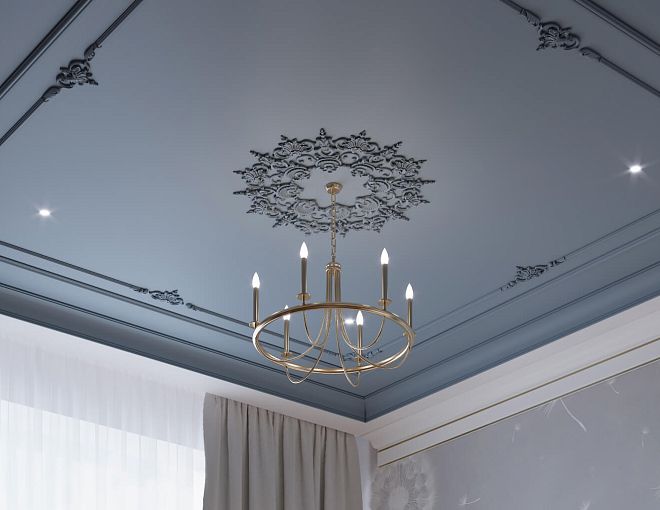
Molding.Wooden moldingabove the doorway — a horizontal superstructure that turns a simple door into an architectural element.Wall wood molding — horizontal arrangement that can run at the level of a chair back, window sill, or mid-wall. Molding divides walls into horizontal zones, creates rhythm, and structures space.in the same style — creates context for the door in the room's space. This is one of the most effective techniques in classic design.
Cornices.wooden corniceabove the doorway — a horizontal finishing profile that puts a 'period' above the architrave and adds monumentality. In classic interiors — a mandatory element.Wooden cornicecan be selected in the same style as the architrave — either with a more pronounced profile for emphasis.
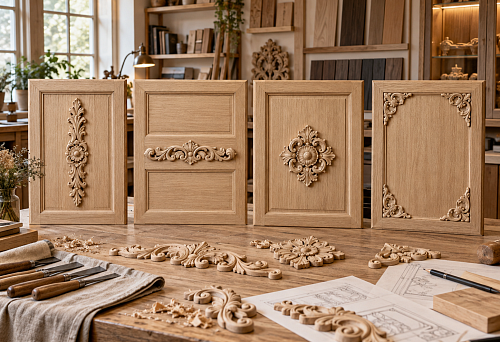
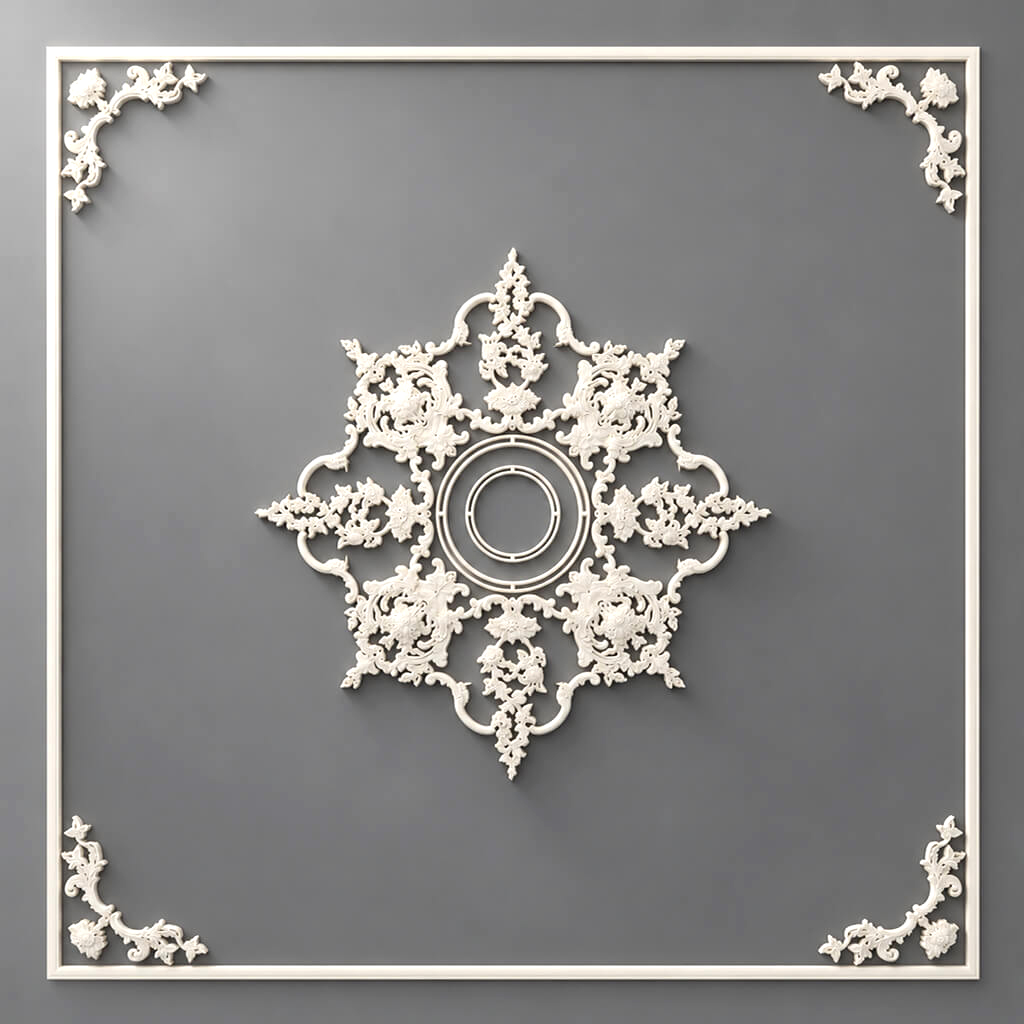
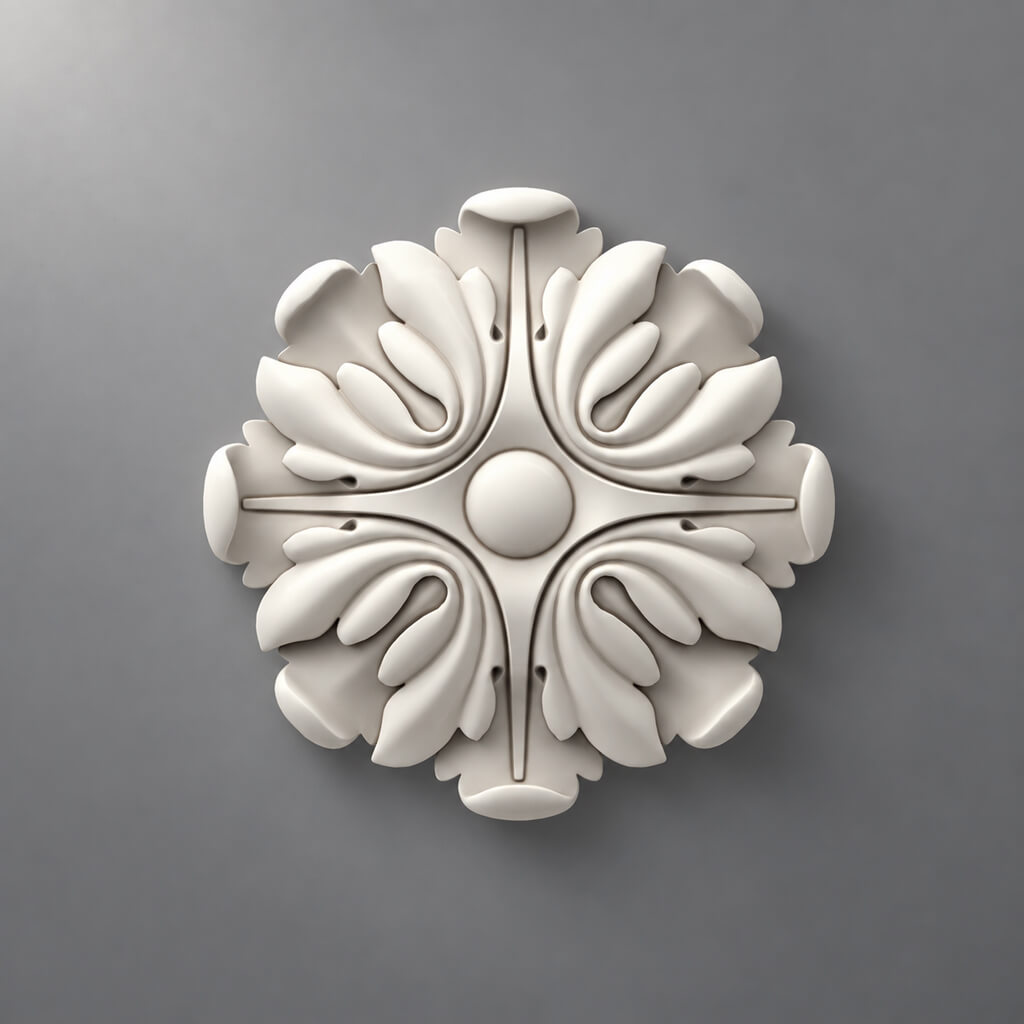
Decorative elements.wooden door decor— these are overlay elements: corner rosettes at the junctions of side and top casings, frieze inserts, decorative overlays on the door leaf.Decorative elements for doors— transform standard design into an author's creation.
Molding.Trimming Items— moldings, battens, corner pieces — cover all joints that the casing does not overlap: the transition from the extension to the jamb, corner areas, connections in the lower part of the opening.Wooden trim— made from the same wood species as the casing — a systematic solution.
Baseboards.Wooden baseboard— the lower horizontal element that echoes the verticals of the casings. One wood species, one finish, one profile style — and the space comes together as a unified whole. If the budget is limited — there isMDF Skirting Board— for painting, which, with the right profile choice, visually rivals solid wood.
Mistakes when choosing wooden door casings
Even experienced craftsmen make these mistakes. Knowing about them in advance means not repeating them.
Profile too narrow. A 30–40 mm casing on a standard door is a strip, not a frame. How to choose casing width: for most doors, the minimum width is 60 mm. A narrow casing doesn't fully cover the joint and doesn't create the desired visual effect.
Mismatch with door style. An ornate, carved casing next to a smooth, high-tech 'book' door is a style war nobody wins. How to properly frame a door with wooden casings: first determine the style of the door and interior, then choose the profile.
Poor combination with the frame. The casing and frame are one visual structure. If the frame is white and the casing is dark wood without a transition element, the border will stand out. Solution: extension + casing from the same collection.
Choosing based only on price. A cheap pine casing with poor drying and weak treatment will start to warp, crack at the edges, and pull away from the wall within a year or two. Which wooden casings are better to buy — those specifying the wood species, moisture content, and surface quality, not just 'budget pine'.
Disconnect from the rest of the decor. Oak casings + white PVC baseboard + MDF moldings — that's interior mosaic, not a system. Everything visible in the space should be in dialogue.
Different casings on different doors in the same room. If there are three doors in a hallway, they should have identical casings. Different profiles create chaos that immediately catches the eye.
Where to buy wooden door casings
Practical section for those ready to buy.
What to look for when choosing a supplier
Transparency about material. The supplier should specify: wood species, moisture content (for interior products — 8–12%), type of blank (solid wood or glued). If this data is hidden — that's a warning sign.
Systematic assortment. The best scenario — wooden door casings from a manufacturer that simultaneously offers moldings,wood trim itemsCornices and decorative trims in the same style. This eliminates the 'profile mismatch' problem during assembly.
Processing quality. Surface — without tears or milling marks. Profile — clear along the entire length. Ends — even, without delamination. Geometry — stable.
Catalog with dimensions. Wooden door architraves catalog with prices — this allows you to calculate the set in advance without additional questions to the manager.
Ready-made or custom order
Ready-made wooden door architraves — for standard sizes (60, 70, 80, 90 cm opening width, standard height). Order wooden door architraves individually — for non-standard openings, non-standard profiles, arched shapes, or special wood species.
Wooden door architraves price — ranges by wood species:
| Species | Type | Price per linear meter |
|---|---|---|
| Spruce | smooth | 250–500 rub. |
| Spruce | Profiled | 400–800 rub. |
| Beech | Profiled | 700–1,500 RUB |
| Oak | Profiled | 1,000–3,000 RUB |
| Oak | Carved decorative | from 2,500 RUB/element |
How much do wooden door architraves cost for one door (set for both sides): pine — 1,500–4,000 rubles, oak — 6,000–18,000 rubles. The range is wide because it depends on width, profile, and the presence of corner elements.
Why STAVROS is suitable for choosing wooden door architraves
STAVROS is a manufacturerwooden productswith a full catalog of solid wood door and interior decor. Here, wooden architraves are not a standalone product, but part of a well-thought-out system.
Unified catalog.Wooden casing, Wooden moldings, Wooden cornice, Wooden baseboard— everything from one source, same wood species, in a coordinated style.
Decorative elements.decor for furniture— applied corner rosettes, frieze inserts, decorative elements for door frame decoration — all in the same catalog.
Molding.Wooden trimfor sealing all installation joints — a separate and very broad category.wood trim itemsin the same style as the architraves — a systematic approach without compromises.
Door decoration.Door Decorating— a separate topic given special attention at STAVROS: ready-made solutions, ideas for different styles, a catalog for inspiration.
Classical solutions.Door Decorationin a classical style — carved architraves, capitals, over-door cornices — all of this is realized through the STAVROS catalog.
Conclusion
Wooden door architraves are a detail that either completes the interior into a cohesive image or leaves it unfinished. Invisible when chosen correctly. Noticeable in a bad way — when not.
To buy wooden door architraves means to decide in favor of natural material, durability, and flexibility in design. Wood is the only material that can be restored, repainted, and only becomes more noble with age.
The best result is always systematic: architrave + molding + millwork + baseboard from the same wood species, in the same style, from one manufacturer. Only then does the door cease to be a separate object and become part of the space.
STAVROS offers exactly this approach: fromwooden architravesanddecorative elementstowooden decorative moldings, crown moldingsandmolding products— all from solid wood, all in a single catalog, all with a quality guarantee.
Frequently Asked Questions (FAQ)
Why are wooden architraves better than MDF?
Solid wood is more durable with proper use, can be restored, and accepts any finish with a deeper and more vibrant result. MDF is more affordable in price, but recovers worse from mechanical damage and may delaminate over time in areas with humidity fluctuations.
Is it necessary to prime a wooden threshold before painting?
Yes, definitely. Primer seals the pores, evens the surface, and ensures adhesion of the final coating. Especially important for pine—its resinousness requires a special primer compatible with water-based enamels.
How to calculate the number of planks for an apartment?
Standard calculation: for one door on both sides, you need 6 planks (2 side + 1 top × 2 sides). Side planks—according to the height of the door block (~210 cm), top—according to the width of the opening plus overhangs. Add 10–15% reserve for trimming.
How to attach wooden door casings?
Optimally—liquid nails (for final fixation) + finishing nails 40–50 mm with countersinking of heads and subsequent puttying. Screws are used less often—holes are harder to hide. When using only liquid nails, fixation with painter's tape or spacers is needed during the glue drying time (24 hours).
How to choose the width of an architrave for a jamb extension?
Jamb extension + reveal = total width of the area that the architrave must cover. If reveal + frame = 90 mm, then the architrave should be at least 100 mm wide (with an overlap of 5–10 mm on each side). Always measure in person before ordering.
Is it necessary to remove old door casings when replacing a door?
Yes, when fully replacing a door block, old architraves are removed. When replacing only the door leaf without replacing the frame—architraves, as a rule, remain. If the frame is old but in good condition, architraves can be replaced without completely dismantling the structure.
Can wooden architraves be installed in a bathroom?
Yes, but with conditions: the wood must be treated with moisture-resistant impregnation and coated with waterproof varnish or enamel. Alder and thermowood are the best choices for damp rooms. Room ventilation is mandatory: at constant humidity above 80%, any wood will deform.
How to properly join architraves in a corner?
Two methods: miter cut at 45° (requires a miter saw and precision) or a straight joint via a corner rosette overlay. For decorative architraves, a corner rosette is preferable: it hides mitering inaccuracies and itself serves as a decorative element.