Article Contents:
- What is a false panel — explanation without jargon
- How a false panel works
- Where a door false panel is used
- Double-leaf interior doors
- Doors for living room, hall, study
- Doors between kitchen and hall, kitchen and hallway
- Single-leaf doors with extended gap
- Decorative portals and arched openings
- Three details that confuse everyone: false panel, casing, extension
- Door casing
- Door extension
- Door stop strip
- When a door without a false panel looks unfinished
- First case: two panels, visible dark stripe
- Second case: asymmetrical double door
- Third case: single door with enlarged gap
- Fourth case: classic interior where details matter
- False panel sizes — how to choose correctly
- False panel width
- Thickness
- Length
- False panel material — what to choose in each case
- MDF for painting
- Array of wood (oak, ash, beech)
- Veneered MDF or eco-veneer
- Polyurethane profile
- How to choose a rebate strip to match the door color
- Match the door leaf color
- Match the trim and extension color
- To paint together with the door
- Contrasting strip — only as a design technique
- Missed the color — what to do
- Methods of attaching the rebate strip
- On double-sided tape or mounting tape
- On liquid nails / mounting glue
- On finishing nails (pins) with hammering and putty
- On self-tapping screws (concealed fasteners)
- Complete set of door trim — how not to buy too much and not forget what you need
- Mistakes when choosing a rebate strip — a list that saves money
- What to check before buying a rebate strip
- FAQ — answers to the most popular questions about rebate strips
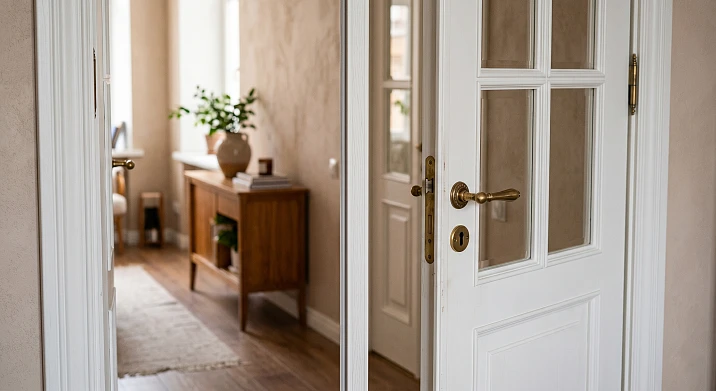
It happens like this: the door is installed, the architraves are nailed, the hinges are adjusted — but something is still not right. The eye stops at the joint of two leaves, where a dark strip of gap gapes. Or the panel closes, but a gap is visible between it and the frame, which neither the architrave nor the extension covers. This is exactly the moment when a rebate strip is needed — a small detail that is often not thought about when ordering a door, but is remembered immediately after its installation.
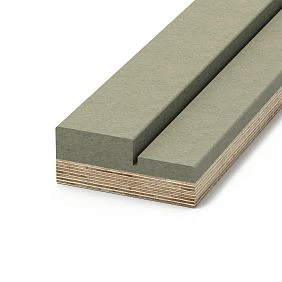
A rebate strip for an interior door is a narrow decorative rail that is installed on the edge of the door leaf or between two leaves to close the technical gap in the rebate area. It does not bear any structural load, but it is what turns a doorway from "almost finished" into a completed one.
View wooden door trims and decorative strips for doors — in the STAVROS catalog.
What is a rebate strip — explained without jargon
In construction, the word "rebate" refers to the place where a door meets the frame or another leaf. When the door is closed, the plane of its edge contacts the frame stop — this is the rebate area. A single-leaf door has one rebate: where the door "meets" the frame when closing. In a double-leaf door, there is one between the two leaves.
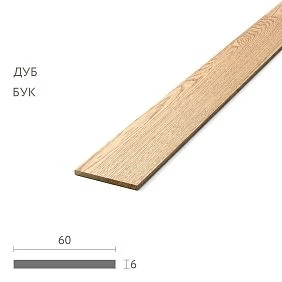
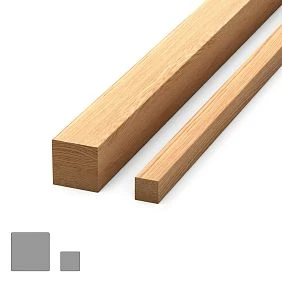
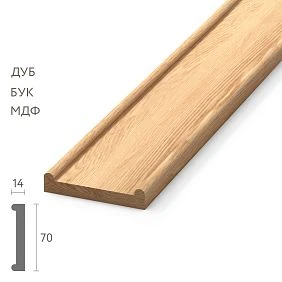
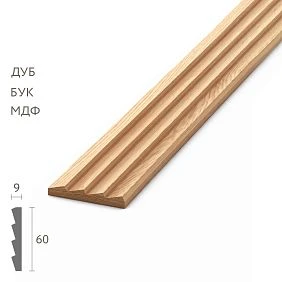
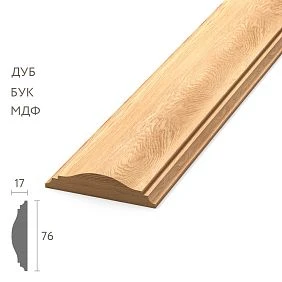
A rebate strip is a batten that covers exactly this area. Structurally: a narrow wooden or MDF strip 20–40 mm wide, 6–12 mm thick, standard length 2000–2100 mm. It is mounted on the edge or plane of the leaf so that when the door closes, the strip covers the visible gap.
Sometimes it is called a cover strip — by function: "to cover a gap." But a cover strip is a broader concept, while a rebate strip is strictly a door element of door trims.
It is important to understand right away: this is not decoration for decoration's sake. It is a technical part that solves a specific problem — and it should look like an organic part of the door, not a patch.




How a rebate strip works
The principle is simple. The door leaf has a side edge. When closing, this edge approaches the frame or the adjacent leaf. Without a strip, a gap of 3–8 mm remains between them — visible, dark, unsightly. The strip is mounted on the edge or plane of the leaf and, when closing, "overhangs" to cover this gap, overlapping it from above. This overhang is the part of the strip that extends onto the adjacent surface.
For a double-leaf door: a strip is mounted on one of the leaves, and when both leaves are closed, it covers the gap between them. The gap disappears — the door looks monolithic.
Our factory also produces:

Where a door rebate strip is used
Not every door needs this element. There are specific situations where a strip is necessary — and it's useful to know them before installing the door.
Get Consultation
Double-leaf interior doors
This is the most common case. Wide door openings (from 1200 mm and wider) are covered by two panels. When closed, a vertical gap forms between them — this is called the overlap between the leaves. Without the strip, the gap is visible and looks unfinished.
Overlap strip for double-leaf doors is mounted on one of the panels — the one that closes second. When the active panel closes, the strip covers the gap. This is standard practice for double-leaf swing doors.
Doors to the living room, hall, study
Formal areas require special attention to detail. Doors to the living room or study are what you see every day, what catches guests' eyes. A sloppy joint between the leaves is inappropriate here.
For such rooms, the overlap strip is not just a functional element but part of the architectural image. In a classic interior, it can be shaped, with routing matching the profile casings and moldings.
Doors between the kitchen and hall, kitchen and hallway
Here, the gap in the rebate zone is not only a visual problem. Odors, sounds, and air drafts penetrate through the gap. A properly selected door rebate strip partially solves the acoustic task: a tight overlap of the joint reduces the penetration of noise and odors through the rebate zone.
Single-leaf doors with an extended gap
A gap is not always a consequence of a double-leaf design. Sometimes a single-leaf door is installed in a frame with a slight technological error, and a visible gap remains between the edge of the door leaf and the counterpart of the frame. The rebate strip covers this case as well.
Decorative portals and arched openings
In classic interiors, where door portal is decorated with pilasters, moldings, cornices — the rebate strip fits into the overall decorative system. It can be not just functional, but styled to match the overall design: with the same milling, the same tinting, the same profile.
Three details that everyone confuses: rebate strip, casing, extension
The most common question before purchase: "How is this different from a casing?" Or: "Maybe I need an extension?" Let's sort it out once and for all — and save it to bookmarks.
Door casing
A casing is a decorative strip that is mounted around the perimeter of the doorway on both sides of the wall. Its task is to cover the joint between the door frame and the wall: plaster, drywall, wallpaper. The casing is always installed along the contour of the opening: at the top and on the sides.
Wooden door casing — a mandatory element of any interior door. Without them, gaps between the frame and the wall are visible. But the casing does not cover the gap between the door leaves — that is its boundary.
Door extension
An extension is a door frame extender. When the wall thickness is greater than the width of a standard frame, the extension covers the "extra" thickness around the perimeter of the opening from the inside. Essentially, an extension is an additional flat strip that attaches to the end of the frame and meets the casings.
The extension solves the problem of "exposed ends" — when an unclad wall surface is visible in the opening. But the extension is not for closing the gap between the door leaves.
Stop molding
A rebate strip is installed directly on the door leaf in the rebate area. It does not run along the perimeter of the opening (that is the casing's job), nor does it cover the wall end (that is the extension's function). It closes the gap precisely at the point where the door closes: between two leaves or between the leaf and the corresponding part of the frame.
A simple table for clarity:
| Element | Where is it installed | What it covers |
|---|---|---|
| Casing | Along the perimeter of the opening, at the wall | The joint between the frame and the wall |
| Extension | On the end of the box | Unclosed wall thickness |
| Rebate strip | On the edge of the door leaf | Gap in the rebate area (between leaves or between leaf and frame) |
More about door casings and extensions — what to choose and how not to get confused when assembling a doorway.
When a door without a rebate strip looks unfinished
There are situations where the absence of this strip is immediately noticeable. And there are cases where the gap is invisible and everything looks normal. How to know if you need it?
First case: two leaves, visible dark stripe
A double-leaf door is closed — and a vertical dark line is visible between the leaves. If the opening is lit from one side, the dark gap becomes even more noticeable. This is the most obvious case: a rebate strip is needed.
Case two: asymmetrical double-leaf door
A wide opening is covered by two leaves of different widths (e.g., 900 + 600 mm). The passive leaf is fixed, the active one operates. When the active leaf closes, a gap is visible at its edge. The strip is mounted on the active leaf and covers the gap when closed.
Case three: single-leaf door with an increased gap
Sometimes installers set the gap slightly larger than the standard — for easy door movement. As a result, a visible gap remains between the edge of the closed leaf and the strike plate of the frame. Adding a rebate strip solves the problem without reinstalling the frame.
Case four: classic interior where details matter
In an interior with wooden architraves, moldings, cornices, and solid wood furniture — every element is in plain sight. Here, an uncovered rebate is not just a technical flaw; it ruins the image. A rebate strip made of the same material and with the same tint as the architraves is a natural finishing touch in the interior composition.
Rebate strip dimensions — how to choose correctly
Standard rebate strip dimensions: width 20–40 mm, thickness 6–12 mm, length 2000–2100 mm. But "standard" here is an approximate concept. Let's break down the parameters in detail.
Width of the rebate strip
20–25 mm — narrow strip. Suitable for lightweight doors, minimalist interiors, when the gap is small (3–5 mm) and needs to be closed with minimal visual emphasis. Looks good on modern doors in white or gray.
28–30 mm — the most common size. Covers a gap of up to 6–8 mm with a margin. Universal: fits most standard-width interior doors. This size is most often included with door leaves.
35–40 mm — wide strip. For classic-style doors, for decorative purposes, when the strip is part of the design, not just a utilitarian detail. It can have a milled or relief profile. Suitable for doors with wide architraves and portals.
A too wide rebate strip on a narrow leaf looks rough — as if a board was glued to the door. Rule: the width of the strip should not exceed 1/10 of the door leaf width.
Thickness
Thickness determines the overhang — how much the strip will extend onto the adjacent surface. At a thickness of 6 mm, the overhang is small, the strip barely protrudes. At 10–12 mm, it protrudes more noticeably, covering the gap more reliably.
For double doors: the thickness of the strip should be such that when the active leaf is closed, the strip fits tightly against the passive leaf without creating excessive pressure.
Length
Standard length — 2000–2100 mm. Standard door leaf height — 2000–2100 mm. The strip is cut exactly to the height of the leaf. If the door height is non-standard, it needs to be specified when ordering or taken with a margin.
for of door trims for non-standard openings — it is worth considering custom solid wood trims that are cut to the required size.
Material of the false panel — what to choose in each case
Material is a key parameter that determines durability, aesthetics, and the ability to select a panel for a specific door.
MDF for painting
MDF is a dense fiberboard. It mills well, and the smooth surface accepts paint evenly. For doors painted with enamel in white, gray, beige — MDF molding ideal for painting.
Advantages:
-
stable geometry, does not warp;
-
smooth surface for solid color paint;
-
affordable price;
-
easily painted simultaneously with the door — guaranteed identical color.
Limitations:
-
not suitable for tinting (stain, wax, oil) as it lacks natural texture;
-
when chipped, it is not as easy to restore as solid wood;
-
in high humidity — requires good coating.
Solid wood (oak, ash, beech)
A solid wood rebate strip — for doors made of natural wood, veneered doors, doors in classic and neoclassical style. This is no longer just a molding element, but part of a wooden system: a solid wood door leaf, Wooden casings, a rebate strip made of the same material.
Solid wood products — these are oak, beech, ash, birch, pine. For each wood species and tint — its own rebate strip.
Advantages of solid wood:
-
natural texture: can be tinted in any color;
-
durability: if damaged — sanded and renewed;
-
aesthetics: a living material that 'breathes';
-
possibility of profile milling: chamfer, fillet, grooving.
Limitations:
-
higher price;
-
requires proper coating (varnish, oil, wax);
-
with sharp humidity fluctuations — possible slight warping (minimal for high-quality dry timber molding).
Veneered MDF or eco-veneer
Compromise: MDF base, top layer — natural wood veneer or eco-veneer (film with wood texture). Looks like a wooden plank, costs less than solid wood, does not warp.
Good choice for veneered doors: if the door leaf is covered with oak veneer in natural color — a veneered rebate strip matching the same oak provides an ideal color match.
Polyurethane profile
Used less often — mainly for decorative portals and stucco interiors. Lightweight, accepts paint. For classic doors in an apartment with decorative plaster and polyurethane portals — a rebate strip made of the same material is organic.
How to choose a rebate strip to match the door color
This is a separate science — small but important. The wrong strip color is immediately noticeable and ruins the door's overall look.
Matching the door leaf color
The best option is when the strip exactly matches the door leaf color. For solid wood doors: same wood species, same tint, same coating. For painted doors: the strip for painting is painted together with the leaf or with the same composition.
For veneered doors: order the strip from the same veneer, from the same manufacturer. Veneer shades from different batches may vary slightly — this is normal for natural material, but noticeable if there is a clear mismatch.
Matching the trim and extension color
If the trims and extensions differ in color from the leaf (e.g., white leaf + light oak trims) — select the rebate strip to match the trim color. This creates a unified decorative line: the side trim and the rebate strip are in the same register.
For painting together with the door
For doors intended for painting: paint the strip, leaf, and MDF trims simultaneously — with the same composition, the same color. The result is perfect: no color discrepancies.
Contrast strip — only as a design technique
Sometimes — in modern interiors — the rebate strip is made contrasting: a dark strip on a light leaf or vice versa. This works when intended by an architect or designer. If the contrast is accidental, it is a mistake.
Missed the color — what to do
If the strip has already been purchased but doesn't quite match the tone, it can be re-toned or repainted. For solid wood strips: sanding and re-toning. For MDF: sanding and painting. For veneer: more difficult, better to replace.
Methods of attaching the rebate strip
Attachment is a practical matter. It determines how neatly the strip will fit and how easy it will be to remove if necessary.
On double-sided tape or mounting tape
A quick method for lightweight MDF strips. Suitable if the strip is narrow and the door leaf is factory-made with a smooth surface. Disadvantage: with intensive door use and seasonal deformations, the strip may come off.
On liquid nails / construction adhesive
A more reliable connection. Used for solid wood strips. Adhesive is applied to the back of the strip, pressed, and held under pressure. Disadvantage: almost impossible to remove without damage.
On finishing nails (pins) with countersinking and putty
A joinery method: small pin nails are countersunk, heads are puttied, the surface is sanded and touched up. Reliable, nearly invisible. Used for solid wood under toning.
On screws (concealed fasteners)
Rarely for false panels — more often for wider decorative elements. The screw is driven in from the front side, the hole is closed with a wooden plug of the same material.
Complete set of door trim — how not to buy too much and not forget what's needed
The false panel is part of the system. A finished door requires a set:
-
Door leaf — the leaf itself with hinges and hardware.
-
Door frame — the load-bearing perimeter of the opening.
-
Door Thresholds — decorative strips covering the joint between the frame and the wall (on both sides of the opening).
-
Extension — frame extender if needed.
-
False panel — for double doors and non-standard assemblies.
-
Door baseboard — at the base of the frame post, the joint with the floor covering.
A properly completed doorway is a system where every element is from the same series: the same wood species, the same tint, the same profile. Mixing elements from different manufacturers and series risks color mismatch.
trim for interior doors — how to choose the entire set correctly without overpaying and forgetting details.
Mistakes when choosing a rebate strip — a list that saves money
Buying a casing instead of a rebate strip. A common mistake: the casing goes around the perimeter of the opening, the strip is on the door leaf in the rebate area. These are different parts, different shapes, different fastening.
Taking an extension when you need to close the gap between the leaves. An extension is a frame expander. It doesn't work for the rebate.
Choosing a strip that is too wide. On a narrow leaf (600 mm), a wide strip (35–40 mm) looks like an unjustified accent. The proportions are disrupted.
Not accounting for the leaf thickness. For doors 38–40 mm thick and doors 45 mm thick, the strip overhang is different. Too much overhang = the strip presses against the passive leaf when closing.
Buying a strip in a different shade. Even a slight difference in tint is noticeable. It's better to take the strip and door from the same set of the same manufacturer.
Forgetting about the opening direction. The strip is installed on the leaf that closes second — that is, on the active one. If you install the strip on the passive leaf, it will create an obstruction when opening the active leaf.
Not accounting for the overall set. If the casings in the "Classic" series are oak, then a rebate strip made of MDF painted white is a mismatch. The system must be unified.
Attaching the strip to an unprepared surface. Dust, grease, paint residue — the adhesive won't hold. Clean the door leaf surface before installation and degrease if necessary.
What to check before buying a rebate strip
A short checklist to save time when ordering:
-
Door type — single-leaf or double-leaf?
-
Where exactly is the gap — between the leaves or between the leaf and the frame?
-
Gap width — 3–5 mm or larger?
-
Door leaf height — standard (2000–2100 mm) or non-standard?
-
Door leaf thickness — 38, 40, or 45 mm?
-
Door color — for painting, veneer, lacquer, tinting?
-
Material of the architraves — what are they made of, to match as a set?
-
Opening side — right or left?
-
Interior style — minimalism, classic, country?
-
Is painting planned — do you need MDF or already painted/stained strip?
FAQ — answers to the most popular questions about rebate strips
What is a door rebate strip?
It is a narrow decorative strip installed on the edge of the door leaf that covers the gap in the rebate area — between two leaves or between the leaf and the frame. View options — wooden moldings STAVROS.
How is a rebate strip different from a casing?
Baseboard covers the joint of the door frame with the wall around the perimeter of the opening. A rebate strip covers the gap in the rebate area — on the leaf. Different places, different functions.
Is a rebate strip needed for a single-leaf door?
Usually no — in a single-leaf door, the rebate area is covered by the frame construction. But if the gap between the leaf and the frame is enlarged — the strip can help.
Can I install a false panel after installing the door?
Yes. This is one of the most convenient trim elements: it attaches to the door leaf and does not require dismantling the frame or casings. The main thing is to choose the right size and color.
What to buy: extension, casing, or false panel?
If you need to cover the wall thickness at the opening, you need an extension. If the joint between the wall and the frame, you need a casing. If the gap between the leaves of a double door, you need a false panel. More details: door casings and extensions.
What is the standard size of a false panel?
Width — 28–30 mm, thickness — 8–10 mm, length — 2000–2100 mm. For classic doors, a width of 35–40 mm is possible.
What material is best for the panel: MDF or solid wood?
For painted doors — MDF for Painting. For solid wood or veneer doors — only solid wood or veneered profile made of solid wood products.
How to avoid mistakes with color?
Order the plank as a set with the door and architraves from the same series and manufacturer. If selecting separately, take a sample of the door leaf and compare it in person under daylight.
A door is not just a leaf and a frame. It is a system where every detail contributes to the result. The rebate plank is small, almost unnoticeable, but it is precisely what covers that gap that irritates every day. Properly selected, made of the right material, in the right color, it makes the door complete.
STAVROS offers solid wood millwork, wooden door architraves, moldings and decorative planks, MDF moldings for painting and components for finishing any door openings. Manufacturing in Russia, own wood drying, premium oak and beech, delivery across the country. STAVROS — because details complete the image.