Article Contents:
- What is included in the top assembly of a wooden stair railing
- Handrail as the main gripping element
- Sub-rail strip as the connection between the handrail and balusters
- Balusters as the vertical infill of the railing
- Posts as the support points of the staircase
- Finials as the completion of the posts
- Wooden handrails for stairs
- Sub-rail strip PR-003
- Staircase posts
- Staircase balusters
- Post caps
- By handrail width
- By subrail plank fit
- By baluster cross-section
- By Carving Style
- By wood type and finish
- Handrail + subrail plank PR-003
- Subrail plank + balusters
- Posts + finials
- Balusters + decorative stair railing elements
- Handrail and subrail plank
- Sub-handrail strip and baluster
- Baluster and post
- Post and finial
- Handrails and railing
- New staircase in a private home
- Renovation of an old railing
- Staircase in a classic interior
- Modern wooden staircase
- Country house staircase
- Staircase for commercial space
- Size
- Material
- Load and operation
- Installation location
- Buying only the handrail and forgetting the connector
- Not calculating the length of PR-003
- Buying balusters without the installation step
- Not accounting for posts
- Choosing finials only by appearance
- Mixing different styles
- Not checking the material
- Expecting the kit to fit without clarifications
- Where to buy wooden handrails for stairs?
- What to buy together with a wooden handrail?
- Why is a handrail bracket needed?
- How is a handrail support strip different from a handrail?
- What are the dimensions of the handrail bracket PR-003?
- What materials is PR-003 made from
- How to choose balusters for a handrail?
- Do I need to buy posts together with the handrail?
- What to cover the top of a stair post with?
- Can the top assembly of a staircase be assembled from STAVROS elements?
- What is more important when choosing: handrail or balusters?
- Can I buy only PR-003 without the handrail?
- How to avoid mistakes with the number of balusters?
- Is the complete wooden node suitable for a modern interior?
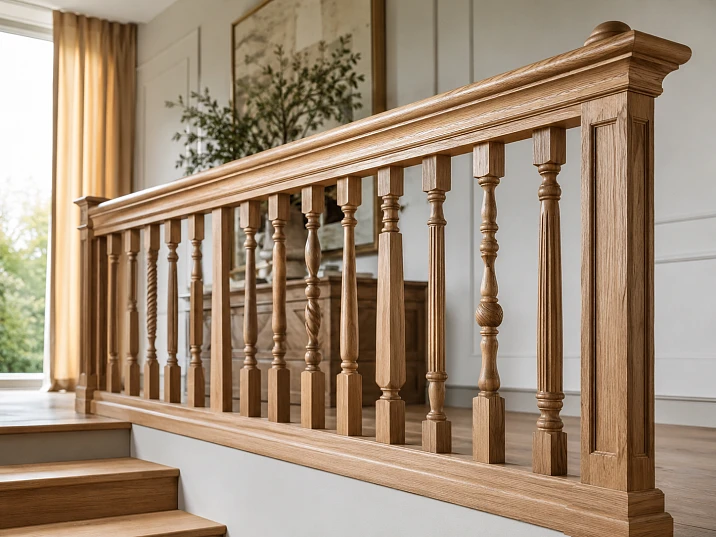
When you need to buy wooden handrails for a staircase, the buyer often thinks only about the top part that you hold with your hand. But a complete stair railing is not assembled from just one handrail. The top node of a wooden staircase works as a system: on top goes the handrail, underneath it there may be a subrail strip, below that the balusters are fixed, and at key points the railing is supported by posts. If a post should look finished, a finial is added to it. It is this combination that is responsible not only for a comfortable grip but also for the appearance of the entire staircase.
The mistake of many customers is to buy components separately. First they choose a handrail, then they remember the balusters, then they look for a strip for connection, after that they select posts separately. As a result, the elements may not match in size, style, wood species, cross-section, and decorative character. The staircase seems to be assembled from wooden parts, but looks random: the handrail lives separately, the balusters do not fit the scale, the posts are too massive or, on the contrary, weak, and the top line of the railing seems unfinished.
It is much more reliable to immediately look at the top node as a set. If you need a comfortable and beautiful wooden handrail, it is worth understanding in advance whether a subrail strip PR-003 is needed, which balusters are suitable for the seating, where the posts should be placed, and whether wooden finials are needed on top of the posts. This approach is especially important for private houses, cottages, country staircases, workshops, designers, and builders who are assembling not just one part but a complete stair railing.
In STAVROS, you can select elements for such a node by actual product categories: buy wooden handrails for stairs, supplement them with the sub-rail plank PR-003, balusters, stair posts, and finials. Below is a detailed commercial guide: what is responsible for what, how not to confuse the elements, which products to buy together, and what to check before ordering.
What is included in the top node of a wooden stair railing
The top node of a stair railing is not a single element, but the upper zone of the entire structure, where the handrail connects with balusters and posts. Its task is to make the railing comfortable for the hand, stable in perception, neat in fit, and cohesive in style. If this zone is assembled correctly, the staircase looks finished. If not, even expensive wooden parts may seem mismatched.
In a simple version, the top node includes a handrail and balusters. In a more elaborate one — handrail, handrail bracket, balusters, posts, and finials. The handrail bracket helps organize the attachment point for the upper ends of the balusters and serves as an intermediate link between them and the handrail. Posts support key points: start, end, turn, landing. Finials cover the tops of posts and add decorative completeness.
Such a node is needed not only for a new staircase. It is also important when renovating an old railing. If the old handrail is uncomfortable, the balusters are loose, the posts look outdated, or the top line is broken, it is better not to blindly replace one part but to evaluate the entire assembly. Sometimes it is enough to replace the handrail and handrail bracket. Sometimes a new set of balusters is required. And if the staircase changes style, everything must be selected together.




Handrail as the main gripping element
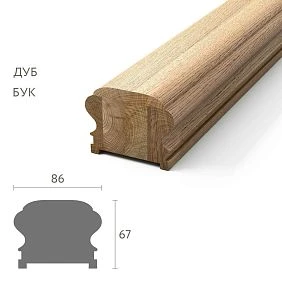
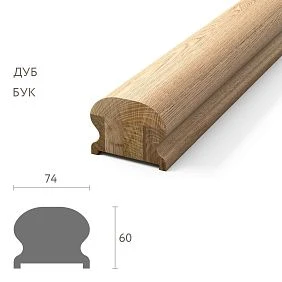
The handrail is the top part of the railing that a person holds onto when going up and down. It should be comfortable in shape, pleasant to the touch, suitable in width, harmonious in profile, and compatible with the other elements of the staircase. Externally, the handrail sets the main line of the railing: its contour is the first thing perceived along the flight.
If the handrail is too thin for a large staircase, the entire structure appears weak. If it is too massive for light balusters, the railing looks heavy on top. If the handrail profile does not match the posts, the transitions at the beginning and turns look random. Therefore, the choice of handrail cannot be separated from the balusters, handrail bracket, and posts.
A wooden handrail is especially well-suited for staircases in private homes, where warm texture, tactility, and the ability to connect the railing with other wooden interior details—steps, doors, furniture, baseboards, carved decor—are important. But for it to work correctly, not only the shape but also the seating position must be checked.
Our factory also produces:
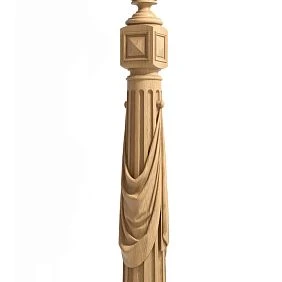
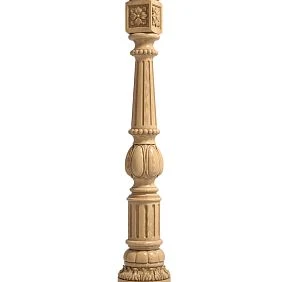
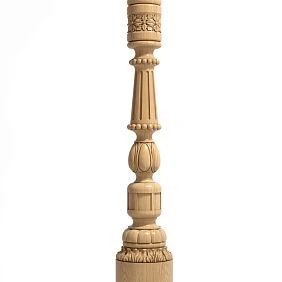
The handrail bracket as a link between the handrail and balusters
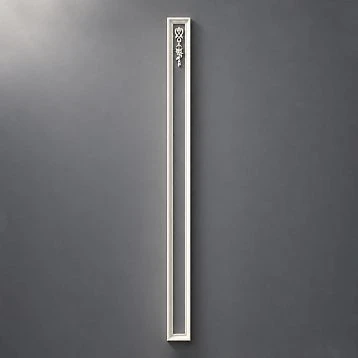
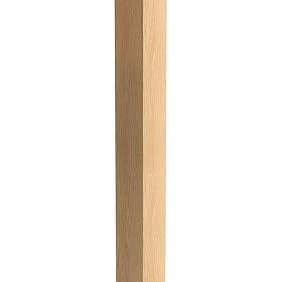
The sub-rail bar is an intermediate part between the handrail and balusters. In practical terms, it helps organize the top attachment line: the upper ends of the balusters are fixed to the bar, and the handrail is placed on top of it. This is especially convenient when you need to assemble a neat row of balusters and hide the technical logic under the top decorative part.
The handrail bracket PR-003 is exactly this type of element. It is not needed for aesthetics separately from the structure, but for the correct connection of parts. If the handrail is what is seen and felt by hand, then the handrail bracket helps to assemble a smooth and clear base underneath it. Without it, in some structures, it is more difficult to neatly connect the balusters to the handrail and achieve an even top line.
PR-003 has confirmed dimensions of 1500×60×6, 2000×60×6, and 2500×60×6 mm. The materials are beech and oak. The strip is used in staircase railing structures and is designed to secure the upper ends of balusters; the handrail is placed on top of it. These parameters must be checked against the staircase project, handrail width, baluster cross-section, and section length.
Get Consultation
Balusters as vertical infill of the railing
Balusters are vertical elements that fill the space between the staircase base and the top part of the railing. They affect safety, appearance, row density, and staircase style. Balusters can be simple, turned, carved, geometric, more classic, or modern. In a row, they create repetition, so an individual baluster and a whole line of balusters are perceived differently.
If balusters are too sparse, the railing looks empty. If they are too frequent and large, the staircase becomes heavy. If the shape does not match the handrail, the top joint loses integrity. Therefore, balusters are chosen not after everything else, but together with the handrail and sub-rail strip. You need to understand how the upper end of the baluster will connect to the strip, what installation spacing is needed, and how the baluster fits into the overall railing height.
In a kit purchase, balusters address an important practical question: how to fill the spans between posts. But at the same time, they remain a decorative part. For a classic staircase, you can choose more expressive shapes, for a modern interior — calm geometric ones, for a country house — warm wooden options without unnecessary overload.
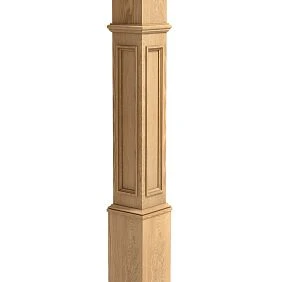
Posts are needed not for every interval, but for key locations. They are placed at the beginning of the flight, at the end, at turns, on landings, and where the handrail changes direction. Visually, a post is always stronger than a baluster. It is larger, more noticeable, and responsible for the support structure of the railing.
Posts are not needed for every gap, but for key places. They are installed at the beginning of the flight, at the end, at turns, on landings, and where the handrail changes direction. Visually, a post is always stronger than a baluster. It is larger, more noticeable, and responsible for the support structure of the railing.
If balusters create a row, then posts define the nodes of that row. The handrail often comes to them, and through them the beginning and end of the staircase are read. Therefore, posts must be consistent with the handrail and balusters in scale. A post that is too simple next to carved balusters looks weak. A post that is too ornate next to a minimalist railing can overload the staircase.
For a wooden staircase, it is better to choose posts in advance. If you leave them "for later," it may turn out that there is no suitable shape, size, or style for the already purchased handrail. Then you have to compromise, and in a staircase, compromises at the nodes are immediately noticeable.
Finials as the completion of posts
The finial covers the top part of the post and makes it complete. This is especially important for classic, carved, country, and formal staircases, where the post plays not only a structural but also a decorative role. Without a finial, the top of the post can look cut off. With an unsuitable finial, it looks foreign.
Finials come in different shapes and styles. For a calm staircase, more minimalist options are suitable. For expressive classic styles, you can look at carved and figured solutions. But the choice of finial should always come from the post. You cannot first choose a beautiful top element and then try to put it on any post. You need to check the shape, size, fit, and overall style.
Which elements to buy at STAVROS
To assemble the top node of a wooden staircase, it is more convenient to start from the task rather than a random list of products. You need a top gripping element — choose a handrail. You need to connect the handrail and balusters — look at the handrail support strip PR-003. You need to fill the spans — select balusters. You need support points — choose posts. You need to cover the top of the posts — add finials.
| Buyer's task | What to buy | What to check before ordering |
|---|---|---|
| Need a top railing element | Wooden handrail | Profile, width, length, compatibility with the strip and posts |
| Need to connect the handrail and balusters | Handrail bracket PR-003 | Size 1500/2000/2500×60×6 mm, material beech or oak, fit for handrail |
| Need to fill the spans | Balusters | Height, cross-section, installation pitch, shape, style |
| Need to assemble support points | Staircase posts | Installation location, scale, shape, combination with handrail |
| Need to close the top of the post | Finials | Size, shape, compatibility with the post, style |
Wooden stair handrails
If the top node starts with a comfortable grip, the first product becomes the handrail. In the STAVROS catalog you can buy wooden handrails for stairs and immediately evaluate which options are suitable for a wooden railing. During the selection stage, you need to look not only at the external profile, but also at how the handrail will sit on the subrail plate and connect to the posts.
For a private home, tactility is important. The handrail should be comfortable for the hand because the stairs are used every day. But convenience does not cancel design. In a wooden staircase, the handrail is at eye and hand level, so any shape error is noticeable. If the profile is too rough, the stairs look heavy. If it is too weak, they seem temporary.
It is better to choose the handrail together with the plate and balusters. This way, you can understand in advance where the technical connection will be, how the top line will run, and whether there will be any inconsistency in width. This is especially important at turns, landings, and junctions with posts.
Sub-rail strip PR-003
The subrail plate PR-003 is an important element for those who are assembling not just a beautiful top, but a correct assembly. Its task is to serve as an intermediate base between the upper ends of the balusters and the handrail. The PR-003 card specifies dimensions of 1500×60×6, 2000×60×6, and 2500×60×6 mm, as well as materials beech and oak.
If such a connection is planned in the project, it is worth in advance buy subrail plate PR-003 together with the handrail and balusters. Then you can check the length of sections, the number of strips, joints, suitable material, and how the strip will work under the selected handrail.
PR-003 is especially useful when it is important to neatly fix the top of the balusters and cover this area with a handrail. It should not be perceived as an extra detail. In the correct assembly, it helps to put the structure together more cleanly and calmly.
Staircase posts
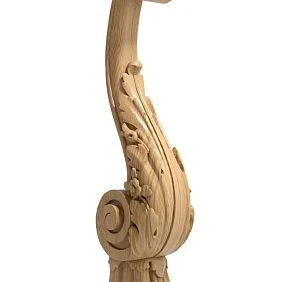
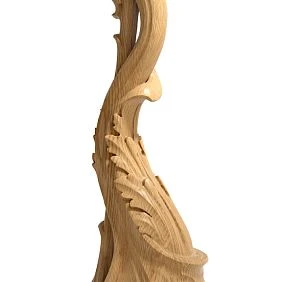
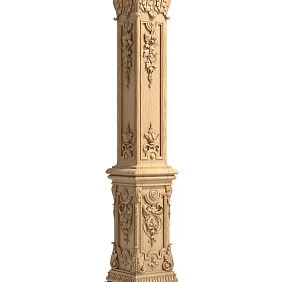
Posts form the support points of the railing. In STAVROS, there is a separate section where you can select Wooden stair posts to match the style of the staircase. On the posts page, there are filters by collections and product types: turned, carved, geometric. This helps to select not just a massive vertical element, but a detail that will match the handrail and balusters.
The post should be the senior element in the staircase hierarchy. Balusters repeat, the handrail unifies, and the post sets the point. At the start of the flight, it greets a person. At the turn, it explains the change in direction. On the landing, it helps to hold the structure visually and structurally. Therefore, a post cannot be chosen only by height or price. Shape, carving, cross-section, installation location, and connection with the handrail are important.
If the staircase is new, posts need to be counted immediately: bottom, top, turning, landing. If the railing is being updated, you need to understand which old posts remain and which are better to replace. Sometimes a new handrail and balusters look good, but the old post ruins the entire set.
Staircase balusters
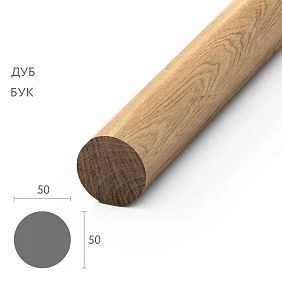
Balusters fill the spans and create the main repetition of the railing. For a complete purchase, it is important not just Buy balusters for a wooden staircase, but to select them to match the handrail, under-rail plank, and posts. Then the top assembly will not be random, but assembled.
When choosing balusters, you need to check the height, cross-section, shape, installation step, and style. If the balusters are too complex and the handrail is simple, the railing may look unbalanced. If the balusters are too plain and the posts are carved and massive, the row between them will become weak. A good staircase relies on the coordination of details.
Special attention should be paid to the top end. Since the PR-003 plank is designed to fix the top ends of the balusters, you need to understand in advance how the selected balusters will connect with this part. You should not buy elements that are "approximately suitable." It is better to check the dimensions and, if in doubt, clarify compatibility with a STAVROS manager.
Finials for posts
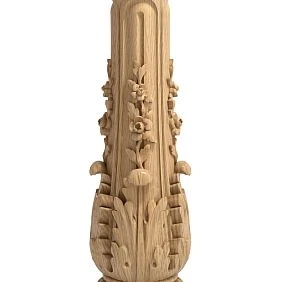
Caps are needed where the post should look finished. In the STAVROS catalog you can choose wooden finials for posts of various shapes and styles. The finials page has filters by size, collection, product shape, product type, and availability, so selection can be done not blindly, but for a specific task.
The newel is especially important on prominent posts: at the start of the stairs, at a turn, near a landing, in the entrance area. It completes the vertical line and helps the post look not cut off, but well-thought-out. However, the newel should not be more decorative than the entire staircase if the project is restrained. Its task is to complete, not to compete.
Table of characteristics of the main elements of the top assembly
| Element | Purpose | Confirmed data | What to clarify before ordering |
|---|---|---|---|
| Wooden handrail | Top railing component for grip and visual line of the staircase | The handrail section contains products from the PR series, including PR-004, PR-003, PR-002, PR-001 | Dimensions A/B/C, profile, length, material, compatibility with the rail and posts |
| Handrail bracket PR-003 | Intermediate rail between the handrail and balusters | Sizes 1500×60×6, 2000×60×6, 2500×60×6 mm; materials beech and oak; used for fixing the upper ends of balusters; a handrail is placed on top | Quantity by march length, joints, material, fit for selected handrail |
| Balusters | Vertical infill of spans | Separate section of balusters for wooden stairs | Height, cross-section, shape, style, installation step, compatibility with rail |
| Posts | Support points at start, end, turns, and landings | The post section includes turned, carved, and geometric options | Height, cross-section, installation location, handrail approach, style |
| Finials | Decorative finishing of posts | The finial section includes square and round shapes, turned and carved options | Fit, size, shape, compatibility with post |
This table helps to see the main point: the top node of the staircase cannot be assembled piece by piece. A handrail without a rail may require a different fastening solution. A rail without suitable balusters will not yield a neat result. Balusters without posts do not solve the issues of turns and the start of the flight. Posts without finials may look unfinished in a classic project.
How to select compatible elements
Compatibility of staircase components is not just about "matching in style." In the top node, width, thickness, fit, cross-section, height, number of elements, material, and future finishing are important. If at least one parameter is not checked, unnecessary trimming, untidy joints, or visual inconsistency may arise during installation.
By handrail width
The handrail width must be coordinated with the sub-rail and balusters. If a 60 mm wide rail is placed under the handrail, it is necessary to understand how the chosen handrail will cover it and how it will look from below. A too narrow handrail may not close the node neatly. A too wide handrail may look heavy, especially on a compact staircase.
Width also affects the perception of the hand. The handrail should be comfortable to grip, but the article cannot replace design and installation calculations with general words. Therefore, before ordering, you need to look at the card of the selected handrail, check the dimensions against the project, and consider how it will connect with the posts.
By sub-rail strip fit
The sub-rail strip PR-003 has a thickness of 6 mm and a width of 60 mm. This is not a decorative accident, but a working dimension that needs to be considered. If the balusters have a top end that needs to be fixed, the strip helps create a straight line. But its length should be selected by sections: 1500, 2000, or 2500 mm.
If the staircase flight is longer, you will have to think about joints. If the section is shorter, trimming may be needed. If there is a turn, landing, or complex angle, the rail cannot be considered a single straight line. First, you need to break the staircase into sections, then understand how many rails of what size will be needed.
By baluster cross-section
Balusters should match the width of the strip and the overall scale of the railing. If the top end of the baluster is too wide, the joint may look cramped. If it is too narrow, the baluster will get lost under the handrail. Additionally, the decorative part is important: if the baluster has complex carving or a turned profile, the top area should not conflict with the strip.
The cross-section also affects the installation spacing. Wide balusters create a denser visual row, narrow ones create a lighter one. When calculating, you need to consider not only aesthetics but also safety, distances between elements, and the number of balusters per flight and turning sections.
By carving style
The handrail, balusters, posts, and finials should speak the same language. If the handrail is minimalist and the balusters are richly carved, the set may look conflicting. If the posts are grand and the balusters are too simple, a gap appears between the support points. If the finials are too decorative and the other elements are subdued, the top of the post starts to clash with the staircase.
It's better to choose the style based on the overall interior design. For classic styles, turned and carved elements are suitable. For a country house, warm wooden forms with moderate decoration work well. For a modern staircase, geometry and clean lines are appropriate. For a grand foyer, more expressive posts and finials are used, but without a chaotic mix of motifs.
By wood species and finish
PR-003 is available in beech and oak. The handrail, balusters, and posts should also be selected considering the material if the project requires a single wood species or a uniform finish. You cannot automatically assume that all elements in the catalog are available in the same material and with the same treatment. Specific parameters should be checked in the product cards.
If the staircase will be coated with enamel, surface preparation for painting is important. If staining is planned, the wood grain will become more noticeable. If part of the staircase is already finished, new parts must match the existing shade or intentionally differ. It is better to clarify material and finish options in advance than to try to fix mismatches after purchase.
Comparison of purchase options: one handrail or a complete assembly
| Purchase option | When it fits | Pros | Risks |
|---|---|---|---|
| Buy only the handrail | The old assembly is functional, need to replace the top part | Quick solution, fewer items in the order | May not match existing balusters and posts |
| Handrail + PR-003 | Need to carefully connect the handrail to the balusters | Cleaner top line, clear fixation of the top ends of balusters | Need to correctly calculate the length of the plank and joints |
| Handrail + PR-003 + balusters | A new row of railing is being assembled | Elements can be coordinated in terms of fit and style | Need to count the number of balusters and the installation step |
| Handrail + balusters + posts | A full structure with start, turns, and finish is needed | The staircase looks solid, support points are well thought out | Without a rail, a different method of connection may be required |
| Full set: handrail, PR-003, balusters, posts, finials | New staircase, entrance area, complete railing update | Maximum consistency, fewer random mismatches | Requires careful calculation and checking of all cards |
If the staircase is new, a full set is often more rational. The buyer sees the entire combination in advance, can check dimensions and select elements in one style. If the staircase is being partially updated, a smaller set can be chosen, but the condition of old parts must be honestly assessed. A new handrail on old scattered balusters rarely looks like a complete renovation.
Commercial selection block: what to buy for your task
| Buyer's task | What to buy | Commercial transition |
|---|---|---|
| Need a top railing element | Wooden handrail | buy wooden handrails for stairs |
| Need to connect the handrail and balusters | Handrail bracket PR-003 | buy subrail plate PR-003 |
| Need to assemble the vertical part of the railing | Balusters | Buy balusters for a wooden staircase |
| Need to design the support points | Posts | Wooden stair posts |
| Need to close the top of the post | Finials | wooden finials for posts |
This table is not needed for a list of links, but for the correct purchase route. When the task is clear, it is easier to choose a product. If you came only for a handrail, but the staircase is being built from scratch, stopping at one section can lead to a repeat order. If you immediately understand that the top assembly is needed, the set is selected faster and more accurately.
What to buy together
Handrail + under-rail plank PR-003
This bundle is needed when the upper ends of the balusters must be neatly fixed, and a handrail is planned to be installed on top. PR-003 works as an intermediate base. It does not replace the handrail, but helps to assemble the assembly underneath it. When ordering, it is important to check the length of the strip against the length of the flight and account for joints.
If the project has long straight sections, several planks may be needed. If there are turns, each section must be calculated separately. Do not take the length "approximately along the staircase." It is better to break the top assembly into straight segments, otherwise inconvenient joints will appear during installation.
Under-rail plank + balusters
This combination is responsible for the upper fixation of the vertical infill. The balusters must match in height and upper end. The under-rail plank helps create an even top line, but it will not correct errors in the quantity, spacing, and cross-section of the balusters.
Before purchasing, you need to calculate the number of balusters for each section. On a straight flight, landing, and turn, the spacing may differ. If you buy balusters without calculation, you may face a shortage of several elements or a row that is too dense.
Posts + finials
Posts form the reference points, and finials complete them on top. This pair is especially important in classic staircases. If the post is large and noticeable, its top must be thought out. The finial helps make the vertical complete and connect the post with the overall decorative logic.
But the finial should not be a random decoration. It is chosen for a specific post. The shape, size, style, and fit need to be checked. If the post is geometric, an overly complex carved finial may look out of place. If the post is carved and ornate, a too simple top may weaken the impression.
Balusters + decorative elements of the stair railing
Balusters are often perceived as the main decorative part of the staircase, but they do not work separately from the rest. They need to be connected with the handrail, posts, finials, and sometimes with other carved interior details. If the house already has carved furniture, trim, or wooden decor, the staircase elements should support that character.
For a modern interior, it is better to choose a calm set. For a classic one, you can add a carved character. For a country house, the wood should look warm and natural, but without overload.
Table "what to buy together"
| Main product | What to add | Why this is needed | When it is especially important |
|---|---|---|---|
| Handrail | Handrail bracket PR-003 | Connect the handrail with the top of the balusters and get a neat line | When assembling a new railing or completely replacing the top assembly |
| Handrail bracket PR-003 | Balusters | The rail fixes the upper ends of the balusters, and the balusters fill the spans | When the staircase is assembled as a set |
| Balusters | Posts | Posts hold the beginning, end, and turns, balusters fill the gaps | For stairs with turns, landings, long flights |
| Posts | Finials | The finial covers the top of the post and makes it complete | For classic, grand staircases, prominent entry areas |
| Complete top assembly | Handrail, PR-003, balusters, posts, finials | All elements are coordinated in role and style | For a new wooden staircase or a deep railing renovation |
Buying together doesn't mean buying extra. It means you see the entire structure in advance. Sometimes only a handrail is really needed. But if the staircase is being assembled or seriously renovated, a complete set approach is almost always safer.
How not to confuse similar products
Handrail and handrail bracket
Handrail — the top part that you hold with your hand. Underhandrail strip — an intermediate part under the handrail. It helps connect the handrail to the balusters and organize the fastening of the upper ends. If you buy only the strip instead of the handrail, you won't get a comfortable grip. If you buy only the handrail without understanding how the balusters are attached, the assembly may be incomplete.
Underhandrail strip and baluster
Balusters are vertical elements. The underhandrail strip is a horizontal connector at the top. They work together but do not replace each other. The baluster fills the span, the strip helps assemble the top row. A mistake occurs when a buyer sees the word "stair part" and does not understand the role of the product.
Baluster and post
The baluster is repeated in a row. The post is placed at important points. It is larger, stronger, and more noticeable. You cannot replace all posts with balusters if the project requires support elements. You also cannot place posts instead of balusters across the entire span: the staircase would become heavy and expensive without reason.
Post and finial
A post is a vertical support element. A finial is a top decorative detail. The finial does not hold the railing and does not replace the post. It completes it. Therefore, when ordering, you need to count posts separately and separately understand which finials are needed for them.
Railing and handrail
In everyday speech, "railing" often refers to the entire guardrail set, while "handrail" refers to the specific top part. If a buyer says "buy wooden stair handrails," it's important to clarify exactly what is needed: just the top handrail or a full guardrail set. In the article, we are specifically talking about the top assembly, where the handrail is connected to the strip, balusters, posts, and finials.
Practical selection for different situations
New staircase in a private house
For a new staircase, it is better to assemble a complete set right away. Start with the overall style: classic, modern geometric, rustic soft form, carved decorative option. Then choose the handrail, under it the sub-rail, then balusters, posts, and finials.
Do not start only with balusters if the handrail is not clear. Do not buy a handrail without calculating the posts. In a new staircase, all elements depend on each other. A comprehensive approach saves time on rework.
Updating an old guardrail
If the staircase already exists, first assess what remains. Old balusters can only be kept if they match in height, spacing, condition, and style. Old newel posts can be preserved if the new handrail fits them properly. If only the top line is being changed, check whether the handrail bracket can be used.
A common problem with old staircases is mixing old and new parts. The new handrail looks neat, but the old balusters remain loose. Or the new balusters are beautiful, but the old newel post looks visually weak. It's better to decide in advance whether the update will be partial or comprehensive.
Staircase in a classic interior
A classic staircase loves hierarchy. Posts should be more expressive than balusters, the handrail confident, finials complete, and the handrail bracket should perform its function discreetly. If all elements are equally active, the staircase becomes overloaded. If everything is too simple, the classic look appears poor.
For classic style, carved and turned elements can be considered, but in a restrained manner. It's important that motifs repeat: the shape of the newel post, baluster, finial, and handrail profile should feel like a set.
Modern wooden staircase
For a modern interior, it's better to choose a calmer top assembly. The handrail can be minimalist, balusters geometric, and newel posts without excessive decoration. The handrail bracket remains a functional element that helps neatly tie the structure together.
The main task is not to turn a modern staircase into pseudo-classic. If the house is built with straight lines, calm facades, and minimal decor, overly carved balusters and figured finials can look out of place.
Country house staircase
In a country house, wooden elements look natural. Here, warm texture, reliability, and a calm visual character are important. The handrail should be comfortable, balusters not too sparse, and newel posts confident but not necessarily formal.
If the staircase is located in a hall or living room, it becomes part of the interior. If it leads to the second floor in a private area, the decor can be more restrained. In any case, it is better to select the wooden top assembly not separately from the house, but together with the overall finishing.
Staircase for commercial space
In a salon, restaurant, hotel, showroom, or office, the staircase often works to create an impression. Here, it is important that the assembly looks well-thought-out and withstands visual load. The handrail should be comfortable, the posts should match the scale of the room, and the balusters should create a neat repetition.
For a commercial interior, errors in joints, different wood species, mismatched finishes, and random finials are especially noticeable. It is better to plan a complete purchase from the start and check all elements against the project.
Selection by size, material, load, and installation location
Size
Dimensions need to be checked for each element. PR-003 has exact dimensions of 1500×60×6, 2000×60×6, and 2500×60×6 mm. For handrails, balusters, posts, and finials, the parameters depend on the specific product card. You cannot transfer the size of one item to another.
For the top assembly, the length of the section, width of the top line, height of the balusters, handrail approach to the posts, joint locations, and number of turns are important. If the staircase is complex, the calculation should be done for each straight segment.
Material
PR-003 is made from beech and oak. These materials need to be coordinated with other parts. If the handrail is oak and the rail is beech, you need to understand whether everything will be covered by finishing or the difference will remain visible. If the staircase is for enamel, the difference may be less noticeable, but preparation still needs to be clarified from the product cards.
You cannot invent a wood species for all parts without verification. Each product has its own available options. Before ordering, you need to open the product cards and check the material.
Load and operation
A stair railing is not just decor. The handrail is held by hand and leaned on while moving. Posts support key points. Balusters fill the spans. The handrail bracket connects the top ends of the balusters to the handrail. Therefore, the set cannot be assembled on the principle of "just to look nice."
The load depends on the staircase design, base, fastening, number of elements, and installation. An article cannot replace a design calculation, but it can provide an important buyer takeaway: before ordering, you need to check the dimensions, compatibility, and purpose of each element, and discuss non-standard cases with a specialist.
Installation location
For a straight flight, the calculation is simpler. For a turning staircase, posts are needed at the points of direction change. For a landing, the railing around the perimeter needs to be calculated separately. For a second-light balustrade, it is important to consider the long visible row. For a terrace or veranda, additional thought must be given to operating conditions and finishing.
The installation location also affects the style. In a grand hallway, more expressive elements are appropriate. In a narrow corridor, it is better not to overload. In a large living room, the staircase can become a decorative centerpiece. On a private staircase to the bedrooms, a calm option can be chosen.
Installation logic without a dry instruction
Before ordering the top assembly, you need to imagine not only the appearance but also the order of connection. First, there is the base and the lower part of the railing. Then the balusters and posts are installed. The top ends of the balusters must be neatly connected. The handrail bracket helps organize this area. On top, the handrail is installed, which covers the top and creates a comfortable grip line.
If the bracket is purchased separately from the handrail, you need to understand in advance how they will match in width. If the balusters are purchased separately from the bracket, you need to check the top ends and cross-section. If the posts are chosen separately, you need to understand the handrail approach. If the finials are postponed, it may turn out that the desired shape does not fit the chosen post.
It is practically useful to draw the staircase section by section. It is not necessary to make a complex drawing, but you need to break it down: lower flight, turn, landing, upper flight, balustrade. For each section, calculate the handrail length, the amount of bracket, the number of balusters, the post locations, and the need for finials.
If the staircase is made by a craftsman, it is better to agree on the list of items before ordering. If the buyer assembles the elements independently, it is even more important not to rely on "it will fit on site." Wooden parts are beautiful, but they require precision in fitting.
Mistakes when buying the top assembly of a staircase
Buying only the handrail and forgetting the connection
The handrail is an important element, but it doesn't solve everything. If there's no well-thought-out connection with the balusters underneath, the upper area can look messy. Before ordering the handrail, you need to understand whether an under-rail strip is needed and how the balusters will be fixed.
Not calculating the length of PR-003
The under-rail strip PR-003 comes in several lengths. You can't just take one strip and hope it's enough for the staircase. You need to calculate by sections. Long flights, turns, and landings require separate calculations.
Buying balusters without the installation step
Balusters need to be calculated not just by the number of steps. The distance between elements, the width of the baluster, the length of the span, and the locations of posts are important. If the step isn't calculated, the row can be too sparse or too dense.
Not accounting for posts
Posts are often remembered too late. But they set the beginning, end, and turns. If posts aren't selected in advance, the handrail may not connect to them nicely. As a result, you have to adjust parts or change the already chosen set.
Choosing finials only for looks
The finial must match the post. If it's too large, the post looks overloaded. If it's too small, the top gets lost. If the style is different, the decorative completeness turns into a mismatch.
Mixing different styles
A turned handrail, geometric balusters, a carved post, and a random finial can each be good products individually, but together they can create chaos. The staircase railing should have a common line: classic, modern style, Russian style, country character, or minimalist geometry.
Not checking the material
If PR-003 is chosen in oak and the other elements in a different material, you need to understand how it will look after finishing. If everything is painted with enamel, the task is one. If tinting is planned, the difference in wood species may become noticeable.
Expecting the set to fit without clarifications
Even if all products are on the same website, they need to be selected according to the project. Different models have different sizes and purposes. If the staircase is non-standard, it is better to check compatibility with a STAVROS manager before ordering.
Who benefits from a complete top assembly selection
The complete selection is suitable for private homeowners who are building a new staircase or renovating an old one. It helps to understand in advance which parts are needed, not to buy excess, and not to forget important elements. This approach is especially useful for staircases in the hall, living room, double-height space, or on a visible landing.
It is suitable for carpentry workshops and staircase builders. When the master sees the handrail, rail, balusters, posts, and finials in advance, it is easier to calculate the nodes and avoid incompatible parts. This reduces the risk of rework.
It suits designers. The top node of the staircase influences the interior more than it seems. If the railing is in the front area, it becomes part of the overall style. A complete selection helps connect the staircase with doors, furniture, wall panels, baseboards, and carved decor.
It suits those who want a wooden staircase railing, not a metal, glass, or plastic one. Wood gives a warm visual character but requires proper joining of parts.
Who this option may not suit
The complete wooden node will not suit those looking for a ready-made staircase flight entirely. Here we are talking about components for the railing, not about purchasing the entire staircase assembled.
It will not suit those who want glass railings without balusters. In that case, the logic is different: glass, fasteners, metal elements, a different design approach.
It will not suit buyers looking for metal railings or plastic fittings. The wooden set is designed for a different aesthetic and a different way of perception.
It may be unnecessary for very minimalist interiors where the railing should be almost invisible. But even there, wood is possible if you choose a laconic handrail and geometric elements without excessive carving.
Where to buy wooden handrails for stairs and how to place an order at STAVROS
If a buyer asks where to buy wooden handrails for stairs, it is better to immediately look not only at the handrail section but at the entire set of components. You can start with the handrail, then open the PR-003 card, after that move on to balusters, posts, and finials. This route helps assemble the top node without accidental omissions.
At STAVROS, you should check product cards before ordering: dimensions, material, price, availability, delivery times, sanding quality, gluing quality, options for enamel or tinting, if specified for a particular product. For PR-003, these parameters are especially important because it is a working part of the assembly.
If the staircase is non-standard, it's better to prepare the flight dimensions, number of sections, handrail length, railing height, planned baluster spacing, and post locations in advance. With this data, it's easier to get advice and choose a suitable set.
FAQ
Where to buy wooden handrails for stairs?
Wooden handrails for stairs can be selected in the STAVROS handrails section. It's best to look at them together with the handrail support strip, balusters, posts, and finials if you are assembling a new top railing assembly.
What should you buy together with a wooden handrail?
Most often, the handrail support strip PR-003, balusters, stair posts, and wooden finials are considered together with the handrail. The set depends on whether an old railing is being updated or a new staircase is being assembled.
Why is a handrail support strip needed?
The handrail support strip helps connect the top ends of the balusters to the handrail. PR-003 is used in stair railing structures: the top ends of the balusters are fixed to it, and the handrail is placed on top.
How is a handrail support strip different from a handrail?
The handrail is the top part that you hold with your hand. The handrail support strip is located below the handrail and serves as an intermediate link between the handrail and the balusters. It does not replace the handrail.
What are the dimensions of the handrail support strip PR-003?
For PR-003, the dimensions are 1500×60×6, 2000×60×6, and 2500×60×6 mm. Before ordering, you need to check the length of the staircase sections and calculate the number of strips.
What materials is PR-003 made from?
The sub-rail strip PR-003 is available in beech and oak. The material should be coordinated with the handrail, balusters, posts, and future finishing.
How to choose balusters for a handrail?
Consider the height, cross-section, top end, style, and installation spacing. Balusters should match the handrail bracket and not conflict with the handrail in scale. If the handrail is massive, overly thin balusters may look weak.
Do I need to buy posts together with the handrail?
If the staircase is new or being fully renovated, it's better to select the posts right away. They are needed at the start, end, turns, and landings. The handrail should meet the posts nicely, so they cannot be postponed to the final stage.
What should I use to cover the top of a stair post?
The top of a stair post is covered with a wooden finial. It completes the post and supports the staircase style. The finial should be chosen for the specific post based on size, shape, and decorative character.
Can the top assembly of a staircase be put together using STAVROS elements?
Yes, you can select a handrail, handrail bracket PR-003, balusters, posts, and finials. Before ordering, you need to check dimensions, material, style, and compatibility of the elements.
What is more important when choosing: the handrail or the balusters?
They are important together. The handrail sets the top line and grip comfort, the balusters fill the spans, and the handrail bracket connects them. If you choose one part without the other, the assembly may end up inconsistent.
Can I buy only the PR-003 without the handrail?
Yes, if it is needed for a specific project, but you need to understand what handrail will be installed on top. The bracket works in conjunction with the handrail and balusters, so it is better to select it not separately, but as part of the assembly.
How to avoid mistakes with the number of balusters?
Count balusters by sections: flight, turn, landing, balustrade. Consider the width of the balusters, installation step, post locations, and total span length. Do not count only by the number of steps.
Is the complete wooden assembly suitable for a modern interior?
Yes, if you choose calm forms: a laconic handrail, geometric balusters, restrained posts, and neat finials or even minimal finishing. For a modern interior, it is important not to overload the railing with carving.
Conclusion: it is better to buy the top stair assembly as a system
A wooden handrail is an important detail of the staircase, but by itself it does not solve the entire upper assembly. To make the railing comfortable, neat, and cohesive, you need to connect the handrail, sub-rail plank PR-003, balusters, posts, and finials in advance. Then the staircase does not look assembled from random elements, but is perceived as a well-thought-out part of the interior.
If the task is simply to replace the upper element, you can start with the handrail. If you need to assemble a new railing or significantly update an old one, it is better to immediately consider the kit. PR-003 helps organize the connection between the handrail and balusters. Balusters fill the spans. Posts support key points. Finials complete the verticals. Each element performs its role.
STAVROS allows you to go through this path using real product sections: choose a handrail, check the dimensions of PR-003, select balusters, posts, and finials. Before ordering, you should verify dimensions, material, finish, quantity of elements, and compatibility. This way, the idea of a wooden staircase turns not into a set of separate purchases, but into a clear commercial route to a finished railing.