
























Article Contents:
- What are polyurethane wall moldings
- How wall molding differs from other decorative plasterwork
- Where are wall moldings used
- Why polyurethane is often chosen for walls
- Where to use polyurethane moldings on walls
- Wall frames: classic modern interior
- Decorative panels on walls
- TV zone accentuation
- Accent Walls
- Hallway, bedroom, living room decoration
- Wall decor in commercial interiors
- Which polyurethane wall moldings to choose
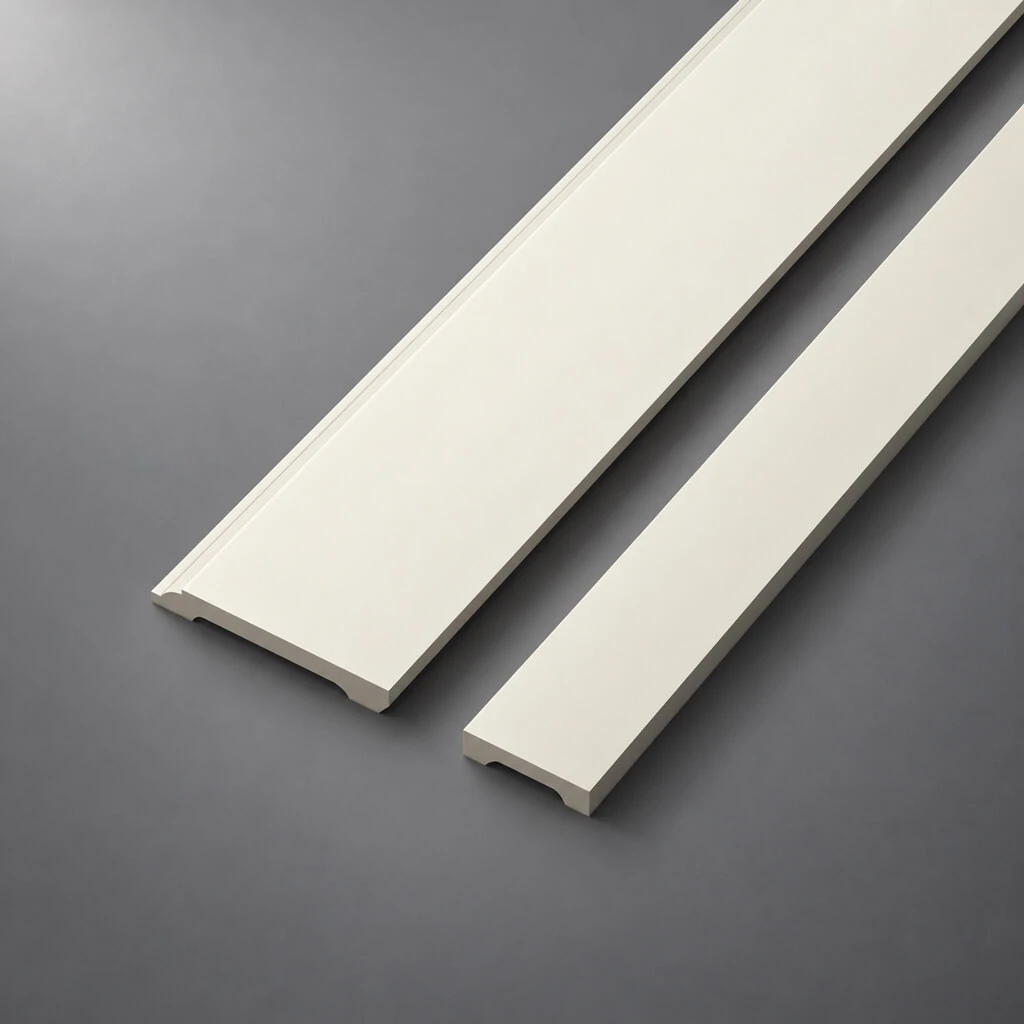
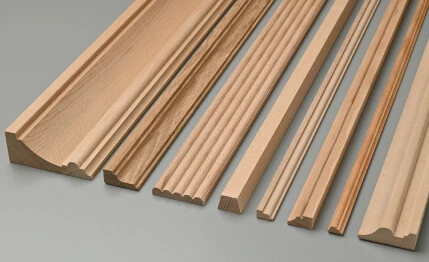
- Smooth profiles
- Classical profiles with relief cross-section
- Relief moldings with ornament
- Paintable Molding
- Ready-made decorative sets
- What to Buy Together with Wall Moldings
- Corner Elements
- Central overlays
- Ornamental inserts
- Mounting adhesive
- Ready-made sets
- Why polyurethane wall decor is more convenient than plaster and heavy decor
- Low weight
- Mounting with adhesive
- Clear relief
- Stable geometry
- Moisture resistance
- Repaintability
- How to choose polyurethane wall moldings by interior style
- Classic
- Neoclassicism
- Modern Interior
- Subtle relief for a neutral interior
- Pronounced architectural composition
- Table: Selecting molding by room and style
- Mistakes When Choosing Wall Mouldings
- Too small a profile on a large wall
- Overly complex relief in a small space
- Missing corner elements where a frame is needed
- Mixing different decorative series
- Choosing facade or ceiling intent instead of wall
- Where to buy polyurethane wall moldings
- How to choose a profile
- How to choose compatible elements
- When to take a ready-made kit
- What to look for: relief, geometry, compatibility, length, installation diagram
- FAQ: Answers to popular questions about polyurethane wall moldings
- Which polyurethane moldings are suitable for walls?
- What is better for a wall: molding or stucco?
- Can polyurethane moldings be glued to the wall without screws?
- How to assemble a frame on the wall from moldings?
- Are corner elements needed for wall moldings?
- Can Polyurethane Moldings Be Painted?
- What to buy together with wall moldings?
- Are such moldings suitable for the hallway and living room?
- How much molding is needed for one room?
- What width of molding is suitable for ceilings of 2.7 m and 3.5 m?
- How long does polyurethane molding last on the wall?
- What is stucco decoration and how much does it cost?
- Are moldings suitable for decorating walls in the Provence style?
- Can decorative molding be used on walls in apartments with low ceilings?
- About the Company STAVROS
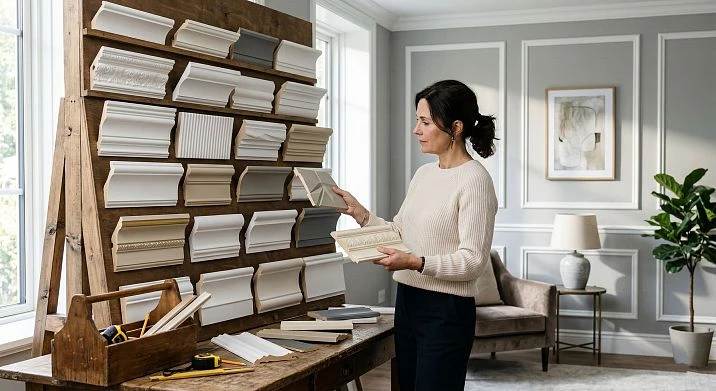
There are interiors that are memorable at first glance—and there are those that are 'almost good.' The difference between them is often explained by a few meters of molding on the wall. PreciselyPolyurethane wall moldingsthey transform a flat plastered surface into an architecturally structured space: with rhythm, framed divisions, decorative accents, and a character that cannot be achieved with either paint or wallpaper.
This is why the query "Molding for wallsis one of the most stable in the interior decor sector. People are not just looking for a profile; they are looking for a solution: how to make a wall interesting, how to create frames, how to decorate an accent zone above the sofa, how to zone a living room without partitions, how to give an entrance hall a representative look.
Moldingmade of polyurethane answer all these questions—and do so with incomparable installation convenience: lightweight, glued with liquid nails, cut with a regular saw, painted with any paint, and weighing dozens of times less than plaster. This is not a compromise; it is the evolution of decor.
In this article—a detailed practical breakdown: whatPolyurethane wall decoris, where to use it, how to choose, what to buy as a set, and what mistakes to avoid. Without unnecessary words, only the essence.
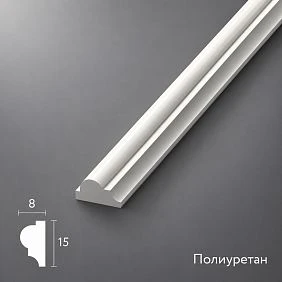
What are polyurethane wall moldings
Let's start with the most important:polyurethane wall moldingsis not just a decorative strip. It is an architectural tool that works through the principles of visual spatial logic.
Polyurethane as a material for decor appeared relatively recently—compared to plaster and stucco molding. But it very quickly took a dominant position in residential and commercial interiors precisely because it removed the main barriers of traditional molding: weight, installation complexity, labor-intensive fitting, and high labor costs.
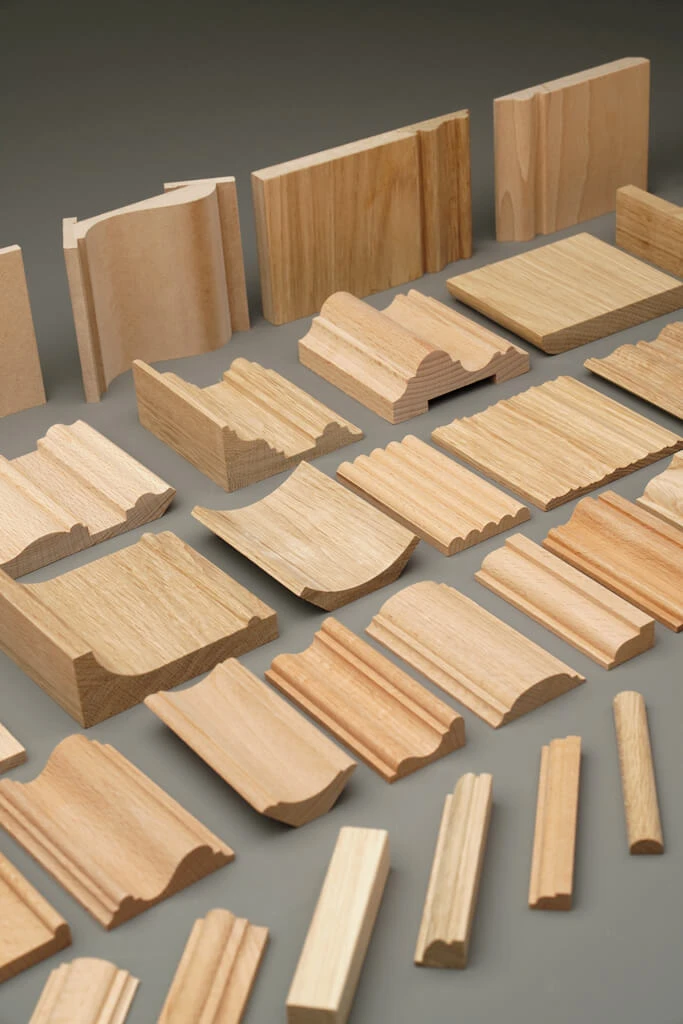

How does wall molding differ from other moldings?
Wall molding is a profiled trim designed for installation directly on the vertical surface of a wall. Unlike a cornice (which runs along the perimeter of the ceiling) or a baseboard (which runs along the lower perimeter of the wall), wall molding operates in the middle zone—it creates frames, decorative panels, horizontal bands, and vertical accents.
This is a fundamentally different function. A cornice finishes the wall from the top, a baseboard from the bottom, while wall molding structures the surface itself: it divides it into fields, creates rhythm, and forms visual zones.
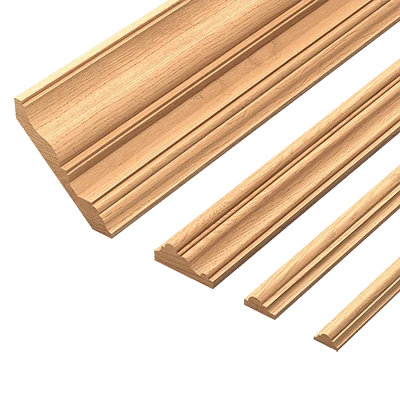
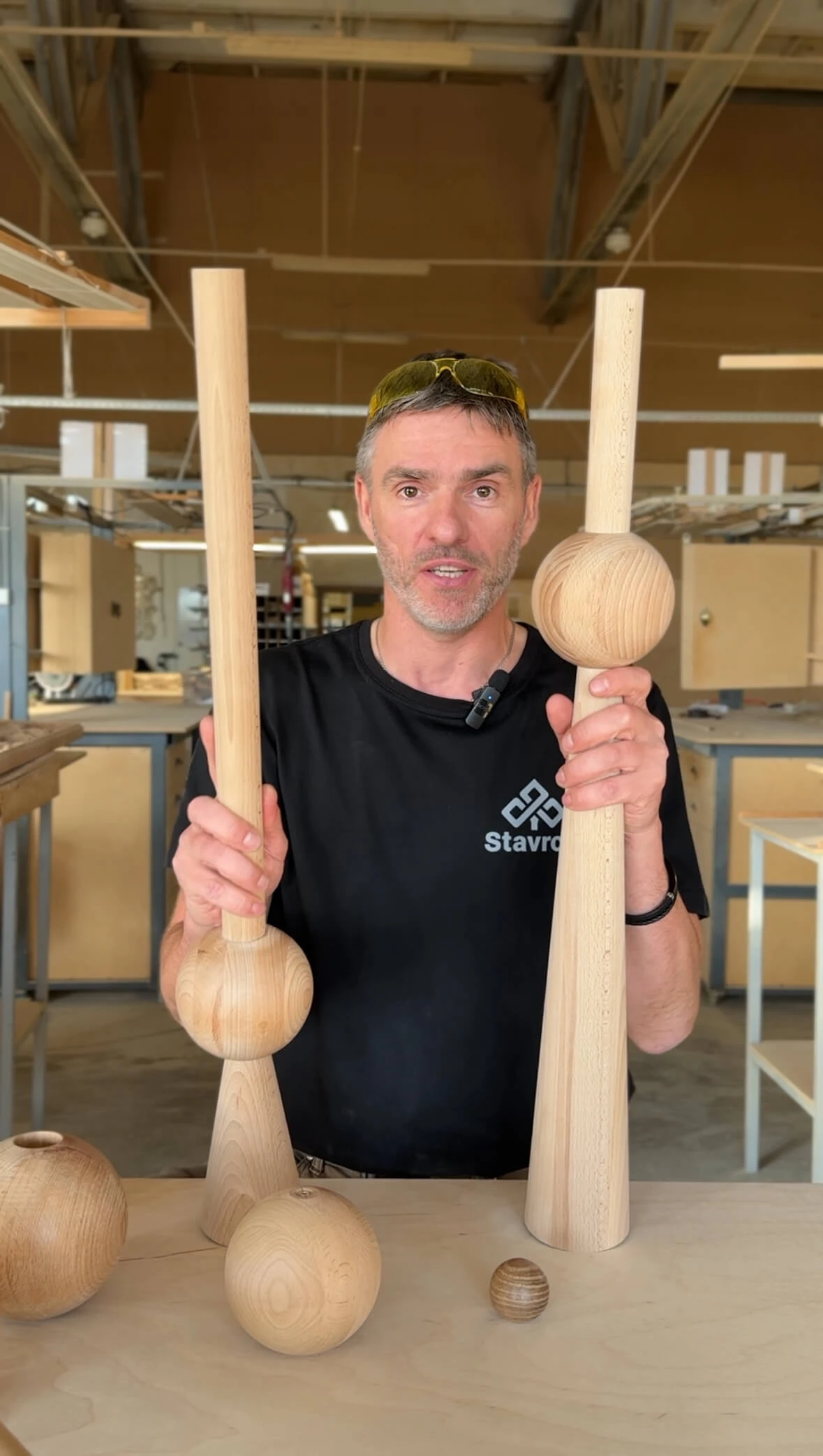
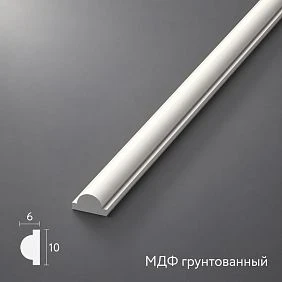
Our factory also produces:


Where are wall moldings used?
The scope of application is significantly broader than many imagine:
-
Decorative wall frames—rectangular or square frame panels, popular in classic, Provencal, French styles;
-
Horizontal bands—molding runs along the entire perimeter of the wall at a certain height (usually 800–1200 mm from the floor), separating the lower and upper zones;
-
Accent walls—one wall in a room receives a decorative structure made of moldings, while the others remain neutral;
-
TV zone design—a frame around the TV or a decorative panel behind it;
-
Space zoning—moldings visually divide a large room into functional zones without partitions;
-
Corridors and hallways are the most 'transit' spaces, where wall decor works especially expressively.
Get Consultation
Why polyurethane is often chosen for walls
Three main arguments in favor ofpolyurethane moldingfor walls:
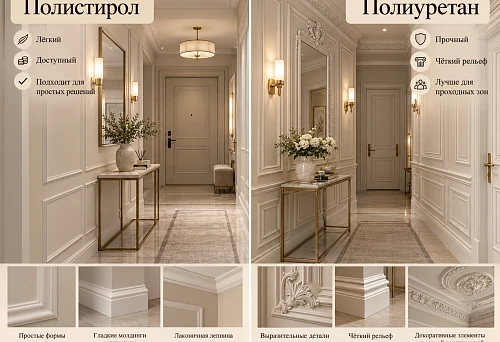
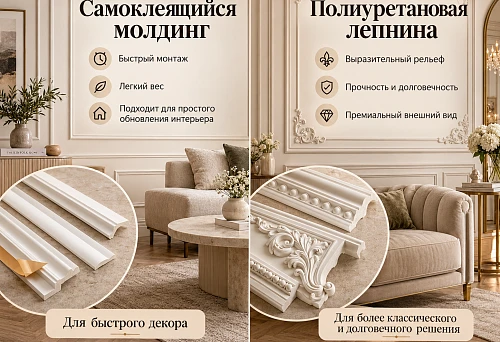
First — lightness. A polyurethane profile weighs 15–20 times less than a gypsum counterpart of the same cross-section. This means it holds on with adhesive without additional fasteners, doesn't create load on the wall, and doesn't require special supporting structures.
Second — precision of relief. Polyurethane is cast in molds with high detail: even the thinnest ornamental lines are reproduced with a clarity unattainable in plaster technique.
Third — practicality of installation. Installation is completed in one day: measure, cut, apply adhesive, press. No drying, no wet work, no dust.
Where to use polyurethane moldings on walls
Let's talk about specific scenarios — because it's the scenario that determines which molding, where, and in what quantity.
Wall frames: a classic of modern interior
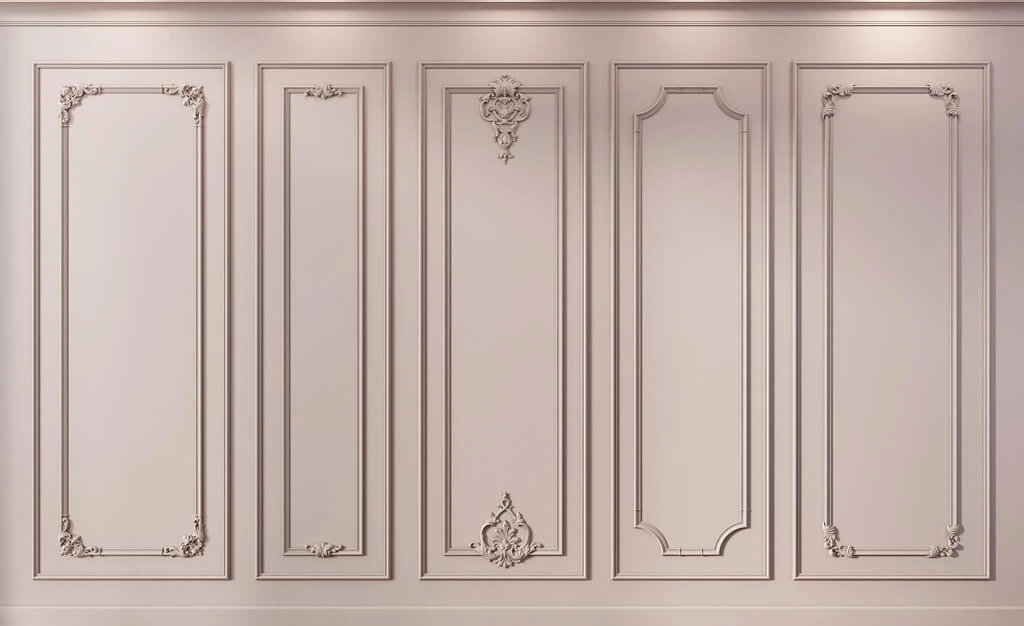
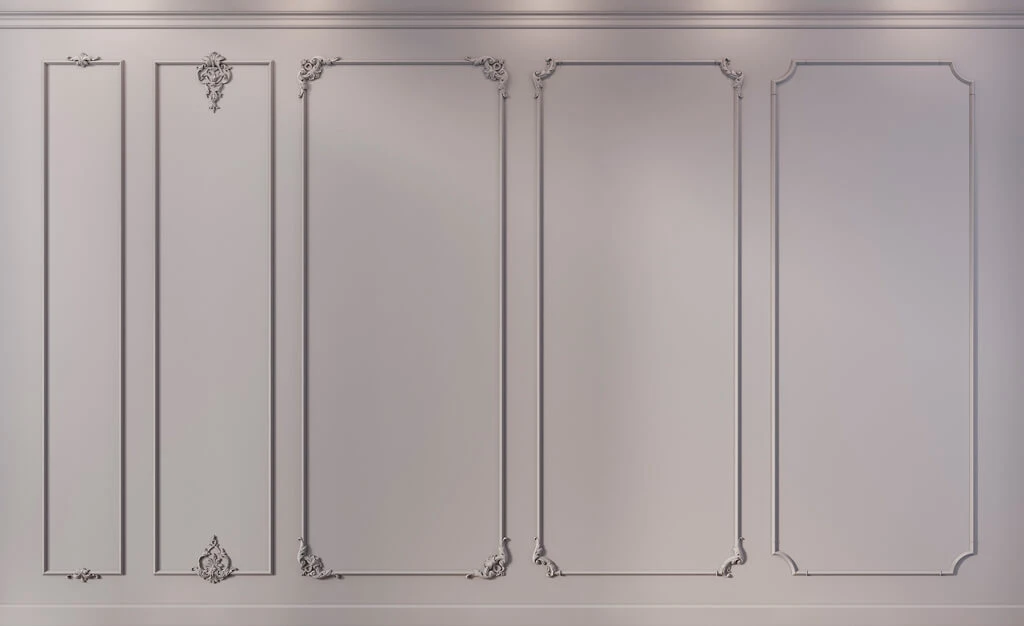
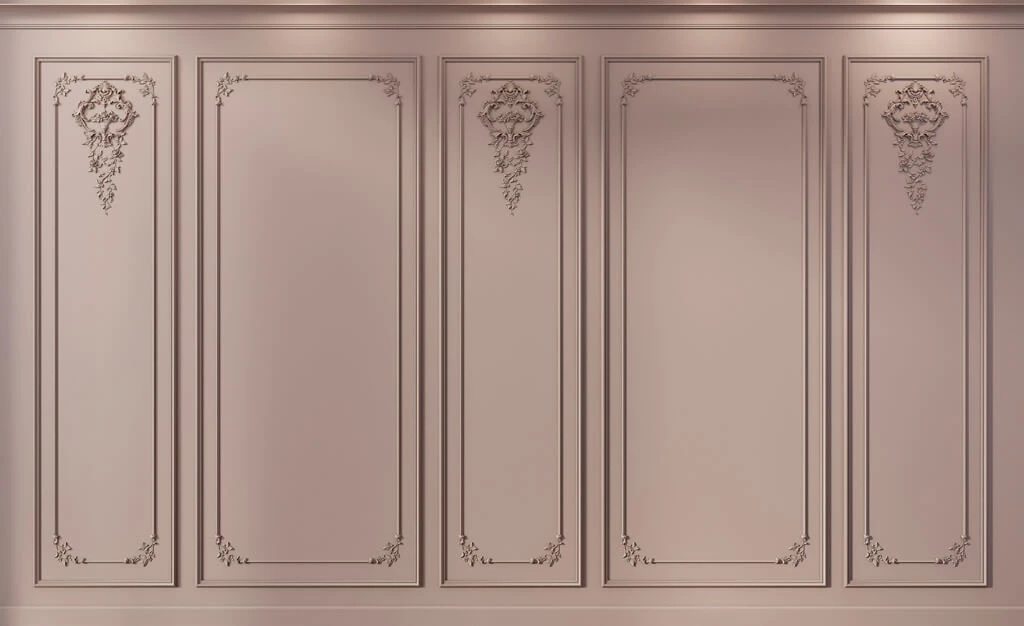
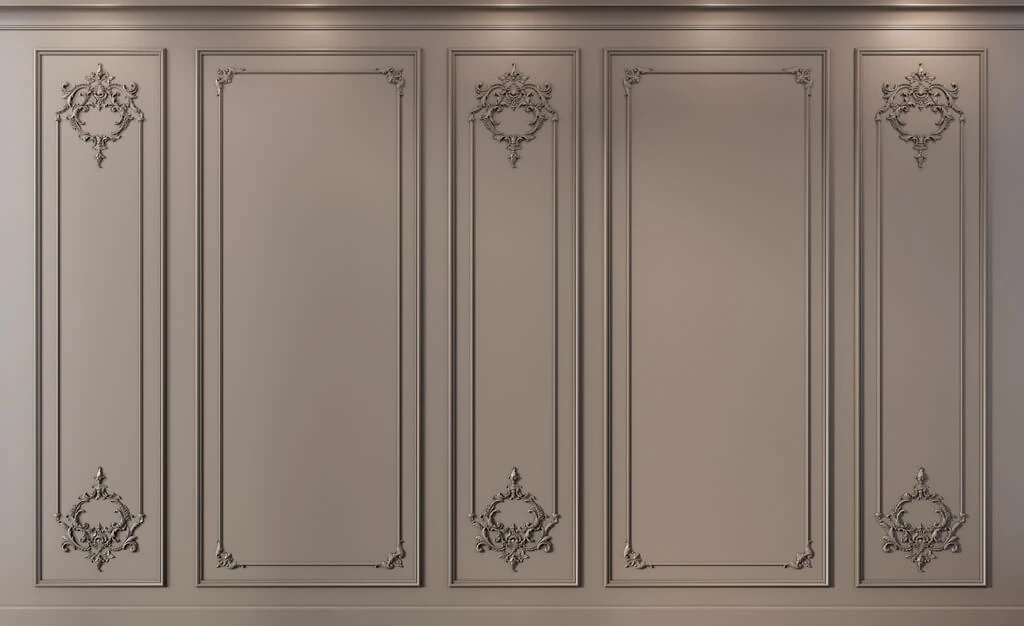
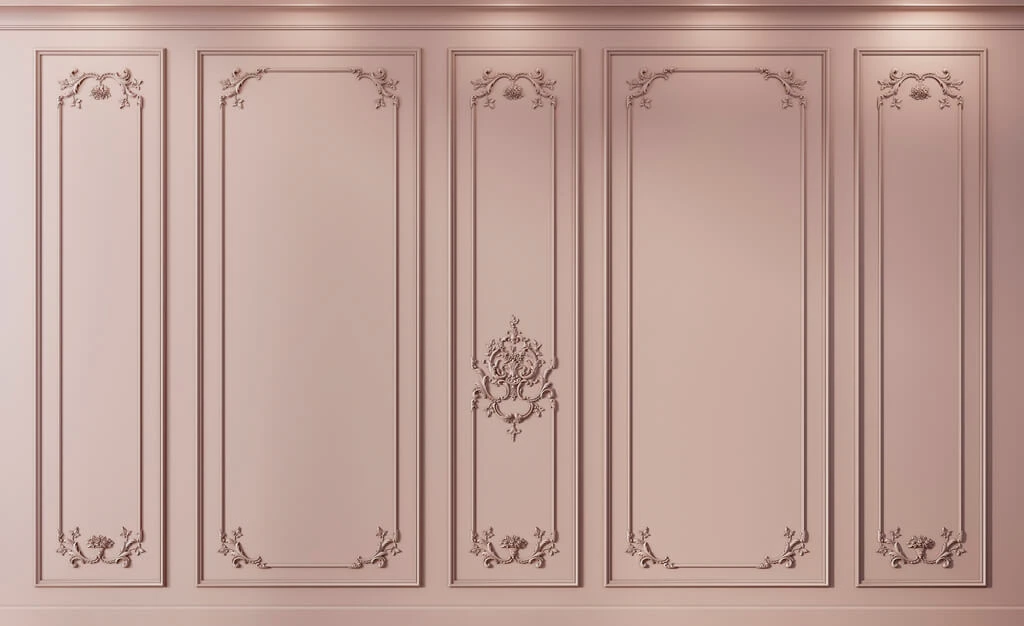
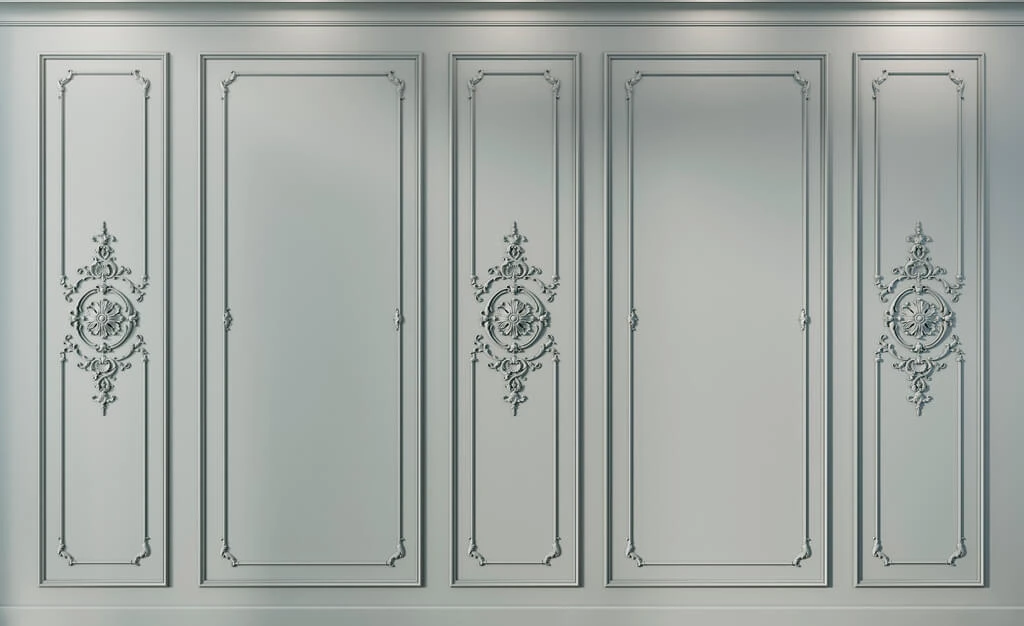
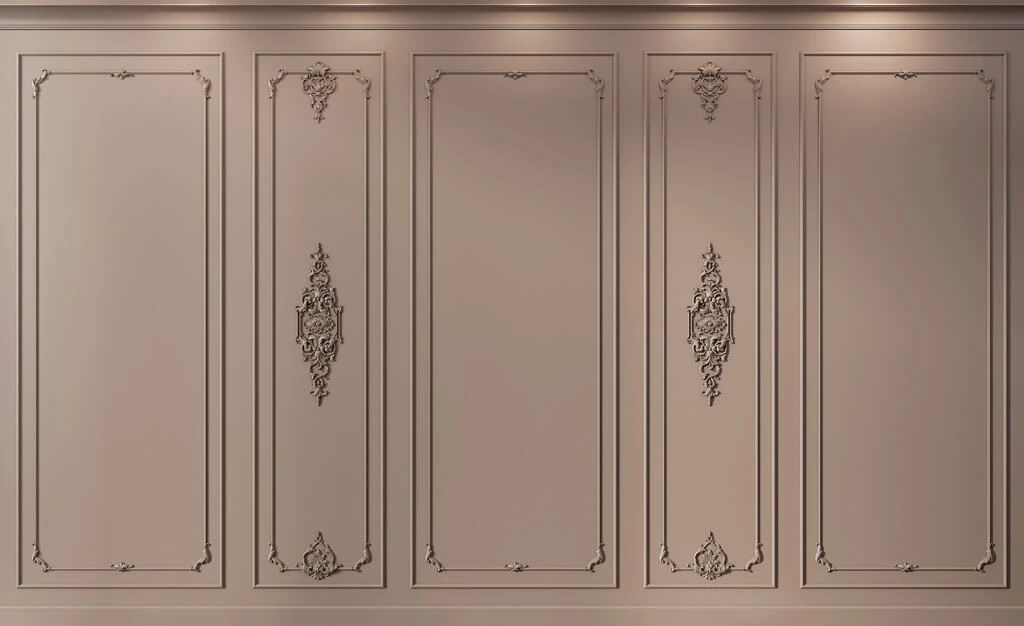
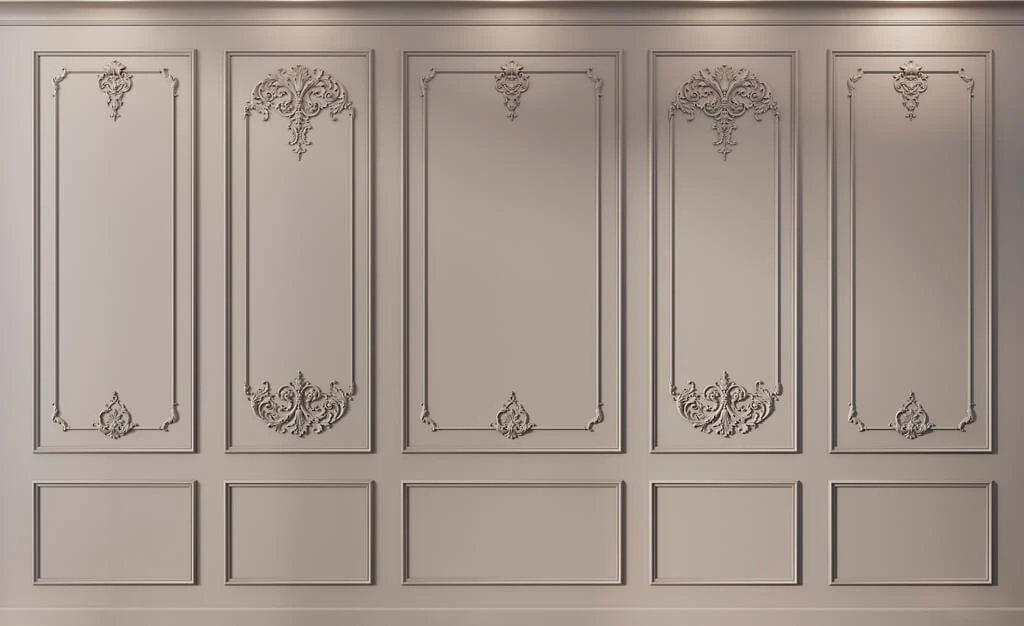
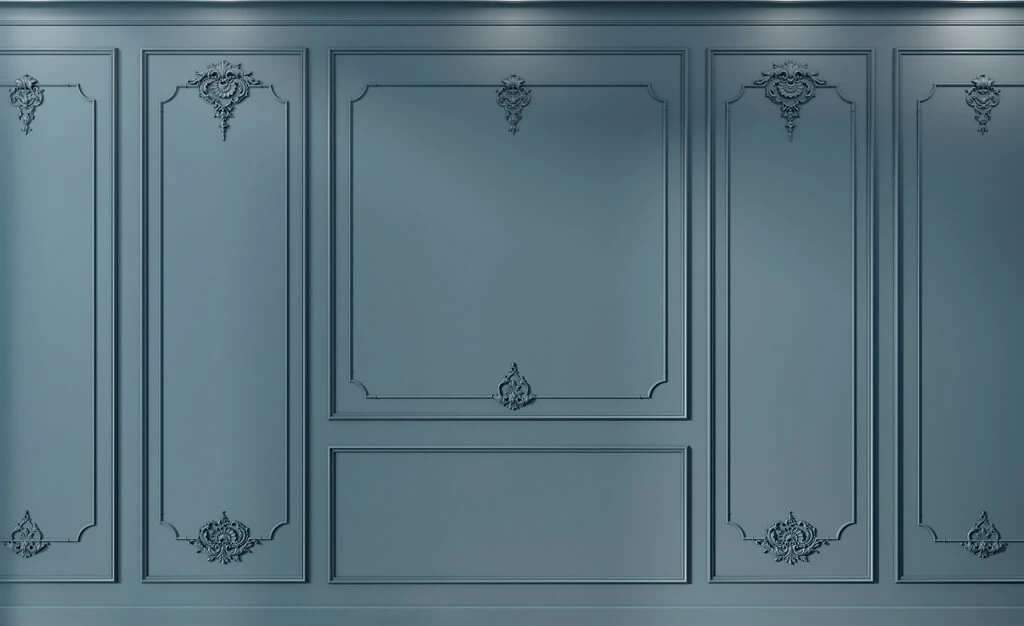
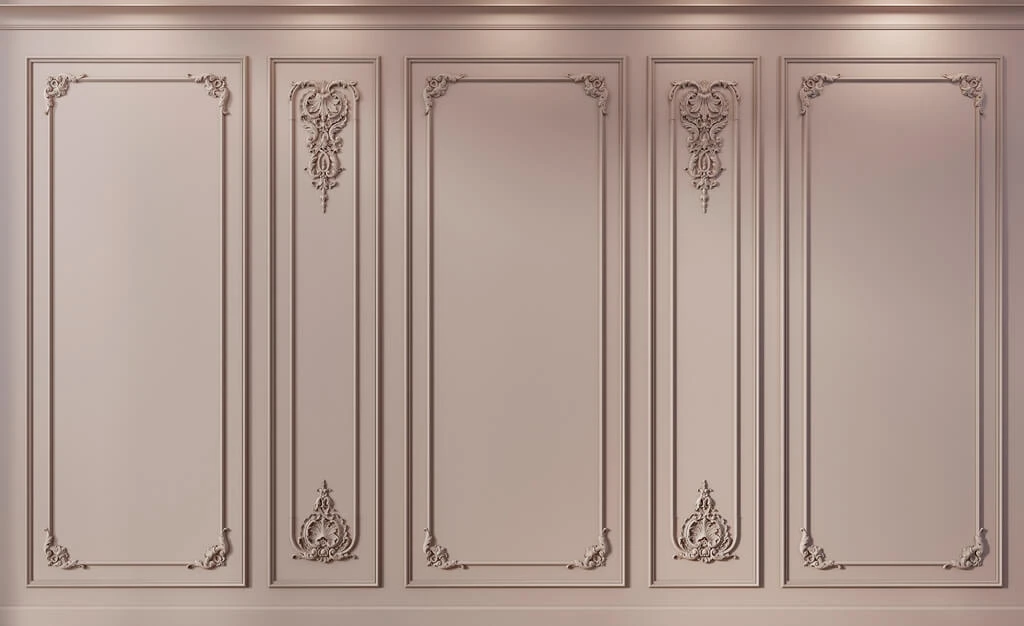
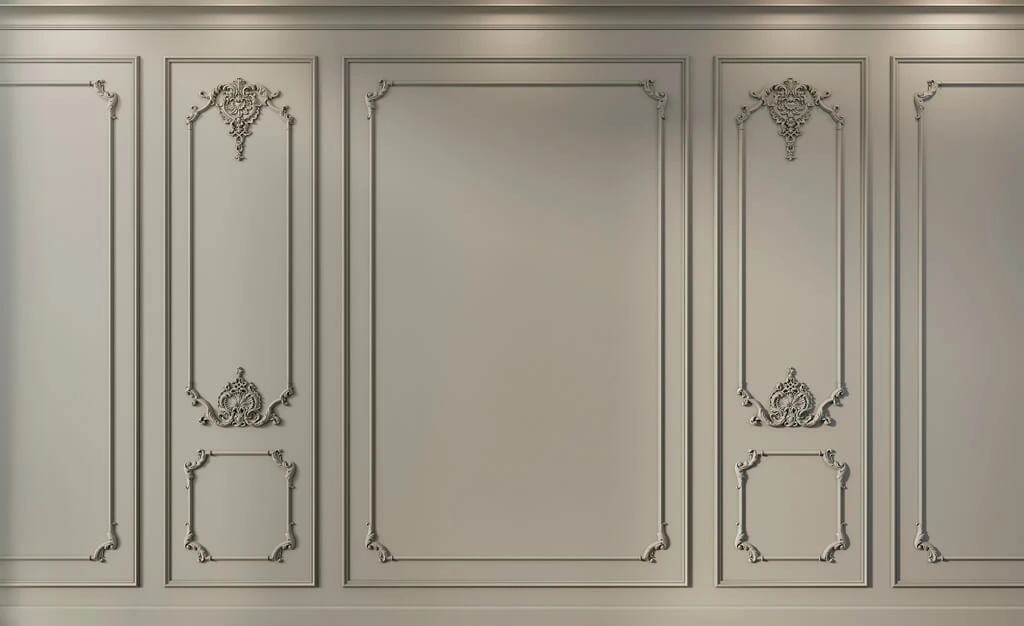
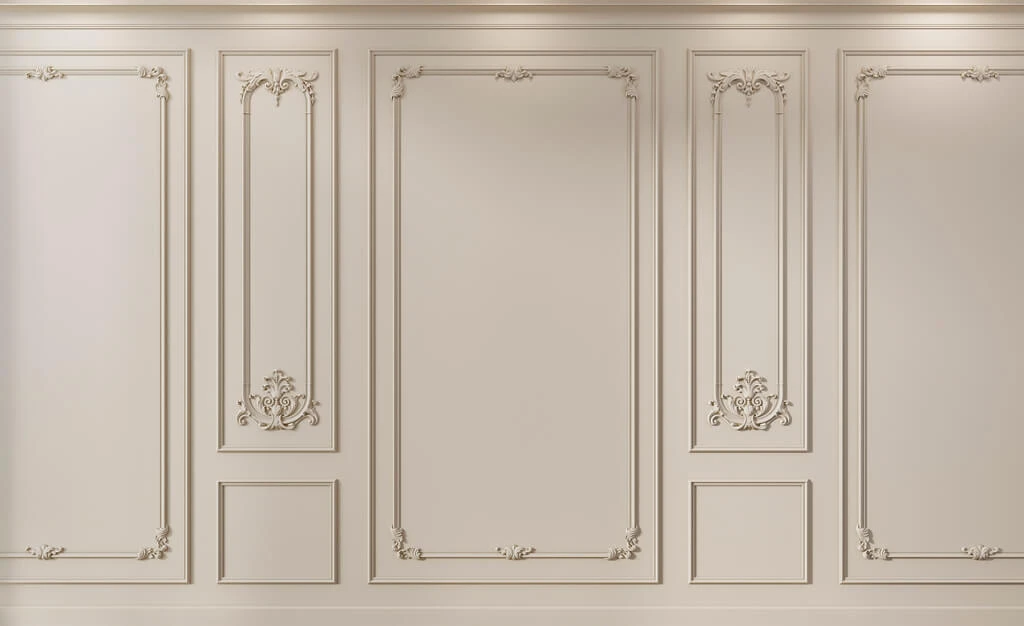
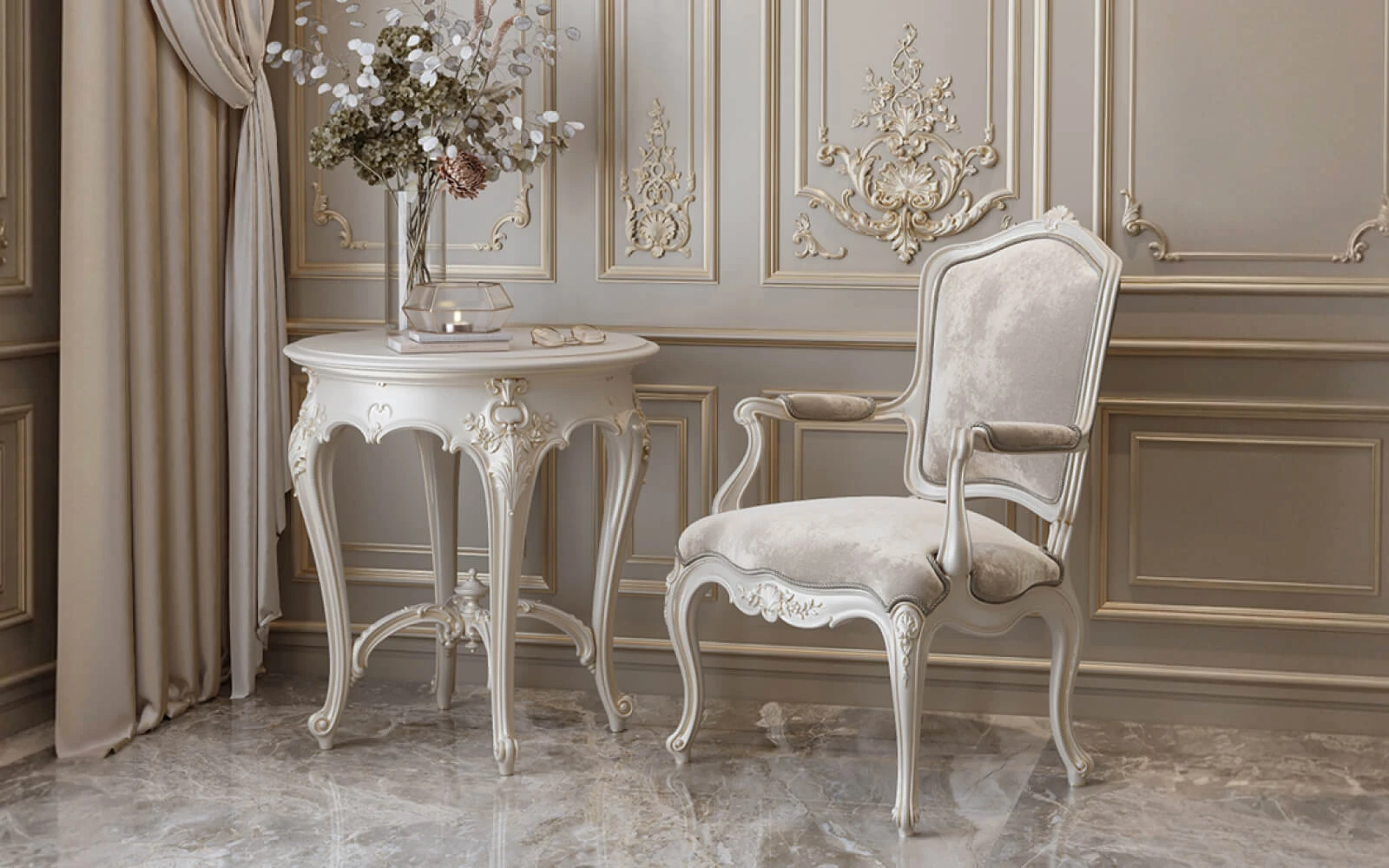
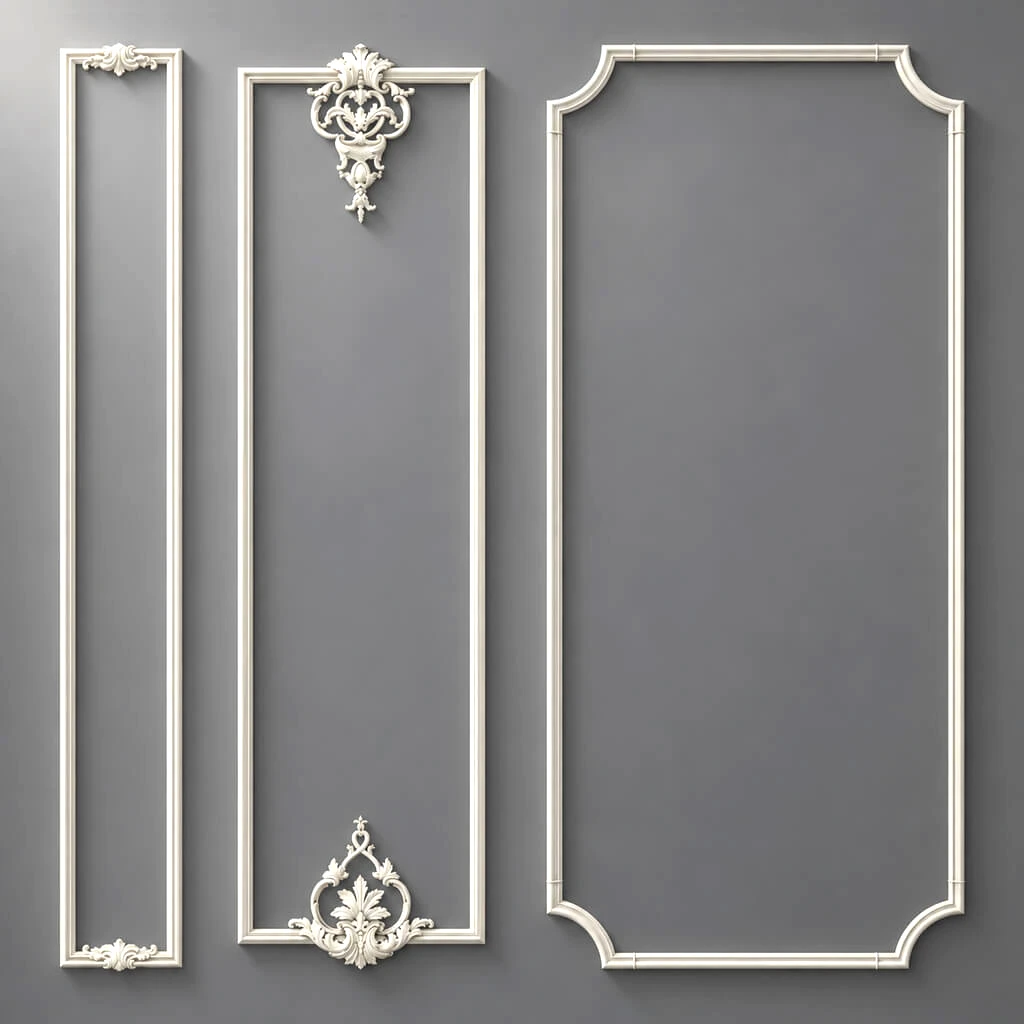
Decorative frame panels on the wall are one of the most popular techniques in modern interiors inspired by classicism. A grid of rectangular frames is assembled from straight moldings and corner elements, covering the entire wall or part of it. After painting in a single color with the wall, the frames create a relief structure that works through light and shadow.
For assembling frames, straight profiles and special corner elements—connectors—are used, which form a clean right angle without 45° miter cuts. This significantly simplifies installation and allows for perfect geometry even without professional tools.
Decorative wall panels
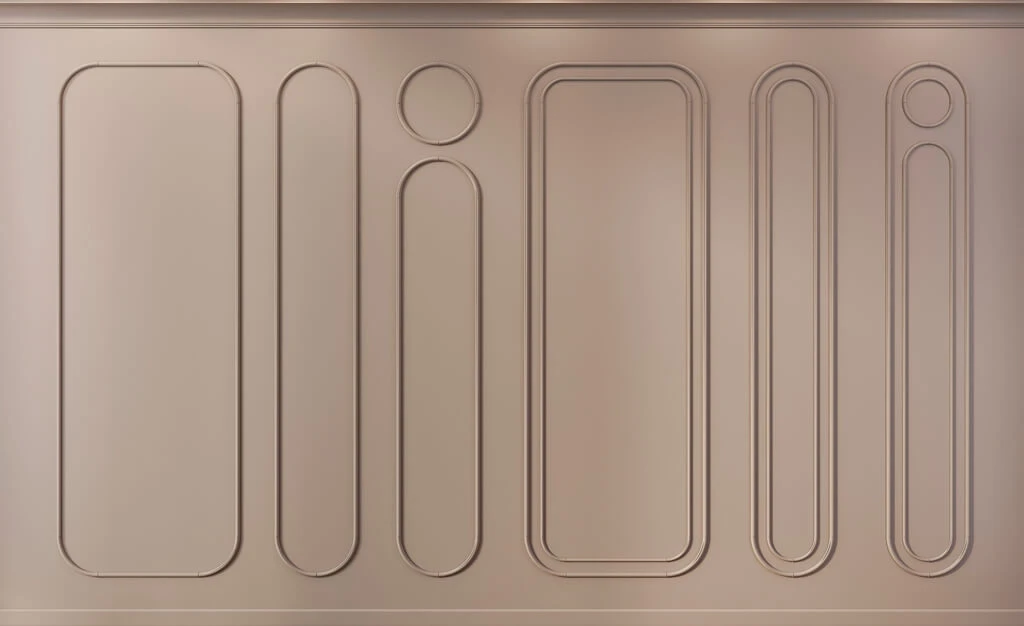
The option with decorative panels—when molding frames individual sections of the wall, creating 'insert' fields: for painting, wallpaper or fabric, or decorative plaster of a contrasting color. This is a more complex, multi-layered decorative system—here, the molding acts as a boundary between different finishing zones.
Highlighting the TV Zone
The TV zone in the living room is one of the most common tasks forwall moldings made of polyurethane. Molding forms a frame around the TV or a decorative niche behind it, creating an accent 'portal' on the wall. Often in this zone, molding is combined with a contrasting wall color inside the frame—this creates an expressive, visually strong focal point for the entire living room.
Accent walls
Accent wall—one wall with a decorative program while the others remain neutral. For an accent wall,Decorative wall moldingis the ideal tool: molding creates a structure that attracts the eye but doesn't 'shout'. An accent wall in the bedroom behind the headboard with frame panels made of molding is a design technique that works flawlessly.
Decorating the hallway, bedroom, living room
Each room has its own logic of application:
-
Hallway — a horizontal molding at a height of 900–1100 mm creates a 'wainscoting' division of the walls, giving the corridor a formal, 'lived-in' character;
-
Living room — frame panels around the entire perimeter or only on accent walls; molding around the fireplace area;
-
Bedroom — delicate frames above the headboard of the bed, a horizontal molding at a level of 1400–1600 mm.
Wall decor in commercial interiors
Restaurants, hotels, premium-class offices, bank interiors, boutiques — anywhere that requires a formal, decor-rich interior.Plaster ornament for walls and ceilingsPolyurethane moldings — a standard tool for professional interior designers in commercial projects where results matter within a reasonable budget.
Which polyurethane wall moldings to choose
The choice begins with understanding the task. Different tasks — different profiles.
Smooth Profiles
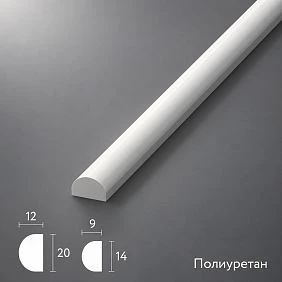
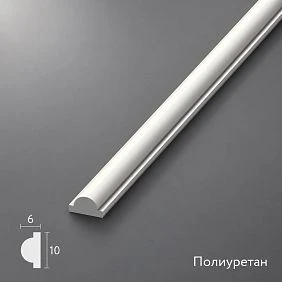
Smooth molding — a rectangular or stepped cross-section without ornamental relief. This is the most versatile type for walls. When painted the same color as the wall, it creates a clean geometric structure: frames are visible only due to shadows, not color contrast. Laconic, modern, architectural.
Smooth profile — the best choice for neoclassical interiors, Scandinavian classics, French 'en blanc' style (all white). It does not require strict stylistic adherence and works in almost any context.
Classical profiles with relief cross-section
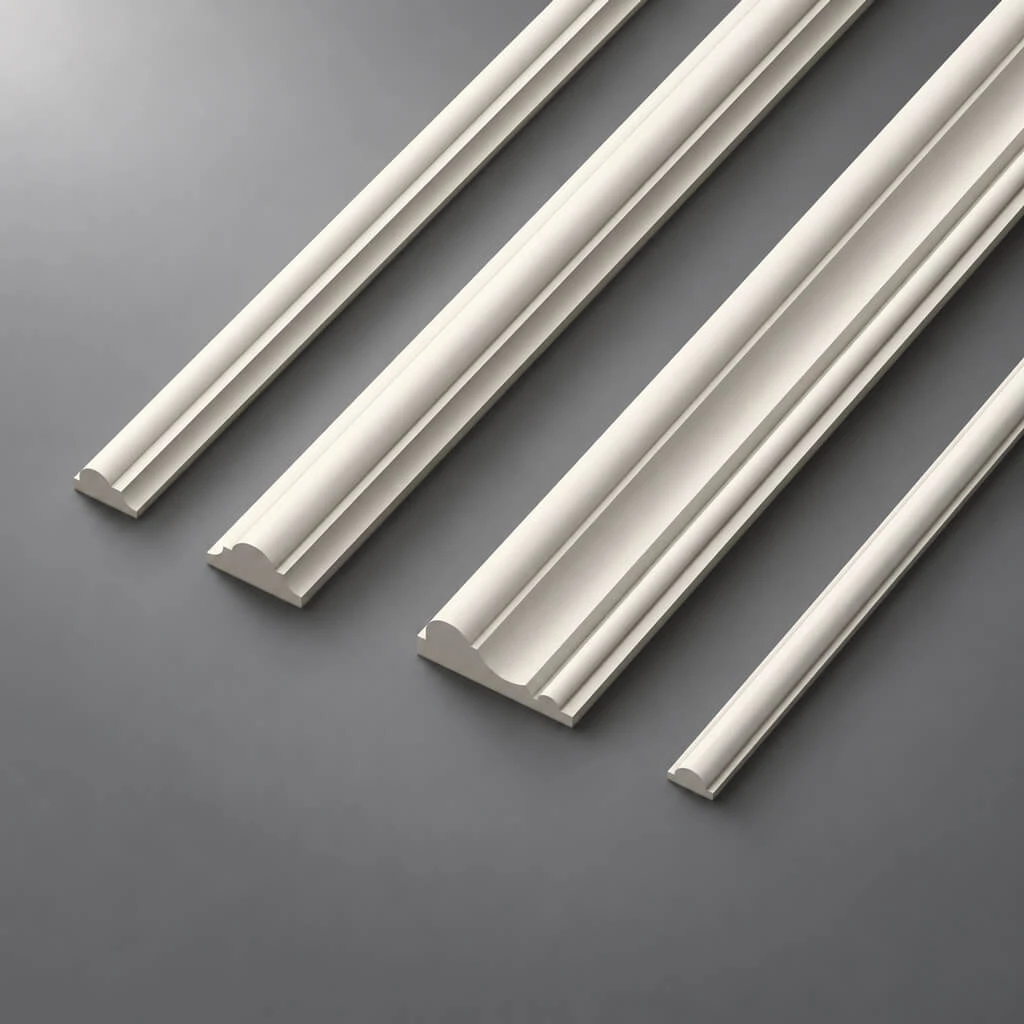
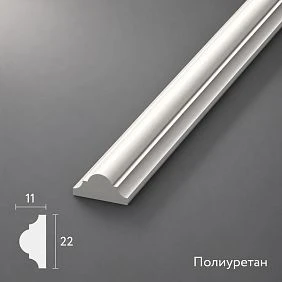
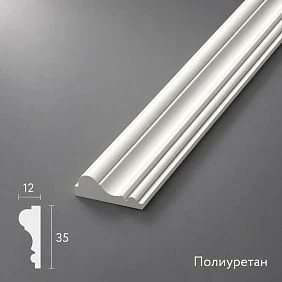
Profiles with historical cross-sections — ovolo, cyma recta, cyma reversa, scotia — are classical architectural moldings used in European architecture since antiquity. They create rich chiaroscuro play: with grazing light, each height variation in the profile casts its own shadow, and the molding 'lives' in different lighting conditions.
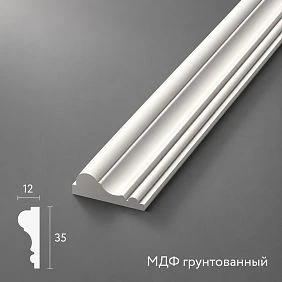
For classical, neoclassical, and Empire interiors — this is the correct choice. Profile width for medium wall frames — 35–60 mm.
Relief moldings with ornament
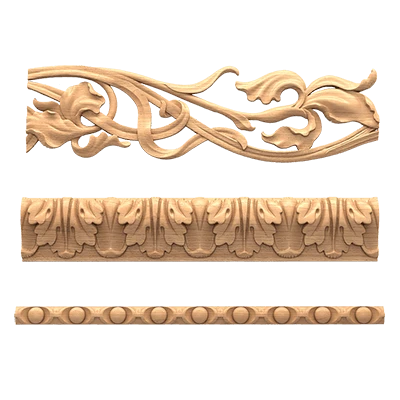
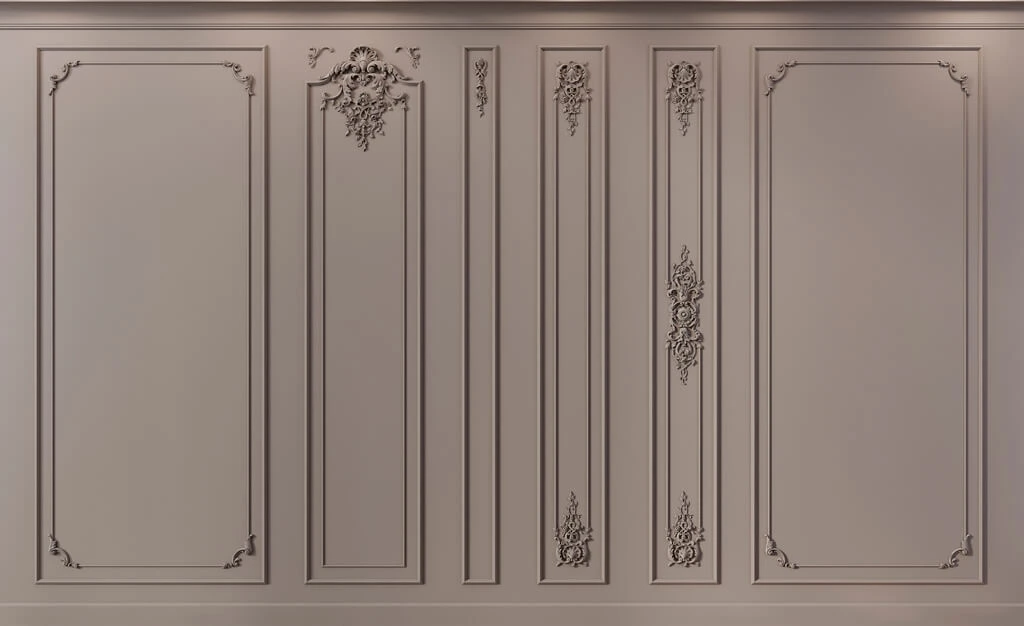
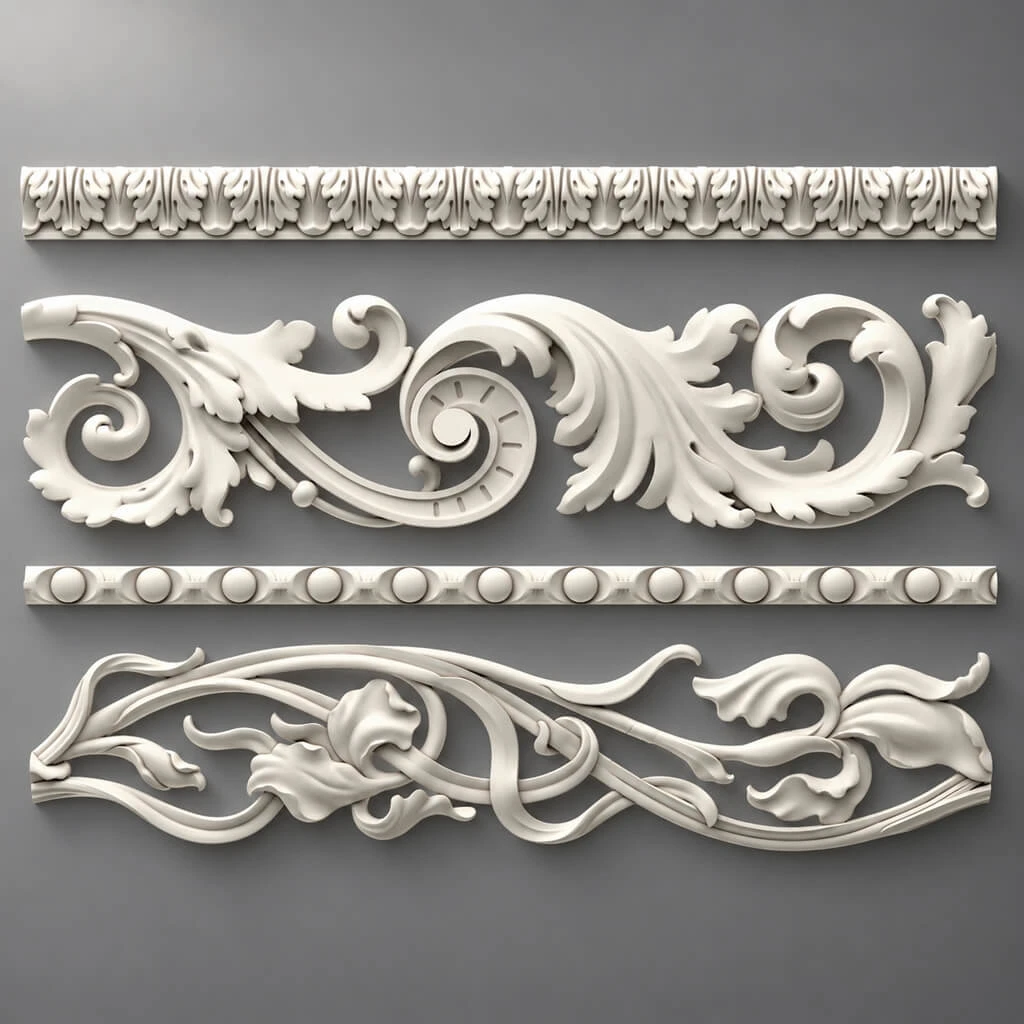
Polyurethane molding on wallswith ornamental relief — beads, leaf-and-dart, meander, acanthus band, braids — this is the highest category of wall decor. Such a profile requires a clear stylistic context: it is organic in Baroque, Classicism, Empire, historical Renaissance interiors.
Important point: ornamental relief on molding looks convincing only at a certain minimum scale — at least 50 mm in width. On a narrow profile, the ornament becomes 'crushed' and loses readability.
Moldings for painting
Mostpolyurethane wall moldingsare supplied in white or primed for painting. Painting with acrylic or water-based paint is a standard and simple finishing operation: one coat of primer, one or two coats of paint. After painting, the surface acquires a matte or semi-matte appearance indistinguishable from a painted wall.
For monochrome interiors — white, light gray, pastel — the molding is painted the same color as the wall. The frame becomes 'invisible' in color but remains visible in relief and shadow. This is the highest class of wall decor: subtle, elegant, architectural.
For contrasting solutions, the molding is painted a darker shade than the wall — or vice versa, the wall inside the frame is painted a contrasting color. Both options create an expressive, accent result.
Ready-made decorative kits
Professional purchasing method — a ready-made kit for a specific scenario: straight moldings of the required length plus corner connecting elements plus, if necessary, a central decorative accent. Everything is compatible in profile, style, and size. This is how experienced craftsmen assemble framing systems: not by individual elements, but as a kit.
What to buy together with wall moldings
Molding is a linear element. To create closed frames, decorative panels, and complex compositions, additional elements are needed.
Corner elements
Corner connectors are a key element for assembling frames from moldings. They are mounted in the corners of the frame and provide a clear rectangular connection of profiles without the need for 45° cutting. This is fundamentally important for those who do not have a professional miter saw: corner elements make frame assembly accessible to virtually anyone.
Compatibility is a key requirement: the corner element must exactly match the molding profile in width and cross-sectional shape.
Central overlays
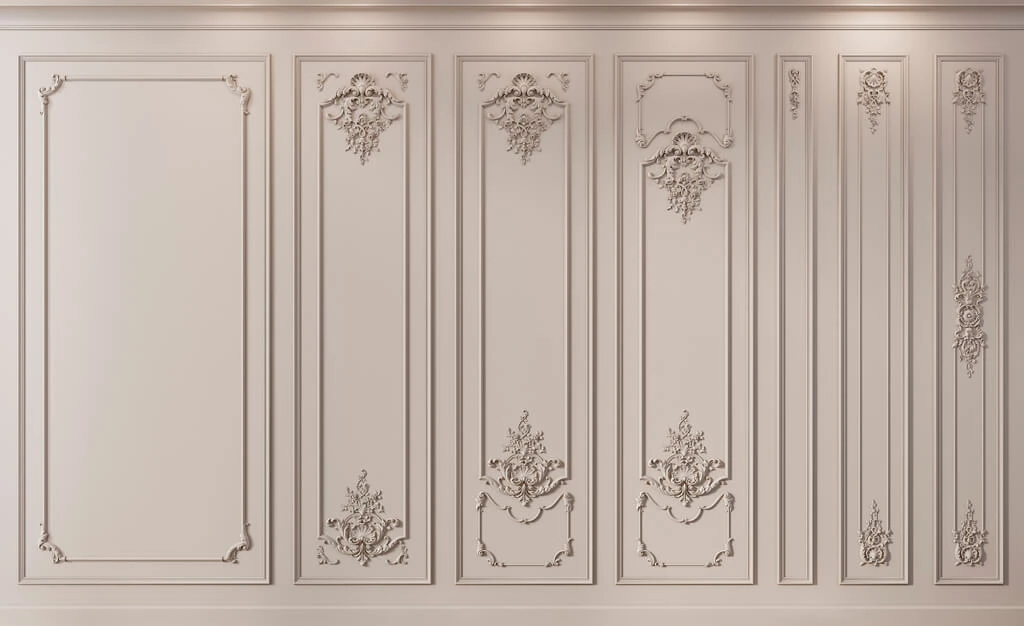
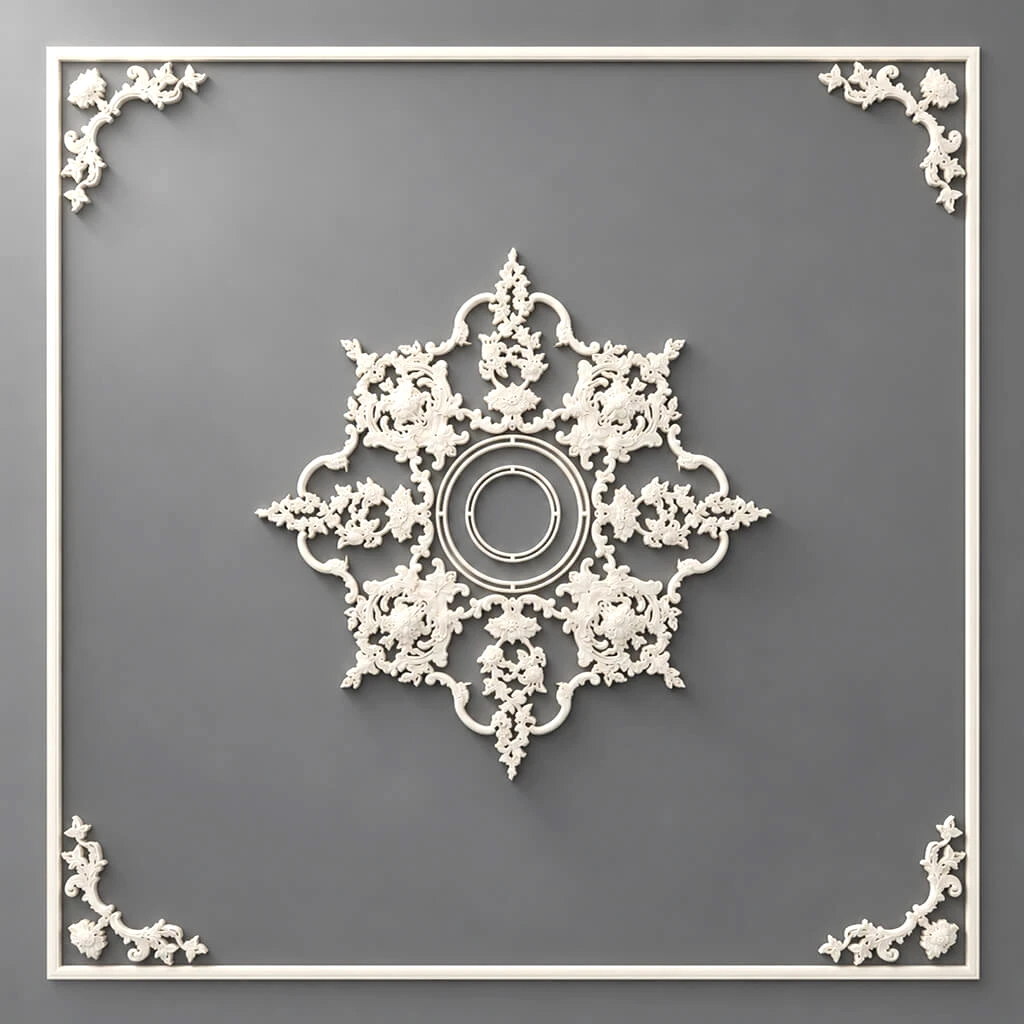
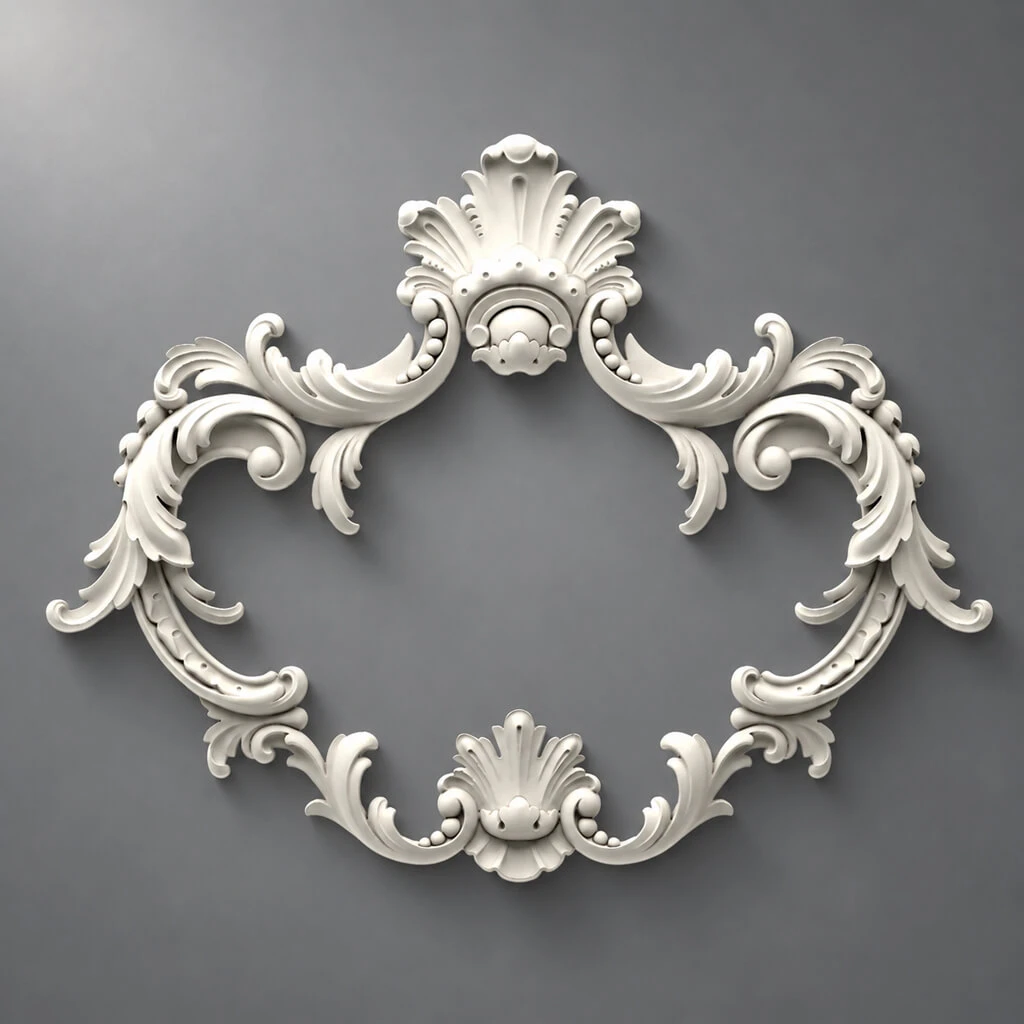
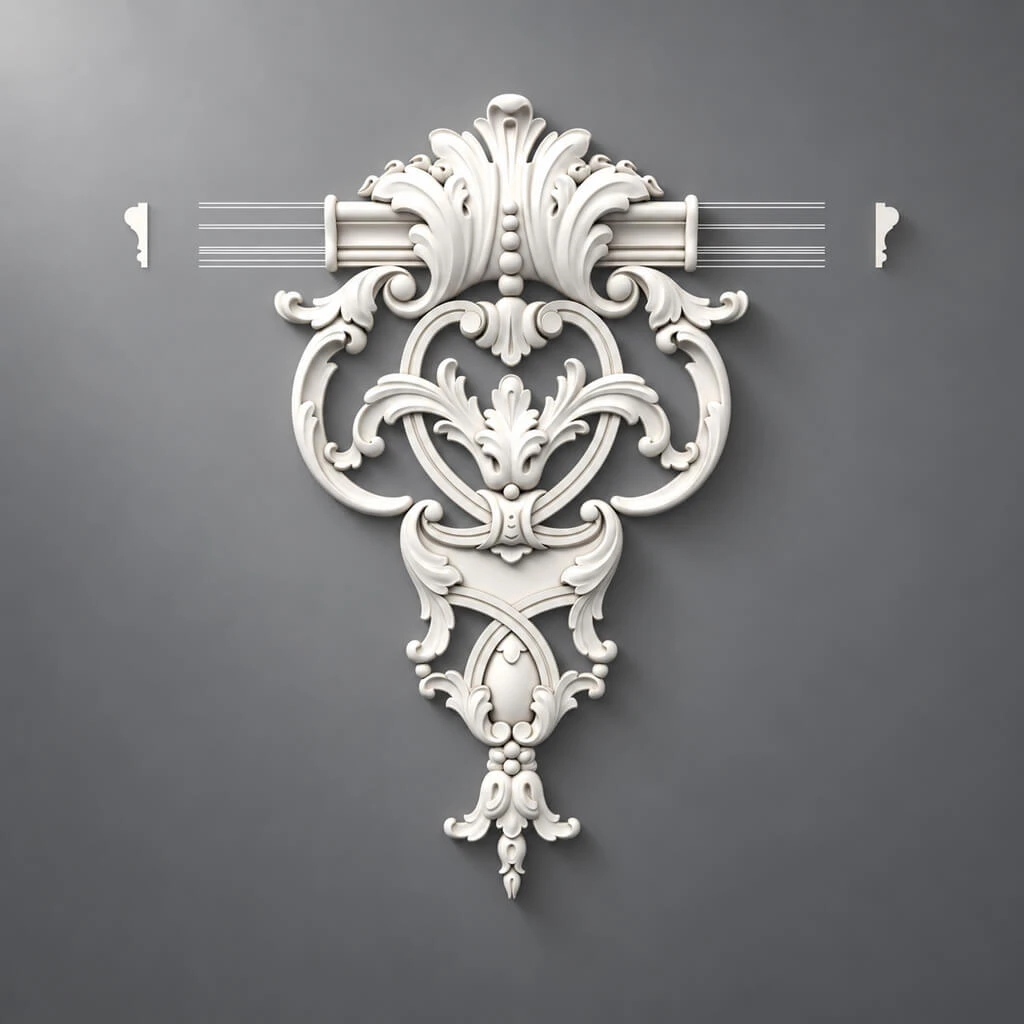
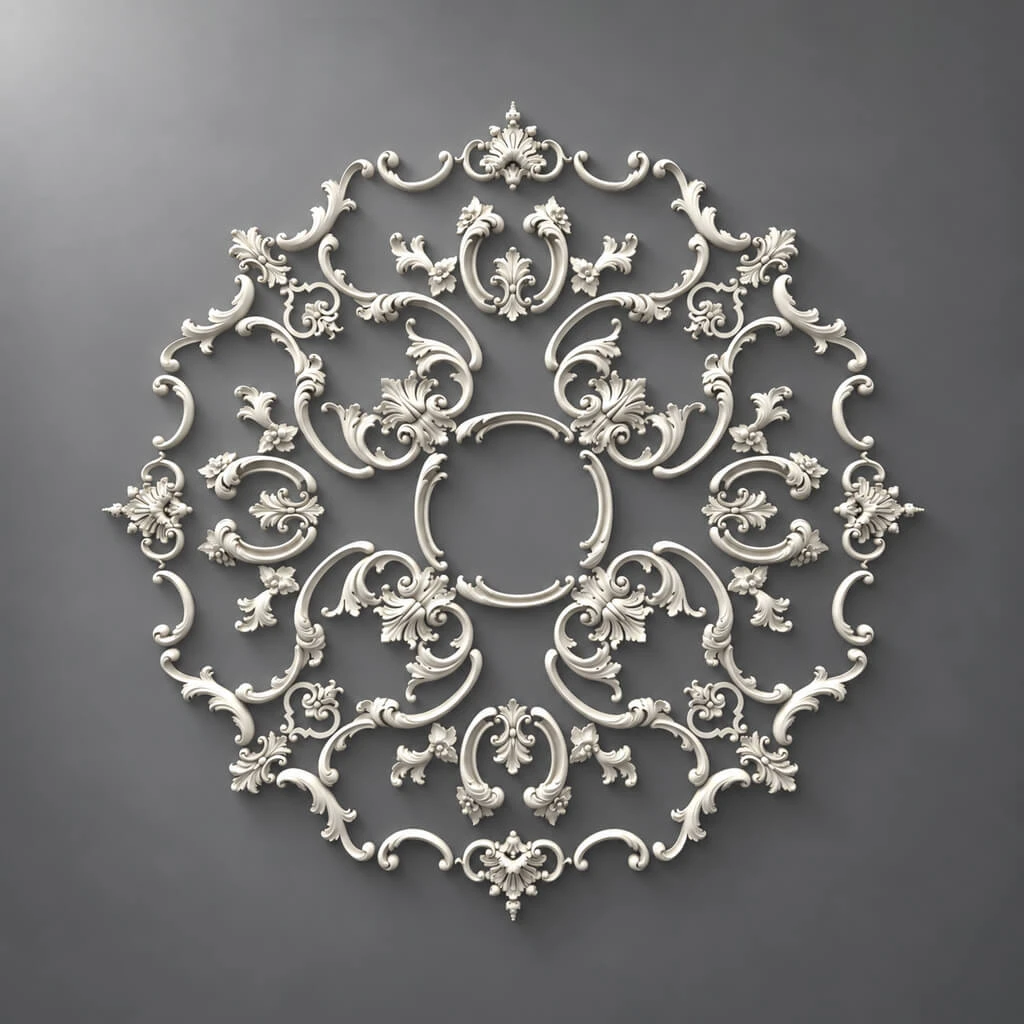
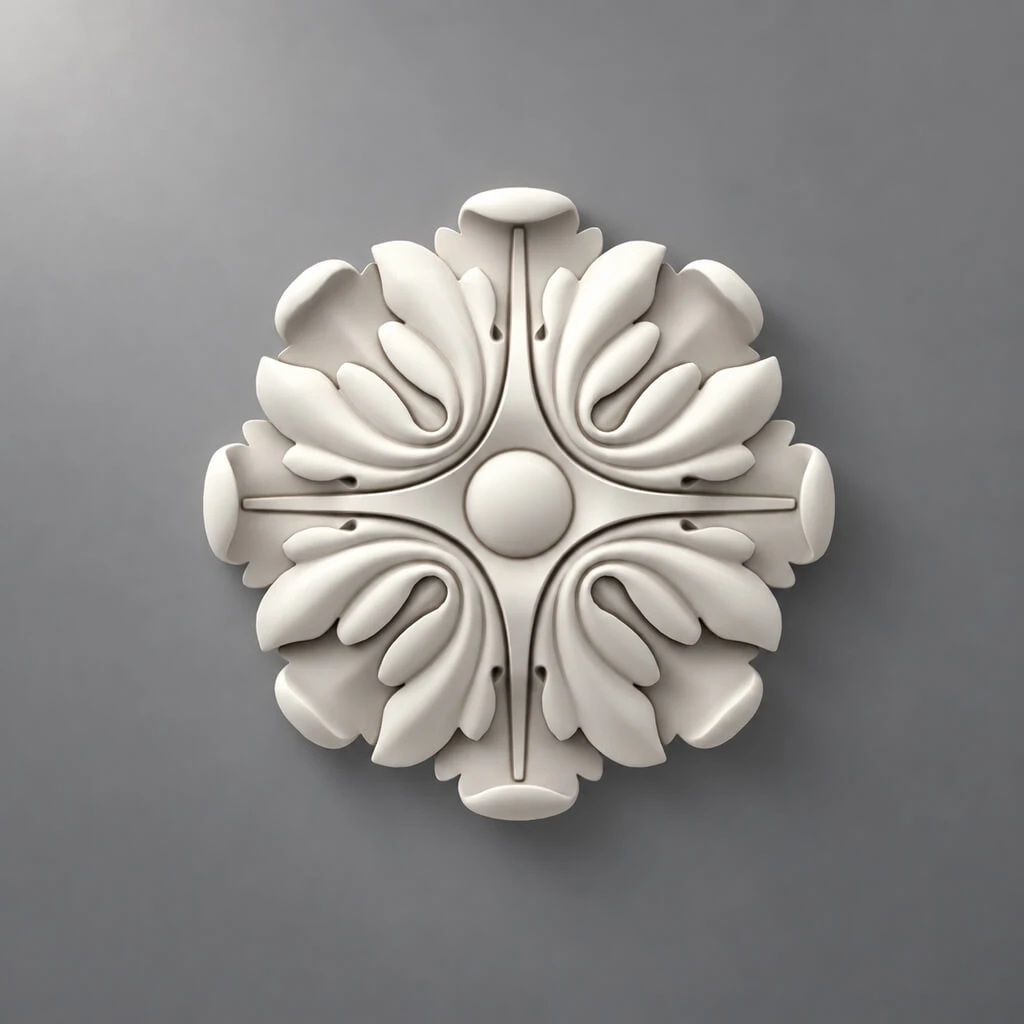
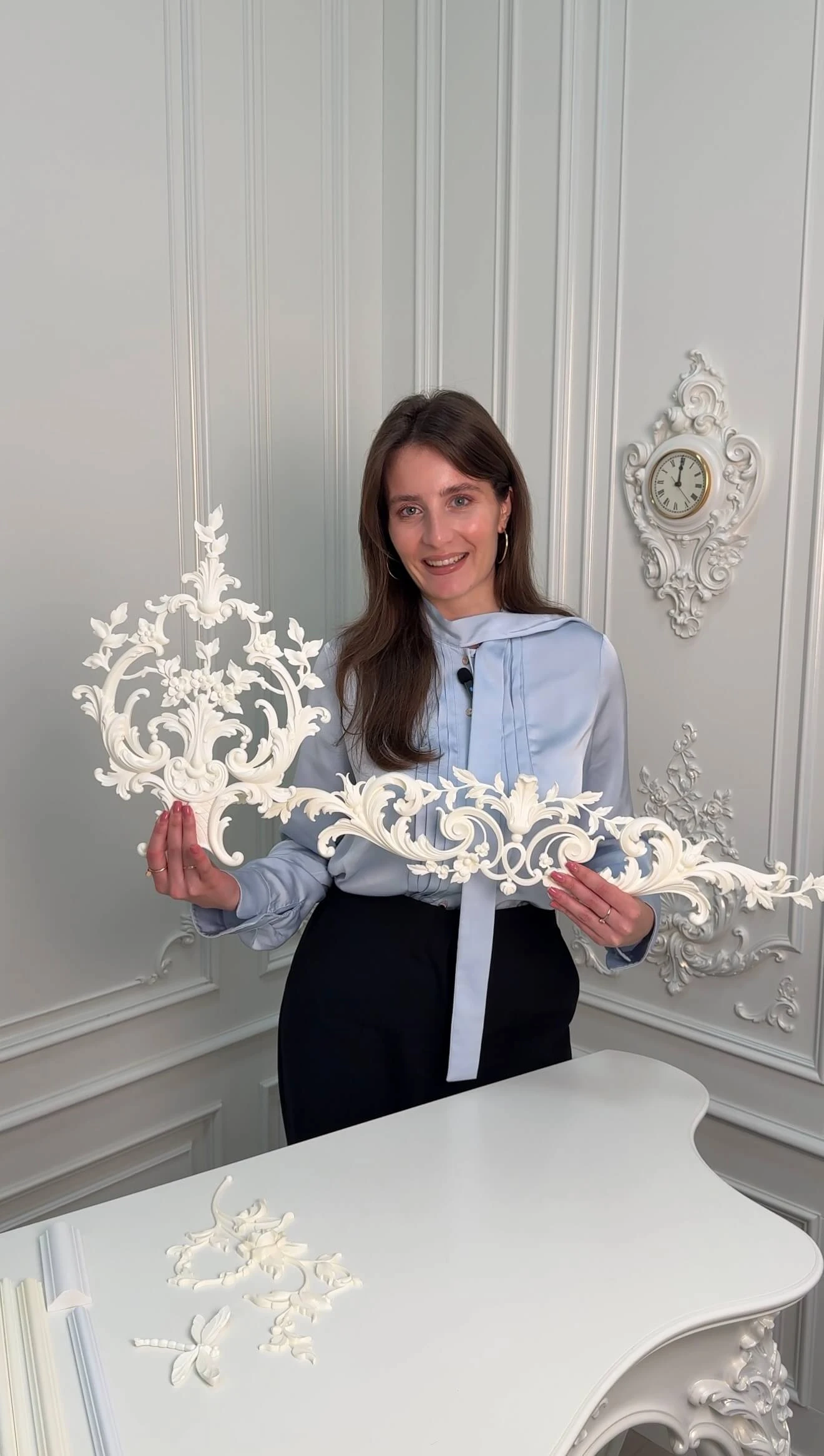
Central decorative overlays are installed in the center of the top rail of the frame or in the center of a wide field inside the frame. These are ornamental elements: cartouches with rocaille, rosettes, medallions, geometric ornaments. They elevate the decorative system from the level of 'architecture' to the level of 'furnishings'—adding individuality and an artistic accent.
Ornamental inserts
For horizontal bands and complex decorative programs, ornamental inserts are used—short decorative elements that are inserted along the profile as accent interruptions. This is a technique familiar to us from historical interiors: the molding runs horizontally, and at regular intervals, rosettes or cartouches are inserted into it.
Adhesive for installation
Buy Molded DecorationWithout the right adhesive, you risk the result. Polyurethane is installed using acrylic mounting adhesive, specifically designed for polyurethane decor. Solvent-based adhesives are categorically unsuitable: they destroy polyurethane from the inside. The correct adhesive not only holds the profile but also partially fills gaps, ensuring a smooth fit.
Ready-made kits
Buy wall decor made of polyurethaneBuying as a kit is the most professional approach. A kit for a standard frame includes four straight profiles and four corner elements—all compatible, all from the same series. You install a system, not select elements 'by eye'.
Why polyurethane for walls is more convenient than plaster and heavy decor
This section is not theory. These are arguments worth knowing before buying.
Low Weight
Standard polyurethane molding 50 mm wide weighs 150–200 grams per linear meter. A gypsum equivalent of the same cross-section weighs 2–4 kg per linear meter. That's a 15–20 times difference. This means:
-
Installation with adhesive without additional fasteners;
-
No load on walls and ceilings;
-
Easy transportation and storage;
-
Ability to work alone.
Mounting with adhesive
Finishing with stuccoPolyurethane molding is installed in one day: adhesive + pressing for 10–15 minutes + 24-hour drying. No wet plaster, no waiting for full crystallization, no gypsum solutions. This is work that can be done independently in an already finished, fully decorated room.
Clear relief
Polyurethane is cast in metal molds with micron precision. This means that even the finest details of the ornament are reproduced with perfect clarity—without cavities, smudges, or 'floating' relief, which are inevitable in plaster techniques.
Stable geometry
Polyurethane does not deform over time, does not shrink, and does not crack with seasonal temperature fluctuations. Wall frames remain geometrically precise after one year, five years, twenty years—if there is no mechanical damage.
Moisture resistance
Polyurethane does not absorb water and does not deteriorate under high humidity. This makes it suitable for corridors, hallways, and rooms with normal humidity conditions. With special treatment — also for bathrooms.
Repaintability
Polyurethane molding can be repainted multiple times — when changing the interior color scheme. The old paint layer is removed or sanded, and a new one is applied. This is another argument in favor of long-term investments inPolyurethane wall decor: it lasts as long as you want and changes color along with the interior.
How to choose polyurethane wall moldings according to interior style
Style is not just a word on a design studio website. It is a system of rules that must be followed from start to finish. Violation of the system is always noticeable — even if it's difficult to explain the reason for the discomfort.
Classic
Classic interior requires a relief profile with historical cross-section — ogee, scotia, ionic cyma. Frames are symmetrical, proportional, strictly aligned with offsets. Central overlays — with floral or geometric ornamentation. Horizontal bands at a height of 900–1100 mm. Everything in a single color: white, ivory, soft cream.
For classic styleMolding for walls— is not an option, but a style standard. Without frame decor, a classic interior looks unfinished.
Neoclassicism
Modern neoclassicism — more restrained, less ornamental. Smooth profile of medium width (30–50 mm), minimalist corner elements, neutral colors — white, light gray, mint, dusty pink. Frames of correct geometry without central overlays — or with delicate geometric overlays.
Neoclassicism is today the most popular format for applicationdecorative wall moldingsit works without affectation, creating 'air' and architectural character.
Modern interior
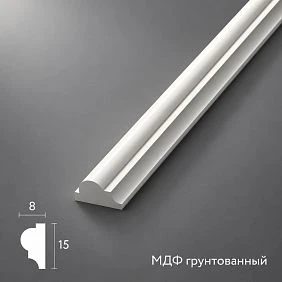
For a minimalist and modern interior with historical notes — a narrow smooth profile (15–25 mm), strict geometry, no ornamental relief. Frames in the wall color — only light and shadow. This is an extremely delicate technique that 'enriches' a neutral interior without changing its character.
Calm relief for a neutral interior
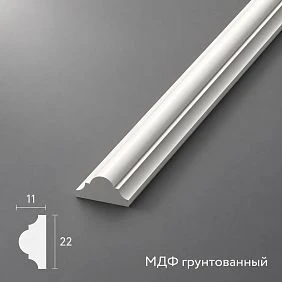
For those who want 'something on the wall, but not too much' — a medium-width molding (25–40 mm) with a light profile relief. Not smooth, not ornamental — somewhere in between. This option creates a tactilely interesting surface without stylistic commitments.
Pronounced architectural composition
For those who build an interior according to architectural laws — a complete system: a horizontal belt at the level of 1000–1100 mm, frame panels in the lower zone, a cornice around the perimeter of the ceiling. This is a French classical wall finishing scheme that turns a room into an architectural object. Requires careful design, but the result is impeccable.
Table: Choosing molding by room and style
| Room | Recommended style | Molding width | Application |
|---|---|---|---|
| Living room | Classic / neoclassical | 40–70 mm | Frame panels, accent wall |
| Bedroom | Neoclassical / contemporary | 25–45 mm | Frames above the headboard, horizontal belt |
| Hallway | Classical / neutral | 30–50 mm | Horizontal belt, frame decor |
| Office | Classical / Empire | 45–70 mm | Full system: belt + frames + cornice |
| Commercial interior | Any | 40–80 mm | Zoning, representative decor |
Mistakes when choosing wall moldings
Experience installing molding on walls includes a collection of others' mistakes. Let's analyze the most common ones.
Too small a profile on a large wall
A narrow 15 mm molding on a 3.5-meter-high wall is a visual 'nothing.' The profile gets lost, frames aren't discernible, and the decorative effect is zero. Rule: ceiling height determines the scale of the molding. For ceilings 3 m and above, the profile should be no narrower than 40–50 mm.
Overly complex relief in a small room
Lavish Baroque molding with ornamental relief in a 90 cm wide corridor is overkill. A small room requires a delicate, smooth, or minimally profiled molding. Rich decor is for large spaces.
Missing corner elements where a frame is needed
A frame without corner elements is four unconnected pieces of molding. Corner elements are not a decorative option but a structural necessity for any closed frame. Without them, the frame looks unfinished and geometrically unclear.
Mixing different decorative series
Molding from one series + corner elements from another — and you can already see mismatches in profile, height, and stylistic logic. Buy everything from the same series, from the same manufacturer. This is what guarantees that the molding and corner elements 'speak' the same decorative language.
Choosing a facade or ceiling intent instead of a wall intent
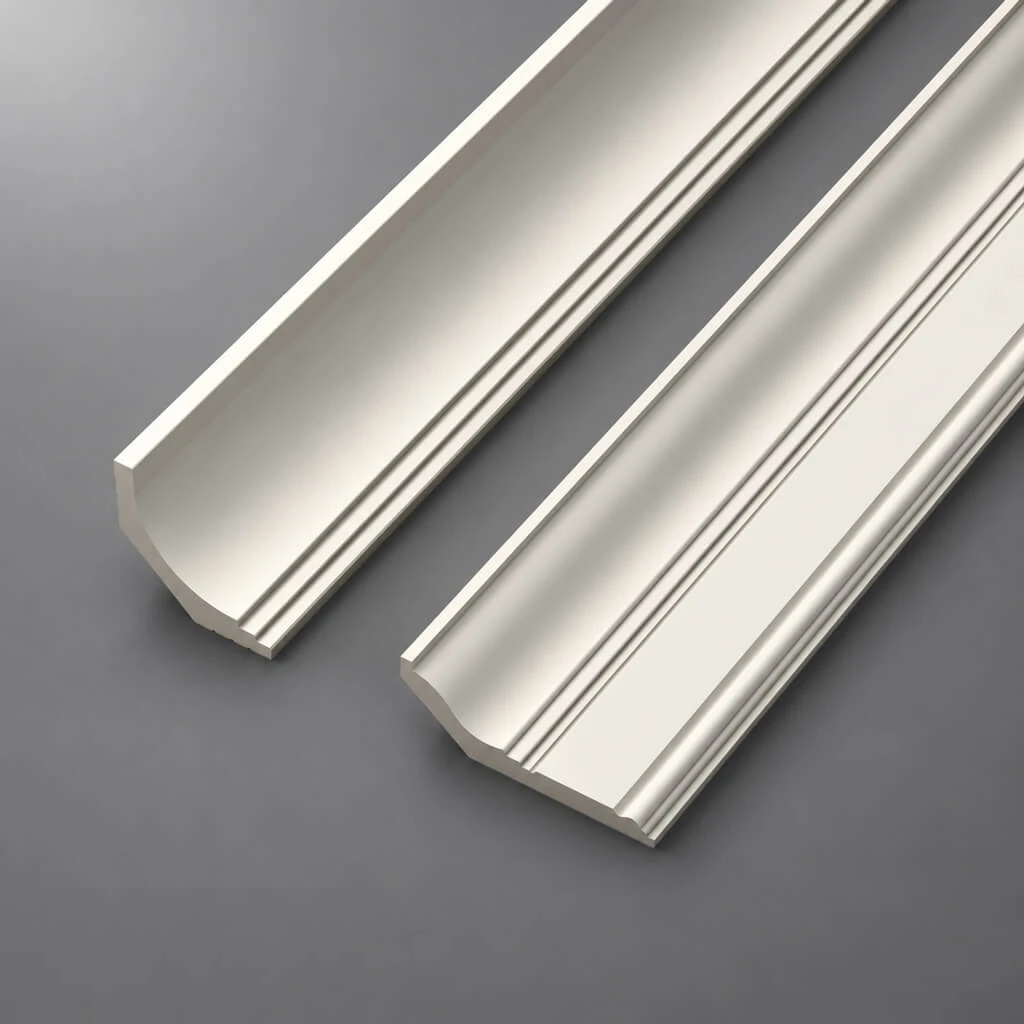
Ceiling cornices and baseboards have a different purpose, different scale, and a different profile angle. On a wall, a ceiling cornice will look inorganic — its cross-section is designed for placement in the dihedral angle of ceiling-wall, not on a flat vertical surface.
Where to buy polyurethane wall moldings
How to choose a profile
Before buying, determine:
-
The task: frames, horizontal bands, accent walls, TV zones — different tasks require different profiles;
-
Style: classic — raised profile, neoclassical — smooth, modern — minimalist;
-
Room scale: ceiling height determines profile width;
-
Compatibility: molding and corner elements — from the same series.
How to choose compatible elements
Buy polyurethane wall moldingsSystematically — means choosing a straight profile, corner elements, if necessary — central overlays, and adhesive. All of this should be from one catalog, one series, one manufacturer.
When to Use a Ready-Made Kit
A ready-made kit — the right choice if you know exactly the size of the frames you want to assemble. The kit includes profiles of the required length plus corner elements — everything is calculated for standard frames.
If the configuration is non-standard — calculate the material by the perimeter of each frame plus 15% for reserve.
What to look for: relief, geometry, compatibility, length, installation diagram
Consider ceiling height, room size, interior style, and functionality.polyurethane wall moldingsAlways check:
-
Relief type: does it match your interior style;
-
Geometric precision: straightness of the profile, evenness of the ends;
-
Compatibility with corner elements: width must match exactly;
-
Length in packaging: standard lengths are 1, 2, 2.5 m;
-
Installation instructions: presence of recommendations for adhesive and technique.
FAQ: Answers to popular questions about polyurethane wall moldings
Which polyurethane moldings are suitable for walls?
For walls, special wall moldings are suitable—straight profiles with a flat base, designed for mounting on vertical surfaces. These are not ceiling cornices or floor skirting boards. The correct choice isPolyurethane wall moldingsfrom the Stavros catalog, developed specifically for wall decorative systems.
What is better for a wall: molding or stucco?
Molding— that is one of the forms of stucco. The difference lies in scale and function. Molding is a linear profile for creating frames and belts. Volumetric stucco — cartouches, medallions, relief panels — is accent decor. For most residential interiors, molding + corner elements is the optimal and sufficient solution.
Can polyurethane moldings be glued to a wall without screws?
Yes. Polyurethane is lightweight — it holds with acrylic mounting adhesive without additional fasteners. Important: the wall surface must be level, clean, and degreased. Apply adhesive around the perimeter of the back side of the profile, press the profile for 10–15 minutes. After 24 hours, the bond reaches full strength.
How to assemble a wall frame from moldings?
Mark the frame on the wall. Cut four straight pieces of molding to size. Mount corner elements in the corners. Apply adhesive, press the profiles along the perimeter of the frame. After a day, fill the joints, sand, prime, and paint. That's the whole process — no special skills required.
Are corner elements needed for wall moldings?
For frames — absolutely. Corner elements ensure a clear rectangular connection without cutting at 45°. Without them, a frame can only be assembled with a miter saw and professional cutting skills. With corner elements — installation is accessible to anyone.
Can polyurethane moldings be painted?
Yes, this is standard practice.polyurethane moldings— is painted with acrylic or water-based paint. Priming before painting is mandatory: it improves adhesion and provides a smoother finish. The paint can be changed during the next renovation — the molding withstands multiple repaintings.
What to buy together with wall moldings?
Required: corner elements of a compatible profile. Recommended: central decorative overlays for luxurious interiors. Required: proper acrylic mounting adhesive.You can buy ready-made stucco matching the Baroque style. Calculate the quantity: linear meters of cornices and moldings, number of rosettes, pilasters, consoles, corner elements. Add a ten to fifteen percent allowance for trimming.Systematically — means taking everything from one catalog in one order.
Are such moldings suitable for the hallway and living room?
Yes, these are some of the most in-demand spaces for wall decor. In the hallway, molding creates a horizontal belt or frame decor for the lower zone of the walls. In the living room — framed panels, an accent wall, TV zone design. Both rooms are perfectly suitable forwall moldings made of polyurethane.
How much molding is needed for one room?
Calculate the perimeter of all frames you plan to assemble. Add 15% for joints, trimming, and possible defects. The number of corner elements — 4 for each frame. For a standard living room with framed panels around the perimeter — from 20 to 40 linear meters of molding and from 20 to 40 corner elements.
What width of molding is suitable for ceilings 2.7 m and 3.5 m?
For ceilings 2.7–3.0 m — molding 35–55 mm. For ceilings 3.0–3.5 m — 50–70 mm. For ceilings above 3.5 m — from 70 mm and above. This correspondence between the scale of the room and the scale of the decor is a basic principle of architectural proportion.
How long does polyurethane molding stay on the wall?
With proper installation — for decades. Key conditions: clean and even wall surface, correct adhesive, adherence to installation technology. Polyurethane does not shrink or deform. The only threat is mechanical damage and incompatible solvents during installation.
What is plaster molding and how much does it cost?
Finishing with stucco— is the installation of decorative profiles on walls and ceilings to create a classic or neoclassical interior. The cost consists of the price of the material and the cost of labor. Polyurethane is significantly cheaper than plaster molding in both aspects: both the material itself and the installation work.
Are moldings suitable for decorating walls in the Provence style?
Yes. Provence is characterized by delicate, thin moldings in white or cream color, creating unobtrusive frames. The profile is smooth or with a slight curve, width — 20–35 mm. No lavish baroque relief — only light, airy framing of wall panels.
Can you usedecorative stucco on the walls in an apartment with low ceilings?
It is possible, but with caution. With ceiling heights up to 2.4 m, the molding should be very narrow — no more than 20 mm — and installed only as a horizontal belt or in the form of small frames. A full frame system with a wide profile in a low room creates the effect of 'walls that are closing in.'
About the company STAVROS
Polyurethane wall moldings, corner elements, compatible cornices, and everything necessary for creating a full-fledged decorative system on walls — all of this is in the assortment of the company STAVROS.
STAVROS — is a manufacturer and supplier of decorative elements made of polyurethane and natural wood. The catalog includes wall moldings of various profiles — from minimalist smooth to lavish ornamental, corner elements for assembling frames, central overlays, and decorative inserts. The assortment covers all major interior styles and tasks — from a simple horizontal belt to a complex classical program with full frame decor.
STAVROS works with both private buyers and professional designers, construction crews, and commercial clients. Orders from one unit. Professional consultation on profile selection, element compatibility, and material quantity calculation.
When you decideBuy Molded Decoration for walls — do it where the word 'quality' is backed by real geometric precision of products and proven solutions for any interior scenario. STAVROS — is exactly that choice.