












































































Article Contents:
- What is an MDF Slat Panel: Composition and Construction
- What MDF is Made Of: Production and Ecology
- Types of MDF Slat Panels: Paintable, Moisture-Resistant HMR
- Batten Profiles: Semi-Round, Rectangular, Trapezoidal
- Dimensions and Parameters: Batten Width, Gap, Module Length
- Batten Width
- Gap Between Battens
- Module Length
- Paintable MDF Slat Panel: RAL and NCS Colors
- Moisture-Resistant HMR MDF Slat Panel: Bathroom, Kitchen, Balcony
- MDF Slat Panel vs Solid Oak: Comparison for Different Tasks
- Acoustics and Thermal Insulation of MDF Slat Panels
- 3D Effect, Light and Shadow, and Backlighting of MDF Slat Panels
- MDF Slat Panel Orientation: Vertical, Horizontal, Diagonal, Chevron
- Application in Residential Spaces
- MDF Slat Panel for Living Room
- MDF Slat Panel for Bedroom
- MDF Slat Panel for Hallway
- MDF Slat Panel for Bathroom
- MDF Slat Panel for Children's Room
- Application in Commercial Facilities
- MDF Slat Panel for Restaurant
- MDF Slat Panel for Office and Meeting Rooms
- MDF Slat Panel for Hotel
- MDF Slat Panel for Showroom
- Ceiling Made of MDF Slat Panels
- Partitions, Furniture Fronts, and Kitchen Island
- Installation of MDF Slat Panels: Adhesive and Frame Methods
- Adhesive mounting
- Frame Installation
- Seamless module joining
- Painting slatted MDF panel: step-by-step technology
- What to buy together with slatted MDF panel: skirting, cornice, molding
- Mistakes when choosing and installing slatted MDF panel
- Practical tips for flawless results
- FAQ: answers to the most common questions about slatted MDF panel
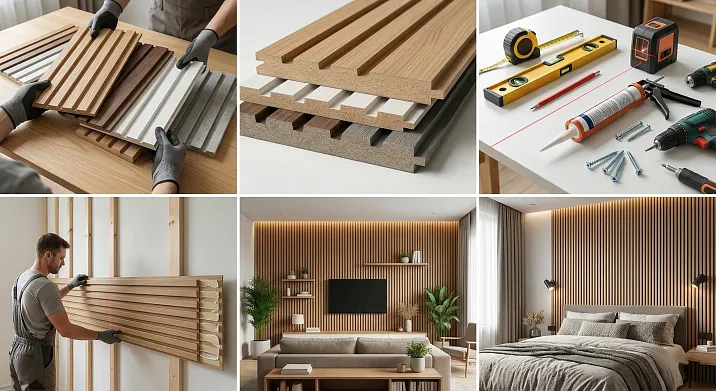
Among all modern finishing materialsslatted MDF panelholds a special place: it is simultaneously decorative, technological, eco-friendly, acoustically functional, and accessible for DIY installation. This is not just a "beautiful wall" — it's an engineered system with precise parameters that transforms space on multiple perceptual levels. Slatted MDF panel for walls creates a 3D effect of light and shadow play, visually changes room proportions, reduces reverberation, and gives the designer a tool for precise color control through the RAL and NCS systems. Slatted MDF panel for painting white RAL 9010 — monochrome Scandinavian interior classic. Slatted MDF panel anthracite RAL 7016 — powerful architectural accent for loft and conceptual spaces. Slatted MDF panel moisture-resistant HMR — a solution for bathrooms and kitchens that 90% of people doing renovations don't know about. This guide is written so that by its end you have complete clarity on every parameter: what to choose, how to calculate, how to install, how to paint — and what absolutely not to do.


What is slatted MDF panel: composition and construction
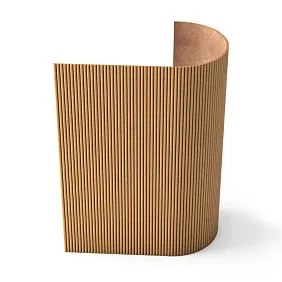
slatted MDF panel— is a modular construction of parallel battens of identical cross-section, fixed with equal gaps on a rigid MDF backing. It is precisely the slatted MDF panel rigid backing that distinguishes this format from flexible slatted panels on fabric base: the rigid construction works on straight flat surfaces — walls, ceilings, furniture facades. The MDF backing performs three functions simultaneously: maintains the geometry of the entire construction with factory precision of the gap, serves as the mounting plane to the wall (adhesive is applied to it), and creates a "dark background" between the battens, enhancing the 3D effect of light and shadow play.
Each batten is a separate rectangular, semicircular, or trapezoidal element, glued to the backing with precise constant spacing. The gap width and batten width are two factory parameters that determine the entire visual character of the surface. The most important difference of slatted MDF panel from piece-by-piece installationwooden boards on the wall: the module arrives from the factory with already verified geometry — the batten spacing is precise along the entire length, the profile is identical for each batten, joining two modules with proper installation is seamless. Piece-by-piece nailingof wooden stripsrequires experience and takes 3–4 times longer. Slatted MDF panel 2800×121 — one of the common formats: module width 121 mm, length 2800 mm, several battens with a given gap on the MDF base.




What MDF is made of: production and ecology
MDF — Medium Density Fiberboard. Produced by hot pressing fine wood fibers with the addition of a binder (urea-formaldehyde or melamine-formaldehyde resin) and paraffin for water resistance. Slatted MDF panel density 750–850 kg/m³ — this is the optimal range for slatted battens: sufficient density for clean milling of any profile, good adhesion to paint coatings, homogeneous structure without knots, resin pockets, and voids.
The key environmental parameter — formaldehyde emission class. Slatted MDF panel without formaldehyde E1 — standard for residential premises: formaldehyde emission level does not exceed 0.1 mg/m³ of air, which corresponds to sanitary norms for housing. Class E0 — even stricter, recommended for children's rooms and bedrooms. Slatted MDF panel eco-friendly children's — only E0 or E1, no other options. Class E2 — for technical and non-residential premises: cannot be used in apartments. Always request an emission class document from the manufacturer or seller — a quality certificate or technical documentation. Absence of this document is a reason to refuse the purchase.
Moisture-resistant MDF marked HMR (High Moisture Resistance) — a special variety with increased paraffin and melamine-formaldehyde binder content. Marking on the HMR board end — green cut color. With standard MDF, the cut is white or cream. Slatted MDF panel moisture-resistant HMR for bathroom maintains dimensions at relative air humidity up to 95% — these are the physical characteristics of the material, defined by GOST and international standards.
Our factory also produces:


Types of slatted MDF panel: for painting, moisture-resistant HMR
Slatted MDF panel exists in several versions by type of finish coating and backing composition. Understanding these differences is the basis for correct selection for a specific task.
Slatted MDF panel for painting — the most universal and popular option. Battens made of MDF with density 750–850 kg/m³ are milled to perfect smoothness, sanded, and primed at the factory. The finish coating is applied by the buyer:Painted MDF plank panelsaccept any water-based or alkyd paint according to the RAL or NCS system. The main advantage: precise matching of any color from standard catalogs. Slatted MDF panel RAL 9010 white, slatted MDF panel RAL 7016 anthracite, slatted MDF panel RAL 7024 graphite — three anchor colors that cover 70% of all orders. Slatted MDF panel NCS color system — an alternative color standard used by Scandinavian and European paint manufacturers.
Slatted MDF panel moisture-resistant HMR — for bathrooms, toilets, and kitchen areas with steam emission. Externally identical to standard, but the material of the backing and battens is HMR board with green cut. Withstands systematic exposure to steam and high humidity without swelling, deformation, or coating delamination. Slatted MDF panel bathroom — only HMR, no compromises.
Slatted MDF panel standard MDF residential premises — for all dry residential premises: living room, bedroom, hallway, study, children's room. At air humidity up to 65% (normal for residential premises) — impeccable service for 7–12 years without deterioration in appearance.
Get Consultation
Batting profiles: semicircular, rectangular, trapezoidal
The shape of the batten cross-section — a parameter that determines the visual character of the entire slatted surface. Three standard profiles — three fundamentally different aesthetic results.
Slatted MDF panel semicircular profile — the undisputed leader in demand and aesthetic result. The rounded section works as an optical lens: with directional lighting, it creates a smooth light gradient from the light peak to the dark edges of each batten. On the entire wall surface — a lively, pulsating slatted MDF panel 3D effect of light and shadow play. Spotlights at a sharp angle of 30–45° maximize the effect: the battens seem to glow from within. Semicircular profile — the optimal choice for living rooms, bedrooms, restaurants, and any premises where warmth and surface volume are valued. Acoustically, the semicircular profile scatters sound waves more effectively than rectangular: there is no flat parallel face creating directional reflection.
Slatted MDF panel rectangular profile — strict, architecturally clear geometry. With side light, it creates sharp contrast shadows with straight edges — not a soft gradient, but a rigid graphic rhythm. The ideal profile for minimalism, hi-tech, loft: where disciplined geometry without "warmth" and "softness" is needed. Slatted MDF panel loft — rectangular profile, anthracite RAL 7016, gap 10 mm, width 30–40 mm: monumental dark surface with a rigid rhythm of shadows.
Slatted MDF panel trapezoidal profile — a compromise solution between semicircular and rectangular. The wide base ensures reliable adhesive connection with the backing, the narrowed front face creates moderate relief with pronounced but not rigid shadows. For those who need the visual expressiveness of a rectangular profile with a somewhat softer surface character.
Dimensions and parameters: batten width, gap, module length
Three parameters — stile width, gap between stiles, and module length — determine everything: visual character, scale of the pattern relative to the room, and installation complexity.
Stile width
MDF slatted panel, stile width 20 mm — a thin, delicate, almost 'lace-like' pattern. Small rooms, children's rooms, decorative niches, narrow hallways. Thin slats are visually 'light' — they don't overload a small space. MDF slatted panel, stile width 25 mm — a universal size: expressive enough in large spaces and restrained enough in small ones. Best-seller in residential interiors. MDF slatted panel, stile width 30 mm — a substantial, prestigious pattern for spacious living rooms, restaurant halls, office spaces. A wide stile creates a sense of monumentality and 'maturity' of the surface.
Gap between stiles
MDF slatted panel, 5 mm gap — a dense, closed surface, wood dominates, the backing substrate is practically invisible. Feeling of 'full' wall filling with material — a heavy, saturated surface. MDF slatted panel, 8 mm gap — the gold standard: balance of material and air. The best-selling option in all segments. If in doubt — choose 8 mm. MDF slatted panel, 10 mm gap — an airy, light pattern. With a 10 mm gap, the dark backing becomes a full-fledged visual element — it provides a contrasting dark background between the slats, enhancing the 3D effect. Optimal gap-to-stile-width ratio is 25–40%: 20 mm stile / 5 mm gap — 25%; 25 mm stile / 8 mm gap — 32%; 30 mm stile / 10 mm gap — 33%.
Module length
MDF slatted panel, 600×2400 module — standard for most apartments with a 2.4 m ceiling. MDF slatted panel, 600×2700 module — optimal for a 2700 mm ceiling: the panel is installed from floor to ceiling without joints or additions, the vertical line of slats is continuous along the entire height. This is important aesthetically: a horizontal joint disrupts the rhythm of the vertical slats and looks like an installation error. MDF slatted panel, custom size — ordered from the manufacturer according to specific project parameters: non-standard ceiling height, special module width, unique stile profile.
MDF slatted panel for painting: RAL and NCS colors
Painted MDF plank panels— is a tool for precise color management in interiors. MDF accepts any paint without tonal variations, without knots and resin stains — a perfect neutral 'canvas' for coloring.
MDF slatted panel RAL 9010 white — the absolute leader. Warm white with a slight creamy tint: softer than pure white RAL 9016, warmer than cool RAL 9003. Ideal for Scandinavian style, Japandi in light palette, neoclassicism. MDF slatted panel white RAL 9010 on a white wall gives a delicate monochrome relief — the surface barely 'breathes', creating depth without contrast.
MDF slatted panel RAL 7016 anthracite — dark gray, almost black. A powerful anchor tone for loft, conceptual restaurants, VIP offices, master bedrooms in a dark palette. Contrast with white ceiling and floor — maximum expressiveness.
MDF slatted panel RAL 7024 graphite — slightly lighter than anthracite, with a slight bluish tint. A more 'urban' and 'technological' tone, preferable for office and technological concepts.
MDF slatted panel NCS color system — an alternative international system, widely used by Scandinavian designers. NCS S 0502-Y — practically white with a warm yellow tint. NCS S 7500-N — dark neutral gray. NCS provides the same accuracy in matching the tone as RAL.
MDF slatted panel matte enamel — the optimal finish for living spaces: does not glare under any lighting, hides minor scratches, looks modern and expensive. MDF slatted panel satin finish — for commercial facilities with regular wet cleaning: a barely perceptible sheen under side lighting, increased resistance to washing.
MDF slatted panel moisture-resistant HMR: bathroom, kitchen, balcony
MDF slatted panel moisture-resistant HMR for the bathroom — a topic that requires separate detailed consideration, because a mistake here costs a complete redo in 3–6 months. Standard MDF swells at the edges under systematic steam exposure, loses geometry, coating peels, backing delaminates — the result is catastrophic. HMR board maintains dimensions and strength at relative air humidity up to 95%. This is not a marketing claim — these are the physical characteristics of the material according to EN 316 standard (category MDF.HLS or MDF.H). Identifying HMR on a cut: green color — HMR, white or cream — standard MDF.
Full technical regulations for installing MDF slatted panels in the bathroom:
-
Only HMR board for backing and stiles
-
Vapor barrier film behind the panels — mandatory
-
Adhesive — polyurethane, waterproof, class D4
-
Substrate moisture before installation — not higher than 4%
-
Areas of direct contact with water (shower cabin, bathtub rim) — excluded
-
Room ventilation — forced or natural, sufficient to normalize humidity after use
If all conditions are met, the MDF slatted panel moisture-resistant HMR serves in the bathroom for 10–15 years without deformation, mold, or coating delamination.
MDF slatted panel vs solid oak: comparison for different tasks
Choosing between MDF and solid oak is not a question of 'better or worse': it's choosing the right tool for a specific task. Both materials are professional; each has its optimal area of application.
| Parameter | MDF slatted panel | Solid oak panel |
|---|---|---|
| Color accuracy | Any RAL/NCS, perfect | Toning + natural variation |
| Tactile | Smooth, uniform | Lively, warm, with wood grain pattern |
| Moisture resistance | HMR — high, standard — low | High with oil-wax coating |
| Service life | 7–12 years (residential) | 20–30 years |
| Ecological | E0/E1 — safe | Natural material, no synthetics |
| Restoration | Local repainting | Local polishing with oil |
| Price | Below | Higher |
| Installation | Simpler, easier | Requires 48-hour acclimatization |
| For bathroom | HMR only | Oil + wax, areas without direct water |
| Style | Any, especially monochrome | Scandinavian, Japandi, organic |
When MDF is the clear choice: monochrome RAL/NCS concept, precise color matching to the design project, large order volume with a reasonable budget, children's room (E0 class), any interior in white, gray, or anthracite. When oak is the clear choice: natural aesthetics with tactility, long-term commercial project with high load, organic and Scandinavian style, when the customer wants 'real wood' not its imitation.
Acoustics and thermal insulation of slatted MDF panel
Slatted MDF panel acoustics reverberation — an invisible function with a tangible result that is catastrophically underestimated. A flat, smooth wall reflects sound waves at a right angle, creating multiple echoes — reverberation. In a residential living room with flat walls, this means acoustic discomfort when watching TV, conversations at the table, children's play. In a restaurant with flat walls at full capacity, the noise level reaches 80–85 dB — a physiologically unhealthy environment.
The slatted surface scatters sound waves diffusely: each slat reflects sound in a random direction, the intensity of direct reflection decreases — reverberation is reduced. This works even with a single slatted surface. Slatted MDF panel mineral wool frame — the next level: with frame mounting, the air cavity is filled with mineral wool with a density of 35–50 kg/m³. Mineral wool absorbs the waves scattered by the slats. The combined result: a 30–50% reduction in reverberation time depending on the room volume and the area of slatted surfaces. Slatted MDF panel sound insulation thermal insulation — the dual function of frame mounting: mineral wool is both an acoustic absorber and a thermal insulator for walls adjacent to the street or cold rooms.
3D effect, chiaroscuro and lighting of slatted MDF panel
Slatted MDF panel 3D effect play of light and shadow — this is the physics of interaction between a relief material and directional light, not a marketing technique. Let's examine in detail: each slat is a three-dimensional element with several facets or a curved surface. Directional light at an angle illuminates the slats unevenly: the top is light, the side facets are in shadow, the gaps fall into deep shadow. Multiplied across the entire wall, this effect creates a lively, pulsating surface that changes with every movement of the light source or observer. Maximum effect: directional source (spotlights, sconces, floor lamps), acute angle of incidence (30–45° to the surface), semi-circular profile. Minimum effect: ceiling diffuser lamp, rectangular profile. This is why a slatted wall is designed together with the lighting solution.
Slatted MDF panel LED lighting — a separate lighting scenario. LED strip is mounted on the frame before installing the panels — slatted MDF panel hidden wiring: the cable is laid in the grooves of the guides, the connection point is planned in advance. After panel installation, the cable is completely hidden inside the structure. Light diffusedly emerges from the depth of the slatted surface. 2700–3000K — warm white for living spaces and restaurants: creates an atmosphere of intimate coziness. 4000K — neutral white for work areas and offices. Slatted MDF panel with LED lighting — always frame mounting: adhesive mounting leaves no space for the strip and cable.
Orientation of slatted MDF panel: vertical, horizontal, diagonal, chevron
Slat orientation — an architectural solution based on spatial logic, not a matter of taste. The physiology of vision is not up for debate: vertical lines lift the gaze, horizontal lines lead the gaze along.
Slatted MDF panel vertical orientation — the absolute leader in application. Slatted MDF panel visually raise the ceiling: vertical slats create a perceptual effect of greater height. In an apartment with a 2700 mm ceiling, vertical slats visually 'add' 30–50 cm of perceived height. The visual system follows vertical lines and registers the endpoint as more distant — this is the work of the visual apparatus, not an illusion. Vertical — for living rooms with low ceilings, bedrooms, children's rooms, hallways.
Slatted MDF panel horizontal orientation — the opposite vector. Slatted MDF panel widen a narrow corridor: horizontal slats in a corridor 80–100 cm wide lead the gaze along the wall, creating a gallery effect of space. Horizontal slats on the lower half of the wall in a living room with high ceilings create intimacy and 'groundedness' — a feeling that the walls 'hug' the relaxation area.
Slatted MDF panel diagonal — an author's technique. Diagonal slats create dynamism and 'movement' in space. Requires precise angle calculation and an experienced installer. Slatted MDF panel diagonal chevron (herringbone) — a V-shaped pattern of opposing diagonals: a powerful decorative accent for large accent surfaces, restaurant halls, hotel lobbies, author's residential projects. The result — an unmistakable author's signature that cannot be confused with anything else.
Application in residential spaces
MDF Slatted Panel for Living Room
Living room — the primary application space. MDF slatted panel accent wall behind the sofa: a slatted backdrop behind upholstered furniture creates an architectural context often missing in standard apartments. The sofa stops 'floating' on an empty wall and becomes part of a complete spatial picture. MDF slatted panel TV zone: a television set into a slatted surface ceases to be a 'black rectangle' — it becomes part of a unified decorative panel. MDF slatted panel living room, paintable white RAL 9010 for living room — a monochrome concept that works in Scandinavian, Japandi, and neoclassical interiors.MDF Crownin the same RAL on top andbuy MDF skirting boardat the bottom — a flawless monochrome surface from floor to ceiling.
MDF Slatted Panel for Bedroom
MDF slatted panel bed headboard bedroom — one of the most effective techniques. A slatted wall behind the bed replaces a separate headboard, creating an 'architectural cocoon' behind your back. MDF slatted panel bedroom, paintable in warm gray NCS or neutral beige RAL — a psychologically relaxing palette for the sleep zone. Warm LED strip behind the slats at headboard level — hidden cozy reading light. MDF slatted panel Japandi in the bedroom — cool gray, 5–6 mm gap, 20 mm width: a restrained, meditative surface for the relaxation area.
MDF Slatted Panel for Hallway
Hallway — the space of first impression. MDF slatted panel hallway horizontal to widen a narrow corridor — a strategically correct solution. Dark anthracite RAL 7016 in horizontal slats along the entire corridor creates depth: the narrow space visually 'stretches' to gallery-like proportions.wooden baseboardor— is a horizontal element that frames the room at the bottom of the walls where the wall meets the floor. Skirting boards perform several functions: they hide the technological gap between the wall and floor covering (necessary for thermal expansion), protect the lower part of the wall from mechanical damage, create visual completion, and may conceal wiring.in the same RAL — a single continuous line from ceiling to floor.
MDF Slatted Panel for Bathroom
MDF slatted panel bathroom — only HMR, only D4 polyurethane adhesive, only vapor barrier behind panels. White slats RAL 9010 in bathroom +Baseboard MDFin the same white — a monochrome, laconic bathroom in Scandinavian spa style. Light warm tones + warm LED strip behind slats — the feeling of a wooden sauna in a city apartment.
MDF Slatted Panel for Children's Room
MDF slatted panel for children's room without formaldehyde E1 — only class E0 or E1. Light neutral tones — transparent white RAL 9010, soft gray-beige — a neutral background that doesn't overload the child's space. Vertical slats — visually raise the ceiling. The tactilely smooth MDF surface is safe for children. Eco-friendly MDF slatted panel for children's room without volatile organic compounds when using E0 class water-based matte paint — completely safe for a child's regular presence.
Application in Commercial Projects
MDF Slatted Panel for Restaurant
MDF slatted panel restaurant bar — both a design solution and an acoustic investment. MDF slatted panel for restaurant dark anthracite wholesale: dark anthracite RAL 7016, semi-circular profile, directional spotlights 2700K — a classic restaurant interior, creating an atmosphere the guest remembers and wants to return to. The slatted surface reduces hall reverberation — conversation at the table becomes comfortable even when fully seated. MDF slatted panel wholesale terms for design studios — volume discounts and priority production for commercial projects when ordering directly from the manufacturer.
MDF Slatted Panel for Office and Meeting Rooms
MDF slatted panel for meeting room acoustics office — a dual task: visual solidity and acoustic comfort. Frame mounting with mineral wool ensures 30–50% reduction in reverberation — 2–3-hour meetings are acoustically comfortable. Dark graphite RAL 7024 or anthracite RAL 7016 with rectangular profile and 10 mm gap — the visual image of a 'serious company' without extra words. MDF slatted panel office meeting room in light tones (RAL 9010 + directional spotlights) — same acoustics, but a lighter and more dynamic atmosphere.
MDF Slatted Panel for Hotel
MDF slatted panel hotel reception — the first impression zone, defining the establishment's rating. The slatted surface behind the reception desk conveys a narrative: quality, attention to detail, principles of space design. White slats RAL 9010 with warm backlighting — a light, welcoming image of a boutique hotel. Dark anthracite slats with directional spotlights — a luxury image of a premium-class hotel.
MDF Slatted Panel for Showroom
MDF slatted panel Scandinavian style in furniture or textile showroom — a neutral background that doesn't compete with the product but creates a professional atmosphere. MDF slatted panel neoclassical in a jewelry or watch boutique — white slats withCeiling baseboard woodenandwooden cornice— the image of a 'white cube' with architectural character.
Ceiling from MDF Slatted Panel
A ceiling made of wooden planks— a logical continuation of the slatted concept, where the material transitions from the wall to the ceiling. MDF slatted panel ceiling suspended frame: a frame of metal CD 60 profiles is attached to the ceiling slab with adjustable hangers, leveled horizontally with a laser level, panels are attached with clips or finishing nails. Horizontal slats on the ceiling with vertical slats on the walls — same material, different line direction: walls 'ground', the ceiling 'opens up' the space horizontally. Slatted ceiling from MDF slatted panel with lighting: LED strip behind slats creates a 'glowing ceiling' without visible sources — an architectural sky effect. White slats RAL 9010 on a white ceiling background + warm strip 2700K — a refined technique for living rooms and bedrooms.
Partitions, Furniture Fronts, and Kitchen Island
MDF slatted panel partition — zoning without solid walls. A slatted partition lets light and air through, preserves the feeling of a unified space, but clearly marks zone boundaries. In open-plan layouts — indispensable: kitchen and living room, work area and relaxation area. For the upper framing of the partition —buy wooden cornice, for the lower —wooden skirting board purchasein the same tone as the panels.
MDF slatted panel furniture front — slatted decoration for a wardrobe, chest of drawers, or walk-in closet visually lightens the structure, transforming it from 'furniture' into an architectural interior element. Sliding wardrobe fronts made from MDF slatted panels in the same RAL as the accent wall — a monolithic room concept. MDF slatted panel kitchen island — the island's front surface, painted in a contrasting RAL (anthracite in a white kitchen or white in a dark one) — the visual anchor of the entire kitchen scene.
Installation of MDF slatted panel: adhesive and frame methods
How to install slatted panels— a comprehensive guide on the STAVROS website. Here — a structured overview of two methods.
Adhesive mounting
MDF slatted panel adhesive installation — fast, suitable for flat surfaces (deviation no more than 2–3 mm over 2 m). MDF slatted panel contact adhesive: applied with a notched trowel (2–3 mm notch) to both surfaces, left for 5–10 minutes until 'tacky', the panel is applied in one motion and rolled with a rubber roller. MDF slatted panel polyurethane adhesive: applied to one surface, open time 15–20 minutes — allows for position adjustment. Conditions: MDF slatted panel base leveling for irregularities over 3 mm — filler or leveling plaster, complete drying, MDF slatted panel surface priming — deep-penetration acrylic primer.
Frame installation
MDF slatted panel frame installation — universal method: levels any surface, conceals utilities, provides acoustics. Horizontal metal CD 60 guides are installed at 400–600 mm intervals using anchor nails. Mineral wool is placed in the frame cavity. MDF slatted panel hidden clip fastening: clips are inserted into the gaps between battens and attached to the guides — the fastening is completely invisible from the front side. MDF slatted panel finish nail — alternative: headless finish nails, points for subsequent filling and painting. MDF slatted panel end preparation: all cut ends are primed and painted to match before installation — an unprotected MDF end absorbs moisture.
Seamless joining of modules
MDF slatted panel seamless joining — a key technical technique. Adjacent modules are joined so that the gap between the outermost battens of neighboring modules is identical to the gap inside the module. For this, the outermost battens of each module are set back from the substrate end by exactly half the standard gap. When two modules join, half + half = full standard gap. Check with a tape measure at each joint — a 2–3 mm error accumulates and becomes visible to the naked eye after 3–4 modules.
Painting MDF slatted panel: step-by-step technology
MDF slatted panel painting along the batten — the basic rule, violation of which leads to irreversible defects. MDF is a fibrous material: brushing across the batten raises fibers, leaving visible marks. Only strictly along the slat — from end to end.
Step 1: Priming. Acrylic primer for MDF (specialized, not universal) — applied along the battens with a soft brush, 1 coat. Drying time 2–4 hours. Primer seals the MDF pores, reduces paint consumption, and ensures even coverage without absorption.
Step 2: First coat of paint. Matte water-based enamel in the desired RAL/NCS — a thin layer along the batten. Spray gun (airless) — the optimal tool for even coverage: all profile edges are painted evenly without brush marks. Brush — only for small volumes and local touch-ups.
Step 3: Drying and light sanding. After the first coat dries (4–6 hours) — light sanding with 320-grit sandpaper along the batten to remove raised fibers. Dust is removed with a slightly damp cloth.
Step 4: Second and third coats. MDF slatted panel painting matte enamel — 2–3 thin coats are better than 1 thick one. A thick coat runs into the gaps, forms drips, and dries unevenly. Each coat — drying 4–6 hours.
Step 5: Ends. MDF slatted panel end preparation: cut ends are primed separately with end primer or two coats of regular primer — MDF end is more porous than the face surface and absorbs more.
What to buy together with MDF slatted panel: skirting, cornice, molding
MDF slatted panel skirting cornice molding — the principle of a unified material language. All wooden finishing elements in one space — from one material, in one color, from one manufacturer, from one batch. This is not a wish — it's a condition for a professional result.
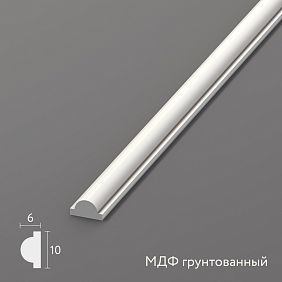
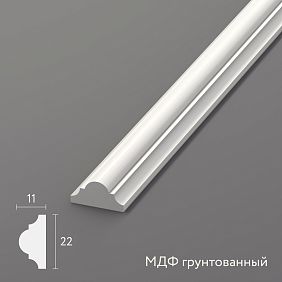
buy MDF skirting board— the lower trim of the slatted surface in the same RAL.— is a horizontal element that frames the room at the bottom of the walls where the wall meets the floor. Skirting boards perform several functions: they hide the technological gap between the wall and floor covering (necessary for thermal expansion), protect the lower part of the wall from mechanical damage, create visual completion, and may conceal wiring.perfectly matches panels of the same finish: one RAL, one matte level. Without the lower skirting, the panel end at the floor is exposed — the surface looks unfinished.Baseboard MDF— a complete guide to selection and installation.
MDF Crown— the upper trim in the same RAL. A symmetrical response to the skirting: closes the panel end at the ceiling, creates a horizontal wall-ceiling transition line.
wooden skirting board purchase— lower trim made of solid oak for concepts where MDF panels are combined with wooden elements.wooden baseboardin the tone of oak slats — a unified ensemble.
wooden corniceandbuy wooden cornice— upper trims made of solid oak for mixed concepts.
Wooden corner bracket— treatment of external corners of the slatted surface: closes module ends, creates a clean transition between two slatted walls at 90°.
solid wood trim pieces— moldings and decorative slats for horizontal wall division, frames, niches, and decorative divisions.
Buy wooden skirting board— individual slats for non-standard areas and infill.Wooden baseboard price— the full catalog of solid wood skirting from STAVROS.
Ceiling baseboard wooden— for classic interiors with stucco decoration, where MDF slatted panels in neoclassical style are combined with profiled ceiling cornices.
MDF slatted panel skirting board cornice in matching tone unified ensemble: buy everything from one manufacturer from the same batch. Two different manufacturers — two potentially different whites, noticeable in real space under side lighting.
Mistakes when selecting and installing MDF slatted panels
1. Buying MDF without specifying the emission class — dangerous for children's rooms. Class E2 is not permitted in residential spaces. For bedrooms and children's rooms — only E0. Always request the certificate.
2. Using standard MDF in the bathroom instead of HMR. After 3–6 months — swelling, delamination, deformation. Only moisture-resistant HMR MDF.
3. Painting across the batten — streaks and brush marks. Crosswise brush strokes irreversibly raise MDF fibers. Only strictly along the grain.
4. Installing on a damp wall — adhesive delamination. Substrate moisture must not exceed 4%. A moisture meter before installation — not an option, but an obligation.
5. Ignoring the 10–12% cutting allowance. Any real project has corner cuts, non-standard areas, possible cutting defects. Without allowance — reorder with the risk of batch mismatch.
6. Choosing RAL color from screen without physical sample. Monitor distorts color. Request a physical color swatch in the desired RAL before ordering the entire volume.
7. Installing without priming the surface — poor adhesive contact. Concrete, plaster, and drywall without primer have a weak surface layer — adhesive bonds with this layer, not the substrate. Result: delamination along with the top plaster layer after 2–3 months.
8. Buying panels without skirting and cornice — incompleteness. A slatted wall without trim is like a painting without a frame. Bottom and top trim are mandatory.
9. Choosing too wide batten for a small room. A 30–40 mm batten in a 12 m² room 'presses' on the space, creating a cramped feeling. For small rooms — 20–25 mm.
10. Cutting without respiratory protection — fine MDF dust is harmful when inhaled. When cutting MDF with a circular saw, fine dust with particle size less than 10 µm is produced — it does not settle in the upper respiratory tract and reaches the lungs. FFP2 respirator and dust collector — mandatory.
Practical tips for flawless results
Tip 1. Always specify the emission class — for residential spaces only E0 or E1. Document in hand before order payment.
Tip 2. For bathroom — only moisture-resistant HMR MDF. Green marking on the cut — this is the only reliable way to check on-site without documents.
Tip 3. Paint strictly along the batten — matte enamel, 2–3 thin coats with intermediate drying and light sanding. Spray gun — preferred tool.
Tip 4. Request a physical color swatch in the desired RAL before ordering panels — monitor distorts color, only physical sample shows the real tone in real light.
Tip 5. MDF slatted panel module 600×2700 with 2700 mm ceiling — no joints or additions: vertical slat lines are continuous along the entire height. This is fundamental for result quality.
Tip 6. Frame installation with mineral wool — acoustic and thermal insulation bonus. If possible, always prefer frame over adhesive: functional advantage with the same visual results.
Tip 7. MDF slatted panel end preparation: prime and paint the ends of cut panels before installation — unprotected MDF end swells with the slightest moisture.
Tip 8. For lighting — lay cable on the frame BEFORE installing panels. After installation, accessing the space behind panels without dismantling is impossible.
Tip 9. Buybuy MDF skirting boardandMDF Crownin the same RAL from the same manufacturer — only then the tone matches flawlessly.
Tip 10. When cutting MDF — FFP2 respirator and dust collector are mandatory. Health is more important than installation speed.
FAQ: answers to the most common questions about MDF slatted panels
What is a slatted MDF panel and how does it differ from a regular MDF panel?
Regular MDF panel — solid board with milled pattern. MDF slatted panel — structure of separate volumetric battens with gaps on MDF backing: creates volume, 3D effect and acoustic diffusion. Detailed breakdown:slatted panels complete guide.
What MDF density is needed for slatted panels?
MDF slatted panel density 750–850 kg/m³ — optimal range. Below 700 kg/m³ — insufficient strength for sharp profile milling, above 900 kg/m³ — excessive module weight for adhesive installation.
MDF slatted panel or solid oak — which is more practical?
Depends on the task. MDF — precise RAL/NCS color, lower budget, monochrome concepts. Oak — natural aesthetics, durability 20–30 years, organic and Scandinavian style. For bathroom — HMR-MDF or oiled oak. For children's room — E0 MDF or oak without synthetics.
How to paint an MDF slatted panel and what color?
MDF primer → matte water-based enamel strictly along the batten → 2–3 thin coats with intermediate 320-grit sanding. Color — according to RAL or NCS system.Painted MDF plank panels— complete guide.
MDF slatted panel for bathroom — which MDF to choose?
Only moisture-resistant HMR MDF. Marking on the cut — green. Adhesive — polyurethane D4. Vapor barrier behind panels — mandatory.
How to mount MDF slatted panel on wall: adhesive or frame?
Adhesive — for even walls, quick installation. Frame — for any walls, acoustics, hidden utilities, lighting.How to install slatted panels— step-by-step instructions for both methods.
MDF slatted panel emission class — what to pay attention to?
E0 — children's rooms and bedrooms. E1 — all living spaces. E2 — only non-residential technical spaces. Always request a certificate.


