Article Contents:
- Short answer: PAN-001 can be designed through the rounding, but KPU-016 cannot be included in radius footage without separate confirmation of flexibility
- PAN-001 and KPU-016: confirmed properties and compatibility limits
- Two products with different mechanics: what is confirmed for PAN-001 and what is not confirmed for KPU-016
- PAN-001 bends not because wooden or MDF slats become soft
- KPU-016 is designed on a different logic
- Basic scenario
- The most reliable method on a finished site is a flexible tape measure along the surface
- If there is a design radius and angle
- Geometric table for a 90° angle
- Measure along the line of the future covering
- Basic scheme
- Why the 1010 mm format is especially important for the radius
- It is better to plan the joint before applying the adhesive
- Why the absence of a flexible version in the KPU-016 card changes the order calculation
- Correct preliminary calculation
- How to calculate two-meter KPU-016 only for straight sections
- The KPU-016 ornament complicates the task
- When a flexible analog is still needed
- What the test should show
- Example with a new variable — joint position
- How to calculate the cost of KPU-016 without including the unverified radius
- Decision table: what to do with KPU-016 at the radius
- Practical algorithm before adding PAN-001 and KPU-016 to the cart
- KPU-016 is intended to be mounted on top of PAN-001
- Why this matters even with a small thickness
- Linear molding over a deep slat rhythm is a separate assembly
- Scenario 1. The rounding is small, PAN-001 is confirmed, the ornament is secondary
- Scenario 3. After marking, KPU-016 makes the corner heavier
- Can KPU-016 be slightly warmed and bent along a radius?
- Can the radius of PAN-001 be measured with a regular metal tape measure?
- Does the joint of KPU-016 need to be made exactly at the start point of the radius?
- Can a decorative trim be placed between the end of KPU-016 and the radius?
- If the corner is rounded only at 45°, is PAN-001 still calculated along the arc?
- Can the leftover KPU-016 after trimming be used on a second straight wall?
- Is it necessary to buy KPU-016 with extra allowance for the joint?
- What is more important for PAN-001 — the wall area or the unfolded width?
- Can KPU-016 be run along the outer radius if it does not bend along the inner one?
- If PAN-001 is sold in several formats, which one is better for a rounded corner?
- Can KPU-016 be started again immediately after the radius?
- What to do if the manufacturer confirmed a very large radius for KPU-016?
- Is it worth buying one KPU-016 to test the radius?
- Can only PAN-001 be left on the rounding even in a classic interior?
- If KPU-016 ends before the corner, does it need to be painted in the color of PAN-001?
- Can PAN-001 be calculated using the circle formula for a round column?
Short answer: PAN-001 can be designed through rounding, and KPU-016 cannot be included in the radius footage without separate confirmation of flexibility
Two different products and two different structures work in this wall.
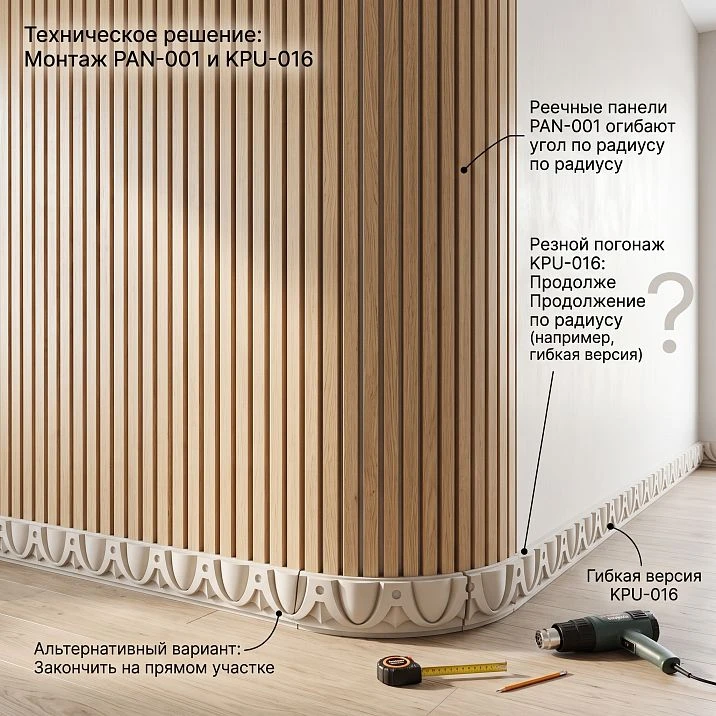
PAN-001 is a slat panel on a flexible fabric base. The current STAVROS card directly confirms that thanks to this base, the panel is used on straight and curved surfaces. The semicircular battens are fixed on the fabric, so the module can wrap around a rounded wall, column, or other radius section if the specific radius is acceptable for the selected configuration.
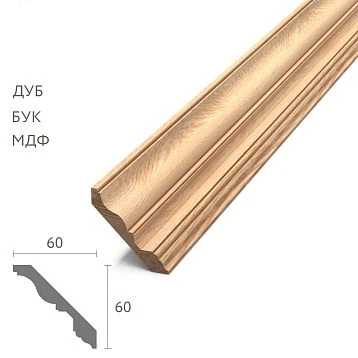
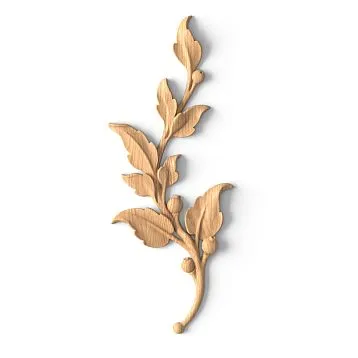
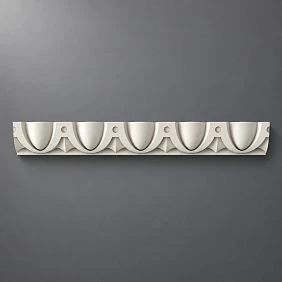
KPU-016 — carved polyurethane molding measuring 23 × 17 × 2000 mm. At the time of verification, it costs 8,070 ₽ per two-meter strip. The KPU-016 card does not confirm flexible execution and does not specify the minimum bending radius. At the same time, STAVROS separately highlights special flexible polyurethane molding for arches and curved walls.
This leads to the main practical conclusion:
the flexibility of PAN-001 is not proof that KPU-016 can be routed along the same radius.
Therefore, until written confirmation from the manufacturer or until a special flexible alternative is selected, the safe specification is built as follows:
-
PAN-001 is calculated for a straight section and for the developed length of the rounding;
-
KPU-016 is calculated only for those straight sections for which its use is confirmed;
-
the KPU-016 line ends before the transition to the radius at a pre-selected compositional point;
-
if the ornament must fundamentally continue along the arc, a flexible solution is first selected and confirmed, and only then is the length of the radius section added to the order.
This does not mean that KPU-016 “can never bend even a millimeter.” The article does not pass off the absence of a parameter in the card as a laboratory test. It records something more important for the buyer: the card does not provide a basis for purchasing KPU-016 as a profile for a specific radius.
If the project needs flexible slat cladding, you can order a slat panel PAN-001 after checking the actual radius and the selected module format.
If the decorative line remains on a straight wall, buy decorative molding KPU-016 it should be based on the length of the confirmed straight sections, not on the total wall length including the curve.




PAN-001 and KPU-016: confirmed properties and compatibility boundaries
Our factory also produces:
Two products with different mechanics: what is confirmed for PAN-001 and what is not confirmed for KPU-016
| Parameter | PAN-001 | KPU-016 |
|---|---|---|
| Product type | Flexible slat panel on fabric base | Carved polyurethane molding |
| The main purpose of the article | cladding of a straight wall and a curve | decorative line next to slat finishing |
| Curvilinear application | confirmed by card | not confirmed in the card for KPU-016 |
| Dimensions | several options, the card has module 1010 × 8 × 950 mm and other formats | 23 × 17 × 2000 mm |
| Material | MDF, oak, beech depending on the option | Polyurethane |
| Base | Flexible fabric | special flexible base/formula not specified |
| Price at time of check | from 9,700 ₽ in the current card, depends on the version | 8,070 ₽/pc. |
| What needs to be clarified before the radius | acceptable radius of the selected panel | is there a confirmed flexible option/analog |
Get Consultation
PAN-001 bends not because wooden or MDF slats become soft
This is a fundamental design feature.
In PAN-001, individual glazing beads remain rigid. The ability to change geometry is provided by the fabric base and gaps between slats. The module wraps around the surface as a linked sequence of narrow rigid elements.
Therefore, the radius needs to be checked for a specific panel, not based on the general word "flexible."
STAVROS in its own materials separately recommends clarifying the minimum working radius for a specific model, especially on a sharp bend.
KPU-016 is designed on a different logic
KPU-016 is a solid two-meter ornamental strip.
To navigate a rounded corner in plan, it would have to deform along the entire length of the bend section, maintaining:
-
profile;
-
relief;
-
front surface;
-
Adjoining to the wall.
That is why manufacturers make special flexible moldings and rods a separate category: the material's ability to hold relief while simultaneously following an arc requires a different formulation.
The absence of the word "flex" is not a minor detail on the product card.
For a product intended to be purchased for a radius, the flexibility parameter is a functional characteristic.
if:
-
minimum radius not specified;
-
flexible version not specified;
-
the card sells standard polyurethane KPU-016;
you cannot include a radius section in an order based only on the assumption that "polyurethane bends a little."
Where to end KPU-016 before the rounding and how to design the transition
Where exactly to end KPU-016: first find the geometric boundary of the straight section.
A rounded corner has not only a visual but also a geometric boundary.
At some point, a straight wall ceases to be straight and transitions into an arc. This point is called the tangent point of the straight section and the rounding.
For a decorative line, this is a very useful reference point.
Basic scenario
KPU-016 runs along the straight wall and ends before the start of the radius section or at the transition point itself, if the specific profile pattern allows for a clean finish.
PAN-001, meanwhile, continues the slat rhythm further and wraps around the corner.
The result is a deliberate composition:
straight wall: slats + KPU-016 → transition → radius: only PAN-001.
Why this does not automatically look "cut off."
The two materials have different purposes.
The slats form a continuous surface cladding.
Carved molding is an additional ornamental layer.
It does not have to replicate every turn of the main trim.
On the contrary, ending the ornament before the radius can emphasize that the curve becomes a more pliable and calm zone.
You cannot choose the end based solely on a whole two-meter plank.
If there are 1650 mm left before the radius, it is wrong to stretch KPU-016 onto the arc just because the purchased plank is 2000 mm long and "350 mm still remain."
The wall geometry determines the cutting layout.
It is not the factory plank length that determines the wall geometry.
Is a gap needed between the end of KPU-016 and the start of the radius?
There is no universal gap in millimeters.
But there are three compositional scenarios.
Completion at the transition point.
The line reaches the start of the rounding and ends neatly there.
Plus, the connection with the wall geometry is clear.
Risk — if the end of the carved ornament falls into an awkward phase of the pattern, it may look accidentally cut off.
A small clean area before the radius.
KPU-016 ends earlier, and a smooth/slatted fragment remains between its end and the arc.
This way, the ornament gets its own ending.
This option is useful if:
-
the pattern needs a "pause";
-
the edge of the profile is decoratively active;
-
The radius boundary is not very visually noticeable.
Continuation with a confirmed flexible profile.
If the architectural concept requires a continuous ornamental line, the end of KPU-016 becomes a junction point with another specially selected flexible product.
Here you need to check:
-
width matching;
-
depth;
-
ornament;
-
color;
-
joint.
Not every flexible molding is a visual continuation of KPU-016.
Measuring radius and sweep: how to calculate PAN-001 without geometric error
How to measure a wall: straight length and arc should be calculated separately.
For this article, it is most useful to divide the wall into two sections:
Lstraight — the length of the straight section before the rounding begins;
Larc — the developed length of the surface along the radius.
This division is exactly what allows not to mix PAN-001 and KPU-016 in one formula.
The most reliable method on a finished object is a flexible tape measure along the surface
If the rounding is already formed, it is not necessary to first calculate the radius.
Allowed:
-
mark the beginning of the arc;
-
mark the end of the arc;
-
lay a flexible tape measure or a non-stretchable tape exactly along the surface where PAN-001 will be placed;
-
measure the actual unfolded length.
This is better than measuring the chord — the straight-line distance between the two ends of the arc.
The chord is always shorter than the surface that the panel must cover.
If there is a design radius and angle
The arc length is calculated using the formula:
Larc = π × R × α / 180°
Where:
-
R — radius;
-
α — rotation angle in degrees.
For a typical rounded external corner at 90°, the formula simplifies to:
Larc = π × R / 2.
For example, with a design radius of 300 mm, a quarter circle has a geometric length of approximately 471 mm.
This does not mean that PAN-001 is automatically approved for R = 300 mm. The formula only shows the surface length. The radius acceptability must be checked separately for the specific panel.
Geometric table for a 90° angle
| Design radius R | Quarter arc length |
| 100 мм | 157 мм |
| 150 мм | 236 мм |
| 200 мм | 314 мм |
| 250 мм | 393 мм |
| 300 мм | 471 мм |
| 400 мм | 628 мм |
| 500 мм | 785 мм |
| 600 мм | 942 мм |
The table is needed only for preliminary calculation of area/unfolded width. It is not a table of permissible radii for PAN-001 or KPU-016.
Measure along the line of the future covering
If the radius wall does not yet have final geometry, account for the thickness of:
-
plaster;
-
leveling;
-
substrates;
-
other cladding.
For a long radius, the difference between the design and actual surface can change the cutting length.
This is especially important if PAN-001 must transition from a straight wall to an arc and then back to a straight line without a noticeable step failure.
PAN-001: how to calculate material for a straight wall and rounding without the "facade area" error.
For a flexible panel, the surface development is important.
If the slat pattern runs vertically and the wall in plan turns around a rounded corner, the panel wraps around this corner across the slat row.
That is, the calculation needs not the wall width "straight in plan," but the surface length along the panel route.
Basic scheme
Total developed cladding length:
Ltotal = L1 + Larc + L2
Where:
-
L1 — first straight section;
-
Larc — rounding;
-
L2 — second straight section after the corner.
After that, the total length is compared with the specific format of the selected PAN-001.
The STAVROS card currently shows several PAN-001 options, including:
-
1010 × 8 × 950 mm;
-
1010 × 8 × 2670 mm;
-
options in MDF, oak, and beech;
-
separate versions 2400 mm long for solid wood.
Therefore, it cannot be written universally:
"one module is needed per X square meters."
First, the exact version is selected, then the layout is calculated.
Why the 1010 mm format is especially important for the radius
Official STAVROS material directly calls 1010 mm the width of the standard PAN-001 module in one of the popular formats and recommends checking whether this width is sufficient for a specific column or niche.
For a wall with one rounding, the same principle is useful:
-
we measure the unfolded section;
-
we see where the module joints will run;
-
we do not place a joint at an inconvenient point of the radius without necessity.
The joint is better planned before gluing
If one module ends right at the top of the rounding, this can complicate:
-
holding the step;
-
alignment of battens;
-
temporary fixation.
It is often more convenient for one module to cover as solid a section of the arc as possible, with the joint falling on a calmer area.
But this is not a universal rule: the layout depends on the chosen format and the actual wall.
The radius of PAN-001 needs to be confirmed separately: the word "flexible" does not mean "any radius."
The PAN-001 card confirms curved application.
But the manufacturer, in its own reference materials, separately warns: the minimum working radius depends on the specific model, the thickness of the battens, and the base.
This is an important limitation.
Do not confuse the two issues.
Question 1: is the PAN-001 structure capable of working on a curved surface at all?
Yes, this is confirmed.
Question 2: is the selected PAN-001 suitable specifically for your radius R?
This needs to be confirmed for the specific project.
When clarification is especially mandatory.
If the angle:
-
very compact;
-
almost sharp;
-
has a small radius;
-
is made not with one proper arc, but with a complex spline;
-
transitions to a concave section.
What to pass to STAVROS upon request.
Better not to ask:
"Is PAN-001 flexible?"
This is already known.
Pass on:
-
selected material PAN-001;
-
exact format;
-
radius R or template;
-
rotation angle;
-
orientation of the slats;
-
photo/drawing of the assembly.
Then the answer will relate to the actual geometry.
KPU-016: how to calculate straight footage and why the radius cannot be added automatically
Why the absence of flexible execution in the KPU-016 card changes the order calculation
The KPU-016 card currently provides:
-
23 × 17 × 2000 mm;
-
polyurethane;
-
8,070 ₽/pc.;
-
production time to order 3–7 days;
-
drawing and 3D model.
But it does not provide the minimum bending radius and does not mark the product as special flexible linear molding.
For the buyer, this means one thing:
until compatibility with the radius is confirmed, the arc length is not included in the calculation of the KPU-016 quantity.
Correct preliminary calculation
If the straight decorative line before the radius has a length of 3.4 m, for KPU-016 these 3.4 m are calculated first.
Two-meter strips:
ceil(3.4 / 2.0) = 2 strips.
Two strips give 4 m of initial length before trimming and joining.
The price of the KPU-016 itself according to the current card:
2 × 8 070 = 16 140 ₽.
The radius section is not added to this calculation.
If a flexible profile is needed after confirmation.
It is considered a separate line in the specification.
Do not record it as "another 0.5 KPU-016" if it is a different product.
How to count two-meter KPU-016 only for straight sections
Formula for quantity for one continuous straight line:
N = ceil(Lstraight / 2000)
where Lstraight is expressed in millimeters.
| Confirmed straight length | Minimum of two-meter KPU-016 |
| up to 2000 mm | 1 |
| 2001–4000 mm | 2 |
| 4001–6000 mm | 3 |
| 6001–8000 mm | 4 |
This is a basic purchasing table. It does not take into account:
-
pattern design;
-
the need to align the repeat;
-
wall defects;
-
complex corners;
-
technological allowance for a specific project.
Why the "remainder from the previous plank" cannot be written off in advance.
If after the first straight section there is a piece of KPU-016 left, theoretically it can be used further.
But only if:
-
the length is sufficient;
-
the pattern can be matched;
-
the end fits;
-
the pattern direction matches.
Therefore, an accurate cutting map is stronger than the formula "total length / 2 m".
If the ornament should continue along the arc: flexible profile, test, and segmentation
Straight KPU-016 and flexible profile on the arc: when a mixed scheme makes sense at all.
There is a temptation to do this:
-
on the straight section — KPU-016;
-
on the radius — a special flexible molding;
-
after the radius — KPU-016 again.
Technically, this looks logical, but compositionally the scheme works only with a good match of profiles.
Not only the same width is needed.
Even if the flexible molding is about 23 mm on the face side, that is not enough.
Checked:
-
profile height;
-
depth;
-
relief pattern;
-
protruding parts;
-
shadow;
-
edge;
-
the ability to make an invisible joint.
The KPU-016 ornament complicates the task.
A smooth molding is easier to replace with a flexible analog.
Carved trim has its own pattern.
If there is an ornament on a straight section, and suddenly a smooth strip starts on the arc, the transition will be visible.
It can be intentional if:
-
The joint falls on the architectural boundary;
-
The arc is deliberately made calmer;
-
The color unites the two profiles.
But you cannot pass this off as a "continuous KPU-016."
The cleanest mixed scenario.
The carved KPU-016 ends before the radius.
Only PAN-001 runs along the rounding itself.
After the corner, the molding either does not resume or starts as a new independent line.
Thus, there is no need to mask the difference between the two profiles.
When a flexible analog is still needed
If the ornamental line is architecturally mandatory:
-
continues the frame;
-
connects two walls;
-
forms a belt around the perimeter;
-
must visually run without interruption.
Then the task changes from "bending KPU-016" to:
finding a profile confirmed for the given radius and visually compatible with KPU-016.
This is a more precise formulation for a request to the manufacturer.
Is it possible to test KPU-016 on a sample instead of buying a full length blindly.
If the manufacturer does not provide technical confirmation of the radius application of a specific KPU-016, buying several strips for an experiment is a weak strategy.
But a trial check can be useful after agreement.
What the test should show
Not just the fact that the plank bent slightly.
Need to check:
-
whether the back side fits the template;
-
whether whitish lines, microcracks, or fractures appear;
-
whether the carved pattern is distorted;
-
whether the profile detaches from the surface after removing the hand;
-
whether it has to be held with excessive force;
-
whether the geometry is preserved after fixation;
-
whether the width/protrusion visually changes along the arc.
Why force bending is not confirmation.
If an installer can physically pull the strip to the wall with a large number of fasteners, this does not mean that the profile is designed for such a mode.
Stress remains in the material and adhesive joint.
For decorative finishing, it is better to use a product whose compatibility with a curved surface is confirmed.
The radius template is better than the wall itself.
If the test is still agreed upon, a rigid template with the actual radius is convenient.
It shows:
-
uniformity of fit;
-
force;
-
behavior of the ornament.
It is not worth testing an expensive finished wall using the "stick it and see" method.
Why cutting rigid KPU-016 into short segments for an arc is a separate technology, not a normal continuation of the profile.
Theoretically, almost any arc can be approximated with short straight segments.
But for carved molding, this creates new problems.
The smaller the segments, the more joints.
On one rounded corner, there may appear:
-
several cuts;
-
several seams;
-
several places where the ornament aligns.
The relief complicates masking.
The smooth profile can be neatly joined and finished.
On the carved KPU-016, the seam may cross:
-
a convex part;
-
a recess;
-
a repeating motif.
The arc line will become faceted.
Even after puttying, the outer line of the profile may read as a sequence of straight lines.
The effect is stronger at a small radius.
When segmentation is acceptable.
Only as a deliberate professional decision after a test joint.
Not as a way to "drag the rest of KPU-016 through the corner."
Practical conclusion.
For the article, the base route remains simple:
-
KPU-016 is a direct confirmed section;
-
radius — PAN-001;
-
continuous ornament — only after choosing a special solution.
Installing PAN-001 on a radius: slat pitch, joints, and bend direction
How PAN-001 passes the rounding without a visual disruption of the slat pitch.
The flexible panel has its own installation task: it is not enough to simply glue the fabric onto the arc.
It is necessary to maintain an even slat rhythm.
The starting line is more important than the edge of the corner.
Before installation, a vertical starting line is set.
If the first module deviates, the error becomes more noticeable at the radius.
The panel is pressed gradually.
On a straight wall, the module can be pressed with a large flat surface.
On a curve, it is more useful to move:
-
from one edge;
-
in steps;
-
constantly checking the fit.
This aligns with STAVROS's recommendation for curved surfaces: a flexible panel tends to straighten before the adhesive sets and requires temporary fixation.
The battens must remain in the design orientation.
If the project is designed with vertical slats, the rounding changes the direction of the surface, but should not turn the slats into a "fan."
They remain parallel in height, and the fabric base wraps around the wall in plan.
The module joint cannot be left random.
If the next module starts:
-
in the middle of the radius;
-
near the most visible point of the corner;
-
under side lighting,
the joint may be harder to hide.
Before cutting, it is useful to lay out the modules along the unfolded length.
Where is the best place to position the PAN-001 joint relative to the rounded corner.
The joint of modules is not necessarily a defect, but its position can be planned.
Up to the radius.
Pros:
-
the next whole module wraps around the arc;
-
easier to control the bend.
Cons:
-
need to ensure that the width of the next module is sufficient for the arc and part of the second wall.
After the radius.
Pros:
-
one module can go through the straight and the entire corner.
Cons:
-
depends on the length of the sweep.
On the arc.
Possibly, but usually requires more careful step alignment and temporary fixation.
How to choose.
First, draw the layout:
straight line 1 → arc → straight line 2
and mark on it the widths of the selected modules.
This gives a real seam map even before cutting.
An external and internal rounded corner are not the same installation situation.
The word "radius" can denote two opposite geometries.
Convex external corner.
PAN-001 wraps around the protrusion.
The base stretches along the external route, and the slats spread along the arc according to the panel design.
The main risk is the module's tendency to straighten out before setting.
Concave inner radius.
The panel fits into a rounded niche.
What matters more here:
-
tight pressing into the depth;
-
absence of a bridge over the middle of the arc;
-
temporary fixation.
For KPU-016, the difference is also important.
The deformation mode of the profile on a convex and concave radius is different.
If the card does not provide compatibility for either, one cannot assume that confirmation of one direction automatically applies to the other.
What to convey to the manufacturer.
The photo/drawings must clearly show:
-
external or internal corner;
-
radius;
-
direction of the front side of KPU-016.
How to finish the carved ornament KPU-016 so that the end looks intentional.
If it is decided not to run KPU-016 along the radius, the quality of the entire wall depends on the ending.
A simply cut end at a random point of the pattern may look unfinished.
First, study the repeat.
The carved molding has a repeating ornament.
You need to understand where the pattern allows a natural end.
Check the drawing and the actual element.
The KPU-016 card includes a drawing and a 3D model. They are useful not only for size but also for understanding the pattern.
Possible completion options.
-
end in the neutral part of the repeat;
-
neat end before the radius;
-
small return/termination, if provided by the project;
-
decorative separator of a different type.
Do not invent a mandatory "plug".
If the catalog does not specify a standard end piece for KPU-016, you cannot claim it exists.
If necessary, the termination is designed separately.
Asymmetric wall: if the radius is only on the right, KPU-016 does not have to be mirrored on the left.
One rounded corner often makes the wall asymmetrical.
For example:
-
on the left is a regular right angle;
-
on the right is a smooth radius.
Trying to make a decorative line symmetrical at all costs can worsen the architecture.
KPU-016 may end on only one side earlier.
This is normal if the reason is readable:
-
the line runs into the radius;
-
the slats continue;
-
the other edge of the wall has a different geometry.
What matters more than symmetry.
Sequence of rules.
If the ornament stops where the curved surface begins, the viewer understands the logic.
If it stops randomly 300 mm earlier just because the plank ended, the logic is lost.
When symmetry is still needed.
If KPU-016 forms:
-
a frame;
-
a central frieze;
-
a composition around furniture.
Then the radius may require a complete revision of the scheme, not just trimming the right end.
Color and light at the transition: why a gap in KPU-016 can become almost invisible or, conversely, the main event.
The same geometric gap looks different depending on the color.
KPU-016 in color PAN-001.
If the moldings and slats are close in tone, the end of the ornament is perceived as softer.
But remember:
-
polyurethane and wood/MDF have different textures;
-
the same color does not make the materials identical;
-
the shadow from the 17-mm profile is preserved.
KPU-016 in the color of the wall.
The ornament may visually separate from the slatted part.
This is useful if the molding runs along a painted smooth background next to PAN-001.
Contrasting KPU-016.
A dark or metallic profile enhances the line.
Then its ending before the radius becomes more noticeable and requires a particularly careful compositional point.
Side light along the radius.
The rounded corner changes the surface direction relative to the luminaire.
On PAN-001, the shadow from the slats gradually rotates.
If KPU-016 ends before this zone, the transition can look very natural: the ornament stops exactly where the light-and-shadow geometry of the wall begins to change.
Separate backlighting of KPU-016 is usually not needed to test the idea.
First, evaluate the regular light.
If the profile has to be specially illuminated to justify its continuation to the radius, perhaps the line itself is not a necessary part of the wall.
Compositional hierarchy: PAN-001 as cladding, KPU-016 as secondary ornament
PAN-001 and KPU-016 on one wall: where is the boundary between material and decor.
It is useful to assign each product a single role.
PAN-001 is the main cladding.
It:
-
sets the slat rhythm;
-
continues the surface;
-
can run straight and on a radius;
-
forms the large material of the wall.
KPU-016 is a secondary ornament.
It:
-
highlights the selected line;
-
adds a carved motif;
-
works on part of the wall;
-
is not obliged to repeat the entire geometry of the cladding.
Why this hierarchy helps.
If the trim is declared equal in value to the main panel, there is a desire to run it:
-
around every corner;
-
around every rounding;
-
along the entire length.
But then the secondary decor begins to dictate the construction.
If KPU-016 remains an additional layer, it can be consciously ended where its mechanics no longer match the surface.
What happens if KPU-016 is finished before the radius, and PAN-001 is continued further.
This is the basic and often the cleanest scenario for an article.
Visually.
The carved pattern has a finish.
The batten rhythm becomes the main element on the rounding.
The corner looks lighter.
Technically.
There is no need:
-
to bend the profile by force;
-
to make many segments;
-
hide seams on the arc;
-
buy unverified footage.
In procurement.
KPU-016 is counted only along the straight line.
PAN-001 — over the entire unfolded surface.
In installation.
The work can be divided:
-
prepare and install the slatted surface;
-
check the actual transition line;
-
fit KPU-016 on the straight section.
When such a gap is especially appropriate.
if:
-
The radius is small;
-
The rounding itself is an expressive detail;
-
The slats read beautifully on the arc;
-
KPU-016 is carved and active.
What happens if the ornamental line must go through the rounding at any cost.
Then the original KPU-016 ceases to be the only product for the task.
A technical requirement appears:
The profile must be confirmed for a specific radius.
Route 1. Request a flexible version or an analogue.
Send to STAVROS:
-
article KPU-016;
-
radius;
-
external/internal bend;
-
arc length;
-
photograph;
-
requirement for pattern matching.
Route 2. Choose another flexible profile for the entire line.
Sometimes it is better to abandon KPU-016 entirely and do:
-
straight;
-
radius;
-
second straight
with one type of flexible molding.
Plus — unified mechanics.
The downside is that the pattern and product selection change.
Route 3. Create a specially designed transition.
KPU-016 goes straight.
On the arc — a different profile.
Between them — a deliberate transition piece or a section without ornament.
This requires a design project, but it's more honest than depicting two different products as one continuous profile.
Quantity of PAN-001, modular layout, and cost of two systems
How to calculate PAN-001 if one module must go through both a straight and a radius.
Suppose the selected module has an available working width of 1010 mm in the direction it wraps around the surface.
For a specific project, the orientation of the selected product needs to be confirmed, but the logic of the layout remains the same.
Example with a new variable — the position of the joint
For example:
-
from the start of the module to the radius — 400 mm;
-
arc — 471 mm;
-
after the radius to the desired joint — 139 mm.
Sum:
400 + 471 + 139 = 1010 mm.
So one module can theoretically cover:
-
part of the first straight line;
-
the entire arc;
-
a small section of the second wall.
This is not a universal cutting template. It shows why you should measure the development: you can deliberately move the joint from the corner vertex to a straight section.
Why this is more useful than a simple area calculation.
By area, the same material may seem sufficient.
But if the joint falls in an inconvenient spot, installation and appearance become worse.
For a curved wall, the module layout matters more than bare area.
How many PAN-001 to buy: first choose the format, then the layout, then the reserve.
The PAN-001 card contains several variants.
Therefore, before calculating the quantity, you need to choose:
-
material;
-
size;
-
module height;
-
finish.
Do not mix prices of different variants.
For example, the current card shows different prices for:
-
MDF;
-
oak;
-
beech;
-
different lengths.
Therefore, the statement "PAN-001 costs X" without specifying the version is inaccurate.
Basic quantity algorithm.
-
Measure the height of the cladding.
-
Measure the unfolded length of the wall.
-
Select the PAN-001 format.
-
Arrange the modules along the layout.
-
Check the joints.
-
Take into account the actual cutting layout.
A universal reserve percentage is not needed.
You cannot automatically write:
"buy +10%"
The allowance depends on:
-
number of trims;
-
angle;
-
reuse of leftovers;
-
wall accuracy;
-
selected format.
If the project is simple and the joints are predictable, the reserve can be one.
If there are many windows, doors, and radius nodes — for others.
How to calculate the cost of KPU-016 without including the unverified radius
KPU-016 currently costs 8,070 ₽ per 2000 mm.
For purchasing a straight line, it is convenient to make a table.
| Quantity of KPU-016 | Initial length | Cost of products | |||||||||||||||||||||||||||||||||||
| 1 | 2000 мм | 8 070 ₽ | |||||||||||||||||||||||||||||||||||
| 2 | 4000 мм | 16 140 ₽ | |||||||||||||||||||||||||||||||||||
| 3 | 6000 мм | 24 210 ₽ | |||||||||||||||||||||||||||||||||||
| 4 |
8 This is especially important for a professional project where the contractor and the client are different parties. Marking the end point of KPU-016 on the actual wall. It is better to check the end of the linear run before purchasing the entire batch. Step 1. Apply masking tape along the KPU-016 line. The width can be marked approximately by the frontal dimension of 23 mm, but the exact appearance should be verified against the drawing and the profile mock-up. Step 2. Draw a line to the point of tangency of the radius. Look at the wall from the main viewpoint. Step 3. Make three ending options.
Step 4. Remove KPU-016 from the radius completely. Leave only PAN-001. This is a control version, without which it is easy to overestimate the need for ornament. Step 5. Look not only at the end face. Evaluate the entire wall:
When KPU-016 on the straight part of the wall is too short and it is better not to start it at all. After deciding not to run along the radius, it may turn out that only a very short decorative line remains before the corner. For example, the molding starts from:
and a small section remains before the rounding. The mere fact of physical placement does not make the line useful. KPU-016 has a carved pattern. If the segment is too short, there may not be enough space for normal reading of the ornament. What to check. Not a universal minimum in millimeters, but:
Possible outcome. On such a wall, it is better:
When KPU-016 should be resumed after the radius, and when left only on one side. After rounding, a new straight wall may begin. The question arises: should KPU-016 appear again? It is logical to resume if the line has a function around the perimeter. For example, it:
It is possible not to resume if the first line is local. For example, KPU-016 refers only to:
Then the radius becomes a natural end. Do not use a "piece after the radius" just for the sake of the remainder. The material remainder should not create a new decorative line without a reason. PAN-001 on the radius and KPU-016 on the straight may have different finishes — but this needs to be decided before installation. PAN-001 is available in MDF and solid wood versions. The finish can be:
KPU-016 is a polyurethane decor that is usually part of its own finishing system. If everything is painted in one color. The transition becomes calmer. The reliefs differ, but the color connects them. If PAN-001 is natural, KPU-016 is painted. The difference in materials reads more strongly. This can be a good technique if the molding does not try to imitate wood. If KPU-016 is highlighted in metallic. The end before the radius becomes very noticeable. In this case, it is especially important that it matches the logic of the architecture. What to test. Not small color samples separately, but a combined fragment:
Design and installation of the node: what to fix before glue and trimmingOn a radius transition, the cost of an error is higher than on a regular straight wall: an incorrect starting line of PAN-001 shifts the entire slat pattern, and a too-late chosen end point of KPU-016 forces redoing an already trimmed ornament. Therefore, before gluing, it is useful to have one agreed sheet with the wall geometry, module layout, and trim route. It is needed not for formality, but so that the installer does not make compositional decisions with open glue and a cut two-meter plank. Installation of two systems on one node: do not let KPU-016 dictate the layout of PAN-001 after the fact. Correct design sequence:
Weak sequence:
Why PAN-001 is primary. It covers the entire surface. The error of its layout is noticeable at:
KPU-016 can be adjusted locally. Its:
Therefore, decorative molding must follow the main cladding, not the other way around. Mistakes that lead to extra KPU-016 or a poor radius jointMistakes before ordering: cause, consequence, check, and solution. Mistake: assuming that since PAN-001 bends, KPU-016 will also handle the corner. Why it happens: both products are on the same wall. Consequence: extra radius footage of KPU-016 ends up in the cart. Check: look at the product card and see if the radius parameter is available. Solution: calculate separately. Mistake: measuring the arc with a chord. Why it occurs: the tape measure is stretched between two points in a straight line. Consequence: PAN-001 is not enough for the layout. Check: flexible tape along the surface. Solution: measure the cladding path. Error: finish KPU-016 where the two-meter strip ended. Why it occurs: the desire to use the product without waste. Consequence: the end is not connected to the architecture. Check: mark the radius point in advance. Solution: cut according to the project. Error: forcibly pull KPU-016 to the small radius. Why it occurs: the material seems "slightly flexible." Consequence: stress, relief deformation, risk of cracks/tearing. Check: confirmed radius or test according to an agreed template. Solution: special flexible product. Error: placing the PAN-001 joint at the most difficult point of the corner without necessity. Why it occurs: cutting is calculated only by area. Consequence: harder to align the step and hold the edges. Check: module layout. Solution: move the joint to a more convenient area if the format allows. Error: buying universal "10% reserve" of both products. Why it occurs: a habit from finishing work. Consequence: extra KPU-016 and unclear leftovers of PAN-001. Check: cutting map. Solution: allowance based on actual cuts. Error: replace KPU-016 with any flexible molding of the same size. Why it occurs: millimeters coincided. Consequence: profile, shadow, and pattern do not match. Check: joint sample/drawing. Solution: select by geometry and pattern, not just width. From measurements to cart: solution table and step-by-step algorithmDecision table: what to do with KPU-016 at the radius
Working drawing of the unit: which five lines are enough to draw so as not to confuse the footage of PAN-001 and KPU-016. For this wall, it is not necessary to make a complex BIM model. Even a simple plan with five lines sharply reduces the risk of incorrect ordering. Line 1. Outline of the finished wall. Mark:
It is along this outline that PAN-001 operates. Line 2. Start and end of the radius. Mark the tangent points. They divide the geometry into:
It is relative to these points that the decision on KPU-016 is made. Line 3. Route PAN-001. Show the entire cladding area without gaps. If the panel should extend onto the second wall, this must be visible immediately. Line 4. Route KPU-016. Draw it with a separate color/line type and end it where standard application is confirmed. If the radius is still in question, mark the arc segment not with a solid line, but as: "flexible solution — to clarify". Line 5. Joints of PAN-001 modules and KPU-016 strips. This way you can immediately see if two joints don't align in one place. Sometimes it's better to separate them: if a PAN-001 module and a KPU-016 strip end at the same vertical edge, the transition can become too noticeable. How to measure the radius if there's no wall drawing. A finished rounded corner is often made on-site, and the owner doesn't have the design R. Then there are several practical methods. Method 1. Measure only the arc along the surface. This is often enough for calculating PAN-001. A flexible tape gives the unfolded length without calculating R. Method 2. Take a template. Cardboard, a thin sheet, or paper is applied to the corner. The resulting outline can be:
This is especially useful if the radius is not perfect. Method 3. Use the geometry of a quarter circle. If it is known that the angle is exactly 90° and the rounding is symmetrical, the radius can be reconstructed from design references. But for an already plastered wall, actual surface measurement is usually more reliable. Do not "average" a complex curve with a single radius. If the surface changes curvature, a nominal R = 300 mm may say nothing about the steepest section. For PAN-001 and especially for flexible molding, the critical factor is precisely the minimum local radius. If the rounding is not done perfectly: PAN-001 will follow the surface, but will not correct its geometry. Material flexibility is sometimes perceived as the ability to "smooth out" base errors. This is a dangerous expectation. A bump or a dip remains under the panel. PAN-001 follows the surface. If the base has:
the slat rhythm can emphasize a defect. On the radius, the chiaroscuro is especially visible. Vertical slats create sequential shadows. If the curvature fluctuates, the step visually changes. Before installation, check with a template. Apply a flexible slat/template along the arc. If the wall profile has a break, the base is corrected first. For KPU-016, this is even more critical. Even if a flexible alternative is selected in the future, it is designed for a smooth curve, not a broken surface. What to do if PAN-001 passes the radius, but after the corner it should end after 200–300 mm. Such a short "tail" of the second wall is a separate scenario. The panel may end after the radius. If this corresponds to the architectural boundary:
KPU-016 does not necessarily need to be resumed. The short straight section after the arc may be too small for a new carved fragment. The slat rhythm gets the advantage. The smooth rounding plus the short second side already form an expressive node by themselves. Adding KPU-016 after the corner may split it into three parts:
Summary. It is necessary to evaluate the length of the second straight section as a separate compositional variable, rather than automatically continuing the molding after each radius. When the radius is so large that the wall is visually almost straight. The opposite boundary case is a very smooth turn. Then the question of KPU-016 becomes more complex. A large radius may seem "almost straight." But mechanically, the profile still has to take on the curvature. Visual softness does not equal confirmed flexibility. This is exactly where the decision "it will bend slightly" is dangerous. A person sees that the angle is smooth and includes the entire arc in the measurement. But without the minimum radius of KPU-016, this remains an assumption. What to do. Before ordering, communicate to the manufacturer:
If confirmation is received, the calculation can be updated. If not — finish KPU-016 on a straight line even with a very soft transition. Where to make the joint of two KPU-016 on a long straight before the radius. If the straight line is longer than 2000 mm, a joint will be required. Its position should also be designed. It is not necessary to use two full strips "from edge to corner". For example, with a line of 3400 mm, different cuts are possible:
This determines the location of the joint.
A joint right before the radius can create double complexity. In one place there will be:
If possible, it is better to separate these events. Do not repeat arithmetic for each project. After the number of planks is determined by the total straight length, the cutting map is solved separately. Order configuration and commercial routeWhat to buy together with PAN-001 and KPU-016, and what not to add automatically. For PAN-001. After selecting a specific configuration, compatible mounting materials are needed:
Card PAN-001 indicates fixation with contact adhesive and recommends additional mechanical fastening with micro-pins in certain scenarios. On a radius, the temporary holding method must be coordinated with the actual base and finish. For KPU-016. The mounting compound is selected based on:
Do not buy adhesive just because it is in the "frequently bought together" block without checking the base. Do not add automatically.
Commercial route. For the main cladding, you can buy slat panels for walls for interior finishing and select the exact PAN-001. For a straight carved line — order KPU-016 in its card. If another polyurethane molding is needed, open the section polyurethane molding. When general guides on flexible panels and arches are useful, and when a specific calculation of node PAN-001 + KPU-016 is neededSTAVROS already has detailed pages about flexible slat panels. They answer the questions:
There is also a separate article: "The arch is already ready: can KPU-012 be bent, or is a flexible molding needed?" It has a different geometry and a different product conflict:
here, a new article examines the junction of two systems with different mechanics on one wall:
after reading, a person should be able to:
Therefore, a separate practical calculation for this specific node is needed here, not another general overview of flexible panels. Practical algorithm before adding PAN-001 and KPU-016 to the basket
Which radius should be considered if KPU-016 must go over PAN-001, not on the bare wall. Two different schemes are possible in the project, and they cannot be mixed. KPU-016 runs along a separate smooth strip next to PAN-001. Then the profile is oriented to the geometry of that smooth surface. The radius of the slat panel and the radius of the molding line may even differ if they are on different layers of the wall. KPU-016 is intended to be mounted over PAN-001Then the radius of the finished face surface of the panel is important for it, not the radius of the rough base before cladding. PAN-001 has its own thickness. Therefore, on a convex external corner, the face layer is farther from the center of curvature than the wall base. The practical conclusion is very simple:
Do not automatically substitute the construction radius from the wall drawing into the calculation. Why this matters even with a small thicknessOn a large radius, the difference may be small. But the article itself addresses the compatibility issue, not just the linear footage. If KPU-016 is placed on top of slats, besides geometry, additional questions arise:
Molding over a deep slat rhythm is a separate nodeEven if the radius turned out to be large enough for a confirmed flexible profile, this does not mean it can simply be glued across the slats. The carved KPU-016 has its own rear geometry. If underneath it alternates:
the contact area becomes different than on a smooth wall. Therefore, the project has another possible strong option: PAN-001 wraps around the radius, but for KPU-016 a separate smooth decorative strip is left on the straight part. This separates the mechanics of the two products even more clearly. What should be specified in the request to the manufacturer. If KPU-016 is to be installed specifically over PAN-001, the technical request should include:
Then the answer concerns not an abstract radius, but a real node. Boundary scenarios: when the final purchase changesThree boundary scenarios: when the final purchase changes. Scenario 1. The rounding is small, PAN-001 is confirmed, the ornament is secondaryThe slat panel must run continuously through the straight, the corner, and the second wall. KPU-016 is used as a decorative line only on the first straight. The manufacturer has not confirmed its use on the radius. Order result:
This is the most straightforward scenario without a technical experiment. Scenario 2. The radius is large, and the ornament must run along the entire perimeter. The designer fundamentally needs a continuous line. A visual gap before the corner ruins the composition. Result:
Until this point, the final quantity of decorative profile is not fixed. Scenario 3. After marking, KPU-016 makes the corner heavierPAN-001 beautifully wraps around the rounding and itself creates sufficiently strong plasticity. Carved molding on a straight section looks like an extra frame that butts into the radius. Result:
The third outcome is important: the article should not force the use of the second product just because it was originally part of the project idea. Final decision treeThis tree is best used after actual wall measurements. It does not replace confirmation of the radius from the manufacturer: its purpose is to show at which stage the buyer can already count the quantity, and where the calculation should be stopped to avoid turning unconfirmed flexibility into an extra cart item. Should PAN-001 go around a rounded corner? No → the radius part is not relevant to this task. Yes → confirm the allowable radius of the selected PAN-001. Is the PAN-001 radius confirmed? No → first, request from the manufacturer. Yes → measure the unfolded length and count the modules. Must KPU-016 necessarily follow an arc according to the design concept? No → end it on a straight line and count only the straight length. Yes → continue. Did the card or manufacturer confirm KPU-016 on your radius? Yes → calculate according to the confirmed scheme. No → continue. Is there a compatible flexible profile/version? Yes → calculate it as a separate line. No → finish KPU-016 on the straight or abandon the line. Does the version without KPU-016 look better? Yes → buy only PAN-001 for this node. No → order the confirmed combination. Final recommendationIt is convenient to make a decision on this wall in two independent passes. First, the main PAN-001 cladding is confirmed and laid out across the entire unfolded geometry. Only after that, the KPU-016 route is overlaid on top of the same scheme. This order immediately shows where the decorative line truly improves the wall, and where it tries to repeat a radius for which the product card does not provide confirmation. PAN-001 and KPU-016 cannot be considered one system just because they appear on the same wall. PAN-001 has a structurally confirmed flexible fabric base and is intended, among other things, for curved surfaces. But the specific minimum radius of the selected version still needs to be verified. KPU-016 is a carved polyurethane molding 23 × 17 × 2000 mm costing 8,070 ₽/pc at the time of verification. Its card does not confirm a flexible version or a minimum working radius. Therefore, until separate technical confirmation, the correct procurement logic is as follows:
This approach does not hinder the design. It separates a beautiful idea from an unconfirmed product property. FAQCan KPU-016 be slightly heated and bent along a radius?The KPU-016 card does not provide such instructions. Heating should not be used as a homemade way to turn a standard profile into a flexible one. If the project requires bending, you need to obtain a manufacturer recommendation for the specific product and radius, or choose a specially designed flexible solution. Can the radius of PAN-001 be measured with a regular metal tape measure?Radius — yes, if geometry allows. But it is more convenient to measure the unfolded arc length with a flexible tape that lies directly on the surface. A metal tape measure tends to straighten out and may show a chord instead of the curve length. Do we need to make the KPU-016 joint exactly at the point where the radius starts?No. The tangent point is a good geometric reference, but the pattern may require finishing the molding a bit earlier. What matters more is that the end looks intentional and does not fall into a random place in the repeat. Can a decorative trim be placed between the end of KPU-016 and the radius?It can only be considered as a separate compositional idea. The trim should not be used as an automatic "cap." Its size, relief, and whether the transition turns into an even more complex decorative node need to be checked. If the corner is rounded only at 45°, is PAN-001 still calculated along the arc?Yes. The angle α in the arc length formula changes. But on the finished object, it is easier to measure the actual surface with a flexible tape. The suitability of PAN-001 for a specific curvature is still checked separately. Can the leftover KPU-016 after trimming be used on a second straight wall?Yes, if the length is sufficient and the pattern can be correctly joined. The leftover cannot automatically be considered useful: the direction of the pattern and the cut location may make it unsuitable for a new section. Do we need to buy KPU-016 with extra allowance for the joint?The reserve is determined by the cutting map and pattern, not by a universal percentage. For a straight line, first count the number of two-meter slats, then check the joint location and the possibility of using offcuts. What is more important for PAN-001 — the wall area or the developed width?For a wall with a rounded corner, both parameters are needed, but for module layout, the developed length along the surface is especially important. The area may show overall consumption, but it won't show where the joints will be relative to the radius. Can KPU-016 be laid along the outer radius if it doesn't bend along the inner one?Such a conclusion cannot be made without confirmation. The direction of deformation changes, but the KPU-016 card does not specify an allowable radius for either external or internal bending. If PAN-001 is sold in several formats, which one is better for a rounded corner?The one that fits in height, material, finish, and allows for a rational joint map along the development. Choosing only by the principle of "the largest module" is wrong: a large format may result in an inconvenient offcut. Can KPU-016 be started again immediately after the radius?Yes, if the decorative line really should continue along the second straight section. But this must be a deliberate composition, not an attempt to use up a slat offcut. It's useful to check the overall view of the wall from a distance. What to do if the manufacturer has confirmed a very large radius for KPU-016?Then the confirmed radius can be included in the project and the length recalculated. It is important to keep the confirmation itself, clarify the direction of the bend, and the installation method. The overall conclusion of the article changes only for this specific confirmed case. Does it make sense to buy one KPU-016 to test the radius?Only if such a test is coordinated with the manufacturer or designer and is truly needed for a prototype. Buying a full strip for 8,070 ₽ solely for a self-conducted strength experiment is usually weaker than a preliminary technical inquiry. Can only PAN-001 be left on the curve even in a classic interior?Yes. Classic or neoclassical style does not require continuous molding on every surface. The radius can be a calmer zone, while carved trim can work only on the straight wall. If KPU-016 ends before the corner, does it need to be painted to match PAN-001?Not necessarily. The color is chosen based on the overall composition. But contrasting trim highlights the ending point more strongly, so its end and termination point require a more careful layout. Can PAN-001 be calculated using the circle formula for a round column?Yes, for a full round column, the developed surface length is geometrically equal to the circumference 2πR, but the actual consumption still needs to be compared with the module format, height, joints, and the confirmed minimum radius. |