









































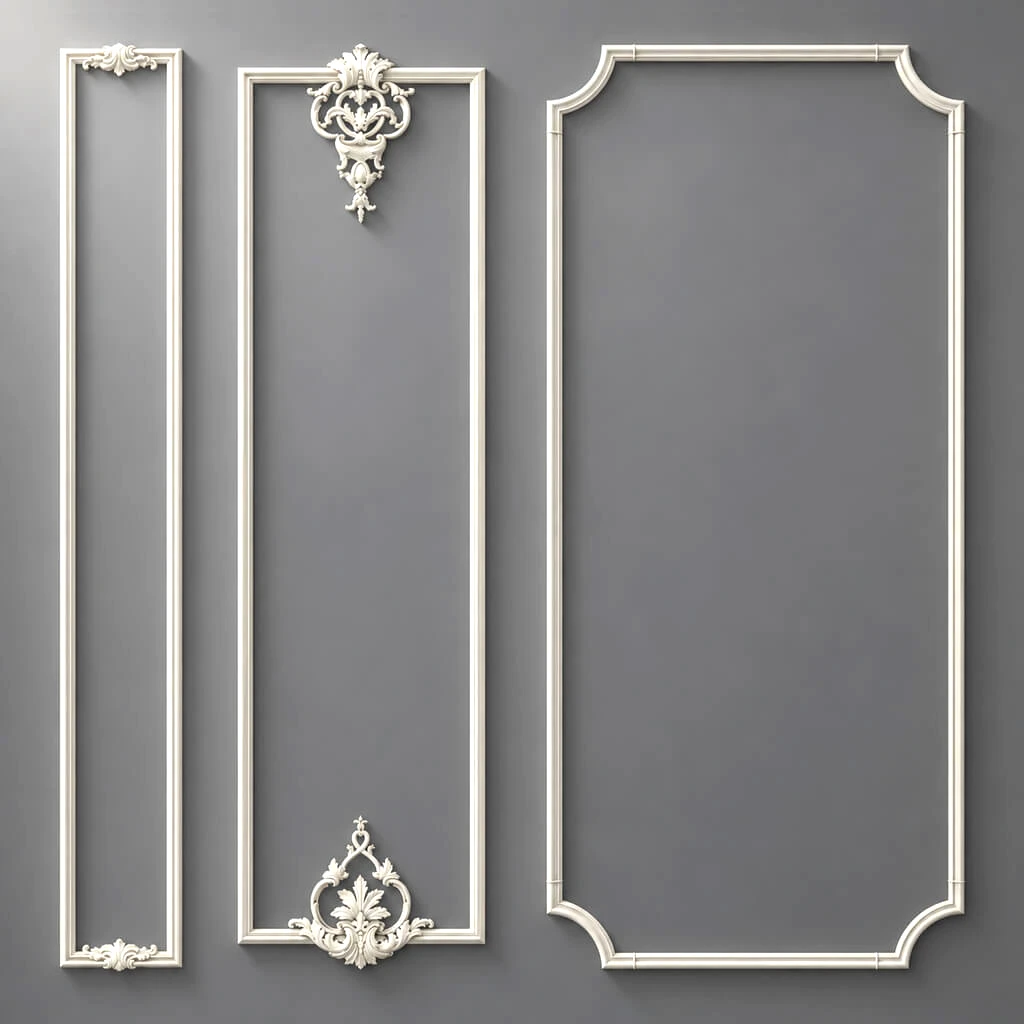
Article Contents:
- Why photos of moldings don't replace a real sample
- What is only checked on a sample: a practical breakdown
- Profile width and relief depth
- Surface quality and readiness for painting
- Ornament detailing
- Joining with adjacent elements
- Weight and density of the material
- Which STAVROS samples to choose for a specific task
- For walls
- For ceiling
- For furniture and decorative frames
- For the facade area
- For slatted areas
- Catalog of stucco molding: when it is sufficient and when a sample is necessary
- How a designer can use samples when working with a client
- How to choose wall molding samples: a detailed algorithm
- Step one: determine the scale of the space
- Step two: take several samples of different widths
- Step three: check compatibility with the baseboard and casing
- Step four: view under different lighting
- Polyurethane stucco samples: what to look at and what to check
- Density and geometry
- Ornament detailing
- Surface ready for painting
- Compatibility with other elements
- Samples of wooden baguettes, rosettes, and slatted panels
- Wooden frame
- Carved wooden rosettes
- Slatted panels
- Mistakes when choosing decor without samples: real scenarios
- When you need a set of samples, not just one piece
- How the catalog of moldings and samples work together
- How to transition from a sample to a large order without losses
- What to order along with samples: the logic of cross-linking
- FAQ: answers to popular questions about samples of moldings and stucco
- About the Company STAVROS

There is a moment in any renovation or design project when the monitor screen no longer helps. The catalog is open, the SKUs are marked, the tabs with photos haven't been closed for three days — but there's still no confidence. The molding in the picture looks elegant, but what will it be like on a real wall? The polyurethane stucco in the render looks rich, but how will it behave under a specific light fixture, with the chosen wall color, next to a baseboard from a different series? The answer to this question is not given by the screen — it is given by the sample in your hand.
Order STAVROS product samples before a large order — this is not over-insurance or an unnecessary step. It is a professional practice that for decades has distinguished an experienced designer from a beginner, a competent foreman from a hasty one. This is where the conversation in this article begins.





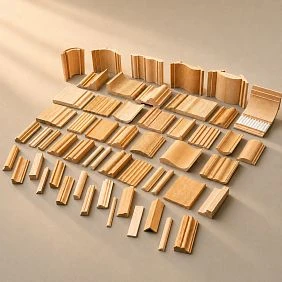
Why photos of moldings do not replace a real sample
The photograph lies. Not maliciously — it simply has no other choice. The camera captures the molding profile under specific conditions: with studio lighting, at a certain angle, after processing in a graphics editor. On screen, a polyurethane molding 40 mm wide looks different than it does on a wall 2.8 meters high. A relief that seems restrained in the photo, in a real room with side lighting begins to cast shadows deeper than planned. And conversely — a large ornament on the monitor sometimes turns out to be much more modest in real life.
Molding samples exist precisely to eliminate this gap between perception and reality. When you hold the molding in your hand, it immediately becomes clear: how wide the profile actually is, what the depth of the relief is, how detailed the ornament is, how the element behaves under light bending. This is information that no photo can convey, no matter how many pixels it has.
A separate issue is scale. A decorative element is always perceived relative to the space. A small room requires one approach, a high hall — a completely different one. To apply molding samples to the wall — means to see the proportion immediately, without speculation and complex calculations. The wall itself will tell you: this profile here is large-scale and organic, while this one gets lost or, on the contrary, overwhelms.
Another factor is lighting. The relief surfaces of stucco and moldings radically change character depending on the light source. With a warm sconce with side direction — one play of shadows, with overhead ceiling light — another. With morning daylight from the window — a third. The stucco sample needs to be viewed under several lighting scenarios before making a final decision.

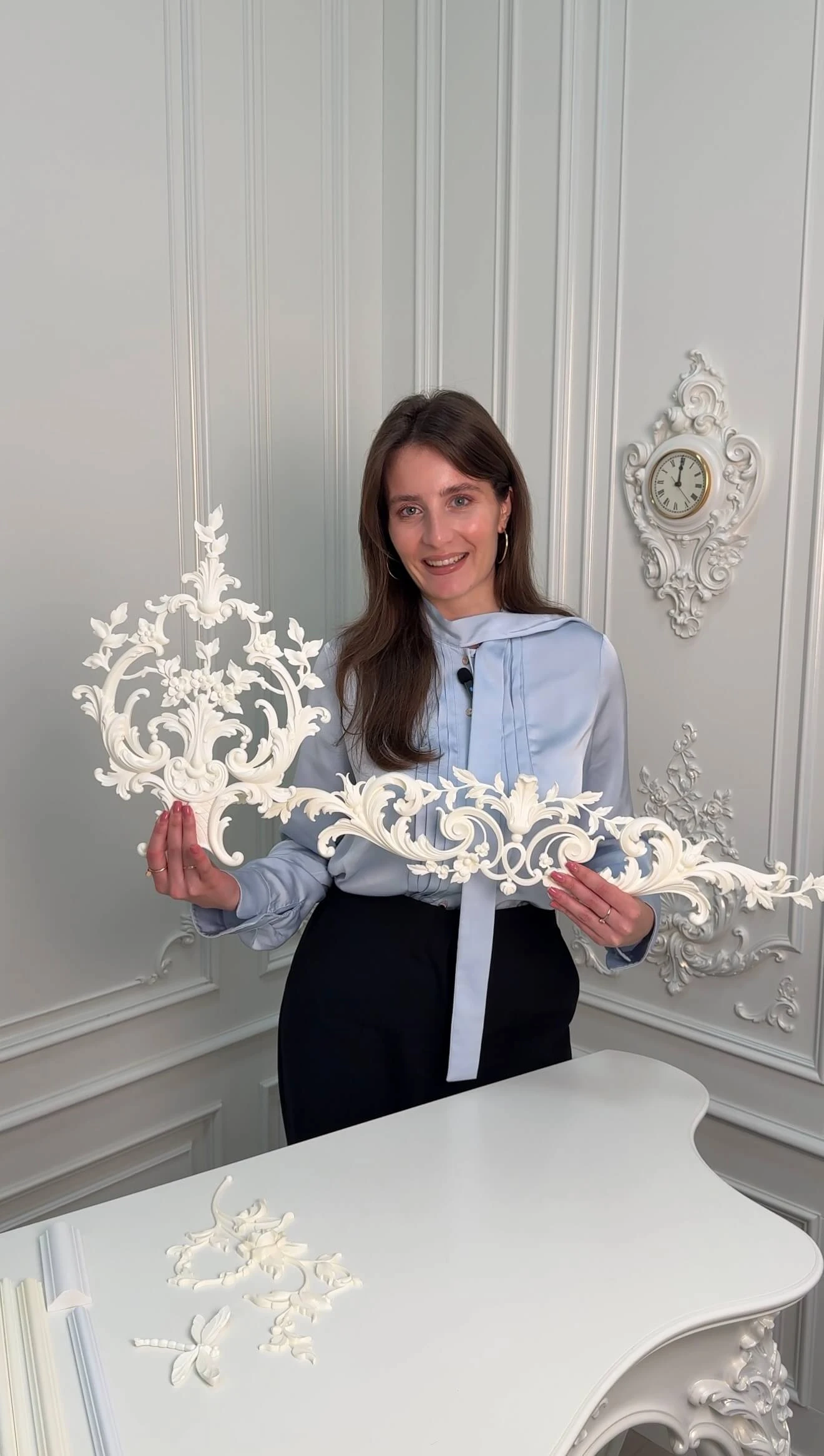
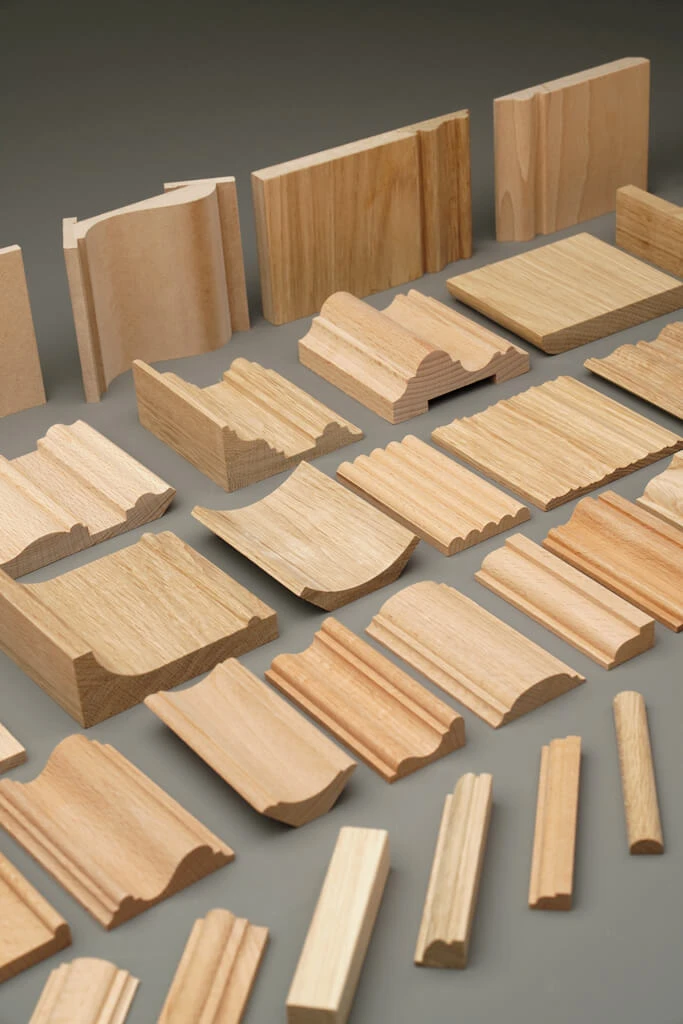

What is only checked on a sample: a practical breakdown
When Samples and catalogs of polyurethane decor End up in hands, opening the possibility for a full professional inspection. This is not one question — it's a whole list of parameters, each affecting the final result.
Our factory also produces:
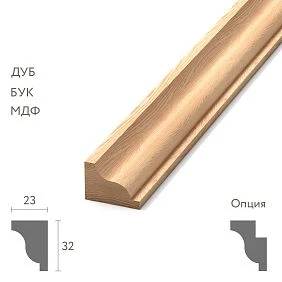
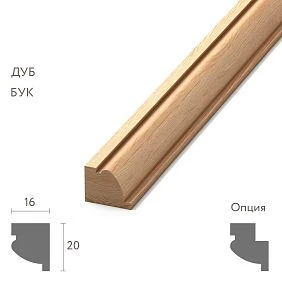
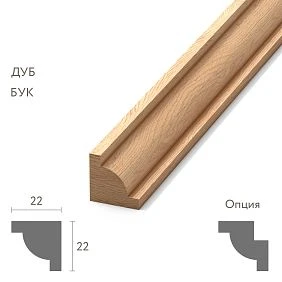




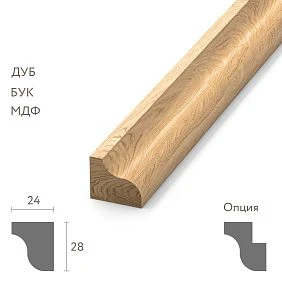
Profile width and relief depth
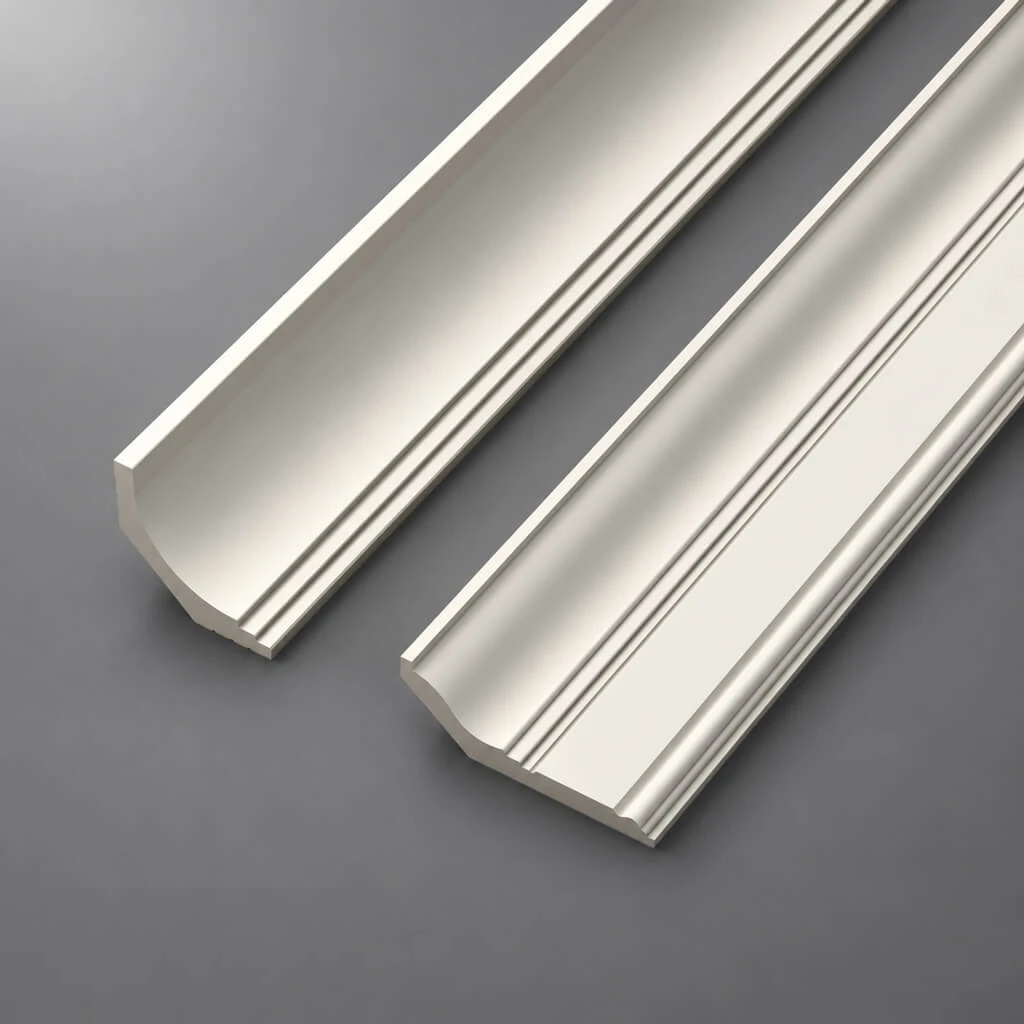
The width of the molding on the product card is a number in millimeters. But only by holding the sample and applying it to the wall does one understand how this number feels in space. A molding 60 mm wide with a ceiling of 2.4 m and the same molding with a ceiling of 3.2 m are visually different elements. The depth of the relief is also perceived differently at various distances: what looks rich at arm's length may be perceived as a flat strip from five meters away.
Get Consultation
Surface quality and readiness for painting
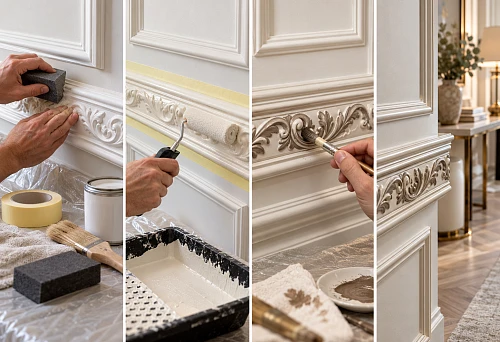
Polyurethane moldings In most projects, it is painted — to match a specific wall tone, gold, or patina. The sample allows you to assess the base surface: how smooth it is, whether there are pores, whether the primer is applied correctly. A well-primed surface of two-component polyurethane takes paint differently than a cheap analog made of foamed plastic. This difference is felt with your fingers before the brush touches the surface.
Ornament detail
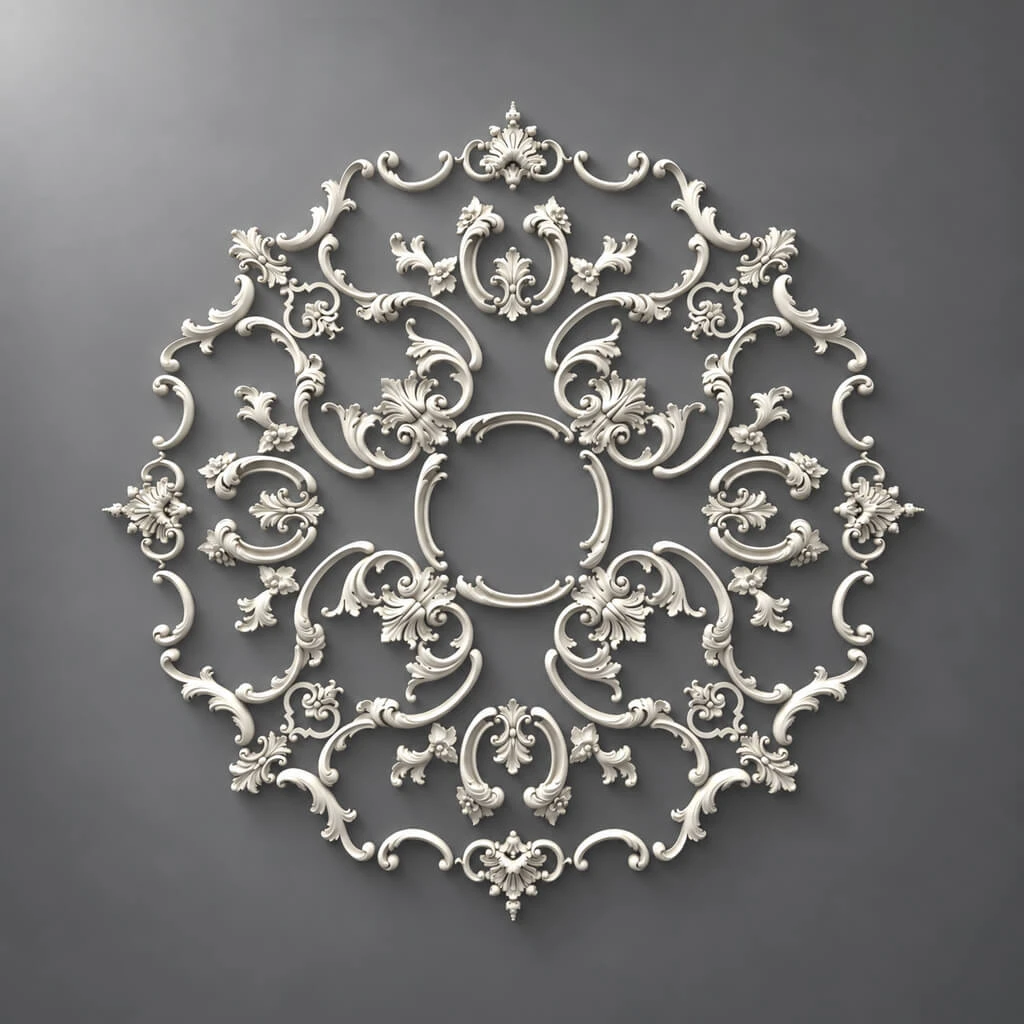
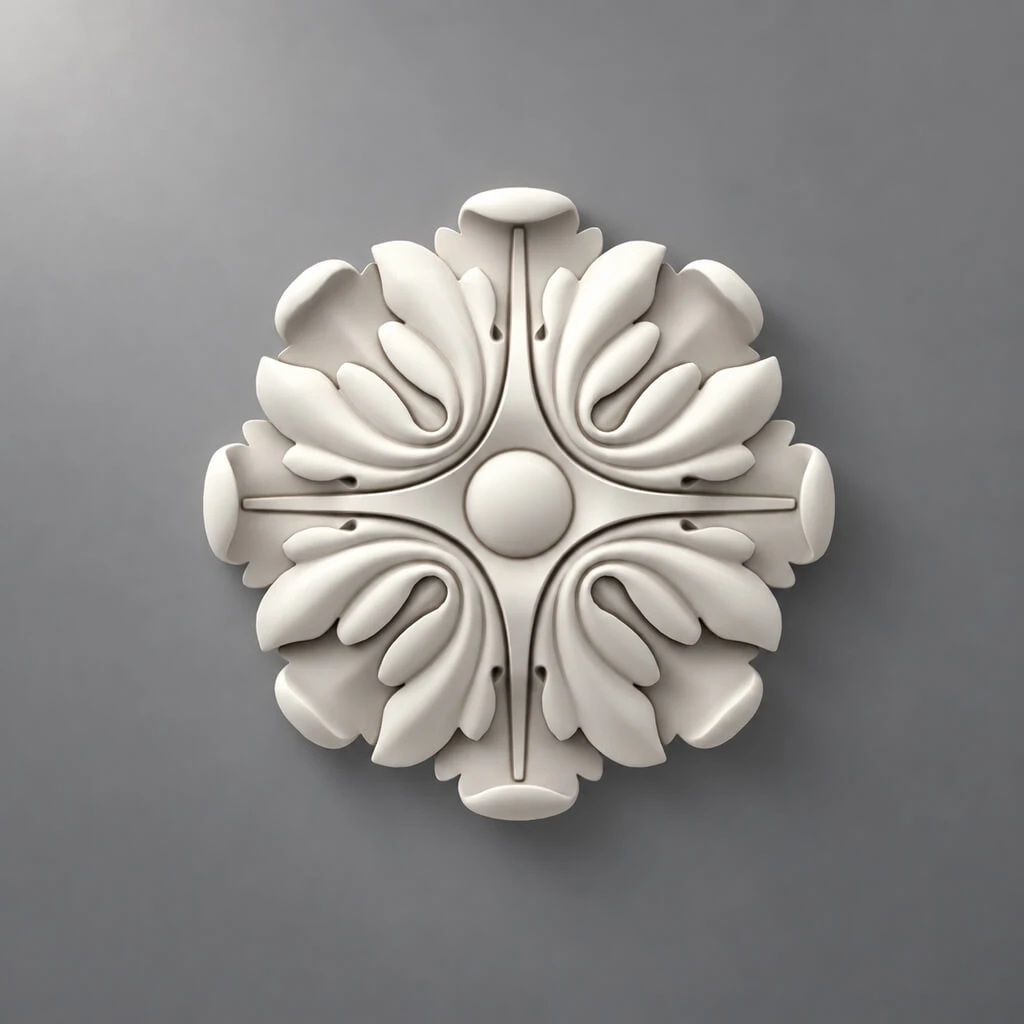
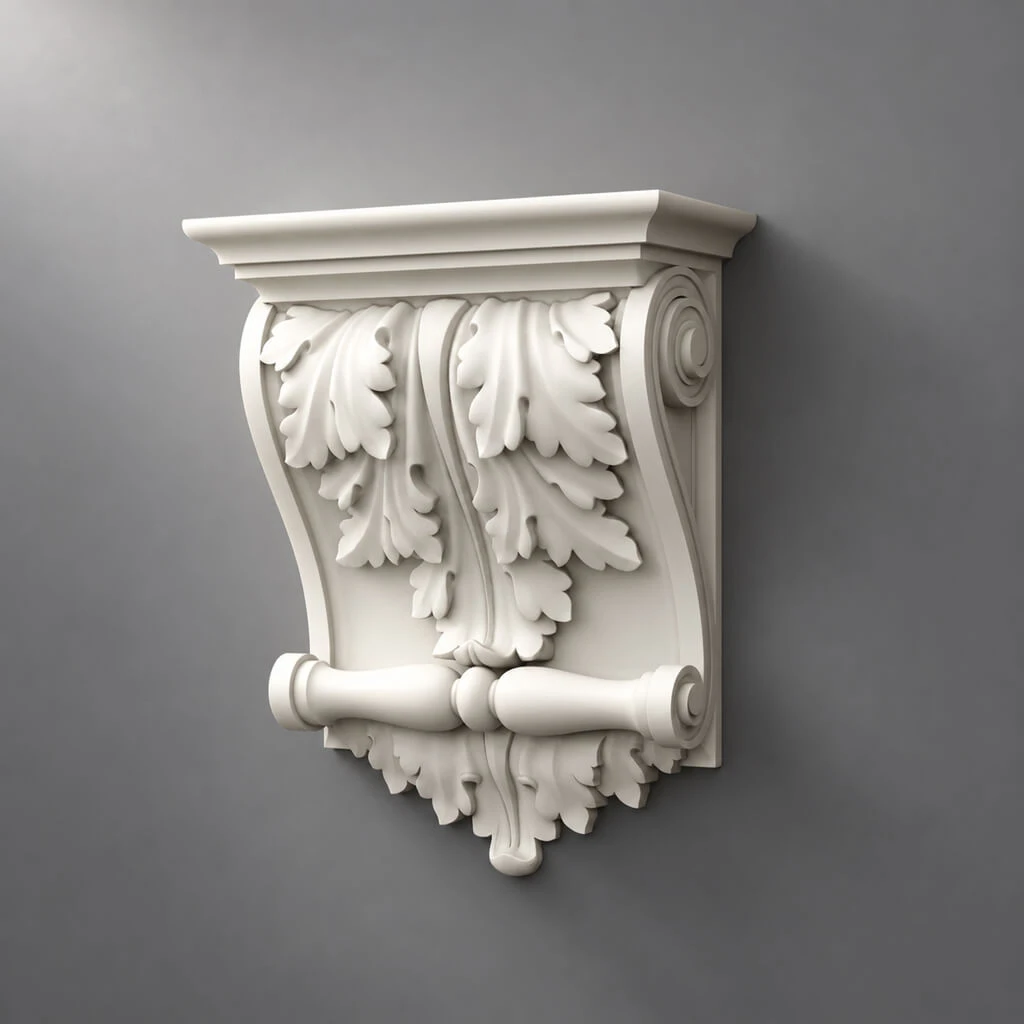
Ornamental elements — rosettes, overlays, decor for moldings — need to be evaluated by sample primarily in terms of detail. In photos, fine relief may appear sharp, but in reality it turns out to be blurred or, conversely, excessively sharp. Decor for Molding Made of high-quality polyurethane, it retains casting precision down to the smallest details of the ornament — and this is also a parameter that can only be checked tactilely and visually in person.
Joining with adjacent elements
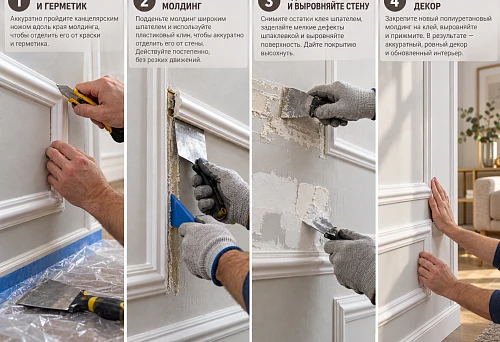
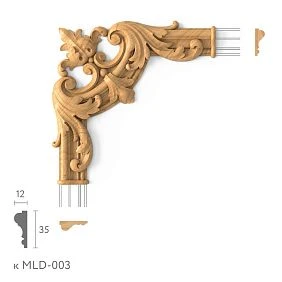
Molding rarely exists alone in an interior. Next to it are baseboards, cornices, door casings, rosettes, panels. The sample allows you to physically attach one element to another and check compatibility: by profile height, relief depth, and line character. This is especially important when mixing several series or when selecting . Clear lines, created using modern technologies, emphasize the strict aesthetics of the room. Each decorative element harmoniously fits into the overall concept, creating a sense of order and thoughtfulness. in combination with the ceiling perimeter.
Weight and density of the material
Polyurethane decor is a lightweight material, but there is variation here too. The sample allows you to feel exactly which product you will be working with. Dense two-component polyurethane holds its shape and geometry during installation and does not deform. Thin or porous material may ripple upon contact with glue. This difference is felt immediately, without special tools.
Which STAVROS samples to choose for a specific task
The task determines the set of samples. There is no universal list here, but there is a logic for selection based on the type of space and application area.
For walls
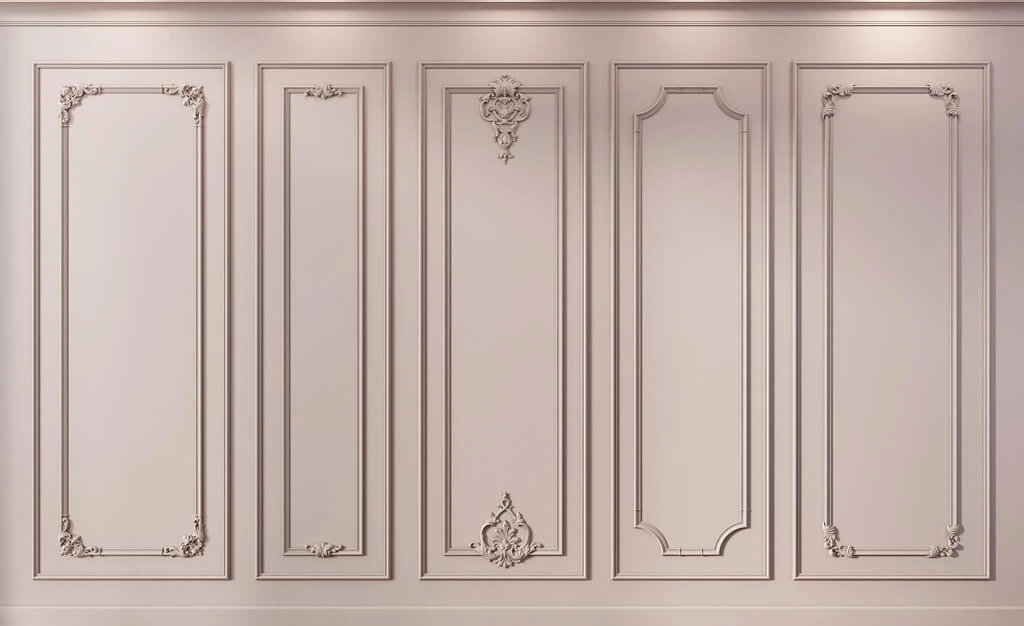
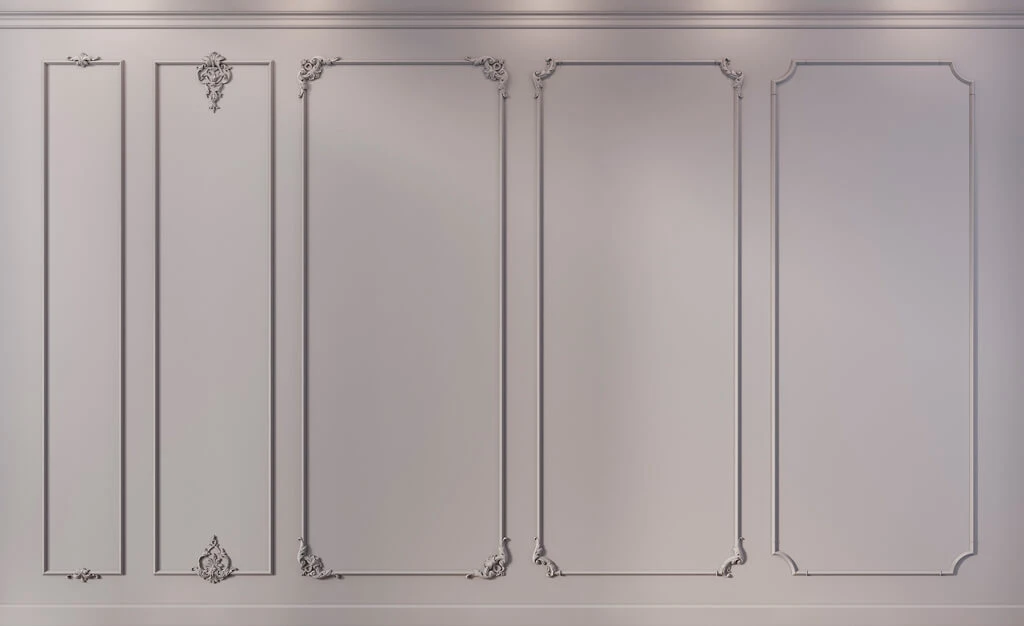
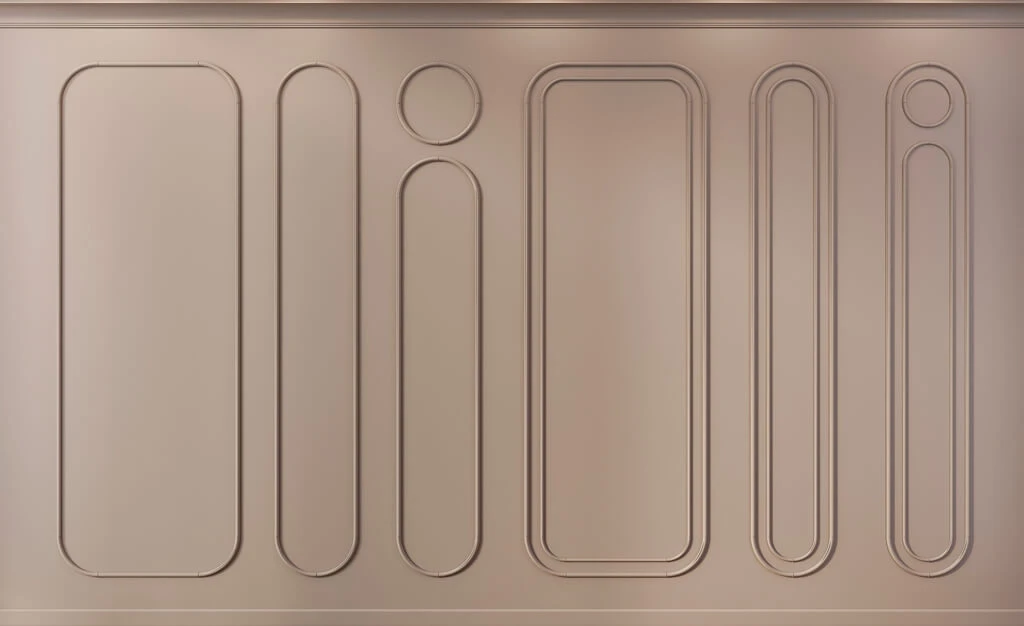
is widely represented in the STAVROS assortment — this is precisely why choosing a sample speeds up work on a project rather than delaying it. Polyurethane wall decor STAVROS offers a wide range of products — that's why choosing a sample speeds up project work instead of delaying it.
For the ceiling
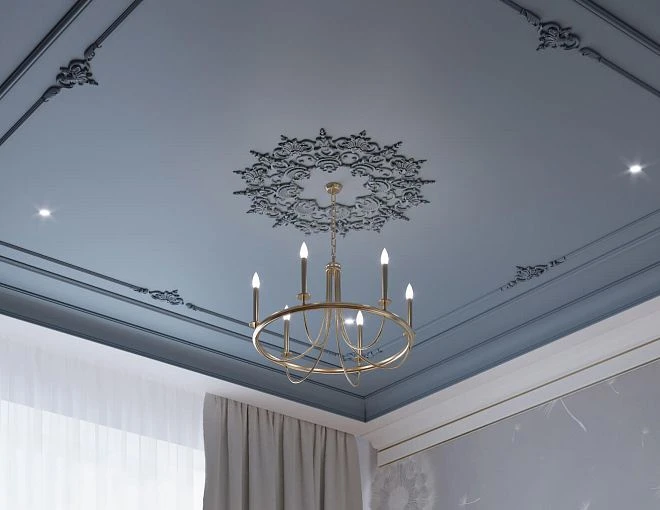
The ceiling area requires samples of ceiling moldings and cornices. The key parameters here are the cornice projection and profile height: they must match the scale of the room. A ceiling cornice sample, applied to the junction of the wall and ceiling, immediately shows whether the element is too massive or, conversely, too lost in the space. polyurethane ceiling decor — a separate product group that makes sense to request in samples separately from wall moldings.
For furniture and decorative frames
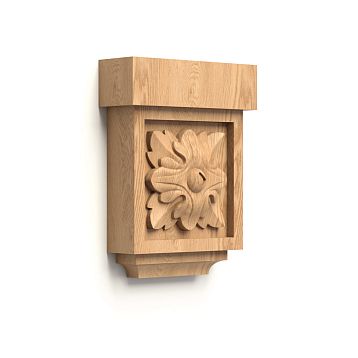
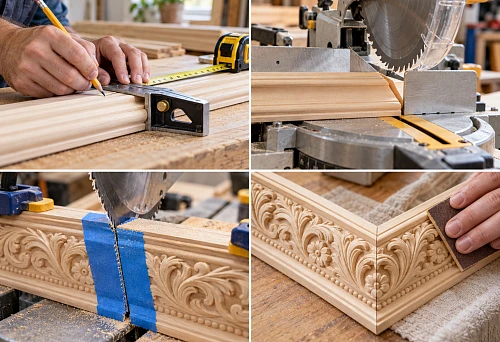
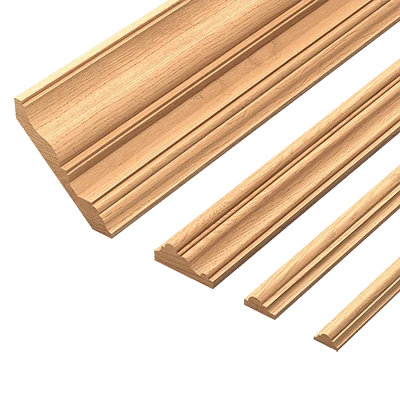
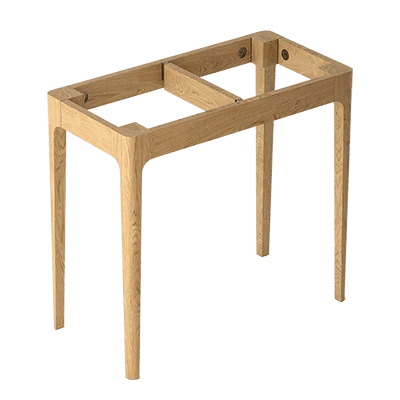
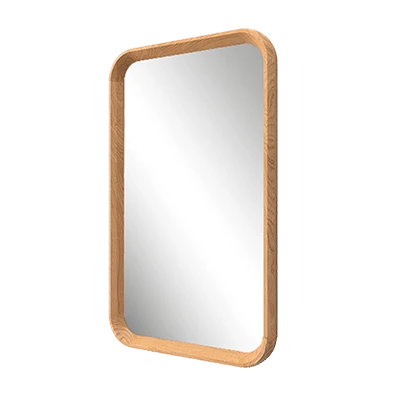
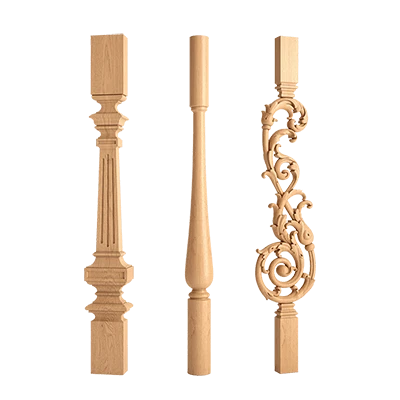
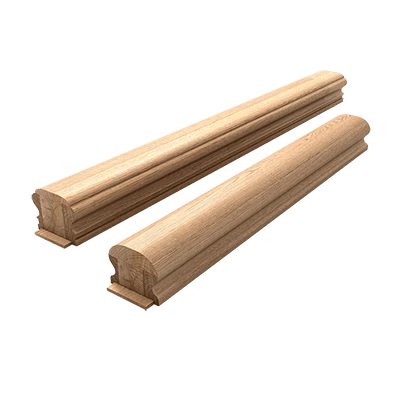
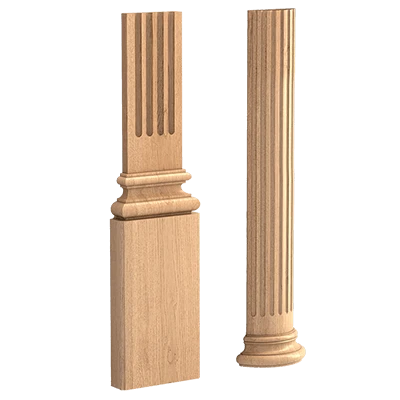
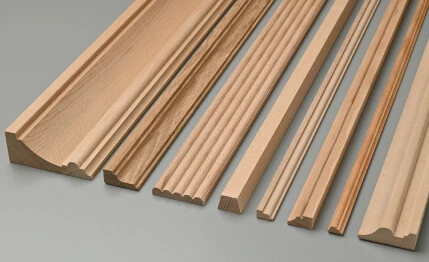
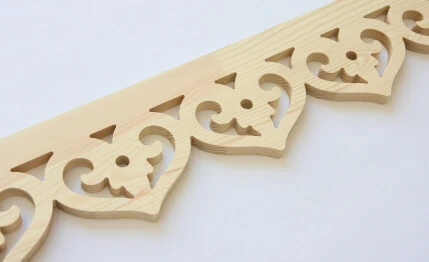
Furniture decor is a different scale and a different relief. It works here Wooden Picture Frame, carved overlays, corner blocks, decorative inserts. A sample of a wooden baguette allows you to evaluate the wood tone, texture character, and end processing quality. This is especially important when working with painted furniture, where the compatibility of shades and textures determines the entire result.
For the facade area
Facade decor works under different conditions — outdoor environment, temperature changes, ultraviolet light. A sample of a facade molding or trim allows you to evaluate the density and quality of polyurethane intended specifically for outdoor use. Here, a mistake made without a sample costs significantly more than in an interior project — redoing a facade at the height of the second floor is incomparably more difficult than re-gluing a molding on a wall in the living room.
For slatted zones
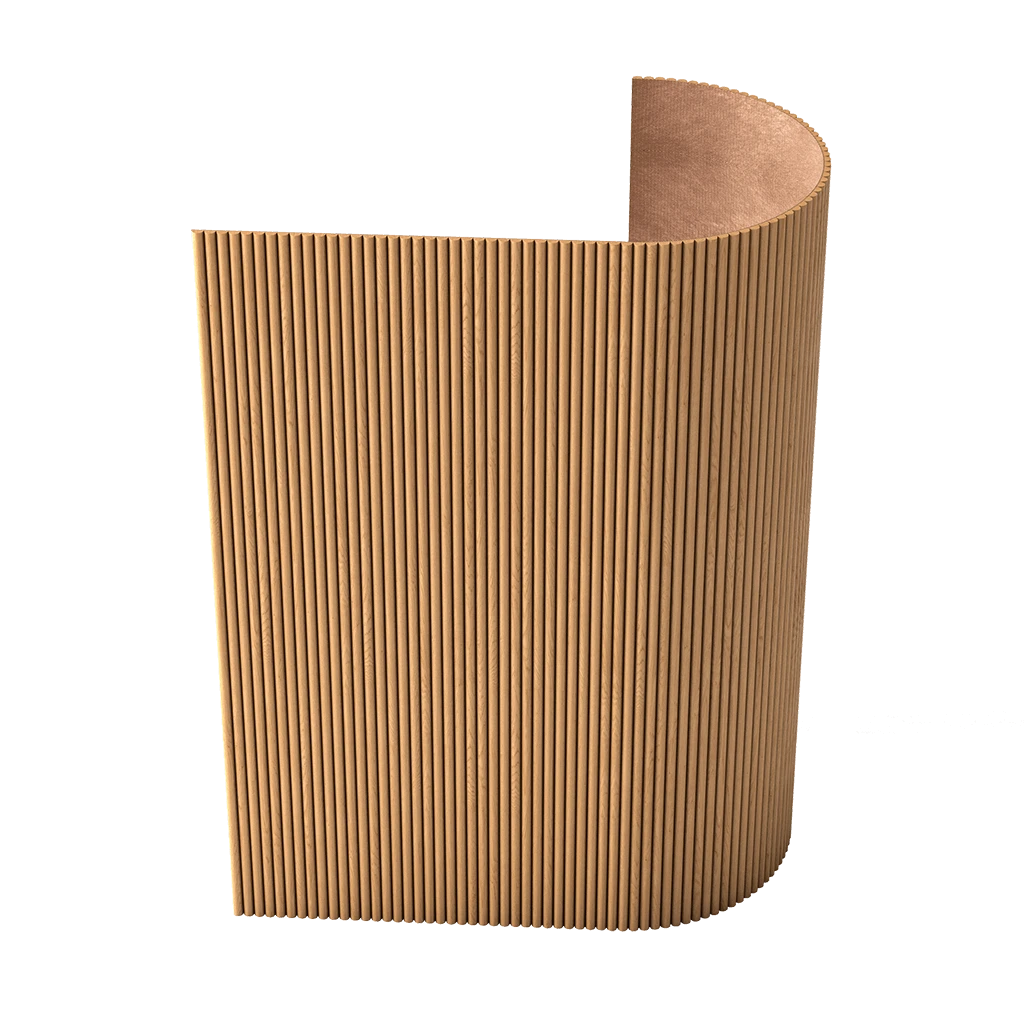
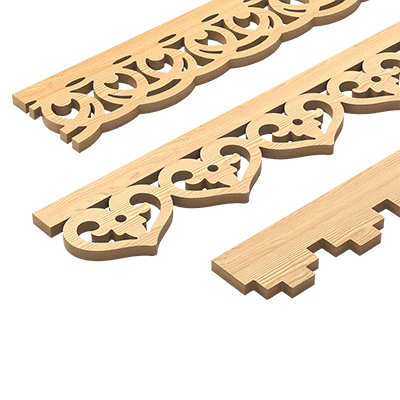
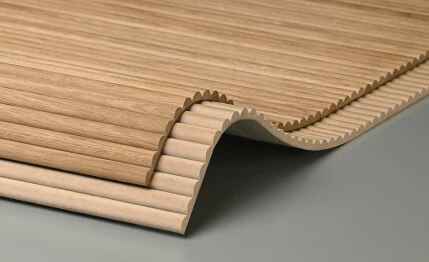
Rafter panels — a material with pronounced tactility and spatial rhythm. They cannot be chosen only from a photo: the distance between the slats, the depth of the groove, the wood tone, the texture character — all of this is perceived differently on screen and in person. A sample of a slatted panel is applied to the wall and allows you to instantly understand how well the layout rhythm matches the scale of the room.
Catalog of stucco molding: when it is sufficient, and when a sample is essential
Printed catalog of STAVROS polyurethane decor — a professional tool that contains 122 pages of full-color illustrative material with article numbers, exact dimensions in millimeters, and photographs of each model. It is convenient for initial selection, compiling a preliminary specification, and working on site without internet access.
The stucco molding catalog answers the questions: "What is in the assortment?", "Which article numbers correspond to the desired style?", "What are the exact dimensions?". This is a quick navigation tool — especially valuable when working with a large number of items. A stucco molding catalog with prices allows you to form a project budget even before going to the site.
But the catalog does not answer the question: "How will it look specifically in my space?" This question requires a sample. The rule is simple: the catalog of moldings is used for the initial selection of several options, the sample is for the final choice between them. This rule is especially critical when working on an expensive renovation, a commercial project, or any project where the decision needs to be coordinated with the client.
The catalog of polyurethane moldings and physical samples do not compete — they work in tandem. The catalog reduces selection time, the sample eliminates errors. This combination is the foundation of proper work with decor.
How a designer can use samples when working with a client
A designer who comes to a concept presentation with physical samples in hand speaks to the client in a different language. Not "look at the screen" — but "take it in your hands and evaluate." This completely changes the nature of the conversation.
Samples of moldings, baguettes, rosettes, and slatted panels perform several functions during approval. First — eliminating subjectivity. When the client sees the element in person, the argument "it looked different in the photo" disappears. Second — speeding up approval. A decision that takes several iterations of revisions when working only with renders is made in one or two visits when samples are available. Third — reducing the number of reworks. Most reworks in decorative projects happen due to a mismatch between expectations and reality. A sample makes expectations realistic in advance.
Samples of decor for a designer are not just a collection of fragments. They are a working tool that helps compile an approved specification and pass it to production without double interpretations. A designer who regularly works with the same materials gradually builds their own sample library — and this significantly speeds up work on each subsequent project.
For those who work systematically — managing several projects simultaneously or receiving clients in a showroom — it makes sense to consider an exhibition stand with decor samples. A stand with molding samples allows you to show clients several materials and profiles in a single exhibition context, compare options side by side, and make decisions quickly. This is a tool not for a single project, but for regular professional practice.
How to choose molding samples for walls: a detailed algorithm
Choosing a molding for a wall is a more subtle process than it seems at first glance. Not only aesthetics play a role, but also proportion, room geometry, and the logic of the decorative system.
Step one: determine the scale of the space
A small room with a ceiling height of 2.4–2.6 m requires moldings with a moderate profile width — typically no more than 40–60 mm. A wider profile begins to visually compress the space. For tall rooms, lofts, and grand halls, more massive profiles are appropriate — from 80 mm and above. The rule is simple: the molding should be noticeable but not dominant.
Step two: take several samples of different widths
Not just one molding sample — three or four. Hold them against the wall in vertical and horizontal positions, with pauses between them, forming a frame. Look at them in the morning and evening. Take photos from a distance of two and four meters. This takes minutes but eliminates months of rework.
Step three: check compatibility with the baseboard and casing
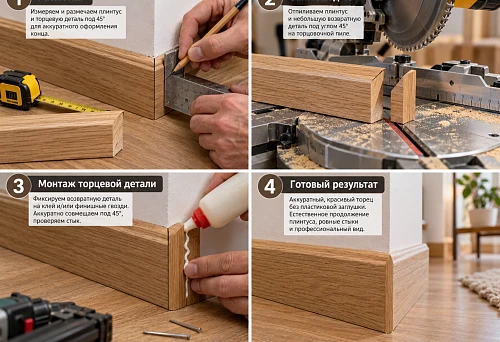
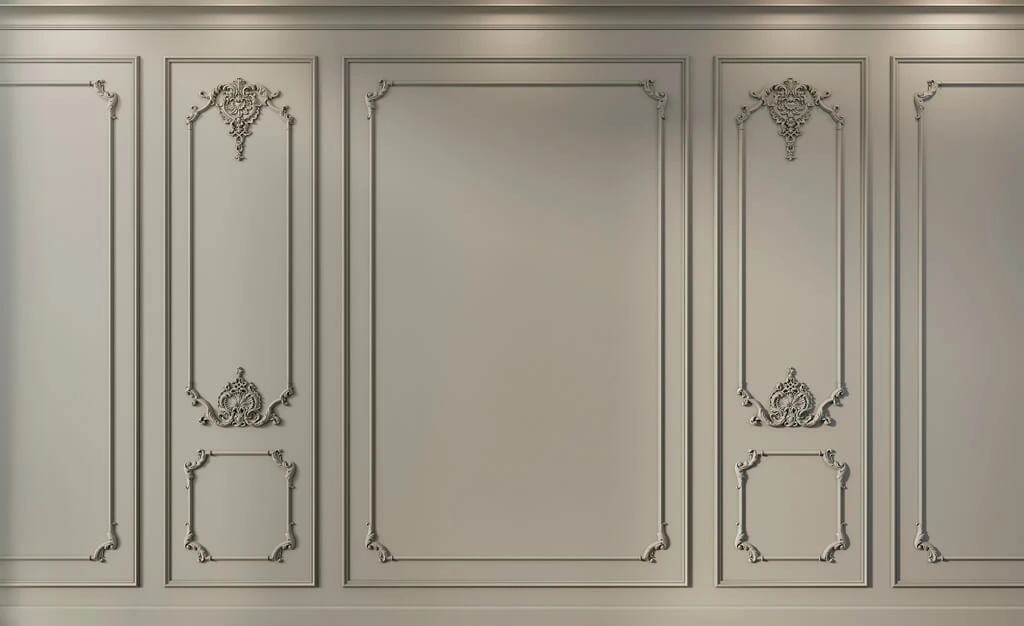
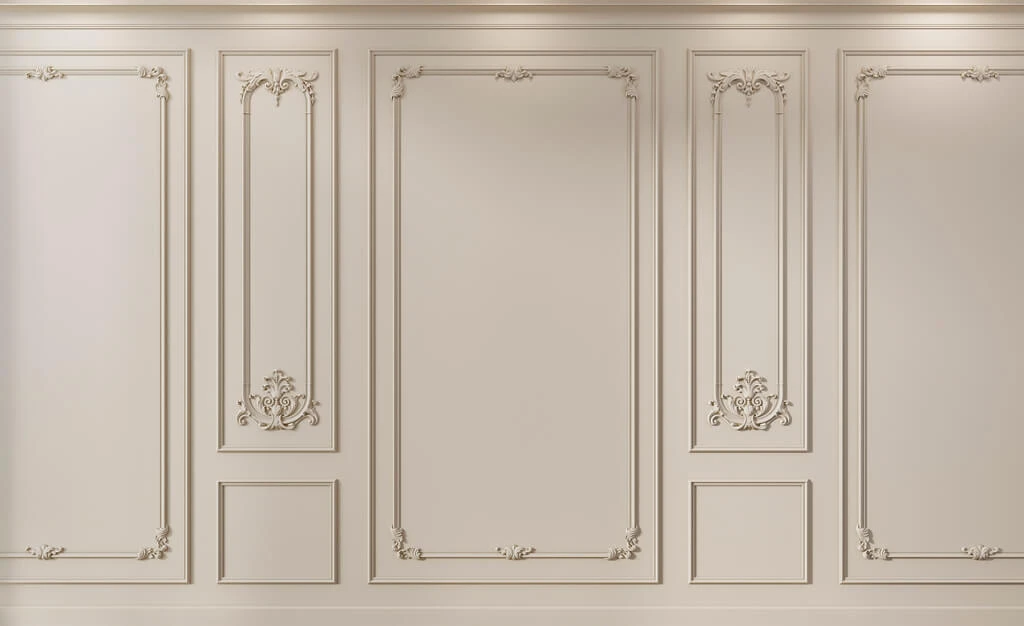
Pogonazh iz massiva и Moldings made of polyurethane They should form a cohesive system. If the baseboard has a pronounced classical profile, the moldings for panel wall decoration should be in the same stylistic system. Samples allow you to literally place the baseboard against the molding and verify visual compatibility.
Step four: view under different lighting
The relief profile of the molding is perceived differently in daylight from a window and in warm evening lighting. This is not a flaw — it is a property of architectural decor. But it must be considered: if the room is planned to have warm side lighting, the relief will be accentuated, shadows deeper. If the lighting is overhead and uniform, the profile will read more subtly. Checking this effect with a sample means consciously managing the final result.
Polyurethane stucco samples: what to look for and what to check
Polyurethane decor today holds a leading position in architectural decoration — both in terms of scale of use and variety of assortment. At the same time, the quality of polyurethane products can vary significantly even in externally similar products. That is why polyurethane molding samples before ordering — it is not a formality, but a mandatory stage of professional selection.
Density and geometry
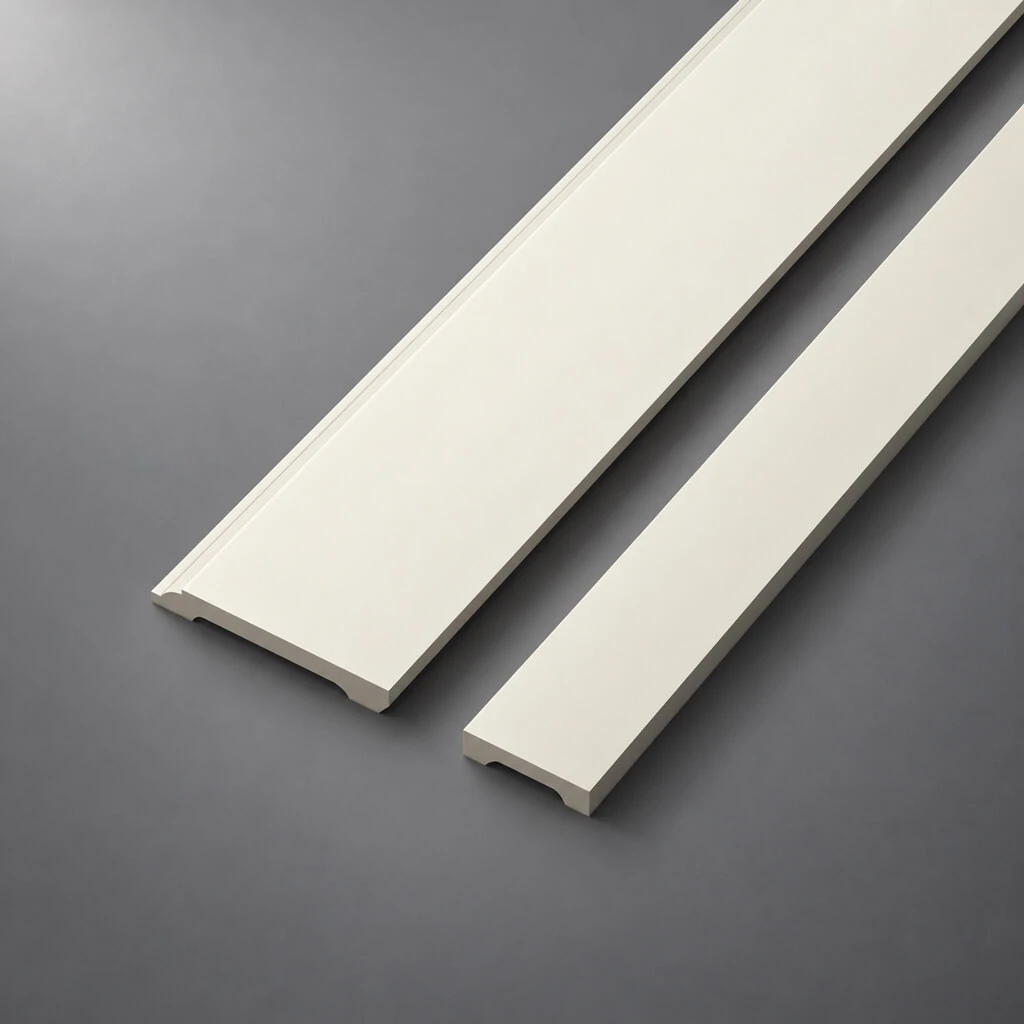
High-quality two-component polyurethane — dense, non-porous, with clear end geometry. The sample should be inspected along the cut: the end must be even, without bubbles, without looseness. Light pressure with a fingernail should not leave dents. This is a simple but accurate test of material quality.
Ornament detail
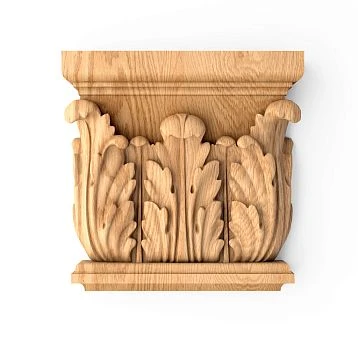
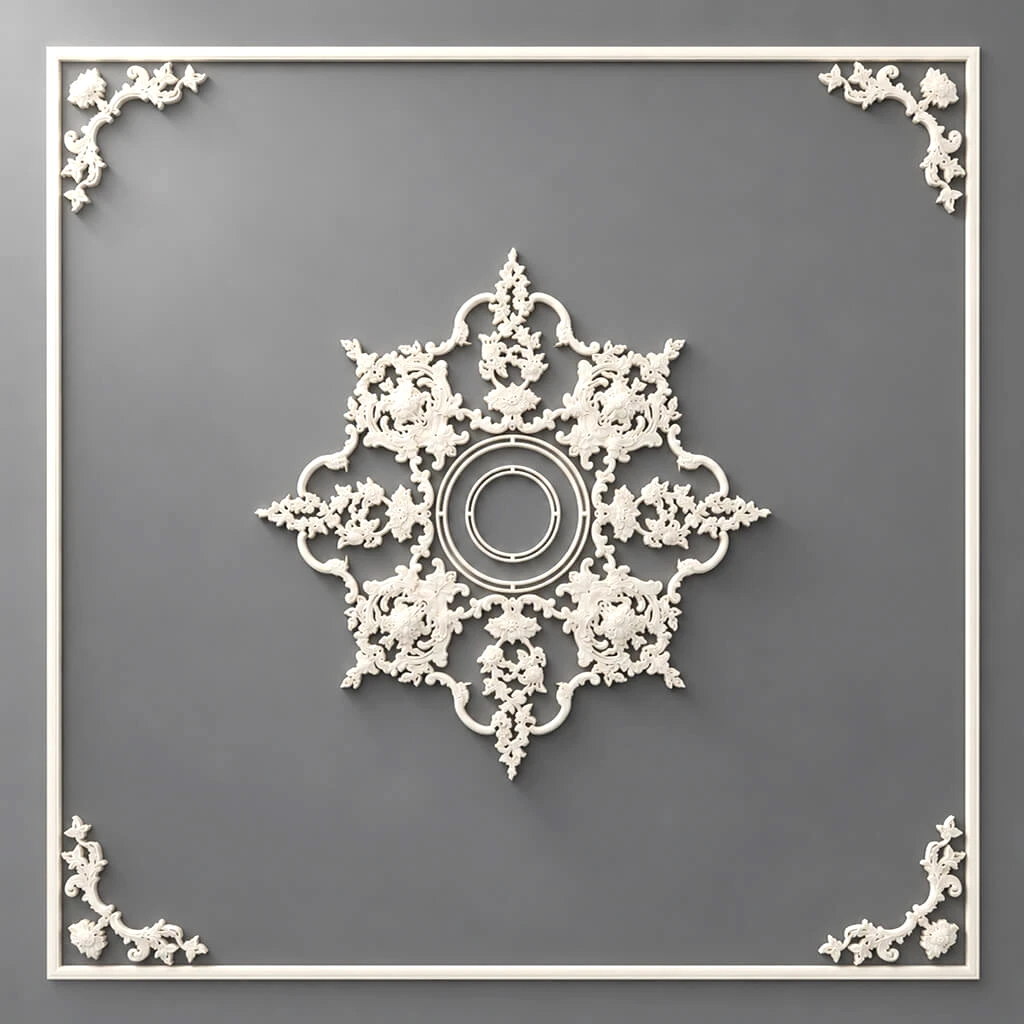
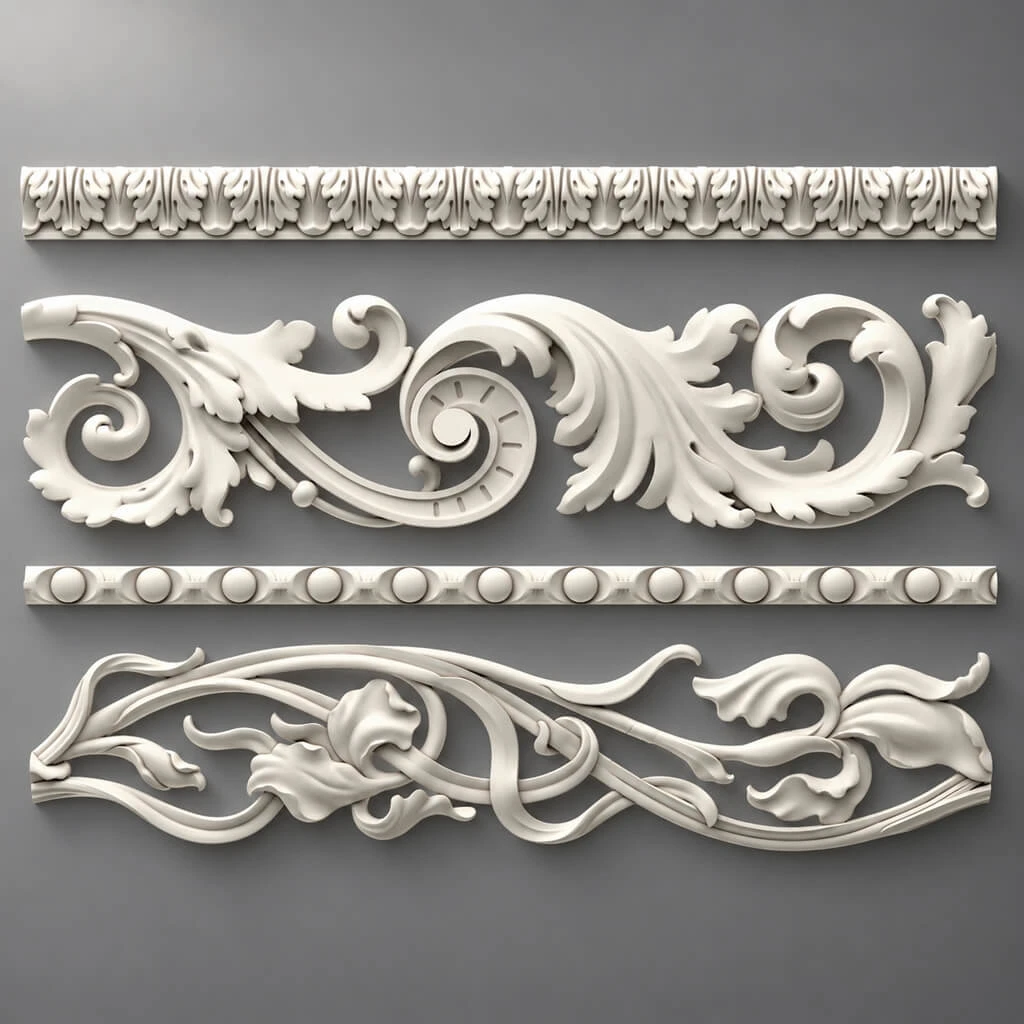
Ornamental stucco elements — acanthus leaves, meander, garlands, cartouches — must have clear edges and readable depth. The sample clearly shows how accurately the relief of the original shape is reproduced. Blurred, indistinct ornament lines are a sign of either a worn-out matrix or low quality of the polyurethane mixture.
Surface for painting
Most polyurethane elements are supplied already primed. The sample allows you to assess the quality of priming: the surface should be matte, uniform, without gaps. It determines how well the finish paint will adhere to the decor and how long the coating will retain its appearance. This parameter is absolutely not readable in photos.
Compatibility with other elements
Placing a stucco sample next to a molding from the same series, next to a cornice, next to a baseboard — means immediately seeing whether they form a system. The element's height, relief depth, and ornament character must be in a coordinated dialogue. Catalog of carved decor helps systematize selection by style, samples — to check the system in person.
Samples of wooden baguette, rosettes, and slatted panels
Wooden decor is a separate story. Here, the natural variability of the material requires special attention when selecting samples.
Wooden molding
STAVROS wooden baguette used for framing mirrors, paintings, panels, and furniture inserts. A sample of a wooden baguette allows you to evaluate: the tone and richness of the wood, the nature of the texture, the quality of varnishing or finishing, the clarity of the profile on the end and front plane. Wooden material has a natural variation in tone from batch to batch — which is why a sample is not a recommendation but a necessity for large orders.
Carved wooden rosettes
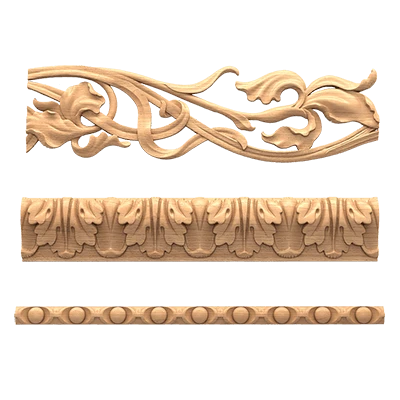
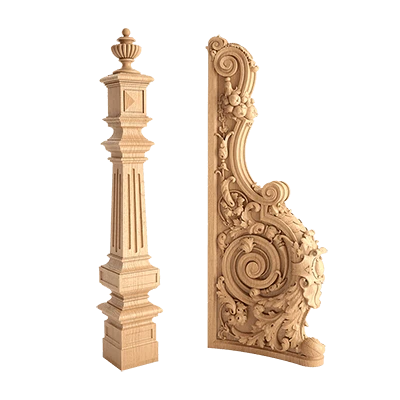
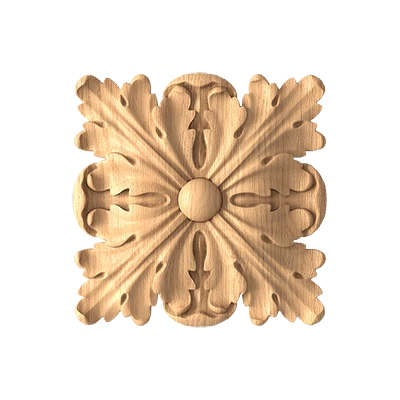
carved wooden rosettes — an element whose quality is determined exclusively in person. The depth of the carving, the clarity of the contours, the nature of the surface between the relief elements — all of this requires tactile evaluation. In photos, carving always looks different than in person: the camera does not convey the play of shadows and the spatial volume of the ornament. A rosette sample in hand is the only way to understand how well the product matches the project's level.
Rack panels
Rafter panels — perhaps the product in the STAVROS line most dependent on a physical sample. The rhythm of the slat layout, the depth of the groove, the tone of the solid wood, the prominence of the texture, the smoothness of the surface — all of this requires direct perception. A sample of a slatted panel is applied to the wall as a whole fragment, not examined one slat at a time: only in its assembled form can the overall rhythm be seen and how the material will look in the application area.
Mistakes when choosing decor without samples: real scenarios
Practice shows that most mistakes when ordering architectural decor have the same nature — a person made a decision based on a photograph. Let's break down typical scenarios that repeat over and over again.
Mistake one: choosing a molding without considering scale. The molding looked elegant and restrained in the photo. On the wall, it turned out either too thin and got lost, or too massive and overwhelmed the entire space. A molding sample applied to the wall eliminates this mistake in five minutes.
Mistake two: ignoring lighting. Relief stucco creates a completely different atmosphere with side evening light than with uniform top lighting. The client made a decision looking at a render with one type of lighting, but the finished interior had a different scenario.
Mistake three: incompatibility of elements. The molding was chosen separately, the baseboard separately, the casing separately. Individually, each element is good. Together — three different stylistic systems that conflict. Samples placed side by side provide an answer to this question immediately.
Mistake four: choosing an ornament without considering the interior. A lush baroque ornament, chosen from a beautiful photo, turned out to be excessive in a Scandinavian-style interior. Bringing a sample into the real space means checking the appropriateness of the element in context.
Error five: ordering the entire volume without testing. The most costly mistake. The linear molding was ordered for the entire perimeter at once, the material was delivered — and then it turned out the profile was wrong. A sample before the main order costs nothing compared to redoing the entire volume.
Error six: color not agreed upon. The decorative element will be painted, but the surface sample for painting was not checked in advance. As a result, the finish coating did not lay as planned.
Error seven: not holding it against the wall, limiting the check to the table. The horizontal plane of the table is not a wall. The molding needs to be held vertically in the position in which it will be installed. This changes the visual perception drastically.
When a set of samples is needed, not just one fragment
One molding sample answers one question. A set of samples answers a system of questions. These are fundamentally different tools for different tasks.
A set of samples is needed when the project includes several zones with different decor — for example, a living room with classic moldings and wall rosettes, a hallway with slatted panels and wooden baguette, a study with neutral linear molding. Each zone requires its own set of samples, which are checked at the place of application, not on a common table in the studio.
A set of samples is also necessary when working on a commercial project — a restaurant, hotel, office space — where the decor must match the overall branding direction and is coordinated with several project participants. Bringing a set of samples to a meeting means moving the discussion from abstract to concrete.
For designers working in a constant flow of projects, it makes sense to form a permanent library of samples for key categories: moldings of several widths, basic linear molding profiles, several types of stucco overlays, wooden baguette in two or three tone options. This library works as a living catalog of decor — only instead of pages, it contains real fragments of materials.
How the stucco catalog and samples work together
Professional work with decor is built on a combination of two tools: the catalog as a navigation system and the sample as a final verifier.
It all starts with a catalog. The decorative molding catalog allows you to quickly view the entire assortment, filter by style and size, and compile a preliminary list of article numbers. The molding catalog with prices makes it possible to simultaneously form a budget. Printed catalog of STAVROS polyurethane decor — a full-fledged working tool for field work and negotiations with the client.
After the preliminary list is formed and 3–5 options are selected from the catalog, samples are requested for specific article numbers. At this stage, the work becomes concrete: samples are brought to the site, applied to real surfaces, compared with each other and with adjacent elements. The final choice is made here — in real space, not on a monitor.
This combination — a molding catalog for initial selection, samples for the final decision — saves time, reduces the number of iterations, and eliminates costly mistakes.
How to transition from a sample to a large order without losses
When the samples have been checked and the decision has been made, there are a few practical steps left that turn the approved sample into a properly executed order.
First step: record the article numbers. Each approved sample has an article number. This article number is written down immediately — not "light molding with leaves," but the specific code from the catalog. It is the article number that guarantees that the order will contain exactly the element that was approved.
Second step: measure the linear footage. Linear elements — moldings, cornices, baseboards, picture rails — are ordered in meters. All application areas need to be measured, taking into account corners, joints, and allowances for cutting. A reserve is always added to the calculated footage — typically 10–15% — to cover cutting and unforeseen losses.
Third step: compile a specification. The specification includes article numbers, quantities, units of measurement, and application areas. This is a document that eliminates all double interpretations between the designer, the client, and the supplier. It is also convenient for builders on site to work with this document.
Fourth step: agree on the finish. If the elements are to be painted, clarify the state in which they are supplied (primed, white, unpainted), and confirm compatibility with the planned final coating.
Step five: place an order. The transition from samples to the main order is not just a purchase, it is the result of systematic work. A correctly chosen decor, confirmed by a sample and fixed in the specification, is installed without surprises and lasts for decades.
This entire journey — from the first glance at the catalog to the moment the molding takes its place on the wall — becomes significantly shorter when there is a correct intermediate step: a sample in hand.
What to order together with samples: the logic of cross-linking
A sample is the beginning, not the end. It is followed by full-fledged work with the catalog and selection of product items. Here is what makes sense to study in conjunction with samples:
-
Samples and catalogs of polyurethane decor — starting point for working with the polyurethane assortment
-
Moldings made of polyurethane — main linear decor for walls and ceilings
-
Polyurethane wall decor — overlay elements, ornamental inserts, panel decor
-
polyurethane ceiling decor — cornices, ceiling moldings, elements for the central ceiling area
-
Polyurethane moldings — overlay decorative elements: medallions, cartouches, ornamental panels
-
Decor for Molding — corner blocks, inserts, end elements for linear systems
-
Wooden Picture Frame — natural wood for frames, inserts, furniture decor
-
carved wooden rosettes — point decor for walls and ceilings
-
Rafter panels — rhythmic wooden wall systems
-
Pogonazh iz massiva — wooden baseboards, cornices, moldings from natural species
-
Catalog of carved decor — full range of carved elements from solid wood
FAQ: answers to popular questions about molding and stucco samples
Why order molding samples before purchasing?
The sample allows you to evaluate the actual profile width, relief depth, surface quality, and scale of the element in relation to a specific room. In photos, the molding may look different than it appears on the wall under real lighting and in the actual proportions of the room.
How are polyurethane stucco samples useful?
They allow you to check material density, ornament detailing, quality of the primed surface for painting, end geometry, and compatibility with other decorative elements. All of this cannot be assessed from a photo or description in the product card.
What is better: a stucco catalog or a physical sample?
A stucco catalog is necessary for initial navigation through the assortment, collecting article numbers, and forming a budget. A sample is needed for the final decision: texture, scale, thickness, and real visual perception of the material are only checked in person. Professional work involves both tools.
Which samples should a designer order before a project?
Minimum working set for a typical residential interior: samples of moldings in two or three widths, a sample of a ceiling cornice, a sample of a baseboard, a sample of a rosette, a sample of a wooden baguette, and a sample of a slatted panel if the area requires its use.
Are samples needed for a small order?
For a typical order of one or two items in a small volume, you can rely on the product card. But for any project with client approval, expensive renovation, or commercial object, samples reduce the risk of rework and eliminate costly selection errors.
Can you select a color based on a sample?
Most elements are supplied in a primed or white state — they are painted for a specific project. The sample allows you to check the surface quality for finishing. The color is finally selected based on a sample with the applied finish coating under real lighting conditions.
When is a display stand with samples needed?
A stand is needed for designers and studios working in a regular flow of projects, interior material salons, dealers, showrooms, and construction companies. A stand with decor samples is a live catalog that the client works with hands, not eyes.
How to properly store a collection of samples?
It is best to store samples in a structured manner: by categories (moldings, stucco, baguettes, rosettes, slatted panels) with signed article numbers. This significantly speeds up work on subsequent projects — there is no need to search for and order items that have already been tested again.
What are polyurethane decor samples?
These are physical fragments of decorative elements made of polyurethane — moldings, stucco overlays, cornices, rosettes — in full size. Samples allow you to evaluate the material before making a decision on the main order.
How are product samples and the STAVROS catalog related?
The catalog provides a complete overview of the assortment with article numbers and sizes. Samples allow you to check specific items from the catalog in person. Together, they form a complete toolkit for professional selection of architectural decor.
About the company STAVROS
STAVROS is a Russian manufacturer of architectural decor made of polyurethane and solid wood. The assortment includes more than 4,000 models: moldings, cornices, baseboards, stucco overlays, rosettes, wall and ceiling decor, wooden baguettes, slatted panels, carved decor, and linear products. Production uses two-component polyurethane with high relief detail and long-term shape stability. STAVROS supplies products throughout Russia, working with designers, architects, dealers, and private customers. For professional market participants, product samples, a printed catalog, and display stands are provided — everything necessary for systematic work with decor at any level of project complexity.