Article Contents:
- What is a wooden baguette by the meter and how it differs from a ready-made frame
- When you need an unpainted wooden baguette: selection scenarios
- Project with a unified color system
- Furniture facades for enamel
- Restoration of furniture and decorative frames
- Toning to match natural wood
- Patina and Aging
- Where to use STAVROS wooden baguette: from a painting to a cabinet facade
- Wooden baguette for frames with paintings
- Wooden baguette for mirror frame
- Wooden baguette for decorative panels and wall panels
- Wooden molding for furniture fronts
- How to choose a wooden baguette profile: parameter breakdown
- Profile width
- Relief height
- Seating depth
- Profile style
- Compatibility with moldings and trim
- Comparison table: how to choose a profile by purpose
- Baguette by the meter or ready-made frame: what to choose and when
- When by-the-meter wins unconditionally
- When a ready-made frame may be more convenient
- Finishing wooden baguette: painting, tinting, varnish, and patina
- Enamel Painting
- Wood Toning
- Untinted varnish
- Patination
- How to calculate the amount of wooden baguette by linear meters
- Calculation algorithm for one frame
- For a series of identical frames
- For a wall panel system
- Profile length in the product card
- How to combine wooden baguette with other STAVROS decor elements
- Baguette + moldings and cornices
- Baguette + linear moldings
- Baguette + carved overlays and decorative elements
- Bagette + boiserie
- Bagette + pilasters and carved decor
- Mistakes when choosing a wooden baguette
- Where to buy STAVROS wooden baguette: catalog and formats
- Frequently Asked Questions
- About the Company STAVROS
Imagine: the interior is almost ready. The walls are painted, the furniture is arranged, the moldings are installed. One last step remains — to frame the mirror in the hallway, make a frame for a large canvas in the living room, frame a decorative wall panel in the study. And here a person faces a choice they weren't prepared for: which profile to take, what width, what relief — and most importantly, where Buy wooden picture frame moldingthat will definitely fit the already established look?
This is where the real work with detail begins. Beadboard can be purchased by the linear meter (hence the name), cut to required sizes for each specific object (a mirror frame 80×120 cm requires perimeter = 4 meters of beadboard, accounting for 45-degree corner cuts). means getting not a finished product of a fixed size, but a tool. A profile from which you can make a frame of any format, a mirror of any proportions, a framing for any wall panel. This is not a limitation — it is freedom.
This article is about how to use this freedom correctly. No fluff, no lyrical digressions for the sake of volume. Only specifics that truly help you choose.
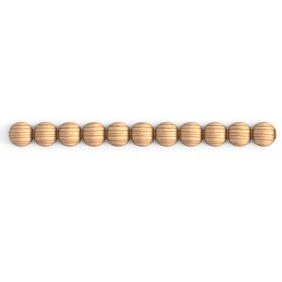
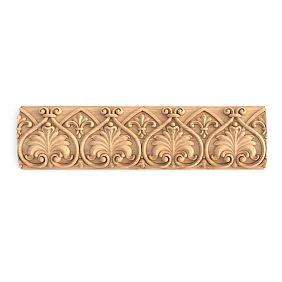
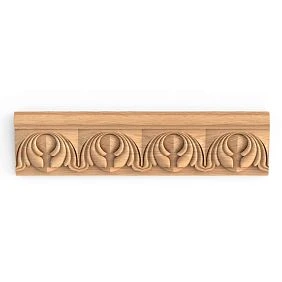
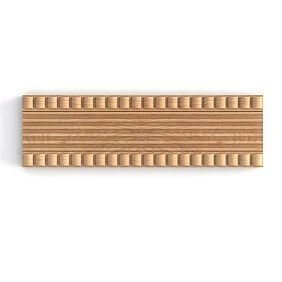
What is wooden baguette by the meter and how it differs from a ready-made frame
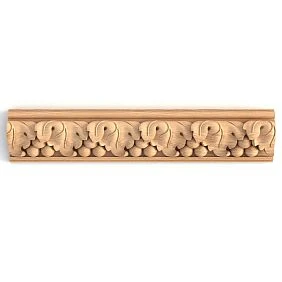
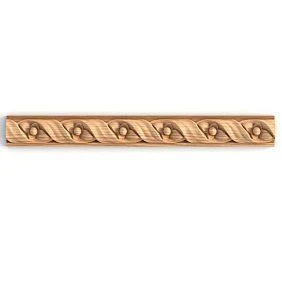
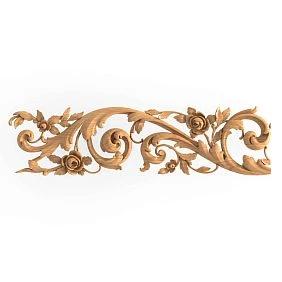
Wooden profile for frames and trims is one of the oldest tools in interior decor. It was used in the era of Louis XIV, when the walls of Versailles were covered with panels with gilded frames. It is used today by designers creating neoclassical and classical interiors.
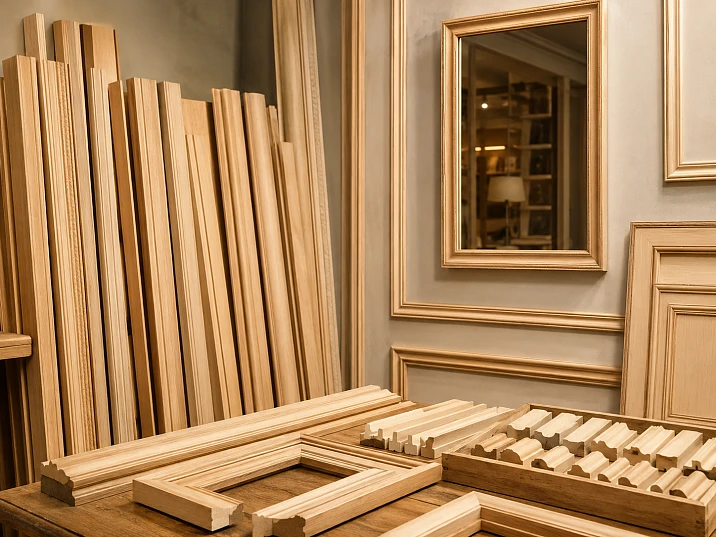
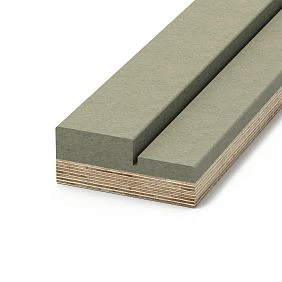
The essence is simple. Buy wooden molding by the meter — means purchasing a profile in linear meters. Not a ready-made frame with fixed dimensions of 40×50 or 60×80 cm, but a long strip with a cross-section of a specific shape. Four pieces are cut from this strip to the required sizes, joined at a 45° angle — and you get a frame of any format.
Why is this fundamental? Because life is not standard. A mirror 94×132 cm — non-standard. A wall panel 68×140 cm — non-standard. A painting on a canvas with a non-standard stretcher — non-standard. Everywhere a non-standard size is needed, wooden molding buy by the meter — is the only correct answer.
The second reason is finishing. A ready-made frame comes already painted. Its color is fixed. Buy wooden molding by the linear meter without coating — means getting a profile that can be painted any color, tinted, varnished, aged with patina. Exactly for your project.
The third reason is serial production. If you need to frame not one frame, but twelve — for a series of paintings in the hallway, for a system of wall panels in the living room, for a row of mirrors in the dressing room — a single profile by the linear meter ensures perfect uniformity of the entire series.




When an unpainted wooden molding is needed: selection scenarios
This is an important question that is asked less often than it should be. Unpainted molding is not "cheaper", it is "more flexible". Let's break down the scenarios specifically.
Our factory also produces:
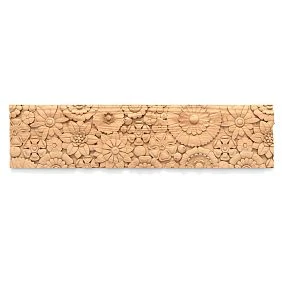
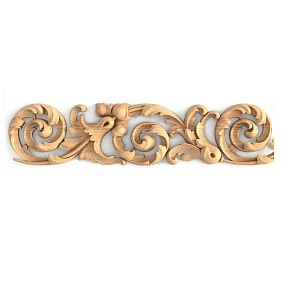
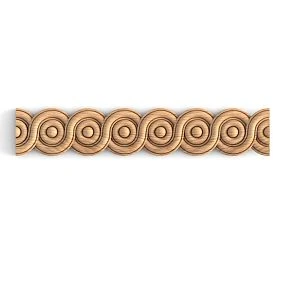
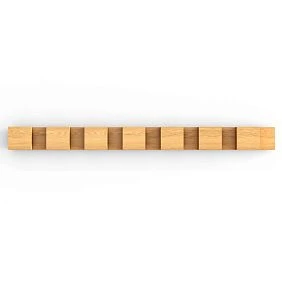
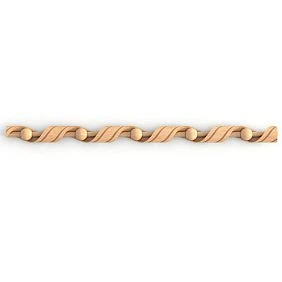
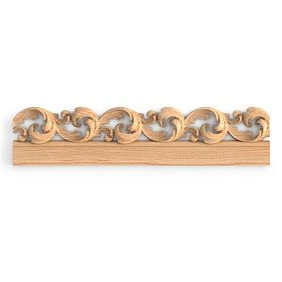
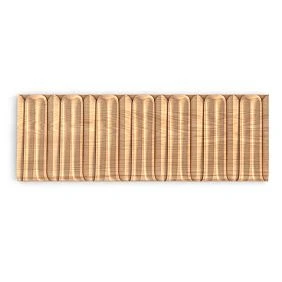
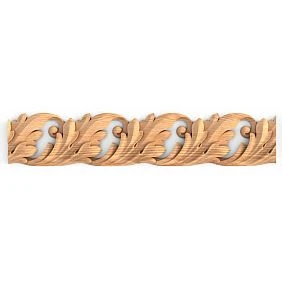
Project with a unified color system
In interiors where walls, moldings, furniture, and decorative elements are painted in a single color or a related color system, a ready-made baguette of a different color will not work. Buy an unpainted wooden baguette and paint it in the same shade as wooden moldings, cornices, and baseboards, — this is the only way to achieve visual unity.
Get Consultation
Furniture facades for enamel
A kitchen, wardrobe, chest of drawers in a single white or gray color — and the mirror frame in the hallway or dressing room should be in the same tone. The unpainted wooden profile for the mirror frame is painted to match the same RAL as the facades. The result is a monochrome system where every detail confirms the intention rather than disrupts it.
Restoration of furniture and decorative frames
An old frame with a lost fragment of the profile. An antique chest of drawers with a damaged molding. A decorative panel with a chipped frame. Buy unpainted wooden baguette — and recreate the missing element with subsequent finishing to match the original. This is standard practice for restorers.
Toning to match natural wood
Sometimes you need not "white" or "gray", but an exact shade like "Italian walnut", "honey oak", "dark tobacco". A ready-made baguette in the catalog may not match the desired hue. Unpainted buy wooden molding and toning it yourself means hitting the exact shade precisely, not "approximately".
Patina and aging
Patina is not just "antique style". It is a technique for creating color depth, where the base tone and a darker or lighter accent are applied in layers. On unpainted wood, patina works differently than on a finished coating. For classic interiors with gilded details, an unpainted profile is the base material.
Where to use STAVROS wooden baguette: from a painting to a cabinet facade
Wooden baguette for picture frames
This is the classic and most obvious scenario. But behind the obviousness lies a nuance: choosing a profile for a picture frame is an artistic decision, not just a technical one.
Buy wooden picture frame molding for paintings means first answering several questions. What is the size of the canvas? The larger the painting, the more massive the profile can be. A small watercolor canvas 30×40 cm requires a narrow, elegant profile. A large canvas 120×160 cm requires a wider frame with a pronounced relief.
What is the style of the room? In a classic interior with molding decor A frame with rich relief and carved elements is an organic choice. In a neoclassical interior, a more restrained profile with a geometric pattern is used. In a modern classic interior, a smooth medium-width profile with a neutral cross-section is preferred.
What is the seating depth? A canvas on a stretcher has a certain thickness — typically 2 to 4 cm. The frame profile must have a corresponding "shelf" into which this stretcher will fit. Ensure the selected profile provides the required seating depth.
Wooden frame molding for a mirror
A mirror in a wooden frame is one of the most powerful decorative moves in a classic interior. Hallway, living room, bedroom, dressing room — everywhere, a mirror in a properly chosen frame transforms from a household item into an architectural object.
Buy wooden frame molding for a mirror means considering several parameters that are not present when working with a painting. First: weight. A mirror is heavier than a painting. The profile must ensure reliable glass fastening. Second: size. A large mirror 80×120 cm requires a wider and more massive profile — not for load, but for proportion. A narrow frame on a large mirror looks like a watercolor frame placed on a large-scale object.
Third: style and zone. A mirror in the hallway is often vertical, with more elongated proportions. Here, a profile with a vertical rhythm works well — a slightly protruding outer edge, a beveled inner part. A mirror in the living room above the fireplace is horizontal or square, requiring a more "ceremonial" profile with pronounced relief. In the dressing room, a neutral, laconic profile is used.
Wooden frame for a mirror in combination with consoles and frames creates a unified furniture-decorative system: a mirror in a frame above a console table, made from the same material with the same tint. This is a ready-made solution for a hallway or foyer that does not require special design knowledge — only consistency in selection.
Wooden baguette for decorative panels and wall panels
This is a separate and very interesting topic. A baguette as a frame profile for wall decor is not a "picture on the wall", it is an architectural framing of the surface.
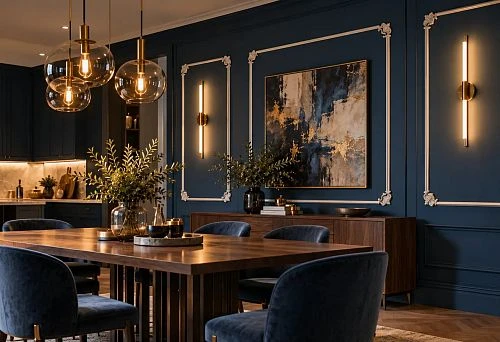
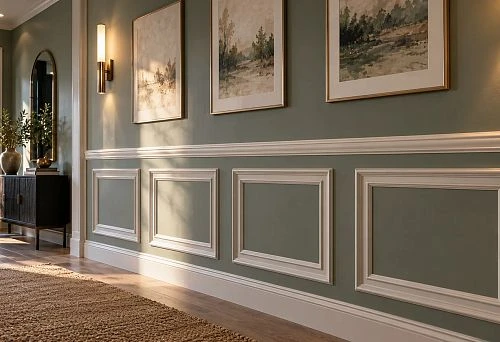
Boiserie and wall panels — a classic system for finishing walls with wooden profiles — is created, among other things, using a baguette profile. Rectangular "panels" made of molding or baguette applied to the wall create the effect of panel division — a characteristic feature of classical and neoclassical architecture.
For such a system wooden baguette for wall panels should be thin enough not to create an unnecessary protrusion, but have a readable relief — otherwise the system will not be visible in oblique lighting.
A decorative panel on the wall is another scenario. A rectangle of wooden baguette, glued or nailed to the wall, limits the area of accent finishing: a different paint color, patterned wallpaper, decorative plaster. The baguette here is both a border and a frame.
In niches, a wooden profile for framing creates a "window" with clear edges. A niche with baguette framing inside looks like an architectural opening, not just a recess in the wall.
Wooden frame for furniture fronts
A less obvious but very effective scenario. A baguette profile as a frame element on furniture facades is a way to add relief where there is none.
A flat cabinet facade with a baguette glued around the perimeter is already a "frame facade". It is visually more complex, more interesting, closer to a classic look. Especially relevant for cabinet decor и kitchen decor in a neoclassical style, where facades are painted in a single color.
В furniture solutions wooden baguette can be used as a finishing profile around the perimeter of the box, as a decorative strip between facades, as an element of stylizing an ordinary cabinet furniture as built-in furniture.
How to choose a wooden baguette profile: breakdown by parameters
This is the heart of the article. The baguette profile is its cross-section: shape, width, relief height. This is where most people get lost — and this is where you can make the right choice if you understand the logic.
Profile width
Width is the first and main parameter. It determines how 'heavy' or 'light' the frame will be.
For small paintings and mirrors (up to 50 cm on the smaller side) — profile width 2–4 cm. For medium objects (50–100 cm) — 4–7 cm. For large formats (over 100 cm) — from 7 to 12 cm or more.
For wall panels and boiserie — as a rule, a thin profile: 1.5–3 cm. A massive relief is not needed here, clarity of lines is important.
Relief height
This is the distance from the lowest to the highest point of the profile in cross-section. The higher the relief, the more voluminous the frame looks. High relief gives a 'deep' frame with a play of shadows. A flat profile gives a minimalist, almost architectural frame.
For classic interiors with carved decoration — high relief, ornamented profile. For neoclassicism — medium relief with geometric cross-section. For modern classicism — low or flat profile with one accent break.
Seating depth
This is the internal "shelf" of the profile — a recess into which a painting, mirror, or glass is inserted. For a mirror and a painting in glass, the seating depth must be at least the thickness of the inserted element plus 2–3 mm of clearance.
Profile style
Profiles come in several stylistic groups:
-
Classic — rounded transitions, ornamental elements, pronounced relief. For Baroque, Renaissance, Imperial style.
-
Neoclassical — geometric breaks, sharp edges, minimal ornament. For neoclassicism, modern classicism.
-
Flat — almost rectangular cross-section with one bevel or chamfer. For wall systems, boiserie, modern-style furniture facades.
-
Shelf — profile with a pronounced "step" or "quarter." For systems where a transition between two surfaces needs to be indicated.
Compatibility with moldings and trim
This is a parameter rarely considered when purchasing — and one that is later regretted. Wooden trim и Moldings The plastic language of the space is set indoors. The baguette profile must speak the same language.
If the moldings have a rounded egg-shaped cross-section, a frame with sharp geometric edges will create a stylistic conflict. If the moldings are flat and geometric, a baroque relief profile will be superfluous.
Comparison table: how to choose a profile by purpose
| Purpose | Recommended width | Relief | Style | What to consider |
|---|---|---|---|---|
| Small format painting | 2–4 cm | Medium | Any | Image style |
| Large format painting | 6–12 cm | High | Classic/Neoclassic | Proportion to the canvas |
| Mirror in the hallway | 4–7 cm | Medium | Interior style | Mirror weight, height |
| Mirror above the fireplace | 7–12 cm | High | Classic | Portal scale |
| Wall panel/boiserie | 1.5–3 cm | Low | Geometry | Grid uniformity |
| Decorative panel | 3–5 cm | Medium | By interior | Joint with moldings |
| Furniture front | 2–4 cm | Low–medium | Neoclassical | Facade thickness |
| Niche | 2–4 cm | Medium | By room | Corners, trimming |
Molding by the meter or ready-made frame: what to choose and when
This is a key practical question that affects both the result and the budget. Let's break it down honestly, without marketing exaggerations.
When the meter wins unconditionally
Non-standard size. Canvas 55×73 cm, mirror 76×122 cm, wall panel 84×110 cm — all of these are non-standard. A ready-made frame simply does not exist in the required size. Buy wooden molding by the meter — the only way out.
A series of identical frames. Twelve frames for a photo gallery in the hallway. Six frames for a wall panel system in the living room. Four mirrors of the same format in the dressing room. A single profile in linear meters guarantees identity — not the slightest discrepancy in cross-section, relief, or width.
Uniform finish with the interior. When the entire room is done in a single color or a single tint, buy unpainted wooden baguette and apply the finishing coat yourself — that's the right professional solution.
Non-standard length. Long horizontal frames for panoramic photos. Tall vertical frames for full-length portraits. Ready-made frames of such proportions are almost never available in the assortment — linear profile solves the problem.
When a ready-made frame can be more convenient
If you need one standard-size frame (30×40, 40×50, 50×70 cm) with a ready finish that already matches the interior — a finished product is faster and simpler. No need to cut, join, putty, and paint.
But for most interior projects where there is a system and sequence, linear profile is the preferred format.
Finishing of wooden baguette: painting, tinting, varnish, and patina
An unpainted profile is a blank slate. The final look of the entire composition depends on what is applied to it.
Enamel painting
Acrylic or alkyd enamel is the most common finishing method for neoclassical and modern classic interiors. White, light gray, cream, olive, dark blue — the baguette can be any color from the palette.
Technology: sanding (grit 180–220) → acrylic wood primer → sanding (grit 320) → two coats of enamel. Dries quickly, does not yellow, provides a clean, solid surface.
Main advantage: precise color matching. If Wooden moldings the room is painted in RAL 9001 — the frame baguette is painted in the same RAL. Perfect tone match, impossible to achieve with a ready-made product.
Wood toning
Toning — applying stain followed by varnish or oil. Preserves wood texture, changes color. Light tones ("natural", "Scandinavian white", "honey") create a warm, airy look. Dark tones ("wenge", "Italian walnut", "dark tobacco") — solidity and depth.
For toning, the choice of base is important: water-based stain gives a softer color, alcohol-based — more intense and even. The finish varnish (gloss, semi-matte, matte) determines the surface character.
solid wood millwork in "walnut" toning and the baguette in the same toning — this is a system that works as a single material around the entire perimeter of the room.
Varnish without toning
Clear varnish on unpainted wood — for interiors where the natural color palette of beech is important. Beech is light, with a delicate pinkish hue. Under matte varnish, it gives a soft, warm look. This suits Scandinavian, Japanese, and organic interiors — where the wood should be "honest."
Patina
Patina — a technique for creating an illusion of age. A darker or lighter accent is applied over the base coating, which "appears" on protruding relief elements. For gilded baguette — a dark base with gold patina on top. For a white classic profile — a white base with silver or dark patina in the recesses.
Patination is especially suitable for frames in classic interiors with wooden decorative elements и carved inlaysIt creates a unified "age" image, where all elements look like a single historical system.
How to calculate the amount of wooden baguette by linear meters
This is a practical algorithm that takes three minutes and eliminates a mistake that costs money.
Calculation algorithm for one frame
-
Measure the height of the object (painting, mirror, panel) in centimeters.
-
Measure the width of the object in centimeters.
-
Calculate the perimeter: (height + width) × 2.
-
Add allowance for trimming: for each 45° angle, an allowance equal to the profile width × 2 is needed. For four corners: profile width × 8.
-
Add 10% total allowance for defects during cutting.
Example: mirror 80×120 cm, profile width 6 cm.
-
Perimeter: (80 + 120) × 2 = 400 cm = 4 m.
-
Allowance for corners: 6 × 8 = 48 cm.
-
10% of (400 + 48) = 44.8 cm.
-
Total: 400 + 48 + 45 = 493 cm ≈ 5 linear meters.
For a series of identical frames
Calculate the footage for one frame (as above), multiply by the number of frames, add 10–15% total allowance.
For a wall panel system
Measure the perimeter of each "cell" in the boiserie system. Add up all perimeters. Add 15% allowance — joining corners in the system requires more cuts than for individual frames.
Profile length in the product card
STAVROS wooden baguette sold in profiles of a specific length. Ensure that the length of one profile allows cutting the required pieces without unnecessary joints. For long horizontal frames, it is better to choose a profile with a length of at least the length of the horizontal side of the frame — so that the horizontal part is solid.
How to combine wooden baguette with other STAVROS decor elements
This is a system section — and one of the most important. The baguette does not work in isolation. Its strength is revealed only in context.
Baguette + moldings and cornices
wooden moldings, cornices, and baseboards — this is the perimeter decor of the room. They set horizontal and vertical rhythms of the space. A baguette profile chosen in the same stylistic family and the same tint integrates organically into this system.
For a boiserie system, the molding forms vertical and horizontal dividers, and the baguette profile forms frame borders of the "cells." Together they create a classic wall system, familiar from interiors of the 18th–19th centuries.
Baguette + linear moldings
solid wood millwork — this is linear decor: layouts, glazing beads, corner profiles, transition strips. The baguette works in conjunction with linear moldings where a frame or border with a clear inner and outer contour is needed.
The outer contour of the frame is a profile with a pronounced relief (baguette). The inner layout under glass or mirror is a glazing bead from linear moldings. This is a structural pairing where both elements perform their role.
Baguette + carved overlays and decorative elements
carved appliqués и wooden decorative elements — corner inserts, rosettes, central cartouches — are used together with the baguette to create more complex frame systems.
A rectangular frame made of baguette with corner rosettes is a classic technique. Rosettes are installed in the corners of the frame, covering the joint of two profile segments. They create a visual accent at the point of greatest vulnerability (the corner joint) — and at the same time make the frame richer.
Decor for Molding — a separate category that allows enriching the profile with additional elements: insert ornaments, central rosettes, side accents. For a baguette with a wide smooth profile, such elements are a way to add complexity without replacing the profile.
Baguette + boiserie
Boiserie and wall panels — is a spatial system in which a wooden profile plays the role of linear framing. A full-fledged boiserie is built from several elements: vertical and horizontal dividers, a frame profile, and a backing. The wooden baguette in this system is the frame profile of each "cell".
A properly selected profile for boiserie should not be too massive — otherwise the system will be heavy. Optimal width: 2–4 cm. Relief — medium, with a readable profile under side lighting.
Baguette + pilasters and carved decor
pilasters and columns in a classic interior create vertical architectural accents. Between the pilasters are zones that are decorated with horizontal and vertical profiles. The wooden baguette here is a frame profile for panels or niches between pilasters.
STAVROS carved decor — a holistic system in which each element is coordinated with the others. By choosing a baguette from this system, you get a guarantee that the profile will be compatible with other wooden elements in style and execution.
Mistakes when choosing a wooden baguette
Eight mistakes that occur most often — and each of which leads to a result requiring rework.
1. Too narrow a profile for a large object. A narrow baguette on a large mirror looks like a thread on a canvas. The proportion of the profile to the object is a key parameter. A large object requires a more massive frame.
2. Too wide a profile for a small painting. The reverse problem: the frame "eats" the image, making it secondary. A small canvas requires restrained framing.
3. Not considering future painting. You chose a profile, cut it, assembled it, installed it — and only then realized it needs painting. But the joints are already glued, the surface is dirty. Finishing should be planned before assembly: sand and prime the profile before cutting or immediately after, before final installation.
4. Mixing different profiles in one system. For a series of frames in the hallway — one profile. For a panel system in the living room — one profile. Two different profiles in one area is a stylistic inconsistency that reads as a mistake.
5. Not leaving a margin for trimming. A 15% margin is not "just in case," it's a structural necessity. Trimming corners "eats" material. An erroneous cut requires recutting. Without a margin, you'll end up in a "twenty centimeters short" situation.
6. Choosing a profile without considering moldings. The baguette is part of the system. If moldings in the room are already installed — first study their profile and tinting, then choose the baguette. Not the other way around.
7. Not planning the joining angle. A 45° angle is the standard. But if there is no possibility for such a cut in the installation area (no miter saw, no template) — you need to provide corner inserts or rosettes that will cover the straight joint.
8. Buying a ready-made color when an individual finish is needed. buy unpainted wooden baguette In a project with a monochrome system — the right decision. Buying a ready-made "walnut" when everything in the room is painted in "champagne" means getting a conflict that will then have to be masked.
Where to buy STAVROS wooden baguette: catalog and formats
STAVROS wooden baguette — this is a solid wood profile of Russian production. The catalog includes unpainted profiles for any finish, various widths and reliefs.
In the of solid wood also presented:
-
Wooden trim — linear decor for finishing systems
-
wooden moldings, cornices, and baseboards — for perimeter system
-
Decor for Molding — for enriching profiles
-
carved appliqués — corner and central accents
-
wooden decorative elements — rosettes, cartouches, inserts
Warehouses — in Moscow and St. Petersburg. Contact us to confirm shipping to your destination. It is possible to order profile samples before the main order.
Where to buy wooden baguette in the required profile and required quantity — in the STAVROS catalog, where each item is accompanied by cross-section parameters and application recommendations.
Frequently asked questions
What is wooden frame molding by the meter?
This is a wooden profile with a specific cross-section, sold in linear meters. Pieces of the required length are cut from it and frames, mirror surrounds, decorative panels, wall panel systems, and furniture decorative elements are assembled. The linear format allows creating frames of any size.
When is it better to buy unpainted wooden baguette?
When you need to apply a custom finish: paint in a specific RAL, tint to the desired shade, cover with patina or varnish to match the overall interior system. An unpainted profile offers maximum flexibility in choosing the final finish.
Is wooden molding suitable for framing a mirror?
Yes, this is one of the main application scenarios. When choosing, consider the size and weight of the mirror, the width of the profile in proportion to the mirror format, and the interior style. A large mirror requires a wider profile. For a hallway, a medium profile with a pronounced relief is suitable.
How does a baguette by the meter differ from a ready-made frame?
A ready-made frame has a fixed size and fixed color. A baguette by the meter offers freedom of size and freedom of finish. For non-standard formats, series frames, and interiors with a unified color system, the meter option is preferable.
Can a wooden baguette be used for wall panels and boiserie?
Yes, this is a standard application scenario for classic and neoclassical interiors. The baguette profile forms the frames of "cells" in a boiserie system, frames decorative niches, and creates framed panels on walls. For such systems, a profile with a width of 1.5–4 cm and a readable but not heavy relief is chosen.
How to calculate the number of linear meters of baguette?
Measure the perimeter of the object (height + width) × 2. Add an allowance for cutting corners: profile width × 8. Add a 10% total allowance. For a series of frames, multiply by the number of items. The result is the required linear footage.
What to combine a wooden baguette with in the interior?
With wooden moldings, linear elements, carved overlays, decorative corner inserts and rosettes, decor for moldings, and other wooden decorative elements. A single material and a single tint create a system where each element enhances the others.
About the company STAVROS
The interior lives in details. The frame profile is a detail that is not noticed immediately, but it shapes the overall impression of the space. When the profile is chosen precisely — no guest will say "I like this frame." They will say "I like this interior." Because the right detail does not draw attention to itself — it enhances the whole.
STAVROS is a Russian manufacturer of wooden decor for interiors. Production from solid beech and oak. Assortment: wooden baguette, moldings, cornices, baseboards, linear molding, carved overlays, decorative elements, brackets, slatted panels, furniture legs and handles. Warehouses in Moscow and St. Petersburg. Contact us to confirm shipping to your destination.
Unpainted wooden profile by the meter is a tool for those who make interiors truly. Not "like in a catalog," but as intended.