






























Article Contents:
- When you need a set of wooden handles: nine purchase scenarios
- Kitchen set from scratch or replacing hardware
- Wardrobe with sliding doors or hinged wardrobe with multiple doors
- Chest of drawers with 4–6 drawers
- Pair of bedside tables
- Sideboard, display cabinet, classic credenza
- Restoration of old furniture
- Replacing plastic or metal hardware with wooden
- Children's room or study with wooden decor
- Country house, cottage, interior in natural style
- Why it's better to buy handles as a set: five compelling arguments
- Argument 1. One batch — one shade
- Argument 2. One shape — one facade style
- Argument 3. Savings with wholesale purchase
- Argument 4. Spare — without stress
- Argument 5. One center distance — one mounting type
- What shapes of wooden handles come in sets: classification by type
- Wooden knob handle
- Wooden pull handle
- Long wooden handle (wooden rail)
- Round wooden handle
- Figural and classic handles
- How to choose handles for a cabinet: key parameters
- Facade height and handle scale
- Handle placement on the door
- Cabinet door style
- Combination with furniture legs
- How to choose handles for a chest of drawers and drawers: selection nuances
- Knob handle or pull handle: what to choose for a chest of drawers
- Handle placement on the drawer
- Handle size proportional to drawer width
- Set of wooden handles for the kitchen: selection features
- Key requirements for wooden kitchen handles
- How many handles are needed for a kitchen set
- Arrangement of handles on a kitchen set
- Material and coating of wooden handles: what's inside and outside
- Solid wood: which wood is best
- Uncoated handles: for whom and why
- Coated handles: what the concept includes
- How to coat wooden handles yourself
- How to calculate the number of handles: precise algorithm
- For Kitchen
- For a wardrobe or hinged cabinet
- For a Dresser
- For a side table
- General formula
- Style and combination: how to choose wooden handles for furniture
- Handle color to furniture color
- Handle style to interior style
- Combining handles with decor for wooden furniture
- Center-to-center distance: the most often ignored parameter
- Why this is important
- Knob handle and center-to-center distance
- Mistakes when buying a set of handles: seven mistakes to avoid
- Mistake 1. Buying handles from different batches
- Mistake 2. Not checking the center distance
- Mistake 3. Choosing handles that are too small for heavy facades
- Mistake 4. Mixing different wood shades in one set
- Mistake 5. Not leaving a margin
- Mistake 6. Choosing handles without considering grip comfort
- Mistake 7. Not checking the length of the mounting screw
- Wooden handles and the overall style of wooden products in the interior
- FAQ: answers to the main questions about wooden furniture handles
- STAVROS: a set of handles that turns furniture into a system
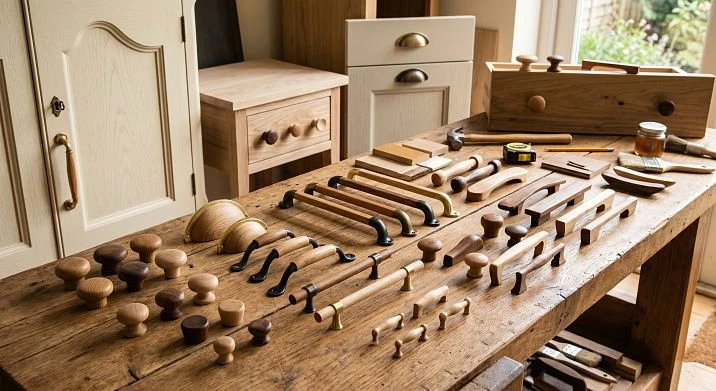
Furniture is noticed by details. Not by size. Not by color. By how carefully the fittings are selected, how consistent the handles are on all facades — identical, of a single color, of one shape, with one center distance.
That is why set of wooden furniture handles — it's not about 'buying another handle'. It's about the integrity of the space: kitchen, bedroom, living room, study. When the wardrobe has some handles, the chest of drawers has others, the bedside table has third ones, and they are all randomly different in shade and shape, the interior falls apart like a poorly sewn jacket.
A properly selected set of wooden handles is a different story. It's when you open the top kitchen drawer and the lower cabinet, grab the handle of the chest of drawers and the buffet door — and everything feels the same to the touch, in color, in shape. Furniture becomes a system, not a collection of individual items.
This article is a practical guide to choosing a set of wooden handles. For those furnishing a home from scratch, updating a kitchen, restoring a chest of drawers, or simply tired of mismatched hardware.
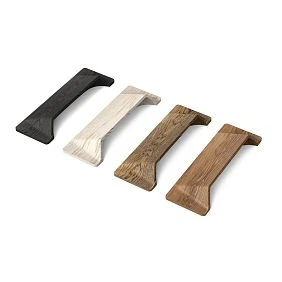
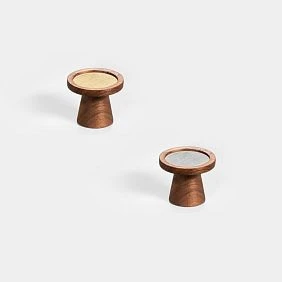
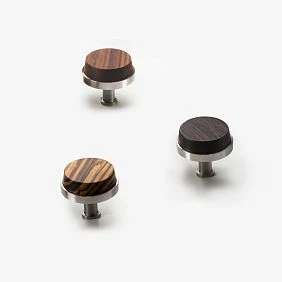
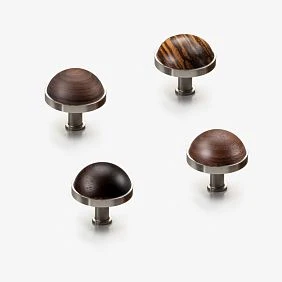
When you need a set of wooden handles: nine purchase scenarios
Before choosing a specific model, it's worth understanding: for what occasion are you buying handles. The answer to this question affects the shape, quantity, coating, and material.
Kitchen set from scratch or hardware replacement
The kitchen is the most 'handle-intensive' place in the house. On average, a set of 10–12 fronts requires 10–16 handles (including drawers and double-door cabinets). The most important things here are: coating resistance to grease and water, ease of daily grip, and uniformity of all handles in the set.
Our factory also produces:

Wardrobe or hinged cabinet with multiple doors
For a cabinet with 4–6 doors, identical handles with an exact match in color and shape are needed. The slightest difference in shade between two batches — and it will be visible on the cabinet to the naked eye.
Get Consultation
Chest of drawers with 4–6 drawers
A chest of drawers reads through the rhythm of the handles: identical handles on each drawer create a vertical axis of symmetry. Break it — and the chest visually "falls apart."
Bedside tables, pair
Two identical items with identical handles from the same batch. It's important to buy everything together: the same wood shade, one batch.
Sideboard, display cabinet, classic credenza
The lower part — drawers and solid doors. The upper part — glazed doors. Handles can be of the same type on all fronts or deliberately different (larger at the bottom, thinner at the top). In any case — from the same set.
Restoration of old furniture
Soviet chest of drawers, antique wardrobe, grandmother's sideboard — hardware is worn or missing. A set of wooden handles for painting or tinting is needed: so that the new handles look like original ones, not like "false teeth."
Replacing plastic or metal hardware with wooden ones
Furniture with plastic handles in an apartment with wooden floors, wooden window frames, and wooden architraves — a dissonance. A set wooden furniture handles transforms the interior into a unified material code.
Children's room or study with wooden decor
Children's room with a wooden bed, shelves, and a wardrobe — all handles are better from one set, made of solid wood, with a soft rounded silhouette.
Country house, cottage, interior in a natural style
Scandinavian, rustic, eco-style — wooden handles are more organic than metal ones. A set is needed to match the overall concept.
Why it's better to buy handles as a set: five compelling arguments
You can buy handles individually — as needed. But any designer who has worked with furniture will say: this is a path to disappointment. Here's why.
Argument 1. One batch — one shade
Wood is a living material. Even within the same species and from the same manufacturer, the color of products varies from batch to batch. Beech processed today and beech processed a month later are slightly different shades. Buying handles as one set from one batch guarantees visual uniformity.
Argument 2. One shape — one style of facades
Handles of the same shape create a horizontal rhythm on the facades. This is a design technique used by professionals: a repeating element sets the rhythm and creates a sense of a system, not a collection of items.
Argument 3. Savings on wholesale purchase
A set of 10–20 pens when ordered in bulk is more cost-effective than the same pens bought individually one by one.
Argument 4. Stock — no stress
By buying a set with 1–2 spare pieces, you protect yourself from the situation of 'one pen broke, and there's no more like it.' In a year, this item may be discontinued.
Argument 5. One center distance — one type of fastening
All handle brackets in the set have the same center distance (distance between the centers of two mounting holes). When ordering a set, this distance is the same for all items — no need to redrill facades for different sizes.
What shapes of wooden handles are available in sets: classification by types
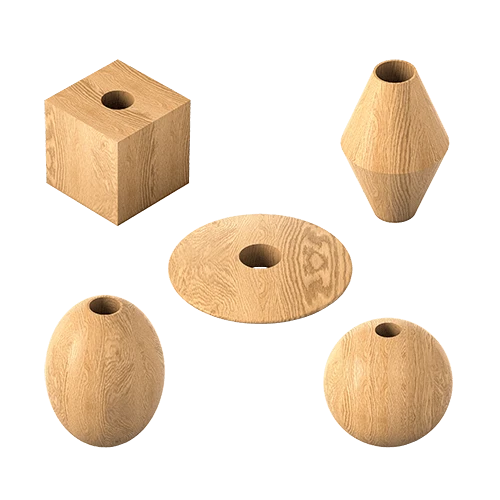
wooden furniture handles are divided into several basic types. Understanding this classification is the first step to making the right choice.
Wooden knob handle
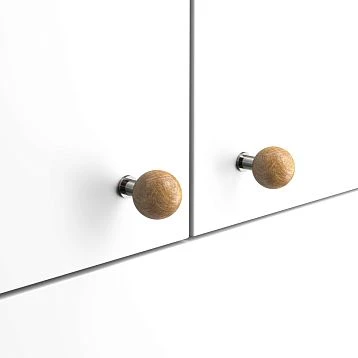
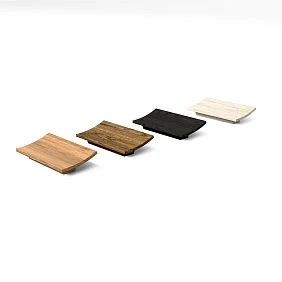
Button Handle — the most compact type. This is a small three-dimensional element of round, mushroom-shaped, hemispherical, or figured form, attached to the facade with a single central screw.
Application: small drawers, doors of wall cabinets, nightstands, chests of drawers, children's furniture, sideboards with small doors.
Dimensions: base diameter/width 30–60 mm, height (projection from facade) 20–40 mm.
Advantage: does not require precise hole spacing — only one central hole. Installation is simpler: one hole instead of two.
Limitation: for heavy facades (dense MDF, solid wood) the knob handle is less ergonomic — grip is less secure than with a pull.
Wooden Pull Handle
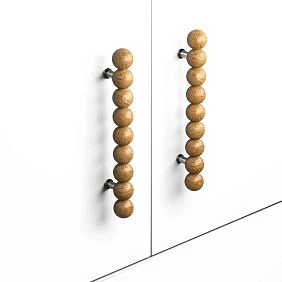
Bracket Handle — horizontal arch (crossbar) on two supports. Attached with two screws. Center-to-center distance: standards 32, 64, 96, 128, 160 mm.
Application: cabinets, kitchen fronts, dressers, drawers, nightstands. Universal handle type.
Dimensions: depend on center-to-center distance. Total pull length = center-to-center distance + 2 × support length.
Advantage: comfortable grip. The pull leaves enough space between fingers and the facade for confident opening.
Long wooden handle (wooden railing)
Horizontal bar on two or three supports. Length: 150–400 mm and more. Installed on wide drawers and doors.
Application: wide drawers of kitchen base units, oven doors, wide wardrobe doors.
Feature: one long handle on a wide facade — a laconic, modern look. Two short handles — a classic symmetrical option.
Round wooden handle
A disc-shaped or round "shell" handle, attached with a central screw or two points. Silhouette — circle or oval.
Application: facades in Scandinavian style, interiors with an emphasis on naturalness, children's furniture, retro-style sideboards.
Figural and classic handles
Handles with carved silhouettes, three-dimensional ornaments, figural bases. For classic furniture, antique cabinets, sideboards, furniture in Provence and classic styles.
How to choose handles for a cabinet: key parameters
A cabinet is usually the largest piece of furniture in a room. And the handles on it are visible immediately, from a distance.
Facade height and handle scale
For a cabinet 2200–2400 mm high with facades 700–900 mm high — a handle with a total length of 120–160 mm (bracket with center-to-center 96–128 mm) looks proportional. A 64 mm handle on such a facade will be lost.
For a cabinet with horizontal drawers at the bottom — a bracket or long handle. For hinged doors — a bracket at handle level (900–1,100 mm from the floor).
Handle placement on the door leaf
Standard: the handle on a hinged cabinet door is installed at the edge opposite the hinges, at a distance of 50–80 mm from the edge of the door panel.
Height: 900–1,100 mm from the floor (mounting axis).
Cabinet door style
-
Smooth MDF facade without frames → simple profile handle, smooth bracket or knob
-
Facade with milled frames, classic profile → shaped bracket handle with decorative bases
-
Facade with mirror insert → minimalist handle to avoid competing with the reflection
Combination with furniture legs
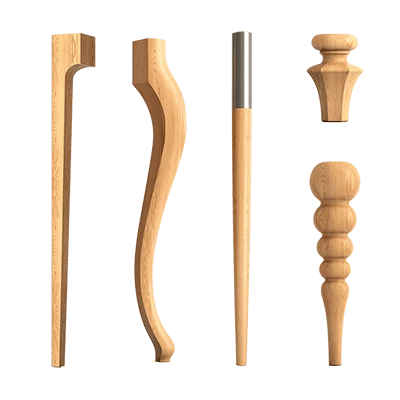
If the cabinet is installed on wooden wooden furniture legs, handles should be made of the same material or have the same tint. Wooden legs + metal handles are acceptable, but wooden legs + wooden handles from the same set constitute a single material code.
How to choose handles for a chest of drawers and drawers: selection nuances
A chest of drawers consists of several identical drawers arranged in a vertical row. Here, handles function as an ornamental row: equal spacing, identical shape, and the same installation height on each drawer.
Knob handle or pull handle: what to choose for a chest of drawers
| Parameter | Button handle | Bracket handle |
|---|---|---|
| Installation | One hole | Two holes |
| Grip comfort | Medium | High |
| Facade weight | Light to medium | Any |
| Visual image | Minimalist, point-like | Horizontal line |
| Style | Minimalism, Scandinavian | Classic, neoclassical, eclectic |
Wooden knob handle on a chest of drawers with narrow drawers — a laconic modern look. Wooden bracket handle on a classic-style chest of drawers — a full horizontal accent.
Position of the handle on the drawer
The center of the handle is aligned with the center of the drawer width and at a height of 40–60% of the drawer front height (i.e., slightly above the middle). This is optimal for grip and visually correct.
For drawers taller than 200 mm — handle in the center. For drawers 100–120 mm tall — handle near the top edge (closer to 30–35% from the top).
Handle size proportional to drawer width
Drawer width 300 mm → handle (pull) length 64–96 mm.
Width 400–500 mm → 96–128 mm.
Width 600 mm and more → 128–160 mm or two knob handles at the edges.
Set of wooden handles for the kitchen: selection features
The kitchen is the most demanding space for hardware quality. Handles here work daily, coming into contact with wet hands, grease, steam, and cleaning agents.
Key requirements for wooden kitchen handles
Coating. Handles with Finish — varnish or enamel — is preferable for the kitchen over handles without coating. A lacquered surface is easy to wipe clean, does not absorb grease, and does not darken from moisture.
If you want handles without coating for subsequent self-finishing — after installation, be sure to coat them with oil or varnish for kitchen furniture.
Grip comfort. Handles on lower modules and drawers open downward and sideways. Handles on upper cabinets open downward. The handle shape should ensure a secure grip even with quick movement and partial grasp.
Size relative to the facade. Standard kitchen facades have heights: 716 mm, 916 mm, 716 mm with a mezzanine. A pull handle with a center distance of 96–128 mm is universal for all kitchen facades.
How many handles are needed for a kitchen set
This depends on the configuration, but here is an approximate calculation for a typical kitchen with 10 facades:
| Element | Number of facades | Handles |
|---|---|---|
| Upper cabinets (2 doors) | 4 | 4 |
| Upper cabinets (1 door) | 2 | 2 |
| Lower cabinets (1 door) | 2 | 2 |
| Drawers | 4 | 4 |
| Tall cabinet (2 doors) | 2 | 2 |
| TOTAL | — | 14 |
With a reserve of 2 pieces: order 16 pieces.
Arrangement of handles on the kitchen set
On upper cabinets, handles are installed at the bottom of the facade (near the lower edge). On lower cabinets — at the top of the facade (near the upper edge). On drawers — centered widthwise, near the top. This is a standard arrangement rule that creates the feeling that the handles "reach towards the hand."
Material and coating of wooden handles: inside and outside
Solid wood: which wood is best
All high-quality wooden furniture handles They are made from dense hardwoods. This is fundamental: soft wood (pine, spruce) quickly wears out at grip points and deforms from moisture.
Beech is the most popular material for furniture handles. Fine-grained structure, dense uniform texture, minimal porosity. Under white enamel — ideal: the surface is smooth, the enamel lays evenly without priming. Under tinting — accepts any shade from light honey to dark walnut.
Oak is a more prestigious material. Coarse texture with expressive grain. Under clear varnish or oil — a living texture that cannot be replicated with synthetics. For a kitchen with oak finish — oak handles create a perfect unity of material.
Walnut, ash, cherry — exotics for the premium segment. They are less common in standard sets but available on order.
Handles without coating: for whom and why
handles without coating — "blank" solid wood pieces, ready for self-finishing. This is the choice for:
-
Restorers of old furniture: you can match the tint to the existing color
-
Designers and craftsmen: specific coloring for a particular project is needed
-
DIY enthusiasts: paint it yourself to match the furniture color
Important: handles without coating must be treated before installation in the kitchen — at minimum with oil or varnish. Bare wood in the kitchen won't last a month.
Handles with coating: what is included in the concept
Handles with Finish are supplied already with a finish:
-
Toning + varnish — revealed wood texture under a protective layer
-
White or colored enamel — hides texture, creates a uniform color
-
Oil — natural matte appearance, emphasizes texture without a film
For the kitchen — handles under varnish are preferable: more resistant to household loads. For the bedroom or study — oil creates a more intimate, natural look.
How to coat wooden handles yourself
Handles without coating can be finished independently:
-
Light sanding with 180–220 grit sandpaper
-
Application of toning (if necessary) in 1–2 layers with drying
-
Application of varnish in 2 layers: first layer — 'bonding', after drying — light sanding, second layer — finishing
-
Complete drying (24–48 hours) before installation
For enamel: primer in 1–2 coats → enamel in 2 coats → drying. Interlayer sanding is mandatory for a smooth result.
How to calculate the number of handles: precise algorithm
For Kitchen
Count each element:
-
Each door — 1 handle
-
Each drawer — 1 handle
-
Folding doors (e.g., corner cabinets) — 1 handle
-
Door under the sink — 1 handle (if not built-in)
Add up the total. Add 10–15% spare (but at least 2 pieces).
For a sliding or hinged wardrobe
Number of doors = number of handles. For a two-door cabinet with 2 drawers at the bottom — 4 handles + 2 handles = 6. Spare: 1 piece.
For a chest of drawers
Number of drawers = number of knob handles (one each) or pull handles. For a chest of drawers with 5 drawers: 5 handles + 1 spare = order 6.
For a side table
Nightstand with 1 door and 1 drawer = 2 handles. Pair of nightstands = 4 handles + 1 spare.
General formula
Total quantity = (number of fronts + drawers) × 1 + 10–15% spare (round up).
Style and combination: how to choose wooden handles for furniture
Color of handles to match furniture color
Three color scheme options, each with its own logic:
Matching furniture. Handles in the same shade as the fronts. Creates a monolithic, calm look. Handles 'dissolve' into the front, emphasis on the furniture shape.
Lighter than furniture. White or light handles on a dark front. Classic kitchen solution: dark cabinet + white handle. Handles become an active decorative element.
Darker than the furniture. A dark handle on a light facade. Emphasis on the hardware. The look is more modern and graphic.
Handle style matching the interior style
-
Scandinavian style → handles with simple shapes, no ornamentation, natural wood or white enamel, knobs or short pulls
-
Classic → shaped pulls with decorative bases, walnut or dark oak finish
-
Provence → slightly shaped knobs or short pulls, white or cream enamel
-
Eco, organic → handles made of oiled solid wood, natural texture, minimal shape
-
Retro, country → shaped handles with a distinct silhouette, wood finish
Combination of handles with wood furniture decor
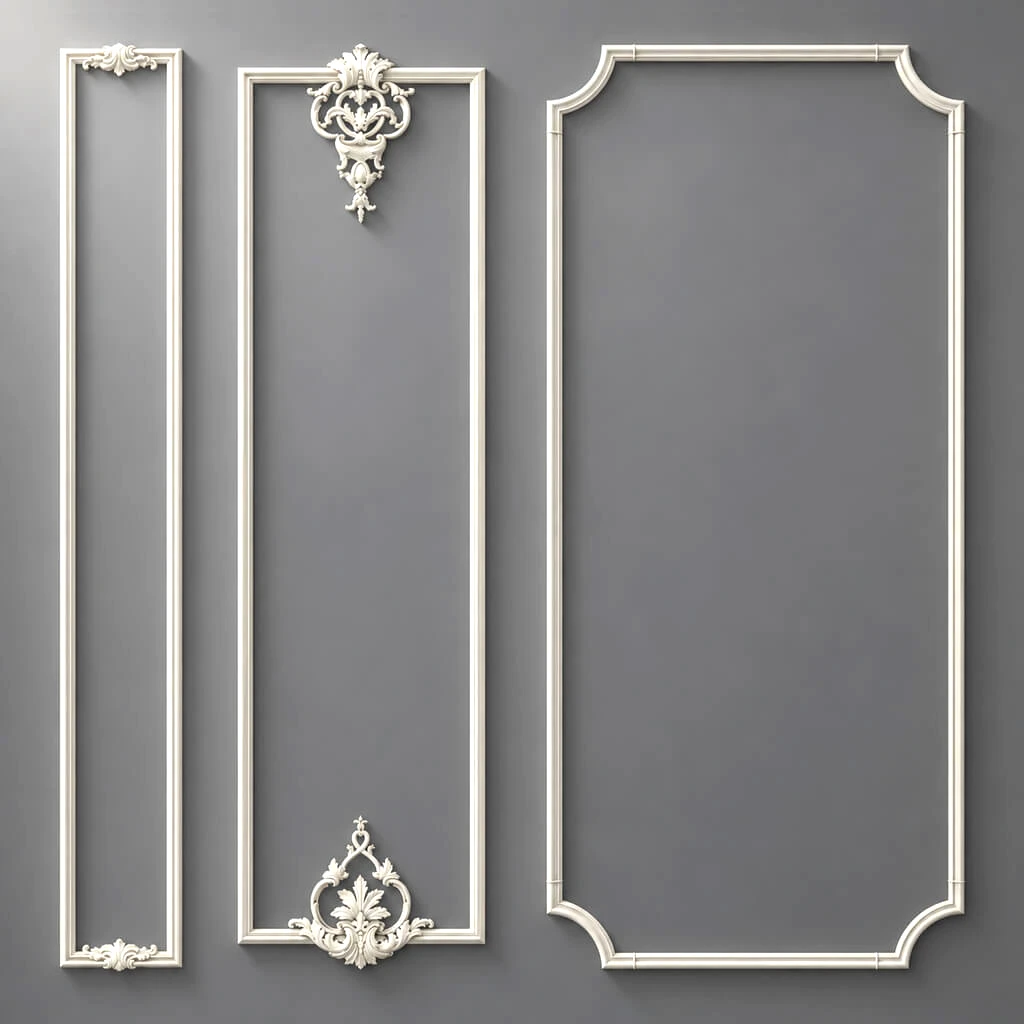
If wooden overlays or rosettes are installed on the facades, handles made of the same material will create a unified decorative code. Overlay + handle + leg from the same set is a level of professional approach to furnishing.
Center-to-center distance: the most often ignored parameter
Center distance is the distance between the centers of two mounting holes of a handle bracket.
Standards: 32, 64, 96, 128, 160, 192, 224 mm. Most kitchen and cabinet furniture is designed for 96 or 128 mm — these are the most common formats.
Why this is important
If the facade already has two holes with a center distance of 96 mm, and you bought a handle with a center distance of 128 mm — the handle will not fit without redrilling. When purchasing a set, measure the center distance of existing holes in advance or check with the furniture manufacturer.
For new furniture without holes — choose the center distance based on the handle size: short bracket with a length of 80 mm → 64 mm; bracket with a length of 110 mm → 96 mm.
Knob handle and center distance
Button Handle is mounted with one central hole — center distance does not apply. Standard mounting hole: diameter 5–6 mm, screw M4 or M5. Check with the manufacturer.
Mistakes when buying a set of handles: seven mistakes you can avoid
Mistake 1. Buying handles from different batches
The same model from different batches — different shades. Buy the entire set at once, from the same batch.
Error 2. Not checking the center distance
The most common reason for returns. Before ordering: measure existing holes or check with the furniture manufacturer. Or choose knob handles — this parameter is not needed for them.
Error 3. Choosing handles that are too small for heavy fronts
A 35 mm diameter knob handle on a 3 kg solid wood kitchen front — grip is uncomfortable, load on the single mounting screw is excessive. For heavy fronts — a pull handle with two mounting points.
Error 4. Mixing different wood shades in one set
"It's a slightly different color, but similar" — and in a week that "similar" will be glaring every day. The color must be identical.
Error 5. Not leaving a spare
One broken handle without a spare — and finding the exact same one in a year becomes a problem. Take +10–15% or at least 2 pieces above the calculated quantity.
Error 6. Choosing handles without considering grip comfort
A beautiful 28 mm diameter knob handle — but try opening a lower drawer with heavy pots by pulling on it. Uncomfortable. For lower drawers with frequent opening — a pull handle with good clearance between the handle and the front (at least 25 mm).
Error 7. Not checking the length of the mounting screw
The standard mounting screw included is designed for a facade thickness of 16–18 mm. If the facade is made of solid wood with a thickness of 22–25 mm, the standard screw will not reach the handle. Specify the length when ordering.
Wooden handles and the overall style of wooden products in the interior
Wooden handles are part of a broader context. If the interior has wooden furniture appliqués, carved decorative elements, wooden furniture legs, wooden Solid wood products for interiors — all of them create a common material code.
In this context, a wooden handle is not just a functional detail, but an element of the decorative system. Small, but expressive.
That is why choosing a set of handles is not about 'buying the cheapest and fastest.' It is a conscious decision that affects how all the furniture and the entire space are perceived.
FAQ: answers to the main questions about wooden handles for furniture
How to choose a set of wooden furniture handles?
Determine the interior style, type of facades (weight, size), required quantity, shape (knob or pull), center-to-center distance. Order the entire set of wooden handles from the same batch.
What is better for a dresser: a knob or a pull handle?
For a dresser with narrow, lightweight drawers — Wooden knob handle, laconic and modern. For massive drawers — Bracket Handle: more reliable grip, more even load distribution.
Can I buy wooden handles as a set?
Yes. In the STAVROS catalog — a full section wooden furniture handles: handles with and without coating, different shapes, pulls and knobs.
How to calculate the number of handles for a kitchen?
Count each door and each drawer = one handle. Add 10–15% spare. For a kitchen with 10 fronts — usually 12–16 handles.
Which handles are suitable for a cabinet?
Bracket with center distance 96–128 mm for hinged doors. Shape — according to cabinet style: simple for modern, ornate for classic.
Are wooden handles suitable for kitchen fronts?
Yes. Especially Handles with Finish (varnish, enamel): resistant to moisture and grease. Handles without coating — before installation, be sure to coat with varnish or oil.
What to choose: handles without coating or with coating?
without a finish — if you plan to paint yourself to match a specific color. with a finish — if you need a ready-to-install handle with a finished finish.
Can wooden handles be painted yourself?
Yes. Sanding → tinting (if necessary) → 2 coats of varnish or enamel with intermediate sanding. Beech handles are the optimal base for DIY coating.
How to choose handle color to match furniture?
Matching the furniture color — a monolithic look. Lighter than the furniture — emphasis on the hardware. Darker — a graphic, modern look. The main thing: all handles in the set are the same shade, from the same batch.
Where to buy a set of wooden furniture handles?
In the STAVROS catalog: wooden furniture handles — staples, knobs, Handles with Finish и without a finish. Full Catalog of solid wood items with Contact us to confirm shipping to your destination.
STAVROS: a handle set that transforms furniture into a system
A handle is the final touch. But it is this touch that decides whether the furniture looks like a cohesive whole or a random collection of items.
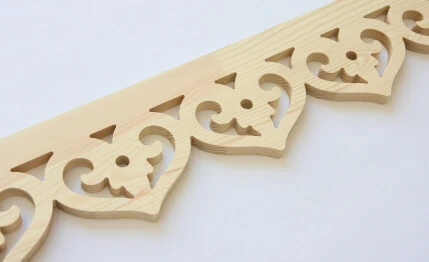
STAVROS offers wooden furniture handles made of solid wood — beech and oak, in several shapes: handle-buttons, handle-eyes, with and without coating. Next to — Decorative Inserts, wooden furniture legs and all Solid Wood Items to create a unified wooden look for the interior.
STAVROS — because details matter, and the set of wooden handles for your furniture should be just that: precise, coordinated, flawless.