











































































Article Contents:
- Stretch ceiling and stucco molding: why people have doubts
- What is a stretch ceiling from an installation perspective
- Moldings on walls: the safest and most effective option
- When to install moldings: before or after the ceiling?
- What exactly to buy for walls
- Molding width with a lowered ceiling
- What to choose for the wall and stretch ceiling joint
- What the joint looks like with a stretch ceiling
- Option one: ceiling plinth before ceiling installation
- Option two: molding below the ceiling baguette
- Option three: cornice in advance, before ceiling installation
- Option four: hidden perimeter lighting
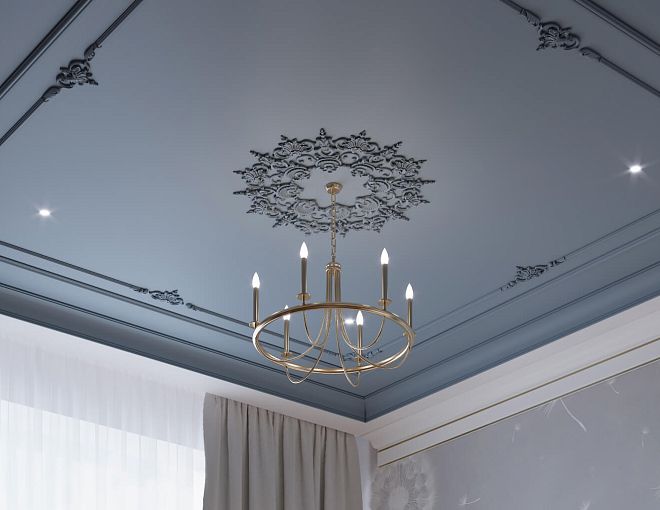
- Ceiling rosette for chandelier: how it works with a stretch ceiling
- How chandelier installation on a stretch ceiling works
- Which glue to use for a rosette on a stretch ceiling
- Limitations on rosette size and weight
- How to choose the rosette size for a stretch ceiling
- Decorative stucco molding with a stretch ceiling: when and where
- Where to place decorative stucco molding with a stretch ceiling
- Stucco decor: individuality on the wall
- If the ceiling is already installed: what can be done
- Wall moldings — no restrictions
- Decorative stucco on walls — no restrictions
- Ceiling rosette — possible, with caution
- Cornice after ceiling — limited
- Planning: what to do before installing a stretch ceiling
- Checklist before installing a stretch ceiling
- What can be left for later
- Ready-made purchase scenarios: for different situations
- Scenario 1: Renovation hasn't started yet, planning a stretch ceiling
- Scenario 2: Stretch ceiling already installed, want to add decor
- Scenario 3: Need to design only the chandelier
- Scenario 4: Want a quick decorative result without complex installation
- Table: what to choose for a stretch ceiling
- Interior styles and stucco for stretch ceilings
- Modern Interior
- Neoclassicism
- Minimalism
- Art Deco
- Common mistakes when working with stucco and stretch ceilings
- FAQ: everything you need to know before buying
- About the Company STAVROS
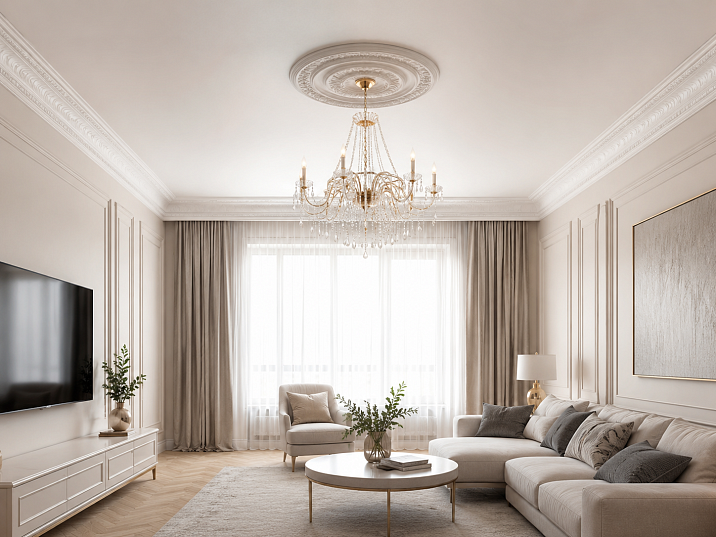
Renovation is a moment of decision-making. And one of the most common questions that arises when choosing decor is: "I will have a stretch ceiling. Can I use stucco at all? Where to glue it? What to buy so I don't have to redo it later?"
That's a reasonable question. A stretch ceiling is a separate structure that lives by its own rules. The polyurethane film is stretched over a profile attached around the perimeter of the wall. It is not a rigid surface. And when someone thinks about stucco decoration—moldings, rosettes, cornices—they have a legitimate fear: what if it's incompatible?
The short answer: it is compatible. But with nuances. Buy moldings for a room with a stretch ceiling, this is not a problem, but a matter of proper planning. Some decisions are made before the ceiling is installed, some after. And once you understand this logic, everything falls into place.
This article is a specific, practical breakdown. No scare tactics, no unnecessary theory. Only what you really need to know when choosing and buying.


Stretch ceiling and stucco decoration: why people have doubts
Before giving answers, it's important to understand where the doubt comes from. Where does the fear that stucco decoration is "incompatible" with a stretch ceiling come from?
There are several reasons.
First: people are used to seeing a ceiling plinth or cornice as an element that attaches to both the wall and the ceiling. With a stretch ceiling, the ceiling plane is a film. You cannot attach anything to the film. That's where the fear comes from.
Second: a ceiling rosette for a chandelier was traditionally mounted directly onto the ceiling slab. With a stretch ceiling, the slab is not visible—it's covered by the film. So how do you hold the rosette?
Third: many people don't know that a stretch ceiling is installed after all wall work. Moldings on walls are wall work. They don't intersect with the stretch ceiling at all.
When you break down these three questions, the anxiety disappears. Let's do exactly that.




What is a stretch ceiling from an installation perspective
A stretch ceiling is a PVC film or fabric sheet stretched over an aluminum profile (baguette) fixed along the perimeter of the wall at a small height from the actual ceiling. An air gap remains between the real ceiling and the sheet — usually 5–10 cm, sometimes up to 20–30 cm for multi-level structures.
Key parameters for choosing molding:
-
A stretch ceiling reduces the room height by 5–15 cm
-
The film is not a rigid surface; nothing is attached to it
-
The baguette is attached to the wall or to the ceiling — it is a rigid structure
-
All wall work — moldings, decor, painting — is done before or after ceiling installation
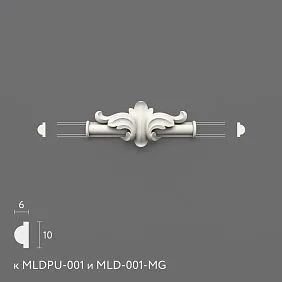
Our factory also produces:




Moldings on walls: the safest and most effective option
The most important understanding that removes most fears: moldings with stretch ceiling These are completely compatible things. Moldings are installed on the wall. A stretch ceiling is installed on the wall (baguette) and the ceiling slab. These two systems do not intersect.
If a room plans to have both a stretch ceiling and moldings on the walls, the only question is: in what order should the work be done?
Get Consultation
When to install moldings: before or after the ceiling?
Before installing the stretch ceiling. The ideal option. The moldings are installed, the joints are sealed with sealant, and the wall is painted. After that, the installers come and stretch the ceiling. The top edge of the moldings is covered by the baguette or remains slightly below — depending on the project.
Advantage: during the molding installation stage, you can work calmly, use a ladder along the wall, and paint without the risk of staining the ceiling fabric.
After installing the stretch ceiling. Also possible, just requires care. The moldings are glued to the wall below the line of the ceiling baguette. The fabric is not affected. Paint must be applied carefully, protecting the fabric with painter's tape or film.
Moldings on the walls are a system completely independent of the ceiling. buy polyurethane moldings For a room with a stretch ceiling, it can be done at any point during the renovation — before or after the ceiling installation.
What exactly to buy for the walls
With a stretch ceiling, the accent in wall decor is the right strategy. The ceiling "disappears" behind the film — it becomes a neutral background. The walls gain more visual significance. And it is here that stucco works with maximum impact.
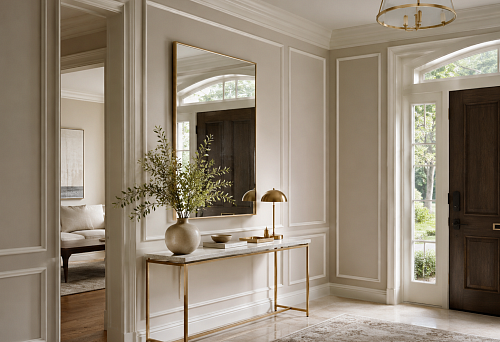
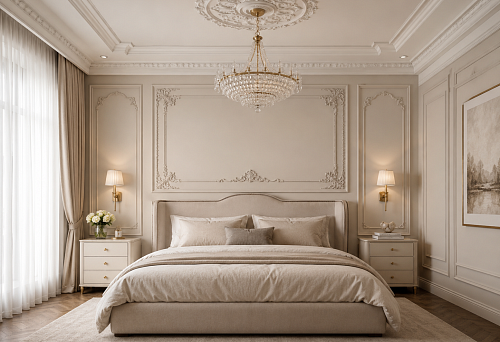
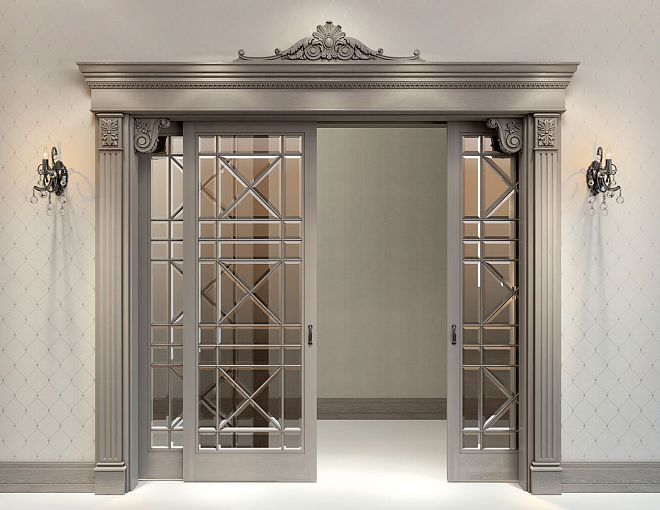
Frame system. Classic technique: Moldings made of polyurethane Rectangular frames are formed on the walls. Behind the sofa, in the TV area, along the perimeter of the wall — the frame system structures the space and gives it architectural quality.
Accent wall. One wall — most often the one behind the sofa or opposite the entrance — is decorated with molding frames. The rest remain neutral.
Horizontal moldings. One or two horizontal moldings on the wall — as a division between the lower and upper zones. A delicate modern technique that works especially well with a neutral stretch ceiling.
What to buy for walls:
-
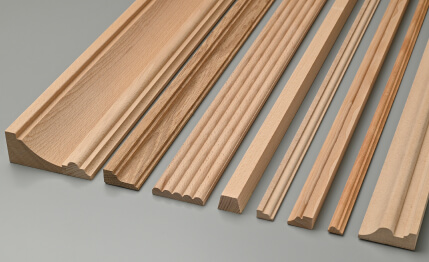
Buy polyurethane moldings — profile 35–55 mm depending on wall height
-
Mounting acrylic adhesive
-
Acrylic sealant for joints
-
Paint in the desired shade
-
Molding reserve 12–15% for corner trimming
Molding width with a lowered ceiling
A stretch ceiling lowers the room by 5–15 cm. If the original height was 2.7 m, after a stretch ceiling it can become 2.55–2.65 m. At this height, moldings should be more modest.
Recommendations:
-
For ceiling heights of 2.5–2.6 m — molding 30–45 mm
-
For heights of 2.6–2.7 m — molding 40–55 mm
-
For heights of 2.7 m and above — molding 50–65 mm
A molding that is too wide with a low ceiling creates a feeling of pressure. Keep the proportions.
What to choose for the joint between the wall and the stretch ceiling
The joint between the wall and the stretch ceiling is the most delicate spot. This is where people most often get lost: what to put there if the usual method of installing a ceiling plinth (one plane to the wall, the other to the ceiling) doesn't work here?
In fact, it does work — if you understand the structure correctly.
What the joint looks like with a stretch ceiling
When installing a stretch ceiling, an aluminum baguette is installed along the perimeter of the wall. The fabric is tucked into it. The fabric looks like a flat horizontal plane that abuts the wall. The joint between the wall and the fabric is the connection line of the fabric with the baguette.
This line is usually covered with a decorative strip — the so-called "masking" or "plug". It comes with the ceiling or is purchased separately. It covers the technical joint.
But the masking strip is a technical element, not a decorative one. And that's where the choice begins.
Option one: ceiling plinth before ceiling installation
If the work is done before the stretch ceiling is installed, you can install Ceiling Skirting around the perimeter of the room on the wall. It is mounted with glue on the wall — not in the corner (as usual), but on the wall surface itself, slightly below the level of the future ceiling.
After the stretch ceiling is installed, the baguette is placed above the plinth or flush with its top edge. The film covers the upper part of the plinth — and it turns out that the plinth "emerges" from the ceiling. This is a beautiful and clean solution.
Important: this option requires prior coordination of the stretch ceiling level with the plinth installation level. You need to agree with the ceiling installers on the height at which they install the baguette.
Option two: molding below the ceiling baguette
If the ceiling is already installed, you can install Polyurethane molding on the wall slightly below the stretch ceiling line. The molding is attached only to the wall — vertically, like a horizontal belt.
A small gap of 1–3 cm remains between the molding and the edge of the ceiling. This gap can be left as a decorative detail (creating a shadow and a "floating" effect) or covered with a thin decorative strip.
This option works for a modern interior: a horizontal molding line under the ceiling — concise and expressive.
Option three: install the cornice in advance, before ceiling installation
If a full-fledged Ceiling cornice — it needs to be planned before installing the stretch ceiling. The cornice can be installed:
-
On the wall (into a triangular profile, like a classic baseboard)
-
On a special wooden batten or drywall base around the perimeter — to cover the baguette line
After installing the cornice, the installers stretch the ceiling so that the fabric goes behind the cornice or flush against it. The cornice becomes a decorative finish for the joint.
Buy ceiling molding for this scenario means choosing a cornice that can be structurally mounted on the wall without support from the ceiling. Polyurethane cornices with a triangular cross-section are ideal for this: they are glued to the wall along the entire height of the vertical plane — the ceiling plane may not bear any load.
Option four: hidden perimeter lighting
A popular modern technique for stretch ceilings is built-in LED lighting around the perimeter of the ceiling. The light goes into the ceiling behind the cornice or molding. This effect is created by a special profile or drywall box around the perimeter, in which the lighting strip is hidden.
Ceiling molding In this scenario, it is installed on a plasterboard box or wooden base, below which an LED strip is hidden. Polyurethane cornices with a profile open at the bottom are ideal for this: light comes out from under the cornice, creating a soft diffused glow around the perimeter of the ceiling.
This needs to be planned in advance — before installing the stretch ceiling and the plasterboard box.
Ceiling rosette for a chandelier: how it works with a stretch ceiling
The ceiling rosette is one of the most frequently asked questions regarding stretch ceilings. A person wants a beautiful chandelier with a decorative rosette but does not understand where to attach it if the ceiling is a film.
Answer: the rosette is not attached to the film, but to a rigid base — and this base needs to be provided before installing the ceiling.
How the installation of a chandelier on a stretch ceiling is arranged
When installing a stretch ceiling, a so-called "embedded" element is prepared in advance for the chandelier — a rigid base (wooden beam, metal plate, or flange) attached to the ceiling slab. It is located behind the fabric. A hole is cut in the fabric for the chandelier socket, and a special ring is installed along the edge of this hole, which secures the film from tearing.
It is to this embedded element — through the hole in the film — that the chandelier is attached.
And the ceiling rosette? It is installed on the film itself around the hole. Not to the ceiling slab — to the film. A lightweight polyurethane rosette weighing 150–300 g is held on the fabric with special adhesive for stretch ceilings. The fabric is strong enough material for such a load.
This is standard practice. ceiling rosettes Polyurethane ones are especially suitable for this: they are lightweight, do not put strain on the fabric, and adhere well with special acrylic glue.
What glue to use for a rosette on a stretch ceiling
Regular mounting glue for PVC fabric is not the best option. You need a glue that:
-
Is not aggressive to PVC (some solvents damage the film)
-
Provides good adhesion to the smooth surface of the fabric
-
Remains elastic after drying
Recommended option: double-sided acrylic tape + spot application of acrylic glue. Or a special solvent-free mounting glue compatible with PVC. Before installing the rosette, the fabric is degreased with isopropyl alcohol.
Limitations on the size and weight of the rosette
Not every rosette is suitable for installation on a stretch fabric. There are limitations:
By weight. The maximum weight of a rosette that can be attached directly to the fabric is 500–700 g. Most polyurethane rosettes with a diameter of up to 80 cm fall within this range.
By diameter. A large-diameter rosette (more than 80–90 cm) when mounted on the fabric creates a load on the edges — the fabric may sag. For large rosettes, it is better to provide an additional base — a sheet of plywood or drywall attached to the ceiling — and mount the rosette on it.
By relief. A rosette with deep relief and complex ornament weighs more than a flat one. When choosing a large expressive rosette — check the weight with the seller.
For most standard living rooms, rosettes with a diameter of 40–70 cm are easily mounted on the fabric. Ceiling rosette a polyurethane rosette with a diameter of 50 cm weighs about 200–250 g — this is an absolutely safe load for a stretch ceiling.
How to choose the size of a rosette for a stretch ceiling
A stretch ceiling reduces the height of the room. Keep this in mind when choosing a rosette.
-
Room 15–18 sq. m, ceiling after stretching 2.5–2.6 m — rosette 35–50 cm
-
Room 20–25 sq. m, ceiling 2.6–2.7 m — rosette 50–65 cm
-
Room 25–35 sq. m, ceiling 2.7 m and above — rosette 65–80 cm
With a lower ceiling, the rosette should be more modest — a large rosette with a ceiling of 2.5 m creates a feeling of pressure.
Decorative stucco molding with a stretch ceiling: when and where
Decorative stucco molding with a stretch ceiling — the most flexible option. It is mounted on the wall, does not touch the ceiling, and is independent of both the stretch ceiling structure and the renovation sequence.
Decorative stucco molding — medallions, cartouches, ornamental overlays — works on walls at any time: before the ceiling, after the ceiling, a year after renovation.
Where to place decorative stucco molding with a stretch ceiling
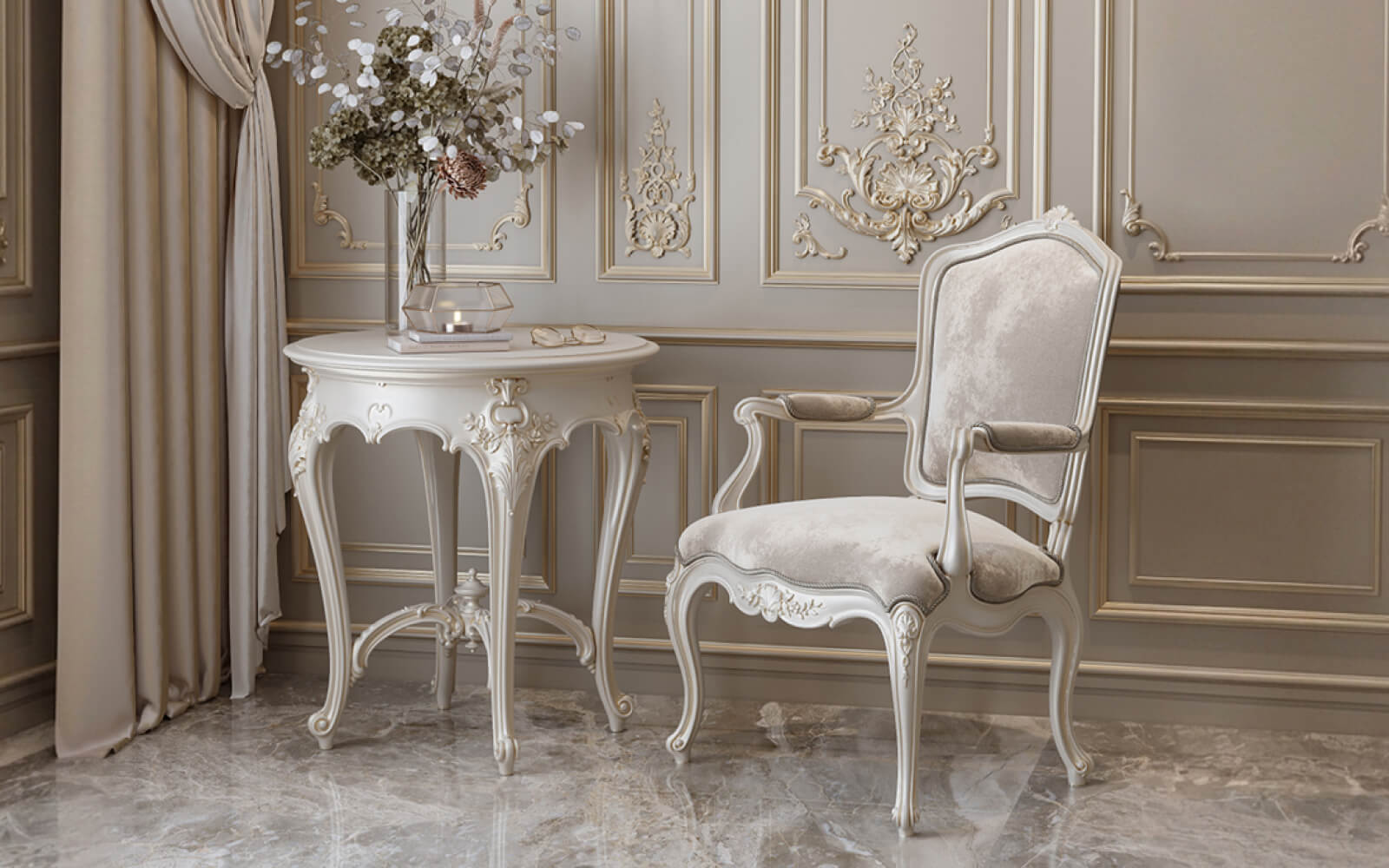
On an accent wall. One wall with molding frames and a central decorative element — a medallion or cartouche — creates a strong visual accent. The stretch ceiling above it is neutral and does not compete with the wall decor.
Above a console or chest. A decorative element above the console integrates the furniture into the wall's decorative system. Regardless of the ceiling type.
Near a sconce. Wall lights with decorative overlays nearby — a classic technique. The sconce becomes part of the wall composition.
Above a mirror. A decorative element above the mirror completes the vertical axis: mirror + element above = a finished decorative vertical.
In molding frames. A molding frame + a decorative element in the center. This is the most expressive and complete technique — and it is completely independent of the ceiling.
buy decorative moldings for a room with a stretch ceiling means focusing the decorative accent on the walls. This is not a limitation, but a strategy. With a neutral ceiling, the walls "speak" louder.
Stucco decor: individuality on the wall
Buy Moldings — for point accents that add character to the space. Corner overlays, ornamental inserts, decorative ornament fragments — all of this works exclusively on the walls and does not depend on the type of ceiling at all.
With a stretch ceiling, stucco decor on the walls is an even more winning story: the neutral ceiling plane enhances the perception of wall decor without competing with it.
If the ceiling is already installed: what can be done
A common situation: the renovation is already done, the stretch ceiling is already in place, and you want to add decor. What is available?
Moldings on walls — without restrictions
Moldings on walls are installed at any time. The stretch ceiling does not interfere. The work is neat: painter's tape protects the canvas from accidental glue or paint. Ventilation when working with glue — to avoid heating the canvas with fumes. That's all.
Result: frames of moldings on an accent wall — and the room transforms in one day.
Decorative stucco on walls — without restrictions
The same thing. Buy decorative stucco and mounting it on the wall is an operation that does not require any coordination with the ceiling structure.
Ceiling rosette — possibly with caution
If the rosette is light (up to 500 g), diameter up to 70 cm — installation on the fabric is possible. Glue — acrylic, compatible with PVC. Degrease the fabric. Press the rosette and fix it for 24 hours.
If the rosette is large — it is better to consult with the master who installed the ceiling. It may be necessary to open the fabric and add a rigid base.
Cornice after the ceiling — limited
After installing a stretch ceiling, installing a full triangular cornice in the wall/ceiling corner is more difficult. The corner is occupied by the baguette and the edge of the fabric. But a molding horizontally on the wall just below the ceiling is feasible and looks like a cornice line.
ceiling molding in the full classic version (cornice in the corner) it is easier to install before the stretch ceiling. After — molding on the wall as an alternative.
Planning: what to do before installing a stretch ceiling
If the renovation has not yet started or the stretch ceiling has not yet been installed — you have all the possibilities. Use them correctly.
Checklist before installing a stretch ceiling
Determine if a cornice is needed. If yes, install it on the wall before the ceiling. Coordinate with installers so the fabric fits flush against the cornice.
Determine if perimeter lighting is needed. If yes, install a drywall box or wooden batten with LED strip, cover with molding on top. After that, installers stretch the ceiling.
Determine if a large-diameter ceiling rosette is needed. If the diameter is more than 80 cm, install a rigid base to the ceiling slab before installing the ceiling.
Install moldings on the walls. This can be done before the ceiling — it's more convenient to work without the risk of staining the fabric.
Paint the walls and moldings. Also better before the ceiling — no need to protect the fabric.
What can be left for after
-
Small-diameter ceiling rosette — installation after the ceiling with glue
-
Decorative stucco on walls — at any time
-
Stucco decor on accent areas — at any time
-
Additional moldings and wall frames — at any time
Ready-made purchase scenarios: for different situations
Scenario 1: Renovation hasn't started yet, planning a stretch ceiling
The best time for comprehensive planning.
What to buy and do in the correct order:
-
Moldings made of polyurethane for walls — install before the ceiling
-
Ceiling cornice or baseboard around the perimeter — install on the wall before the ceiling
-
Ceiling rosette — choose in advance, prepare the base if necessary
-
Painting — before ceiling installation
-
Stretch ceiling — installed last
-
Decorative stucco to accent zones — can be added after the ceiling
Scenario 2: Stretch ceiling already installed, want to add decor
Accent — on the walls.
What to buy:
-
Buy polyurethane moldings — for frames on the accent wall
-
Buy decorative stucco — for central frame accents
-
Buy Molded Decoration — for spot accents: above the mirror, next to the sconce
-
Mounting adhesive, sealant, paint
-
Masking tape to protect the ceiling fabric
Scenario 3: Need to design only the chandelier
Ceiling already installed, chandelier is there, looks lonely.
What to buy:
-
Ceiling rosette diameter matching the room area — up to 70 cm for a standard room
-
PVC glue compatible with stretch ceiling
-
Paint matching the ceiling color
Scenario 4: Want a quick decorative result without complex installation
What to buy:
-
buy decorative moldings — one medallion or cartouche for an accent area
-
Several molding strips — for a simple frame around the accent
-
Glue, paint
One decorative element on the right wall — and the room is already different. The stretch ceiling does not interfere with this.
Table: what to choose with a stretch ceiling
| Situation | What is better to buy |
|---|---|
| Ceiling not yet installed | Cornice + Moldings before ceiling installation |
| Ceiling already installed | Moldings + Decorative stucco on the walls |
| Need to install a chandelier | Rosette up to 70 cm with glue compatible with PVC |
| Need to close the joint | Molding on the wall just below the canvas |
| Want a cornice with light | Drywall box + Ceiling molding before ceiling installation |
| Quick decor without risk | Relief Decoration + moldings on the accent wall |
| Classic style with a stretch ceiling | Wall moldings + socket + cornice (if up to the ceiling) |
Interior styles and stucco with a stretch ceiling
A stretch ceiling is a neutral element. It does not dictate style. And that is precisely what makes it a good "partner" for stucco of different styles.
Modern interior
Smooth moldings in the color of the wall. One horizontal molding on the wall as a cornice line. A socket with a clean geometric profile. A white or neutral-toned stretch ceiling.
Neoclassicism
Moldings with moderate relief — frames on the walls. A socket with a classic ornament. A cornice around the perimeter — installed up to the ceiling. Decorative stucco in the central frames.
Minimalism
One thin horizontal molding on the wall at a level of 30–40 cm from the ceiling. No ornament. Color — matching the wall. A stretch ceiling — solid color, matte.
Art Deco
Stepped moldings with a geometric profile. A socket with a geometric ornament. Contrast is possible: white moldings on a colored wall, a solid-color stretch ceiling.
Common mistakes when working with stucco and a stretch ceiling
First mistake: buying a cornice and trying to install it in the corner after installing the stretch ceiling. The corner is occupied by the baguette. A classic triangular cornice will not fit there. The cornice must be planned before the ceiling.
Second mistake: gluing a heavy socket to the fabric without preparation. If the socket weighs more than 500 g, the fabric will sag over time. Large sockets require a rigid base.
Mistake three: using solvent-based glue on PVC fabric. Solvents destroy the film — irreversibly. Only acrylic glue or double-sided tape.
Mistake four: moldings that are too wide with a lowered ceiling. A stretch ceiling already lowers the room. A 80 mm molding with a height of 2.5 m is too much.
Mistake five: painting moldings without protecting the fabric. Paint on PVC fabric cannot be washed off. Masking tape before painting is mandatory.
FAQ: everything you need to know before buying
Can stucco molding be glued to a stretch ceiling?
They are not glued to the fabric itself. Moldings, cornices, and decor are mounted on the wall. A ceiling rosette is mounted on the fabric, but it must be lightweight and with compatible glue.
What to choose if the stretch ceiling is already installed?
Moldings made of polyurethane и decorative molding — on the walls. This is safe, expressive, and does not require interference with the ceiling structure.
Can you install a ceiling rosette with a stretch ceiling?
Yes. A lightweight rosette up to 70 cm in diameter is mounted on the fabric with glue. A large rosette requires preliminary preparation of a rigid base — preferably before installing the ceiling.
Which cornice to choose for a stretch ceiling?
It is better to plan the cornice before installing the ceiling: it is mounted on the wall, and the ceiling fabric is brought flush to it. Buy ceiling stucco molding in advance — and coordinate the installation height with the installers.
What to buy together with moldings for a room with a stretch ceiling?
Acrylic mounting adhesive, sealant, paint, painter's tape to protect the fabric, and 15% extra molding for trimming.
How not to damage a stretch ceiling when installing stucco?
Use only acrylic adhesive. Painter's tape protects the fabric during painting. Do not apply heating tools near the fabric. Work in soft shoes and without sharp tools above the fabric.
Is it necessary Ceiling molding, if the ceiling is a stretch ceiling?
A cornice line around the perimeter and a rosette under the chandelier are justified even with a stretch ceiling. They need to be planned in advance. If the ceiling is already finished, the focus shifts to the walls, and that is quite enough for a beautiful interior.
About the company STAVROS
A stretch ceiling is not a reason to give up a beautiful interior. Moldings on the walls, decorative stucco in accent areas, a rosette under the chandelier, a well-thought-out cornice — all of this is achievable. You just need to understand the sequence and choose the right elements.
STAVROS is a Russian manufacturer of decorative polyurethane products. In the STAVROS catalog: Moldings made of polyurethane of all formats, Decorative stucco и Relief Decoration for wall accents, Ceiling molding for cornices and ceiling rosettes under the chandelier. The entire range — Buy moldings the website.
All STAVROS products are made of high-quality dense polyurethane, lightweight, ready for painting, and compatible with acrylic mounting adhesive. STAVROS specialists will help you choose a solution for any room — including those with a stretch ceiling — and calculate a set for your dimensions and task.