Article Contents:
- STAVROS mounting adhesive for decor buy: choice for wood, MDF and polyurethane
- Why mounting adhesive should be chosen together with decor
- Which STAVROS products are mounting materials
- For which materials is mounting adhesive suitable
- Wood and derivatives
- MDF moldings
- Polyurethane foam
- Metal, glass, PVC, ABS, polycarbonate
- Which glue to choose for a specific decor
- Carved wooden appliqués
- MDF moldings and baguettes
- Polyurethane moldings and stucco
- TYTAN Prof.classic Fix: transparent mounting glue for delicate tasks
- Key characteristics
- Application technique
- KUDO HIGH TACK: hybrid glue for fast and strong fixation
- How acrylic, polyurethane, rubber, and liquid nails differ
- Acrylic mounting glue
- Polyurethane mounting glue
- Liquid nails
- How to prepare the surface before applying glue
- Complete preparation checklist
- Mistakes when buying mounting adhesive
- Buying without considering the decorative material
- Focusing only on price
- Using mounting gypsum adhesive for unintended purposes
- Gluing onto a dusty surface
- Not considering the weight of the element
- Applying too little compound
- Skipping the open time
- Not checking the application temperature
- Confusing joint adhesive with mounting adhesive
- What to buy together with mounting adhesive
- Decorative items for mounting adhesive
- Related materials
- Costly misconceptions about mounting adhesive
- Why STAVROS
- FAQ
- Which mounting adhesive to buy for decorative overlays?
- Is mounting adhesive suitable for wooden decor?
- Can polyurethane decor be glued with mounting adhesive?
- How is transparent mounting adhesive convenient for decor?
- Why can decor peel off after installation?
- Where to buy STAVROS decorative mounting adhesive?
- How long does mounting adhesive take to dry?
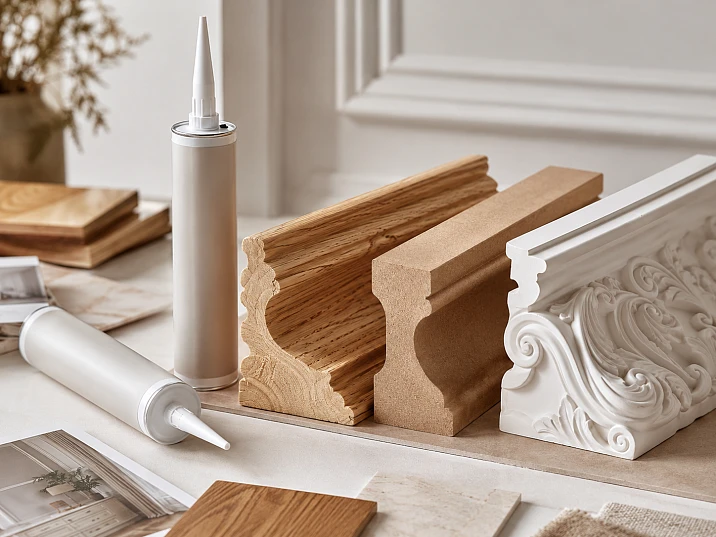
Buy STAVROS decorative mounting adhesive: choice for wood, MDF and polyurethane
Mounting adhesive is not a consumable you toss into your cart at the last moment. It is the foundation of installation: it determines whether a decorative element will last for years or start peeling off after a few months. Buying mounting adhesive correctly means selecting it for the specific material, base, and task, rather than grabbing the first composition you see off the shelf at a hardware hypermarket.




Why mounting adhesive should be chosen together with decor
There is a temptation to buy decor in one place and adhesive in another, cheaper one. It is this path that leads to beautiful moldings starting to come off the wall after six months, and carved wooden overlays on furniture facades holding on not by glue but by a wing and a prayer. The decorative element and the mounting compound are a single system. You cannot choose them separately and expect results.
Why does this happen? Because wood, MDF, polyurethane foam, PVC, and metal behave fundamentally differently. Natural wood reacts to humidity — it lives, breathes, and slightly changes size. MDF is stable but requires good initial adhesion on a flat back surface. Polyurethane foam — light and porous — is easily destroyed by aggressive solvents found in some mounting compounds. An adhesive chosen "at random" may turn out to be incompatible with your specific material.
Buy mounting adhesive for decor in the same catalog where you choose the Wooden decoration — a logical and reliable approach. This is exactly how the STAVROS assortment is organized: the adhesive is presented in the section Mounting and finishing materials alongside wooden, MDF, and polyurethane decor. This is not a random placement — it is a fundamental logic of complete selection.
There is another important argument in favor of a conscious choice of glue. Adhesion — the ability of the composition to bond to the surface — depends not only on the chemistry of the glue, but also on the condition of the base, the room temperature, and the open time. If you do not know these parameters, installation turns into a lottery. And a lottery with expensive carved wooden decor is a very dubious pleasure.
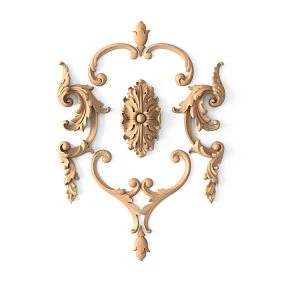
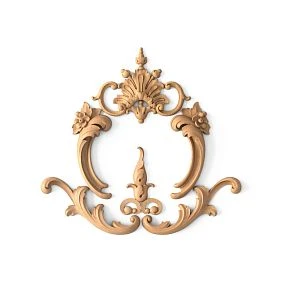
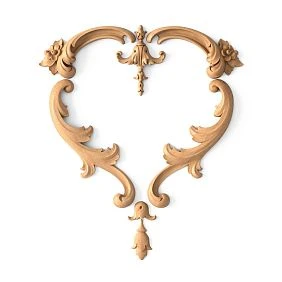
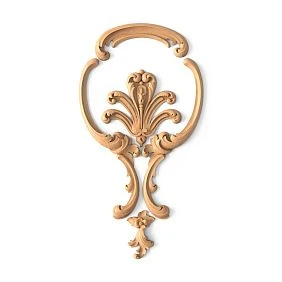
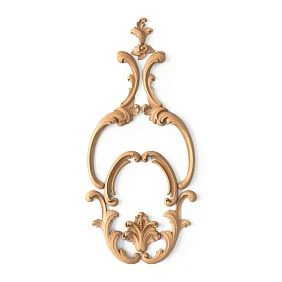
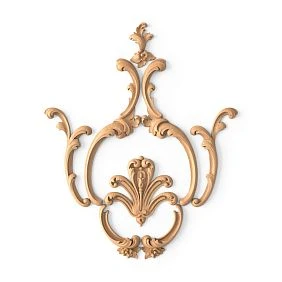
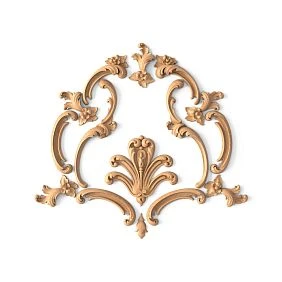
Our factory also produces:
Which STAVROS products belong to installation materials
In the STAVROS catalog there is a section Furniture hardware, inside which a category is highlighted Mounting and finishing materials. It includes mounting adhesives, decorative metal plugs, and Rubio Monocoat oil. This is not a random set: all items are selected for specific tasks — installation, finishing, and final protection of decorative elements made of wood, MDF, and polyurethane.
Among the adhesives in the section, there are currently two fundamentally different compositions. The first is TYTAN Prof.classic Fix mounting adhesive 100 ml transparent — a universal transparent composition based on synthetic rubber for interior and exterior use. It is designed for both light and heavy materials: wood and its derivatives, polyurethane foam, metal, glass, hard plastics — PVC, ABS, polycarbonate.
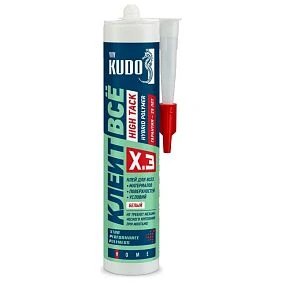
The second — KUDO glue Bonds Everything HIGH TACK based on hybrid polymers, white, 280 ml — a composition with enhanced initial fixation for quick and durable installation of construction and decorative elements. One 280 ml tube is enough for up to 16 linear meters when applied in a single line. This is a professional choice for heavy and large-format products.
You can buy mounting glue at STAVROS as a standalone product or as part of an order with decor for moldings, mouldings or with polyurethane moldings. Delivery is carried out throughout Russia by transport companies CDEK and DPD, from one piece. This means that even buying one tube of glue for a small home project is realistic and convenient.
Get Consultation
What materials is mounting glue suitable for
One of the main questions when purchasing: what specific materials does the composition work with? This is not an abstract question — a wrong answer means redoing the installation.
Wood and derivatives
Natural wood is a living material. It reacts to humidity, changing size: it swells in high humidity and shrinks in dry air. These micro-movements are the main enemy of glue lacking elasticity. If the joint is rigid and brittle, the wood will eventually detach from the base along with the adhesive film.
You need to buy glue for wooden decor that retains elasticity after curing, withstands pull-off and shear loads. TYTAN Prof.classic Fix based on synthetic rubber meets these requirements: the rubber joint does not lose flexibility over time.
Wooden moldings, wooden cornice, Wooden angle, wooden plank — all these products from the STAVROS assortment require exactly this approach: glue with good adhesion to wood and joint elasticity after drying.
MDF moldings
MDF is a dense, homogeneous material with a smooth back surface. This is its main advantage for installation: the adhesive spreads evenly, and the contact area is used to the maximum. Adhesive for wooden MDF moldings is applied in strips along the back side of the profile. For long molding products the elasticity of the seam is also important — a long profile "moves" more noticeably during linear thermal expansion than a short one.
Wooden Picture Frame, Wooden molding, wooden trim — for all these products, the mounting adhesive is selected according to one principle: good adhesion to MDF or wood, moderate initial tack, and flexibility after curing.
Polyurethane foam
Lightweight, porous, sensitive to solvents. Some mounting compounds literally eat away polyurethane foam from the inside — this happens where the adhesive contains aggressive organic solvents. Result: the decor is attached, looks normal on the outside, but after a few months it begins to crumble in the seam area.
TYTAN Prof.classic Fix — synthetic rubber — is chemically neutral towards polyurethane foam. It is directly indicated in the product card as a compound for installing PU decorative elements. This is fundamentally important when working with with polyurethane moldings, with polyurethane moldings, cornices, and decorative overlays.
Metal, glass, PVC, ABS, polycarbonate
These are "difficult" substrates with low porosity. Most mounting compounds simply do not provide the necessary adhesion to them. Here, high initial adhesion to non-porous surfaces and shear strength are important. Both adhesives from the section Mounting and finishing materials STAVROS — TYTAN Prof.classic Fix and KUDO HIGH TACK — designed for use with hard plastics, metal, and glass.
Which glue to choose for a specific decor
Each type of decor has its own requirements. Weight, contact area, surface type, seam visibility — all of this influences the choice of composition.
| Decorative element | What is important when choosing | Recommended type of composition |
|---|---|---|
| carved wooden overlays | Weight, density, contact area, seam elasticity | Universal mounting adhesive, wood glue with flexible seam |
| MDF molding | Flat back side, profile length, linear expansion | Acrylic or hybrid mounting adhesive |
| Polyurethane molding | Lightweight, solvent-free, compatible with PU | Rubber or rubber-polyurethane composition |
| Heavy decorative elements | Initial fixation without holding, peel strength | High tack / hybrid composition with enhanced fixation |
| Transparent decor, visible seam | Invisibility of adhesive in the joint area | Transparent mounting adhesive |
Carved wooden overlays
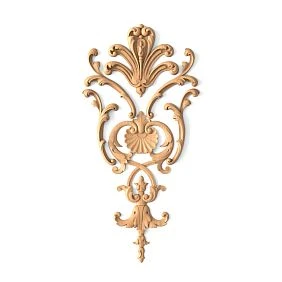
Decorative Inserts Solid wood — products with character. They can be massive, with a developed relief, and the contact area is often smaller than it seems. When mounted on vertical surfaces — door fronts, furniture bodies, wall panels — the load on the adhesive joint is directed to shear and peel simultaneously.
For carved wooden overlays, a composition with good initial tack is needed so that the element does not slip before curing, and with seam strength capable of holding the product's weight permanently. TYTAN Prof.classic Fix handles this task for most standard overlays. For heavy large-format products — KUDO HIGH TACK.
At the same time, it is worth looking at decorative elements for furniture made of solid wood: they are installed using the same logic, and the issue of choosing glue for them is no less relevant.
MDF moldings and baguettes
wooden picture molding and MDF molding profiles — long, with a flat back side. They are mounted with strips of glue along the entire length. An open time of 3–5 minutes allows the composition to activate — after that, the pressed profile sets quickly and evenly.
Polyurethane moldings and stucco
Polyurethane decor is lightweight — this simplifies installation in terms of initial fixation. But it requires attention to the glue's chemistry. installing polyurethane molding — a separate topic, detailed in STAVROS articles. For mounting glue, one thing is important: no aggressive solvents, compatibility with PU surfaces, transparent seam color where the decor will be painted or left in its natural form.
TYTAN Prof.classic Fix: transparent mounting glue for delicate tasks
Mounting glue TYTAN Prof.classic Fix — this is 100 ml of a universal compound based on synthetic rubber. Transparent, suitable for indoor and outdoor use. This is the mounting adhesive to buy when seam neatness, material versatility, and predictable results are important.
Key features
-
Color: transparent — invisible in the joint area, does not show through a thin layer of paint
-
Base: synthetic rubber — elastic seam, does not crack when material moves
-
Application: indoors and outdoors — a rare combination for an adhesive in the decor segment
-
Materials: polyurethane foam, wood and derivatives, metal, glass, PVC, ABS, polycarbonate
-
Application temperature: from +10°C to +30°C
-
Working time: 10–15 minutes
-
Full curing: 72 hours
-
Coverage: one 100 ml tube is enough for approximately 10 linear meters when applied in a line
Application technique
Apply the adhesive in dots or a continuous strip to the back side of the decorative element. Immediately after application, press it against the surface, slightly twisting for even distribution of the compound. Then remove the element from the base and leave it open for 3–5 minutes — this is a critically important step that activates adhesion. After that, press the decor firmly and evenly against the surface and hold for 5–10 seconds.
It is this technique — with open time — that distinguishes professional installation from amateur. Those who skip this step often complain that the glue doesn't hold. It does hold — it just needs time to activate.
Buying Tytan construction adhesive means getting a compound with clear characteristics, confirmed by the product card on the STAVROS website. You can buy Tytan construction adhesive through the product card with delivery across all of Russia.
KUDO HIGH TACK: hybrid adhesive for fast and powerful fixation
KUDO Glues Everything HIGH TACK adhesive — a fundamentally different product in format and purpose. Volume — 280 ml, base — hybrid polymers, color — white. This is a compound for tasks where strong initial fixation is needed without prolonged holding by hand.
One 280 ml tube is designed for 16 linear meters when applied in a single line. This makes the compound economical for installing large volumes of trim, cornices, or long profiles. Hybrid polymers are a modern base that combines properties of several chemical groups: good adhesion to a wide range of materials, high initial tack, and joint strength after curing.
Adhesive for heavy decorative elements — that is exactly this format. If you are installing Decorative Bracket or a massive overlay on a facade — KUDO HIGH TACK will provide initial fixation without the risk of the element slipping before curing.
What are the differences between acrylic, polyurethane, rubber-based adhesives, and 'liquid nails'
In the construction adhesive market, there are several chemical groups with different characteristics. It is worth understanding them before buying a construction adhesive for a specific task.
| Composition type | When to use | Main risk if chosen incorrectly |
|---|---|---|
| Acrylic mounting adhesive | Light elements, dry rooms, MDF | Weak adhesion on smooth and non-porous surfaces |
| Polyurethane mounting adhesive | Strong joints, outdoor work | Foaming of some compounds upon contact with wet surfaces |
| Rubber-based (TYTAN Prof.classic Fix) | Universal tasks, mixed materials, indoors and outdoors | Open exposure required, ventilation is important |
| Hybrid (KUDO HIGH TACK) | Heavy elements, quick fixation, large volume of work | White seam color — not suitable where transparency is needed |
| Liquid nails | Household installation of light and medium elements | Non-uniform term: composition may be acrylic, rubber, or incompatible with decor |
Acrylic mounting adhesive
It is logical to buy acrylic mounting adhesive for working with MDF profiles and wooden moldings in dry residential areas. Acrylic adheres well to porous surfaces, does not yellow, and is easy to paint after curing. Its weakness is limited moisture resistance and low adhesion to smooth surfaces — metal, glass, plastic.
Polyurethane mounting adhesive
It is worth buying polyurethane mounting adhesive for tasks requiring high chemical and mechanical resistance. One-component PU compounds cure due to atmospheric moisture — when working with them, it is important that at least one of the surfaces being bonded is slightly damp. The seam strength is high, but when choosing, it is important to ensure compatibility with polyurethane decor: not all PU adhesives are safe for polyurethane foam.
Liquid nails
"Liquid Nails" is not a separate type of glue, it's a trade name. Under this brand, compositions of completely different chemistries are sold: acrylic, rubber, hybrid. Buying liquid nails mounting glue means you must read the composition and purpose. Universal liquid nails for household mounting are often not designed for polyurethane decor or heavy wooden products. Read the product card, don't rely on the loud name.
How to prepare the surface before applying glue
A professional with 20 years of experience will tell you directly: most adhesive joint failures are not a composition problem. It's a preparation problem. Glue does not forgive sloppiness at the base preparation stage.
Complete preparation checklist
-
Remove dust and contaminants. Wipe the surface with a dry cloth or blow with compressed air. Dust between the glue and the base guarantees delamination.
-
Dry the base. Mounting on a damp surface blocks adhesion for most compounds. Especially critical for walls after putty or in rooms with high humidity.
-
Degrease if necessary. Metal, glass, varnished and PVC surfaces — mandatory. Wood and MDF — if visible contamination.
-
Check the strength of paint and plaster. If the paint is peeling, the glue will hold onto the paint, not the wall. Weak base is removed and primed.
-
Do a dry fit. Attach the decorative element without glue — ensure fit, trim if necessary.
-
Mark the position. With a pencil or painter's tape. After applying the glue, you will only have a few minutes for adjustment.
-
Apply glue in dots or strips — according to the manufacturer's recommendations from the product card.
-
Press and hold for the open time — for TYTAN this is 3–5 minutes before pressing.
-
Hold for 5–10 seconds after pressing.
-
Do not load until fully cured — 72 hours. During this period, do not paint, putty, or create mechanical loads on the installation area.
The detailed technology for working with PU decor, including surface preparation and joint nuances, is covered in the article about glue for polyurethane moldings on the STAVROS website.
Mistakes when buying construction adhesive
Let's break down each typical mistake — specifically, without generalities. This is not scare tactics, but practical prevention.
Buying without considering the decor material
The most expensive mistake. Glue that is incompatible with polyurethane can destroy the decor from the inside. A compound for lightweight elements will not hold a heavy overlay. Before buying construction adhesive for decor, determine the material of the product. This is where the right choice begins.
Focus only on price
A difference of 150–200 rubles between compounds can mean a difference in the level of primary adhesion, compatibility with the material, or seam durability. Cheap glue is not always bad, but choosing it solely by price is a risk.
Using mounting gypsum glue for unintended purposes
Mounting gypsum glue should only be purchased for its direct application — attaching gypsum moldings, restoring gypsum elements, filling joints in gypsum. For wood, MDF, or polyurethane foam, it is an unsuitable tool: adhesion will be weak, and the seam will not survive the first seasonal temperature change.
Gluing onto a dusty surface
Sounds trivial, but it happens constantly. Dust between the glue and the base is not a "minor hindrance" but a physical barrier that completely blocks the glue's contact with the surface.
Not considering the weight of the element
Glue for light elements and glue for heavy elements are different categories with different design loads. If the weight of the overlay exceeds the permissible value of the compound, no skill in applying glue will fix the situation. KUDO HIGH TACK — for heavy tasks. TYTAN Prof.classic Fix — for light and medium ones.
Applying too little compound
Saving on the amount of glue is an illusion of savings. The strength of the joint is directly proportional to the contact area. A few pea-sized dots will not hold an overlay with an area of 150–200 square centimeters. Follow the consumption recommendations in the product card.
Skip open exposure
For rubber compounds, open exposure of 3–5 minutes is not an option, but a mandatory step. During this time, volatile components evaporate, and the surface reaches maximum tack. If you press the element immediately after application, you will get incomplete contact.
Do not check application temperature
TYTAN Prof.classic Fix operates in the range from +10°C to +30°C. Installation at lower temperatures is an unjustified risk. The adhesive loses viscosity and adhesion. If you need to work in a cold room, first warm up the surface and the compound.
Confusing joint adhesive and mounting adhesive
These are fundamentally different products. Mounting adhesive attaches decor to the base — wall, facade, ceiling. Joint adhesive connects profile ends together at corners and straight sections. Using one instead of the other means not understanding the task.
What to buy with mounting adhesive
If you have already decided to buy STAVROS mounting adhesive for decor, check if you have everything for a proper installation.
Decorative products for mounting adhesive
The STAVROS catalog offers a wide selection of decor for various tasks:
-
Decorative Inserts — carved decor for furniture, doors, wall panels
-
Decor for Molding — corner elements, rosettes, inserts for molding frames
-
Wooden moldings and cornices — profiles from solid wood of different species
-
Trimming Items — baseboards, architraves, layouts, slats
-
Polyurethane moldings — cornices, baseboards, moldings, ceiling rosettes, facade elements
-
with a classic profile creates a sense of solidity, reliability. — classic version of solid wood floor moldings
-
wooden cornice — for framing window and door openings
Related materials
In addition to glue, for quality installation you often need:
-
Sealant — for gaps between decor and base, especially at the junction with the ceiling
-
Finishing putty — for masking fastening points and traces from temporary fixation
-
Rubio Monocoat oil — for final protection of wooden decor; available in the same section Mounting and finishing materials
-
Decorative metal caps — for covering mounting holes; also available in the STAVROS catalog
-
Painter's tape — for temporary fixation of heavy profiles until the adhesive cures
By assembling an order of decor and mounting materials in one catalog, you eliminate the risk of incompatibility and save time on searching. All items are selected to match the STAVROS assortment — this is not a random set, but a proven kit.
Misconceptions about mounting adhesive that cost dearly
There are several common misconceptions that everyone encounters when doing decorative mounting for the first time. Let's break them down honestly.
"Any glue holds wood" — no. Wood requires a compound designed for its movement. Adhesive without elasticity after curing always risks delamination at the first change in humidity.
"The more glue, the more reliable" — no. An excessive amount of compound leads to squeezing into the joint, slow curing, and a messy appearance. Consumption is regulated by the characteristics of the specific product.
"Mounting adhesive is a temporary solution, you'll still need screws later" — no. Professional mounting adhesive provides a permanent bond. With a properly selected compound and prepared base, mechanical fasteners are redundant for most decorative tasks.
"Clear glue holds worse" — no. Color does not affect adhesion. Clear TYTAN Prof.classic Fix is a full-fledged mounting compound, not a decorative sealant.
Why STAVROS
The question "where to buy mounting glue" sounds simple. But for decorative mounting — wood, MDF, or polyurethane — the answer is not so obvious. Here's why STAVROS is a specific and well-founded choice.
Specialized selection of glue for decor from our own catalog. In the section Mounting and finishing materials there are no glues "in general." There is TYTAN Prof.classic Fix — for tasks where versatility and a transparent seam are important. And KUDO HIGH TACK — for heavy elements and large volumes. Two compounds covering the entire range of STAVROS mounting tasks.
Real specifications in product cards. Temperature range, list of compatible materials, consumption, curing time — all of this is in the cards, not written in some PDF manual you still have to find.
History and reputation. STAVROS has been operating since 2002. The company participated in the reconstruction of the Constantine Palace in Strelna, worked with cultural heritage sites — the Hermitage, the Alexander Palace, the Trinity-Izmailovsky Cathedral, the Sheremetev Mansion. These are not advertising slogans — these are facts.
Contact us to confirm shipping to your destination. from one piece. CDEK and DPD. Cost calculation — automatically when placing an order. Showrooms — in St. Petersburg and Moscow.
Rating 5.0 — 264 reviews, 353 ratings. These are not inflated numbers. Customers write specifically: about product quality, about manager professionalism, about meeting deadlines.
Ecosystem of mounting knowledge. In addition to the product catalog, STAVROS publishes expert materials on decor mounting — from step-by-step instructions for working with moldings to comparisons of glue types. This lowers the entry barrier for those doing decorative mounting for the first time.
If you are engaged in furniture decorating or are planning interior decoration in classic style — assembly adhesive from the STAVROS catalog seamlessly fits into this process as part of a unified solution.
FAQ
Which assembly adhesive should I buy for decorative overlays?
Choose based on the decor material: wood, MDF, polyurethane, or plastic. Consider the weight of the element and the condition of the base. For most carved wooden overlays and polyurethane moldings from the STAVROS catalog, Mounting glue TYTAN Prof.classic Fix. For heavy large-format elements — KUDO HIGH TACK.
Is assembly adhesive suitable for wooden decor?
Yes, if the composition is designed to work with wood and its derivatives. TYTAN Prof.classic Fix in the STAVROS product card directly lists wood and its derivatives among compatible materials. The elasticity of the seam is important — wood lives and moves slightly with changes in humidity.
Can polyurethane decor be glued with assembly adhesive?
Yes, if the composition is compatible with polyurethane foam and does not contain aggressive solvents. TYTAN Prof.classic Fix is a synthetic rubber that is chemically neutral to PU surfaces. In the STAVROS product card, polyurethane foam is directly listed in the application materials. More details on choosing adhesive for polyurethane stucco are in the article adhesive for polyurethane molding.
How is transparent assembly adhesive convenient for decor?
The transparent composition leaves no visible traces in the seam area. This is especially important when installing light-colored profiles, lacquered elements, or products that are not intended to be painted. A yellowish or white mark from ordinary glue spoils the appearance of the joint on thin and delicate surfaces.
Why can decor peel off after installation?
Main reasons: dusty or damp base, incompatible composition, too little glue, lack of open time, element too heavy for the chosen composition, installation at temperatures below the permissible range. Eliminating each of these reasons at the preparation stage prevents delamination.
Where to buy STAVROS mounting glue for decor?
In the STAVROS catalog — section Mounting and finishing materials. TYTAN Prof.classic Fix and KUDO HIGH TACK are available there. Contact us to confirm shipping to your destination. via CDEK and DPD, order from one piece, showrooms in Saint Petersburg and Moscow.
How long does mounting glue take to dry?
TYTAN Prof.classic Fix: working time (open time and initial fixation) — 10–15 minutes. Full curing — 72 hours. Before this period expires, do not load the joint, paint, or putty near the installation area.
Choosing mounting glue is not a trifle or a coincidence. It is a conscious decision that determines the service life of the decor and the appearance of your interior. STAVROS offers not just glue "in assortment," but specific compositions with clear characteristics, selected for real decorative installation tasks. Buying mounting glue with understanding means spending five minutes once studying the product card and saving months of nerves on rework.
STAVROS has been operating since 2002. During this time — restoration of the Konstantinovsky Palace, work with the Hermitage, the Alexander Palace, the Trinity-Izmailovsky Cathedral, and the Sheremetev Mansion. Today STAVROS is wooden decor, polyurethane stucco, furniture components, and installation materials with Contact us to confirm shipping to your destination. Showrooms in Saint Petersburg and Moscow, rating 5.0, over 260 real customer reviews.