








































Article Contents:
- Wall Molding in Moscow: Why You Need It and Which Option to Choose
- What Wall Molding Can You Buy in Moscow
- Wooden Wall Molding
- MDF Wall Molding
- Polyurethane wall moldings
- How to Choose for Interior in Moscow: Wood, MDF, or Polyurethane
- Wall Molding: When to Choose Solid Wood
- Natural Texture as an Argument
- A Status Interior Requires Natural Material
- When Wood is Better Than MDF and Polyurethane
- MDF moldings: a practical option for painting
- Neat geometry is the main advantage
- Convenient for painting
- A good solution for apartments and modern interiors
- When MDF is more cost-effective than solid wood
- Polyurethane wall moldings: a lightweight decorative material
- Decorative appeal without compromise
- Neat frames and complex profiles
- Combination with molded decorative elements
- When polyurethane is more convenient than wood and MDF
- How to choose wall moldings according to interior style
- For classic interiors
- For neoclassical style
- For Modern Interiors
- For an accent wall
- How to choose wall moldings according to room
- living room
- for the bedroom
- For hallway and corridor
- For Office
- For apartments and private houses
- What to look for when buying wall moldings in Moscow
- Material and its suitability for the task
- Profile size
- Paintability
- Coordination with cornices, baseboards, decor
- Availability of samples and selection for the project
- Where to buy wall moldings in Moscow
- Wooden Wall Molding
- MDF Molding
- Polyurethane moldings
- What to combine moldings with in interior design
- Cornices
- Baseboards
- Decorative elements
- Moldings
- Slat panels as an adjacent solution
- Common mistakes when choosing wall moldings
- Too small a profile on a high wall
- Too complex decor for a modern interior
- Choosing material without considering the purpose
- Mixing wood, MDF, and polyurethane without a concept
- Incorrect quantity calculation
- Ignoring color contrast
- Installation without a level
- Frequently asked questions about buying wall moldings in Moscow
- Conclusion: choose moldings based on purpose, not price

If you're looking for where to buy wall moldings in Moscow — and want not just 'something suitable,' but an exact solution for a specific interior and purpose — this page is written exactly for you. Wall moldings in Moscow are now available in three fundamentally different materials: solid wood moldings, MDF moldings, and polyurethane wall moldings. Each is not just a 'different material,' but a different character, different application, and a different result in the interior. Understanding this means making the right choice from the start.




Wall moldings in Moscow: why they are needed and which option to choose
Moscow is a city with a huge variety of residential and commercial spaces. People live here in Stalin-era buildings with three-meter ceilings, in modern residential complexes with open layouts, and in country houses with classical architecture. And for each of these spaces, molding solves different problems — but one common one: it turns a flat wall into an architectural object.
Molding is a profile strip that is mounted on a wall and creates relief, geometry, and visual weight. Frame panels, horizontal belts, door trim, accenting the TV zone, dividing a wall by height—all these are tasks of molding. And how well it handles these tasks is largely determined by the choice of material.
That is why, before buying wall moldings in Moscow, it is important to answer not the question 'which is prettier,' but the question 'which is suitable for my task.' Wooden moldings, MDF moldings, and polyurethane profiles are three different tools. Let's get to know each one properly.




What wall moldings can be bought in Moscow
Our factory also produces:


Wooden wall moldings
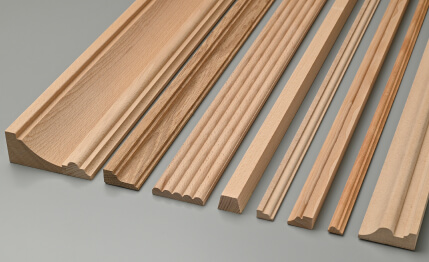
Wooden wall moldings—is a product from the 'forever' category. Solid wood—pine, oak, birch, ash, larch—gives the molding characteristics that are not reproduced in any other material: living texture, tactile warmth, natural beauty of the grain.
Wooden molding holds its shape for decades. It can be painted, repainted, tinted, varnished—and each time it will look new. It is solid wood that is used in prestigious interiors, in classic living rooms, in studies, where not just decorativeness is important, but the feeling of naturalness and substantiality of the material.
Wooden wall moldings are the right choice if:
-
the interior is executed in a classic or neoclassical style
-
natural texture and warmth of wood are important
-
tinting or painting in a non-standard color is planned
-
room — living room, study, dining room, bedroom with a 'warm' character
-
the project uses other wooden elements — baseboards, cornices, balusters
Solid wood molding is not a budget solution, but it is an investment that pays off over the years. Wood does not age unattractively: it acquires patina, character, history.
Get Consultation
MDF wall moldings
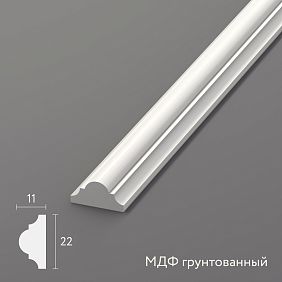
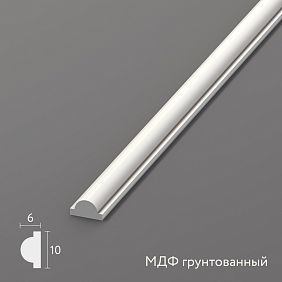
MDF moldings— is a practical choice for a modern apartment where geometric precision, ease of installation, and the ability to paint in any color are important.
MDF is a dense, homogeneous material without pores or knots. MDF molding has a perfectly smooth surface that, after priming and painting, looks like a monolithic profile. This is exactly why designers value it so much when working with walls for painting: MDF molding 'merges' with the wall surface and creates the illusion of stucco decoration without seams or joints.
MDF wall moldings are the right choice if:
-
final finish — wall painting
-
neat geometry of frame compositions is needed
-
interior — modern, Scandinavian, minimalist with classical details
-
room — bedroom, children's room, study, living room in a modern style
-
price accessibility is important while maintaining visual quality
MDF moldings for painting are one of the most popular requests among Moscow buyers. And for good reason: with proper installation and painting, the result is indistinguishable from expensive decor.
Important limitation: MDF is afraid of constant moisture. This material is not suitable for kitchens and bathrooms. For all dry rooms — an excellent solution.
Polyurethane wall moldings
Polyurethane wall moldings— is a category that is often underestimated. And in vain. Polyurethane is a lightweight, moisture-resistant, flexible material that allows reproduction of the most complex profiles: curls, stepped transitions, ornaments, cornice profiles with high detail.
Buying polyurethane moldings in Moscow means getting a decorative element that:
-
weighs a minimum (installation without an assistant)
-
is not afraid of moisture and temperature fluctuations
-
is easily cut and adjusted in length
-
paints well in any color
-
reproduces historical plaster profiles without their fragility and weight
Polyurethane decorative moldings are especially good in classic and neoclassical interiors — where complex architectural profiles are needed, which would be significantly more expensive in wood. A cornice with several ledges, a molding with a shaped cross-section, corner rosettes — polyurethane reproduces all of this with high precision.
Polyurethane moldings are the right choice if:
-
you need a complex decorative profile at an affordable price
-
the room has possible humidity fluctuations (kitchen, hallway, country house)
-
the interior is classic, neoclassical, baroque in a modern interpretation
-
ease of installation is important
How to choose for an interior in Moscow: wood, MDF, or polyurethane
This is the main question buyers solve when choosing wall moldings. I'll give a direct answer in the format 'task — material':
| Task | Best material |
|---|---|
| Natural premium look, warm texture | Wood (solid) |
| Painted to match wall color, clean geometry | MDF |
| Intricate decorative profile, easy installation | Polyurethane |
| Wet areas (kitchen, hallway) | Polyurethane |
| Study, living room 'classic style' | Wood or polyurethane |
| Modern interior for painting | MDF |
| Combination with stucco elements | Polyurethane |
| Long-term interior with update potential | Wood (solid) |
If you want to delve deeper into the characteristics of each material — there's adetailed article on choosing moldings made of wood, MDF, and polyurethane, where each material is analyzed from a technical perspective.
Here — the logic of a specific purchase.
Wall moldings: when to choose solid wood
Natural texture as an argument
There are details in an interior that work not only visually but also tactilely. Wooden molding is exactly such a detail. You can touch it: feel the relief of the profile, the roughness of an unfinished surface, the warmth that no synthetic material can reproduce.
When a guest runs their hand along the wall in a good living room and notices the molding — they understand it's wood. This affects the perception of the interior fundamentally differently than any imitative alternative.
Wooden products for interior— this is a product that carries a natural character. Oak — dense, heavy, with a distinct texture. Pine — lively, resinous, with a soft grain. Birch — light, uniform, neutral. Ash — with expressive waves of fiber. Choosing the wood species is already part of the design decision.
A status interior requires natural material
An executive office, a formal living room in a country house, a dining room in a classic style — here wooden wall moldings are indispensable. They don't just decorate the space — they shape an environment where the status of the material is felt physically.
Buying wood moldings in Moscow is an investment in durable, timeless decor. Wood never goes out of style, doesn't yellow, and doesn't lose its shape. With proper care, a wood molding on the wall looks better after fifteen years than on the first day—thanks to patina and character.
When wood is better than MDF and polyurethane
-
When the interior already has wood floors, doors, furniture—and a unified system is needed
-
When the molding is planned to be tinted in a non-standard color
-
When strength matters: wood doesn't dent from impact like MDF
-
When the design is classic or neoclassical, where the material is 'read' at a connoisseur's level
MDF moldings: a practical option for painting
Precise geometry is the main advantage
MDF is pressed wood. A uniform structure without knots or voids provides a perfect surface for paint application. If you want the molding to look like part of the wall—as if it were carved from it, not attached to it—thenMDF wall moldingsachieve exactly this effect.
With proper surface preparation: primer — joint putty — painting in 2–3 coats — MDF molding literally disappears into the wall. Only its shadow, relief, and geometry remain. This is the modern interpretation of a classic architectural detail.
Paint-ready convenience
MDF moldings for painting are a product specifically designed to work with paint. The MDF surface:
-
has no open pores — paint applies evenly
-
does not expand from moisture with proper priming
-
easily sanded between coats
-
accepts any RAL color without changing the shade
That's why designers working in monochromatic interiors — white, cream, dark gray — often choose MDF molding over wood. Wood 'wants' to remain wood. MDF transforms into the color the designer needs.
A good solution for apartments and modern interiors
A modern Moscow apartment in a new building — a typical environment for MDF moldings. Ceilings 2.7–2.8 m, open floor plan, paint-ready walls — ideal conditions. MDF moldings Moscow is one of the most stable commercial queries, and for good reason: this solution works best for mass housing.
Frame panels in the bedroom behind the bed, a horizontal molding belt in the living room, and the design of the opening between the kitchen and living room — all of this is implemented with MDF molding quickly, neatly, and at a reasonable price.
When MDF is more advantageous than solid wood
-
The budget is limited, but the visual result is important
-
Interior — modern or Scandinavian, without a fetish for natural wood
-
Full painting in the wall color is planned
-
The area is large — many linear meters, the price difference is noticeable
-
No sources of constant moisture
Polyurethane moldings for walls: a lightweight decorative material
Decorativeness without compromises
Polyurethane decor for interiors— this is a separate world of decorative possibilities. High-density polyurethane foam allows casting profiles of any complexity: from simple rectangular strips to multi-step cornices, from smooth strips to ornamental moldings with plant decor.
This is not an imitation of 'molding' in the negative sense. It is an independent material that solves problems unattainable by wood or MDF in terms of cost or profile complexity. Polyurethane decorative moldings are what was historically made from plaster by skilled artisans. Today, it is accessible to everyone.
Neat frames and complex profiles
Polyurethane wall moldings are especially good where a profile with multiple ledges, twists, or reverse curves is needed. In wood, such a profile requires complex milling—this is expensive. In MDF—profile possibilities are limited. In polyurethane—this is a standard casting.
This is precisely why for a classic interior with high ceilings, for neoclassical style in a country house, for formal rooms—polyurethane moldings are indispensable. A complex cornice profile at the ceiling, a molding frame with an ornamental corner element, a decorative frieze above the door—all of this is realized in polyurethane quickly, precisely, and significantly cheaper than in wood.
Combination with stucco decor
polyurethane decoris produced as a unified system: moldings, cornices, corner rosettes, brackets, pilasters, friezes. This means that polyurethane molding can be combined with other elements from the same line—and everything will look like a cohesive architectural ensemble.
Wall stucco made of polyurethane is a reinterpretation of the classic decorative tradition with modern technology. Where a team of plasterers once worked for weeks, today one person installs a full wall decor in a day.
When polyurethane is more convenient than wood and MDF
-
A complex profile with ornamentation or multi-step cross-section is needed
-
A room with fluctuations in humidity or temperature
-
Easy installation without an assistant required
-
High wall height — part weight is critical
-
Interior in classic style with rich decor
-
Combination of moldings with stucco elements planned
How to choose wall moldings according to interior style
For a classic interior
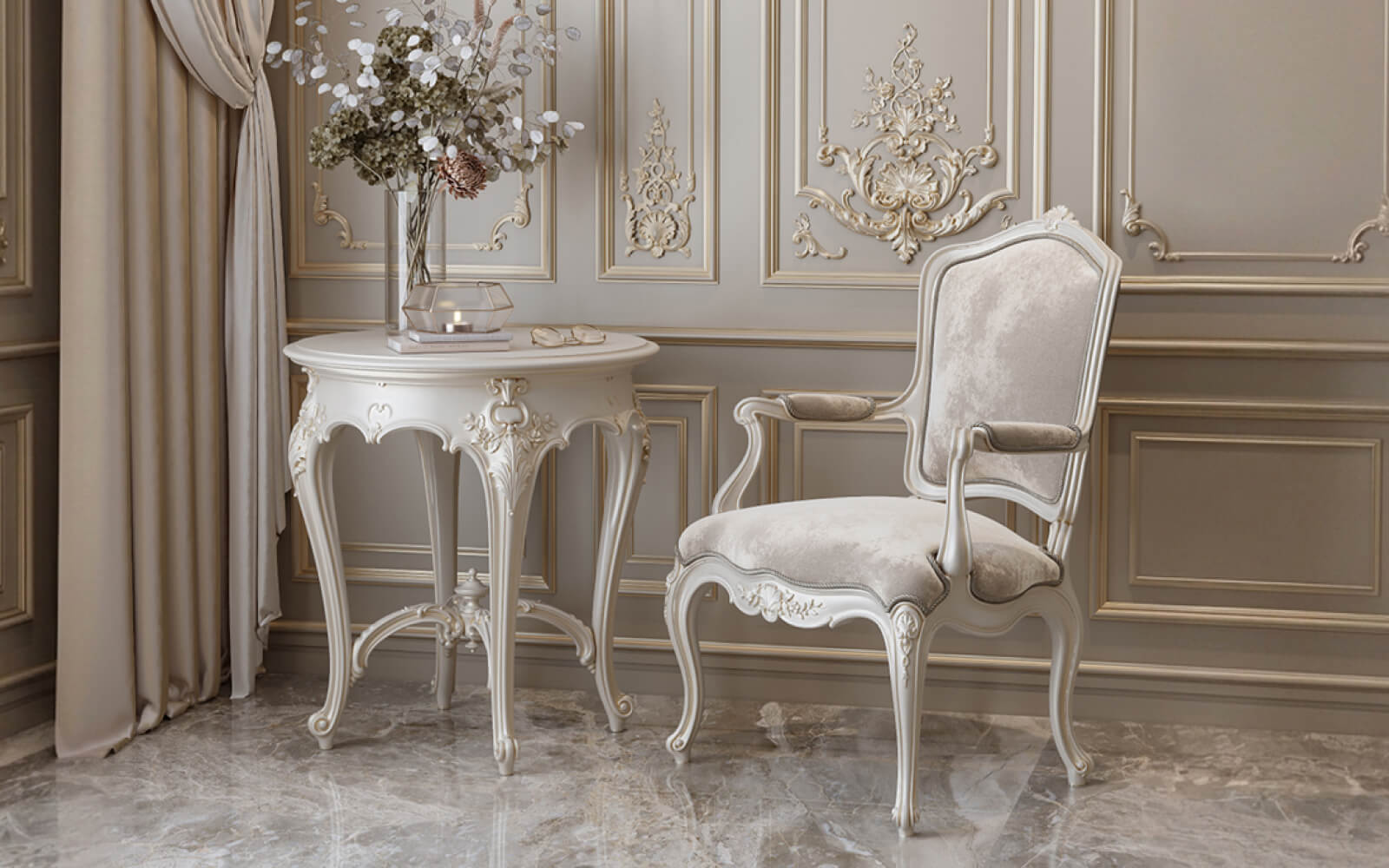
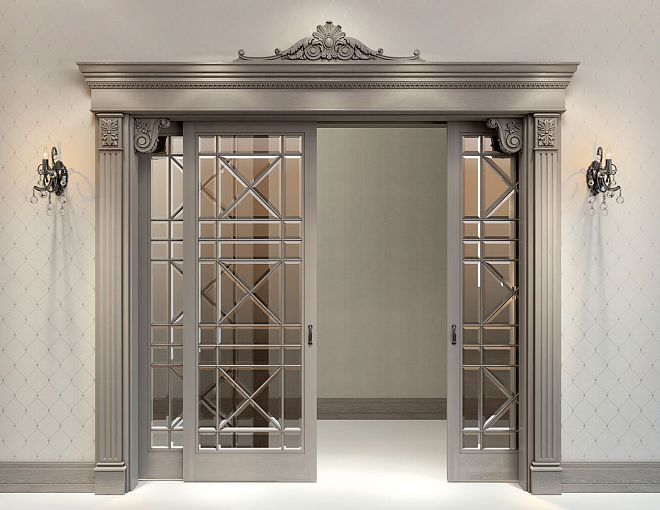
Classic style is symmetry, proportion, hierarchy of details. Moldings here are the main structural element. A proper classic wall: baseboard with complex profile, horizontal belt at windowsill level, framed panels in the upper zone, cornice in the transition to the ceiling.
For classic style, solid wood moldings are suitable — they provide the necessary 'weight' and naturalness. Or polyurethane profiles with complex cross-section — if detailing is important with a reasonable budget. Moldings for classic interiors should be sufficiently wide (from 5–6 cm and above) and have pronounced relief.
White wall moldings in classic style — a classic technique: moldings contrast with painted or fabric-upholstered walls, creating clear architectural graphics.
For neoclassical style
Neoclassicism is classic style filtered through modern editing. Moldings here are more restrained in profile: fewer curls, cleaner lines, more geometry. Contrast combinations are often used: dark molding on a light wall or vice versa.
Decorative wall moldings in neoclassicism — a precise balance between historical and modern. Both wooden profiles with 'wenge' tinting and white polyurethane moldings Moscow on gray-beige walls work well.
For a modern interior
Modern interiors dislike excess. Here molding is either a thin horizontal strip as a zone divider or a neat rectangular frame in minimalist execution.
Moldings for a modern interior are almost always MDF for painting. No relief, no curls: only clean geometry and properly applied paint. Such molding doesn't shout about itself—it structures the wall discreetly, like a good designer.
For an accent wall
An accent wall with moldings is one of the most requested design techniques. The idea is simple: one wall in the room (behind the sofa, behind the bed, opposite the entrance) gets a molding composition—framed panels, horizontal divisions, complex profiles.
All three materials work well for an accent wall—depending on the style. MDF for painting in a contrasting color, polyurethane frames against a dark wall, wooden moldings on a veneer-clad wall—the options vary, but the effect is the same: the wall becomes the main focal point of the interior.
How to choose wall moldings by room
For the living room
The living room is the face of the apartment. Wall moldings for the living room should create a sense of thoughtful, finished space. In a classic living room—framed panels made of wood or polyurethane, a horizontal belt, a complex cornice molding near the ceiling. In a modern one—neat MDF frames for painting, a thin horizontal molding as a zone divider.
Don't forget the TV zone: a molding frame around the TV panel turns a 'screen on the wall' into an architectural composition. This is one of the simplest techniques that sharply elevates the visual level of the living room.
For the bedroom
Wall moldings for the bedroom are about coziness, not status. The main object is the wall behind the bed. A molding panel behind the headboard: a rectangular frame or several frames of different heights—this is cheaper than a niche, more beautiful than any rug, and more durable than a soft headboard.
Wooden moldings in the bedroom add warmth. MDF for painting in the same tone as the wall creates a monochrome, calm decor. Polyurethane moldings with a light profile are for a bedroom in a neoclassical style.
For the hallway and corridor
The hallway is the narrowest and most 'unfairly deprived' of decor room. And yet, it's precisely here that moldings work best: they create an illusion of space, structure the long wall of the corridor, and protect the lower part of the wall from scratches and dirt.
Wall moldings for the apartment in the hallway—a horizontal molding belt at a height of 1–1.2 m. The lower zone is in a dense color (practical), the upper zone is in a light color (visually expands). Material—polyurethane: moisture-resistant, lightweight, easy to install with adhesive.
For an office
A home office is an environment for work, concentration, and, if you will, representation. Wall moldings for the home in the office create a sense of a 'serious' space: framed panels made of wooden moldings, dark tinting, restrained profile relief.
Decorative wall moldings for the office are also an excellent way to hide wires: a molding profile with a cable channel inside is installed along the work area.
For apartments and private houses
Wall moldings for apartments and houses are different tasks. In an apartment, the key roles are space saving and visual correction: you need to make the ceiling appear higher and the room more spacious. Here, vertical molding frames and thin horizontal belts work.
In a country house with high ceilings and spacious rooms, it's a different story. Here, moldings can be wide, voluminous, with a rich profile. Solid wood moldings in a house are about eco-friendliness, naturalness, and long-term interior design.
What to look for when buying wall moldings in Moscow
Before buying wall moldings, it's worth checking several parameters — regardless of the chosen material.
Material and its suitability for the task
The first question has already been addressed in previous sections. Wood, MDF, or polyurethane — depending on the style, room, and task. Don't be tempted to choose 'what's cheaper' without considering the application.
Profile size
The width and height of the molding profile are critical parameters. A narrow molding (2–4 cm) on a high wall gets lost — it's simply not visible from a distance. A wide molding (8–12 cm) in a room with a 2.5 m ceiling feels oppressive and looks disproportionate.
Proportion rule: the height of the molding should correspond to the height of the wall. An approximate guideline is that the width of the molding is 1/40–1/50 of the room's height. For a 3 m ceiling — molding 6–7 cm, for a 4 m ceiling — 8–10 cm.
Paintability
If you plan to paint — check the compatibility of the material with the chosen paint. MDF requires priming before painting (acrylic primer). Wood — special wood primer. Polyurethane — light sanding and acrylic primer.
Combination with cornices, baseboards, decor
Molding does not work alone — it is part of a system. A properly assembled wall decor includes a baseboard at the base, a horizontal belt (or several), molding frames, and a cornice at the ceiling. All these elements should be from the same line or at least from collections compatible in style.
On the STAVROS website, moldings, cornices, and baseboards from one sectionwooden productsare designed as a unified system — profiles are compatible, proportions are verified.
Availability of samples and selection for the project
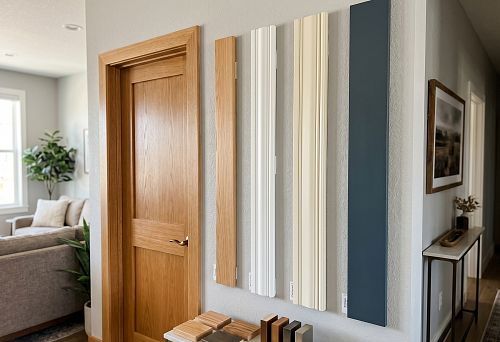
Before the final order, it is important to see the material "in person" — especially if it concerns wooden moldings. The texture of wood on screen and in hand are different things. Request samples or use a catalog with detailed photos.
Where to buy wall moldings in Moscow
This is the main practical section. If you are reading this page — it means the question "where to buy" is relevant for you right now.
Our factory also produces:
Wooden wall moldings
Wall moldings made of wood and MDF— this is the main product line of STAVROS in the category of natural materials. Here you will find profiles of various cross-sections: rectangular, shaped, cornice, baseboard. Different types of wood, different sizes, custom tinting available.
Buying wooden moldings in Moscow here means getting products directly from the manufacturer, with the possibility of selection for your project and delivery within the city.
MDF Moldings
MDF moldings— a separate direction in the catalog. You can buy MDF molding in Moscow here through the catalog with filtering by profile and size.
MDF profiles are supplied ready for installation — only priming and painting on site are needed. MDF moldings Moscow — fast delivery, wide selection of profiles, affordable price.
Polyurethane moldings
Polyurethane wall moldingsfrom the polyurethane decor section — these are profiles for those who need complex relief, moisture resistance, and easy installation. Polyurethane moldings Moscow — with delivery to the city and region.
In the same section, you can select accompanyingPolyurethane Decor: corner rosettes, cornices, brackets, friezes — for creating a complete decorative wall system.
What to combine moldings with in the interior
Molding is always part of a larger decorative ensemble. Let's see what enhances its effect.
Crown mouldings
The cornice at the transition between wall and ceiling is a logical continuation of the molding theme. It completes the vertical of the wall and creates a horizontal line that 'gathers' the entire composition.Moldings, cornices, and baseboards from the same collection— is a system that functions as a single architectural element.
Baseboards
The baseboard is the lower point of the system. A wide baseboard with a complex profile at the bottom + a molding belt in the middle + a cornice at the top = the classic triad of architectural wall decor. If the molding is made of wood, it's more logical to choose a baseboard from the same material.
Decorative elements
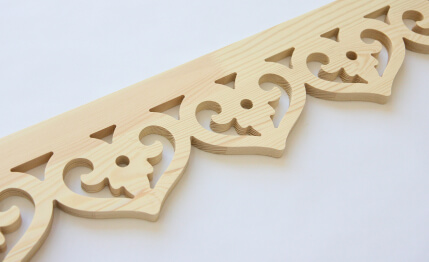
Decor for Molding— corner blocks, central rosettes, applied ornaments — these are the details that transform a simple molding frame into an exquisite architectural element. Corner elements are especially important: it is precisely in the corners of the frame that the character of the decor is 'born'.
Moldings
Polyurethane stucco in the interior is a natural partner for polyurethane moldings. A ceiling rosette, a frieze under the cornice, decorative brackets — all of this enhances the molding theme and creates a sense of a rich, detailed interior.
Slatted panels as a related solution
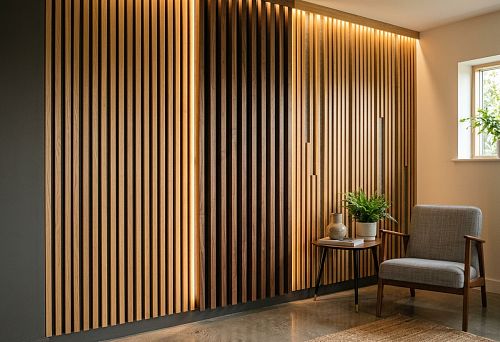
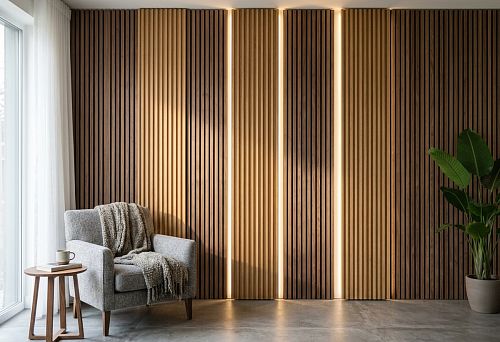
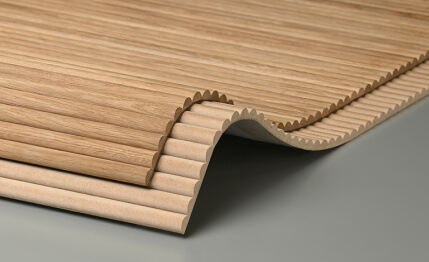
If moldings create a frame — wooden slatted panels can fill it with texture. A molding frame with a slatted insert inside is one of the most effective techniques in modern design. Learn more about this in the catalog section of slatted panels.
Common mistakes when choosing wall moldings
Experience shows: most mistakes when buying moldings are not errors of taste. They are errors of logic. Let's examine the main ones.
Too shallow a profile on a high wall
A 2 cm wide molding on a 3.5-meter-high wall is an invisible detail. From a distance of 3–4 meters, such a profile simply gets lost. High rooms require wide, voluminous profiles — from 6–8 cm and more. The rule of proportion cannot be broken.
Too complex decor for a modern interior
A molding with a Baroque-style ornament on a wall with minimalist high-tech furniture is a stylistic conflict that destroys both elements. A complex profile works only in an environment ready for it. In a modern interior — a simple profile, clean lines, no extra relief.
Choosing material without considering the task
MDF in the bathroom — will swell. Untreated wood in an entryway with wet outdoor shoes — will warp. Polyurethane in an interior where naturalness is required — will create a feeling of 'fakeness'. The molding material must match the operating conditions and interior design task — this is not an option, it's the foundation of the right choice.
Mixing wood, MDF, and polyurethane without a concept
Three different materials on one wall can coexist — if there is design logic between them. Without logic — it's a jumble that reads as incompleteness. If you decide to mix — choose one main material and let the other be only an accent.
Incorrect quantity calculation
Insufficient linear meters — and you realize in the middle of installation that there isn't enough. Excess stock — money in the trash. Rule: measure the perimeter of each frame, sum everything up, add 15% for trimming and joints. For corner elements, count separately.
Ignoring color contrast
Molding the same color as the wall creates a minimalist effect: volume without emphasis. Contrast-color molding is a graphic, accent technique. Both options are good—but they shouldn't be accidentally 'mixed up.' Decide in advance: do you want the molding to be visible or 'dissolved' into the wall?
Installation without a level
Technically, this is an installation error, not a selection error—but it affects the result just as much. A molding frame installed without a precise level, even if it's off by 2–3 mm horizontally, is instantly noticeable. The human eye is very sensitive to horizontal lines. Using a level when installing moldings is mandatory.
Frequently Asked Questions about buying wall moldings in Moscow
Can wall moldings be purchased in Moscow with next-day delivery?
Yes, if the item is in stock. Please confirm delivery times when placing your order on the website.
Which molding is better for walls to be painted—MDF or polyurethane?
Both materials take paint well. MDF provides a smoother geometry with a minimalist profile. Polyurethane is better for complex profiles with ornamentation. For modern interiors to be painted, MDF is more commonly chosen.
Is special wall preparation needed before installing molding?
The wall must be level, clean, and without flaking finishes. Moldings are installed using construction adhesive (liquid nails) and, if necessary, screws. If the wall is uneven, the molding will highlight the irregularities. First, level the wall, then install.
How to calculate how much molding to buy?
For framed panels: measure the perimeter of each frame. Sum all perimeters. Add 10–15% for joints and trimming. For horizontal molding: wall length plus 10%.
Can wooden moldings and polyurethane cornices be combined?
Yes — if they are close in profile style and identical in color after painting. Many professional designers do exactly that: wood at the base, polyurethane for complex cornices near the ceiling.
Wooden wall moldings — do they need treatment after installation?
Yes, if the moldings are made of untreated solid wood. Treatment: primer for paint, or varnish, or tinting stain. In dry rooms, wax oil works well — gives a matte natural look. In hallways — varnish or alkyd paint.
Are white wall moldings only for classic style?
No. White molding on a white wall — a monochrome minimalist technique. White molding on a dark wall — classic graphic contrast. White wall moldings work well in any style — the only question is the profile (complex — for classic, simple — for minimalism).
Do polyurethane moldings hold as firmly as wooden ones?
With proper installation — yes. Polyurethane is glued with special mounting adhesive compatible with polyurethane foam. The adhesive is applied in a zigzag along the entire length of the strip. After drying (24 hours), the connection is very reliable.
Can moldings be installed by oneself?
Yes. Installing moldings is a one-person job with glue, a fine-toothed saw, and a level. The hardest part is cutting the frame corners at 45° correctly. A miter box is used for this. With careful work, the result is professional.
Wall moldings for interior in a country house — what material?
For a house with central heating and stable humidity — wood and MDF work well. For a house with seasonal occupancy, where temperature and humidity fluctuate — polyurethane is preferable: it doesn't react to changes.
Conclusion: choose moldings based on the task, not the price.
Wall moldings are not an item to skimp on. They are a long-term part of the interior that will be in front of your eyes every day. The wrong material or profile — and the result is disappointing. The right choice — and the wall looks like an expensive designer object.
Three materials, three tasks:
-
Natural wood — for prestigious, warm, long-term interiors.
-
MDF for painting — for modern apartments with clean geometry.
-
Polyurethane — for complex decor, wet rooms, and classic profiles.
Choose your path — and go to the catalog:
STAVROS is a Russian manufacturer of decorative interior products made from natural wood and polyurethane. The STAVROS catalog features solid wood moldings, MDF moldings, polyurethane profiles, cornices, baseboards, paneling, and decorative elements—everything needed for a complete wall finishing system.
STAVROS works with private clients, designers, and construction companies. Delivery across Moscow, St. Petersburg, and all of Russia. All products are made from verified raw materials with adherence to technological standards—and designed for interiors that last for decades.