










































































Article Contents:
- What are wall moldings and why are they needed
- Why polyurethane moldings are chosen for walls
- Comparison table: moldings made of different materials
- Weight and mounting
- Painting: freedom of choice
- Durability and resistance
- What compositions can be made from moldings on the wall
- Frames made of moldings
- Vertical lines and panels
- Accent wall: the main technique of modern design
- Where to use wall moldings
- Living room: richness and structure
- Bedroom: delicacy and completeness
- Entryway and Corridor: First Impression
- Study and dining room: character and context
- How to choose moldings by width, profile, and style
- By Profile Width
- By Profile Type
- By ceiling height
- What to pair with wall moldings
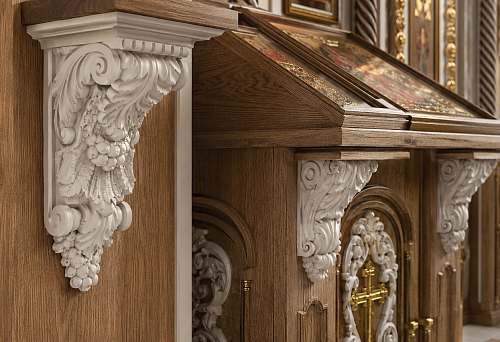
- With stucco decor and overlays
- With decor for moldings
- With cornices and baseboards
- With lighting
- With paint and wallpaper
- Mistakes when choosing and arranging moldings
- Where to buy polyurethane wall moldings
- FAQ: popular questions about wall moldings
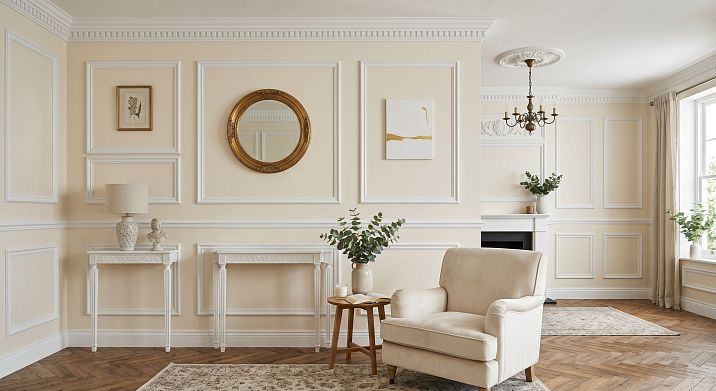
Let's be honest: most people have no idea what exactly is wrong with their interior. Everything is there — beautiful furniture, expensive wallpaper, trendy decor on the shelves. But the feeling of incompleteness doesn't go away. The walls stand like a random backdrop, not as part of a well-thought-out space. Sound familiar?
The solution is almost always the same: polyurethane wall moldings. Not wallpaper, not paint, not a new chandelier. It's moldings — because they create what no other covering can provide: the architectural structure of the wall. A line. A frame. Rhythm. Logic.
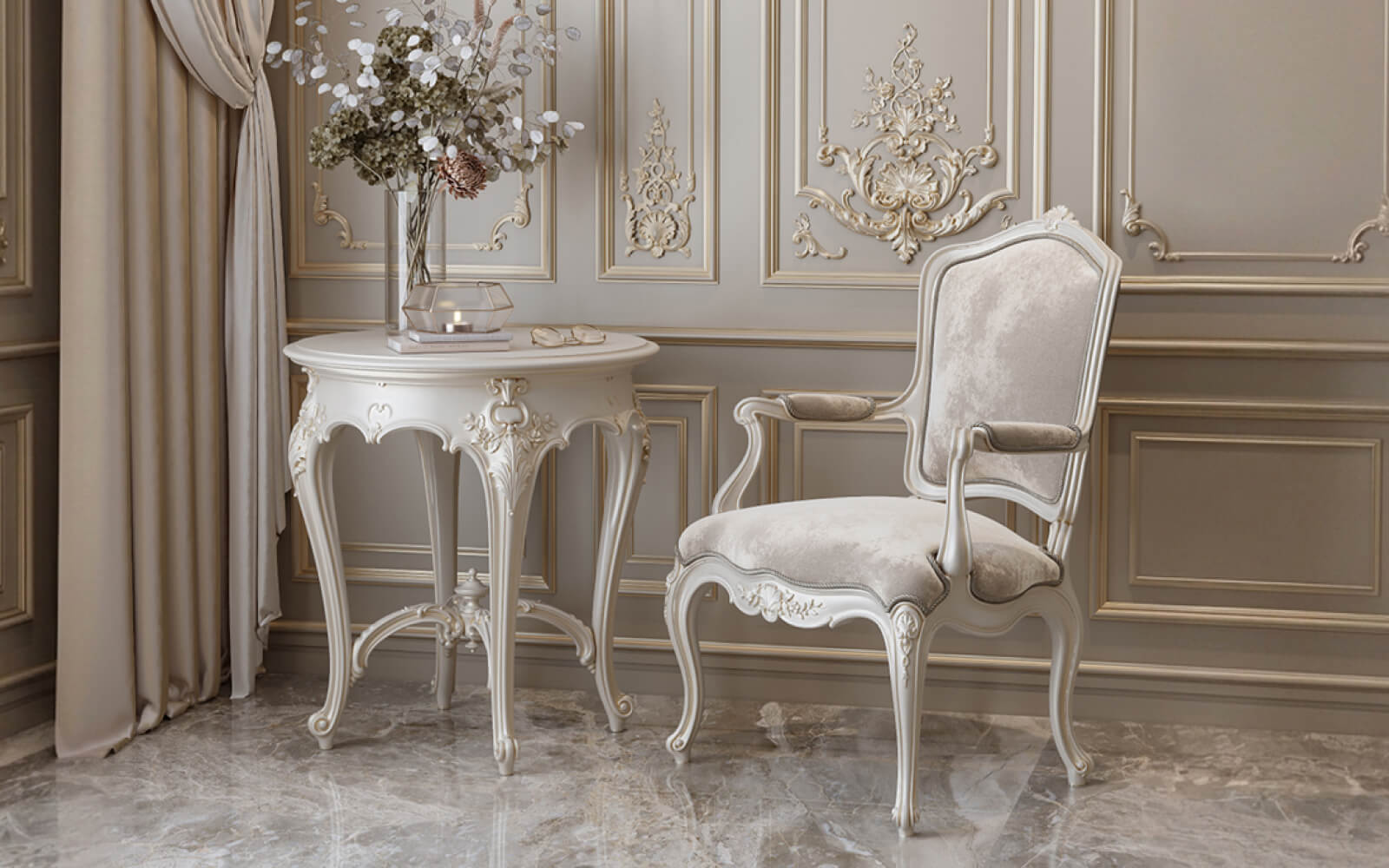
Polyurethane wall decor is a broad category, and moldings are its main tool. With their help, you can design the living room and bedroom, hallway and study, TV area and the wall behind the sofa. polyurethane wall decor in the form of molding frames, horizontal belts, and vertical panels — that's what turns a simple 'renovation' into an 'interior.' Let's break down how it works, how to choose correctly, and what you definitely shouldn't do.
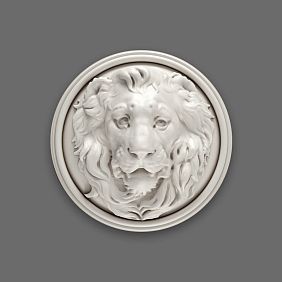


What are wall moldings and why are they needed
A molding is a profile strip. A long linear element with a specific cross-sectional shape: flat, rounded, chamfered, ornamented, with a relief frieze. It is mounted on the wall horizontally, vertically, or diagonally. Frames, panels, and decorative belts are assembled from several moldings.
Why is all this needed? Because a flat wall is architectural incompleteness. In any classic, neoclassical, or expensive modern interior, walls are always structured: divided into horizontal zones, vertical panels, fields, and frames. Moldings are the tool for this structuring.
Wall moldings in the interior work in several directions at once:
-
Relief and depth. Even a thin molding profile creates a shadow — especially with side or directional light. The wall gains volume without any complex decor.
-
Space structure. A horizontal belt divides the wall into "bottom" and "top." Vertical rods create "pilasters." Frames organize the wall into architectural fields.
-
Style and richness. Moldings are a visual signal of interior quality. They are not visible until you look closely. But their absence is always felt.
-
Compatibility with any finish.polyurethane decorative moldingswork equally well with paint, wallpaper, decorative plaster, wood panels, and natural stone.
-
Proportion correction. Horizontal moldings visually expand the room. Vertical ones raise the ceiling. This is not an optical illusion, it is the laws of perception.
polyurethane decorative moldingsare presented in a wide range at STAVROS — from minimalist profiles 20 mm wide for Japandi and modern interiors to wide classical rods with ornamental friezes for full historical stylization.




Why choose polyurethane moldings for walls
There are moldings made of wood, MDF, plaster, PVC, and polystyrene. Why polyurethane? Because it lacks the drawbacks inherent in each of these alternatives.
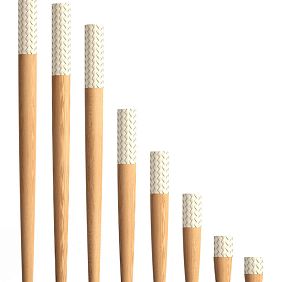
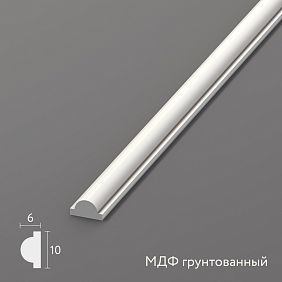
Our factory also produces:




Comparison table: moldings made of different materials
| Parameter | Polyurethane | Wood | Gypsum | PVC |
|---|---|---|---|---|
| Weight | Lightweight | Medium | Heavy | Lightweight |
| Installation | On glue, simple | Requires fasteners | Anchors, difficult | On glue |
| Moisture resistance | High | Low | Low | High |
| Relief accuracy | High | Medium | High | Low |
| Painting | Any paint | Limited | Any paint | Limited |
| Durability | Very High | Medium | Medium | Medium |
| Price | Medium | High | High | Low |
From the table it is obvious: polyurethane wins in terms of overall parameters. Lightweight — meaning it can be installed without anchors and special tools. Moisture-resistant — meaning it is suitable for bathrooms, kitchens, hallways. Accurate in relief — meaning high detail, absolute "seriality" (all copies of the same article are identical). Painted with any paint — meaning complete freedom of color choice.
Get Consultation
Weight and mounting
Polyurethane Itemsweigh 3–5 times less than gypsum counterparts. A typical molding 60 mm wide, 2 m long weighs 200–400 g. It is installed with mounting glue in a few minutes. No drilling, no doweling, no construction dust.
This means: moldings can be installed independently, in a finished room, without a repair crew, in one day — even if it involves full decorative finishing of several walls.
Painting: freedom of choice
Polyurethane Decoraccepts acrylic, alkyd and latex paints. The surface of STAVROS products is white, without additional coating, ready for painting. After applying an adhesion primer, the paint lays evenly and lasts for years.
Color solutions for polyurethane moldings on walls:
-
white on a white wall — a barely noticeable relief, aristocratic minimalism;
-
cream or ivory on a wall of a similar tone — soft classic;
-
white on a wall of warm gray, dusty pink, muted blue — soft contrast;
-
dark (anthracite, black) on a light wall — modern graphic decor;
-
gold or bronze patination — full classical stylization.
Durability and stability
Polyurethane does not rot, does not absorb moisture, does not react to temperature changes in the residential range.Polyurethane wall decorIt lasts almost indefinitely as long as the paint coating remains intact. This advantageously distinguishes it from wood (rots in humidity) and plaster (crumbles on impact, darkens in moisture).
What compositions can be made from moldings on the wall
A molding is not a separate decorative element. It is a building module. Systems are assembled from moldings, and it is the system that creates the desired effect. Let's break down the key techniques.
Molding frames
Frames are the most popular and most effective way to use moldings on walls. Four strips form a rectangle. The rectangle creates a "field" on the wall. The field can be left neutral — or filled with accent paint, wallpaper, decorative plaster, or an ornamental overlay in the center.
Wall decor with moldings in the form of a frame system has several formats:
Single large frame system. One frame takes up almost the entire width of the wall. Used as the sole and self-sufficient decorative element. Works especially well on a wall behind a sofa or bed — creates a focal point and a "backdrop" for furniture.
System of several vertical frames. Two, three, or four identical frames arranged in a horizontal row. A classic English solution. Vertical frames visually raise the ceiling, creating a sense of height and order.
Two-tier system. A lower row of small horizontal frames (imitating paneling) and an upper row of larger ones. Characteristic of rich classical interiors with ceilings of 3 meters or more.
Mixed system with a horizontal belt. A molding horizontal belt at a height of 90–120 cm, with vertical frames above it. The lower space below the belt is painted in a different tone. Creates the effect of wooden paneling without using wood.
Frame proportions are critically important. Rules:
-
The distance from the edge of the frame to the edge of the wall — at least 12–18% of the frame's width;
-
Vertical frame: width-to-height ratio — 1:1.3–1.7;
-
Horizontal frame: 1.3:1–2:1;
-
Distance between frames in a row — at least the width of the molding profile plus 3–5 cm.
Molding frames on the wall always complemented with corner decorative inserts. Without inserts, the corners of the frames are just 45° joints. With inserts — architecturally designed nodes. This is the detail that is immediately noticeable as soon as you start looking at the wall carefully.
Vertical lines and panels
Vertical moldings on the wall are an architectural technique borrowed from classical architecture. The vertical line from the baseboard to the cornice is the pilaster in its simplest form.
Application of vertical moldings:
-
Narrow corridors. Vertical lines visually narrow the width and emphasize the length — this creates a sense of perspective. Paradoxically, a vertical accent in a corridor makes it more pleasant, not more cramped.
-
Low ceilings. Vertical lines "pull" the gaze upward. A standard height of 2.6–2.7 m with proper vertical zoning is perceived as higher.
-
Accent walls. Several vertical moldings create a rhythmic pattern — a musical term applicable to architecture: the rhythm of repetitions creates organization and beauty.
polyurethane wall decorin the vertical version — these are thin profiles 20–35 mm with equal spacing across the wall width. The spacing between vertical rods is 35–60 cm, depending on the wall width and the desired density of the rhythm.
Accent wall: the main technique of modern design
Accent wall — a concept that has firmly entered the interior design lexicon over the last ten years. The essence: each room should have one "main" wall that carries the primary decorative load and sets the tone for the entire space.
Wall Decorative Elementsin the form of moldings — the main tool for creating an accent wall. Where exactly it is located:
-
The wall behind the sofa in the living room — opposite the entrance or the one you look at while sitting on the sofa;
-
The wall at the head of the bed in the bedroom — creates a visual "headboard" for the bed and organizes the relaxation area;
-
TV zone — the wall with the TV requires architectural framing, otherwise the screen "floats" in the void;
-
Dining area in the kitchen-living room or dining room — the accent wall above the table creates intimacy in the dining space;
-
Decorative wall in the hallway — the wall with a mirror and coat rack should work as the "face" of the apartment.
Wall Decoron the accent wall should be noticeably richer than on the other three. Not in the sense of "more elements," but in the sense of "higher visual weight." This could be a single molding profile of a wider cross-section, one large symmetrical frame, or a frame system with ornamental corner inserts.
Where to use wall moldings
Each room is a separate task. The logic of a living room and the logic of a hallway are fundamentally different. Let's break it down by room.
Living room: richness and structure
The living room is the main room of any home. This is where moldings have the greatest scope for work, because here, as a rule, the ceilings are the highest, the walls are the widest, and the "stakes" for the result are the highest.
Molding for the living roomare used in several zones:
Wall behind the sofa. This is the visual center of the living room — what everyone in it looks at. A molding frame system on this wall transforms the sofa area from a "furniture arrangement" into an architecturally designed space.
TV zone. Moldings for the TV zone are one of the most popular requests. A TV "built into" a molding frame looks like an architectural element. A simple scheme: one wide vertical frame covering the TV with a media console. A horizontal molding under the TV — like a "stand" in the plane of the wall.
Molding belt around the perimeter. A horizontal belt of molding along all four walls at a height of 90–120 cm is a traditional classic design. Even one horizontal molding running around the perimeter of the living room fundamentally changes the perception of the space.
Molding frames on the wallof the living room are complemented bymolded decoration made of polyurethaneat key points: corner ornamental inserts in frames, a rosette in the center of the main wall, an overlay element at the top of the frame behind the sofa.
Bedroom: delicacy and completeness
The bedroom is peace. The decor here works to create an atmosphere, not to display wealth. That is whymoldings for the bedroomthey are chosen differently than for the living room: a thinner profile, less ornament, a greater emphasis on clean geometric lines.
The main molding technique in the bedroom is the frame behind the bed. Decorating the wall at the head of the bed forms what a modern bedroom often lacks: a sense of 'place'. The bed is no longer just standing against the wall — it stands in an architecturally designed space.
Dimensions of the frame behind the bed: width — the width of the bed plus 20–30 cm on each side. The lower molding — flush with the top edge of the headboard or 5–10 cm higher. The upper molding — 45–60 cm from the lower one. The proportion is horizontal, 'recumbent'.
The second technique for the bedroom is a horizontal molding belt at a height of 120–130 cm along all walls. Below the belt — a neutral tone (warm gray, beige, dusty pink). Above — white or very light. This creates the feeling of a paneled interior and adds depth to the space without complex finishing.
polyurethane wall decorin the bedroom is painted to match the wall or 2–3 tones lighter. No contrasting dark decor — unless it is a deliberately bold modern style.
Hallway and corridor: first impression
The hallway is the face of the apartment. And at the same time — one of the most difficult spaces for decorating: small, with narrow walls, overloaded with functional elements.
Moldings in the hallwayshould work as a structural, not an ornamental tool. Rules:
-
A horizontal belt at a height of 90–100 cm is the main decorative element of the hallway. It divides the wall into a lower "panel" (darker tone) and an upper "wall" (light tone). This is both practical (the dark bottom hides dirt) and beautiful.
-
Molding framing of the mirror — turns an ordinary mirror into an architectural element of the wall. A simple rectangular frame made of molding around the perimeter of the mirror is more elegant than any frame structure of the mirror itself.
-
One molding element above the coat rack or key holder — creates a "zone" and structures a chaotic functional wall.
Wall decor in the hallwayfrom ornamental overlays — minimum. Only if the hallway is spacious (from 5–6 sq. m) and allows the decor to "breathe."
Study and dining room: character and context
The study — a space for concentration.Wall moldings in the interiorof the study work as an element of the "professional" image of the space. Molding frames in the study create an atmosphere of a traditional workspace — a library, office, or scholar's study.
One polyurethane horizontal belt at table height (75–80 cm), above which is a frame system with bookshelves or a gallery of paintings — a classic solution for a home office. Below the belt is a "panel" finish (dark tone paint or wood).
The dining room requires a separate discussion. The dining space in an open-plan living room-kitchen is highlighted precisely by the molding wall above and behind the table. One wall with a frame system visually "closes" the dining area and creates coziness without physical partitions.
Polyurethane wall decorIn the dining room and study, a more saturated ornament is chosen than for the bedroom — these are representative spaces where rich finishes are appropriate.
How to choose moldings by width, profile, and style
Choosing a molding is not just about 'like/dislike'. It's about calculating proportions, understanding style, and honestly assessing the scale of the room.
By profile width
| Profile width | Where to use | Style |
|---|---|---|
| 15–30 mm | Thin frames, Japandi, minimalism | Modern, minimalist |
| 35–55 mm | Neoclassicism, light classic, bedroom | Neoclassicism, modern classic |
| 60–80 mm | Living room, study, main decor | Classic, neoclassic |
| 85 mm and more | High ceilings, formal areas | Full classic, art deco |
buy polyurethane moldingthe right size means first measuring the ceiling height and wall width, calculating the proportions of the frames, and only then choosing a specific profile.
By Profile Type
Smooth flat profiles — pure geometry, no ornament. Suitable for modern interiors, neoclassicism, japandi. They create structure without historical context.
Profiles with rounded edges and chamfers — a subtle classic hint. Appropriate for neoclassicism and soft modern classic.
Profiles with ornamental frieze — rich classic. For full classic or neoclassical styling. They convey a wealthy space.
Profiles with leaf ornament or Greek meander — historical styles: baroque, empire, art deco.
By ceiling height
Basic rule: profile height in mm ≈ ceiling height in cm ÷ 5.
-
Ceiling 2.6–2.8 m → profile 50–55 mm;
-
Ceiling 3.0–3.2 m → profile 60–65 mm;
-
Ceiling 3.5 m → profile 70–75 mm;
-
Ceiling 4 m and higher → profile 80–100 mm.
Buy polyurethane wall moldingsChoosing the right profile height is the first step to ensuring the result looks proportional.
What to combine moldings with on walls
Molding in an interior never exists alone. It is part of a system. Let's break down what exactly it pairs with and how a comprehensive wall decor is built.
With stucco decor and overlays
molded decoration made of polyurethaneMoldings and overlays are the first and main 'pair' in wall decor. Moldings create lines and frames. Overlays provide accents inside the frame or at its corners.
Classic scheme: rectangular molding frame + ornamental corner insert in each corner + applied medallion or rosette at the center of the top horizontal line. These three types of elements create a complete wall panel.
decorative polyurethane elementsCorner inserts are a small investment with a big effect. Without them, the frame corner is just a joint of two planks. With them, it becomes a decorative node that immediately elevates the work from 'good' to 'professional.'
With molding decor
Decor for MoldingRosettes are a special category of inserts that are mounted directly onto the molding profile. Corner rosettes are installed at the intersection points of horizontal and vertical rods. Intermediate overlays are placed at the center of long horizontal moldings.
Without decor for moldings, the frame system looks like a construction detail. With it, it looks like an architectural element. This is literally 10% of the total decor cost, but 40% of the final visual result.
With cornices and baseboards
The molding system on the walls only works as part of a vertical structure: at the top — a ceiling cornice, at the bottom — a floor plinth. All three elements are from the same collection. This creates a unified architectural framework for the room.
The cornice completes the upper part of the wall. The plinth completes the lower part. The moldings on the walls are the middle link. Without a cornice and plinth, even the most beautiful frame system on the wall looks "ungrounded."
With lighting
Moldings on the WallWith directional or side lighting, this is a completely different effect than with uniform diffused light. Wall sconces to the side of the molding frame create side shadows that emphasize the profile's relief. Directional spotlights from above cast a deep shadow under the horizontal rods. Hidden lighting behind the molding belt is a modern LED light decor with an architectural context.
With paint and wallpaper
Inside the molding frame, you can use a different wall color or a different finish — this is not only acceptable but recommended. Options:
-
accent paint of a different shade inside the frame;
-
wallpaper with a pattern or texture within the frame against a solid-color wall around;
-
decorative plaster with a different texture inside the frame;
-
vertical wooden planks inside the frame (woodwall effect in a limited field).
Mistakes when choosing and laying out moldings
Moldings are not the kind of decor that "works on its own." Without understanding the basic rules, the result will be disappointing. Here's what most often goes wrong.
Frames that are too small on a large wall. A 4×3 m wall with three small 60×40 cm frames looks ridiculous. Frames should match the scale of the wall: one large frame covering 60–70% of the wall area is better than six small frames in a random order.
Not considering ceiling height when choosing the profile. A thin 25 mm molding in a room with a 3.2 m ceiling is a detail that can go unnoticed even up close. The scale of the decor should match the scale of the space.
Placing moldings without reference to furniture. A molding frame should be symmetrical relative to the furniture beneath it — a sofa, bed, or dining table. A frame shifted 15 cm off the sofa's axis destroys the entire symmetry of the interior.
Using different profiles without a unified logic. Three different moldings from three different collections on one wall is not richness, it's chaos.Wall decor with moldingsis built on a maximum of 2–3 profile types from the same collection.
Adding too much decor on a small wall. Three rows of frames on a 2.5 m wide wall in a 12 sq. m room is not richness, it's claustrophobia. The rule: one main frame or system on a small wall, everything else is minimal.
Not planning joints and corners. Moldings in room corners, at profile intersections, and at section joints require planning. An incorrectly cut corner, a gap in the joint, a protruding end — all of this ruins the impression of expensive decor.
Buying without a layout diagram. This is the most costly mistake. Without a diagram, you either run out of molding or end up with half left over. More details on working with corners and joints are in the article aboutinstalling polyurethane molding: a step-by-step breakdown with real cases.
Where to buy polyurethane wall moldings
STAVROS — a full-cycle manufacturer of architectural decor: from moldings and baseboards to stucco decor, ceiling rosettes, brackets, and capitals. AllPolyurethane Itemsare made from European-quality two-component polyurethane, the surface is ready for painting.
Buy polyurethane wall moldings— in the STAVROS moldings section: filtering by profile width, section height, style direction, and collection. Moldings for frames, horizontal belts, vertical rods, door trims.
Polyurethane wall decor— full range of wall decor: curated collections with already compatible elements for neoclassicism, classic, modern interior, and minimalism.
Wall Decorative Elements— corner inserts, rosettes, ornamental overlays for completing molding frames and creating accent wall panels.
FAQ: popular questions about wall moldings
Can polyurethane moldings be attached to wallpaper?
Theoretically — yes, practically — not recommended. Wallpaper creates an unstable layer that may eventually peel off the wall along with the molding. The best base is a painted surface with acrylic primer.
How to calculate the amount of molding for a frame?
Frame perimeter = (width + height) × 2. Add 15% to the calculated quantity for trimming and corner cuts. Plus, separately count connecting elements and corner inserts.
Does polyurethane need to be primed before painting?
Yes. Adhesion primer is a mandatory step. Without it, the paint may not apply evenly or may start peeling after a few months. Universal acrylic primer is suitable.
What glue to use for gluing polyurethane moldings?
Polyurethane-based mounting adhesive or "liquid nails" for plastic. Not epoxy glue, not mounting foam — they can deform the material.
How to properly cut the corner of a frame?
With a miter saw at 45°. A miter box with a hacksaw is for simple cases, but accuracy is lower. After installation, joints are coated with acrylic sealant and painted — the seam becomes invisible.
Can moldings be painted in a dark color?
Yes. Dark moldings are a modern and very effective technique. Anthracite or black on a white wall creates a graphic decor unrelated to classics. Paint — acrylic or alkyd, with an adhesion primer.
How to choose moldings for a high ceiling of 3.5 m?
Profile from 70 mm wide. Frames — with a proportion of at least 1:1.5 (width to height). Horizontal belt — at a height of 120–140 cm. Upper cornice — mandatory: without it, moldings "hang" in the air, lacking an upper support point.
Is decor needed for moldings in each frame?
In classic and neoclassical interiors — yes, definitely. In modern minimalist ones — you can do without it. But corner inserts in the corners of frames are recommended in any case: they professionally cover joints and give the frame completeness.