




























































Article Contents:
- What are moldings for finishing and why are they needed
- Where moldings are used in interior finishing
- Moldings for wall finishing
- Moldings for ceiling finishing
- Moldings for decorative panels
- Moldings for accent walls
- Moldings for TV zones
- Moldings for hallway and corridor
- Molding for the Bedroom
- Molding for the Living Room
- Which moldings for finishing are better to choose
- For decorative wall finishing
- For framing panels
- For Ceiling Finishing
- For frames and inserts
- For classic interiors
- For interior painting
- Materials: wood or polyurethane
- Wooden moldings for finishing
- Polyurethane moldings for finishing
- How to choose molding by interior finishing style
- Classical finishing
- Neoclassicism
- Modern classicism
- Interior for painting
- Minimalist decorative finishing
- Light interior
- How to choose molding size and profile
- Narrow moldings (up to 3 cm)
- Medium moldings (3–7 cm)
- Wide moldings (from 7 cm)
- Smooth profile
- Relief profile
- How to avoid overloading the finish
- Moldings for finishing different rooms
- Moldings for living room finishing
- Moldings for bedroom finishing
- Moldings for hallway finishing
- Moldings for corridor finishing
- Moldings for apartment finishing
- Moldings for home finishing
- What to combine moldings with for decorative finishing
- With Stucco and Polyurethane Decor
- With slatted panels
- With wall panels
- With pilasters and capitals
- With classic furniture
- What to look for when buying moldings for finishing in St. Petersburg
- STAVROS: moldings and decorative profiles for finishing in Saint Petersburg
- FAQ: Answers to popular questions about moldings for finishing
- Where to buy moldings for finishing in St. Petersburg?
- Which moldings are best for interior finishing?
- What to choose for finishing: wood or polyurethane?
- Which moldings are suitable for walls and ceilings?
- Are moldings suitable for apartments?
- Can moldings and panels be combined?
- Which moldings to choose for a classic interior?
- How to Calculate the Amount of Moldings for a Room?
- Do wooden moldings need to be painted?
- How to attach molding to a wall?
- Final choice: a systematic approach to decorative finishing
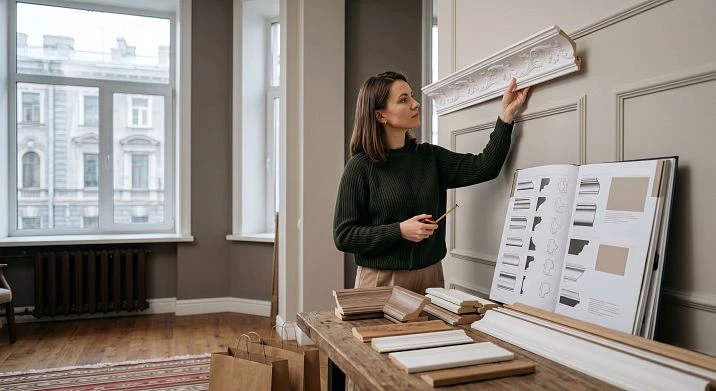
If you want to turn an ordinary apartment into a space with character — without major renovations, without demolishing walls, and without a designer from Milan — moldings for finishing in St. Petersburg deliver exactly that result. One well-chosen profile can change the perception of an entire room: add depth, adjust proportions, and place accents. The STAVROS website offers a wide rangemoldings and decorative profiles, of wooden moldingsandmoldings from polyurethane— everything you need for comprehensive interior finishing in one place.
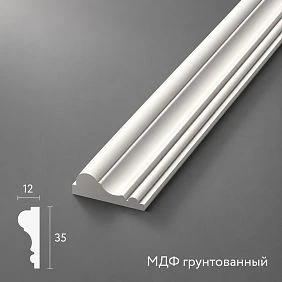
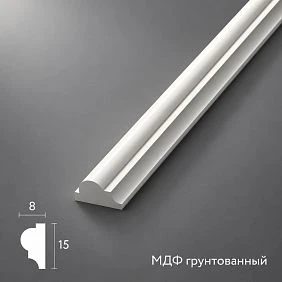
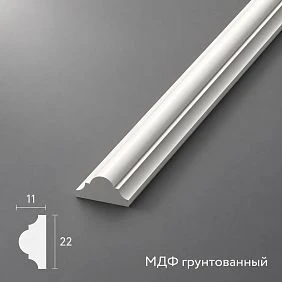
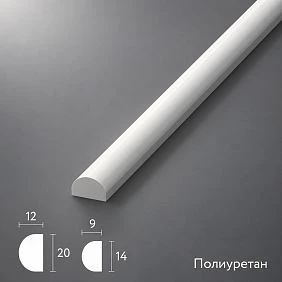
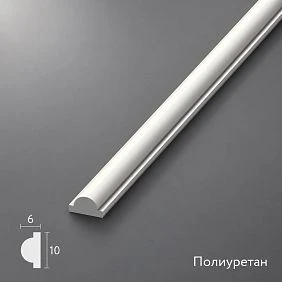
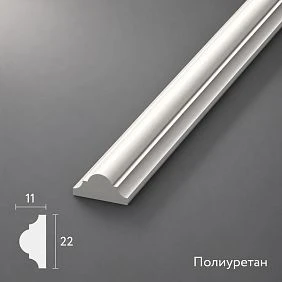
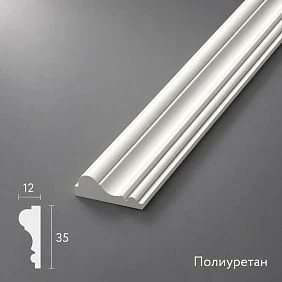
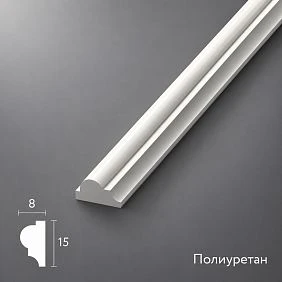
What are finishing moldings and why are they needed
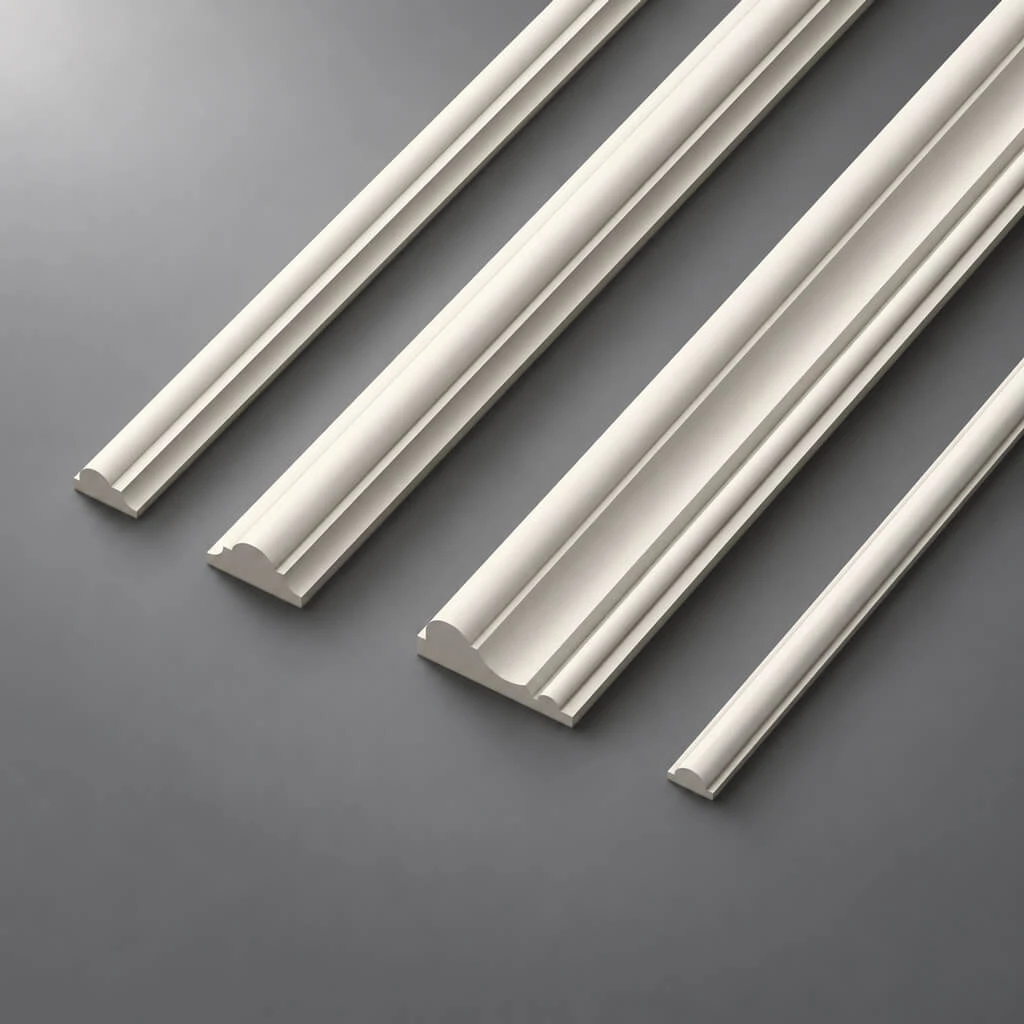
Molding is a decorative profile that is mounted on a wall, ceiling, panel surface, or in areas of visual transition. Essentially, it is a relief overlay strip whose task is to make the interior complete, cohesive, and visually expensive. This is why decorative moldings for wall and interior finishing have been and remain an essential attribute of both classic and modern spaces.
What is their strength? They work on several levels at once:
-
Visually structure the surface of a wall or ceiling, dividing it into logical zones.
-
Create framing for panels, niches, mirrors, and decorative inserts.
-
Conceal technical joints and transitions between materials.
-
Give a room scale and a sense of 'expensive' renovation.
-
Allow for easy accent changes when repainting without replacing all the finishes.
Moldings for interior finishing were used even in the Renaissance era — back then, complex profiles for palaces and mansions were carved from plaster and wood. Today, the same principles are available to every apartment or country house owner thanks to modern materials and production technologies.
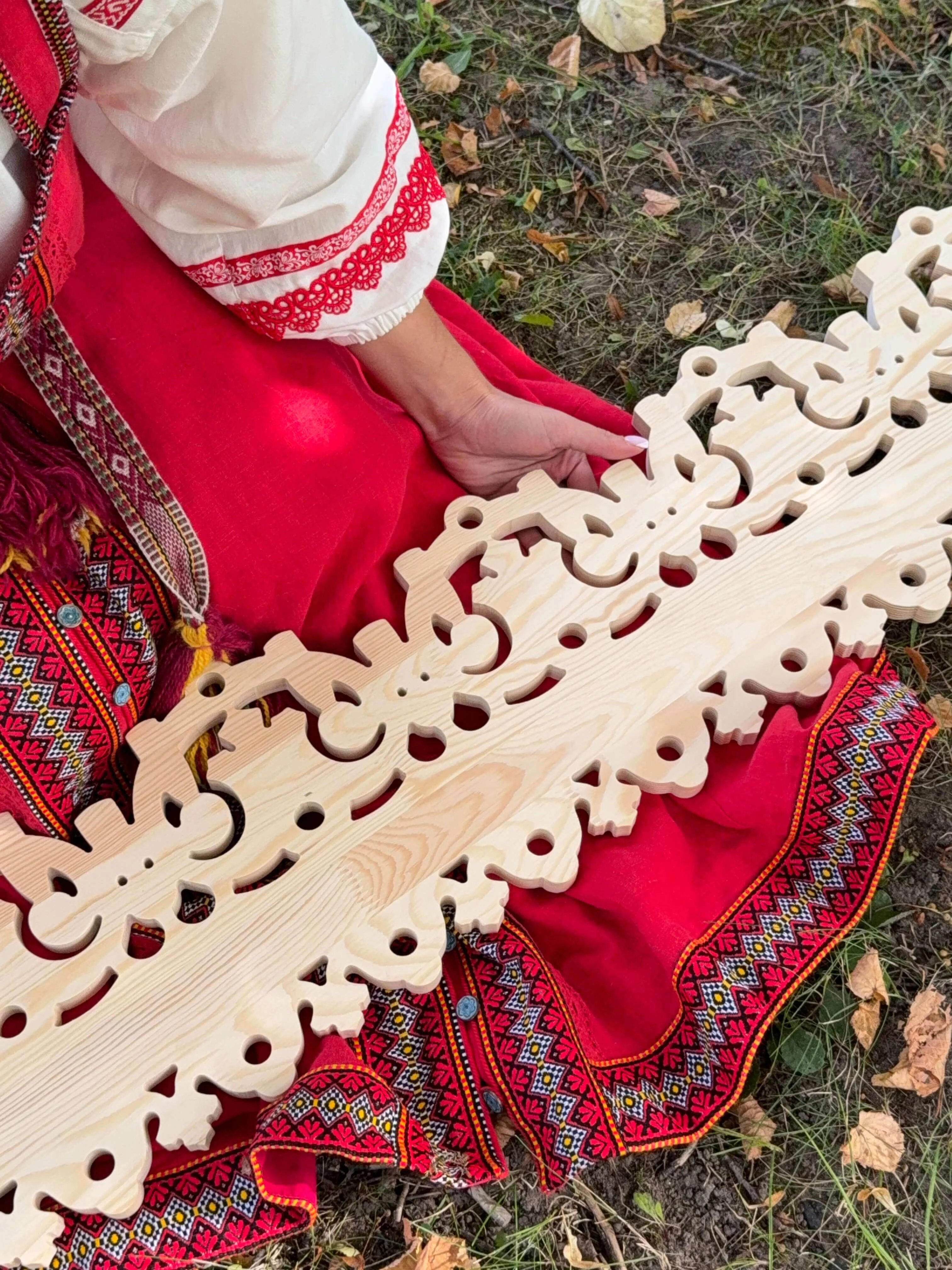
Where moldings are used in interior finishing
Our factory also produces:


Moldings for wall finishing
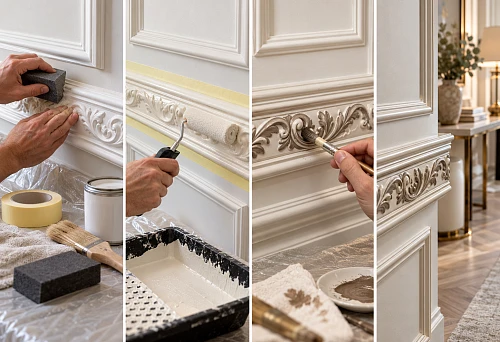
The wall is the main field for working with decorative profiles. Moldings for wall finishing are mounted horizontally, creating zoning: the lower panel part, the main field, and the upper cornice belt. This is the classic three-part principle, known since the Baroque era, but it also fits perfectly into modern neoclassicism.
Vertical moldings on walls set a rhythm, break up a wide surface into panels, and create the illusion of columns. In a living room, this technique turns an ordinary wall into an architectural accent worthy of an interior design magazine.
Get Consultation
Moldings for ceiling finishing
A ceiling without decoration is a missed opportunity. Moldings for ceiling finishing are most often used in the area where the ceiling meets the wall (cornice molding), around the perimeter of coffered niches, or to create decorative frames on the ceiling plane. Even a single profile around the perimeter visually raises the ceiling and adds a sense of height.
Moldings for decorative panels
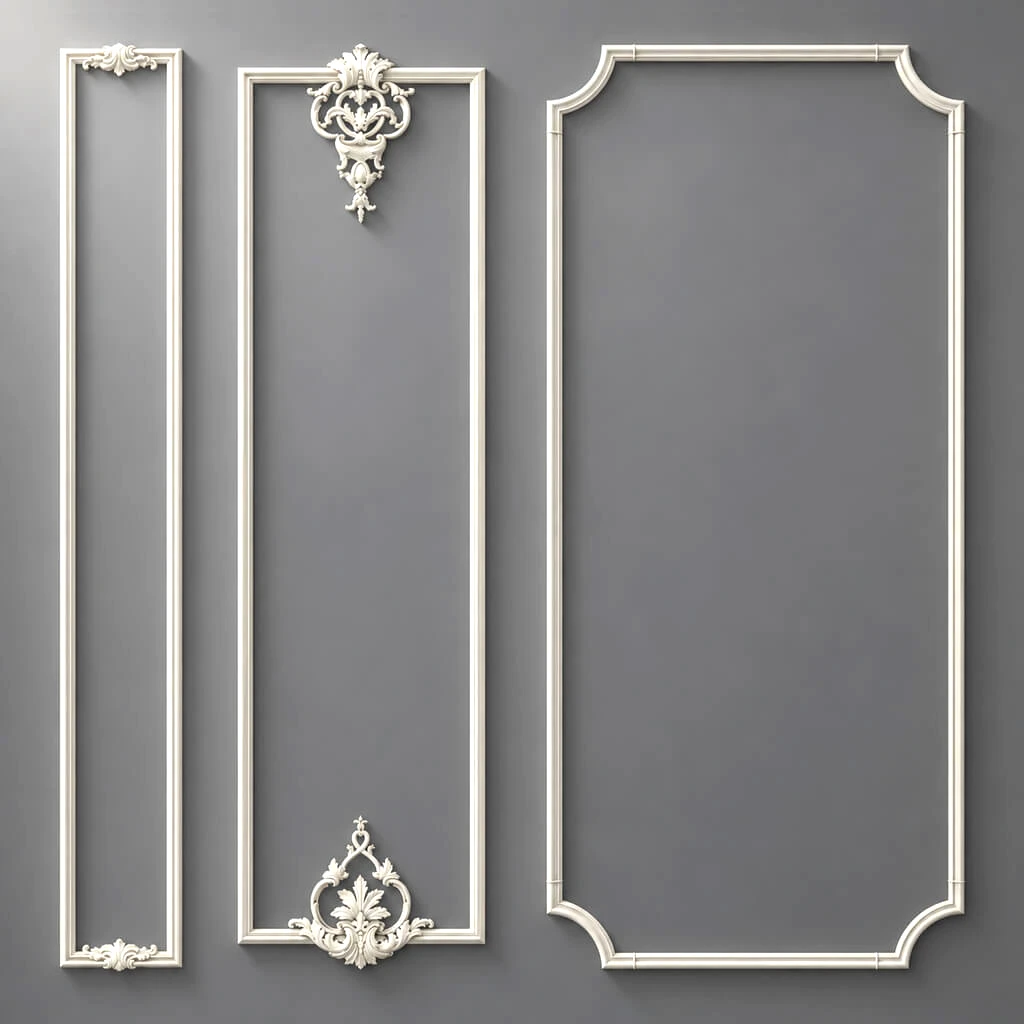
Decorative panels only become truly complete when framed by molding. The profile creates a clear frame, emphasizes the material's boundaries, and sets an accent.Rafter panelscombined with wooden molding give an incredibly cohesive result—especially in interiors in the neoclassical or modern classic style.
Moldings for accent walls
An accent wall is a favorite technique among designers. Moldings for accent wall finishing amplify this effect several times over: profiles create geometry, divide the surface into cells, and focus attention on the TV, bed, or fireplace area. This is not just decor—it's an architectural statement.
Moldings for the TV zone
The TV area is one of the focal points in the living room. Framing the screen with moldings turns this area into a full-fledged composition. Profiles create a 'frame' around the panel, and additional horizontal lines set the scale for the entire wall.
Moldings for the hallway and corridor
The entryway sets the tone for the entire home. Moldings for finishing the entryway and corridor work especially effectively here: they visually elongate the space, adding strictness and order even in narrow hallways. In the entryway, moldings are also used to frame niches, built-in wardrobes, and doorways.
Moldings for the bedroom
The bedroom requires restrained yet expressive decoration. Moldings for bedroom finishing are most often installed on the accent wall behind the bed, creating an architectural backdrop. Rhythmic frames made from profiles create a sense of a canopy without excess weight or opulence.
Moldings for the living room
The living room is a space of representation. Moldings for living room finishing set the tone for the entire apartment: wide profiles on the walls, cornice moldings around the ceiling perimeter, decorative frames around niches and paintings. This is precisely where the maximum decorative potential of profiles is appropriate.
Which moldings are best to choose for finishing
The answer depends on the task. There are no universal moldings—only ones correctly selected for a specific interior and specific zone.
For decorative wall finishing
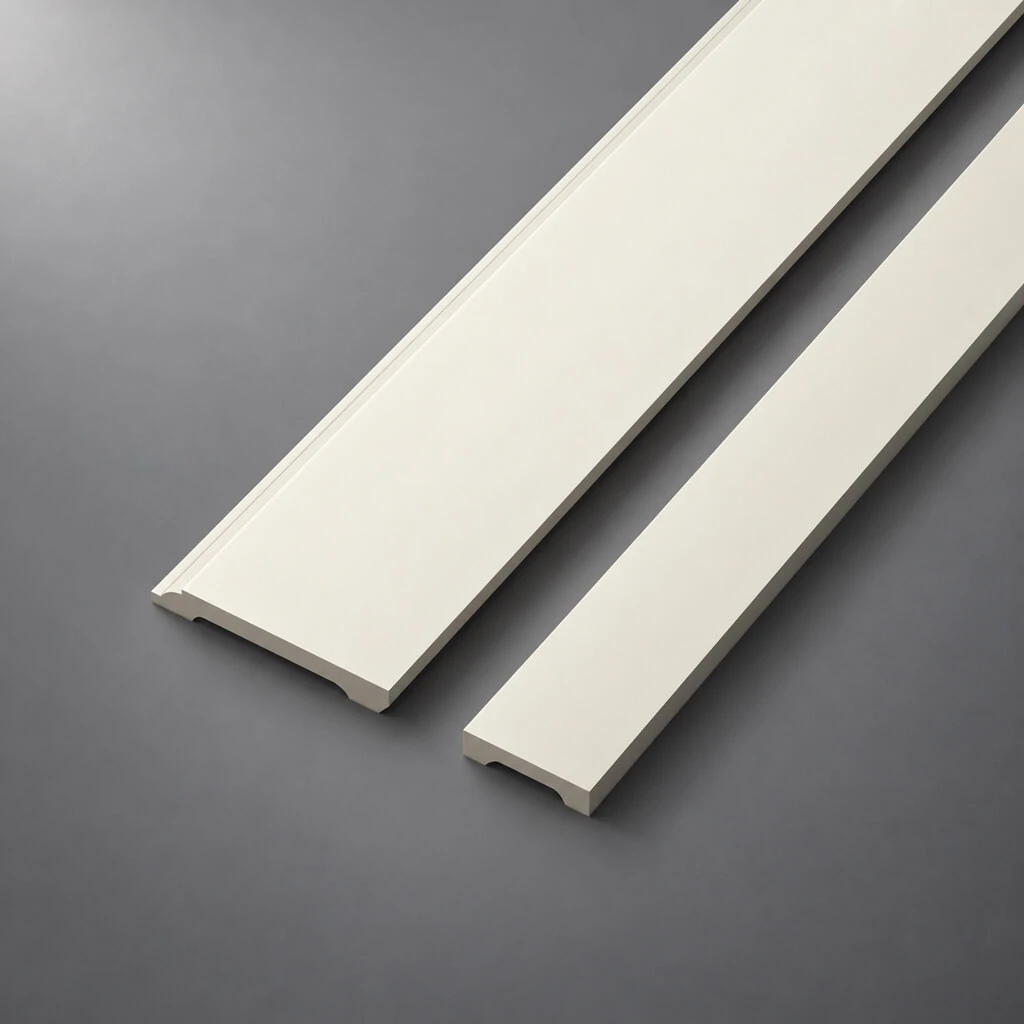
Medium-width profiles—from 3 to 7 cm—with moderate relief work here. They create geometry without overloading. For horizontal wall zoning, smooth rectangular moldings are suitable; for framed panels, profiles with a shaped cross-section.
For framing panels
Framing moldings should logically 'hold' the panel visually. For wooden and slatted panels, wooden moldings work best—they create a unified textural story.decorative wall panelsin an apartment interior look most cohesive precisely when combined with natural profiles.
For ceiling finishing
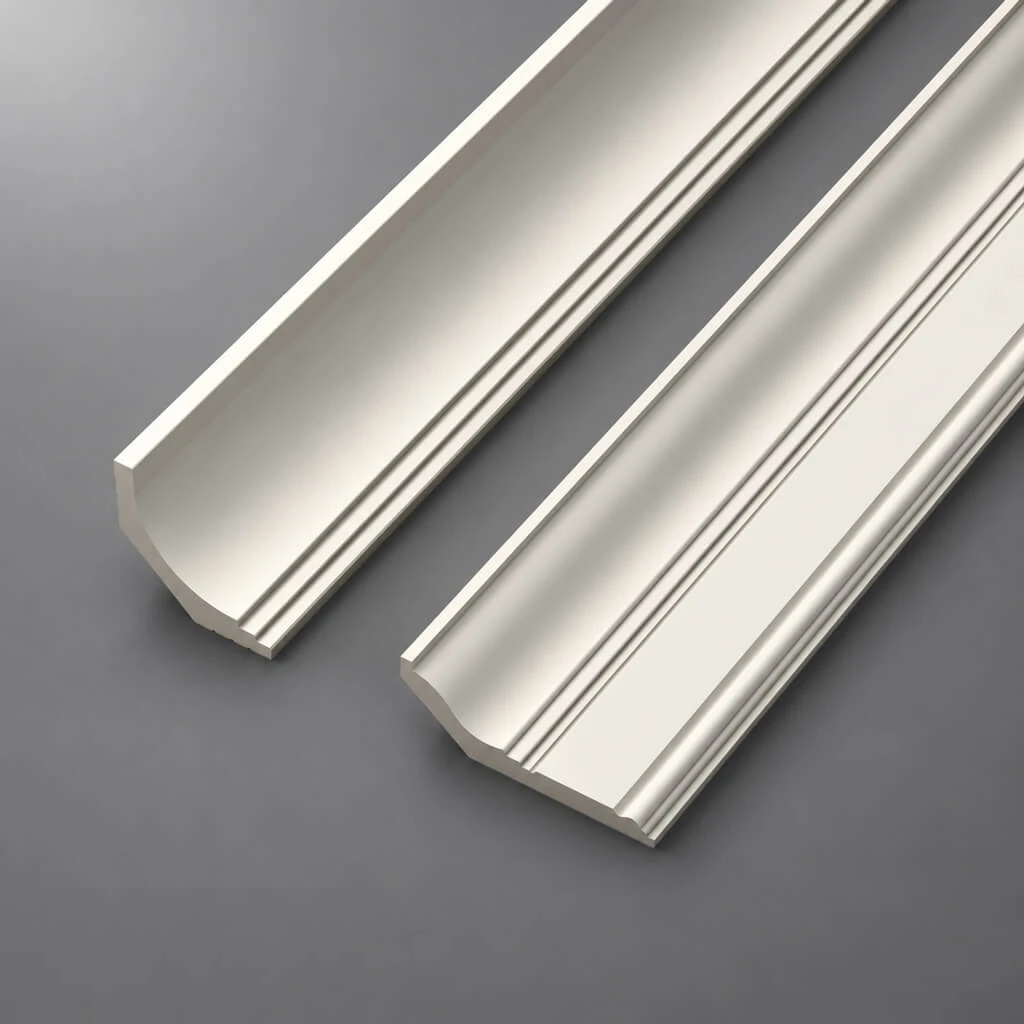
On the ceiling, narrow and medium profiles work—too wide a molding 'presses' the space from above. A cornice profile with a curved or angular cross-section softens the wall-ceiling transition and adds optical height.
For frames and inserts
Moldings for creating frames on walls should have a straight, linear cross-section—no excessive curls. A light beveled or stepped profile gives perfect geometry without heaviness.
For a classic interior
In classic and neoclassical styles, relief profiles with developed cross-sections—with shelves, fillets, and beads—are appropriate. It is precisely such moldings that create that very 'palatial' effect which many associate with luxury.
For interiors intended for painting
Moldings for finishing intended for painting must have a clear relief that is revealed after paint application. Polyurethane profiles are ideal for this task—they do not deform from moisture, accept primer well, and provide an even painted layer.
Materials: wood or polyurethane
This is a key question when choosing moldings for decorative finishing. Both materials have strong points—the task is to choose the right one for a specific situation.
Wooden moldings for finishing
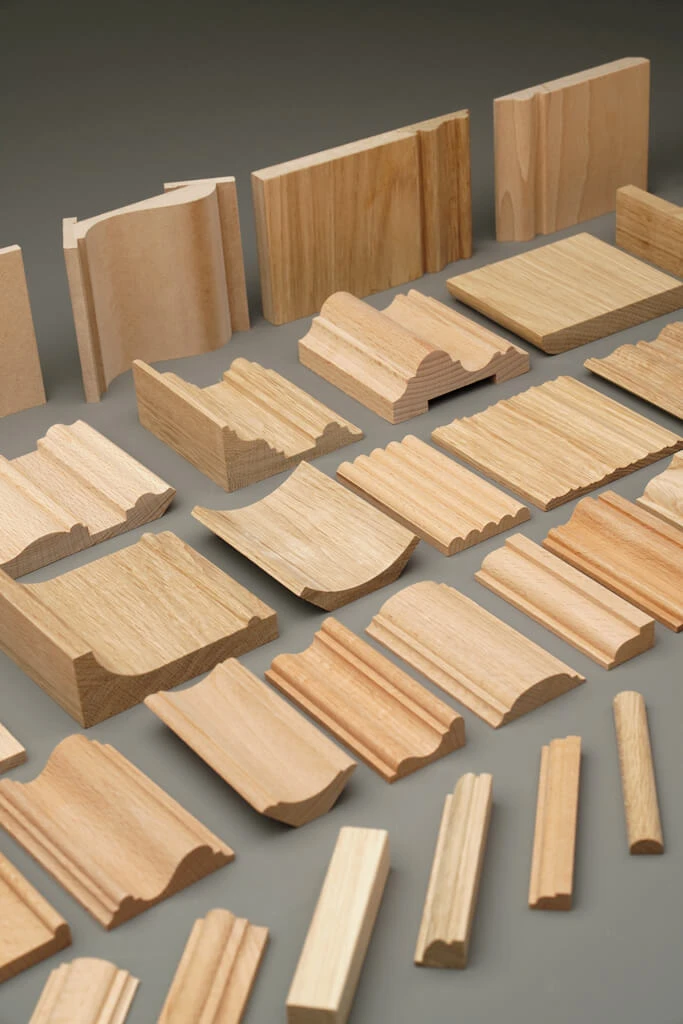
Wooden moldings—this means natural texture, a living surface, and a premium appearance. Wood possesses a warmth that no synthetic material can imitate. A wooden profile pairs well with wooden furniture, parquet, slatted panels, and solid wood door panels—creating a unified material language for the interior.
Wooden moldings for finishing walls and ceilings are especially appropriate in interiors in neoclassical, modern classic, Scandinavian, and eco-minimalist styles. They can be tinted, stained, varnished—the material lends itself to any finishing treatment.
Important point: wooden molding is sensitive to humidity. In rooms with an unstable microclimate (bathroom, sauna, balcony), its use requires additional protective treatment.
Polyurethane moldings for finishing
Polyurethane is lightweight, moisture-resistant, and ideal for painting.Polyurethane moldingsand polyurethane decorative profiles are the solution for those who want complex relief without significant weight. Polyurethane molding for finishing has expressive cross-sections, holds its shape well, and requires minimal maintenance.
Their main advantage is ease of installation. Polyurethane profile can be cut at any angle, glued without additional fasteners, and does not require acclimatization like wood. After installation, it can be painted any color—from pure white to aged gold.
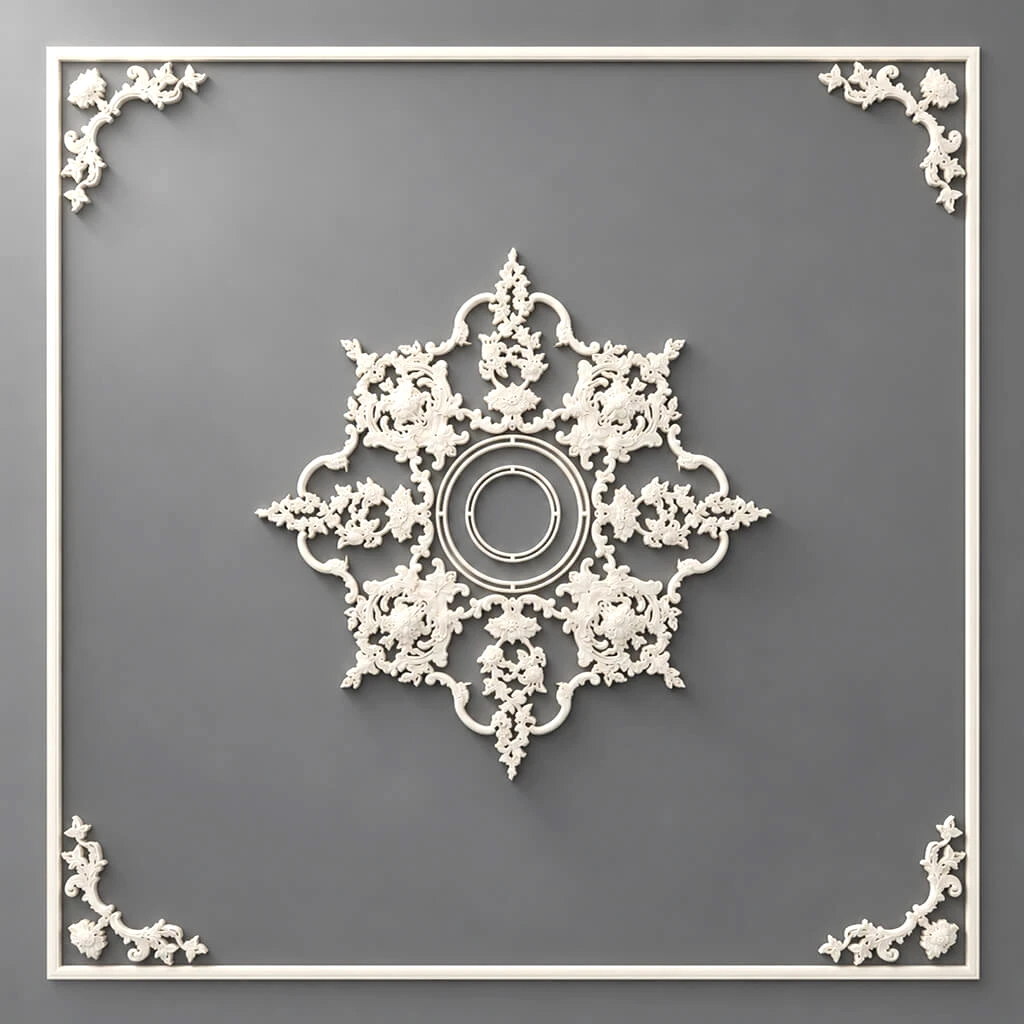
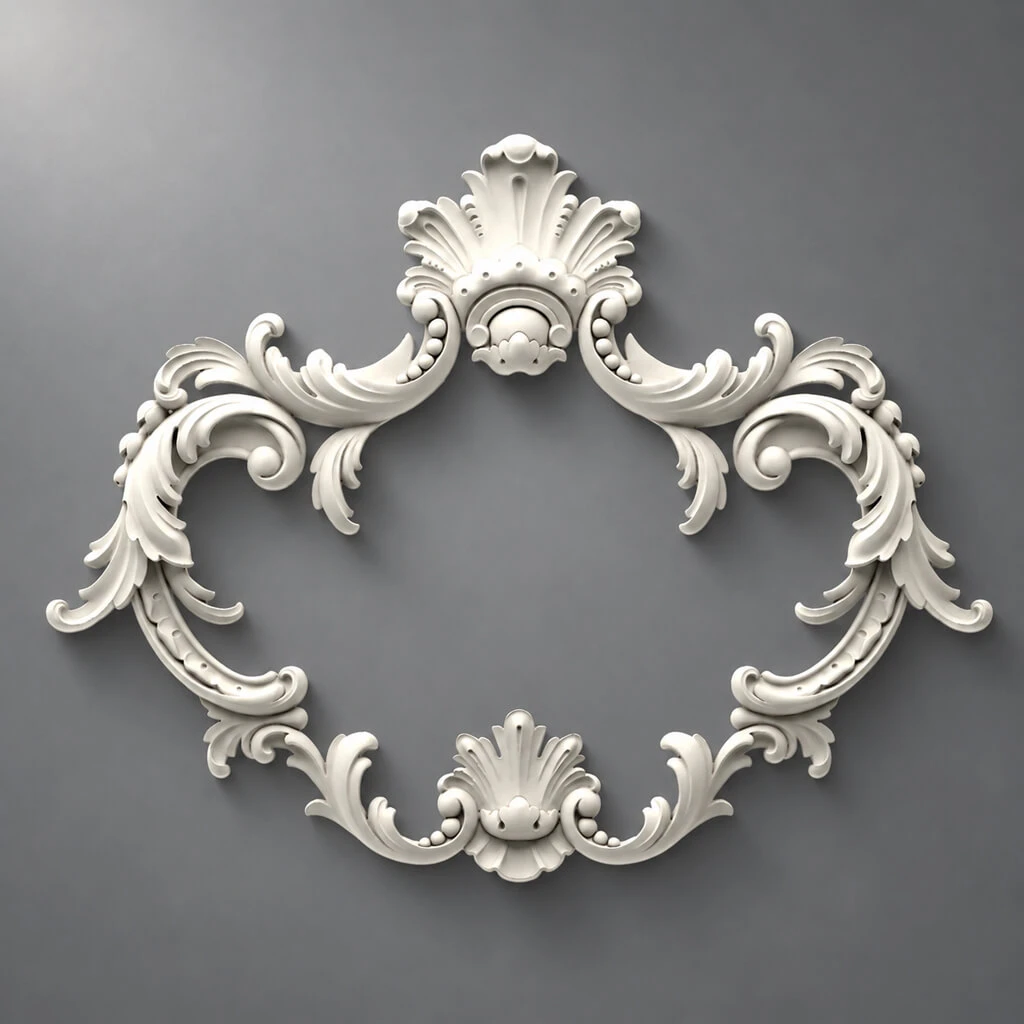
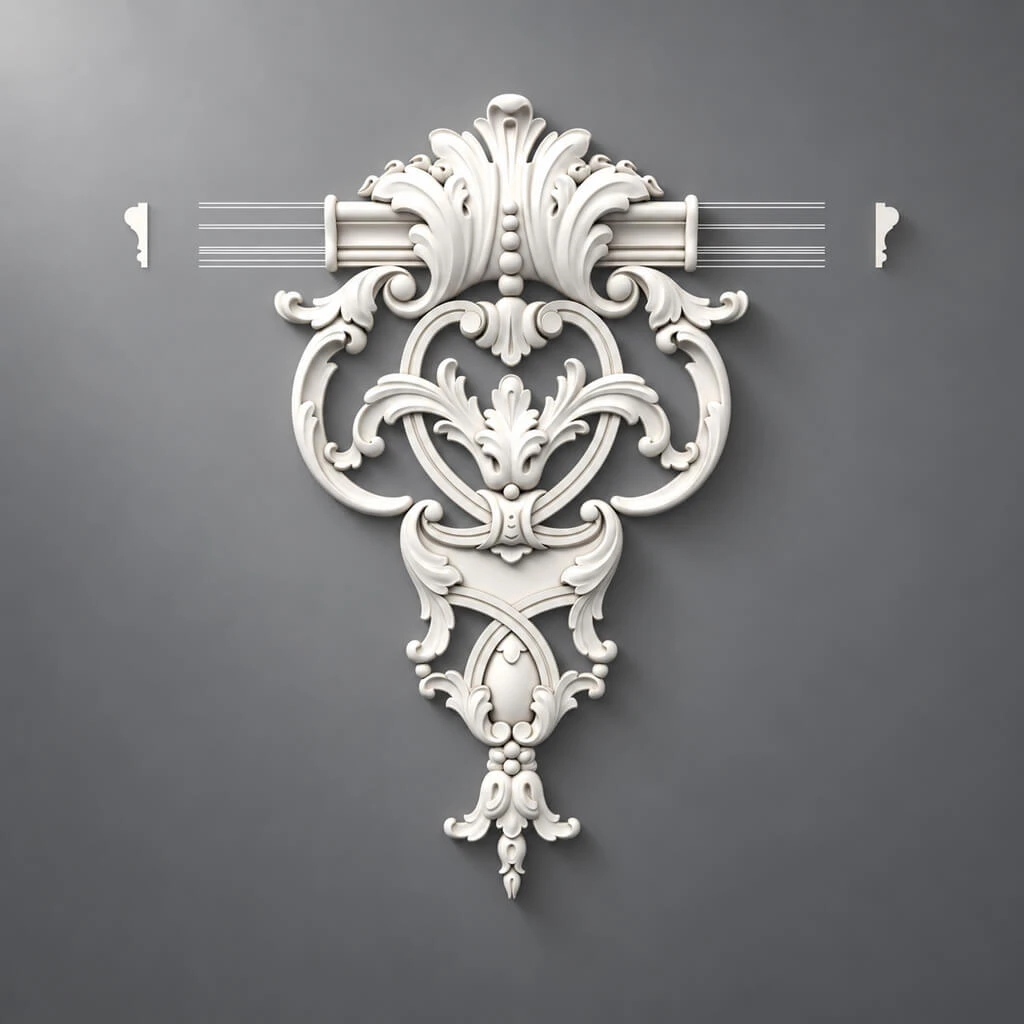
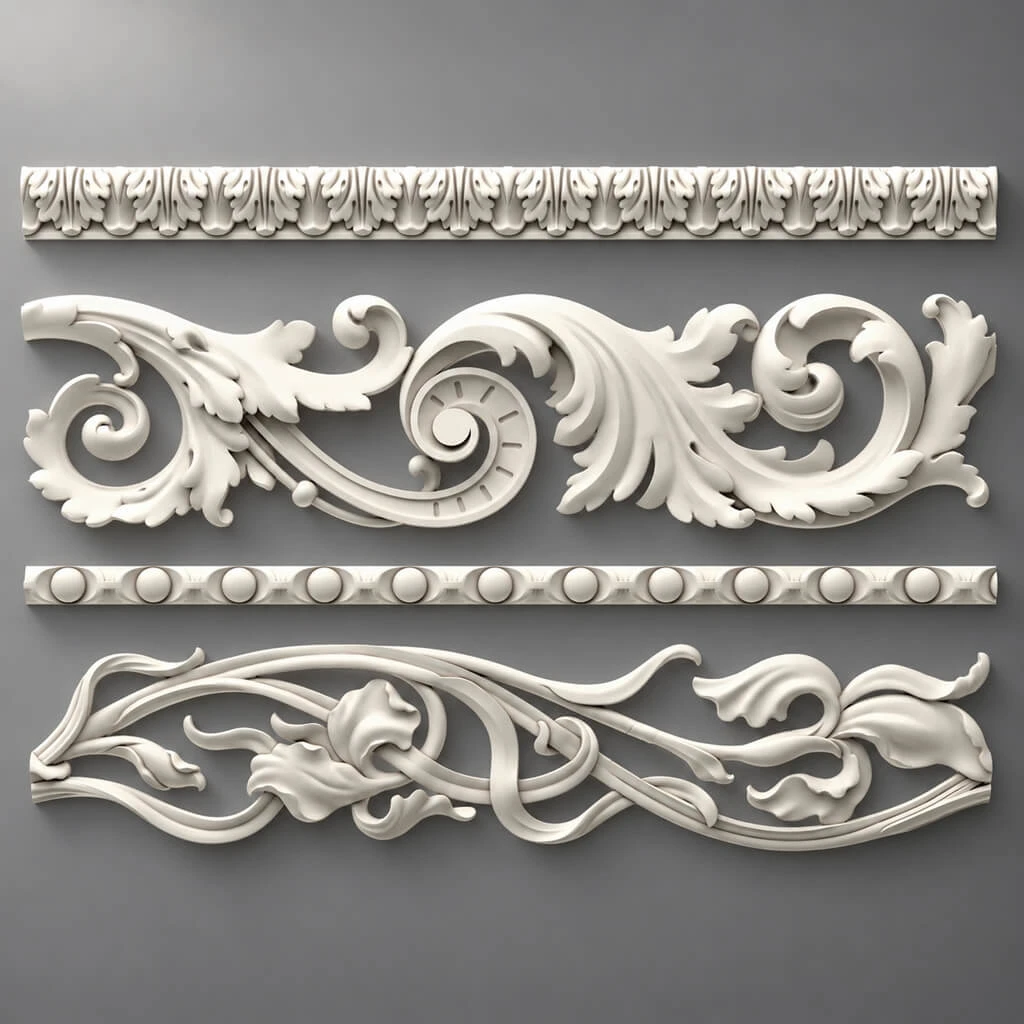
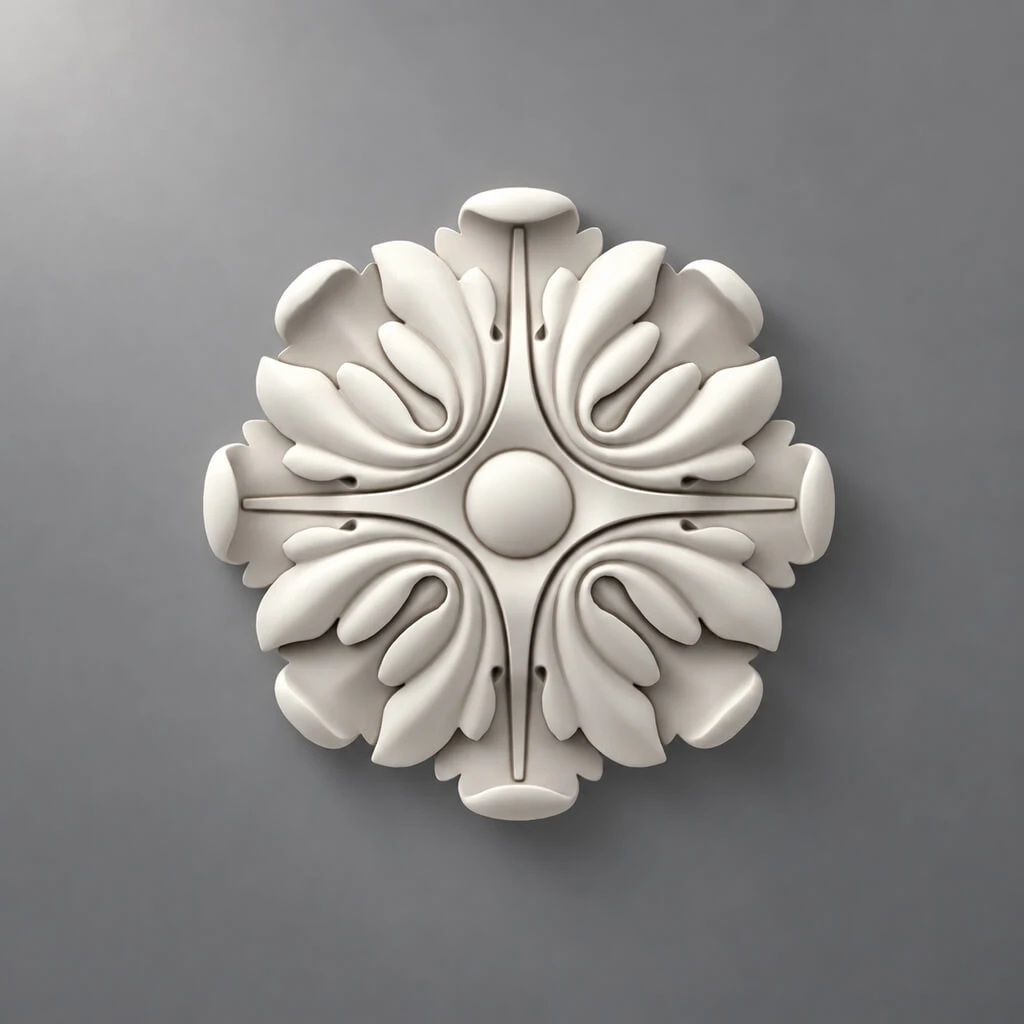
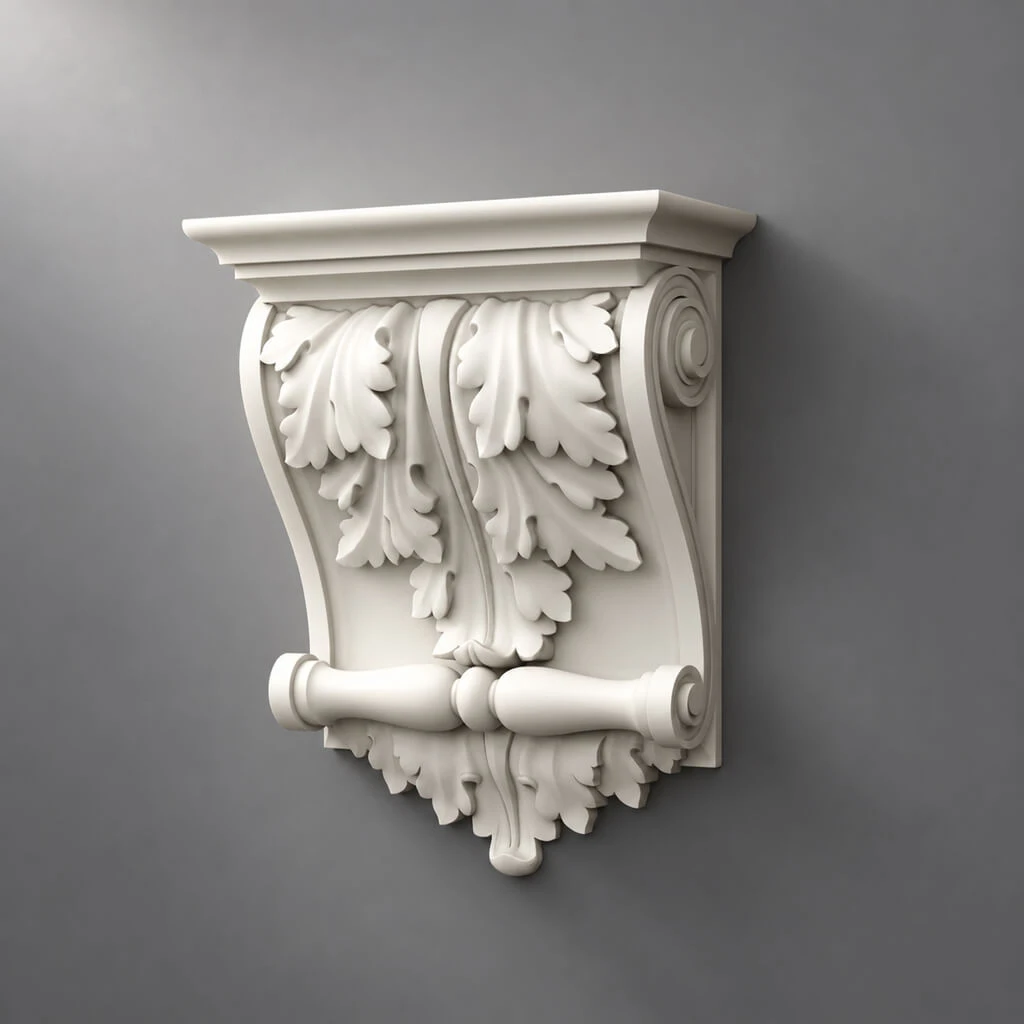
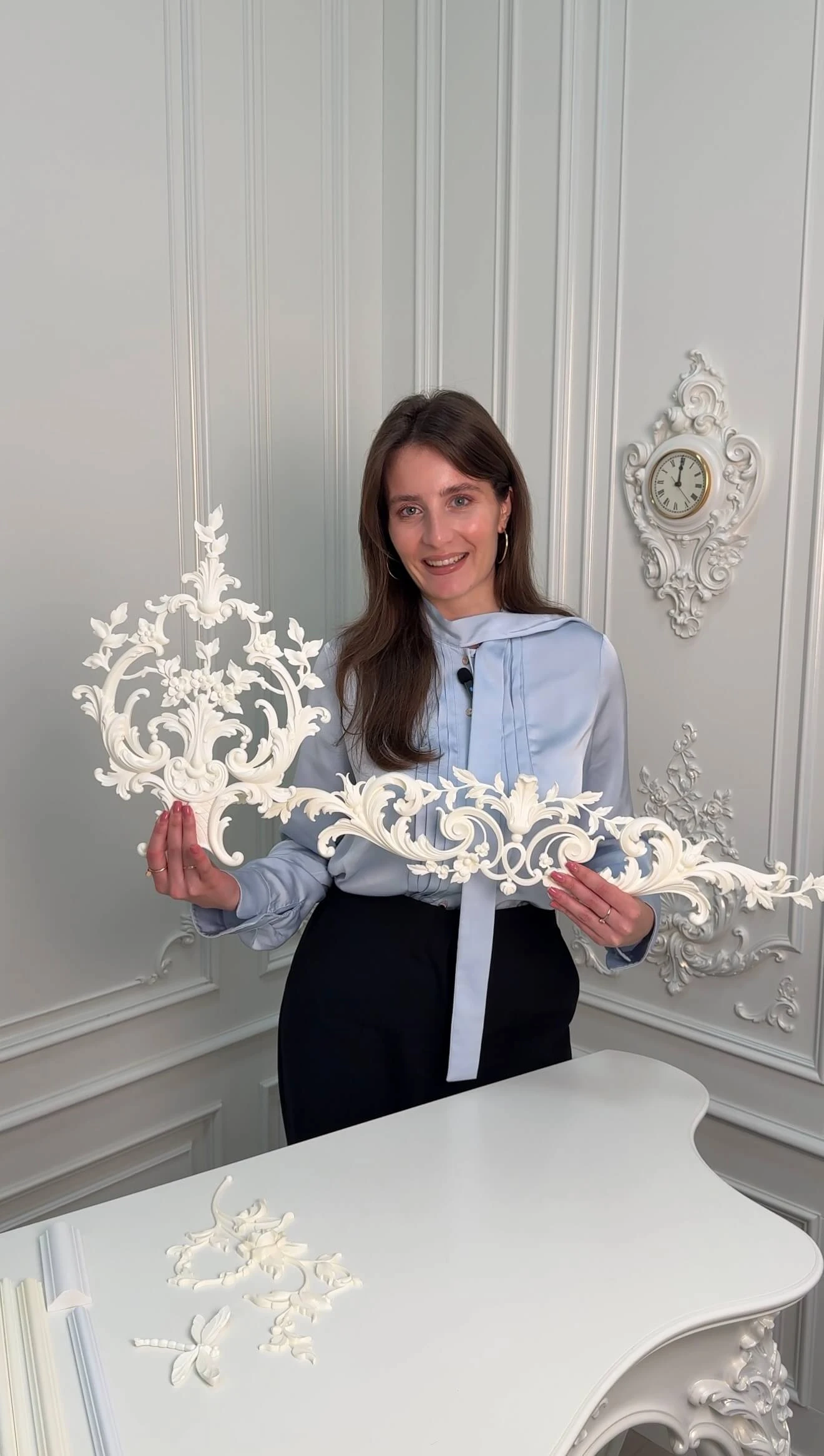
As a complement to profiles, it's worth exploringDecor for Molding—corner overlays, rosettes, consoles, and other elements that transform a simple profile into a complex architectural composition.
| Parameter | Wooden moldings | Polyurethane moldings |
|---|---|---|
| Texture | Natural, living | Imitation of stucco, smooth or relief |
| Weight | Medium | Lightweight |
| Moisture resistance | Requires treatment | High |
| Painting | Tinting, varnish, paint | Any paint, including gold |
| Installation | Requires precision | Simple, glue + corner |
| Style | Neoclassical, eco, Scandinavian | Classic, baroque, empire, neoclassical |
| Resource | Decades | Long-term |
How to choose molding by interior finishing style
Interior style is the first thing to start with when choosing moldings for decorative finishing.
Classic Finishing
Classic requires volume. Wide profiles with developed sections work here: shelves, heels, quarter-round beads. Corner elements and decorative inserts are mandatory.Relief Decorationin combination with moldings creates that very 'palatial' atmosphere, which cannot be achieved by other means.
Neoclassicism
Neoclassicism is a balance between architectural rigor and contemporary minimalism. Neoclassical moldings have moderate relief, clean geometry, and rhythmic repetition. Medium-width profiles with neat cross-sections are appropriate here.
Modern classic
Contemporary classicism is one of the most popular styles in St. Petersburg apartments today. Moldings for contemporary classicism are geometric frames on walls, clear horizontal lines, and an accent profile above panels. No baroque excess—only precise architectonics.
Interior for painting
If a unified color scheme for walls and moldings is planned (total white or total color), profiles with pronounced relief are needed—only then will they stand out against the painted wall. Polyurethane is preferable to wood in this case.
Minimalist decorative finishing
In minimalism, moldings function as a fine dividing line. A narrow rectangular profile 1.5–2 cm wide is all that's needed. No curls, no corbels. Only a line that structures the space.
Light interior
White moldings for finishing in a white or light gray interior create volume through the play of shadows. It's a living sculpture on the wall that changes depending on the angle of natural light.
How to choose the size and profile of a molding
The size of a molding is not a decorative question, but an architectural one. An incorrectly chosen size can ruin the entire finishing concept.
Narrow moldings (up to 3 cm)
Suitable for small rooms with ceilings up to 2.7 m. They create a sense of lightness, do not overload the space. Good for corridors, hallways, bathrooms (when using moisture-resistant materials).
Medium moldings (3–7 cm)
A universal solution for most living spaces. They work both as frame profiles on walls and as cornice moldings for ceilings. Suitable for bedrooms, living rooms, studies.
Wide moldings (from 7 cm)
For rooms with ceilings from 3 m and higher. They create a pronounced architectural 'note' — the room immediately acquires historical grandeur. In apartments with low ceilings, wide molding will look heavy and reduce the sense of height.
Smooth profile
Smooth molding — for minimalist and modern interiors. Geometrically clean, reads well in monochrome spaces, does not compete with the texture of wall materials.
Relief profile
Relief molding — for classic and neoclassical styles. A complex profile with multiple levels creates interesting shadow play. However, the richer the relief — the higher the ceilings in the room should be.
How not to overload the finish
The main rule: do not mix more than two or three types of profiles in one room. Each type of molding should perform its role — framing, dividing, or emphasizing — but together they should form a system, not a collage. If you have difficulty choosing, consult with STAVROS specialists — they will help select profiles for a specific room.
Moldings for finishing in different rooms
Moldings for living room finishing
The living room is the formal space of the house. Here, decorative moldings work to their fullest potential: cornice profiles along the ceiling perimeter define the height, frame moldings on the walls create architecture, and accent profiles around the TV zone and fireplace focus attention. It is in the living room that wide wooden moldings are appropriate, combined withplank panels— such a duo creates a complete interior image.
Moldings for bedroom decoration
In the bedroom, moldings work subtly and intimately. An accent wall behind the bedhead with geometric frames made from profiles is one of the most popular and fail-safe techniques. For the bedroom, profiles with soft, calm relief are recommended: without sharp angles and excessive detailing. A solid wood molding in the bedroom in a Scandinavian or eco-style is a solution that will outlast several waves of fashion trends.
Moldings for hallway decoration
The hallway is often perceived as a transit zone not worth decorating. This is a mistake. It is the hallway that forms the first impression of the house. Moldings for hallway decoration in Saint Petersburg are an opportunity to set the tone for the entire space. Narrow vertical profiles visually elongate the corridor, horizontal moldings create zoning, and frame panels on the walls add solidity even to a small entrance hall.
Moldings for corridor decoration
In the corridor, the linear geometry of the molding works on perspective. Extended horizontal profiles visually lengthen the space, and the regular rhythm of vertical frames adds rhythm and structure. Narrow profiles are preferable here—they do not narrow the already limited space.
Moldings for apartment decoration
Moldings for apartment decoration are a systemic solution, not spot decor. When the same profile runs through the living room, bedroom, and hallway, the apartment is perceived as a cohesive architectural work, not a set of disjointed rooms. This is why, when choosing moldings for the entire apartment, it is important to settle on one system of profiles and adhere to it.
Moldings for home finishing
In a country house or cottage, the possibilities for using moldings expand: high ceilings, large areas, and complex architectural forms are often found here. Wooden moldings for home finishing are especially organic—they echo wooden floor beams, massive doors, and parquet floors, creating a unified material environment.
What to combine moldings with for decorative finishing
With stucco and polyurethane decor
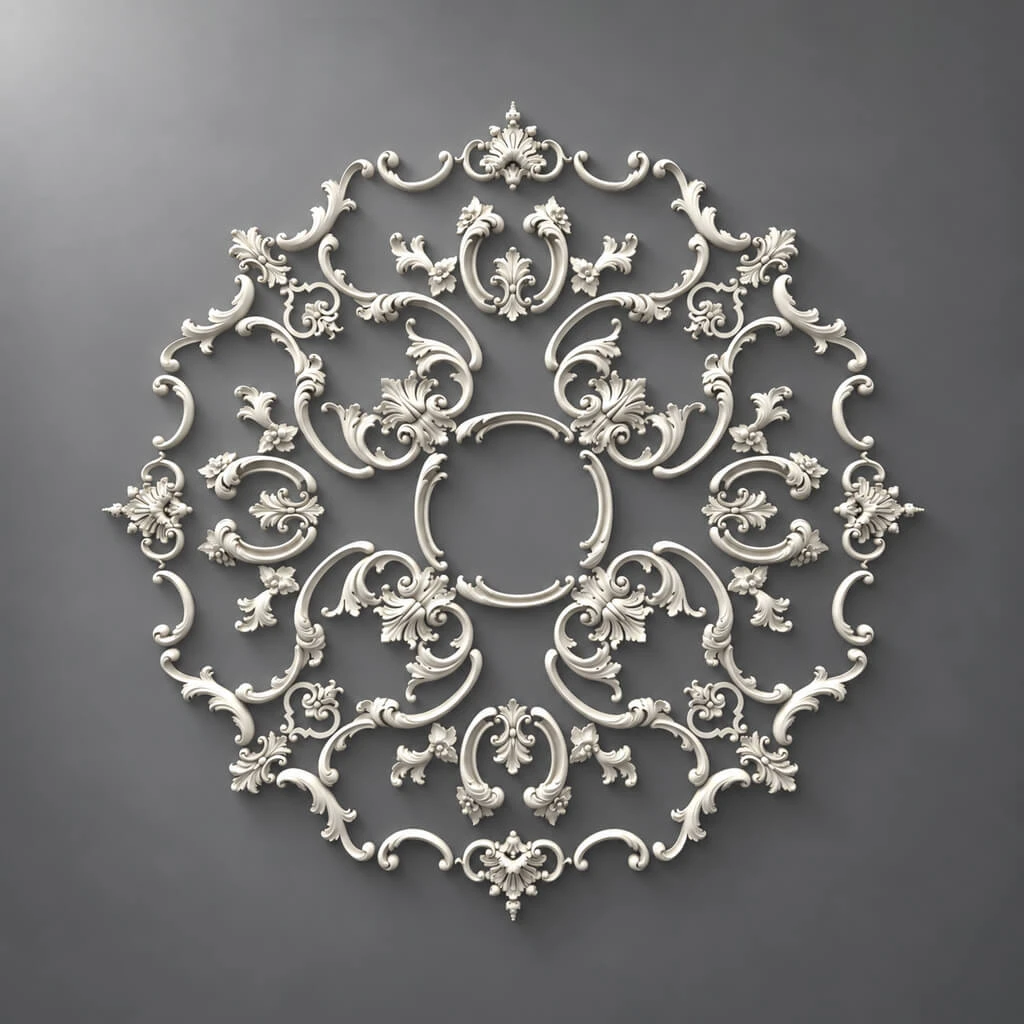
Moldings and stucco are a classic pair.wall molding in interiorand decorative profiles create a system: the molding sets the frame and line, and the stucco decor fills it. Corner rosettes, consoles, central medallions—all of these fit organically into the architectural composition defined by the moldings.
With slatted panels
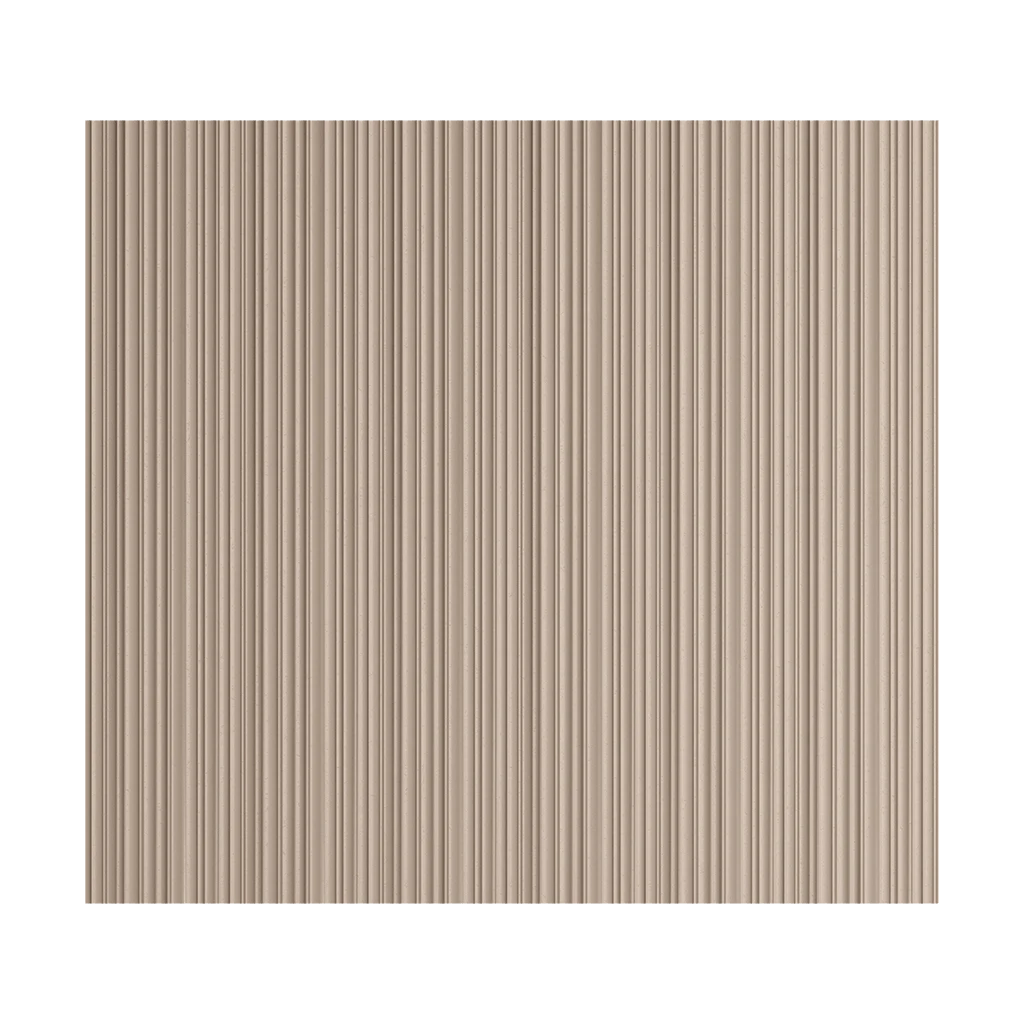
Slat panels and moldings are a duo relevant for modern interiors. The molding frames the area with panels, gives it a beginning and an end, turning a fragment of the wall into a well-thought-out architectural element.Slatted panels in interior designlook especially advantageous in this combination.
With wall panels
Decorative wall panels in an apartment interior require clear visual boundaries. The molding here plays the role of architectural framing—it separates the panel area from the rest of the surface and makes it an independent accent in the space.
With pilasters and capitals
pilasters and columnsin combination with moldings is a full-fledged classical architectural scheme. Moldings serve here as the cornice and base line, which unites the vertical elements into a single system. AddCapitals—and the space acquires true architectural depth.
With classic furniture
Classic FurnitureMoldings speak the same language. Carved cabinet fronts, turned chair legs, and profiled wall moldings create an interior where every detail supports the overall concept. Maintaining scale correspondence is important here: larger furniture requires more voluminous moldings, while delicate pieces need thinner profiles.
What to look for when buying moldings for finishing in St. Petersburg
Buying moldings is a process that requires a thoughtful approach. Several key parameters to check before ordering:
Material. Wood or polyurethane — choose based on style, budget, and room conditions. For areas with high humidity — polyurethane. For premium interiors with natural materials — solid wood.
Dimensions and profile cross-section. Check the width, height of the profile, and plank length. Ensure the chosen size is proportional to the wall height and room area.
Paintability. Most polyurethane profiles are ready for painting without additional priming. Wooden moldings require sanding and priming before painting.
Profile style. Smooth or textured — depending on the interior. Mixing stylistically incompatible profiles in one room is unacceptable.
Compatibility with the interior. Ensure the moldings match the materials of the walls, furniture, and flooring. Chaotic mixing of textures destroys the concept.
Availability of accompanying decor. Check if the collection includes corner elements, connecting inserts, and decorative overlays — they are needed for neat installation.
Delivery in St. Petersburg. Moldings are long goods requiring careful transportation. Clarify delivery terms in advance.
STAVROS: moldings and decorative profiles for finishing in Saint Petersburg
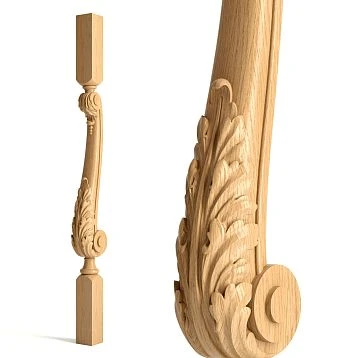
STAVROS is not just an online decor store. It's a system for those who build interiors consciously. Here you'll find not individual profiles, but comprehensive solutions:Moldings and decorative profilessolid wood,Wooden moldingsfor wall and ceiling finishing,polyurethane moldingandDecor for Moldingall under one roof.
What makes STAVROS the preferred choice for those looking for decorative moldings for finishing in St. Petersburg:
-
Natural materials. Solid wood profiles are products that don't lose value over the years. STAVROS works with quality wood that can be tinted, varnished, and combined with any furniture and finishes.
-
Polyurethane assortment. The catalog features lightweight, practical, and expressive polyurethane profiles with rich relief - for those who want classic decor without complex installation.
-
Comprehensive approach. On one website, you can assemble a complete decorative interior scheme: moldings, stucco, paneling, pilasters, capitals, classic furniture. This saves time and provides visual consistency in the result.
-
Related elements. Corner overlays, decor for moldings, ornaments, rosettes - all of this is in the STAVROS catalog. You won't need to search for 'missing elements' on other resources.
-
Delivery in Saint Petersburg. Long goods require careful delivery - this is understood and accounted for in the company's service.
FAQ: Answers to Popular Questions About Molding for Finishing
Where to Buy Molding for Finishing in St. Petersburg?
You can buy molding for finishing in Saint Petersburg in the STAVROS catalog — the website features Wooden moldings, Moldings and decorative profiles from solid wood, as well as Polyurethane moldings with delivery throughout the city.
Which Molding is Best for Interior Finishing?
For interior finishing of residential spaces, both wooden and polyurethane profiles are suitable. Wood is preferable in dry areas with natural finishing materials. Polyurethane is a universal solution: lightweight, moisture-resistant, and takes paint well.
What to Choose for Finishing: Wood or Polyurethane?
Wood is for premium interiors with natural materials, neoclassical, and Scandinavian style. Polyurethane is for classic, baroque, empire styles, and spaces where profile painting is planned. In some projects, both materials are combined — wood on horizontal bands, polyurethane on cornice and molded details.
Which Molding is Suitable for Walls and Ceilings?
On the walls — medium and wide profiles with relief or geometric cross-section. On the ceiling — narrow and medium cornice profiles. At the wall-ceiling transition — a corner cornice molding with a concave or convex cross-section.
Are moldings suitable for an apartment?
Yes, and without reservations. Moldings for apartment finishing are one of the most accessible and effective means of transforming an interior. They do not require major renovation, are mounted on a finished wall, and work even in standard apartments with ceilings of 2.5–2.7 m.
Can moldings and panels be combined?
It's not just possible — it's one of the best solutions in modern interiors. Slatted panels framed by wooden moldings, decorative wall panels with a cornice profile on top — such combinations create a complete architectural image. Focus onRafter panelsandDecor for Moldingfrom the STAVROS catalog.
Which moldings to choose for a classic interior?
For a classic interior — relief profiles with a developed cross-section: shelves, heels, quarter-round beads. Be sure to complement with molded corner elements. For materials — polyurethane with subsequent painting in ivory or gold, or wooden molding with a dark stain.
How to calculate the amount of molding for a room?
For horizontal wall zoning — measure the perimeter of the room and divide by the length of one profile, accounting for a 10–15% reserve for cutting and corner fitting. For framed panels — measure each frame separately, considering the width and height.
Do wooden moldings need to be painted?
Not necessarily. A wooden molding can be varnished, preserving the natural wood grain. Staining adds depth to the color. Painting to match the wall creates a monochrome effect. The choice of treatment depends on the interior concept.
How to attach molding to a wall?
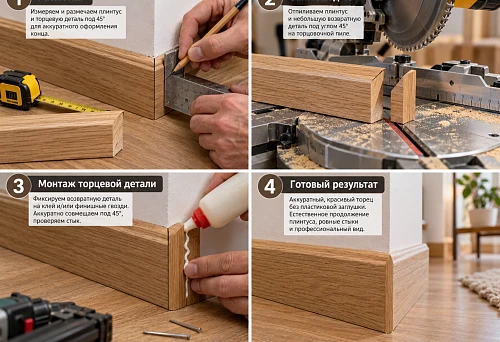
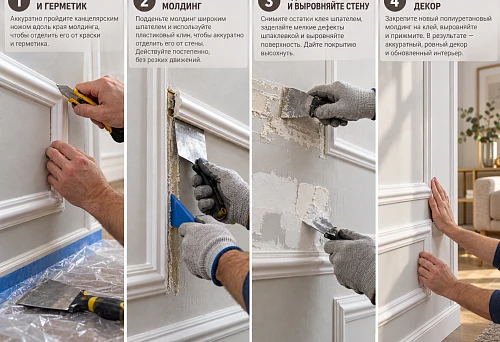
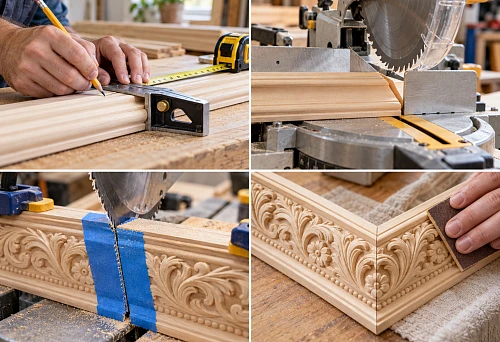
Polyurethane moldings are attached with special polymer adhesive or liquid nails. Wooden ones are attached with adhesive plus finishing nails. The wall surface must be leveled and primed. For complex corners, the profile is joined at 45° using a miter box.
Final choice: a systematic approach to decorative finishing
Moldings for decorative interior finishing are not a fashionable seasonal accessory. They are an architectural tool that works in interiors of any scale and level. A properly selected profile structures the space, adds depth, and makes any room—from a modest hallway to a large living room—complete and expressive.
Key selection principles to remember:
-
Observe scale: the size of the molding should correspond to the ceiling height and room area.
-
Do not mix incompatible styles and profiles—system triumphs over eclecticism.
-
Choose the material for the task: wood for premium natural interiors, polyurethane for complex relief under painting.
-
Complement moldings with adjacent elements—moldings, pilasters, capitals, panels—for a cohesive result.
-
Plan finishing systematically: one type of profile across several rooms creates a unified interior language.
STAVROS is your partner in this work. Everything needed for comprehensive decorative finishing is gathered here:Moldings and decorative profiles, Wooden moldingssolid wood,Decor for Molding, Polyurethane moldingsand the full range of related products to create an interior where every detail is in its place. Buying moldings for finishing in St. Petersburg with delivery is simple, fast, and without compromises on quality.