








































Article Contents:
- What are interior moldings and why are they needed
- Architecture of space without major renovation
- Function that works for aesthetics
- Visual zoning without partitions
- Where moldings are used in interiors
- On walls
- On the Ceiling
- In door and window areas
- In furniture compositions
- In interiors with slatted panels
- What types of interior moldings are there: materials and characteristics
- Wooden moldings
- Solid wood moldings
- MDF moldings
- Polyurethane moldings
- How to choose moldings by interior style
- For classic interiors
- For neoclassical style
- For Modern Interiors
- For interiors with wooden elements
- How to choose moldings for different rooms
- living room
- for the bedroom
- For the hallway
- For Office
- For Kitchen-Dining Room
- For commercial interiors
- How to select the size and profile of molding
- Narrow moldings (up to 30 mm)
- Medium universal (30–70 mm)
- Wide decorative (from 70 mm)
- Straight vs. relief profile
- How not to overload the interior
- What to combine moldings with in interior design
- With floor skirting boards
- With ceiling cornices
- With molding
- With slatted panels
- With decor for moldings
- With door decor
- With furniture fronts
- Where to buy interior moldings in St. Petersburg
- What determines the price of interior moldings in St. Petersburg
- Common mistakes when choosing moldings for interior
- Frequently Asked Questions (FAQ)
- Which moldings are best for an apartment in St. Petersburg?
- Can moldings be used in a small studio apartment?
- How do wooden moldings differ from MDF?
- How often should moldings be updated?
- Is it necessary to hire a designer for selecting moldings?
- How much do interior moldings cost in St. Petersburg?
- How to properly join moldings in corners?
- Conclusion and CTA: bring the interior together as a whole

Moldings have long ceased to be exclusively a detail of classic mansions. Today they are one of the main tools of interior architecture — a way to give a space completeness, logic, rhythm, and character. In St. Petersburg, demand for decorative profiles is steadily growing: a city with historical architecture and a developed culture of interior design organically accepts both strict classics and restrained modernity. On this page you will find a complete breakdown: what types of moldings are available for interiors in St. Petersburg, what materials they are made from, for which rooms and styles, how to choose the size and profile, what to combine them with, and where to buy.
Go to the catalog right now:
-
Buy moldings for interiors in St. Petersburg— wooden, MDF, polyurethane solutions
-
Solid wood moldings, cornices, and baseboards — full catalog
-
Polyurethane moldings, cornices, and skirting boards— relief and decorative profiles
-
Selection for the interior, availability, delivery in St. Petersburg




What are interior moldings and why are they needed
A molding is a decorative profile with a specific cross-section that is mounted on the surfaces of walls, ceilings, furniture, or architectural structures. It sounds simple, but behind this lies a whole system of visual solutions capable of radically changing the perception of space.




Spatial architecture without major renovation
A person perceives a room not as a set of square meters, but as a three-dimensional volume with proportions, rhythm, and scale. It is moldings that govern this perception: horizontal lines draw the eye sideways and visually expand the space, vertical ones raise the ceiling, and framed compositions create focal points and structure the wall.
Decorative profiles allow you to create a sense of thoughtful architecture in an apartment for a reasonable budget—without demolishing walls, without complex plastering, without major renovations. This is appreciated both by owners of standard apartments in St. Petersburg new builds and by owners of historical apartments in old buildings, where the walls themselves carry the spirit of St. Petersburg but need a delicate accent.
Our factory also produces:


A function that works for aesthetics
In addition to their decorative role,Interior moldingsthey also solve purely practical tasks:
-
conceal joints between different finishing materials;
-
mask minor irregularities and surface defects;
-
protect the lower parts of walls from mechanical damage;
-
secure wallpaper, panels, and other coverings at transition points;
-
create a logical finish for a doorway, cornice, or baseboard.
A well-chosen profile doesn't just decorate—it brings the interior together into a single architectural story, where every element is connected to another.
Get Consultation
Visual zoning without partitions
A special rolemoldings in interior designis played in studios, loft apartments, and large living room-kitchens. A horizontal strip of the profile on the wall at a height of 90–120 cm from the floor clearly divides the wall into a lower panel zone and an upper field, creating the illusion of two separate spaces. This is more elegant and cheaper than building partitions or using furniture as a divider.
Where moldings are used in interiors
This is perhaps the most common question from those encountering decorative profiles for the first time. The answer is simple: practically everywhere. Let's break down each zone.
On walls
Wall moldings are the most common application. Profiles are used for:
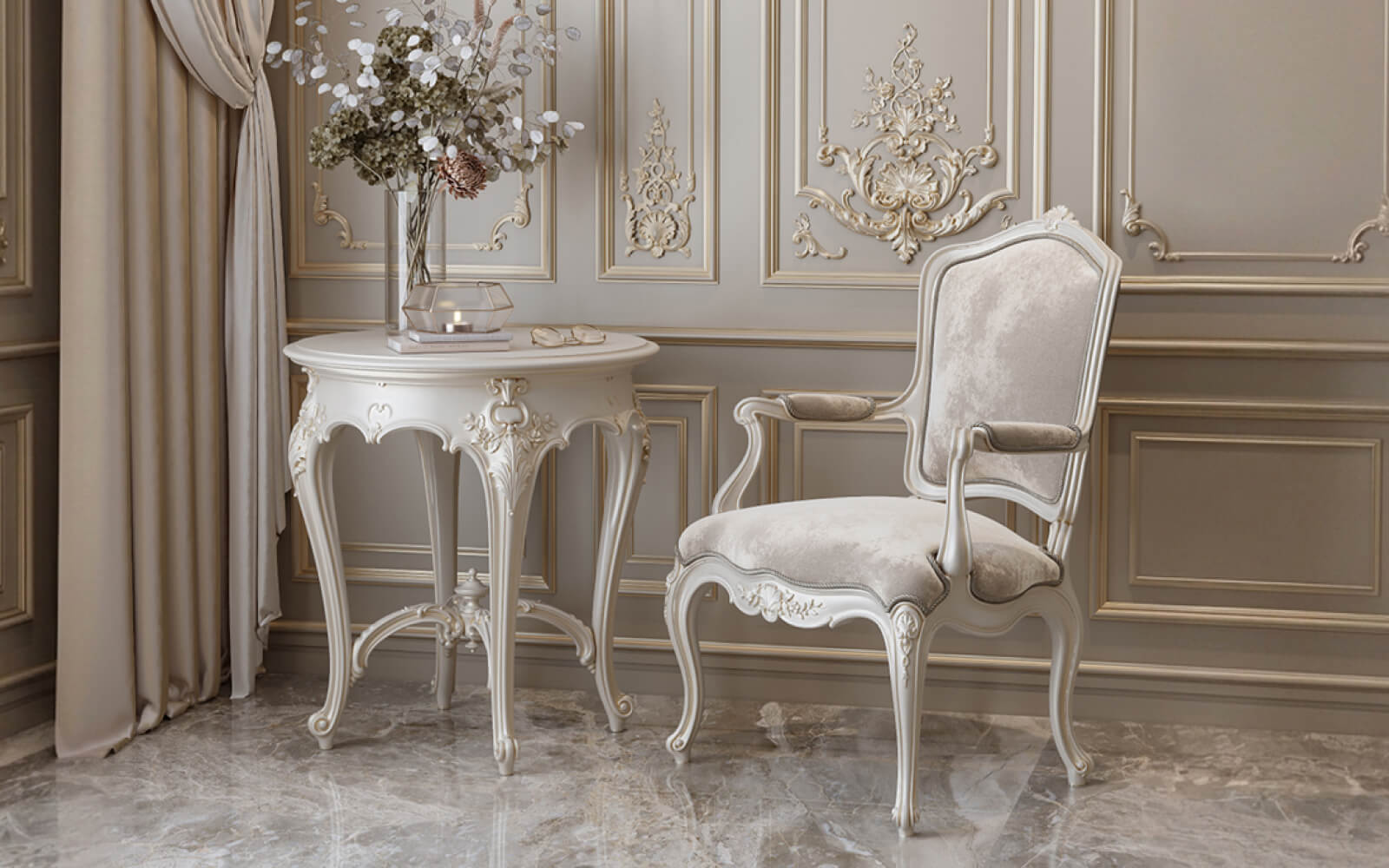
Framed compositions. On a flat painted wall, rectangular or square frames are formed from moldings. Inside the frame, the surface is painted in a contrasting or more saturated shade—and an ordinary wall turns into an architectural accent. This technique comes from classical European finishing but is now actively used in modern interiors as well.
Panel solutions. Moldings divide the wall into horizontal zones: the lower third is designed as a decorative panel—with a different texture, color, or material. The upper part remains laconic. The result is a structured, 'adult' wall.
Accent vertical lines. Narrow vertical profiles, evenly spaced, create a rhythmic pattern resembling pilasters. Suitable for corridors and hallways.
Read more about choosing wall profiles in the articleMoldings for walls.
On the ceiling
The transition between wall and ceiling is one of the most vulnerable areas in any renovation. This is where cracks often appear, seams become visible, and proportions are lost. Ceiling molding covers this area while simultaneously creating a visual frame for the entire ceiling field.
In classic interiors, ceiling cornice molding is often combined with stucco, rosettes, and multi-level profiles. In modern interiors, a minimalist cove is used, which merely hints at the transition without creating decorative overload.
In door and window areas
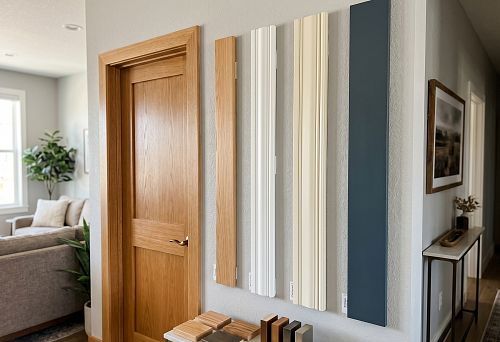
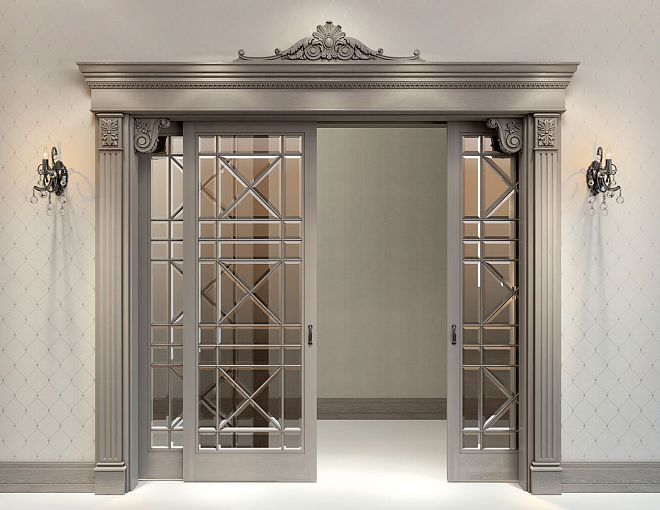
A door opening without framing is an unfinished gesture. Molding around the door holds the entire geometry of the interior: emphasizes verticality, supports the decorative theme, and integrates the door leaf with the wall into a unified system. Especially relevant for interiors with wooden doors, where molding made from the same wood or a similar texture creates a cohesive ensemble.
The same applies to windows: wooden or MDF profiles around the window opening give it an intimate, residential character, turning a standard window into an architectural element.
In furniture compositions
Moldings for furniture— a separate field, in demand when ordering furniture for painting or when independently updating existing furniture. The profile is glued or nailed onto the cabinet front, panel, or drawer — and a simple MDF plane transforms into a piece with character.
Application in furniture areas:
-
sliding and hinged wardrobe fronts;
-
kitchen unit fronts in classic and neoclassical styles;
-
built-in wardrobes with decorative doors;
-
library shelving with frame inserts;
-
decorative wall panels for the bedhead area.
In interiors with slatted panels
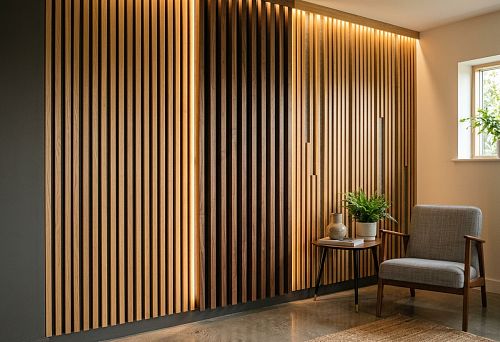
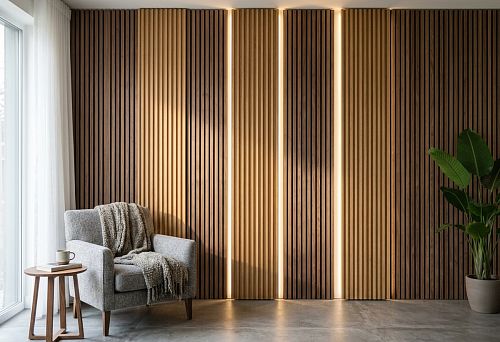
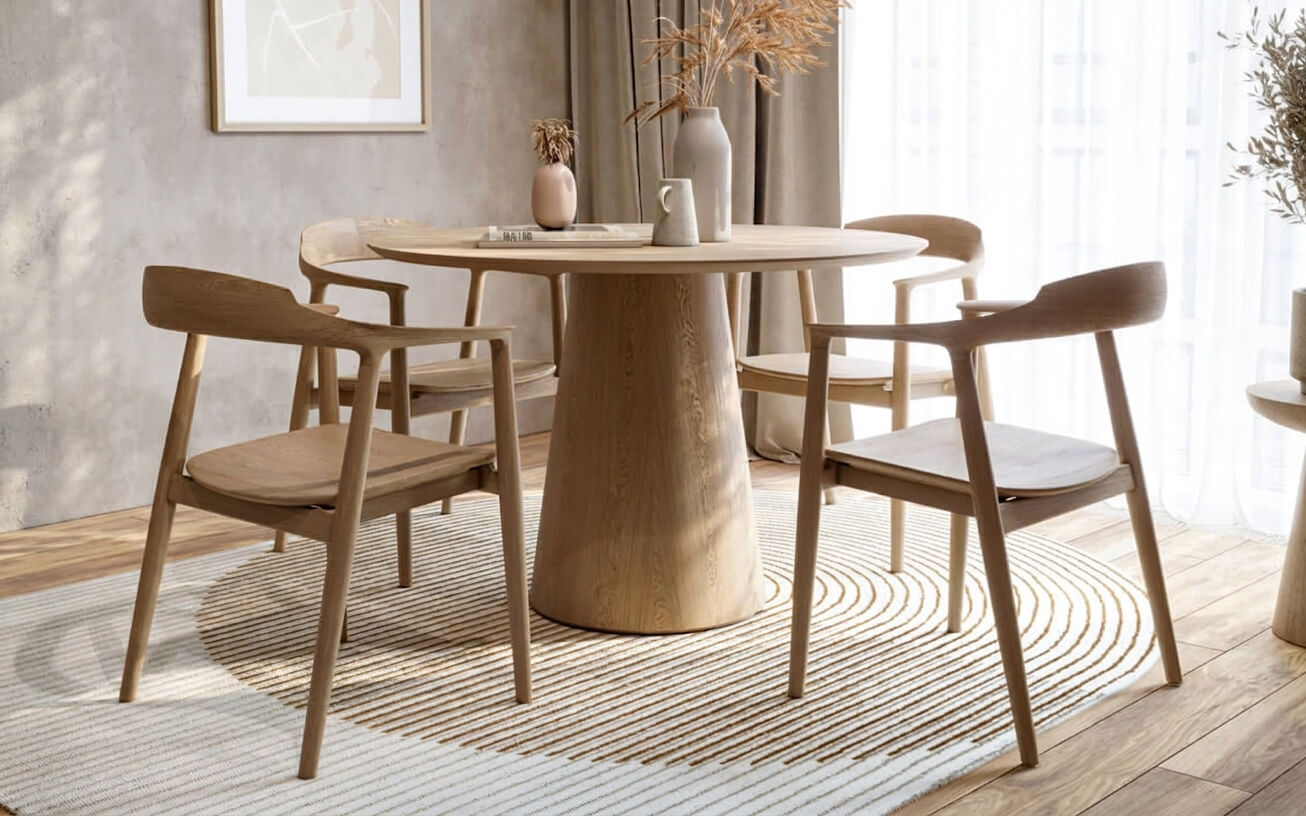
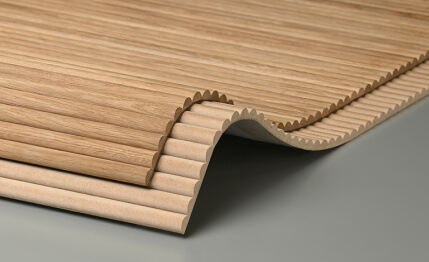
Slats and moulding are an excellent tandem for a modern interior.slatted panels for wallscreate a vertical texture on part of the wall, while moulding frames this zone at the top and bottom, giving it a finished look. The combination of smooth painted surfaces with a slatted section framed by a wooden profile is one of the most expressive solutions for Scandinavian style, modern classic, and eclecticism.
What types of interior mouldings exist: materials and characteristics
Material choice is the key decision. It determines the appearance, durability, ease of installation, and final cost.
Wooden moldings
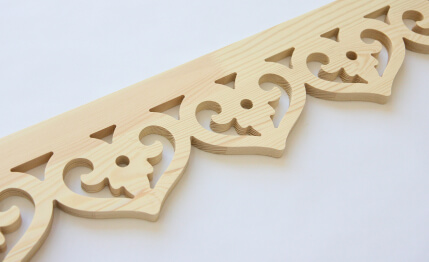
Wooden moldings for interior— is a natural texture, the living warmth of the material, and that very 'expensive' look that doesn't imitate but is the original. Wood is perceived tactilely: in a space with wooden profiles, light works differently, and the scale is felt differently.
Wooden profiles are good in:
-
interiors with natural floor coverings — parquet, solid wood flooring;
-
spaces with exposed wooden structures — beams, rafters;
-
classical and neoclassical living rooms and studies;
-
bedrooms with wooden beds and solid wood furniture;
-
country houses with a pronounced natural aesthetic.
Wooden moldings for interiors in St. Petersburg are mostly purchased for varnishing or waxing — to preserve the living texture. Less often — for painting, although a high-quality wooden profile under enamel looks no worse than MDF.
Solid wood moldings
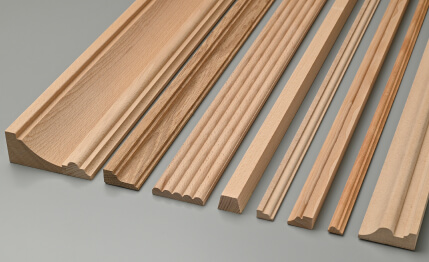
Moldings from solid wood— is a status choice. Oak, beech, ash, walnut — each species has its own pattern and character. A solid profile is heavier and denser, it is resistant to mechanical impacts and, with proper care, serves for decades without deformation.
From the array, moldings with more complex profiles are made—bead, shelf, scotia, ogee. These are the very classic forms that architects have used since the Renaissance. In modern interiors, such a profile is often presented in an unexpected context—against gray walls or concrete finishes, creating an interesting visual dialogue between the brutal background and the noble material.
MDF moldings
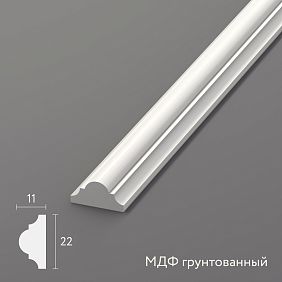
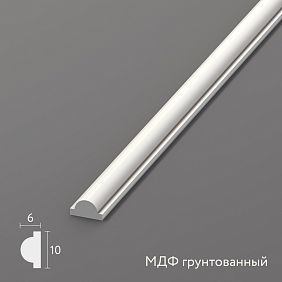
MDF profiles are a rational choice for modern interiors. The smooth, uniform surface is ideal for painting: fill, sand, paint—and the molding becomes flawlessly even, like factory-made.
MDF is easy to cut, join, and takes on any geometry. This makes it a favorite material for designers working in modern classic, art deco, and minimalist styles. Frame compositions made from MDF profiles on painted walls are one of the most replicated techniques in Russian design over the past five years.
Important point: Buying MDF moldings for interiors in St. Petersburg is especially advantageous if you plan to paint the wall and profile in a single color. In this case, the boundary between them disappears, creating an effect of architectural relief on the wall—sophisticated and absolutely modern.
Polyurethane moldings
polyurethane products—an optimal solution for those who want rich decorative relief without the high cost of natural materials. Polyurethane is lightweight, moisture-resistant, and not prone to deformation with temperature fluctuations. That’s why it is most often used for ceiling cornices and moldings in areas with high humidity.
Polyurethane moldings, cornices, and skirting boardsare produced with a rich assortment of reliefs—from the simplest cove to the most complex profiles with floral ornamentation. For painting, they take on any color; for gilding or patina, they create the effect of real stucco.
It’s worth buying polyurethane moldings for interiors in St. Petersburg if you are decorating a living room or hallway in a classic style and want to get an expressive ceiling cornice without the weight and laboriousness of plaster.moldings from polyurethane.
How to choose moldings according to interior style
Style is the first filter when choosing a profile. A mistake here becomes costly: buying a beautiful molding and placing it in an unsuitable interior means ruining both.
For a classic interior
Classic style is about symmetry, relief, and layering. Moldings here play the role of architectural elements: a ceiling cornice with a complex profile, wall panels with frame inserts, door framing with architraves and capitals. Profiles are chosen wide, with pronounced protrusions and transitions—bead, shelf, quarter-round.
Read more in the articlemoldings in interior design— there, stylistic solutions for different types of classical spaces are analyzed in detail.
For neoclassical style
Neoclassicism works with the same archetypes as classicism, but in a more restrained, contemporary interpretation. Profiles are chosen to be calm, without overloaded relief. Wall frames are made large and few in number. Color — white, light gray, pearlescent. Combination with neutral walls and concise lighting fixtures.Wooden wall moldingsin neoclassicism, they are often taken specifically for painting — to obtain a smooth matte surface.
For a modern interior
Minimalism, Scandinavian style, contemporary — conciseness rules here. Moldings are taken narrow, with a straight or softly rounded cross-section. No relief or ornament. The main task is to designate a zone, create rhythm, and play a bit with shadow on the wall plane.
MDF profiles for painting in a single color with the wall are an ideal solution for a modern interior in St. Petersburg. The effect of volume without excessive decorativeness. This pairs well with hidden doors, plinth-free floors, and other minimalist techniques.
For interiors with wooden elements
If the interior has wooden doors, slats, beams, solid wood furniture, parquet — a wooden molding becomes not just appropriate, but mandatory. It fits into the existing theme and enhances it. At the same time, the wood species of the molding does not have to match the floor species: what's more important is the match in tone and character of the surface — matte or glossy, with a pronounced pattern or neutral.
How to choose moldings for different rooms
The space dictates the rules. Where a wide profile with relief is appropriate in a living room, in a small hallway it will feel oppressive. Let's break it down by rooms.
For the living room
The living room is the main space of the apartment, a place for self-expression. Here, moldings can work on a large scale: full-height wall frames, multi-level ceiling cornices, framing for the fireplace or TV area. For a living room in the classic St. Petersburg spirit — solid wood or polyurethane profiles with pronounced relief. For a modern living room — MDF frames for painting with a clear geometric silhouette.
For the bedroom
The bedroom requires quiet and intimacy. Moldings here work delicately: wall frames at the headboard create an accent above the bed, ceiling profiles mark the transition without noise. Wooden moldings for the bedroom interior are especially good in warm, natural spaces — alongside textiles, live materials, and soft lighting.
For the hallway
The hallway is the first impression. Here, moldings set the tone for the entire apartment. In a narrow corridor, vertical profiles work on height, horizontal panel lines — on orderliness. For a hallway in a classic home — profiles with relief and door trims. For a modern one — laconic MDF.
For an office
The study is a zone of concentration and status. Solid wood moldings are in their place here: they create a sense of solidity, seriousness, and an intellectual environment. Frame panels on the walls behind the desk, framing for bookshelves, wooden door trims — all this works to shape the image of the space.
For kitchen-dining room
In the kitchen, moldings are used cautiously — taking into account humidity and temperature fluctuations. Polyurethane profiles are preferable to wooden ones here: they are not afraid of steam and condensation. You can frame the area above the countertop, design the transition between the kitchen backsplash and the wall, or add a ceiling cornice in the dining area.
For commercial interiors
Offices, restaurants, hotels, showrooms — moldings for commercial interiors in St. Petersburg are chosen based on the brand concept. Strict corporate minimalism — straight MDF profiles for painting. An atmospheric restaurant in the St. Petersburg spirit — relief polyurethane profiles with stucco. A luxury boutique — solid wood moldings with a patinated surface. Interior moldings in commercial spaces are an element of branding through the environment.
How to choose the size and profile of molding
Incorrect profile size is one of the most common mistakes. A beautiful molding in the wrong scale either gets lost on the wall or overwhelms the space.
Narrow moldings (up to 30 mm)
Narrow profiles are for small spaces, modern interiors, delicate accents. They create rhythm without decorative overload: they mark the boundary of a panel, form a frame, divide zones. In minimalist interiors, narrow molding in the color of the wall works like an architectural shadow—it's visible, but it doesn't shout.
Medium universal (30–70 mm)
The most popular range. Suitable for most living spaces with standard ceiling heights of 2.7–3.0 m. It reads well and doesn't overload. Works in both classic and modern interiors depending on the choice of profile shape.
Wide decorative (from 70 mm)
Wide profile with relief—for high ceilings, formal living rooms, interiors in a classic spirit. In a room with a ceiling of 3.5 m and above, a wide cornice looks organic. In the same apartment with a standard ceiling—oppressive and out of place.
Straight vs. relief profile
-
Straight profile—modern, universal, easy to paint, creates geometric rhythm without decorative overload.
-
Relief profile—works on depth, shadow, visual richness. Requires a corresponding interior style—classic or neoclassical.
How to avoid overloading the interior
The main rule: in a small room—fewer moldings, but they must be more precise. A frame composition of 4–6 panels on one accent wall looks better than moldings on all four walls at once. In the interior, there should be a hierarchy: the main wall with decor—and the others that support it.
What to combine moldings with in the interior
Molding doesn't work alone—it's part of a system. Let's break down the key combinations.
With floor skirting boards
Baseboard and molding are the lower and middle horizontals of an interior. They should be coordinated in material, tone, and character. A wooden baseboard and wooden molding from the same or a similar species create a unified line that anchors the space from below.Baseboards for interiorsfrom solid wood — in the STAVROS catalog.
With ceiling cornices
The cornice completes the space from above, just as the baseboard does from below. The ideal system: baseboard + wall moldings + ceiling cornice. All three elements in one material or a coordinated color create a finished, professional interior. Solid wood and polyurethane cornices are in the catalog.moldings, cornices, and baseboards made of solid wood.
With plasterwork
Ceiling rosettes, corner elements, decorative ornaments —Polyurethane moldingsorganically complement profile moldings in a classic interior. They work within the same theme: they create a sense of architectural adornment without major construction.
With slatted panels
Batten and molding are a modern pair.slatted panels for wallscreates vertical texture, molding creates a horizontal boundary. The combination is especially effective when the batten occupies the lower third of the wall, and the molding marks the transition line to the smooth upper field.
With molding decor
Corner pieces, rosettes, inserts —Decor for Moldingallows you to reinforce the corner zones of framed compositions, giving them a more finished look. In a classic interior — ornamental overlays. In a modern one — laconic geometric inserts.
With door decor
A unified system of 'door + casing + wall molding' creates a cohesive architectural sequence. All elements should be linked by material or color. This is especially important in a hallway where several doors stand in a row: it is precisely the moldings that unite them into a single wall composition.
With furniture fronts
Moldings on furniture fronts echo the theme of wall moldings—and the space begins to harmonize. This is especially valuable in living rooms, where built-in cabinets or TV zones with inserted moldings resonate with framed panels on adjacent walls.
Where to buy interior moldings in St. Petersburg
This is the most frequently asked question—and it's quite justified. The market for decorative profiles in St. Petersburg is broad, but finding the right combination of quality, assortment, and professional selection is more difficult than it seems.
Here's what's important to check before purchasing:
Material. Ensure you're buying exactly the material needed for your task. Solid wood and veneered MDF look visually similar but are fundamentally different in properties. Polyurethane and plaster are also different categories.
Dimensions. Profile width, height, plank length. Before ordering, measure the wall perimeter and clarify the cutting step that allows for waste.
Relief and cross-section. Request a photo of the profile end or a physical sample. What looks three-dimensional in a photo may turn out flat in reality.
Finish. Pre-painted, ready for painting, for varnish, for wax—options vary, and each requires its own finishing stage.
Availability. For a large project, the ability to reorder a single item is important—ensure the item is in the permanent assortment.
Delivery to St. Petersburg. Clarify the terms: pickup, courier, transport company—long-length profiles require special packaging.
Buy moldings for interiors in St. Petersburgwith a full selection to match your interior and the option to order with delivery in St. Petersburg — in the STAVROS catalog.
What determines the price of interior moldings in St. Petersburg
Pricing for decorative profiles is transparent if you understand a few key factors.
Material. Solid oak or ash is more expensive than MDF. MDF is more expensive than polyurethane for comparable sizes. But their functionality also differs: the most expensive material is not always optimal for a specific task.
Width and height of the profile. The wider and taller the profile, the greater the material consumption, and the higher the price per linear meter. A wide decorative molding made of solid wood is three times more expensive than a narrow one made of the same wood.
Complexity of shape. A straight profile is milled faster than a relief one with multiple transitions. A complex classical profile involves multi-pass machining, which is reflected in the price.
Finish. A profile for painting (primed) costs less than one that is already painted or varnished. A profile with patina or gilding is in a separate price category.
Manufacturer and origin. Domestic manufacturers using solid wood from Russian species often offer the optimal balance of price and quality. Imported profiles made from exotic wood species are a different story.
Order volume. When purchasing above a certain meterage, most suppliers provide a discount. Please clarify the terms when ordering.
Common mistakes when choosing moldings for interiors
Over years of work in interior finishing, a clear picture of typical mistakes emerges. Here they are — so you don't repeat them.
Too complex a profile for a modern interior. Relief classical molding in a minimalist apartment looks like a person in a tuxedo at a picnic. Not bad in itself — but the contrast should be intentional, not accidental.
Too thin a profile for a large wall. On a wall 3.5 m high, molding 15 mm wide will simply get lost. The scale of the profile must match the scale of the space.
Lack of connection with baseboards and cornices. Molding without a system is a separate element on the wall. Molding in a system with a baseboard and cornice is interior architecture.
Overloaded composition. Moldings on all four walls, on the ceiling, on the door, on cabinets simultaneously create visual chaos. Choose 1–2 accent surfaces and work with them.
Choosing only by price. A cheap profile made of low-quality MDF will 'warp' within a year, with cracks appearing at joints and in the paint. Saving on molding results in redoing it. It's better to take less, but of higher quality.
Ignoring end elements. Corners and joints of moldings are a risk zone. With improper 45° joining or poor gap filling, all the beauty falls apart.Decor for Molding— corner and connecting elements — solve this problem elegantly.
Frequently Asked Questions (FAQ)
Which moldings are better for an apartment in St. Petersburg?
Depends on the style and room. For classical and neoclassical interiors — wooden profiles made of solid wood or polyurethane with relief. For modern apartments — MDF for painting with a straight profile. A universal option — a wooden molding of medium width with a neutral cross-section: works in most styles.
Can moldings be used in a small studio apartment?
Yes, and very effectively. In the studio, moldings help zone the space without partitions: a horizontal line on the wall divides it into functional zones. Narrow profiles matching the wall color create a visual rhythm without adding weight.
How do wooden moldings differ from MDF?
Wood has a living natural texture, best suited for varnish or wax. MDF has a uniform surface, ideal for painting. Wood is slightly more sensitive to moisture and temperature fluctuations. MDF is more stable, cheaper, and better accepts a final enamel coating.
How often do moldings need to be updated?
A quality wooden or polyurethane profile, with proper installation and coating, lasts 15–25 years without losing its appearance. MDF requires more careful handling with moisture. The main reason for replacement is a design change, not wear and tear.
Is it necessary to hire a designer to select moldings?
Not necessarily, but it is advisable to consult a specialist. When ordering through a professional catalog with detailed specifications and samples, you can select moldings yourself. The main thing is to clearly understand the interior style, room height, and the task the profile should solve.
How much do interior moldings cost in St. Petersburg?
The price depends on the material, size, and complexity of the profile. Narrow MDF profiles start from a few hundred rubles per linear meter. Wide wooden ones made of solid wood start from a thousand and above. Current prices are in the catalog.solid wood moldingsandpolyurethane products.
How to properly join moldings in corners?
Internal and external corners are joined at 45° using a miter box or miter saw. For more precise results, ready-made corner elements are used — they are sold in the sectionDecor for Molding. The joint is filled with putty, sanded, and painted — and the seam becomes invisible.
Conclusion and CTA: Bring the interior together into a cohesive whole
Interior moldings are not just decoration. They are an architectural tool that gives space structure, rhythm, and character. A correctly chosen profile transforms an ordinary apartment into a thoughtful, finished, living space — the kind that feels 'expensive and tasteful,' even if the budget was quite modest.
In Saint Petersburg, the choice of moldings is especially important: the city's historical context, the diversity of architectural eras, and the high culture of interior taste demand precise solutions. Here, both a relief ceiling profile in the spirit of Petersburg classicism and a laconic MDF frame in the spirit of modern minimalism are equally appropriate.
STAVROS is a professional manufacturer and supplier of wooden interior products in Saint Petersburg. The range includes decorative profiles made of solid oak, beech, ash, MDF moldings for painting, polyurethane cornices and baseboards, slatted panels, decorative elements for moldings, and the entire spectrum of interior architecture made from natural and modern materials. Each product undergoes professional quality control and is supplied with delivery options in St. Petersburg.
Take the next step:
-
Buy moldings for interiors in St. Petersburg— catalog of solid wood moldings
-
Select decorative profiles for the interior— moldings, cornices, and baseboards made of solid wood
-
Polyurethane moldings and cornices— relief profiles for walls and ceilings
-
slatted panels for walls— to combine with moldings
-
Decor for Molding— corner elements and overlays
-
Polyurethane moldings— for classic interiors
STAVROS — interior moldings in St. Petersburg: from selection to delivery and customization for your project.