








































Article Contents:
- What are interior moldings and what tasks do they solve
- Wall Decoration: Creating Volume from Nothing
- Ceiling Design: Scale Through Cornices
- Furniture Accents: When a Wardrobe Becomes Furniture
- Creating Frames and Panels: The Wall as a Gallery
- Hiding Joints and Transitions: The Invisible Function
- Visual Correction: When Architecture Is 'Not Quite Right'
- Which Interior Moldings to Buy for Your Task
- Wall moldings
- Ceiling moldings
- Moldings for furniture
- Door moldings
- Moldings for decorative panels and frames
- Moldings for framing mirrors and paintings
- Wooden moldings or MDF: what to choose
- When natural solid wood is needed
- When MDF is more practical
- For painting: primed MDF
- For natural finishing: wood
- For modern interior
- For a classic interior
- How to choose moldings to match the interior style
- Classic: history in every line
- Neoclassical: austerity without excess
- Modern style: geometry and neutrality
- Minimalism: less is more
- Accent compositions: when molding is the main character
- How to choose moldings for different rooms
- Molding for the Living Room
- Molding for the Bedroom
- Moldings for the kitchen
- Moldings for the bathroom
- Moldings for the hallway
- Moldings for children's rooms
- Molding decor: when corner and decorative elements are needed
- Corner elements: simplifying installation and decorative accent
- Center overlays: accent within the frame
- Connecting decor
- Carved decor: when detail is art
- Ready-made compositions for classic interiors
- How to combine moldings with walls, furniture, and ceilings
- Unified rhythm in interior design
- Repeating profiles across all levels
- Connecting walls and furniture through a unified profile
- Panel compositions: space as architecture
- Accent zones: focus through a single molding
- What determines the price of interior moldings
- Material
- Profile width
- Relief and complexity of milling
- Presence of decorative elements
- Order volume
- Installation nuances: briefly about the important
- Where to buy interior moldings without mistakes
- Determine the surface and task
- Determine the material
- Are decorative elements needed
- Calculate the quantity
- STAVROS catalog pages for navigation
- About the Company STAVROS
- FAQ: Answers to Popular Questions

There are interiors where you feel cozy from the first second—and can't explain why. The ceiling is not too high or too low. The walls are not empty or overloaded. The furniture is in its place. Everything is connected by invisible threads—the rhythm of lines, repetition of forms, unity of details. Behind this feeling lies a professional technique that is hundreds of years old: the system of interior moldings.
Molding is not decoration for decoration's sake. It is a decorative profile that simultaneously solves several tasks: structures space, creates frames and panels, connects walls with furniture, sets style through repetition of cross-section. When people say 'buy interior moldings'—they mean not just a strip on the wall, but a tool for designing the environment.
This article is a practical guide to choosing interior moldings: which surfaces they are needed for, what material and profile suits your style, when decoration for moldings is appropriate, and where to view the catalog. No generalities, no fluff—only what really helps make a decision.




What are interior moldings and what problems do they solve
Before choosing—you need to understand what you're paying for. Because molding in an interior is never 'just a strip on the wall.' Every element has a function.




Wall decoration: volume from nothing
A flat wall is a visual vacuum. It has no scale, gives no support to the eye, creates no rhythm. Add a horizontal belt at a height of 90 cm—and the wall immediately gains levels. Add frame panels made of molding—and the room begins to 'live.'
decorative wall moldings— is exactly the tool that transforms a simply plastered surface into an architecturally designed wall. The profile doesn't take up volume, isn't expensive compared to cladding—but the visual effect is comparable to high-end renovation.
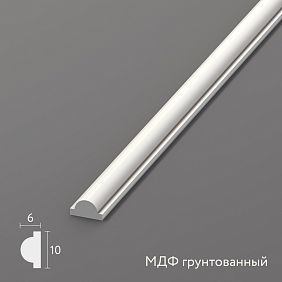
Our factory also produces:


Ceiling design: scale through cornice
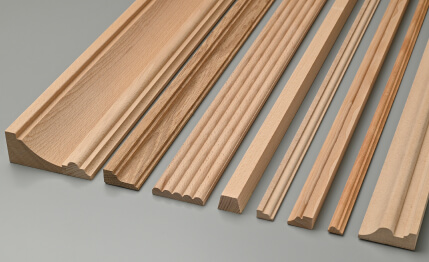
Ceiling molding—cornice or cove—isn't a Soviet-era 'teardrop' made of polystyrene. In solid oak or beech, it's a full-fledged architectural element. It creates a transition between wall and ceiling, adds shadow and depth, visually 'raises' the space. With a ceiling height of 2.7–3 m, a wide 60–100 mm cornice turns a standard room into something significantly more impressive.
Get Consultation
Accents on furniture: when a wardrobe becomes furniture
A built-in wardrobe without molding is just a box with doors. The same wardrobe with perimeter molding and a facade overlay is already a piece of furniture with character. For built-in furniture, kitchen fronts, sliding wardrobes, libraries, moldings are the finishing detail that defines the perception of the entire piece as a whole.
Creating frames and panels: wall as a gallery
A framed panel on a wall is the most striking and yet most accessible designer technique. A system of rectangular molding frames on a wall creates the 'paneled' effect of classical architecture. It's precisely for this scenariowall moldingsthat they are most often purchased.
Hiding joints and transitions: the function you don't see
Where two different materials meet—wallpaper and paint, panels and plaster, wood paneling and drywall—there's always a joint line. Molding neatly covers it once and for all, and even decorates the transition.
Visual correction: when architecture is 'not quite right'
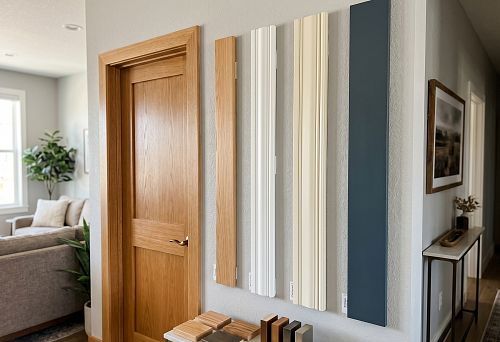
Low ceiling? Narrow room? Too long a hallway? Moldings correct spatial perception through optical techniques. Vertical profiles elongate, horizontal ones widen. A narrow profile matching the wall color 'removes' the wall. A contrasting wide profile accentuates—and enlarges.
Which interior moldings to buy for your task
Different surfaces—different application scenarios. Let's go through them honestly and specifically.
Wall moldings
Wall moldings—the broadest market. The profile is mounted directly on the wall and creates frames, horizontal bands, vertical pilasters, or simply a single accent element.
For framed panels—a medium profile 25–50 mm. For a horizontal 'base/top' band—a profile with pronounced relief, 30–60 mm. For an accent wall—a wider or more richly textured profile.
Moldings for walls—a topic STAVROS covers in detail: from profile selection to installation techniques and quantity calculation.
Ceiling moldings
Ceiling molding—cornice, gzyms, cove—is installed in the wall/ceiling transition zone. Profile character:
-
Minimalist (15–30 mm)—for contemporary interiors, walls with high-quality finishes
-
Medium (40–70 mm) — for classic residential interiors, standard ceiling heights
-
Wide (80–150 mm) — for representative spaces, high ceilings, classic and neoclassical interiors
Wood in the ceiling area — a sense of naturalness that polymer analogs cannot convey. Solid oak with toning at the wall-ceiling junction — a detail that all guests notice but cannot always explain what exactly makes the interior 'different'.
Moldings for furniture
Furniture molding is a more subtle tool. It is mounted along the perimeter of facades, on horizontal shelves, along the contour of door panels in built-in wardrobes or kitchen units. The profile here is of smaller cross-section (10–30 mm) but with precise relief.
The main principle: molding on furniture and molding on walls — from the same series. Then furniture and walls form a unified architectural system. This is a professional technique used in premium custom furniture.
Forclassic furniturein Empire, Baroque, or Neo-Renaissance style — carved furniture molding made of oak with gilding or patina. For modern built-in furniture — a smooth profile under enamel.
Moldings for doors
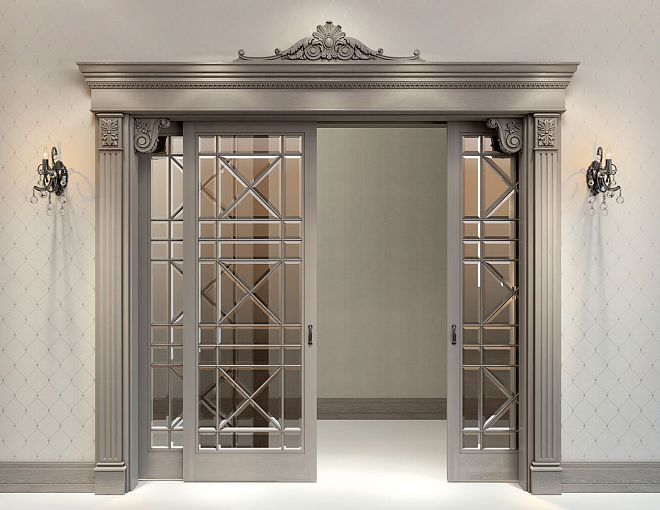
Door molding is a casing in an expanded sense. Not only does it cover the gap between the door frame and the wall, but it also forms a 'frame' for the door as an architectural element. In a classic interior, a door without molding framing is an unfinished object.
Door moldings often include a horizontal belt — 'ears' (corner overlays) and a central frieze above the opening. This is a complete classic system for framing a doorway, familiar from palace architecture — and quite feasible in a modern apartment.
Moldings for decorative panels and frames
A decorative wall panel made from molding is one of the most popular techniques in residential design in recent years. It's not a painting, not a mirror, not a poster—it's simply a frame. A frame as such, as a plastic form on the wall surface.
Several frames of different scales on one wall, painted in matching or contrasting tones—this is a full-fledged decorative composition.buy interior moldingsfor such a task means purchasing linear profile and cutting it to the required frames. The simplicity is deceptive: the result can be very powerful.
Moldings for framing mirrors and paintings
A mirror in a wooden frame is not just a mirror. It's a decorative object with a statement. A 50–80 mm profile made of oak with a geometric cross-section, stained to resemble dark walnut—and a simple mirror becomes an interior piece.
For paintings—proportion is fundamentally important: the width of the profile relative to the size of the canvas. A small watercolor 20×30 cm—profile 15–25 mm. A large oil painting 80×100 cm—profile 45–80 mm.
Wooden moldings or MDF: what to choose
This is the central question for most buyers. The honest answer: both options are good—in the right context.
When solid wood is needed
Solid wood — for interiors where the naturalness of the material is valuable in itself. When you want to see the wood grain, want the tactile feel of a solid material, want a finish with oil-wax or tinted varnish while preserving the grain pattern — only solid wood.
Oak — density 700–750 kg/m³, hard, durable, with a pronounced large grain pattern. The best choice for profiles for tinting, oil-wax, patina. Visually 'substantial' even in small cross-sections.
Beech — fine-pored, uniform, without a pronounced grain pattern. Ideal for profiles for enamel: the surface accepts paint evenly, without spotting. With natural tinting — a delicate pinkish tone, calm and elegant.
Wooden moldings for interiormade of oak and beech — is an investment for decades. With proper care, such profiles do not lose their appearance for 30–50 years.
When MDF is more practical
MDF (Medium Density Fiberboard) of high density — pressed wood fibers with a binding resin. Uniform, isotropic, without grain direction. Important properties:
-
Precise milling: complex relief without chipping along the grain
-
Perfectly smooth surface: no pores, no grain pattern, no spotting
-
Stability: less responsive to humidity fluctuations than solid wood
-
Price: 1.5–3 times more affordable than wood with an equivalent profile
For 'paint-grade moldings' tasks, MDF is unrivaled. White wall + white MDF profile + white enamel = monochrome decor with no visual 'seams.' This technique dominates contemporary residential design.
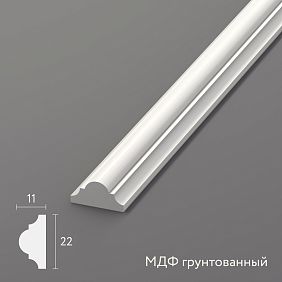
MDF moldings for interior— a separate category in the STAVROS catalog featuring profiles for painting, primed and ready for finishing.
Primed MDF for painting
Primed MDF profile is the best choice for DIY painting. The surface is already prepared: sanded and primed. Apply 2 coats of finish enamel — and you're done. No preliminary operations required.
For natural finish: wood
Natural finishes — oil, wax, stain — only work with real wood. Oiling MDF is pointless: no pores, no absorption, no effect. If you want a warm, natural coating with visible texture — only solid wood.
For contemporary interior
Modern interior — smooth MDF for painting. Minimalist profile 15–35 mm, monochrome, geometry. No relief, no patterns.
For a classic interior
Classic interior — solid oak with tinting or gilding, carved profile, corner decorative elements. No MDF in areas where the profile is seen up close: natural wood feels fundamentally different there.
How to choose moldings to match the interior style
Molding profile is not just a cross-section. It is an 'accent' or 'silence': the degree of decorative activity of the profile should correspond to the overall language of the interior.
Classic: history in every line
Classic interior operates with historical forms: ovolo, cyma reversa, fillet, scotia, bead, astragal. Each of these cross-sections has a name and origin in Greek and Roman architecture. In the right combination, they create a sense of time, weight, culture.
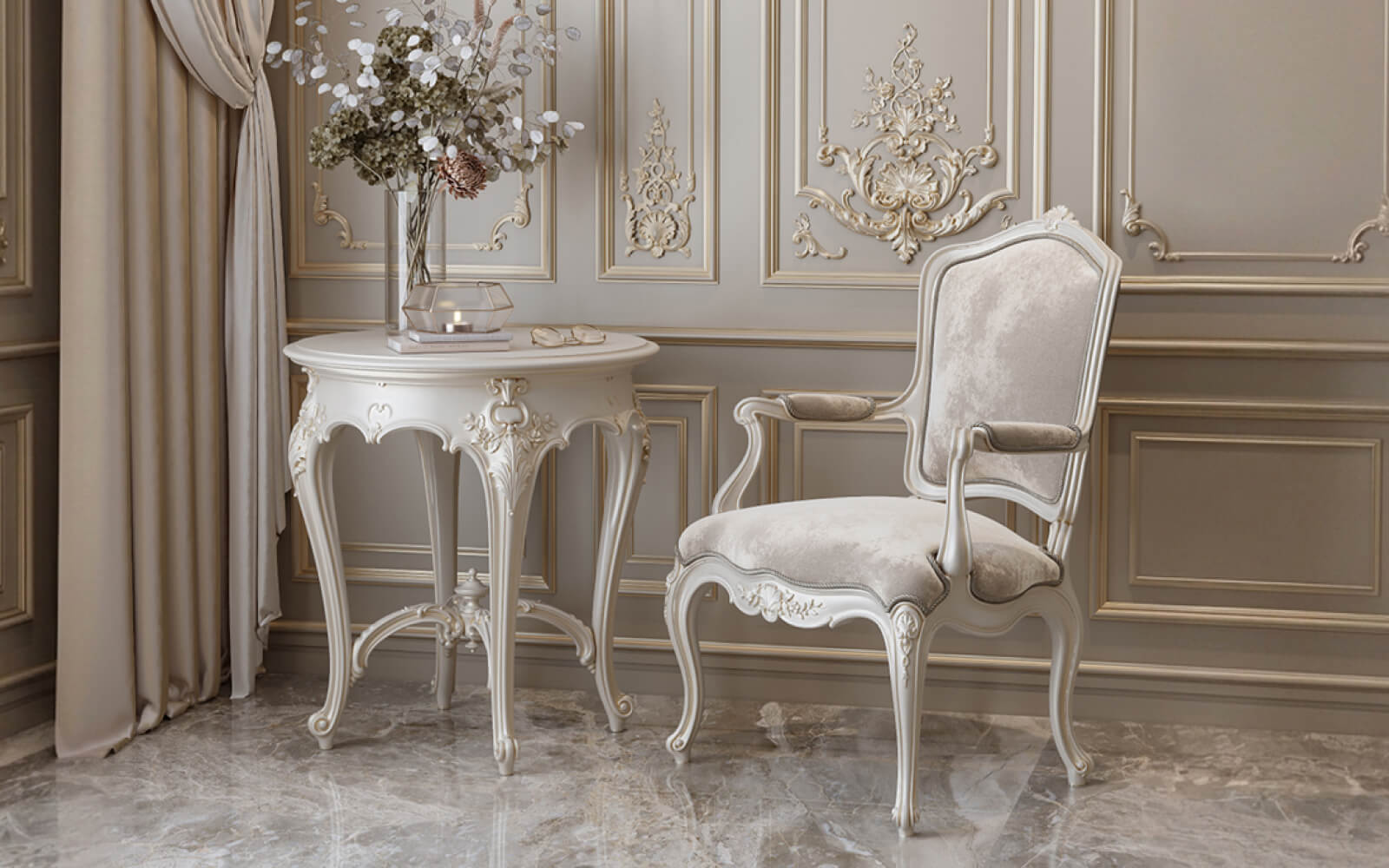
For classic — wide profile from 45 mm, with several relief transitions, made of solid oak. Tinting under dark walnut, with patina or gilding. Additionally —Molding corner piecesin the form of cartouches, rosettes, medallions.
Neoclassical: strictness without excess
Neoclassical style is classic through a contemporary lens. Historical proportions, but without ornamental overload. Profile — 30–60 mm, with one or two clear transitions, geometric section without floral motifs. Material — oak with natural tinting or beech under white enamel.
A neoclassical interior looks good with geometric corner appliqués — without carving, just a square or diamond-shaped appliqué.
Contemporary style: geometry and neutrality
A contemporary interior does not tolerate decorative noise. Molding here is a structuring tool, not a decorative one. Profile — smooth or with one bevel, 15–35 mm, for painting to match the wall color.Modern interior moldings— a topic to which STAVROS dedicated a separate article: how to use a laconic profile in a modern living space.
Minimalism: less is more
A minimalist interior 'does not like' moldings — in the traditional sense. But a horizontal cut on the wall, a narrow 8–15 mm profile under plaster, one geometric accent — that is minimalist molding. It is not visible as 'decoration,' it reads as an architectural line.
Accent compositions: when molding is the main character
An accent wall with a molding system — when a full panel program is built on one of the four walls, painted in a contrasting tone. Here, molding is the center of the design solution, not an accompaniment. Profile — richer, possibly with decorative corner elements. Contrasting paint enhances the effect.
How to choose moldings for different rooms
One profile, different contexts. Let's break it down by rooms: which molding is appropriate and which will be excessive.
Moldings for the living room
Living room — the main space of the house, it is here that the design statement should be the most complete. Classic scheme: panel moldings on the wall behind the sofa, a horizontal belt at a height of 90–110 cm around the perimeter, a wide ceiling cornice.
Profile — medium or wide (35–80 mm), depending on ceiling height. Oak under tinting or beech under white enamel. Decor for moldings — corner overlays on the panels behind the sofa, if the interior is classic or neoclassical.
Moldings for the bedroom
Bedroom — a space for rest, and the molding system here should be calm, not overloaded. Optimal: one horizontal belt at the height of the headboard (80–90 cm from the floor) or a frame panel directly behind the headboard — as a 'frame' for the bed.
Accent wall behind the bed with moldings — one of the strongest techniques in a bedroom interior. Contrast painting inside the frames adds depth.
Moldings for the kitchen
In the kitchen, molding works primarily in the transition zone between the backsplash and upper cabinets, around the perimeter of the cabinet fronts, and in the ceiling area. Material — moisture-resistant MDF or well-varnished solid wood. Profile — small, functional, for painting or to match the cabinet tone.
Moldings for the bathroom
Bathroom — a high humidity zone. For it — only moisture-resistant MDF or high-quality lacquered solid wood. Moldings are used in dry areas: above the zone of direct contact with water. For hiding tile joints — special profiles made of NON-wooden materials. Wooden molding — for decorative frames on the upper part of the wall, ceiling cornice, mirror framing.
Moldings for the hallway
The hallway is the first thing a guest sees. A small space that requires architectural conviction. Molded panels in the hallway create a sense of a 'luxurious' interior literally from the threshold. Narrow and medium profile (20–40 mm), vertical frames from the baseboard to the waist — this is the classic hallway. The combination:Wooden baseboard+ a wall molding from the same series — and the lower zone of the wall becomes a unified system.
Moldings for the nursery
In the nursery — moldings are light, narrow, paintable. Frame panels at a height of 70–120 cm from the floor create a zone of playful accent. Inside the frames — a chalkboard, magnetic paint, bright accent colors. Profile — MDF for enamel, small format.
Molding decor: when corner and decorative elements are needed
Molding as a linear element requires a solution at points of direction change — corners. And hereDecor for Molding— it is not an option, but part of the system.
Corner elements: simplifying installation and decorative accent
A corner element is a decorative overlay at the intersection point of two moldings. It covers the corner without cutting at 45°: simply glued at the intersection point over the joint. This:
-
Significantly simplifies installation (no need for precise corner cutting)
-
Adds a decorative accent—a rosette, medallion, or cartouche—exactly where the gaze lingers longest.
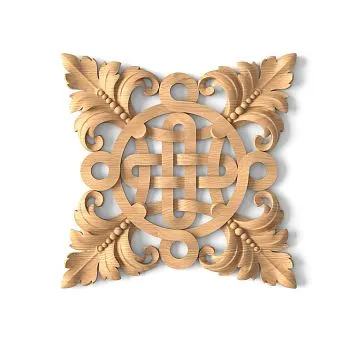
Molding corner piecesin the STAVROS catalog: from minimalist square overlays to carved rosettes and medallions.
Center overlays: accent within the frame
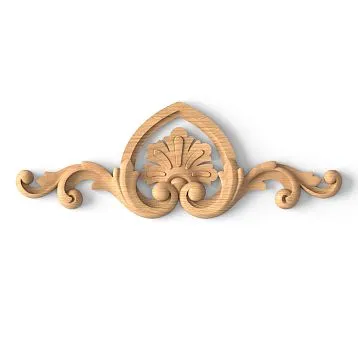
A center overlay is a decorative element at the center of a molding panel. A medallion, rosette, or geometric insert. Used in large panels for formal interiors: living rooms with high ceilings, libraries, meeting rooms.
The size of the center overlay is proportionate to the frame: for a 60×90 cm panel, an 8–12 cm overlay. For a large 120×160 cm panel—a 15–25 cm overlay.
Connector decor
Connector decor—elements that cover molding joints at points where the profile changes direction at non-right angles: on arches, oval frames, complex transitions. Allows creating custom panel shapes without visible seams.
Carved decor: when detail is art
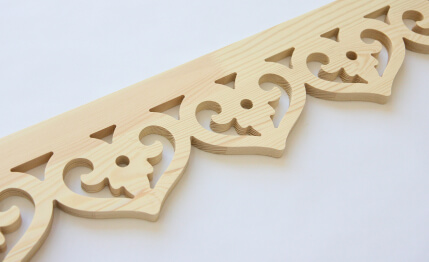
Carved decorative elements made of oak—corner overlays with ornament, overlays with acanthus leaf, ribbon, or lambrequin—represent the highest level of decorative detailing. Used in projects aiming for historical accuracy: restoration, formal residences, hotel and restaurant interiors.
molding decorative elements—in the STAVROS catalog, several series: from strict geometric to intricate carved with historical motifs.
Ready-made compositions for classic interiors
The most professional approach: molding + corner overlays + central elements from one series. All from the same material, same finish, same relief vocabulary. STAVROS offers exactly such a system: serial solutions where all elements match without additional fitting.
How to combine moldings with walls, furniture, and ceilings
Scattered decor is not an interior. Molding works at maximum strength only within a system.
Unified rhythm in the interior
One profile on all surfaces is the main principle. Molding on walls and molding on furniture of the same cross-section create a 'unified voice' for the interior. The gaze moves from wall to cabinet, from cabinet to door — and everywhere encounters the same shape, same cross-section, same material. This is visual unity.
Repetition of profiles across all levels
The molding profile sets the tone — from floor to ceiling.wooden baseboard→ horizontal wall belt → molding frames → ceiling cornice. If the cross-section of each echoes the others — the interior reads as designed, not as assembled from random parts.
To implement this idea comprehensively: seewooden skirting board purchase— features skirting board series that coordinate with the STAVROS molding collection.
Connecting walls and furniture through a unified profile
A furniture front with molding and a wall panel with molding from the same series is a high-level design technique. This is how palace-era interiors were built: furniture was an extension of the walls, and walls were an extension of the architecture.
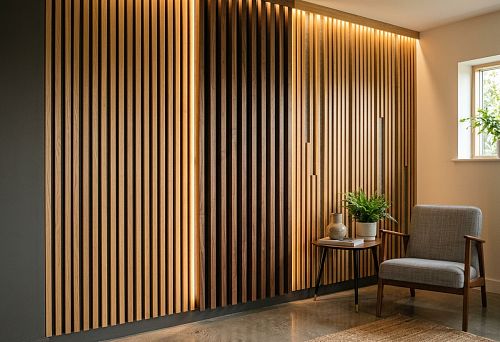
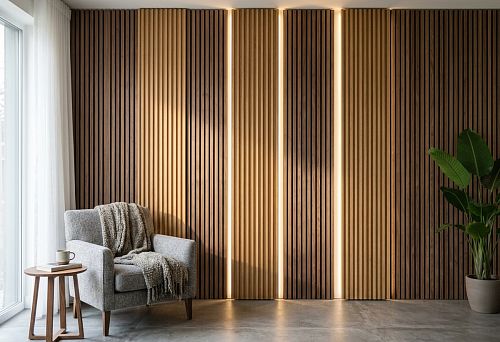
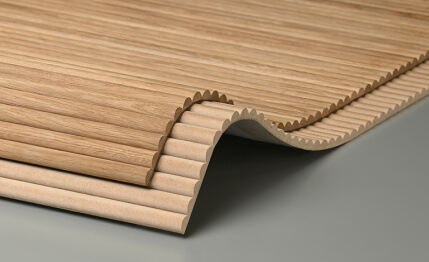
Visual rhymes in an interior are not a coincidence; they are a system.Wooden plankin the same series complements the molding program for those who combine slatted decor with framed decor.
Panel compositions: space as architecture
A complete panel program for one room: four walls with molding frames, a horizontal belt, a ceiling cornice, and a skirting board. All from the same profile, the same material. This is not a quick project, but it delivers the most powerful result. A room with such a system feels like a designed space, not just a 'renovation'.
Accent zones: focus through a single molding
If a full program is not planned—choose one wall, one zone, one accent. The wall behind the sofa with two or three molding frames is already a story. A niche in the bedroom with molding framing is already design. The area above the fireplace with a wide molding frame is already an architectural accent.
What determines the price of interior moldings
Moldings are sold by the linear meter, with a price range from 120 to 15,000 rubles per meter. We'll explain each factor.
Material
Price hierarchy: MDF < beech < oak. MDF is about half the price of beech for the same profile. Oak is 15–25% more expensive than beech. Carved oak is in a completely different price zone.
Profile width
Direct relationship: width × material density = material cost per linear meter. An 80 mm profile is 4 times 'heavier' than a 20 mm profile.
Relief and complexity of milling
Smooth profile — one milling operation. Figurative — 3–4 operations. Carved with ornament — 3D milling + manual finishing. The price difference between a smooth and carved profile of the same width is 5–10 times.
Presence of decorative elements
Corner overlays and central elements are a separate cost item. When equipping a full panel program, their cost amounts to 15–30% of the molding cost.
Order volume
Retail 1–5 m — maximum price. Batch 20–30 m — wholesale terms. For project purchases (design bureaus, construction companies) — contractual terms from STAVROS.
| Profile type | Material | Approximate price |
|---|---|---|
| Smooth, 15–25 mm | MDF | from 120–280 RUB/m |
| Smooth, 15–25 mm | Beech | from 280–450 RUB/m |
| Figurative, 30–50 mm | Oak/beech | from 450–900 RUB/m |
| Geometric, 45–70 mm | Oak | from 800–2,000 RUB/m |
| Carved, 50–80 mm | Oak | from 2,000–6,000 RUB/m |
| Wide classic, 80+ mm | Oak | from 4,000+ RUB/m |
Installation nuances: briefly about the important
Wooden interior molding is installed with adhesive (construction PVA or liquid nails), with additional fixation using finishing nails 1.2×20 mm. Corners are cut at 45° using a miter box or miter saw. Joints are filled with putty and sanded before applying the final coating.
For MDF to be painted — priming joints with acrylic primer before painting is mandatory: otherwise joints will be visible under the paint.
For natural wood — material acclimatization in the room (24–48 hours) before installation is important: this reduces the risk of deformation after installation.
Baseboard MDFis installed similarly — adhesive + finishing nails or wall anchors.
Where to buy interior moldings without mistakes
Determine the surface and task
Walls — moldings for frame panels or horizontal bands. Ceiling — cornice profiles. Furniture — narrow furniture molding from the same series as wall molding. Doors — casing molding with corner elements.
Determine the material
For painting — MDF or beech. For natural finish — oak or beech with oil/wax. For classic interior with wooden furniture — solid wood is mandatory, of the same species as the furniture.
Are decorative elements needed?
For a modern interior — no corner elements, clean mitered 45° corners. For classic and neoclassical — corner overlays are mandatory. For a representative interior with large panels — central overlays.
Calculate the quantity
Formula: perimeter of all panels + 15–20% margin. For one wall 4×2.7 m with four 60×90 cm frames — about 16–18 linear meters of molding.
STAVROS catalog pages for navigation
-
Furniture Handles— for a systematic solution to the furniture program
-
balusters for stairs to buy— for comprehensive wooden interior decor
About the company STAVROS
STAVROS is a Russian manufacturer of solid wood products: moldings, millwork, furniture, stair elements, and interior decor. Operating since 2002. Over more than twenty years, the company's portfolio includes the restoration of state architectural monuments and hundreds of residential and commercial interiors across Russia.
STAVROS's production foundation is its own facilities in St. Petersburg with German-class equipment. Chamber drying of wood to 8–12%, four-sided planing with a tolerance of ±0.1 mm, 3D milling of complex profiles, hand-finishing of carved elements. The molding assortment includes over 50 series: from minimalist smooth profiles to complex carved classical baguettes.
Retail from 1 linear meter. Project supplies for designers and architects. Showrooms in Moscow and St. Petersburg. Delivery across Russia and the CIS.
FAQ: Answers to popular questions
Which moldings are best for the interior?
Depends on the task and style. For modern — smooth MDF for painting. For classic — solid oak with a relief profile. A universal choice — a medium profile 30–45 mm from beech for enamel.
What's better: wooden moldings or MDF?
For natural finishing and durability — wood. For painting and budget projects — MDF. Both options, when applied correctly, give excellent results.
Which moldings are suitable for a classic interior?
Wide profile 45–80 mm with historical relief (ovolo, cavetto, bead) from oak with toning. Corner and central decorative elements are essential.
Which moldings are suitable for a modern interior?
Smooth or geometric profile 15–35 mm made of MDF or beech for painting to match the wall color. No ornaments, no corner overlays.
When is decoration needed for moldings?
In classic and neoclassical interiors — corner overlays are mandatory. In modern — no. In executive style with large panels — central overlays are desirable.
How to calculate molding quantity?
Perimeter of each panel × number of panels + 15–20% waste allowance for cutting. For a 4 m wall with four 60×90 cm frames — about 17–18 linear meters.
Can moldings be combined on walls and furniture?
Yes — and it's the best design technique. One series of profile on walls and furniture fronts creates visual unity in the interior.
Where to buy interior moldings?
In the STAVROS catalog — a full range of moldings made of oak, beech and MDF for walls, ceilings, furniture and doors, as well as decoration for moldings, skirting boards and slats. Delivery across Russia.