




























Article Contents:
- What are modillions and dentils: history and modernity
- Modillions: a console that became a symbol
- Dentils: teeth that tame the horizontal
- Where modillions and dentils are used: five scenarios
- Under the crowning cornice — the main scenario
- On the facade of a classical and neoclassical house
- Above the entrance group
- On a long, tall facade
- In representative and commercial properties
- Modillions, dentils, or brackets: which to choose for a specific task
- How to choose size and spacing: nine parameters for correct calculation
- Width and projection of the crowning cornice
- Facade height
- Cornice length and number of elements
- Alignment with window axes
- Facade style and its decor
- Size of rustications and architraves
- Interfloor belt
- Corners and downpipes
- Is there enough space between the window and the cornice
- How to combine modillions and dentils with a facade system
- Modillions + crowning cornice
- Dentils + cornice
- Modillions + dentils together
- Brackets instead of or together with modillions
- Cornice with decor + rustication
- Cornice with decor + interfloor and base belts
- Cornice + entrance group
- Installation of polyurethane modillions and dentils: step by step and precisely
- Marking: first on paper, then on the wall
- Installing the cornice — first
- Installing modillions
- Installing dentils
- Sealing
- Puttying and painting
- Kit for the upper facade zone: what to order simultaneously
- Mistakes in selection and installation: learn from others' blunders
- How to calculate the purchase: a practical algorithm from A to Z
- FAQ: Most Frequently Asked Questions
- STAVROS: details that are heard even from a distance
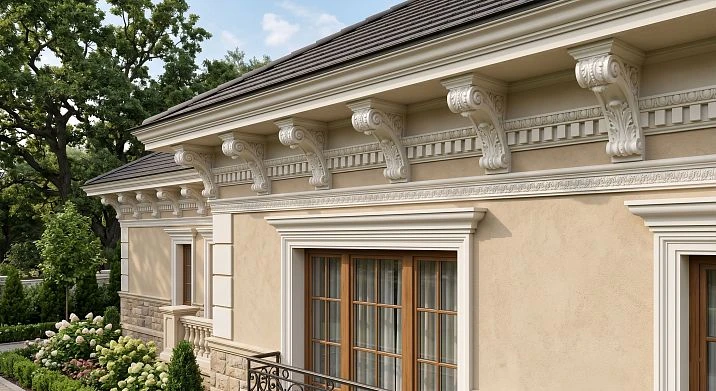
There are details that don't catch the eye — they simply make the facade better. Remove them, and the house remains normal. Keep them, and the top line of the building acquires that very depth, that rhythm, that feeling of classical refinement that is hard to describe in words but impossible not to feel.
Modillions and dentils made of polyurethane — это ритмический фасадный декор под карнизом. Модульоны — крупные консольные элементы, которые визуально «поддерживают» карнизную плиту снизу. Дентикулы — маленькие прямоугольные выступы, выстроенные в ряд под карнизом, напоминающие миниатюрный зубчатый пояс. Оба типа элементов работают на одну задачу: превратить верхний горизонтальный профиль из простой планки в архитектурный акцент с объёмом, тенью и классическим характером.
If венчающий карниз — это финальный аккорд фасадной симфонии, то модульоны и дентикулы — это те самые ноты в аккорде, которые делают его полнозвучным, а не плоским. Без них — звучит. С ними — звучит по-настоящему.
Что такое модульоны и дентикулы: история и современность
Чтобы понять, зачем вам нужны эти элементы, полезно знать, откуда они взялись. Это не придуманный декор — это живая история архитектуры, которой больше двух тысяч лет.

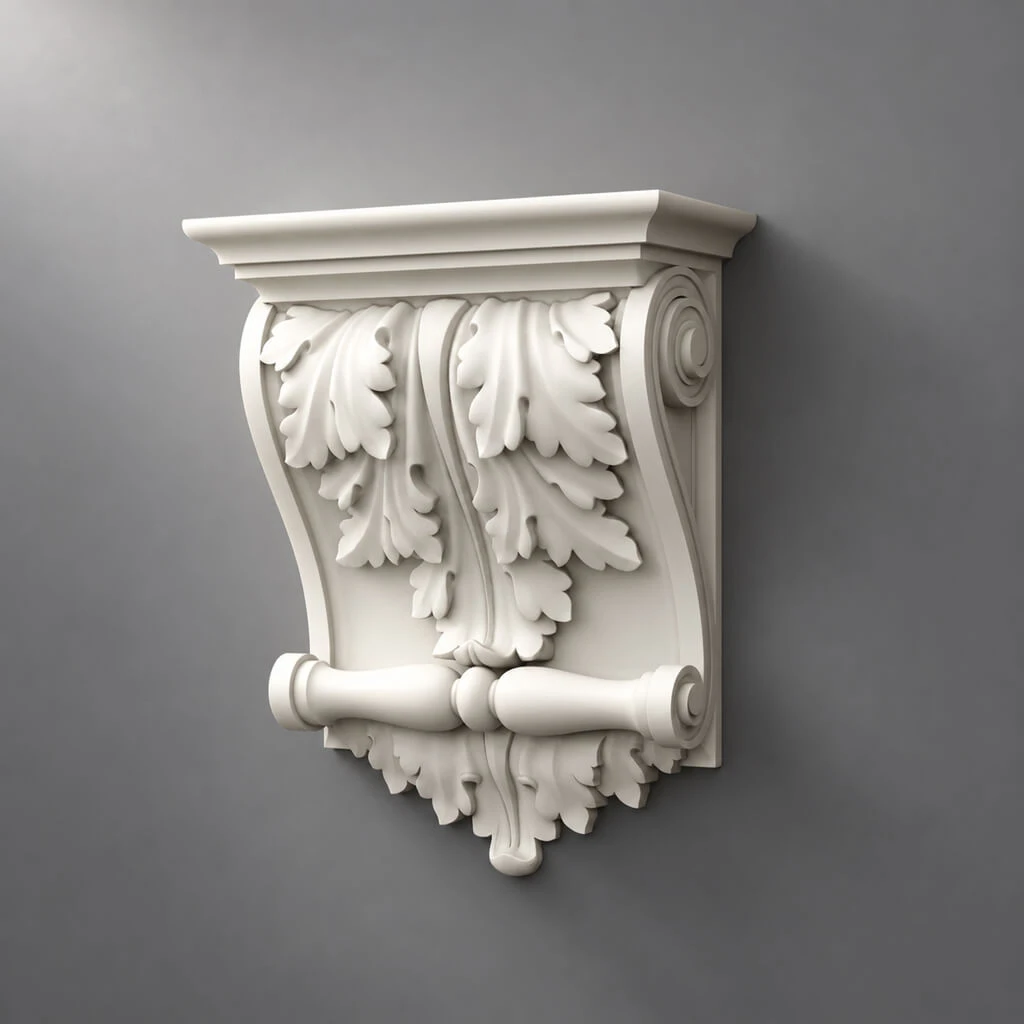
Модульоны: консоль, ставшая символом
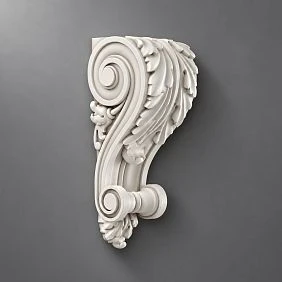
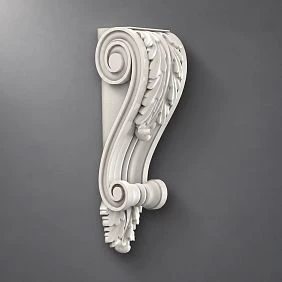
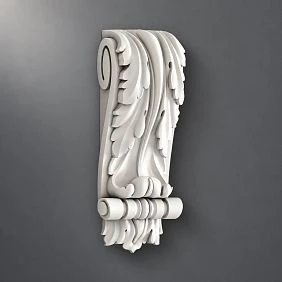
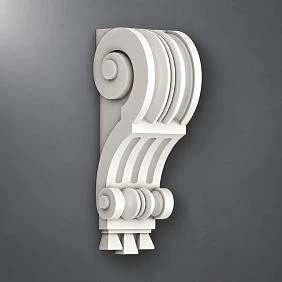
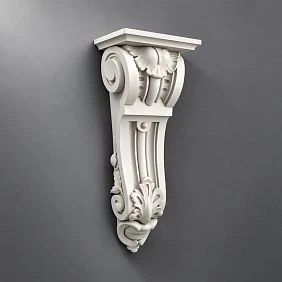
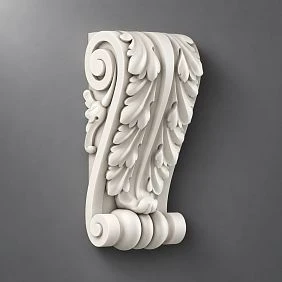
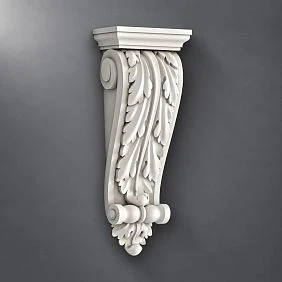
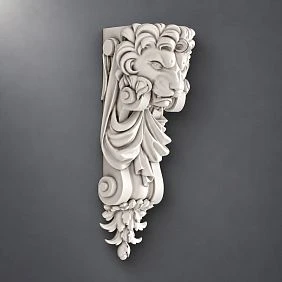
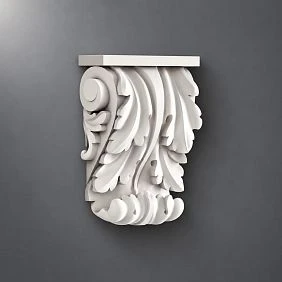
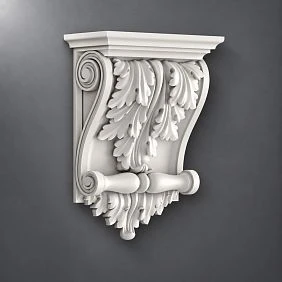
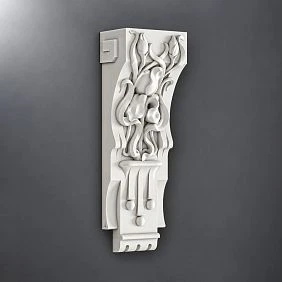
Модульон (от лат. mutulus) — это кронштейн под карнизной плитой, который в конструктивной архитектуре реально поддерживал нависающий карниз. В дорическом ордере они назывались мутулами и имели строгую прямоугольную форму. В ионическом и коринфском ордере превратились в более изысканные волютообразные консоли — модульоны в привычном понимании.
Со временем конструктивная роль исчезла, декоративная осталась. Модульон стал символом «поддержки» — визуальной метафорой опоры. Взгляд воспринимает его как реальную точку приложения силы, хотя физически он ничего не держит. Это и есть магия классической архитектуры: убедить глаз в том, что форма обоснована.
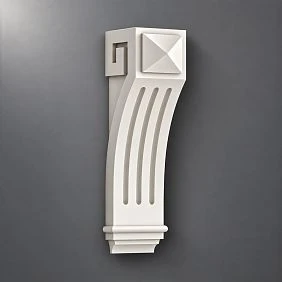
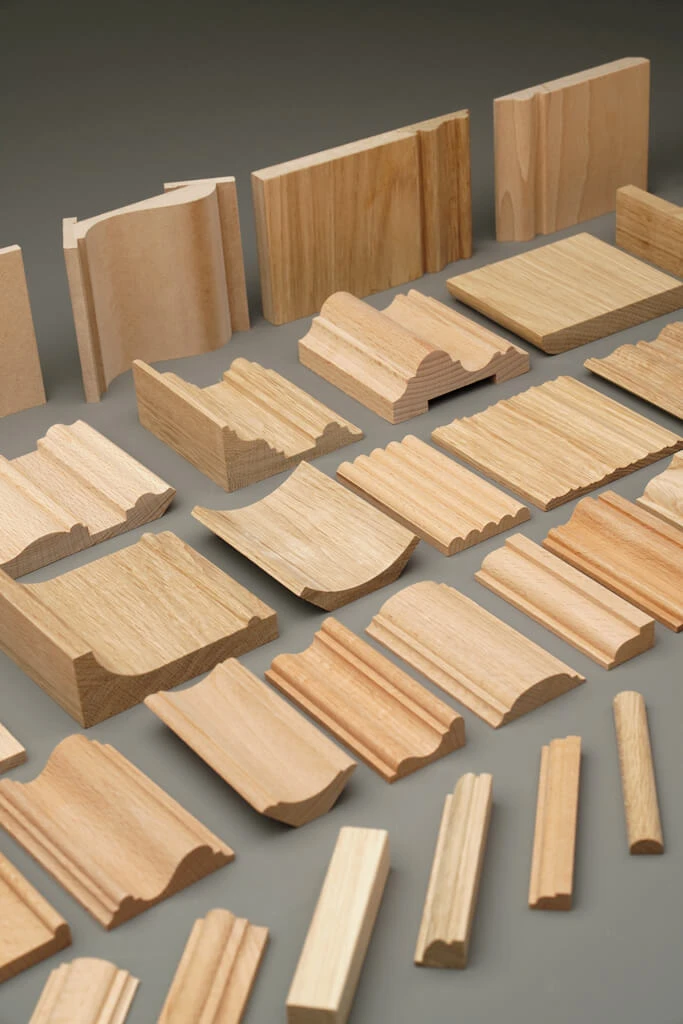
В современном исполнении из полиуретана модульон — это объёмный элемент шириной 60–150 мм, высотой 100–200 мм, глубиной 80–160 мм. Монтируется под карнизной плитой с шагом 300–800 мм. Поверхность — гладкая, с чистыми гранями или с рельефным профилем (волюта, акант, простой каблучок). Заводски загрунтован, готов к окраске без дополнительной подготовки.
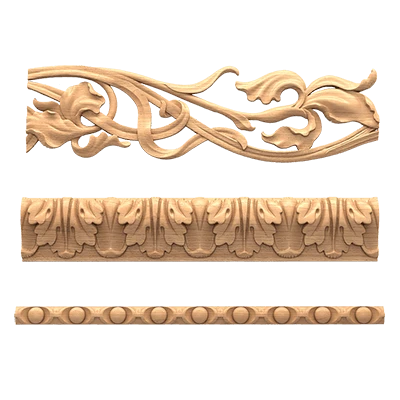
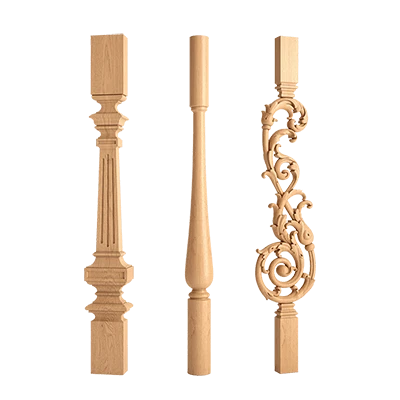
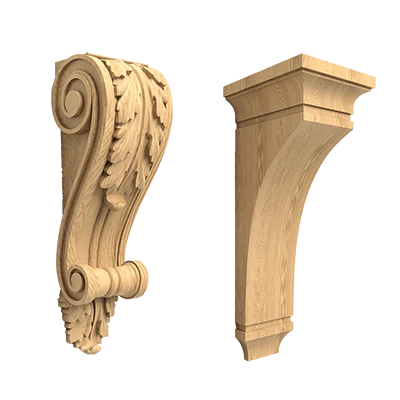
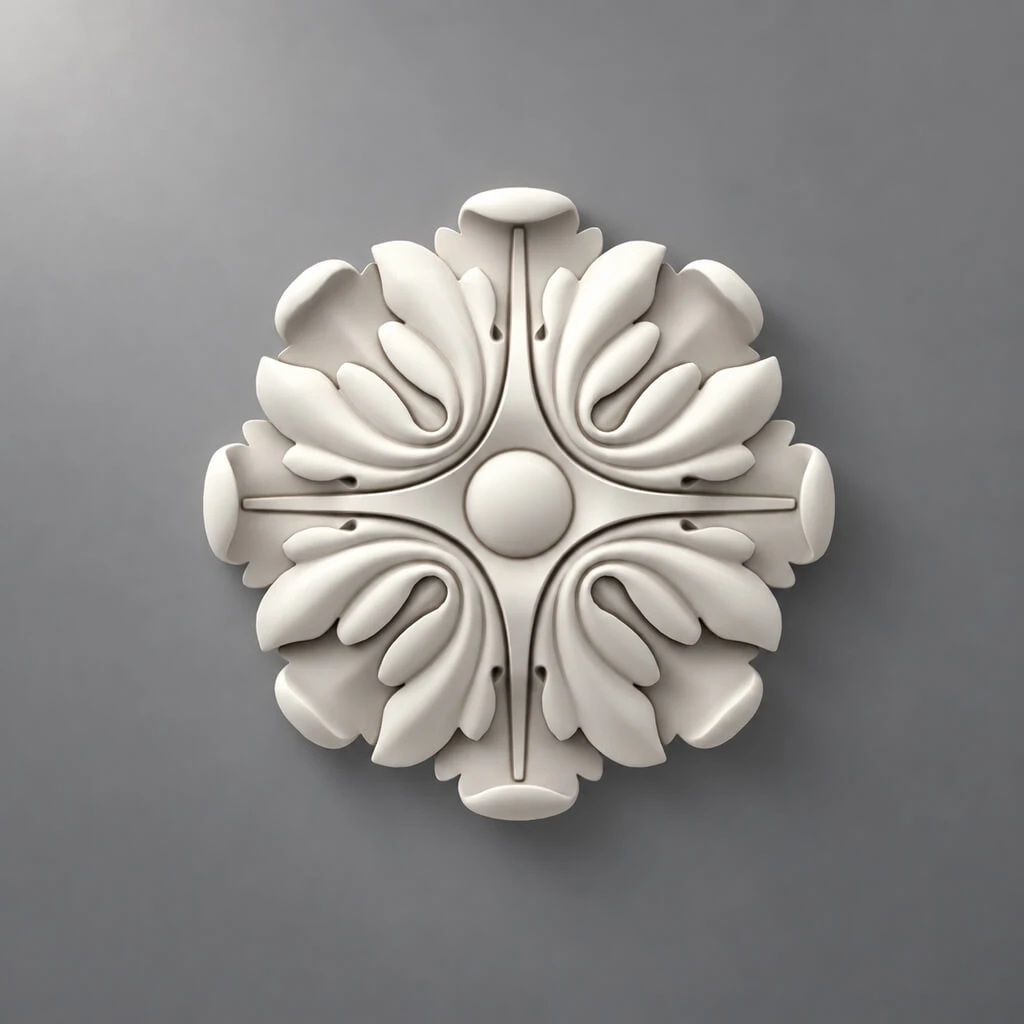
Our factory also produces:
Дентикулы: зубья, которые укрощают горизонталь
Dentil (from Latin denticulae — "small teeth") is a small rectangular projection in a horizontal row. In classical architecture, dentils were placed in the cornice zone of the Ionic order, between the band and the cornice slab. Their role is not structural but rhythmic: to create fine plasticity in the transition zone, to break the horizontal into equal modules, and to enhance the play of light and shadow.
The spacing of dentils is strictly calculated: according to the classical rule, the width of a dentil equals half its height, and the gap between dentils equals half their width. In modern polyurethane execution, dentils are supplied either as individual elements or as a ready-made belt — a long profile with molded "teeth."
Dimensions: dentil height — 30–80 mm, width — 20–50 mm, projection depth — 20–40 mm. Gap between dentils — 10–30 mm. For a large cornice — a taller dentil, for a light neoclassical one — smaller.
Polyurethane molding for house facades — it is always a system of small and large, rhythm and accent. Modillions and dentils are precisely rhythm: they do not dominate, but without them the upper zone of the facade loses half its architectural persuasiveness.
Get Consultation
Where modillions and dentils are used: five scenarios
Under the crowning cornice — the main scenario
The upper zone of the facade — from the level of the top floor to the roof — is the most visible part of the house from the street. It is here that the silhouette is read against the sky. And if Crowning cornice made of polyurethane provides the top line, then the modillions beneath it create volume, shadow, and a sense of mass.
Classical solution: wide cornice (200–350 mm) + modillions every 400–600 mm + dentils in the frieze zone under the modillions. Three layers of detailing in a vertical zone 300–500 mm high — and the top of the facade acquires a picturesqueness that cannot be achieved with a single profile.
On the facade of a classical and neoclassical house
This is a target audience for modillions and dentils. Classics require consistency: you cannot install classic architraves and classic rustication while leaving the upper zone empty. An unfilled frieze under the cornice in a classic house is an incompleteness that even non-specialists can feel.
Facade decoration made of polyurethane in a classic execution always implies filling all zones: bottom (base, rustication), middle (windows with architraves), top (cornice with modillions or dentils).
Above the entrance group
The entrance portal is the place of greatest architectural concentration. If above the door there is polyurethane pediment with brackets or a cornice with a pediment, then under this cornice modillions become especially appropriate. They add a sense of "weight" — that the portal is truly important, that it is the main entrance, not an ordinary opening.
Typical scheme: cornice above the entrance + 3–5 modillions with a spacing of 200–300 mm (they are placed more frequently at the entrance opening than on a regular facade — to enhance the accent).
On a long, high facade
A long horizontal line without division is boring. Dentils and modillions under the cornice break the monotony of a long upper line into equal rhythmic units. Even a simple dentil band 20 m long turns a flat horizontal line into a living architectural line with a pulse.
In representative and commercial objects
Hotels, country clubs, showrooms, restaurants, administrative buildings in a classic style — everywhere where architecture should convey status. Modillions and dentils are the most "speaking" signal of the architectural class of a building. They mean: details were thought about here.
Modillions, dentils, or brackets: what to choose for a specific task
| Task | Optimal choice |
|---|---|
| Large rhythm, sense of support | Modillions |
| Fine classical detailing | Dentils |
| Visual support for a wide overhang | Polyurethane brackets |
| Strict neoclassicism | Dentils (moderate rhythm) |
| Full classicism, rich facade | Modillions + dentils |
| Palace or Baroque style | Cornice + modillions + ornamental frieze |
| Modern facade | Simple cornice without overload |
| Entrance portal | Cornice + brackets or modillions |
Bracket and modillion are related elements, but with different visual character. The bracket is more linear, cantilevered — it clearly "holds." The modillion is more voluminous, massive — it "supports." For cornices with an overhang of more than 150 mm, both are appropriate; the choice is determined by style.
Dentils, however, are a separate story. They are never an alternative to modillions: these are different levels of hierarchy. Dentils are a small plane, modillions are a medium one. They work perfectly together: modillions with a pitch of 400–600 mm + dentils in the gaps between them is a classic scheme found on facades from Rome to St. Petersburg.
How to choose size and pitch: nine parameters for correct calculation
Width and overhang of the crowning cornice
This is the main parameter for determining the size of the modillion. A simple rule: the width (height) of the modillion should be 50–70% of the cornice height. For a cornice height of 250 mm — a modillion height of 120–175 mm. For a cornice height of 180 mm — a modillion of 90–125 mm.
Projection: the depth of the modillion should not exceed the cornice projection. Optimal is 70–90% of the projection. For a cornice with a projection of 150 mm — a modillion depth of 100–135 mm.
Facade height
The taller the building, the larger the modillions and dentils can be — because they are viewed from a greater distance. For a one-story house (height to cornice 4–5 m) — moderate modillions 80–120 mm. For a two-story house (6–8 m) — 120–180 mm. For tall facades (8–12 m) — 160–220 mm.
Cornice length and number of elements
This is the central calculation question — not "how many will fit," but "what rhythm is needed." A modillion with a spacing of 400 mm on a facade 12 m long will give 30 elements. A spacing of 600 mm — 20 elements. First, you need to determine the desired visual rhythm, and then check how it aligns with the dimensions of the piers and the position of the windows.
Alignment with window axes
This is a professional nuance that amateurs almost never consider. In classical architecture, modillions were placed strictly symmetrically relative to the window axes: one above the center of the window, one above each edge, and the rest in between — with equal spacing. This creates the feeling that the cornice is "connected" to the windows, rather than just nailed on top.
Practical rule: when marking the spacing of modillions, start from each window axis, not from the corner of the facade. Check what spacing gives a whole number of elements between window axes.
Facade style and its decor
Modillions with volutes, acanthus, or curved profiles — for rich classicism. Rectangular modillions with clean edges — for neoclassicism and strict classicism. Simple consoles with a single cyma — for a modern home with classical touches.
Dentils are equally appropriate in neoclassicism and classicism. Their difference lies in proportion: for neoclassicism they are narrower and lower, for classicism — wider and more expressive.
Size of rustications and architraves
Polyurethane rustication at the corners set the scale module for all facade decor. The width of the rustication block is a guide for the height of the modillion: the modillion in height is equal to or slightly less than the width of the rustication block.
Facade trim set the width of profiles in the middle zone of the facade. Dentils in depth of projection should be proportionate to the projection of architraves: if architraves have a projection of 30 mm, dentils — 25–35 mm.
Interfloor belt
If the facade has Interfloor belt made of polyurethane, its height sets the lower limit for other horizontal elements. Dentils in height should be less than the interfloor belt, so that the hierarchy 'cornice with decor — main, belt — secondary' is preserved.
Corners and downpipes
On the external corners of the house, the spacing of modillions should be coordinated with the corner rustications. The corner rustication block + the modillion above it — this is an architecturally correct pairing. Downpipes — a break in the row of modillions or dentils with spacing that moves elements away from the pipe axis.
Is there enough space between the window and the cornice
A special calculation is needed for the top floor: the distance from the upper edge of the window decor (pediment or architrave) to the lower edge of the cornice with modillions — at least 200 mm. Less — the upper decor and cornice zone 'merge', losing the air between them.
How to combine modillions and dentils with a facade system
Modillions + crown cornice
Basic combination. Modillions are mounted on the lower plane of the cornice slab or adjacent to its back edge. Important: the upper edge of the modillion coincides with the lower edge of the cornice — without gaps, without steps. Only assembly adhesive + dowel from below.
Dentils + cornice
Dentils are installed in the frieze area — under the main cornice slab. In a composite cornice (cornice + frieze + architrave) — in the transition zone from the frieze to the cornice slab. Alternatively, a dentil band is mounted as a separate horizontal element between the wall and the main cornice at a distance of 50–120 mm from it.
Modillions + dentils together
Classic scheme: dentils run as a continuous band; modillions stand above them at a certain spacing. Dentils — horizontal rhythm, modillions — vertical accents. Visually: a thin horizontal "comb" + large vertical "supports". This is exactly the scheme seen on St. Petersburg mansions, classical European villas, and grand facades of estate architecture.
Brackets instead of or together with modillions
Polyurethane brackets — a more expressive version of a modillion. The bracket is cantilevered, elongated, sometimes with a profile on a "leg". It is used where the architectural theme of "support" needs to be emphasized — especially under cornices with a large overhang (150 mm or more). Modillions are more appropriate under a moderate overhang, brackets under a bolder one.
Cornice with decor + rustication
Corner rustications are vertical. The cornice with modillions is horizontal. At their meeting point (the corner of the house), there must be a coordinated transition: the rustication block goes under the cornice, and the last modillion is placed directly above it — as the completion of the vertical row.
Cornice with decor + interfloor and base belts
Three horizontal lines of the facade form a system with a hierarchy of scale. plinth cornice — simple, without dentils and modillions, or with minimal decor. interfloor belt — slightly richer, a small tooth ornament is possible. The crowning cornice with modillions is the most saturated. This is how the architectural hierarchy works: the higher and more important the line, the richer its decor.
Cornice + entrance group
Above the entrance, the cornice decor is always enhanced. If there are dentils on the regular facade, modillions are added above the entrance. If there are moderate modillions everywhere, brackets with a more complex profile are added above the entrance. Principle: the entrance group is always one level richer than the regular facade.
Installation of modillions and dentils from polyurethane: step by step and precisely
Installing rhythmic decor under the cornice is a task that requires patience and accuracy. An error in the step is immediately visible: uneven gaps or a shift in the axis of one element are noticeable from 30 meters.
Marking: first on paper, then on the wall
Before taking the tape measure, draw a layout on paper (or in a simple program) for each section of the facade. Record: the length of the section, the axis of each window, the width of the piers, the position of corners and downspouts.
Determine the pitch: divide the length of the section between two window axes by an integer number of intervals. The resulting pitch is the working one. It must be the same across the entire facade.
Transfer to the wall: a laser level sets a horizontal line along the bottom edge of the modillion mounting position. Vertical axes — with a pencil at each pitch. For dentils — an additional horizontal line 50–120 mm below the cornice.
Install the cornice first
Modillions and dentils are installed after the cornice itself is in place. Do not glue decor to a bare wall and then attach the cornice: the edges will not align.
Installing modillions
Apply glue in a zigzag pattern to the back (vertical) surface and to the top horizontal platform that contacts the bottom plane of the cornice. Press against the wall, secure with temporary wedges or tape for 30–40 minutes (until the glue sets). Dowel — from below through the body into the wall, 1–2 pieces per element.
The top edge of the modillion — flush with the bottom plane of the cornice. Zero gap, tight contact, position aligned with the marking axis.
Installing dentils
The dentil band (a ready-made profile with molded teeth) is installed like a regular horizontal molding: glue in a zigzag pattern + dowels every 400–500 mm. Horizontal — strictly along the laser line. Joints between tiles — vertical, in the gap between two teeth (not in the middle of a tooth!).
If dentils are separate elements: they are mounted sequentially with step control using a template (a wooden batten of the required width, which is repositioned as a stop).
Sealing
After installing the entire row — acrylic sealant along the top seam (modillion/cornice) and along the contact perimeter of each modillion with the wall. Dentils — along the top and end seams of the band. Do not seal the lower surfaces of modillions: moisture must be able to escape.
External corners — special attention. Joints of modillions or dentil bands at corners — at 45°, with the seam filled with sealant.
Puttying and painting
Recess dowel caps, fill with putty, sand. Corner gaps — a thin layer of facade putty, sanding.
Two coats of facade acrylic paint. Modillions — with a brush: all edges, lower planes, and rear areas visible from below when looking up must be painted. Dentils — with a brush on the teeth (gaps are more important than front surfaces — they are the first to be seen in falling light).
Color — matches the cornice and other decor. Or — contrasting white on a colored wall. Both strategies work.
Kit for the upper facade zone: what to order simultaneously
The upper facade zone is not just the cornice with modillions. It is a system of several vertically connected elements that need to be selected and ordered as a set.
Crowning cornice — the main horizontal. Width, projection, relief.
Modillions or brackets — under the cornice. Spacing, size, profile.
Dentil band — in the frieze zone. Tooth size, pitch, depth.
Frieze — a smooth or ornamented strip under the dentils. For a rich facade.
Corner elements — for alignment with rustications.
All of this is ordered as one batch from one series. Different series — different proportions, different white color, different texture. Only one series guarantees visual unity.
molded decoration made of polyurethane STAVROS is available in coordinated series: cornices, moldings, modillions, brackets, dentils — all in a unified stylistic and scale logic.
Errors in selection and installation: learn from others' mistakes
They buy modillions without a selected cornice. The sizes don't match, and the modillion doesn't fit under the lower plane of the cornice. Result — a visible gap and order recalculation.
They don't calculate the element pitch. They do 'approximately every 40 cm' and get uneven gaps at corners and downspouts. The pitch is always calculated in advance — geometrically, from window axes.
Too frequent rhythm on a small facade. Modillions every 250 mm on an 8 m facade — 32 elements, fragmentation and overload. Need 400–500 mm.
Too small dentils under a large cornice. Dentils 30 mm high under a 300 mm high cornice — they simply get lost. Dentils should be visible from a distance of 10–15 m.
They mix styles. Baroque modillions with volutes on a house with minimalist rectangular architraves — a stylistic conflict.
They don't account for corners. On external corners of the house, modillions require special corner placement. If this is not done, the corner looks unfinished.
They don't seal the top seam. Water between the modillion and the cornice slab is a path to delamination and dampness. Acrylic sealant along the top joint is mandatory.
They only buy decor under the cornice, without thinking about the system. Modillions without coordinated rustications, belts, and architraves are details without context.
They don't check the cornice overhang relative to the decor. If the cornice overhangs the modillion and the lower part of the modillion is not visible from below, the meaning of the decor is lost.
They install without a template. The 'by eye' step is always inaccurate. A wooden template for 10 minutes of work guarantees perfect rhythm.
How to calculate the purchase: a practical algorithm from A to Z
Step 1. Measure the cornice line. For each facade, taking into account bay windows, risalits, and the entrance group.
Step 2. Determine where decor is needed. Around the entire perimeter is ideal. Only the main facade is acceptable.
Step 3. Choose the type of decor. Only modillions, only dentils, or both elements together.
Step 4. Determine the spacing. From window axes to corners — calculate on paper for each facade.
Step 5. Count the number of modillions. Length of cornice line / spacing + 1 (first and last element at corners). For each facade separately.
Step 6. Count the dentil band. Total length / length of one plank + 10% for cuts.
Step 7. Add corner elements. External corners: 4 pcs. (or more if the house has a complex layout). Internal corners — as needed.
Step 8. Coordinate with the cornice. Ensure the modillion size matches the height and projection of the selected cornice.
Step 9. Select consumables. Installation adhesive (1 tube / 6–8 modillions), dowels, acrylic sealant, primer, facade acrylic paint.
Step 10. Order in one batch. Together with the crowning cornice, rustications, architraves, interfloor belt, and other STAVROS facade decor.
FAQ: most frequently asked questions
What are polyurethane modillions?
These are voluminous console elements that are mounted under the facade cornice at a certain pitch. They create rhythm, shadow, and a sense of architectural "support" for the cornice from below.
What are dentils on a facade?
These are small rectangular projections arranged in a horizontal row under the cornice. They create a fine tooth-like texture that enhances the horizontal line of the cornice.
How do modillions differ from dentils?
By scale, shape, and visual effect. Modillions are large, creating a powerful rhythm. Dentils are small, creating fine detailing. They can and should be combined.
Where are modillions and dentils installed?
Under the facade cornice — on the lower plane of the cornice slab (modillions) or in the frieze area between the wall and the cornice (dentils).
Are modillions needed under the cornice?
For a classical and neoclassical facade — yes, they complete the architectural theme. For a modern minimalist house — they are not necessary.
How to calculate the pitch of modillions?
Determine the axis of each window, calculate the number of equal gaps between the axes of adjacent windows, obtain the working step. Check for each section of the facade.
Can polyurethane modillions be painted?
Absolutely. Without painting with facade acrylic paint, the surface is destroyed by ultraviolet radiation. Painting — at least two layers, including all edges and lower planes.
How to combine dentils with a crowning cornice?
The dentil band is mounted in the frieze area 50–120 mm below the lower edge of the cornice or directly under it — depending on the cornice design.
Are modillions suitable for a neoclassical facade?
Yes — provided that the modillion profile matches the neoclassical style: clean edges, moderate relief, without baroque ornamentation.
Where to buy polyurethane modillions and dentils?
In the STAVROS catalog — a full range of elements for the cornice zone of the facade: modillions, dentils, brackets, cornice profiles. Unified series, systematic approach, Contact us to confirm shipping to your destination.
STAVROS: details that are heard even from a distance
In architecture, there is a paradox: the smallest details work at the largest scale. Dentils 50 mm high, barely noticeable up close, become an expressive line from a distance of 30 meters. Modillions, which you glance past near the wall, create shadow and rhythm without which the top of the house looks unfinished. This is the logic of facade decor: details do not work for themselves — they work for the whole.
STAVROS produces modillions, dentils, brackets, and all cornice elements as part of a unified facade system. Each element is coordinated in scale, style, and relief with cornices, belts, rustications, and architraves of the same series. You are not choosing a separate "tooth" — you are choosing the architectural vocabulary your house speaks.
STAVROS — architectural details with character.