








































































Article Contents:
- Wooden plate KU-004 for menu shooting: first the portion, then the size
- Oval wooden plate in two formats: what will be in the photo, and what in the video
- KU-004 in a 9:16 frame: when it's better to turn the plate rather than buy a smaller one
- Oak plate for food photography: checking the grain and highlights on a specific piece
- One KU-004 or a second piece: how many to actually order
- Serving wooden plate on a shoot: what not to do for the sake of a shot
- How much does a KU-004 set for menu shooting cost
- How to order a wooden plate KU-004 for a shooting assignment
- Questions before buying a wooden plate for photo and video
- Can you get a square cover with the same plate from a vertical video?
- Is it enough to tell the seller the portion weight to choose the size of KU-004?
- Will a seller's photo with a ruler replace a real fitting?
- What to do if the plate only fits diagonally?
- Do you need to achieve an absolutely identical shade of the plate in all frames?
- Do you need two copies if one employee takes photos and another shoots videos?
- Can you place food on a plate treated with an interior matting compound for one take?
- Can you reduce the wait by picking up KU-004 yourself?
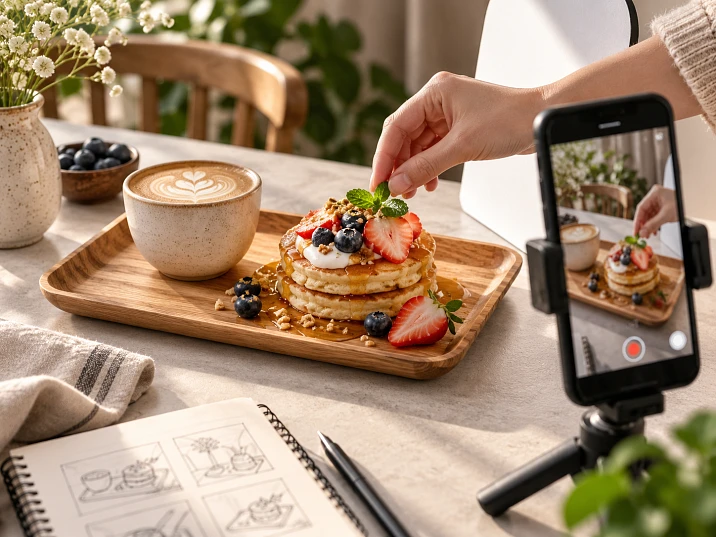
A cafe is updating its menu and shooting dishes in-house: square photos are needed for cards, and vertical frames for short videos. We want to choose expressive tableware but not buy four sizes for just a few shoots. The oval KU-004 is suitable for such preliminary selection: first, check the actual portion and two image formats, then determine the order composition.
Start with one suitable candidate, not a set. This article considers the size 300 × 180 × 22 mm. It is not universal for any dish. If the food fits on it normally, but the outline does not fit well into a vertical frame, first try rotating the plate and changing the composition. Buying a smaller one just because of the camera position is premature.
Before buy wooden plate KU-004, prepare a short brief: what you are shooting, what portion will be on the plate, whether it needs to be shown in full, and what actions will be included in the video. Below is a way to turn these answers into a specific size, a check of one sample, and a clear request to the seller.
Wooden plate KU-004 for menu shooting: first the portion, then the size
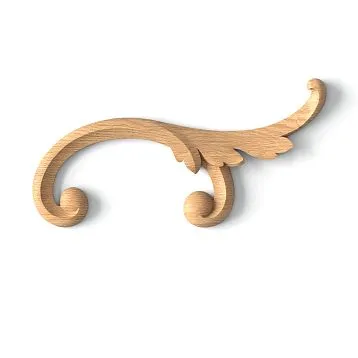
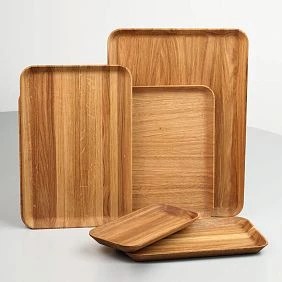
KU-004 has an oval shape. The trade table presents four oak versions with the designation "Prestige Transparent". Sizes are given as A × B × C; prices below refer to one plate as of September 6, 2026.
| Size A × B × C, mm | Material | Version designation | Price per plate |
|---|---|---|---|
| 250 × 130 × 22 | Oak | Prestige Transparent | 1 410 ₽ |
| 300 × 180 × 22 | Oak | Prestige Transparent | 1 910 ₽ |
| 360 × 240 × 22 | Oak | Prestige Transparent | 2 420 ₽ |
| 430 × 310 × 24 | Oak | Prestige Transparent | 3 140 ₽ |
The general description also mentions beech, but there is no separate beech version in this trade table. Therefore, for the option under consideration, we specify oak in the request. The exact coating composition, gloss level, and geometry of the inner food area should be clarified: the version name does not answer all these questions.
Do not start the selection with a photo of an empty plate. First, record the usual plating of the dish: the number of pieces, side dish, sauce boat, and garnishes that the guest actually receives. If it is a signature recipe, take the portion corresponding to its description. You cannot reduce the dish for the sake of a free rim or add food just because a large plate seems empty.
Compile a list. The example below shows what information is needed; it does not confirm the capacity of a specific size.
| Dish | Portion for checking | Angle | What should be visible | Candidate size |
|---|---|---|---|---|
| Appetizer from the menu | Actual serving per dish card | On top | Entire outline and all components | 300 × 180 mm |
| Dessert | One regular portion with intended decoration | At an angle | Dessert height and plate edge | 300 × 180 mm |
| Signature plating composition | Actual quantity of all ingredients | From above and at an angle | Full layout without crowding | 360 × 240 mm, if a smaller field is insufficient |
The outer dimension does not equal the usable surface. A 300 × 180 mm rectangle helps estimate the space occupied but does not reproduce the oval contour. A paper oval does not show the inner recess and rim. It cannot be used to determine whether a sauce boat will sit stably or whether a product edge will end up on a sloped surface. Parameter C — 22 or 24 mm depending on the version — also cannot be taken as the depth of the recess without a drawing. For purchasing for specific tableware within a composition, the size of its installation spot is needed, not just a general set of numbers.
A paper mock-up is useful before ordering to rule out clearly unsuitable dimensions. The final decision is made based on the actual plate or sufficient data about its internal geometry. When the task primarily concerns plating, separately review how to choose a plate for serving appetizers. For a photo shoot order, in addition to serving convenience, a check of the final frame is added.




Oval wooden plate in two formats: what will be in the photo and what in the video
For our task, a square means a 1:1 photo, a vertical format means a 9:16 video. These are the conditions of the work in question, not mandatory requirements for any social network. Clarify them before choosing props: the menu designer may leave captions around the dish, and the editor may require free space for hands to appear.
It is useful to split into four checks, even if one person will shoot on one phone.
| Material | Camera position | What to check besides the dish |
|---|---|---|
| Square photo | On top | Full outline, margins on the sides, space for utensils |
| Square photo | At an angle | Visibility of distant components, front edge, serving height |
| Vertical video | On top | Hand movement, side boundaries, space for captions |
| Vertical video | At an angle | Covering the dish with hands, movement of the utensil, background behind the plate |
First, decide which shot is essential and which is supplementary. If the menu requires a full plate, a beautiful close-up of half a dessert will not replace the main shot. If in the video the chef places the dish on the table, a static arrangement does not yet confirm that the hands and plate will remain within the frame during movement.
Do not try to obtain video by simply cropping a finished photo. A photo can be used as a separate element of the video, but it lacks the action for which the video shoot was planned. For testing, record at least the necessary episode in full: bringing in the plate, adding the final component, or the movement of the fork — depending on your task.
Review not only the camera screen but also the exported result. Overlay the actual text of the future publication: a short working word like "title" will not show how much space a long dish name will take up. Watch the video from start to finish, not just one successful still frame. Only after this is it clear whether the plate is too tight for the chosen composition or whether the shooting method itself needs to be changed.
For the first test, remove optional cups, napkins, and decorative ingredients. Return them one by one. This makes it easier to separate the issue of plate size from a cluttered environment and avoid paying for new props to fix a composition error.
Our factory also produces:
KU-004 in 9:16 frame: when it is better to rotate the plate rather than buy a smaller one
Consider a conditional flat layout. A square frame corresponds to a table area of 600 × 600 mm. From it, a central vertical 9:16 area is extracted, preserving the full height. Its width will be:
600 × 9 / 16 = 337.5 mm.
This is a calculation of the subject plane area, not the file size in pixels. It applies to the given top-down scheme and does not automatically describe the field of view of a specific phone.
Place the plate in the center of this area. The margin on each side is calculated as half the difference between the frame width and the outer size of the plate across it.
| Size and orientation KU-004 | Crosswise dimension | Calculation of the field on one side | Result |
|---|---|---|---|
| 300 × 180 mm, long side horizontal | 300 мм | (337,5 − 300) / 2 | 18.75 mm |
| 300 × 180 mm, long side vertical | 180 мм | (337,5 − 180) / 2 | 78.75 mm |
| 430 × 310 mm, long side vertical | 310 мм | (337,5 − 310) / 2 | 13.75 mm |
Rotating one size 300 × 180 mm gives 60 mm more on each side. At the same time, the plate itself did not become smaller, and the portion did not have to be reduced. Therefore, in a tight horizontal layout, the orientation is checked first.
There is also a downside: after rotation, the long dimension takes up more space in height. In our model, with a plate of 300 × 180 mm, there will be 150 mm left at the top and bottom instead of 210 mm when horizontal. These are also conditional margins around the centered outer contour, not ready-made zones for titles.
Variants with lengths of 360 and 430 mm do not fully fit within the width of 337.5 mm when horizontal. They require rotation, a wider capture area, or a pre-agreed incomplete contour. You should not discover cropped edges only after shooting all the dishes.
Let's check an additional condition. Suppose your preliminary layout requires 30 mm of free space on the left and right. This is a requirement chosen as an example, not a photographic standard. Then the allowable transverse dimension is:
337.5 − 30 − 30 = 277.5 mm.
A plate of 300 × 180 mm passes this check in vertical orientation, but not in horizontal. A size of 430 × 310 mm does not pass it even after rotation, although without additional margins its contour fit. This is how two statements differ: "the item fits" and "the desired composition is achieved."
The calculation does not account for perspective, rim height, food volume, camera tilt, or movement. A positive remainder does not guarantee space for a hand or a long caption. Use the numbers to select layouts for testing, not to declare the shoot successful. When changing the angle, re-check the actual image boundaries.
Get Consultation
Oak plate for food photography: checking the grain and reflections on a specific specimen
After choosing the outer size, the surface still needs to be checked. A light reflection stripe may cross a needed detail of the dish, and a pronounced wood grain may become more noticeable than the plating itself. Evaluating this from a small product image is insufficient: in practice, your background, your portion, and your lighting will come into play.
Conduct a sequential test. Place one plate with a typical portion on the work surface. Fix the camera position and lighting. Shoot a general view and a close-up. Then rotate the plate, keeping other conditions the same, and repeat the shots. If you change the background, move the lamp, and alter the angle at the same time, it will be difficult to determine the cause of any improvement.
The goal is not necessarily to completely eliminate reflections. Check whether they hide the edge of the product, interfere with reading the texture, or become the most noticeable part of the frame. The decision to "keep" or "reshoot" should be based on a specific result, not on a promise that wood does not reflect at all.
"Prestige Transparent" is not a specified degree of matteness. Do not order a second copy expecting a different gloss until the seller confirms the difference in coatings. The published table does not have a separate "matte / glossy" selection.
For reshoots, keep the card of the working copy. Enter the size, a photo of the blank front surface, the orientation of the long side, camera position, background, light placement, and names of successful files. Photograph distinctive areas of the pattern rather than marking them with a marker on the food surface.
If using window light, additionally record the time and nature of the lighting. On another day, compare new shots with the reference, not just with your memory of the previous shoot. Do not promise identical results under changed conditions.
Record results specifically. Instead of "the plate is suitable for video," use the format: "Dish ____; copy ____; orientation ____; file ____; all components visible — yes / no; required action fits — yes / no; text does not cover the serving — yes / no." Then leave a field "What to change." This is an empty form for your check, not an already filled protocol.
If there is only one unsuccessful shot, describe it separately: for example, when bringing in the plate, the hand covers the far component. Such a record allows changing the direction of movement and repeating the episode. The phrase "need a smaller plate" without describing the reason immediately turns any problem into a new purchase, although changing the size may not be required.
A second plate of the same size cannot be considered visually indistinguishable from the first. When reshooting one menu item, it is desirable to use the same working copy. If it has been replaced, take a control shot and check how much the new surface differs in the already finished series. These actions are a proposed verification procedure, not a report on KU-004 tests.
One KU-004 or a second copy: how many to actually order
The quantity depends on the shooting process. One main item is suitable for sequential work if it can be prepared for the next serving and this does not disrupt the schedule. The number of dishes on the menu by itself does not mean that you need the same number of plates for photographing.
A second copy of the same size solves a different task: while the first serving is in front of the camera, the next one is prepared separately. Here, the reason for the purchase is simultaneous work, not the desire to fill a collection. Before ordering, clarify who prepares the next portion and where it waits for its shot. Without this, an additional plate may change nothing.
A different size is needed when a separate requirement is confirmed. For example, the actual serving composition does not fit on the usable surface of 300 × 180 mm, although it is convenient to shoot a small dessert on it. Then 360 × 240 mm is checked specifically for the large layout. Rotating the camera will not increase the surface on which the food must stand.
The opposite case is possible: there is enough useful space, but too much visible wood remains around a small dish. First, check a closer shot if the assignment allows it. When a full plate is required, a smaller size may be more appropriate. This decision is made based on the serving, not by the general rule "less is better for photos."
A trial piece that fits and remains in use is included in the final set. If two identical plates are needed after the test and one already exists, only one needs to be purchased. An unsuitable purchase, on the contrary, cannot be recorded as part of a useful set just for a nice total: its further use is decided separately.
When KU-004 fails the portion check or does not suit the care routine, it is more reasonable Buy wooden plates to choose another suitable shape and finish after comparison, or to abandon wooden props. Several equally unsuitable items will not fix the problem.
Serving wooden plate on set: what not to do for the sake of a shot
Care must be built into the shooting day in advance. For KU-004, the manufacturer specifies hand washing with warm water and a mild detergent, no prolonged soaking, wiping dry after washing, and dry, ventilated storage. Arrange for a person, place, and time for these operations, especially if only one working piece is used.
Do not leave the plate in water while rearranging lights or approving shots. First prepare the next shooting position, then handle the serving. After cleaning, check the surface before the next frame: remnants of the previous dish must not become part of the next composition.
Plan ingredient cutting on the designated cutting surface. The plate is for assembling the serving. If the video is specifically about knife work, that episode requires the appropriate item, not unverified use of the serving KU-004.
Do not remove unwanted reflections with interior paint, glue, or matting spray on a surface that contacts food. Start with lighting and the item's position. Coordinate finish restoration with the manufacturer for the specific version, not choosing a product just because the packaging says "oil."
A shooting task also does not turn the product into cookware or reheating ware. For KU-004, the restriction on microwave use is explicitly stated. If the process requires heating the plate itself, that scenario must be reconsidered, not tested on a purchased piece.
How much does the KU-004 kit for menu photography cost?
Let's compare three possible purchase compositions at prices as of September 6, 2026. These are arithmetic options, not ready-made seller sets.
| Composition | Calculation | Cost of items only |
|---|---|---|
| One KU-004 300 × 180 × 22 mm | 1 × 1 910 ₽ | 1 910 ₽ |
| Two KU-004 300 × 180 × 22 mm | 2 × 1 910 ₽ | 3 820 ₽ |
| One 300 × 180 × 22 mm and one 360 × 240 × 22 mm | 1 910 + 2 420 ₽ | 4 330 ₽ |
Between the last two options, the difference is 510 ₽, but they solve different tasks. Two identical plates help prepare presentations of the same format in parallel. Two sizes provide different placement areas. You cannot choose the cheaper composition without checking whether it suits the required shots.
When purchasing in stages, keep two totals: already spent and to be paid. If one suitable KU-004 300 × 180 mm was purchased for 1,910 ₽, for a set of two such plates the cost of items remains 3,820 ₽, and the additional purchase is 1,910 ₽ at an unchanged price. Deliveries may differ — they are accounted for according to actual offers.
The full prop budget consists of items, agreed additional positions, packaging if charged separately, and order receipt. Expenses for products, background, and the shooting team's work are recorded in the shooting budget, not called the plate price. Before payment, check current prices and payment and delivery terms. The amounts provided do not promise profitability or growth in menu sales.
How to order wooden plate KU-004 for a shooting assignment
The request must describe the specific execution. The name "oval wooden plate for photos" is not enough: the same purpose does not determine the size, quantity, and delivery date.
For the first test order, you can use the following text, replacing the fields with your own data:
Need a wooden plate KU-004, 300 × 180 × 22 mm, oak, finish "Prestige Transparent", 1 piece. Usage — shooting real plating for a menu and vertical video. Please confirm the selected finish, coating composition, and care instructions, provide the dimensions of the inner field or provide data for its assessment. Required delivery date — ____. Recipient and address — ____. Please indicate the cost of the item, separately charged packaging, delivery method, and the total amount.
If necessary, attach a photo of regular plating and a diagram of the required shot. The seller can clarify product details, but this does not replace your check of the dish under working lighting. Do not expect that the phrase "for video" automatically means selecting an item without glare or special treatment.
Separate the shipping date from the delivery date. The card for the available item indicates shipment from the warehouse within three business days; this is not the delivery time to the buyer. The displayed availability also does not mean that the needed item is already reserved for you. Confirm the order and logistics before scheduling the shoot with the participation of the chef or a hired operator.
Upon receipt, verify the article number, size, material, quantity, and surface condition. Record any detected damage before use and contact the seller. Then perform the required preparation for food contact and conduct a test with a real portion. Do not rely on free trial or automatic return of already used tableware unless such conditions are separately confirmed.
Also agree on who makes the final decision on the test: the chef evaluates the portion's compliance, and the person responsible for the menu evaluates the obtained materials. If each approves only their part, save both results in one card. This will help avoid redoing an already shot series after a separate comment on plating or captions.
Proceed to order expansion with a specific result: "one is enough", "need a second of the same size for parallel preparation", or "need a different size for the specified dish". When the choice is confirmed, you can select the KU-004 size and place the order.
Questions before buying a wooden plate for photo and video
Can I get a square cover with the same plate from a vertical video?
You can use a suitable freeze frame if its quality and square composition are satisfactory. Plan in advance for a moment when the plate is still and hands do not cover it. Separately check the cropped square: the presence of the entire dish in the vertical image does not guarantee its preservation after a different crop.
Is it enough to specify the portion weight to the seller to choose the size KU-004?
No. One number of grams does not describe the layout, dish height, and space for accompanying tableware. Send a photo of the usual serving and its required dimensions. Even after that, the size of the inner field must be confirmed: the external format of the plate is not a capacity table in grams.
Will a seller's photo with a ruler replace a real fitting?
Such a photo helps clarify dimensions if it is clear what exactly is measured. But one top-down shot does not show all the features of the recess and the position of the rim. Request the missing measurements, and for the final assessment of the frame, use a working portion and your own lighting. A photo of an empty plate solves only part of the task.
What to do if the plate only fits diagonally?
Check the diagonal position as a separate composition. The table for horizontal and vertical orientation does not describe any intermediate angle. Evaluate the margins, text, and the entire motion sequence. If the required presentation looks unsuccessful, change the shooting area or choose a different size after a re-fit.
Is it necessary to achieve an absolutely identical shade of the plate in all frames?
Set your own criterion for the series. First, compare lighting, background, and camera settings: the difference in images by itself does not prove a difference in the products. For a menu, a consistent reference is useful. Do not order another plate just because the previous one looks lighter in another shot.
Are two units needed if one employee shoots photos and another shoots video?
The division of responsibilities itself does not require a second plate. Clarify whether the employees work simultaneously or sequentially. When handing over a single unit, also hand over the shooting card. A second unit is ordered for parallel preparation or an agreed backup, not simply based on the number of participants.
Can food be placed on a plate treated with an interior matting compound for one take?
Do not use such modification as an acceptable option for food contact. The brevity of the take does not confirm the suitability of the coating. For KU-004, coordinate surface maintenance with the manufacturer, and correct reflections using shooting techniques. Prepare and cut products separately on a designated surface.
Can the wait be shortened by picking up KU-004 personally?
Confirm the availability of the required size at a specific pickup point, reservation, and order readiness. Self-pickup excludes delivery to your address by the chosen service, but does not mean immediate issuance of any fulfillment. Compare the confirmed pickup date, your own route, and costs, without relying only on the general availability marker.