



























Article Contents:
- Why Furniture Manufacturers Use Polyurethane Decorative Components
- Decoration as a Product Differentiation Tool
- A Modular Approach to Furniture Design
- Why This Matters for Small Cabinet Shops
- How Molded Polyurethane Decor Is Produced
- Molded Detail Versus Hand-Carved Wood
- Decorative Onlays for Cabinet Doors
- Furniture Appliques for Dressers and Chests
- Cabinet Molding and Applied Door Frames
- Decorative Trim Strips
- Cabinet Crown Molding
- Decorative Pilasters and Vertical Accents
- Furniture Legs and Supports
- Applied Molding on Slab Kitchen Doors
- Cabinet Crown Molding Above Upper Cabinets
- Ornamental Accents for Kitchen Islands
- Cabinet Trim Near Sinks and Dishwashers
- What Cabinet Shops Should Test
- NPU-501: Vertical Floral Furniture Applique
- NPU-496: Compact Floral Decorative Onlay
- NPU-112: Small Decorative Accent
- NPU.VRS-002-3: Larger Classical Decoration
- Choosing by Actual Dimension
- STAVROS MLDPU-001: Narrow Cabinet Frame Detail
- STAVROS MLDPU-002: More Substantial Cabinet Molding
- STAVROS MLDPU-003: Larger Architectural Relief
- Matching Molding to Cabinet Scale
- Beaded Molding
- Rope Molding
- Ornate Molding
- Molding Length Matters
- Establish the Decorative Margins
- Choose a Suitable Molding
- Check Handle Placement
- Check Hinge and Adjacent Door Clearances
- Evaluate the Finish
- Example: 100 Identical Cabinet Doors
- Prepare the Cut List
- Calculate the Number of Stock Strips
- Material Efficiency
- What This Calculation Shows
- Additional Production Allowance
- Step 1: Define the Furniture Platform
- Step 2: Create a Decorative Bill of Materials
- Step 3: Create an Installation Drawing
- Step 4: Inspect Incoming Components
- Step 5: Prepare the Furniture Substrate
- Step 6: Use a Positioning Jig
- Step 7: Dry-Fit and Inspect
- Step 8: Apply the Approved Adhesive
- Step 9: Hold the Component in Position
- Step 10: Cure According to the Process Specification
- Step 11: Finish the Decorated Assembly
- Step 12: Perform Final Quality Control
- Polyurethane to Raw MDF
- Polyurethane to Primed MDF
- Polyurethane to Painted Cabinet Doors
- Polyurethane to Melamine or Laminate
- Polyurethane to Solid Wood
- Adhesive Comparison
- Surface Preparation
- Primer Selection
- Painting Before Assembly or After Assembly?
- Solid-Color Cabinet Finishes
- Decorative Patina
- Dry-Brushing
- Metallic Finishes
- Protective Topcoats
- Dimensional Inspection
- Surface Inspection
- Adhesion Testing
- Coating Adhesion
- Door and Drawer Operation
- Cleaning Resistance
- Packaging and Transport
- Hypothetical 100-Door Cost Model
- How Much More Must the Decorated Door Sell For?
- Why These Results Are Not Guaranteed
- Benefits of a Standard Decorative Library
- Avoid Excessive SKU Proliferation
- Build Decorative Families
- Custom Kitchen Projects
- Built-In Wardrobes
- Bathroom Vanities
- Dressers and Nightstands
- Hospitality Furniture
- Start With Physical Samples
- Request Technical Specifications
- Confirm Minimum Order Quantities
- Evaluate Lead Times
- Ask About Packaging
- Confirm Replacement and Reorder Conditions
- STAVROS Manufacturer Cooperation
- Phase 1: Select Existing Products
- Phase 2: Select Decorative Components
- Phase 3: Create Design Variants
- Phase 4: Test Adhesion and Finish
- Phase 5: Measure Production Time
- Phase 6: Produce a Small Pilot Batch
- Phase 7: Test Market Acceptance
- Phase 8: Scale Only After Validation
- Neoclassical Furniture
- Traditional and French-Inspired Furniture
- Art Deco
- Transitional Cabinetry
- Contemporary Furniture
- Composite Wood Requirements
- Coatings and Adhesives
- Material Claims
- Cabinet Certification
- Transparency in Product Descriptions
- Selecting Decor Without Checking Hardware
- Using Wall Decor as a Structural Component
- Choosing Adhesive by Price Alone
- Ignoring the Existing Cabinet Finish
- Ordering Too Many Different Ornament SKUs
- Failing to Plan Cut Lengths
- Overlooking Projection
- Skipping Finish Samples
- Assuming Every Casting Is Identical
- Making Unsupported Profit Claims
- Ignoring International Freight
- What Are Polyurethane Furniture Appliques?
- Can Polyurethane Appliques Be Used on Kitchen Cabinets?
- What Is the Difference Between Furniture Appliques and Cabinet Molding?
- Can Polyurethane Molding Be Attached to MDF?
- Can Polyurethane Decor Be Glued to Melamine Cabinets?
- Can I Paint Polyurethane Appliques?
- Can Polyurethane Appliques Be Painted to Match Kitchen Cabinets?
- Can Polyurethane Decor Look Like Carved Wood?
- What Is the Best Polyurethane Molding for Cabinet Doors?
- Can Polyurethane Molding Replace Routed Cabinet Doors?
- How Do I Calculate Cabinet Molding for Production?
- Can Decorative Polyurethane Be Used for Furniture Legs?
- Is Polyurethane Furniture Decor Waterproof?
- Can I Use Polyurethane Appliques on Bathroom Vanities?
- Are Polyurethane Furniture Appliques Suitable for Mass Production?
- Can Cabinet Manufacturers Order Polyurethane Decor in Bulk?
- Does STAVROS Have a Program for Furniture Manufacturers?
- Does STAVROS Ship Polyurethane Decor to the United States?
- What Should I Check Before Buying Polyurethane Furniture Appliques?
- Where Can I Buy Polyurethane Furniture Appliques and Decorative Cabinet Molding?

Furniture manufacturers face a difficult challenge: customers want distinctive designs, consistent quality, and personalized finishes, but production costs must remain competitive.
A standard cabinet door is efficient to manufacture. It can be cut, edged, drilled, finished, and assembled using repeatable processes. Yet when dozens of manufacturers offer similar flat-panel designs, differentiation becomes difficult.
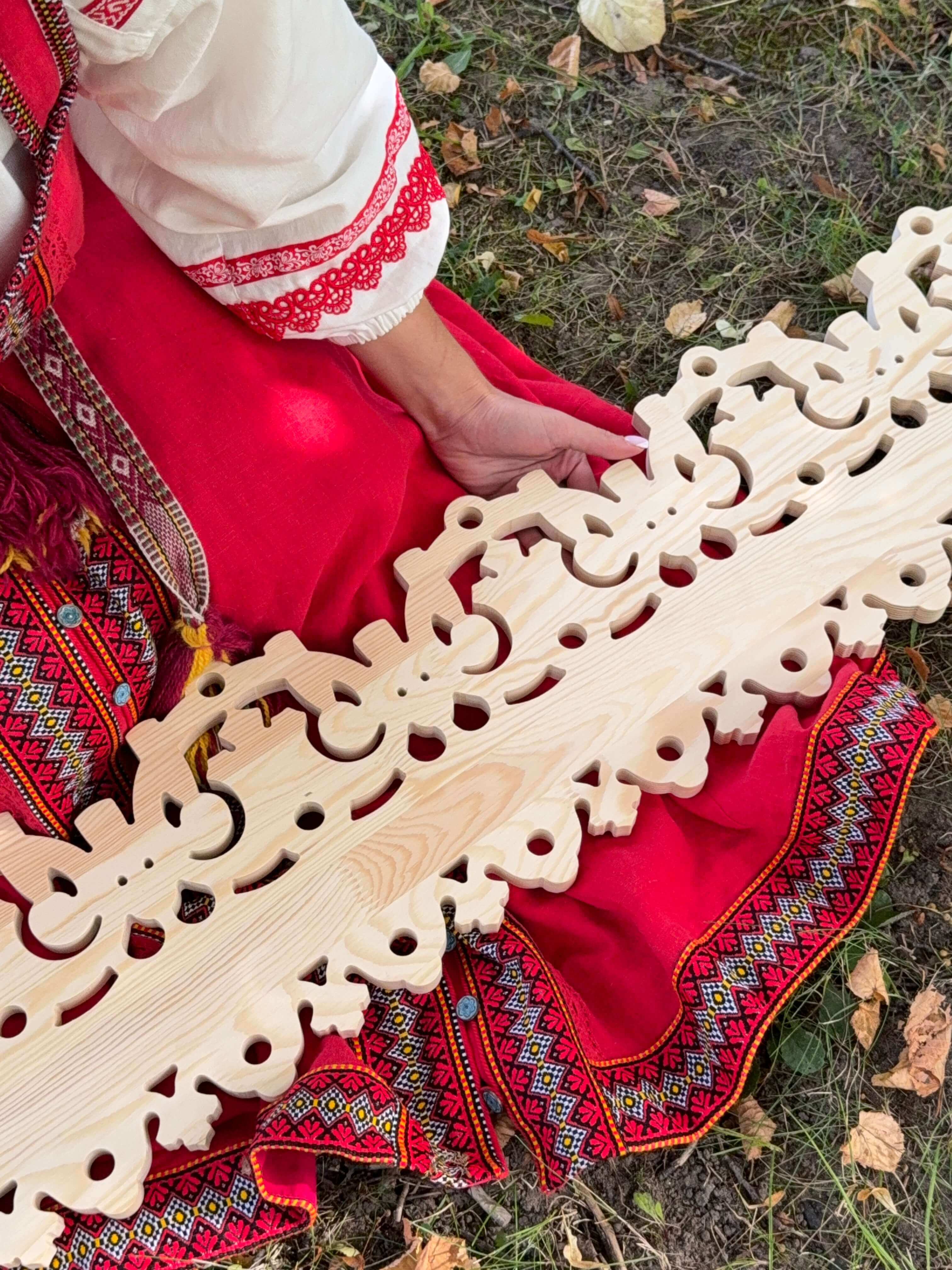
Traditional carved decoration provides one solution, but producing intricate ornament in solid wood requires specialized machinery, skilled labor, or outsourced components. Those investments may be difficult to justify for a small collection or a limited production run.
Polyurethane furniture appliques offer a different approach.
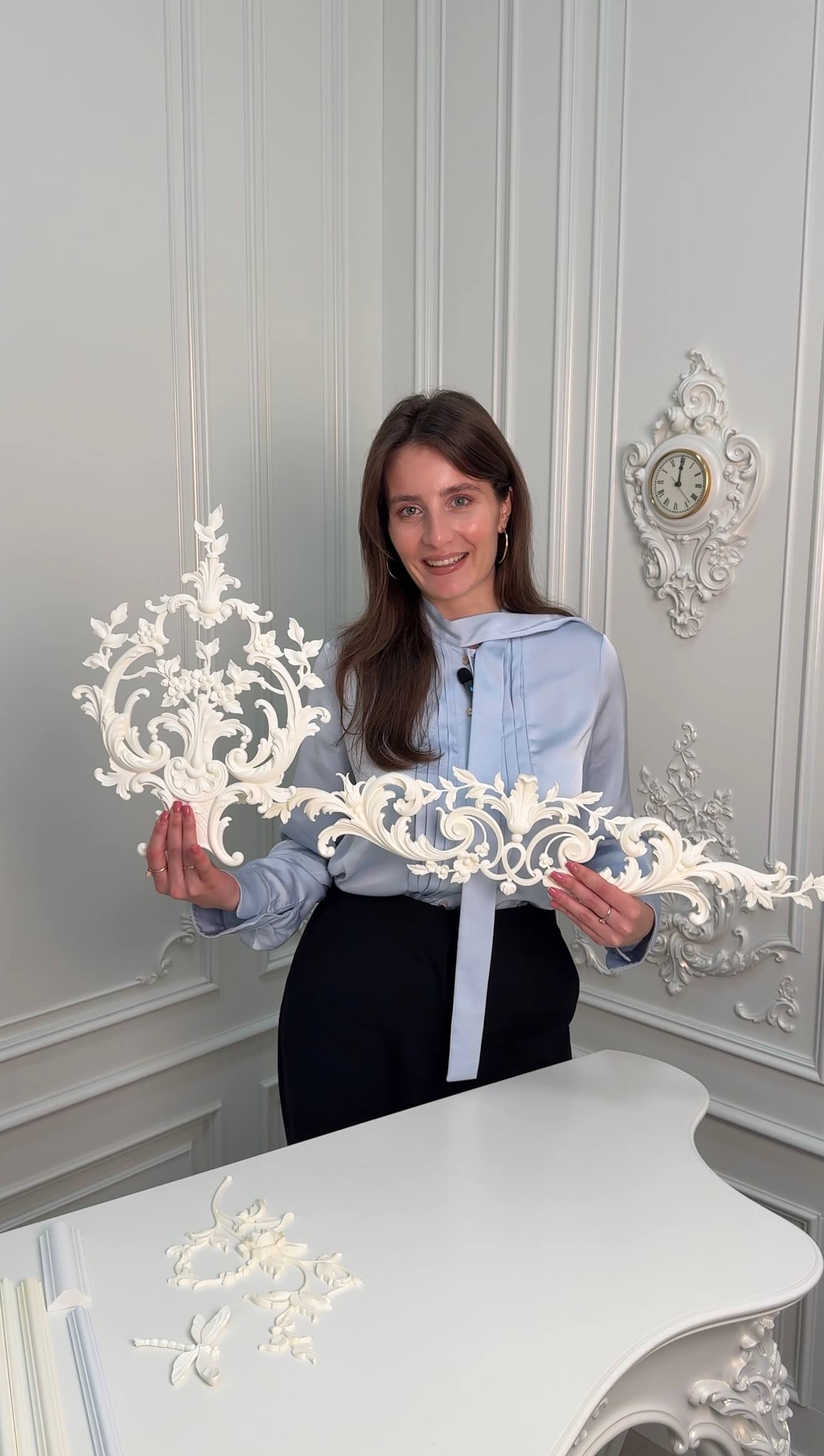
Decorative onlays, cabinet moldings, ornamental strips, and architectural accents can be applied to appropriately prepared furniture surfaces to introduce relief without changing the underlying cabinet construction.
A flat MDF door can become a neoclassical cabinet front. A plain dresser can acquire floral ornament. A standard wardrobe can be differentiated through decorative trim. A furniture manufacturer can develop several visual collections around a relatively small number of standardized cabinet bodies.
For cabinet shops and furniture manufacturers in the United States, the commercial opportunity is not simply to make furniture look more expensive.
It is to introduce design variation while preserving production control.
The important questions are practical:
Which polyurethane decorative components are suitable for furniture?
How do furniture appliques differ from traditional wood carvings?
Can polyurethane molding be attached to MDF, plywood, painted wood, or laminated cabinet fronts?
How should cabinet molding be selected for kitchen and bathroom furniture?
What production sequence produces consistent finishes?
How should a manufacturer calculate material usage, labor, waste, and contribution margin?
What should American cabinet shops verify before placing a bulk order with an overseas supplier?
This guide addresses those questions from the perspective of a working furniture business.
It also examines real products from STAVROS, including polyurethane furniture onlays and appliques, polyurethane molding profiles, and decorative trim molding.
The objective is to turn architectural decoration into a controlled manufacturing process—not an unpredictable finishing operation performed at the end of production.


Why Furniture Manufacturers Use Polyurethane Decorative Components
A furniture factory creates value through design, manufacturing efficiency, finish quality, functionality, and consistency.
Decorative components can contribute to several of these areas.
For example, a manufacturer might produce one basic wardrobe body but offer three styles of door decoration.
The first uses plain doors.
The second uses simple cabinet molding frames.
The third incorporates ornamental appliques and a more elaborate finishing technique.
The internal structure can remain largely unchanged.
The visible furniture design becomes the primary variable.
This strategy can reduce the need to engineer completely new cabinet constructions for every decorative collection.
However, it requires disciplined component selection and production planning.
Decoration as a Product Differentiation Tool
A plain slab door and a door with applied molding may have the same basic dimensions and internal material.
Yet their visual appearance can be substantially different.
Decorative relief changes how light falls across the surface.
A molding frame creates the appearance of a raised panel.
A floral applique introduces a recognizable classical motif.
A repeated ornamental strip can establish a continuous design language across several furniture pieces.
These changes may support the development of different product collections.
But decorative detail alone does not establish product quality or justify a particular selling price.
The furniture must still perform properly.
Hinges, drawers, finishes, cabinet structures, and other functional components remain critical.
Наша фабрика также производит:


Смотреть весь Каталог продукции
A Modular Approach to Furniture Design
A useful manufacturing model separates the furniture into three systems.
The structural system includes cabinet bodies, shelves, doors, drawers, supports, and hardware.
The decorative system includes moldings, appliques, onlays, ornaments, and other nonstructural details.
The finishing system includes surface preparation, primers, color coatings, decorative effects, and protective topcoats.
Separating these systems makes it easier to evaluate cost and quality.
A manufacturer can test a new decorative collection without automatically redesigning every structural component.
The decorative program becomes a controlled set of interchangeable visual options.
Получить консультацию
Why This Matters for Small Cabinet Shops
Small woodworking businesses often compete through customization rather than production volume.
A customer may want a distinctive cabinet front without paying for a fully hand-carved door.
A catalog of standardized ornamental components can provide another option.
The cabinet shop can develop a repeatable design using existing machining and finishing equipment.
The decorative elements are added through a documented production sequence.
The business still needs to validate adhesion, finishing, dimensional fit, and durability.
But it may not need to develop every ornament from a raw wood blank.
What Are Polyurethane Furniture Appliques?
Polyurethane furniture appliques are molded decorative elements intended to be attached to furniture or other suitable surfaces.
They are sometimes described as:
Furniture onlays
Decorative furniture appliques
Polyurethane onlays
Ornamental cabinet decorations
Decorative cabinet accents
Furniture medallions
Molded furniture ornaments
Architectural appliques
The terms overlap, but they are not always interchangeable.
An applique is generally an applied decorative piece.
An onlay is a raised ornamental element installed on the surface of another component.
A molding is usually a linear decorative profile.
These distinctions matter when preparing manufacturing specifications.
A central furniture applique is purchased and installed as an individual component.
A linear molding is usually purchased in stock lengths and cut to suit a particular door or frame.
How Molded Polyurethane Decor Is Produced
Many rigid polyurethane decorative products are manufactured by combining reactive components and casting the material in a mold.
The cured casting reproduces the geometry of that mold.
This can provide a practical method for producing repeated ornamental shapes.
Floral patterns, geometric elements, scrolls, rosettes, and other details can be replicated without carving each component individually.
However, polyurethane formulations vary.
Density, hardness, impact resistance, coating compatibility, and dimensional stability depend on the particular product.
There is no single set of mechanical properties applicable to every polyurethane furniture decoration.
For furniture manufacturing, the exact product specification matters more than broad descriptions of the material.
Molded Detail Versus Hand-Carved Wood
Hand-carved wood offers a natural material and the possibility of individual craftsmanship.
Molded polyurethane offers repeatability through a manufactured casting process.
Both approaches have legitimate applications.
The choice depends on the product's intended character, price position, and production requirements.
| Criterion | Molded polyurethane applique | Hand-carved wood applique |
|---|---|---|
| Ornamental appearance | Repeated molded relief | Natural carved relief |
| Production consistency | Depends on mold and process control | Depends on tools and craftsmanship |
| Natural wood grain | No | Yes |
| Finishing | Requires compatible coating system | Can be stained, painted, or otherwise finished |
| Production planning | Repeatable stocked SKUs may simplify assembly | Custom carving may require additional labor |
| Impact resistance | Formulation-specific | Species- and geometry-specific |
| Dimensional behavior | Depends on polyurethane formulation and conditions | Responds to humidity changes |
| Structural function | Not assumed | Requires design and testing if load-bearing |
The most important distinction is that decorative polyurethane should not be confused with structural furniture components.
An ornamental applique may be appropriate for a cabinet front while being completely unsuitable as a furniture leg or weight-bearing bracket.
Types of Polyurethane Furniture Decor
Furniture decoration is not one product category.
Different components solve different design problems.
Decorative Onlays for Cabinet Doors
Applied cabinet onlays create visual interest without requiring an elaborate carved substrate.
They can be placed at the center of a door, in a corner, or along a vertical axis.
A single ornament can provide a focal point.
Several smaller ornaments can create a symmetrical composition.
For production work, the ornament should be selected according to the available flat mounting area.
Its projection must also be considered.
A thick decorative element may interfere with adjacent doors, handles, shelves, or normal cleaning.
Furniture Appliques for Dressers and Chests
Dressers offer opportunities for decorative accents on drawer fronts.
A small centered applique can establish a classical design.
Matching ornaments may be repeated across several drawers.
However, the placement must account for drawer pulls and finger clearance.
A visually attractive ornament can become impractical if it interferes with normal drawer operation.
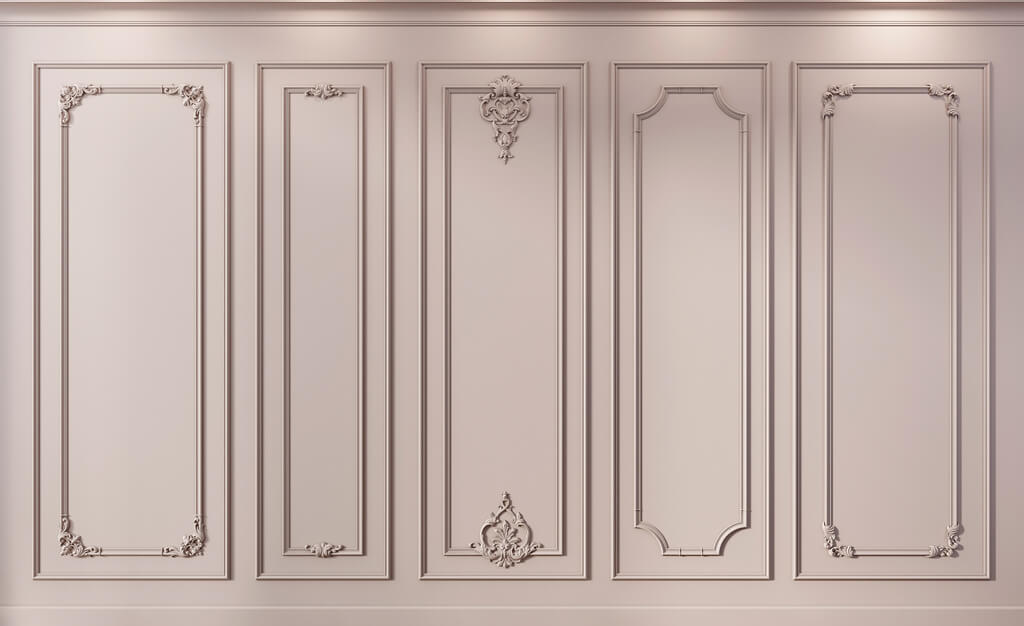
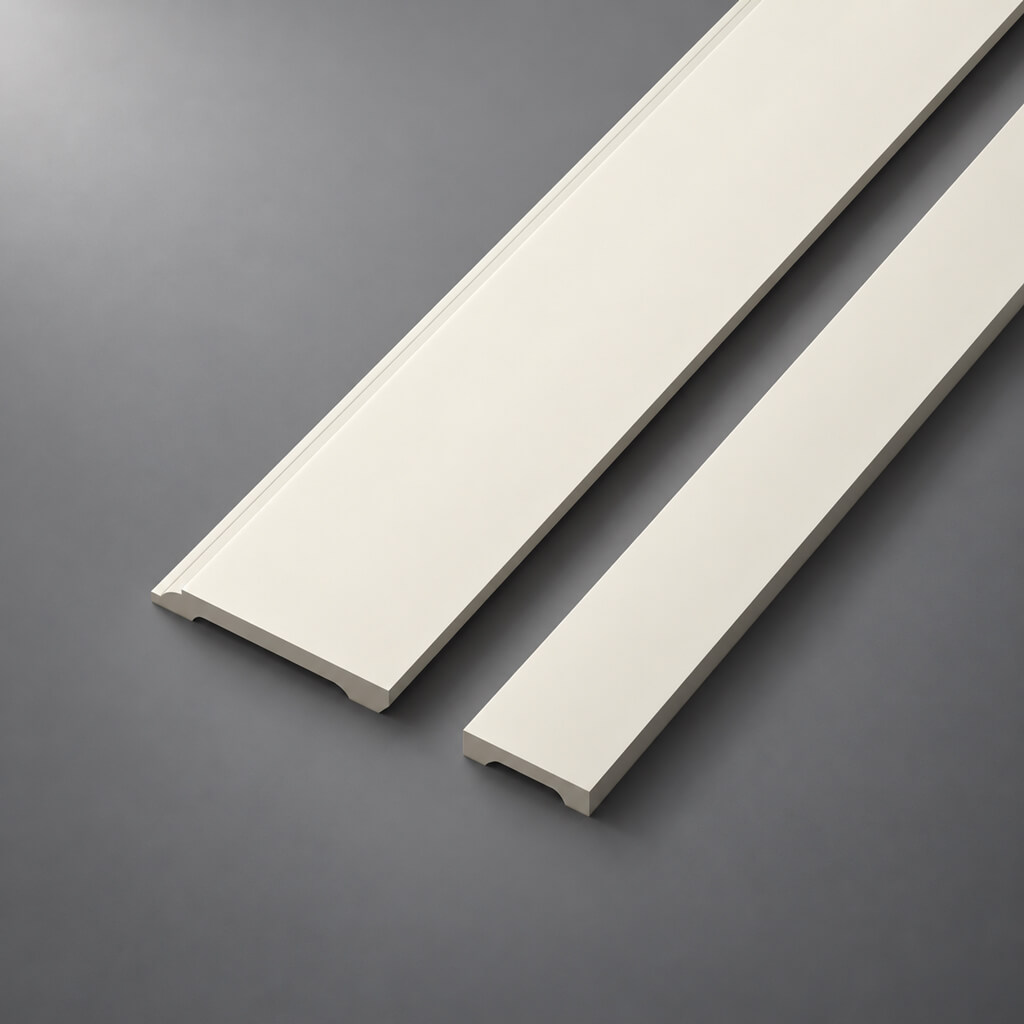
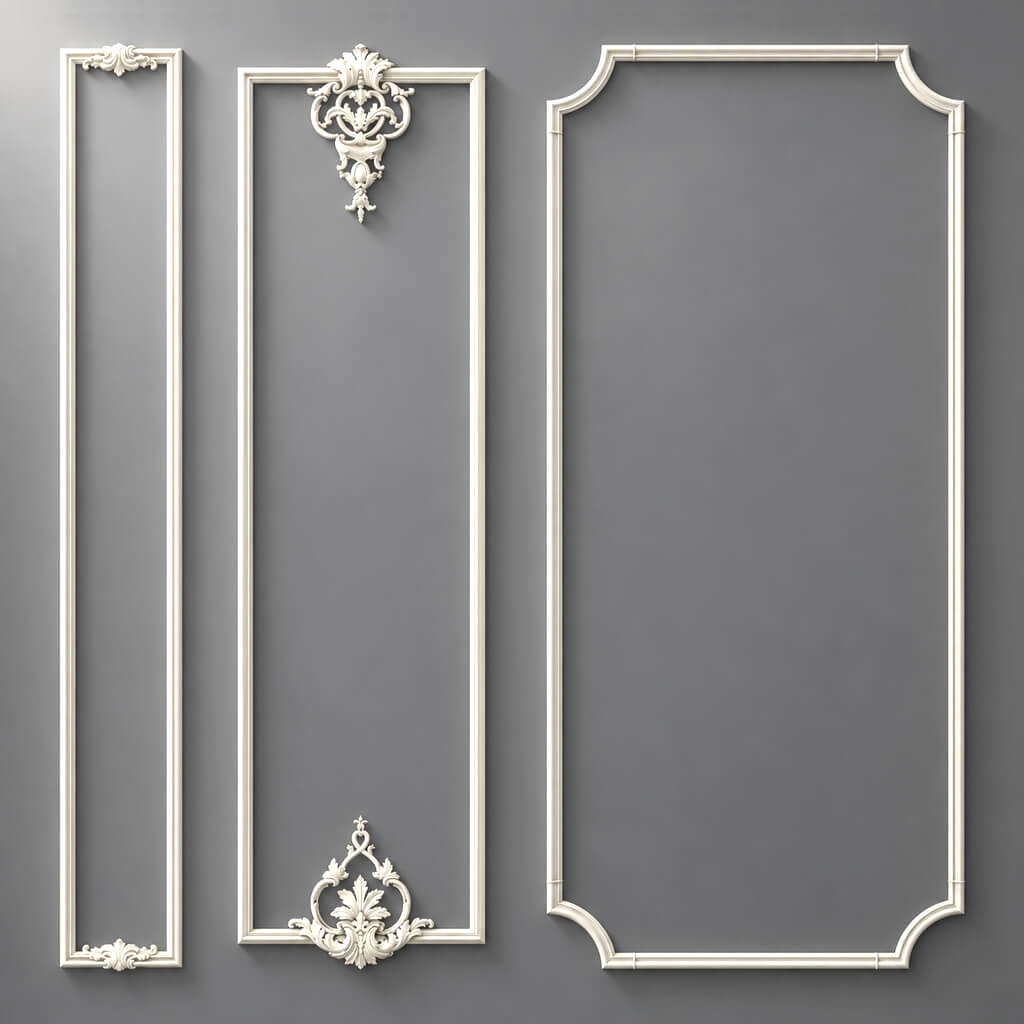
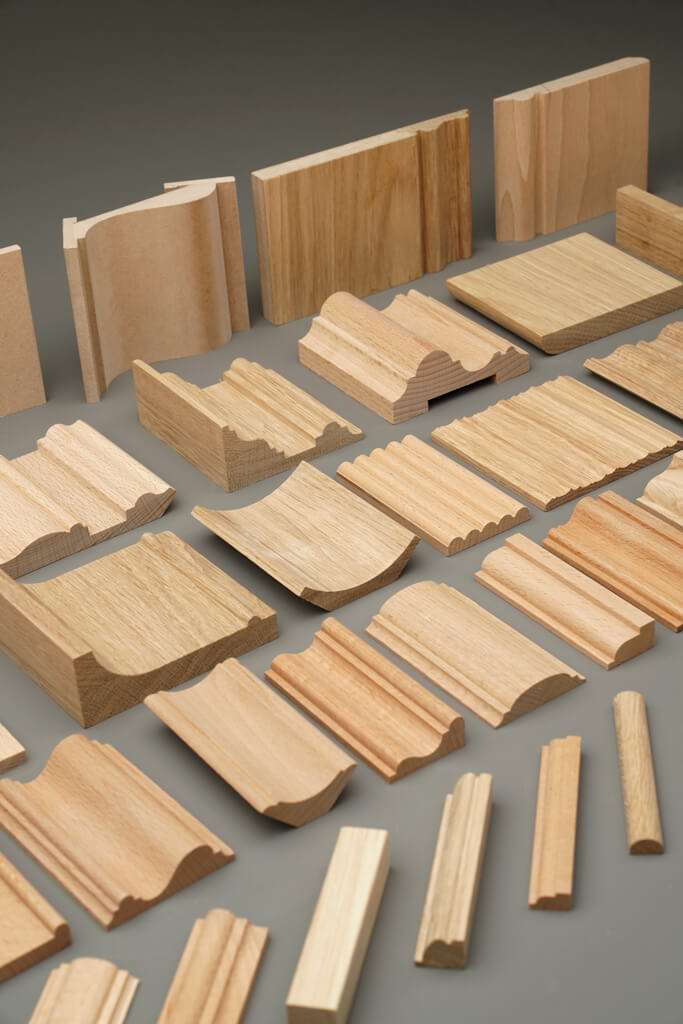
Cabinet Molding and Applied Door Frames
Applied cabinet molding creates decorative lines around the central portion of a slab door.
Four molding pieces can form a rectangular frame.
This changes the appearance of the door without machining a raised-panel profile into its main surface.
For a painted cabinet collection, the molding and substrate may be finished in the same color.
The result can resemble a traditional framed-panel design.
It is important not to describe this as a structurally equivalent replacement for a true frame-and-panel door.
It is a decorative applied-molding construction.
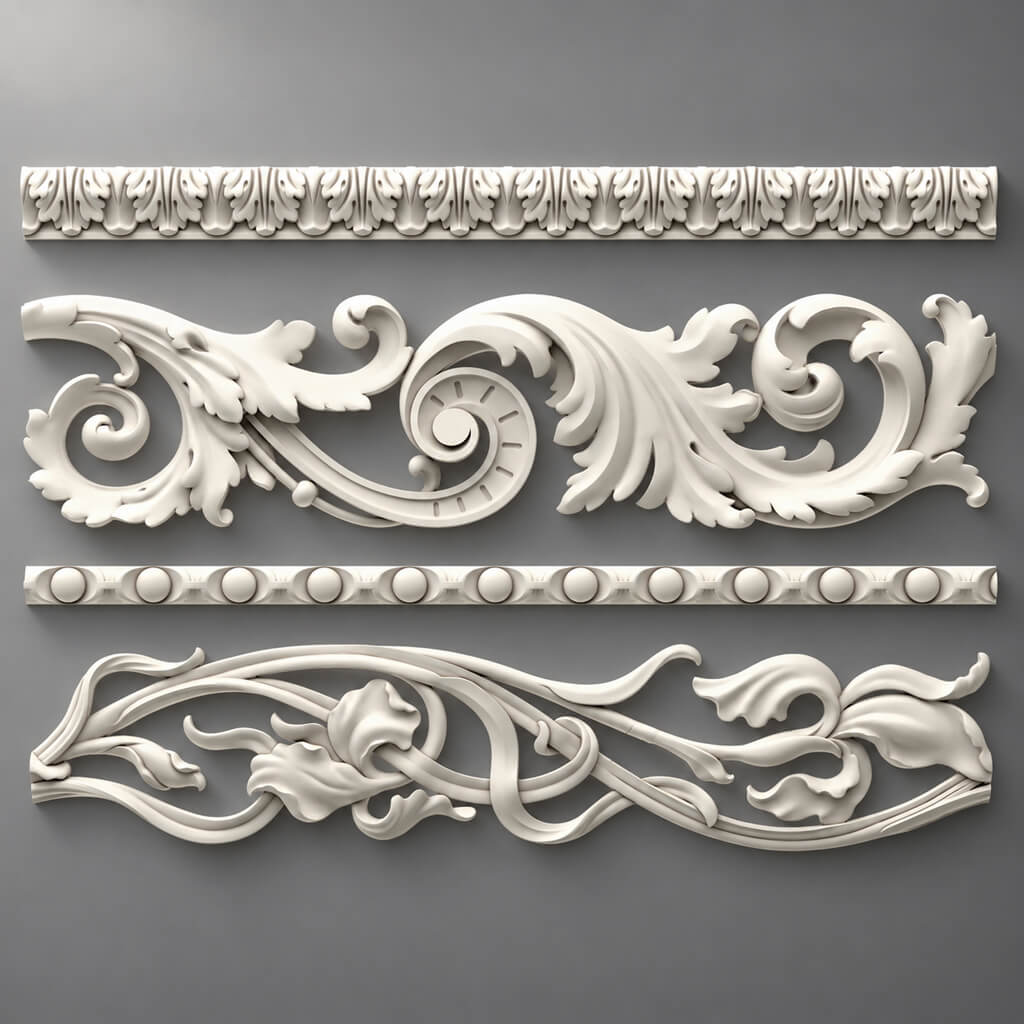
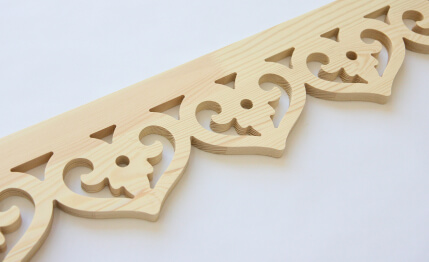
Decorative Trim Strips
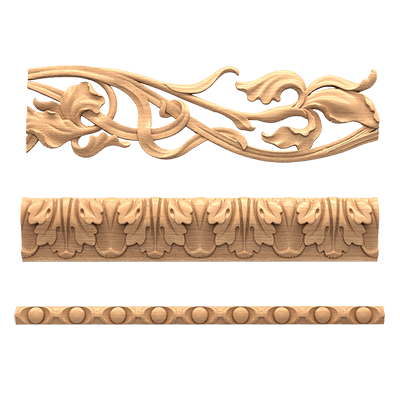
Ornamental strips add repeating patterns.
Examples include beaded molding, rope molding, egg-and-dart designs, floral friezes, and other classical motifs.
These can be used on selected cabinet fronts, furniture rails, or nonstructural borders.
Their suitability depends on geometry, wear exposure, and the selected installation method.
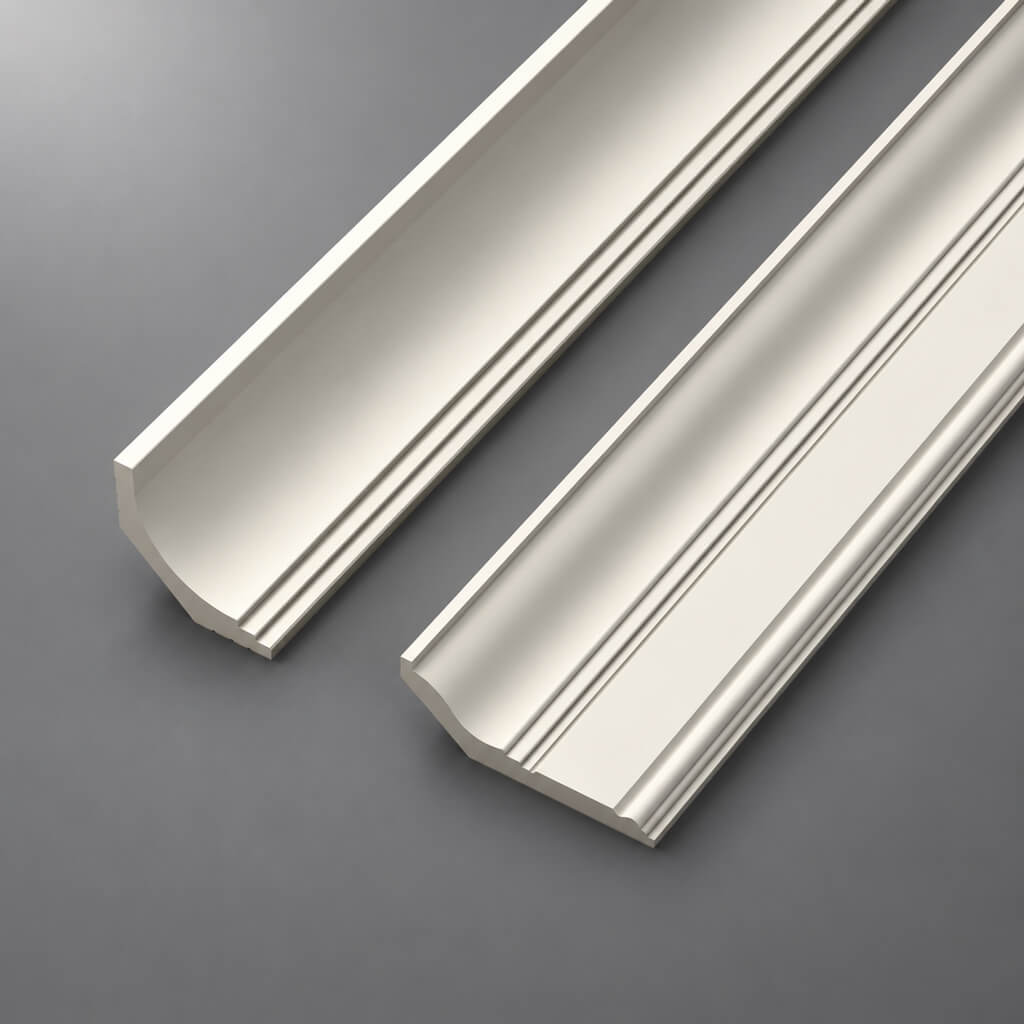
Cabinet Crown Molding
In American cabinetry, cabinet crown molding commonly refers to trim used at the top of upper cabinets, wardrobes, or built-in furniture.
It creates a transition between the cabinet and the surrounding space.
Kitchen cabinet crown molding is frequently produced in wood or MDF, depending on the cabinet system and finish.
Selected polyurethane decorative elements may complement the design, but they should not automatically be substituted for structural or mounting components.
STAVROS also offers wood and MDF trim products for furniture and architectural applications.
These should be evaluated separately from its polyurethane ornament collection.
Decorative Pilasters and Vertical Accents
A pilaster-style decoration can emphasize the sides of a large cabinet or wardrobe.
It may consist of a long decorative element combined with smaller ornamental details.
The result is primarily visual.
The actual cabinet structure must support the furniture loads.
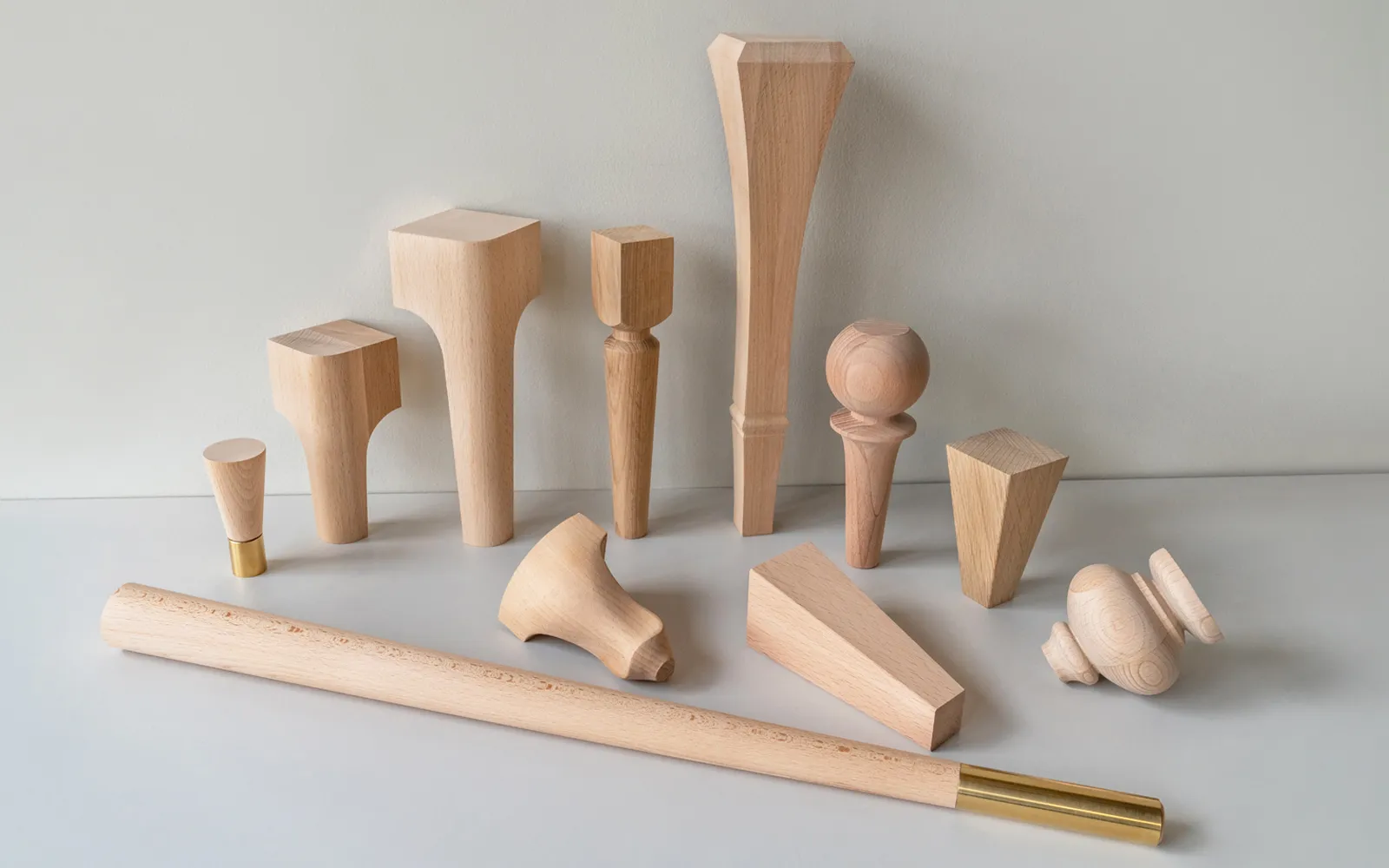
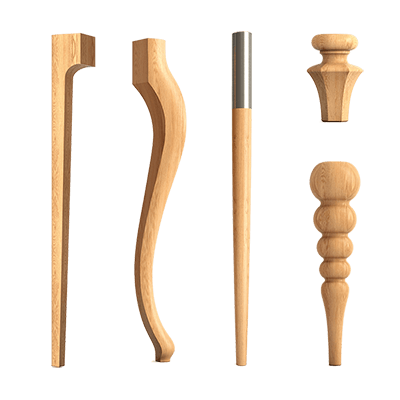
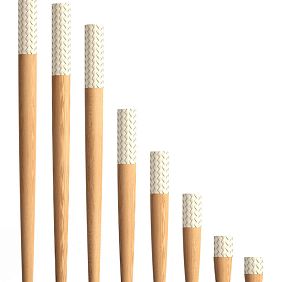
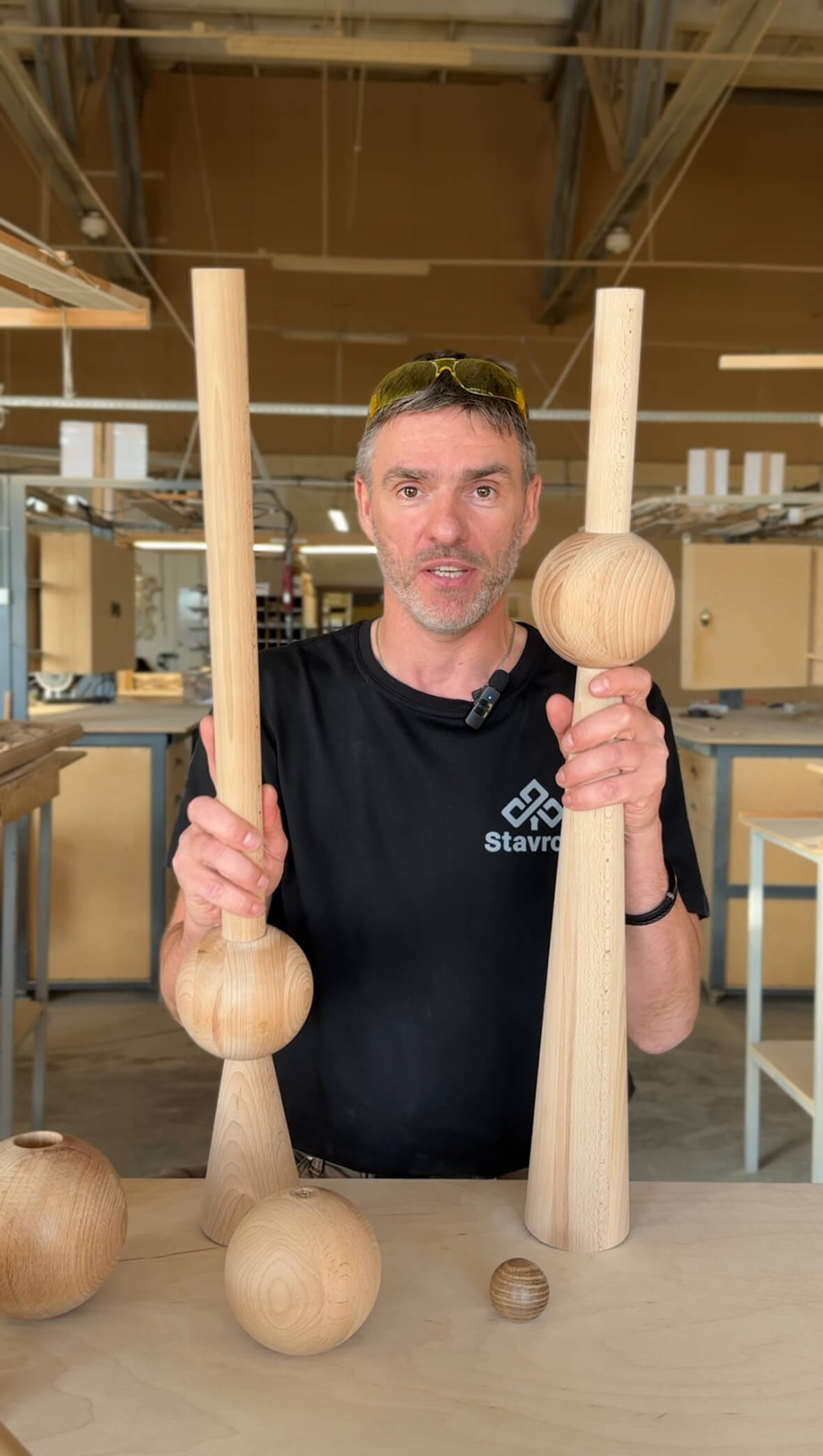
Furniture Legs and Supports
Decorative legs should not be grouped with nonstructural appliques without examining their intended function.
A structural furniture leg requires documented load capacity, an appropriate mounting system, and suitable performance under the expected conditions.
An ordinary cast polyurethane ornament does not become a load-bearing furniture support simply because it resembles a leg.
If a manufacturer offers a structural polyurethane support, its suitability must be established through the specific product's engineering and testing.
Cabinet Molding for American Kitchen Manufacturers
Kitchen cabinet manufacturing introduces requirements that differ from decorative furniture.
Kitchen doors experience frequent opening, hand contact, cleaning, humidity changes, and occasional impacts.
Trim positioned near cooking equipment or dishwashers may face additional exposure.
For these reasons, kitchen cabinet molding must be selected as part of the complete cabinet assembly.
Applied Molding on Slab Kitchen Doors
A slab MDF door can be decorated with a shallow profile to create a traditional appearance.
The proposed molding must be evaluated for the door's finish, opening direction, hinge geometry, and normal use.
A shallow decorative frame may work well on a large door.
The same profile may be unsuitable for a narrow drawer front or a door immediately beside a projecting appliance handle.
Cabinet Crown Molding Above Upper Cabinets
Crown molding is usually selected according to the kitchen's ceiling height, cabinet depth, door style, and installation method.
It should be installed using an appropriate cabinet or wall-support system.
A decorative polyurethane element may be added where approved, but it should not be used to compensate for an inadequately secured crown assembly.
Ornamental Accents for Kitchen Islands
A decorative applique may be suitable for the end panel of a kitchen island.
This area can offer a large uninterrupted surface.
However, kicks, impacts, cleaning, and general use must be considered.
A large projecting ornament at a vulnerable corner may be less practical than a shallower central feature.
Cabinet Trim Near Sinks and Dishwashers
Polyurethane and its coatings vary in their resistance to water, heat, chemicals, and cleaning.
Do not assume that every polyurethane molding is suitable for every kitchen location.
The adhesion system and finish may be more vulnerable than the casting itself.
Test the complete decorated panel under conditions representative of its intended use.
What Cabinet Shops Should Test
For production kitchen cabinetry, consider how the decorated assembly behaves during door operation, drawer movement, impact, cleaning, and exposure to heat and moisture.
The Kitchen Cabinet Manufacturers Association's ANSI/KCMA A161.1 framework addresses cabinet performance through structural, operational, and finish-related testing.
A manufacturer should not claim certification or compliance merely because decorative polyurethane was added to a cabinet.
Such claims require the appropriate testing and certification of the actual finished product.
Real STAVROS Polyurethane Appliques for Furniture Production
The STAVROS polyurethane onlays and appliques catalog includes decorative elements in different sizes, shapes, and ornamental styles.
For furniture manufacturers, the most useful starting point is a component that can be repeated across a defined group of products.
Rather than choosing an ornament solely from a photograph, review its width, height, projection, orientation, and intended application.
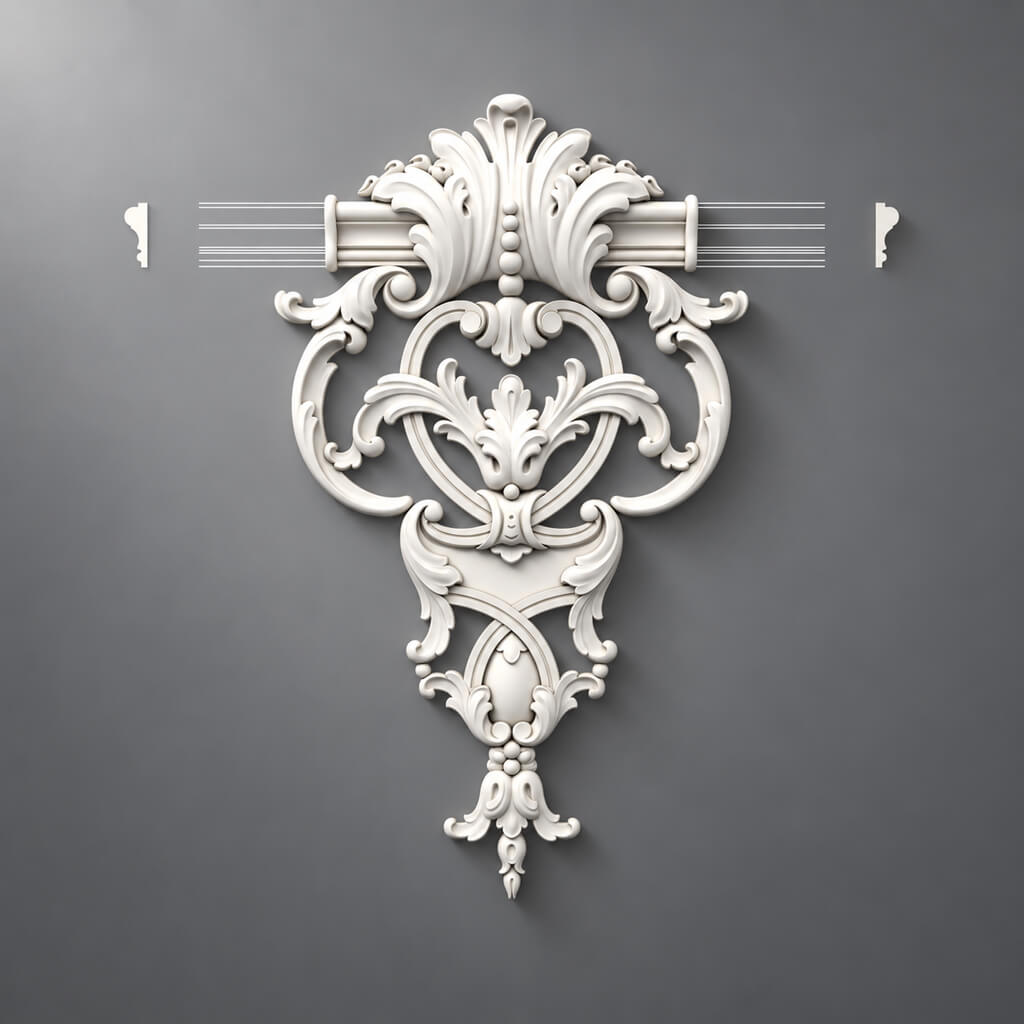
NPU-501: Vertical Floral Furniture Applique
The STAVROS NPU-501 decorative polyurethane applique features an elongated botanical composition.
Its listed dimensions are:
| Specification | NPU-501 |
|---|---|
| Width | 2.28 in |
| Height | 11.81 in |
| Projection | 0.43 in |
| Material | Polyurethane |
The narrow vertical format makes it an option for selected cabinet doors, wardrobes, dresser fronts, and furniture side panels.
A single NPU-501 applique can emphasize the center of a tall panel.
Two appliques may be arranged symmetrically if sufficient space is available.
The 11.81-inch height should be evaluated against the clear area of the furniture front.
A narrow drawer would not necessarily accommodate this component.
NPU-496: Compact Floral Decorative Onlay
The STAVROS NPU-496 polyurethane furniture onlay is a small floral accent.
Its listed dimensions are approximately:
| Specification | NPU-496 |
|---|---|
| Width | 1.81 in |
| Height | 1.81 in |
| Projection | 0.71 in |
| Material | Polyurethane |
This compact element may be considered for selected furniture fronts.
However, its relatively pronounced projection is important.
A small footprint does not necessarily mean a low-profile ornament.
For drawer-front applications, the manufacturer should check the relationship between the ornament, pull hardware, adjacent cabinetry, and user contact.
NPU-112: Small Decorative Accent
The STAVROS NPU-112 polyurethane onlay measures approximately 1.57 × 2.44 × 0.28 inches.
Its relatively shallow relief makes it worth evaluating for small decorative areas.
The final choice should still depend on the furniture style and available mounting surface.
NPU.VRS-002-3: Larger Classical Decoration
For a more elaborate design, the NPU.VRS-002-3 polyurethane decorative applique has approximate dimensions of 8.54 × 8.94 × 0.51 inches.
This is a substantially larger ornamental component.
It may be appropriate for a wide cabinet panel, dresser, decorative furniture front, or another suitably proportioned surface.
It should not be assumed suitable for narrow kitchen cabinet doors.
Larger ornaments also require greater attention to mounting-area flatness and installation tolerances.
Choosing by Actual Dimension
| Product | Width | Height | Projection | Design use to evaluate |
|---|---|---|---|---|
| NPU-501 | 2.28 in | 11.81 in | 0.43 in | Tall vertical furniture accents |
| NPU-496 | 1.81 in | 1.81 in | 0.71 in | Compact floral accents |
| NPU-112 | 1.57 in | 2.44 in | 0.28 in | Small decorative details |
| NPU.VRS-002-3 | 8.54 in | 8.94 in | 0.51 in | Larger classical compositions |
These are decorative products, not structural furniture fittings.
For a production order, request confirmation of the exact SKU, dimensions, material specification, finish condition, and applicable manufacturing tolerances.
Polyurethane Molding for Cabinet Door Frames
A furniture manufacturer can use linear molding to create repeated geometric designs across a collection.
The main challenge is selecting a profile that works at furniture scale.
A wall molding that looks delicate in a large room may appear substantial on a small cabinet door.
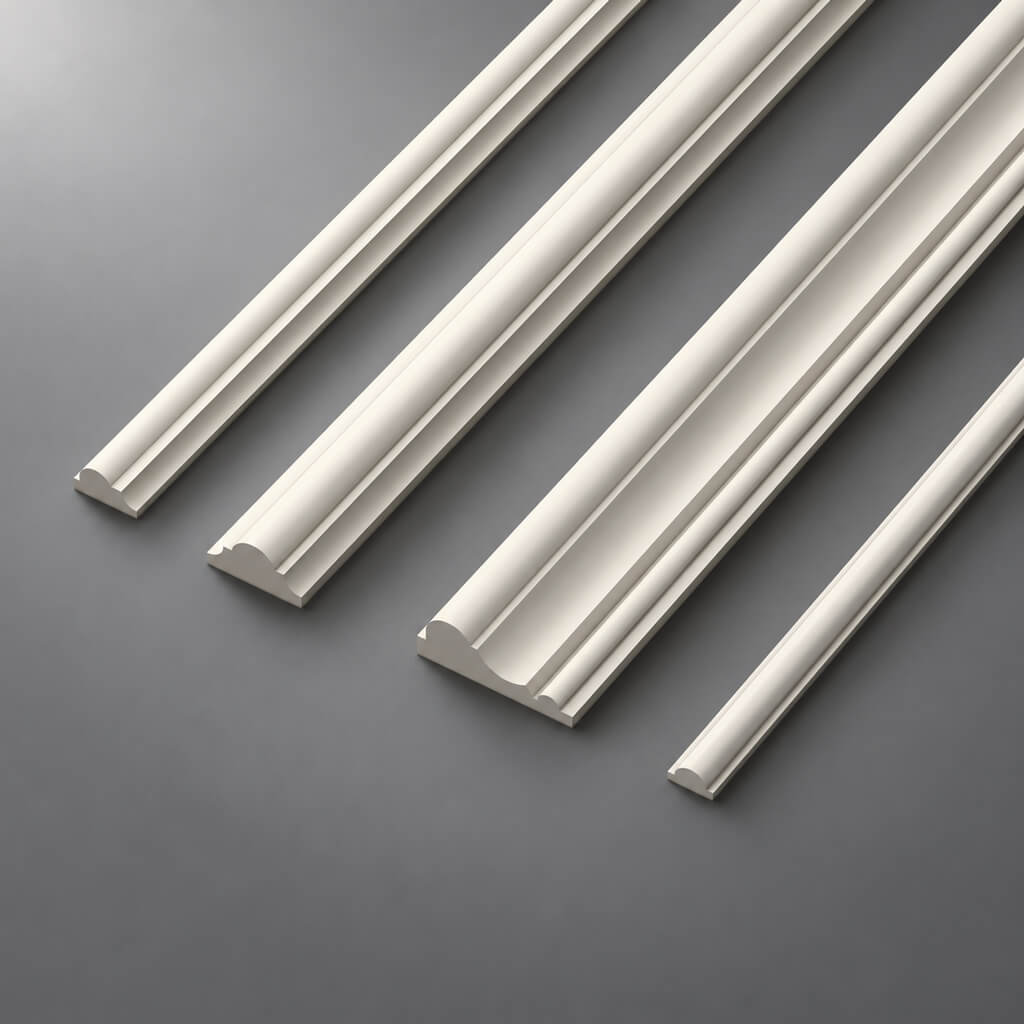
STAVROS MLDPU-001: Narrow Cabinet Frame Detail
The MLDPU-001 polyurethane molding has a compact semicircular profile.
Its dimensions are:
Face width: 0.39 inches
Projection: 0.24 inches
Stock length: 102.36 inches
Material: polyurethane
This profile can be considered for applied decorative frames on flat MDF cabinet doors.
It is particularly useful where the design calls for restrained relief.
For a neoclassical painted cabinet, a rectangular frame made from MLDPU-001 can create a clear outline without overwhelming the door.
STAVROS MLDPU-002: More Substantial Cabinet Molding
The MLDPU-002 polyurethane molding has a wider stepped cross-section.
Its dimensions are:
Face width: 0.87 inches
Projection: 0.43 inches
Stock length: 102.36 inches
Material: polyurethane
This profile produces stronger shadows.
It can be considered for wardrobes, large cabinet doors, and traditional furniture fronts.
However, the greater projection may be unsuitable for close-clearance applications.
Check door swing, adjacent hardware, and available space before selecting it.
STAVROS MLDPU-003: Larger Architectural Relief
For larger decorative compositions, the MLDPU-003 polyurethane molding measures approximately 1.38 × 0.47 × 102.36 inches.
Its wider face can establish a prominent decorative boundary.
It may be more appropriate for large wardrobes or architectural furniture than for compact cabinet fronts.
Matching Molding to Cabinet Scale
| Furniture application | Profile to evaluate | Intended effect |
|---|---|---|
| Small painted cabinet door | MLDPU-001 | Fine decorative frame |
| Medium neoclassical door | MLDPU-001 or MLDPU-002 | Balanced relief |
| Large wardrobe door | MLDPU-002 | More visible architectural detail |
| Large decorative cabinet panel | MLDPU-003 | Strong frame definition |
| Compact drawer front | Small applique or shallow trim | Reduced projection |
This table provides design guidance, not guaranteed compatibility.
The correct component depends on the complete door assembly.
Decorative Trim Molding for Furniture Collections
Straight cabinet molding establishes geometry.
Ornamental trim introduces repeating decorative patterns.
The STAVROS decorative polyurethane trim collection includes multiple ornamental profiles.
Beaded Molding
The STAVROS KPU-105 beaded molding measures approximately:
Width: 0.43 inches
Projection: 0.24 inches
Stock length: 39.37 inches
Its repeated bead pattern may suit selected traditional or neoclassical furniture details.
It can provide a delicate ornamental border when the profile is appropriately positioned.
However, repeating decorative patterns require careful joint planning.
A cut at an arbitrary point may interrupt the pattern.
Rope Molding
The STAVROS KPU-125 rope molding measures approximately:
Width: 0.35 inches
Projection: 0.20 inches
Stock length: 39.37 inches
Its braided ornament can be considered for traditional decorative furniture.
The pattern may complement a classical cabinet collection.
For production work, the orientation and appearance of joints should be evaluated before committing to a large batch.
Ornate Molding
More expressive profiles can introduce acanthus leaves, floral patterns, geometric motifs, and other ornamental features.
These may be appropriate for statement furniture or selected formal collections.
But decorative complexity should be controlled.
A cabinet door with a prominent central applique, ornate molding, elaborate hardware, and contrasting metallic finishes may look visually crowded.
Establish one dominant decorative element.
Molding Length Matters
Not every STAVROS decorative trim product is supplied in the same stock length.
Some KPU profiles are approximately 39.37 inches long.
Others are longer.
For a furniture factory, the difference affects waste and joint placement.
A strip suitable for a 24-inch frame piece may be inefficient for longer cabinet rails if it requires unwanted joints.
Calculate the complete cut list before ordering.
How to Design a Cabinet Door With Polyurethane Molding
A successful decorative cabinet front starts with the actual door geometry.
The ornament should not be selected independently of the hardware.
Consider a flat MDF cabinet door measuring 18 inches wide by 30 inches high.
The design calls for a simple rectangular polyurethane molding frame.
Establish the Decorative Margins
Assume an illustrative 3-inch margin from each outer edge of the door to the outside boundary of the decorative frame.
The resulting frame dimensions are:
Width: 18 − 3 − 3 = 12 inches.
Height: 30 − 3 − 3 = 24 inches.
The decorative frame measures 12 × 24 inches.
These are conceptual dimensions.
They must be checked against the hinge drilling pattern, pull position, adjacent doors, and normal operating clearances.
Choose a Suitable Molding
For a restrained painted cabinet, MLDPU-001 is a reasonable profile to evaluate.
Its 0.39-inch face width establishes a fine frame.
Its 0.24-inch projection produces relief without requiring a particularly deep decorative element.
Check Handle Placement
If the cabinet door uses a knob or pull, determine its position before finalizing the frame.
A decorative border may conflict with the handle mounting area.
The user's fingers also need clearance.
A knob that appears visually centered but is surrounded too closely by relief may be uncomfortable to use.
Check Hinge and Adjacent Door Clearances
The polyurethane molding is applied to the face of the door.
Its projection changes the effective outer envelope of the cabinet front.
That can matter near neighboring doors or fixed side panels.
Test the actual hinge opening path.
Do not assume that a molding will fit simply because the door closes when stationary.
Evaluate the Finish
If the cabinet door and molding are intended to be painted the same color, prepare a finish sample.
Check whether the final coating produces a consistent sheen and color across the MDF and polyurethane.
A visually continuous finish requires more than matching the paint color.
Substrate preparation, primer, application thickness, and surface texture also matter.
Cabinet Molding Calculator for a 100-Door Production Run
For a furniture manufacturer, the number of molding strips required is a commercial decision.
Waste affects the actual cost per door.
A reliable calculation should consider the individual finished pieces, not just total linear footage.
Example: 100 Identical Cabinet Doors
Assume:
Cabinet door size: 18 × 30 inches
Decorative frame size: 12 × 24 inches
Number of doors: 100
Molding: STAVROS MLDPU-001
Stock length: 102.36 inches
Each rectangular frame requires two horizontal pieces and two vertical pieces.
The frame perimeter is:
2 × 12 + 2 × 24 = 24 + 48.
Total = 72 inches per door.
72 ÷ 12 = 6 linear feet per door.
For 100 doors:
100 × 6 = 600 linear feet of finished molding.
Prepare the Cut List
| Finished piece | Quantity per door | Quantity for 100 doors |
|---|---|---|
| 24-inch molding | 2 | 200 |
| 12-inch molding | 2 | 200 |
| Total pieces | 4 | 400 |
Calculate the Number of Stock Strips
Each MLDPU-001 strip measures 102.36 inches.
Four 24-inch pieces require:
4 × 24 = 96 inches.
This fits within one strip, allowing for normal saw kerf.
To obtain 200 pieces of 24 inches:
200 ÷ 4 = 50 strips.
Eight 12-inch pieces require:
8 × 12 = 96 inches.
This also fits within one strip, allowing for normal saw kerf.
To obtain 200 pieces of 12 inches:
200 ÷ 8 = 25 strips.
Therefore:
50 + 25 = 75 full molding strips.
This cutting arrangement produces all 400 required pieces.
Material Efficiency
The purchased length is:
75 × 102.36 = 7,677 inches.
The finished molding length is:
100 × 72 = 7,200 inches.
Nominal unused length before saw kerf:
7,677 − 7,200 = 477 inches.
That is approximately 39.75 linear feet of nominal offcut and cutting allowance.
The purchased length exceeds the finished length by approximately 6.6%.
The actual waste percentage measured against purchased stock is approximately 6.2%, including the allowance subsequently consumed by cutting.
What This Calculation Shows
Theoretical footage alone would suggest:
7,200 ÷ 102.36 = 70.34 strips.
Rounded upward, that equals 71 strips.
But the individual piece lengths prevent the same utilization as the theoretical minimum.
The practical cutting plan requires 75 strips.
This difference matters in repeat production.
For 100 doors, the variation is four stock strips.
For larger batches, poor nesting can become a meaningful cost.
Additional Production Allowance
A factory may order an additional quantity for defects, accidental damage, replacement parts, or future service.
That reserve should be based on historical yield and supplier lead times.
It should not be an automatic percentage applied without examining the actual cutting plan.
Integrating Polyurethane Appliques Into Cabinet Manufacturing
The decorative process should be standardized before production volume increases.
An attractive sample is not enough.
The assembly must be repeatable across different employees, workstations, and production batches.
Step 1: Define the Furniture Platform
Begin with a standard cabinet or furniture model.
Record its dimensions, materials, hardware, and finish.
Choose where decorative elements will be applied.
Avoid redesigning the entire product during the initial test.
Step 2: Create a Decorative Bill of Materials
List every applique and molding by exact SKU.
Record quantity per furniture unit.
For linear molding, include the finished cut lengths.
For directional ornaments, distinguish left-hand and right-hand components.
The bill of materials should also include the required adhesive and finishing system.
Step 3: Create an Installation Drawing
Prepare a dimensioned elevation.
Show the ornament's centerline and offsets.
Indicate the molding frame dimensions.
Include hardware positions and necessary clearances.
For a repeated collection, the drawing should become part of the controlled production documentation.
Step 4: Inspect Incoming Components
Check samples or production-lot quantities for visible defects.
Potential issues include casting flash, chipped corners, surface voids, distortion, and unacceptable dimensional variation.
Use tolerances agreed with the supplier.
A decorative part should be evaluated against its approved reference sample rather than an undefined expectation of perfection.
Step 5: Prepare the Furniture Substrate
The cabinet surface must be suitable for the selected adhesive.
Raw MDF, primed MDF, finished MDF, wood veneer, painted surfaces, and melamine-faced boards can behave differently.
Their preparation methods are not interchangeable.
Follow the adhesive and coating manufacturers' requirements.
Step 6: Use a Positioning Jig
A positioning jig improves repeatability.
It can locate the applique or molding frame at the same position on every door.
This reduces reliance on manual measuring for every component.
A well-designed jig should be easy to clean and maintain.
It must also avoid damaging the finished substrate.
Step 7: Dry-Fit and Inspect
Before adhesive application, check that the ornament sits properly.
Confirm that the mating surface makes appropriate contact.
Inspect the relationship between the decorative piece and nearby hardware.
Reject or correct components that do not fit the approved drawing.
Step 8: Apply the Approved Adhesive
The adhesive type and application pattern should be established through compatibility testing.
Do not assume that one generic construction adhesive is suitable for every polyurethane casting and cabinet finish.
Follow the approved working time, application thickness, and curing requirements.
Step 9: Hold the Component in Position
Use an appropriate fixture, clamp, temporary support, or another approved retention method.
The correct approach depends on the ornament's shape and the adhesive.
Excessive clamping force can distort or damage decorative parts.
Step 10: Cure According to the Process Specification
The assembly must remain undisturbed for the required curing period.
Do not assume that initial tack is equivalent to full bond strength.
Temperature, humidity, adhesive type, and bond geometry can affect curing.
Step 11: Finish the Decorated Assembly
Prepare and coat the polyurethane and surrounding substrate using a validated finishing system.
Inspect the transition between materials.
The final finish should achieve the specified appearance without obscuring decorative details.
Step 12: Perform Final Quality Control
Inspect the completed furniture piece.
Check adhesion, finish quality, hardware operation, and visible defects.
For kitchen cabinets and frequently operated furniture, the decorated assembly should be tested under the intended service conditions.
Which Adhesive Works With Polyurethane Furniture Appliques?
Adhesive selection is not simply a question of choosing the strongest product.
The correct system must be compatible with both materials being joined.
It must also suit the production process.
Important factors include working time, application method, cure time, bond strength, environmental resistance, and finish compatibility.
Polyurethane to Raw MDF
Raw MDF provides a relatively porous surface.
However, its absorbency can affect adhesive behavior.
An unsuitable adhesive may penetrate the substrate or fail to develop the required bond.
The preparation and bonding method should be based on a tested combination.
Polyurethane to Primed MDF
A primer changes the bonding surface.
The adhesive may bond to the primer rather than directly to MDF.
Therefore, the primer's adhesion to the substrate also becomes important.
A strong adhesive cannot compensate for a weak primer layer.
Polyurethane to Painted Cabinet Doors
Finished surfaces create another interface.
The bond depends partly on the strength of the existing paint film.
If the coating is poorly adhered, the applique may detach with the paint.
Production tests should evaluate the complete assembly.
Polyurethane to Melamine or Laminate
Melamine-faced particleboard and certain laminates can present challenging bonding surfaces.
They may have limited compatibility with general-purpose adhesives.
A manufacturer should not assume that cleaning or lightly sanding the surface guarantees a reliable bond.
Use a validated surface preparation and adhesive system suitable for the exact laminate.
Polyurethane to Solid Wood
Solid wood introduces another consideration: dimensional movement.
Moisture changes can cause the wood substrate to expand or contract.
The adhesive system and decorative component geometry should accommodate the expected conditions.
Adhesive Comparison
| Adhesive category | Potential application | What must be verified |
|---|---|---|
| Hybrid polymer mounting adhesive | Selected decorative components | Compatibility, cure, bond performance |
| Acrylic mounting adhesive | Selected approved substrates | Surface requirements and moisture resistance |
| Two-part structural adhesive | Engineered production assemblies | Exact formulation, substrate preparation, working time |
| Contact adhesive | Certain compatible applications | Open time, bonding method, surface suitability |
| PVA wood glue | Primarily wood-to-wood applications | Not a universal polyurethane bonding solution |
The final choice should come from manufacturer guidance and actual testing.
It is not appropriate to recommend the same adhesive for raw MDF, lacquered wood, and melamine without validating each combination.
Finishing Polyurethane Furniture Decor: Primer, Paint and Protective Coatings
A successful furniture applique must visually integrate with the surrounding cabinet surface.
That requires a finishing process suited to the polyurethane product.
Some decorative parts are supplied with a factory primer.
Others may need surface preparation.
Always inspect the actual product specification.
Surface Preparation
Remove dust and contaminants using a method compatible with the polyurethane casting.
Check for mold-release residue or other substances that may interfere with coating adhesion.
Do not automatically use aggressive solvents.
Some solvents can damage polymer surfaces.
Where surface abrasion is required, use the method approved for the product.
Primer Selection
Select a primer compatible with the polyurethane and intended topcoat.
The correct primer depends on the finishing system.
It is not necessary to assume that every decorative component requires exactly two primer coats.
Likewise, a factory-primed part may still need preparation before its final finish.
Painting Before Assembly or After Assembly?
Both approaches can be useful.
Pre-finishing the applique may simplify certain two-tone decorative designs.
However, the bonding surface must remain compatible with the selected adhesive.
Finishing after installation may provide a more continuous appearance when the cabinet and applique use the same color.
However, joints and material transitions must be controlled.
The better method depends on the production objective and validated adhesive-coating system.
Solid-Color Cabinet Finishes
Painted neoclassical cabinetry often uses a single color across the door and decorative molding.
This can produce the appearance of a unified raised-panel surface.
But the polyurethane and MDF may respond differently to primers and paints.
Create a finish sample that includes both materials.
Inspect it under normal and directional light.
Decorative Patina
Patination can emphasize recessed ornament.
A darker glaze or other compatible decorative material is applied to selected recesses.
Excess material is removed according to the finishing technique.
This can create additional depth in floral and classical appliques.
The process must be standardized if the same appearance is required across multiple furniture pieces.
Dry-Brushing
Dry-brushing can highlight the raised surfaces of a decorative element.
It is commonly associated with traditional and distressed finishes.
However, manual finishing introduces variation.
For serial manufacturing, the operator should have an approved reference sample.
Metallic Finishes
Gold, silver, bronze, and other metallic-looking finishes may be suitable for selected decorative collections.
They can be applied to the complete ornament or restricted to raised details.
The coating must be compatible with the polyurethane substrate.
For production work, test abrasion resistance, handling durability, and appearance consistency.
Protective Topcoats
The appropriate clear coating depends on the furniture's expected use.
A decorative piece on a formal wardrobe may experience less frequent contact than an applique on a kitchen drawer.
The finishing system should be selected accordingly.
No clear coat should be described as universally scratchproof, non-yellowing, or chemically resistant without product-specific evidence.
Quality Control for American Cabinet Manufacturers
A repeatable decorative collection needs documented acceptance criteria.
Appearance is important, but it is only one part of quality.
Dimensional Inspection
Check the dimensions that affect installation.
For example, a long decorative profile may require tolerance control along its length.
A paired ornament may need consistent orientation and visible symmetry.
Use a sample and drawing approved for production.
Surface Inspection
Inspect for casting defects and damage.
The acceptable level depends on the intended finish.
A minor surface irregularity that disappears under an opaque coating may be treated differently from a defect on a highly reflective metallic finish.
Adhesion Testing
A production sample should establish whether the polyurethane remains attached to the chosen substrate under representative use.
The exact test method should be appropriate for the assembly.
Do not rely only on a worker's observation that the adhesive feels strong immediately after installation.
Coating Adhesion
Check whether the paint adheres consistently to both the polyurethane and the cabinet surface.
A coating system should not pass simply because the color matches.
Door and Drawer Operation
Cycle the hardware and verify that the decorative components do not interfere with movement.
Check neighboring doors, handles, and drawer fronts.
This is particularly important where ornaments project beyond the ordinary surface.
Cleaning Resistance
Decorated kitchen cabinets may be exposed to cleaning products.
Test the actual finish using representative cleaning conditions.
Avoid general claims that a polyurethane casting makes the entire furniture assembly resistant to every cleaning chemical.
Packaging and Transport
Raised ornaments may be vulnerable to impact during handling and shipping.
Protect the decorative surface.
The packaging must account for the ornament's projection.
A product that survives normal factory handling may still require additional protection for parcel or freight transportation.
Manufacturing Economics: Does Polyurethane Furniture Decor Increase Profit?
The economic advantage of decorative polyurethane should be evaluated through a unit-cost model.
It is not enough to compare the price of a casting with the cost of hand carving.
The full cost includes purchasing, freight, waste, handling, adhesive, labor, finishing, inspection, packaging, and potential returns.
The selling-price premium must also be realistic.
Hypothetical 100-Door Cost Model
Consider the earlier production run of 100 identical cabinet doors.
Each door receives a rectangular molding frame and one decorative applique.
The following numbers are illustrative planning assumptions in U.S. dollars, not actual STAVROS quotations or established U.S. market prices.
Assume the effective delivered cost of one molding strip is $23.
The cutting plan uses 75 strips for 100 doors.
Total molding cost:
75 × $23 = $1,725.
Cost per door:
$1,725 ÷ 100 = $17.25.
Now assume an applique with a hypothetical landed cost of $8.50 per door.
Additional costs are estimated as follows.
| Incremental cost per decorated door | Illustrative amount |
|---|---|
| Polyurethane molding | $17.25 |
| One decorative applique | $8.50 |
| Adhesive and related consumables | $2.00 |
| Additional finishing materials | $4.50 |
| Active labor: 20 minutes at $33/hour | $11.00 |
| Quality and rework allowance | $3.75 |
| Allocated incremental overhead | $2.50 |
| Total additional cost | $49.50 |
This figure represents the modeled increase in manufacturing cost for one decorated door.
It does not include every possible commercial expense.
Actual figures may differ significantly.
How Much More Must the Decorated Door Sell For?
Suppose a manufacturer can obtain an additional $90 in net selling revenue for the decorated version.
The modeled incremental contribution is:
$90 − $49.50 = $40.50 per door.
For 100 doors:
100 × $40.50 = $4,050.
But now consider a smaller revenue premium.
If the decorated door produces only $60 in additional net revenue:
$60 − $49.50 = $10.50 per door.
The difference is substantial.
The decorative design may be profitable at one selling price and unattractive at another.
Why These Results Are Not Guaranteed
The model assumes that the manufacturer can sell the decorated product at a specified premium.
That assumption must be tested.
It also uses hypothetical component costs and processing times.
Actual profitability depends on demand, discounts, production yield, overhead, warranty costs, and sales channels.
Polyurethane decoration is not a guarantee of higher margins.
It is a possible method of product differentiation that should be evaluated through commercial testing.
Material Standardization: A Better Way to Control Decorative Furniture Costs
Standardization is one of the most valuable opportunities for manufacturers.
A factory can simplify purchasing and production by limiting the number of decorative components used across a collection.
For example, one molding profile may appear on several cabinet-door sizes.
The cut lengths change.
The SKU remains the same.
A compact ornamental applique may be used on a bedside table, dresser, and wardrobe.
A larger ornament may be reserved for selected statement pieces.
This approach creates a coherent product family.
Benefits of a Standard Decorative Library
A controlled library can reduce the number of components employees need to recognize and handle.
It can simplify inventory management.
It can support consistent finishing instructions.
And it allows production jigs to be reused.
Avoid Excessive SKU Proliferation
A furniture business may be tempted to offer dozens of ornamental choices from the beginning.
However, too many options can create purchasing complexity.
Each additional SKU may require separate stock control, quality inspection, and design validation.
Begin with a narrow, tested selection.
Expand it according to proven demand.
Build Decorative Families
A practical decorative library might contain a narrow molding, a medium molding, a small floral ornament, a larger vertical applique, and one or two compatible ornamental trim profiles.
These elements can support several coordinated furniture designs.
However, compatibility and finish consistency must be confirmed.
A visually similar profile is not necessarily a dimensional replacement for another.
Polyurethane Furniture Appliques for Custom Cabinet Shops
Custom cabinet shops often produce limited quantities.
They may need only a few sets of a particular decoration.
For these businesses, flexibility can matter more than the lowest theoretical component price.
Custom Kitchen Projects
A customer may want a small amount of neoclassical ornament on selected cabinet doors or island panels.
A cabinet shop can evaluate a polyurethane applique as an alternative to custom carving.
However, the component must be approved for the location and finished assembly.
Built-In Wardrobes
Wardrobes provide relatively large uninterrupted surfaces.
Applied molding and vertical decorative onlays can create traditional or transitional designs.
The hardware clearances must still be evaluated.
Bathroom Vanities
A vanity may be suitable for decorative relief.
But exposure to humidity, splashing, cleaning, and daily handling requires careful material and finish selection.
The entire assembly—not merely the polyurethane casting—must be appropriate for the environment.
Dressers and Nightstands
Furniture appliques can introduce a design identity to small bedroom collections.
A compact ornamental element may be repeated across drawer fronts.
The composition should remain compatible with pulls, knobs, and opening movements.
Hospitality Furniture
Hotels and other commercial projects may require repeated furniture designs.
Standard decorative components can help create visual consistency.
However, commercial performance requirements may be more demanding than those for lightly used residential furniture.
The selected construction should be evaluated accordingly.
Wholesale Polyurethane Molding: How Manufacturers Should Source Components
A furniture manufacturer purchasing decorative components in volume needs more information than a retail product description.
The sourcing process should establish the exact specification, commercial terms, quality expectations, and supply continuity.
Start With Physical Samples
A photograph cannot establish the full characteristics of a decorative component.
Review physical samples of the intended molding and applique.
Evaluate the surface, dimensions, relief, and coating behavior.
Where possible, create a finished furniture sample using the actual production process.
Request Technical Specifications
The supplier inquiry should identify the product SKU, material, dimensions, finish condition, and intended application.
Ask for dimensional tolerances and installation recommendations where available.
For a molded polyurethane component, verify whether it is supplied raw, primed, or otherwise finished.
Confirm Minimum Order Quantities
A catalog may allow individual items to be purchased.
That does not establish the commercial terms for wholesale supply or custom manufacturing.
Request confirmation of any minimum order quantity, volume pricing, custom tooling requirements, and available order schedules.
Evaluate Lead Times
Production lead time and delivery lead time are different.
A component may be manufactured quickly but require additional time for packaging, export handling, freight, customs clearance, and local delivery.
A U.S. cabinet shop should calculate the complete replenishment cycle.
Ask About Packaging
Long molding profiles may require protective packaging to reduce transit damage.
Decorative appliques with projecting relief also need suitable protection.
For repeat manufacturing, packaging should support efficient receiving and inspection.
Confirm Replacement and Reorder Conditions
A critical question is whether an approved component can be reordered consistently.
Ask how the supplier manages part-number changes, design revisions, and discontinued products.
A furniture collection can become difficult to maintain if a central ornament is no longer available.
STAVROS Manufacturer Cooperation
STAVROS maintains a dedicated manufacturer partnership information page for businesses interested in cooperation.
Manufacturers can use it to inquire about supply arrangements and product selection.
However, published delivery information primarily covers Russia and certain neighboring markets.
For U.S. projects, international shipping, applicable import requirements, freight costs, lead times, and commercial terms should be confirmed directly before production planning.
Do not assume domestic U.S. inventory or established American wholesale fulfillment.
What to Include in a Bulk Purchase Request
An effective request for quotation should allow the supplier to identify the required products without repeated clarification.
A professional RFQ should include:
| RFQ field | Information to provide |
|---|---|
| Buyer | Company name and destination country |
| Product | Exact STAVROS SKU |
| Material | Polyurethane or other specified material |
| Dimensions | Product size and required tolerances |
| Quantity | Initial order and projected reorder volume |
| Finish | Raw, primed, or other required condition |
| Application | Cabinet doors, furniture panels, wardrobes, etc. |
| Sample approval | Required preproduction sample |
| Packaging | Protection suitable for selected freight method |
| Delivery | U.S. destination, required date, proposed shipping terms |
| Documentation | Available technical and material information |
| Commercial terms | Unit pricing, MOQ, payment and replacement policies |
For repeated production, the factory should also establish a documented approved sample.
That sample provides a reference for future deliveries.
How to Introduce Polyurethane Furniture Decor Into an Existing Factory
A manufacturer does not need to redesign its entire product assortment to evaluate polyurethane decoration.
A controlled pilot is usually more informative.
Phase 1: Select Existing Products
Choose a small group of cabinet or furniture models with suitable flat mounting areas.
Avoid highly complicated constructions in the first trial.
Phase 2: Select Decorative Components
Choose a limited assortment.
For example, one straight molding, one small applique, and one vertical ornament may be sufficient to evaluate the process.
Purchase samples before ordering production quantities.
Phase 3: Create Design Variants
Develop a few different decorative styles using the same basic cabinet construction.
A simple applied frame might support a transitional collection.
An ornamental applique could create a classical version.
Phase 4: Test Adhesion and Finish
Produce representative samples with the actual substrate and coating system.
Evaluate the bond, finish appearance, and durability.
Record the results.
Phase 5: Measure Production Time
Measure active labor and total production lead time separately.
Adhesive curing may take place without active labor, but it still affects work-in-process capacity.
Likewise, finishing may require drying or curing periods between operations.
Phase 6: Produce a Small Pilot Batch
Manufacture a limited number of decorated units.
Inspect them against the approved drawing and sample.
Record defects, rework time, and material waste.
Phase 7: Test Market Acceptance
Present the decorated furniture to actual buyers.
Compare customer interest and achievable pricing against the plain version.
Do not interpret visual compliments as proof of commercial demand.
Phase 8: Scale Only After Validation
If the product passes technical testing and demonstrates commercial value, develop the required jigs, documentation, purchasing schedule, and quality-control procedures.
Expansion should follow evidence rather than optimistic assumptions.
Design Styles for Polyurethane Furniture Appliques
Decorative polyurethane is especially useful when the furniture collection has a clear design language.
Neoclassical Furniture
Neoclassical furniture uses symmetry, restrained ornament, and balanced proportions.
Applied molding frames can create a traditional architectural structure.
A centered vertical applique may provide additional detail.
For example, a combination of MLDPU-001 polyurethane molding and a selected small onlay can be evaluated for painted cabinet fronts.
The finish may be monochromatic.
This allows the relief to remain visible through light and shadow.
Traditional and French-Inspired Furniture
Classical furniture may use floral, shell, scroll, and acanthus-inspired motifs.
The STAVROS polyurethane onlay collection includes ornamental shapes that can be considered for these designs.
However, classical detail should not automatically cover every available surface.
A successful composition depends on proportion and visual hierarchy.
Art Deco
Art Deco favors deliberate geometry, symmetry, and controlled decorative emphasis.
Certain linear molding patterns can reinforce this design language.
A dark painted cabinet with selected contrasting trim may create a distinctive appearance.
The decorative treatment should remain consistent across the furniture collection.
Transitional Cabinetry
Transitional designs combine traditional references with relatively restrained detailing.
Applied molding can create a paneled appearance without heavy ornament.
A narrow or medium polyurethane profile may be enough.
This style can be appropriate for American cabinet shops seeking a decorative option that does not appear excessively formal.
Contemporary Furniture
Contemporary cabinetry often relies on clean geometry.
A fine applied profile or small geometric applique can add detail without changing the overall character.
Use ornament selectively.
A restrained decorative system can be more commercially adaptable than a complex classical composition.
Environmental Claims and U.S. Compliance Considerations
Furniture manufacturers should avoid unsupported environmental and health claims.
The statement that a decorative product is made from polyurethane does not automatically establish that it is emission-free, hypoallergenic, recyclable, or appropriate for every interior environment.
Actual claims require relevant product documentation and testing.
Composite Wood Requirements
Many cabinet doors and furniture bodies use MDF, particleboard, or hardwood plywood.
The U.S. EPA's TSCA Title VI formaldehyde emission requirements apply to covered composite wood products and certain finished goods containing them.
Adding polyurethane decoration does not remove those obligations.
The manufacturer must evaluate the complete product and applicable regulatory requirements.
Coatings and Adhesives
Primers, paints, and adhesives may contain substances requiring specific workplace controls.
Manufacturers should follow current safety data sheets and applicable safety regulations.
Use the required ventilation and personal protective equipment for the particular operations.
Material Claims
Avoid describing every rigid polyurethane as completely moisture-proof, impact-proof, or dimensionally invariant.
Material performance varies by formulation, manufacturing quality, and operating conditions.
Likewise, do not claim that decorative polyurethane can replace load-bearing wood or metal supports without engineering evidence.
Cabinet Certification
Where a manufacturer claims conformity to a cabinet performance standard, the actual cabinet assembly must meet the applicable requirements.
A decorative applique does not confer compliance or certification on the furniture.
Transparency in Product Descriptions
A cabinet with a solid wood body and polyurethane ornament should be described accurately.
A painted polyurethane applique may resemble carved wood, but it is not solid wood.
Clear material disclosure helps establish customer expectations and reduces the risk of misleading marketing.
Frequent Mistakes in Polyurethane Furniture Production
Selecting Decor Without Checking Hardware
An applique may interfere with a knob, drawer pull, hinge movement, or neighboring cabinet front.
Finalize the hardware layout before selecting the ornament.
Using Wall Decor as a Structural Component
Architectural decorative products should not be assumed load-bearing.
Use properly designed supports for furniture legs, shelves, and cabinet structures.
Choosing Adhesive by Price Alone
The cheapest adhesive may not produce the lowest total cost.
Adhesion failure can create expensive warranty and repair work.
Validate the bonding system before production.
Ignoring the Existing Cabinet Finish
A coating may detach from the substrate even when the polyurethane remains bonded to it.
The entire bond assembly must be sound.
Ordering Too Many Different Ornament SKUs
Excessive variation increases purchasing and production complexity.
Begin with a manageable decorative library.
Failing to Plan Cut Lengths
Linear-foot calculations do not always translate directly into optimal stock-strip quantities.
Create a cutting plan based on finished pieces.
Overlooking Projection
A small applique may project significantly from a cabinet face.
Check the three-dimensional envelope.
Skipping Finish Samples
Polyurethane and MDF may respond differently to a coating system.
Approve the finish on the actual combined assembly.
Assuming Every Casting Is Identical
Molded production can provide repeatability, but dimensional and surface variation still require quality control.
Inspect according to agreed tolerances.
Making Unsupported Profit Claims
Decorative furniture may sell at a premium, but the amount depends on the market.
Use a cost model and customer validation rather than assuming that applied ornament automatically doubles profitability.
Ignoring International Freight
The landed cost of decorative components may differ substantially from the catalog price.
For U.S. procurement, include freight, import-related expenses, handling, and realistic replenishment time.
Frequently Asked Questions About Polyurethane Furniture Appliques
What Are Polyurethane Furniture Appliques?
They are molded decorative components applied to suitable furniture surfaces. They can introduce floral, geometric, or classical relief to cabinet doors, dressers, wardrobes, and other nonstructural decorative areas.
Can Polyurethane Appliques Be Used on Kitchen Cabinets?
They may be suitable for selected kitchen cabinet applications when the exact product, adhesive, finish, and installation are appropriate. The completed cabinet assembly should be evaluated for its intended operating conditions.
What Is the Difference Between Furniture Appliques and Cabinet Molding?
A furniture applique is generally an individual decorative ornament. Cabinet molding is usually a linear profile used to create borders, frames, or other decorative lines.
Can Polyurethane Molding Be Attached to MDF?
Yes, with a compatible adhesive system and appropriate preparation. The exact method depends on whether the MDF is raw, primed, or finished.
Can Polyurethane Decor Be Glued to Melamine Cabinets?
Some bonding systems may be suitable, but melamine and other laminates require special consideration. Do not assume that ordinary construction adhesive will produce a reliable bond.
Can I Paint Polyurethane Appliques?
Many decorative polyurethane products are paintable. Use a compatible surface preparation, primer, and coating system according to the manufacturer's instructions.
Can Polyurethane Appliques Be Painted to Match Kitchen Cabinets?
Yes, where the finish system is suitable. Create a sample using the actual cabinet substrate and decorative component to verify color, sheen, and adhesion.
Can Polyurethane Decor Look Like Carved Wood?
A molded applique can reproduce certain ornamental forms associated with carved wood. However, polyurethane does not contain natural wood grain and should not be represented as solid wood.
What Is the Best Polyurethane Molding for Cabinet Doors?
The correct profile depends on the door size, hardware, style, and available clearance. A fine molding such as MLDPU-001 may work well for restrained applied frames, while larger profiles may suit more substantial furniture.
Can Polyurethane Molding Replace Routed Cabinet Doors?
Applied molding can create the visual effect of decorative framing. It does not automatically produce the same construction or mechanical characteristics as a traditionally routed or frame-and-panel cabinet door.
How Do I Calculate Cabinet Molding for Production?
Measure each finished molding piece, multiply by the number of doors, and prepare a stock-length cutting plan. In the 100-door example above, 75 full 102.36-inch strips are needed for the specified 12 × 24-inch frames.
Can Decorative Polyurethane Be Used for Furniture Legs?
Only a product specifically designed and documented for structural support should be used as a load-bearing furniture leg. Ordinary decorative onlays are not structural supports.
Is Polyurethane Furniture Decor Waterproof?
Performance depends on the formulation and finishing system. Do not assume that every polyurethane product or adhesive assembly is suitable for prolonged water exposure.
Can I Use Polyurethane Appliques on Bathroom Vanities?
Possibly, provided the selected components, adhesives, coatings, and substrates are suitable for the intended moisture exposure and cleaning conditions.
Are Polyurethane Furniture Appliques Suitable for Mass Production?
They can be incorporated into repeatable manufacturing processes. Successful production requires consistent components, approved bonding systems, finishing procedures, quality control, and commercial planning.
Can Cabinet Manufacturers Order Polyurethane Decor in Bulk?
Bulk purchasing may be possible depending on the supplier and product. Manufacturers should request confirmation of pricing, available quantities, lead times, quality specifications, and delivery terms.
Does STAVROS Have a Program for Furniture Manufacturers?
STAVROS provides a manufacturer cooperation page where businesses can inquire about working conditions and product supply.
Does STAVROS Ship Polyurethane Decor to the United States?
The published delivery information primarily describes Russia and certain neighboring countries. U.S. shipping availability and terms should be confirmed directly with STAVROS before relying on a delivery schedule.
What Should I Check Before Buying Polyurethane Furniture Appliques?
Review the exact dimensions, projection, ornament orientation, substrate compatibility, paint requirements, mounting method, tolerances, availability, and shipping terms.
Where Can I Buy Polyurethane Furniture Appliques and Decorative Cabinet Molding?
You can explore STAVROS polyurethane furniture onlays, polyurethane molding profiles, and ornamental decorative trim.
For wood and MDF alternatives, browse the STAVROS wood and MDF trim collection.
Conclusion: Make Decorative Furniture Production Repeatable and Profitable
Polyurethane furniture appliques offer manufacturers a practical way to introduce architectural relief, ornamental detail, and additional design options into selected furniture collections.
The principal opportunity is not simply replacing hand-carved wood with a molded component.
It is creating a controlled decorative manufacturing system.
A standardized cabinet body can support several visual styles.
A consistent molding profile can be used across multiple door sizes.
An approved applique can become a recognizable detail within a furniture collection.
A documented bonding and finishing process can improve production repeatability.
But these benefits depend on disciplined execution.
The selected decorative component must fit the furniture.
The adhesive must be compatible with the substrate.
The coating must perform appropriately.
Hardware operation and service clearances must be preserved.
Material usage must be calculated from a real cutting plan.
And the selling-price premium must justify the additional manufacturing cost.
For American cabinet shops, furniture factories, and custom millwork businesses, STAVROS offers a range of polyurethane furniture appliques, architectural molding profiles, decorative polyurethane trim, and related wood and MDF molding products.
Manufacturers interested in repeated supply can review the STAVROS manufacturer partnership information and request confirmation of the specifications and commercial conditions relevant to their project.
The strongest approach is to start small.
Choose a cabinet model.
Select a limited number of decorative components.
Create a physical prototype.
Test the bond and finish.
Measure labor and material consumption.
Validate the commercial demand.
Then build the successful design into a repeatable production program.
The real value of polyurethane furniture decoration comes from combining compelling design with precise manufacturing, consistent quality, and disciplined cost control.
Third mistake: insufficient surface preparation. Installation on a dirty, greasy, or weak surface guarantees problems. Don't skimp on time for preparation.
Fourth mistake: rushing during painting. Applying paint to primer that hasn't dried, thick layers with drips, painting without primer — all of this yields poor results. Follow the technology.
Fifth mistake: decor not matching the furniture style. A Baroque overlay on a minimalist facade looks absurd. The decor must match the overall style of the product.
Working with Clients: How to Sell Decorated Furniture
Decorated furniture requires a different sales approach. The buyer must understand the value of the decor, see the difference between a simple and a decorated model.
In the showroom, place the basic and decorated versions of the same model side by side. The price difference becomes clear when the client sees what they are paying extra for.
Emphasize individuality. Decorated furniture is not mass-produced; it's a piece with character, emphasizing the owner's status.
Talk about the technology. Many think decor is just stickers. Explain that these are three-dimensional elements that are installed and painted by hand. This increases the perceived value.
Offer alternatives. If a client likes the model but finds the decor excessive, suggest a version with fewer elements. Flexibility is a competitive advantage.
Frequently asked questions
Can polyurethane decor withstand furniture loads?
Yes, with proper installation, the decor withstands all standard loads. Facade overlays are not subjected to mechanical impacts. Legs made of quality polyurethane support furniture weight within household load limits. For particularly heavy structures, use metal threaded inserts in the legs.
Can polyurethane decor be distinguished from wood carving?
With professional finishing — practically no. Properly painted and patinated polyurethane is visually indistinguishable from wood. There is a tactile difference — polyurethane feels cooler to the touch, but this is noticeable only upon close contact.
How long does furniture with polyurethane decor last?
Service life is determined not by the decor, but by the furniture construction. Polyurethane does not age, lose shape, or peel with proper installation. Furniture with such decor can last for decades.
Is polyurethane safe for children's furniture?
Yes, after complete polymerization, polyurethane is absolutely inert and safe. It has hygienic certificates permitting use in residential premises, including children's rooms. Does not emit harmful substances, hypoallergenic.
Can damaged decor be repaired?
Yes, minor chips and scratches are easily filled with plastic putty followed by painting. For serious damage, it's easier to replace the damaged element — it's faster and gives better results.
What is the minimum order quantity to start working with decor?
Depends on production scale. For a small workshop, 20-30 standard sizes of elements worth 30,000-40,000 rubles is sufficient. For a factory — 100-150 standard sizes worth 100,000-150,000 rubles. Decor does not spoil during storage, so it's a long-term investment.
Is special equipment needed?
Basic tools are enough: glue gun, brushes for painting, a spray gun is desirable but not mandatory. No complex equipment is required, which lowers the entry barrier.
Can decor be used on furniture for wet areas?
Yes, polyurethane is not afraid of moisture. It's important to use moisture-resistant glue and paint. Furniture with polyurethane decor serves perfectly in bathrooms, kitchens, saunas.
How to calculate the required amount of decor for a product?
First, draw a decoration scheme: where and which elements will be installed. Count the quantity of each type of element. For moldings, measure the length of all lines. Add a 10% reserve for possible defects or installation errors.
About the company STAVROS
Over 23 years of work in the decorative materials and furniture components market, the company STAVROS has evolved from a small workshop to one of the leading manufacturers and suppliers in the industry. Today, the name STAVROS is a mark of quality that furniture makers across Russia rely on.
When talking aboutpolyurethane furniture decor, professionals know: in the STAVROS catalog, you'll find a solution for any task. Over a thousand standard sizes of elements, from miniature overlays to large architectural details, from classical forms to modern minimalism — the assortment allows implementing projects of any complexity and style.
STAVROS production uses polyurethane compounds from leading European manufacturers, guaranteeing high density, clear relief, and durability of products. Each element undergoes quality control at all stages: from mold casting to final packaging. This prevents defective products from reaching the market and saves clients' time.
For furniture manufacturers, STAVROS is not just a materials supplier, but a partner in business development. The company provides technical support: consultations on decor selection for specific projects, assistance in material calculation, recommendations on installation and finishing. STAVROS specialists know all the intricacies of working with polyurethane decor and are ready to share experience.
Logistics is another competitive advantage. A proprietary warehouse in St. Petersburg ensures availability of all catalog items. Orders are assembled on the day of inquiry, Contact us to confirm shipping to your destination. takes 2-7 days depending on the region. For large-scale productions, deferred payment and individual cooperation terms are possible.
STAVROS works not only with large factories but also with small workshops, private craftsmen, designers. There is no minimum order amount — you can buy one element to try or a thousand for serial production. Service and product quality are equally high for all clients.
The company's catalog features not onlyPolyurethane moldings, but also everything necessary for comprehensive furniture production equipment: overlay decor of all types and sizes, moldings and profiles, decorative legs and supports, cornices and plinths, columns and pilasters, specialized elements for different styles.
The wooden products section deserves special attention — a traditional STAVROS direction. Carved elements from solid wood, balusters, posts, handcrafted furniture legs complement the polyurethane decor line, allowing creation of combined solutions for premium projects.
The company constantly expands its assortment, tracking market trends and client requests. New items appear every quarter — these are new forms, new styles, new solutions for modern furniture. STAVROS clients are always a step ahead of competitors, having access to relevant decorative elements.
Reliability is the foundation of STAVROS's philosophy. Over 23 years of operation, the company has earned a reputation as a partner you can rely on. Stated deadlines are strictly adhered to, quality is consistently high, and service is impeccable. Hundreds of furniture manufacturers across Russia have been working with STAVROS for years, knowing they won't let them down.
Choosingpolyurethane decor for furnitureWith STAVROS, you choose world-class quality, the widest range, professional support, and a reliable partner for your business growth.
Create furniture that amazes. Work with materials that inspire. Trust professionals with 23 years of experience — trust STAVROS.