





























Article Contents:
- What is an MDF tabletop for a table
- Key characteristics to evaluate before purchase
- How furniture MDF tabletop differs from kitchen one
- Shapes of MDF tabletops: how they change the character of a table
- Round MDF tabletop
- Square MDF tabletop
- Rectangular MDF tabletop
- Shaped and designer tabletop
- For a round tabletop
- For a square tabletop
- For a rectangular tabletop
- For cafes and public areas
- Can you buy an MDF countertop for a table separately?
- How is an MDF countertop for a table different from a kitchen one?
- What's better to choose: MDF or MDF with veneer?
- Is an MDF tabletop suitable for a dining table?
- What shape should I choose for a small space?
- How to choose a base for a round tabletop?
- Can an MDF tabletop be used in a cafe?
- What to check in the product card before ordering?
- Why shouldn't you choose a tabletop based only on photos?
- What to buy together with the tabletop?
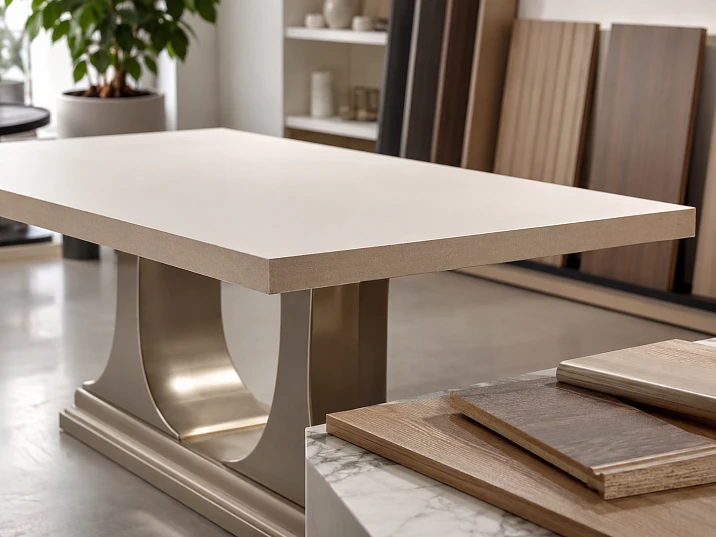
An MDF tabletop can be purchased for various tasks, but this article is not about a kitchen work surface, but specifically about a furniture tabletop for a table. This is an important distinction. One blank is designed for assembling a dining, coffee, side, writing, or conference table, while the other is for a kitchen set with a sink, cooking zone, constant moisture, and household chemicals. If you confuse these scenarios, you might choose a beautiful part that is not suitable in terms of purpose, load, fastening, or finish.
An MDF tabletop for a table is the foundation of future furniture. Not only the appearance of the table depends on it, but also how convenient it will be to use every day. The shape sets the character of the composition. The size determines the number of seats and the scale in the room. The thickness affects the visual stability. The material and finish help tie the table to the interior: under enamel, varnish, veneer, natural wood texture, or a more subdued color scheme.
For the buyer, such a tabletop is interesting because it allows you to assemble a table deliberately, rather than choosing ready-made furniture of a random size and style. You can select a shape, find a suitable base, think through the finish, and get an item that fits into a specific room, cafe, office, showroom, or country interior. In the STAVROS catalog, tabletops, bases, and furniture frames are conveniently viewed as related elements of one furniture system, rather than as separate parts.
You cannot make a choice here based solely on a photo. In the image, the tabletop may appear light, but in its actual size, it may require a more rigid base. A round shape can look soft and cozy, but it needs a proper center support. A rectangular surface is convenient for work and dining, but if it is very long, it requires a stable underframe. Therefore, before purchasing, it is important to understand which MDF tabletop is needed specifically for the table, what finish will be appropriate, and what base can support the shape, size, and weight of the future furniture.
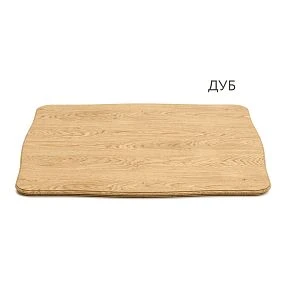
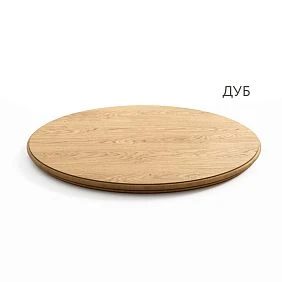
What is an MDF tabletop for a table
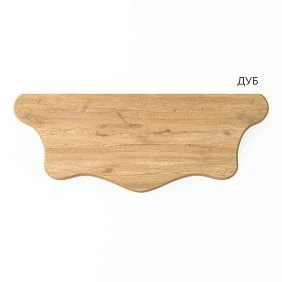
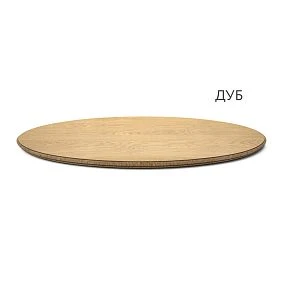
An MDF tabletop for a table is a furniture blank from which a standalone table is assembled: dining, coffee, side, writing, console, conference, or decorative. It does not replace a kitchen work surface and should not be automatically perceived as a kitchen unit element. It has a different logic of use: the tabletop connects to an underframe, frame, or furniture legs and functions as the top plane of a separate piece of furniture.
When a buyer enters the query "buy MDF tabletop," they may be looking for different things. One person needs a surface for the kitchen. Another needs a round blank for a coffee table. A third needs a base for a dining table in a café. A fourth needs a tabletop for enamel that can be matched to the interior by color. That is why, before choosing, it is worth separating the furniture intent from the kitchen intent. For a table, the shape, proportions, underframe, edge, finish, and stability of the entire structure are important.
MDF is valued for its even base. It is well-suited for furniture parts where stable geometry and a neat surface for subsequent finishing are needed. If an opaque color, enamel, or a laconic interior composition is planned, MDF can be a rational base. If the buyer needs a visible wood texture, it is worth looking at options of MDF with veneer or solid wood products, if such models fit the task and are confirmed in the product card.
A tabletop alone does not make a table ready. It must be considered together with the base. Therefore, when purchasing, it is important to look not only at the top plane but also at what it will be combined with. In the STAVROS catalog, you can start with the section STAVROS tabletops and furniture frames, where tabletops are logically linked to furniture frames, underframes, and other elements for assembling a table.

Key characteristics to evaluate before purchasing
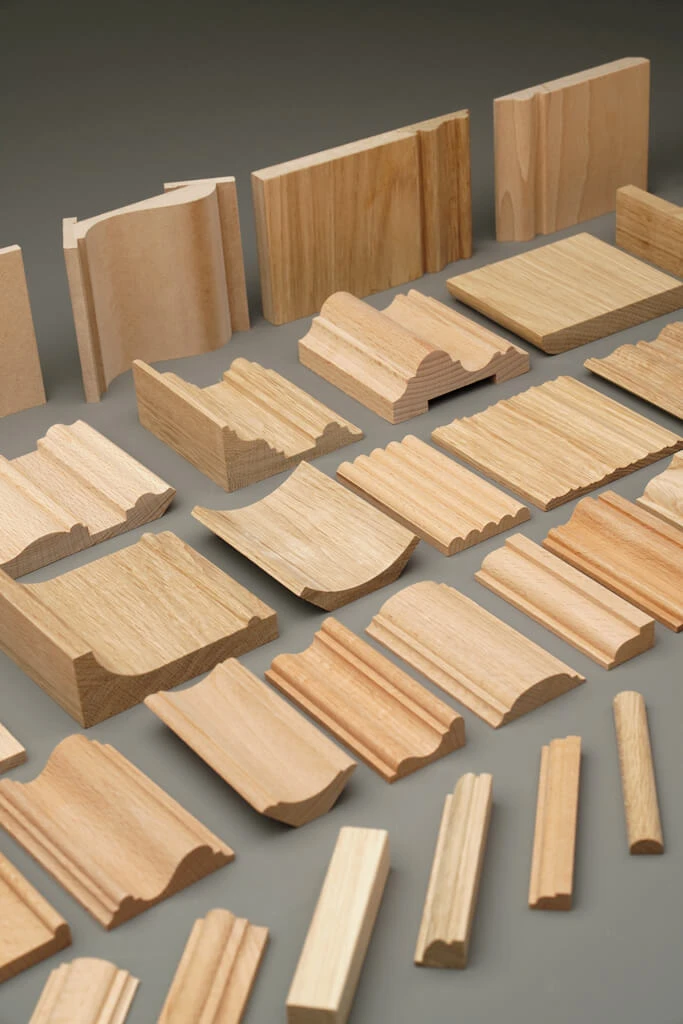
To ensure the tabletop looks like part of the furniture, not a random slab on legs, it is important to consider several parameters at once. The first is shape. A round, square, rectangular, or shaped tabletop behaves differently in the interior and requires a different base. The second is size. It is related to the number of seats, freedom of movement around the table, and the visual scale of the room. The third is material and finish. They determine whether the table will look colored, veneered, calm, expressive, classic, or modern.
There are also more practical parameters: thickness, weight, base rigidity, attachment points, underframe stability, edge and underside treatment. These details are not always visible in a beautiful photo, but they affect daily use. The table can be placed in a living room, kitchen-dining room, cafe, meeting room, or salon, and in each scenario the load will be different.
| Parameter | What is important for the buyer to understand |
|---|---|
| Product type | Furniture tabletop for assembling a table |
| Main material | MDF; for certain models, options of MDF with veneer, oak, beech are possible — exact details should be checked in the product card |
| Purpose | Dining, coffee, side, writing, conference, decorative, and accent tables |
| Main scenario | Assembling a table with an underframe, frame, or furniture legs |
| Possible shapes | Round, square, rectangular, shaped — depending on the specific model |
| Finishing | Enamel, varnish, veneer, tinting, or other options — only if confirmed in the product card |
| What to check before ordering | Size, thickness, material, edge, finish option, compatibility with underframe, availability and ordering conditions |
| Compatible elements | Underframes, table frames, furniture legs, fasteners, protective compounds, decorative elements |
| Where to look | STAVROS tabletops, frames, and underframes section |
| What to clarify with the manager | Whether the selected tabletop fits the required base, finish, load scenario, and usage format |
This check helps avoid buying "by eye." A tabletop may look suitable but not fit the room size. It may be appealing in shape but require a different underframe. It may be a good base for enamel but not provide the desired wood texture if the buyer expected a natural wood grain. Therefore, it's better to start the selection not with the question "which is prettier" but with "what kind of table am I building."
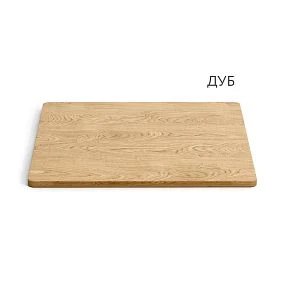
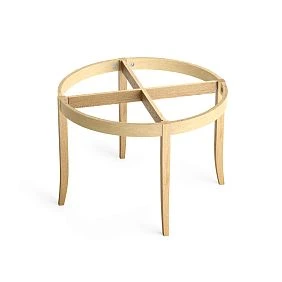
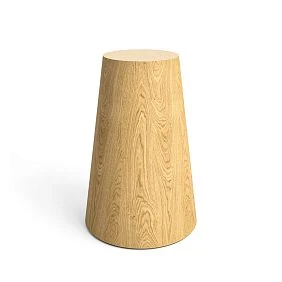
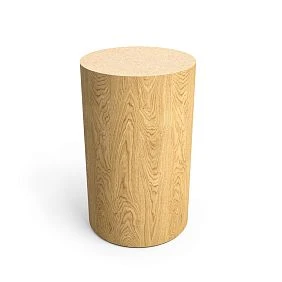
Our factory also produces:

How a furniture MDF tabletop differs from a kitchen one
Requests about MDF tabletops often mix furniture and kitchen scenarios. But these are different tasks. A kitchen tabletop works as part of a set: you cut food on it, place hot dishes, a sink is nearby, the surface constantly contacts water, grease, household chemicals, and temperature. A furniture tabletop for a table lives in a different environment. People dine, work, place decor, books, a laptop, dishes on it, but it does not have to serve as a kitchen work area.
| Parameter | MDF tabletop for a table | Kitchen tabletop |
|---|---|---|
| Purpose | Separate table: dining, coffee, side, writing, conference | Kitchen set and work area |
| Main load | Dishes, books, decor, work items, everyday use | Water, hot dishes, household chemicals, sink, cooking area |
| Selection | Shape, size, underframe, seating, interior style | Kitchen length, cabinets, sink, hob, joints |
| kit | Countertop plus underframe, frame or supports | Countertop plus kitchen modules |
| Finishing | Can be matched to enamel, lacquer, veneer or other furniture finish | Requires a coating designed for kitchen use |
| Visual role | Creates the image of a separate piece of furniture | Part of a kitchen set line |
| The main risk of error | Choosing the wrong shape, size, or base | Not accounting for moisture, joints, sink, temperature, and household load |
Therefore, phrases like "buy MDF kitchen countertop" cannot be automatically applied to choosing a tabletop for a table. If you need a surface for a kitchen set, the requirements will be one thing. If you need a tabletop for a dining or coffee table, other things are more important: how it will look on the base, how comfortable the seating will be, whether the table will wobble, whether the base is rigid enough, how the edge is finished, and whether the material suits the chosen finish.
An MDF furniture tabletop reveals itself precisely in combination with the base. Without a base, it remains a blank. With a properly selected base, it turns into a full-fledged table that can become the center of a dining room, an accent in a living room, a workspace in a study, or part of a commercial interior.
Get Consultation
MDF tabletop shapes: how they change the character of a table
The shape of the tabletop is not just a matter of taste. It affects seating, movement around the table, the type of base, and the overall look of the room. A round shape softens the interior and is convenient for conversation. A square shape looks neat and symmetrical. A rectangular shape works well in elongated rooms and for long seating areas. A shaped or designer tabletop makes the table an accent but requires particularly careful selection of the base.
Round MDF tabletop
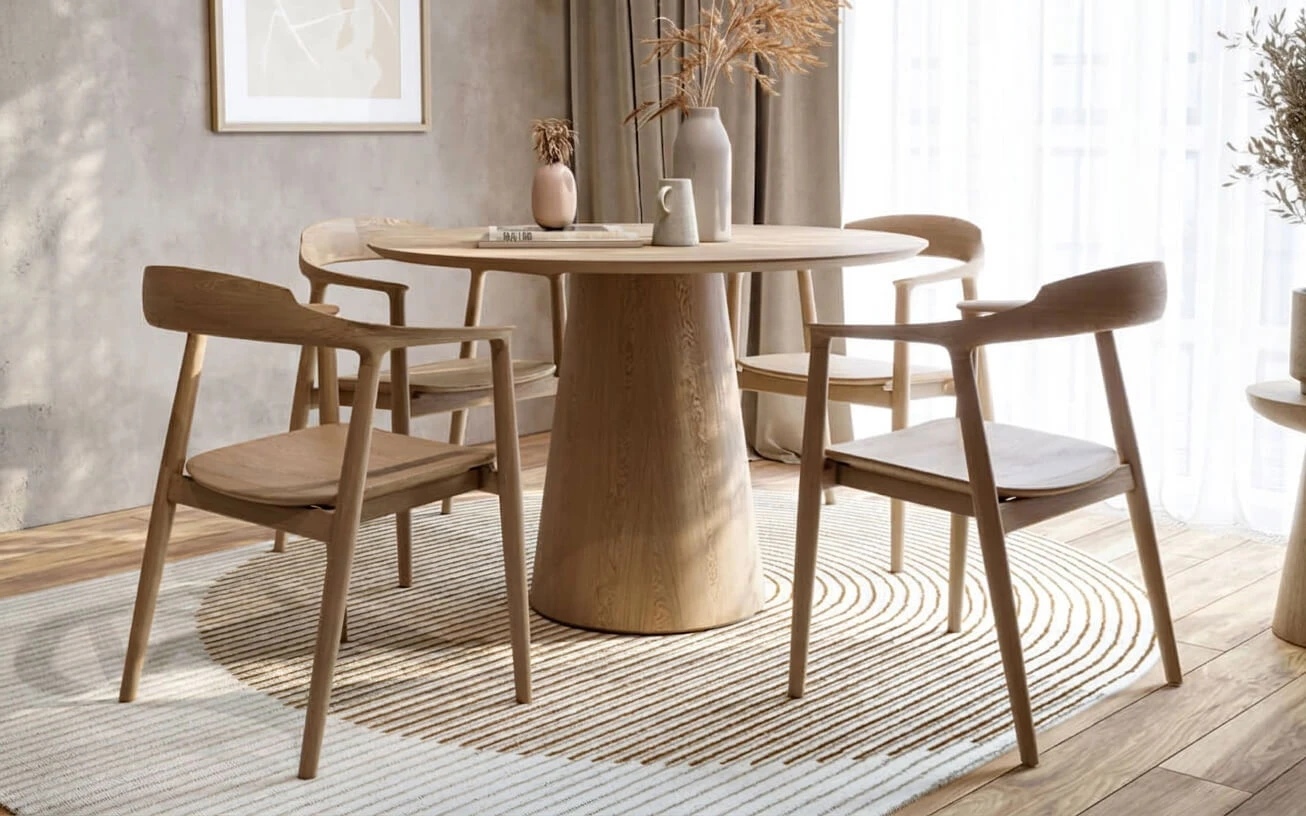
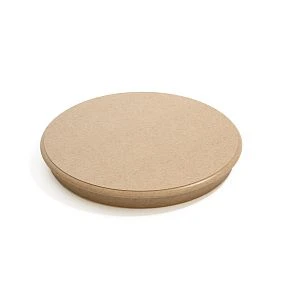
A round MDF tabletop is suitable for interiors where softness, communication, and the absence of sharp corners are important. It looks good in a kitchen-dining room, small living room, breakfast area, cafe, or meeting room where people sit facing each other. The round shape is visually lighter than a rectangular one, especially if the table is not against a wall but in the center of the area.
When a buyer is looking for where to buy a round MDF tabletop, it is important to consider not only the diameter but also the base. For a round shape, the center of gravity plays a big role. If the underframe is too narrow or weak, the table may seem unstable. If the base is too massive, it will visually weigh down the entire composition. Therefore, a round tabletop is best paired with an underframe that evenly supports the load and does not interfere with seating.
The query "buy round MDF tabletop" is often associated with the desire to assemble a small dining or coffee table. But even a small diameter requires checking: how many people will sit, how much space remains around, whether the table will be in a walkway, whether a central accent or a calm furniture group is needed.
Square MDF tabletop
A square tabletop is perceived as more strict and composed. It is well suited for compact dining areas, cafes, small meeting tables, game tables, workspaces, and interiors where symmetry is needed. A square is easier to fit into a room with straight geometry, especially if the furniture and walls are already built on clear lines.
When choosing a square tabletop, it is important to look at the side size and the height of the future table. A small square can be convenient for two, but cramped for a full meal. A large square provides more area but requires good support and enough free space around. If the base does not match the scale, the table may look heavy on top and weak on the bottom.
In the context of STAVROS, the material about the model can be considered separately Square tabletop ST-026-1 800×800 from MDF and veneer. It should not be perceived as a replacement for the overall selection of all MDF tabletops, but such an example helps to understand how a specific square shape is considered in conjunction with the material and finish.
Rectangular MDF tabletop
A rectangular tabletop is the most common option for dining, writing, work, and conference tables. It works well in elongated rooms, along a wall, in dining rooms, studies, offices, cafes, and areas where multiple people need to be seated along the long side.
The main question for a rectangular shape is the span between supports. The longer the tabletop, the more attention must be paid to the rigidity of the base. You cannot choose the top surface separately from the underframe. If the distance between supports is too large, the table may look unstable and handle loads poorly. Therefore, for rectangular tabletops, a belt frame, two supports, a frame, or other structure that supports the length is especially important.
In an interior, a rectangular shape sets the direction. It can elongate a room, emphasize the line of a kitchen-dining area, organize a workspace, or accommodate a large dining group. But in a small space, a too-long tabletop quickly starts to obstruct movement. Here, you need to think not only about the size of the surface itself but also about the passages around it.
Shaped and designer tabletop
A shaped tabletop is chosen not only for practicality but also for its appearance. It can have a soft silhouette, a wavy line, complex geometry, or a non-standard shape. This option is suitable for designer tables, coffee compositions, showrooms, salons, restaurants, and interiors where furniture should be noticeable.
But the more complex the shape, the more important the base. A designer tabletop may have a shifted center of gravity, an unusual edge, or varying width on different sides. The underframe must account for this geometry. Otherwise, the table will look beautiful in photos but prove inconvenient in actual use.
A shaped form is best revealed where there is air around it. If you place a complex tabletop in a cramped corner, its silhouette may get lost. If you leave space around it, the shape becomes part of the interior composition and works as an accent.
MDF, oak veneer, beech veneer, or solid wood: what to choose
The material determines not only the appearance but also the finishing logic. Pure MDF is often chosen when a smooth base for color is needed. MDF with veneer suits a buyer who wants a stable base but a natural wood texture on the surface. Solid wood is chosen where the most natural character of the material is needed, if such a task fits the budget, style, and operating conditions.
| Option | When to choose | What finish is usually considered |
|---|---|---|
| MDF | A smooth base is needed for opaque color, enamel, or a calm finish | Enamel, varnish, painting — if such options are confirmed for the model |
| MDF with oak veneer | An expressive wood grain is needed with a stable base | Varnish, oil, tinting — if confirmed in the product card |
| MDF with beech veneer | A calmer wood texture is needed | Varnish, enamel, tinting — if provided for the specific product |
| Solid wood | The most natural look and feel of wood is needed | Oil, varnish, tinting, or another confirmed finish |
MDF is especially good where the interior is built around color. For example, an enamel-style tabletop can be white, graphite, beige, dark, or another color — but the exact options depend on the product card and finishing conditions. It's important not to decide on a color in advance, but to check it against available solutions. If the buyer wants a smooth, calm surface without a pronounced wood grain, MDF can be a suitable base.
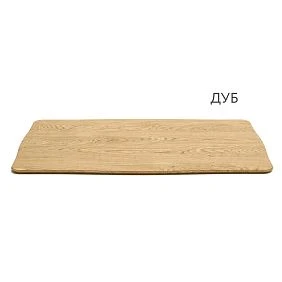
Veneer is chosen in a different situation. It is needed when you want to see the wood texture. Oak is perceived as more expressive and noble in pattern, while beech is visually calmer and softer. But here too, you cannot substitute facts with expectations. You need to look at the specific model, material, veneer option, and available finish in the product card.
Solid wood is a separate story. It gives the feeling of real wood but requires careful attention to operating conditions, finish, and construction. If a buyer is choosing between MDF, veneer, and solid wood, it's better to base the decision not only on taste but also on the task: whether they need color, texture, naturalness, stability, specific weight, or a certain visual depth.
Thickness, size, and weight: why these parameters cannot be left 'for later'
The tabletop should be proportionate not only to the room but also to the base. Thickness affects the visual sense of reliability. A thin tabletop can look light and modern but will require proper support. A more massive one looks more solid but increases the visual and actual weight of the table. There is no universal answer here: everything depends on the shape, size, and underframe.
Size is related to seating. For a dining table, it's important how many people will sit at it regularly and how many occasionally. For a coffee table, the height of the sofa, distance to armchairs, and clear passage are more important. For a desk, the depth of the work area, placement of equipment, and hand position matter. For a conference table, the number of participants and ease of communication are key.
When a buyer searches for 'buy MDF tabletop for table', they often think about the top surface. But a table is a structure. If the tabletop is large and the base is weak, the result will be unconvincing. If the tabletop is small but the base is too heavy, the piece will lose its lightness. Therefore, it's better to choose the size together with the underframe, not before it.
For a rectangular tabletop, you need to consider the distance between supports. For a round one, the center of gravity. For a square one, equal support on all sides. For a shaped one, the actual geometry and load distribution. The exact dimensions and thickness of the chosen model should be checked in the product card because different items may vary in parameters.
How to choose an underframe for an MDF tabletop
The underframe determines the stability, seating, and character of the table. The same tabletop can look different on a central support, four legs, an apron frame, a massive base, or a decorative underframe. Therefore, choosing the base is not a technical detail but a full part of the design.
This is especially important for the buyer if they are assembling the table themselves from ready-made elements. In the STAVROS catalog, you can consider STAVROS bases as a base for tabletops of different formats. The underframe should not only match the style but also correspond to the size, shape, and expected load.
For a round tabletop
A round tabletop pairs well with a central underframe if it is stable enough and correctly scaled. This option frees up legroom and makes seating more comfortable. However, the central support must hold the surface firmly so the table does not feel wobbly.
If the round tabletop is large, one visually thin support may not be enough. In that case, you should look at a wider base or a structure that distributes the load. This is especially important in cafes and public areas because the table is used frequently, may be moved, loaded with dishes, and leaned on at the edge.
For a square tabletop
A square tabletop requires equal support on all sides. It can stand on four legs, a symmetrical underframe, or a frame that supports the corners and center. If the base is too narrow, the square shape will start to look top-heavy. If it is too wide, seating will become uncomfortable.
A square shape handles symmetry well, so errors are especially noticeable. An unevenly matched underframe, shifted supports, or a base that is too thin can disrupt the entire look. For such a table, it is important that the top and bottom speak the same language.
For a rectangular tabletop
A rectangular tabletop often requires more complex support. If it is long, controlling deflection and stability along the entire length is important. This may require an apron, two supports, a frame, or other structure that connects the sides and supports the surface.
For a rectangular dining table, it is also important not to interfere with seating. Legs or supports should not be placed where a person will sit. Therefore, the base is chosen not only for strength but also for convenience. A table can be beautiful, but if knees constantly hit the apron or support, the purchase will quickly disappoint.
For cafes and public areas
In a cafe, restaurant, salon, showroom, or hotel, the tabletop is used more intensively than at home. Tables are wiped down, moved, and used by different people more often. Therefore, stability, repeatability of sets, easy maintenance, and practical finish are important. If you need to assemble several identical tables, it is better to think in series right away: the same shape, the same base, the same finish.
For a commercial interior, appearance also matters. The table should support the establishment's style but not be finicky in use. An MDF tabletop with enamel can help achieve the desired color, while veneer can add natural texture. But the final choice should consider the load scenario and confirmed finish options.
What to buy together with the tabletop
A tabletop is rarely purchased completely separately from other elements. Even if it is chosen first, you then need to consider the base, fastening, finish, and surface protection. Depending on the project, you may need an underframe, frame, furniture legs, fasteners, glides, fittings, protective compounds, and decorative details.
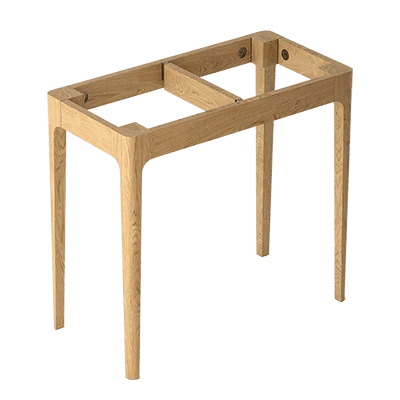
If you need a frame, it is worth looking at the STAVROS table frame. This option helps assemble not only the top surface but also the structural base of the table. The frame is especially important for rectangular and large tabletops where support along the length is needed.
In some projects, the buyer starts with a specific model. For example, you can consider Tabletop ST-020 as a separate item if its parameters and appearance match the task. Other models are also available for comparison: Tabletop ST-020-1, Tabletop ST-026-1 or tabletop ST-026-3. Before ordering each model, you need to check the product card: dimensions, material, finish, availability, and compatibility with the base.
If the buyer is not yet sure which shape and configuration to choose, it is helpful to study the material which tabletop to buy to assemble a beautiful table. This approach helps to view the tabletop not as a separate part, but as part of the future furniture.
MDF tabletop with enamel finish
MDF is well suited for tasks where an even color and a calm surface without a pronounced wood grain are needed. Enamel allows you to match the table to the interior color: complement a kitchen-living room, repeat the shade of the facades, make the table neutral or, conversely, an accent piece. However, the specific enamel capabilities and preparation options should be clarified in the product card.
An enamel tabletop is especially appropriate in modern interiors where clean geometry is important. A white, milky, gray, dark, or colored surface can look very neat if the shape and base are chosen correctly. At the same time, the edge becomes an important part of the image: it should look as well-thought-out as the top surface.
For a dining table, enamel provides a calm, collected look. For a coffee table, it helps make the piece part of the overall color composition. For a cafe or salon, it allows you to support the brand's interior palette if the chosen finish meets the operating conditions.
But enamel does not replace proper construction. Even the most beautiful surface will not save a table if the top is too large for the base or the fastening does not match the load. Therefore, the finish should be considered together with the shape, size, and underframe.
MDF tabletop with veneer
Veneer is chosen when a wood texture is needed. It is a compromise between a stable base and the visual feel of wood. Such a tabletop can look warmer than a painted surface, especially in an interior with wooden floors, facades, wall panels, chairs, or carved decor.
Oak veneer is perceived as more expressive. Its pattern can become an independent part of the table's image. Beech veneer usually looks calmer, softer, and more even in character. But the exact properties depend on the specific product, so before purchasing, you need to check the product card and available options.
A veneer tabletop works well in a living room, dining room, study, meeting area, restaurant, or showroom. It adds naturalness to the interior, but does not always require a fully solid construction. If the base is also made in a wooden style, the table turns out more cohesive.
Veneer should be chosen when the buyer truly wants to see the wood texture. If an opaque enamel is planned, veneer may be unnecessary. If a natural texture is needed, pure MDF without veneer will not provide such a visual effect.
Where MDF tabletop reveals itself in the interior
In the living room, an MDF tabletop most often works in a coffee or side table. Here, proportions relative to the sofa, armchairs, and rug are important. A surface that is too large will make the area heavy, too small will get lost. A round shape will soften the composition, a square one will add neatness, a shaped one will become an accent.
In a kitchen-dining room, the tabletop becomes the center of daily life. At such a table, people have breakfast, work on a laptop, host guests, and gather for family dinners. Therefore, not only the appearance is important, but also the seating comfort. The table should leave enough space around, and the underframe should not interfere with legs.
In a bedroom or study, an MDF tabletop can be used for a writing desk, vanity, or small work table. Here, the depth of the surface and a calm finish are important. Too active decor can be distracting, and too massive a shape can weigh down the room.
In an entryway or hall, a tabletop can become part of a console table. Such an item often serves a decorative role: a vase, lamp, key holder, or small accessories are placed on it. For a console, depth is especially important so that the furniture does not obstruct the passage.
In commercial interiors, MDF tabletops are used for cafes, restaurants, salons, meeting rooms, showrooms, and guest areas. Here, the combination of appearance and repeatability comes to the forefront. If several identical tables are needed, it is important to choose the shape, size, finish, and base in advance so that the entire group looks unified.
How a tabletop influences the style of a room
A table often stands in the center of a zone, so the tabletop is immediately noticeable. It sets the horizontal plane around which chairs, a sofa, a lamp, a rug, a display case, a kitchen island, or other items gather. If the tabletop is chosen well, the interior seems cohesive. If not, even a beautiful base does not save the composition.
A round tabletop makes the space softer. It suits interiors where fewer corners and more communication are desired. A square one emphasizes symmetry. A rectangular one sets a direction and helps organize a long zone. A shaped one acts as a design gesture and requires a calmer surrounding.
The material also changes the impression. MDF with enamel makes the table more laconic. Veneer adds warmth. Solid wood enhances naturalness. A dark finish makes the item visually heavier, a light one makes it lighter. A contrasting tabletop highlights the table, while one close in color to the furniture integrates it into the overall ensemble.
Therefore, when choosing, it is important to look not only at the table itself. You need to imagine it next to chairs, a lamp, the floor, walls, doors, and neighboring furniture. The tabletop can be a calm background or the main accent. A mistake occurs when the buyer wants everything at once: a bright shape, an active texture, a complex base, and a rich color. Sometimes it is better to leave one main accent and make the other details supportive.
Practical nuances: the edge, the underside, and the attachment
The edge of the tabletop is often underestimated. In a top-down photo, it may be almost invisible, but in real life, a person looks at the table from the side, sits next to it, or walks past it. The edge shapes the perception of thickness and neatness. It should match the chosen finish and not look like a randomly left technical part.
The underside is also important, especially if the table stands on an open base. When a person sits at the table, part of the lower plane may be visible. Additionally, the underside is related to the attachment. You need to understand how the base connects to the tabletop, where the attachment points are, and whether the chosen structure is suitable for the material.
Fastening and installation cannot be universally described for all models. They depend on the specific tabletop, base, and assembly conditions. Therefore, you should not assume in advance that any tabletop will fit any legs. It is better to check compatibility, especially if the table will be large, heavy, or used in a public area.
For a daily-use table, it is important not only to assemble the product beautifully but also to make it comfortable. The surface should be at the correct height, the seating should be free, the base should be stable, and the edges should be neat. These nuances may seem technical, but they determine whether the table will bring joy after purchase.
Common mistakes when buying an MDF tabletop
One of the most common mistakes is confusing a furniture tabletop with a kitchen countertop. The buyer sees the word "tabletop" and does not clarify the purpose. As a result, expectations may not match the actual scenario. The kitchen requires one set of properties, while a dining or coffee table requires another.
The second mistake is choosing a shape without a base. Round, square, and rectangular tabletops require different support. You cannot first buy a surface you like and then look for any base that "roughly fits." The table will look convincing only when the top and bottom are selected together.
The third mistake is not considering weight and size. A large tabletop may look beautiful but require a stronger structure. If placed on weak legs, the table will seem unreliable. If you choose too massive a base for a small surface, the furniture will lose its lightness.
The fourth mistake is forgetting about thickness. Thickness affects the visual perception of the table. A thin edge may look modern but is not always appropriate in a classic interior. A massive tabletop looks more solid but can weigh down a small room.
The fifth mistake is not checking the attachment points. The base must connect to the tabletop correctly. If the fastening is not thought out, even style-matching parts may work poorly together. This is especially important for large and public tables.
The sixth mistake is not thinking about the edge finish. The top surface may be beautiful, but a messy edge immediately reveals incompleteness. For furniture that stands in the center of a room, this is especially noticeable.
The seventh mistake is choosing MDF with veneer when an opaque enamel is needed. In this case, the buyer pays for a texture that is then covered with color. If the goal is a smooth painted surface, it is enough to consider a suitable base for enamel.
The eighth mistake is choosing pure MDF when a natural wood texture is needed. Regular MDF won't provide a wood grain pattern. If texture is important, you should consider veneered options or solid wood, if they suit the task and are confirmed in the product card.
The ninth mistake is not planning protection for the underside and edges. This is especially important for tables that will be used frequently. The exact protection options depend on the chosen model and finish, but the issue itself cannot be ignored.
When an MDF tabletop is truly appropriate
An MDF tabletop is suitable for a buyer who wants to assemble a table for a specific interior and not be limited to ready-made furniture of a standard design. This is a good option for projects where shape, color, combination with the base, and the ability to choose a finish are important.
Such a tabletop should be considered for a dining table if a neat appearance and clear geometry are needed. It can be appropriate in a kitchen-dining room, living room, studio apartment, country house, or cafe. The main thing is to correctly choose the size, base, and finish for the actual load.
For a coffee or side table, MDF is convenient because it allows for a more freeform shape. A small table can be round, square, shaped, or rectangular. Visual lightness is especially important here because the piece stands next to upholstered furniture and is constantly in view.
For commercial spaces, MDF tabletops are interesting for the possibility of assembling several similar tables in one style. In a cafe, salon, or showroom, repeatability is important: the furniture should support the overall look but remain practical.
Another option should be considered if the buyer needs a kitchen work surface for a sink area, cooktop, and constant contact with water. In this case, the requirements will be different. You should also think about veneer or solid wood if the main goal is a natural wood grain pattern rather than a painted surface.
How to buy a tabletop on the STAVROS website
Before ordering, you should carefully study the card of the selected model. In it, you need to check the size, material, thickness, appearance, available finish options, availability, and ordering conditions. If the tabletop is being selected for a specific base, it is important to understand in advance whether these elements are compatible in scale and mounting.
It is useful for the buyer to compare several models. For example, one tabletop may be better suited for a compact coffee table, another for a dining table, and a third for a more expressive interior composition. They should not be evaluated only by their name. It is important to look at the shape, proportions, and how the product will work together with the base.
If the task is complex, it is better to contact a STAVROS manager in advance. This is especially reasonable when the table is being assembled for a cafe, restaurant, showroom, or a large dining space. In such cases, an error in size or base can be repeated across several pieces of furniture.
Purchasing becomes easier when the table is perceived as a set. The tabletop, underframe, frame, finish, and fasteners must come together into one structure. Then the buyer gets not just a separate blank, but the foundation of a future table that will look appropriate and serve its purpose.
Why it is better to choose a tabletop together with the base
The tabletop and underframe are more connected than they seem. The top part is responsible for the area, shape, and visual character, while the bottom part is responsible for stability, seating, and overall silhouette. If these elements do not match in scale, the table looks random. If they match, even a simple shape becomes expressive.
A round tabletop on the right base looks soft and stable. A square one looks collected and symmetrical. A rectangular one looks confident and functional. A shaped one looks designer and accent. But any of these solutions can be ruined by an unsuitable underframe.
The base must take into account not only the weight but also the usage scenario. For a home coffee table, the load is one thing. For a daily dining table, it is another. For a cafe, it is a third. The more intensive the use, the more attention should be paid to stability and fastening.
That is why the buyer should not perceive an MDF tabletop as a completely independent product. It is important on its own, but it only reveals itself in combination with other details. A good table starts with the right tabletop, but ends with a well-chosen set.
Conclusion
An MDF tabletop for a table is not just a flat blank, but the foundation of future furniture. It determines the shape, scale, style, seating comfort, and character of the entire composition. To make a successful purchase, it is important to distinguish a furniture tabletop from a kitchen one, consider the size and thickness, choose the material for the desired finish, and understand in advance what underframe will support the chosen shape.
MDF is suitable for those who need a smooth base for color, enamel, or a calm furniture finish. MDF with veneer should be considered if wood texture is important. A round shape softens the interior, a square one adds symmetry, a rectangular one helps organize a dining or work area, and a shaped one makes the table an accent.
In STAVROS, tabletops, underframes, and furniture frames can be selected as parts of one system. This approach helps you avoid buying random parts and instead assemble a table thoughtfully: matching the interior, load, room size, and future usage scenario.
FAQ
Can I buy an MDF tabletop for a table separately?
Yes, an MDF tabletop can be considered as a separate furniture blank for assembling a table. However, before ordering, it's important to immediately understand which underframe, frame, or supports it will be used with.
How is an MDF tabletop for a table different from a kitchen one?
A kitchen countertop is designed for a set, sink, cooking zone, water, household chemicals, and intensive work load. An MDF tabletop for a table is used for individual furniture: dining, coffee, writing, or conference tables.
What is better to choose: MDF or MDF with veneer?
MDF is suitable if you need a smooth base for enamel, color, or opaque finish. MDF with veneer is chosen when you want to see natural wood texture. Exact material and finish options should be checked in the specific model's card.
Is an MDF tabletop suitable for a dining table?
Yes, if you correctly select the size, thickness, base, and final finish. For a dining table, stability, comfortable seating, and compatibility of the tabletop with the underframe are especially important.
What shape should I choose for a small room?
For small spaces, round or compact square tabletops are often convenient. The round shape softens the space and makes it easier to move around the table, while the square shape helps maintain geometry and compactness.
How to choose a base for a round tabletop?
For a round tabletop, the center of gravity and even support are important. A central base can be convenient if it is stable enough and matches the diameter of the tabletop.
Can MDF tabletops be used in a cafe?
Yes, MDF tabletops can be considered for a cafe or public area if the material, finish, base, and fastening are suitable for the intensity of use. For commercial projects, it is especially important to check the stability and repeatability of the sets in advance.
What should you check in the product card before ordering?
You need to check the size, thickness, material, finish, shape, availability, ordering conditions, and compatibility with the base. If the tabletop is being selected for a specific base, it is better to clarify this with a STAVROS manager in advance.
Why can't you choose a tabletop based only on a photo?
A photo helps assess the appearance but does not fully show the scale, weight, thickness, edge, and compatibility with the base. In a real interior, these parameters affect the convenience and perception of the table more than it seems.
What should you buy together with the tabletop?
Most often, a tabletop is paired with an underframe, frame, furniture legs, fasteners, glides, and a finish coating. The specific set depends on the table's shape, material, and usage scenario.