Article Contents:
- Why the wall behind furniture often looks empty
- Which furniture zones can be decorated with stucco decor
- Commode
- Console
- Sideboard or display cabinet
- Shelving unit
- Built-in wardrobe
- TV unit
- Desk or home office area
- What to choose for the wall behind furniture
- Frame made of moldings
- Vertical lines
- Decorative overlay in the center
- Symmetrical frames
- Ready-made set
- How to choose decor for furniture
- Which styles suit
- Neoclassical
- Neoclassic Light
- Jatoba
- Versailles Light
- Modern classicism
- Mistakes when decorating the wall behind furniture
- Frame narrower or wider than furniture without logic
- Decor intersects with sockets
- Moldings interfere with opening the cabinet
- No connection with mirror or painting
- Too large ornament in a small area
- How to Calculate Material Quantity
- What to buy for the wall behind furniture
- Frequently asked questions
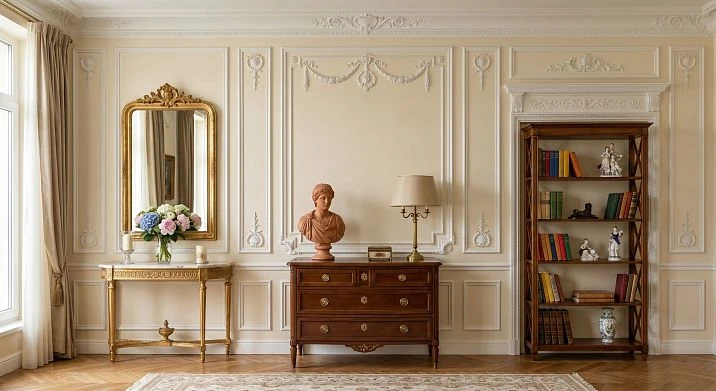
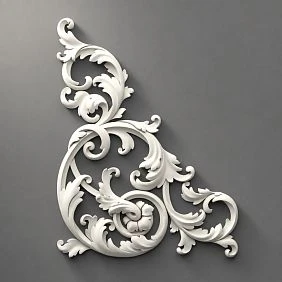
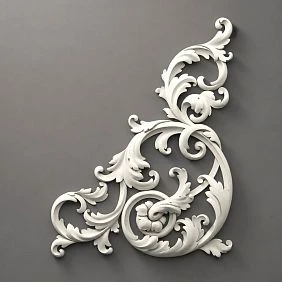
Place the dresser against the wall. Take two steps back. Look. What do you see? Beautiful furniture — and emptiness above it that does not react to the presence of this object. The wall is silent. It is at this moment that the feeling of incompleteness arises — that very "something is missing" that everyone intuitively feels but cannot always put into words.stucco decor behind furnituremade of polyurethane — is the answer to this question. Moldings, frames, decorative overlays turn an empty wall into an extension of the furniture zone, creating a unified, architecturally meaningful composition.
Why the wall behind furniture often looks empty
There is a simple pattern that is rarely stated out loud: furniture is a horizontal object, a wall is a vertical plane. When they exist separately, each on its own — no dialogue occurs. The dresser stands on the floor and visually "falls away" from the wall. The console hovers in space. The cabinet turns into an island.
Moldings create this dialogue. Vertical frames on the wall behind the dresser "embrace" it, set the scale, create an architectural background. A horizontal molding above the furniture continues its line upward. A symmetrical pair of decorative elements on either side of the console turns it into part of a well-thought-out wall composition.
Moreover,wall decor behind furnituresolves a practical problem: it visually fixes the zone. A dresser with a molding frame above it is perceived not as "furniture placed against a wall," but as a "furniture zone" — with its own logic, its own scale, its own place in the interior. This is especially important in open spaces, kitchen-living rooms, hallways — where there are no doorways or architectural constraints that would themselves create zoning.
polyurethaneWall decorin this context is impeccable in terms of technical characteristics: it is not afraid of humidity, resistant to mechanical loads, easy to paint, and does not deform from temperature changes. It can be installed in hallways, living rooms, bedrooms, studies, kitchen areas — everywhere where furniture stands and an architectural accent is needed.




Which furniture zones can be decorated with stucco molding
Almost any furniture zone with an adjacent wall is a potential spot for moldings. Let's break down each one separately.
Our factory also produces:
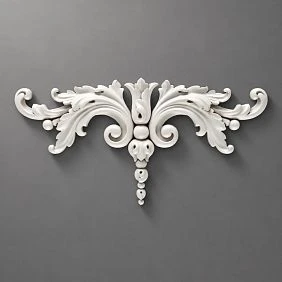
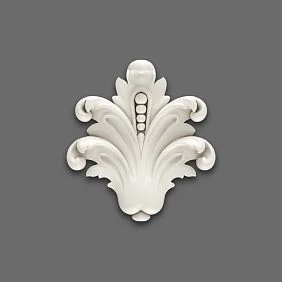
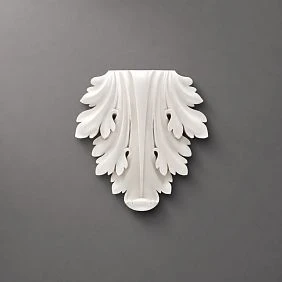
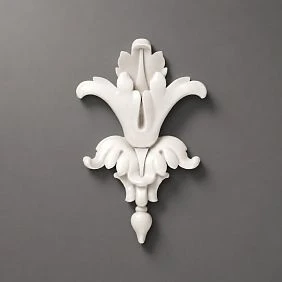
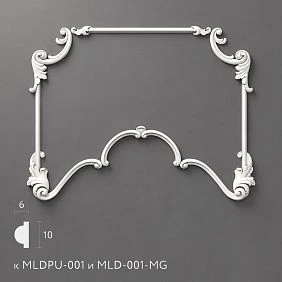
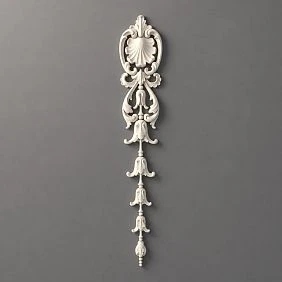
Chest of drawers
A dresser is one of the most common 'clients' for wall decor. It stands against a wall in the bedroom, hallway, or living room, often holding a mirror, decorative objects, or a lamp. The wall above it remains either empty or covered by a mirror — but without architectural context.
Moldings behind the dressercreate this context. One frame — the width of the dresser plus 10–15 cm on each side — from the countertop level to the ceiling cornice or up to the 220–240 cm mark. Inside the frame, place a mirror, painting, decorative overlay, or simply a wall painted in a different tone. The result is a full-fledged 'furniture niche' without actually recessing the wall.
If the dresser is low (up to 80 cm), the frame takes up most of the wall height and looks monumental. If the dresser is tall (100–110 cm), the frame is built more compactly above it, creating a 'cap' over the furniture.Decor for moldings behind the dresser— corner inserts at the frame corners — add completeness without unnecessary complexity.
Get Consultation
Console
Wall decor with a console— a separate design theme worthy of careful analysis. By its nature, a console is a delicate piece: thin legs, a tabletop, minimal volume. It practically "asks" the wall behind it to become active — to set the scale, create a backdrop, and become a partner in the composition.
Classic scheme: a molding frame the width of the console plus 15–20 cm on each side, height from the tabletop level to 200–220 cm or to the cornice. Inside the frame — a mirror, poster, overlay, or simply a different color. Above the frame or in its upper part — a small decorative element made ofdecorative inserts.
Moldings behind the consoleare especially valuable in the hallway: the hallway is the first space guests see, and it is here that the "furniture niche" with a molding frame creates that first impression that is later reproduced in memory.
For more on the principles of working with the mirror area, see the articlewall decor with a polyurethane mirror.
Sideboard or display cabinet
A sideboard is furniture with character and scale. It is large enough to occupy an entire wall and expressive enough to claim a central place in the dining room or living room. The wall behind the sideboard requires a corresponding architectural solution: not a small frame, but a well-thought-out system of moldings that "accepts" the sideboard into the interior as a native element.
The optimal scheme for a sideboard is vertical sections on either side of it and a horizontal molding above the tabletop. If the sideboard is wide (160–200 cm), the vertical sections divide the wall behind it into three parts: central (above the tabletop) and two side ones. This creates the feeling of built-in furniture — even if the sideboard is freestanding.
Decorative overlays behind furniture— symmetrical ornamental elements in the upper sections — add a classic character without excess.
Shelving unit
Wall decor with a shelving unit— a special case. The shelving unit occupies a large area of the wall, often from floor to ceiling. Here, moldings work differently: not as a frame around the furniture, but as a framing for a niche or wall panel next to the shelving unit — on the adjacent wall, on the side walls, or on sections of the wall visible through the open shelves.
Moldings around the shelving unit are vertical lines on the side walls that "guide" the eye along the shelving unit and create the feeling of a built-in library area. A horizontal molding above the shelving unit, connecting it to the ceiling, is the finishing touch of this scheme.
Built-in wardrobe
A built-in wardrobe occupies a niche or stands flush against the walls. The decor here is structured differently: moldings are installed not behind the wardrobe (it occupies all the space), but on visible surfaces next to it — on the side walls, on the side slopes, on sections of the wall above the wardrobe (if it does not reach the ceiling).
Molding sections on the side walls next to the built-in wardrobe create a sense of architectural continuation: the wardrobe appears to be built into the wall, rather than placed against it. A horizontal molding on the wall above the wardrobe connects its top edge to the ceiling.
Important: moldings should not interfere with door opening. Before installation, be sure to check the opening trajectory — hinged, sliding, or pocket doors may touch the decor during movement.
Cabinet in the TV area
A TV cabinet or console under the television is one of the most common furniture zones requiring wall decor. Here, moldings are built symmetrically relative to the TV screen: either frames on the sides of it, or one common frame that unites the cabinet and the screen into a single architectural system.
Symmetry is an immutable law of the TV zone. All molding sections are built from the center of the screen, not from the edge of the wall. Even if the wall is asymmetrical, the zone must be symmetrical. The article details the design principles.Polyurethane TV zone decor.
Desk or office zone
A desk against the wall creates an office zone — and this zone deserves decor that adds status and expressiveness. Molding frames on the wall above the desk — vertical sections or horizontal panels — create the feel of a "study" rather than just a "table against the wall."
For an office zone, vertical molding sections work particularly well: they draw the eye upward, create a sense of height, and give the workspace an academic character. The article discusses the principles of designing an office space.polyurethane wall decor in the study.
What to choose for the wall behind furniture
The choice of decorative tool depends on the task, the scale of the furniture, and the desired stylistic result.
Molding frame
Molding frame behind furniture — the most versatile and most effective solution. A rectangular frame, proportionate to the furniture, creates a "window" on the wall: an architecturally highlighted space that both accommodates the furniture and is itself a decorative element.
The frame is built according to three parameters: width (corresponds to the width of the furniture), height (from the top plane of the furniture to the cornice or to a fixed mark), and molding profile (determined by the interior style and furniture scale). Frames are the main element of any furniture zone, and it is with them that the design of decor behind furniture begins.
Vertical lines
Vertical molding sections behind furniture are a technique characteristic of modern classic and Scandinavian styles. Instead of a single closed frame, open vertical lines are used — from the baseboard to the cornice or from the countertop level to the ceiling. The effect is structure without confinement, rhythm without rigid geometry.
Vertical lines work particularly well behind tall furniture: a sideboard, a display cabinet, a tall chest of drawers. They continue the verticality of the furniture piece without competing with it, but rather supporting its logic.
Decorative center overlay
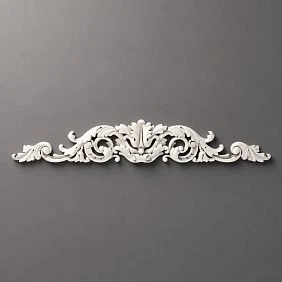
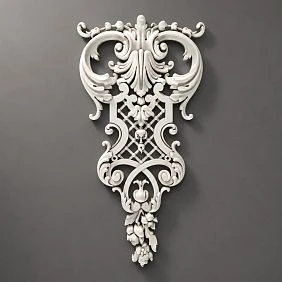
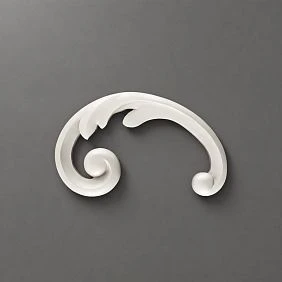
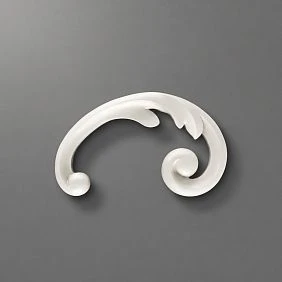
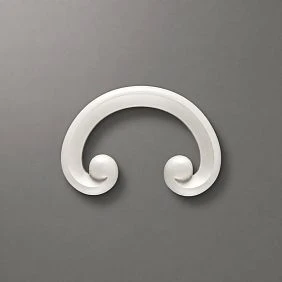
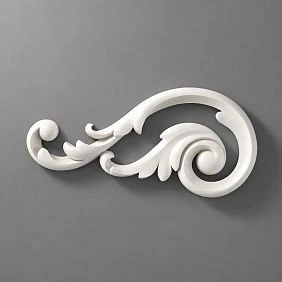
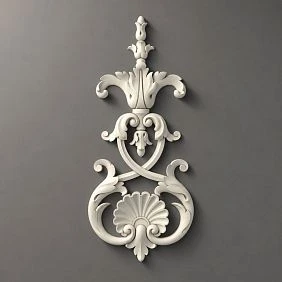
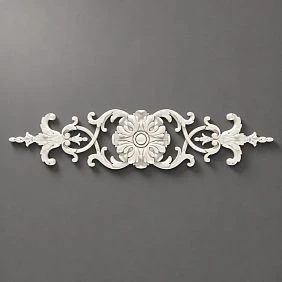
When the furniture area does not require a full frame, but only an accent is needed — Decorative overlays behind furnitureOne overlay in the center of the wall above a console — a small rosette, floral ornament, or geometric motif — creates a visual "focal point" for the entire area.
The overlay acts as an anchor: it fixes the center of the composition and sets the scale for everything else. A painting above the console, a mirror, sconces — all these elements begin to align around this point. Important: the overlay must be proportionate to the space. A miniature element above a large chest of drawers gets lost, a large ornament above a small console feels overwhelming.
Symmetrical frames
Symmetrical frames behind furniture — for cases when the furniture is wide enough that the wall behind it can be divided into two or three parts. Two frames on either side of a mirror behind a console — a classic hallway scheme. A pair of frames on either side of a sideboard — a living room in neoclassical style. Three vertical sections behind a wide chest of drawers — modern classic with rhythm.
On the principles of building symmetrical decor systems — in the article symmetric polyurethane wall decor.
Ready-made set
Ready-made decor kit for furniture area — the optimal choice for those who want results without independent design. The kit includes all necessary elements from one collection, with coordinated profiles and scale. All you need to do is mark the wall and install.
The ready-made kit is especially valuable for console and dresser areas: where a single symmetrical frame or a pair of frames is needed on a "grab and hang" principle. More details in the articleReady-made molding frames for the wall.
How to choose decor for furniture
The principle of proportionality is the main law when working with decor behind furniture. Here are specific rules for each parameter.
Frame width and furniture width. The frame should be equal to the furniture width or 10–20 cm wider on each side. A frame narrower than the furniture is disproportionate and gets lost. A frame more than 30 cm wider on each side "swallows" the furniture, making it unnoticeable.
Frame height. The lower edge of the frame is the furniture countertop level (for dresser, console, sideboard) or floor level (if the furniture is low or legless). The upper edge is the ceiling cornice, or a mark of 220–240 cm, or 30 cm below the ceiling. The frame should create a feeling of a "niche", not a "sticker".
Molding profile and furniture scale. For a delicate console or thin dresser — molding 20–35 mm wide. For a large sideboard or wide dresser — 35–55 mm. For a monumental cabinet or built-in system — molding up to 60–70 mm can be used. Rule: the molding should be noticeable but not "overshadow" the furniture.
Mirror and painting above furniture. If a mirror or painting hangs above the furniture, the frame is built considering their size. The mirror or painting is placed inside the frame with a 8–15 cm margin on all sides. The lower edge of the frame is 5–10 cm above the upper plane of the furniture.
Sconces. If sconces are placed on the sides of the mirror or painting, the moldings should not overlap the sockets and mounting elements. Sconces are mounted either inside the frame (above the central axis) or outside it, below or above the horizontal moldings.
Baseboards and cornices. Molding decor behind furniture works as part of a unified system: baseboard at the bottom, cornice at the top, molding frames on the wall. When all three elements are coordinated in style and profile, the interior looks like a single architectural solution. More about this system in the article.how to combine stucco decor with baseboards and cornices.
Wall and molding color. Molding in the same color as the wall creates an architectural, neutral effect. White molding on a colored wall provides a classic contrast. Molding in the color of the furniture is a designer technique requiring precision. One of the most striking options for the furniture zone is moldings in the wall color plus a different color inside the frame: the frame becomes a "niche" with a colored background.
Which styles are suitable
Each STAVROS decor collection carries its own character — and the choice of collection determines the overall tone of the entire furniture zone.
Neoclassical
Moldings in neoclassical style behind furniture — expressive profile, architectural solidity, classic proportions. The Neoclassic collection is suitable for living rooms and dining rooms with high ceilings, for apartments with classic furniture — sideboards, consoles on carved legs, Louis-style chests of drawers. The moldings of this collection create a sense of a serious architectural environment, not just decorative embellishment.
Neoclassic Light
Light neoclassical style behind furniture — the optimal choice for most modern interiors. The thin, elegant profiles of the Neoclassic Light collection work as a neutral architectural context: they do not impose classicism but give the furniture zone cultural depth. Suitable for any furniture — from strict modern chests of drawers to classic consoles.
This collection is especially good in new buildings with ceilings of 265–280 cm and neutral white or light gray walls. The light profile does not create a sense of antiquity, but at the same time clearly speaks of taste and intention.
Japandi
Decor behind furniture in Japandi style — for minimalist interiors with a Japanese character. Straight lines, absence of ornament, calm geometry — all this organically combines with light-toned wooden furniture, linen textiles, ceramic vases. Japandi moldings behind furniture create a "frame" without decoration — a pure architectural structure.
Versailles Light
Classic decor behind furniture of the Versailles Light collection — for formal, ceremonial furniture zones: sideboards in the dining room, consoles in the foyer, a fireplace with a mantelpiece. The rich ornamental profile creates an environment where classic furniture feels completely at home. About using this collection by the fireplace — in the article polyurethane decor for the wall with a fireplace.
Modern classic
This is not a separate collection, but a principle of application: moldings from the Neoclassic Light collection, painted in the color of the wall, without corner elements and overlays — create a minimalist architectural frame that is perceived as a modern design solution. No historical stylization, only rhythm and line. This approach is universal and works with any modern furniture.
Mistakes when decorating the wall behind furniture
Each of these mistakes occurs regularly — and each is easy to avoid if you know about it in advance.
Frame narrower or wider than furniture without logic
A frame that is significantly narrower than the furniture looks random. A frame that is significantly wider than the furniture swallows it. A frame that is exactly equal to the width of the furniture (without gaps) looks cramped.
The golden rule: the frame is 10–20 cm wider than the furniture on each side. If the furniture area is very wide (console 180 cm) — the gaps can be slightly smaller, 8–12 cm. If the furniture is narrow (console 60 cm) — the gaps can be larger, up to 25 cm. The main thing is the proportion that feels right.
Decor intersects with sockets
A molding installed directly above a socket or next to a switch is a common mistake. Before installation, be sure to mark all electrical points on the wall and ensure that the molding does not overlap them or create a visual conflict with them.
If the socket is located in the area of the future frame, there are several solutions: move the socket (correct but costly), change the frame configuration so that the socket is outside its perimeter, or use the socket as part of the design — for example, place it in the lower section of the frame if it is aesthetically justified.
Moldings interfere with cabinet opening
This is a mistake discovered after installation. It is especially relevant for built-in cabinets with hinged doors: when opening, the door touches the molding or decorative element on the adjacent wall.
Solution: before installing the decor, open all cabinet doors fully and mark the area they occupy. Install moldings outside this area with a margin of at least 3–5 cm. Pay special attention to corner furniture areas where the cabinet door opens perpendicular to the adjacent wall.
No connection with the mirror or painting
A mirror or painting above furniture and a molding frame on the wall are not competitors but partners. However, if they are not connected in size and placement, each element 'lives on its own' and the composition falls apart.
Rule: the mirror or painting should be inside the frame with equal spacing on all sides. The center of the mirror is the center of the frame. If the mirror or painting hangs above or below the center, it creates an uncomfortable feeling of displacement.
Too large an ornament in a small area
Decorative InsertsIn the area of a small console or compact dresser, they should be proportionate to the space. A rosette with a diameter of 30 cm on the wall above a console 60 cm wide is too large and overwhelming. For such an area, an overlay of 12–18 cm is optimal.
Guideline: the overlay should occupy no more than 1/4 to 1/5 of the frame width. If the overlay looks 'small' inside the frame, it works correctly. If it fills most of the space inside the frame, it is overloaded.
How to calculate the amount of material
The question is practical, and it's better to solve it before going to the store. Measure the furniture: width and height (from the countertop or floor to the desired mark on the wall). Add margins — 15 cm on each side for width and 10 cm at the bottom. You will get the internal dimensions of the frame.
Frame perimeter = (width + height) × 2. This is exactly how many linear meters of molding you will need for one frame. Add 15% for trimming and reserve. Round up to a whole number of slats (standard length — 2 m).
Detailed algorithm with calculation examples — in the articlehow to calculate moldings and stucco decor for a wall.
What to buy for the wall behind the furniture
Practical list for decorating the furniture area:
-
Moldings behind furniture — the basis of the scheme. Profile 20–55 mm depending on the scale of the furniture and ceiling height. Order with a 15% reserve.
-
Decorative Inserts — for central accents, corner elements, mirror area. Proportionate to the frame.
-
Decor for Molding — corner inserts for frame joints. Mandatory for classic collections Neoclassic and Versailles Light.
-
Ready-made wall decor set— if you need a quick, guaranteed agreed result without independent design.
-
Elements from one collection — Neoclassic, Neoclassic Light, Japandi, or Versailles Light. Only one collection per zone.
Allpolyurethane interior items— moldings, overlays, decor for moldings, ready-made sets — are presented in the STAVROS catalog.
Frequently Asked Questions
Do I need to attach moldings to the furniture itself?
No. Moldings are mounted on the wall, not on furniture. The furniture stands in front of the wall with decor, visually forming a single zone with it. If rearrangement is needed, the furniture can be moved — the decor on the wall will remain and can be used with other furniture or exist as an independent architectural solution.
Can I make a frame below the level of the furniture countertop?
Technically — yes. But aesthetically it is impractical: the lower part of the frame will be hidden behind the furniture. For dressers and consoles, the lower molding of the frame is placed 5–10 cm above the countertop level. The exception is when the frame starts from the floor itself (for example, for a low furniture item or when creating the illusion of built-in furniture).
Are moldings suitable for a narrow wall space between cabinets?
Yes. For a narrow wall space (30–50 cm), vertical molding lines are used — one or two profiles running from the baseboard to the cornice. This creates the feeling of an architectural divider between furniture volumes. Frames on narrow wall spaces are generally not used — there is not enough width.
How to decorate the wall behind furniture in a small room?
In small rooms, moldings work especially effectively. Use a thin profile (15–25 mm), one frame behind the main piece of furniture, moldings in the color of the wall. No large overlays, no contrasting color. A quiet architectural structure in a small space creates a feeling of quality and thoughtfulness without a sense of crampedness.
How to paint moldings behind furniture?
With acrylic paint — water-based or enamel — in one or two thin coats. For a 'decor in wall color' effect, paint the molding and the wall simultaneously with one coat. For a white molding on a colored wall — paint separately, carefully masking with painter's tape along the molding's edges.
What is better — a frame of moldings or a single overlay above furniture?
It depends on the task. If a full 'furniture niche' with architectural depth is needed — a frame. If a light accent without complex installation is needed — an overlay. An overlay above a console works well in small hallways and minimalist interiors. A frame — in living rooms, bedrooms, studies, where the area requires a large-scale architectural solution.