














































Article Contents:
- Why the dressing room deserves full wall decor
- Where to use stucco decor in the dressing room
- Wall with mirror
- Vanity area
- Pier between cabinets
- Wall opposite the storage system
- Entrance to the dressing room
- Wall with a hidden door
- Narrow area with lighting
- What to choose for a dressing room: moldings, overlays or a ready-made set
- Moldings for frames and verticals
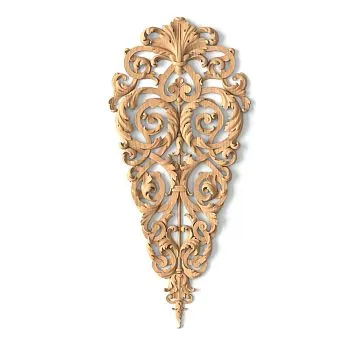
- Decorative appliqués
- Decor for moldings: corners and inserts
- Ready-made sets
- How not to overload a dressing room with stucco decor
- Don't decorate every wall
- Don't use large patterns in a narrow room
- Don't obstruct the opening of cabinets and doors
- Don't forget about mirrors, lighting and outlets
- Don't make overly contrasting decor without a purpose
- How to combine moldings with furniture and cabinets
- Which styles are suitable for a dressing room
- Neoclassicism
- Neoclassical Light
- Jatoba
- Art Deco
- Versailles Light
- Practical scenarios: a dressing room for different tasks
- Table: style and solution for a dressing room
- What to buy for decorating a dressing room
- Frequently asked questions
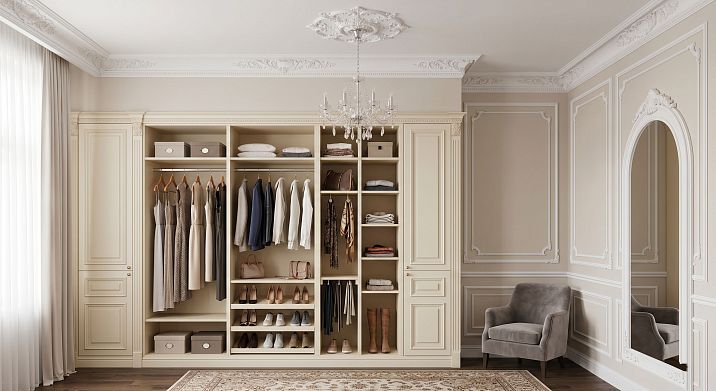
There are rooms that are denied the right to be beautiful for years. A dressing room is one of them. Function is placed above aesthetics: cabinets, shelves, rails, hooks. Having light is already good. But something has changed in recent years. The dressing room is increasingly becoming a space where you want to linger: with a full-length mirror, a soft pouf, illuminated shelves, and a wall that looks like it belongs in an expensive boutique, not a storage closet.
Stucco decor for a dressing roommade of polyurethane is a tool that elevates the storage area to another league. Moldings on the wall with a mirror, a delicate frame system on the partition between cabinets, a thin profile along the dressing table — all this adds to the dressing room what most renovations lack: a sense of completeness and style. Moreover, without redevelopment, without replacing furniture, and without a long wait for craftsmen.


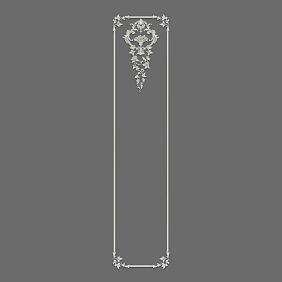
Why a dressing room deserves full wall decor
Think about it: how much time a day do you spend in the dressing room? In the morning — choosing clothes, in the evening — putting them back, several times a week — trying on outfits in front of the mirror. This space sees you every day. And if the bedroom, living room, and even the kitchen are already decorated with attention to detail, why does the dressing room remain in the status of a "utility room"?
The answer, as a rule, is simple: people don't think of it as an interior space. And in vain. In modern expensive apartments and houses, the dressing room has long ceased to be just a "closet with hangers." It combines a fitting room function, a dressing table area, a mini-living room (pouf, mirror, sconce), and often a hidden door that requires a separate decorative solution. All of this is a full-fledged living space that deserves the same treatment as a bedroom.
Wall decor in the dressing roommade from polyurethane moldings is not an excess. It is a logical continuation of the interior concept of the entire house. A dressing room designed in the same style as the bedroom is perceived as a cohesive solution. A dressing room "on its own" feels like an unfinished renovation.
Practical advantages of polyurethane in this room: the material is not afraid of humidity (which is often present in a dressing room, especially if it is near a bathroom), can be painted in any color, and is mounted with standard glue without complex surface preparation. Polyurethane products are lightweight — they do not load the walls, do not crack, and do not deform. Full selectionpolyurethane products for interior— in the STAVROS catalog.




Where to use stucco decor in the dressing room
A dressing room is a compact space with several zones, each with its own decorative logic. Let's consider them by priority.
Our factory also produces:
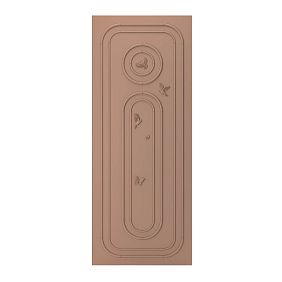
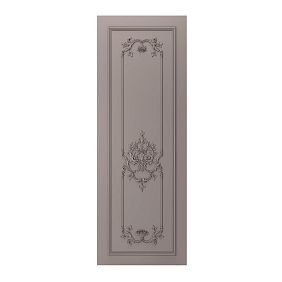
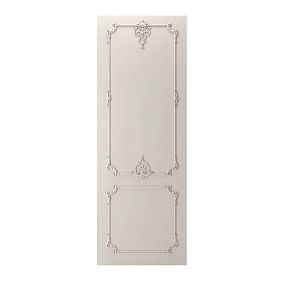
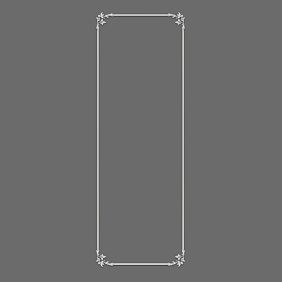
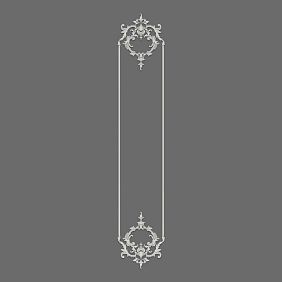
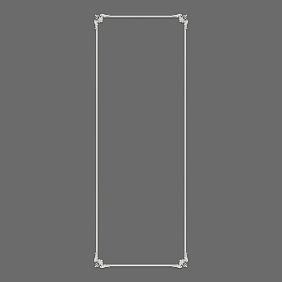
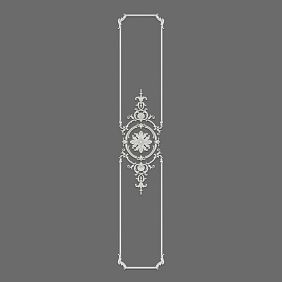
Wall with mirror
This is the main zone of any dressing room. It is here that the "final check" happens before going out, and it is here that attention is concentrated. The wall with a mirror is the visual center of the room, and it requires the most thoughtful decorative solution.
Moldings around the mirror in the dressing roomis a classic and effective scenario. A frame made of molding around the mirror creates the effect of a "picture in a frame": the mirror gains architectural weight, and the wall around it gains completeness. It is important to maintain proportions: the width of the molding frame should be proportional to the mirror. For a mirror 80–90 cm wide — a profile of 30–40 mm. For a mirror 100–130 cm — 40–50 mm.
Distance from the edge of the mirror to the molding: 15–25 cm. This is the "breathing space" that gives the mirror readability and prevents the feeling that the "frame is glued to the glass." Less than 10 cm — the frame looks like a window casing. More than 35 cm — the connection between the mirror and the frame is lost.
An alternative approach: the mirror is not in a frame, but in a system of vertical moldings on the sides — from floor to ceiling. This creates the effect of columns, between which the mirror is "inserted." Elegant, modern, and works well in narrow dressing rooms where a frame can visually "eat up" space.wall decor with a polyurethane mirror— detailed material with practical diagrams.
Get Consultation
Vanity table area
A vanity table in a dressing room is one of those details that turns a functional space into a "boudoir." And the wall above the vanity table is a zone with special status: here the hostess performs her morning and evening rituals, so it should be not just beautiful, but truly cozy.
Decor of the wall near the vanity table— this is usually a mirror in a molding frame plus symmetrical decorative elements on the sides. Or a frame system above the table, inside which a mirror, sconces, or a wall panel are placed.
An important nuance: if sconces are planned above the vanity table, they must be included in the decorative system from the very beginning. Sconces inside a molding frame or along the axis of symmetry of the decorative system are a complete, well-thought-out solution. Sconces "stuck" into the wall separately from the decor are two unrelated elements that interfere with each other.
Stucco wall decor with backlighting— about how the relief of moldings interacts with lighting, how light enhances the decorative effect, and which light sources best combine with polyurethane profiles.
Space between cabinets
A narrow vertical space between two wardrobe cabinets is an area that usually remains empty. But in vain: it is here that a pair of vertical moldings from floor to ceiling creates completeness. They "unite" the cabinets into a single system, adding rhythm and depth to the wall.
For a space 30–60 cm wide, two parallel vertical profiles work well—not a frame, but precisely vertical lines. They visually "stretch" the height of the room and create the feeling that the space is not a random gap between cabinets, but a designed architectural element.
Moldings for storage areaIn this scenario, profiles 20–30 mm wide, matching the wall tone or the color of the cabinets. Not contrasting — to avoid fragmenting the space with additional color spots.vertical wall decor— about the principles of working with vertical molding systems in various rooms.
Wall opposite the storage system
If there is a free wall opposite the cabinets in the dressing room, this is the best place for accent decor. It is this wall that is visible when you open the door to the dressing room. It creates the first impression of the room.
A richer decorative system is appropriate here: a frame or a system of frames, a decorative overlay in the center, possibly a mirror as part of the composition.Ready-made decor set for the dressing room— the optimal choice for this area: all elements are coordinated in style and proportions, installation takes a few hours.
For spacious dressing rooms (from 8–10 sq.m), the wall opposite the cabinets can accommodate a two-tier frame system: a lower row of frames from the baseboard to a height of 100–110 cm, an upper row up to the ceiling. This creates the feeling of a full-fledged interior zone, not just a 'wall with decor.'
Entrance to the dressing room
A doorway is a transition point between a corridor or bedroom and a dressing room. If the molding system starts right at the entrance, it "captures" the guest from the first step. Moldings around the perimeter of the doorway (trim in the style of dressing room profiles) or the continuation of the molding system on the side walls at the entrance create the feeling that the dressing room is not a separate room, but an extension of the bedroom.
A special solution: if the entrance to the dressing room is designed as a portal made of moldings, it immediately sets the level of the entire room. The portal system (two vertical moldings on the sides of the opening + a horizontal cornice on top) creates the effect of "entering another room" — solemn and elegant.
Wall with a hidden door
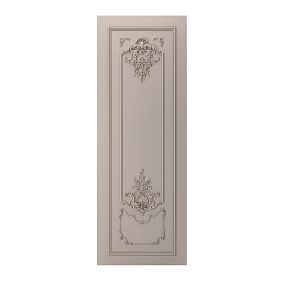
A hidden door to the dressing room is an increasingly popular solution in modern interiors. It allows you to make the entrance invisible, to "dissolve" it into the decorative wall system. And moldings are the main tool for this.
The logic is simple: the door leaf is covered with moldings according to the same scheme as the adjacent wall panels. The wall turns into a single frame system, in which one of the "squares" is the door. When the door is closed, it is not visible. When open, the decorative effect remains.
Stucco decor for a wall with a hidden door — a separate topic with an analysis of technical nuances: which moldings are suitable for the door, how to level the levels, how to ensure free opening.
Narrow area with lighting
In dressing rooms with lighting on shelves and cabinets, narrow wall areas often remain, which are indirectly illuminated. This is an opportunity for delicate decor that is revealed precisely thanks to the light.
A thin vertical molding on such a wall, illuminated from below or above by a built-in lamp, creates a beautiful shadow in the profile. The relief "comes to life" — this is one of the most subtle and sophisticated decor techniques that makes a much greater impression than its cost.
Stucco wall decor with backlighting— with an analysis of how to choose the profile type for lighting, what distance from the light fixture to the molding is optimal, and what mistakes to avoid.
What to choose for a walk-in closet: moldings, overlays, or a ready-made kit
Moldings for frames and verticals
Buy moldings for a walk-in closet— a basic step for most tasks. Linear profiles allow you to create frames of any size, vertical lines between cabinets, a horizontal belt under the ceiling, and systems of any complexity. For a walk-in closet, as a rule, not many linear meters are needed — which makes this option economical.
Recommended profile widths for a walk-in closet:
| Zone | Ceiling Height | Profile width |
|---|---|---|
| Small walk-in closet (4–6 sq.m) | 2.5–2.7 m | 20–28 mm |
| Medium walk-in closet (6–10 sq.m) | 2.6–2.8 m | 25–35 mm |
| Spacious walk-in closet (10+ sq.m) | 2.8–3.2 m | 30–45 mm |
| Mirror area | Any | 30–45 mm |
| Pier between cabinets | Any | 20–30 mm (flush) |
polyurethane wall moldings — a detailed guide on choosing profiles: types of sections, principles for selecting width and height, installation formats.
Decorative appliqués
Decorative overlays for the dressing room — point accent elements. In a dressing room, they are used sparingly: one overlay above the mirror, a pair of symmetrical overlays on the sides of the vanity table, an element in the center of a free wall. No more than 2–4 pieces for the entire space.
Scale rule: the overlay should not be larger than 1/5 of the wall height. In a dressing room with 2.7 m ceilings — the maximum overlay size is about 50–55 cm in height. For delicate decor — 20–30 cm.Buy decorative wall overlays — in the STAVROS catalog, sizes from 8 to 60+ cm are available.
Decor for moldings: corners and inserts
Decor for moldings in the dressing room — corner inserts and decorative connections are used for professional finishing of frame system corners. A corner insert in the collection style allows avoiding cutting the molding at 45 degrees (which requires experience and precise tools) and at the same time provides a more detailed, "expensive" corner.
For a dressing room with a framed mirror, corner inserts complete the frame.Corner elements for frames in the dressing roomare strictly matched to the style of the main profile.
Ready-made kits
Ready-made decor set for the dressing room— for those who want a finished result without designing the system themselves. The kit includes all necessary elements in coordinated proportions: moldings, corner inserts, and, if needed, overlays. Installation is done according to markings, without design calculations.
Well suited for a wall with a pouf and mirror, for an accent wall opposite cabinets, or for a vanity area.ready-made sets of stucco decor for walls— with an analysis of formats and selection principles.
How not to overload a dressing room with stucco decor
A dressing room is a small space, and it is especially important to follow the principle of 'less is more' here. Mistakes in the decor of this room are more noticeable than in a spacious living room.
Do not decorate every wall
In a dressing room, one or two decorated walls are enough: the wall with the mirror and, possibly, the free wall opposite the cabinets. Walls 'occupied' by cabinets do not need additional decor — the decor simply won't be visible there. And if part of the molding goes behind a cabinet, it is not only unattractive but also pointless.
Do not use large ornaments in a narrow room
A dressing room of 4–6 sq.m with ceilings of 2.7 m is not a place for large ornamental overlays with a diameter of 40–50 cm. They will "press" on the space, creating a feeling of crampedness. Delicate overlays of 15–25 cm and thin profiles of 20–30 mm are the right scale for a small dressing room.stucco decor in the color of the wall or contrasting— about selection principles that are especially important in intimate spaces.
Do not obstruct the opening of cabinets and doors
Moldings on walls near cabinets should be placed so that opening facades do not touch the decor. The distance from the molding to the plane of the cabinet facade is at least 15–20 mm. This is not only a practical necessity but also visual comfort: a molding "squeezed" between the wall and the facade looks accidental.
Do not forget about mirrors, lighting, and sockets
The decorative system should be designed taking into account all technical elements: where the mirror is, where the sconce is, where the sockets and switches are. Moldings should not intersect switches and sockets — this is both unsightly and inconvenient.Stucco decor for painted walls— about surface preparation and consideration of all technical details during installation.
Do not make overly contrasting decor without a purpose
White moldings on a dark gray wall in a small dressing room create a harsh contrast that fragments the space and makes it visually smaller. If there is no task to "highlight" a specific element, moldings in the tone of the wall work better. The relief is read through light and shadow, and the space remains cohesive.symmetric polyurethane wall decor— about how to properly build a decorative system taking into account the color scheme.
How to combine moldings with furniture and cabinets
A dressing room is a space where the wall and furniture work in very close contact. Cabinets occupy most of the surface, and moldings must exist in this reality, not ignore it.
Moldings and cabinet fronts. If the cabinets are matte white or cream — moldings in the same tone create a unified surface. If the cabinets are tinted or dark — it is better to choose moldings in the tone of the wall, not the cabinets: this will unify the wall and separate it from the furniture.stucco decor behind furniture— a practical breakdown of how decor works on walls with dense furniture.
Moldings and baseboards. Baseboards in the dressing room should be in the same style as the moldings on the walls. A modern baseboard with a straight bevel — for profiles with a geometric cross-section. A classic baseboard with a curve — for neoclassical profiles.how to combine stucco decor with baseboards and cornices— detailed material on systematic work with molding space.
Moldings and ottoman. If there is an ottoman in the dressing room, it usually stands by one of the walls. Moldings on this wall create a "niche" for the ottoman — a decorative background that unifies the furniture and the surface. A frame, the dimensions of which correspond to the width of the ottoman plus 40–60 cm on the sides and a height of 120–150 cm, is an ideal solution.
Which styles are suitable for a dressing room
Neoclassicism
Dressing room with moldings in neoclassical style — an image associated with a "luxury apartment": white moldings, pastel walls, a framed mirror, a velvet ottoman, sconces on the sides. This is a classic that never goes out of style and works equally well in a 40 sqm walk-in closet and a compact storage area.
Neoclassicism assumes symmetry as a basic principle. Two sconces — strictly at the same height, frames — strictly the same size, distances — precisely measured.Ready-made molding frames for the wall — with an analysis of the principles of symmetrical construction of frame systems.
Neoclassicism Light
Light neoclassicism in the dressing room — for modern renovations without a penchant for heavy classicism. Thin profiles 20–28 mm matching the wall color, delicate frames without ornamentation, minimal overlays. The result is a space with architectural depth that looks thoughtful but not "showy."
This is a style for those who appreciate details but do not want ostentation. It works well in dressing rooms adjacent to a minimalist or Scandinavian bedroom: it does not conflict with the main room's concept but delicately continues it.
Japandi
Dressing room in Japandi style with moldings — for connoisseurs of calm, silence, and natural shades. Walls in tones of flax, oats, gray stone. Moldings — thin vertical profiles, strictly matching the color. No ornamentation, no overlays. The relief is only read through light and shadow.
For a Japandi dressing room, it is important to avoid any "palatial" elements: no corner decorations with curls, no profiles with baroque cross-sections. Strict geometry, clean lines. The result is a space where you want to be not just to get dressed, but simply to be.
Art Deco
Dressing room in Art Deco style — for those who love expressiveness and contrast. Dark walls in a deep tone (anthracite, dark blue, emerald), moldings with a geometric profile matching the wall color or with a metallic accent, a mirror in a frame with a thin gold or brass line.
Stucco wall decor in Art Deco style— detailed analysis of styling, profiles, and layout techniques.
Art Deco in the dressing room creates a sense of glamour and festivity. It's a space you want to enter already dressed "for the occasion." If this mood resonates with you, this style is yours.
Versailles Light
Dressing room decor in the "Versailles Light" style— for spacious dressing rooms in classic homes and apartments. Richer relief, expressive profiles, ornamental corner inserts, possibly a ceiling cornice in the collection's style.
This is a style for those who take classics seriously. Not "sort of classic," but genuine, with details and a well-developed system. A dressing room in "Versailles Light" is a small boudoir in the spirit of the 19th century, modernly interpreted.
Practical scenarios: dressing room for different tasks
Let's consider several specific situations encountered when designing a dressing room.
Scenario 1: Small dressing room, 4–5 sq.m, cabinets along three walls. The free wall is only opposite the entrance, 1.5–2 m wide. Mirror in the center of the wall, 80×160 cm. Solution: a frame made of molding 25–30 mm around the mirror with a 15 cm offset. On the sides of the frame, vertical moldings to the ceiling and to the baseboard. All in the wall color. Result: the wall looks like a well-thought-out interior zone, the mirror like an architectural element.
Scenario 2: Spacious dressing room, 10–12 sq.m, adjacent to the bathroom. Long wall (3.5–4 m) is free, with a vanity table and ottoman. Solution: two-level frame system — three frames in the lower tier (up to 110 cm height), three in the upper tier (to the ceiling). The vanity table and ottoman are "built into" the lower frame system. Mirror above the table is inside the upper central frame. Sconces along the axis of the side frames. All in one color.
Scenario 3: Dressing room with a hidden door. The wall with the entrance opening is "flat," without a visible passage. Moldings cover the entire wall with a unified frame system, including the door leaf. One of the "frames" is actually the door.Stucco decor for a wall with a hidden door— with technical installation details.
Table: style and solution for the dressing room
| Dressing room type | Recommended style | Profile | Accent elements |
|---|---|---|---|
| Small (4–6 sq.m), minimalism | Neoclassical Light / Japandi | 20–28 mm, matching color | Mirror frame only |
| Medium (6–10 sq.m), modern renovation | Neoclassic Light | 25–35 mm | Mirror frame + overlay |
| Spacious (10+ sq.m), classic | Neoclassical / Versailles Light | 35–50 mm | Two-tier system |
| Walk-in closet-boudoir, vanity table | Neoclassical / Versailles Light | 35–45 mm | Frames + sconce + mirror |
| Walk-in closet in dark tones | Art Deco | 25–35 mm, geometry | Contrasting verticals |
| Walk-in closet in natural shades | Japandi | 20–28 mm, matching color | Verticals only |
| Wardrobe with a hidden door | Any | For a wall system | Uniform frame system |
What to buy for designing a wardrobe
Full list of elements for decorating a storage area:
-
Buy stucco decor for a wardrobe — wall decor for painting for a mirror, dressing table, free wall.
-
Buy moldings for a walk-in closet — profiles with moldings for frames, verticals, partitions between cabinets.
-
Buy decorative wall overlays — accent elements above the mirror, on the sides of the dressing table.
-
Decor for moldings in the dressing room — corner inserts for complete frame systems.
-
Ready-made decor set for the dressing room — for an accent wall with a mirror or vanity table.
-
The STAVROS collection«Neoclassic» — for spacious and classic walk-in closets.
-
The STAVROS collection"Neoclassic Light" — for small and modern walk-in closets.
-
The STAVROS collection"Japandi" — for minimalist walk-in closets in a natural palette.
-
The STAVROS collection"Versailles Light" — for formal classic-style walk-in closet-boudoirs.
-
Full catalogpolyurethane products — for a systematic choice.
Installation — in detail:installing polyurethane moldingandinstallation of polyurethane molding.
Frequently Asked Questions
Which moldings to choose for a walk-in closet?
For small walk-in closets — profiles 20–28 mm matching the wall color. For medium — 25–35 mm. For spacious ones with high ceilings — 35–50 mm. Guideline: molding width ≈ 1% of ceiling height in cm (270 cm ceiling → 27 mm profile ± a few mm).Moldings for a walk-in closet — full catalog of STAVROS profiles.
Is polyurethane decor suitable for a dressing room next to a bathroom?
Yes. Polyurethane does not absorb moisture, does not swell, and does not deform in high humidity. This is a key advantage over plaster alternatives, which can deteriorate over time in such conditions.
How to design a wall with a mirror in a dressing room?
A molding frame around the mirror with a 15–20 cm gap from the mirror edge. Profile 30–40 mm. Corner inserts for finished corners. All in the wall color or with moderate contrast.wall decor with a polyurethane mirror — practical schemes and examples.
How to decorate a small dressing room with moldings?
Only one accent wall — the one visible at the entrance or where the mirror is. Thin profiles in the wall color. No large overlays. Moldings work as a quiet structure, not as a decorative "load".stucco decor in the color of the wall or contrasting — about the principles of monochrome decor.
How to calculate the amount of moldings for a dressing room?
Measure the perimeter of each frame you plan to create, multiply by the number of frames, and add 10–15% for waste during cutting.how to calculate moldings and stucco decor for a wall — with formulas and calculation examples.
Can moldings be painted in a non-standard color?
Yes. Polyurethane moldings can be painted with any acrylic or alkyd paint, including any RAL color, a color from brand paint catalogs, or one matched to furniture facades. They are supplied white or ready for painting — complete freedom in color choice.
What to buy for a beautiful dressing room: moldings or a ready-made set?
Depends on the task. If you need a frame around a mirror and a few vertical lines, linear moldings are enough. If you need a full decorative system for an accent wall, a ready-made set is better — it eliminates issues with proportions and consistency of elements.Ready-made molded decor kits — with a breakdown of formats.