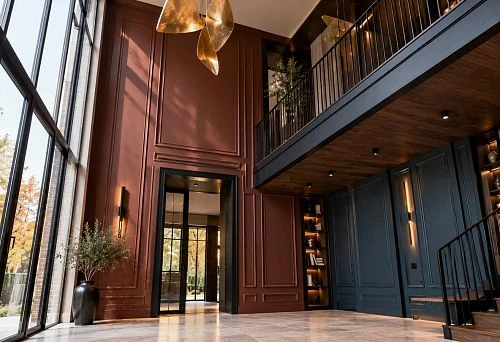
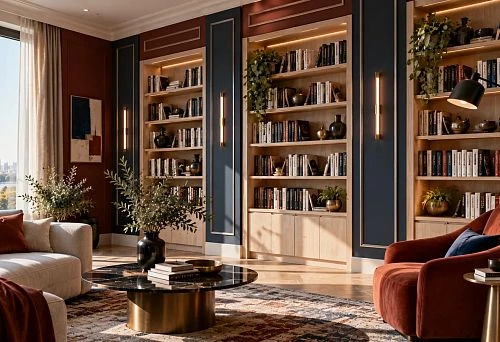
Article Contents:
- The "task first" principle: why the basket composition depends on the zone
- Three basic scenarios and their composition
- Basket No. 1: wall behind the sofa
- Mandatory items
- Additional items
- Final basket: wall behind the sofa
- Basket No. 2: ceiling under the chandelier
- Ceiling rosette: the first and mandatory element
- Ceiling cornice: framing the entire ceiling
- Molding contour: ceiling zoning
- Final basket: ceiling under chandelier
- Basket No. 3: mirror, console, and headboard
- Paired L/R overlays: symmetry as the main technique
- Thin molding: frame for mirror or zone
- Decorative overlay as a central accent
- Final basket: mirror, console, headboard
- Basket No. 4: furniture facade and cabinet
- Thin molding on facade: imitation of a paneled facade
- Miniature cabinet overlays
- Nuance: the color must match the facade
- Final cart: furniture facade
- What is most often forgotten when buying moldings
- First: glue
- Second: matching element
- Third: corner pieces for moldings
- Fourth: ceiling rosette
- Fifth: extra molding for trimming
- How to avoid overpaying or underbuying: a checklist before ordering
- Checklist "The Right Cart"
- Complete Summary Table "What to Put in the Cart"
- How to Calculate Quantity: Practical Formulas
- Moldings for a Rectangular Frame on the Wall
- Moldings for a Cornice Around the Room Perimeter
- Number of decorative overlays
- Glue: Consumption for Installation
- Special Scenarios: When the Cart Goes Beyond the Standard
- Cart for a Country House
- Cart for Turnkey Renovation
- Cart for a Commercial Property
- FAQ: Answers to Buyer Questions
- About the Company STAVROS
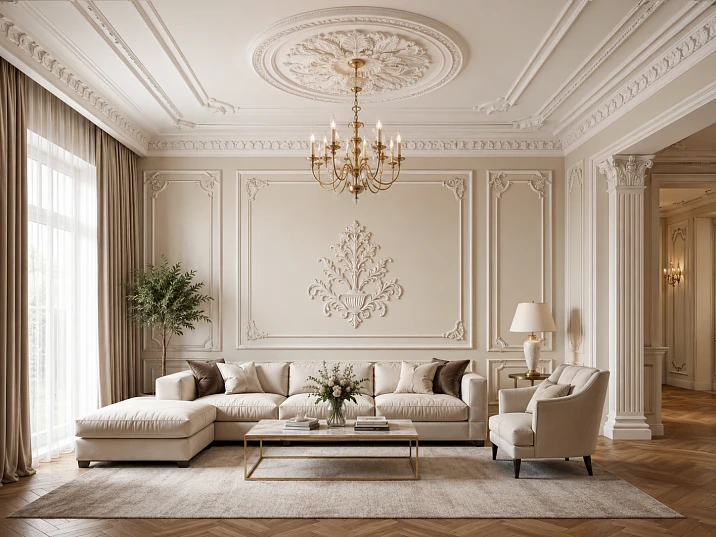
Familiar story? You see a beautiful decorative overlay, add it to your cart, place an order. Receive it. Glue it. And realize: there's no molding to make a frame. No glue of the right type. The paint is the wrong shade. The ceiling above the chandelier is empty. There's no matching piece. And what seemed like a ready-made solution turns out to be the first step toward an unfinished story.
That's how molding most people shop. Not because they don't understand — but because no one explained a simple thing: beautiful stucco starts not with a single detail, but with a properly assembled cart.
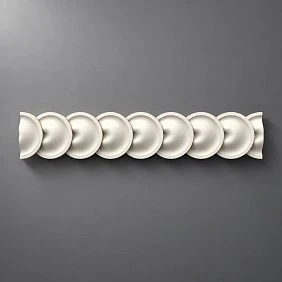
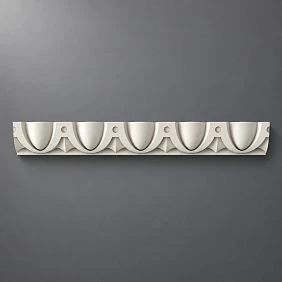
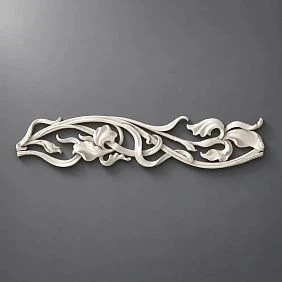
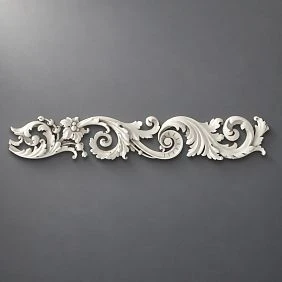
to buy molding Properly means buying a system. Moldings provide the frame. Relief Decoration sets the accent. Ceiling molding assembles the top. Glue and paint turn a set of items into a finished architectural composition. This article is a practical guide: what to put in the cart for each specific task.
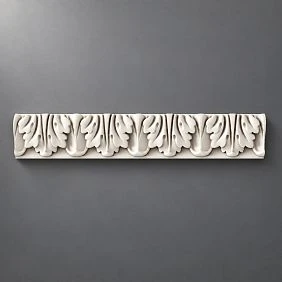
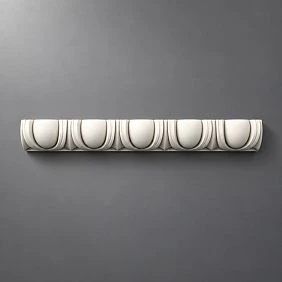
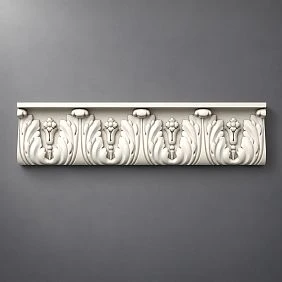
The "task first" principle: why the cart's composition depends on the zone
Before opening the catalog, answer one question: what exactly do you want to decorate? The wall behind the sofa? The ceiling under the chandelier? The mirror area? The headboard? The furniture facade?
This is not a formality. The cart's composition changes drastically depending on the answer. For the ceiling, you need rosettes and cornices. For the wall, moldings and decorative overlays. For the mirror, paired stucco decor and a thin molding for framing. For furniture, miniature overlays and glue compatible with MDF and enamel.
Buying "stucco in general" is like going to the store for "food in general." You can bring home a set of mismatched ingredients. Or you can come back with a ready-made menu. The difference is whether you thought about the task before you picked up the cart.




Three basic scenarios and their composition
Scenario A — wall decoration:
-
Moldings made of polyurethane for frames and lines
-
Decorative stucco for accents
-
Corner elements for joints
-
Glue for PU products
-
Matte paint in wall color
Scenario B — ceiling decoration:
-
Ceiling molding — cornices and moldings
-
Ceiling rosette for light fixture
-
Molding for ceiling contour
-
Adhesive for ceiling products
-
Paint matching ceiling color
Scenario B — creating an accent zone:
-
Relief Decoration — main decorative overlay
-
Paired element (L/R), if symmetry is needed
-
Thin moldings for framing border
-
Adhesive
-
Paint
Three scenarios — three different baskets. Everything else is detailing for the specific room and scale.
Our factory also produces:
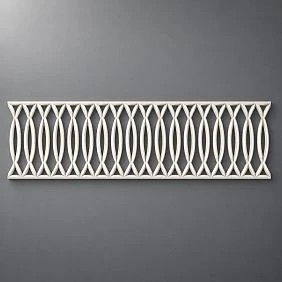
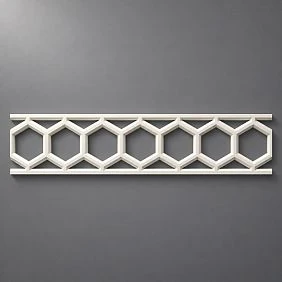
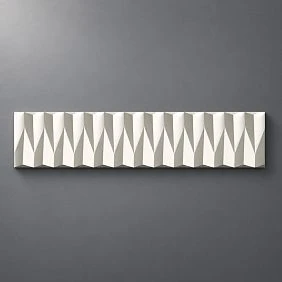
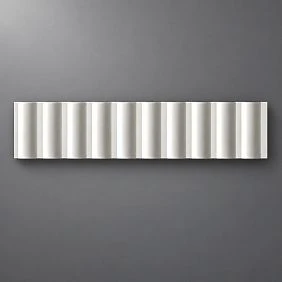
Basket No. 1: wall behind the sofa
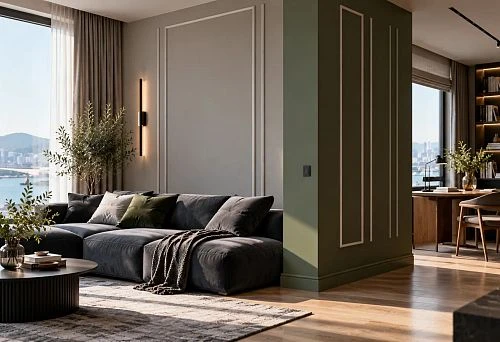
This is the most popular request in the architectural decor category. A person wants to make the living room look "more expensive" without renovation. There is a sofa, furniture, and lighting — but the wall behind the sofa is empty, and it is precisely this that "nullifies" everything else.
The correct basket for this task looks like this:
Get Consultation
Mandatory items
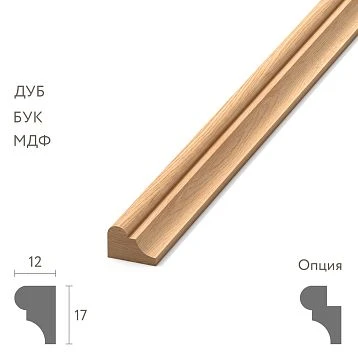
Polyurethane moldings are the basis of the frame. Without moldings, there is no frame. Without a frame, there is no architectural context for the sofa. For a wall behind the sofa with a width of 2.5–3.0 m, a frame width of 2.8–3.2 m is needed: this means that about 12–14 linear meters of molding will be required, taking into account trimming and a 15–20% margin.
Profile: for a modern interior — 35–50 mm, calm geometry. For neoclassicism — 55–75 mm, classic stepped molding. For a large living room with a high ceiling — 80–100 mm.
Buy polyurethane moldings in the required profile and quantity — this is the first item in the basket, without which the rest is meaningless.
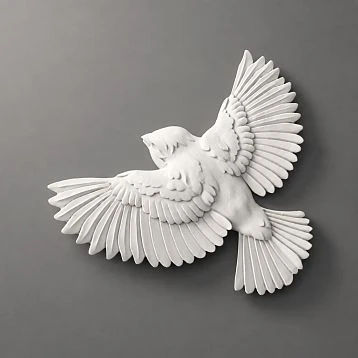
Decorative stucco — an accent inside the frame. A frame without a central element is an unfilled outline. A decorative overlay in the center of the frame turns it from "lines on the wall" into an "architectural statement." The size of the central element is from 20 to 40 cm on the long side, depending on the scale of the frame.
buy decorative moldings with a natural, geometric, or classical motif — the choice depends on the interior style.
Polyurethane wall decor — additional elements for corner joints of frames, side accents, or serial repetition. Wall Decor allows you to "complete" the frame into a full architectural system.
Additional items
Corner elements — decor for moldings. A 45° joint is the standard solution. But a corner cover at the connection point of moldings makes the frame complete: it hides the joint and adds a decorative accent exactly where two moldings meet. A small detail — but it is what distinguishes "done" from "done professionally."
Glue. Without the right glue, the purchase turns into a collection. For polyurethane moldings and covers, use polyurethane construction adhesive or acrylic-based "Liquid Nails" type glue. More about choosing glue and application technology in the article about how to glue polyurethane stucco.
Paint. Monochrome painting of stucco in the wall color is the most expensive and professional result. The relief is read by light, not color. Matte water-based paint in the desired shade is a mandatory item in the cart.
Final cart: wall behind the sofa
| Position | What to take | Link |
|---|---|---|
| Moldings | 12–14 linear meters with reserve | Moldings and cornices |
| Decorative overlay | 1 piece, 25–40 cm | PU overlays |
| Corner elements | 4 pcs. | Wall Decor |
| Glue | 1–2 tubes | — |
| Paint | By wall footage | — |
Basket No. 2: ceiling for chandelier
Ceiling decor is the least explored territory in most apartments. Walls are decorated willingly, the ceiling is left untouched. And it is the empty ceiling that pulls down the entire interior: no matter how beautiful the walls are, if the ceiling is just a white plane, the room looks unfinished.
The correct basket for the ceiling is three levels: a rosette under the chandelier, a cornice around the perimeter, a molding contour around the zone.
Ceiling rosette: the first and mandatory element
ceiling rosettes made of polyurethane — it is not just a "beautiful circle" under the chandelier. It is an architectural element that fixes the central axis of the ceiling, hides the wiring installation area, and integrates the light fixture into the decorative system.
How to choose the diameter of the rosette? Practical rule: rosette diameter = 60–80% of chandelier diameter. For a classic chandelier with a diameter of 60 cm — rosette 35–50 cm. For a large chandelier in the hall with a diameter of 90–100 cm — rosette 55–70 cm. For a point suspension — a miniature rosette 15–20 cm: even a small element creates an architectural halo.
Important: the rosette is glued to the ceiling without drilling, without anchors. Mounting adhesive holds reliably. The weight of a polyurethane rosette is from 50 to 400 g depending on the diameter. A plasterboard ceiling withstands without restrictions.
Ceiling cornice: framing the entire ceiling
A cornice is a molding installed in the corner between the wall and the ceiling. It creates a smooth transition between the two planes and simultaneously a "frame" for the entire ceiling surface. Without a cornice, the ceiling and wall "cut" at a right angle — rigid, cold, unfinished.
Buy ceiling stucco molding In the form of a cornice — this is the most basic investment in ceiling architecture. Even a simple cornice with a 55–65 mm profile transforms the room.
Quantity calculation: room perimeter in meters + 15% for trimming. Room 4×5 m = perimeter 18 m + 15% = 21 linear meters of cornice.
Molding contour: ceiling zoning
A rectangular contour of moldings on the ceiling — above the sofa group, above the dining table, above the central zone — is a "ceiling frame" for the zone. In large living rooms and open-plan spaces, this is a powerful tool for both zoning and decoration.
Buy ceiling molding In the form of a molding for a ceiling contour — this adds a third level to the ceiling system, in addition to the rosette and cornice.
Final basket: ceiling for chandelier
| Position | What to take | Link |
|---|---|---|
| Rosette | Diam. 35–70 cm | ceiling rosettes |
| Cornice | Perimeter + 15% | ceiling decor |
| Contour molding | By zone size | ceiling decor |
| Glue | 2–4 tubes | — |
| Paint | On the ceiling | — |
Basket No. 3: mirror, console, and headboard
This is the most "focused" of all baskets — for those who want to create a beautiful small area without starting a large project. A mirror in the hallway. A console under a painting. A headboard in the bedroom. A workspace. A fireplace with a mantel.
For such areas, two or three elements are enough — but they must be the right ones. This is where people most often buy "just one thing" and end up with an unfinished result.
Paired L/R overlays: symmetry as the main technique
For a mirror, console, or area with a pronounced axis of symmetry — paired decorative overlays work best. The left and right elements, mirroring each other, create an "architectural frame" without a physical frame.
Buy Molded Decoration In a paired L/R configuration — this is the first item in the basket for a mirror area. The overlays are mounted symmetrically on both sides of the mirror's vertical axis: at the height of the upper third, at the center level, or in the lower part — depending on the proportions.
Important: before purchasing, make sure the product page states "set: L+R" or "sold as a pair." Some overlays are sold individually, in which case you need to order two pieces.
Thin molding: a frame for a mirror or area
A mirror or painting in a molding frame is an architectural element. Without a frame, it is a "thing on the wall." A thin molding 20–35 mm in the shape of a rectangle around the mirror or painting creates this transition.
Buy Moldings и Moldings made of polyurethane — this is a basket for the mirror zone. Two elements, and the result is a full architectural framing.
Decorative overlay as a central accent
For a console or bedside area — one central element above the object. Not a pair, but a single overlay — slightly above the mirror, centered over the console, at the point between the headboard and the ceiling. This is the "crown" of the zone: everything below gravitates toward it.
Buy decorative molding in the form of a central overlay — this is the final point in the basket for the accent zone.
Final basket: mirror, console, headboard
| Position | What to take | Link |
|---|---|---|
| Paired overlays L/R | 1 set | PU overlays |
| Thin molding | Around the mirror perimeter + 15% | Moldings and cornices |
| Central overlay | 1 pc. | PU overlays |
| Glue | 1 tube | — |
| Paint | A small amount | — |
Basket No. 4: furniture facade and cabinet
This is the least obvious, yet one of the most striking scenarios. Serial MDF furniture — case furniture, cabinets, built-in libraries — often looks "budget" not because of the material, but due to the lack of architectural detailing. A smooth facade without a profile is just a slab. A facade with molding and decorative overlay is "custom furniture."
It is this effect that is created using miniature polyurethane products, and that is why Buy stucco decor for furniture — one of the most cost-effective applications of polyurethane decor.
Thin molding on the facade: imitation of a frame facade
A frame facade is an expensive type of furniture facade with a milled profile around the perimeter. It looks significantly richer than a smooth slab facade. Thin molding 15–25 mm, glued along the perimeter of the facade or in the shape of a rectangular frame, creates the same visual effect.
buy polyurethane moldings thin profiles and apply them to facades — this is a transformation that requires minimal time and delivers maximum visual results. Glue suitable for MDF and enameled surfaces (specialized PU glue or two-component compound) is a mandatory item in the basket.
Miniature overlays on the cabinet
A small overlay in the center of the facade — ornamental or geometric — turns a slab cabinet into a "furniture object with character." For symmetrical cabinets with two doors, paired overlays on each facade. For single-door sections, a central overlay.
buy decorative moldings Miniature scale (10–15 cm on the long side) for furniture facades is a targeted investment. Small detail, big impact.
Note: The paint must match the facade
For furniture applications, the principle of monochrome painting is critical. An overlay painted in the color of the facade looks like an integrated part — as if it were part of the design from the start. An overlay of a different color is a "sticker." Therefore, when putting together a basket for furniture, you need to ensure you have paint that exactly matches the color of the facade — or the ability to order a custom mix.
Final basket: furniture facade
| Position | What to take | Link |
|---|---|---|
| Thin molding for the frame | Along the perimeter of the facades + 15% | Moldings and cornices |
| Miniature overlays | By number of facades | PU overlays |
| Glue for MDF | 1–2 tubes | — |
| Paint matching the facade color | A small amount | — |
What is most often forgotten when buying moldings
This is an important block — not theoretical, but purely practical. Here are five items that regularly "fall out" of the cart, only to be needed later.
First: glue
The most common "missed purchase". People buy moldings, decorative overlays — and don't buy glue. Or they buy "something from the hardware store" without understanding what works for polyurethane and what doesn't.
For polyurethane products, the following are suitable: specialized glue for PU decor, solvent-free acrylic-based construction adhesive (water-based "Liquid Nails" for lightweight parts), one-component polyurethane glue for heavy and ceiling elements.
Categorically not suitable: adhesives based on organic solvents (they destroy the polyurethane structure), epoxy adhesives without a special primer, mounting foam for installing overlays (only as a fixative under pressure).
Full breakdown on glue for decorative moldings — in a separate article.
Second: paired element
This is especially relevant for areas with an axis of symmetry — a mirror, fireplace, headboard, console. One element is purchased and installed — and it immediately becomes obvious that a second one is needed. The second one is ordered separately, arrives a few days later, and by that time the wall has already been painted. You have to repaint or accept a slight difference in shade.
Rule: if the area is symmetrical — always check if a L/R pair is needed, and order both elements in one order.
Third: corner elements for moldings
Joining moldings at a 45° angle in the corner of a frame is a standard technique. But a decorative corner element at the joint point is a professional technique. A small overlay rosette or ornamental overlay in the corner of the frame hides the seam and adds an accent exactly where it is needed.
Corner elements are a position that is often noticed after installation. It is better to include them in the cart in advance.
Fourth: ceiling rosette
If there are moldings for the wall in the cart — look at the ceiling. Is there a chandelier? Is there no rosette under it? This is a missed opportunity: Buy ceiling molding in the form of a rosette and add it to the same order — it's easy. It installs in 20 minutes, weighs grams, and the effect — the ceiling immediately gains an architectural center.
ceiling rosettes are sold separately, in a wide range of diameters. Don't put it off for 'next time' — next time may not come soon.
Fifth: molding stock for trimming
Moldings are cut at a 45° angle using a miter box or miter saw. Each cut loses a few centimeters. A wrong cut loses an entire segment. Minimum stock is 15%, recommended is 20%.
If you buy exactly the required length without stock, you will almost certainly run short. If you buy with stock, leftover pieces can be used in other areas or stored for the next project.
How to avoid overpaying or underbuying: a verification system before ordering
Before clicking 'place order', go through this checklist. It takes five minutes but saves money and stress.
Checklist 'Correct Cart'
Task and area:
-
Is the installation area defined (wall / ceiling / furniture / accent)?
-
Are the area dimensions measured (width, height)?
Moldings:
-
Are moldings needed for this task?
-
Is the profile selected (width, style)?
-
Is the quantity calculated in linear meters with a 15–20% margin?
-
Are corner elements needed for joints?
Decorative stucco:
-
Is a central overlay needed?
-
Are paired L/R elements needed?
-
Does the element scale match the zone size?
Ceiling:
-
Is a chandelier rosette necessary?
-
Is a perimeter cornice needed?
-
Is a molding contour needed above the zone?
Installation:
-
Is there a suitable glue for PU products?
-
Is the paint available in the desired color?
-
Is there a tool for trimming (miter box, hacksaw)?
If all questions are answered — the cart is correct. If there are unanswered questions — return to them before placing the order.
Complete summary table "What to put in the cart"
| Task | Mandatory items | Additionally | Main link |
|---|---|---|---|
| Wall behind the sofa | Moldings, Decorative stucco | Corner elements, glue, paint | PU moldings |
| Ceiling under the chandelier | Rosette, Ceiling molding | Ceiling molding contour, cornice | ceiling decor |
| Mirror / console / headboard | Paired applique, thin molding | Central accent, glue | PU overlays |
| Furniture front | Thin molding, applique | MDF glue, paint to match | PU overlays |
| Hallway | Vertical moldings, decor near mirror | Ceiling element, paint | PU moldings |
| Entire interior | Moldings, moldings, ceiling decor | Glue, paint, corner elements | All PU products |
How to calculate quantity: practical formulas
Moldings for a rectangular frame on the wall
Frame perimeter = (Width + Height) × 2. Add 20% to the result for trimming.
Example: frame 2.8 × 1.8 m → perimeter = (2.8 + 1.8) × 2 = 9.2 m → with 20% allowance = 11.0 linear meters of molding.
Moldings for a cornice along the room perimeter
Room perimeter + 15–20%. For a room 4.0 × 5.5 m → perimeter = 19 m → with allowance = 22–23 linear meters.
Number of decorative overlays
For one zone — 1 central element or 1 L/R set. For repeated series — number of repeats plus one spare part (in case of defects during installation).
Glue: consumption for installation
One tube of construction adhesive 310 ml — for 8–12 linear meters of molding with spot application. For overlays, consumption is lower: one tube is enough for 20–30 medium-sized overlays.
Special scenarios: when the cart exceeds the standard
Cart for a country house
In a country house with high ceilings (2.8–3.5 m), wider molding profiles (70–100 mm) and larger rosettes are needed. The cornice can be two-tiered. Decorative stucco — of a large scale, corresponding to the size of the room.
The principle of scale is key: in a large space, small details get lost and create a sense of pettiness. Choose elements that are visible from a distance of 4–5 m.
Turnkey renovation basket
If the entire apartment is being decorated, the basket is assembled by room, but with a unified decorative language. One molding profile for all walls. One type of overlay in one motif. One cornice for all rooms. This creates the feeling of a design project, not a set of random details.
Buy molding within such a project means ordering everything in one place, with a unified style and without the risk of getting mismatched elements.
Basket for a commercial property
A restaurant, salon, hotel, showroom — a commercial property requires a larger quantity and stricter planning. Here it is important to calculate everything precisely: the footage for each room, the number of zones, the number of overlays, the volume of glue. It is better to include a 25% reserve to have the ability to replace during installation.
FAQ: Answers to buyer questions
What to buy together with stucco molding to avoid coming back?
Buy with stucco molding Moldings made of polyurethane for frames, decorative molding for accents, ceiling outlet If there is a chandelier, glue for installation and paint. A complete set in one order is the right approach.
Can I buy just one decorative overlay?
You can — if the task is exactly one point accent (for example, a mascaron above the door or an overlay on a furniture facade). But for decorating a wall or zone, you need a system: overlay + frame + glue + paint.
What to buy for a wall: stucco or moldings?
For a wall — first Moldings made of polyurethane, they create an architectural frame. Stucco decor is an accent inside the frame. Without a frame, the decor looks random.
What is included in the ceiling stucco kit?
For the ceiling: Ceiling Molding Purchase — this is a cornice + Rosette + molding contour (if necessary). Plus glue and paint in the color of the ceiling.
How to calculate how many moldings are needed?
Frame or room perimeter + 15–20% for trimming and reserve. For a frame 2.8 × 1.8 m — about 11 linear meters. For a room 4 × 5 m along the cornice — about 22 linear meters.
Can polyurethane products be glued onto wallpaper?
No. Wallpaper under moldings often peels off along with them. Installation — only on a clean painted surface or putty.
About the company STAVROS
All elements for the correct basket — Moldings made of polyurethane, Relief Decoration, Ceiling molding, Outlets, Wall Decor — are presented in the unified catalog of STAVROS company.
STAVROS produces items from high-quality extruded polyurethane: precise relief, low weight, moisture resistance, ready for painting without additional surface preparation. The STAVROS catalog is structured by categories and tasks — so that any buyer can assemble the correct basket for a specific task without consulting a designer.
Buy molding buying a kit from STAVROS means purchasing a system that works from the first installation and looks professional. Not one detail — but a ready-made architectural story for your interior.