












































































Article Contents:
- Ancient world: birth of art
- Middle Ages: symbolism and strictness
- Modern: revolution of form
- Renaissance: Revival of Classical Harmony
- Baroque and Rococo: Peak of Ornamentation
- Neoclassicism: return to reason
- Contemporary: diversity of approaches
- Contemporary: Diversity of Approaches
- Ceiling stucco and its role
- Ceiling Cornices
- Ceiling Rosettes
- Coffered Ceilings
- Domes and coffers
- Friezes and Borders
- Moldings and their application in wall finishing
- Wall panels made of moldings
- Space zoning
- Framing of functional elements
- Correcting Room Proportions
- Color solutions
- Framing of door openings and portals
- Baseboards and their role
- Portals with pilasters
- Arched Openings
- Integration with the overall decorative system
- Decorative elements of portals
- Conclusion: stucco as a universal language

The interior speaks the language of forms, and stucco with moldings is one of the most expressive dialects of this language.Polyurethane Ceiling Moldingscreates an architectural structure at the upper level of space, forming the transition between the vertical walls and the horizontal ceiling.Moldings on wallpaper for paintingorganize flat wall surfaces, dividing them into panels, creating rhythm, proportions, visual hierarchy.Framing Doorway Openingstransforms a utilitarian opening into an architectural artwork, fixes the point of transition between spaces. These elements work not merely as decorations, but as the grammar of the architectural language, where each detail carries meaning, function, and emotional message. Understanding this language allows creating interiors that are not merely beautiful, but speak to the viewer, tell a story, and create an atmosphere.


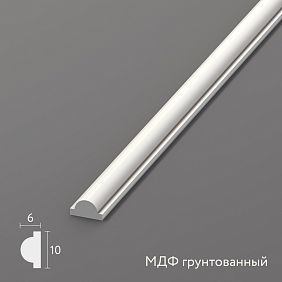
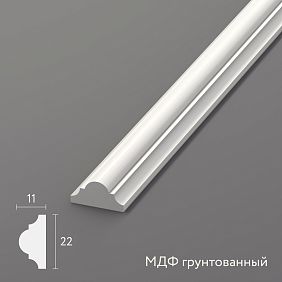
History and modernity of stucco decoration
Stucco is one of the oldest arts, with a history spanning millennia. From the simplest clay ornaments of primitive dwellings to refined plaster compositions of palaces — the path of stucco decoration reflects the evolution of human culture, aesthetic ideals, and technological capabilities.




Ancient world: birth of art
The first examples of stucco decoration were found in ancient Egypt, where around 5000 years ago artisans learned to create relief images from clay and plaster. Egyptian temples were adorned with bas-reliefs depicting scenes from the pharaohs' lives, religious symbols, and hieroglyphic texts. Stucco not only decorated but also carried an important cultural function — preserving and transmitting information.
Mesopotamian civilizations used glazed ceramic stucco to decorate palaces and temples. The gates of Ishtar in Babylon, covered with blue tiles featuring relief images of dragons and bulls, demonstrate the highest level of craftsmanship. Relief combined with color, creating an impressive effect.
Ancient Greece elevated the art of stucco to a new level. Greek temples were adorned with sculptural pediments, metopes with reliefs, friezes with processions. Acanthus leaves on Corinthian capitals, meanders on architraves, palmettes on antefixes — these motifs became classics still used today.Polyurethane Ceiling MoldingsModern interiors often reproduce precisely these Greek ornaments.
Ancient Rome inherited the Greek tradition but developed it, creating an opulent, decoratively rich style. Roman villas were adorned with stuccoed ceilings with coffers, walls covered with stucco reliefs. Stucco — a mixture of plaster and marble chips — allowed creating refined surfaces that imitated marble at a lower cost.
Our factory also produces:


Medieval: symbolism and strictness
Medieval Europe created its own language of molded decoration. Romanesque churches were adorned with severe reliefs depicting religious scenes. Column capitals were covered with stylized vegetal motifs, zoomorphic elements, geometric patterns. Decoration was strict, symbolic, subordinate to religious function.
Gothic took verticality to the absolute. Stone carving of Gothic cathedrals created lacework from pointed arches, ogee arches, crockets, and trefoils. Although this was stone carving, not moldings, the principles of decorative organization influenced the development of molded art. Interiors of Gothic buildings were adorned with molded ribs—arch ribs that were simultaneously structural and decorative.
Byzantium created its own tradition, where molding combined with mosaic, creating rich interiors. Dome interiors were adorned with molded rosettes, niches with shell motifs, capitals with stylized vegetation. Byzantine molding was characterized by flatness, graphic quality, and use of gilding.
Get Consultation
Renaissance: revival of classical harmony
The Renaissance returned to classical principles, creatively reinterpreting them. Italian masters studied Roman ruins, revived ancient techniques, and created new compositions based on classical motifs. Palazzo Pitti, Palazzo Medici-Riccardi, Villa Rotonda demonstrate the Renaissance approach to molded decoration— restrained, harmonious, proportional.
Moldings on wallpaper for paintingIn Renaissance interiors, walls were structured architecturally, divided into panels, and framed frescoes. Ceilings were adorned with coffers featuring molded rosettes at the center of each cell. Door and fireplace portals were framed by pilasters with classical capitals.
Andrea Palladio systematized Renaissance principles, creating a universal language of architectural forms used for centuries. Palladian villas demonstrate perfection of proportions, where each molded element is precisely calculated, related to the overall composition, and contributes to harmony.
Baroque and Rococo: peak of ornamentation
The 17th–18th centuries brought unprecedented opulence. Baroque sought dynamism, emotional impact, theatricality. Molding covered all available surfaces—ceilings, walls, portals, furniture. Luxurious acanthus leaves, volutes, cartouches, cherubs, garlands created lavish compositions.
Polyurethane Ceiling MoldingsBaroque interiors created complex compositions with varying relief depths. Central ceiling rosettes could reach two meters in diameter, including multiple tiers, each with its own ornamentation. Cornices became multi-tiered structures with consoles, modillions, friezes.
Rococo pushed decoration to its extreme, creating asymmetrical, whimsical compositions. Rocaille ornaments—stylized shells and scrolls—covered walls and ceilings of salons.Framing Doorway OpeningsIn the Rococo style, it represented a complex asymmetrical composition with numerous decorative elements.
Classicism: return to reason
The end of the 18th century brought a reaction against the excesses of Baroque and Rococo. Classicism returned to classical principles in a new interpretation. Strictness, symmetry, clarity of composition, restraint in decoration became primary principles. Molding simplified, becoming more geometric, clear, rational.
Karlsruhe, the Hermitage, Brandenburg Gates demonstrate the classical approach to molded decoration.Moldings on wallpaper for paintingThey created simple rectangular panels without excessive ornamentation. Ceiling rosettes had regular geometric shapes with moderate relief.
Neoclassicism—the late stage of classicism—added military symbolism, Egyptian motifs, monumentality. Laurel wreaths, palm branches, eagles, swords, shields adorned neoclassical interiors. But core principles remained classical—symmetry, clarity, restraint.
Modern: revolution of form
The end of the 19th–beginning of the 20th century brought radical rethinking of decoration. Modernism rejected historical styles, creating a fundamentally new visual language. Asymmetry, smooth organic lines, stylized vegetal motifs, integration of various arts characterized modern molding.
Shekh'tel’s mansions in Moscow, Gaudí’s houses in Barcelona, Orta’s villas in Brussels demonstrate the modern approach to molded decoration. Each element is unique, created specifically for a particular building.Polyurethane Ceiling MoldingsIn modern interiors, it had flowing forms resembling waves, climbing plants, women’s hair.
Contemporary: diversity of approaches
The 20th–21st centuries brought unprecedented diversity in approaches to molded decoration. Modernism rejected decoration altogether, proclaiming the principle 'form follows function'. Postmodernism returned decoration, but in ironic, deconstructed forms. Neoclassicism revived classical forms, adapting them to modern materials and scales.
Modern materials—polyurethane, fiberglass, composites—revolutionized molding production.Polyurethane Ceiling MoldingsIt reproduces the most complex historical forms with perfect accuracy at an affordable price. The material’s lightness simplifies installation, and its durability ensures decades of service.
Digital technologies allow creating unique forms unattainable by traditional methods. 3D modeling, CNC milling, 3D printing open new creative possibilities. At the same time, classical forms do not lose relevance—the demand for traditional molding remains high.
The ceiling is often called the fifth wall of a room, and its decoration is critically important for the overall impression.
It transforms a flat surface into an architectural artwork, creates spatial completeness, and emphasizes the interior’s style.Polyurethane Ceiling MoldingsThe cornice is a basic element of ceiling decoration, creating a transition between the vertical wall and the horizontal ceiling. Functionally, the cornice covers the technological gap between the wall and ceiling, which inevitably forms due to building settlement and thermal deformation. Aesthetically, the cornice creates an architectural finish to the wall and a visual frame for the space.
Ceiling Cornices
The cornice’s width determines its visual presence. Narrow cornices (5–8 cm) create a delicate frame, almost imperceptible, yet necessary for completeness. Medium-width (10–15 cm) is a standard solution for most interiors, creating a pronounced but non-dominant horizontal line. Wide cornices (20–30 cm) are for high spaces, requiring a monumental frame.
The cornice profile can be simple or complex. Smooth with minimal relief suits modern interiors. Profiled with scrolls and moldings creates classic play of light and shadow.
The cornice profile can be simple or complex. Smooth with minimal relief suits modern interiors. Profiled with scrolls and moldings creates a classic play of light and shadow.Polyurethane Ceiling MoldingsWith denticles - rows of small rectangular protrusions - forms a characteristic classical structure.
Modern cornices often include a recessed niche for housing LED backlighting. The LED strip, placed in the niche, directs light toward the ceiling, creating a floating ceiling effect. Soft diffused lighting visually increases the room's height, adds ambiance, and serves as an additional light source.
Ceiling Rosettes
The ceiling rose - a traditional element of classical interiors, serving as a frame for chandeliers. The rose becomes the compositional center of the room, a focal point to which all visual lines converge.Polyurethane Ceiling MoldingsAs a rose, it can be modest - 30-40 centimeters in diameter, or impressive - 150-200 centimeters.
The rose size is calculated proportionally to the room. Formula: sum of room length and width in meters, multiplied by 12-14. For a 5x4 meter room, this results in 108-126 centimeters. This is an approximate guideline; the exact size is adjusted based on ceiling height, chandelier size, and overall style.
Rose shapes are diverse. Circular roses are the most versatile, suitable for square and rectangular rooms. Oval roses are used in elongated rooms, visually correcting proportions. Square and octagonal roses are characteristic of neoclassical interiors with geometric clarity. Complex composite roses are assembled from multiple elements.
Rose ornamentation reflects the style. Acanthus leaves create a classic lushness. Palmettes - fan-shaped elements - form a dynamic radial structure. Geometric ornaments - meanders, concentric circles - create an orderly system.Polyurethane Ceiling MoldingsReproduces any ornament with high detail.
Coffered Ceilings
A coffered ceiling with a regular grid of recessed cells is created by intersecting moldings forming a rectangular or square structure. Coasters add depth, richness of visual impressions, and complex rhythmic organization of space. Historically, coffered ceilings were structural - they lightened roofs. Modern coffered ceilings are purely decorative.
The classical scheme - dividing the ceiling into 9-16 cells using longitudinal and transverse moldings. For a 4x4 meter room, a 3x3 cell grid is optimal, each approximately 130x130 centimeters. Too fine a division creates clutter; too large cells lose the expressiveness of the coffered structure.
Each cell's center may accommodate a small rose with a diameter of 20-30 centimeters. Corner elements are placed at molding intersections, transforming technical joints into decorative accents.
For coffered ceilings, includes all necessary elements - moldings, roses, corner details.Polyurethane Ceiling Moldingsfor coffered ceilings includes all necessary elements - moldings, rose petals, corner details.
Domes and Coasters
In rooms with special architecture - round living rooms, octagonal halls, bay windows - ceiling moldings may include dome elements. A dome creates the impression of a recessed coffer or niche, adds a vertical dimension to a flat ceiling, and becomes an architectural accent.
The dome's diameter is usually 1-2 meters, depth 10-30 centimeters. The inner surface of the dome may be smooth, coffered, or decorated with radial ornamentation or painting imitating the sky. Lighting around the dome's perimeter creates a striking accent lighting, emphasizing depth.
Polyurethane Ceiling MoldingsAllows creating domes of complex shapes - hemispherical, elliptical, sail-shaped. The material's lightness does not create significant load on the ceiling. Installation is simplified due to the lightweight elements.
Friezes and Borders
The frieze - a horizontal band below the ceiling cornice - provides space for ornamental decoration. A frieze height of 20-40 centimeters is sufficient for placing expressive ornamentation without excessive bulk. The frieze may be smooth and painted, relief molded, or assembled from repeating elements.
Ornamentation of friezes is diverse. Ovals - egg-shaped elements, alternating with arrows. Meander - a continuous line of rectangular curves, symbolizing eternity. Plant garlands of laurel leaves, grapevines, and oak branches.Polyurethane Ceiling MoldingsReproduces all classical ornaments.
The frieze color may match wall color or differ. A frieze in the wall tone, but with relief ornamentation, creates restrained decoration. A contrasting frieze - for example, dark blue on light blue walls - becomes an expressive decorative band. A gilded frieze creates a luxurious effect.
Moldings and their use in wall finishing
Walls - the main vertical surface of the interior, and their decoration is critically important for the overall impression.Moldings on wallpaper for paintingCreate architectural structure on flat surfaces, dividing them into panels, forming rhythm, proportions, and visual hierarchy.
Wall panels made of moldings
The classical wall decoration scheme - division into three horizontal tiers. The lower tier - panels 90-120 centimeters high from the floor, the middle tier - main wall surface, the upper tier - frieze under the ceiling 30-50 centimeters high. Each tier is separated by a horizontal molding, creating a clear structure.
Allow combining different materials within panels. Some panels may be covered with patterned wallpaper, others painted in a single color, others clad in fabric. Moldings create clear boundaries, visually organizing diverse materials into a unified composition.
Moldings on wallpaper for paintingallow combining different materials within panels. Some panels may be covered with patterned wallpaper, others painted in solid color, others clad with fabric. Moldings create clear boundaries, visually organizing diverse materials into a unified composition.
Vertically oriented panels visually increase room height. The gaze follows vertical molding lines, perceiving the wall as taller. This is especially valuable in rooms with standard 2.7-meter ceilings. Horizontally elongated panels visually expand the space.
Space Zoning
In open floor plansMoldings on wallpaper for paintingHelp zone spaces without physical partitions. Different wall treatments with moldings in different zones visually separate them, creating the feeling of separate rooms while maintaining spatial openness.
The living room zone may have classic wall panels with corner elements, creating a sense of grandeur. The dining room zone - vertical division with moldings, emphasizing height. The kitchen zone - practical minimalist design with simple horizontal moldings or their absence. This distinction creates visual separation.
The height at which horizontal moldings are placed also contributes to zoning. In one zone, a molding may be placed at 100 centimeters, in another - at 120 centimeters. This difference is subconsciously perceived, creating the feeling of different spaces, although there is no physical partition.
The color of panels within molding frames also differentiates zones. Living room - calm neutral tones. Dining room - warmer, appetite-stimulating tones. Work zone - cool tones, promoting concentration.Moldings on wallpaper for paintingare painted in a single color, linking different zones.
Framing functional elements
Moldings are used to create frames around mirrors, pictures, televisions, switches, transforming utilitarian elements into parts of a decorative system. A mirror in a molding frame appears more significant than simply hanging on a wall. The frame size depends on the mirror size - for a large mirror 100 by 150 centimeters, a molding frame 8-12 centimeters wide is needed.
A television framed with a molding frame integrates into a classic interior, not appearing as an alien technical element. The frame is created slightly larger than the screen with a 5-10 centimeter setback around the perimeter. It is possible to create an imitation of a picture frame with inner and outer molding lines.
Groups of switches and outlets framed with thin moldings transform technical elements into parts of the wall's architectural structure. A small rectangular frame around a group of switches visually organizes them, making them part of a decorative system.Moldings on wallpaper for paintingare painted in wall tone or contrasting color.
Niche in walls framed with moldings become architectural elements. The interior space of the niche can be painted in a contrasting color, lighting installed, creating an eye-catching accent. Shelves in a niche framed with moldings are perceived as built-in shelving, not a random construction.
Correction of room proportions
Moldings on wallpaper for paintingcan visually alter the perceived proportions of a room. In low rooms, vertically oriented panels create an illusion of greater height. Vertical lines of moldings direct the gaze upward, making the ceiling appear higher than it is.
In narrow, elongated rooms, horizontal division visually expands the space. Horizontal moldings on long walls create transverse divisions, perceived as increased width. On end short walls, moldings are placed vertically, not emphasizing narrowness.
In square rooms, asymmetric placement of moldings makes proportions more interesting. One wall is divided into three vertical panels, the opposite into two wider ones. This creates dynamism, eliminating the static nature of a square. Side walls may have horizontal division.
In rooms with very high ceilings, a horizontal molding at 2.4-2.7 meters visually lowers the ceiling, creating more intimate proportions. The space above the molding is painted in a lighter color or ceiling tone, visually perceived as an upper zone separated from the main space.
Color Solutions
Paintability - the main advantagemoldings on paintable wallpaperClassic solution - white moldings on colored walls. White color creates a clear panel outline, emphasizes architecture, visually lightens walls. Universal solution suitable for any wall color.
Painting moldings in wall tone creates a more restrained effect. Panels are perceived only through molding relief without color contrast. This solution visually expands space, creates a sense of continuous surfaces. Suitable for small rooms where one wants to avoid visual overload.
Contrasting solutions create a dramatic effect. Black moldings on white walls - bold modern solution, emphasizing architectural graphics. Dark gray moldings on light gray walls - softer option. Gold or silver moldings create a luxurious effect in glamorous interiors.
Colored moldings - bold trend.Moldings on wallpaper for paintingin bright colors - blue on white, pink on gray, emerald on beige - transform classic shapes into modern art objects, creating individuality.
Framing door openings and portals
Door opening - a point of transition between spaces, and its treatment plays a critical role in interior organization.Framing Doorway Openingstransforms a utilitarian element into an architectural artwork, creates grandeur, emphasizes the significance of transition.
Pilasters and their role
A casing is the simplest form of framing, represented by a profiled strip covering the joint between the door frame and the wall. Functionally, a casing conceals mounting foam, gaps, and unevenness. Aesthetically, it creates a frame that highlights the opening against the wall, visually organizing the transition between rooms.
The width of the casing should be proportional to the size of the opening. For a standard opening 80-90 centimeters wide, a 6-10 centimeter casing is optimal. For wide openings 120-150 centimeters, the casing may be 10-15 centimeters. A too narrow casing disappears, a too wide one appears bulky.
The casing profile can be simple or complex. A smooth rectangular profile with a slight bevel suits modern interiors. Profiled with rounded edges and bulges creates classic expressiveness.Framing Doorway Openingswith carved casings transforms the opening into a work of decorative art.
Casing colors match the overall color scheme of the interior. White casings are universal, compatible with any walls and doors. Casing in wall tone visually dissolves, highlighting only the door panel. Casing in door tone creates a unified composition. Contrasting casings draw attention to the opening.
Portals with pilasters
Portal - a more complex framing form including side pilasters and a crowning element. Pilasters - flat vertical protrusions imitating columns - create a majestic framing, emphasizing the significance of the opening. The portal transforms an ordinary door into a grand entrance.
The portal structure includes several elements. The pilaster base - an expanded base 20-40 cm high - creates a visual transition from the skirting board to the shaft. The pilaster shaft - the main part from the base to the capital - may be smooth or adorned with fluting. The capital - the crowning part 30-50 cm high - has a shape corresponding to the chosen order.
The entablature above the opening includes the architrave, frieze, and cornice. The architrave - the lower part - may be smooth or divided into horizontal bands. The frieze - the middle part - provides space for decoration. The cornice - the upper part - creates an overhanging eave.Framing Doorway OpeningsWith a full entablature, it creates a classical architectural structure.
The pediment crowns the portal, giving it completion. A triangular pediment creates the monumentality characteristic of classicism. A segmental pediment - a softer, more plastic composition of baroque. A broken pediment with a decorative element in the break - baroque theatricality. The choice of pediment type is determined by the overall interior style.
Arched openings
Arched framing creates a distinctive expressiveness characteristic of various historical styles. The semicircular Roman arch - a universal form used from antiquity to neoclassicism. The pointed Gothic arch creates vertical aspiration. The horseshoe Moorish arch is characteristic of oriental stylizations.
The archivolt - a profiled arch repeating the shape of the arch - is the main element of arched framing. It may be smooth or decorated with ornament. The impost - a horizontal element from which the arch begins - is often adorned with carving or stucco. The keystone at the apex of the arch becomes the composition's focal point.
The side elements of arched openings may be simple vertical casings or complex pilasters. Pilasters terminate at the level of the imposts or continue upward, framing the arch on both sides.Framing Doorway OpeningsArched openings of this type require precise adherence to proportions to create harmony.
Wide arched openings 2-3 meters wide create majestic portals between grand rooms. Such openings are often left without doors, functioning as visual links between spaces. Arched framing emphasizes scale, creating architectural expressiveness.
Integration with the overall decorative system
Framing Doorway Openingsmust be coordinated withpolyurethane ceiling moldingandmoldings on paintable wallpapercreating a unified decorative system. The casing profile may repeat or vary the molding profile, creating visual rhythm.
Color coordination is critically important. If cornices and moldings are white, the portal framing should also be white to create a unified system. If moldings match the wall color, casings should also match. Contrasting solutions must be symmetrical - black cornices, moldings, and casings create a cohesive graphic design.
Scale coordination implies that the width of casings corresponds to the width of moldings. Usually, they are approximately equal or casings are slightly wider. A 10 cm casing harmonizes well with 8-10 cm moldings. Significant scale differences create disproportion.
Stylistic consistency unifies all elements. Classical stucco requires classical portals. Minimalist cornices pair with simple casings. The opulence of ceiling decoration should be reflected in the opulence of door portals. This consistency creates interior cohesion.
Decorative elements of portals
The portal may include multiple decorative elements enriching the composition. Carved rosettes on pilasters add vertical accents. Consoles under the entablature visually support the projecting part. Cartouches with monograms in the tympanum of the pediment personalize the space.
Fluting - vertical grooves on the pilaster shaft - is a traditional decorative method borrowed from ancient columns. The number of flutes, their depth, and shape are determined by the chosen order. Doric fluting is shallow with sharp edges. Ionic and Corinthian - deeper with rounded edges.
Recesses on pilasters create additional vertical structure. Rectangular or oval recesses with frames may be smooth or filled with ornament.Framing Doorway OpeningsWith rich decorative saturation, it creates luxury characteristic of classical interiors.
Conclusion: stucco as a universal language
Stucco and moldings - a universal language of interior design, understandable in any culture and relevant in any era.Polyurethane Ceiling Moldingscreates an upper-level architectural structure,Moldings on wallpaper for paintingorganizes walls,Framing Doorway Openingsfixes transitions between spaces.
The aesthetic function of stucco is obvious - creating beauty, richness of visual impressions, individuality of space. But equally important are practical functions - concealing defects, protecting surfaces, zoning, correcting proportions. Stucco operates on multiple levels simultaneously.
Modern materials make classical beauty accessible. Polyurethane reproduces the most complex historical forms with museum precision at an affordable price. Lightness simplifies installation, durability ensures decades of service. The ability to paint allows integrating classical forms into any color palette.
Professional approach to using moldings requires understanding proportions, knowledge of styles, sense of measure. Excessive decoration creates overload, lack thereof results in incompleteness. Balance is achieved when each element is in its place, every detail contributes to creating a cohesive whole.
The result of proper molding use - a space perceived as an architectural masterpiece. An interior where details do not merely decorate, but shape character, create atmosphere, tell a story. A home that becomes a daily source of aesthetic pleasure.
Company STAVROS offers a full spectrum of decorative moldings for creating perfect interiors. Wide assortmentof polyurethane ceiling moldingsincludes cornices, outlets, and coffered ceilings of all sizes and styles. The collectionmoldings on paintable wallpapercovers profiles from minimalist to classical. Variety of elements fordoorway framingallows creating unique compositions.
Own production guarantees quality, precise dimensions, stable supply. Modern equipment creates elements with perfect detailing. Professional consultants help select optimal solutions, calculate quantities, develop decoration concepts. Flexible pricing makes quality decor accessible for various budgets. Create interiors speaking the language of beauty, together with STAVROS!


