


























Article Contents:
- Why an interior falls apart when furniture lives separately from the walls
- The problem of disconnection
- What is a material connection
- The handle as a material intermediary
- How wooden handles support the theme of natural material
- Tactile Dimension
- Sustainability as a value
- Durability and Resistance
- Which handle shapes harmonize with slat geometry
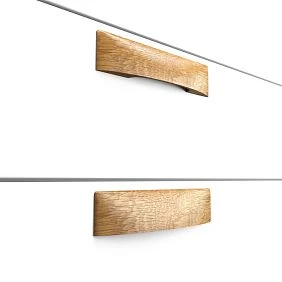
- Rectangular and elongated handles: a parallel with slats
- Push-button handles: a delicate accent without competition
- Asymmetric and organic forms: a natural dialogue
- U-shaped bracket handles: classic with a natural accent
- How to match wood tones between furniture and finishes
- Rule of a unified temperature register
- Tone on tone: a monolithic system
- Contrast handle as a point accent
- Tone coordination table
- Where it is especially important: kitchen, wardrobe, bedroom
- Kitchen: maximum frequency of touches
- Wardrobe: visual lightness through material
- Bedroom: the silence of natural material
- Handle shapes and style correspondences
- Minimalism and Scandinavian style
- Modern classicism
- Biophilic design
- Loft
- Technical parameters: what's important to know
- Errors in combining textures and shades
- First error: different wood species without deliberate contrast
- Second error: metal handles on all furniture except one item
- Third error: handle finish and slat finish in different finishes
- Fourth error: too contrasting a handle on delicate furniture
- Fifth error: identical handles everywhere without considering function
- Practical Scenarios
- Kitchen "Natural White"
- Bedroom "Quiet Classic"
- Wardrobe "Scandinavian Forest"
- FAQ: Answers to Popular Questions
- About the Company STAVROS
Imagine a room where everything is done right: good materials, thoughtful furniture, proper lighting. And yet — something is off. Your gaze slides across the space without lingering, and you leave with a dissatisfaction that's hard to put into words. What is it? What's missing?
Most often — connection. Not spatial, not color, but material. The walls live their own life, the furniture lives its own. There is no conversation between them, no common language, no thread that connects one to the other. And it is precisely the absence of this thread that turns a good interior into a collection of expensive objects that have not become a space.
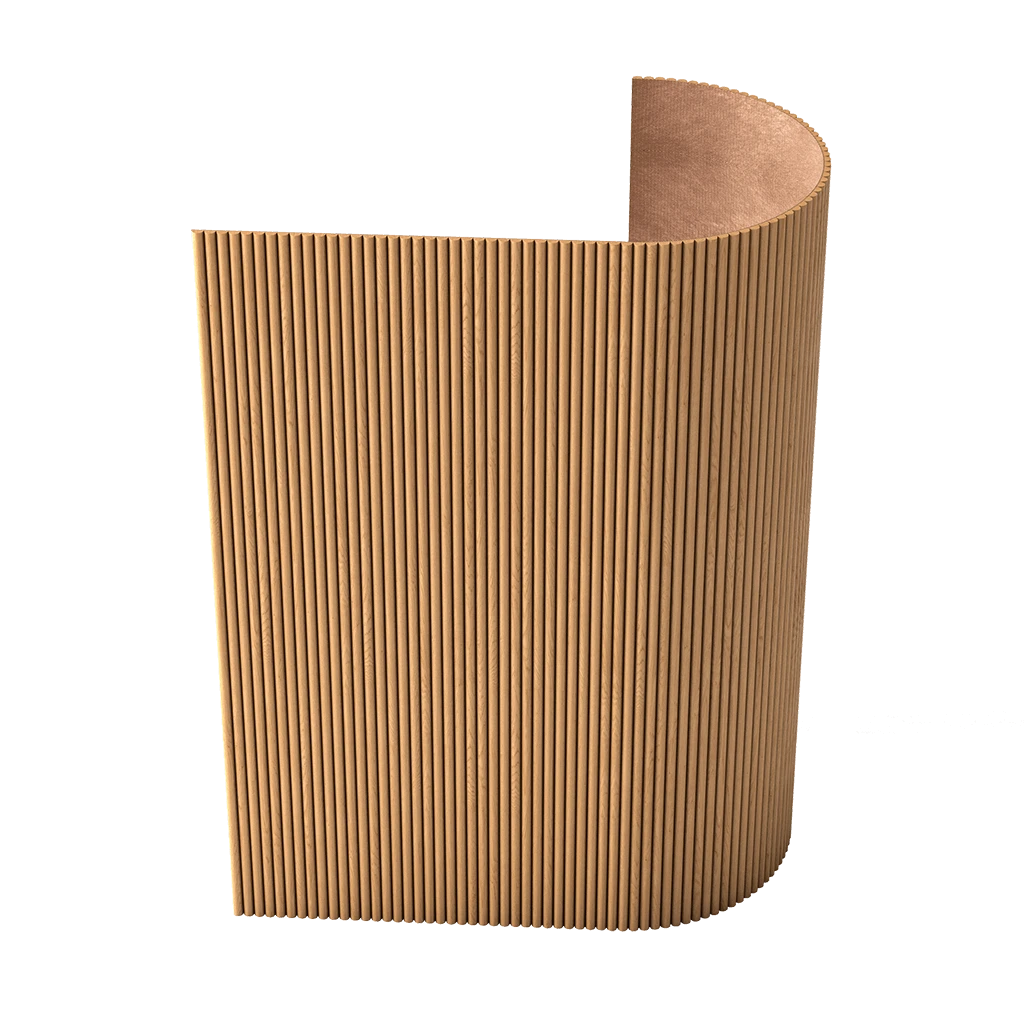
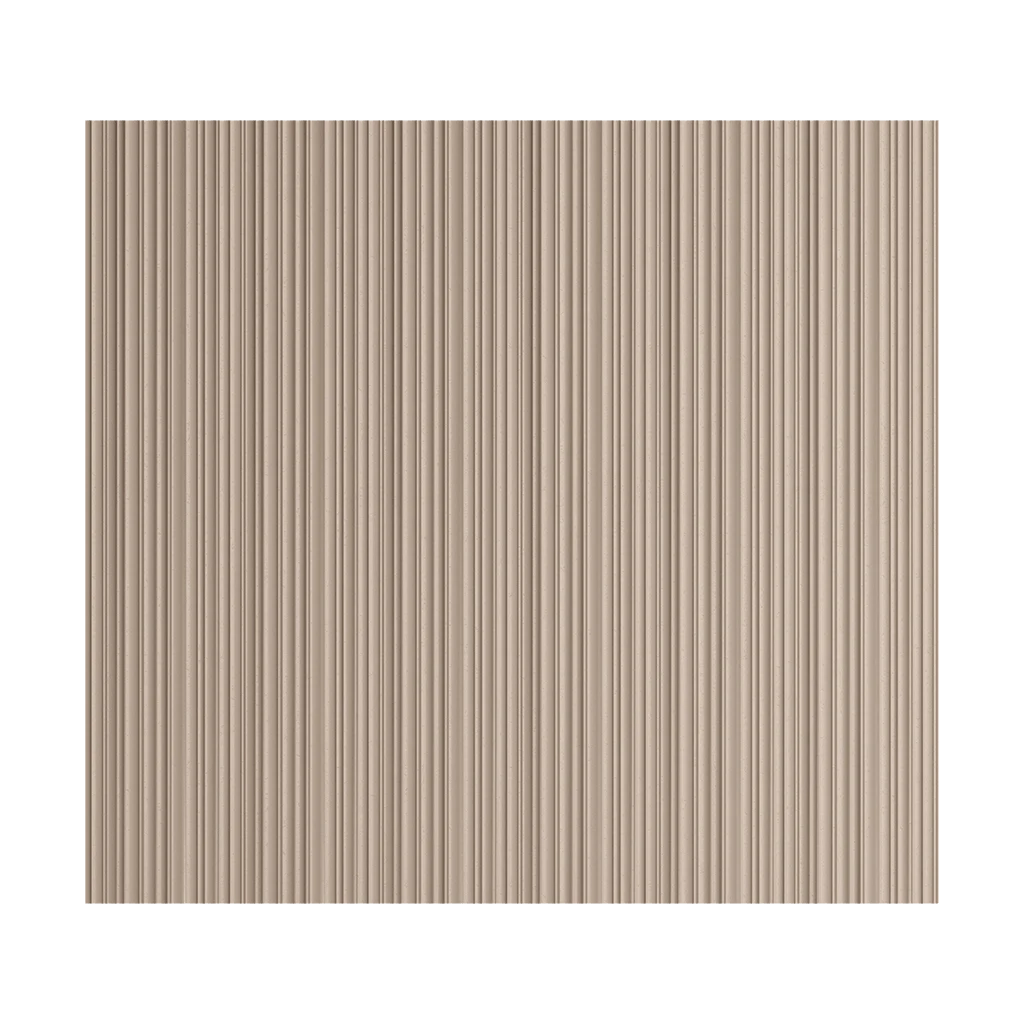
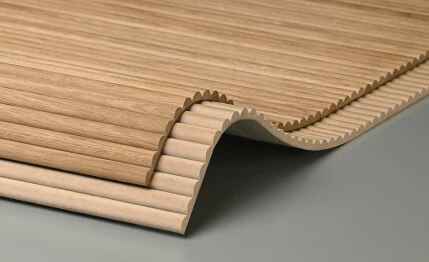
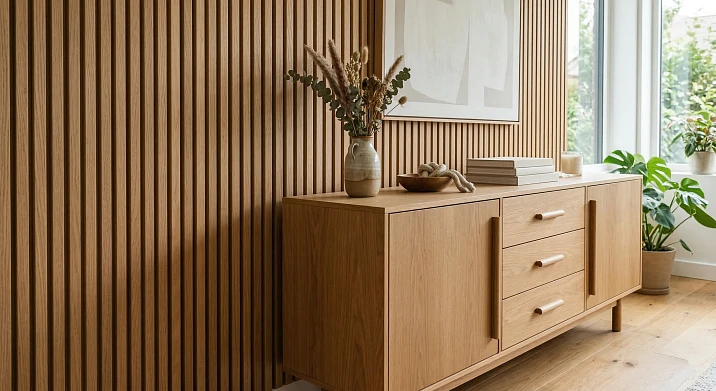
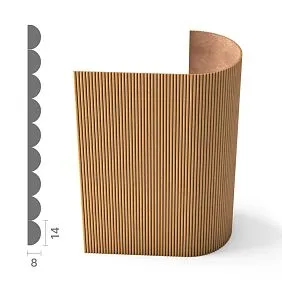
Rafter panels made of solid oak or MDF on the wall — is a statement. Rhythm, texture, natural warmth. And when on a cabinet front, a dresser drawer, or a kitchen unit door appears Wooden Handle made of the same oak or beech — is a responsive statement. Two elements begin a dialogue. The interior transforms from a collection of objects into a system.
This article is about how this dialogue is built — in detail, with examples, with technical precision.
Why an interior falls apart when furniture lives separately from the walls
The gap problem
In most typical interiors, walls and furniture exist in different "registers." The wall is finished according to one logic—paint, wallpaper, panels. Furniture is chosen according to another logic—style, size, budget. Hardware—handles, hinges, locks—is chosen last and, as a rule, on a leftover basis: "whatever was found at the hardware store" or "whatever came with the set."
The result is an interior where each element is visually closed in on itself. The furniture doesn't "know" about the walls. The handles don't "know" about the furniture. The walls don't "know" about what stands in front of them.
Our factory also produces:
What is a material connection
A material connection in an interior is when the same material or the same texture is present in several places in the space, creating a visual rhyme. Oak on the wall rhymes with oak on a drawer handle. The natural rhythm of slats rhymes with the natural grain pattern on furniture fronts. This is not repetition—it's a call-and-response.
This call-and-response creates a sense of unity. The eye finds a familiar material in an unexpected place and receives quiet pleasure from the coherence. It is this feeling that people describe with the words "a well-thought-out interior," "everything in its place," "nothing superfluous."
Get Consultation
The handle as a material intermediary
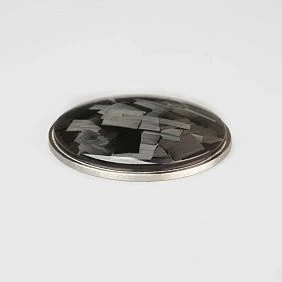
Wooden Furniture Handles—is the point of contact between a person and furniture. Physically—it's what you touch every day, several times a day. Visually—it's an accent on the front that sets the tone for the entire piece of furniture. And when this accent is made from the same material as the slatted wall nearby—that very connection occurs, which is usually missing.
A wooden handle on a white cabinet next to a slatted oak wall is not a decorative trick. It is a deliberate material connection that transforms the cabinet from a standalone object into part of the space.
How wooden handles support the theme of natural material
Tactile dimension
Wood is one of the few materials that benefits from touch. Metal is colder than the human hand, plastic is neutral. Wood is warm, dense, with a slight texture under the fingers. Every time a person picks upa wooden furniture handle, they receive the tactile sensation of a natural material—and this directly influences the perception of the entire interior.
In a space with wooden slat panels, where a natural theme is already established, wooden handles enhance this theme not only visually but also tactilely. This multi-level presence of the material in the space is what professionals call the 'material depth' of an interior.
Eco-friendliness as a value
Wooden furniture handles made from solid oak and beech by STAVROS are manufactured without harmful plasticizers or PVC. The finish is professional oil or acrylic enamel, permeable for the wood's 'breathing.' In a home with children, in a bedroom, in a space where the ecology of materials matters—a wooden handle is not just more beautiful than metal. It is more correct.
Durability and Resistance
A common myth: wooden handles are fragile, quickly lose their appearance, and require constant care. In practice—the opposite is true. Handles made from hardwoods—oak with a density of 700–750 kg/m³ and beech—withstand years of household use without losing shape or finish. The 3D milling technology used in the production of the STAVROS collection provides a precise profile without burrs or irregularities—the material does not chip on sharp edges or deform from regular use.
Four factory finish options—black enamel, white enamel, brown enamel, clear oil—protect the surface from moisture, stains, and mechanical damage. At the same time, the wood continues to 'breathe' under the finish, which prevents cracking due to humidity fluctuations.
Which handle shapes complement slat geometry
A slat panel is a linear, rhythmic, geometrically strict element. Its form sets certain requirements for what stands next to it or is in the same space. This is the rule of scale and formal language.
Rectangular and elongated handles: parallel with the batten
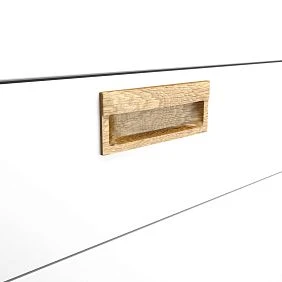
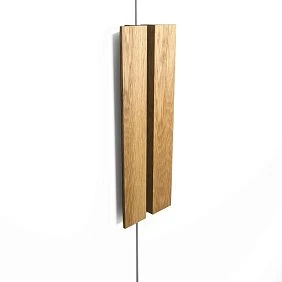
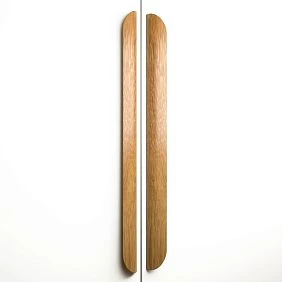
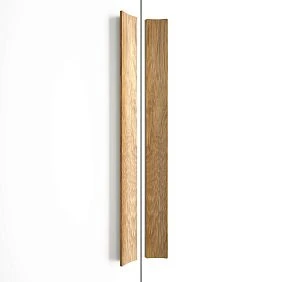
Long rectangular handles — G-bar, D-bar, straight-sided brackets — are direct relatives of the vertical batten. Same geometry, comparable proportions. A long rectangular handle on a vertical cabinet front repeats the rhythm of the wall battens, translating it into a furniture scale.
In the catalogwooden furniture handlesSTAVROS features long oval and rectangular models that work precisely on this principle — vertical orientation on hinged fronts creates a visual dialogue with the vertical battens of the wall. This is not a random resemblance — it is systemic design.
Button handles: a delicate accent without competition
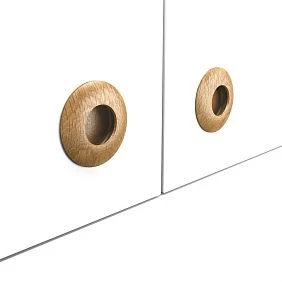
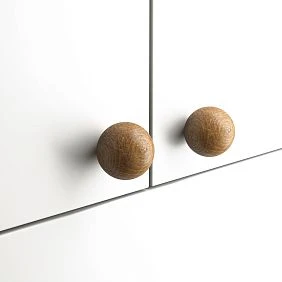
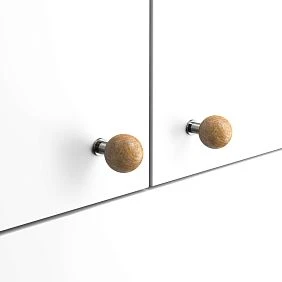
In kitchens and wardrobes with dense front layouts, large long handles can overload the picture. Here, wooden button handles — small overlay elements with an ergonomic grip — come into play. They do not compete with the batten wall for attention but support the wood theme delicately, almost imperceptibly. This is a 'hint' for the eye: there is wood here too — and thus the connection between the wall and the furniture is established without unnecessary words.
Asymmetric and organic shapes: a natural dialogue
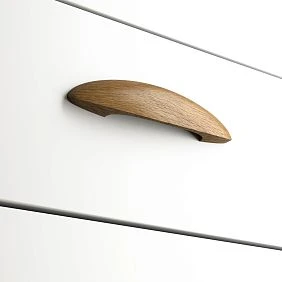
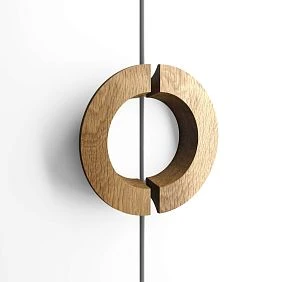
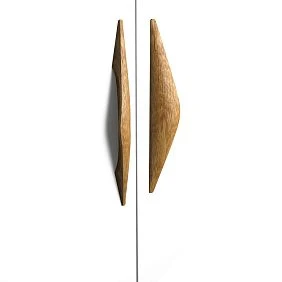
Asymmetric triangular handles and shell-shaped handles with smooth curves — forms that appeal to natural organicity. Against the strict geometric rhythm of batten panels, such handles create an interesting tension: the geometry of the wall and the organic nature of the handle. This is not a conflict — it is a dialogue in which each side remains itself and yet enriches the other.
Such a combination is especially appropriate in Scandinavian and biophilic interiors, where the natural irregularity of form is part of the design idea. Straight battens on the wall as an embodiment of structure. The soft organic nature of the handle as a reminder of nature.
U-shaped pull handles: classic with a natural accent
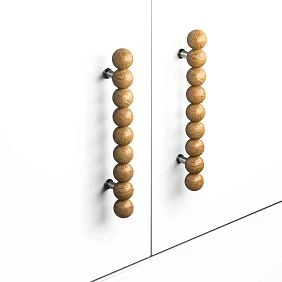
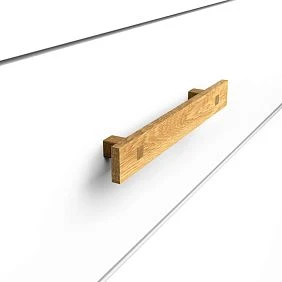
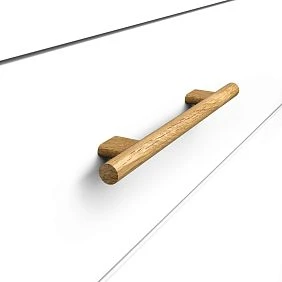
The U-shaped bracket is a versatile classic form, understandable in any style: from neoclassical to minimalism. In wooden execution, the bracket gains a natural dimension that its metal counterpart lacks.buy wooden handlesU-shaped brackets are especially relevant for kitchen sets with slatted inserts on the facades—a wooden bracket matching the slat tone completes the furniture look effortlessly.
How to match wood tones between furniture and finishes
This is a key practical question. Wood tone is not just 'dark' or 'light.' It's temperature, saturation, type of finish. All three parameters should be coordinated between slatted panels and wooden handles.
Rule of a unified temperature register
Warm oak tones—cognac, tobacco, amber, honey—belong to the warm temperature register: golden, amber, reddish-brown shades. Cold tones—grey mocha, Scandinavian grey, bleached oil—belong to the cold register.
Rule: wooden handles and slatted panels should be in the same temperature register. Warm slats—warm handles (in brown enamel or with clear oil on oak). Cold slats—cold handles (in black enamel or grey tone).
Mixing temperatures—warm slats and cold handles—works only with intentional strong contrast. In this case, the contrast should be obvious and deliberate, not accidental.
Tone-on-tone: a monolithic system
If slatted panels and furniture handles are made of oak with the same finish, it creates a monolithic natural system. The wall and furniture belong to the same material world. This is a strong solution that creates a sense of space 'carved' from a single piece of natural material.
Note: with a monolithic tonal system, it is especially important to monitor the shades. The same material from different manufacturers with different finishing compositions can produce noticeably different tones side by side—which looks like a mistake, not a design solution.
Contrast handle as a point accent
Wooden handlein black enamel on white furniture next to warm oak slats—this is a contrasting solution. The black handle is a clear, strict accent that simultaneously supports the natural theme (wood) and adds graphic sharpness. This works well in Scandinavian and contemporary styles, where a black graphic accent is part of the design language.
Similarly—a white handle on a dark cabinet next to dark slats. White is a neutral accent that 'opens up' the dark volume and creates air around the furniture.
Tone coordination table
| Slat panel tone | Recommended handle tone | Combination character |
|---|---|---|
| Light oak (honey, clear oil) | Oak clear oil / brown enamel | Monolithic natural system |
| Warm oak (cognac, tobacco) | Brown enamel / clear oil | Warm uniform tint |
| MDF white for painting | White enamel / black enamel | Monochrome or contrast |
| Dark MDF (anthracite, graphite) | Black enamel / white enamel | Dark monolith or bright contrast |
| Scandinavian oak (gray, bleached oil) | Black enamel | Cold natural style |
Where it's especially important: kitchen, wardrobe, bedroom
Kitchen: maximum touch frequency
The kitchen is the room with the highest frequency of tactile contact with handles. They're touched dozens of times a day here. That's whywooden furniture handlesin the kitchen, it's not just about aesthetics but also the daily tactile sensation that directly affects comfort in the space.
In a kitchen withslatted wall panelsa wooden handle on the kitchen set becomes a functional extension of the wall theme. The kitchen stops being divided into 'finish' and 'furniture'—the entire space is unified by natural material. This is especially important for kitchen-living rooms: an open space should 'work' as a single whole, and material connection between different zones is critically important.
Practical tip for the kitchen: handles with professional coating (enamel) are preferable to open oil—in conditions of daily contact with grease, moisture, and cleaning agents, a sealed coating is more durable.
Wardrobe: visual lightness through material
Built-in wardrobe with plank panels on the fronts and wooden handles is one of the most organic solutions in a modern bedroom interior. Slatted inserts visually lighten the large furniture volume of the wardrobe: the vertical rhythm of the slats removes the monolithic feel and makes the large front 'breathable'. Wooden handles matching the slats complete this look.
For a walk-in closet with solid fronts without slatted inserts, wooden handles remain the only material point of connection with the walls. If the walls are finished with wooden slats, and the wardrobe handles are made of the same oak, this point is enough for the wardrobe to be perceived as part of the space, and not as a foreign cabinet object.
Bedroom: the silence of natural material
In the bedroom, the decorative load on the space should be minimal. There is no need for loud accents and complex multi-layered solutions. What is needed here is silence — material, color, textural. And it is here that the union of wooden slatted panels and wooden handles works with maximum strength.
A slatted wall behind the headboard is alive, warm, natural. Bedside tables with wooden button handles matching the slats are an inconspicuous, delicate material chord. A wardrobe with long wooden handles completes the system. No metallic shine, no cold chrome. Only wood in different manifestations — on the wall, on the furniture, at hand.
Handle shapes and style correspondences
Minimalism and Scandinavian style
For these styles — long rectangular or elongated oval handles in black enamel or with clear oil. Minimal decoration on the handle itself — only shape. Rafter panels made of ash or oak with white oil, light furniture, handles with wooden naturalness — this is the Scandinavian system in its pure form.
Modern classic
U-shaped wooden brackets or long oval handles in brown enamel — on furniture in warm tones, next to oak slats with "cognac" or "tobacco" tinting. A wooden handle adds a natural accent to classic furniture without overloading it with classical ornaments.
Biophilic Design
Asymmetric shell-shaped handles or handles with smooth facets — organic, living forms. Solid oak slatted panels with an emphasized natural wood grain pattern. Handles with transparent oil, giving a natural tone. All together — a space that speaks of nature not through decor, but through material.
Loft
Dark slatted panels (anthracite, graphite) + wooden handles in black enamel. Black wood as the meeting point of the natural and the industrial. The handle shape is rectilinear, without ornament. This is an extremely honest, direct material language — wood in its most restrained manifestation.
Technical parameters: what's important to know
The STAVROS collectionSTAVROS wooden handlesincludes 32 models of the overlay type. Several important technical characteristics:
| Parameter | Characteristic |
|---|---|
| Material | Solid oak, solid beech |
| Manufacturing technology | 3D milling |
| Coating options | Black enamel, white enamel, brown enamel, clear oil |
| Mounting type | Surface-mounted, mounting hardware included |
| Orientation options | Horizontal, vertical, angled |
| Shape types | Round, triangular, shell-shaped, oval, rectangular, U-brackets, buttons |
| Application | Swing fronts, pull-out drawers, doors |
| Availability | Always in stock |
| Minimum order | From 1 piece |
Errors in texture and shade combinations
First error: different wood species without intentional contrast
Pine handles next to oak slats are not just different tones; they are different material characters. Pine is softer, yellower, with pronounced resin pockets. Oak is hard, amber-colored, with large open grain. Together, they do not create unity—they create a sense of randomness. Oak with oak, beech with beech, MDF with MDF—this is the rule of species consistency, which cannot be broken without deliberate artistic intent.
Second error: metal handles on all furniture except one item
Situation: in a kitchen, metal handles on all fronts except for the drawer under the island, where a wooden one ended up by chance. Against a backdrop of oak slatted wall, a lone wooden handle among metal ones looks accidental—as if it was mixed up during installation. Material connection must be consistent: either all handles are wooden, or wooden handles are used on all furniture items belonging to the same zone.
Third error: handle finish and slat finish in different finishes
Matte MDF rails for painting and a glossy wooden handle. The visually different light reflection creates inconsistency, even if the tone matches perfectly. Finish unity (matte with matte, satin with satin) is part of the material system.
Fourth error: too contrasting a handle on delicate furniture
A large dark handle on a light, elegant cabinet next to delicate light slats—a violation of scale. The handle 'overpowers' the furniture and creates a point of visual tension that draws attention to itself. The scale of the handle must correspond to the scale of the furniture and the scale of the slatted panels.
Fifth error: identical handles everywhere without considering function
Knobs are for small, lightweight doors and drawers. Long pulls are for tall vertical fronts. Short pulls are for horizontal drawers. Installing one type of handle on all fronts without considering the function and size of the furniture is a loss of ergonomics for the sake of formal unity. Unity should be achieved through material and tone, not through the same shape on everything.
Practical scenarios
Kitchen 'Natural White'
-
Rafter panelsOak, clear oil, vertical, dining area
-
Set: white matte
-
Furniture Handles: rectangular long in brown enamel or with clear oil
-
Wooden baseboard: oak to match the slats
-
Character: fresh, natural, modern
Bedroom 'Quiet Classic'
-
Oak 'cognac' slatted panels behind the headboard
-
Bedside tables: walnut or warm oak
-
Handles: oval in brown enamel or clear oil
-
Wardrobe: wooden long handles matching the tables
-
Character: warm, status, complete
Wardrobe "Scandinavian forest"
-
Slatted inserts on wardrobe fronts made of ash, bleached oil
-
Handles: long rectangular, black enamel
-
Walls: light gray or white
-
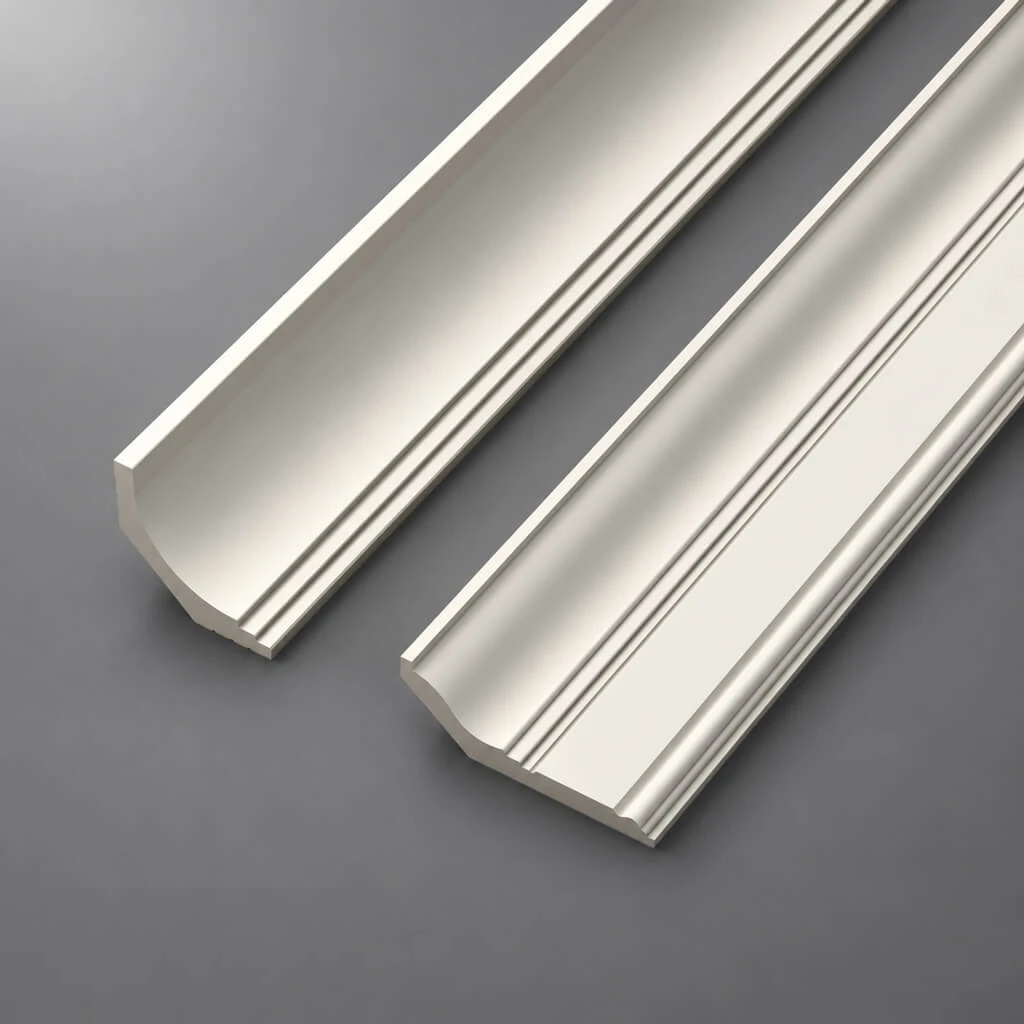
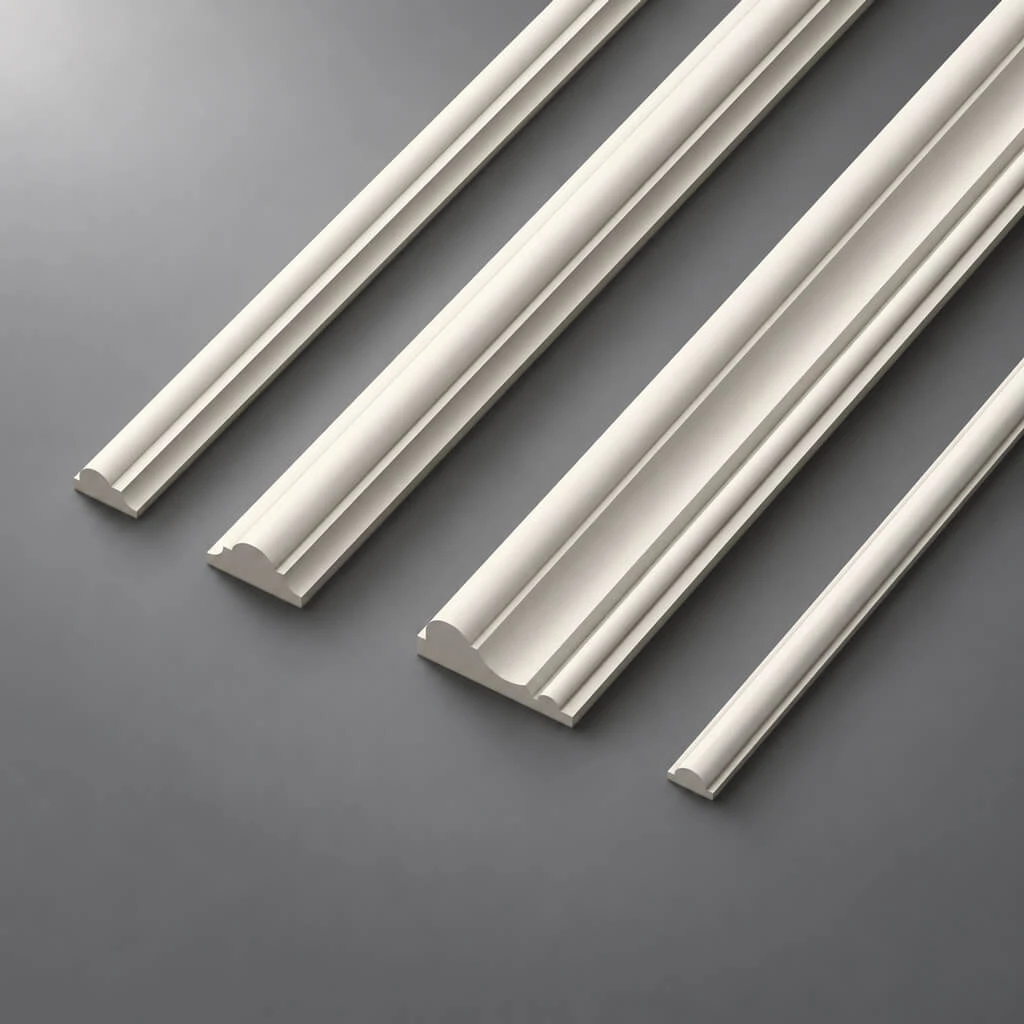
Cornice: polyurethane frompolyurethane products50 mm, white
-
Character: light, airy, Scandinavian
FAQ: Answers to popular questions
Can wooden handles be purchased individually?
Yes. The STAVROS collection ships from one piece. This is important when replacing hardware on existing furniture or adding individual items to the interior.
What care do wooden kitchen handles need?
Regular wiping with a soft, damp cloth and neutral detergent. Avoid abrasive and acidic compounds. The enamel coating on STAVROS handles is resistant to household loads and does not require special maintenance.
Can wooden handles be installed in the bathroom?
In a bathroom with good ventilation and normal humidity conditions — yes. The enamel coating protects the handle from condensation. For bathrooms with constantly high humidity (without an exhaust fan) — metal handles are preferable.
How to install a wooden handle — are specialists needed?
STAVROS handles of the overlay type are attached with a standard screw, hardware included. Installation takes a few minutes and does not require professional tools.
Do wooden handles work with MDF rails for painting?
Yes — provided the tone is coordinated. White rails + white handles = monochrome system. Dark rails + black handles = dark monolithic system. Dark rails + wooden handles with transparent oil = natural accent on a dark background.
Which handles to choose for a wardrobe with sliding doors?
For sliding doors, bracket handles or U-shaped handles are the most ergonomic choice. Buttons and long overlay handles are for hinged fronts and pull-out drawers.
About the company STAVROS
A wooden handle is a small object. But it is precisely small objects, assembled into a system, that create a large interior. And it is precisely the ability to see the system — from the slatted panel on the wall to the handle on the drawer — that distinguishes thoughtful design from a collection of beautiful things.
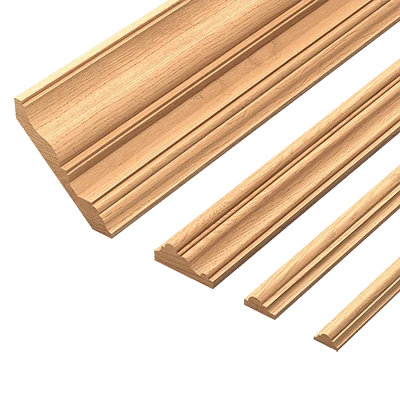
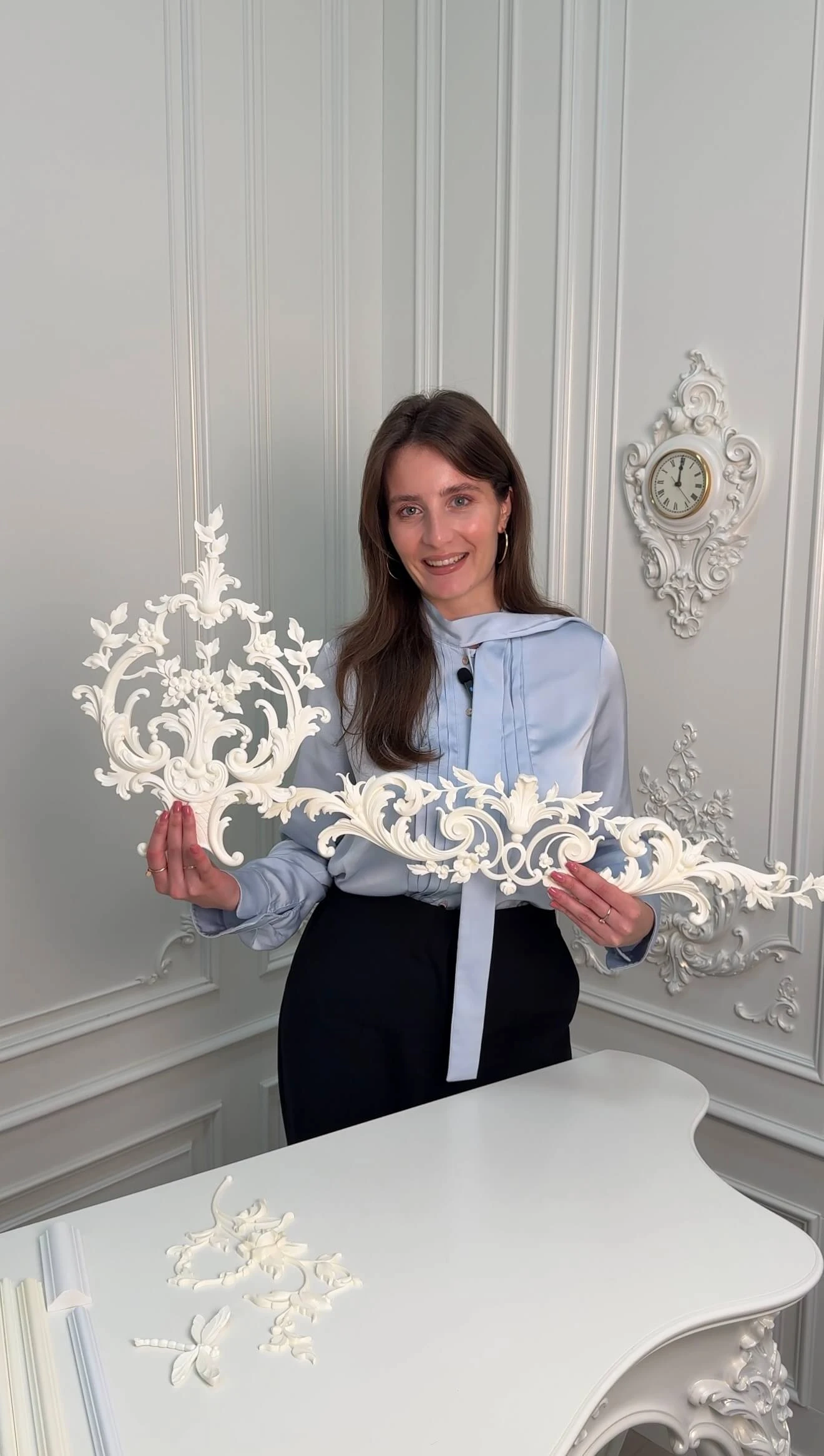
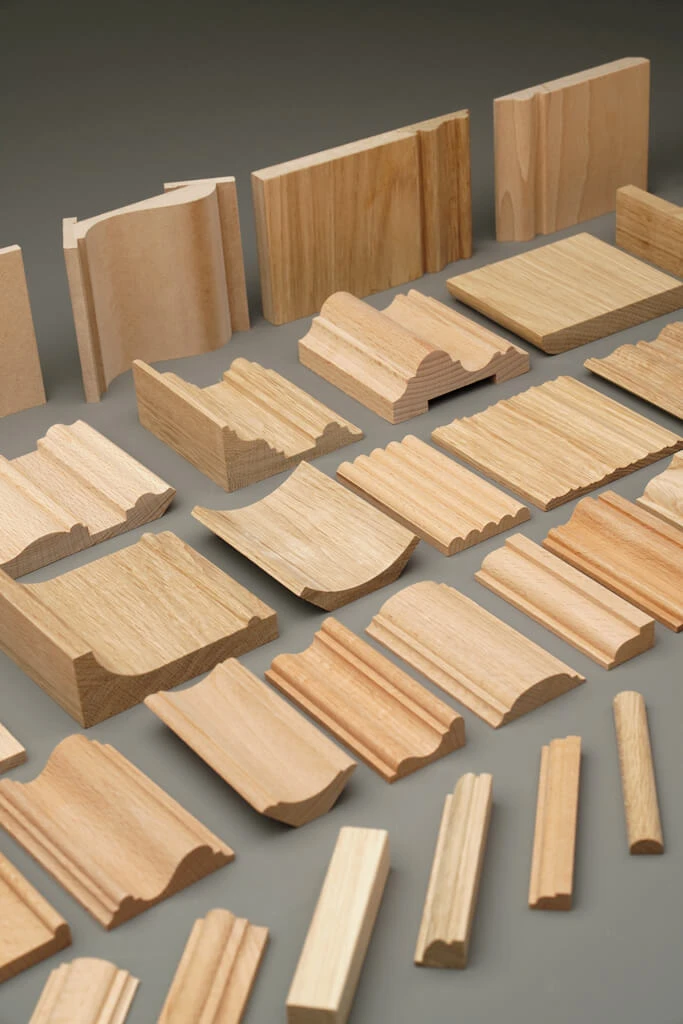
STAVROS manufactures all elements of this system.Slatted panels made of solid oak and MDFwith professional tinting and precise geometry.Wooden furniture handles— 32 models made of oak and beech in four factory finish options, produced using 3D milling.Wooden baseboardsin coordinated tints.Polyurethane Itemsfor the architectural completion of the system from above.
All catalog elements are developed with the understanding that an interior is not a sum of separate beautiful things, but a system of material connections. STAVROS is a system available from a single unit, with Contact us to confirm shipping to your destination. and professional selection consultation free of charge.