Article Contents:
- Why Round Forms Are Making a Comeback in Interior Design
- Historical Context: From Antiquity to Modernity
- What Is Round Molding: Types and Characteristics
- Round Wooden Bead: Universal Classic
- Bead and Half-Bead: Volume Gradation
- Combined Profiles: Complexity in Harmony
- Materials for Round Moldings: A Connoisseur's Choice
- MDF: democratic elegance
- Polyurethane: Practicality Without Compromise
- MDF: golden middle ground
- Application of Round Molding in Interior Design: From Floor to Ceiling
- Ceiling Cornices: Genre Classic
- Wall Borders: Zoning and Accents
- Door and Window Framing: Architectural Expressiveness
- Decorative Panels and Grilles: Geometry of Soft Lines
- Furniture Decor: From Facades to Countertops
- Interior Styles and Round Molding: Perfect Combinations
- Classic Style: Luxury of Traditions
- Neoclassical: concise elegance
- Scandinavian style: naturalness and simplicity
- Contemporary: Freedom of Interpretations
- Loft: industrial aesthetics and wood
- Installation of Round Molding: Technology and Nuances
- Surface Preparation: The Foundation of Quality
- Marking: Accuracy is the Key to Success
- Cutting and Fitting: Working with Details
- Fastening: Glue or Nails
- Final Finishing: The Last Touches
- Round Molding in 2026 Design: Current Trends
- Natural Materials: Cult of Authenticity
- Soft Lines: Against the Aggression of Geometry
- Minimalism with Character: Less but Better
- Customization: Uniqueness as a Value
- Combining Round Molding with Other Decorative Elements
- Baseboards and Cornices: Unity of Style
- Rosettes and Corner Elements: Accents at Intersections
- Casing and Door Portals: Framing Openings
- Panels and Inserts: Texture Play
- Color Solutions: From Classic White to Bold Experiments
- White: timeless and beyond fashion
- Matching the wall color: a subtle play of relief
- Contrast solutions: boldness and expressiveness
- Natural Wood: Warmth and Texture
- Round molding in different rooms: application specifics
- Living room: grandeur and comfort
- Bedroom: Coziness and Serenity
- Children's room: safety and beauty
- Kitchen: practicality and style
- Bathroom: moisture resistance above all
- Entryway: First Impression
- Caring for round moldings: preserving beauty
- Regular cleaning: prevention is better than repair
- Protection from moisture: enemy number one
- Refinishing: a second youth
- Repairing damage: restoration without replacement
- Questions and answers about round molding
- Frequently asked questions about glazing beads and moldings
- Conclusion: choose quality with STAVROS company

Interior design is undergoing a remarkable transformation. Straight lines and angularity are giving way to smooth, natural forms that create a sense of harmony and tranquility.round moldingbecomes a true symbol of a new era in space design—an era where not only visual effects matter, but also tactile sensations, the energy of materials, and connection with nature. In 2026, architects and designers are increasingly turning to rounded profiles that soften the sharpness of lines and fill the home with warmth.


Why round shapes are returning to interiors
Have you ever wondered why nature avoids sharp corners? Tree trunks, river pebbles, hills—all are smooth, rounded shapes, pleasing to the eye and safe to the touch. Humans are intuitively drawn to natural contours because they are associated with comfort and security. The minimalism that has dominated for decades, with its strict geometric forms, is beginning to tire. People crave a return to organic elements, to softness, to things that can not only be seen but also felt.
Round wall moldingsperfectly meet this demand. They are not aggressive, do not cut the space with sharp lines, but delicately frame it, creating visual integrity. In a room where rounded profiles are used, a person feels calmer, more protected. This is not just a psychological effect—it is the result of the interaction of form, light, and space.




Historical context: from antiquity to modernity
Round moldings are not new in architectural history. Ancient temples were adorned with astragals and toruses—convex elements that gave columns and cornices volume and expressiveness. The Renaissance revisited classical forms, and Baroque took the love for rounded details to its peak. Lavish palace interiors abounded with carved moldings of the most complex profiles, where smooth curves created a play of light and shadow.
The 20th century, with its functionalism, rejected ornamentation, proclaiming a cult of pure form and straight lines. Moldings were considered excessive, a sign of poor taste. However, the pendulum has swung back. Today we understand: functionality should not exclude beauty, and simplicity does not mean sterility.round moldingis returning to interiors, but in a new capacity—not as excessive decoration, but as a thoughtful design element.
Our factory also produces:


What is round molding: types and characteristics
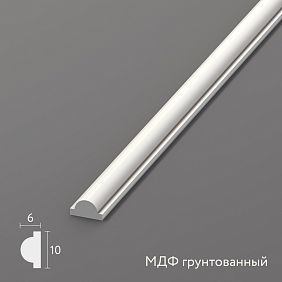
When we talk about round molding, we mean millwork with a convex semicircular cross-section. This can be a simple astragal, a classic round profile with small shelves at the edges, a half-round, or more complex combined profiles where the rounded part is combined with flat or concave elements.
Get Consultation
Round wooden glazing bead: universal classic
Round wooden trimis the simplest and at the same time the most universal type of round molding. It is a cylindrical strip of small diameter, usually from 8 to 30 mm. It might seem, what could be simpler? Yet it is in this simplicity that incredible functionality lies.
Round glazing beads are used for framing glass inserts in doors and windows, for masking panel joints, for creating decorative grilles and partitions. They can be placed vertically, horizontally, diagonally, creating geometric patterns. In modern interiors, round glazing beads are often used for decorating furniture fronts, forming rhythmic compositions on walls.
Wooden glazing beads have a pleasant tactile quality. Touching the smooth, rounded surface, you feel the warmth of the natural material. This is fundamentally different from plastic or metal counterparts, which always remain cold and lifeless.
Astragal and half-round: gradation of volume
An astragal is a molding with a fully round cross-section, protruding above the plane of a wall or ceiling. A half-round has a flat side for mounting and a semicircular front part. The difference may seem insignificant, but the visual effect is different.
A full round molding creates a more pronounced shadow contour, it protrudes more strongly and attracts attention. A half-round molding is more delicate, as if growing from the surface, creating soft volume without excessive expression. The choice between them depends on the scale of the room and the intensity of lighting. In small rooms with moderate light, half-round moldings are preferable; in spacious halls with abundant natural light, full round moldings can be used.
Combined profiles: complexity in harmony
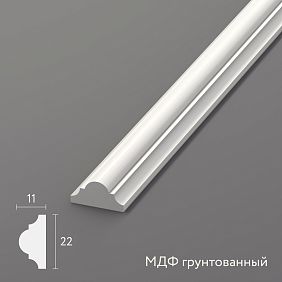
The most interesting options for round moldings are combined profiles, where the rounded part is combined with straight shelves, coves, and torus shapes. Such moldings possess rich plasticity and create a complex play of light and shadow. They are ideal for classical and neoclassical interiors where expressive detailing is required.
round moldingA complex profile can be used as a ceiling cornice, as a wall border, or as a frame for a fireplace portal or door opening. The main thing is to maintain proportions and not overload the space with excessive decor.
Materials for round moldings: a connoisseur's choice
The material affects not only the appearance of the molding but also its durability, ease of installation, and the possibility of processing and painting. The modern market offers several options, each with its own pros and cons.
Solid wood: warmth and nobility
Round wall moldingsSolid wood is the choice for those who value authenticity and naturalness. Wood is living, breathing; it regulates air humidity and fills the room with a subtle aroma. Oak, beech, and ash moldings last for decades without losing their qualities.
Oak is the benchmark for strength. Its dense structure and expressive texture with large pores make oak moldings recognizable and prestigious. The color palette ranges from light sandy to deep cognac shades. Oak takes stains excellently, allowing for various effects—from bleached Scandinavian style to dark English nobility.
Beech has a more uniform texture; its pinkish-toned wood is easy to process and stain. Round beech moldings are ideal for interiors that require a soft, unobtrusive texture. Beech holds its shape well and does not crack with proper drying.
Ash combines the strength of oak with a lighter, almost white color. Its texture is dynamic, with pronounced annual rings. Ash moldings look superb in modern Scandinavian-style interiors.
Polyurethane: practicality without compromise
Polyurethane round moldings are the choice of pragmatists. This material is completely impervious to moisture, does not deform, crack, or rot. Polyurethane is several times lighter than wood, simplifying installation. It can be cut with a regular handsaw and glued to any surface.
Modern technologies allow for such precise imitation of wood texture that visually distinguishing polyurethane from solid wood becomes difficult. However, the tactile difference is obvious—polyurethane is always cooler; it lacks the living warmth that wood possesses.
Polyurethane moldings are indispensable in damp areas—bathrooms, swimming pools, saunas. They do not absorb odors, are easy to clean, and retain their whiteness for decades.
MDF: the golden middle
MDF moldings occupy a middle ground between solid wood and polyurethane. They are cheaper than solid wood but more natural than polyurethane. MDF is easily milled, allowing for profiles of any complexity. Finished products can be laminated, veneered, or painted.
The main drawback of MDF is its sensitivity to moisture. In dry rooms, MDF moldings last long and reliably, but in bathrooms or kitchens, it is better not to use them.
Application of round molding in interior design: from floor to ceiling
Where and how to useround moldingHow to use round molding to achieve maximum effect? There are many options, limited only by the designer's imagination and common sense.
Ceiling cornice: genre classic
A ceiling cornice made of round molding creates a soft transition from wall to ceiling. This is especially important in rooms with low ceilings—a sharp angle visually 'presses down,' while a smooth, rounded frame, on the contrary, creates a sense of airiness.
Round cornices are good because they do not require perfectly even corners for joining. Small gaps are easily masked with putty or sealant. Unlike angular profiles, where the slightest inaccuracy is glaring, rounded shapes are more forgiving of imperfections.
Wall borders: zoning and accents
Round wall moldingsWall borders can be placed at any height, creating horizontal division of space. The classic option is a border at a height of 90-120 cm from the floor, dividing the wall into a panel and a field. The panel is often painted a darker color or covered with different wallpaper, creating a richness of textures.
Moldings can frame entire sections of the wall, forming rectangular or square frames. Inside such frames, patterned wallpaper, fabric panels, mirrors, or works of art are placed. The round profile softens the geometry of the frames, making the composition less formal.
Door and window framing: architectural expressiveness
Architraves made of round molding give door and window openings a finished look. This is especially important in interiors where doors and windows are compositional accents. The rounded profile of the frame echoes the shape of door handles, hinges, and other metal elements, creating stylistic unity.
An interesting technique is using a contrasting color for the frame. White round moldings on a dark wall or dark ones on a light wall create a graphic, but not harsh, effect due to the softness of the forms.
Decorative panels and grilles: geometry of soft lines
fromround moldingsUsing round moldings, amazing decorative compositions can be created. Vertical slats placed at equal intervals form a rhythmic grille, which can serve as a partition or simply a decorative element. Such grilles allow light to pass through, create lacework, visually dividing the space but not isolating it completely.
Horizontal moldings, placed tightly together, imitate slatted panels—one of the trends of 2026. The rounded shape of the moldings makes such panels more tactile and pleasant to look at compared to flat slats.
Furniture Decor: From Facades to Countertops
Furniture makers have long appreciated the possibilities of round molding. The facades of dressers, cabinets, and buffets, adorned with applied moldings, gain volume and expressiveness. Round profiles create classic panels without weighing down the structure.
Round glazing beads are used for framing glass inserts in doors, for decorating countertop edges, and for creating carved inserts in bed headboards. In furniture, the round profile also serves a practical function—it protects corners and edges from chipping.
Interior Styles and Round Molding: Perfect Combinations
Round moldings are versatile, but they manifest differently in each style. It's important to understand the logic of the style to use moldings organically, not mechanically.
Classic style: luxury of traditions
In classic interiorsround molding— is a mandatory element. Ceiling cornices with complex profiles, wall borders, door and window trims, decorative panels—all of this creates an atmosphere of nobility and respectability.
Classical molding is often combined with other decorative elements: rosettes, corner elements, pilasters. It's important to maintain proportions—in high rooms, wide, massive profiles can be used; in low rooms, it's better to limit oneself to thin, delicate moldings.
Color in classic style is white or ivory shades. Sometimes moldings are patinated, creating an effect of noble antiquity. Gilding is a technique for palace interiors; in residential spaces, it's better to use it sparingly.
Neoclassical: Laconic Elegance
Neoclassicism takes the main proportions and composition principles from classicism but discards excessive decor. Moldings are present in a neoclassical interior but in minimal quantities. One ceiling cornice, a fireplace surround, or a wall panel frame—that's enough.
The molding profile in neoclassicism is simpler than in classicism. Clean geometric shapes are preferred: half-round, simple round without additional elements. Color—white, gray, sometimes matching the walls.
Scandinavian style: naturalness and simplicity
Scandinavians love wood and value simplicity.Round glazing beadsmade from light wood species—pine, spruce, birch—fit perfectly into Scandinavian aesthetics. They are used for framing windows, creating decorative panels, and zoning space.
The treatment is minimal—oil or wax that emphasizes the wood grain. No glossy varnishes, no painting in opaque colors. The wood should remain wood, recognizable and warm.
Contemporary: Freedom of Interpretations
The modern style is not bound by canons. Here, round molding can be used in the most unexpected ways—vertical glazing beads forming abstract patterns on the wall, horizontal moldings creating graphic stripes, three-dimensional compositions from moldings of different diameters.
The color can be anything—from classic white to bright accent colors. An interesting technique is painting moldings the same color as the wall so they create volume but don't stand out in color. This creates a bas-relief effect.
Loft: Industrial Aesthetics and Wood
Loft is a combination of rough industrial materials and natural wood. Round wooden moldings in a loft are used as a contrasting element, emphasizing warmth and organic nature against the backdrop of concrete and metal.
The treatment should be deliberately simple—brushed wood, oil, preserving the natural color. No polishing, no gloss. Wood in a loft is a material with history, with character.
Installing Round Molding: Technology and Nuances
Installationround moldingrequires care and precision but is not a difficult task for someone with minimal woodworking skills.
Surface preparation: the foundation of quality
Moldings can only be mounted on a flat, clean, dry surface. Any unevenness will be visible—the molding will follow all the wall's curves. Therefore, before installation, walls need to be leveled with filler, sanded, and primed.
If walls are painted, the paint must be firmly adhered. Peeling areas need to be removed, filled, and repainted. Wallpaper must be securely glued. Molding won't hold on poorly adhered wallpaper.
Marking: accuracy is the key to success
Before installation, marking is necessary. Determine where the moldings will be located, mark on the wall with a pencil or painter's tape. Use a level to ensure horizontal lines are truly horizontal.
If symmetrical compositions are planned, find the center of the wall and measure distances from it. Asymmetry in moldings immediately catches the eye and ruins the entire work.
Cutting and Fitting: Working with Details
Round wooden glazing beadsare cut with a regular fine-toothed saw. For precise corner fitting, a miter box is used—a device that allows cutting at a given angle.
When joining at corners, moldings are cut at a 45-degree angle. The cut should be clean, without chips. After cutting, the pieces are placed against the wall to check the joint. If there are gaps, the pieces are trimmed until they fit perfectly.
Fastening: Glue or Nails
Light moldings can be attached with adhesive. Use special wood mounting adhesive or liquid nails. Apply the adhesive in a thin layer to the back of the molding, press it against the wall, hold for a few seconds. Wipe off excess adhesive immediately with a damp cloth.
Heavy moldings are additionally secured with finishing nails or screws. Fasteners are countersunk into the wood, holes are filled with putty and sanded.
Final finishing: the final touches
After installation, all joints, gaps, and fastener holes are filled with acrylic putty. After drying, sand with fine-grit sandpaper. Then prime the moldings and paint or varnish them.
If solid wood moldings with natural texture are used, it is sufficient to coat them with oil or wax. This will highlight the beauty of the wood and protect it from dirt.
Round molding in 2026 design: current trends
What trends define the use ofround moldingin contemporary design? What is fashionable, what is going out of style, what remains relevant regardless of trends?
Natural materials: the cult of authenticity
2026 is the year of naturalness. People are tired of synthetics, imitations, and plastic. They want to see and feel real materials. Wooden moldings in this context become a symbol of quality and environmental care.
It's important not just to use wood, but to emphasize its naturalness. Preserving the texture, visible growth rings, natural shades—all of this is valued more than artificial uniformity.
Soft lines: against the aggression of geometry
Right angles, sharp transitions, strict geometry—all these are attributes of the past decade. Today, designers strive to soften the space, make it more human, less aggressive.Round wall moldingsperfectly meet this task.
Rounded shapes create a sense of fluidity, smoothness, continuity. It is comfortable to be in such an interior; it does not strain or oppress.
Minimalism with character: less, but better
Minimalism is not dead, but it has changed. Now it is not sterile emptiness, but conscious conciseness. Every element matters, every detail is carefully thought out. In such a context, one quality molding is more important than ten mediocre ones.
A round solid wood molding, installed in a single place but perfectly matched in size and color, creates a greater effect than an abundance of cheap decor.
Customization: uniqueness as a value
Mass production is no longer in favor. People want uniqueness, they want their home to stand out from thousands of others. Molding manufacturers respond to this demand by offering custom-made products to individual sizes and profiles.
The ability to order a molding of non-standard diameter, with a special cross-sectional shape, made from a rare wood species—this is what discerning customers value.
Combining round molding with other decorative elements
round moldingrarely exists in isolation in an interior. It interacts with other decorative elements, and the overall impression depends on the harmony of this interaction.
Baseboards and cornices: unity of style
If round wall moldings are used in the interior, it is logical to choose baseboards and ceiling cornices of a similar profile. This creates stylistic unity, connecting the floor, walls, and ceiling together.
However, complete identity is not necessary. You can use moldings of the same type but different sizes. For example, a wide ceiling cornice and a narrow wall border. It is important that the profiles echo each other but do not completely duplicate one another.
Rosettes and corner elements: accents at intersections
At the intersections of moldings, especially ceiling ones, decorative rosettes or corner elements are often installed. They mask the joints and simultaneously serve as independent decorations.
A rosette with a round or rounded relief harmoniously combines with round cornices. It is important to maintain proportions—a large rosette requires a wide cornice, a small rosette will get lost next to a massive molding.
Casing and door portals: framing openings
Doors and windows are important compositional elements of the interior. Framing withround moldingadds completeness and expressiveness to openings.
Casing can be simple — made from a single profile, or complex — composite, with a combination of several types of moldings. Complex casing suits classic interiors, simple — modern ones.
Panels and inserts: a play of textures
Decorative wall panels, framed with molding, create a richness of textures. Inside a frame made of round molding, fabric, patterned wallpaper, a mirror, or wood of a contrasting species can be placed.
A round profile softens the strictness of a rectangular frame, making it more lively and interesting. Such panels are good in living rooms, bedrooms, studies — anywhere where an atmosphere of coziness and thoughtfulness needs to be created.
Color solutions: from classic white to bold experiments
The color of the molding is an important design element. It determines whether the molding will be an inconspicuous functional element or a bright accent.
White: timeless and beyond fashion
White is a universal color forround moldings. It pairs with any walls, any furniture, any style. White molding on a white wall creates a delicate relief, noticeable due to the play of light and shadow. White molding on a colored wall is a classic technique that visually structures the space.
There are many shades of white — from cold bluish-white to warm creamy. The choice depends on lighting and wall color. In northern rooms, warmer shades are better, in southern ones — cooler.
In the color of the walls: a subtle play of relief
Painting moldings the same color as the walls is an interesting technique that creates volume without color contrast. This solution suits modern minimalist interiors, where the purity of lines is important, not decorativeness.
Moldings painted the color of the wall are noticeable only thanks to shadows. Under different lighting, they either appear or almost disappear, creating a dynamic perception.
Contrasting solutions: boldness and expressiveness
Dark moldings on light walls or vice versa — a technique for bold interiors. Contrast attracts attention, making the moldings the main decorative element.
BlackRound moldingson white walls — a graphic, modern solution. White moldings on dark blue or emerald walls — elegant classic.
Natural wood: warmth and texture
Solid wood moldings don't necessarily need to be painted. The natural color of the wood, accentuated with oil or wax, creates a special atmosphere of warmth and coziness.
Light species — beech, ash, pine — suit Scandinavian and modern interiors. Dark ones — oak, walnut — for classic and English styles.
Round molding in different rooms: application specifics
Each room has its own characteristics that need to be considered when choosing and installinground molding.
Living room: grandeur and comfort
The living room is the face of the house; here you can allow for more expressive decor. Ceiling cornices, wall borders, fireplace surrounds, door portals — all of this is appropriate in the living room.
Round moldings create an atmosphere of classic elegance without overloading the space. It's important to maintain proportions — in a small living room, a ceiling cornice and fireplace surround are enough; in a spacious one, you can add wall panels.
Bedroom: comfort and tranquility
The bedroom requires softness, smooth lines. Aggressive geometry is inappropriate here.Round wall moldingsare perfect for creating a calm, peaceful atmosphere.
Framing the bed headboard with molding is a classic technique that gives the bedroom a sense of completeness. You can create a decorative panel behind the bed using moldings and contrasting wallpaper or fabric.
Children's room: safety and beauty
In a children's room, safety is paramount. Round moldings are safer than angular ones — there are no sharp edges to bump into. Wooden moldings are eco-friendly, do not emit harmful substances.
Moldings can be painted in bright colors, creating a cheerful, lively atmosphere. Or leave the natural color of the wood, cultivating in the child a taste for natural materials.
Kitchen: practicality and style
The kitchen is a room with special conditions. Here there is high humidity, temperature fluctuations, and dirt. Wooden moldings in the kitchen need to be protected with moisture-resistant varnishes or polyurethane analogs should be used.
Moldings in the kitchen can frame the upper part of the walls, creating a transition to the ceiling. Or highlight the backsplash area, giving it a finished look.
Bathroom: moisture resistance is paramount
Wooden moldings are not the best choice for bathrooms due to constant humidity. Polyurethane is preferable here—it is completely waterproof, does not rot, and is easy to clean.
Polyurethane moldings can mimic wood, preserving visual warmth while being fully practical.
Entryway: first impression
The hallway is the first thing guests see. It's important to create a positive impression here.round moldingin framing a mirror, in door trim, in wall panels adds elegance to the hallway.
Moldings in the hallway should be durable—walls are often bumped or leaned against here. Solid wood coated with a durable varnish is the optimal choice.
Caring for round moldings: preserving beauty
round moldingwith proper care, serves for decades, maintaining its original appearance.
Regular cleaning: prevention is better than repair
The main enemy of moldings is dust. It accumulates in the recesses of the profile, settles into the pores of the wood, and spoils the appearance. Regularly wipe moldings with a soft, dry cloth or a slightly damp cloth.
Do not use aggressive cleaning agents, abrasives, or solvents. They can damage the finish and discolor the wood.
Protection from moisture: enemy number one
Wood is afraid of prolonged contact with water. If a molding gets wet, it should be wiped dry immediately. In high-humidity areas, use moldings with moisture-resistant coatings or polyurethane alternatives.
Refinishing: a second youth
Varnished moldings may fade or get scratched over time. They can be refreshed by sanding the old varnish and applying a new coat. Oil finishes are simpler—just apply a fresh coat of oil and polish.
Repairing damage: restoration without replacement
Small chips and scratches can be filled with wood putty, matching the color. After drying, the repaired area is sanded and coated with varnish or oil.
If the damage is significant, it's easier to replace a section of the molding. To do this, carefully cut out the damaged part, install a new piece in its place, and fill the joints with putty.
Questions and answers about round molding
Question: Can wooden round moldings be installed in a new building?
Answer: Yes, but with caution. A new building settles during the first one to two years, and walls may shift. It's better to wait a year after the house is handed over for the main settling processes to complete. Otherwise, moldings may peel off or crack.
Question: How to choose the diameter of a round glazing bead?
Answer: The diameter depends on the scale of the room and the purpose of the bead. For framing glass inserts in doors, 8-12 mm is sufficient. For decorative wall panels—15-20 mm. For large architectural elements—25-30 mm or more.
Question: Can round molding be bent for arched openings?
Answer: Small-diameter wooden moldings can be bent after steaming, but this is a complex process. It's easier to order flexible polyurethane molding, which easily takes any shape, or use special flexible wooden moldings.
Question: What is the difference between round molding and a cove?
Answer: A cove is a concave molding, typically used as a ceiling baseboard. Round molding has a convex shape. These are different types of profiles with different visual effects.
Question: Can wooden moldings be painted with acrylic paint?
Answer: Yes, acrylic paint adheres well to wood. Before painting, the molding should be primed with acrylic primer, then apply 2-3 coats of paint with intermediate sanding.
Question: How long do wooden round moldings last?
Answer: With proper installation and care, wooden moldings made of oak or beech last 50 years or more. Operating conditions are important — stable humidity, no direct contact with water, protection from ultraviolet light.
Question: Can round moldings be used in high-tech interiors?
Answer: High-tech traditionally avoids decorativeness, but modern interpretations of the style allow minimal decor. Thin metallized moldings may be appropriate if they support the overall concept.
Question: How to calculate the required amount of molding?
Answer: Measure the length of all sections where the molding will be installed. Add up the obtained values and add 10-15% as a reserve for trimming and possible errors. Moldings are sold in linear meters, the standard length of a strip is 2-3 meters.
Frequently asked questions about glazing beads and moldings
Question: What is the difference between a glazing bead and a molding?
Answer: A glazing bead is a narrow strip of simple profile, usually used for technical purposes (securing glass, masking joints). Molding is a broader concept, including decorative profiles of varying complexity.
Question: Can round glazing beads be used to create furniture?
Answer: Yes,Round glazing beadsare widely used in furniture production — for framing facades, creating grilles, decorating edges.
Question: Do moldings need to be coated with a protective compound?
Answer: Absolutely. Unprotected wood quickly gets dirty, absorbs moisture, and darkens. At minimum — treatment with oil or wax. Better — coating with varnish.
Question: Can moldings be installed on wallpaper?
Answer: Yes, if the wallpaper is firmly adhered to the wall. Use mounting adhesive or liquid nails. Heavy moldings should be additionally secured with mechanical fasteners.
Question: How to join moldings in internal corners?
Answer: Each molding is cut at a 45-degree angle, and the cuts are joined. Use a miter box for precise fitting. Small gaps are filled with acrylic sealant.
Question: Can round moldings be used on the exterior of a building?
Answer: Wooden moldings on the exterior require special protection — antiseptic treatment, multi-layer varnishing. It is better to use polyurethane facade moldings, specifically designed for exterior use.
Conclusion: Choose Quality with STAVROS Company
The world of interior design is constantly changing, but there are values that remain unchanged — the quality of materials, craftsmanship, attention to detail.round moldingmade of solid wood — embody these values, they are details capable of transforming an interior, filling it with warmth and individuality.
Company STAVROS has specialized in the production of premium-quality solid wood products for over ten years. The assortment includesRound moldingsof various diameters made of oak and beech — species that have proven to be the optimal choice for durable products.
STAVROS production is equipped with modern 3D milling equipment, guaranteeing perfect profile geometry. Each product undergoes additional manual sanding — a stage that distinguishes premium products from mass-produced ones. Wood moisture is strictly controlled and is 8-10%, which eliminates deformation during operation.
STAVROS offers two quality levels — Standard and Prestige, allowing every client to find the optimal solution according to their project budget. Standard is reliable quality at a reasonable price, Prestige is absolute perfection for the most demanding customers.
A wide stock program ensures the possibility of purchasing products from 1 piece without waiting for production. Delivery is carried out throughout Russia and CIS countries by transport companies. In Moscow and St. Petersburg, there are own warehouses for pickup — convenient, fast, economical.
For designers, architects, and furniture manufacturers, there is a special loyalty program with attractive prices and individual cooperation conditions. The STAVROS workshop is ready to manufacture moldings according to individual drawings provided a batch order is placed — an opportunity to create unique elements for exclusive projects.
Company consultants will help select optimal profiles, calculate the required amount of material, and advise on installation and care issues. Contact us at phone number 8 (800) 555-46-75 — STAVROS specialists are always ready to help make your interior perfect.
Round moldings made of solid wood are an investment in the beauty and durability of your home. By choosing STAVROS, you choose quality, tested by time and thousands of satisfied customers. Create interiors that will delight you and your loved ones for decades!