




























Article Contents:
- What is included in the lower unit of a furniture leg
- Furniture leg as a decorative and load-bearing part
- Fasteners: stud, screw, plate, or pad
- Glide or adjustable support
- When a stud is needed versus a mounting plate
- Stud fastening: when it is the right choice
- Fastening via mounting plate: reliability of distributed load
- The most common mistake
- How to choose a mount based on furniture type
- For tables and countertops: stability first
- For cabinets and chests: load transfer when opening
- For sofas, armchairs, and ottomans: dynamic load
- For consoles and decorative furniture: joint aesthetics
- How to choose a glider for a furniture leg
- Adjustable glider: when the floor is not level
- Felt glider: protection for parquet and laminate
- Glider based on leg diameter and shape
- Which glider to choose for different floor coverings
- How to assemble a purchase kit: three scenarios
- Scenario 1: Kit for new furniture
- Scenario 2: Kit for replacing old legs
- Scenario 3: Only glides — floor protection
- Mistakes when buying furniture leg mounts
- Buying legs without hardware
- Choosing a plate for the wrong installation angle
- Not considering furniture weight
- Using the same glides on different floorings
- Not checking the diameter of the leg's lower part
- Using too short fasteners
- Not considering whether the furniture will be moved frequently
- Choosing Based Only on Appearance
- Mixing metric and imperial threads
- Forgetting to use a level during installation
- How to know if the fastener is chosen correctly
- What to buy together with furniture legs
- Legs and fasteners
- Furniture decor
- Complete hardware catalog
- Why STAVROS
- FAQ
- Can furniture legs be installed without a mounting plate?
- What is better for a wooden leg: a stud or a plate?
- Are glides needed for wooden legs?
- What to do if the table wobbles after installing the legs?
- Can I replace only the glides without changing the legs?
- Which glides should I choose for parquet flooring?
- Where to buy furniture leg fittings compatible with wooden legs?
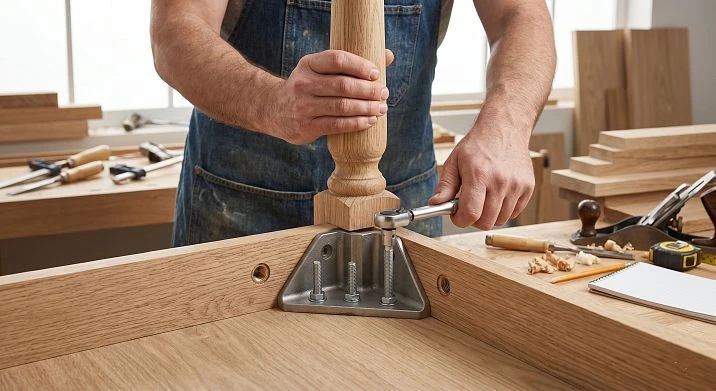
Imagine: you chose beautiful wooden legs for a dresser — turned, beech, with a soft curve in a classic style. You brought them, installed them — and within a week the dresser wobbles slightly. Not critical, but unpleasant. The drawers open with a slight tilt. On the parquet — barely noticeable, but already real scratches. Sound familiar?
The problem is not the legs. The problem is that attaching furniture legs is not just one screw. It is a system of several compatible parts: a stud or mounting plate, fasteners, a glide or adjustable support. Missing even one component means getting a lower assembly that doesn't work at full capacity or doesn't work at all.
This article is a commercial guide. Not theory about "types of furniture legs," but a practical guide: what exactly you need to buy along with the legs, how to choose fittings for a specific type of furniture, how to check that the assembly is put together correctly. And — importantly — how not to order a beautiful decorative element only to find out later that there is no compatible fastener for it.
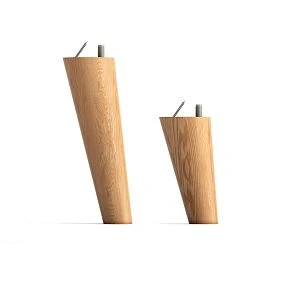
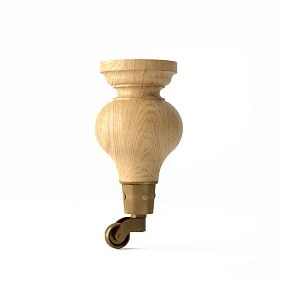
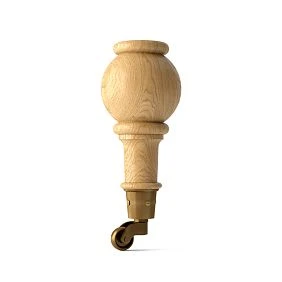
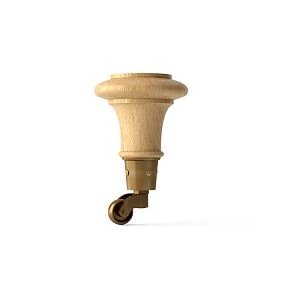
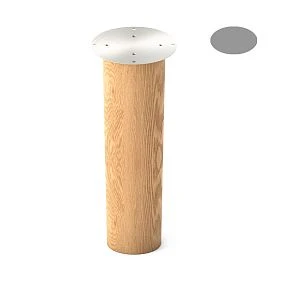
What is included in the lower assembly of a furniture leg
The lower assembly is everything between the furniture body and the floor. Three zones, three tasks, three groups of parts.
Furniture leg as a decorative and load-bearing part
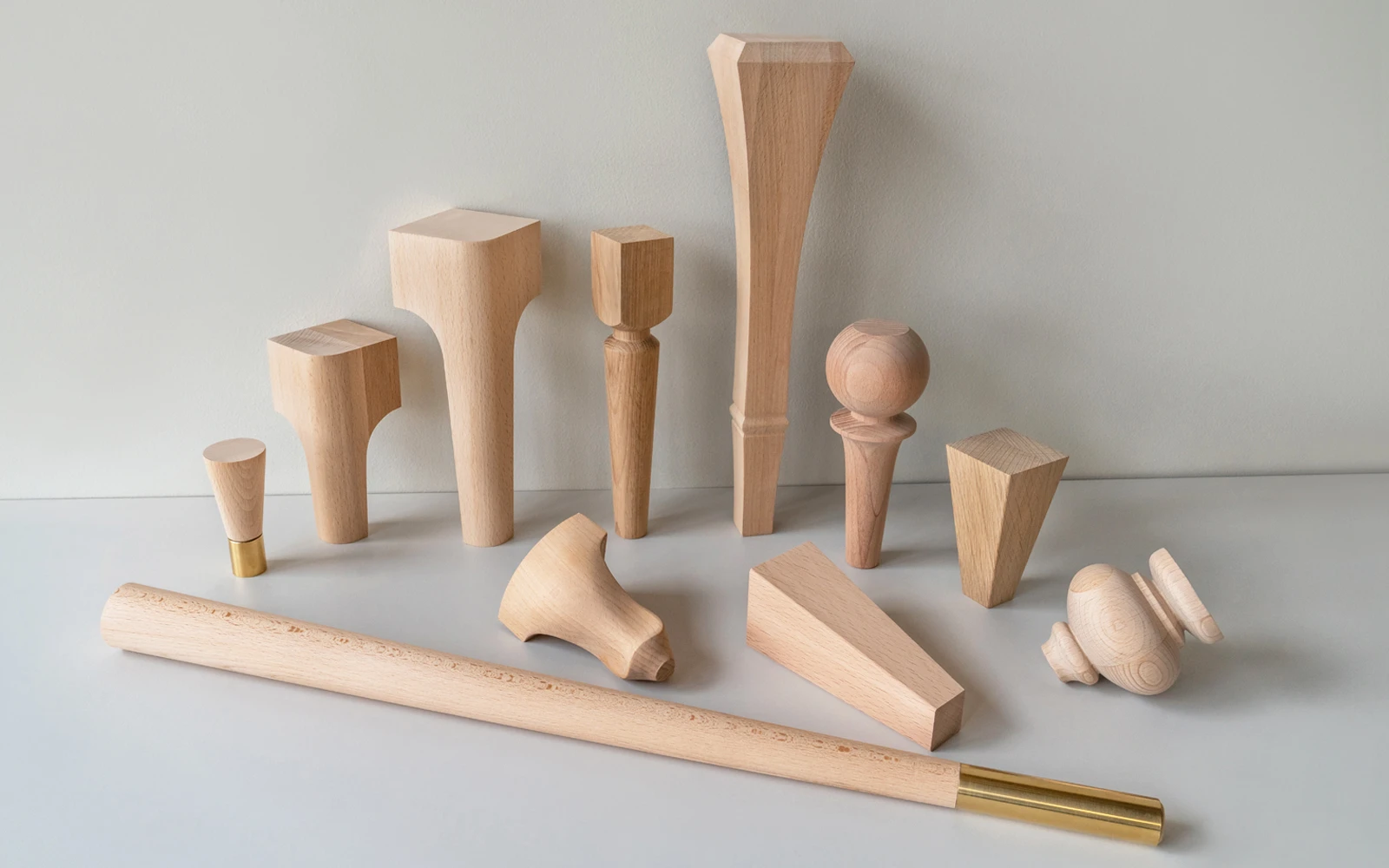
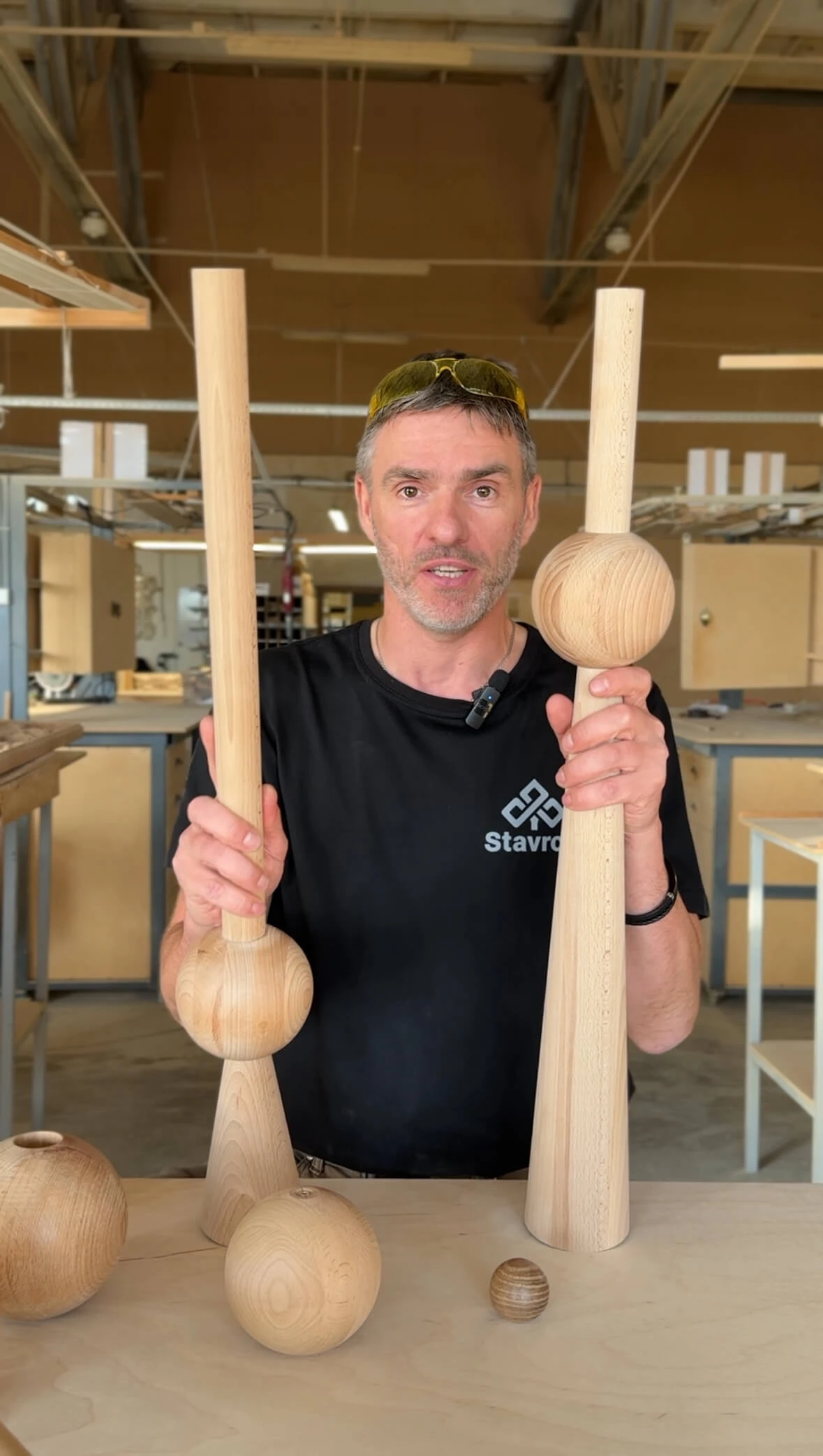
A leg is both aesthetics and structure. It shapes the silhouette of an object, defines its style, and at the same time bears real load. A decorative turned oak leg for a coffee table and a massive straight support for a dining table involve different loads, different attachment geometries, and different fasteners.
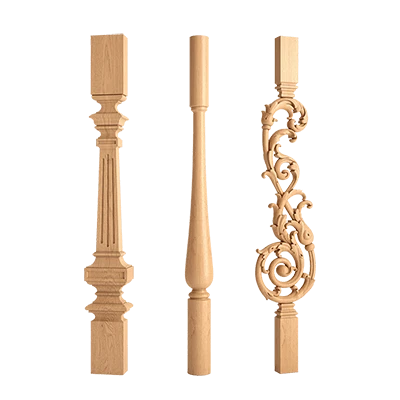
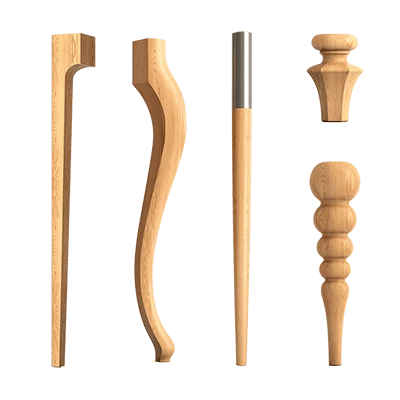
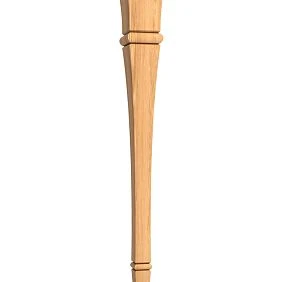
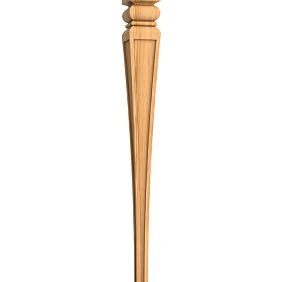
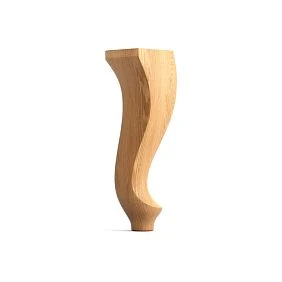
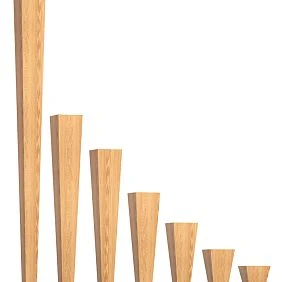
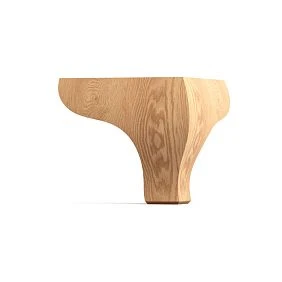
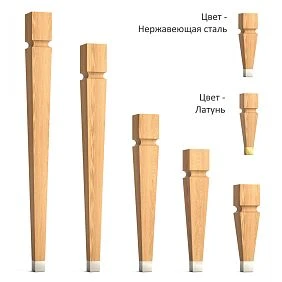
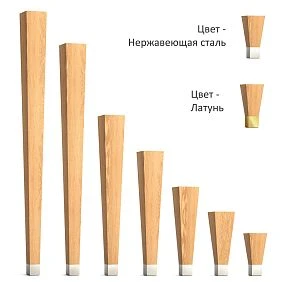
Wooden furniture legs STAVROS offers turned, carved, and straight supports made from kiln-dried beech and oak. Each leg is a blank intended for a specific finish and a specific type of attachment. That is why choosing a leg always comes with the question: what will be below and above?
Above — attachment to the furniture body. Below — a foot cap or an adjustable support. Both are not optional but part of the system.
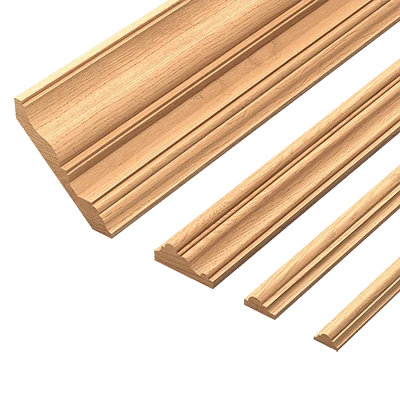
Our factory also produces:
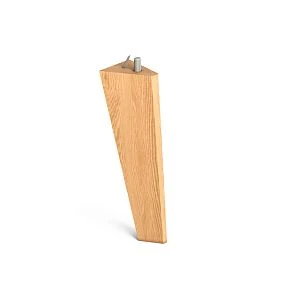
Fasteners: stud, screw, plate, or bracket
The fastener is selected based on two parameters: the leg design (whether it has a threaded insert or not) and the base material (solid wood, MDF, particleboard, plywood).
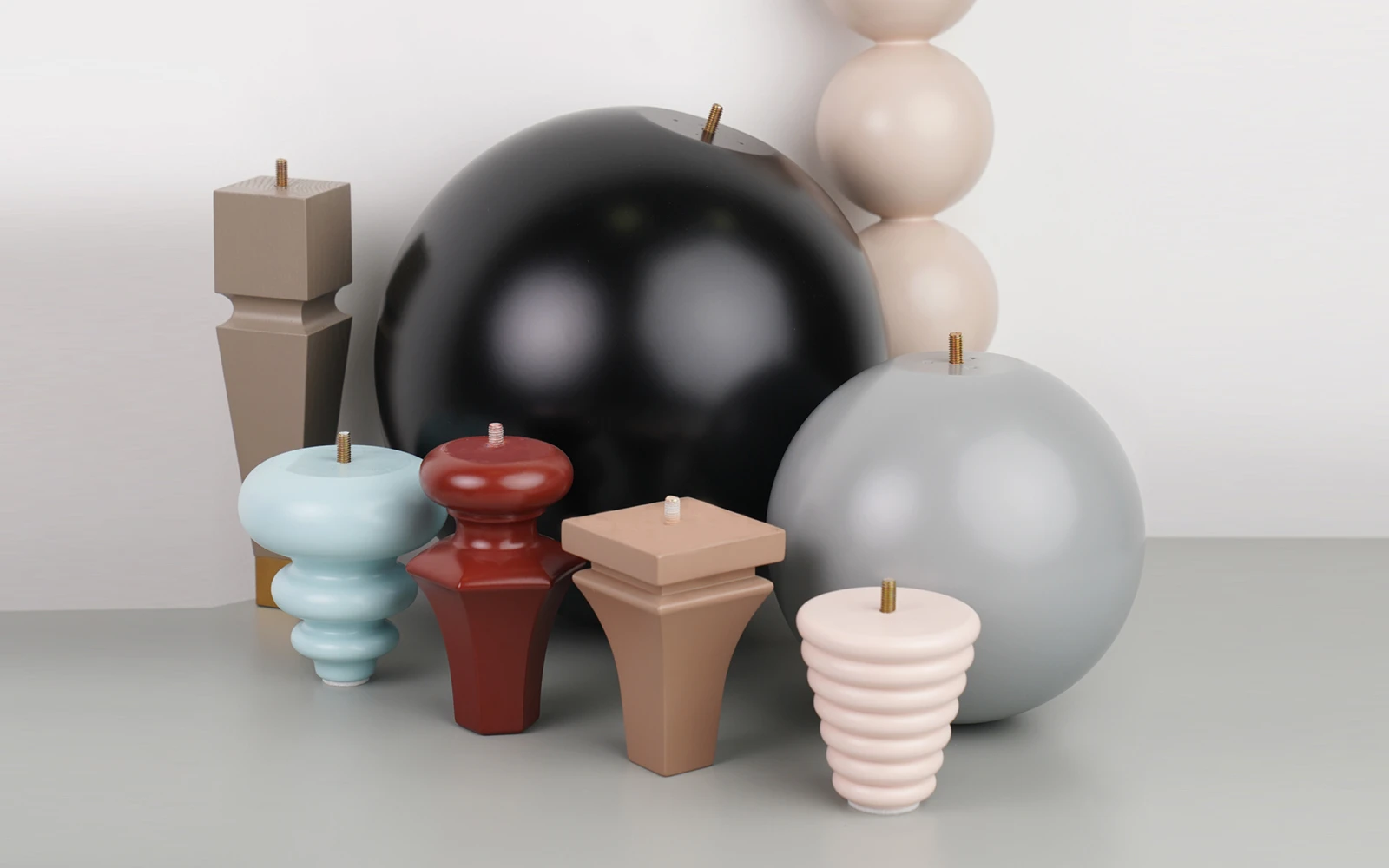
A stud is a threaded rod that screws into the leg on one side and into the furniture base on the other. It is used when the leg has an internal threaded insert or when a threaded hole is prepared in the furniture base. M8 stud is the standard for most medium and heavy-duty wooden furniture legs.
A mounting plate is a metal bracket that is attached to the furniture base with screws, and the leg is then attached to it via a central bolt or stud. The plate distributes the load over a larger area, which is especially important for soft bases (MDF, particleboard) or under significant load on the leg.
An angle bracket is installed at an angle to the base plane when the leg needs to be tilted. It is not interchangeable with a straight plate: the leg installation angle is a structural decision, not a decorative one.
All Furniture leg hardware — studs, mounting plates, fastening elements — all in one section of the STAVROS catalog. Convenient precisely because you don't need to assemble a compatible set from different sources.
Get Consultation
Foot cap or adjustable support
A foot pad is the bottom contact point of furniture with the floor. Its tasks:
— protect the floor covering from scratches and dents;
— compensate for micro-irregularities in the floor;
— reduce noise when moving furniture;
— provide a neat visual finish for the leg.
The foot pad is selected based on the diameter of the lower part of the leg and the type of flooring. It is not a universal part for any leg — it requires precise fitting.
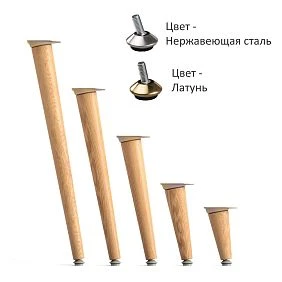
An adjustable foot pad additionally allows you to adjust the height of each leg independently: indispensable on uneven floors, tiles with differences, old parquet.
When a stud is needed, and when a mounting plate
This is the central choice when selecting a fastener. And it is most often made incorrectly — not because it is difficult, but because few people think about it before starting installation.
Stud mounting: when it is the right choice
A stud is an elegant, compact, and reliable solution for wooden legs with an internal threaded socket. The scheme is simple: a stud with metric thread (M8 — standard) is screwed into the lower part of the leg, a hole is drilled in the furniture base, and a threaded insert or nut is screwed in. The leg is screwed in — the connection is ready.
When the stud works well:
-
the leg is turned, with a flat end and a central M8 socket;
-
the furniture base is made of solid wood or thick plywood — good thread holding;
-
the load is even, the furniture stays in place without frequent movement;
-
a neat, hidden fastening unit without visible plates is required.
When the stud is not the best solution:
-
thin base made of chipboard or MDF — the thread quickly wears out;
-
the leg has a non-standard end, not designed for a central socket;
-
the furniture will be moved frequently — dynamic load loosens the threaded connection.
Furniture leg studs. in the STAVROS catalog, they are selected for a specific diameter and length — not "any stud", but a precise part for a specific leg.
Mounting through a mounting plate: reliability of distributed load
A mounting plate is a metal platform with holes for screws around the perimeter and a central hole for the leg attachment bolt. It is attached to the furniture base at four to six points, distributing the load over the area rather than concentrating it at a single point.
The plate is the best choice when:
-
the base is made of MDF or chipboard, where point threaded fastening is unreliable;
-
the leg is heavy or the furniture bears significant load (dining table, sofa, bed);
-
the ability to disassemble and reassemble without loss of reliability is needed;
-
the leg has a non-standard top shape — the plate provides flexibility in choosing the fastening scheme.
An angle plate is a separate product for legs with an inclined installation. If the design requires the legs to spread at an angle, a straight plate will not help here. The angle plate is designed specifically for this scenario. They must not be confused: the wrong plate means load misalignment and instability of the entire assembly.
Mounting plates for furniture legs STAVROS — straight and corner, for different leg diameters and different installation schemes.
The most common mistake
A person goes to the catalog, chooses beautiful decorative furniture legs, orders them — and receives a package. But there are only legs. No pins. No plates. No glides. And the person goes looking for hardware — to another store, where there are no compatible parts, or buys "something similar" at a hardware store and gets an incompatible size.
Rule: when ordering legs, immediately compile a complete list of the lower assembly parts. Leg + hardware + glide = set. Each element is a separate item in the order. But they all must be compatible with each other.
In the section furniture hardware STAVROS legs and all related fittings are presented in one place — precisely to prevent this mistake from happening.
How to choose fasteners based on furniture type
A dining table and a bedside table are different loads, different dynamics, different requirements for the lower assembly. Let's break it down by type.
For tables and countertops: stability first
The table is the point of maximum demands on the lower node. There is both static load (dishes, appliances, objects) and dynamic load (a person leaning, children hanging), as well as horizontal forces (the tabletop shifts when supported).
For a dining table, a mounting plate is preferable to a stud: it distributes the load and ensures rigidity of the angle between the leg and the tabletop. For a coffee table with light load, a stud is sufficient.
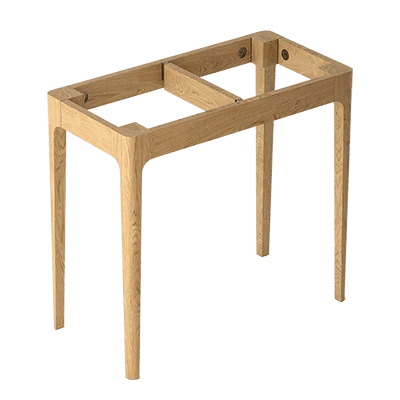
Attaching legs to the tabletop requires correct calculation of placement: the legs should be positioned wide enough to ensure lateral stability. Too close to the center, and the table will wobble under lateral force.
For table legs on parquet or laminate, felt glides are mandatory. For tile or stone floors, adjustable glides are needed, which allow precise leveling of the table horizontally.
For a cabinet and chest of drawers: load transfer when opening
A cabinet and chest of drawers represent a special scenario. When a drawer is pulled out, the load shifts forward: the front legs receive additional pressure. With a fully extended heavy drawer, the load moment can be significant.
Requirements: the attachment of legs to the cabinet must be rigid and not allow play. If a leg is on a stud that is loosely tightened, when a heavy drawer is pulled out, the cabinet will tilt forward, and the stud will start to "work loose."
For heavy chests of drawers with multiple drawers, a mounting plate is used. For lightweight bedside tables, a stud with good tightening and a threaded insert in the base is sufficient.
Additional point: when replacing legs on a chest of drawers, you need to check whether the old mounting sockets have become worn. A worn socket means a new stud of larger diameter or a switch to a plate.
For a sofa, armchair, and ottoman: dynamic load
A sofa is subject to constant impact and dynamic loads. When a person sits down, the leg receives an impact. When they stand up, the load is removed. When the sofa is moved, the legs drag across the floor. Moreover, sofa legs are usually located close to the edges, which creates a significant leverage of the load.
Attaching legs to a sofa must be done via a mounting plate or a special furniture bolt with a wide washer. An M8 stud in a thin sofa base under dynamic load is a risk.
A foot pad for a sofa leg is preferably adjustable with an anti-slip bottom surface. The sofa should not "slide" across the floor under load.
for leg attachments to the sofa the diameter of the leg base is also important: a wide base means a larger plate area, which provides better stability.
For consoles and decorative furniture: aesthetics of the connection
A console is an item with special visual requirements. As a rule, it stands in the hallway or living room in plain sight, and the lower assembly must look flawless. No protruding bolts, skewed plates, or unsightly foot pads.
For a console, use a stud under a beautiful leg with a neat end. The foot pad should be of minimal diameter, matching the floor or the leg color. The mounting plate, if used, should be hidden inside the base.
Decorative furniture requires a decorative solution for the lower assembly. decorative furniture legs STAVROS — made of beech and oak, turned, with a neat end — is designed for such scenarios.
How to choose a furniture leg cap
A leg cap is the last centimeter between the leg and the floor. A small detail with great significance.
Adjustable leg cap: when the floor is not perfect
An adjustable leg cap is a plastic or metal element with a threaded leg inside. You screw it in or out, changing the height by a few millimeters. This allows you to precisely level furniture on a floor with height differences.
Where this is critical:
-
old parquet with boards that "move" in height;
-
tiles with uneven joints;
-
commercial spaces where the floor was laid without precision leveling;
-
any place where none of the four corners of the table stand equally.
Adjustable furniture leg caps are a standard tool for professional carpenters and furniture makers. For the consumer market, they are often ignored — and that is why there are so many "wobbly" tables in ordinary apartments.
Felt furniture pad: protection for parquet and laminate
A felt furniture pad is the most common type of floor protection. Soft felt does not scratch parquet or laminate, reduces noise when moving furniture, and creates a neat contact with the flooring.
Selection requirements:
— the diameter of the pad must match the bottom platform of the leg or be slightly smaller (if it is glued to the end);
— felt thickness of at least 3 mm for parquet;
— the adhesive layer must be reliable, without a self-adhesive base that falls off after a month.
Important point: a felt pad is a consumable item. After a year or two, it wears out and needs replacement. This is normal. The problem is when the pad wears down and the owner doesn't notice, and the leg starts working directly on the parquet.
Pad according to leg diameter and shape
A common mistake: choosing a pad that is 'about the same size'. A pad with a diameter of 25 mm (D25) and a pad with a diameter of 32 mm (D32) are different products for different legs. If the pad is smaller than the leg, it acts as a point and creates load on a small area. If it is larger, it sticks out and looks untidy.
Rule: measure the diameter of the bottom part of the leg and choose a pad exactly matching this diameter. All necessary Furniture leg hardware — including glides of different diameters — is presented in the STAVROS catalog.
Which glide to choose for different floor coverings
| Finish | Recommended glider |
|---|---|
| Parquet, wooden floor | Felt/wool felt, soft, D25–D40 |
| Laminate | Felt or silicone with a soft sole |
| Tile, porcelain stoneware | Rubber or silicone anti-slip |
| Carpet, carpeting | Adjustable or without glide — the leg sinks into the pile |
| Uneven floor, level differences | Adjustable foot with adjustment range |
| Commercial floor, epoxy | Hard plastic with antistatic coating |
How to assemble a purchase kit: three scenarios
Proper procurement is not about 'buying legs' or 'buying fasteners'. It's a kit for a specific scenario.
Scenario 1: Kit for new furniture
You are making furniture from scratch — with your own hands or in a workshop. The body is ready, you need to install the legs.
What you need:
-
Wooden furniture legs — of the chosen shape, wood species, height
-
Mounting plates or studs — according to the leg type and base
-
Fastening screws (if plate) or threaded inserts (if stud) — included with the fasteners
-
Glides — according to the diameter of the lower part of the leg and the type of floor
-
Tools: drill, bits, level
Work order: first mount the plates or threaded inserts into the base. Then install the legs. Then the glides. Not the other way around.
Scenario 2: Kit for replacing old legs
Old legs are broken, worn out, or just don't fit the updated interior. We replace them.
What to check before ordering:
— type of old mounting: stud or plate? What is the stud diameter? What is the plate size?
— condition of old mounting sockets: are the holes for the stud worn out?
— height of old legs: if you buy a different height, note that the furniture height will change.
— furniture weight: when replacing legs on a heavy item, be sure to check the load capacity of the new legs.
If the old holes for the stud are worn out, switch to a mounting plate. This is more reliable than trying to restore the thread in a worn hole.
Scenario 3: Only glides — floor protection
Legs are already in place and hold well. The only issue is contact with the floor. Scratches, slipping, slight misalignment.
What you need:
— measure the diameter of the lower part of the leg;
— choose the type of glide based on the floor covering;
— if necessary, take adjustable glides for leveling.
This is the most budget-friendly scenario — and very effective. A properly selected glide solves 80% of problems with wobbly furniture on uneven floors.
Mistakes when buying furniture leg fasteners
An honest and tough breakdown. Because this is where money and time are lost.
Buying legs without hardware
The most common mistake. Already described above. A leg without fasteners is a decorative element that cannot be used. Always order a set.
Choosing a plate for the wrong installation angle
A straight plate for an angled leg causes misalignment. An angled plate for a vertical leg results in improperly distributed load. Clarify the leg installation angle before ordering the plate.
Not accounting for furniture weight
The mounting plate is selected based on load capacity. A flimsy plate under a heavy dresser leads to deformation within months and risk of lower joint failure. Clarify the permissible load when choosing fasteners.
Using the same glides for different floor coverings
A felt glide on tiles slips and offers no protection. A hard plastic glide on parquet scratches. Choose a glide for the specific floor covering, not a one-size-fits-all solution.
Not checking the diameter of the leg's lower part
D25 and D32 are fundamentally different glides. Not approximately, but exactly. Measure, note, and order the correct one.
Using too short fasteners
A short stud in a thin base — minimal thread engagement, quick loosening. Rule: the stud screwing depth should be at least 2.5–3 stud diameters. For M8 — minimum 20 mm depth in the base.
Not considering whether the furniture will be moved frequently
A dining table in a studio that is moved every day — this is a dynamic load. For such a table, a stud in particleboard won't work. A mounting plate with a wide attachment area is needed.
Choosing based only on appearance
A beautiful leg with an unclear top end — this is a leg for which it's unclear what to buy. When choosing a decorative leg, ensure its geometry is compatible with the selected type of fastener.
Mixing metric and inch threads
An M8 stud and a bolt with inch thread — incompatible. When purchasing fasteners, specify the thread standard.
Forgetting about the level during installation
Even a perfectly matched kit with crooked installation will cause misalignment. A level is not an option, but a mandatory tool.
How to understand that the fastener is selected correctly
Checklist after assembling the lower assembly:
1. The leg does not wobble. Grasp the leg with both hands and try to rock it in different planes. Zero play is normal. The slightest play is a problem that will worsen.
2. The furniture does not rock. Place the furniture on the work surface and check its stability. If the furniture rocks, it is either due to different leg lengths (check the glides), an uneven floor (adjustable supports are needed), or a weak attachment of one of the legs.
3. The load is distributed evenly. All four legs must stand on the floor simultaneously. If one is "hanging," it is not a leg problem but a floor or attachment problem.
4. The glide does not protrude unattractively. The glide should not be visible from a distance of 1–2 meters. If it protrudes beyond the leg, the diameter is incorrect.
5. The floor is not scratched. After moving the furniture, inspect the surface. Marks indicate an incorrect glide.
6. Height is adjusted as needed. If the floor is uneven, ensure the adjustable glides can compensate for the difference without tilting the furniture.
7. The attachment does not conflict with the leg shape. The bolt head or plate edges must not touch the decorative surface of the leg — this risks damaging the finish.
What to buy together with furniture legs
System list for a complete order.
Legs and fasteners
-
wooden furniture legs — made of beech and oak, turned, carved, straight
-
Furniture leg hardware — M8 studs, straight and angle mounting plates, threaded inserts, bolts, adjustable leveling feet, felt pads
Furniture decor
-
decor for furniture — if the legs are installed as part of a larger decorating project
Full hardware catalog
-
Furniture hardware — everything for furniture: legs, fasteners, handles, hardware
Why STAVROS
Buying furniture leg mounting hardware means finding a supplier who has compatible parts for the complete lower assembly, not just a decorative leg without its hardware.
STAVROS — a specialized manufacturer and supplier of wooden products and furniture hardware since 2002. The catalog includes — Wooden furniture legs made of beech and oak, and next to it — a complete section of furniture leg hardware: studs, mounting plates, adjustable and felt leveling feet. Compatible parts from one supplier guarantee that the lower assembly will be put together correctly the first time.
STAVROS legs are made from kiln-dried solid wood — oak and beech with controlled moisture content and stable geometry. They do not deform after installation, accept any finish, and are designed for real furniture loads — not just decorative ones.
Among the implemented STAVROS projects are the Hermitage, Konstantinovsky Palace, and Alexander Palace. Rating 5.0, over 260 verified reviews. Contact us to confirm shipping to your destination. via CDEK and DPD. Showrooms in St. Petersburg and Moscow.
FAQ
Can furniture legs be installed without a mounting plate?
Yes — if the leg design is intended for stud mounting and the furniture base is made of solid wood or thick plywood sufficient for reliable thread engagement. For heavy furniture and bases made of chipboard or MDF, a mounting plate is more reliable.
What is better for a wooden leg: a stud or a plate?
For light and medium furniture with a solid base, a stud is more convenient and aesthetically pleasing. For heavy furniture, chipboard, and dynamically loaded items, a mounting plate is more reliable.
Are glides necessary for wooden legs?
Absolutely — on parquet, laminate, and tile. Without a glide, a wooden leg leaves scratches and slips. A proper glide protects both the floor and the leg.
What to do if the table wobbles after installing the legs?
Check sequentially: whether all legs are on the floor simultaneously; whether there is any play in the fastening; whether there is a height difference between the legs; whether the floor is level. If the floor is uneven, adjustable glides will solve the problem without redoing the fastening.
Can only the glides be replaced without changing the legs?
Yes. If the legs are in good condition and securely fastened, replace only the glides. This is a simple and inexpensive operation that solves most problems with scratches and slipping.
Which glides should I choose for parquet flooring?
Felt glides with a diameter exactly matching the bottom of the leg. Felt thickness should be at least 3 mm. Choose options with a reliable adhesive layer or screw-in versions.
Where can I buy furniture leg fittings compatible with wooden legs?
In the section furniture for furniture legs STAVROS — studs, plates, and glides selected to match wooden legs from the catalog.