








































































Article Contents:
- Cabinet components and BOM: one model — one data system
- Construction
- Facades
- Functional external components
- Decorative components
- The BOM of a single cabinet — the foundation of serial production
- The cabinet front connects the carcass, handles, and decorative elements
- One handle per door or a handle for each drawer
- Knob handle for a compact cabinet
- Pull handle for wide fronts
- One handle series for the entire furniture collection
- The support height changes the height of the entire product
- The leg cannot be selected after the cabinet body is manufactured
- Mounting hardware for legs: LEG SKU is not enough
- Threaded rod and mounting plate are separate SKUs
- Glide as part of the finished cabinet
- How to verify the leg mounting assembly before a production batch
- How to decide between two leg options
- Furniture hardware manufacturer: what data a buyer needs
- What “hardware for cabinet furniture production” means in this article
- How to compare two suppliers of external components
- Left and right door — separate lines
- Furniture moulding and trim for a framed facade
- Moulding is counted as parts, not just metres
- When a nightstand does not need additional decor
- BASIC / CLASSIC / PREMIUM on a single frame
- How to make a nightstand part of a collection without full copying
- How to reduce the number of unique SKUs in a nightstand collection
- SKU per model as a simple complexity control
- How to prepare a nightstand for launch in another color version
- When it is more profitable to split one production nightstand into two SKUs
- Approved sample of every visible component
- Pilot batch before mass production
- Release gate before the main production run
- When to order furniture hardware samples
- Component reserve cannot be calculated as a single percentage
- Production and service reserves must be separated
- When it is still too early to place a component order
- Checking the purchase order before sending it to the supplier
- Handle inspection
- Leg inspection
- Control of installation hardware
- The LOT of components must be linked to the production batch of cabinets
- How to label components for a serial cabinet
- Packaging of external components also affects assembly
- What to do with leftovers after completing a series
- How to use the actual consumption of the next print run
- Procurement department checklist before a repeat RFQ
- What the factory should retain after launching a model
- What to check before closing a furniture series
- Change request for replacing a handle, leg, or fastener
- Approved alternative: the backup option must be verified in advance
- How to prepare a repeatable master card for an external component
- The price of a leg without the mounting assembly is an incomplete price
- The price of a handle and the cost of changing the drilling are different scales
- Edge case: TV stand
- Edge case: nightstand with drawers and a door
- Edge case: nightstand without handles
- How to decide between coated and uncoated handles
- How to link finish handles and legs
- Kit per product
- Batch issuing
- How to prepare a claim for an external component
- How to prepare a serial cabinet for transfer to another workshop
- What to provide for batch calculation
- When a general overview of furniture hardware is needed
- Error: leg and plate are entered on the same line
- Error: handle is selected after drilling
- Error: leg height is not included in overall dimensions
- Error: glide is forgotten in the packaging
- Error: overlay is placed "in the center" without coordinates
- Error: molding is calculated only in linear meters
- Error: new batch is mixed with the old one
- Error: service reserve is consumed by production
- What components are needed for cabinet production?
- What is the cabinet body made of?
- How to choose handles for a cabinet?
- Which legs are suitable for a bedside cabinet?
- How to choose the height of furniture supports?
- How to attach wooden legs to the cabinet body?
- Are glides needed?
- What does quality furniture hardware mean?
- How to calculate the number of components per series?
- What reserve should be kept in stock?
- Where to buy components for cabinet production?
- Can the same series of handles be used on a cabinet, chest of drawers, and wardrobe?
- Do you need to keep an approved sample of the leg?
- When is it risky to change a component supplier?
- What to hand over to the supplier in the final package

A nightstand seems like a simple piece of furniture only as long as we are talking about a single unit. In a run of 100–500 pieces, even a compact carcass quickly turns into a system of linked items: side panels, bottom, back panel, drawers, fronts, handles, legs, mounting plates, studs, glides, decorative overlays, and trim. If these elements are selected separately from the model, the same nightstand gradually begins to be produced in several incompatible versions.
Components for nightstand production need to be linked through a single production chain: model → carcass → front/drawer → handle → leg/support → fasteners → decor → SKU → BOM → prototype → approved sample → pilot batch → serial batch → repeat order.
This article does not repeat the material on how to choose a beautiful leg or handle for finished furniture. The unit of analysis here is one serial nightstand. The manufacturer's task is to standardize all external components so that procurement, warehouse, and assembly work with the same data.
In this system, STAVROS is used as a supplier of part of the front and mounting components: wooden handles, legs and supports, hardware for legs and handles, decorative overlays, trim, and samples. Carcass panels, slides, and other internal mechanics may be purchased from other suppliers, but in the BOM they must still be linked to the same nightstand model.
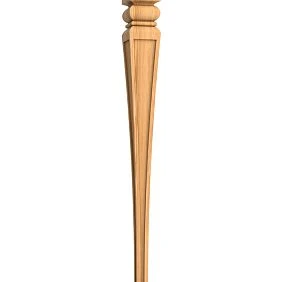
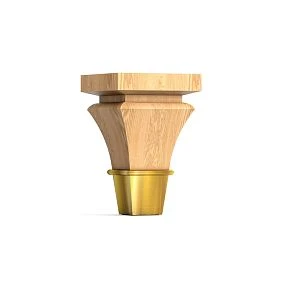
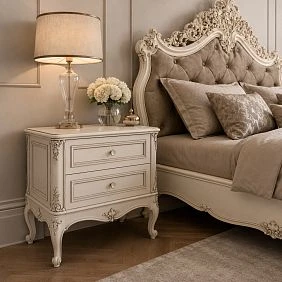
Nightstand components and BOM: one model — one data system
Before purchasing, it is useful to break the product down into four levels. This is not a formality: different levels affect the design, appearance, and repeat order in different ways.




Structure
- side panels;
- top panel;
- bottom;
- Partitions;
- back panel;
- drawer boxes.
Our factory also produces:
Facades
- doors;
- drawer fronts;
- visible side panels;
- plinth or base.
Get Consultation
Functional external components
- furniture handles;
- legs and supports;
- mounting plates;
- studs;
- glides.
Decorative components
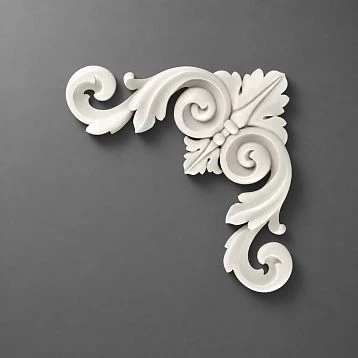
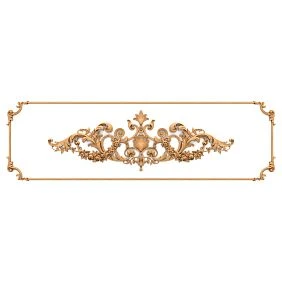
- Plates;
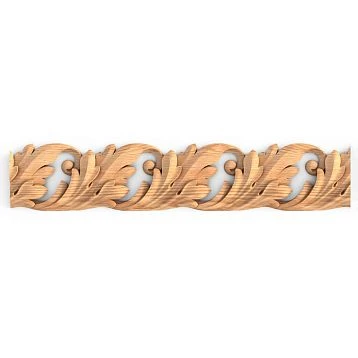
- Moldings;
- moulding;
- frame and rail elements.
No external part should exist only in the assembler's memory. If a component can be purchased separately, replaced, lost, or mixed up, it needs its own line in the specification.
BOM of a single nightstand — the basis of serial production
The BOM answers the question: what is required for one unit of furniture and in what quantity. For a nightstand, it is especially important not to combine the leg and the fastener into a single "set of supports" line if these items are physically purchased separately.
| Code | Position | SKU / material | Qty per nightstand | Critical parameters |
|---|---|---|---|---|
| BODY | Housing | Chipboard-___ | 1 set | thickness, decor, edge banding |
| FRONT | Facade | MDF-___ / Chipboard-___ | 2 | Size, finish, drilling |
| HANDLE | Handle | HL-___ | 2 | Size, fit, coating |
| LEG | Leg | MN-___ | 4 | Height, cross-section, mounting |
| PLATE | Plate | FUR-___ | 4 | Compatibility with support |
| STUD | Screw | FUR-___ | 4 | Thread size |
| FOOT | Thrust bearing | FUR-___ | 4 | Shape and size |
| DECOR | Overlay | N-___ | 2 | Coordinates and orientation |
If one cabinet has two drawers and another has one door, these are already two BOM configurations. Externally, they may belong to the same collection, but the number of handles, drilling, and facade logic will differ.
Carcass, facade, and materials serve different purposes
The query "materials for furniture manufacturing" cannot be turned into a general overview of MDF and chipboard. For a serial cabinet, the material is selected based on the function of the part.
The carcass can be made of chipboard, MDF, or a combined construction. Facades may have a different material. The handle and leg are wood or another agreed-upon finish. The overlay is a separate decorative part. Therefore, the material for cabinet furniture and the material for front hardware are different lines.
| Node | Main task | What to fix |
|---|---|---|
| Housing | Geometry and construction | Material, thickness, edge banding |
| Facade | Appearance and opening | Material, finish, drilling |
| Handle | Grip and design | SKU, size, fit |
| Leg | Height and support | SKU, height, mounting |
| Overlay | Decorative composition | SKU, size, coordinates |
The same carcass can be used in several visual versions of the cabinet. This allows maintaining a stable structural platform and changing the design through the front, handles, legs, and decor.
The cabinet front connects the carcass, handles, and decorative elements
The front is where the cabinet's construction meets the face hardware. This is where holes for handles, decorative overlays, moulding frames, and gap constraints appear. Therefore, the front must be approved before placing a large order for handles or decor.
Before purchasing face components, the following are fixed:
- facade material;
- thickness;
- width and height;
- opening type;
- finish;
- gaps;
- handle coordinates;
- the presence of overlay decor;
- position of the front in the model.
If a chest of drawers has three drawers, each front can be the same in width but differ in height. In this case, one handle can work for the entire group, and the installation coordinate changes. If the top drawer is narrow and the bottom one is wide, the handle and its size may become different SKUs.
One handle per door or one handle per drawer
The number of handles depends not on the chest of drawers "in general", but on the structure of the fronts.
| Configuration | Facade type | Base number of handles |
|---|---|---|
| One door | 1 hinged front | 1 |
| Two doors | 2 hinged fronts | 2 |
| Two drawers | 2 pull-out fronts | 2 |
| Three drawers | 3 pull-out fronts | 3 |
| Drawer + door | 2 different fronts | 2, if the project does not provide for concealed opening |
A separate BOM is created for each variant. You cannot keep a single line “handles — 2 pcs.” for the entire collection of cabinets if the quantity changes along with the front architecture.
Furniture handles for cabinets: mounting, size, and repeatability
STAVROS has a separate category wooden furniture handles. For production, what matters more is not the photo, but the specific geometry of the selected model.
The handle specification records:
- SKU;
- handle type;
- length;
- center-to-center distance, if applicable;
- mounting point or points;
- overhang;
- orientation;
- the material;
- coating;
- hole coordinates on the front.
If you need to buy furniture handles for a production cabinet, the choice must be finalized before drilling the fronts. Once the holes are made, switching to a visually similar model may require reworking the entire batch.
Knob handle for a compact cabinet
A knob handle is convenient because it usually has a single mounting point and a small visual footprint. But that does not make it universal. For production, you need to check:
- diameter or overall dimensions;
- overhang;
- grip comfort;
- scale relative to the facade;
- position relative to the edge;
- hand access when opening.
On a very wide drawer, a small knob may be visually and ergonomically weak. On a compact bedside cabinet, on the contrary, it is expressive enough.
Bar handle for a wide front
For TV cabinets and wide drawers, a bar handle is often more convenient, but here the center-to-center distance comes into play. It becomes part of the drilling documentation.
Once the handle is approved on the front, keep:
HANDLE SKU / SIZE / CC / X / Y / ORIENTATION.
If the handle is produced with a coating, a separate section can be used handles with coating. If the finishing is done by the furniture factory itself, a section is useful unpainted handles.
One handle series for the entire furniture collection
A bedside table, chest of drawers, and wardrobe can use a single handle design system. This reduces the number of active SKUs and simplifies the warehouse, but the size of the same model may differ.
For example:
NIGHTSTAND / HL-___ / SIZE-S
DRESSER / HL-___ / SIZE-M
WARDROBE / HL-___ / SIZE-L
This way the brand maintains a common language, and production does not force one size to work on facades of different scales.
The deeper question of handle standardization is already covered in a separate article about furniture handles for serial production. Here the handle is considered as one line of the complete BOM of the bedside table.
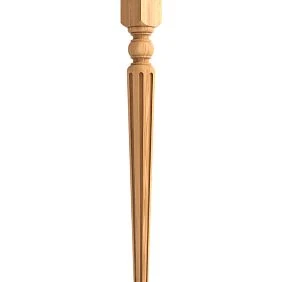
Legs, supports, and the complete mounting assembly
In the category furniture legs and supports STAVROS cabinets belong to standard application scenarios. For a serial model, the leg cannot be "the last beautiful detail" chosen after the finished body.
Critical parameters:
- SKU;
- overall height;
- cross-section;
- shape;
- the material;
- coating;
- geometry of the mounting part;
- quantity per product;
- installation coordinates;
- associated fasteners.
The height of the support changes the height of the entire product
For a cabinet, the final height is determined not only by the body:
body + support + if necessary tabletop/top part = actual height.
This is especially important for:
- bedside cabinet — it correlates with the height of the bed;
- TV cabinets — height affects the position of the screen;
- cabinets next to the sofa — the connection with upholstered furniture is important;
- floor-standing cabinet — access for cleaning and the overall silhouette change.
If the leg is increased by 20 mm, this is already a change to the finished product. This means the new height must appear in the drawing and BOM.
The leg cannot be selected after the cabinet body has been manufactured
Some supports require a mounting plate, plate, studs, or a certain base thickness. If the cabinet body has already been cut without taking the fastening assembly into account, replacing the leg may require reinforcing the bottom or using a different mounting method.
Therefore, the sequence should be as follows:
LEG SKU selection → fastening assembly → cabinet body drawing → prototype → production run.
For an in-depth comparison of leg types, there is a separate article on choosing wooden supports for a chest of drawers, cabinet, and console. In a production article, it is more important to standardize the already selected support.
Mounting hardware for legs: LEG SKU is not enough
A leg by itself does not describe the mounting assembly. For a production cabinet, you need to know how it connects to the body, which threaded elements are used, and whether the glide is included in the finished set.
In the current section hardware for legs and handles STAVROS there are studs, mounting plates, glides and other elements. In the BOM they must be stored separately.
A strong scheme:
LEG SKU → STUD SKU → PLATE SKU → FOOT SKU.Weak scheme:
legs — set of 4 pcs.Stud and mounting plate — separate SKUs
If the support is mounted via a stud and plate, the purchaser must see two actual positions. This is especially important if one of them is also used in other furniture models.
For example:
LEG-01 / MN-___ / 4 pcs
STUD-01 / FUR-___ / 4 pcs
PLATE-01 / FUR-___ / 4 pcs
If the plate is not needed for a specific model, it is not included. The mounting assembly must reflect the actual construction, not a standard template.
Glide as part of a finished cabinet
If the furniture is sold as a fully finished product, it is necessary to decide in advance whether the glide is included in the package. For a wooden support, it may serve a protective or functional role, but the specific type is selected based on the construction and floor covering.
The BOM records:
- SKU;
- shape;
- size;
- the material;
- quantity;
- installation method;
- is it included in the service kit.
If the glide is purchased separately, the absence of four small parts can halt the packaging of the entire cabinet. That is why "small hardware" must not disappear from the BOM.
How to verify the leg mounting assembly before the production batch
Checking that "the leg screws on" is not enough. The assembly must be evaluated as a system.
Checked:
- bottom thickness;
- location of the mounting plate;
- tool access;
- stud depth;
- distance to the edge;
- whether the hardware conflicts with the drawer;
- actual verticality;
- foot plate;
- stability on four supports.
If the cabinet design changes, the support compatibility is rechecked, even if the LEG SKU remains the same.
How to decide between two leg options
| Criterion | Leg A | Leg B |
|---|---|---|
| Height | By card | By card |
| Cross-section | According to the drawing | According to the drawing |
| Material | specific | specific |
| Mounting | Plate / stud | Plate / stud |
| Final cabinet height | Calculate | Calculate |
| Assembly cost | LEG + fasteners | LEG + fasteners |
| compatibility with the cabinet body | Prototype | Prototype |
This turns the choice of support into a technical comparison. The price of one leg is just one column.
Quality hardware and supplier requirements
The phrase "quality hardware" can easily turn into a marketing slogan. For a factory, quality means something else: compliance with the drawing and batch consistency.
For a handle:
- size matches;
- mounting geometry matches;
- material matches the order;
- finish matches the approved sample;
- no unauthorized SKU substitution.
For a leg:
- same height;
- installation area matches;
- cross-section is consistent;
- surface matches the reference;
- associated fasteners are compatible.
For fasteners:
- thread and size match the assembly;
- the article number does not change between batches without approval;
- completeness is checked before assembly.
This is how quality furniture hardware becomes a set of controlled characteristics, rather than the word “premium.”
Furniture hardware manufacturer: what data does a buyer need?
If a factory is looking for a furniture hardware manufacturer, it is worth comparing more than just the product range and price. For a mass-produced cabinet, the supplier must fit into the production process.
| What to request | Why |
|---|---|
| Article number | Unambiguous repeat order |
| Drawing | Compatibility check |
| Dimensions | Design documentation |
| Material | Finish and appearance |
| Finish | Approval of the visual configuration |
| Lead time | Batch planning |
| Sample | Prototype and approved sample |
| Repeat order | Series stability |
Therefore, the question "which furniture hardware brands are better" is weaker for production than the question "which supplier provides stable identification, documentation, and repeatability."
What "hardware for cabinet furniture production" means in this article
Hardware for cabinet furniture production is a broad category. It can include hinges, slides, connectors, handles, supports, and many other components. Within this article, it is logical to associate STAVROS only with those groups that are actually represented and confirmed by the catalog.
For a cabinet, this primarily means:
- wooden handles;
- furniture legs and supports;
- hardware for legs and handles;
- decorative overlays;
- furniture moulding;
- samples for approval.
Internal slides and hinges can be purchased separately, but they must be in the same BOM and affect the prototype. This approach does not attempt to artificially attribute the entire furniture system to a single supplier.
How to compare two suppliers of external components
Comparing only by price per piece works for a one-off purchase, but is weaker for a series. For a cabinet, the supplier's entire profile matters more.
| Criterion | What to check |
|---|---|
| SKU | Stable item identification |
| Technical data | Dimensions, drawings, material |
| Finish | Finish options and repeatability |
| Samples | Can the component be tested before the series |
| Lead time | Is it confirmed for the required volume |
| Repeat order | Can the configuration be reproduced |
| Labeling | Is there clear batch identification |
| Communication | Is there a dedicated manager |
If a cheaper supplier cannot replicate the required finish or provide exact dimensions, saving on one batch can create problems in the next ones.
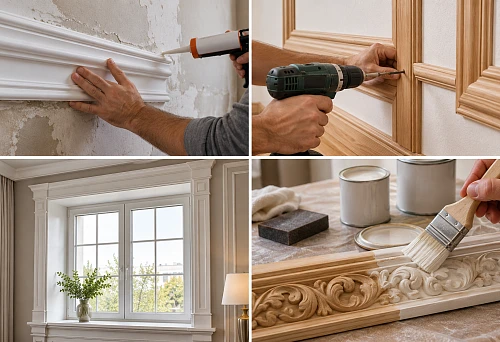
Decorative overlays and furniture mouldings
Category decorative overlays STAVROS allows using ready-made wooden decor on the fronts of cabinets, chests of drawers, and other case furniture. For the series, the overlay must have an exact position on the front.
Main scenarios:
- central overlay;
- paired decor;
- corner elements;
- upper composition;
- overlay inside the moulding frame.
If you need to buy decorative furniture overlays for a batch, first check the actual front: dimensions, handle, free margins, and finish.
Left and right door — separate lines
If the pattern is asymmetrical or mirrored, the entry “overlays — 2 pcs.” is not sufficient.
Better:
DECOR-L / N-___ / 1 pc
DECOR-R / N-___ / 1 pc
X/Y and orientation are specified on the drawing. Then the assembler does not decide by eye where to place a specific part.
Furniture moulding and trim for a framed front
STAVROS furniture molding can form front frames, decorative bands, plinth, and other linear elements of the cabinet.
For a serial facade, the linear stock must be linked to:
- Profile SKU;
- by material;
- commercial length;
- part dimensions;
- angles;
- finish;
- number of facades;
- cutting map.
Linear stock is counted as parts, not just meters
Suppose one facade requires:
- 2 × 420 mm;
- 2 × 280 mm.
The finished frame length is 1400 mm. For 500 cabinets with one such front, this is 700 m of finished profile. But the purchasing requirement is not automatically equal to 700 m. It is necessary to break down the parts by commercial lengths, take into account actual remnants, and determine whether short offcuts can be used in the next frame.
That is why the query "buy furniture moulding" for a series should be accompanied by a parts map, not just the total linear meterage.
When a cabinet does not need additional decor
Not every model benefits from overlays and mouldings. For serial production, each new decorative component creates a separate SKU, inventory stock, control, and service risk.
It is better to forgo additional decor if:
- the front already has strong milling;
- the handle itself is the main accent;
- the legs create sufficient visual character;
- the overlay interferes with grip;
- the moulding reduces the usable area of a small front;
- the decor does not create noticeable value for the end buyer;
- a new element is needed only for the sake of differentiation between nearly identical SKUs.
In that case, a simple nightstand can be stronger and at the same time cheaper to manage.
The nightstand as a collection module and SKU standardization
A nightstand rarely exists in isolation. A bedside table can be part of a bedroom together with a dresser and a wardrobe; a TV stand — in a living room with a display cabinet and a console. For the factory, this means that some external components can be standardized not on a single model, but across the entire collection.
The following can be shared:
- handle series;
- leg style;
- wood species;
- type of coating;
- decorative motif;
- molding profile.
But SKU dimensions may vary. A leg from one stylistic family may have a different height on a nightstand and a dresser. A handle from one series comes in different lengths on a compact drawer and a wide front. Unification should preserve proportions, not destroy them.
BASIC / CLASSIC / PREMIUM on a single carcass
A single carcass can be used as a platform for several visual versions.
| Line | Body | Handle | Leg | Decorative element |
|---|---|---|---|---|
| BASIC | Base | Simple | Neutral | No |
| CLASSIC | The same | Wooden | Decorative | Local molding |
| PREMIUM | Same platform | Wood with the selected finish | Decorative | Overlay + trim |
This is an example of production architecture, not ready-made STAVROS lines. The value of the approach is that the factory can change the visual package while preserving most of the carcass and internal mechanics.
How to make a nightstand part of a collection without fully copying it
A collection should repeat not all details, but visual rules. For example, the same wood species for handles and legs, one type of finish, and a common decorative motif.
At the same time:
- a nightstand can use a short handle;
- a dresser — a medium-length handle from the same series;
- a wardrobe — the long version;
- legs can share the same style but differ in height;
- molding — a single profile with different frame sizes.
This way, a unified design system does not require the same physical part on every item.
How to reduce the number of unique SKUs in a nightstand collection
The more unique handles, legs, and fasteners there are, the more expensive not only procurement becomes, but also assortment management. However, unification should be reasonable.
Good candidates:
- one handle series for several models;
- one mounting plate for several compatible legs;
- one type of glide in several cabinets;
- one decorative overlay in several facade sizes, if proportions allow;
- one moulding profile on a cabinet, chest of drawers and wardrobe.
Poor unification — using one leg on all models if it changes the cabinet height contrary to the design, or one handle on facades where the grip and scale differ.
SKU per model as a simple complexity control
You can count the number of unique purchased components per model. If a new cabinet requires five new decorative SKUs but visually differs from an existing one only by a small motif, it is worth checking whether such complexity is justified.
Sometimes it is more reasonable to keep two existing items and add one new one than to completely change the hardware package.
How to prepare a cabinet for launch in another colour version
A new colour version does not necessarily require a new construction, but the front package needs to be checked again. If the carcass is the same but the handles, legs or finish change, the BOM must clearly distinguish the versions.
Useful format:
TUMBA-04-WHITE / BOM REV 03
TUMBA-04-WALNUT / BOM REV 03
Inside, the following may differ:
- HANDLE FINISH;
- LEG MATERIAL / FINISH;
- DECOR FINISH;
- molding trim;
- body or front color.
If the geometry does not change, one design platform can be retained, but the purchasing configuration must still be separate.
When it is more advantageous to split one serial cabinet into two SKUs
Sometimes a manufacturer tries to keep one model, even though the external configuration has effectively already split into two. For example, a version on low legs and a version on high supports have a different final height, different fasteners, and a different purpose.
A separate product SKU is more reasonable if:
- the actual height changes;
- the number of legs changes;
- a different mounting plate is required;
- the handle has different drilling;
- the facade architecture changes;
- different versions must be sold and serviced simultaneously.
If one version completely replaces the old one, a new revision is sufficient. If both continue to exist in parallel, two SKUs of the finished product reduce the risk of confusion in the warehouse and in service.
For serial furniture, this is fundamental: the buyer sees two nightstands as different products, which means internal accounting must distinguish them just as unambiguously. Otherwise, production, the warehouse, and service will constantly have to reconstruct the context manually.
Prototype, samples, pilot batch, and release gate
Before placing a large order for external components, it is worth assembling one real nightstand. A prototype checks not only the design but also the interaction of all components.
The prototype is used to check:
- final height;
- drawer operation;
- position of handles;
- hole coordinates;
- legs and stability;
- mounting plates;
- access to fasteners;
- support feet;
- Plates;
- moulding frame;
- matching finishes.
If the nightstand is part of a collection, the prototype should also validate the overall design system. A handle that looks perfect on a nightstand may be too small on a dresser; a leg may be too tall for another module.
Approved sample of every visible component
After the prototype, critical details can be saved as reference standards:
- the handle;
- leg;
- coating sample;
- overlay;
- fragment of trim molding;
- assembled mounting unit.
The approved sample records the SKU, material, finish, and BOM revision. The sample must not go into current assembly as a regular stock unit.
Pilot batch before mass production
After one successful nightstand, it is too early to conclude that the entire system is ready for production. The prototype validates the product; the pilot batch validates the process.
Sequence:
prototype → pilot batch → validation → serial batch.
The size of the pilot depends on risk. In the plan, an example of 10–20 units works as an illustration, but not as a universal standard. If only the handle changes on a familiar cabinet, a smaller volume can be tested. If the supports, plates, decor, and fronts are all new at the same time, the pilot must provide enough repetitions to reveal instability.
During the pilot, the following are checked:
- consistency of cabinet height;
- alignment of holes;
- fastener kit completeness;
- L/R decor mismatches;
- assembly speed;
- packaging;
- visual match with approved sample;
- clarity of BOM for the assembly area.
If the assembler constantly asks the process engineer which plate goes with which leg, the specification is not yet ready for series production.
Release gate before main series
Before placing a large order, it is useful to formally verify that the project is stabilized.
| Inspection | Status |
|---|---|
| Body RELEASED | OK / HOLD |
| Facades RELEASED | OK / HOLD |
| HANDLE SKU approved | OK / HOLD |
| LEG SKU approved | OK / HOLD |
| PLATE / STUD / FOOT defined | OK / HOLD |
| Decor has coordinates | OK / HOLD |
| Trim has a cutting map | OK / HOLD |
| Approved samples saved | OK / HOLD |
| Pilot accepted | OK / HOLD |
| RFQ relates to the current BOM REV | OK / HOLD |
If a critical line remains on HOLD, it is too early to consider the serial order ready.
When furniture hardware samples need to be ordered
A sample is especially useful if:
- SKU is used for the first time;
- coating is critical;
- the part is repeated across the entire collection;
- there is doubt about the scale;
- the mounting assembly needs to be checked;
- a large production run is planned.
Section STAVROS samples allows physical verification of some decorative groups. For a specific handle or leg, the possibility of obtaining a separate sample or test position is best coordinated with the manager.
In the B2B process, the wording "order furniture hardware samples" should mean not just "view the product," but obtaining a part for a prototype and approved sample.
Calculation of components and reserve for the series
For individual components, a simple formula is used:
quantity per one cabinet × production plan = gross requirement.
Suppose the batch is 200 cabinets. One cabinet requires:
- 2 handles;
- 4 legs;
- 4 mounting plates;
- 4 studs;
- 4 foot pads;
- 2 decorative overlays.
Gross requirement:
| Position | Per 1 cabinet | Plan | Gross |
|---|---|---|---|
| Handles | 2 | 200 | 400 |
| Legs | 4 | 200 | 800 |
| Plates | 4 | 200 | 800 |
| Studs | 4 | 200 | 800 |
| Floor protectors | 4 | 200 | 800 |
| Overlays | 2 | 200 | 400 |
Then the formula is applied:
gross requirement − free verified stock + production reserve = net requirement.
If there are 70 handles in stock, but 20 are reserved for service, the free stock is 50, not 70.
The component reserve cannot be calculated as a single percentage
Handles, legs, fasteners, and decor have different risk levels.
The reserve amount is affected by:
- SKU cost;
- replenishment lead time;
- marriage history;
- risk of damage;
- possibility of use in the next release;
- service obligations;
- minimum packaging or batch;
- cutting — for linear mouldings.
Therefore, identical "+10% on everything" can create excess stock of expensive legs and a shortage of inexpensive fasteners.
Production and service reserves must be separated
The production reserve is consumed during release: damage, mispick, an additional unit, control assembly. The service reserve is retained after the sale of the nightstands.
Separate statuses are useful in accounting:
- FREE STOCK;
- PRODUCTION RESERVED;
- SERVICE RESERVE;
- QUARANTINE;
- CLAIM.
If service handles and legs are kept in the general remaining stock, the next production run may consume them unnoticed. A year later, the required SKU or finish will no longer be available for repair.
RFQ and purchase order: from BOM to commercial order
The RFQ must follow the BOM, but translate it into commercial demand.
| SKU | Category | Per 1 cabinet | Plan | Gross | Need date |
|---|---|---|---|---|---|
| HL-___ | Handle | 2 | 200 | 400 + reserve | ___ |
| MN-___ | Leg | 4 | 200 | 800 + reserve | ___ |
| FUR-___ | Plate | 4 | 200 | 800 + reserve | ___ |
| FUR-___ | Thrust bearing | 4 | 200 | 800 + reserve | ___ |
Additionally, specify:
- cabinet model;
- BOM revision;
- the material;
- finish;
- whether samples are needed;
- delivery address;
- reorder forecast.
The request "need legs for 200 cabinets" is too general. The same furniture type can use dozens of different supports.
When it is still too early to place an order for components
Even if the supplier has offered an attractive price, it is better not to release the production order until the basic design is stable. Otherwise, saving on lead time turns into excess inventory or rework.
An order should be placed early if:
- the fronts are still changing;
- the handle was selected only from a photo;
- the center-to-center distance has not been confirmed;
- leg not verified on a real cabinet;
- mounting plate not yet approved;
- glide not determined;
- decorative overlay has no coordinates;
- linear trim calculated only in linear meters;
- prototype not accepted;
- The RFQ refers to an old BOM revision.
In this state, procurement does not shorten the production cycle. It merely shifts the uncertainty to the warehouse.
Purchase order verification before sending to the supplier
Even a good RFQ can turn into an erroneous order if the purchase order is based on an old table. Before sending, the PO must be compared line by line with the current BOM.
Checked:
- cabinet model;
- BOM revision;
- supplier SKU;
- the material;
- finish;
- quantity;
- unit of measurement;
- need date;
- delivery address;
- special packaging requirements;
- approved sample reference.
If the RFQ was calculated for a handle with a finish, but an unfinished version accidentally appears in the PO, the error is no longer attributable to the supplier. Therefore, the technical and commercial parts of the order must reference the same configuration.
Incoming inspection, LOT, marking, and packaging
A new batch of external components must not be mixed immediately with the old warehouse stock. First, it must be received as a separate lot and checked against the agreed configuration.
Minimum incoming inspection:
- article number;
- quantity;
- the material;
- size;
- coating;
- mounting geometry;
- completeness;
- visible damage;
- compliance with the approved sample;
- batch marking.
Handle inspection
For handles, the mounting geometry, projection, and finish are especially critical. If the holes differ from the documentation, the entire batch of fronts may turn out to be incompatible.
Leg inspection
For legs, the height, mounting geometry, and surface are checked. If one support is higher than the others, the finished cabinet may wobble even with a perfect carcass.
Mounting hardware inspection
The plate and the stud must match the selected support exactly. An error in a small item can halt assembly of the entire batch, so fasteners cannot be accepted based only on the total number of boxes.
A LOT of components needs to be linked to the production batch of nightstands
For repeatable furniture, the following chain is useful:
COMPONENT LOT → PRODUCTION BATCH → FINISHED GOODS.
For example:
HANDLE LOT H-09 → TUMBA BATCH 2026-11
LEG LOT L-04 → TUMBA BATCH 2026-11
PLATE LOT P-02 → TUMBA BATCH 2026-11
If a claim later arises regarding the handle finish or the geometry of the legs, the factory will be able to determine which finished products received a specific batch of components.
Without this link, the entire sales volume has to be checked, because physical traceability is lost.
How to label components for a serial nightstand
Labeling must link the physical box to the specification. For external components, a simple format is sufficient:
MODEL / COMPONENT CODE / SUPPLIER SKU / FINISH / LOT / QTY.
Example:
TUMBA-04 / H01 / HL-___ / FINISH-02 / LOT-H09 / QTY-100
TUMBA-04 / L01 / MN-___ / OAK / LOT-L04 / QTY-100
TUMBA-04 / P01 / FUR-___ / LOT-P02 / QTY-100
If one overlay is left and the other is right, the labeling must indicate this. If the handles are the same model but different sizes, SIZE also becomes part of the label.
The internal code is convenient for the warehouse, the supplier SKU is for reordering. It is better to store both.
The packaging of external components also affects assembly
If handles arrive in quantities of 100 without separation by finish, and legs arrive in boxes with different...
What to do with leftovers after completing a series
After the last batch, handles, legs, and fasteners may remain in stock. They need to be classified.
- service reserve;
- free remainder for another active model;
- remainder for the next production run;
- archived component;
- surplus that requires a separate decision.
If one leg is used in a nightstand and a dresser, the remainder may be useful in another program. If the finish is unique to a discontinued model, it is no longer free stock.
How to use the actual consumption of the next print run
After release, it is useful to compare plan vs actual.
HANDLES:
ORDERED 420
USED 400
SCRAP / DAMAGE 3
SERVICE RESERVE 10
FREE STOCK 7

LEGS:
ORDERED 820
USED 800
SCRAP / DAMAGE 5
SERVICE RESERVE 8
FREE STOCK 7
The next reserve can be built on your own data rather than a universal percentage. After several series, the factory obtains real statistics for each group of components.
Procurement department checklist before re-RFQ
- Check the active BOM revision.
- Verify the production plan.
- Calculate the free stock without SERVICE RESERVE.
- Check open CLAIMs.
- Verify the last accepted lot.
- Ensure the PRIMARY SKU has not been replaced.
- Check the approved alternative.
- Request the current price.
- Request the current lead time.
- Verify the delivery address and schedule.
This way, the furniture component supplier receives an accurate request, and procurement controls not only the price but also the product identity.
What should remain with the factory after launching a model
After a successful production run, all critical information should remain with the furniture manufacturer, not only in correspondence with the supplier's manager.
Minimum archive:
- RELEASED BOM;
- drawings of the carcass and fronts;
- list of supplier SKUs;
- approved samples;
- golden sample or photo documentation;
- cutting maps;
- change request history;
- latest accepted lots;
- as-built BOM;
- service reserve;
- supplier contacts.
This way, a new batch a year later begins with verifying that the data is up to date, rather than reconstructing an old nightstand from a photograph.
What to check before closing a furniture series
If a nightstand is discontinued, the documentation is not deleted. Closing a series means moving it to archived status.
They preserve:
- final BOM;
- the latest RELEASED revision;
- latest accepted lots;
- service reserve;
- approved samples;
- supplier contacts;
- replacement history;
- the actual configuration of sold batches.
If the model returns two years later or a client requests a leg replacement, this archive saves weeks of searching.
Change and spare item management
A single model may be produced in several colors, with different legs or handles. In that case, the internal code must unambiguously lead to a component set.
For example:
TUMBA-04-LIGHT
  HANDLE HL-___ / FINISH-01
  LEG MN-___ / OAK
  DECOR N-___ / RAW

TUMBA-04-DARK
  HANDLE HL-___ / FINISH-02
  LEG MN-___ / BEECH / FINISH-02
  DECOR N-___ / FINISH-02
The phrase "the same cabinet, just dark" is insufficient for production if the actual SKUs or finishes change.
Change request for replacing a handle, leg, or hardware
After a cabinet is approved, an external component cannot be changed by simply editing Excel. A change request is required.
| Field | What to fix |
|---|---|
| Old SKU | Current position |
| New SKU | New item |
| Reason | Lead time, price, unavailability, design |
| Impact on the cabinet | Base, height, fastening |
| Impact on the facade | Drilling, coordinates, appearance |
| Impact on inventory | Old item stock balance |
| Effective batch | Effective from which production run |
| approval | Designer / engineer / product |
If the new leg is 15 mm taller, the actual height of the cabinet changes. If the new handle has a different center-to-center distance, the front changes. If the plate is incompatible with the old support, the mounting assembly changes.
Approved alternative: the backup position must be verified in advance
For a critical handle or leg, it is useful to have a backup option, but it must exist as a verified configuration.
Structure:
PRIMARY SKU → APPROVED ALTERNATIVE → conditions of use.
For a handle, the conditions may include:
- the same center-to-center distance;
- compatible hole;
- suitable overhang;
- a coordinated finish.
For a leg:
- same height;
- compatible mounting system;
- proven stability;
- suitable scale.
If an alternative requires modifying the front or the carcass, it is no longer a quick substitute. It is a new revision of the model.
How to prepare a repeatable master card for an external component
For each approved handle, leg, overlay, or mounting part, a master card is useful.
Minimum fields:
- internal code;
- supplier SKU;
- name;
- category;
- the material;
- size;
- finish;
- clean URL;
- drawing;
- approved sample ID;
- furniture models where the component is allowed;
- approved alternative;
- last check date.
This is how cabinet furniture components turn from a set of links into a managed library.
Economics of the external package for a single cabinet
For a factory, the price of the carcass is not the only thing that matters. The external package can significantly change the cost of the product, especially if wooden legs, separate plates, handles with a ready-made finish, and decorative elements are used.
It is useful to calculate a separate external package:
HANDLE × QTY
+ LEG × QTY
+ PLATE × QTY
+ STUD × QTY
+ FOOT × QTY
+ DECOR × QTY
+ MLD / cutting
+ finish / assembly, if applicable
= cost of the external package for a single cabinet
This shows which visual level of furniture creates the main increase in cost. This is especially useful when comparing BASIC / CLASSIC / PREMIUM.
The price of a leg without the mounting unit is an incomplete price
If one support is cheaper but requires a more expensive plate, additional preparation of the bottom, or non-standard fasteners, the final unit may end up more expensive.
Compare:
- LEG;
- STUD;
- PLATE;
- FOOT;
- preparation of the carcass;
- assembly time.
Only after this does the commercial department see the full cost of the support per one nightstand.
The price of the handle and the cost of changing the drilling are different scales
If the new handle is 100 rubles cheaper but has a different center-to-center distance, replacing it on already manufactured fronts may be economically pointless. Therefore, technical compatibility is checked before comparing the price.
Practical scenarios: bedside table, TV stand, and combined fronts
For a bedside table, the final height is especially sensitive. The body, leg, and top part must form the level specified in the collection. You cannot choose a support based only on a photo.
In the prototype, check:
- overall height;
- position of the top drawer;
- access to the handle;
- stability;
- indentation of the legs from the edge;
- foot plate;
- compatibility with the bed of the target collection.
If the leg changes, the check is repeated. Even a small difference in height can change the visual relationship between the cabinet and the bed.
Edge case: TV cabinet
A TV cabinet usually has a long body and wide fronts. Here, a bar handle may be more logical than a compact knob, and the number of supports depends on the structural design and the rigidity of the body.
The manufacturer must check:
- the length of the fronts;
- the number of drawers or doors;
- the center-to-center distance of the handles;
- the location of the central supports, if any;
- the height of the cabinet relative to the screen area;
- the visibility of the legs from the side;
- cable routing and technical openings.
This model can use the same handle series as the bedside table, but in a different size. The legs follow the same styling, but with a different mounting scenario.
Edge case: a unit with drawers and a door
A combined front complicates the BOM. The handle on the drawer and the handle on the door may be from the same series but have different positions. If the door has an overlay and the drawers do not, the specification must distinguish between both types of fronts.
For example:
FRONT-DRAWER-A / HANDLE H01
FRONT-DRAWER-B / HANDLE H01
DOOR-R / HANDLE H02 / DECOR D01
If all three items are listed as “fronts — 3 pcs.”, the assembly area receives too little information.
Edge case: a unit without handles
Sometimes the model uses a push-to-open mechanism, a profile, or another mechanism, and a separate furniture handle is not needed. In that case, handles should not be added to the BOM just for the sake of unification with the collection.
But this does not mean that the external configuration becomes simpler. It is necessary to specify:
- opening type;
- mechanism;
- gaps;
- milling or profile;
- compatibility with the front;
- user access.
This way, the article does not push toward buying a handle where the design does not provide for one.
How to decide between coated and uncoated handles
If the factory wants a ready-made configuration from the supplier, it is more convenient to use a handle with an already defined finish. If the entire collection is painted or tinted in-house, an unfinished handle can provide more control.
Compare:
- who is responsible for the final color;
- whether a unified finish with the legs is needed;
- whether there is an in-house painting area;
- what the lead time is for the ready-made item;
- whether a coating reference sample needs to be stored;
- how to repeat an order.
A coated handle and an uncoated handle are two different procurement configurations, even if the model geometry is identical.
How to match the finish of handles and legs
If both parts must look like a single system, a verbal color name is not enough. An oak handle and an oak leg may differ in shade after finishing.
For the series, it is useful to:
- assemble a physical board;
- compare parts under project lighting;
- record an approved sample;
- specify the finish code;
- do not mix different lots before visual inspection.
If contrast is intentionally required, it should also be part of the design standard.
Organization of assembly, claims, and production transfer
The warehouse can supply production in two ways.
Kit per item
All external components of a specific cabinet are gathered into one kit:
KIT TUMBA-04:
2 × HANDLE
4 × LEG
4 × PLATE
4 × STUD
4 × FOOT
2 × DECOR
Plus — less mis-sorting at assembly. Minus — an additional kitting operation in the warehouse.
Batch issue
For a batch of 50 cabinets, 100 handles, 200 legs, 200 plates, and so on are issued at once. This is faster for a simple mass flow, but requires good discipline at the section.
Which method is better depends on the complexity of the model. The more similar SKUs and L/R parts there are, the more useful the kit is.
How to prepare a claim for an external component
A claim must be tied to a specific item, not to a wording like "the legs are bad."
Collect:
- MODEL;
- SKU;
- LOT;
- number of problematic units;
- description of the defect;
- photographs;
- measurements, if the problem is geometric;
- a reference to the approved sample or drawing;
- production batch of cabinets;
- status: HOLD / SORT / CLAIM.
This makes it possible to quickly distinguish an isolated defect from a systematic batch deviation.
How to prepare a serial cabinet for transfer to another workshop
A strong model should not exist only in the head of one process engineer. If production is transferred to another site, the documentation must make it possible to reproduce the exterior package without searching for "similar" parts.
Need to preserve:
- BOM;
- drawings of the carcass and fronts;
- handle SKUs;
- SKU of legs and fasteners;
- installation coordinates;
- approved samples;
- cutting maps for moldings;
- golden sample or precise photo documentation;
- change request history;
- as-built BOM.
A new workshop may use a different internal technology, but the final configuration must remain the same if the project has not been changed.
How a manufacturer of nightstands can work with STAVROS
The workflow can be structured as follows:
- Determine the nightstand model and BOM.
- open the STAVROS catalog.
- Select specific SKUs for handles, legs, fasteners, and decor.
- Check the drawings and catalogs in the section downloads.
- Order critical items via Product samples, if necessary.
- Assemble a prototype.
- Approve approved samples.
- Calculate the pilot and main production run.
- Prepare the RFQ.
- Use the page for furniture manufacturers as the main B2B contact.
On the current STAVROS page for manufacturers, special prices, a personal manager, deliveries across Russia, and work with production orders are offered. These conditions do not replace the technical specification: the supplier still needs exact SKUs and volume.
What to provide for calculating the batch
- cabinet model;
- production run;
- handle SKUs;
- SKU of legs;
- SKU of plates, studs, and glides;
- decor SKU;
- material and finish;
- need for samples;
- first need date;
- reorder forecast.
Thus, the request "get a commercial quote" refers to a specific serial configuration.
When a general overview of furniture hardware is needed
STAVROS already has a separate material about furniture hardware from the manufacturer. It helps to navigate the groups of components as a whole.
The current article addresses a narrower question: how to standardize a single serial drawer unit, link the handle, leg, fasteners, and decor to the carcass, calculate the batch, and reproduce it again.
If the reader needs an overview of all types of hardware, it is better to go to the general material. If a production BOM for the drawer unit is needed, stay here.
Typical mistakes when configuring a serial drawer unit
Error: the leg and the plate are entered as one line
Cause: on the prototype they are perceived as a single set. Consequence: the warehouse receives the legs but does not receive the plates. Prevention: separate SKUs in the BOM.
Error: the handle is selected after drilling
Cause: hardware design is postponed until the final stage. Consequence: the center-to-center distance does not match the finished fronts. Prevention: approve the handle before launching the front.
Error: the leg height is not included in the overall dimensions
Cause: the designer only accounts for the carcass. Consequence: the nightstand or TV unit gets an incorrect actual height. Prevention: store the overall dimensions together with the LEG SKU.
Error: the foot pad is forgotten in the packaging
Cause: the part seems like a consumable. Consequence: the finished product is incomplete. Prevention: FOOT SKU and completeness control.
Error: the overlay is placed "in the center" without coordinates
Cause: the prototype is assembled by one craftsman. Consequence: the production run gets different decor positions. Prevention: X/Y/orientation.
Error: molding is calculated only in meters
Cause: the estimate does not account for cutting. Consequence: there are not enough strips for the actual parts. Prevention: cutting map for the entire run.
Error: new batch is mixed with the old one
Cause: identical SKU looks the same. Consequence: LOT traceability is lost. Prevention: quarantine until acceptance.
Error: service reserve is consumed by production
Cause: the entire remaining stock has a single status. Consequence: after a year there is no part for repair. Prevention: a separate SERVICE RESERVE.
FAQ: components for cabinet production
What components are needed for cabinet production?
The minimum set depends on the design. Usually there is a carcass, back panel, fronts or drawers, handles, legs or supports, mounting hardware, and, if necessary, decorative overlays or moulding. Each separately purchased component must have its own BOM line.
What is the cabinet carcass made of?
In mass-produced cabinet furniture, laminated chipboard, MDF, or a combined construction is often used. But the carcass material is selected separately from the front and external hardware. For production, thickness, decor, edge banding, and compatibility with fasteners are important.
How to choose handles for a cabinet?
First determine the number and dimensions of the fronts, then select the specific SKU, check the center-to-center distance or mounting point, the overhang, and the position on the front. Before drilling, it is useful to assemble a test front.
Which legs are suitable for a bedside cabinet?
Those that provide the required final height, are compatible with the cabinet body for installation, and match the collection's design. The choice cannot be made on shape alone: height, mounting area, and associated hardware are critical.
How to choose the height of furniture supports?
You should start from the design height of the finished cabinet. Subtract the body and the top part if it is separate. Then check the actual prototype, because visual scale and access to the handle cannot be fully assessed with a formula alone.
How are wooden legs attached to the carcass?
The method depends on the specific leg and the cabinet design. A stud, mounting plate, or another agreed assembly may be used. The manufacturer must record the LEG SKU and compatible FUR SKUs together, rather than selecting fasteners during assembly.
Are floor glides needed?
Not always. It depends on the support, the floor, and the furniture design. If a glide is provided, it must have its own part number and quantity in the BOM so that completeness is checked before packaging.
What does quality furniture hardware mean?
For a factory, it means compliance with the drawing, repeatable geometry, a stable SKU, compatible fasteners, an agreed finish, and the ability to reorder the same configuration.
How to calculate the number of components per series?
The quantity per one cabinet is multiplied by the production plan. Then the free verified balance is subtracted and a justified reserve is added. The service stock is calculated separately.
What reserve should be kept in stock?
There is no universal percentage. The reserve depends on cost, reorder lead time, damage statistics, minimum batch, and whether the component can be used in the next production run or another model.
Where to buy components for cabinet production?
STAVROS offers wooden handles, furniture legs and supports, hardware for legs and handles, decorative overlays, and furniture mouldings. For a B2B order, it is better to prepare a BOM and RFQ with specific SKUs in advance.
Can one series of handles be used on a cabinet, chest of drawers, and wardrobe?
Yes, if the geometry and scale are suitable. It is often reasonable to use one design series but different handle sizes for fronts of different widths and heights.
Should an approved sample of the leg be kept?
If the leg is visible and critical to the model height, a physical reference is useful. It is linked to the BOM revision, material, and finish and is not consumed in regular assembly.
When is it risky to change a component supplier?
If the new component has different mounting geometry, height, material, or finish. Before changing the supplier, it is better to test the alternative on a prototype and accept it as a separate approved configuration.
Final production scheme for the nightstand
The entire process can be reduced to the following sequence:
- Break down the nightstand into carcass, fronts, external hardware, and decor.
- Assemble the BOM for one unit.
- Approve the material for the carcass and fronts.
- Select handles and finalize drilling.
- Select legs and the complete mounting assembly.
- Add glides if they are provided.
- Select overlays and trim if needed.
- Assemble a prototype.
- Save approved samples.
- Run a pilot batch.
- Close the release gate.
- Calculate gross requirement.
- Subtract available stock.
- Add production reserve.
- Separate the service reserve.
- Prepare the RFQ.
- Accept the delivery as a separate LOT.
- Link LOT to production batch.
- Save as-built BOM.
- Repeat the order by SKU and configuration, not by photo.
This is how components for the production of nightstands stop being a set of unrelated items. The carcass, front, handle, leg, plate, stud, glide and decor become one reproducible system. This is exactly what allows a furniture factory to produce dozens and hundreds of identical nightstands without the model gradually drifting between batches.
After the specification is approved, the manufacturer can send STAVROS the exact SKUs, quantities and lead times for a commercial quote. The fewer phrases like "a similar handle" or "the same leg" there are in the request, the easier it is to turn the design into stable serial purchasing.
What to hand over to the supplier in the final package
After all checks, the procurement department should be left with a short but unambiguous package: the nightstand model, the current BOM revision, the supplier SKU of each external item, material and finish, quantity per unit, run size, net requirement, approved sample reference and need date. For linear moulding, a cutting map is added; for overlays, coordinates; for legs, the complete mounting assembly; for handles, the drilling geometry.
If the supplier receives such a set, they do not have to reconstruct the project from photos and correspondence. And the factory can check the commercial offer line by line: whether the price refers to the right handle, whether the leg is the same height, whether the fasteners are included and whether the quantity matches the production programme.