Article Contents:
- Why furniture is placed on wooden legs at all
- What are wooden furniture legs and how they differ from ordinary blanks
- Key characteristics of wooden furniture legs
- When old supports really should be replaced
- What wooden furniture legs can you buy
- Comparison of options: what to choose for your task
- How to choose the height of furniture legs
- How the shape of legs changes the style of furniture
- Legs without coating or legs with coating: what to choose
- How to choose legs for a chest of drawers
- How to choose legs for a cabinet
- How to choose legs for a console
- Practical choice for different customer scenarios
- Need to quickly replace old legs
- Need to update furniture after renovation
- Need to make custom furniture
- Need to assemble designer furniture
- Need to choose legs for a classic interior
- Need to choose legs for a modern interior
- Choosing only by a beautiful photo
- Not considering the body height
- Buying one leg instead of a set
- Not checking the mounting area
- Confusing decorativeness with durability
- Not matching legs with handles and facade
- Buying coated legs for future painting
- Taking unpainted legs without a finishing plan
- Not distinguishing furniture legs from other wooden parts
- Not specifying parameters before ordering
- Which furniture legs are best to buy for a dresser?
- Can you buy wooden furniture legs without coating?
- When is it better to choose legs with coating?
- Which legs are suitable for a bedside table?
- Which legs to choose for a console?
- What to buy together with furniture legs?
- Can construction elements be used as part of a furniture support?
- How to know if the leg is suitable in height?
- Do I need to replace all legs at once?
- Are wooden legs suitable for old furniture?
- How to match legs to the color of furniture?
- How are wooden legs better than random blanks?
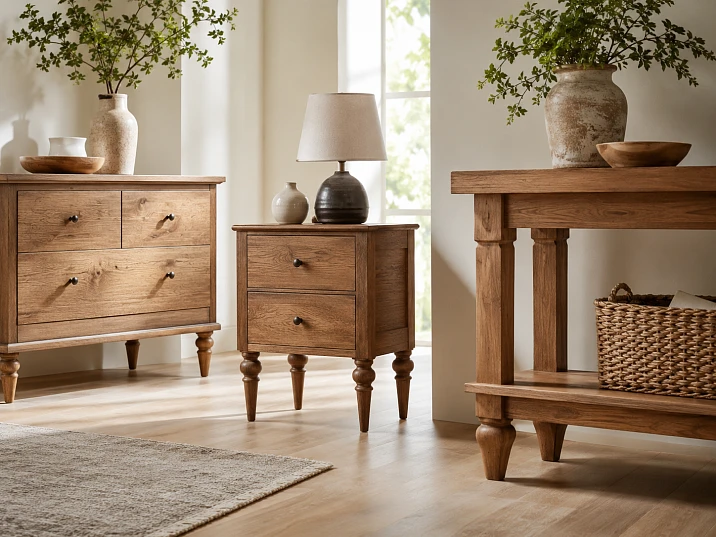
Buying furniture legs seems like a simple task only at first glance. In reality, it is the supports that often determine whether a dresser looks cohesive, a nightstand stable, and a console expensive and proportional. The same piece of furniture with low, high, straight, turned, or carved legs is perceived completely differently: the height of the body changes, lightness appears, the facade becomes more expressive, and an old item can get a second life without a complete overhaul.
Wooden furniture legs are especially convenient for those who want not just to replace a broken support, but to choose a part that matches the furniture style. They are used for dressers, bedside and TV cabinets, consoles, ottomans, armchairs, sofas, small cabinets, custom items, and furniture for individual finishing. If the body is still sturdy but looks heavy, low, or outdated, the right supports help change the silhouette without buying new furniture.
At STAVROS you can buy solid wood furniture legs and choose an option for a specific task: for quick replacement, DIY painting, facade renovation, assembling new furniture, or creating a custom piece. It is only important to understand in advance what height is needed, what shape suits the body, whether a coating is required, what accompanying elements will be needed, and whether the chosen leg will be random in style.
This article will help you go through the entire selection process: from understanding the role of legs in furniture to purchasing a set, fittings, and materials for installation. We'll break down which wooden furniture legs are suitable for a chest of drawers, bedside table, and console, how unpainted and finished options with coating differ, how to avoid mistakes with proportions, what to buy together, and which parameters to check before ordering.

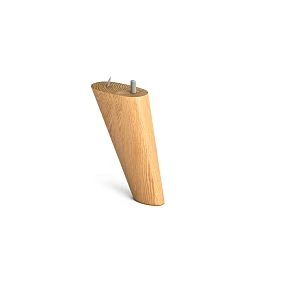
Why furniture is placed on wooden legs at all
Furniture legs perform not only a supporting function. They lift the body off the floor, create distance to the bottom line of the facade, set the character of the item, and influence how easily the furniture is perceived in the room. A chest of drawers without expressive legs often looks like a heavy rectangular block. The same body on neat wooden legs becomes more airy, easier to combine with the interior, and stops pressing on the space.
For cabinets and consoles, the role of supports is even more noticeable. A bedside table on low legs seems stable and calm. A TV cabinet on elongated supports looks lighter, especially if there is a gap underneath. A console on shaped or turned legs can become an independent decorative element in the hallway, living room, or bedroom. For the buyer, this means a simple thing: legs should be chosen not only based on the principle of "fit in size," but also on how they will visually change the furniture.
Wood adds warmth and tactility to furniture. Even a simple shape looks softer if it is made of solid wood, rather than appearing as a random plastic or metal insert. Wooden supports can be combined with facades, handles, decorative overlays, tabletops, and other details. This is especially useful when updating old furniture, when you need to assemble not scattered parts but a cohesive image.
There is also a practical aspect. If furniture stands directly on the floor, the lower part of the body more often suffers from wet cleaning, vacuum cleaner impacts, dirt, and accidental scratches. Legs lift the body higher, simplify cleaning, and help visually separate the furniture from the floor. Of course, stability and safety depend on the body design, fastening, and load, so before ordering, it is worth carefully checking the parameters of the selected model and the installation method.




What are wooden furniture legs and how do they differ from ordinary blanks
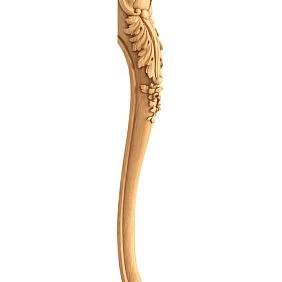
Wooden furniture legs are ready-made support elements for furniture, selected by height, shape, style, material, type of finish, and purpose. They are used where the body needs a visible support: for chests of drawers, bedside tables, consoles, ottomans, armchairs, sofas, small cabinets, and author's furniture structures. The main difference from a random wooden blank is that a furniture leg is initially conceived as a furniture element: it has a shape, proportion, decorative logic, and an intended application scenario.
An ordinary blank may be suitable in material but not always suitable in scale. It may turn out to be too rough for a bedside table, too thin for a chest of drawers, too simple for a classic facade, or too decorative for a modern body. A furniture leg solves this problem in advance: the buyer chooses not just a piece of wood, but a ready-made part with a clear role in the furniture structure.
Another important difference is aesthetics. Furniture legs have a profile, line, thickening, tapering, carved or turned pattern, and geometry. Even if the shape is restrained, it works for the overall silhouette. The leg can continue the vertical of the facade, support a decorative handle, echo the door frame, or soften the strict geometry of the body. This is the value of a wooden support: it not only holds the furniture but helps it look complete.
For practical selection, it is important not to confuse legs with decorative inserts, balusters, brackets, or construction kit elements. All these parts can be wooden and visually similar, but their purpose is different. A leg supports the furniture body. An insert decorates or connects parts. A bracket supports a shelf or ledge. A baluster relates to railings and staircase solutions. Therefore, before purchasing, you need to look not only at the shape but also at the purpose of the product.
Our factory also produces:

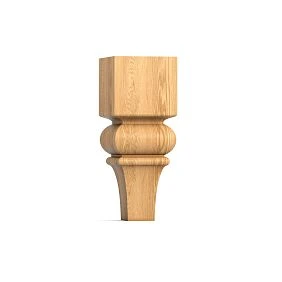
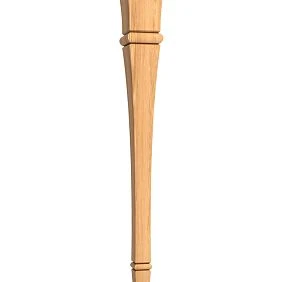
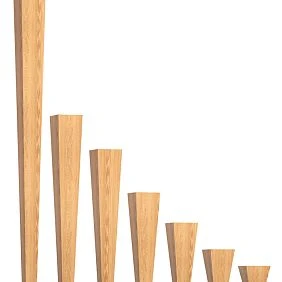

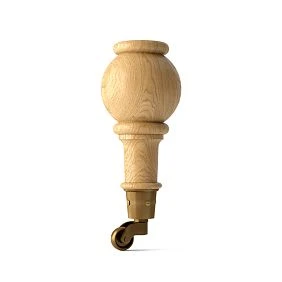
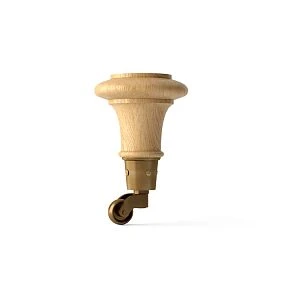
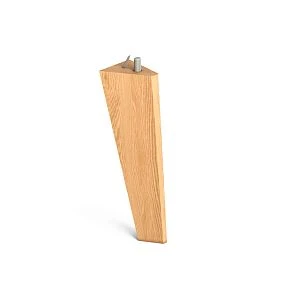
Key characteristics of wooden furniture legs
For the product group of furniture legs, not only the appearance and shape are important. The buyer needs to understand what furniture the support is suitable for, whether there is a coating, whether self-finishing is required, what it can be combined with, and what parameters need to be clarified before ordering. STAVROS offers a strong assortment of wooden legs and supports: more than 130 models, among which you can choose a solution for different styles, bodies, and furniture renovation scenarios.
| Parameter | What is important for the buyer |
|---|---|
| Product type | Wooden furniture legs and supports for dressers, cabinets, consoles, upholstered furniture, and custom furniture solutions |
| Main purpose | Raise the body, replace old supports, change the furniture silhouette, add a decorative accent |
| Material | Wood / solid wood; exact parameters of a specific model should be checked in the product card |
| Finishing options | There are unpainted legs and legs with coating; exact options depend on the specific product card |
| Suitable scenarios | Furniture repair, facade renovation, custom furniture making, selection of supports for interior |
| Related products | Hardware, mounting elements, finishing materials, furniture handles, construction kit components |
| Important parameters before ordering | Height, shape, mounting area, installation method, color, material, compatibility with the body |
| Main section for selection | https://www.stavros.ru/products/izdeliya-iz-massiva/nozhki-mebelnye/ |
This table does not replace the product card. It helps to quickly understand where to start choosing. Different models may have different heights, profiles, top shapes, decorative features, coating presence, and purpose. Therefore, before ordering, it is better to open the card of the selected leg, check the parameters, and assess whether it will fit a specific body.
You should be especially careful when checking the height and mounting method. Even a beautiful leg will not give a good result if the body is not designed for such a fit or if the mounting area is too weak. For old furniture, it is sometimes necessary to additionally reinforce the lower part of the body. For new furniture, it is better to consider the legs at the design stage so that the height, width, depth, and overall load are coordinated in advance.
Get Consultation
When old supports really should be replaced
Old legs ruin furniture not only when they are broken. Often the problem is more subtle: the furniture is still functional, but visually outdated. For example, a chest of drawers stands on short, massive supports and looks heavy. A bedside table looks too low next to a new bed. A console gets lost in the hallway because its legs don't match the style of the mirror, handles, or decorative details. In such cases, replacing the legs becomes not a repair, but a way to refresh the entire piece.
The first obvious reason is damage. If a leg is cracked, loose, deformed, or no longer holds the body stable, it needs to be replaced. But simply installing a similar part is often not enough. It's better to immediately assess the entire set: are the supports the same height, is the body warped, is it necessary to replace all four legs, is the old attachment method suitable. Buying one random part may temporarily fix the problem, but visually the furniture will still look like it's assembled from different pieces.
The second reason is changing the height. Sometimes furniture is uncomfortable not because of the front or drawers, but because of its positioning. A chest is too low, a cabinet sits almost on the floor, a console doesn't align with the mirror or wall. New legs help raise the body, make cleaning easier, free up the bottom line, and visually lighten the piece.
The third reason is a style change. Old furniture may have a good body but look outdated due to its supports. Straight wooden legs make the silhouette calmer and closer to minimalist interiors. Carved and turned shapes help enhance classic, neoclassical, Provence, or interiors with decorative details. Shaped legs add character to furniture, especially if the fronts are simple enough.
The fourth reason is updating furniture along with handles and trim. If you're repainting the front, changing hardware, and adding new details, old legs can clash with the overall concept. In such a situation, it's better to immediately select not only supports but also wooden furniture handles for updating the front. Then the chest, cabinet, or console gets a cohesive look: legs support the bottom, handles work on the front, and the trim ties everything together into one piece.
Which wooden furniture legs can you buy
Conventionally, furniture legs can be divided by three characteristics: finish, shape, and application scenario. The first question is whether you need ready-made supports with a coating or prefer a version for DIY finishing. The second is which shape suits the body: straight, turned, carved, shaped, geometric. The third is what furniture the legs are for: a dresser, cabinet, console, upholstered furniture, or a custom design.
If you need to quickly replace supports and immediately install them on furniture, it's more convenient to look at furniture legs with finishThis option works when the color and finish are already satisfactory, and separate painting is not planned. It is practical for repairs, updating finished furniture, or quickly replacing old supports.
If the furniture will be repainted, it is more convenient to choose Unpainted wooden furniture legsThis option offers more freedom: the legs can be prepared to match the color of the body, front, tabletop, handles, or other wooden parts. This is especially useful for custom furniture makeovers when the buyer wants not just to replace the supports, but to achieve a uniform shade and texture.
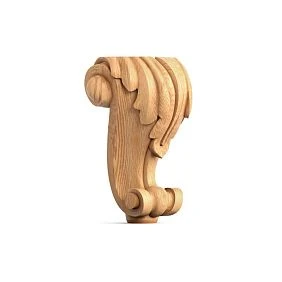
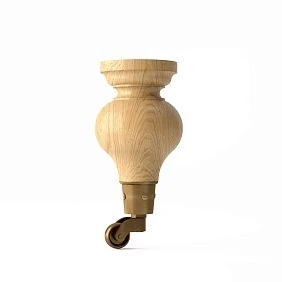
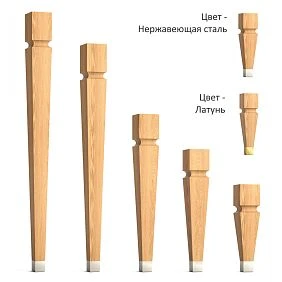
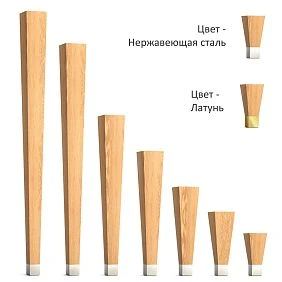
In terms of shape, legs can be calm or decorative. Straight supports are better suited for furniture where a strict silhouette needs to be maintained. They do not clash with fronts, work well in modern interiors, and are suitable for cabinets, dressers, and consoles without complex decor. Turned legs are softer: they add roundness, make the furniture warmer, and pair well with wooden handles. Carved and figured options are more noticeable. They are chosen when the leg should not be a hidden support, but a visible part of the design.
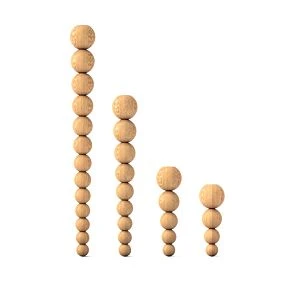
For custom solutions, you can look not only at ready-made legs, but also at wooden construction kit elements for furniture supports. They help assemble a more expressive support, add decorative inserts, separators, or elements for posts and furniture components. This approach is interesting for designers, carpenters, and those who want not a standard replacement but a custom piece.
Comparison of options: what to choose for your task
Before purchasing, it is useful not just to look at photos but to compare options based on the task. The same leg may be good for a console but look too thin under a massive dresser. A ready-made coating is convenient for quick installation but may not be suitable if the entire body is to be repainted. A decorative shape enhances furniture but can overwhelm a simple interior.
| Option | When to choose | What to check before ordering |
|---|---|---|
| Unpainted legs | The furniture will be painted, tinted, or adjusted to match an existing color | Material, shape, surface preparation, compatibility with the chosen finish |
| Legs with coating | Need to quickly replace supports without separate painting | Color, finish, match with the body and other details |
| Straight supports | Need a calm, modern silhouette | Height, thickness, attachment area, overall body scale |
| Turned legs | Need to add a soft decorative accent | Combination with handles, fronts, rounded details |
| Carved or shaped legs | Furniture should look expressive, closer to classic or neoclassical | Will the form conflict with the front, body, and finish |
| Construction kit elements | Need a custom support or decorative furniture node | Compatibility of parts, overall size, assembly and attachment method |
The safest approach is to first define the task, and then choose the form. If the buyer has an old chest of drawers with simple fronts, you can enhance its character with shaped legs and new handles. If the cabinet already has an active front, it's better not to add too many decorative lines at the bottom. If the console should become an accent in the hallway, the legs can be chosen more boldly, because the support will be clearly visible.
How to choose the height of furniture legs
The height of the legs changes furniture more than it seems. Low supports make the body stable and grounded. Medium ones maintain a balance between practicality and lightness. High ones visually elongate the furniture and create a gap, due to which the chest of drawers or cabinet no longer looks heavy. A mistake in height is immediately noticeable: the furniture can become unstable, uncomfortable, or disproportionate.
For a chest of drawers, a height is often chosen so that the body does not seem detached from the floor, but also does not stand as a "solid block." If the chest of drawers is wide and massive, overly thin high legs can look out of place. It is better to look for supports that visually bear the weight: sufficient thickness, calm shape, clear attachment area. For a narrow chest of drawers, more lightness can be allowed, especially if the furniture is in a bedroom or hallway.
For a cabinet, context is important. A bedside cabinet should correspond to the height of the bed. A TV cabinet should correspond to the screen level, outlets, equipment, and the visual line of the wall. Legs can lift the body and make cleaning easier, but they should not disrupt functionality. If the cabinet is used for heavy equipment, special attention should be paid to checking the body structure and the fastening area.
A console is more often perceived as a decorative item, so the height of the legs here works for the image. High and expressive legs make the console lighter and slimmer. Low ones turn it into more stable, calm furniture. If the console is placed under a mirror, it's important to evaluate not only the height of the furniture itself, but also the overall composition of the wall: the mirror, light, decor, distance to the floor, free space on the sides.
There is a simple rule: the heavier the body, the more carefully you need to consider the scale of the support. A small leg under a large dresser looks weak, even if it is structurally suitable. A too massive leg under a light cabinet makes the furniture coarser. Therefore, before buying, it is useful to mentally divide the furniture into two parts: the body and the supports. They should be from the same visual logic.
How the shape of legs changes the style of furniture
The shape of a leg is not just a decorative detail. It sets the language of the furniture. A straight support speaks of calmness, a turned one of softness and craft expressiveness, a carved one of classicism and decorativeness, a geometric one of a restrained modern approach. If the shape is chosen precisely, the furniture looks as if it was conceived as a whole. If randomly, the legs seem alien.
Straight wooden legs are suitable for those who do not want to overload furniture. They work well with smooth facades, minimalist handles, simple tabletops, and modern interiors. This option is appropriate for TV cabinets, bedroom dressers, hallway furniture modules, and consoles with clean lines. Straight supports do not conflict with the body, so they help refresh furniture without a sharp style change.
Turned legs add volume and a soft relief. They are clearly visible on furniture with wooden parts, frame facades, rounded handles, and warm finishes. They do not necessarily make the piece "antique." With the right selection, a turned shape can look modern if it is not too overloaded and matches the proportions of the body.
Carved legs are chosen when the support should become part of the decor. This is a solution for furniture where the bottom is not hidden and is clearly visible: consoles, benches, cabinets, dressers, decorative items for living rooms and hallways. The carved form requires a more careful environment. If the facade is already rich with carving, panels, or overlays, the legs should support it, not compete. If the facade is simple, carved supports can become the main decoration.
Figurative and geometric supports help work with custom furniture. They are suitable for designers, craftsmen, and those who want to assemble a piece with an individual character. In such projects, you can combine furniture legs with decorative details, handles, and construction kit elements. The main thing is to determine the role of each detail in advance: what carries the body, what decorates the facade, what connects the form, and what simply adds extra noise.
Legs without coating or legs with coating: what to choose
The choice between unfinished legs and ready-made legs with coating depends on what stage the furniture is at. If the body is already ready, the color is satisfactory, and the task is to quickly replace the supports, coated legs save time. There is no need to separately select paint, wait for drying, or check finish compatibility. It is enough to choose the appropriate shape, check the parameters, and install the supports considering the furniture's construction.
If the furniture will be repainted or is being made for a project, unpainted legs give more control. They can be finished together with the body, matching the shade to facades, handles, countertops, floors, or other wooden elements. For custom reworking, this is especially important: different finishes on legs and body often reveal a random repair, while a unified finish makes the furniture cohesive.
The unfinished option is also convenient when the buyer wants to control the degree of decorativeness themselves. The same profile can look different under enamel, clear varnish, stain, or other finish. But the exact finishing options should always be checked on the product card and coordinated with the task. You should not buy legs for self-finishing if you do not understand how and with what they will be coated.
Legs with coating are suitable for a more straightforward route: chose a model, checked the parameters, ordered, installed. They are good for furniture where no major rework is planned. For example, old supports are damaged, but the body remains the same. Or you need to quickly tidy up a cabinet after repairs. Or the buyer wants to replace plastic supports with wooden ones but does not want to deal with painting.
In both cases, it is important not to choose only by photo. The photo helps to understand the shape but does not answer all questions. You need to look at the height, dimensions, material, presence of coating, purpose, compatibility with the body, and installation conditions. If in doubt, it is better to clarify the parameters with a STAVROS manager before ordering, especially when it comes not to a simple replacement but to furniture rework.
How to choose legs for a chest of drawers
A dresser is one of the most common items to update. It occupies a prominent place in the bedroom, living room, hallway, or children's room, so its lower part greatly affects the overall look. If the legs are poorly chosen, the dresser may appear heavy, grounded, or stylistically out of place. If the supports are chosen precisely, even a simple body starts to look like well-thought-out furniture.
For a wide chest of drawers, stability of perception is important. The supports should be expressive enough not to get lost under the body. This doesn't mean you must choose massive legs. But their shape and thickness should match the width and weight of the furniture. Too thin, tall legs under a heavy chest create the feeling that the furniture is "standing on matchsticks."
For a tall, narrow dresser, you can choose lighter forms. Here, it's important not to excessively increase the visual height. If the body itself is tall, overly long legs can make the furniture look visually unstable. It's better to seek balance: a slight lift from the floor, a neat profile, a shape that supports the facade.
If the chest of drawers is old and you plan to repaint it, it's better to look at unpainted legs. Then the supports can be finished together with the body or a contrasting option can be chosen to match the handles and decor. If the facades remain the same, it's more convenient to look for coated legs that are closer to the existing color and don't require additional work.
A dresser is often updated not only with legs. A comprehensive approach gives good results: new supports, new handles, neat finishing, sometimes decorative elements on the facade. If you only replace the legs but leave the old handles random, the furniture may look unfinished. Therefore, when updating the facade, it's worth looking not only at supports but also at wooden handles in advance to create a unified look.
How to choose legs for a cabinet
A cabinet seems like small furniture, but mistakes with legs are immediately noticeable on it. A bedside table should be comfortable in height, a TV cabinet should be stable and calm, a hallway cabinet should be practical and resistant to daily use. In all these cases, legs work not only as decor but also as part of convenience.
For a bedside cabinet, the connection with the bed is important. If the cabinet is too low, it's inconvenient to use: a phone, book, lamp, or glass of water end up below the desired level. New legs can lift the body and make the furniture more comfortable. But you shouldn't raise the cabinet too much, otherwise it will start to stand out from the bedroom's proportions.
For a TV cabinet, stability and a calm silhouette are important. Here, it's better to avoid overly thin supports if the body is wide or used for equipment. The legs should visually support the length of the cabinet. The wider the body, the more carefully you need to look at the number of supports, their placement, and the mounting area. The specific solution depends on the furniture's design, so before purchasing, it's worth checking how the body is designed for installing legs.
For a hallway cabinet, practicality is important. It often stands next to shoes, bags, keys, and the dressing area. Legs help lift the body off the floor but must withstand active use. Here, not only shape and color matter, but also ease of cleaning, stability, and the absence of unnecessary protrusions that would hinder movement.
If the cabinet is modern, straight or geometric wooden supports work well. If it's closer to classic, you can look at turned or shaped options. If the facade is very simple, a decorative leg will add character. If the facade is already active, it's better to make the supports calmer.
How to choose legs for a console
A console is most often placed where the furniture is immediately visible: in the hallway, living room, bedroom, near a mirror, against a wall, in a passage area. Therefore, legs for a console are chosen not only for strength and height but also for expressiveness. On a console, the supports are almost always in sight, meaning they become part of the interior composition.
For a narrow console table, it is important not to overload the form. If the tabletop is thin and the body is light, overly massive legs can look rough. If the console table is wide and decorative, on the contrary, weak supports will ruin the scale. A good leg for a console table should support the vertical line but not conflict with the upper part.
In a classic interior, a console table can be more decorative. Turned, shaped, carved wooden legs are suitable if they match the mirror, frame, lamp, handles, and other details. In a modern interior, cleaner forms work better. But even there, wood can soften strict geometry and make the piece warmer.
A console is often used as a designer piece. Here, additional wooden details are especially useful. You can combine supports with construction elements, decorative inserts, handles, and finishing materials. But it's important not to assemble furniture from random parts. All elements should serve one idea: height, thickness, shape, color, and purpose must work together.
Practical selection for different customer scenarios
Need to quickly replace old legs
If the task is simple — old supports are damaged, furniture is wobbly or looks untidy — it is better not to complicate the choice. First, you need to understand what height the old legs had, how they were attached, and whether the body can support a new set. Then you can look at ready-made options with a coating to avoid additional finishing.
In such a scenario, the uniformity of the set is especially important. You cannot replace one leg with a similar one if the others are already worn, differ in color, or have a different tilt. It's better to assess the entire bottom of the furniture and, if necessary, replace all supports at once. Then the chest of drawers or cabinet will look neat, rather than like an item after a temporary repair.
Need to update furniture after renovation
After renovation, old furniture often no longer fits the interior. The body may be sturdy, but the color, handles, and legs look outdated. Here, you should choose supports not separately, but together with the overall idea of renewal. If the facades will be repainted, it's wiser to take unpainted legs. If the body remains the same, you can select coated options closer to the existing color.
A good technique is to match the legs with the handles. For example, if the facade is simple, wooden handles and supports in the same mood make the furniture look cohesive. If you choose only the legs but leave the handles metallic and random, the update may appear incomplete.
You need to have new furniture made to order
For new furniture, it's better to choose legs not at the end, but at the design stage. Then you can immediately set the height, load, seating, number of supports, decorativeness, and finish. This is especially important for chests of drawers, consoles, and cabinets, where proportions are immediately visible.
If a craftsman is making the furniture, he needs to know in advance which supports will be installed. The lower structure of the body, the mounting area, the height of the finished item, and the overall silhouette depend on this. The buyer should open the cards of suitable models in advance and check the parameters against the project.
Need to assemble custom furniture
In custom furniture, legs often become the main expressive element. This could be a console for the hallway, a non-standard cabinet, a small dresser, a bench, or a decorative item. Here, you can look not only at ready-made legs but also at constructor elements if you need to add inserts, dividers, or wooden parts for the furniture assembly.
The main thing is not to turn custom furniture into a set of disparate parts. If the legs are complex, it's better to make the facade calmer. If the facade is decorative, the supports should support it, not compete. If several wooden elements are used, it's worth planning the finish in advance so they don't accidentally differ in color.
You need to choose legs for a classic interior
A classic interior loves proportions, symmetry, and expressive details. Turned, shaped, and carved supports work well here, but only at the right scale. Too small decor under a large body will get lost. Too active carving on a small cabinet may look excessive.
For classic style, it's important to combine legs with facades, handles, cornices, frames, and overall decor. The leg should not be the only "dressy" detail if the entire piece of furniture is strictly plain. It's better to gather several echoing elements: supports, handles, trim, possibly decorative inserts.
Need to select legs for a modern interior
A modern interior doesn't always require metal supports. Wooden legs can look very relevant if the form is restrained, the line is clean, and the finish doesn't clash with the body. Straight and geometric options help make furniture lighter but don't turn it into a classic piece.
Here it's especially important not to overload the bottom. If the body is smooth and minimalist, the legs should support this logic. A carved shape may be appropriate only as a deliberate contrast, for example in a designer piece. For a regular cabinet or dresser, it's better to choose calm supports.
Commercial choice: which section to open for your task
| Buyer's task | What to look at | URL |
|---|---|---|
| Need to quickly replace supports | Legs with coating | https://www.stavros.ru/products/izdeliya-iz-massiva/nozhki-mebelnye/nozhki-s-pokrytiem/ |
| Need painting to match furniture color | Unpainted legs | https://www.stavros.ru/products/izdeliya-iz-massiva/nozhki-mebelnye/nozhki-neokrashennye/ |
| Need to select supports by style | General section of legs | https://www.stavros.ru/products/izdeliya-iz-massiva/nozhki-mebelnye/ |
| Need a designer decorative accent | Element Constructor | https://www.stavros.ru/products/izdeliya-iz-massiva/konstruktor/ |
This choice helps avoid wasting time on random browsing. If the buyer already knows the furniture will be painted, there's no point starting with a finished coating. If a quick replacement is needed, on the contrary, it's not always worth taking a blank for finishing. If the task is not yet clear, it's better to open the general catalog and compare shapes, height, decorativeness, and purpose.
Selection by size, load, and installation location
The size of the leg should be evaluated not separately, but together with the furniture. Height, thickness, shape of the top part, attachment area, and overall scale are important. Even if the support looks suitable visually, it must match the body structure. In old furniture, the lower part may be weakened, so sometimes before replacing legs, you need to check the base, corners, attachment zones, and the possibility of reinforcement.
The load depends not only on the weight of the body. A chest of drawers is loaded with things in drawers, a cabinet can hold equipment, a console can hold decor, mirrors, lamps, and everyday items. Upholstered furniture receives dynamic load: people sit on it, move it, and sometimes shift weight abruptly. Therefore, legs cannot be chosen only for beauty. You need to understand what item they are being purchased for and how the furniture will be used.
The installation location also influences the choice. In the bedroom, legs can be more decorative and soft in shape. In the hallway, practicality and stability are more important. In the living room, supports are often visible from several sides, so decorativeness becomes more noticeable. In a child's room, it is better to avoid overly fragile, protruding, or complex shapes if the furniture is actively used by a child. In the kitchen and daily cleaning areas, special attention should be paid to the finish and distance from the floor.
If the furniture is against a wall, the back legs may be less noticeable, but that doesn't mean the set can be assembled randomly. Differences in shape, height, or color can still cause misalignment or a feeling of sloppiness. It's better to buy supports as a set and check the uniformity of parameters in advance.
Material and finish: why wood is convenient for furniture
Wooden legs are valued because they easily connect with furniture and interior. Wood doesn't look cold, pairs well with facades, handles, decorative details, and finishes. If furniture is being made for painting, a wooden support is convenient because it can be included in the overall color scheme. If a ready replacement is needed, you can look at options with a coating.
The material is especially important in projects where the legs remain visible. For a console, a chest of drawers on high supports, or a cabinet with an open gap, the bottom of the furniture reads as a full part of the item. A random plastic support can cheapen the perception, even if the body is good. A wooden leg helps maintain the feeling of furniture as a complete product.
When choosing the finish, you need to consider not only the color of the body but also the adjacent details. If the handles are wooden, the legs can support them in mood. If the facade is painted, the supports can be in tone or in soft contrast. If the furniture stands on a wooden floor, it is worth assessing whether the legs blend with the floor covering and whether the silhouette is lost.
The exact options for material, coating, and finish should be checked in the card of the specific model. Do not assume that all legs are available in the same options. If the furniture is being selected for an already finished interior, it is better to check the shades, shape, and finish in advance, and if in doubt, clarify the parameters with a STAVROS manager.
How furniture legs work in different rooms
In the bedroom, wooden legs help make furniture softer and warmer. A chest of drawers on neat supports looks lighter, bedside tables better align with the bed, and a bench or small cabinet gets a more finished look. Calm shapes that don't overwhelm the relaxation space work especially well here.
In the living room, legs are often visible from all sides. A TV stand, console, chest of drawers, or small cabinet becomes part of the overall composition. If the furniture is placed next to a sofa, table, armchair, and decorative elements, the supports should complement the overall style. Wooden legs help connect the furniture with other warm textures: the floor, frames, and decorative details.
In the hallway, furniture faces heavy use. Cabinets, consoles, benches, and small chests of drawers should be not only beautiful but also practical. Legs lift the body off the floor, simplify cleaning, and help furniture not look heavy in a narrow space. But here it is especially important to consider stability and the absence of unnecessary fragility.
In the children's room, the choice should be calmer. Legs should not create unnecessary risks: too thin, protruding, or overly decorative elements may not be the best choice for active use. It is better to choose stable shapes and carefully check the installation.
In commercial interiors — salons, showrooms, boutiques, offices, studios — furniture legs help make items more expressive. A console against the wall, a decorative cabinet, a stand, or a chest for displaying goods can look individual thanks to the supports. Here, a comprehensive approach is especially interesting: legs, handles, construction kit elements, and finish to match the overall idea of the room.
What to buy together with furniture legs
Furniture legs are rarely purchased completely separately from other details. Even if you only need to replace the supports,
If legs are bought without a finish, you will need Materials for furniture assembly and finishing. The finish should be thought out in advance: what to cover with, how to choose the color, whether the leg should match the body or contrast, whether it needs to be coordinated with the handles. A good finish makes furniture renovation cohesive, while a bad one can ruin even a successful shape.
If the facade is being updated, it's useful to select handles at the same time. New supports change the bottom of the furniture, while handles work at eye and hand level. Together, they create a stronger effect than replacing a single part. For custom projects, modular elements can be added if you need to assemble a non-standard joint, decorative stand, or more complex support.
| What to add to the purchase | Why is this needed | Which scenario is it suitable for | Link |
| Hardware | Helps prepare the mount and carefully install the supports | Replacing old legs, assembling new furniture | https://www.stavros.ru/products/furnitura-dlya-mebeli/furnitura/ |
| Materials for installation and finishing | Needed for preparation, painting, finishing, and installation | Unpainted legs, furniture for painting | https://www.stavros.ru/products/furnitura-dlya-mebeli/materialy-dlya-montazha-i-otdelki/ |
| Wooden handles | Help update the facade together with the supports | Chests of drawers, cabinets, cupboards, consoles with drawers | https://www.stavros.ru/products/izdeliya-iz-massiva/ruchki_mebelnye/ |
| Construction kit elements | Add the ability to assemble a custom decorative knot | Designer furniture, custom supports, posts | https://www.stavros.ru/products/izdeliya-iz-massiva/konstruktor/ |
| Legs with coating | Accelerate replacement without separate painting | Quick repair and update of finished furniture | https://www.stavros.ru/products/izdeliya-iz-massiva/nozhki-mebelnye/nozhki-s-pokrytiem/ |
| Unpainted legs | Provide freedom of finishing for the body and facade | Furniture remodeling, custom projects, painting | https://www.stavros.ru/products/izdeliya-iz-massiva/nozhki-mebelnye/nozhki-neokrashennye/ |
This comprehensive approach is especially important if the furniture is being remodeled for a new interior. Legs, handles, finishing, and fasteners must be coordinated in advance. Then the buyer gets not a set of separate purchases, but a clear route: choose supports, check fastening, plan finishing, select facade details, and assemble furniture without random mismatches.
How not to confuse furniture legs with similar products
Wooden parts often look similar, especially when looking only at photos. A leg, baluster, bracket, decorative construction element, and handle can have carving, turned shape, or a massive base. But their purpose is different. A mistake here leads not just to the wrong style, but to problems with installation and use.
| Similar product | What is the difference | When to choose |
| Furniture legs | Carry the furniture body and act as a support | For dressers, nightstands, consoles, sofas, armchairs, ottomans |
| Decorative design elements | They work as inserts, dividers, accents or parts of an author's pattern | For posts, rods, decorative supports, non-standard furniture parts |
| Balusters | Belong to stair and railing elements | For stairs and railings, not for regular furniture |
| Brackets | Support a shelf or decorative ledge | For wall shelves, consoles, decorative ledges |
| Handles | Used for opening fronts and drawers | For doors, drawers, furniture fronts |
The main feature of a furniture leg is its role in the structure. It must support the body. If a part is beautiful but not designed as a support for furniture, using it instead of a leg is risky. Even if it looks suitable, problems with fastening, stability, and load may arise.
Construction elements can be used alongside furniture legs, but they should not automatically replace supports. They are good for decorative nodes, racks, rods, custom solutions. If a designer or craftsman understands the structure, such elements help create interesting furniture. But for an ordinary buyer, for a chest of drawers, cabinet, or console, it is safer to start with furniture legs.
Brackets are also often confused with supports because they can be wooden and decorative. But a bracket works differently: it supports a shelf, ledge, or wall element. For floor furniture, it does not replace a leg. Handles, in turn, generally belong to front fittings: they can match legs in style but do not perform a support function.
Mistakes when choosing furniture legs
Choosing only based on a beautiful photo
A photo helps to see the shape but does not show the whole task. A leg may look great on its own and not suit a specific chest of drawers at all. Before purchasing, you need to evaluate height, thickness, scale, furniture type, finish, and installation. The beauty of an individual part does not guarantee it will become part of a whole item.
Not considering the height of the body
If you raise a cabinet too high, it may become uncomfortable. If you place a dresser on too low supports, the update will be barely noticeable. The height of the leg should work together with the height of the body. This is especially important for bedside tables, TV cabinets, and console tables under a mirror.
Buying one leg instead of a set
Sometimes a buyer wants to replace only a broken support. But if the other legs have already faded, become loose, or differ in shape, the result will look temporary. In most cases, it is better to update furniture with a set so that the height, color, shape, and stability are the same.
Not checking the fastening area
The new leg must be attached somewhere. If the lower part of the body is weak, delaminated, or not designed for the chosen installation method, even a good support will not save the furniture. Before ordering, it is worth assessing the base and, if necessary, considering reinforcement.
Confusing decorativeness with durability
A carved or shaped leg may look rich, but it should be chosen not only by design. The material, size, purpose, and compatibility with the body are important. The decorative form should suit the furniture not only visually but also structurally.
Not linking legs with handles and facade
If you only update the bottom of the furniture and leave the facade random, the result may be incomplete. This is especially noticeable on chests of drawers and cabinets. It is better to select legs together with handles, facade color, finish, and the overall style of the room.
Buying coated legs for future painting
If the furniture is planned to be repainted, a ready-made coating may be unnecessary. In such a situation, it is often more convenient to choose unpainted legs and finish them together with the body. This helps avoid differences in shade and texture.
Taking unpainted legs without a finishing plan
The opposite mistake is to buy legs without coating but not understand how to finish them. Then the work drags on, and the result may be random. Before ordering, it is worth thinking in advance about the color, finish, and compatibility with the body.
Do not distinguish furniture legs from other wooden parts
A decorative element may look like part of a support, but that does not make it a furniture leg. If you need a load-bearing support, you should choose the appropriate product group. Similar parts can be used as an addition, but they should not replace the intended purpose.
Not clarifying parameters before ordering
Even if the model seems suitable, you need to check the product card before purchasing. Dimensions, material, coating, purpose, and features of a specific model are more important than general expectations. If the furniture is non-standard, it is better to ask the STAVROS manager a question in advance.
Practical selection: what to choose in a specific situation
If you need to update an old dresser without full restoration, start by assessing the body. If the facade remains the same, look for coated legs that are similar in style and color. If the facade will be repainted, choose unpainted supports and plan the finish together with the handles. This way, the furniture will not look partially repaired.
If you need to make a cabinet visually lighter, look for legs of medium or increased height. They will create a gap from the floor and remove the feeling of heaviness. But for a wide TV cabinet, it is important not to go for overly thin supports. The longer the body, the more carefully you need to consider the number of legs, their placement, and attachment.
If you need a console for the hallway, the supports can be chosen more expressively. The console is often visible immediately upon entry, so the legs can become part of the first impression. For a classic hallway, more decorative shapes are suitable; for a modern one, calm geometric ones. If there will be a mirror or wooden frame nearby, it's worth coordinating the shape of the legs with these details.
If you need to make custom furniture, it is useful to consider legs not separately but together with design elements. For example, a support may not just be a straight part but part of a more complex decorative assembly. In this case, it is important to plan the overall size, connection of parts, finish, and load in advance.
If furniture is made for a salon, showroom, or commercial space, the choice of legs affects the perception of the brand. Random supports can cheapen the item, while wooden parts with a well-thought-out shape make the furniture more expressive. Here, completeness works especially well: legs, handles, decorative elements, and finish should support one style.
Installation, preparation, and care: what to consider before purchasing
Installation of furniture legs depends on the body and the chosen model. There is no universal answer for all items. One dresser's bottom part is already designed for supports, another will require reinforcement. An old cabinet's old fastenings may not match the new fit. For a custom console, it is better to plan everything in advance, before manufacturing the body.
Before purchasing, you need to check exactly where the leg will be attached. The corners of the body must be strong enough, and the bottom plane must be suitable for the chosen installation method. If the furniture is heavy or will be used actively, you cannot rely only on old holes. Sometimes it is better to replace the fasteners, reinforce the base, or clarify the solution with a craftsman.
For unpainted legs, preparation for finishing is important. You need to understand what finish is planned, how it will combine with the body and other wooden parts. If the legs are purchased together with handles, it is convenient to finish them in the same logic. Then the facade and supports do not conflict with each other.
Care depends on the covering and usage conditions. Legs are close to the floor, so they more often encounter dust, wet cleaning, impacts from shoes or vacuum cleaners. This is especially relevant for hallways and living rooms. Therefore, when choosing, you should think not only about beauty, but also about how the furniture will live every day.
Who are wooden furniture legs suitable for
Wooden furniture legs are suitable for those who want to update furniture without a complete replacement. If the body is strong but looks outdated, new supports can noticeably change the look. This is a good option for dressers, nightstands, consoles, benches, armchairs, sofas, and small cabinets.
They are suitable for craftsmen and furniture manufacturers who want to pre-select supports for a project. In this case, the legs become part of the structure, not a last-minute random purchase. You can consider height, shape, finish, fastening, and combination with the facade.
They are suitable for designers who need expressive wooden details for custom pieces. Legs help set the style, and the construction elements provide more freedom in creating non-standard furniture assemblies.
They are suitable for owners of old furniture who want to make the piece more relevant. Especially if, along with the legs, the handles, finish, and overall look of the facade are changed.
But there are situations where wooden legs may not be the best solution. If a fully concealed adjustable plastic support is needed, it's better to look for another type. If the interior requires an exclusively metal industrial base, a wooden shape may conflict with the concept. If the furniture body is not designed for leg replacement and cannot be reinforced, the structural issue must be resolved first, and only then should the decorative part be chosen.
How to buy furniture legs on STAVROS without random selection
It's better to start the purchase not with the first photo you like, but with the task. You need to understand what furniture the supports are being chosen for: a chest of drawers, a cabinet, a console, a sofa, an armchair, or a custom piece. Then determine the scenario: quick replacement, repair, painting, new furniture, designer assembly. After that, it's easier to choose the right section.
If a general selection is needed, open the category where you can buy solid wood furniture legs and compare models by shape. If the furniture will be painted, move on to unpainted options. If the task is to quickly install ready-made supports, look at legs with a coating. If the project is more complex than a simple replacement, add constructor elements, fittings, and finishing materials to the selection.
Before ordering, it's worth checking the card of the selected model: dimensions, material, coating, purpose, installation features, and current parameters. If the legs are being selected for existing furniture, it's better to measure the body, the height of the old supports, the fastening area, and the desired final height in advance. If the furniture is new, the leg parameters should be coordinated with the project.
STAVROS is convenient because the buyer can assemble not just one part, but a linked set: supports, handles, fittings, materials for installation and finishing, and elements for custom solutions. This helps avoid the main mistake — when legs are bought separately, handles separately, fasteners are found by chance, and the final furniture looks mismatched.
FAQ: frequently asked questions about wooden furniture legs
Which furniture legs are best to buy for a chest of drawers?
For a chest of drawers, it's better to choose stable wooden supports that are suitable in height, scale, and fastening area. If the chest of drawers is wide and heavy, too thin legs may look weak. If the facade is planned to be repainted, it's more convenient to choose unpainted legs and finish them together with the body.
Can I buy wooden furniture legs without coating?
Yes, for self-finishing, Unpainted wooden furniture legs. They are chosen when you need to paint the supports to match the body color, select a shade for the facade, handles, or other wooden parts.
When is it better to choose legs with a coating?
furniture legs with finish convenient when you need to quickly replace supports without separate finishing. This option is suitable for repairing finished furniture if the color and finish match the body.
Which legs are suitable for a bedside table?
For a bedside table, the final height is important. It should be comfortable next to the bed. Too low supports won't solve the seating issue, and too high ones can make the table disproportionate. In terms of shape, it's better to focus on the style of the bedroom and facade.
Which legs to choose for a console?
For a console, you can choose more expressive supports because they are clearly visible. In a classic interior, turned or figured shapes are suitable; in a modern one, more restrained and geometric ones. It's important that the legs match the width and height of the console.
What to buy together with furniture legs?
Most often, along with legs, you need fasteners, mounting elements, finishing materials, and new handles. For installation, you can check furniture leg hardware, and for preparation and finishing — Materials for furniture assembly and finishing.
Can construction elements be used as part of a furniture support?
Yes, wooden construction kit elements for furniture supports can be useful in custom projects, stands, decorative nodes, and non-standard furniture. But they do not always replace regular legs. You need to consider the purpose of the part, the load, the connection method, and the body structure.
How to know if a leg is suitable in height?
You need to evaluate not only the height of the leg itself, but also the final height of the furniture. For a nightstand, the connection with the bed or appliances is important; for a chest of drawers, the ease of using the drawers; for a console, the proportion of the wall and neighboring items. It is better to measure the current furniture and the desired lift in advance.
Do I need to replace all legs at once?
In most cases, it is better to replace them as a set. One new leg next to old ones may differ in color, height, shape, and wear. A complete replacement makes the furniture more stable visually and neater in appearance.
Are wooden legs suitable for old furniture?
Yes, if the body is strong enough and can be safely prepared for installation. Before purchasing, you need to check the bottom of the furniture, old fasteners, corners, and the possibility of reinforcement. If the body is weak, first solve the structural problem, then choose the supports.
How to choose legs to match the color of the furniture?
If you need an exact color, it is more convenient to choose unpainted legs and finish them together with the body. If the furniture is already finished and repainting is not planned, you can look at options with a coating, but it is better to carefully check the shade and finish against the product card.
Why are wooden legs better than a random blank?
A ready-made furniture leg already has a shape, proportion, and purpose. A random blank may not fit in scale, style, or fastening. For furniture, it is better to choose a part that is designed for the role of a support and fits into the overall look of the body.
Summary: how to choose wooden furniture legs consciously
Wooden furniture legs help not just to raise the body higher. They change the silhouette of the furniture, influence the style, make a chest of drawers lighter, a bedside table more convenient, and a console more expressive. Well-chosen supports can update old furniture, support new finishes, connect the facade with handles, and turn an ordinary body into a more thoughtfully designed piece.
The main thing is not to choose randomly. First, determine the task: replacement, repair, painting, new furniture, or a custom project. Then check the height, shape, material, coating, mounting area, and compatibility with the body. After that, you can move to a specific category: the general section of furniture legs, unpainted models, legs with coating, or construction kit elements for more complex solutions.
At STAVROS, you can select wooden furniture legs, accompanying hardware, materials for installation and finishing, handles, and additional elements for custom projects. This approach helps to assemble furniture consciously: not from random parts, but from elements that work together in form, purpose, and style.