Article Contents:
- Classic upholstered furniture: how it differs from modern
- Silhouette and shape
- Wooden legs and supports
- Fabric and upholstery color
- Connection with the interior
- What items are included in classic upholstered furniture
- Classic sofa
- Armchairs
- Bench
- Pouf
- Chaise longue
- Wooden legs and supports for upholstered furniture: the main detail of a classic look
- Why legs are so important
- Types of legs for classic upholstered furniture
- Leg height
- Leg color and coordination
- How to choose the shape of a classic sofa: from silhouette to details
- Straight sofa
- Sofa with rounded armrests
- Sofa with high back
- Sofa for apartment and country house
- How to choose armchairs for a classic sofa
- Pair of armchairs
- Accent chair
- Armchair for the study
- Color and upholstery of classic upholstered furniture: what works, what doesn't
- Main palette
- Velvet and velour
- Leather
- Print and ornament
- Classic upholstered furniture in different rooms
- Living Room
- Bedroom
- Office
- Entry Hall
- Country house
- How to combine upholstered furniture with wooden decor
- Furniture legs and baseboard
- Mirror and Picture Frames
- Wall moldings
- Decorative appliqués
- How to update upholstered furniture with wooden details
- Replacing legs
- Updating decor near furniture
- Wall Moldings
- Wooden baseboard
- Mistakes when choosing classic upholstered furniture
- What to buy for classic upholstered furniture and interior: a complete list
- How to buy classic upholstered furniture and decor without mistakes: an algorithm
- About the Company STAVROS
- FAQ: Answers to Popular Questions
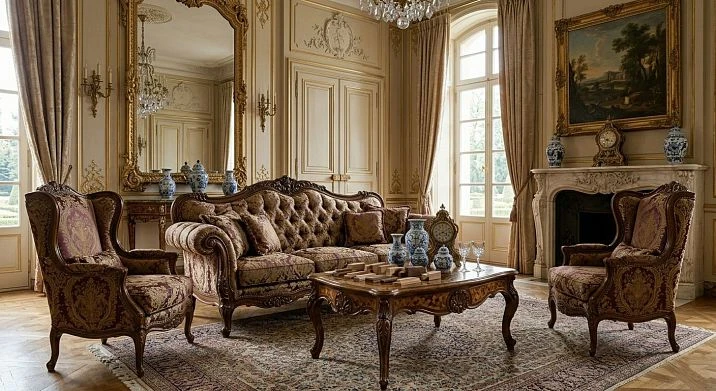
There are interiors you want to stay in. Not because they are expensive or trendy — but because they are right. The soft seating group is symmetrical, the sofa is warm and deep, the armchairs invite you to sit, the furniture legs match the floor, the wooden baseboard emphasizes the lower line of the walls, and moldings create rhythm on the walls. This is classic upholstered furniture in its true form — not individual pieces, but a well-thought-out system.
Classic upholstered furniture includes a sofa, armchairs, a bench, a pouf, a chaise lounge with wooden legs, expressive shape, and fabric that does not argue with the space but belongs to it. But assembling such an interior without understanding the system means risking getting a set of 'classic-like' items that do not get along with each other.
This article is an honest and detailed breakdown: what is included in classic upholstered furniture, how to choose Sofa legs and armchairs, how to coordinate upholstery with wooden decor, how to update existing furniture without full replacement. Read on — and build a space you'll want to live in.
Classic upholstered furniture: how it differs from modern
The question seems simple, but the answer is more important than it seems. Without knowing what makes upholstered furniture classic, it is impossible to assemble a cohesive interior — you can only guess by chance.




Silhouette and shape
Classic upholstered furniture has a distinct, recognizable silhouette. The back of the sofa is not too low, often slightly curved or with a soft finish at the top. Armrests are rounded, voluminous, sometimes with a wooden decorative element on top. The shape is not rectangular — it is lively, with smooth transitions.
Modern upholstered furniture often leans towards minimalism: low straight lines, absence of legs, neutral geometric shapes. Classic is the opposite of this.
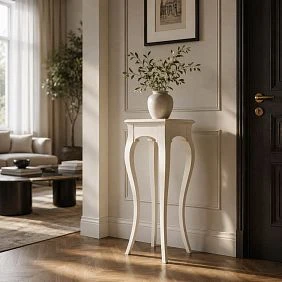
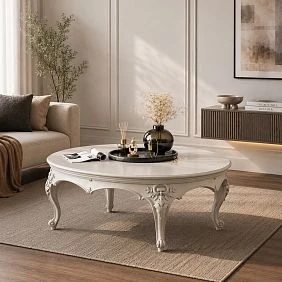
Our factory also produces:
Wooden legs and supports
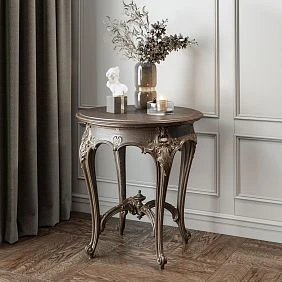
This is perhaps the clearest marker. Wooden legs for sofas and armchairs immediately move furniture into another style category. Carved, turned, with a pronounced profile — or more restrained, conical, but also made of solid wood.
wooden furniture legs create a gap between the furniture and the floor — this visually lightens the bulky item, adds air, and emphasizes belonging to the classic or neoclassical style.
Get Consultation
Fabric and upholstery color
Classic does not like flashy colors. Beige, milky, smoky gray, soft olive, warm brown — this is its palette. Velvet and velour add solemnity. Dense jacquard adds practicality. Natural leather adds status for the office area.
Connection with interior
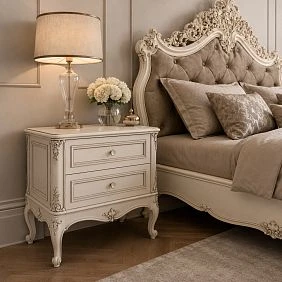
A sofa and armchairs in a classic style are not independent items. They are part of the space. They converse with wooden skirting board, with moldings on walls, with the frame of a mirror or painting, with decorative inlays On the adjacent nightstand. It is this systemic thinking that distinguishes true classics from simply a "non-modern" interior.
Which items are included in classic upholstered furniture
A classic upholstered group is not just a sofa with two armchairs. The set of items depends on the room, area, and purpose.
Classic sofa
The main item in the living room. A classic-style sofa features a clear silhouette, correct proportions, a seat depth of at least 55–60 cm, and necessarily Wooden legs — turned, carved, or tapered legs made of solid wood.
The size of the sofa is determined by the room area. In an apartment with a living room of 20–25 sq. m — a sofa 200–220 cm long. In a spacious country house — 240–280 cm, possibly a corner or modular option.
Backrest shape: straight or with a gentle curve. Armrests: rounded — classic, rectangular — neoclassical. Legs: turned with profile — classic, tapered — modern classic and neoclassical.
Armchairs
A classic-style armchair is either part of an upholstered group or an accent standalone piece. In the living room — paired armchairs symmetrically to the sofa. In the study — one status armchair by the desk or fireplace. In the bedroom — an armchair by the window or in the relaxation area.
Armchairs do not have to be an exact copy of the sofa. They can be of a similar color, with legs in the same style, but a different model. This creates liveliness, not monotony.
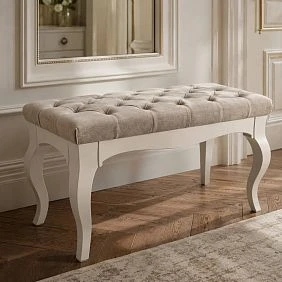
Bench
Classic style bench — a soft seat on wooden legs. Used:
-
by the bed in the bedroom — for dressing, as a decorative detail;
-
in the hallway — for convenience when putting on shoes;
-
in the living room — an extra seat at the coffee table;
-
in the dressing room — as a practical area by the mirror.
The wooden legs of the bench should match the style and shade of the legs of the bed or sofa in the same room.
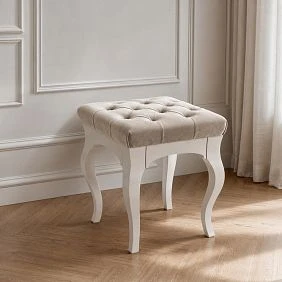
Ottoman
A pouf is a more compact and casual version of a soft piece. Suitable for small spaces, a children's room, a reading area, a bedroom. In the classic version — on wooden legs solid wood, with fabric or leather upholstery.
Chaise longue
A chaise longue is a long, soft piece of furniture for lying or semi-reclining positions. It is appropriate in a study, library, hall, or large bedroom. In the classic version, it features carved wooden legs fabric upholstery.
Wooden legs and supports for upholstered furniture: the key detail of a classic look
This is where true classic style begins. Legs are what lift furniture off the floor and define its stylistic character.
Why legs are so important
Imagine the same sofa — first on low plastic supports, then on tall turned wooden legs with a profile. These are two different items with different perceptions, prices, and styles. The leg completely transforms the furniture — without changing its shape, upholstery, or size.
Wooden legs for upholstered furniture made of oak, beech, or birch add:
-
visual lightness — the furniture is "lifted" off the floor;
-
tactile warmth — natural material versus plastic;
-
style identity — classic, neoclassic, or modern classic.
Types of legs for classic upholstered furniture
Turned legs with profile. The most classic choice. A leg turned on a lathe with a neck, disc, and base is a recognizable silhouette that immediately reads as "classic." It pairs well with sofas, ottomans, and poufs.
Carved legs. For more ornate classic styles — Baroque, Empire, Russian style. A leg with ornamentation or decorative relief. A more ceremonial, expressive option.
Tapered legs. For modern classic and neoclassic. A straight leg that narrows toward the bottom. A more restrained, clean silhouette — for sofas in soft neoclassic interiors.
Unpainted legs — for self-finishing. The upholstered furniture manufacturer or workshop themselves coat the legs with varnish or stain in the desired shade.
Leg height
Leg height affects the visual appearance of the furniture:
-
Legs 4–6 cm — the furniture looks grounded, substantial.
-
Legs 8–12 cm — a light, airy option, the furniture "floats" above the floor.
-
Legs 15–20 cm — an expressive architectural element, especially for chaise lounges and banquettes.
Leg color and coordination
Upholstered furniture legs should be coordinated with the wooden elements of the room:
-
with the shade wooden baseboard;
-
with the color of the wooden floor;
-
with door and window frames;
-
with the wooden legs of other furniture pieces in the same space.
A complete match is not necessary — but the shades should be from the same "family" or intentionally contrast.
How to choose a classic-style sofa: from silhouette to details
Choosing a sofa is the most critical decision in shaping a classic living room. A mistake here is costly.
Straight sofa
The most versatile option. A straight sofa 200–220 cm long is a classic solution for most living rooms. Suitable for any placement in the space: against a wall, in the center of the room, in the area by the fireplace.
For a classic interior — a straight sofa with turned wooden legs, rounded armrests, and a high or medium backrest.
Sofa with rounded armrests
Soft classic — a sofa with a "roll" armrest. This is a transitional option between strict classic and a more modern look. Pairs well with fabrics in calm colors and decorative inlays on the adjacent furniture.
Sofa with high backrest
A high backrest is a sign of classic grandeur. A sofa with a high backrest on carved legs — it is almost an architectural object. Suitable for spacious living rooms, studies, formal living rooms in country houses.
Sofa for an apartment and a country house
| Parameter | Apartment | Country house |
|---|---|---|
| Length | 180–220 cm | 220–280 cm |
| Legs | Small, neat | More expressive, carved |
| Fabric | Practical, light | Velvet, velour, denser fabrics |
| Decor | Moderate | You can add more |
How to choose armchairs for a classic sofa
Armchairs are details that make a seating group come alive. Two identical armchairs by one sofa mean symmetry and confidence. One accent armchair of a different color or shape means character.
Paired armchairs
For a large living room, two symmetrical armchairs opposite or next to the sofa. They don't have to be an exact copy of the sofa: the main thing is that the legs are in the same style and the fabric is from a close palette.
Accent armchair
One armchair in a contrasting color or made of a different material is a good design technique. A dark blue armchair in a living room with a beige sofa is a focal point. It is important that the armchair legs match the sofa legs in wood tone.
Armchair for the study
In a study, a more strict, stately armchair. Possibly leather with wooden supportsAn armchair by the fireplace or a floor lamp is already a separate detail that creates a secluded zone within a larger room.
Color and upholstery of classic upholstered furniture: what works, what doesn't
Color is the first thing a person sees. In a classic interior, color solutions follow a single logic: calmness, warmth, depth.
Main palette
-
Beige and milky — a light, airy base. Good for an apartment with natural light.
-
Warm gray — modern neoclassicism. Neutral but not cold.
-
Olive and khaki — a natural, organic note. Pairs well with wood.
-
Warm brown — coziness, country character, depth.
-
Blue and gray-blue — an accent choice for bolder classics.
Velvet and velour
Velvet is the most "classic" of fabrics. It catches light and creates a depth of color that hopsack or microfiber lack. A velvet sofa on turned wooden legs с carved inlays on the wall — that's a powerful image.
The downside of velvet: it requires more care. For families with children, it's better to choose velvet with a stain-repellent treatment or opt for dense hopsack.
Leather
Leather upholstery — for a study and a status living room. A classic armchair on made of oak or beech look elegant and durable, creating comfort and functionality in the living room. In modern interiors, models with straight lines and smooth finish are especially in demand, while in classic interiors — tables on carved legs with decorative elements. with leather upholstery — that's a powerful image. For a residential living room, leather is often colder than fabric. The exception is cognac or dark brown natural leather: it feels warmer visually.
Print and pattern
Classic style allows patterned fabric: geometric motifs, small floral patterns, stripes. The main rule: if the upholstery has a pattern — Decorative Inserts and other details should be calmer. If the upholstery is solid — you can add more decor to the interior.
Classic upholstered furniture in different rooms
Living Room
Sofa, two armchairs, coffee table, floor lamps, frames for paintings or mirrors. Walls with moldings. Wooden baseboard — mandatory. All this creates a classic living room as a cohesive space, not a set of objects.
Symmetry in the living room: sofa opposite the TV or fireplace, two armchairs on the sides. Or sofa against the wall, armchairs at an angle to it. Coffee table — in the center of the composition.
Bedroom
Bench at the bed on wooden legs, coordinated with the bed legs. Chair by the window — for reading and relaxation. Pouf at the dressing table. All soft items — in a single color or close shades, with legs of the same style.
Banquette wooden legs should match the shade of the bed legs, nightstands, and, if possible, with baseboard and doors.
Office
Study — a space of concentration and status. Chaise lounge against the wall with carved legsleather armchair, possibly a small sofa. Wooden panels on the walls, Moldings, Frames for paintings.
In the study, wood works more actively than in other rooms: dark walnut, oak with deep tinting, expressive Skirting и Cornice.
Entryway
A bench or soft seat at the entrance is a practical and beautiful element. A short sofa or bench on wooden legs with upholstery matching the walls. Next to it — mirror in wooden frame.
For the hallway, practicality is important: the fabric should be easy to clean, the legs should be resistant to loads.
Country house
Here, classic upholstered furniture is fully revealed. A large living room allows for a large sofa, two armchairs, a bench by the fireplace, a chaise lounge in the reading area. Carved legs of expressive profile, Decorative Inserts on the walls and chests of drawers, Moldings и Crown Molding in the ceiling area.
How to combine upholstered furniture with wooden decor
Upholstered furniture in a classic style becomes truly expressive only when it is surrounded by the right wooden decor.
Furniture legs and baseboard
This is a basic combination. If Wooden baseboard dark walnut, and the sofa legs are light beech, a conflict arises. Either the shades need to be close, or a deliberate contrast with a unified logic is required.
Frames for mirrors and pictures
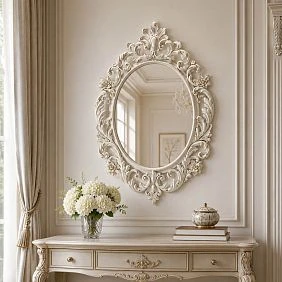
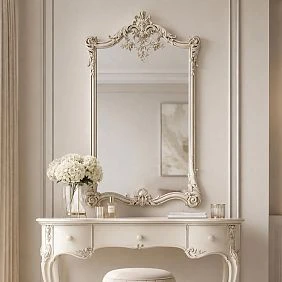
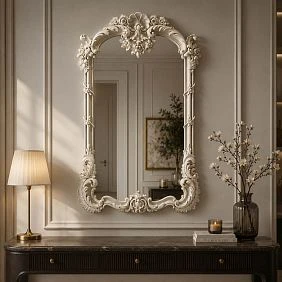
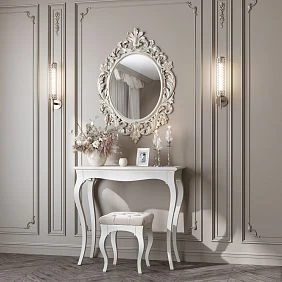
wooden frames above the sofa or by the armchair — a powerful classic technique. The frame connects the upholstered furniture to the wall and creates a 'zone' within the room. The wood tone of the frame is coordinated with the furniture legs or the baseboard.
Wall moldings
Wooden moldings on the wall behind the sofa create an architectural backdrop for the upholstered furniture. This is one of the strongest techniques in a classic interior: the sofa stands in front of the molding panel, as if on a stage.
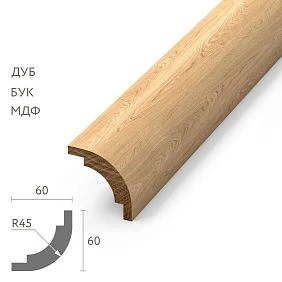
Moldings can be placed along the perimeter of the walls or used to create rectangular 'frames' on the surface. Pogonazh iz massiva — a practical material for such solutions.
Decorative appliqués
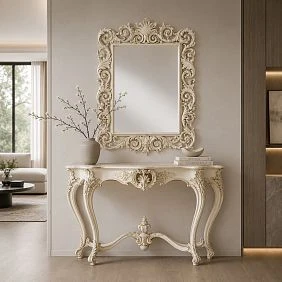
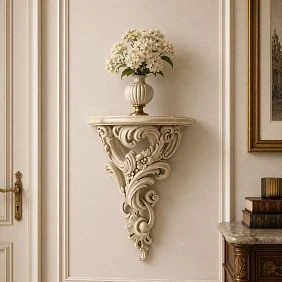
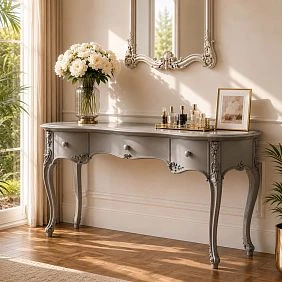
Carved overlays on nightstands, dressers, consoles next to the sofa — this is a decorative dialogue. An overlay on the nightstand supports the theme of carved decor if the interior has carved chair legs.
How to update upholstered furniture with wooden details
This is a practically important block — for those who already have a sofa or armchairs but need to change their look without a full replacement.
Replacing legs
The most effective action. If the sofa has ugly plastic or metal legs — they can be replaced. New wooden turned legs or cone-shaped solid wood supports are installed on standard mounting platforms. The sofa is literally transformed.
Important: choose the height of the new legs — close to the previous one, so that the proportions of the sofa do not change. And immediately coordinate the color of the legs with the floor and baseboard.
Updating decor near furniture
Add Wooden handles on the nightstands next to the sofa, carved appliqués on the dresser in the living room, the mirror frame above the upholstered furniture — and the interior becomes significantly richer, and the sofa fits organically into the new context.
Wall moldings
Install Moldings on the wall behind the sofa can be done without renovation — using glue or thin fasteners. Pogonazh iz massiva cut to the required length and folded into a geometric frame. The result is a classic wall panel that makes any sofa part of the architectural design.
Wooden skirting board
Replacing a plastic baseboard with solid wood baseboard — one of the most cost-effective and impactful operations in a classic interior. The lower horizontal line of the room becomes architectural, and all upholstered furniture begins to "stand" differently.
Mistakes when choosing classic upholstered furniture
A direct conversation about what ruins a classic interior — because it's better to know in advance.
A sofa that is too large for a small room. A 280 cm sofa in an 18 sq. m living room is not "more coziness," it's a physical obstruction of space. The scale of furniture should match the square footage.
Not considering the height of the legs. If ceilings are low (2.5 m), very high legs can visually "break" the piece of furniture. With high ceilings (3 m and above), legs can be made more expressive.
Choosing fabric separately from the walls, floor, and baseboard. Upholstery fabric is chosen after the main colors of the room are determined. Gray fabric in a room with gray walls and a gray floor means loss of volume and boredom.
Modern metal legs on a classic sofa. Chrome or matte black metal legs are not a "neutral" solution. They actively contribute to a modern style and conflict with classic forms.
Mixing different wood tones. Light oak in the sofa legs, dark walnut in the baseboard, cherry in frames — three different trees without logic. Maximum two shades with a clear hierarchy.
Overload the room with carving. Carved legs, carved frames, carved appliqués on all furniture, stucco everywhere — this is no longer classic, but overload. Decor works in balance with clean surfaces.
Buy chairs without connection to the sofa. A chair with a different leg style, different armrest shape, and completely different color — a random item next to a carefully chosen sofa.
Not think through baseboards, moldings, and frames. A magnificent sofa on wooden turned legs stands against a wall with a plastic baseboard and no decor. This is not a classic interior — it's classic furniture in a space without style.
What to buy for classic upholstered furniture and interior: a complete list
-
Solid wood furniture legs — turned, tapered, carved.
-
Unpainted legs — for self-finishing.
-
Carved decorative inserts for furniture — for cabinets, chests of drawers, consoles next to upholstered furniture.
-
wooden decorative elements — for walls, frames, panels.
-
Wooden handles for cabinets and chests of drawers — coordinated in style with upholstered furniture.
-
Solid wood frames — for mirrors and paintings above the sofa or by the armchair.
-
Wooden moldings and cornices — for walls and ceiling area.
-
solid wood baseboard — for the lower architectural line.
-
Pogonazh iz massiva — for molding panels on walls.
-
Solid Wood Items — complete catalog for a classic interior.
How to buy classic upholstered furniture and decor without mistakes: an algorithm
1. Determine the room: living room, bedroom, study, hallway, country house.
2. Choose the main item: sofa, armchairs, bench, chaise lounge, pouf.
3. Check dimensions: room size, doorway for delivery, distance between items.
4. Choose color and fabric — considering the color of walls, floor, and baseboards.
5. Select shape and height legs — coordinated with the floor, baseboard, doors.
6. Determine if replacement or addition of legs is needed — new Wooden legs ones can transform existing furniture.
7. Choose decor: Frames, Moldings, applique, Skirting — to create a classic background.
8. Go to the catalog solid wood STAVROS products and collect all wooden parts for a classic interior.
About the company STAVROS
A classic interior is made up of details — and STAVROS makes details best. Solid wood furniture legs — turned, carved, tapered — for sofas, armchairs, ottomans, poufs, and chaise lounges. wooden frames for mirrors and paintings. carved appliqués и decor for furniture. moldings, cornices и solid wood baseboard. Pogonazh iz massiva for wall panels. Wooden handles for nightstands and dressers.
STAVROS has been producing wooden parts for upholstered furniture and classic interiors since 2002. Production is in Saint Petersburg. Shipment from 1 piece. Delivery across all of Russia. Production of custom shapes and sizes for projects.
FAQ: Answers to popular questions
What qualifies as classic upholstered furniture?
Sofas, armchairs, ottomans, poufs, chaise lounges, and upholstered benches with expressive shapes, fabric upholstery, wooden legs, and decorative solid wood supports.
Which legs to choose for a classic sofa?
Turned legs with profile — for traditional classics. Conical — for neoclassicism. Carved — for Baroque and lush classics. The main thing is coordination with the floor, baseboard, and other wooden details in the room.
Can you update a sofa by replacing the legs?
Yes. New solid wood legs, matched in shade to the interior, radically change the look of the furniture — without replacing the upholstery or frame.
What upholstered furniture should you choose for a small living room?
A compact straight sofa 180–200 cm, one armchair or bench, light upholstery, and neat low-height legs.
What to pair classic upholstered furniture with?
With wooden legs, solid wood baseboards, wall moldings, mirror and picture frames, carved overlays on adjacent furniture, and wooden handles on cabinets.
How to choose fabric for a classic sofa?
Fabric is chosen after determining the color of the walls, floor, and baseboards. Beige, milky, gray, olive, brown — calm tones. Velvet and velour — for a ceremonial look, herringbone — for practicality.