








































































Article Contents:
- Assembling a table yourself: why it's better than it seems
- When it makes sense to buy a tabletop separately
- MDF tabletop: practicality without losing appearance
- What's good about an MDF tabletop
- When MDF is the right choice
- Tabletop 800×800: a square that solves the problem of small space
- Where the 800×800 format is used
- Which legs and bases fit the 800×800 size
- Tabletop for a coffee table: always visible — so every detail matters
- Round tabletop: soft geometry that interiors love
- Why a round table is better than a rectangular one in a number of situations
- Diameters of round tabletops and seating capacity
- Which base to choose for a round tabletop
- Tabletop made of wood or MDF: how to choose without mistakes
- Solid wood
- MDF
- Beech: between solid wood and practicality
- When to choose what
- How to choose tabletop thickness: visual weight matters
- Thin tabletop (16–22 mm)
- Medium thickness (25–35 mm)
- Thick tabletop (38–50 mm and more)
- How thickness relates to the underframe
- How to choose a tabletop for the underframe or legs
- What you need to know about the underframe
- Individual legs
- Distance Between Legs
- Kitchen tabletop: what to check before buying
- Size for the number of seats
- Coating and care
- Table height and chair height
- Corner safety
- Combination with the kitchen and floor
- Tabletop coating: for varnishing or painting
- Tabletop for painting
- Countertop under varnish or oil
- Toning
- What to pair the countertop with: furniture component system
- Mistakes when choosing a countertop: where you most often lose money and nerves
- Buying a countertop without understanding the underframe
- Not calculating the future table height
- Choosing a countertop too large for weak legs
- Not accounting for overhangs
- Buying a round countertop without calculating the diameter
- Choosing only by photo, not considering thickness
- Not planning the coating for the kitchen
- Forget about seating and legroom
- Where to buy a tabletop: choosing with a complete set
- STAVROS: the tabletop is the start, the table is the result
- FAQ: Answers to Popular Questions
- Which tabletop to buy for a small kitchen?
- Can you buy a tabletop separately from the table?
- How does an MDF tabletop differ from a wooden one?
- What is a beech tabletop and what is it suitable for?
- How to choose the thickness of a tabletop?
- Do you need to coat a wooden tabletop?
- How to assemble a table from a separate tabletop and legs?
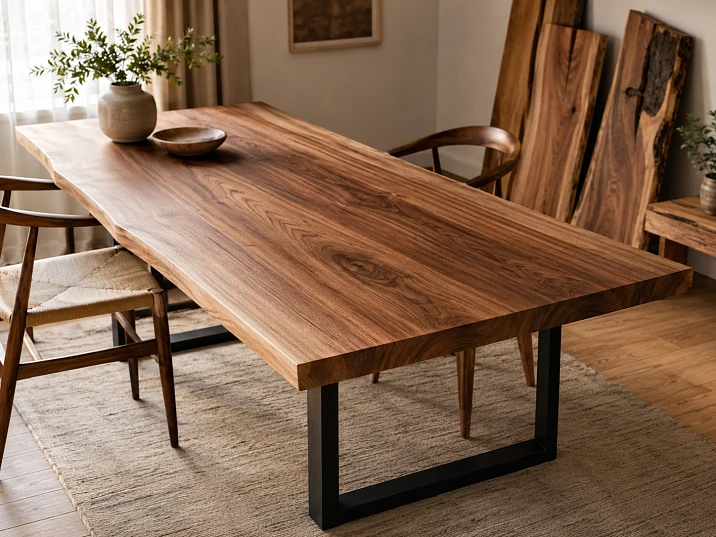
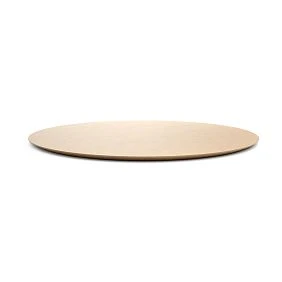
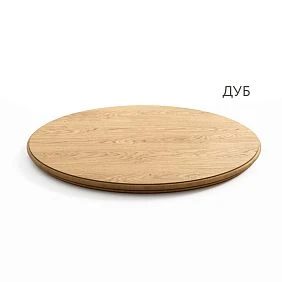
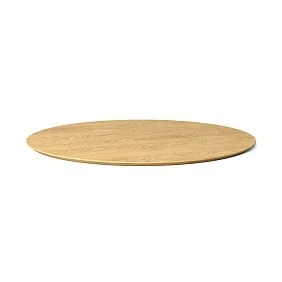
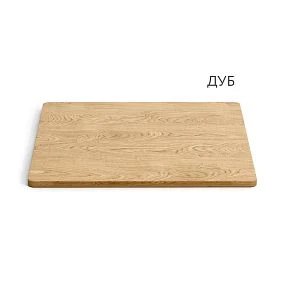
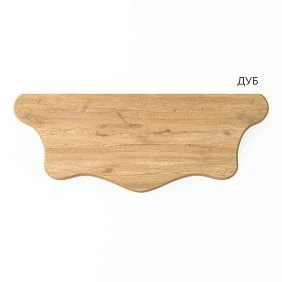
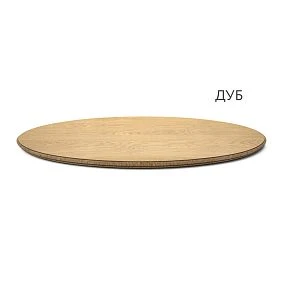
Assembling a table yourself: why it's better than it seems
Furniture stores offer ready-made tables — fast, packaged, with instructions. But this simplicity has a downside: you get what's in stock. Standard sizes, standard colors, standard shapes. But your kitchen isn't standard. Neither is your living room.
That's why more and more people are taking a different path: buy a tabletop separately, pair it with wooden table base or legs — and assemble a table for a specific space. For the right size, the right style, the right height. Without overpaying for a brand and without compromising on shape.
It's not difficult. It's logical. And the result is a table that perfectly fits your room because it was created specifically for it.




When it makes sense to buy a tabletop separately
Not every table needs to be bought ready-made. There are situations where a separate tabletop isn't an experiment, but the most sensible solution.
Non-standard size. The room is narrow, the niche is non-standard, the kitchen is small — and a ready-made table doesn't fit or, on the contrary, leaves an awkward gap. A separate tabletop allows you to choose exactly the right dimensions.
Already have a base or legs. Bought beautiful metal legs or got a wooden frame — only need a tabletop of the right size and material.
Updating an old table. The frame is good, but the top is worn, scratched, and lost its appearance. Buy a tabletop for a table and place it on the old base — economical and practical.
Coffee table. Ready-made coffee tables are often either expensive or don't match in color and shape. A separate tabletop plus wooden furniture legs — a fully custom result.
Kitchen table to match the interior. Kitchen in a specific style: Scandinavian, classic, neoclassical, loft. A ready-made table from the catalog may not fit. Tabletop for kitchen in the desired color, shape, and size — your own, precise result.
Desk. A workspace requires specific width and depth. A tabletop in the exact size plus a base or legs — a table that is comfortable for you.
Studio apartment or small space. Every centimeter counts. A standard dining table won't fit — but a tabletop 800×800 on four thin legs takes up minimal space.
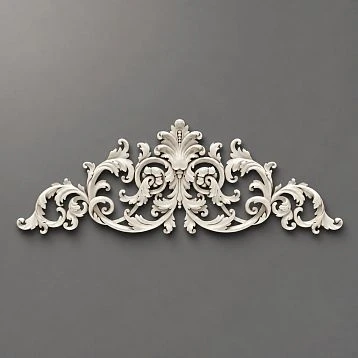
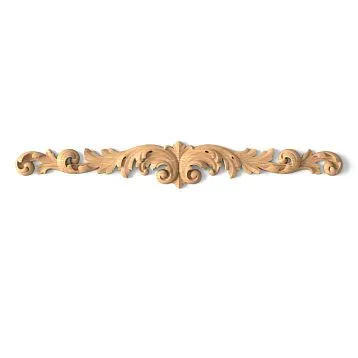
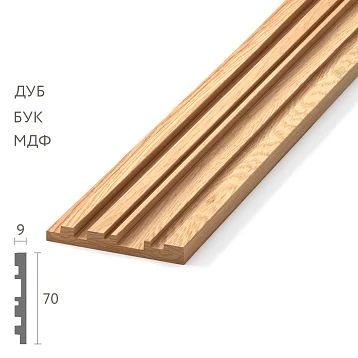
Our factory also produces:
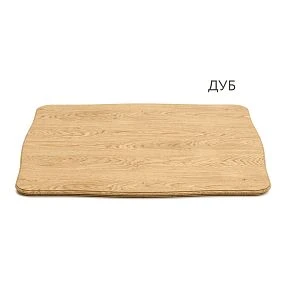
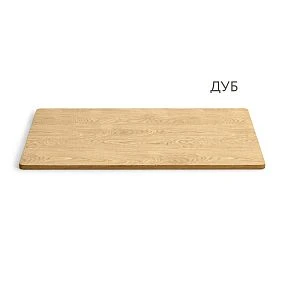
MDF tabletop: practicality without losing appearance
MDF tabletop is not a budget compromise. It is a material with specific advantages that, in some scenarios, surpass solid wood.
MDF (medium-density fiberboard) is a high-density board made of compressed wood fibers. Unlike particleboard, MDF does not crumble at the edges, is easy to mill, and provides perfectly flat surface geometry.
Get Consultation
What makes an MDF tabletop good
Flat geometry. MDF tabletop It does not warp or change shape with humidity fluctuations like solid wood does. This is important for kitchen tables and work surfaces where predictable geometry is needed.
Surface for painting. MDF takes paint evenly and without stains. If you need a tabletop in a specific color — to match furniture, a kitchen set, or walls — MDF for painting provides a precise and neat result.
Neat edges. MDF mills well: you can get a rounded, shaped, or straight edge without chips or unevenness.
Affordable price. MDF kitchen tabletop It costs less than solid wood with a comparable appearance after painting or veneering.
When MDF is the right choice
-
A table in a furniture project with a specific color scheme.
-
Work surface for painting to match the color of a table, shelf, or cabinet.
-
Kitchen table with an enamel or matte finish.
-
Coffee table in a minimalist modern interior.
Countertop 800×800: a square that solves the problem of small spaces
square tabletop 800×800 — is one of the most sought-after sizes. And there are several compelling reasons for this.
A square 80 by 80 centimeters is the minimum full-fledged table for two people. It's convenient for eating, working, and drinking coffee. At the same time, it takes up about as much space as a large chair — and this is crucial for small kitchens, studio apartments, and small dining rooms.
Where the 800×800 format is used
Small kitchen. In a kitchen of 6–9 sq. m, a dining table 120×80 is already cramped. Countertop 800 800 on four legs — a compact but full-fledged table.
Kitchen-living room. In an open plan, the breakfast area is often set apart with a small table by the wall or by the kitchen island. A square 800×800 is the optimal size for such a spot.
Studio apartment. A multifunctional space requires compact solutions. A small square table can easily be tucked into a corner or pushed against a wall, turning into a desk or a bar counter.
Desk. 800 millimeters in depth is enough for a laptop, monitor, and a small work area. 800 in width is the minimum for comfortable work for one person.
Dacha and country house. A small table on the veranda or in the summer kitchen — this is the format.
Coffee zone. In the living room next to the sofa or in the hallway — a compact table 800×800 on elegant legs works as a coffee point or a place for decor.
Which legs and underframes are suitable for the 800×800 size
Four separate legs fit well with a square tabletop 800×800 wooden furniture legs — symmetrical placement at the corners provides maximum stability. For a more expressive design — wooden table base in the form of a frame with two support legs. leg mounting for furniture legs allows you to assemble the structure without special equipment.
Tabletop for a coffee table: it is constantly visible — so every detail matters
A coffee table is an item in the center of the living room. The entire seating area is built around it: sofa, armchairs, rug, TV cabinet. The tabletop here is the face of this whole story.
Tabletop for a coffee table should solve several tasks simultaneously:
Shape. Round, oval, rectangular, or square — depending on the shape of the sofa and the configuration of the area. A round shape blends more softly into rooms with rounded elements. A rectangle fits into areas with stricter geometry.
Thickness. A thin tabletop (20–25 mm) gives lightness — the table looks airy, does not weigh down the space. A thick one (from 35 mm) adds solidity — suitable for massive sofas and large living rooms.
Edge. A rounded edge is safer and visually softer. A straight edge is stricter and more concise. For a coffee table in a soft living room, a rounded edge often looks more organic.
Color and texture. A coffee table is constantly in the spotlight. If it is wooden, the wood texture should either rhyme with other wooden elements (floor, furniture legs, decor) or create a deliberate contrast.
Combination with legs. Thin metal legs under a wooden tabletop is a popular technique in Scandinavian and modern styles. wooden furniture legs under the tabletop — for a warmer, more cohesive wooden look.
Round tabletop: soft geometry that interiors love
Round wooden tabletop — is a choice in favor of softness, hospitality, and visual comfort. The round shape does not press, does not cut the space with sharp corners, and is convenient for seating from any side.
Why a round table is better than a rectangular one in a number of situations
No sharp corners. In a kitchen with children or in a small space, sharp table corners are a physical problem. A round tabletop eliminates this.
Equal distance between those sitting. At a round table, there are no "end" or "center" seats — everyone sits equally comfortably. This is important for family dinners.
Visual lightness. A circle takes up less visual space than a rectangle with the same seating capacity. This is noticeable in a small kitchen.
Flexibility of placement. A round table can be placed in the center of the room — it looks equally good from all sides.
Soft interior. If the room has many rounded details — sofas with curved backs, soft rugs, decorative mirrors in round frames — a round tabletop continues this language.
Diameters of round tabletops and seating capacity
| Diameter | Comfortable number of seats |
|---|---|
| 80 см | 2 people |
| 100 см | 2–3 people |
| 120 см | 3–4 people |
| 140 см | 4–5 people |
| 160 см | 5–6 people |
Buy round tabletop 120 cm — the most popular format for a family dining table for 3–4 people. This diameter works equally well in a kitchen and a separate dining room.
Which base to choose for a round tabletop
For a round tabletop, a central base is optimal — one support in the center. This gives maximum legroom for those sitting. An alternative is three or four legs, symmetrically placed. wooden table base for a round tabletop should be proportionate: not too small (the table will seem unstable) and not too massive (the base will draw attention to itself).
Wood or MDF tabletop: how to choose without mistakes
Everyone makes this choice — and often incorrectly. Let's compare the essentials.
Solid wood
Advantages:
-
Natural texture — each countertop is unique.
-
Warm visual and tactile feel.
-
Can be sanded and refinished multiple times.
-
Suitable for restoration — stains and scratches can be removed.
Limitations:
-
Wood reacts to humidity changes — seasonal movement of the material.
-
Requires regular oil or varnish treatment.
-
Costs more than MDF.
MDF
Advantages:
-
Perfect geometry without warping.
-
Smooth surface for painting.
-
Stable under humidity changes.
-
Neat edges after milling.
Limitations:
-
Cannot sand to white — inside is a board, not wood.
-
With serious edge damage — harder to restore.
-
No natural texture (unless veneered).
Beech: between solid wood and practicality
Beech countertop — a separate story. Beech is a hardwood with a fine, uniform texture. It is denser than pine, less pronounced in pattern than oak, and takes stain and varnish well. A beech countertop is the choice for those who want a wooden surface but without a pronounced natural pattern. A neutral, neat, noble option.
When to choose what
| Task | Material |
|---|---|
| Kitchen table for painting | MDF |
| Dining table with natural texture | Solid oak, ash |
| Coffee table in a modern interior | MDF or beech |
| Table in a country house | Pine, solid wood |
| Desk with precise color | MDF for painting |
| Kitchen table with warm texture | Beech or oak |
How to choose tabletop thickness: visual weight matters
Tabletop thickness is a parameter that affects both usability and appearance. A too thin tabletop will sag or break under heavy objects. A too thick one in a small room will feel oppressive.
Thin tabletop (16–22 mm)
Light, modern look. Suitable for coffee tables, bedside tables, small work surfaces. Looks elegant with thin legs. Not suitable for heavy loads or large tables without central support.
Average thickness (25–35 mm)
Universal range. Kitchen table, dining table, desk — all are comfortably realized in this range. The tabletop looks confident without being overly massive.
Thick tabletop (38–50 mm and more)
Solid, substantial look. For a large dining table in a spacious dining room, for a study desk in a classic interior. Next to a massive wooden underframe such a tabletop looks architecturally expressive.
How thickness relates to the base
Thin base plus thin tabletop — visual lightness. Massive base plus thin tabletop — imbalance, the tabletop will seem weak. A heavy base requires a tabletop of corresponding visual strength.
How to choose a tabletop for the base or legs
Assembling a table from individual elements is like a construction set, where it's important to match the parts correctly.
What you need to know about the base
wooden table base — the base on which the tabletop is mounted. It determines:
The height of the table. The standard height of a dining table is 72–76 centimeters. The height of the underframe plus the thickness of the tabletop = the final height. Calculate this before purchasing.
The width of the overhangs. The tabletop should extend beyond the edges of the underframe by at least 5–7 centimeters on each side — otherwise, the legs of those sitting will hit the structure.
The shape of the supports. For a rectangular tabletop — an underframe with two side supports or four legs. For a round one — a central support or three to four legs symmetrically.
Stability. The wider the base of the underframe, the more stable the structure. For a large tabletop, a weak base is a source of problems.
Individual legs
wooden furniture legs — the most flexible option for small tables. Four legs, proper fastening — and the table is ready. leg mounting for furniture legs allows you to level the legs in height and securely fix the tabletop.
For a coffee table, a kitchen table for 2 people, a small workspace — four legs plus a tabletop 800×800 or a slightly larger size — an excellent solution.
Distance between legs
The legs should not be placed at the very edge of the tabletop — leave an indent of 5–8 centimeters from each edge. At the same time, they should not be placed too close to the center — the structure will lose stability. Optimal placement: legs at a distance of 15–20 centimeters from the edge.
Kitchen tabletop: what to check before buying
A kitchen table is a working item. It daily accommodates mugs, plates, cutting boards, children's drawings, newspapers, and anything that comes to hand. The kitchen tabletop must withstand this load.
Size based on number of seats
Minimum width per person — 60 centimeters. Depth — 40 centimeters. For two people at a square table — a tabletop 800×800 — the minimum comfortable option. For four — a rectangle 120×80 or 120×70.
Coating and care
A wooden kitchen tabletop requires a coating resistant to humidity: varnish, oil, or wax. Matte varnish is the most practical option for the kitchen: non-slip, easy to clean, does not show fingerprints.
MDF tabletop for painting requires a durable enamel — waterproof, washable. Gloss in the kitchen looks beautiful but shows every stain. Matte or semi-matte coating is more practical.
Table height and chair height
Standard height of a kitchen table — 72–75 centimeters. Chairs usually have a seat height of 44–47 centimeters. There should be 25–30 centimeters of free space between the tabletop and the chair seat — for comfortable seating.
Corner safety
In a kitchen with children, sharp right angles are a risk. A rounded or beveled countertop edge is a small detail, but it's important.
Combination with the kitchen and floor
The table countertop is not the work surface of the kitchen set. They can be different colors. But it's desirable that they echo each other — either in wood tone, color, or material.
Countertop finish: for varnishing or painting
The countertop is supplied either with a ready finish or for self-processing. What to choose?
Countertop for painting
If you need a specific color — to match the walls, furniture, or kitchen — choose an MDF countertop for painting. The surface is sanded, primed, and painted in the desired color. The result is a countertop that perfectly fits the color scheme of the interior.
Countertop for varnish or oil
If you want to preserve the natural texture of wood, choose solid wood and coat it with oil or varnish. Oil penetrates deep into the wood structure, emphasizes the texture, and creates a matte surface. Varnish forms a film on top of the wood — a more protective option, especially for the kitchen.
Toning
Tinting the tabletop with stain or colored oil allows you to bring it closer to the desired color — to match doors, flooring, or other furniture — while preserving the natural wood grain.
What to pair the tabletop with: furniture component system
The tabletop is the central element around which the table is built. But it does not work in isolation.
Table base. wooden table base made from the same wood species as the tabletop — a natural pair. A table base of a different color or species — a deliberate contrast that requires a well-thought-out solution.
Legs. wooden furniture legs in the same tone as the tabletop — a cohesive look. Metal legs under a wooden tabletop — a modern technique in Scandinavian or industrial style.
Furniture frame. furniture frames made of solid wood — a reliable foundation for tabletops of any size and shape.
Hardware. leg mounting for furniture legs should be selected based on the weight of the tabletop and the material of the table base. Standard fasteners for a lightweight tabletop and reinforced for a heavy one.
Wooden millwork. If the table is in a room with wooden baseboards, moldings, and casings, a tabletop and legs made from the same wood complete a unified system. Solid Wood Items work better for an interior when they form a system, rather than a disjointed set.
Mistakes when choosing a tabletop: where you most often lose money and nerves
There are fewer mistakes here than it seems. But each one costs either money or rework.
Buying a tabletop without understanding the base
The most common mistake. A beautiful tabletop is purchased, and only then it turns out there is no suitable base or legs for it. First, decide on the base, then choose the tabletop.
Not calculating the height of the future table
Base height plus tabletop thickness equals final height. If you don't calculate this in advance, you can end up with a table that is uncomfortable to use with specific chairs.
Choosing a tabletop that is too large for weak legs
Thin legs under a heavy, wide tabletop create an unstable structure. The weight and area of the tabletop must match the load-bearing capacity of the base.
Not accounting for overhangs
The tabletop should extend beyond the edges of the underframe. If you forget about overhangs, the legs of those sitting will hit the structure. At least 5–7 centimeters on each side.
Buying a round tabletop without calculating the diameter
A round table with a diameter of 80 centimeters is a table for two. A diameter of 120 centimeters is for 3–4 people. Without calculation, you can buy a tabletop that does not accommodate the required number of seats.
Choosing only by photo, not considering thickness
In photos, all tabletops look similar. But the difference between 20 mm and 40 mm is a difference in weight, visual feel, and mounting method. Clarify the thickness before purchasing.
Not planning the coating for the kitchen
A tabletop without a moisture-resistant coating in the kitchen is a ruined table in a few months. Clarify the type of coating and its suitability for kitchen use.
Forgetting about seating space and legroom
The width of the table and the shape of the base should leave enough room for legs. This is especially true for tables with a central support—they are more comfortable than tables with four corner legs in a small space.
Where to buy a tabletop: choosing with a complete set
Buy a tabletop — means choosing the material, size, shape, thickness, and finish. And immediately selecting the underframe or legs, fasteners, and fittings — in one place, from one catalog, in a unified system.
Buy a tabletop for a table complete with wooden underframe, wooden legs и fastening kits — this is exactly how a table that perfectly fits your space is assembled.
STAVROS: the tabletop is the beginning, the table is the result
STAVROS — manufacturer and supplier of solid wood for residential and commercial interiors. The catalog includes tabletops made of MDF and solid wood, underframes, furniture frames, wooden legs, fastening hardware, and wooden moldings.
Buy a tabletop for a table from STAVROS — means getting a product made of proven material, with the required parameters, and the ability to choose a complete set for assembling a table to match your interior. Without overpaying for a furniture showroom. With a result that is truly yours.
FAQ: Answers to popular questions
Which countertop to buy for a small kitchen?
For a small kitchen, the optimal choice is square tabletop 800×800 or a round one with a diameter of 80–100 centimeters. These formats provide seating for 2 people with minimal dimensions.
Can I buy a countertop separately from the table?
Yes. The countertop is purchased separately, and a base, frame, or legs are selected for it. This allows you to get a table of the desired size, style, and height.
How does an MDF countertop differ from a wooden one?
An MDF kitchen countertop provides even geometry, is convenient for painting, and does not change shape with humidity fluctuations. A solid wood countertop attracts with its natural texture and the possibility of restoration.
What is a beech countertop and what is it suitable for?
Beech countertop — a product made of dense hardwood with a neat, unobtrusive texture. Suitable for kitchen, dining, and work tables. It accepts tinting well.
How to choose the thickness of a tabletop?
For a coffee table — 20–25 mm. For a kitchen or work table — 25–35 mm. For a large dining table — 35–45 mm. The thickness should match the load and the visual weight of the base.
Do I need to coat a wooden tabletop?
Yes, especially for the kitchen. Oil, varnish, or wax protect the wood from moisture, stains, and mechanical damage. The type of coating is chosen based on the intensity of use.
How to assemble a table from a separate tabletop and legs?
Select legs of the required height, mark their position on the tabletop (indent 5–8 cm from the edge), secure through the mounting kit for legs. If necessary — add a reinforcing underframe.