Article Contents:
- Why an empty wall in the living room often looks unfinished
- What you can buy to decorate an empty wall
- Quick selection table for wall decor
- Wooden frames from baguette: when an empty wall gets architecture
- Baguette molding: when the composition needs to be assembled to fit the wall size
- Rosettes and decorative overlays: how to make the center of the composition
- Moldings and slats: a calm way to decorate a wall without heavy carving
- Wooden brackets: not just support, but also a decorative accent
- What to choose: baguette, overlays, moldings, slats or brackets
- How to choose the size, rhythm and placement of decor
- Decorating an empty wall for different living room styles
- What to buy together for a wall composition
- How not to confuse wall decor with similar solutions
- Practical selection for specific situations
- Empty wall above the sofa
- Wall behind the console
- Empty wall next to the TV
- Large long wall
- Small living room
- Living room with wooden furniture
- How to decorate an empty wall in the living room without paintings?
- What is best to hang above the sofa in the living room?
- Can I leave the frame on the wall empty inside?
- What to choose for a classic living room?
- What to choose for a modern living room?
- How do moldings differ from baguettes?
- When are decorative overlays needed?
- Can I use slats together with baguettes?
- How to choose the size of a wall composition?
- Do I need to paint wooden decor in the color of the wall?
- How not to overload the wall with decor?
- What to buy together to decorate an empty wall?
- Can you decorate an empty wall without renovating the entire room?
- Where to buy wooden wall decor for the living room?
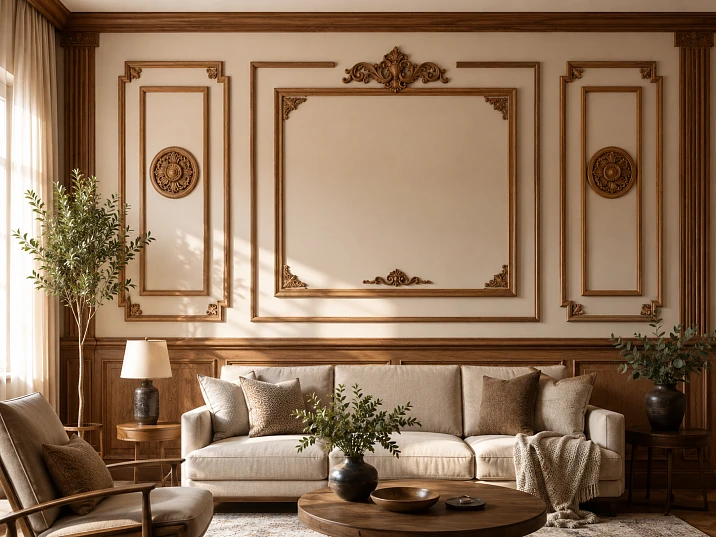
How to decorate an empty wall in the living room if a simple painting seems too random, a shelf overloads the space, and ordinary posters don't match the interior? In such a situation, it's better to think not about a single item, but about a wall composition. An empty wall can become a calm background, an accent zone, a frame for the sofa, a decorative panel, or a connecting element between furniture, doors, ceiling, and baseboard.
The living room is especially demanding of decor. Here you receive guests, relax, watch TV, read, and gather with the whole family. Therefore, the wall should not look like a set of random details. If wooden frames, rosettes, baguettes, decorative overlays, moldings, slats, or brackets appear on it, they must work together: in scale, material, rhythm, color, and role in the room.
STAVROS allows you to assemble such a composition from different product groups: wooden baguettes, baguette moldings, applied decor, carved elements, moldings, slats, and brackets. This is not about "hanging something on the wall," but about a thoughtful selection of details that turn an empty plane into part of the interior. It's important not to overload the living room, not to mix too many patterns, and to understand in advance what exactly the wall should do: decorate, zone, support the style of furniture, fill the void above the sofa, or create an expressive center of the room.

Why an empty wall in the living room often looks unfinished
An empty wall is not always bad. In a minimalist interior, it can be a deliberate technique. But more often in a residential living room, an empty plane appears not because it was intended, but because after renovation there wasn't enough final layer. The furniture is already in place, the sofa is chosen, the light is hung, the baseboard is installed, but the large wall behind the sofa, near the fireplace area, next to the console, or between doorways remains empty.
The eye perceives such a wall as a pause. If the pause is too large, the interior seems incomplete. This is especially noticeable in classic, neoclassical, modern classic interiors, rooms with wooden furniture, high ceilings, or expressive doorways. In such rooms, a simple empty plane can look poorer than the rest of the finish.
The usual way to solve the problem is to hang a picture. Sometimes that's enough. But if the wall is wide, the furniture is large, and the interior is built on wooden details, one picture may not be enough. It will "float" on an empty background. Then it's better to use architectural decor: baguette frames, moldings, overlays, rosettes, slats, brackets, symmetrical panels.
A good wall composition solves several problems at once. It sets the scale of the wall, connects furniture and finishes, creates a focal point, helps to design the area behind a sofa or console, and supports the room's style. At the same time, it doesn't have to be complex. Sometimes a couple of baguette frames and a neat central rosette are enough. Sometimes vertical slats are needed. Sometimes it's better to assemble a classic panel with overlays and moldings. It all depends on the wall, furniture, and interior.




What you can buy to decorate an empty wall
An empty wall can be decorated in different ways, but for a living room, elements that don't look temporary work especially well. A poster is easy to replace, a shelf is easy to remove, but wooden wall decor is perceived as part of the finish. It connects the wall with furniture, doors, cornices, baseboards, and other wooden details.
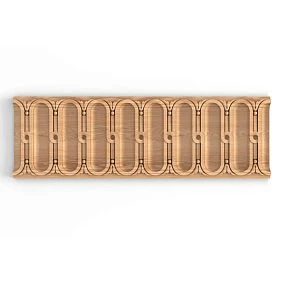
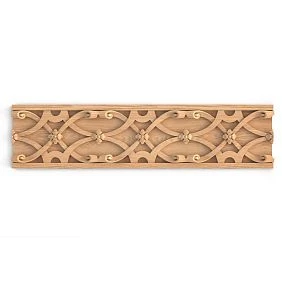
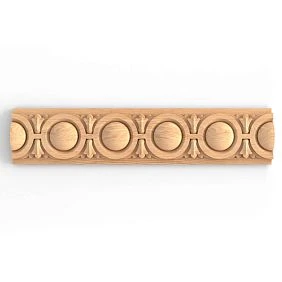
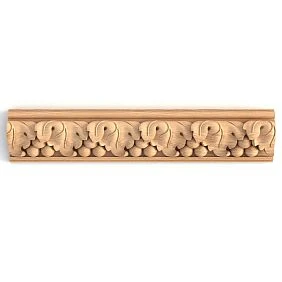
Several groups of products can be used for this task. Wooden Picture Frame helps to assemble frames, decorative contours, panel framing, mirrors, paintings, or empty interior frames. This is a good choice when you need to make the wall more architectural and add a neat relief.
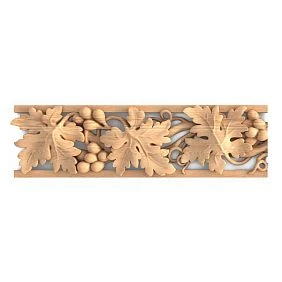
Baguette molding is useful when the composition requires not one ready-made part, but extended elements to fit the wall size. It can be used for frames, vertical lines, decorative contours, and connection with other wooden products.
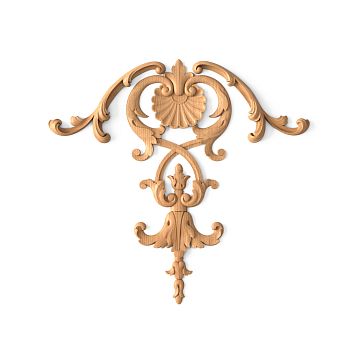
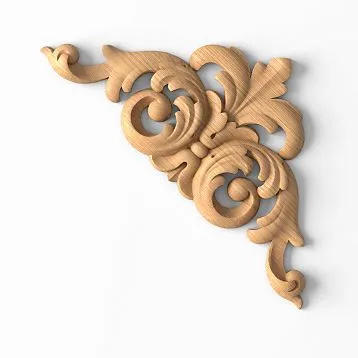
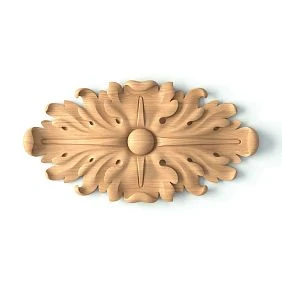
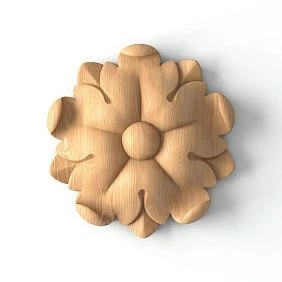
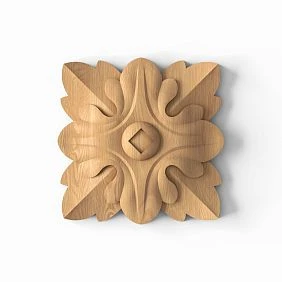
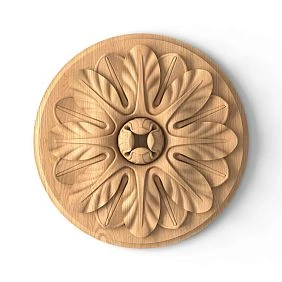
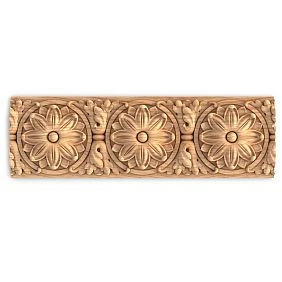
Decorative solid wood overlays are suitable for accents. They can become a central detail inside a frame, decorate the corners of a panel, support a furniture facade, or repeat a motif on the wall. An overlay is especially useful when the wall plane seems too empty, but you don't want to completely cover it with slats or panels.
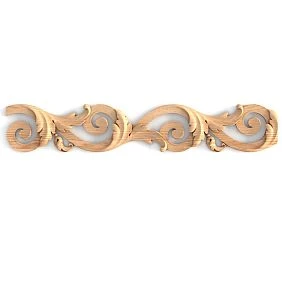
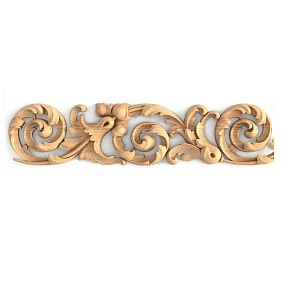
Carved wooden decoration gives a more expressive effect. It is used where the interior allows a classic, neoclassical, study, or formal character. Such decor requires a careful scale: it should support the wall, not turn it into an overloaded showcase.
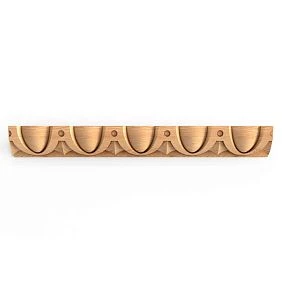
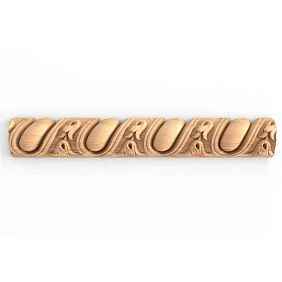
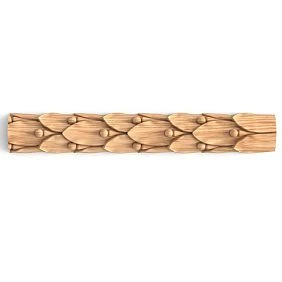
Wooden moldings and battens help create frames, vertical divisions, decorative lines, and a calm wall rhythm. Moldings suit classic and neoclassical styles, while slats are for more modern, minimalist designs.
Wooden Brackets can be used not only as shelf supports but also as decorative elements for wall compositions if the interior is built on classic or carved details. They are especially fitting near a console, fireplace area, niche, or decorative shelf.
If a lighter wall finish is needed, you can additionally look at Polyurethane wall decor и Decorative Wall Moldings. Such elements help decorate walls in classic and neoclassical styles when relief, frames, and neat geometry are required.
Our factory also produces:
Quick selection table for wall decor
Before purchasing, it's convenient to break down the wall by tasks. Some elements create a frame, others provide a center, others build vertical rhythm, and others support furniture. Understanding the role of each detail makes it easier to assemble a set and avoid buying unnecessary items.
| Wall task | What works | What effect it gives | What to check before ordering |
|---|---|---|---|
| Decorate the wall above the sofa | Picture frames, moldings, decorative overlays | A center and a finished relaxation area appear | Sofa width, backrest height, distance to ceiling |
| Make a classic panel | Bagette, carved decor, rosettes, overlays | The wall looks like part of the architectural finish | Symmetry, ornament scale, color of the future finish |
| Add a calm relief | Moldings, thin slats, wooden trim | The plane becomes more expressive without overload | Profile width, offsets, joints and corners |
| Connect the wall to the furniture | Overlays, wooden frames, brackets | The decor repeats the motifs of facades, consoles, chests of drawers | Furniture style, handle shape, wood color |
| Make a vertical accent | Slats, moldings, narrow trim | The wall visually stretches, a rhythm appears | Ceiling height, distance between slats, light |
| Design the console area | Frame, rosette, brackets, overlays | The console receives a completed background | Width of furniture, height of mirror or panel |
| Don't overload a small living room | One frame, thin molding, small overlay | Decor adds neatness without heaviness | Wall size, amount of furniture, lighting |
This table shows the main thing: an empty wall doesn't need to be filled with everything at once. If the living room already has a lot of furniture, a calm frame composition is enough. If the interior is large, with high ceilings and expressive furniture, you can use baguette, rosettes, carved overlays, and brackets. If the room is modern, it's better to choose slats or simple moldings without heavy ornament.
Get Consultation
Wooden baguette frames: when an empty wall gets architecture
A wooden frame on the wall can be not just a picture frame. In a living room interior, frames often work as an independent architectural technique. They highlight the area behind the sofa, set symmetry, frame the wall around a mirror, create decorative panels, or help assemble a composition from several elements.
Baguette is convenient because it gives a clear outline. An empty wall ceases to be an endless plane. Boundaries appear on it: a central zone, side fields, top and bottom margins. This is especially useful in a living room where you need to connect the wall with furniture. For example, a frame above the sofa can match the width of the seating area. A frame behind a console can become a background for a mirror or decorative rosette. Several frames can divide a long wall into equal parts.
Wooden baguette works well in interiors where wood is already present: solid wood furniture, wooden handles, classic doors, baseboards, cornices, carved details. It doesn't look out of place if supported by other elements. However, when choosing, you need to consider the profile width. A too thin baguette will get lost on a large wall. A too wide one can overwhelm a small living room.
A baguette frame can be empty inside. This is not a mistake, but a separate decorative technique. Inside, you can leave a painted wall, wallpaper, textured plaster, fabric insert, mirror, painting, rosette, or applied decor. It's important to decide in advance what will be the main focus: the frame itself or what is inside it. If the baguette is active, it's better to make the filling calmer. If the frame is simple, you can add a more expressive element inside.
Before ordering, it's worth measuring the wall and furniture. The frame should not be wider than the sofa without reason. It should not come too close to the ceiling or baseboard. If there is a doorway, window, or cabinet nearby, you need to leave visual breathing room. A good frame doesn't just decorate the wall—it holds the proportions of the room.
Baguette molding: when the composition needs to be assembled to fit the wall size
A ready-made piece doesn't always solve the problem. An empty wall can be long, high, complex in configuration, with a doorway, niche, TV, or console. Then it's more convenient to think not in terms of individual decorations, but in terms of molding: extended elements from which the desired scheme is assembled.
Baguette molding helps to design a wall to a specific size. From it, you can make one large frame, several narrow vertical panels, a horizontal belt, a mirror surround, decorative contours around the TV, or a zone above furniture. This approach is especially good for a living room, where the wall should look built into the interior, not randomly decorated.
Molding requires calculation. You need to understand the length of elements, number of corners, joint pattern, allowance for cutting, location relative to furniture and outlets. If painting is planned, you need to decide in advance whether the baguette will be the color of the wall or stand out as a separate wood shade. Both options work differently. In the wall color, the baguette gives a soft relief. In contrast, it becomes an active decorative element.
If the wall is large, one molding can be combined with overlays or carved decor. For example, a baguette frame sets the boundaries, and inside appears a wooden rosette or central overlay. But here it's important not to make each part too active. If the frame is complex, the center can be calm. If the center is carved, it's better to make the frame cleaner.
Baguette molding also helps to connect the wall with other details of the room. If the living room has wooden moldings, baseboards, furniture elements, decorative overlays, or carved brackets, the baguette can become a transition between them. It brings the interior together into one system.
Rosettes and decorative overlays: how to make the center of the composition
An empty wall often needs a center. Without a center, the eye glides across the plane and doesn't linger. The center can be a painting, mirror, sconce, fireplace, TV, large frame, or decorative rosette. If you specifically want wooden decor, rosettes and overlays work well.
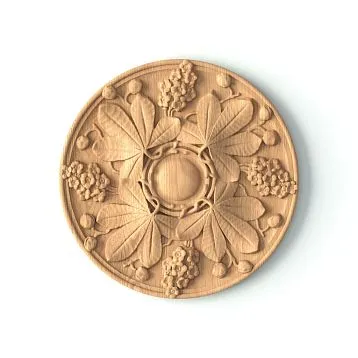
A decorative rosette on the wall can look like a medallion. It is used inside a frame, above a console, in the center of a symmetrical composition, next to a sconce, or as a repeating element in several panels. The rosette doesn't have to be large. Sometimes a small carved center makes the wall more expressive than a large panel.
Decorative solid wood overlays help work with the facade logic on the wall. If the room has furniture with carved elements, the overlays on the wall can repeat this motif. For example, a chest or console has expressive facades, and above them appears a wall panel with a similar character of decor. This way, the wall and furniture begin to speak the same language.
Overlays can be used in the corners of frames, in the central area, vertically, in pairs, or symmetrically. They help fill the void but don't require finishing the entire wall. This is convenient if you don't want to turn the living room into an overloaded decorative space. One or two elements can be strong enough.
Carved decor requires particularly careful scaling. On a large wall, a small element will get lost. On a small wall, a large one will feel oppressive. If the room has a low ceiling, vertically elongated details can help visually lift the wall. If the wall is wide, it's better to use a horizontal composition: a frame, side elements, a central rosette or overlay.
Before purchasing overlays and carved elements, it's useful to make a simple sketch. You don't have to draw a professional project. It's enough to note the wall width, furniture, eye level, light fixture locations, and future elements. This will help understand where decor is needed and where it's better to leave empty space.
Moldings and battens: a calm way to decorate a wall without heavy carving
Not every living room requires carved decor. Sometimes the wall needs not opulence, but neat geometry. In that case, moldings and battens work better. They help make the wall expressive without overloading it with ornament.
Moldings are suitable for frames, panels, vertical divisions, decorative rectangles, and wall compositions in neoclassicism. They can be used above the sofa, around a mirror, on the sides of a TV, behind a console, or on an empty wall between openings. The molding sets a boundary and makes the plane more architectural.
Battens are more often chosen for modern interiors. They create rhythm, stretch the wall vertically, help zone the space, and pair well with minimalist furniture. In the living room, battens can be used behind the sofa, in the TV area, near the fireplace, or on an accent part of the wall. If the topic is of further interest, you can additionally look at the material about Wooden boards in interior.
An important distinction: molding often works as a frame, while slats work as rhythm. If you need to create a classic panel, choose moldings. If you need a modern vertical, choose slats. If you want to combine both approaches, you can use moldings for the central frame and slats for the adjacent area, but this should be done carefully. Too many lines on one wall create visual noise.
Size matters. A thin molding on a large wall can get lost. A wide profile in a small room can look heavy. Frequent slats make a wall active, while sparse ones make it calm. If there is a large sofa nearby, the decor should be noticeable enough not to disappear. If there is a lot of furniture and textiles nearby, it is better to choose a restrained scheme.
Wooden brackets: not only support, but also a decorative accent
Brackets are often perceived only as support for a shelf. But in a living room, they can also work as decorative elements. Especially if the interior is built on classics, wood, carved details, consoles, fireplace areas, or decorated niches.
Wooden brackets help add depth. Unlike a flat overlay, they provide volume and shadow. They can be used under a decorative shelf, in a console area, next to a mirror, in framing a wall panel, or as part of a classic composition. But a bracket always looks convincing only when it has a clear role. It must visually or compositionally support something.
If brackets are simply placed on an empty wall without connection to a shelf, frame, niche, or furniture, they can look random. It is much better when they support a wall shelf, the side part of a composition, a decorative cornice, or the area above a console. Then they not only decorate but help the wall gain architectural volume.
Brackets pair well with baguette, carved decor, and overlays. For example, above a console, you can assemble a frame from baguette, place a mirror or rosette inside, and use decorative brackets below for a small shelf. In such a scenario, the wall becomes part of a furniture composition.
Before ordering, you need to check the scale. A small bracket will get lost under a wide shelf. A too large one will overwhelm a light console. It is important to consider not only the size of the wall but also the depth of the furniture, the height of placement, the style of neighboring elements, and the future finish.
What to choose: baguette, overlays, moldings, slats, or brackets
The choice depends not on which element is more beautiful, but on the wall's task. One living room requires a calm frame, another requires vertical rhythm, a third requires a central carved accent, and a fourth requires a decorative shelf with brackets.
| Task | Best solution | Why this works | When not to choose |
|---|---|---|---|
| Make the wall behind the sofa complete | Bagette frame or moldings | Set zone boundaries and connect the wall with furniture | If the sofa is too low and the wall is small, do not make the frame excessively large |
| Add a classic center | Rosette, carved decor, overlays | Create a decorative focus and support furniture | If the interior is modern and without ornaments |
| Make the wall modern | Reiki or simple wooden molding | Creates rhythm, verticality, and a concise relief | If the room is already overloaded with vertical lines |
| Decorate the wall above the console | Molding, overlays, brackets | It creates a furniture-wall composition | If the console itself is very decorative, it's better to keep the wall calmer |
| Support the wooden furniture | Molding, overlays, carved decor | The material and character of the facades are repeated | If there are no other wooden elements in the room |
| Add a subtle relief | Moldings in wall color | The wall becomes deeper without strong contrast | If a bright accent area is needed |
| Make a volumetric decorative shelf | Brackets and moldings | Not only a plane appears, but also depth | If the passage is narrow and protruding elements will interfere |
Sometimes the best choice is not one element, but a combination. For example, a wooden baguette for a frame, decorative overlays for corners, and a molding for the inner contour. Or slats for vertical rhythm and a small frame above a console. But each combination must be justified. If an element does not solve the task, it is superfluous.
How to choose the size, rhythm, and placement of decor
An empty wall can be different: narrow between windows, wide behind a sofa, tall in a living room with a staircase, short next to a door, complex due to a TV or niche. Therefore, you cannot choose decor based only on a photo. You need to measure the wall and see how it lives in the room.
Start with furniture. If the decor is above a sofa, the width of the composition should generally relate to the width of the sofa. A frame that is too small will get lost. One that is too wide will compete with the furniture. If the decor is above a console, it should support its axis. If the wall is next to a TV, it is important not to create too active a relief that will be distracting.
Height is also important. The center of the composition should be comfortable for the eye. If a frame, rosette, or panel is too high, the wall looks empty in the lower part. If too low, the decor competes with the furniture. In a living room, you need to consider how people sit: decor above a sofa is perceived not only while standing but also while sitting.
Rhythm depends on the size of the room. In a small living room, fewer divisions are better. One frame, one molding, a few calm overlays. In a large room, you can use a series of frames or vertical panels. But even on a large wall, it is important to leave pauses. The decor should breathe.
The width of elements should match the scale. A large wall requires a noticeable profile. A small area requires a thinner one. If carving is used, there should be enough clean plane nearby. If slats are used, the distance between slats affects perception: a frequent step makes the wall active, a rare one makes it calm.
Color can be chosen in several ways. First, matching the wall color. Then wooden elements provide relief but do not contrast. Second, matching the color of furniture or floor. Then the decor connects the wall with objects in the room. Third, a separate accent shade. It should be used carefully, especially if the living room already has many colors and textures.
Decorating an empty wall for different living room styles
In a classic living room, an empty wall should rarely remain completely smooth. Here, baguette frames, carved decor, rosettes, decorative overlays, brackets, and symmetry are appropriate. But classic requires discipline. Ornaments should repeat, frames should maintain proportions, and central elements should not compete with each other.
In neoclassicism, a calmer scheme works better. Moldings, baguette frames, light coloring, neat rosettes, minimal carving. The wall can look rich due to proportions, not the number of details. For a living room with a sofa and sconces, this is one of the most reliable options.
In modern classic, you can combine wooden baguette, simple moldings, individual overlays, and furniture motifs. Here, it is important not to go into palace decorativeness. It is better to choose one expressive technique: a frame above the sofa, a panel behind the console, a series of vertical frames, or calm slats.
In modern interiors, slats, smooth trim, laconic panels, and vertical rhythm are more commonly used. Carved overlays are only appropriate here as a subtle accent, if they are supported by the furniture or the overall concept of the room. Otherwise, they will look out of place.
In a living room with wooden furniture, wall decor can be selected by repeating the material. For example, a baguette supports the mirror frame, an overlay echoes the dresser front, a bracket repeats the character of the console, and slats connect the wall to the wooden floor. This approach is especially useful when the furniture is beautiful, but the wall behind it looks empty.
In a living room with a TV, you need to be careful. Too much active carving around the screen is tiring. It's better to use calm slats, frames, or moldings that don't compete with the image. If the TV is not the main object, it can be integrated into the overall wall composition, but don't turn the decor into a noisy background.
What to buy together for a wall composition
An empty wall is rarely decorated with just one category. If you buy only a baguette, you might lack a central accent. If you take only overlays, they may look random without a frame. If you choose only slats, the wall will become rhythmic, but it won't always have a finished center. Therefore, it's better to assemble a set in advance.
For a classic composition, a baguette, overlays, carved decor, and brackets work well together. The baguette sets the frame, overlays decorate the corners or center, carved decor adds expressiveness, and brackets create volume.
For neoclassicism, you can use moldings, a baguette, and small rosettes. This set looks neat and doesn't overload the living room. If the elements are painted the color of the wall, the decor turns out soft and architectural.
For a modern interior, slats, simple trim, and laconic wooden details are suitable. It's better not to mix many ornaments here. Wood can work through line, texture, and rhythm.
For a console area, you can assemble a composition from a baguette frame, decorative overlays, and brackets. If a mirror is planned above the console, the baguette will help frame it as part of the wall. If a mirror is not needed, you can leave a painted plane inside the frame and add a rosette or overlay decor.
| What to add to the purchase | Why this is needed | Which scenario it suits | What to pay attention to |
|---|---|---|---|
| Wooden picture frame molding | Assemble a frame, panel framing, or mirror framing | Wall above the sofa, console, classic living room | Profile width, wall size, joint angles |
| Bagette molding | Fit the composition to the wall size | Large wall, multiple frames, custom layout | Length calculation, cutting allowance, element repetition |
| Decorative solid wood overlays | Add accent and relief | Panel center, frame corners, connection with furniture | Scale, symmetry, thickness |
| Carved wood decor | Make the composition more expressive | Classic, study living room, formal area | Don't overload the small wall |
| Wooden moldings and slats | Create frames, lines, vertical rhythm | Neoclassical, modern living room, TV area | Division frequency, width, color |
| Wooden brackets | Add volume and support the shelf or console | Console area, fireplace area, classic interior | Depth, height, load, style |
| Wall decor from polyurethane | Create a light relief on the wall | Neoclassicism, painted walls, frame schemes | Compatibility with finishes and overall style |
| Decorative wall moldings | Assemble wall frames and panels | Classic and neoclassical living room | Profile size, corners, installation |
A comprehensive approach is especially important if the living room already has several active zones: a sofa, TV, console, fireplace, bookshelf. Wall decor should not compete with them, but connect them. If each area is decorated differently, the room will become fragmented. If you repeat the material, shape, or rhythm, the interior will come together.
How not to confuse wall decor with similar solutions
Wooden baguette, molding, slat, overlay, bracket, and carved decor can be made from similar materials and look similar in style, but their purposes are different. The mistake begins when an element is chosen only for its beauty, without understanding its role.
Bagette is needed for framing. It creates a frame, outline, border. It is chosen when you need to highlight a part of a wall, design a panel, mirror, painting, or empty decorative frame. Bagette does not replace a batten if vertical frequent division of the entire wall is needed.
Linear molding is needed for extended solutions. It helps to assemble a scheme to size: several frames, large panels, long horizontal or vertical elements. It is chosen when the composition depends on length and repeatability.
Molding is needed for wall geometry. It can be calmer than bagette and is often used for frames, rectangles, wall panels. If the task is to design a wall in neoclassical style, molding will often be more appropriate than active carved decor.
Batten creates rhythm. It works not as a frame, but as a series of lines. Batten helps to elongate a wall, zone the space, make a modern accent. If you need to fill the void behind a sofa, battens can become an independent background.
Applique is needed for an accent. It does not shape the entire wall, but adds a decorative center, corner, or motif repetition. Applique works well inside a frame or next to furniture, but on a large empty wall, a single small applique can get lost.
Bracket creates volume. It is appropriate when there is a shelf, console, niche, or composition where volume is visually needed. On a flat wall without connection to other elements, a bracket may look unnecessary.
Carved decor enhances the style. Not every living room needs it. If the interior is calm, carved elements should be used sparingly. If the room is classic, it can become the main accent.
Practical selection for specific situations
Empty wall above the sofa
The most common scenario is a large empty plane behind the sofa. Here it is important to consider the width of the sofa and the height of the backrest. The composition should not be too small. One large bagette frame, two or three symmetrical frames, molding panels, or calm battens work well.
If the sofa is solid-colored and simple, the wall can be more expressive. If the sofa is bright, with active pillows and textiles, it is better to choose calm decor. Wooden appliques can be used inside a frame or at corners, but not overload the entire area.
Wall behind the console
The console almost always asks for a background. Above it, you can make a frame from a baguette, place a mirror, a decorative rosette, an overlay, or a small panel. If the console is wooden, the wall decor is best tied to its material. Brackets can support a shelf or a decorative top element.
The composition should align with the axis of the console. If the frame is shifted, the entire area looks untidy. If the console is narrow, the decor should not be too wide. If the console is massive, a small overlay above it will be lost.
Empty wall next to the TV
Here it is important not to distract from the screen. It is better to choose calm slats, moldings, or baguette contours without active carving. The decor should help integrate the TV into the wall, not compete with it. If using a carved element, it is better to place it in an adjacent area rather than directly around the screen.
Large long wall
A long wall is better divided. One small painting on it will look random. You can use several baguette frames, vertical moldings, a series of slats, or repeating panels. Repetition helps the wall look not empty, but not overloaded either.
On a long wall, indents are especially important. If panels are of different sizes without reason, the composition seems erroneous. If the distances are equal, the wall looks well-thought-out.
Small living room
In a small room, decor should be neat. Too much carving, wide frames, and active brackets reduce the space. It's better to use a thin baguette, calm molding, one small overlay, or vertical slats with moderate spacing.
It's better to make the color close to the wall or furniture. Strong contrast is acceptable, but only if it is supported by other elements in the room.
Living room with wooden furniture
, so that the wall composition does not conflict with the facades and decorative details of the items. How to Decorate FurnitureWall preparation, marking, and finishing
Wall preparation, marking, and finishing
Before buying decor, you need to understand the condition of the wall. It must be level, dry, stable, and ready for installation. If the wallpaper is peeling, paint is flaking, there are damp areas, or deep unevenness, decorative elements will not solve the problem. First, you need to prepare the base.
Marking is the most important stage. Even expensive decor will look bad if the frames are crooked, the overlays are not aligned in height, the slats have different spacing, and the central rosette is shifted relative to the sofa or console. Before installation, it is useful to transfer the diagram to the wall using painter's tape. This way, you can see the composition in real scale.
If frames made of baguette or moldings are used, check the corners. The joints must be neat. If painting in the wall color is planned, small imperfections will be less noticeable, but they still affect the overall appearance. If the wood remains visible, the quality of the joints and the shade become even more important.
If slats are used, calculate the spacing in advance. Too frequent slats will make the wall busy. Too sparse slats may look random. If the slats are behind the sofa, check that the furniture does not cover the lower part so that the rhythm is lost.
If overlays or rosettes are used, first find the axis of the composition. The center of the sofa, the center of the console, the center of the wall, and the center of the decorative frame do not always coincide. You need to choose a main reference point. Most often in a living room, furniture is used as a reference because a person perceives the wall together with the object in front of it.
Finishing depends on the idea. The decor can be painted in the wall color, tinted to look like wood, highlighted with contrast, combined with furniture, or given a soft transition through a close shade. Exact options for material and finishing should be checked in product cards or clarified with a STAVROS manager before ordering.
Mistakes when decorating an empty wall
The first mistake is buying decor without measurements. In a photo, a baguette, overlay, or slat may look suitable, but on the actual wall, it could turn out too small or too large. Before ordering, you need to measure the wall, furniture, and distances.
The second mistake is choosing one beautiful element without a composition. One overlay on a large empty wall often looks random. It needs a role: the center of a frame, a repeated motif, part of a panel, or a connection with furniture.
The third mistake is overloading a small living room. Carved decor, wide frames, frequent slats, and brackets all at once can make the room feel cramped. It is better to choose one main technique.
The fourth mistake is mixing different styles. Modern-style slats, carved rosettes, classic baguette, and a strict minimalist sofa can clash. Mixing is possible, but it must be intentional.
The fifth mistake is not considering the furniture. Decor is chosen for the wall, but it is seen together with the sofa, console, cabinet, or TV. If the composition is not connected to the furniture, it seems separate.
The sixth mistake is forgetting about light. Textured decor creates shadows. This is beautiful if the lighting is well thought out. But with incorrect lighting, shadows can emphasize wall imperfections or make the composition heavier.
The seventh mistake is using too small a profile on a large wall. It will get lost and won't solve the problem of emptiness. It's better to choose an element that matches the scale of the room.
The eighth mistake is making all walls equally active. If one wall has become an accent, the rest are better left calmer. The living room should not turn into an exhibition of decor.
The ninth mistake is not checking joints and corners. Baguette, moldings, and slats require careful cutting and precise marking. Careless installation ruins even a good idea.
The tenth mistake is buying elements from different sets. If the baguette, overlays, slats, and brackets don't match in scale and style, the wall looks like it's assembled from random leftovers.
Who this wall decoration method suits
A composition of wooden frames, baguettes, rosettes, overlays, moldings, slats, and brackets suits those who want to make the living room more cohesive and expressive without a complete room renovation. It's a good path if the wall is empty but the renovation is already finished, furniture is in place, and you need to add a final decorative layer.
This approach suits classic and neoclassical interiors where symmetry, frames, relief, and connection with furniture are important. It works well in living rooms with a sofa against the wall, a console, a fireplace area, high ceilings, wooden furniture, expressive doors, or decorative baseboards.
It also suits modern interiors if you use calmer elements: slats, minimalist trim, simple frames, minimal carving. In this case, wood adds warmth but doesn't make the interior heavy.
This method may be unnecessary if the living room is very small, the walls are already occupied by furniture, wallpaper with an active pattern, paintings, shelves, and lighting. In such a case, it is better not to add a new layer of decor, but to remove visual noise or choose one very calm element.
If the wall is uneven, damp, or requires repair, technical issues must be resolved first. Decor should not mask a poor base. It only reveals itself on a prepared surface.
How to buy elements for an empty wall on STAVROS
It is best to start purchasing with a task. Need to decorate the wall above the sofa — look at baguettes, moldings, and overlays. Need to create a vertical rhythm — slats and moldings will work. Need to add a classic center — look at carved decor and decorative overlays. Need to decorate a console area — you can combine baguettes, brackets, and a central element.
On STAVROS, it's convenient to select elements not one by one but as a set. First, choose the base of the composition: a frame, panel, slats, or decorative shelf. Then add an accent: a rosette, overlay, carved element. After that, check the adjacent details: moldings, trim, brackets, connection with furniture and finishes.
Before ordering, be sure to check the dimensions, material, purpose, installation features, and finishing options in the product card. If the composition is complex, it is better to clarify the compatibility of elements with a STAVROS manager in advance. This is especially important if the decor must match already installed furniture, baseboards, door trims, or other wooden details.
A good purchase route looks like this: measure the wall, choose the main scenario, determine the size of the composition, select the base, add accent elements, check the finish, calculate the quantity, then place the order. This approach protects against impulse purchases and helps create a wall that looks not decorated "as an afterthought," but designed.
FAQ: questions about decorating an empty wall in the living room
How to decorate an empty wall in the living room without paintings?
You can use wooden frames from baguette, moldings, slats, decorative overlays, rosettes, brackets, and carved decor. Such decor makes the wall part of the finish, not just a place for a painting.
What is better to hang above the sofa in the living room?
Above the sofa, baguette frames, molding panels, calm slats, or a composition with a central decorative rosette work well. The main thing is to consider the width of the sofa and not make the decor too small.
Can I leave the frame on the wall empty inside?
Yes. An empty interior baguette frame can be an independent decorative technique. Inside, you can leave a painted wall, wallpaper, texture, a rosette, or a small overlay.
What to choose for a classic living room?
For a classic living room, wooden baguette, carved decor, decorative overlays, rosettes, and brackets are suitable. But they should be used symmetrically and not overload the wall with small details.
What to choose for a modern living room?
For a modern interior, wooden slats, laconic trim, simple moldings, and calm frames are more often suitable. Active carving is better used only as a small accent.
How are moldings different from baguette?
Bagettes are more often used for frames and expressive borders. Moulding more often works as a wall profile for frames, panels, and geometric divisions. In one composition, they can be combined if they match in style.
When are decorative overlays needed?
Overlays are needed when the wall lacks an accent: in the center of a frame, at the corners of a panel, above a console, next to furniture. They help connect wall decor with facades, carvings, and wooden details in the room.
Can slats be used together with baguette?
Yes, but carefully. Slats create rhythm, baguette creates a frame. If both elements are active, the wall can become overloaded. It's better to choose a main technique and support it with a second element very calmly.
How to choose the size of a wall composition?
Focus on the wall and furniture. Above a sofa, the composition should relate to the width of the sofa. Above a console, to its axis and width. On a long wall, it's better to use several repeating panels or frames.
Do I need to paint wooden decor the color of the wall?
Not necessarily. If painted the color of the wall, you'll get a soft architectural relief. If you leave the wood or highlight it with a shade, the decor will become more noticeable. The choice depends on the living room style and adjacent furniture.
How not to overload the wall with decor?
Choose one main element: frames, slats, a carved centerpiece, or a decorative shelf with brackets. The other elements should support it, not compete. The smaller the living room, the calmer the decor should be.
What to buy together to decorate an empty wall?
Most often, a set is assembled from baguette, moldings, decorative overlays, carved decor, slats, or brackets. The composition depends on the scenario: the wall above the sofa, the console area, the TV zone, a classic panel, or a modern vertical accent.
Can you decorate an empty wall without renovating the entire room?
Yes. If the wall is prepared and the covering is stable, decorative elements can be chosen as the final layer. It is important to pre-mark the composition, check the dimensions, and tie the decor to the furniture.
Where to buy wooden wall decor for the living room?
Elements for a wall composition can be selected at STAVROS: baguette, trim, decorative overlays, carved decor, moldings, slats, and brackets. Before ordering, check the dimensions, material, finish, and purpose in the product cards.
Result: an empty wall should become part of the living room, not a random background
An empty wall in the living room is not a problem in itself, but an opportunity to create an expressive interior zone. It can be decorated with wooden frames made of baguette, decorative rosettes, overlays, moldings, slats, brackets, and carved decor. The main thing is not to buy elements randomly, but to understand what role they play.
If you need to add architecture, choose baguette and moldings. If you need a centerpiece, use a rosette or decorative overlay. If you want a modern rhythm, slats will work. If the area is associated with a console, shelf, or classic furniture, you can add wooden brackets. If the living room already has carved facades and wooden details, wall decor will help tie them into one composition.
STAVROS helps you move from an empty wall to a ready-made selection: choose wooden baguette, linear molding, overlays, carved decor, moldings, slats, and brackets, check the parameters in the cards, and assemble a set for a specific living room. Then the wall will look not filled for the sake of filling, but a thoughtful part of the interior.