










































































Article Contents:
- KN-011 as a product base: a precise wooden cube, not an abstract blank
- Characteristics of KN-011 for selection
- Furniture posts
- Interior partitions and screens
- Decorative supports and legs
- Balusters and vertical decorative elements
- Decorative rods
- Cube plus wooden axle
- Cube plus sphere
- Cube plus disc
- Cube plus KON partition set
- Cube plus finishing materials
- Beech for enamel
- Oak for tinting
- Enamel
- Varnish
- Oil
- Toning
- Minimalism
- Loft
- Scandinavian Style
- Modern Neoclassicism
- Designer furniture
- What is the KN-011 geometric shape?
- Is it a regular wooden cube for crafting?
- What is the 34 mm hole for?
- Can KN-011 be used for a partition?
- Is KN-011 suitable for a furniture leg?
- What to choose: beech or oak?
- Can KN-011 be painted with enamel?
- What does the wooden cube KN-011 pair well with?
- How many cubes are needed for one stand?
- Can KN-011 be used outdoors?
- Where to buy a wooden cube with a 34 mm hole?
- How is KN-011 better than a random blank?
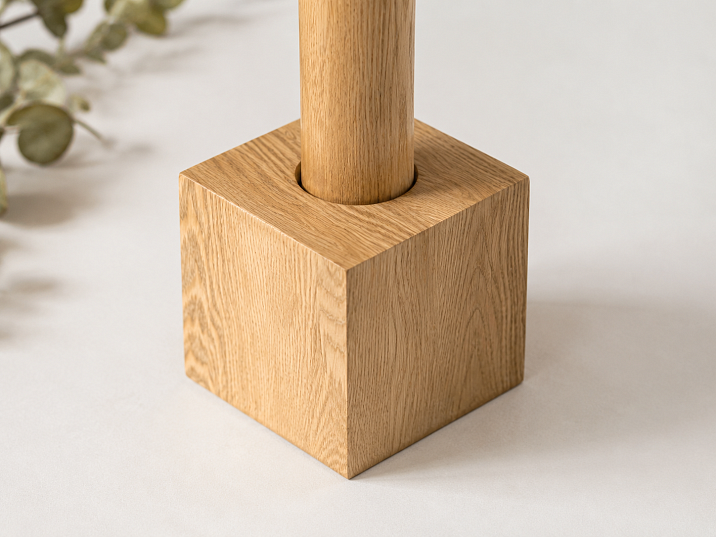
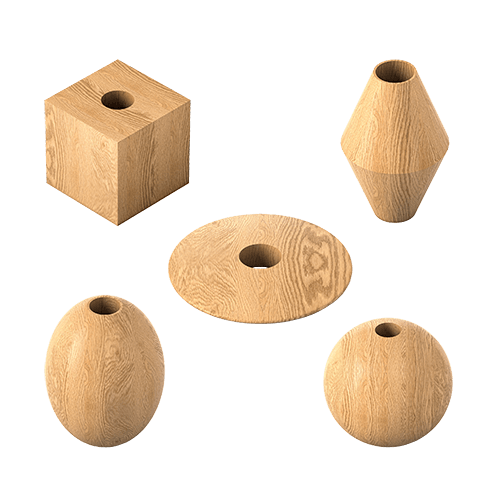
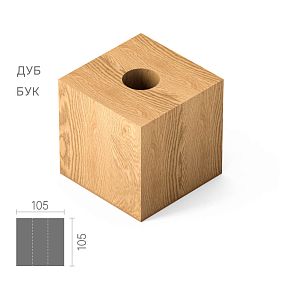
The geometric shape KN-011 is a wooden cube with a 34 mm hole for assembling furniture stands, decorative partitions, supports, rods, balusters, and custom interior structures. If a buyer is looking for where to buy wooden cube blanks not for a simple craft but for a real furniture task, KN-011 exactly covers this scenario: it is not a toy cube or a random blank for painting, but a precise STAVROS wooden module measuring 105 × 105 × 105 mm with a mounting hole for the axle.
This part has character. The cube does not try to be soft, twisted, classically rounded, or inconspicuous. It works differently: it sets strict geometry, straight edges, a clear shadow, an architectural accent. Where a ball makes a stand smooth, a cube makes it composed. Where a simple rail looks technical, a cube on an axle turns the structure into a design object. That is why Geometric figure KN-011 it is interesting not only to furniture workshops but also to designers, carpenters, interior architects, partition manufacturers, and private clients who want to assemble an unusual part from natural wood.
Important point: KN-011 cannot be evaluated as an ordinary "wooden cube". It has a through hole of 34 mm, which allows the element to be used on a wooden axle, decorative rod, post, baluster, or other compatible structure. This format makes the cube part of a system, rather than an independent nameless blank. It becomes part of a rhythm: cube — rod — cube, cube — sphere — disc, cube — smooth section, cube — partition.
This article will help you understand how KN-011 differs from simple unpainted cubes, how to choose beech or oak, where to use a wooden cube with a hole, how to combine it with other STAVROS elements, how to calculate the number of modules, and what mistakes are most often made when purchasing wooden furniture blanks.
KN-011 as a product base: a precise wooden cube, not an abstract blank
When a person searches for "buy wooden cube blanks" or "buy wooden blanks for furniture", they may mean completely different things. One person needs small cubes for crafts. Another needs unpainted parts for decoupage. A third needs a furniture blank that can withstand a real carpentry task: fit on an axle, become part of a post, enter a decorative partition, support a support or baluster.
KN-011 belongs precisely to the third category. It is not a decorative trinket "just in case", but a geometric wooden figure for the STAVROS construction set. Its size is 105 × 105 × 105 mm. All three sides are equal, so the element is perceived as a full-fledged cube, not as a block, strip, or thickening. The 34 mm hole makes it compatible with structures using an axle or rod of the corresponding diameter.
In terms of material, the product card offers beech and oak. Beech is specified as a variant for enamel, oak for tinting. This is important for purchase: if the cube should become a monochrome architectural block matching the color of furniture, walls, or partitions, the painting scenario is usually considered. If the natural wood grain needs to be shown, it is more logical to look at the tinting variant. Always check the current material, status, price, availability, and order conditions in the product card or clarify with a STAVROS manager.
KN-011 is part of the group of wooden elements of the STAVROS construction set. This means it can be considered not separately, but in conjunction with other figures, moldings, KON partition sets, furniture legs, decorative rods, and finishing materials. It is within the system that its commercial value is revealed: the buyer receives not just a cube, but a module for assembling an interior structure.




Characteristics of KN-011 for selection
| Parameter | Value for the customer |
|---|---|
| Model | Geometric shape KN-011 |
| Product type | Wooden cube with mounting hole for furniture and interior structures |
| Main URL | Geometric figure KN-011 |
| Size | 105 × 105 × 105 mm |
| Hole diameter | 34 мм |
| Material | Beech or oak, the relevant option is selected in the card |
| Preparation | Beech — for enamel; oak — for tinting |
| Sanding quality | Prestige |
| Purpose | Furniture posts, supports, legs, balusters, decorative rods, partitions, screens, custom structures |
| Compatibility | The axle, rod, or other element must match the 34 mm hole |
| Order conditions | The card indicates the status "made to order"; current lead times and availability check on the STAVROS website |
| What to check before purchase | Axle diameter, number of cubes, material, coating, fixing method, element role in the structure |
Our factory also produces:




How KN-011 differs from a regular wooden cube
A regular wooden cube is more often bought for crafts, painting, decoupage, children's educational sets, souvenirs, or simple decorative work. Its main task is to be a blank base for decoration. Such products can have different sizes, the material is not always critical, there is usually no hole, and furniture compatibility is not assumed.
KN-011 is designed for something else. It is bought not 'for a craft' but for a structure. It already has an assembly logic built in: a through hole of 34 mm allows the element to be threaded onto an axle, used as an accent on a stand, included in a partition, or combined with other construction kit parts. Therefore, the query 'buy wooden cube blanks' for KN-011 should be understood not as hobby traffic but as furniture and interior intent.
A regular cube can be small, light, without a specific purpose. KN-011 is a large wooden block 105 mm on each side. It is noticeable in the interior. It cannot be hidden in a composition like a small washer. It becomes a visual node: divides the vertical, stops the eye, creates a square silhouette on a round axle.
Another difference is the material. The KN-011 listing specifies beech and oak. For a furniture blank, this is crucial: the material affects the coating, appearance, tactility, color, and perception in the interior. If a buyer wants to buy wooden furniture blanks, they must understand what finish and what structure they are taking the material for.
| Criterion | KN-011 STAVROS | Regular wooden cube |
|---|---|---|
| Main task | Furniture stands, partitions, supports, rods, balusters | Crafts, painting, decoupage, souvenirs |
| Size | 105 × 105 × 105 mm | Can be any, often significantly smaller |
| Hole | 34 мм | Usually absent |
| Material | Beech or oak | Often not a key parameter |
| Finish | For enamel or tinting depending on the material | Usually requires self-preparation |
| Role in construction | Module on an axis, decorative and compositional accent | Self-made blank without a structural system |
| Where it is appropriate | Furniture, partitions, racks, supports, interior structures | Crafts, decorative trinkets, educational kits |
Therefore, in the article and on the KN-011 card, it is important not just to say "wooden cube." More correctly: a wooden cube with a 34 mm hole, a furniture blank made of wood, a construction set element, a module for a stand, a decorative cube for a partition, a geometric shape for custom furniture.
Get Consultation
Why does a wooden cube need a 34 mm hole
The hole is the main difference between KN-011 and simple cubes. Without it, it would just be a solid wooden shape. With the hole, the cube becomes a module: it can be threaded onto an axle, used in a repeating rhythm, combined with other shapes, placed on a stand, included in a decorative rod, or assembled into a partition element.
The 34 mm diameter is important not in itself, but as a fitting parameter. The buyer must check in advance whether the diameter of the future axle, rod, or stand matches the cube's hole. If the axle is smaller, the element may require additional fixation or adaptation. If larger, the cube simply won't fit. Therefore, before ordering, you need to measure, not guess.
In the STAVROS system, compatible wooden elements can be used with KN-011. For example, Wooden molding MLD-060 has a cross-section of 34 × 34 mm and can be considered an axial element for structures where a corresponding fit is needed. Before purchasing, you still need to check the dimensions on the card and think through the specific assembly.
The hole also affects the aesthetics. A cube on an axle is a strong contrast of forms: a square volume and a line passing through it. If the axle is wooden, the composition looks solid and joinery-like. If a metal pipe of the appropriate diameter is used, a more modern, graphic character emerges: wood and metal, plane and cylinder, warm material and strict line.
However, the hole does not make the cube a universal load-bearing part for any loads. KN-011 can be used as a decorative and structural element within a well-thought-out system, but if it comes to actual support, a leg, a stair baluster, or a partition under load, the structure must be calculated by a professional. A decorative module cannot be assigned as a load-bearing element "by eye."
Where to use a wooden cube with a 34 mm hole
KN-011 is interesting because its application is not limited to one category. It can be part of furniture, a partition, a screen, a decorative stand, a support, a baluster, a rod, or a custom interior structure. The main thing is not to try to use it the same way everywhere. In each scenario, the cube solves its own task.
Furniture Stands
On the KN-011 furniture stand, it works as a visual intercept. Imagine a vertical wooden or combined axis: if it is completely smooth, the gaze passes by. If a cube appears on it, the stand gains a center, weight, and character. It ceases to be just a technical support and becomes part of the design.
This technique is suitable for console tables, shelving units, étagères, bar structures, decorative stands, open shelves, and designer cabinets. The cube can be single — as a central accent. It can repeat — creating a rhythm. It can combine with spheres, discs, or smooth sections — then the stand acquires a more complex plasticity.
The KN-011 looks especially good in modern projects where straight lines and geometry are important. In classic furniture, turned forms, smooth transitions, rollers, and spheres are often used. The cube creates a different language: constructive, assembled, slightly architectural. It is suitable for furniture that should look not traditional, but authorial.
Interior Partitions and Screens
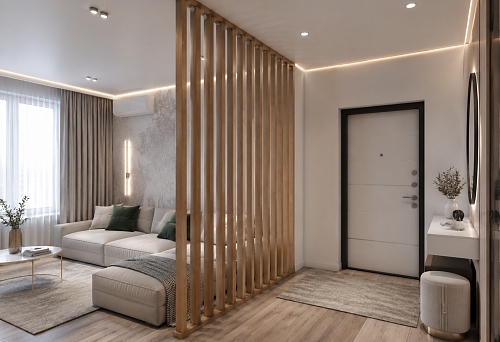
In a partition, a wooden cube with a hole can work as a decorative node on a vertical stand. If a simple slatted partition is built only from identical slats, the structure turns out calm but sometimes too predictable. Adding cubic modules changes the rhythm: the vertical becomes not just a line, but a sequence of volumes.
For room zoning, the KN-011 can be combined with other constructor elements and KON kits. For example, in the section of wooden elements of the STAVROS construction set ready-made partition kits and individual geometric shapes are presented. The buyer can compare the logic of ready-made stands and understand whether they need a fully finished kit or their own composition.
If a ready-made decorative stand is needed, it is worth looking at Partition kit KON-005. If you want to assemble an individual rhythm, the KN-011 can be considered as a separate cubic module. But in both cases, it is important to calculate the height, pitch, number of elements, and attachment to the floor and ceiling in advance.
In a screen, the cube can become an accent on vertical posts or a connecting element between sections. Here, weight and stability are especially important. If the structure is mobile, it needs to be designed separately: the decorative cube should not disrupt the balance.
Decorative supports and legs
KN-011 can be used as part of a composite furniture support. The cube in the center of the leg gives a completely different look than a classic turned shape. It creates a sense of block, support, architectural base. Such a leg can suit a coffee table, console, bench, stand, decorative cabinet, or an author's piece in loft, minimalism, Scandinavian modernism, or contemporary neoclassical style.
If the buyer is selecting Furniture legs, KN-011 can be considered not as a replacement for a ready-made leg, but as a module for self-assembly. But that is already a carpentry task. You need to understand the height of the furniture, the expected load, the number of supports, the connection method, stability, floor protection, and coating.
The cube can be the central element of the leg, the lower block, the upper transition, or a decorative insert. But if the support is truly meant to bear weight, it cannot be designed based solely on appearance. For a table, cabinet, bench, or console, the structure must be evaluated by a craftsman.
Balusters and vertical decorative elements
The cubic shape on a baluster looks unusual. Traditionally, balusters are built on rounded turned bodies: sphere, drop, roller, grip. KN-011 introduces a different rhythm—straight, geometric, modern. It can be used in custom stair railings, decorative posts, interior portals, and partitions.
If you are working with a staircase area, also check the section Solid Wood Items and related catalog items. But in a staircase, it is especially important to remember safety. Any baluster, post, or railing must correspond to the actual load, height, spacing, and fastening method. KN-011 can be a decorative module, but structural responsibility cannot be transferred to it without calculation.
Decorative rods
On the horizontal rod KN-011, it looks like a strong central accent. It can be an element of an open shelf, decorative lintel, furniture structure, bracket, post, or interior frame. The cube on the horizontal axis is especially expressive: it creates a pause, like an architectural block threaded onto a line.
If the rod is wooden, the entire composition looks solid. If the rod is metal, the cube becomes warmer and more noticeable. In both cases, it is important to check the diameter and consider the fixation. The cube should not dangle freely, rotate, or shift unless intended by the design.
How to combine KN-011 with other elements of the STAVROS system
The main strength of KN-011 is revealed in combinations. One cube is an accent. Several cubes create rhythm. Cube plus sphere creates contrast. Cube plus disc creates graphics. Cube plus smooth rod creates architecture. Cube plus a ready-made partition kit creates individual detailing.
Cube plus wooden axis
The most straightforward scheme is a cube on a wooden axis. It can be a vertical post, leg, decorative rod, or part of a partition. Visually, such a construction looks solid because the material is the same. If the cube and axis are painted the same color, they are perceived as a single piece. If the cube is tinted differently, it becomes an accent.
Here, not only the 34 mm hole is important, but also the overall proportion. The 105 mm cube is noticeable. On a thin or short structure, it will be dominant. On a tall post, it can work as one of several rhythmic nodes. Therefore, before purchasing, you need to consider not only "will it fit or not" but also how the element will look in the scale of the entire piece of furniture.
Cube plus sphere
The combination of a cube and a sphere is based on contrast. The sphere is soft, round, smooth. The cube is straight, angular, strict. Together, they create an expressive dialogue of forms. This scheme works well in custom posts, partitions, and decorative supports.
But contrast requires discipline. If there are too many different shapes on one axis, the design can look random. It's better to choose a principle in advance: cubes set strict nodes, spheres soften transitions; or vice versa, the sphere is the main element, cubes support the geometry. Without such logic, the composition quickly turns into a set of details.
Cube plus disc
The disc provides a horizontal line, the cube provides volume. Together, they can work as a base and a central block. This scheme is suitable for furniture legs, decorative stands, partitions. The disc can separate elements, while the cube sets the main accent.
In a modern interior, this combination looks graphic. It can be painted in one color to achieve a clean form, or tinted differently if you need to emphasize the structure.
Cube plus KON partition set
If a customer is assembling a partition, they don't necessarily have to start from scratch. The catalog includes ready-made KON sets: Partition kit KON-003, Partition kit KON-004, Partition kit KON-005, Partition kit KON-006 и Partition kit KON-007. They help to see how modular logic works: axis, repetition, shapes, height, rhythm.
KN-011 can be considered as an independent cubic accent within the same ideology. It is especially useful when a ready-made stand seems too soft or rounded, and the project requires strict geometry.
Cube plus finishing materials
A wooden cube cannot be considered complete just after purchase. It needs to be integrated into the finish: enamel, tinting, varnish, oil, patina, matte or more pronounced finish. For such work, you will need Mounting and finishing materialsbut the specific composition should be selected based on the material, surface, operating conditions, and the master's recommendations.
Beech or oak: which material to choose for KN-011
The question of 'beech or oak' cannot be resolved with the usual formula 'the more expensive, the better.' For KN-011, the material must match the finish and the interior task.
Beech for enamel
Beech is logical when the cube will be painted with an opaque coating. Under enamel, the main thing is not the natural wood grain, but the shape: edges, ribs, square silhouette, flat plane, and alignment on the axis. In this scenario, the cube becomes an architectural object. The color can match the furniture, walls, partition, doors, baseboard, or be an accent.
A white cube on a white partition gives a clean neoclassical or modern graphic. A graphite cube on a dark axis looks stricter and more expressive. A beige or light gray option softens the shape and is suitable for calm residential interiors. Colored enamel can be used in a children's room, salon, showroom, restaurant, or designer furniture.
If you plan to buy wood blanks for furniture specifically for painting, it is important to check the surface preparation. For enamel, choose a product designed for opaque coating. But even with good preparation, the master must perform dust removal, priming, interlayer processing, and final coating according to the technology.
Oak for tinting
Oak is chosen when you need to show the wood. The cube has large flat faces, and on them, the oak texture is especially noticeable. This is not a small turned roller where the pattern goes around the circumference. These are six planes, each showing the material.
Oak KN-011 under tinting is suitable for eco-minimalism, an office, custom carpentry projects, partitions with natural wood, furniture next to an oak floor, doors, countertop, or panels. The tinting can be light, warm, gray, walnut, dark—it all depends on the project.
But if the cube is completely covered with dense enamel, the oak texture loses its meaning. In this case, it is worth considering whether oak is really needed, or if it is more rational to choose beech for painting. This is not a question of status, but a question of the task.
Finish KN-011: enamel, varnish, oil, or tinting
The finish changes the character of the cube more than it seems. The same shape can look like a strict architectural block, a warm wooden detail, a graphic accent, or part of a furniture structure.
Enamel
Enamel hides the wood texture and emphasizes the shape. For KN-011, this is a very strong scenario: the cube becomes a pure volume. Light falls on the faces, edges give clear shadows, the hole works as a technical and visual axis. This option is suitable for modern interiors, painted partitions, furniture racks, supports matching the color of facades.
With enamel, the quality of preparation is especially important. Any unevenness on a flat face will be more noticeable than on a complex carved surface. Therefore, sanding, primer, and interlayer treatment are of great importance.
Varnish
Varnish protects the wood and preserves its naturalness. If a cube made of oak or beech should look like wood, not painted, varnish helps keep the material visible. This option is suitable for solid wood furniture, wooden partitions, racks, supports where natural texture is important.
When choosing varnish, you need to consider the gloss. A matte finish makes the cube calmer. Semi-matte adds depth. Glossy can emphasize the edges, but on flat surfaces it is more demanding on preparation.
Oil
Oil provides a warm tactile effect. It is especially appropriate where the wooden surface will be perceived up close: a furniture rack, a decorative support, an open shelf, an object near the hand. Oil does not turn the cube into a colored block, but emphasizes the material.
For commercial spaces and heavy use, you need to assess the care and renewal of the coating in advance. Oil is beautiful, but requires an understanding of the conditions.
Staining
Tinting allows you to change the shade of the wood while preserving the feel of the material. For oak KN-011, this is one of the most expressive options. You can match the cube with the floor, furniture, doors, and wall panels. A tinted cube on a rod or in a partition does not look like a random insert, but like part of a well-thought-out joinery system.
Before tinting, it is important to test the sample. The shade may appear differently on different wood species and batches. This is especially noticeable on large flat faces.
How to calculate the number of KN-011 cubes for a structure
There is no universal standard. You cannot say, "one post needs three cubes," because the tasks vary. For one structure, a cube may be the sole accent. For another, it may be a repeating module. For a third, it may be part of a rhythm where cubes alternate with spheres, discs, and smooth sections.
Start with the question: where will the element be placed? If it is a furniture leg, the number of cubes depends on the leg's height and function. On a low support, one cube may be the main body. On a tall post, the cube may only be a central grip. If it is a partition, count the number of posts and the number of cubes on each post separately.
The second question: what rhythm is needed? One cube in the center creates an accent. Two cubes at the top and bottom provide symmetry. Several cubes with equal spacing create a graphic repeat. Cubes combined with spheres or discs produce a more complex decorative pattern.
The third question: what axis is used? You need to check the diameter and length. The KN-011 hole is 34 mm. If the axis does not fit, the project requires adaptation. If the axis fits, then calculate the free height, distances between elements, fastenings, and edge offsets.
Simple calculation logic for a vertical post:
-
Determine the total height of the post.
-
Select the axis diameter and check compatibility with the 34 mm hole.
-
Decide whether KN-011 will be the main accent or a repeating element.
-
Set the distance between decorative modules.
-
Calculate the number of cubes per post.
-
Multiply by the number of posts in the partition or furniture.
-
Add a margin only after consulting with the master if the project is complex.
For a partition, first count the number of vertical posts, then the number of cubes on each. If the posts must be identical, all elements are purchased as a set. If the partition is asymmetrical, you can highlight the central posts with cubes and make the side ones calmer.
How to use KN-011 in different interior styles
A cube is a strict form, but not cold if made of wood. It is this combination that makes KN-011 a flexible tool: geometry provides modernity, material provides warmth.
Minimalism
In minimalism, KN-011 works as an honest form without unnecessary decoration. The cube can be painted to match the color of the wall, furniture, or stand. No carvings, no curls, only volume and shadow. This approach is suitable for partitions, shelving, supports, and cantilever structures.
Loft
In a loft, a wooden cube pairs well with metal, concrete, brick, dark enamel, and open shelves. A cube on a metal or wooden axis can become a strong industrial detail, but without roughness. It adds handcrafted joinery warmth to the structure.
Scandinavian style
In a Scandinavian interior, it's better to leave the cube light, natural, or paint it in soft tones. It can be part of a shelving unit, a light partition, a shelf stand, or furniture in a children's room or living room. The main thing is not to overload the composition: one or two accents work better than a too dense set of shapes.
Modern Neoclassicism
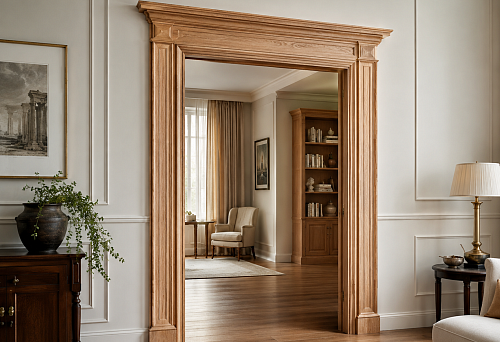
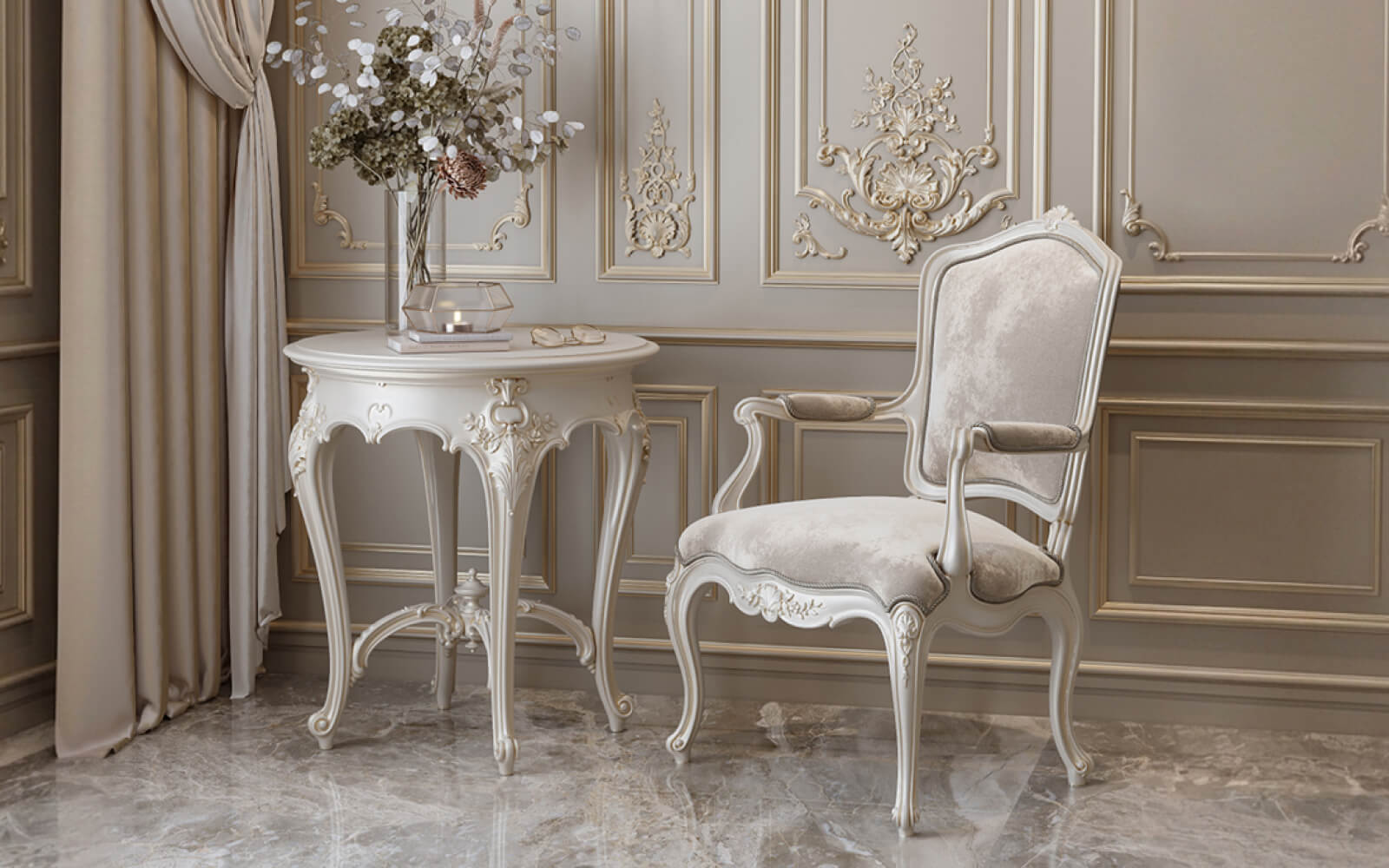
In modern neoclassicism, KN-011 is interesting as an alternative to a traditional turned detail. If the interior already has moldings, baseboards, paneled doors, but the furniture needs to be more strict, the cube can connect classic and modern. Under enamel, it fits especially well into calm white, milky, gray, and complex pastel palettes.
Custom Furniture
For custom furniture, KN-011 is a powerful tool. It helps create a recognizable leg, an unusual stand, a decorative axis, an accent on a partition or rod. Unlike a random part, the cube has a precise size and a clear fit, making it easier to incorporate into a project.
Mistakes When Buying Wooden Cube Blanks
The first mistake is buying regular craft cubes instead of furniture blanks. For a craft project, that's fine; for a stand or partition, it's not. In a furniture task, size, material, hole, compatibility with the axis, surface quality, and finishing options are important.
The second mistake is not checking the hole. KN-011 has a 34 mm hole, and this needs to be matched with the future rod or axis. You can't buy a cube and then look for a random rod that 'will somehow fit.'
The third mistake is not calculating the quantity. One cube may look nice in a photo, but a real partition will require a series. If you buy more later, you may face issues with lead times, availability, or material differences.
The fourth mistake is mixing beech and oak without a finishing plan. If all elements will be under enamel, the difference can be hidden. If tinting or varnish is planned, the materials will be perceived differently. Mixing should be intentional.
The fifth mistake is using a decorative element as a load-bearing one without calculation. KN-011 can be part of a support or post, but the load depends on the entire structure: axes, fasteners, base, number of elements, direction of force. This is a question for the master.
The sixth mistake is forgetting about the coating. A wooden cube with flat faces requires careful finishing. Imperfections, drips, poor primer, sanding marks are visible on it. Saving on finishing immediately reduces the result.
The seventh mistake is not thinking through the style. The cube looks strict. If all the furniture is soft, twisted, classically rounded, KN-011 may be too harsh. If the interior is built on straight lines, it will fit perfectly.
The eighth mistake is not connecting the cube with other STAVROS elements. A separate part may look random if there is no rhythm, bar, post, repetition, or supporting shape nearby. It is better to look at the system of the constructor at once, rather than one item.
Where to buy the geometric shape KN-011 STAVROS
You can buy KN-011 in the product card Geometric figure KN-011 on the STAVROS website. Before ordering, check the size 105 × 105 × 105 mm, hole 34 mm, material, preparation, availability status, order conditions, and current price.
If you are selecting not one cube, but a system for furniture, racks, or partitions, open the section wooden elements of the STAVROS constructor. There you can view other geometric shapes, ready-made KON kits, and elements that help assemble a unified composition.
If the task is related to furniture supports, additionally study Furniture legsIf you need a partition, compare ready-made KON kits. If finishing or installation is required, check in advance Mounting and finishing materials and coordinate the technique with the master.
Before purchasing, prepare a simple technical description: where the cube will be used, how many elements are needed, what axis is planned, what material is chosen, what finishing is required, whether the structure will be decorative or load-bearing. The more precise the task, the easier it is to choose the right option and avoid unnecessary expenses.
Practical checklist before ordering KN-011
Check if you really need a furniture wooden cube, not a craft cube. If the element will be used in a rack, partition, support, or rod, a regular craft blank will not replace KN-011.
Check the size. The cube 105 × 105 × 105 mm is a large part, it will be noticeable in the interior.
Check the 34 mm hole and the future axis. The diameter must match the mounting task.
Choose the material. Consider beech for enamel, oak for tinting and natural texture.
Determine the finishing before purchase. Enamel, varnish, oil, and tinting give different visual results.
Calculate the number of cubes. First for one rack or support, then for the entire structure.
Think through the combinations. The cube can work with an axle, balls, discs, KON kits, furniture legs, and finishing materials.
Do not use the cube as a load-bearing element without calculation. For furniture and partitions, the entire structure is important.
Check the current parameters in the product card or with a STAVROS manager.
FAQ: customer questions about KN-011
What is the geometric shape KN-011?
KN-011 is a wooden cube measuring 105 × 105 × 105 mm with a 34 mm hole. It is used as a module for furniture posts, decorative supports, partitions, screens, rods, balusters, and custom interior structures.
Is this a regular wooden cube for crafting?
No. Regular wooden cubes are often bought for painting, decoupage, or crafts. KN-011 is an element of the STAVROS furniture construction set with precise dimensions, material, and a 34 mm hole for an axle or rod.
What is the 34 mm hole for?
The hole allows the cube to be used on a compatible axle, rod, post, baluster, or in a partition structure. Before ordering, you need to check whether the diameter of the future element matches this size.
Can KN-011 be used for a partition?
Yes, KN-011 can be included in decorative partitions and screens as a cubic module on a vertical axis. But you need to calculate in advance the number of posts, spacing, fastening, height, and the role of the cube in the composition.
Is KN-011 suitable for a furniture leg?
Yes, the cube can be used as part of a composite furniture support if the structure is designed for such assembly. For load-bearing elements, a master's calculation is mandatory: the load depends not only on the cube but also on the entire support.
What to choose: beech or oak?
Beech is logical for enamel and opaque painting. Oak is better to choose when a natural texture, tinting, varnish, or expressive wood grain is needed. Check the current material in the KN-011 product card.
Can KN-011 be painted with enamel?
Yes, beech is listed in the card for enamel. Before painting, you need to prepare the surface: dust removal, priming, interlayer treatment, and applying the topcoat according to the technology. The specific composition is selected by the master.
What to combine the wooden cube KN-011 with?
It can be combined with a wooden axis, a 34 mm rod, other geometric shapes from the KN series, KON partition kits, furniture legs, decorative posts, and finishing materials.
How many cubes are needed for one post?
Depends on the height of the stand and the design. One cube creates a central accent, two provide symmetry, several form a repeating rhythm. First make a diagram, then count the quantity.
Can KN-011 be used outdoors?
For outdoor use, conditions must be clarified separately with STAVROS and the master. Wood, coating, glue, humidity, sun, and temperature affect the service life. Do not use the product outdoors without an agreed-upon technology.
Where to buy a wooden cube with a 34 mm hole?
On the STAVROS website in the product card Geometric figure KN-011. If you need a kit for a more complex structure, additionally check the section wooden elements of the STAVROS constructor.
How is KN-011 better than a random blank?
It has an exact size of 105 × 105 × 105 mm, a 34 mm hole, material beech or oak, preparation for finishing, and is part of the STAVROS construction system. This makes it convenient for furniture and interior tasks where compatibility and repeatability are important.
Conclusion
The geometric figure KN-011 is a small in format but strong in meaning element. It is a wooden cube with a 34 mm hole that helps assemble not just a part, but an expressive node: a stand, support, decorative rod, partition, screen, baluster, or custom furniture structure.
Its value lies in precision and character. The size 105 × 105 × 105 mm provides a confident volume. The 34 mm hole makes the cube part of a modular system. Beech under enamel allows for a strict monochrome block. Oak under tinting reveals natural texture. And the combination with other elements of the STAVROS construction system helps build not random decor, but a well-thought-out composition.
If you need to buy wooden cube blanks for a real furniture task, not for a craft project, KN-011 should be considered primarily as a professional module. It requires measurement, calculation, understanding of finishing, and proper assembly, but it gives the interior what a regular slat or nameless cube cannot: strict geometry, natural material, and the feel of an author's joinery detail.
In STAVROS, you can select KN-011, compare it with other constructor elements, choose compatible parts, finishing materials, and assemble a solution for a specific project. Before ordering, check the product card, clarify current parameters, and think through the entire structure — then the wooden cube will become not just a separate blank, but a precise accent in furniture or interior.