










































































Article Contents:
- What is a polyurethane frieze
- Where to use a polyurethane frieze
- On the wall
- Under the ceiling
- In a wall panel
- In a portal or niche
- In commercial interiors
- How a frieze differs from a molding and cornice
- How to choose a frieze by style
- Classic
- Neoclassicism
- Modern Interior
- Russian style
- How to choose the size and installation height
- What to combine polyurethane frieze with
- How to calculate purchase
- Mistakes when choosing a frieze
- FAQ: Answers to Popular Questions
- About the company

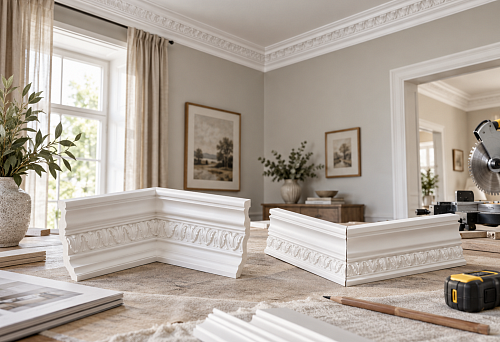
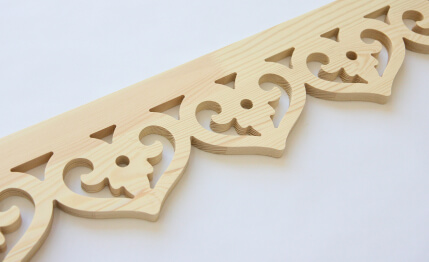
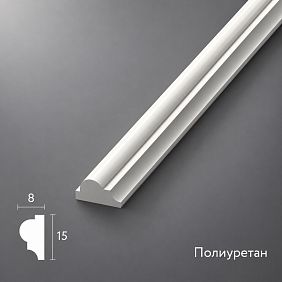
Polyurethane frieze — it is a decorative horizontal band that divides the wall by height, emphasizes the ceiling line, and decorates a portal, niche, or wall panel. Unlike a regular molding, a frieze works not only as a profile but also as an extended ornamental accent — it sets the rhythm, creates horizontal dynamics, and adds architectural character to the space. To make the interior look cohesive, the frieze should be selected based on style, width, installation height, scale of the ornament, and combination with polyurethane moldings, cornices, baseboards, and PU overlays.


What is a polyurethane frieze
In architectural tradition, a frieze is the middle horizontal part of the entablature between the cornice and architrave, filled with ornament or sculptural relief. In modern interior decor, the frieze has become an independent linear element: a horizontal decorative strip with a relief ornament that is mounted on a wall or ceiling and creates an expressive ornamental line.
A polyurethane frieze is a lightweight, accurately reproduced analog of stucco decor. The material is resistant to humidity and temperature changes, does not deform, holds its shape perfectly, and is easily painted in any color. Installation — using acrylic or special polyurethane glue, without complex tools or special skills. It is these qualities that have made polyurethane Polyurethane trim the main material for decorative friezes in modern classical, neoclassical, and stylized interiors.
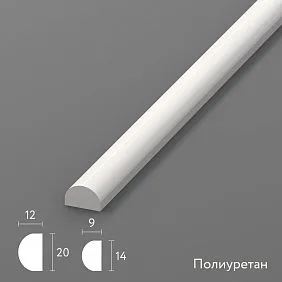
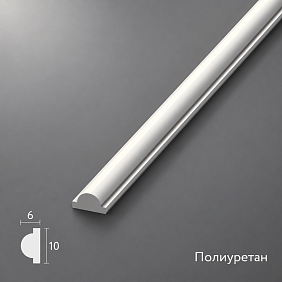
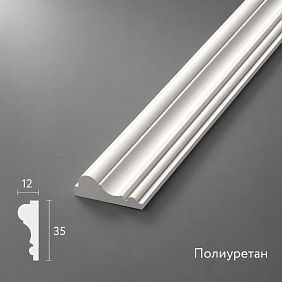
The fundamental difference between a frieze and a molding is in function. A molding is a profile that forms a line, frame, or transition. A frieze is an ornamental band that itself is a decorative statement. A molding is a frame. A frieze is content. That is why they are often used together: moldings set the geometry, the frieze fills it with ornament.




Where to use polyurethane frieze
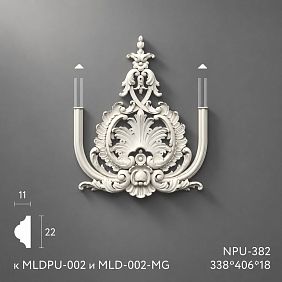
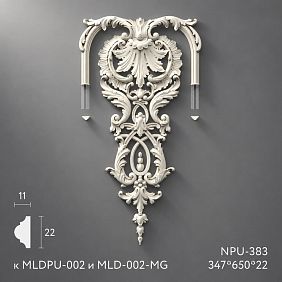
Our factory also produces:




On the wall
The most classic and common scenario is a horizontal frieze on the wall, visually dividing it into lower and upper zones. The traditional installation height is about two-thirds from the floor: here the frieze acts as an architectural boundary, below which there may be a panel, molding, wallpaper, or other covering, and above — a single painted surface.
A frieze on an accent wall is a technique that creates a horizontal dominant without heavy decorative load. In a living room, bedroom, or hallway, one such belt organizes the space and adds historical character to the interior. This works especially well with a single color: the wall, moldings, and frieze in one color — decor speaks through relief, without variegation.
Get Consultation
Under the ceiling
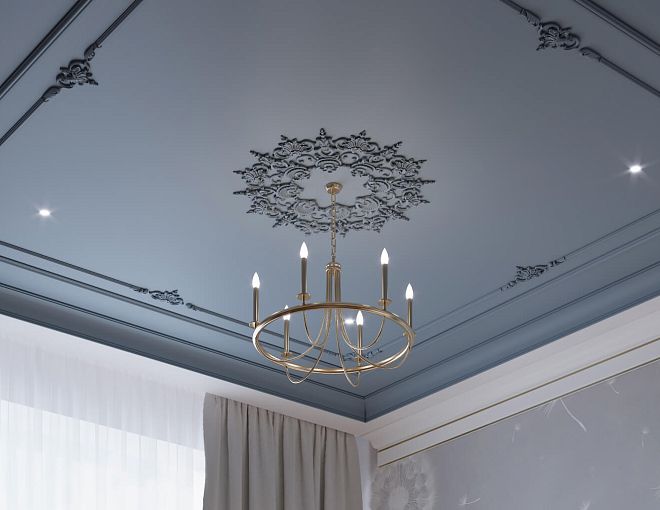
A frieze under the ceiling is an alternative or addition to a cornice. It can run directly along the ceiling line, creating an ornamental border, or be placed slightly lower — at a distance of 10–20 cm from the ceiling, leaving "air" between the frieze and the cornice. The second technique works in classic and baroque interiors with high ceilings: three horizontal elements — cornice, frieze, molding line — create a multi-layered architectural system.
For low ceilings (2.5–2.7 m), a frieze under the ceiling should be chosen carefully: a wide and relief ornament "lowers" the ceiling. Here, a delicate thin frieze with a soft relief is appropriate — it adds rhythm but does not create heaviness.
In a wall panel
A frieze as the upper or lower boundary of a wall decorative panel is an architectural technique that came from classic interiors of the 18th–19th centuries. Molding frames form fields, the frieze marks the upper horizontal boundary of the entire system — and the panel becomes a complete, self-sufficient decorative structure.
In such a system, the frieze, moldings, Decor for Molding and central overlays work as a single set. A single color unites all elements into a monolithic architectural surface, where only the play of relief and shadows is visible.
In a portal or niche
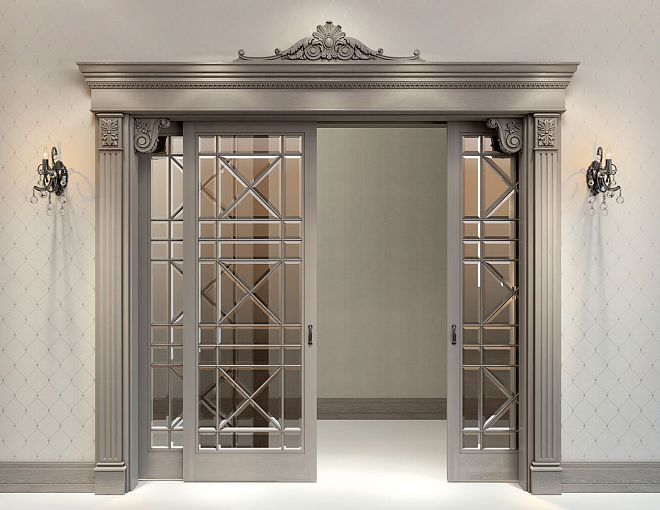
A horizontal frieze above a doorway, in the upper zone of a fireplace portal, above a niche, or around a mirror frame is a classic technique that completes the vertical composition with an ornamental horizontal line. Here, the frieze serves the same function as a cornice in architecture: it covers the structure and creates a horizontal finish.
For a door portal, the frieze usually goes above the lintel — as a separate horizontal band or in combination with a central overlay. For a fireplace area, it is placed above the shelf or along the horizontal part of the pediment.
In commercial interiors
Restaurants, hotels, beauty salons, showrooms, bath complexes, executive offices — these are environments where decorative friezes are most actively used. Here, a quick visual effect is important: a polyurethane frieze is installed without complex operations, painted in one day, and immediately gives the interior a prestigious architectural rhythm. Russian Style molding with Frieze ornament — a separate collection for ethnic interiors, restaurants, bath complexes, and spaces with a distinctive Russian style.
How a frieze differs from a molding and a cornice
| Element | Task |
|---|---|
| Frieze | horizontal ornamental band on a wall or ceiling |
| Molding | profile for frames, panels, transition lines |
| Cornice | architectural transition from wall to ceiling |
| Baseboard | lower decorative wall finish |
| Border | narrow dividing decorative line |
These elements do not compete — they complement each other. In a full classical system, they are used simultaneously: the baseboard finishes the wall at the bottom, the cornice at the top, the frieze creates a horizontal band in the middle or upper zone, moldings organize decorative fields, and the border adds thin dividing lines. Each works at its own level and function.
How to choose a frieze by style
Classic
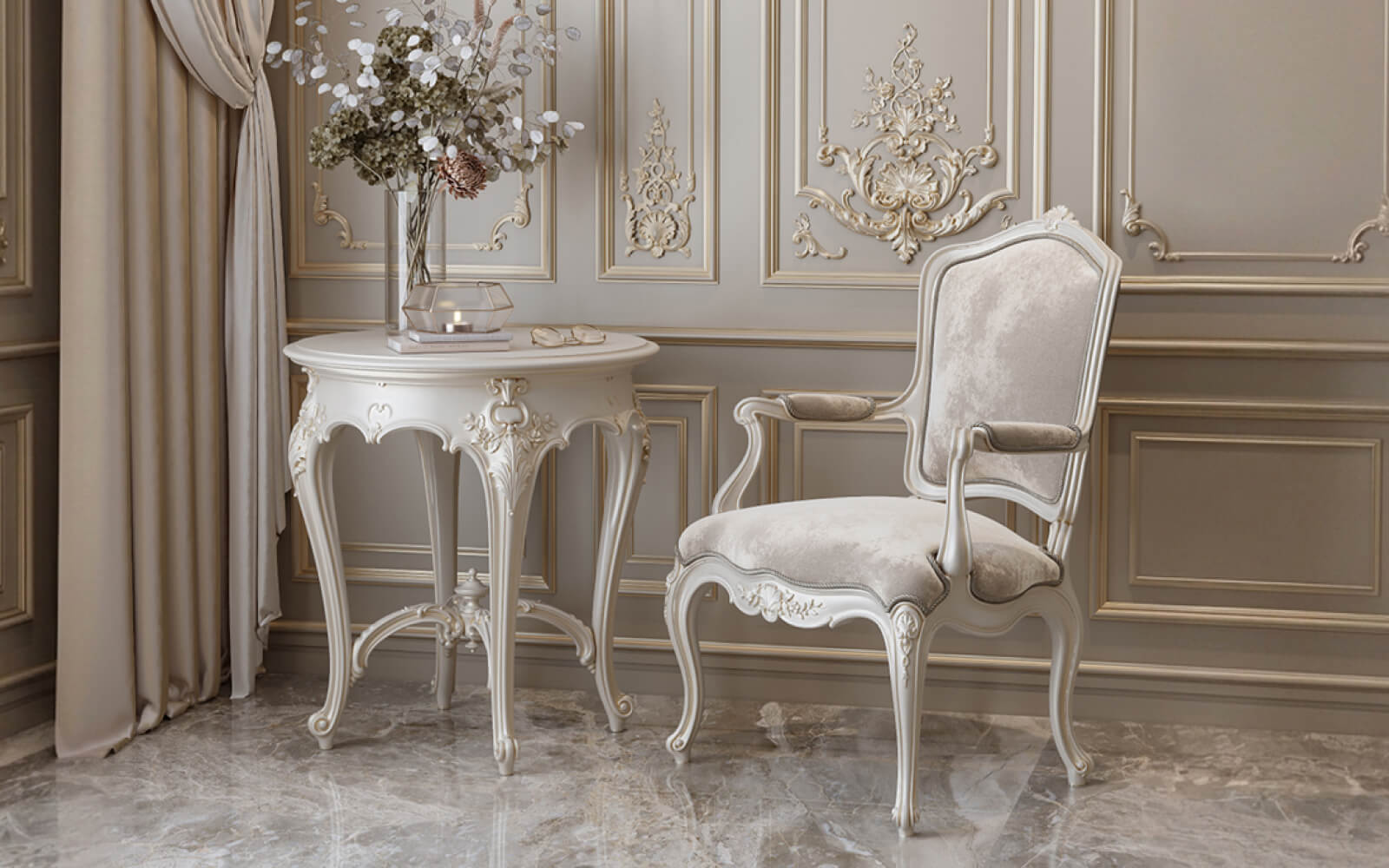
For classic, baroque, and empire interiors, it is suitable Classic molding with Frieze ornament: pronounced relief, floral and ornamental motifs, symmetrical repeating composition. Width — from moderate to representative. Relief — 10–20 mm or more: enough for expressive play of shadows. Ornament: acanthus, laurel branches, grapevine, plant scrolls, classic border motifs.
In a classic interior, the frieze works in a system: baseboard → molding frames → frieze → cornice. All elements are painted with one color, often with patina or light gilding in recesses — this creates a deep, expensive, representative result.
Neoclassicism
Neoclassicism requires moderation. Calm pattern, small frieze height, soft relief — decor is present but does not dominate. Here, the frieze works as an architectural line, not as an ornamental statement. Painting in the wall color hides the material and leaves only the relief rhythm.
Rule for neoclassicism: when in doubt, choose thinner, lower, calmer. A delicate frieze that blends organically into the interior is better than a heavy classical cornice that requires appropriate scale and surroundings.
Modern interior
Molding Modern with Ornament Frieze — a collection for minimalist, modern interiors with classical elements. Here, the frieze loses its heavy historical ornament and becomes an architectural line with a soft geometric or abstract relief. It is appropriate in interiors with minimalist furniture, white walls, and accent decor.
In a modern space, a frieze is not "stucco" but an accent detail. One horizontal band on an accent wall, in the wall color or a contrasting tone, is enough for the interior to gain architectural depth without historical overload.
Russian Style
This is a separate and strong commercial scenario. Russian Style molding with Frieze ornament created for interiors with distinctive ethnic stylization: Russian cuisine restaurants, bath complexes, country houses in traditional style, hunting clubs, estates, hotels with national character. The ornament here carries specific cultural meaning: geometric woven motifs, stylized plant curls characteristic of the Russian decorative tradition.
For commercial spaces in Russian style, a polyurethane frieze is almost an ideal solution: easy installation for large volumes, resistance to intensive use, and the possibility of repainting during interior renovation.
How to choose the size and installation height
These two parameters determine the entire result. Wrong height or disproportionate frieze width — and even a high-quality ornament looks random.
Ceiling height. For ceilings of 2.7 m — a delicate thin frieze, element height 40–80 mm. For ceilings of 3.0–3.5 m — medium, 80–120 mm. For ceilings above 3.5 m — wide representative friezes of 120–200 mm and more are acceptable.
Mounting height on the wall. The classic principle is two-thirds of the wall height from the floor. With a ceiling of 2.7 m — about 1.8 m. This is the height of a human gaze in a standing position, where the horizontal line is perceived most organically. It can be higher — in the upper third of the wall or directly under the ceiling — to create a different effect.
Wall length. On a long wall, a frieze creates a powerful horizontal rhythm — this is good. On a short wall section of 1.5–2 m, a frieze may look like a fragment rather than an element of an architectural system. Here it is better to run the frieze along the entire perimeter or abandon it altogether on that wall.
Scale of the ornament. A large repeating ornament requires sufficient wall length to "play out." On a short section, a large pattern looks cut off. On a long wall, a small ornament creates a delicate rhythm.
Distance to the cornice. If the cornice is already installed, the frieze should be either directly under it (a unified system) or with a clear and proportionate gap (the space between them should be no less than the height of the frieze itself).
Doors, windows, niches. The frieze is typically interrupted at door and window openings. It is important to plan in advance how the frieze will enter the corner and adjoin the slopes. Special attention should be paid to internal and external corners: joints need to be worked out before installation.
What to combine with a polyurethane frieze
A frieze is a linear element that is best revealed in a system with other decorative details. Here is what works organically nearby:
Moldings made of polyurethane. Molding frames below the frieze or in the lower third of the wall create a classic two-level decorative system. The frieze is the upper horizontal accent, moldings are the fields and frames below.
Cornices. A cornice above the frieze completes the entire vertical system. If a cornice already exists, the frieze is placed slightly below — creating an ornamental belt between the neutral wall surface and the architectural transition to the ceiling.
Decor for Molding. Central overlays, corner elements, and side decorative inserts in frames below the frieze create a multi-level decorative system.
PU overlaysOrnamental overlays — in niches, above doors, on accent fields between frames — complement the frieze and create a rich classical surface.
polyurethane ceiling decorCeiling rosettes and cornice elements combined with the frieze create a vertical system: rosette → cornice → frieze → molding frames → baseboard. This is classic interior decor in its full scope.
How to calculate the purchase
The frieze is linear molding. Calculation is simple but requires precision.
Step 1. Measure the length of all areas where the frieze will go. If around the entire perimeter, add up the lengths of all walls. If only on an accent wall, measure just its length.
Step 2. Subtract the width of door and window openings if the frieze does not cover them.
Step 3. Add 15–20% for trimming, corner joints, and possible defects. For a room with multiple corners, aim closer to 20%.
Step 4. Find out the length of one frieze strip. Divide the total length with allowance by the strip length to get the number of pieces. Round up.
Step 5. Work out the corners. Inside corners (90°) — cut at 45°. Outside corners (on wall protrusions) — also cut at 45°, but in the opposite direction. If corners are non-standard, it's better to use a corner template.
Step 6. Choose the adhesive: acrylic construction adhesive or special adhesive for polyurethane products. Per linear meter — approximately 50–80 g of adhesive depending on the width and relief of the element.
Step 7. Decide: paint before or after installation. The professional order is installation → puttying joints and seams → priming → painting. Painting the frieze before installation is more convenient, but seams will be visible without a final coat of paint after installation.
Step 8. Order the frieze together with moldings, cornices, and overlays at the same time. This guarantees a single batch and compatibility.
Mistakes when choosing a frieze
Knowing typical mistakes saves money and nerves. Let's name each one specifically.
They confuse a frieze with a regular molding. A molding is a profile. A frieze is an ornamental band. These are different products with different purposes. Ordering a molding instead of a frieze means getting the wrong result.
They choose a pattern without considering the wall length. A large ornament requires a long section to reveal the rhythm. On a short wall, a large repeat looks cut off.
They buy without a reserve for trimming. A 45° miter cut in each corner "eats" from 5 to 15 cm on each cut. Without a 15–20% reserve, there will definitely not be enough material.
They place a large ornament in a small room. A wide, relief frieze "lowers" the ceiling and creates heaviness. For small spaces, choose a thin, delicate, moderate one.
They use a too thin frieze on a high wall. A narrow frieze on a large surface gets lost. It doesn't work—neither as a border nor as an ornament.
They don't account for doors, windows, and furniture. A frieze at a height of 1.8 m runs exactly along the top of some door frames or above windows. This needs to be checked before installation.
They don't plan corner joints. Installing without well-thought-out corner joints guarantees a poor result. Corners are resolved before installation: miter cuts or corner overlays.
They do not check the combination with the cornice and baseboard. The frieze must be stylistically compatible with other trim elements. Different patterns, different reliefs, different widths — this is visual chaos.
They install without horizontal marking. Without a level line or string, the frieze inevitably 'drifts' in height. Marking is mandatory.
They paint before puttying the joints. After installation, there are always seams and junctions. First — putty and primer, then — final painting. Otherwise, the joints will be visible.
FAQ: Answers to popular questions
What is a polyurethane frieze?
This is a decorative horizontal strip made of polyurethane with a relief pattern. It is mounted on a wall or ceiling as an ornamental line — to divide the wall by height, frame a panel, portal, niche, or ceiling area.
How is a frieze different from a molding?
A molding is a profile for creating lines, frames, and transitions. A frieze is an ornamental strip with a repeating pattern. Molding sets the geometry, frieze creates a decorative rhythm. They are often used together.
Where is it best to use a decorative frieze?
On an accent wall, around the entire perimeter of the room, under the ceiling, in the upper zone of a wall panel, above a door or fireplace portal, in a niche. There are no universal restrictions — scale and style matter.
Can a frieze be glued under the ceiling?
Yes. Polyurethane is lightweight — the adhesive handles fixation even in horizontal and overhead positions. It's important to apply the glue correctly, secure the element before it dries, and ensure a clean base surface.
How to choose the installation height of a frieze?
The traditional height is two-thirds from the floor. With ceilings of 2.7 m — about 1.8 m. It can be higher — in the upper third or flush with the ceiling. The main criterion: the frieze should be at eye level and create a horizontal rhythm, not get lost at the top or press down at the bottom.
How to calculate the amount of frieze for a wall?
Measure the length of the section → subtract openings → add 15–20% margin → divide by the length of one plank → round up. Order with a reserve.
Can polyurethane frieze be painted?
Yes. Polyurethane accepts acrylic, alkyd, and water-based paint perfectly. Painting to match the wall color is one of the best professional techniques: the frieze 'disappears' into the surface, leaving only the relief.
How to combine frieze with moldings and cornices?
The frieze is a middle or upper horizontal element. Molding frames are below the frieze. The cornice is above, near the ceiling. All elements are painted in a single color. The ornament style should be consistent.
Is frieze suitable for a modern interior?
Yes. Molding Modern with Ornament Frieze specially designed for minimalist interiors. Soft relief, calm pattern, delicate height — the frieze adds architectural depth without turning the space into a classic formal hall.
Where to buy a polyurethane frieze?
In the STAVROS catalog: Polyurethane frieze, Polyurethane trim, collections Classic, Modern и Russian Style — a wide selection of ornaments, formats and styles for any task.
About the Company
STAVROS — Russian manufacturer and supplier polyurethane molding decoration: friezes, linear moldings, moldings, cornices, baseboards, overlays and decorative elements for walls, ceilings, portals and interior panels. The catalog covers all formats of horizontal decor — from delicate modern friezes to expressive classic ornamental belts and elements in the Russian style. If you are choosing Polyurethane frieze for a wall, ceiling, portal or wall panel — find the right option in the catalog STAVROS: here you will find solutions for classic, neoclassical, modern interiors and Russian style, with the ability to select a complete set of linear moldings and overlays in a unified style and scale.