Article Contents:
- Introduction: Development of Interior Materials from Wood to Polyurethane
- Wood: Millennia of Tradition
- MDF: Technological Revolution
- Polyurethane: Modern Possibilities
- Comparison of Textures, Densities, and Properties
- Textural Characteristics of Materials
- Density and Mechanical Properties
- Moisture Resistance and Stability
- Architectural Lines: Role of Baseboards, Crown Molding, and Rails
- Baseboards as the Foundation of Composition
- Crown Molding as Wall Finishing
- Rails as Spatial Structure
- Combining Materials in Modern Design
- Principles of Successful Combination
- Vertical Combination
- Horizontal Combination
- Stylistic Combination
- Examples of Harmonious Solutions by STAVROS
- Classic Living Room with Material Combination
- Modern studio apartment
- Country House with Humid Zones
- Commercial Office Interior
- Practicality, Installation, and Maintenance
- Features of installing different materials
- Care for Wooden Elements
- Maintenance of MDF and Polyurethane
- Repair and restoration
- Conclusion

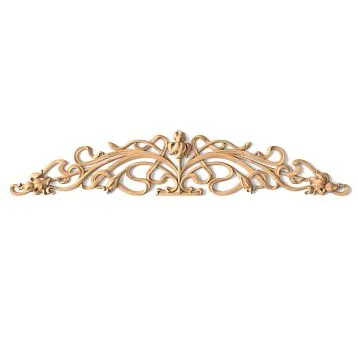
The history of interior design is inseparably linked to the development of material processing technologies.Wooden baseboardfor centuries remained the only way to finish a room's interior, using the natural beauty of solid wood.MDF Skirting Boardemerged in the twentieth century as a technological alternative, combining accessibility and quality.Moldings made of polyurethanebecame a revolution of the last decade, offering moisture resistance and ease of use despite complex shapes.Wooden planktransformed from a utilitarian element into the primary tool of modern design.ceiling cornice woodenretains its premium status for classic interiors.Decorative wooden stripCreates expressive compositions where simplicity of lines generates complexity of perception. Modern design has learned to combine these materials, creating spaces where tradition meets innovation.


Introduction: Development of interior materials from wood to polyurethane




Wood: Millennia of traditions
Wood became the first structural and finishing material of human civilization. Its accessibility, ease of processing with simple tools, and natural beauty made it a universal material for construction and decoration.Wooden baseboardAppeared as a natural solution to the problem of wall-floor junction — a wooden strip covered the technological gap and protected the lower part of the wall from damage.
Traditional woodworking technologies reached perfection in the 17th-18th centuries. Master carpenters created complex profiles using hand planes, and carvers adorned cornices and moldings with botanical ornamentation.ceiling cornice woodenIn palace interiors, it transformed into a work of art with multi-level profiles and carved decoration. Each element was handmade, bearing the mark of the craftsman’s individuality, and required months of work.
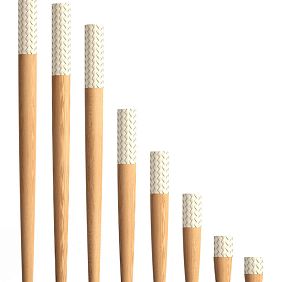
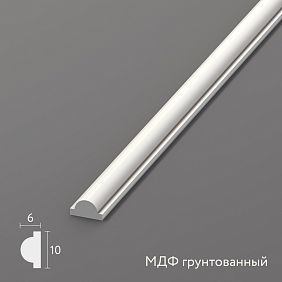
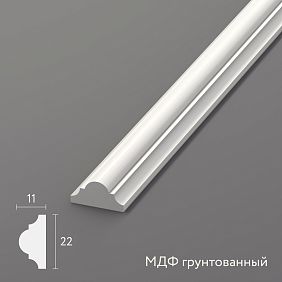
Our factory also produces:


MDF: Technological revolution
Medium-density fiberboard appeared in the middle of the 20th century as a result of seeking efficient use of wood waste. The hot pressing technology of ground wood fibers at 180-220 degrees Celsius created a material with unique properties. Uniform structure without natural wood defects — knots, cracks, density variations — ensured geometric stability and predictable characteristics.
MDF Skirting BoardBecame an accessible alternative to solid wood. Its cost, 2-3 times lower than wooden analogs with comparable aesthetic qualities, opened up the possibility of using high-quality finishing materials for a broad range of consumers. Lamination and coloring technologies for MDF have reached such a level that only a specialist can visually distinguish quality MDF from solid wood upon tactile contact.
Get Consultation
Polyurethane: modern possibilities
Polyurethane molding appeared at the end of the 20th century as a response to modern architecture’s demand for lightweight, moisture-resistant materials with complex shapes. Casting in molds allowed reproducing ornamentation of any complexity with perfect repeatability.Moldings made of polyurethaneWeighs 5-7 times less than wooden analogs at equal strength, simplifying transportation and installation.
Absolute moisture resistance of polyurethane made it possible to use decorative molding in bathrooms, saunas, kitchens — places where wood requires special treatment and regular maintenance. The polymer material does not rot, is not affected by mold and mildew, and does not deform under humidity fluctuations. Service life of polyurethane elements in aggressive conditions significantly exceeds the durability of wood.
Comparison of textures, densities, and properties
Texture characteristics of materials
Wooden baseboardPossesses a unique living texture that cannot be artificially reproduced exactly. Natural patterns of oak growth rings, characteristic medullary rays, smooth color transitions create visual depth and natural beauty. Each board is unique — it is impossible to find two absolutely identical elements. The tactile warmth of wood and the gentle natural surface roughness create special sensations upon touch.
MDF Skirting BoardDemonstrates absolute uniformity of structure. Density of 760-780 kilograms per cubic meter is constant throughout the material volume. Surface is perfectly smooth without pores or fibers. Laminate MDF skirting boards reproduce wood texture with high accuracy thanks to high-resolution digital printing. Colored surfaces create uniform color without any shade variations.
Moldings made of polyurethaneHave a cool, perfectly smooth surface to the touch. The polymer lacks any texture — it is pure geometric form without additional visual layers. However, coloring creates an illusion of any material — from classical plaster molding to carved wood. Quality multi-layer coloring with patina makes polyurethane elements practically indistinguishable from historical molding.
Density and mechanical properties
Oak wood has a density of 650-750 kilograms per cubic meter, beech — 700-780. Hardness by Brinell is 3.7-4.0 units for oak and 3.5-3.8 for beech. High density ensures resistance to mechanical damage and longevity.Wooden plankOak wood withstands significant loads without deformation, maintaining its shape for decades.
MDF with density 760-780 kilograms per cubic meter surpasses many wood species in this parameter. Uniform structure ensures even load distribution. Surface hardness reaches 4-5 Brinell units after lamination, making MDF resistant to abrasion and scratches.MDF Skirting BoardDoes not have grain direction, which eliminates splitting along the structure.
Polyurethane with density 300-500 kilograms per cubic meter is significantly lighter than wood and MDF. However, the polymer’s elasticity compensates for lower density — the material can restore its shape after minor deformations.Moldings made of polyurethaneDo not fear impacts — instead of chips and cracks, dents appear, which often self-level out over time.
Moisture resistance and stability
Natural wood is hygroscopic — it absorbs and releases moisture depending on environmental conditions. When humidity increases, wood swells; when it decreases, it shrinks. Linear dimension changes may reach 3-5 percent across the grain.ceiling cornice woodenRequires acclimatization in the installation room for a minimum of 72 hours to adapt to the microclimate. Protective coatings — oils, waxes, varnishes — reduce water absorption, but do not eliminate it completely.
MDF demonstrates better dimensional stability compared to solid wood. Linear expansion coefficient is 0.02 percent per 10 degrees of temperature change. However, MDF is sensitive to prolonged direct contact with water — unprotected ends and back surfaces may swell.MDF Skirting BoardWith quality lamination or coloring, it is resistant to wet cleaning and use in rooms with normal humidity up to 70 percent.
Polyurethane is completely moisture-resistant - it does not absorb water, does not swell, does not deform at any humidity. The material can remain in constant contact with water without losing its properties.Moldings made of polyurethaneIdeal for bathrooms, showers, saunas, and pools. Temperature stability is maintained within a range from minus 50 to plus 70 degrees Celsius.
Architectural lines: the role of baseboards, cornices, and rails
Baseboards as a compositional foundation
Floor baseboards create the lower boundary of the wall, forming a transition from the horizontal plane of the floor to the vertical plane of the wall.Wooden baseboardMade from solid oak, 80-100 millimeters high, it creates a respectable foundation for a classic interior. The natural wood texture complements the parquet floor, creating material unity in the lower part of the room. Ornamental profiles with moldings and grooves add decorative appeal.
MDF Skirting BoardWhite-painted baseboards, 70-80 millimeters high, provide an ideal geometry at an accessible cost. They create a neutral foundation for modern interiors. The visual lightness of the white color expands the space, reflects light, and makes boundaries less noticeable. A simple rectangular profile with a slight bevel matches minimalist aesthetics.
Polyurethane floor baseboards combine decorative appeal and practicality. The ability to create complex profiles with carved decoration while maintaining polymer moisture resistance makes them a universal solution. Their lightweight nature simplifies installation — adhesive mounting is sufficient without mechanical reinforcement. The material’s flexibility allows it to follow curved wall sections without requiring multiple small segments to be cut.
Cornices as wall finishes
ceiling cornice woodenPerforms the function of visual wall completion, creating a smooth transition to the ceiling. In classical interiors, cornices become the main decorative element at the upper part of the room. Wide cornices, 150-200 millimeters high, with multi-tiered profiles and carved decoration create a luxurious ceiling frame. Solid oak cornices emphasize the status of the space.
In modern interiors, cornices take on minimalist forms. Wooden cornices with a simple profile, 70-100 millimeters high, create a delicate line at the junction of wall and ceiling. Painting in white makes the cornice part of the ceiling plane, visually increasing the room’s height. Hidden lighting behind the cornice creates a floating ceiling effect.
Moldings made of polyurethaneAllow creating ceiling cornices of any complexity with minimal load on the structure. Ornaments of the highest detail are reproduced by casting with jewel-like precision. Cornices with built-in niches for hidden lighting solve both functional and decorative tasks simultaneously. Polyurethane elements, after quality painting, are indistinguishable from classical plaster molding.
Rails as spatial structure
Decorative wooden stripTransformed modern interior design, proposing a new language for organizing space. Vertical rails create a rhythmic structure that visually elongates the room, making ceilings appear higher. Horizontal rails expand narrow walls, creating dynamism. Frequent repetition of linear elements forms an active texture, contrasting with smooth painted surfaces.
Rail partitions zone open spaces without creating solid walls. The semi-transparent structure separates functional zones while preserving visual connections and not blocking light diffusion.Wooden plankWith a 40x40 millimeter cross-section, they create a sufficiently substantial structure that psychologically divides space while remaining physically permeable.
Rail ceilings solve acoustic problems, conceal engineering communications, and create dramatic lighting scenarios. Gaps between rails absorb sound, reducing reverberation. Behind the rail structure, ventilation channels, electrical wiring, and acoustic materials are placed. Integrated lighting between rails creates diffused light without harsh shadows. The natural wood texture adds warmth to the technologically designed space.
Combining materials in modern design
Principles of successful combination
Stylistic unity becomes the key rule for combining diverse materials.Wooden baseboardandMoldings made of polyurethaneThey must match in profile character, degree of decoration, and overall scale. Classical wooden baseboards with ornate moldings harmonize with polyurethane cornices imitating molded decoration. Minimalist wooden strips with simple cross-sections are complemented by sleek polymer profiles.
Color unity is critical for visual integrity. All elements are painted in a single palette — classic white or tinted in similar shades.MDF Skirting BoardWhite color unifies wooden and polyurethane elements through a universal shade. Contrasting combinations of different colors on different materials disrupt the composition, emphasizing the diversity of elements.
Material zoning by functional zones becomes an effective strategy. Moisture-resistant polyurethane is used in wet areas. In grand living zones, wooden elements are applied to create an atmosphere of respectability.ceiling cornice woodenWooden in the living room and polyurethane in the bathroom create stylistic unity despite material differences.
Vertical material combination
Combining materials vertically creates a logical hierarchy of elements. Solid oak baseboards form a strong foundation for the interior.Decorative wooden stripOn the middle part of the walls, they create an intermediate level with an expressive texture. Polyurethane ceiling cornices complete the composition with light elements that do not impose load on upper structures.
Such a strategy optimizes the budget — expensive wooden elements are used in accessible zones where tactile qualities of solid wood are evident. Polyurethane cornices are placed at heights where the material is defined only visually.Wooden baseboardAt the bottom, they are exposed to mechanical impacts — furniture and vacuum cleaner — and the high strength of oak here is critical. Ceiling elements are protected from damage, and the lightness of polyurethane becomes an advantage.
Horizontal Combination
Dividing the space of an apartment or house into zones with different materials takes into account the specifics of the rooms.MDF Skirting Boardin hallways and technical rooms ensures accessibility with a decent quality. Wooden skirting boards in the living room and bedroom emphasize the elegance of the spaces. Polyurethane elements in the kitchen and bathroom guarantee water resistance.
Wooden plankcreates accent walls in living rooms, where the natural texture of wood forms a warm atmosphere. In commercial zones — entrances, halls — louvered structures can be made of painted MDF, providing a visual effect while optimizing cost. Uniform profile and spacing between laths create a visual connection between different zones.
Stylistic Combination
Classic interiors require the predominance of natural materials with targeted use of polyurethane in functional zones.ceiling cornice woodenmade of oak with carved decoration creates a luxurious ceiling trim in formal rooms. Polyurethane cornices of similar profile are used in bathrooms and technical rooms, ensuring stylistic unity despite material differences.
Modern interiors more freely combine materials, focusing on functionality and visual effect.MDF Skirting Boardwhite color becomes a universal solution for most rooms.Decorative wooden stripcreates individual accents, emphasizing the natural element in a technogenic environment. Polyurethane moldings frame doors and windows, providing water resistance with minimal weight.
Examples of Harmonious STAVROS Solutions
Classic Living Room with Material Combination
A 35-square-meter living room project demonstrates a thoughtful combination of various materials in a classic style.Wooden baseboardmade of solid oak, 100 mm high with a decorative profile, creates a respectable base. The dark oak tone harmonizes with the parquet floor of the same species, forming material unity in the lower part of the room.
ceiling cornice wooden120 mm high, completes the walls, creating a symmetrical composition between upper and lower boundaries. A multi-level profile with moldings and grooves corresponds to classic aesthetics. The cornice is painted in the same tone as the walls — a light beige shade — visually increasing the room's height. Wall moldings made of the same oak create a panel system with rectangular panels.
Modern studio apartment
An open 50-square-meter studio space is zoned using louvered structures while maintaining visual continuity between functional zones.Decorative wooden stripmade of light beech, 40x40 mm section, creates a semi-transparent partition between the living and sleeping zones. Vertical laths with 80 mm spacing form a rhythmic structure, visually separating spaces without blocking light.
MDF Skirting Boardwhite, 70 mm high, frames the apartment perimeter, creating a neutral frame. A simple rectangular profile corresponds to minimalist aesthetics. The white color of the skirting board matches the wall color, creating a seamless transition effect. Ceiling cornices are absent — the ceiling is painted the same white color without decorative elements, emphasizing the modernity of the solution.
Country House with Wet Zones
A 200-square-meter country house project demonstrates functional material differentiation. In living rooms — living room, bedrooms, office — useWooden baseboardandceiling cornice woodensolid oak. The natural beauty of wood creates a warm atmosphere, linking with the natural surroundings of the country property.
in wet zones — bathrooms, sauna, pool — useMoldings made of polyurethanePolyurethane's absolute water resistance ensures longevity under aggressive conditions of constant contact with water and steam. Polyurethane profiles are matched similarly to wooden ones, ensuring stylistic unity. Painting in white creates the impression of classical molding, harmonizing with tile cladding.
Commercial Office Interior
A 120-square-meter office space requires a balance between elegance and practicality. The reception and meeting room areas are designeddecorative wooden lathmade of dark oak. Vertical laths on the wall behind the reception create an expressive background, emphasizing the company's status. Horizontal laths in the meeting room form acoustic treatment, reducing reverberation and improving speech clarity.
Work zones are designedMDF baseboardin gray, matching the corporate style. The practicality of MDF ensures longevity under intensive use. Ceiling cornices are absent — acoustic suspended ceilings form a horizontal plane without decorative elements. This solution corresponds to modern office aesthetics with a focus on functionality.
Practicality, Installation, and Maintenance
Features of mounting different materials
Wooden baseboardRequires mechanical fastening with screws, with pre-drilling. The drill bit diameter is 1-2 mm smaller than the screw diameter to prevent splitting the wood. Fastening spacing is 50-70 cm. Screw heads are countersunk 2-3 mm and masked with wooden plugs or putty in the finish color. Corner joints are mitered at 45 degrees with precise end fitting.
MDF Skirting BoardMounted using adhesive or clips. Adhesive is applied in a zigzag pattern to the back of the skirting board. The element is pressed against the wall and held for 10-15 minutes until the adhesive sets. The clip system provides concealed installation with the option for removal. Metal clips are installed on the wall at 40-50 cm intervals, and the skirting board clicks into place with special grooves.
Moldings made of polyurethaneAttached exclusively by adhesive due to their lightweight nature. A special polyurethane adhesive is applied in dots to the back of the molding. The element is pressed against the surface and held for a few seconds. The material's lightness does not require prolonged fixation. Joints are filled with acrylic sealant, which becomes invisible after painting.
Care for wooden elements
ceiling cornice woodenWith oil finish, requires annual renewal of the protective layer. Surface is cleaned of dust using a special cleaner for oiled wood. After drying, a thin layer of oil is applied and rubbed in with a soft cloth. Excess is wiped off, and the surface is polished to a light sheen. The procedure takes 15-20 minutes per room and extends the finish's lifespan.
Lacquered wooden elements require minimal maintenance. Regular cleaning with a dry cloth or vacuum cleaner with a soft brush attachment removes dust. Wet cleaning is performed once a month using a well-wrung cloth. Scratches on the lacquered surface are masked with wax pencils in the finish color.Wooden plankWith lacquer finish, it retains its original appearance for years without special care.
Care for MDF and polyurethane
MDF Skirting BoardCleaned with a damp sponge using neutral detergent. Stains are removed with gentle circular motions without excessive pressure. After wet cleaning, the surface is wiped dry with a cloth to remove moisture residue. Laminate MDF skirting boards are resistant to abrasion — their smooth, non-porous surface does not absorb dirt.
Moldings made of polyurethaneRequire minimal care. Wet cleaning can be done with any household detergent without restrictions. The polymer is resistant to water, alkalis, and acids in household concentrations. Scratches on painted surfaces are repaired by touch-up. Minor dents often self-level due to the material's elasticity.
Repair and Restoration
Wooden elements are restorable. Deep scratches and dents are sanded with fine-grit sandpaper, and the surface is re-coated with oil or varnish.Decorative wooden stripCan be fully sanded and repainted in a new color when changing design. Natural wood allows for multiple renewals without replacing elements.
MDF items can be locally repaired. Scratches on painted surfaces are filled with touch-up paint. Chips are repaired with putty, followed by sanding and painting.MDF Skirting BoardCan be fully repainted when changing the interior. Laminate surfaces cannot be painted — in case of serious damage, the element must be replaced.
Polyurethane elements are restored using putty and painting. Dents are filled with acrylic putty, sanded, primed, and painted.Moldings made of polyurethaneCan be repainted multiple times, creating various decorative effects — from matte monochromatic to glossy with patina.
Conclusion
The evolution of interior materials from natural wood to technologically advanced MDF and modern polyurethane has expanded design possibilities, making high-quality finishing accessible to a broad range of consumers.Wooden baseboardMaintains premium status, embodying natural beauty, tactile warmth of solid wood, and longevity across generations.MDF Skirting BoardOffers a balance of quality and affordability, with ideal geometry at a democratic price.
Moldings made of polyurethaneDemonstrate the technological sophistication of modern materials — absolute water resistance, lightness, and the ability to create complex forms.Wooden plankTransformed interior design by introducing a new language of space organization through the simplicity of linear elements.ceiling cornice woodenCompletes walls with the nobility of solid wood.Decorative wooden stripCreates expressive compositions of modern architecture.
Since 2002, STAVROS has created decorative elements from various materials, combining traditional craftsmanship with modern production technologies. A wide range of products in natural wood, MDF, and polyurethane enables the realization of projects of any complexity and style. Professional consultation helps select the optimal material combination for specific conditions. European quality standards, domestic production, and warranty of durability make STAVROS products a reliable choice for creating interiors where each material reveals its unique qualities, contributing to the overall harmony and perfection of the space.